Can you tell we went to visit a cave?
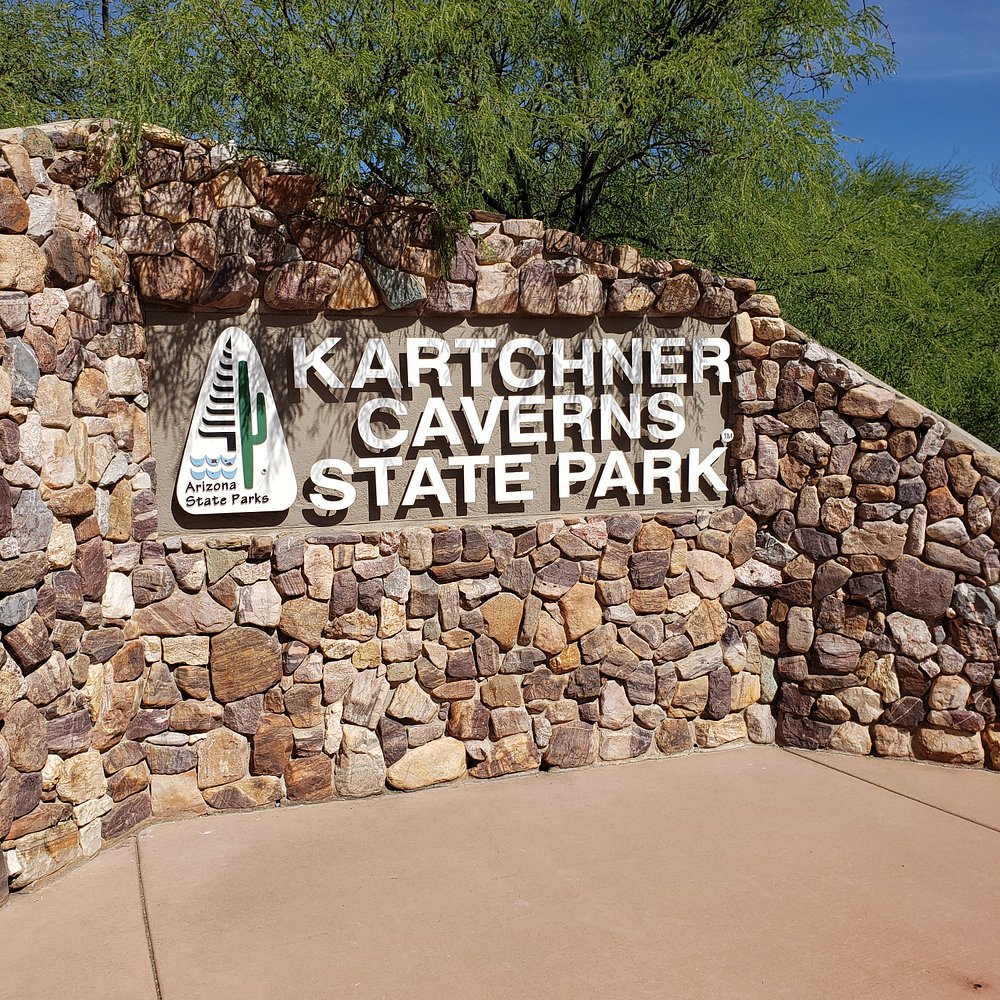
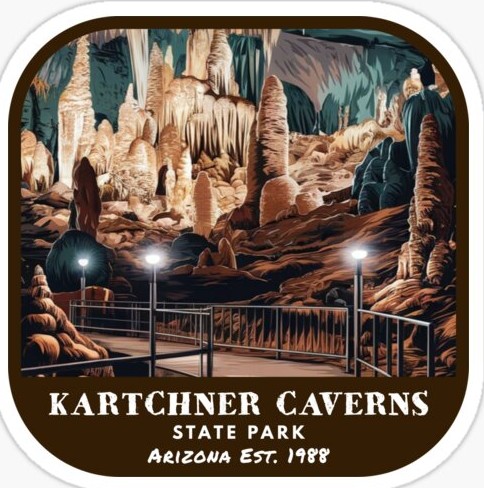
That’s just what we did on October 20th, we went to Kartchner Caverns a State Park in Arizona, featuring a show cave with 2.4 miles of passages. The park is located 9 miles south of the town of Benson and west of the north-flowing San Pedro River
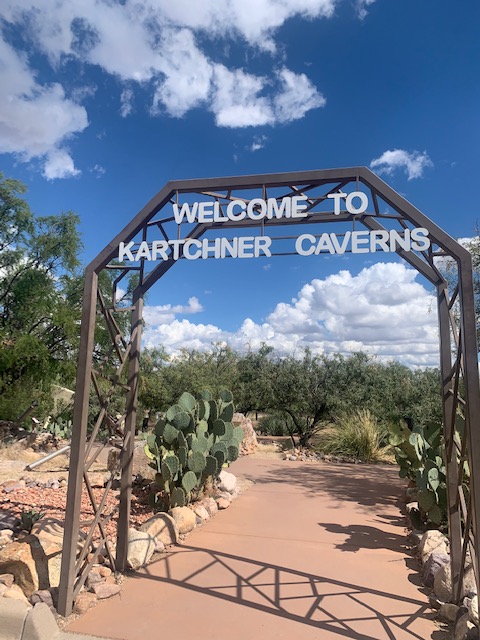
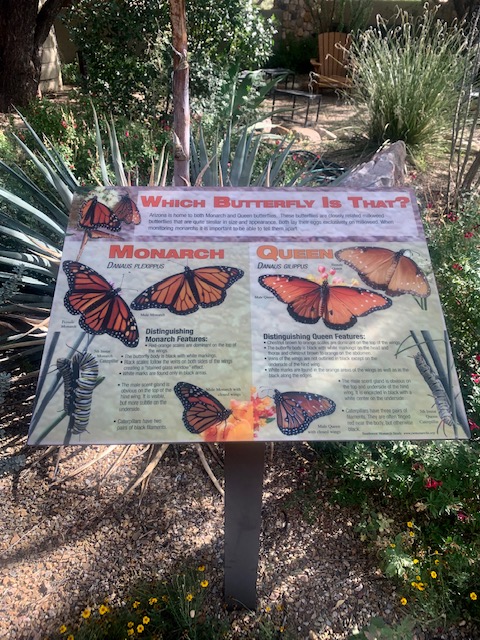
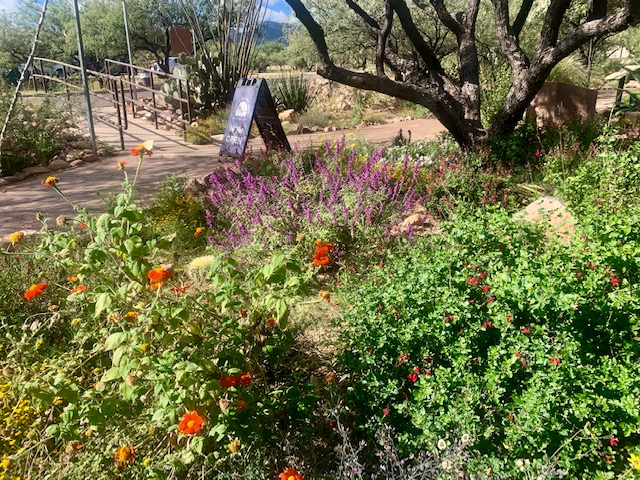
There is a butterfly garden with a path when you enter through to the Caverns.
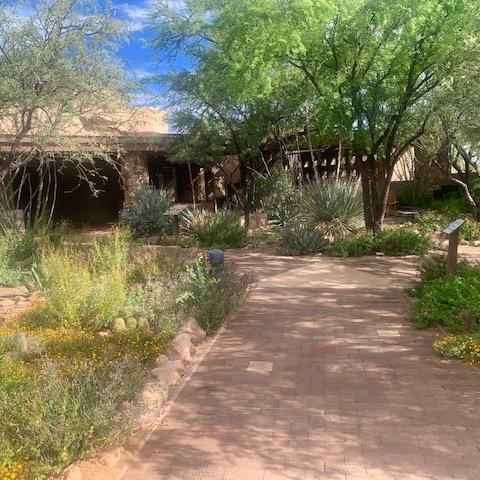
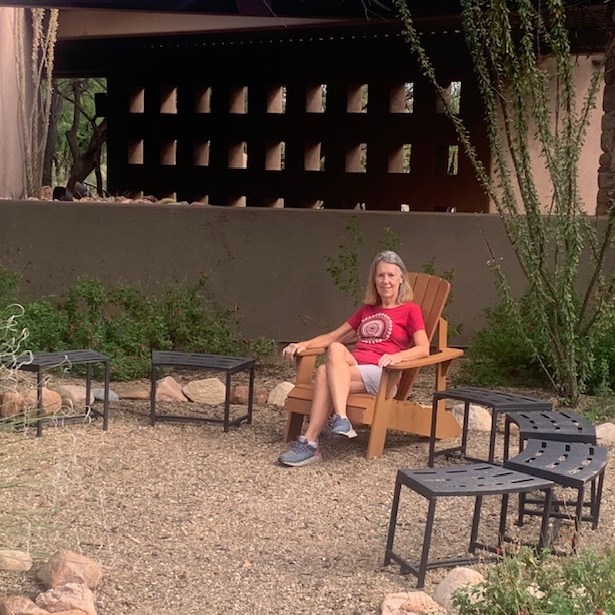
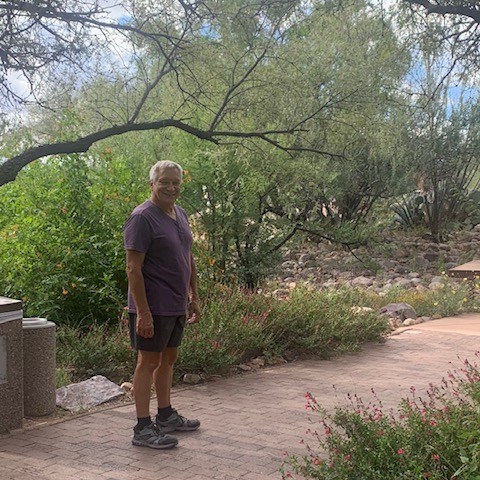
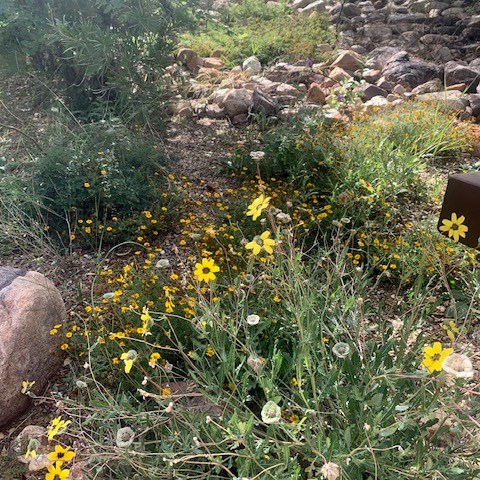
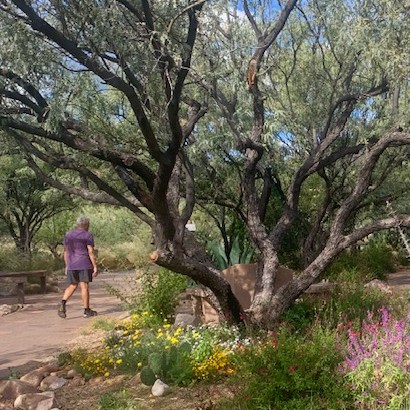
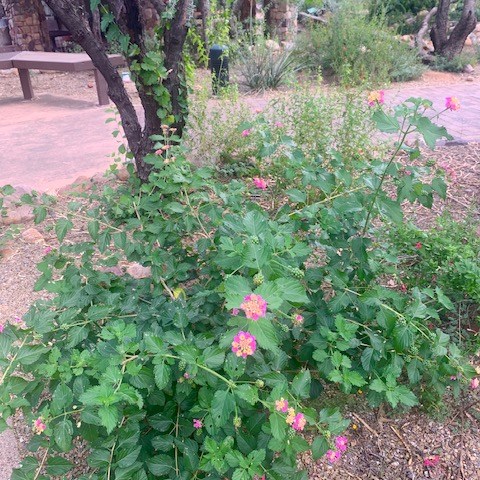
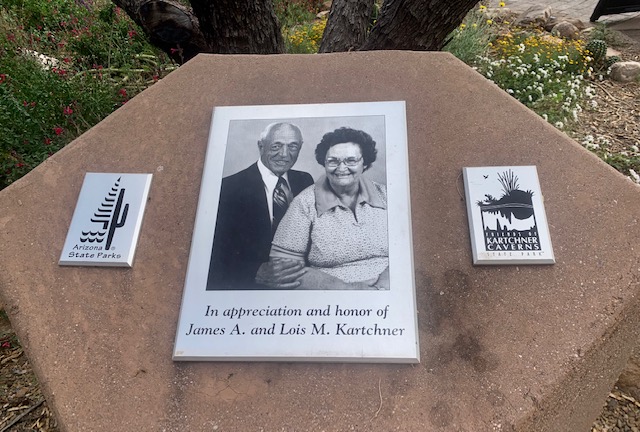

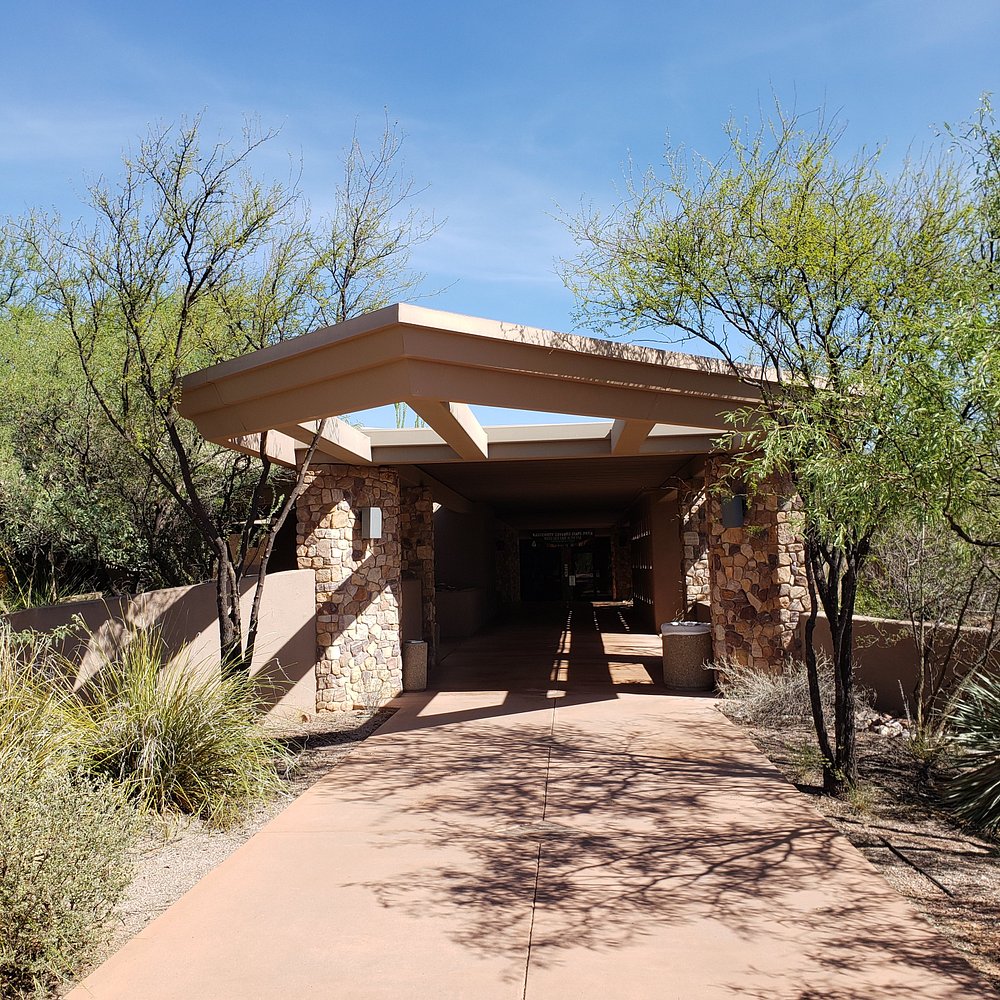
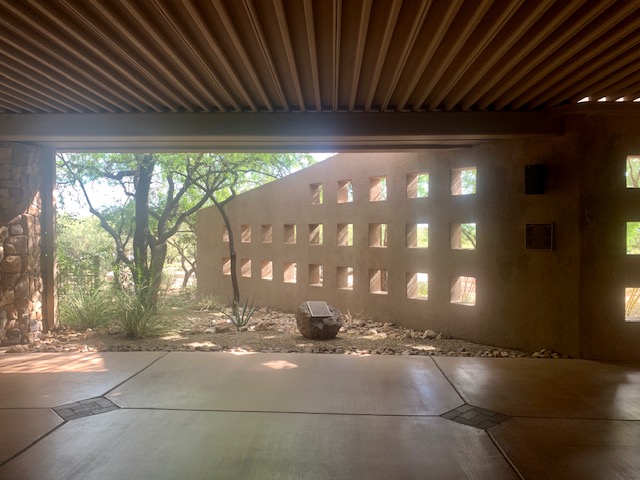
Entrance to the Visitor Center.
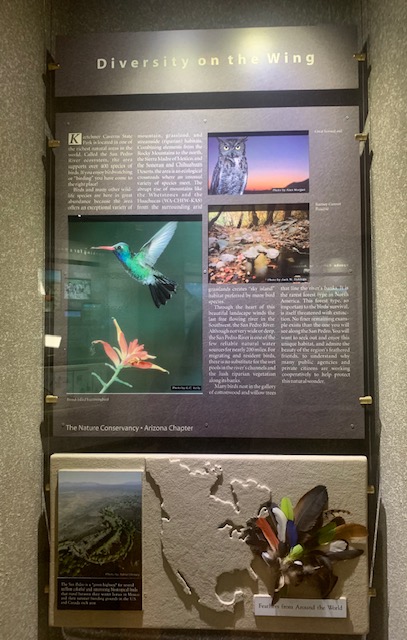
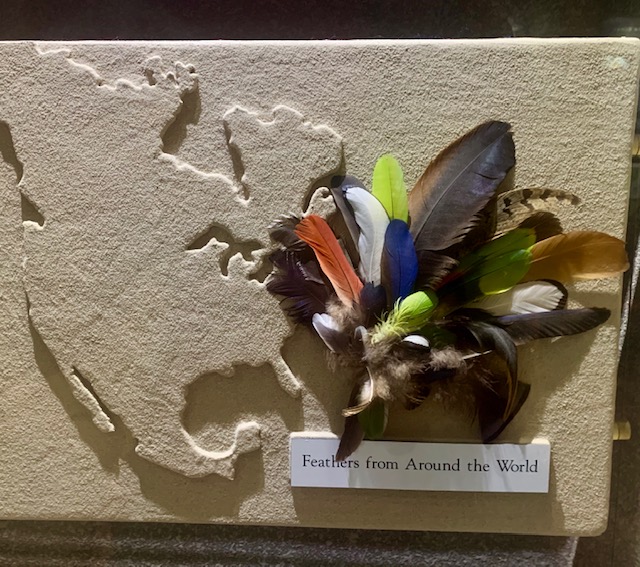
This display is for our friend Marcia, who is longer with us. She loved birds and was a wonderful bird guide.
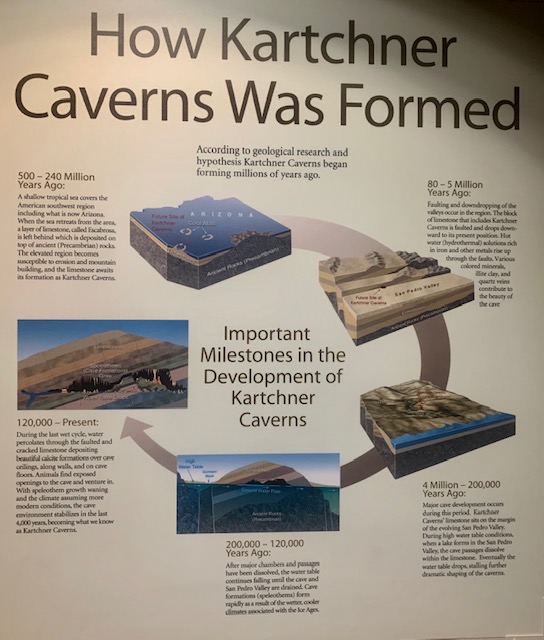
Kartchner Caverns were created over millions of years through a series of geological processes, including marine sediment buildup, tectonic lifting, acidic water erosion, and gradual mineral deposition. By these stages of formations. Limestone Deposition (About 330 Million Years Ago), Tectonic Uplift and Faulting moving and tilting (About 10 to 15 Million Years Ago), Cave Excavation where slightly acidic groundwater seeped through cracks and fractures in the buried limestone, slowly dissolving the rock and carving out large underground rooms and passages. Then by water receding the water table dropped, draining the underground chambers and filling them with air instead of water. Speleothem Growth lasted about 2000,000 years. Finally rainwater trickled down from the surface, picking up dissolved minerals like calcite. As the water entered the air-filled cave, trapped carbon dioxide escaped, causing the water to drop its mineral load. Over hundreds of thousands of years, these drops built delicate stalactites, stalagmites, columns, and flowstones. That’s what ot took to make this remarkable cave!
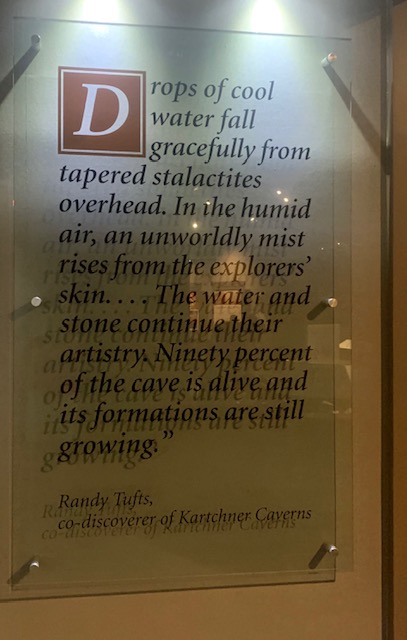
How the cave was discovered.
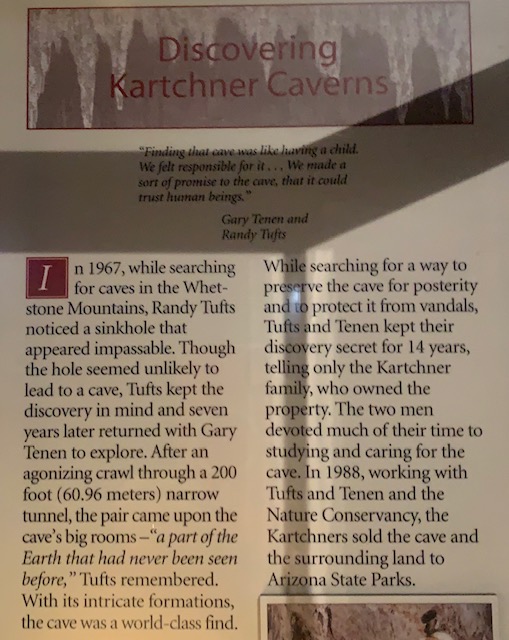
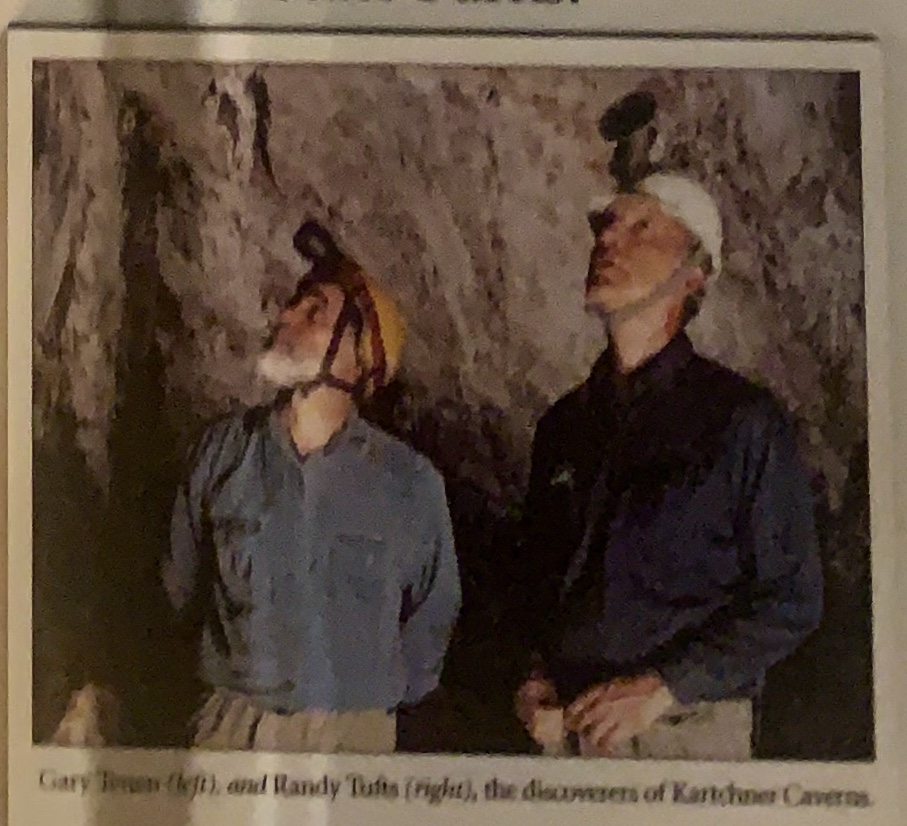
Gary Tenen and Randy Tufts, I bet they were so excited to see the cave that they dirtied their pants.
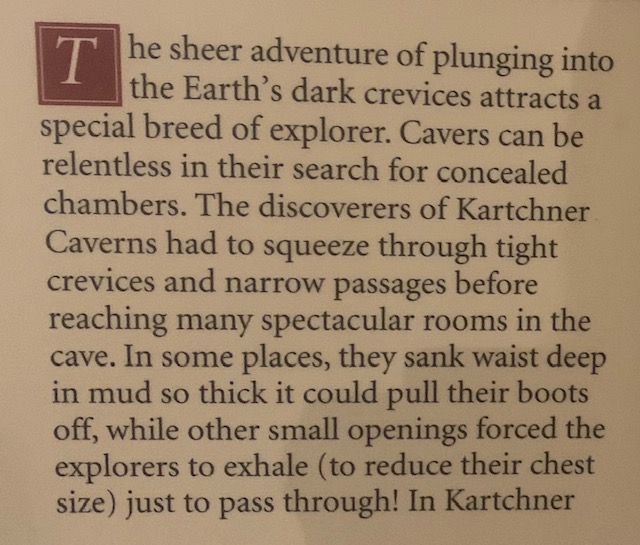
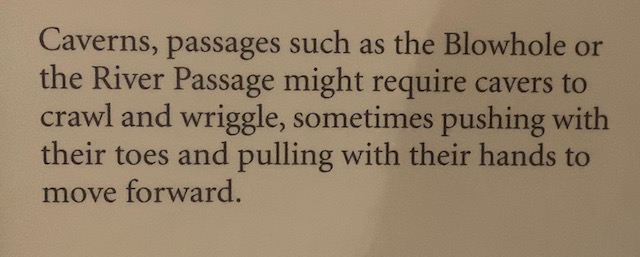
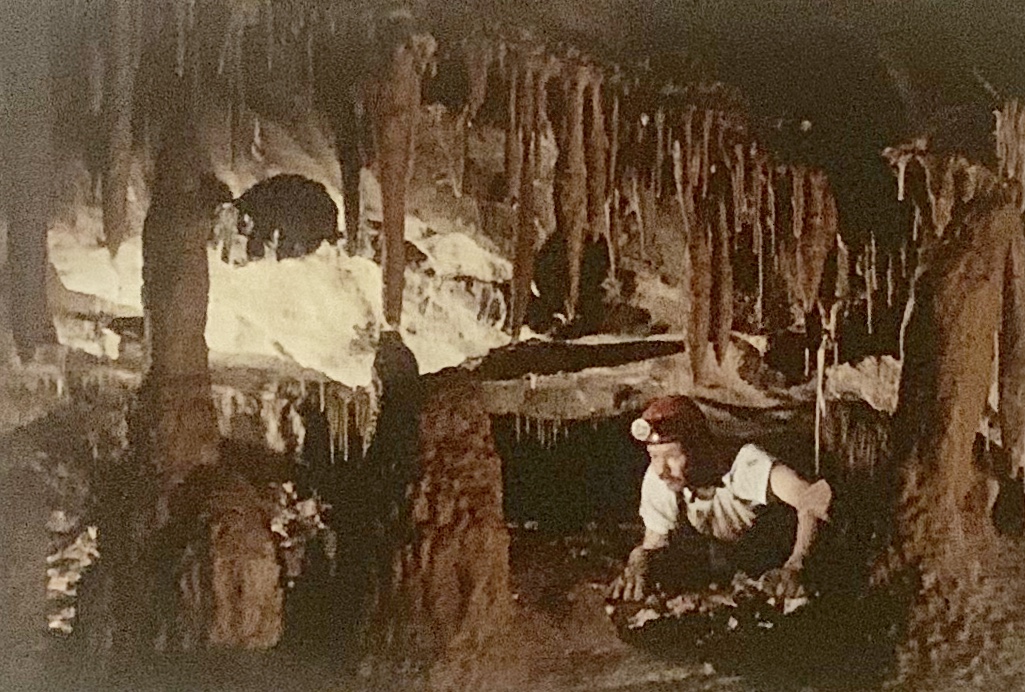
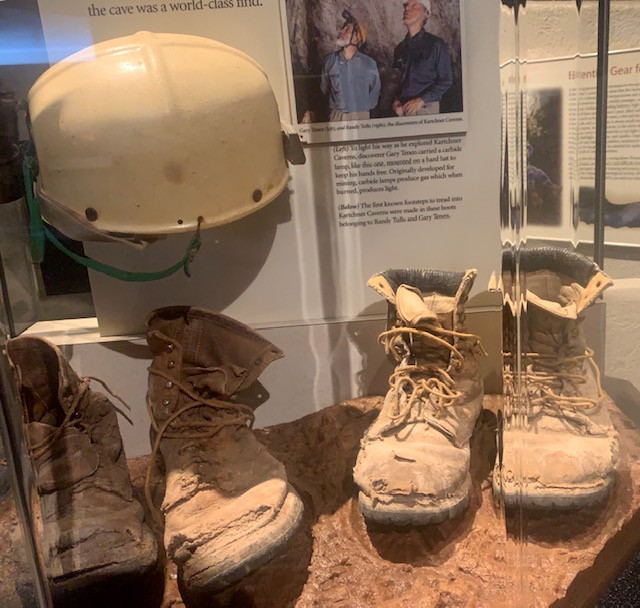
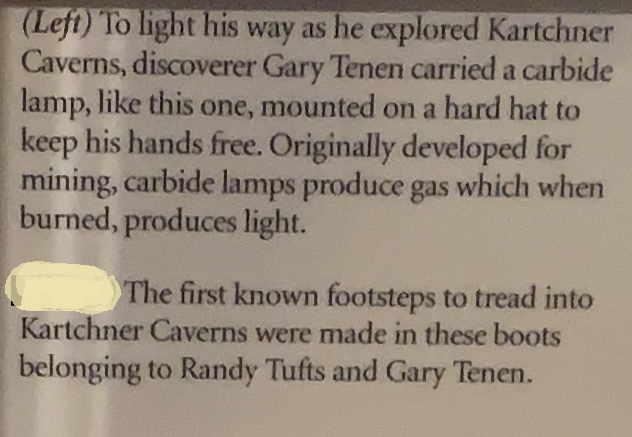
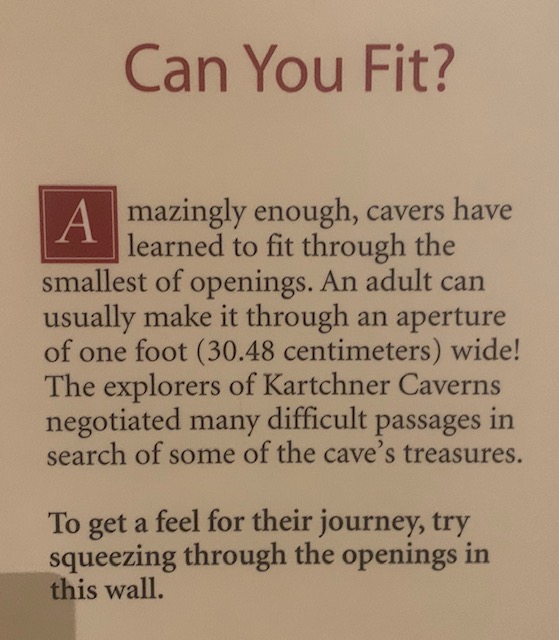
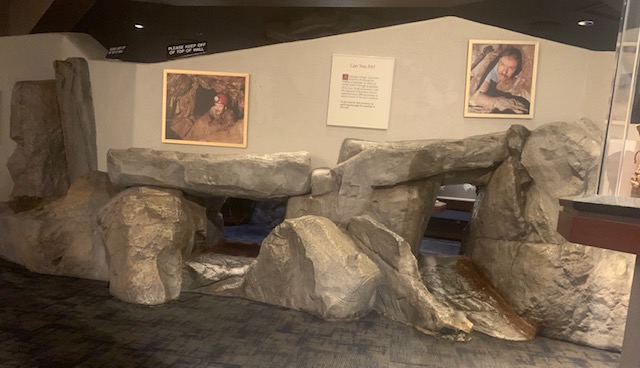
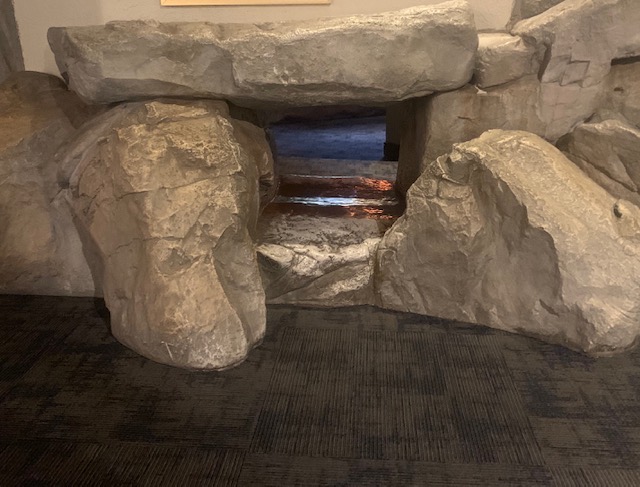
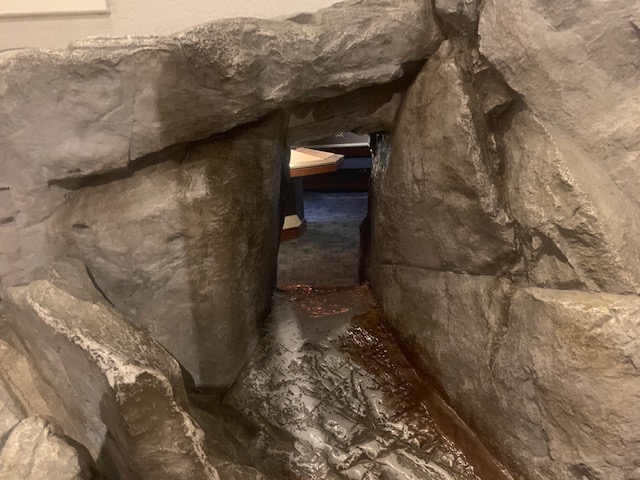

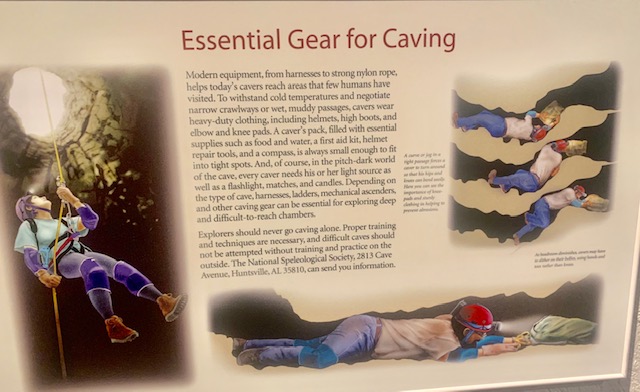
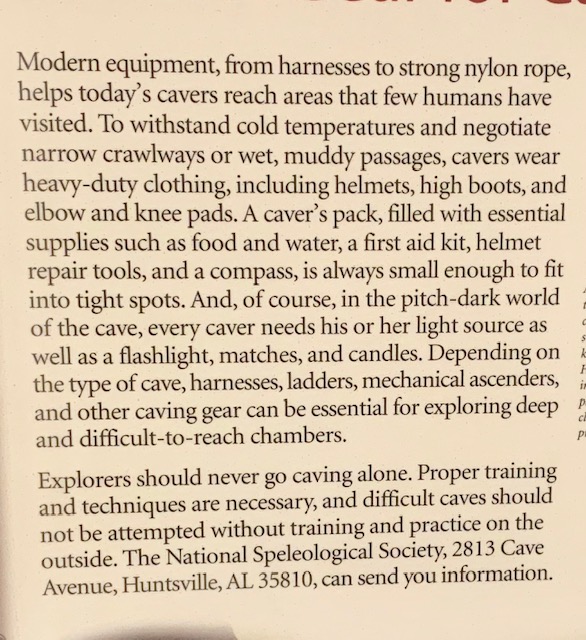
Just in by chance you were thinking about becommng a “Caver”
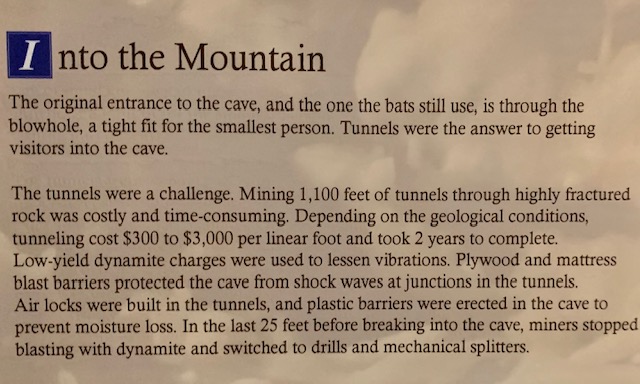
Construction of Katchner Caverns as a public state park started after the Arizona State Park Board bought the land on September 16, 1988, and it took 11 years to build the necessary structure and framework. The Nature Conservancy secured the land in 1985, and the Arizona Parks Board finalized the purchase in September 1988 after legislative funding was approved. The state invested $28 million to construct specialized high-tech air-lock doors, climate-monitoring equipment, misting systems, and paved walkways designed to preserve the cave’s natural humidity and living formations.
The park officially opened to the public on November 5, 1999.
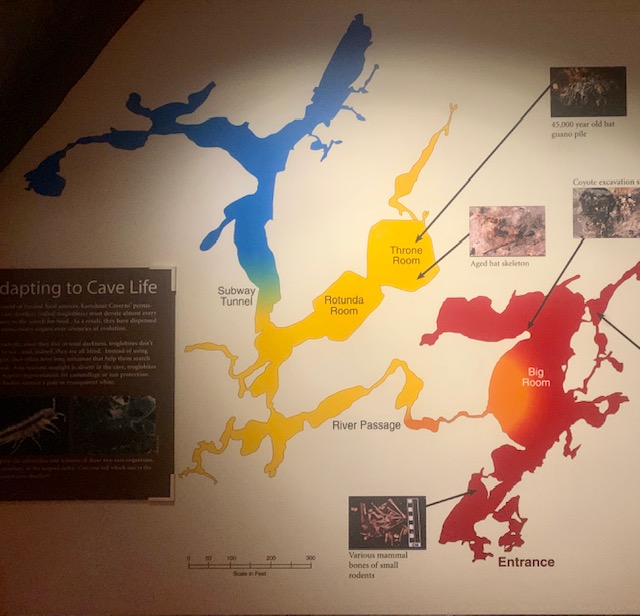
The three sections that made up the cave are the Throne Room, the Rotunda Room and the Big Room.
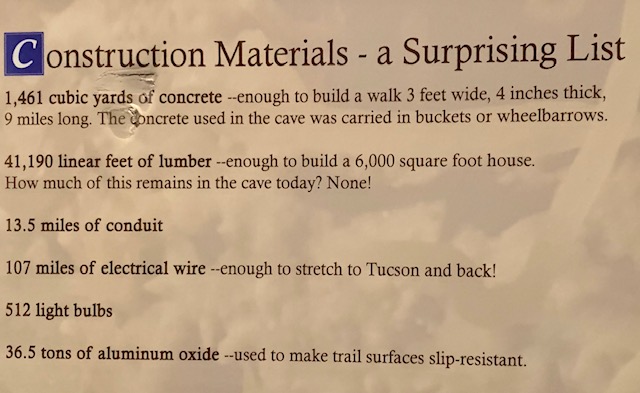
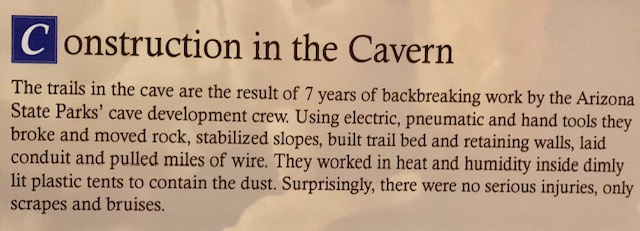
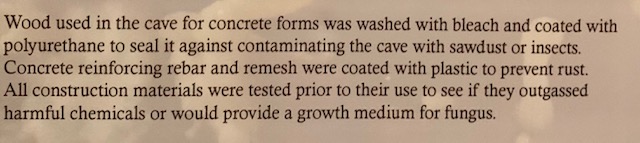

Once the state took over construction in 1988, It took dozens of specialists to keep the project moving along. It required a massive multidisciplinary team that included geologists, hydrologists, paleontologists, and specialized underground construction workers. Workers had to blast and excavate tunnels while under strict instructions not to alter the cave’s delicate humidity. They installed heavy air-lock doors, customized misting systems, and elevated barrier paths to ensure human lint, hair, and footprints wouldn’t destroy the ecosystem.
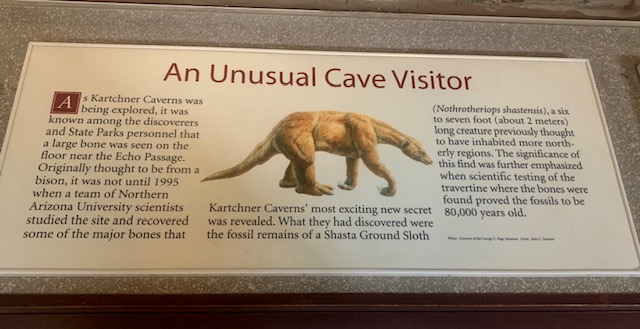
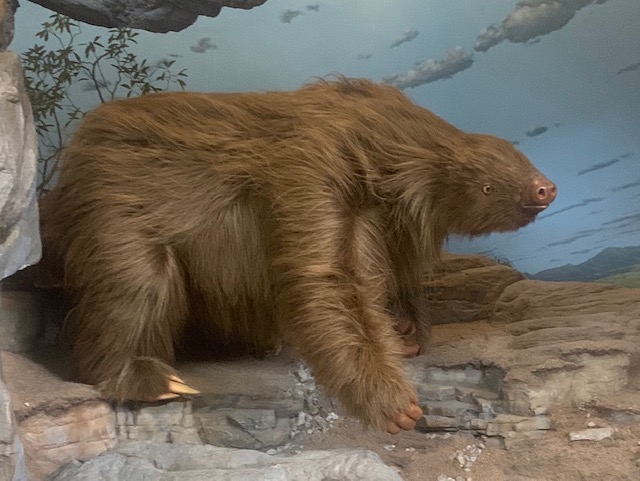
I saw my very first sloth at Madrea Canyon here in AZ with my friend Marcia.
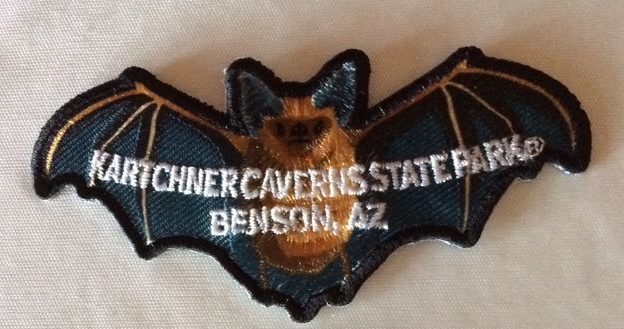
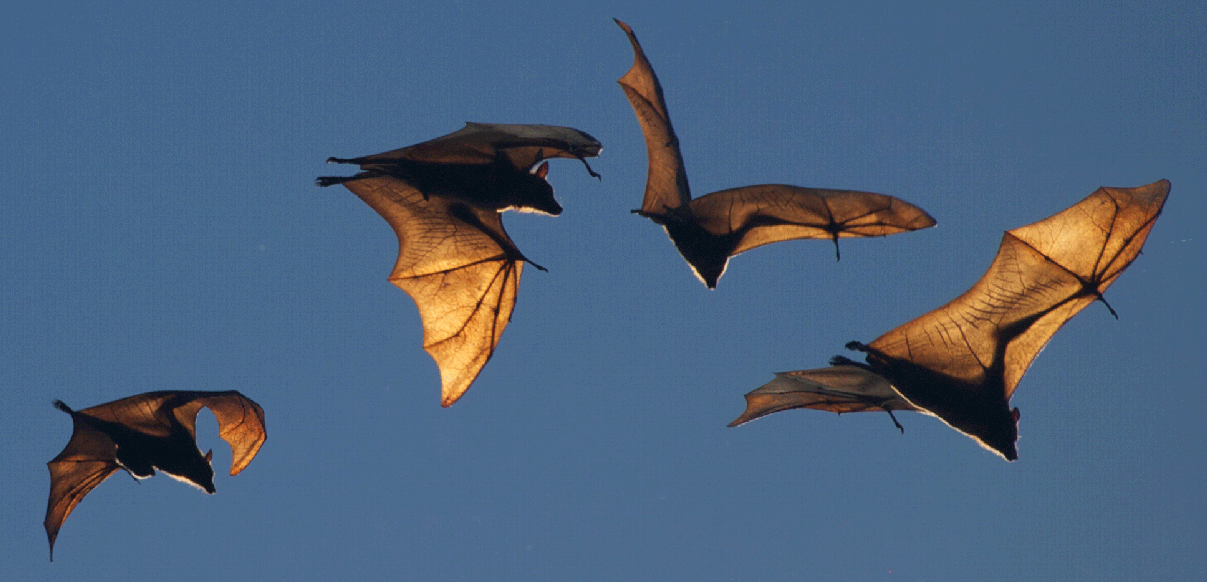
Katchner Caverns are inhabited by many micro such beings but a major occupant are bats. During maternity season pregnant female, cave myotis come to the Big Room in late April, give birth in June, and leave by late September or early October. The Big Room is then closed to public cave tours from April 15 to October 15 every year to protect the nursery. Bats are very good for the caverns because bat guano (droppings) introduces vital nutrients that support a rare underground invertebrate food chain inside the cave.
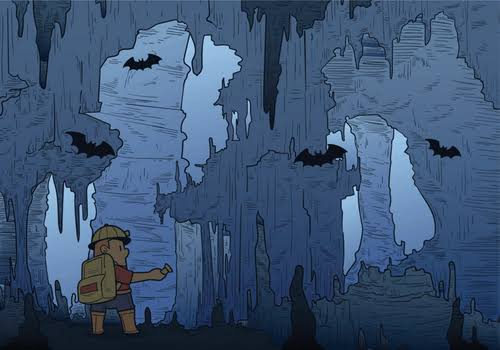
Did you know that bats are important for our ecosystems and economies? They help control pests, pollinate plants, and spread seeds. One bat can consume between 800 up to 1,200 mosquito-sized insects in just one hour! Many plants rely almost entirely on bats for survival. Agave (the plant used to make tequila), bananas, mangoes, and avocados depend on bats to pollinate their flowers. Just a few of the good things bats do. Plus there neat to alone or in big groups.

Photography is not allowed on regular tours at the Caverns to protect the fragile ecosystem and ensure a safe, smooth tour experience. But I did use some of the parks pictures for the blog.

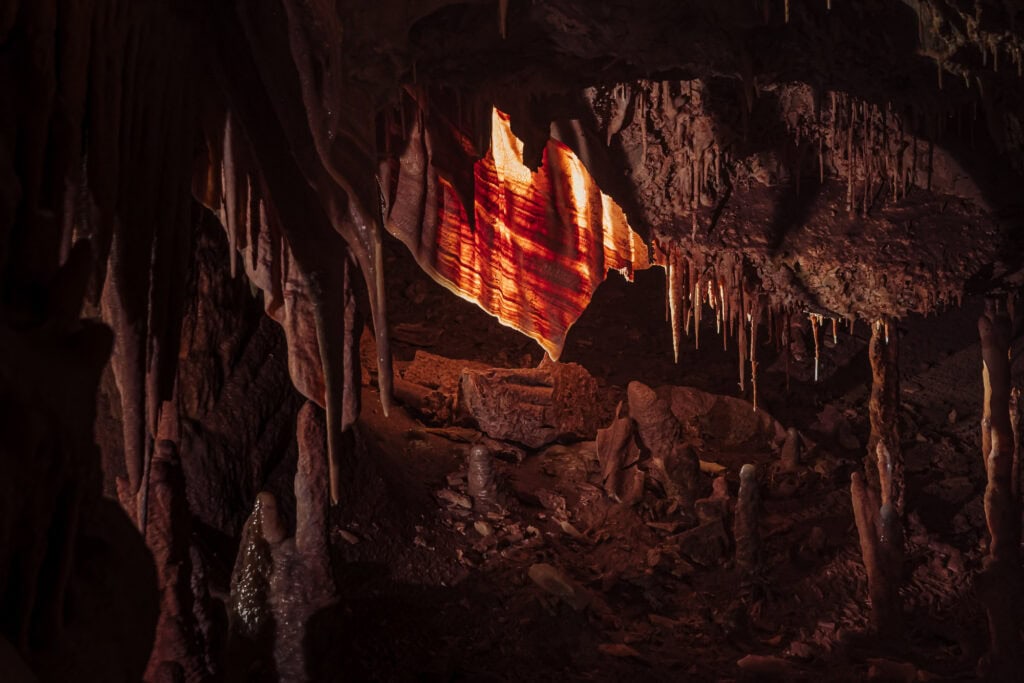
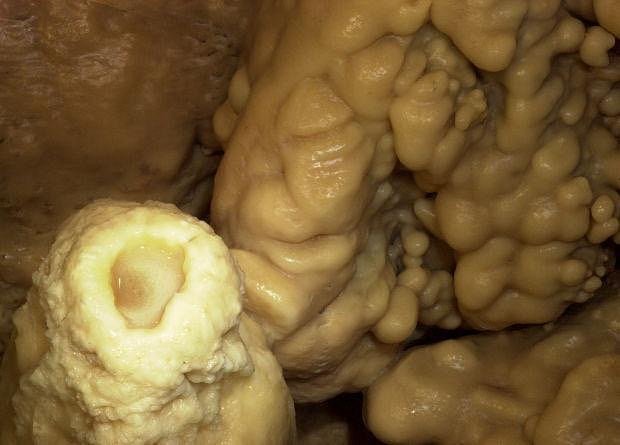
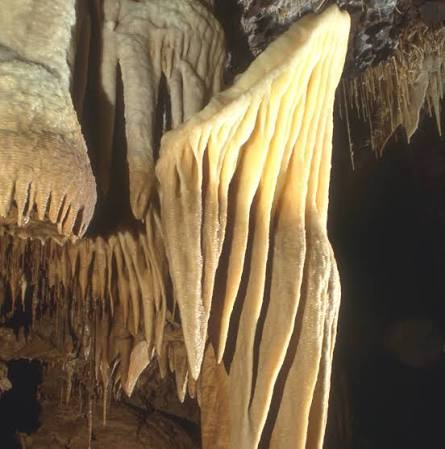
The first picture because of it’s ribbon-like formation, is called “Cave Bacon.” The second picture the formation is called an Egg. I didn’t know the tour would make you hungry.
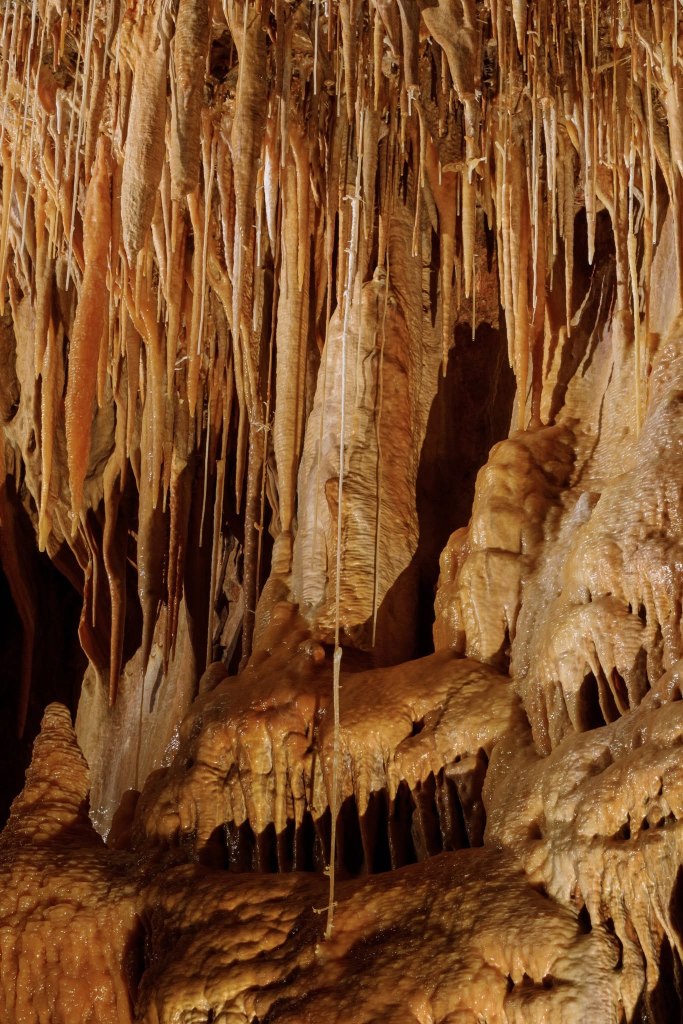
These are called Soda Straw formations because they are thin, hollow stalactites that hang from the ceiling like drinking straws. Katchner Caverns has one of the longest soda straw stalactites in the world, which is 21 feet 3 inches long in the Throne Room.
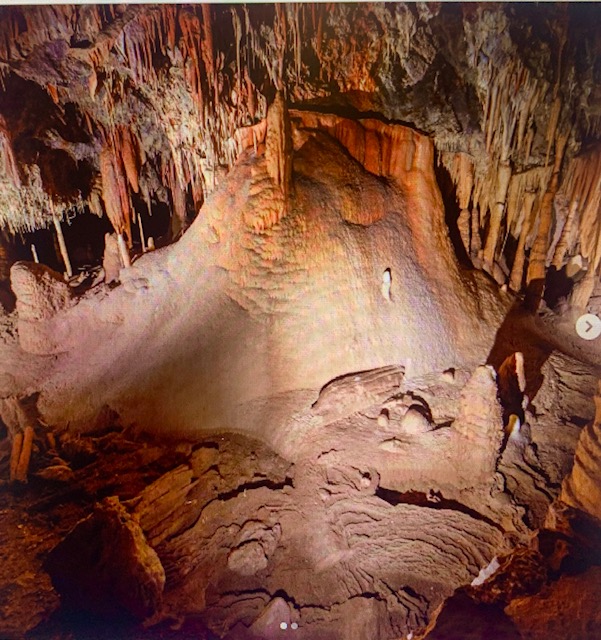
When the cave’s discoverers first saw these formations, they described them as looking like a strawberry sundae melting. The Strawberry name stuck. There are Strawberry Formations in part of the Big Cave.
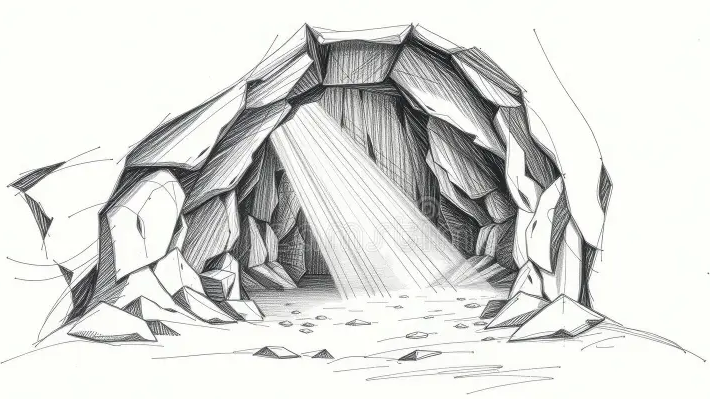
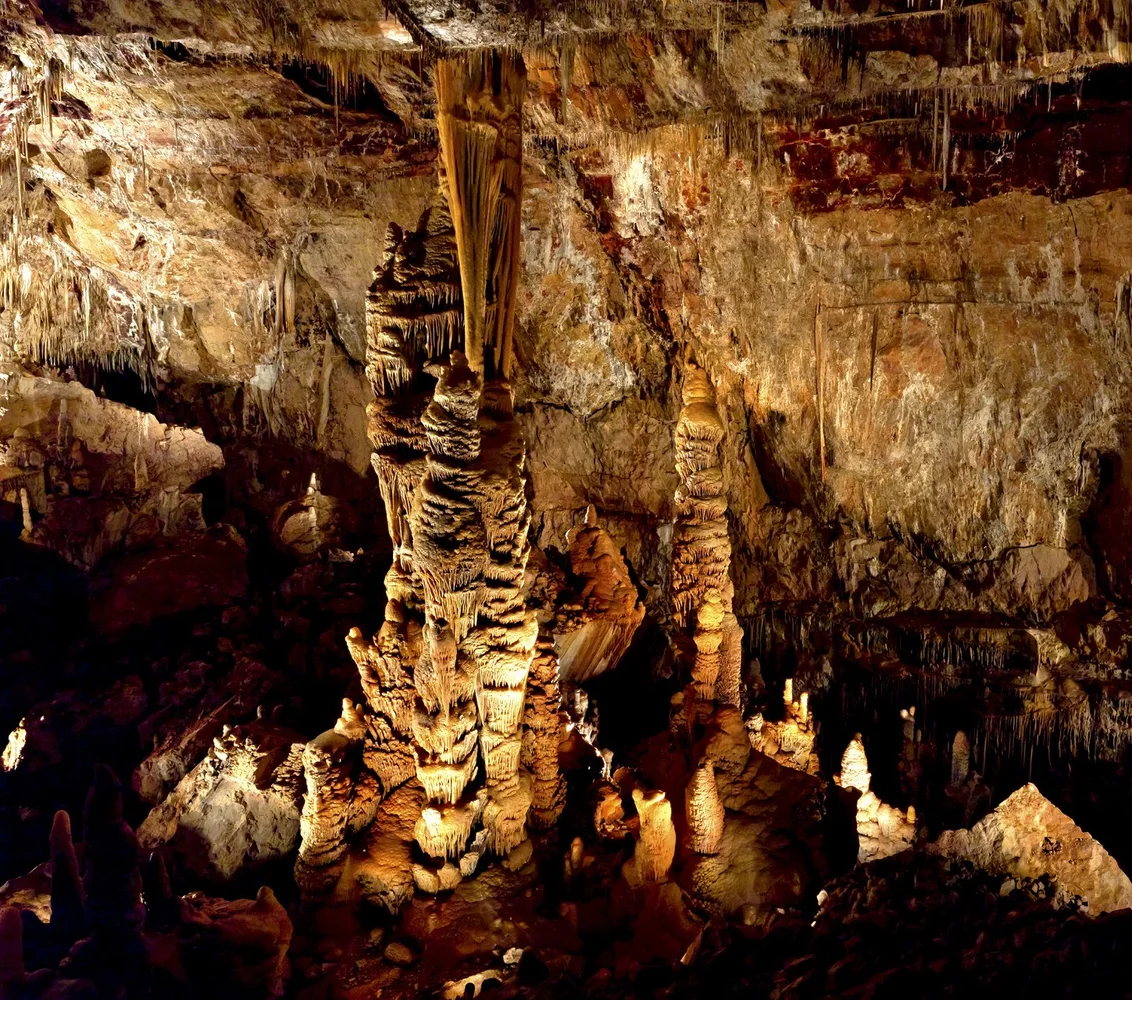
The tallest and most massive column in Arizona is called the Kubla Khan. It stands 58 feet tall and roughly 12 feet in diameter at its widest part, it is the tallest and most massive cave column in Arizona.
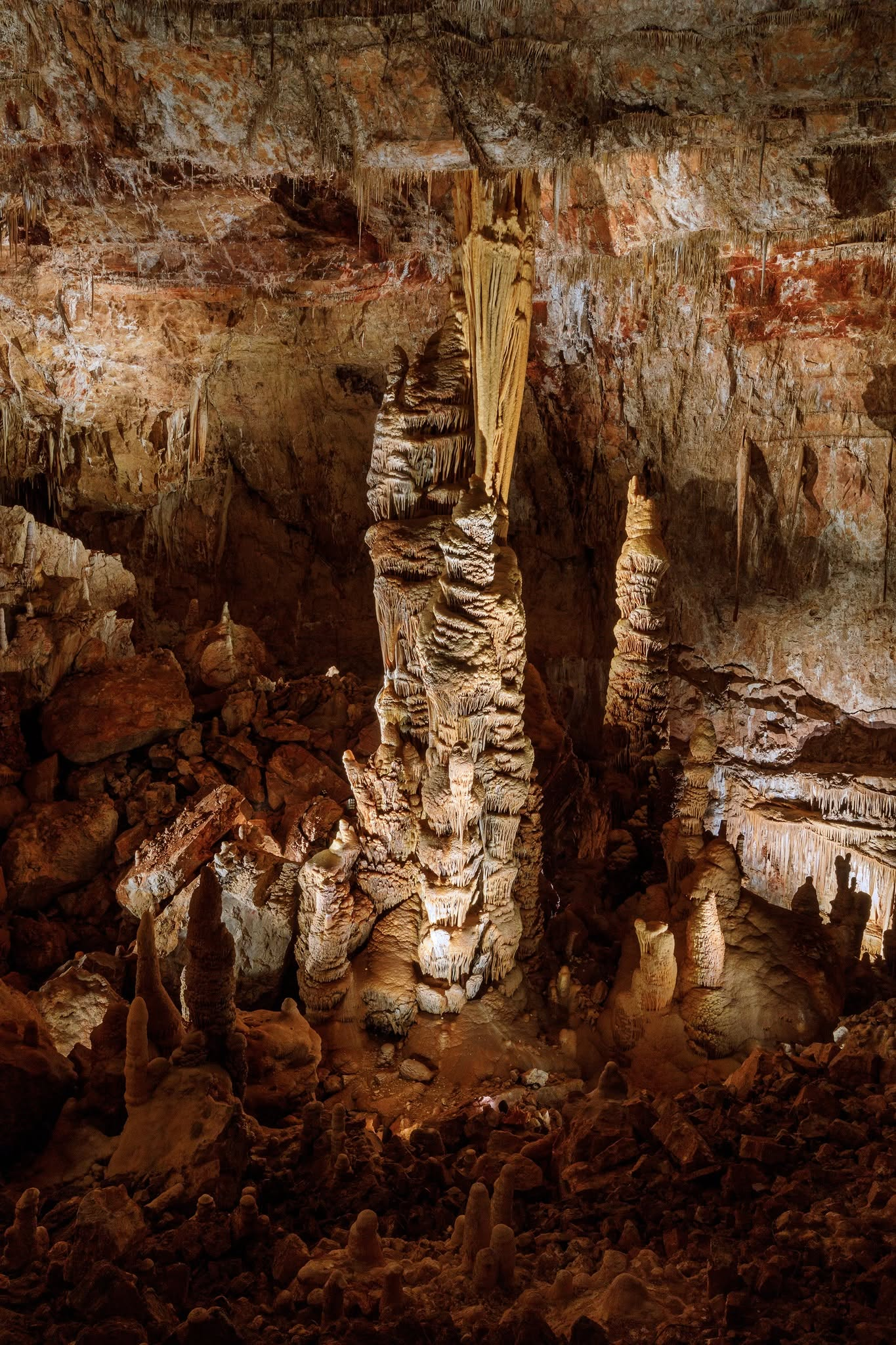
They named the massive formation after the ruler in Samuel Taylor Coleridge’s famous 1797 poem “Kubla Khan” (which opens with the lines about the pleasure-dome in Xanadu).
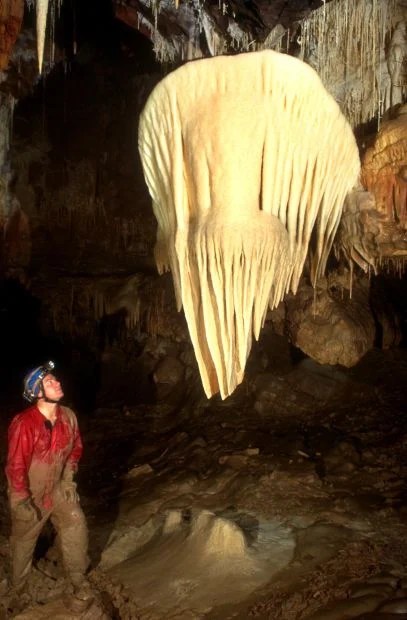
The Big Room has Brushite Moonmilk formations, they have a soft, white, creamy, or pasty mineral deposit that coats cave walls and floors.
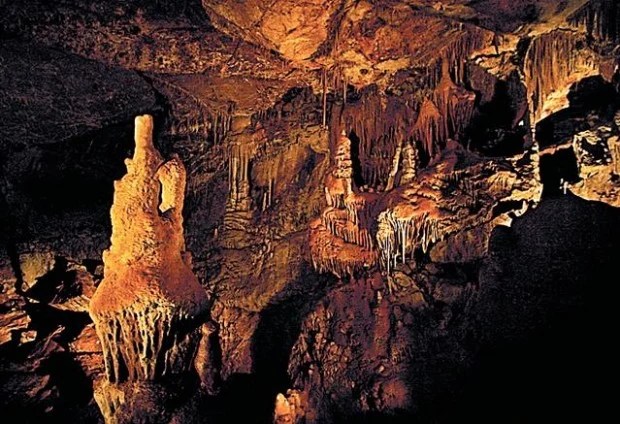
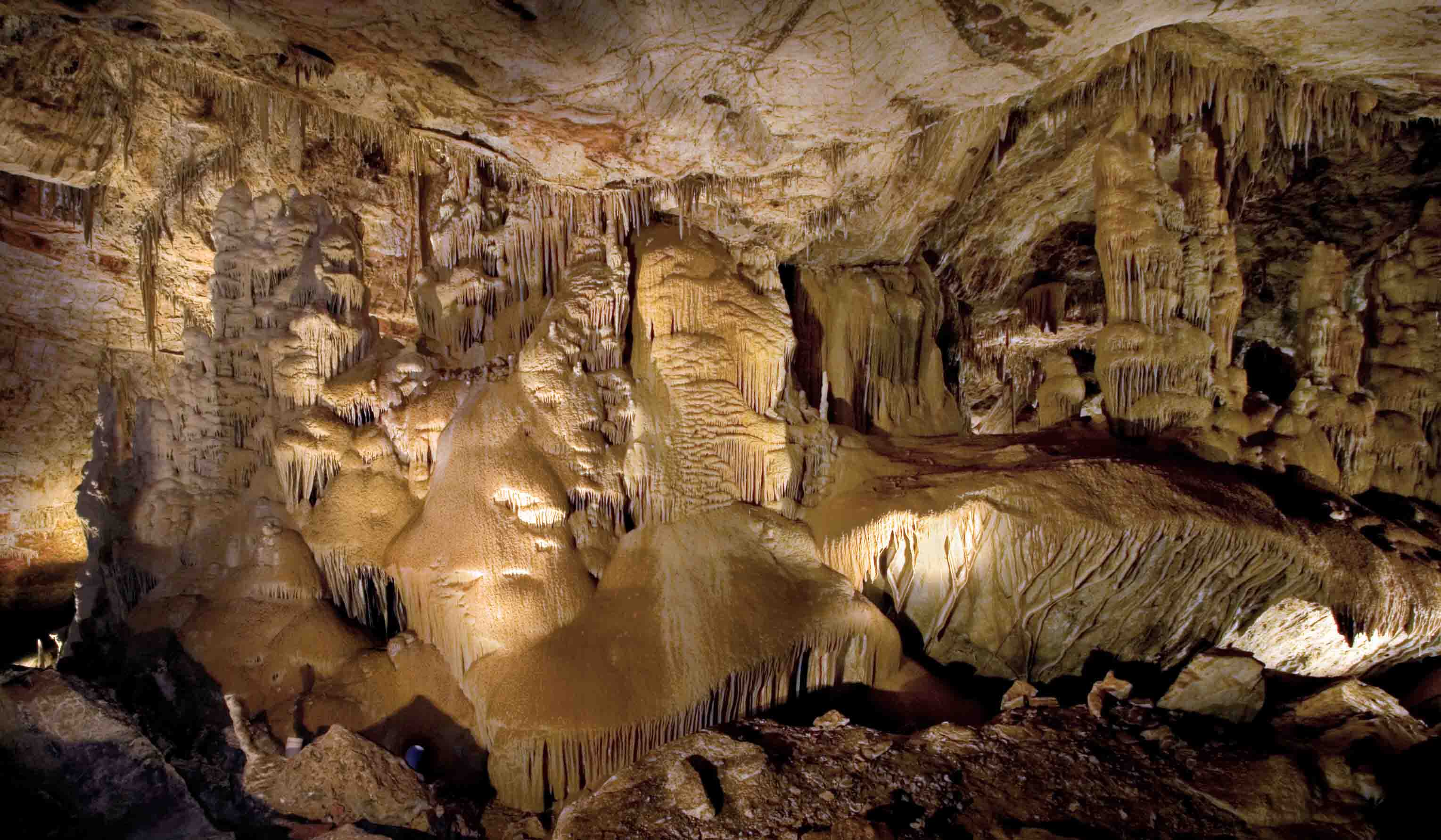
The Big Room
There’s a lot more neat things to see in Arizona’s only underground park.