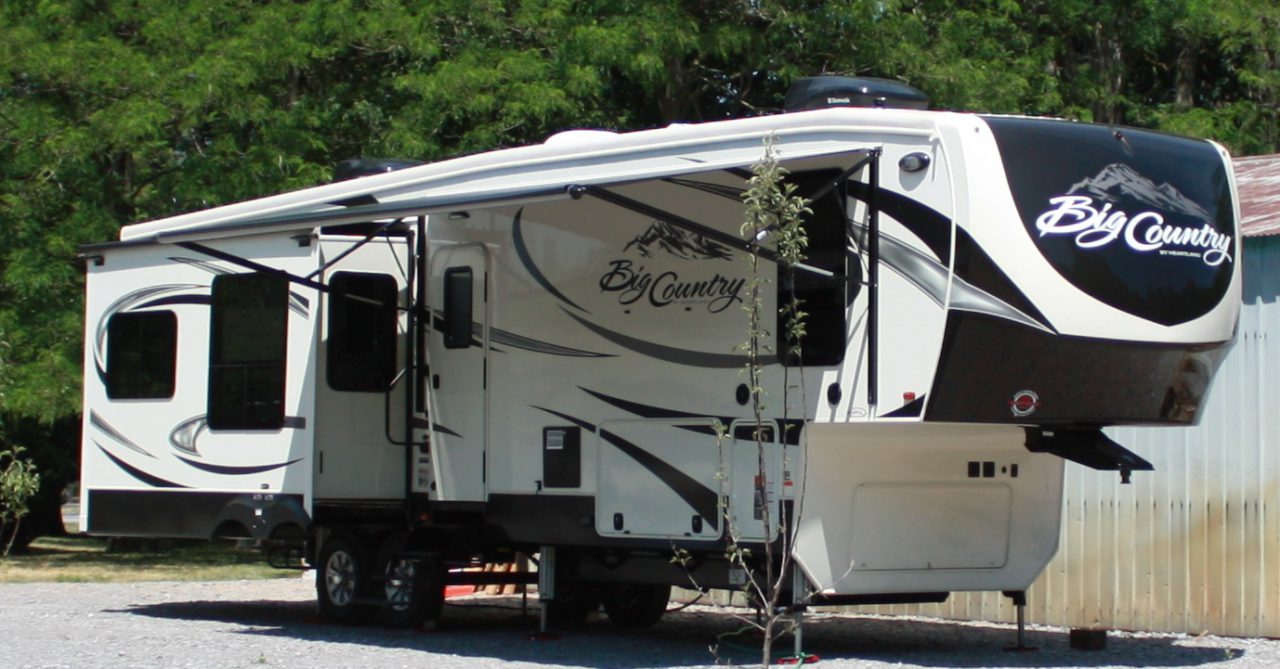
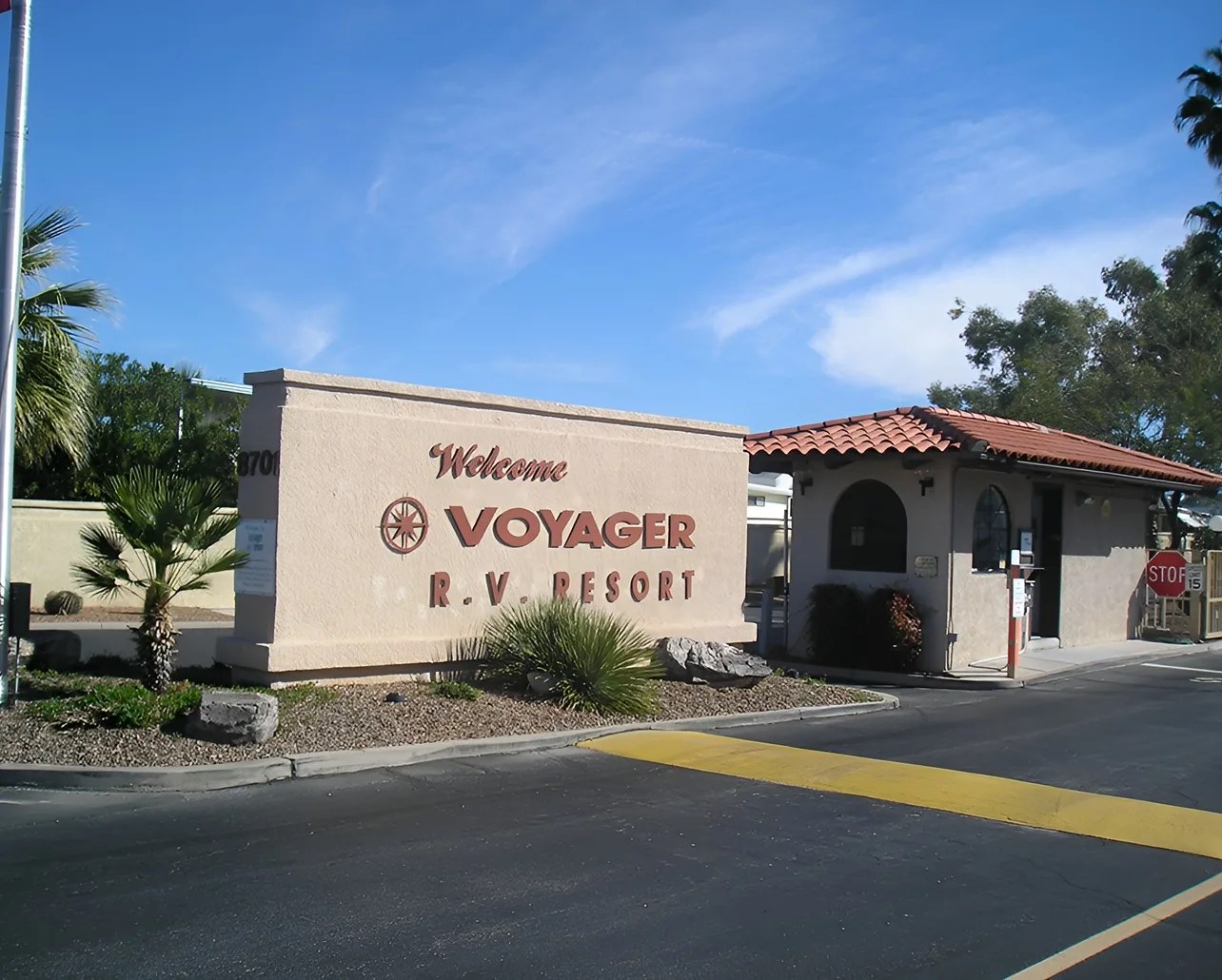
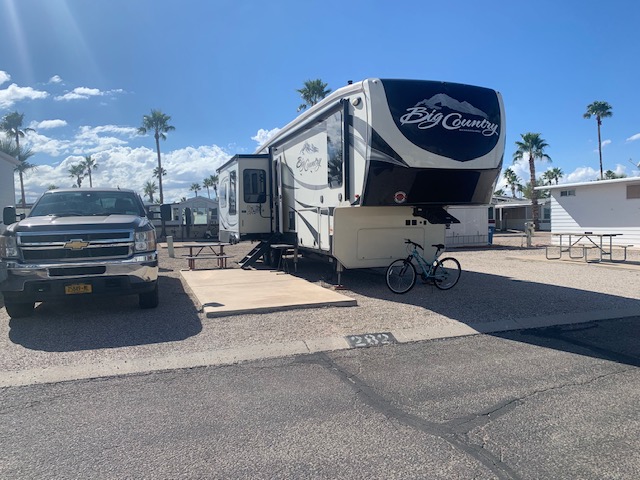
We got in on Sunday morning, November 1st, right before it starting raining, it finally ended in the eveninng.
Dave has been waiting to take a few day trips from here so like Nike says “Just Do It” so we did.
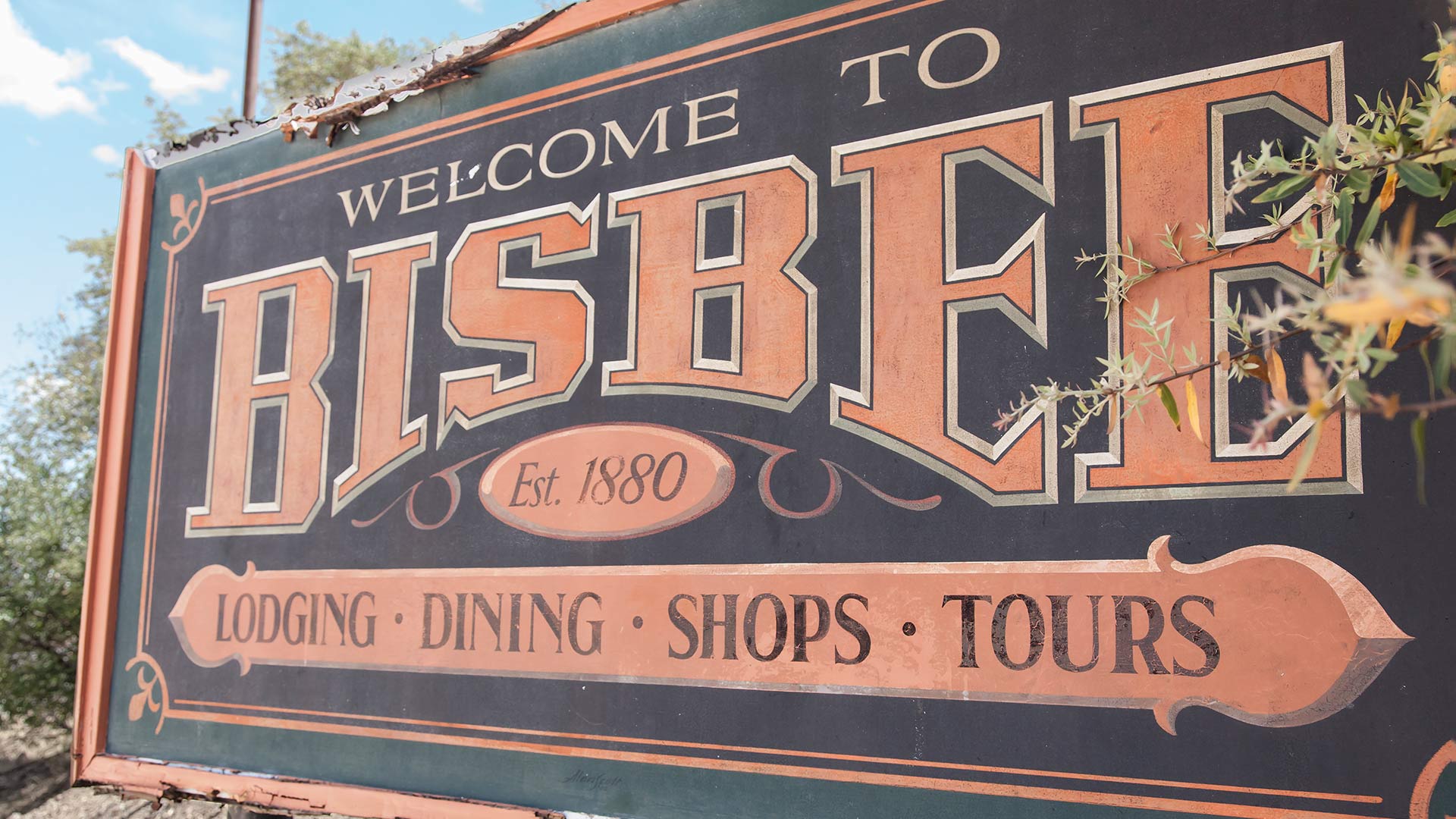
On Monday November 3rd we rented a car and headed to Bisbee AZ. Bisbee is in the southeast corner of Arizona, they call it a little mile-high city. This town sits in copper rich country and is home to the once active Copper Queen Mine. Dave has been wanting to take a mine tour here.
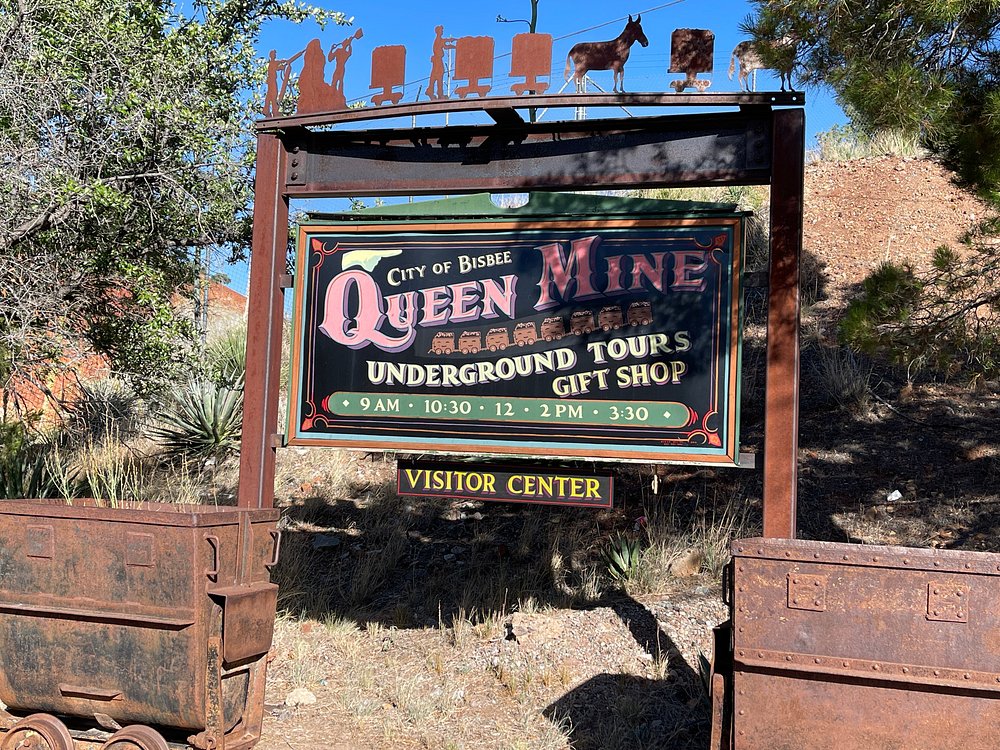
Here’s how the mine town came to be. In 1877 soldiers in the Arizona territory from Camp Bowie had been tasked to round up some renegade Apaches in the area. Their scouting party had followed the Apaches to the red hills of Mule Gulch. One of these scouts, John Dunn, while searching for a watering hole had found an outcrop of promising ore near what is today’s Castle Rock. Dunn partnered up with two others in the troop, Lt. Rucker and T.D. burns, all three intending to make their claim on the site. But Army duties were not to be kept waiting and the soldier’s orders said they were to continue chasing the Apache band they were pursuing.
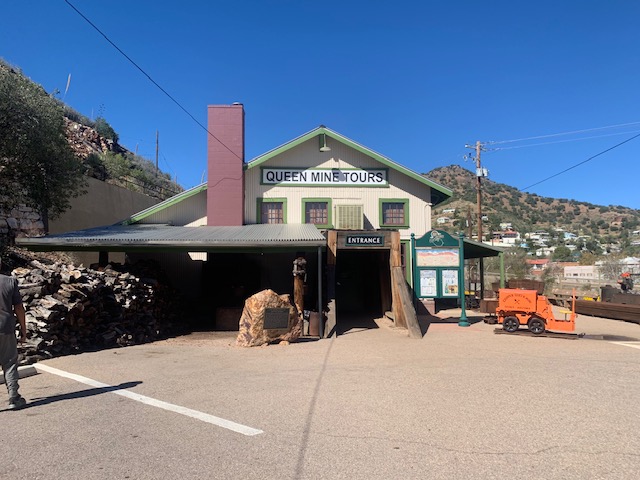
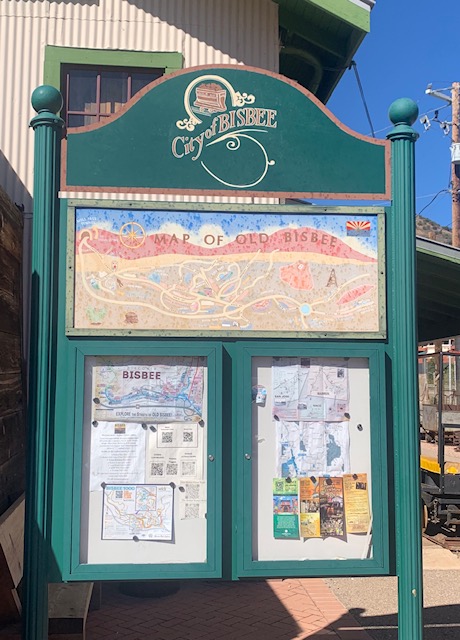
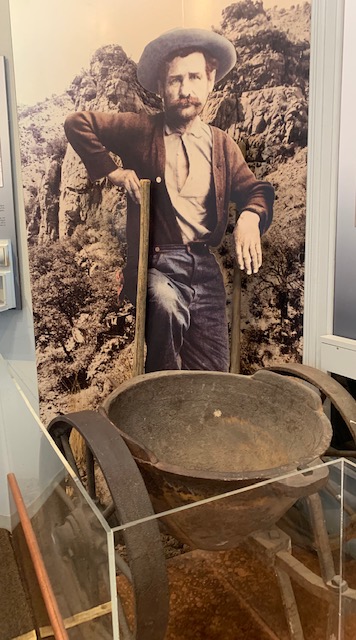
They counted on a prospector they met, George Warren, to stake their first claim for them. He was also to continue to locate as many more claims as he could to stake for the group. But Warren was a bit of a drinker and instead he found himself in a bar where he got drunk and gambled away the money he was given by Dunn to locate more claims. He did find a way to go on and stake many claims in the area, only they were in Warren’s name, not Dunns. The area proved to be prosperous, and Warren ended up with a one-ninth interest in the new Copper Queen mine, later estimated to have produced roughly $6.1 billion worth of ore during its operation. Sounds like the old West, doesn’t it?
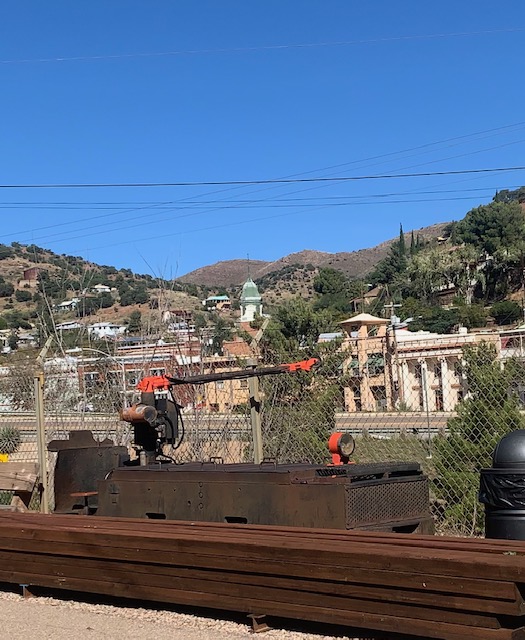
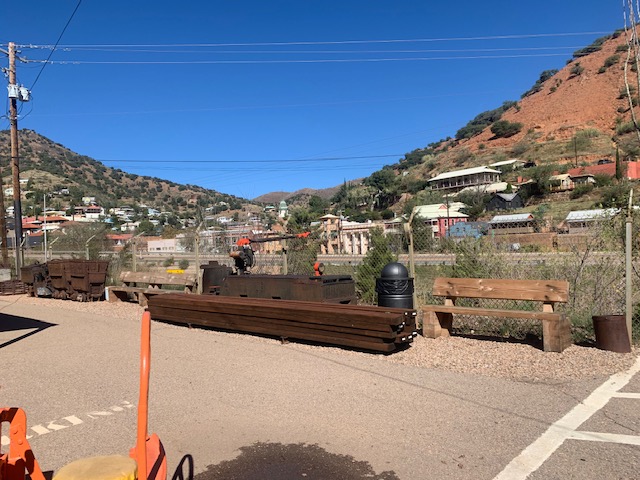
The historic Copper Queen Mine operated from 1877 through the mid-1975 by transitioning from manual hand-mining to heavy mechanization and corporate-run open-pit extraction.
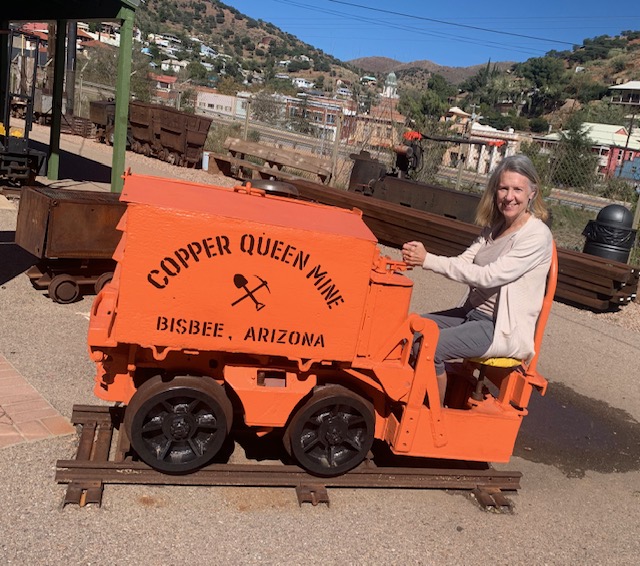
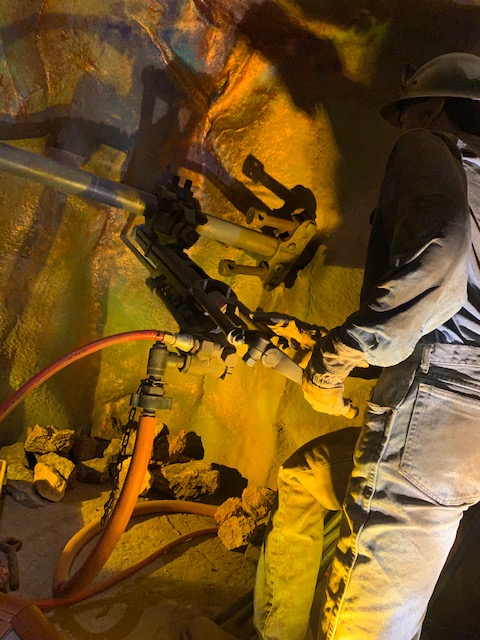
I had to check out the equipment for them
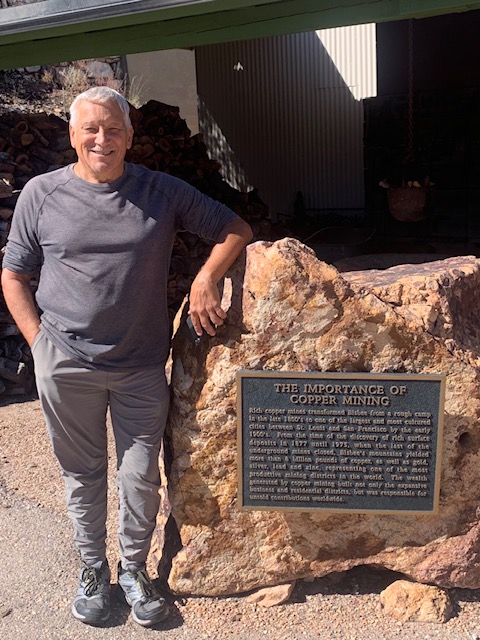
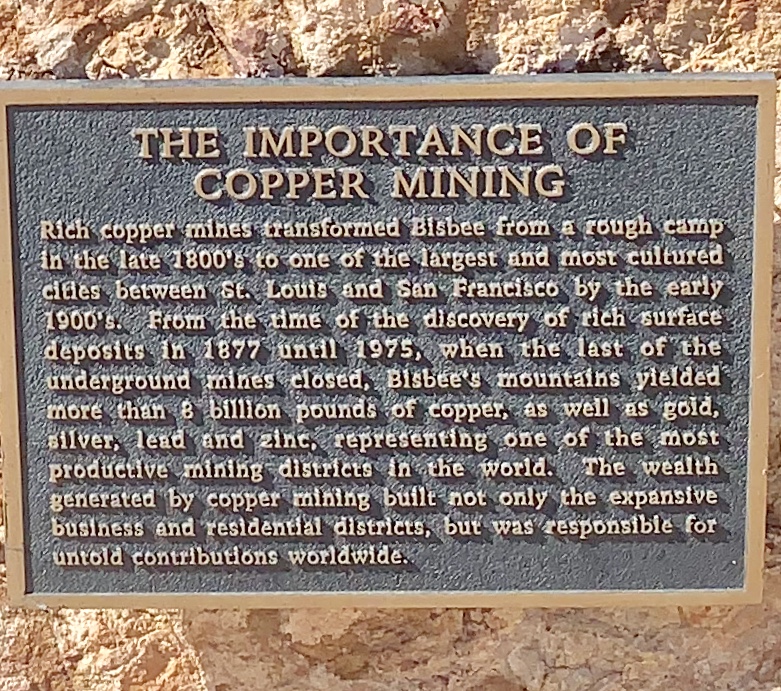
To save Bisbee after the mine closed, volunteers cleared thousands of tons of fallen rock, re-timbered the old workings, and reopened the mine to the public. On February 1, 1976 the volunteers saved the mine and today 60,000 people a year make the trip to Bisbee to visit.
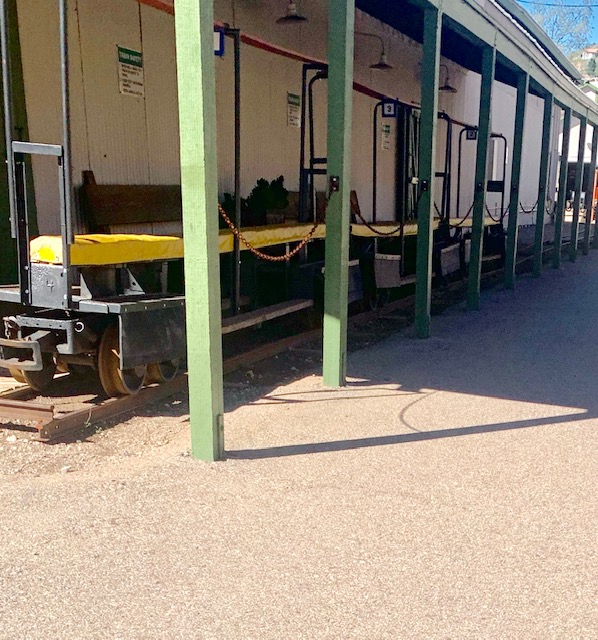
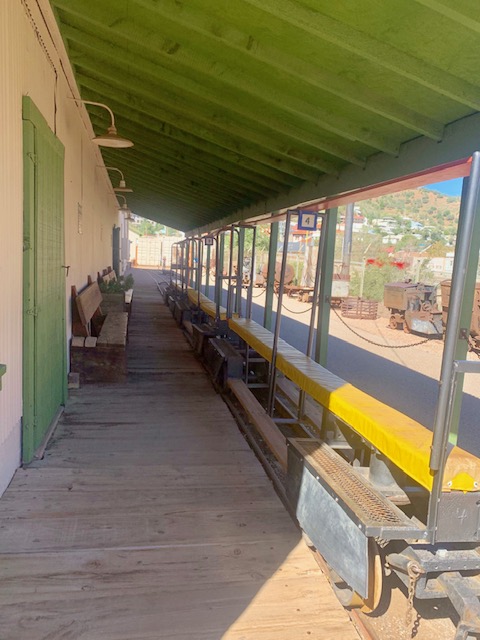
Open air train seats we rode in.
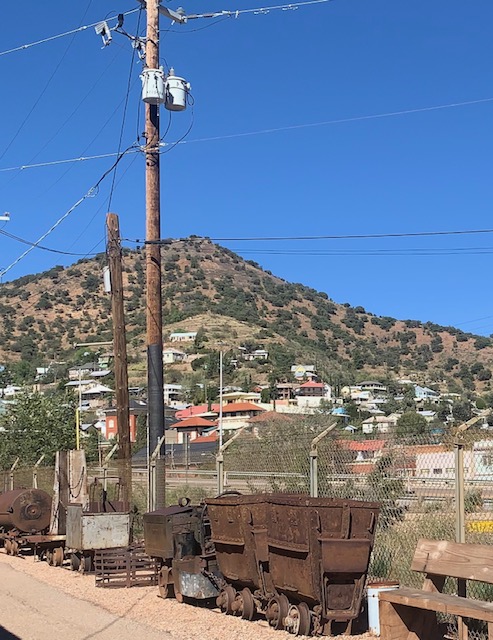
Old mining equipment
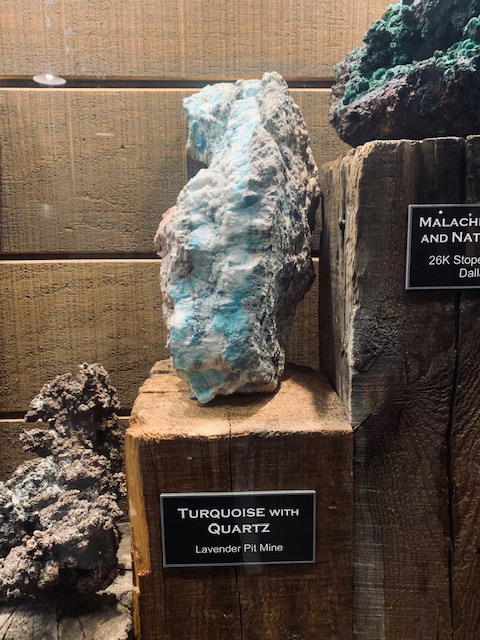
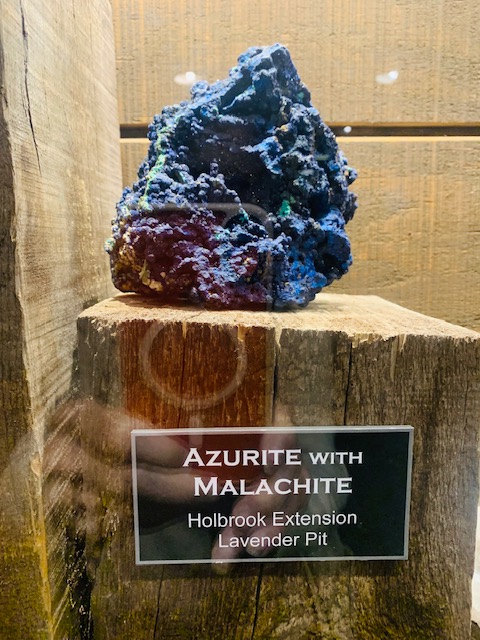
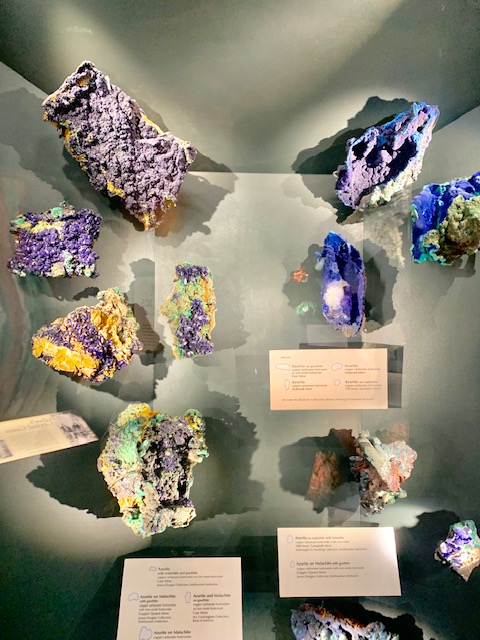
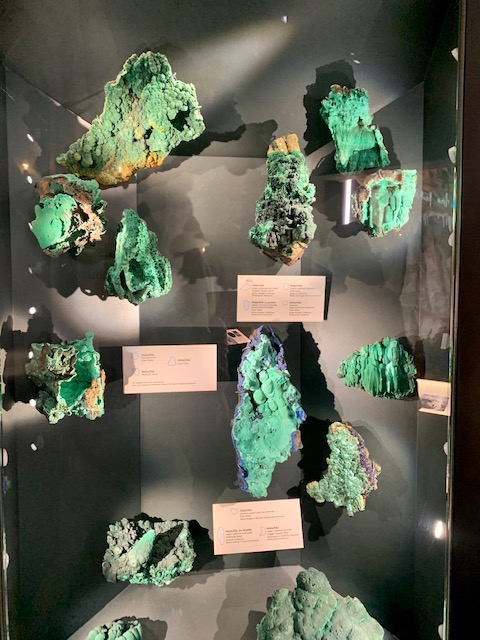
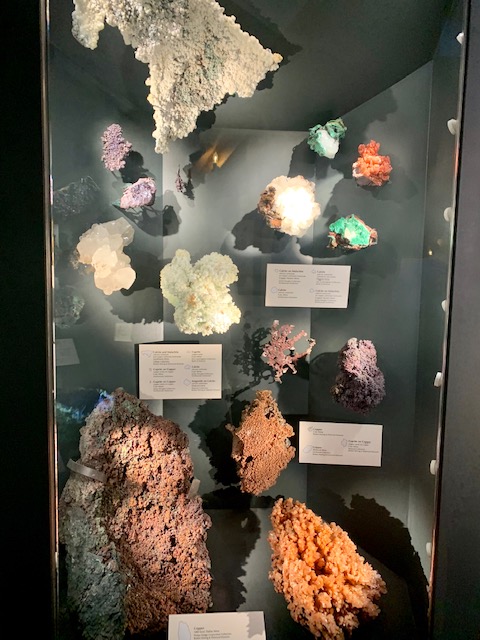
Beautiful minerals found in the Lavender Pit next door.
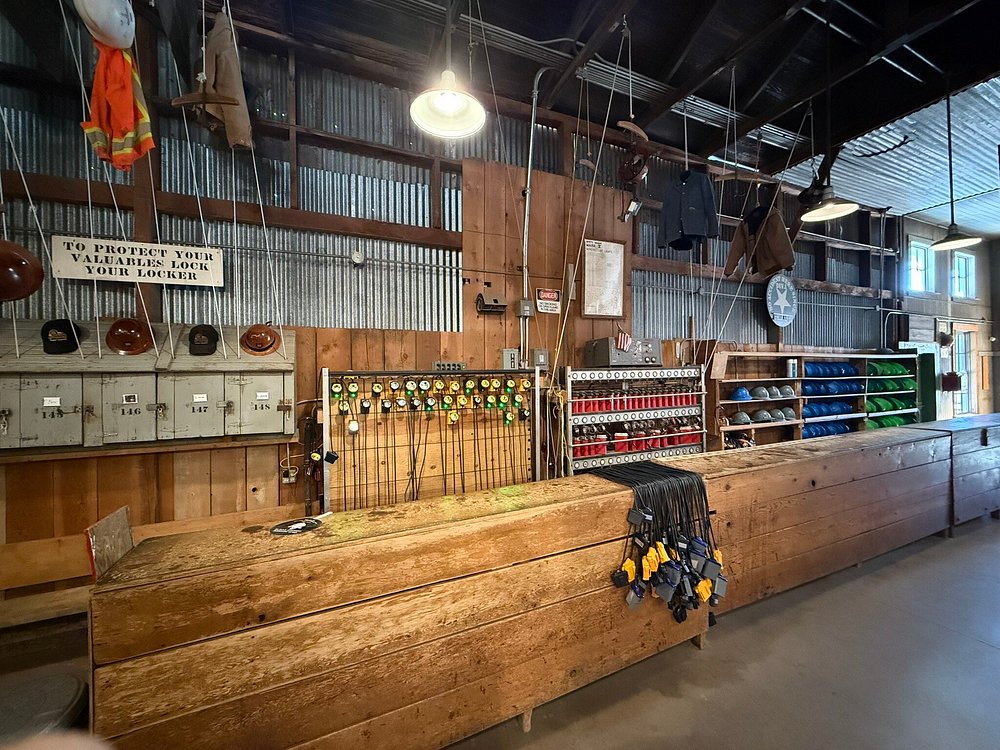
We got “geared up” with a day-glo safety vest, a helmet, and a clip-on battery-powered mining lamp and with our guide, we were ready to go 1,500 feet into the mine.
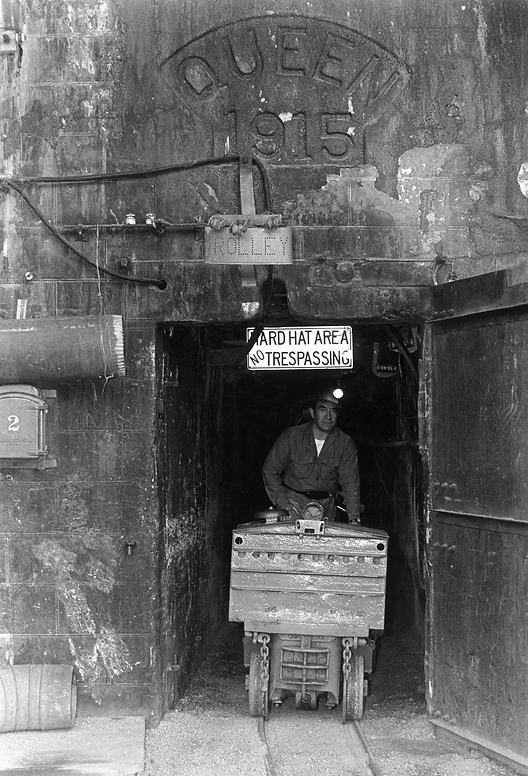
The mine entrance in 1975.
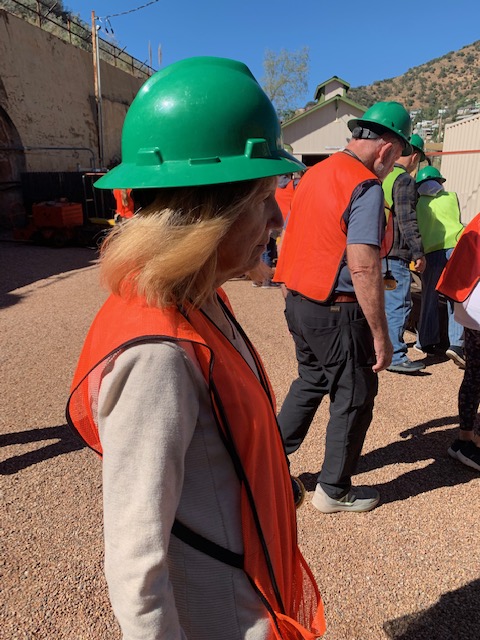
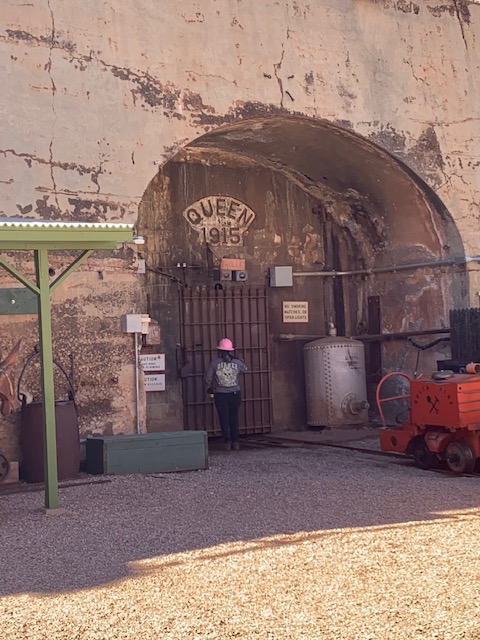
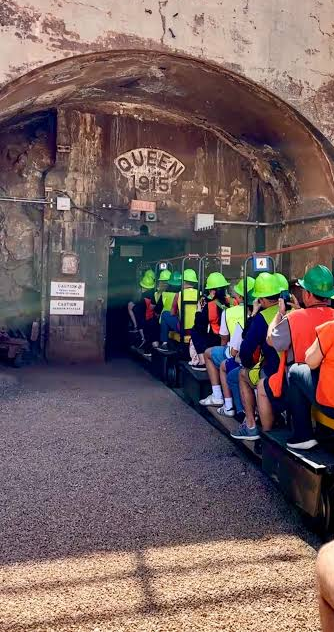
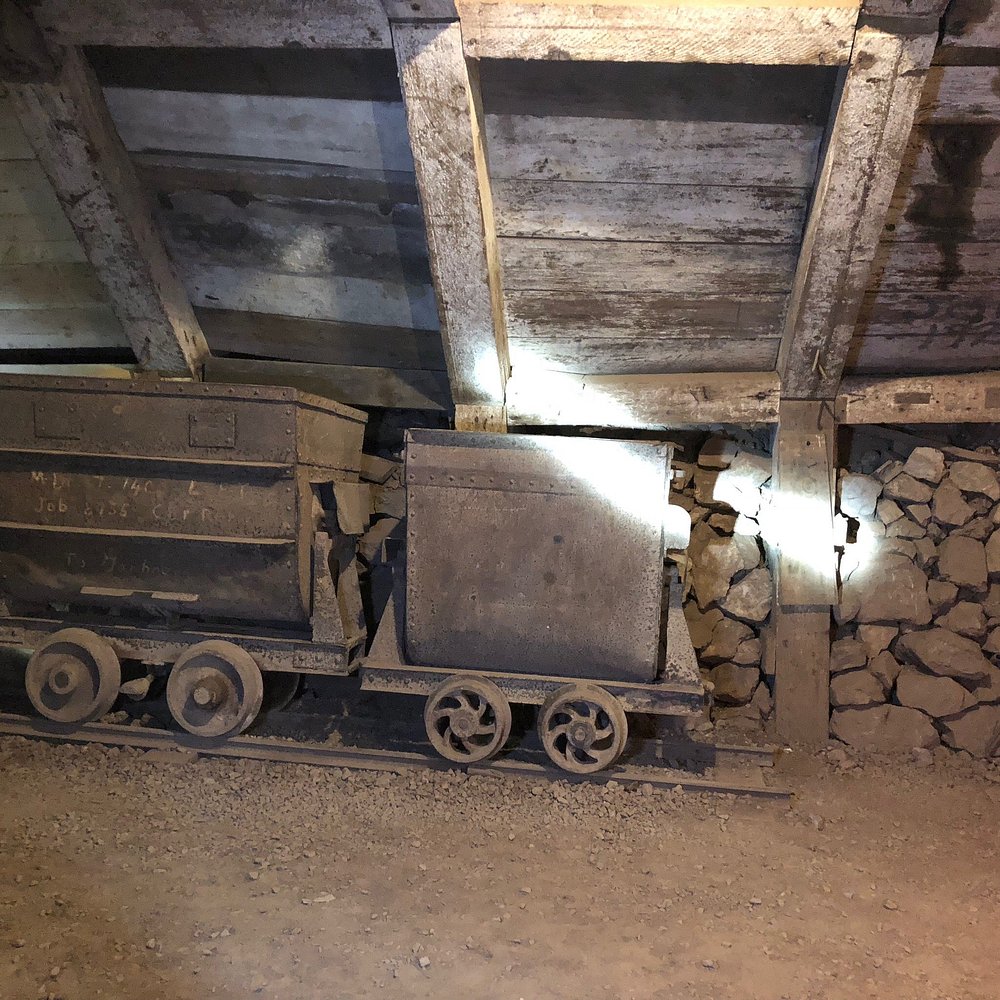
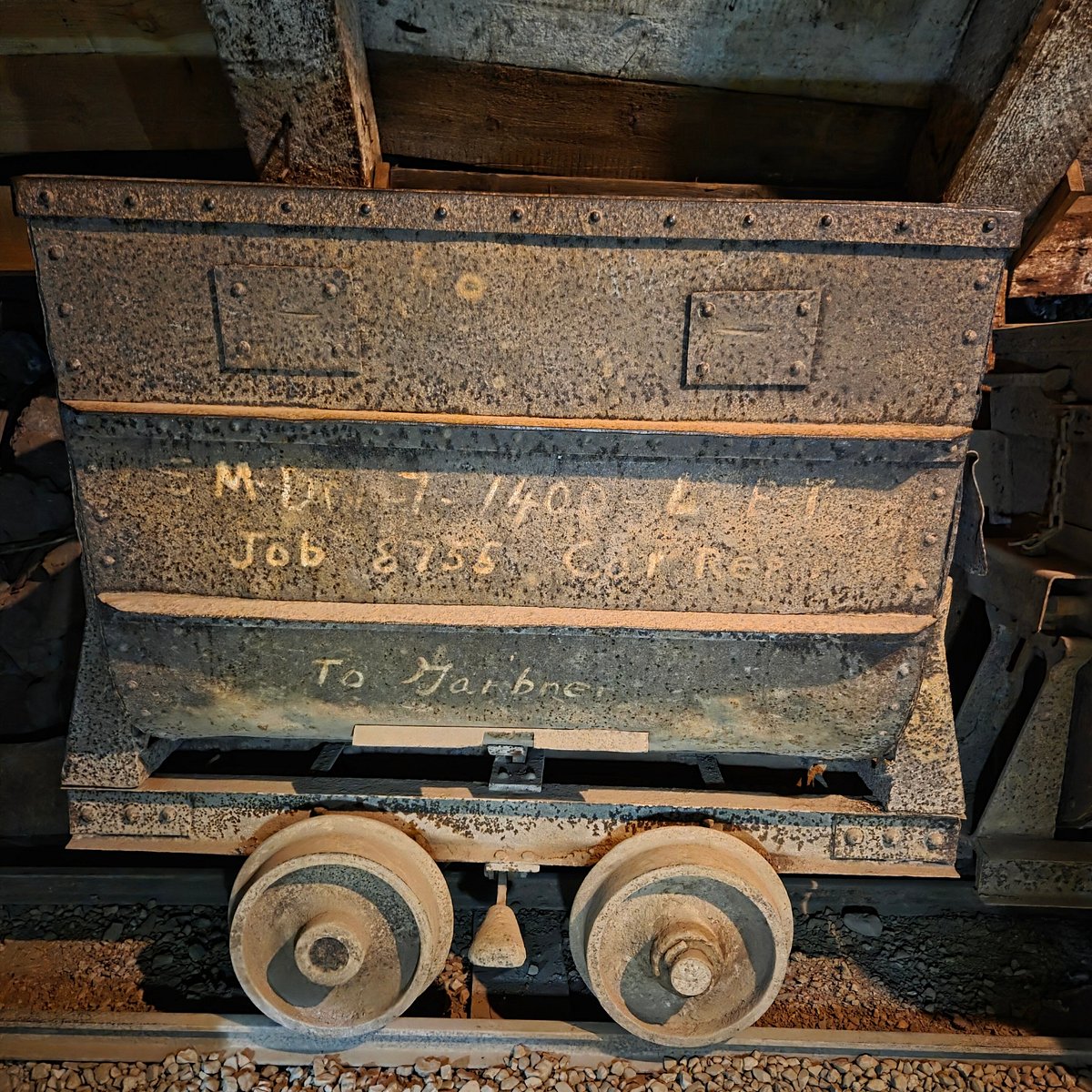
We’re on the train and heading in. As the train chugs deep into the mountain it passes old, dusty mining equipment, gated shafts that lead to who-knows-where, and giant tanks where ore would tumble into and abandoned mine carts that each held over a ton of rock
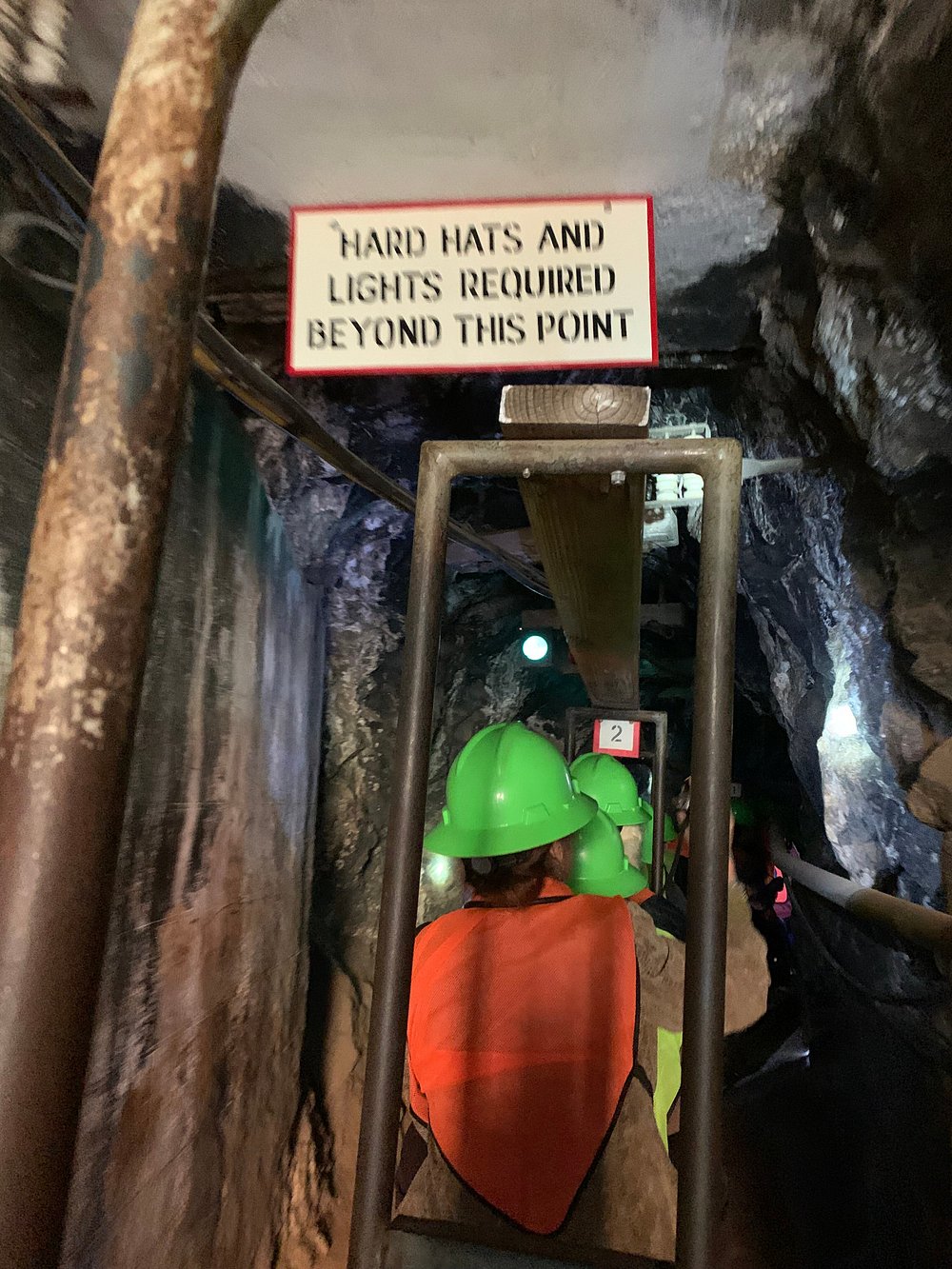
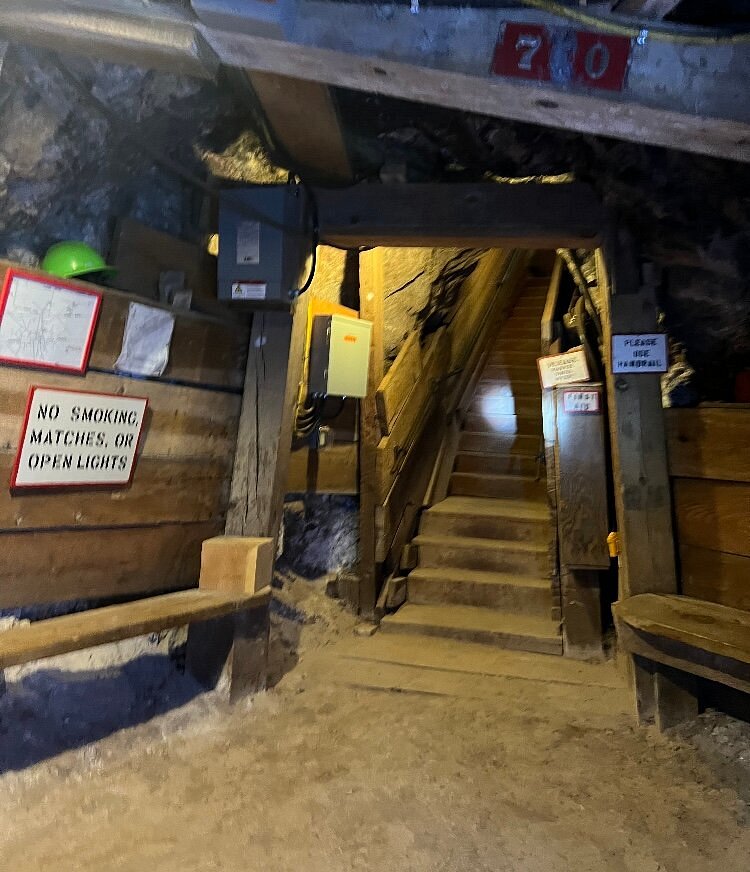
With its dark tunnels and wooden timbers the Copper Queen looks like an Old West mine.
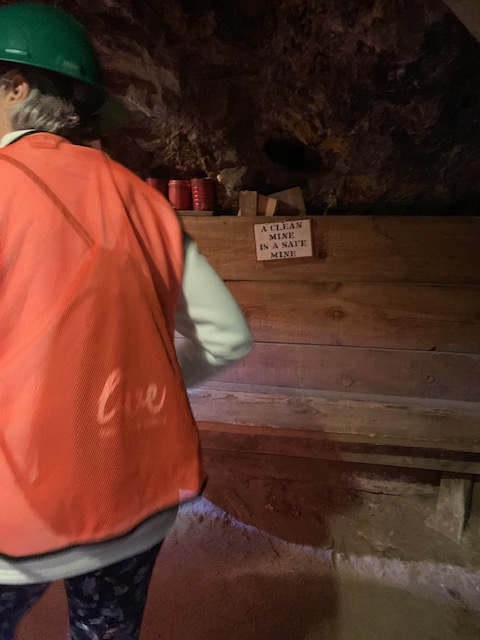
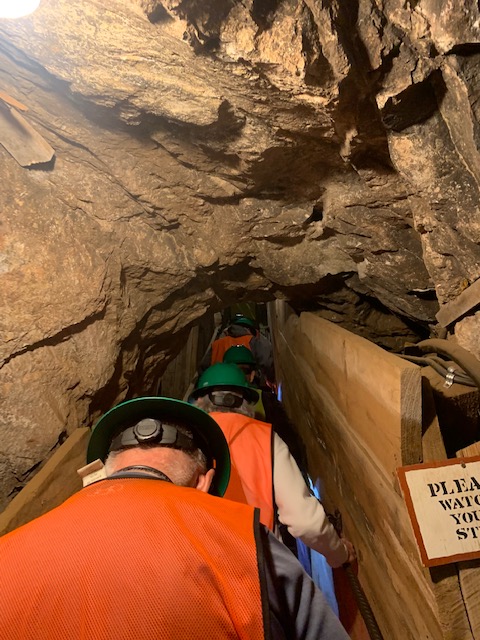
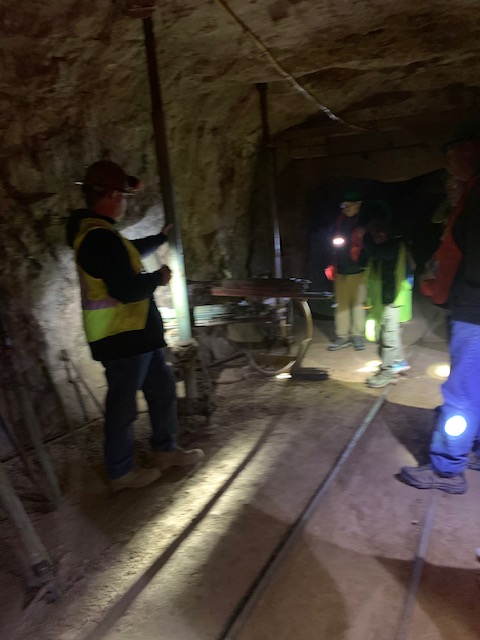
We got out at different times and our guide told us about the mine and different stories that were told by old miners.
At one stop we got out and entered a cavern that was hollowed-out to extract copper and gold.
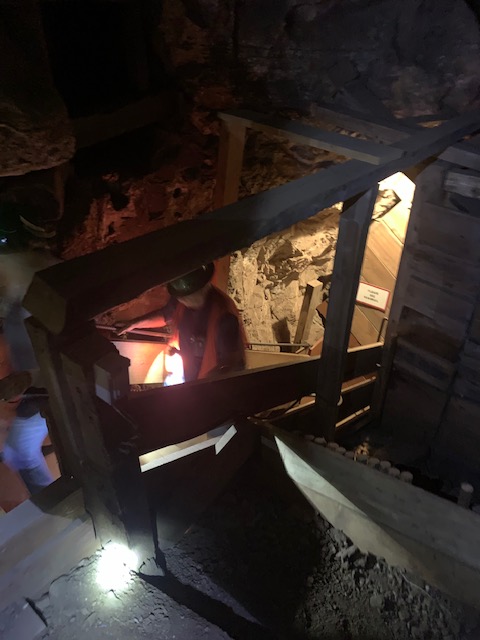
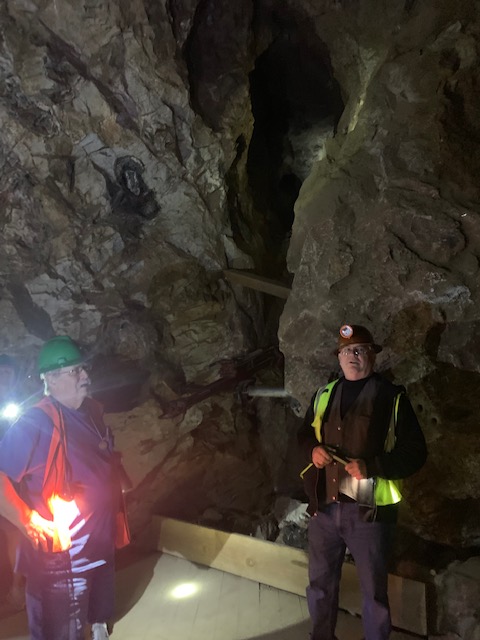
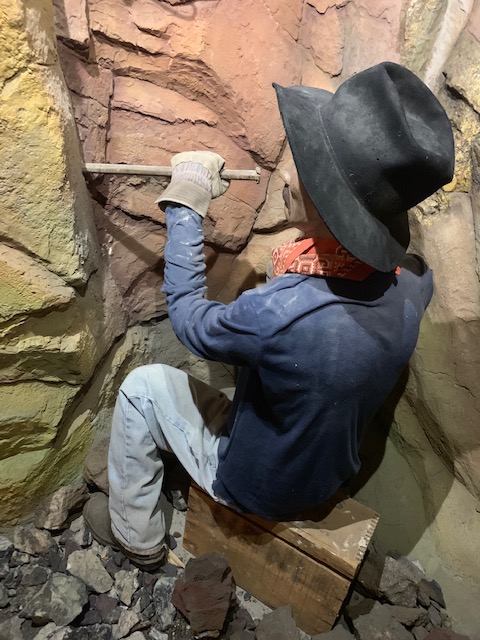
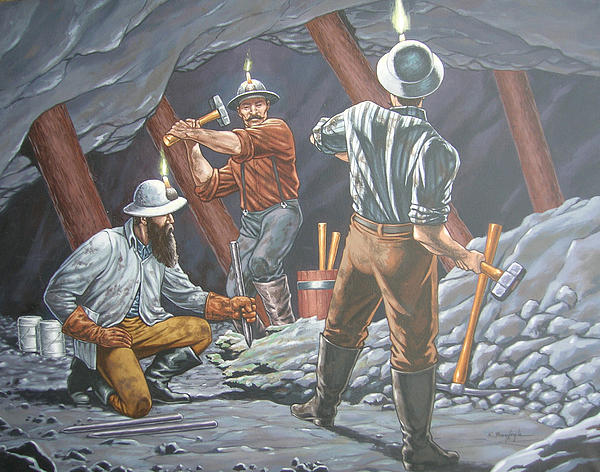
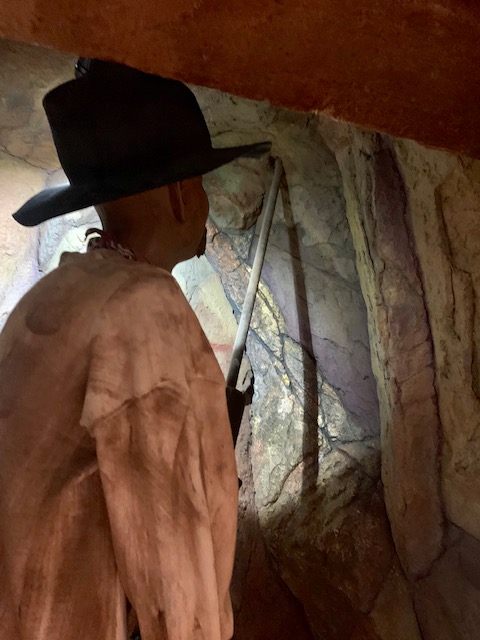
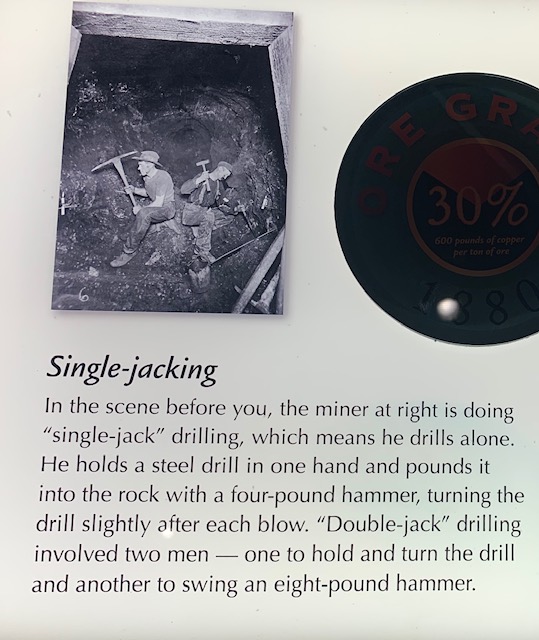
Our guide demonstrated how early prospectors chipped away at stubborn rock walls by the dim light of candles or early carbide lamps before electric drills and aerial tools took over.
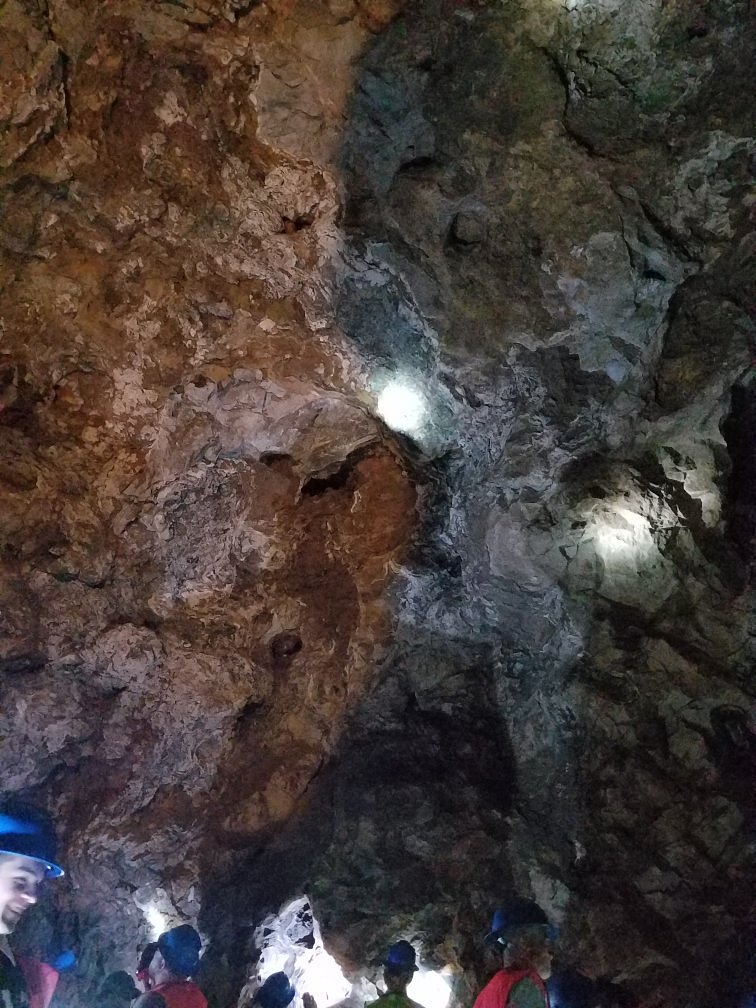
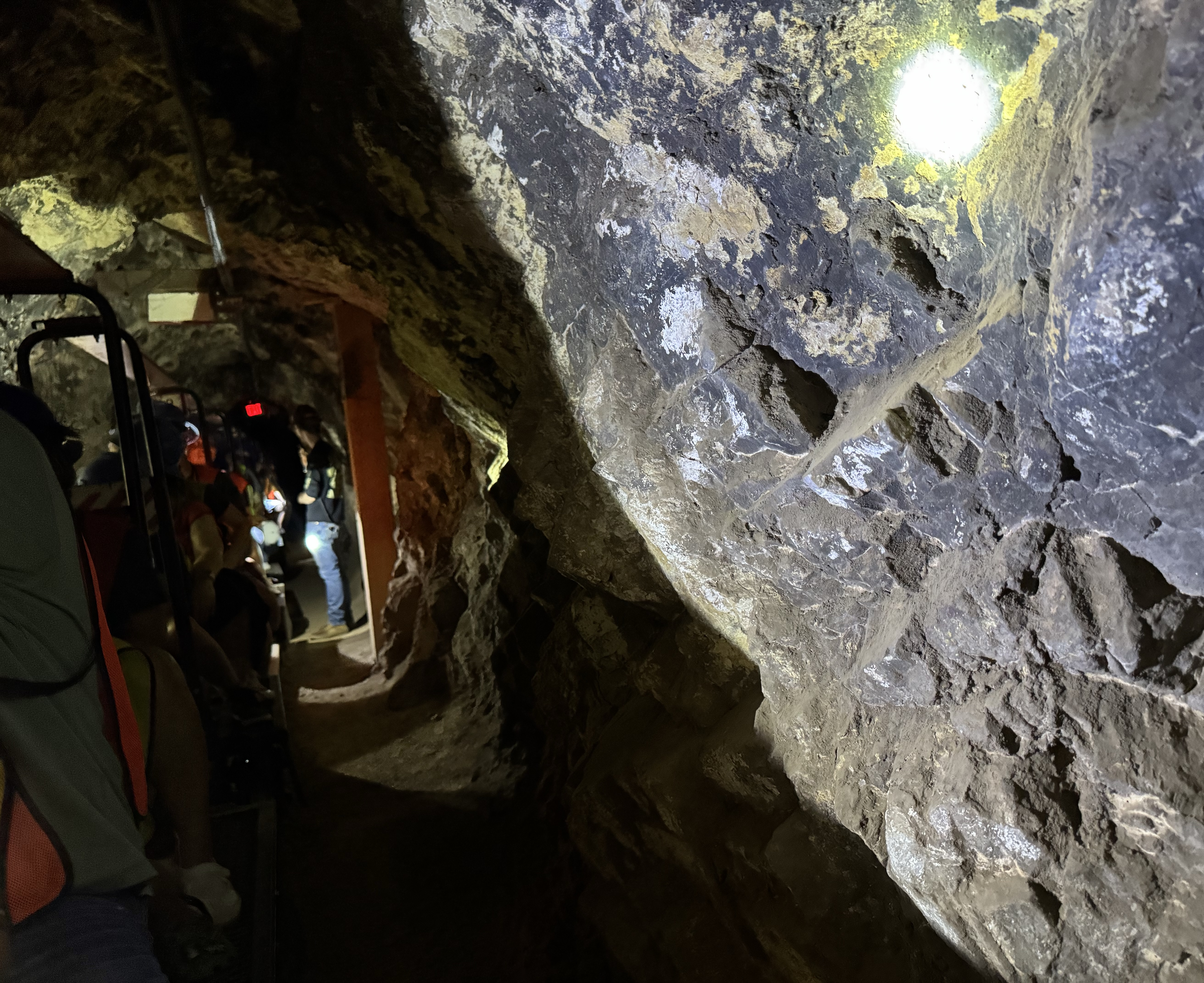
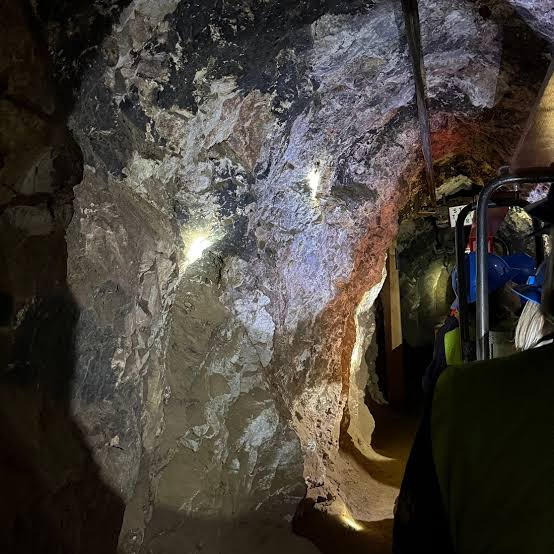
Looking at the minerals with our lights.
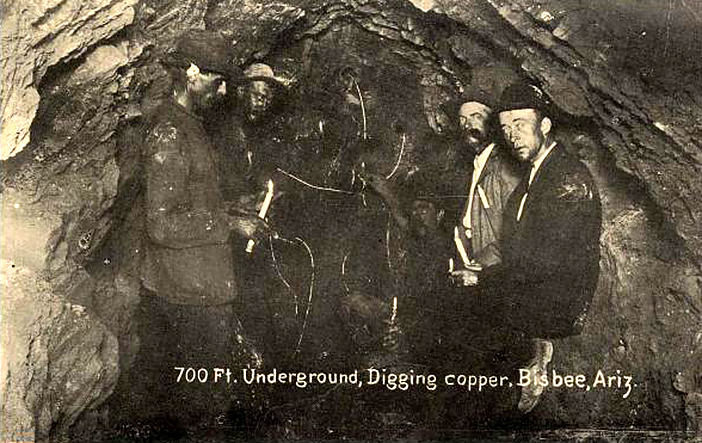
The picture above shows miners getting ready to use the standard hole pattern.
Below our guide demonstrated how they trimmed fuses and placed dynamite.
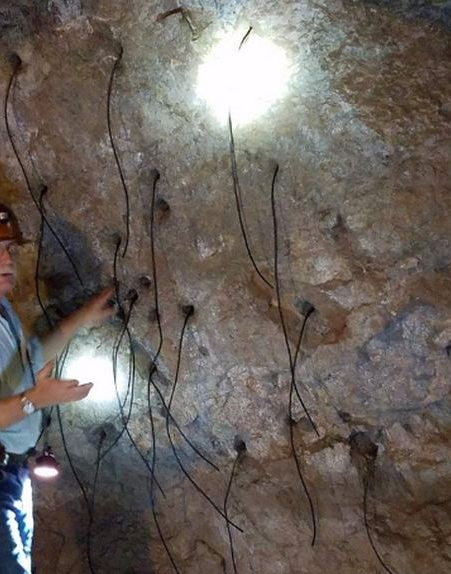
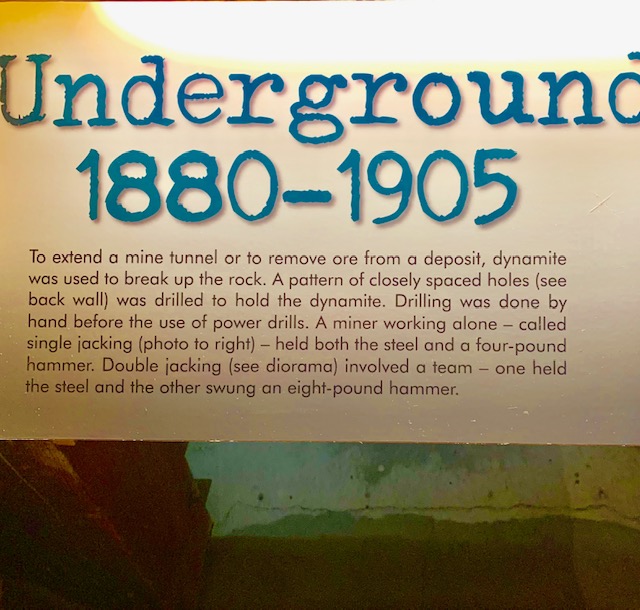
Underground mining blasting in Bisbee utilized the standardized hole patterns (rounds) drilled by miners, who handled loading…At the end of grueling shifts, they drilled holes into rock walls, packed them with sticks of dynamite, and detonated charges. The explosions left the narrow tunnels thick with choking dust and heavy air. Hopefully that, when detonated, a rock wall safely collapses rather than explodes and kills everyone.

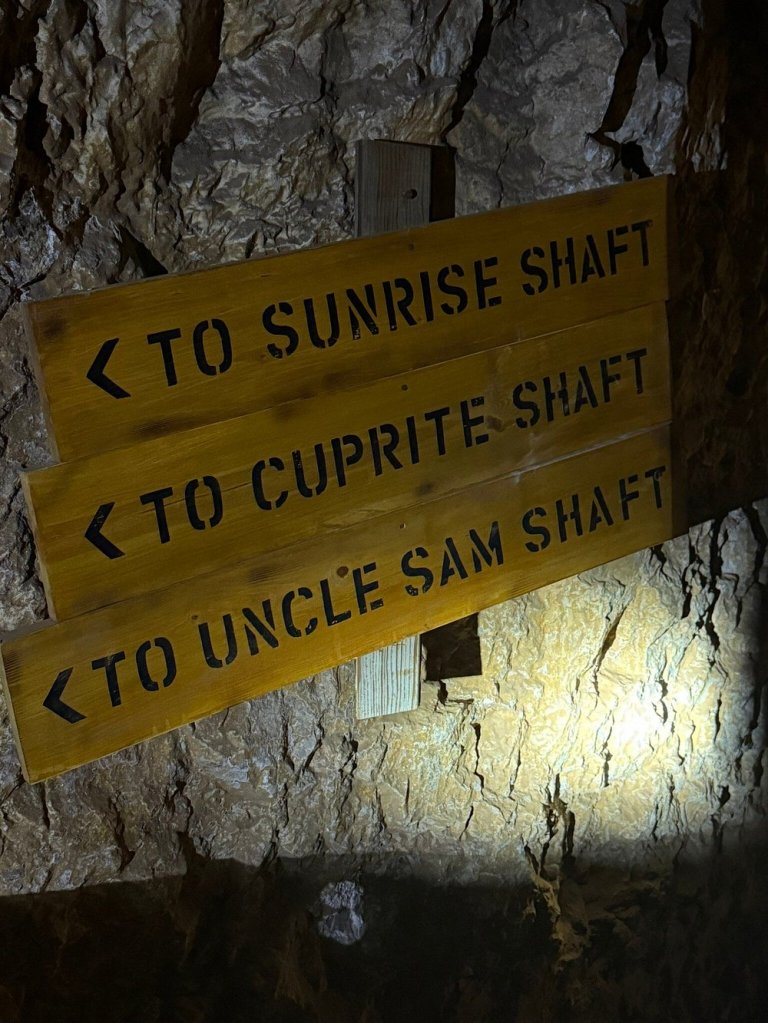
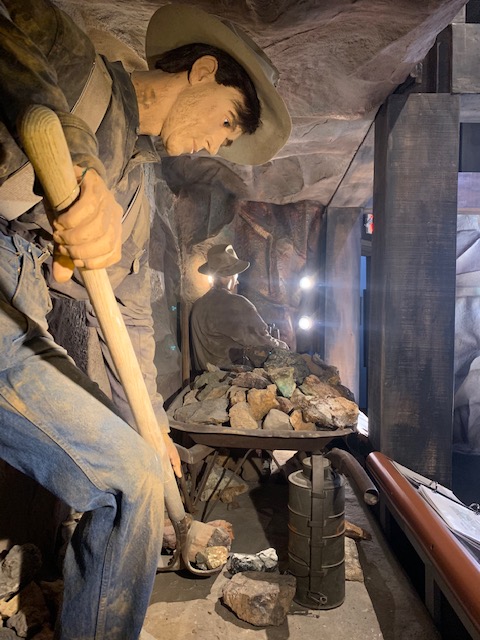
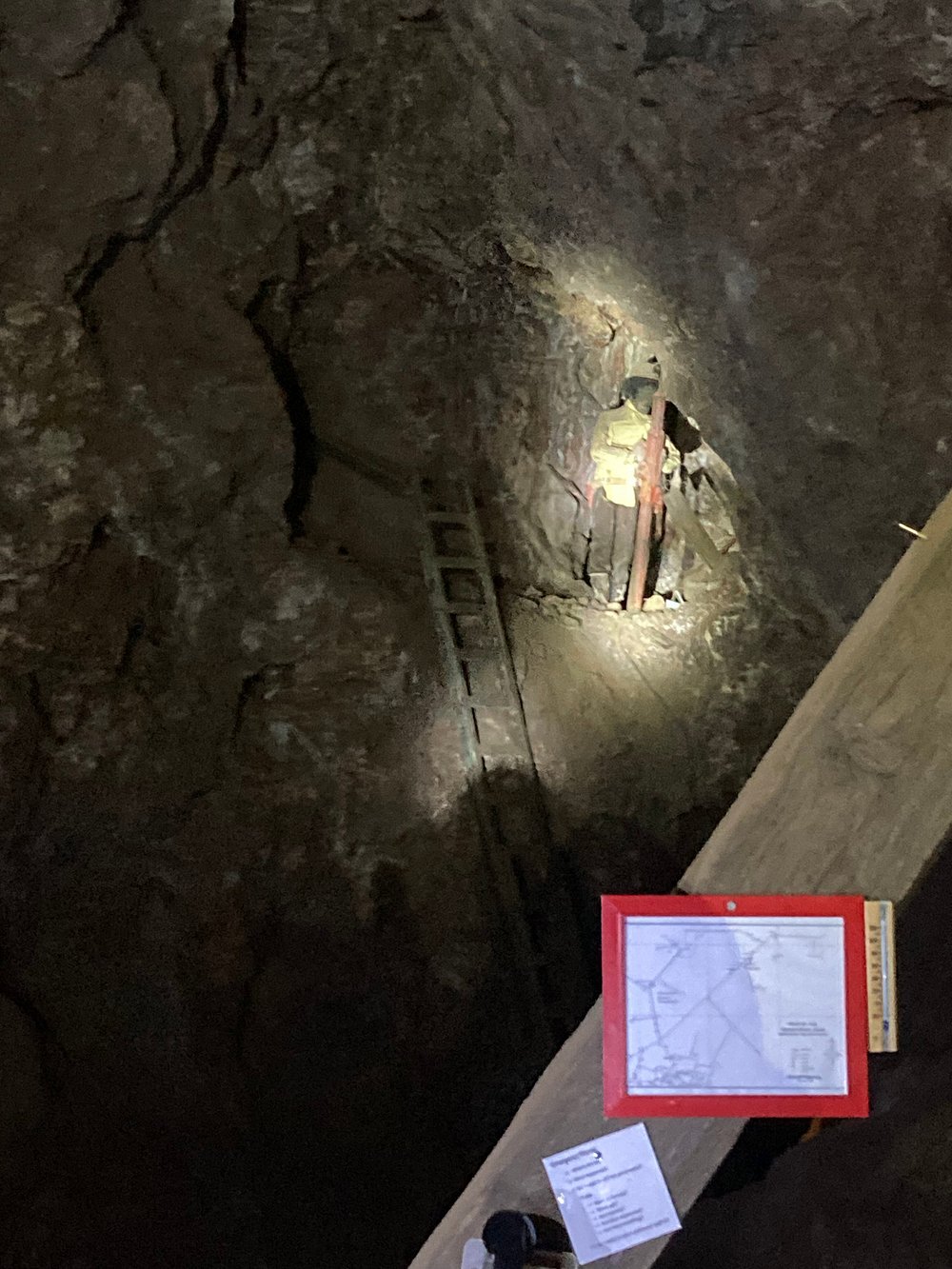
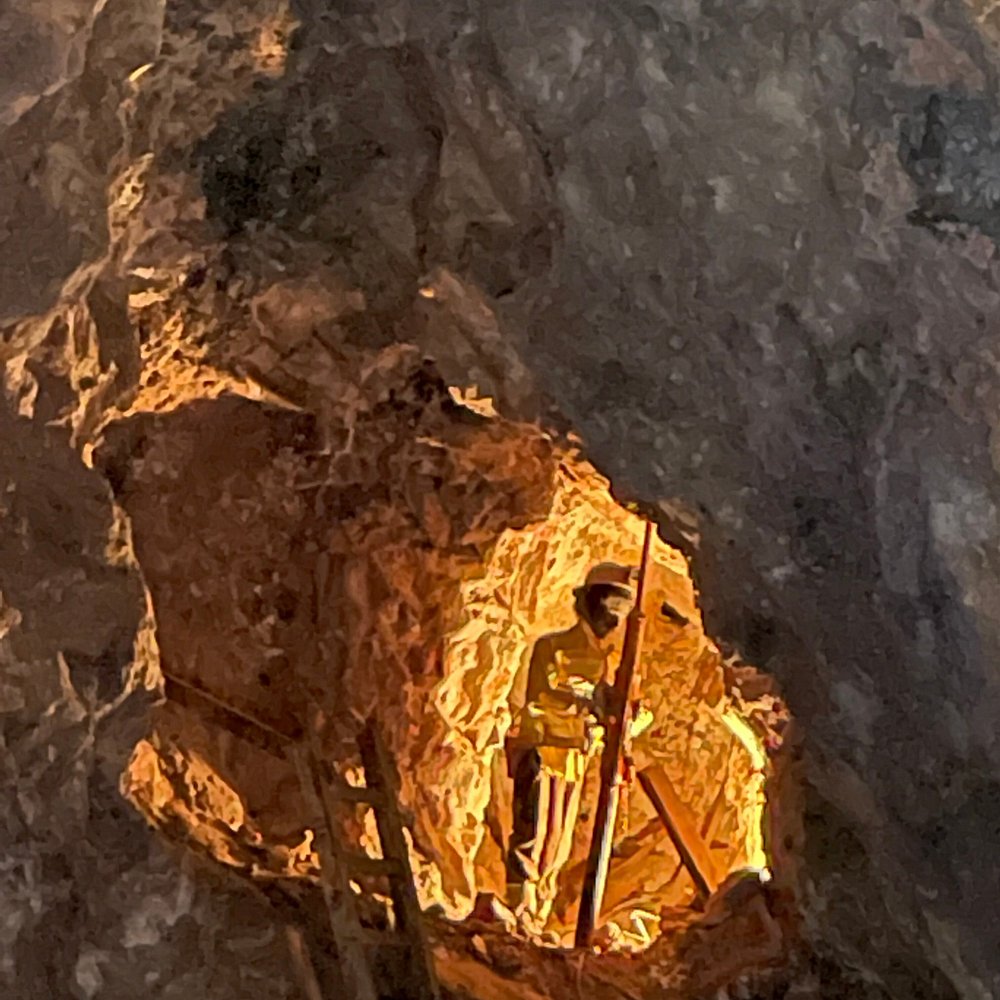
Poor Henry has been stuck in the mine for a long while. Nobody told him it was closed yet.
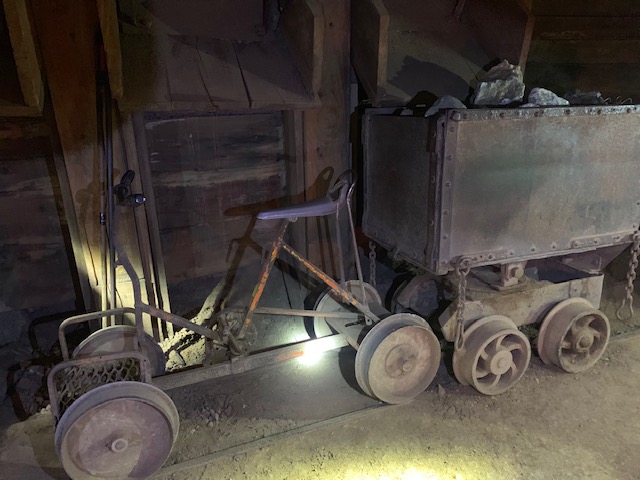
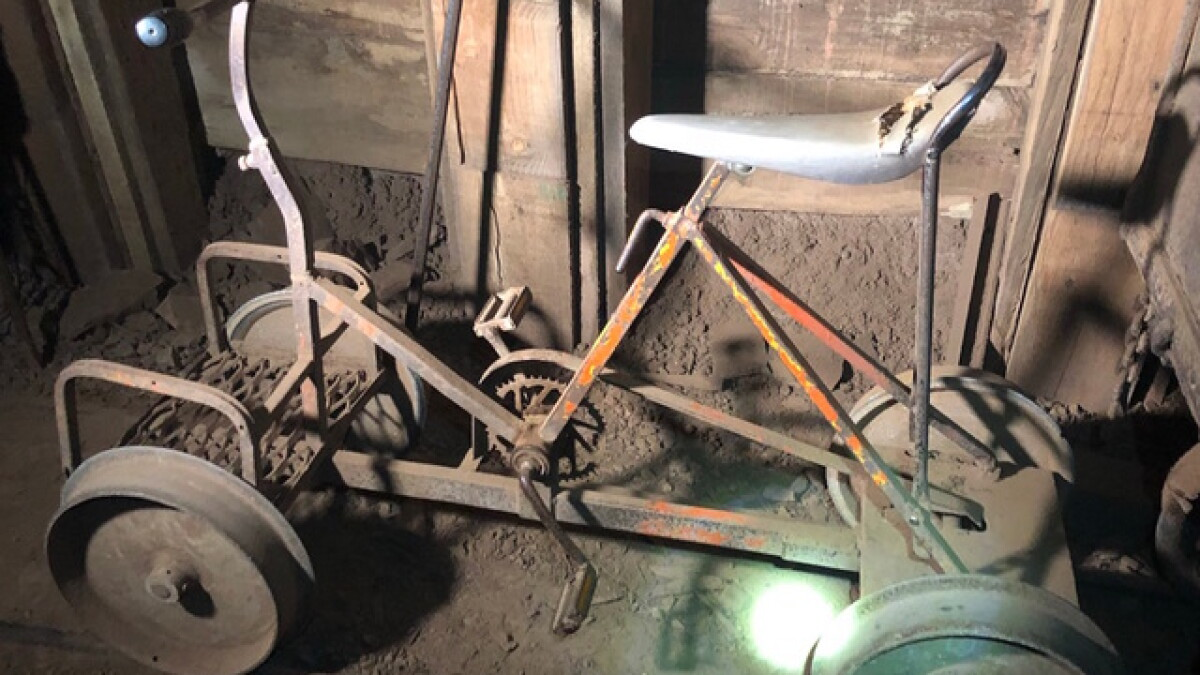
There was a bicycle in the mine, it was used by foremen to travel from one part of the mine level to another. They walked all day long to check on things and the mine was huge. Our guide said to help them out they introduced bikes which they hated even more.
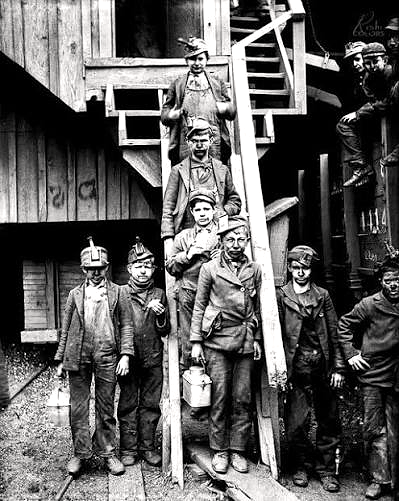
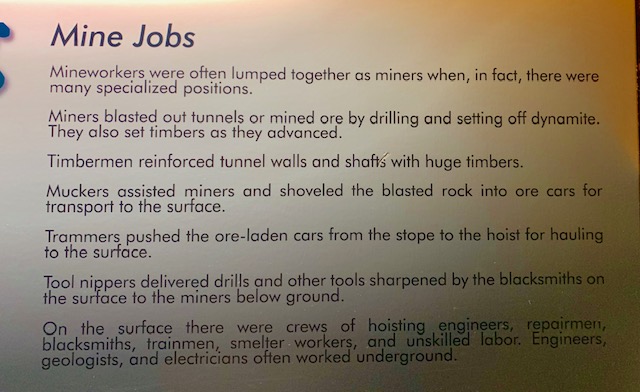
During the late 19th and early 20th centuries, before stringent child labor laws and modern safety protocols were established, teenage boys 15 years or younger frequently went underground to support their families. They had highly demanding roles, including manually filling and pushing ore carts. These young boys were called “muckers” or car loaders. Their job was backbreaking they shoveled heavy, jagged copper ore and rock debris from the blast sites into massive ore carts. Filling each cart with roughly 2,000 pounds (one ton) of ore. Talk about an aching back.
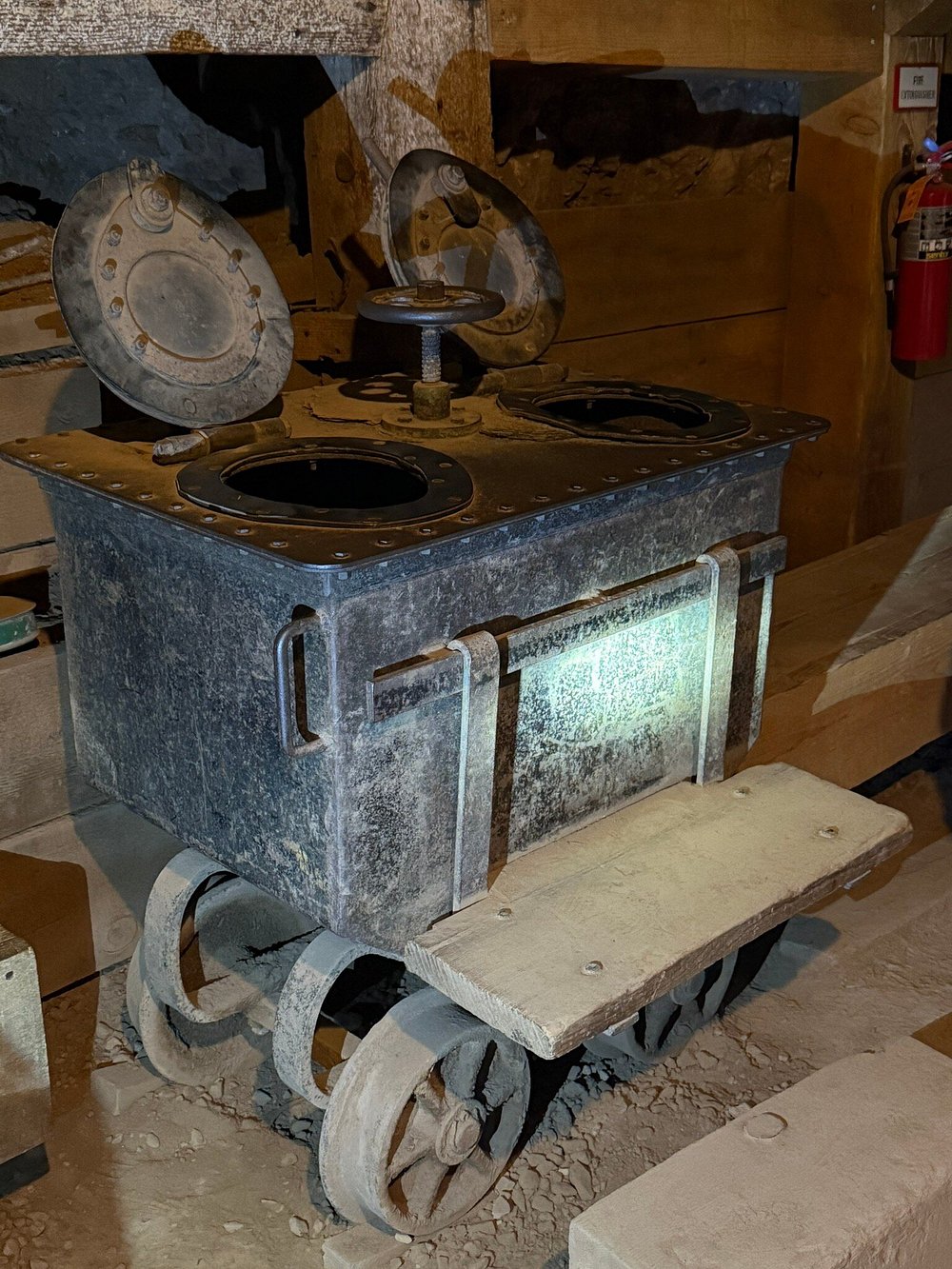
I know you can figure out what this is? A two-seater iron toilet on wheels, introduced to the Copper Queen to stem an epidemic of hookworm spread by defecating miners. “Before that,” our guide said , “they were using dynamite boxes or just dumping it down a hole.”
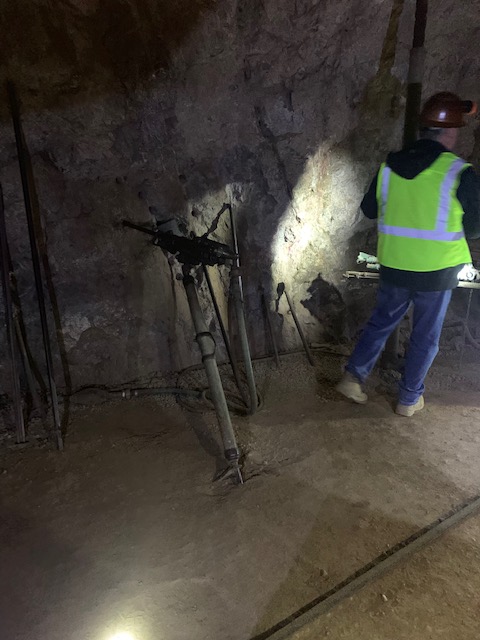
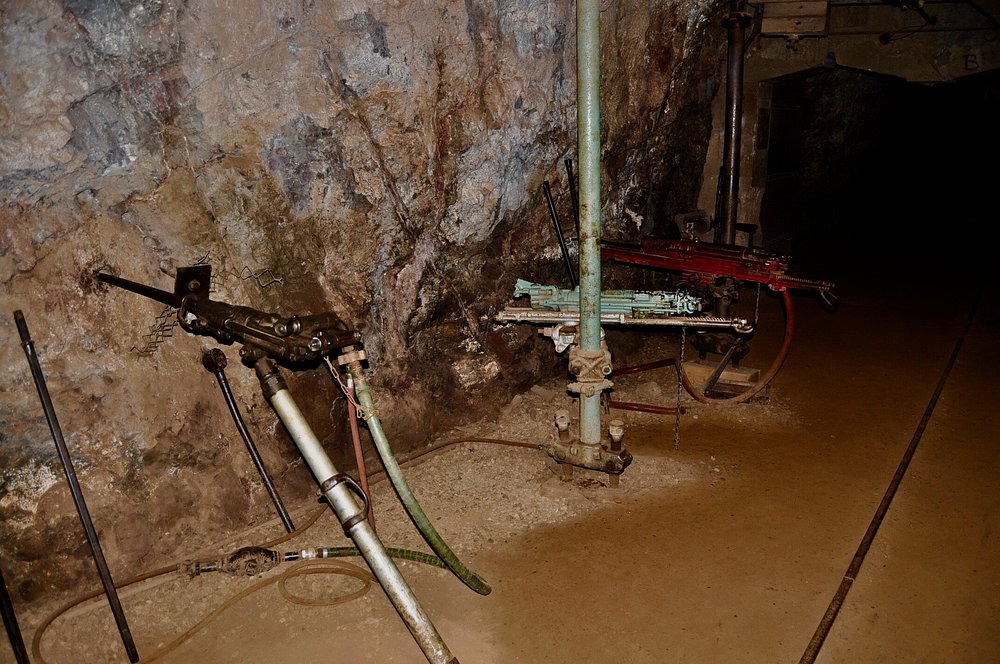
Our guide explaining the years when power drills and automated excavators worked around-the-clock.
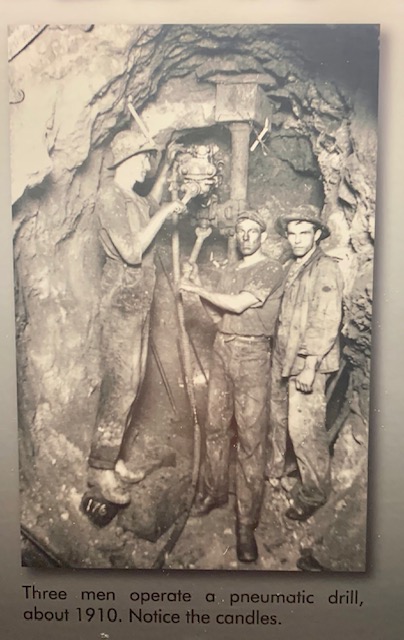
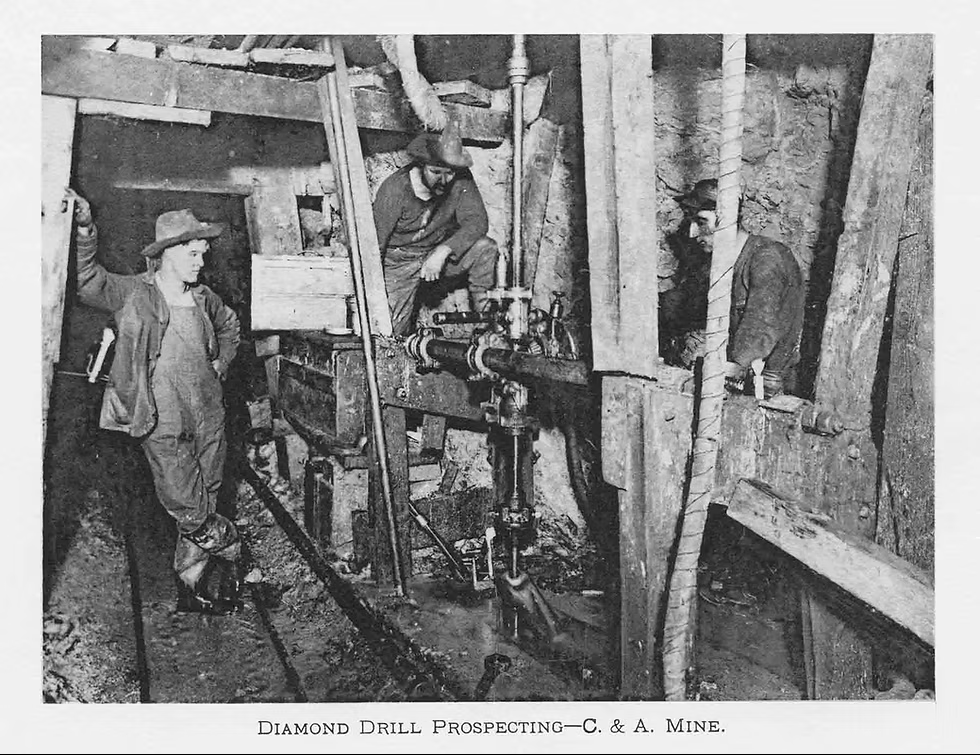
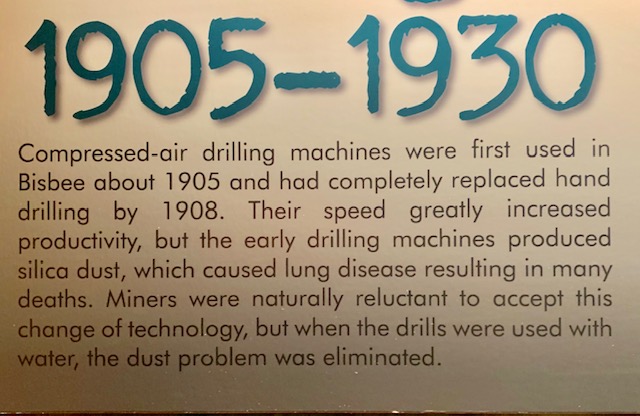
Between 1900-1920 compressed-air pneumatic rock drills replaced manual labor to speed up tunnel driving and stope development. While this boosted productivity, early dry pneumatic drills created hazardous silica rock dust until hollow drill steels and water injection systems were introduced
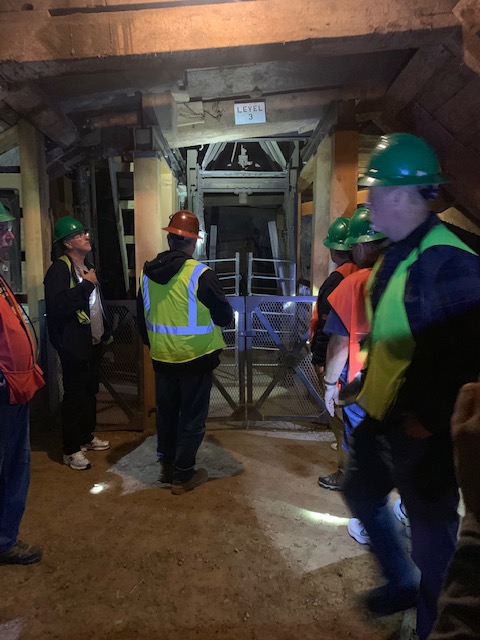
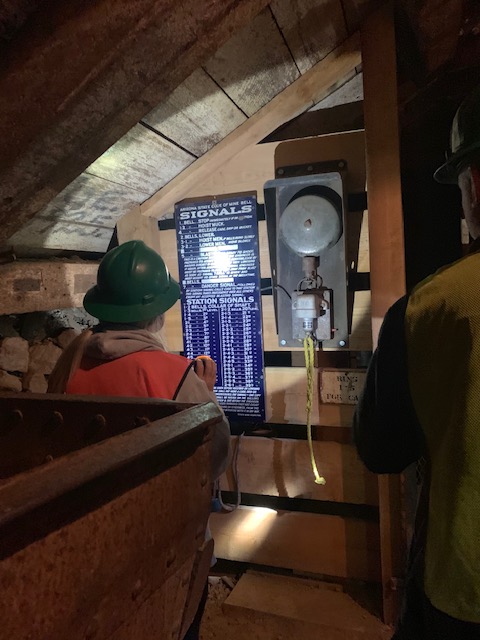
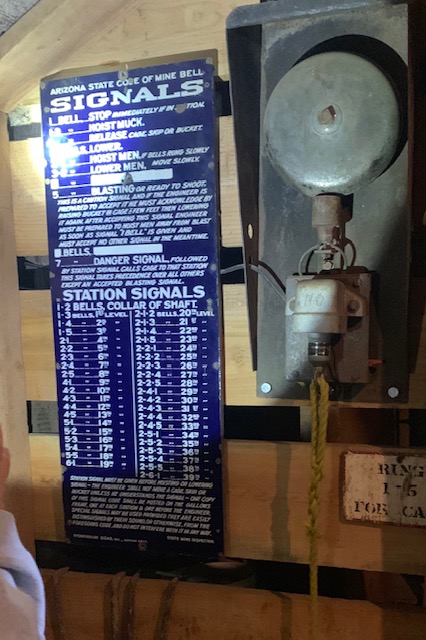
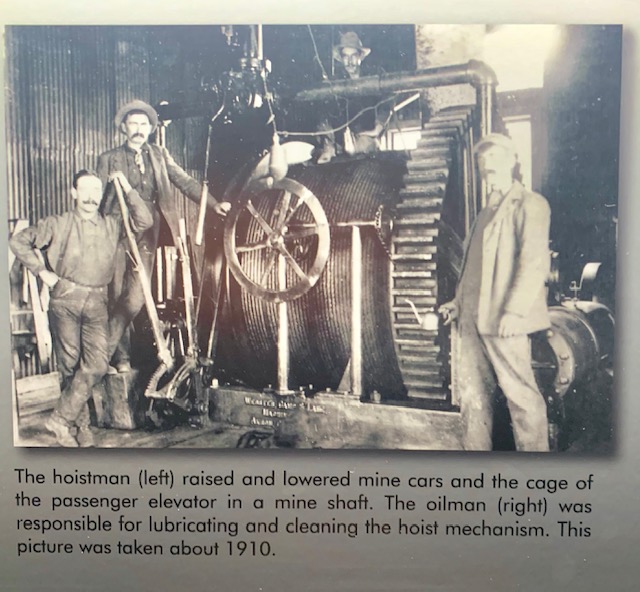
A series of bell signals were used to communicate with the hoist operator on the surface. When you were hired before you started you had to memorize all the signals, if you didn’t you weren’t able to work in a mine.
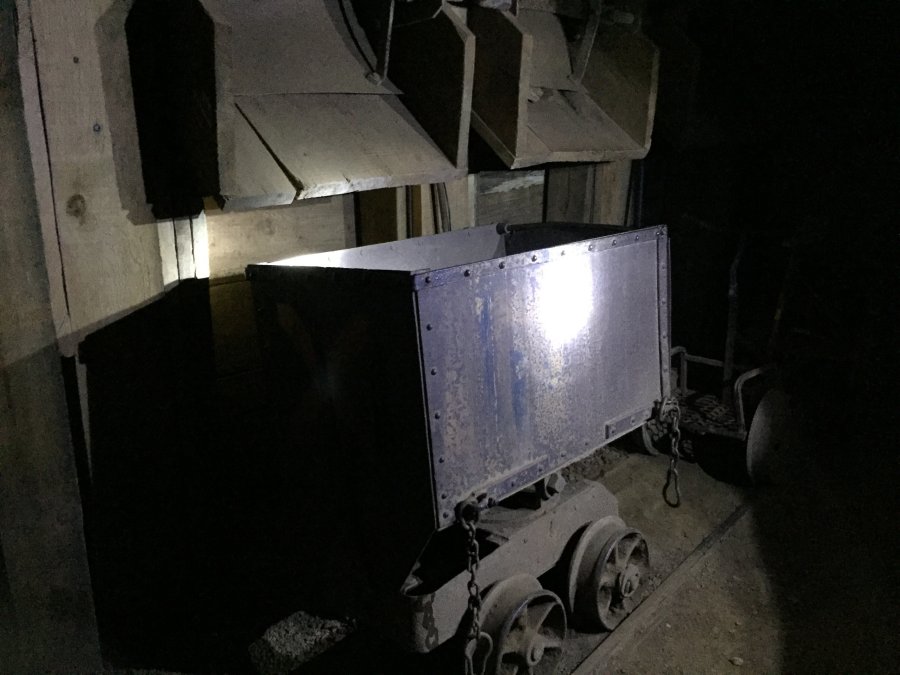
We came upon mule carts.
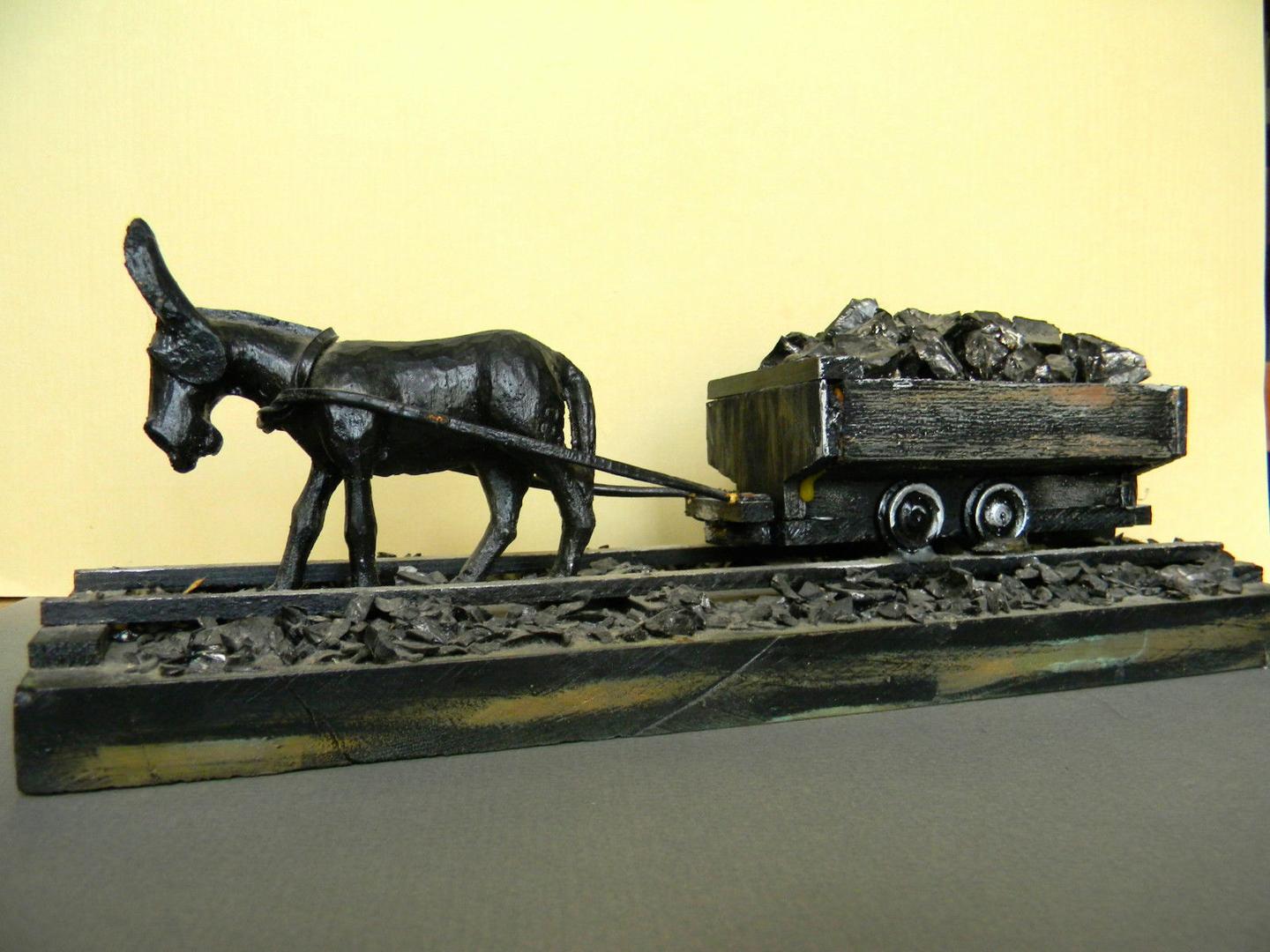
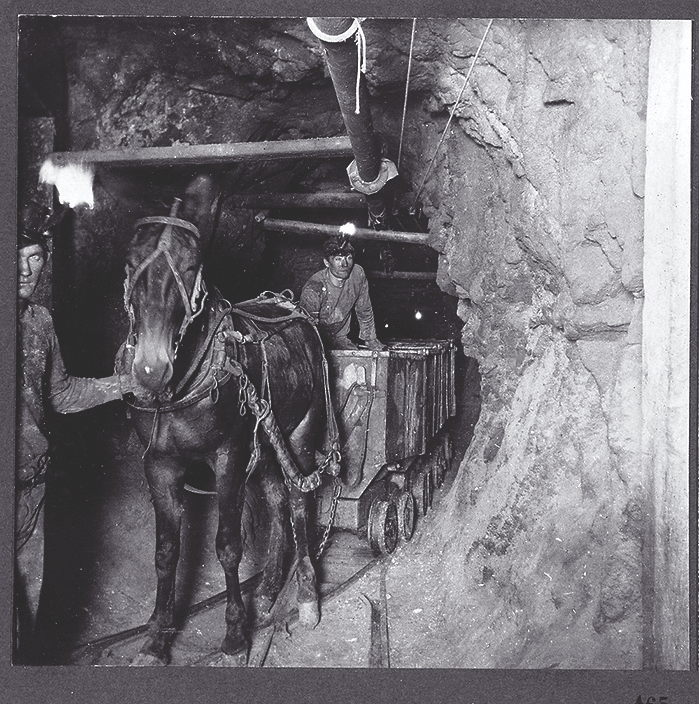
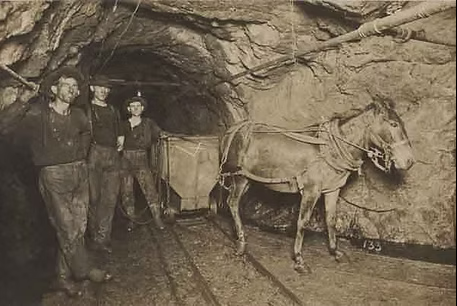
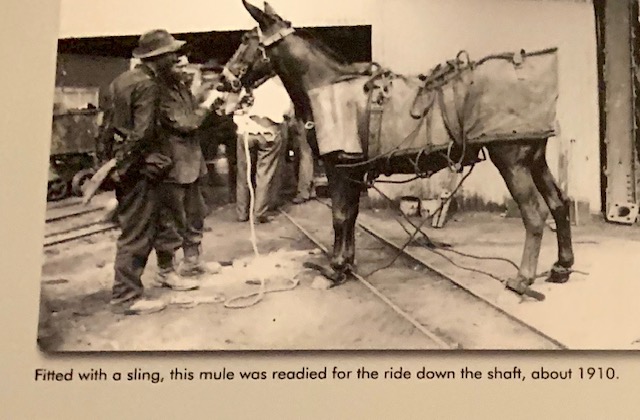
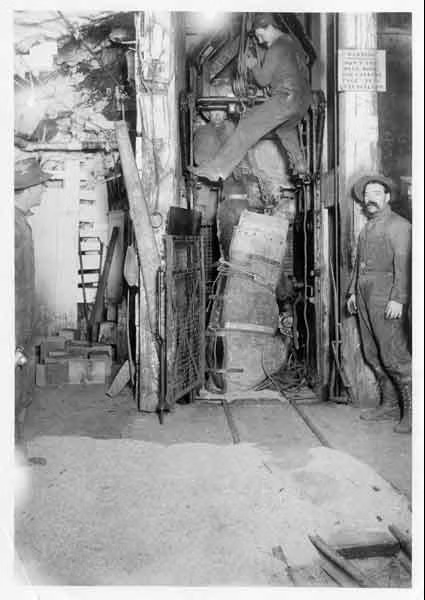
In 1906 mines started using mules to haul carts long distances. Copper Queen mines were suddenly forced to haul its ore to the distant Gardner shaft. By late August – early September 1906, six Missouri mules had been lowered into the Copper Queen mines to haul ore from the workings of the Holbrook mine to be hoisted out the shaft.
A miner said “A horse is a loveable animal, a mule is not.” But then he continued to say “A mule has more wit in a minute than a horse does in a month.” It was the intelligence and they sturdiness of the mule that made it the choice animal for the job. The mules quickly learned the paths of the dark tunnels and where to stop at chutes and ore passes. They also learned to duck down unlike like horses. W.F. Boericke commented “In a low drift a horse would butt it’s brains out, while Mr. Mule ducks his head and even crouches when necessary.” Mules in a sense learned to count. When a mule started to pull a train it would feel a jerk each time a mine car began to move. This made the operation a bit easier. Miners loved the mules and took very good care of them.

The mules lived underground and worked for 3 to 7 years pulling ore cars before being retired to the surface. Because they had spent months or years in the dark, they were slowly re-exposed to daylight over the course of several weeks by keeping them in dim, candle-lit rooms with gradually increasing amounts of sunlight. Once they were adjusted they were bought by old miners that would take care of them. People actually came to see if you were taking good care of the mules.
With the introduction of Mancha battery locomotives in the 1920s the need for mules diminished, but they remained in service until 1931
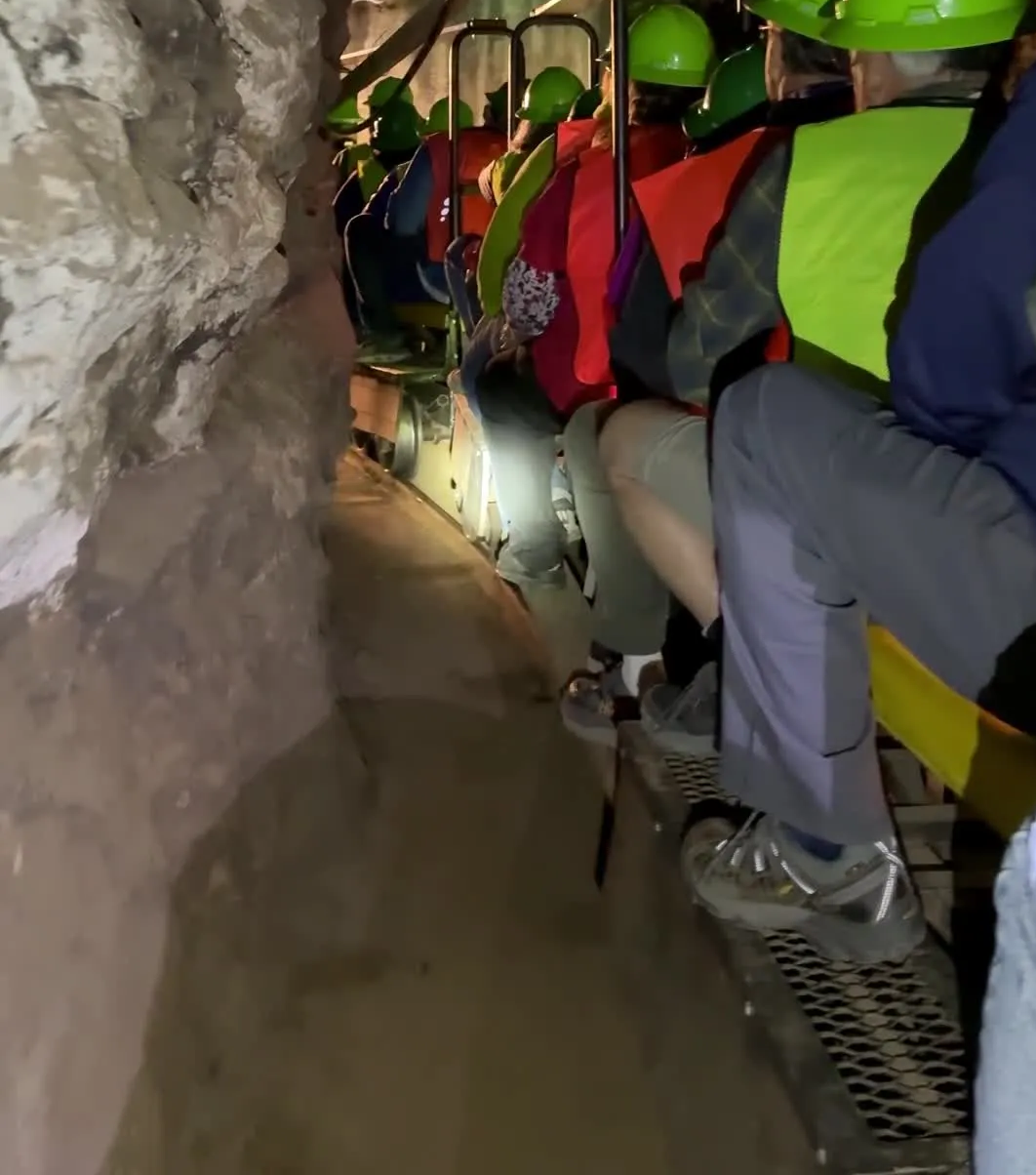
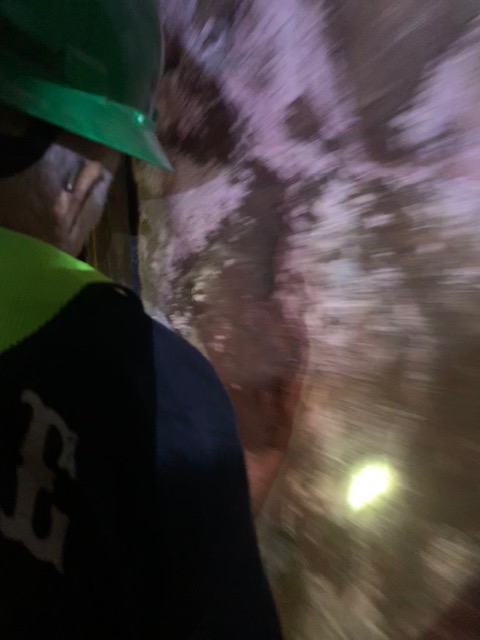
We’re all on the train again and ready to roll on out.
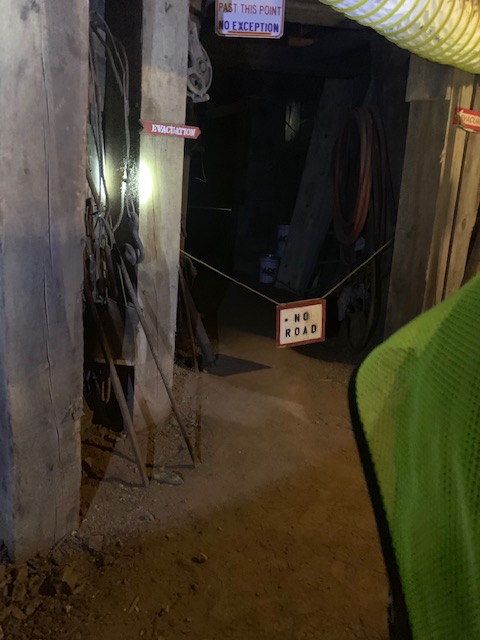
And that was

But . . . . Right after we visited the Bisbee Mining & Historical Museum which is an affiliate of the Smithsonian Institution, the museum chronicles the history of the historic mining town of Bisbee through a rich display of artifacts, photographs and interesting displays. It was a great resource for understanding the history of the area. It was awesome going on the tour followed by the museum.
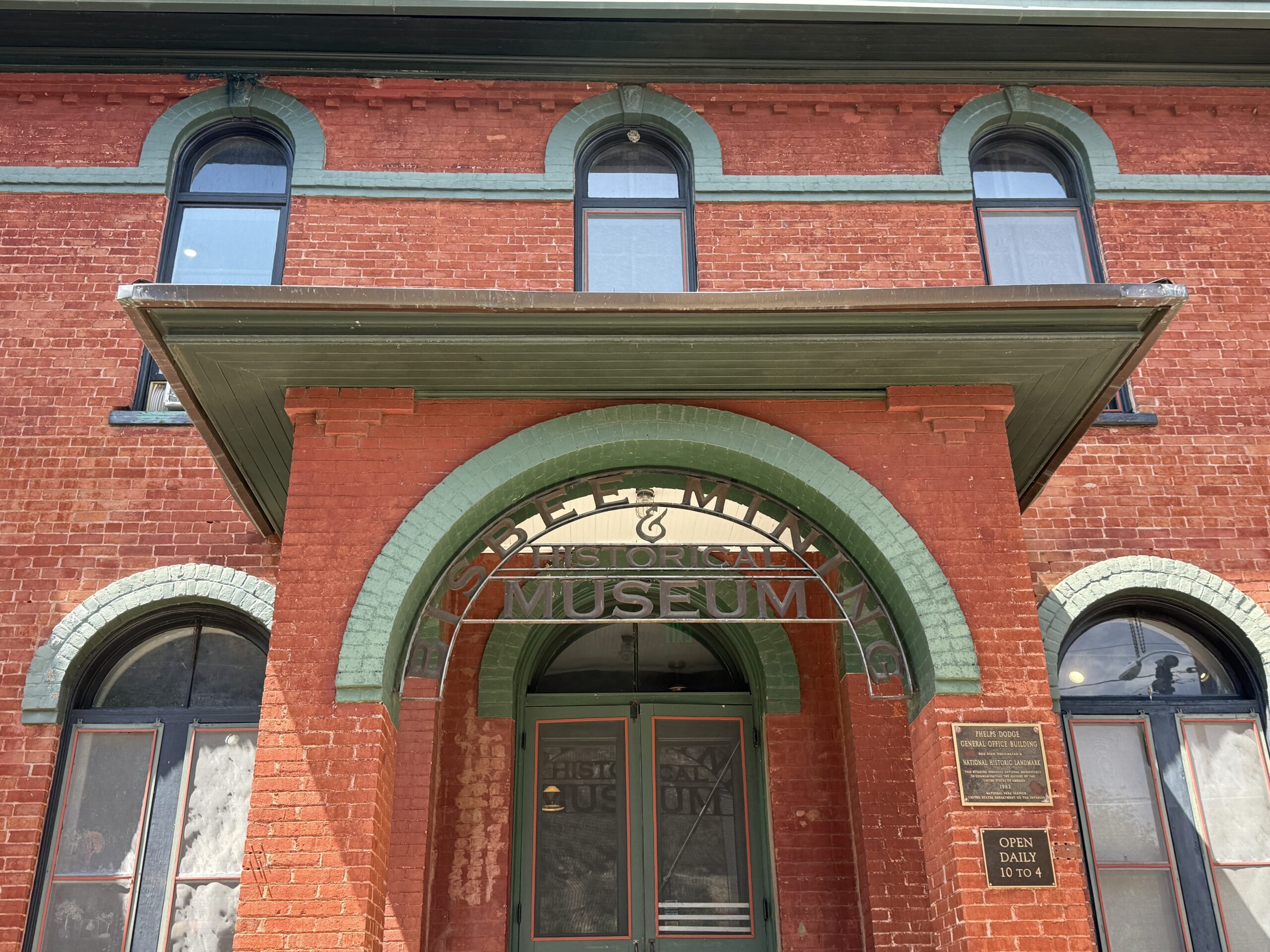
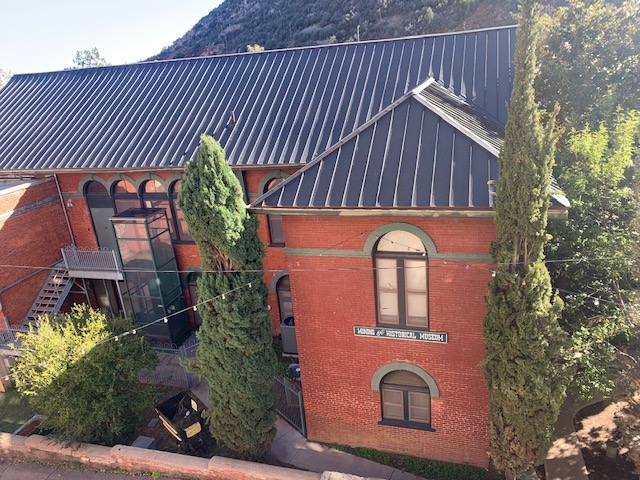
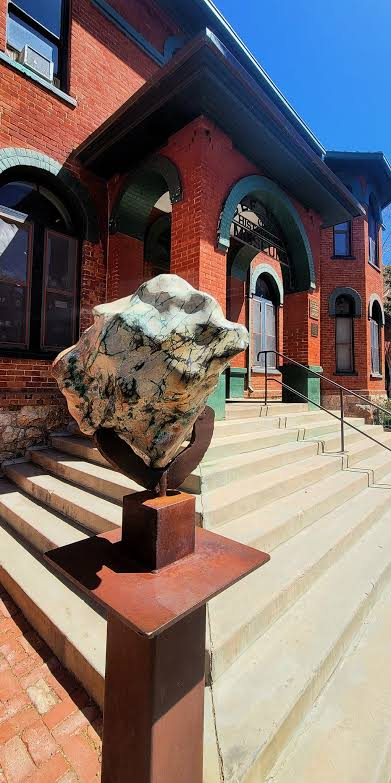
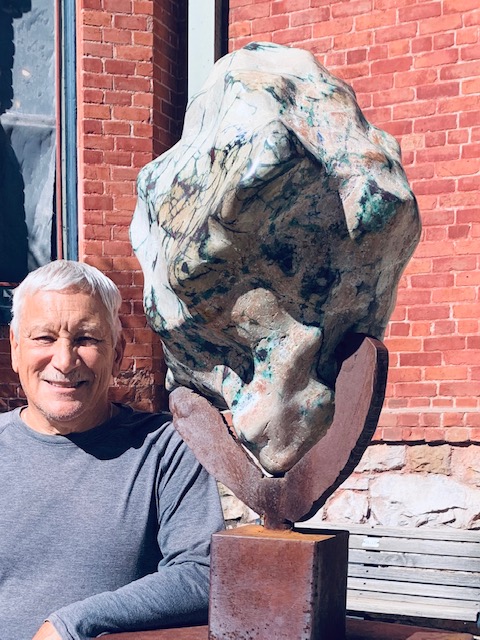
The building was constructed in 1895. It’s a grand red-brick building that was constructed as the general office and headquarters for the Copper Queen Consolidated Mining Company (which later became the Copper Queen Branch of the Phelps Dodge Corporation).
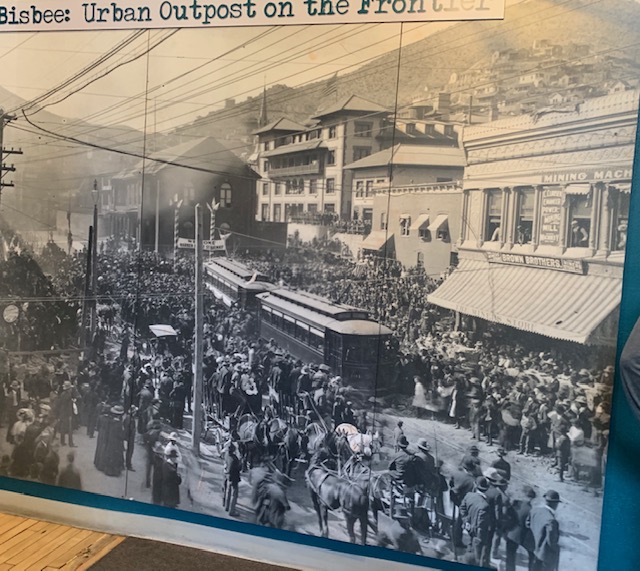
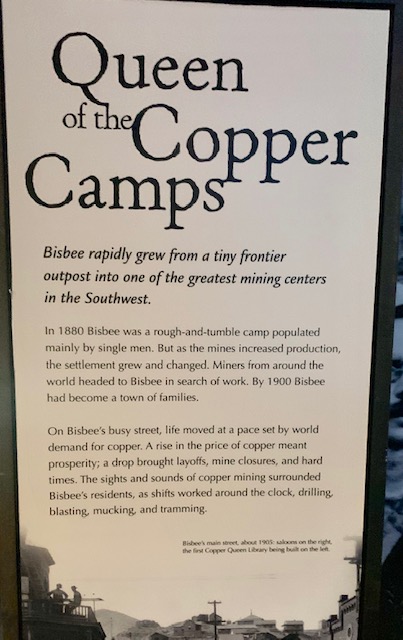
Copper mining in Bisbee, Arizona—historically known as the “Queen of the Copper Camps”—spanned nearly a century and transformed a rugged frontier camp into a booming industrial powerhouse.
When the mine was established it boasted about remarkably rich initial ore grades (around 23% copper) alongside gold and silver byproducts. The settlement was named after Judge DeWitt Bisbee, an early financial backer of the local mines, and officially incorporated in 1902.
Following the wind-down of active mining in the area (operations ended in 1975), the historic headquarters building underwent major renovations and opened as a museum in the 1970s.
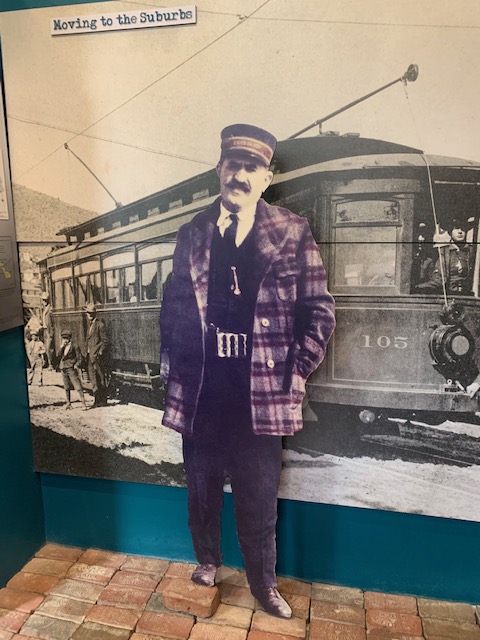
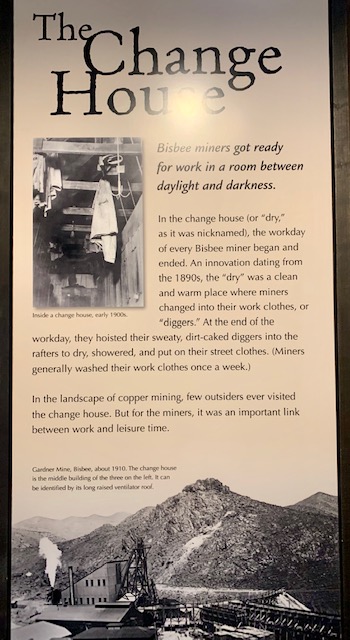
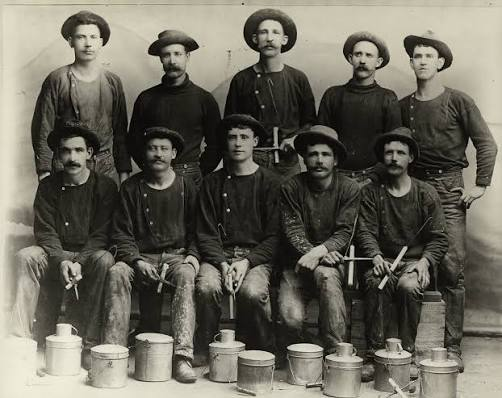
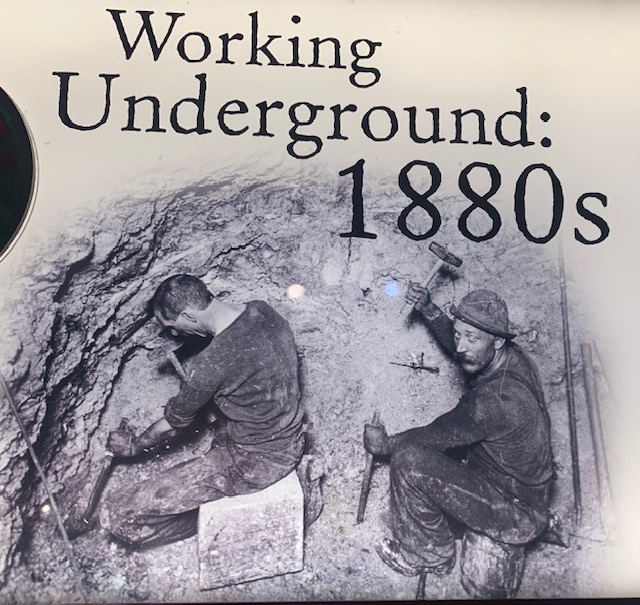
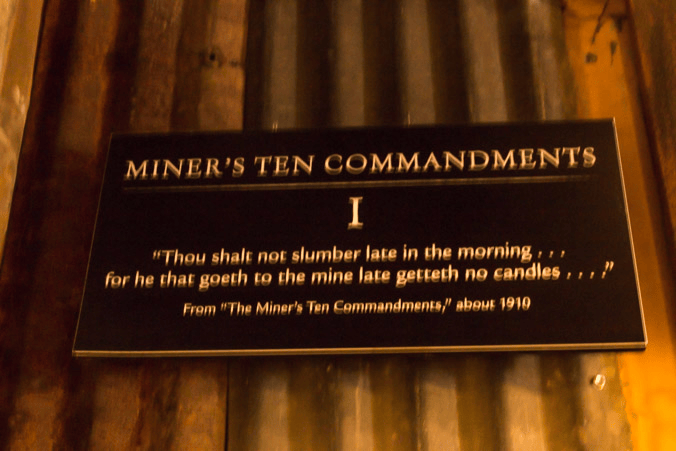
Beginning their day at the change houses near the mine portals, men shifted into heavy canvas or denim work clothes, donned hard-boiled leather or metal hats, and strapped carbide lamps or candles to their caps.
Miners would then gathered in the hoist houses to crowd into the cage or skip, dropping hundreds or thousands of feet below the surface into the dark, hot, and humid subterranean stopes.
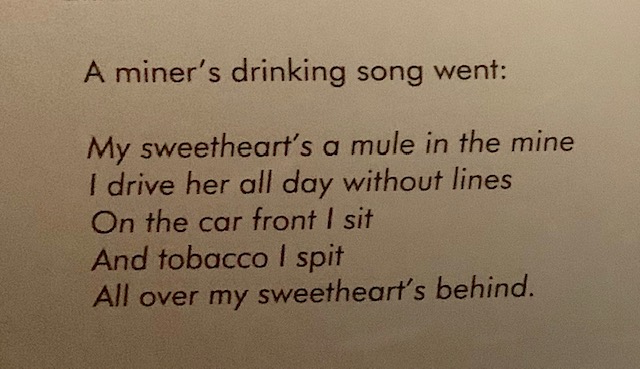
Copper mining in Bisbee operated around the clock to feed the massive demand, miners would stagger out of underground shafts at all hours of the day and night. So in the late-19th and early-20th-century the mining heyday, Bisbee, Arizona—particularly around Brewery Gulch and Main Street—supported more than 50 bars and saloons. Saloons, gambling halls, and pool rooms stayed open 24 hours a day (or close to it) to cater to men finishing or starting shifts, as well as travelers, prospectors, and gamblers.
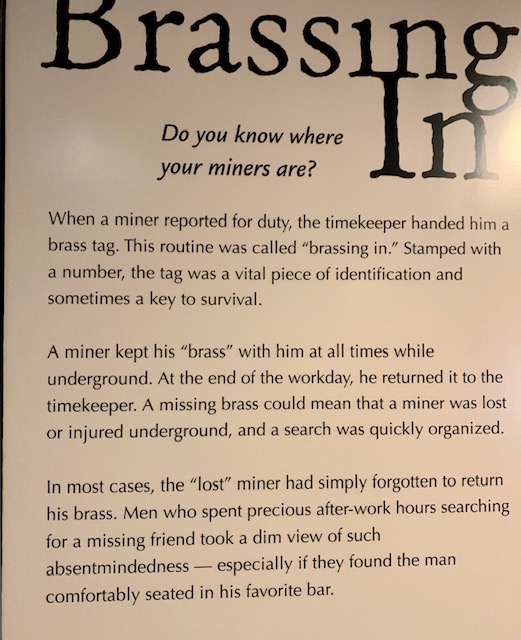
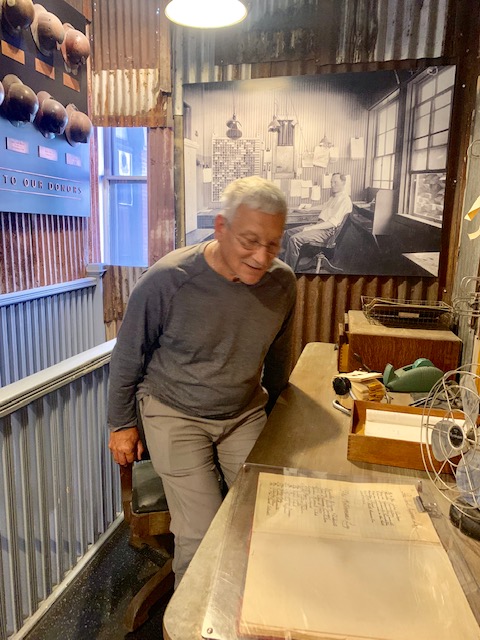
Dave is being the Brassing Guy for the mine.
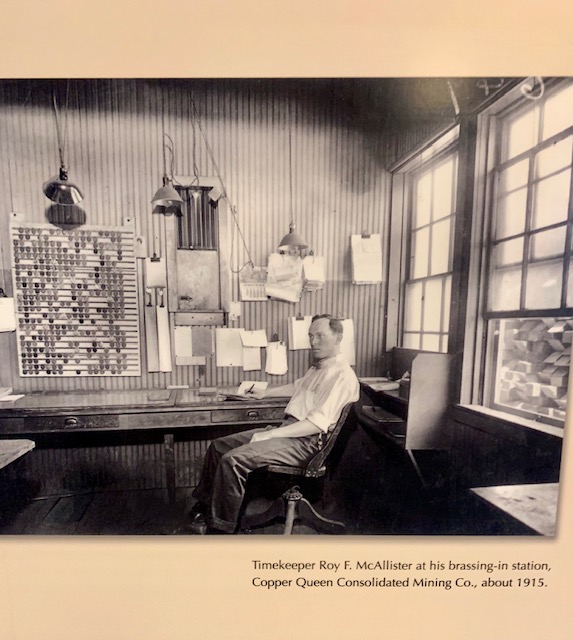
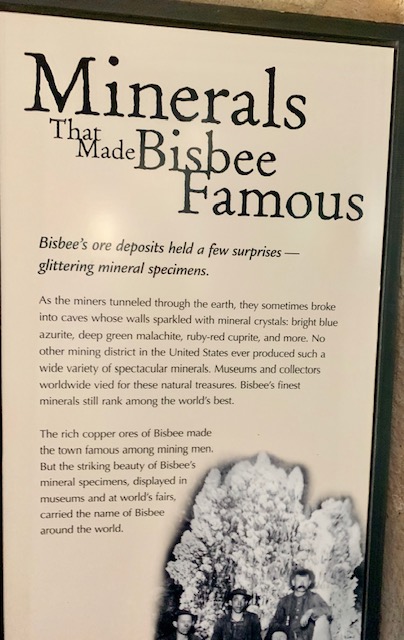
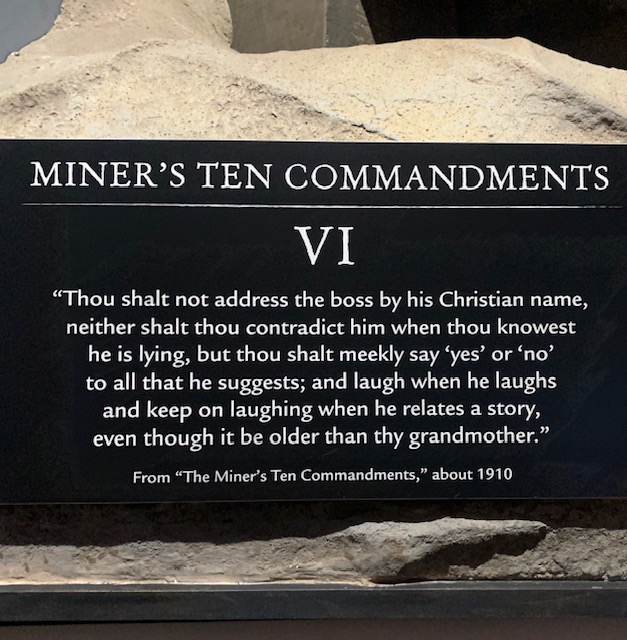
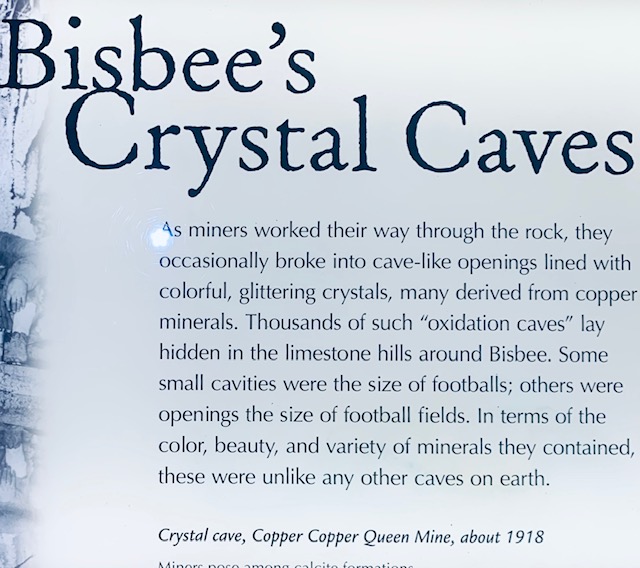
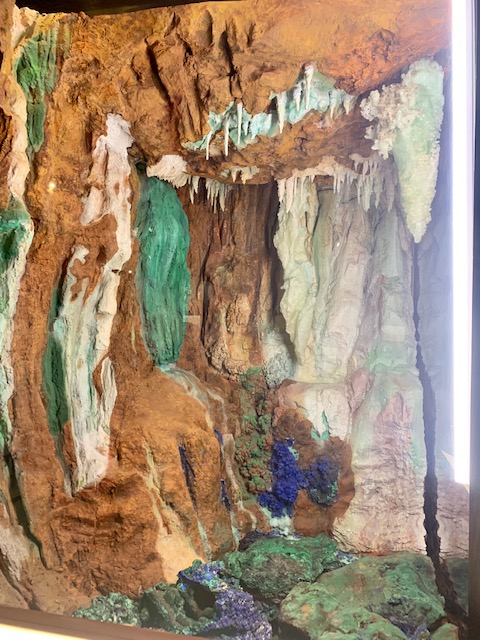
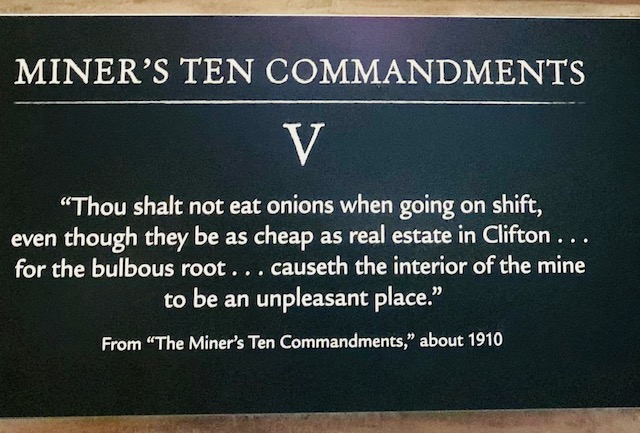
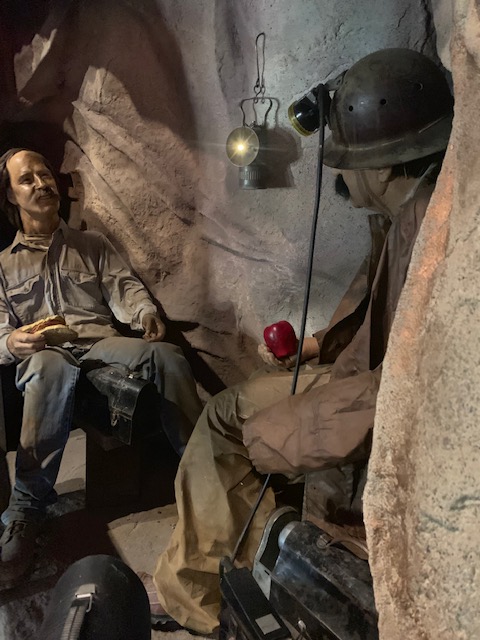
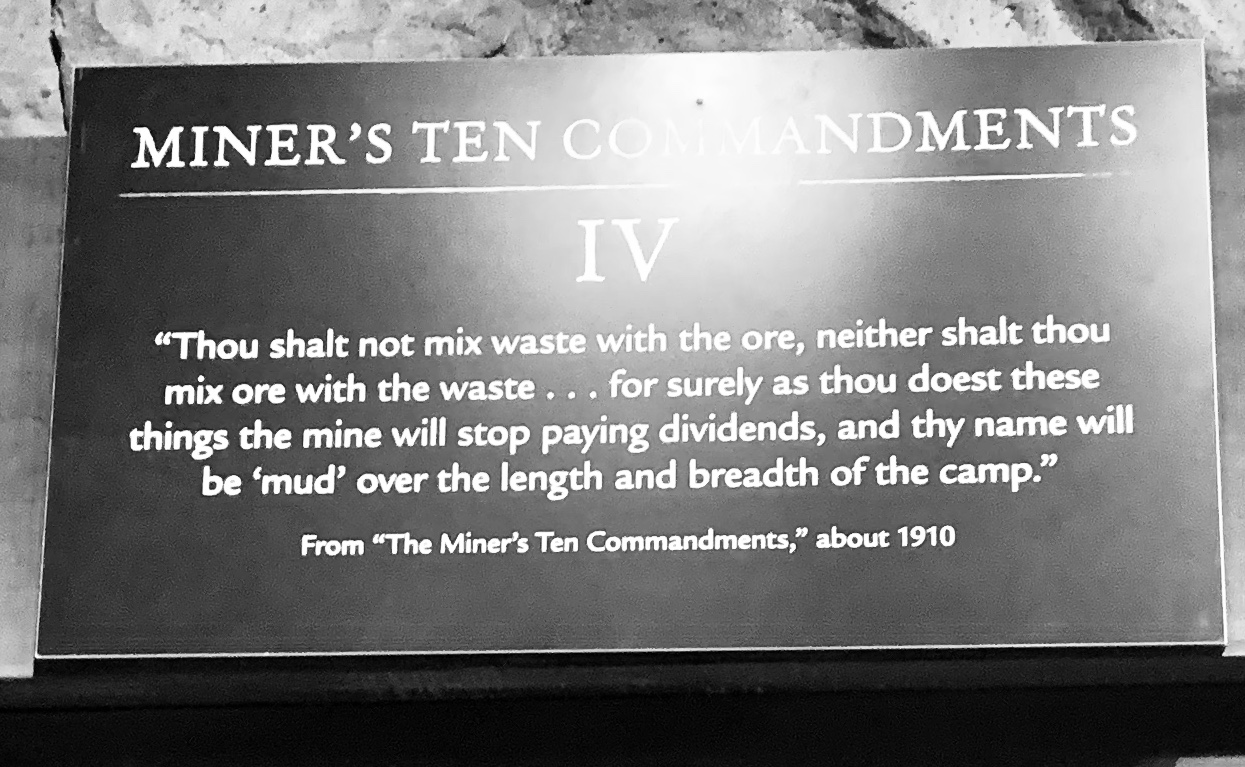
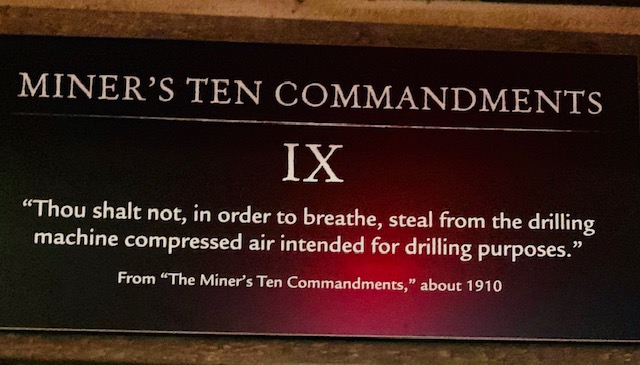
Mining was a good paying job back when, with many of the miners getting healthy commissions – sometimes thousands of dollars a month – based on the amount of rock brought out. Our guide mentioned that back in the days when steak dinners could be had for about 16 cents and a loaf of bread cost a penny, a hardworking miner could make about 35 cents an hour he said they were making about $50 a day in 1975. But was the job worth it in the long run? I guess if there wasn’t any other work around you didn’t get to choose.
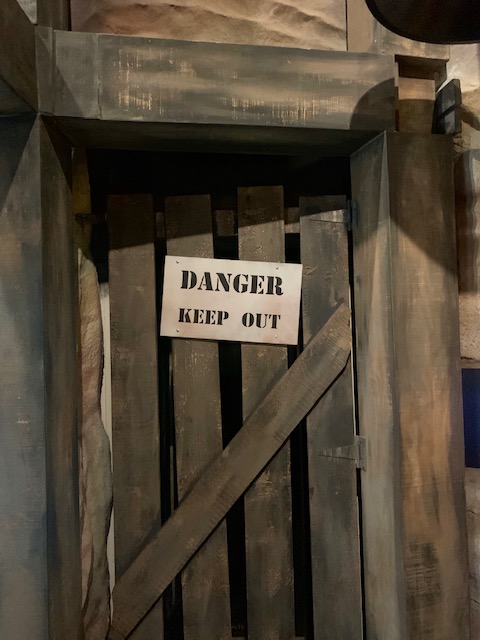
Over 350 miners died and thousands were injured during the 98-year history of the copper mining here. Underground fatalities such as Cave-ins, major roof collapses, and falling rocks were the most common cause of death or an injury. Also numerous fires and uncontrolled or poorly timed blasting during active shifts. Workers faced tumbles down dark shafts, accidents involving ore trams, and shaft equipment failures. How about Miners breathing heavy underground rock dust daily—comparable to smoking multiple packs of cigarettes—leading to severe respiratory damage, black lung, and chronic lung disease. Also there was soil contamination.
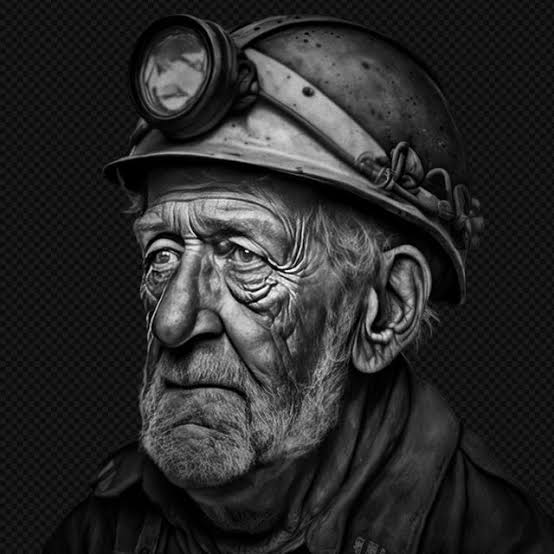
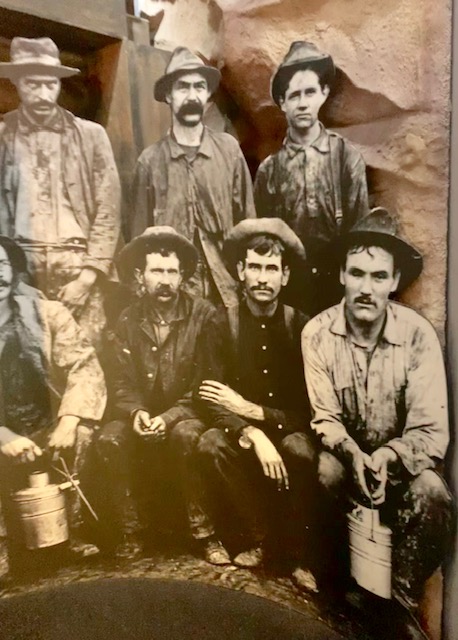
I’m sure he isn’t as old as he looks, from working in the mines.
Copper miners faced severely reduced life expectancies, with many early miners unable or unfit to work beyond the age of 40 due to hazardous working conditions, dust, and physical strain
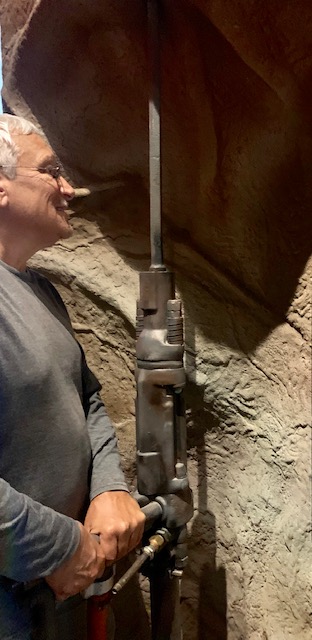
Dave operating a drill in the mine! Oh No! He doesn’t have any safety equipment on!!
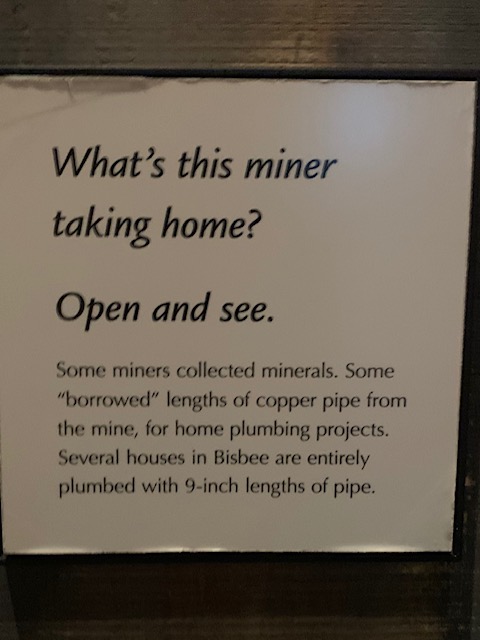
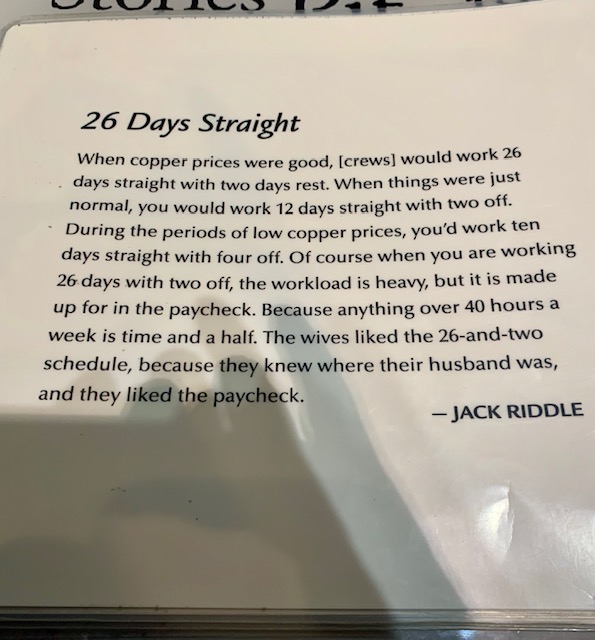
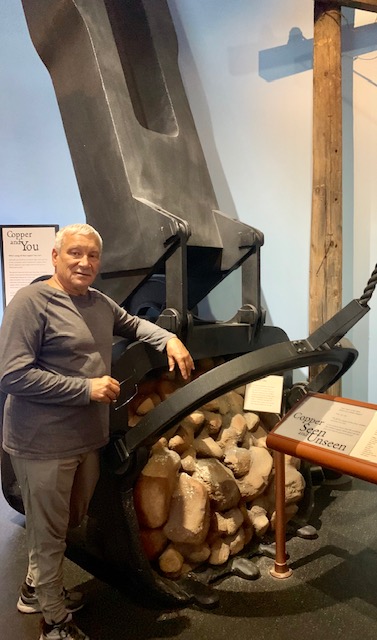
Dave is operating something else, at least he came out of the mine alive.
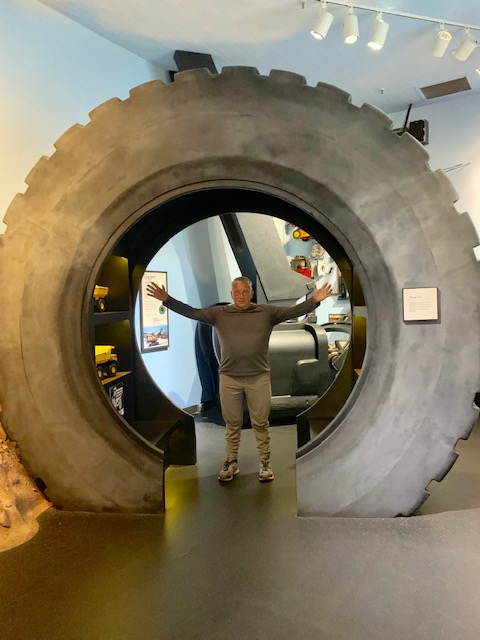
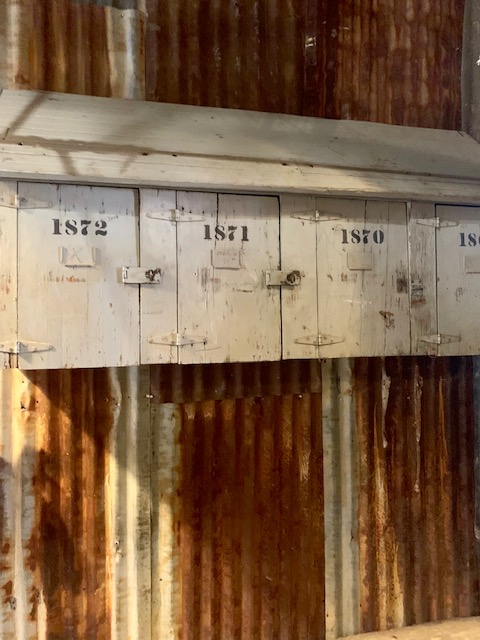
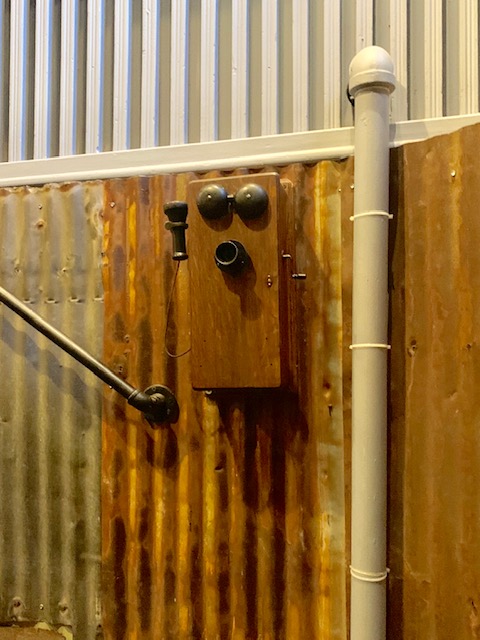
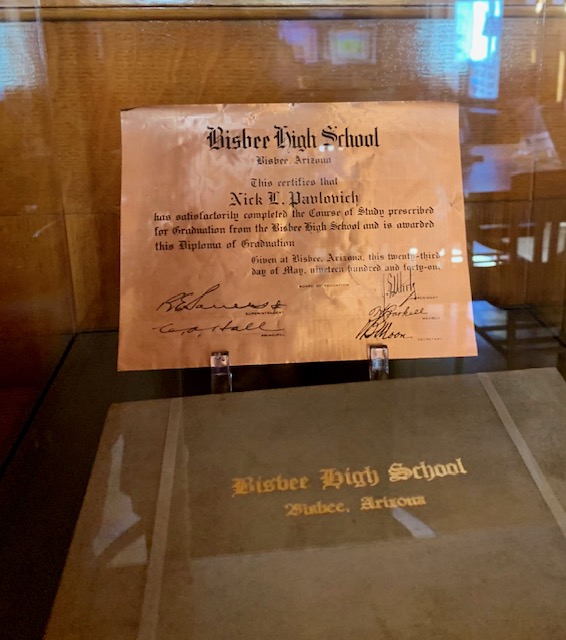
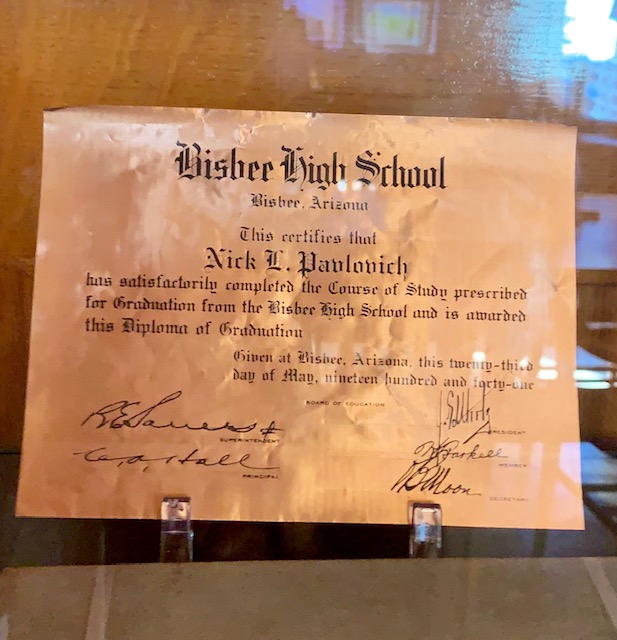
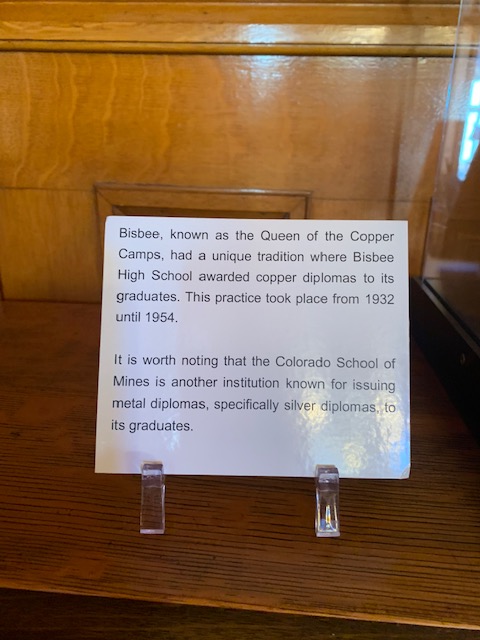
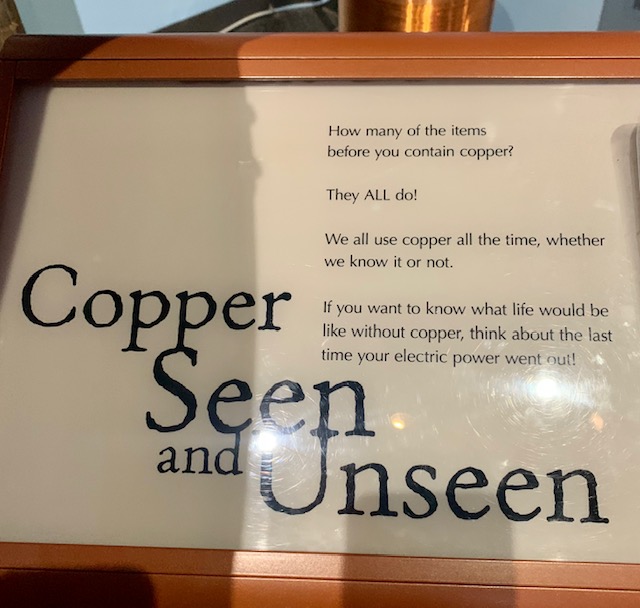
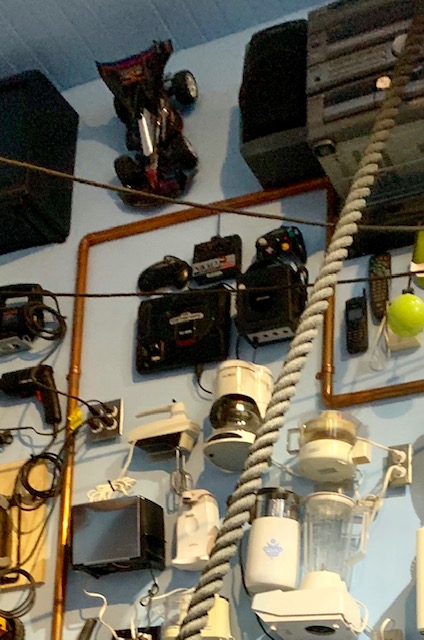
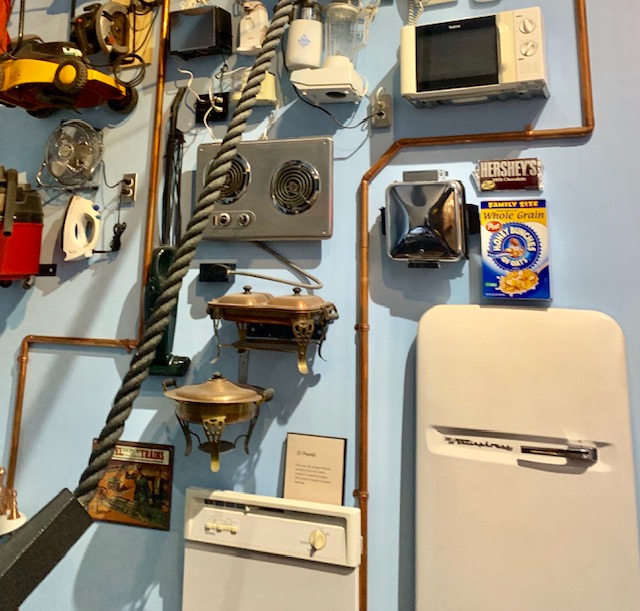
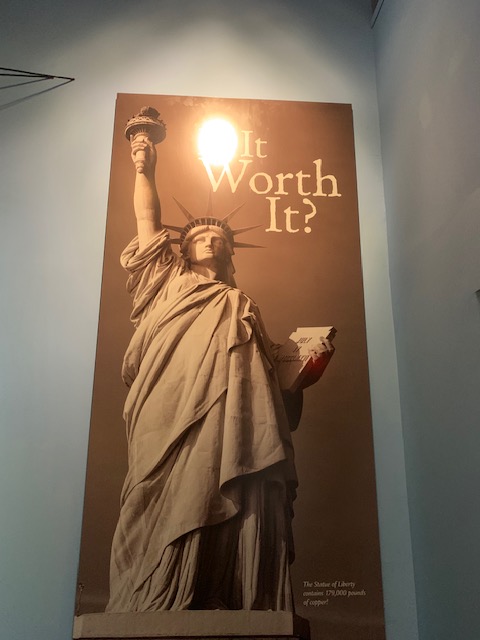
Is It Worth It? The Statue of Liberty contains 179,000 pounds of Copper!
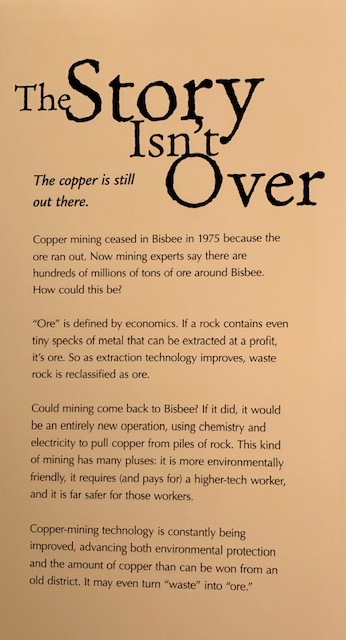
Precious metal mining, was one of the main reasons the rough western lands of the United States became attractive to settlers from all over the world. Like many Arizona towns, Bisbee seemed to grow out from the minerals buried deep in the Mule mountains. Nearly 3 million ounces of gold and more than 8 billion pounds of copper, along with silver, lead, and zinc was pulled from the earth before the mines shut down in 1975. The area is now the 3rd largest and the richest mineral sites in the world. known.

After our top notch tour and museum visit, we went across the street to check out the Copper Queen Hotel.
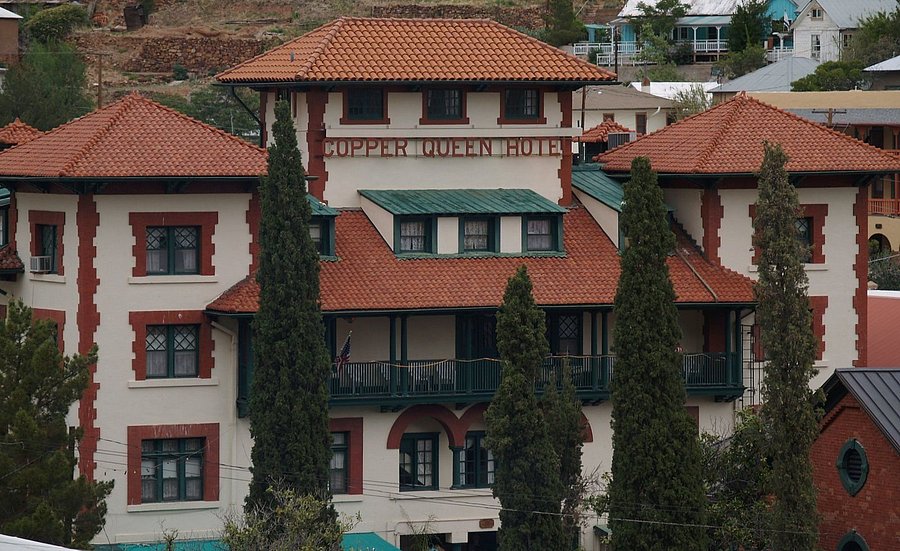
It was built between 1898 and 1902 by the Phelps Dodge Corporation. It was designed as an upscale retreat and luxury lodging for visiting mine investors, executives, and dignitaries during Bisbee’s massive copper-mining boom. The man at the front desk was very nice and said we could walk thru the hotel. The front area was decorated for Halloween and it looked good. Walking up the stairs and thru the hotel you could tell it was once a grand place. The new owners are renovating it and giving it some needed tender loving care.
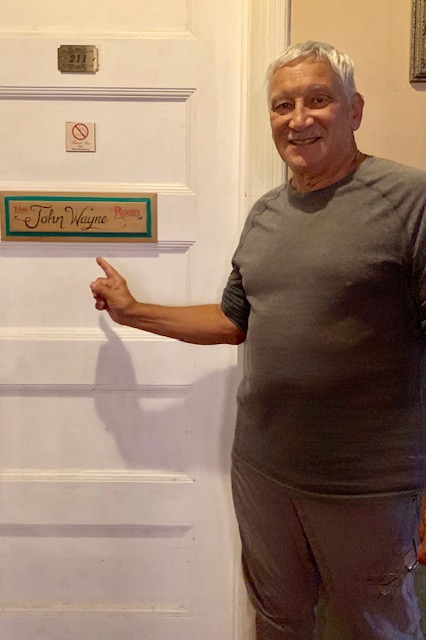
John Wayne was a regular guest at the Copper Queen. Apparently him and Lee Marvin once had a disagreement, ending with The Duke throwing Marvin through a window. His favorite room is where Dave is, and it’s the most requested room by guests.
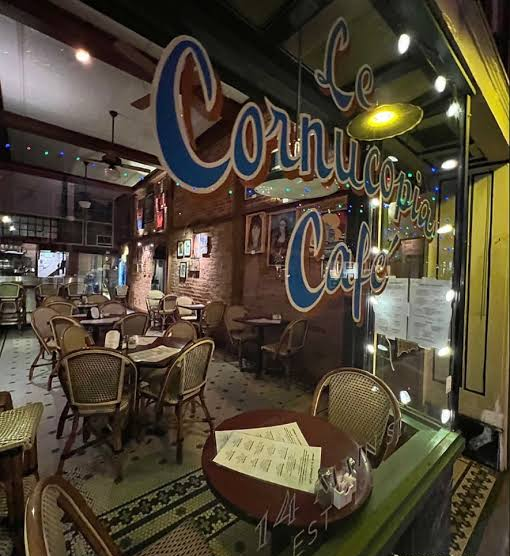
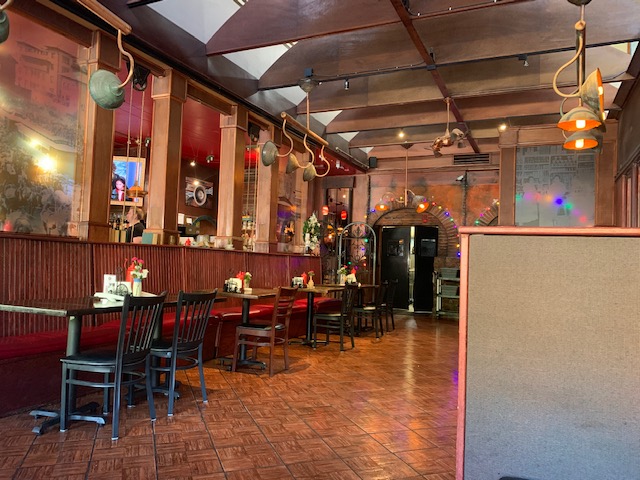
We had a late lunch at the Le Cornucopia Cafe, just down the street from the Copper Queen Hotel, which was very good.

After we ate we took a walk in what is known as “Old Bisbee” it’s home to a downtown artsy place. Bisbee’s streets are popular for tourists who wander along Main Street, Brewery Gulch, OK Streets for the breweries, restaurants and art shops. It also has turn-of-the-century architecture, including Victorian-style houses and an elegant Art Deco county courthouse.
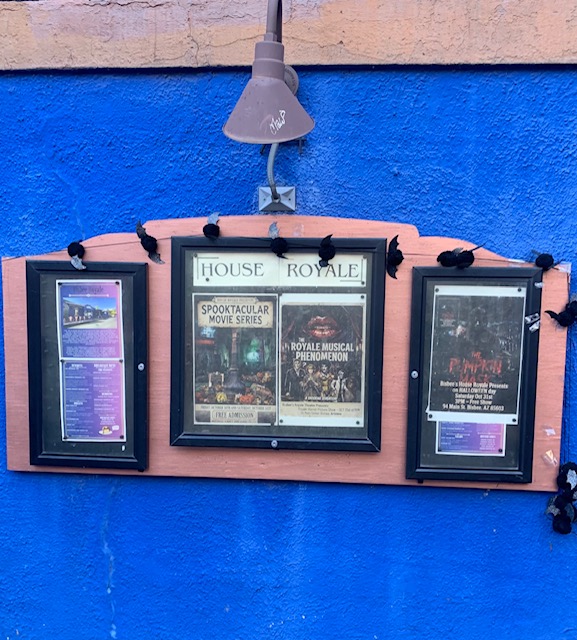
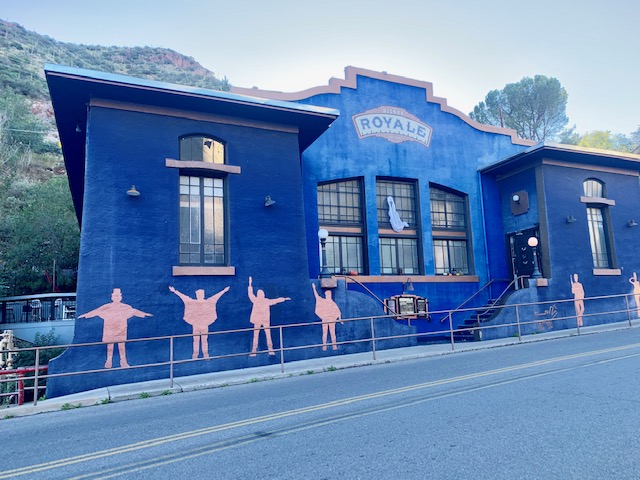
The House Royal Theatre.
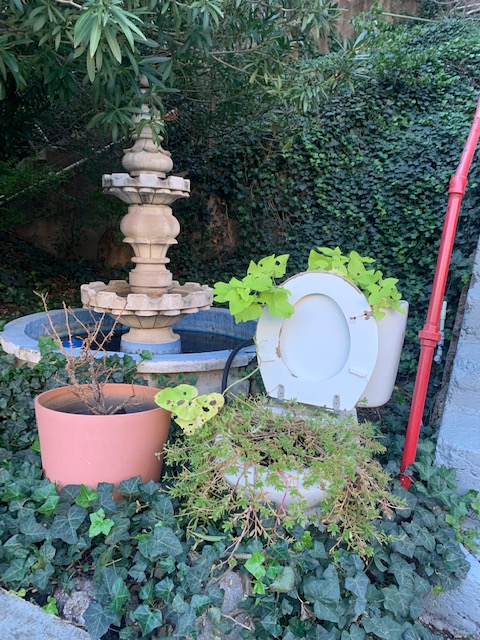
Beautiful Art Work
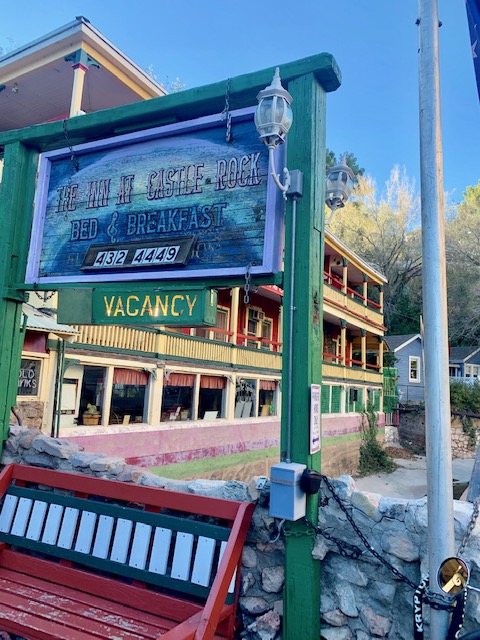
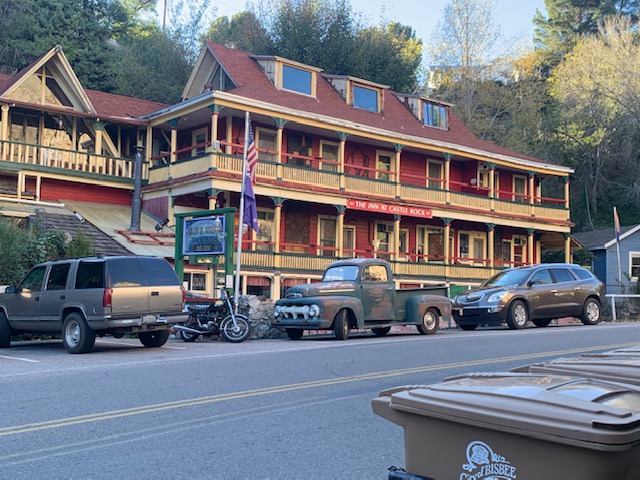
Bed and Breakfast
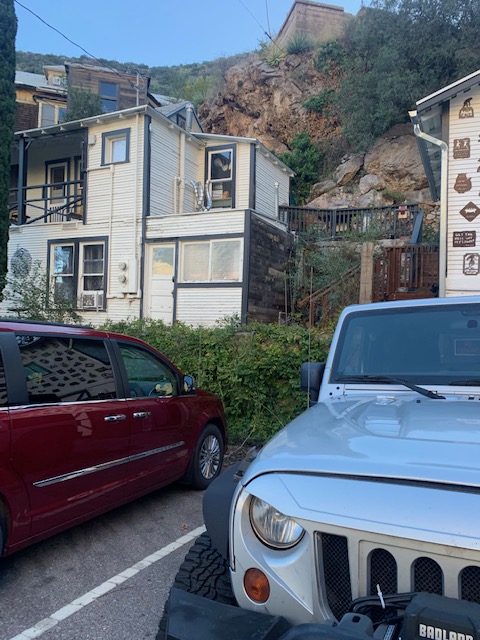
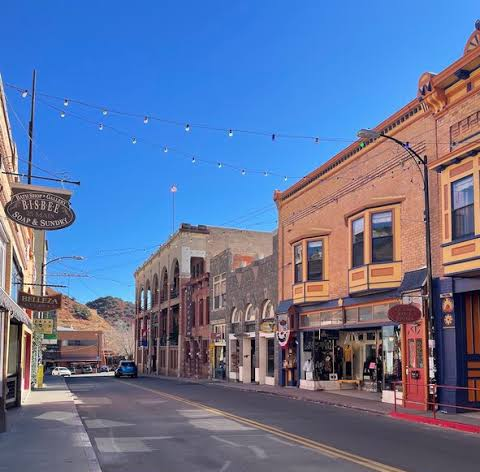
Some of the houses were built into the hills, it reminded of some towns in PA.
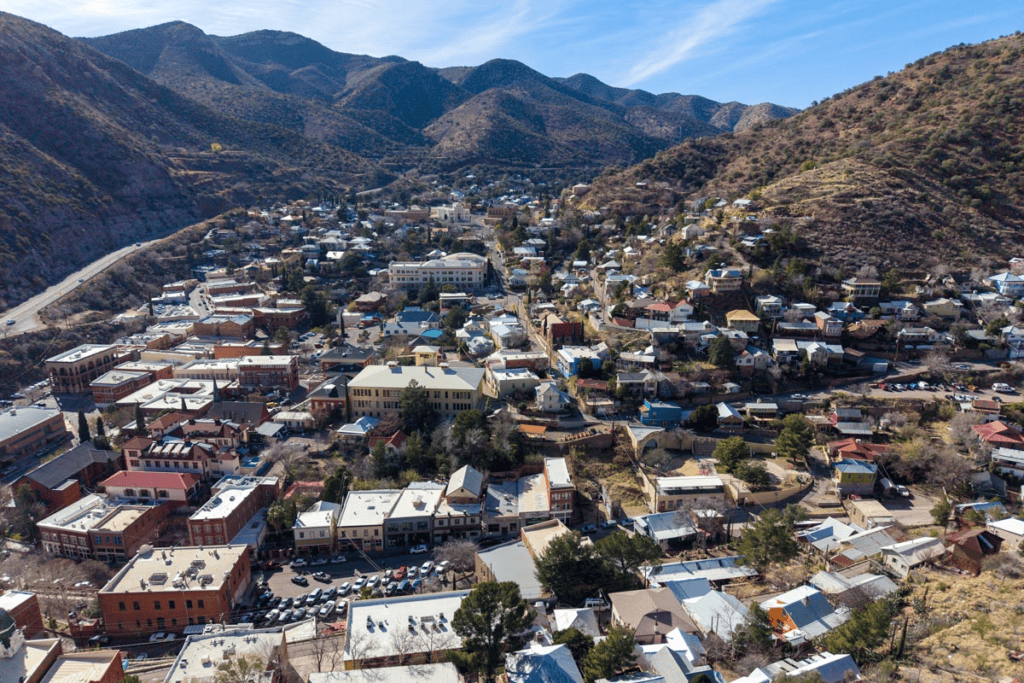
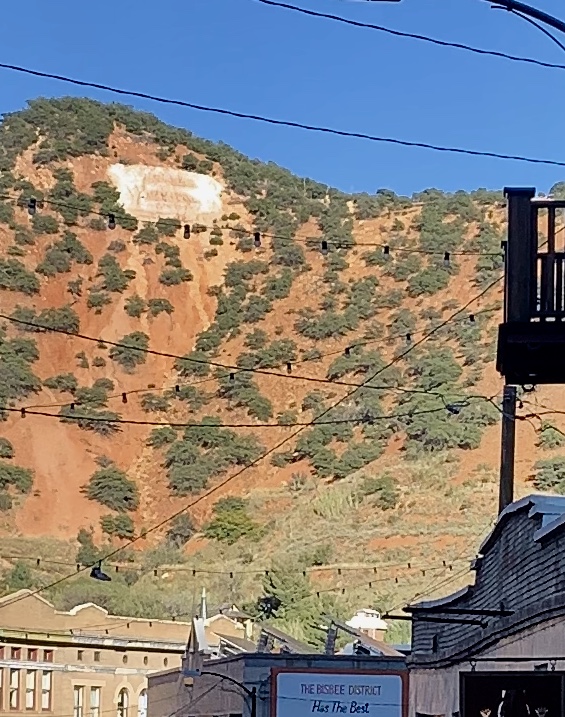
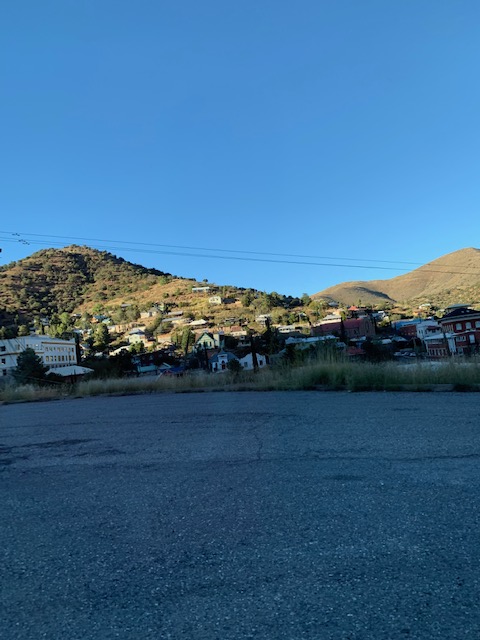
Looking down at Bisbee and looking up at the the Bisbee B.
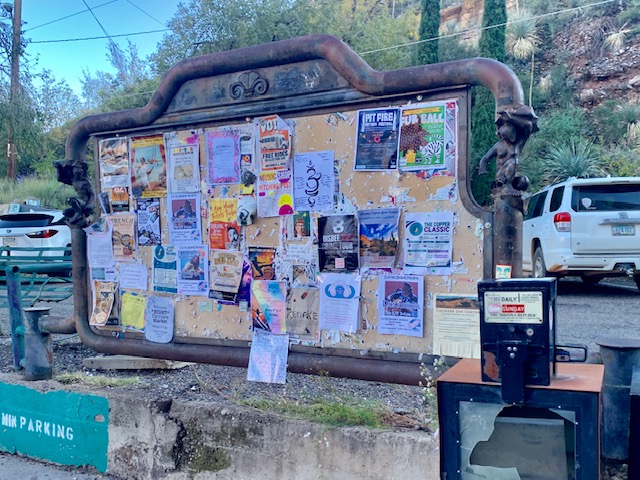
A neat old poster/note board in town.
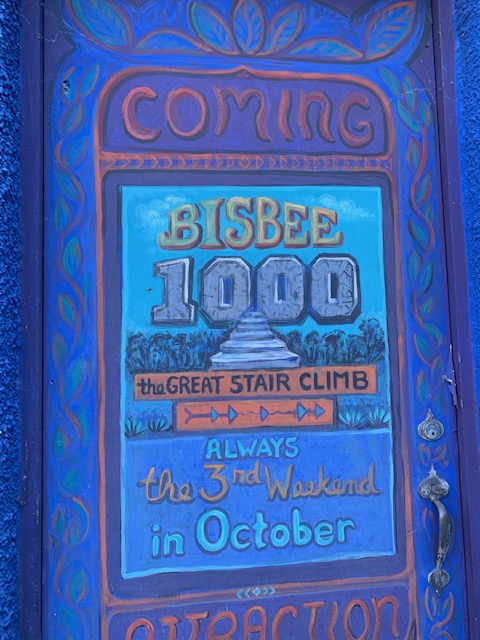
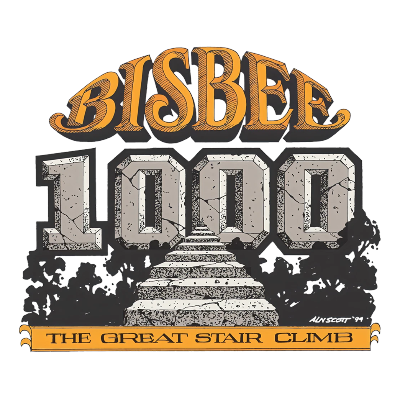
Every year, Bisbee hosts the Bisbee 1000 Great Stair Climb, 4.5-mile race with nine staircases, more than 1,000 steps, and a 1,175-foot elevation gain. Save Our Stairs, Inc .a nonprofit organization dedicated to improving the health, wellness, and economic vitality of Southern Arizona. holds the event.
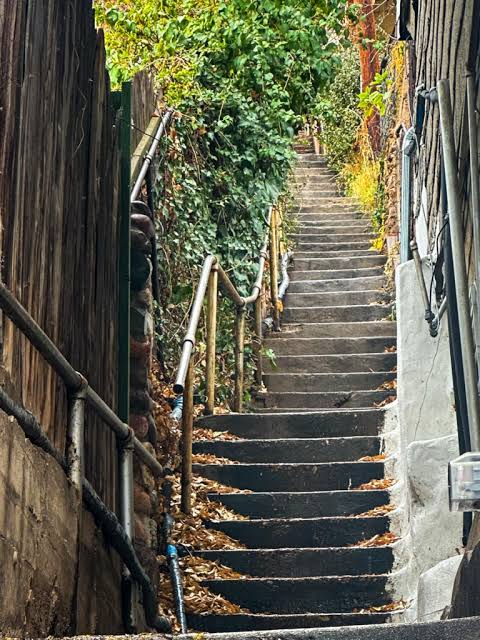
I took a picture of these stairs as we were walking by, I didn’t go up or down them, we didn’t have time.
Your wondering why they have so many stairs? In the late 19th century, miners and their families built homes on the steep hillsides. Before automobiles or wide roads were possible on the jagged terrain, the earliest routes up the slopes were narrow dirt paths used by pack mules to haul supplies and ice to perched houses. When more people came to town the hillside neighborhoods grew, those dirt trails evolved into steep, ladder-like wooden staircases.
During the Great Depression in 1938, the Works Progress Administration (WPA) replaced the deteriorating wooden steps with permanent concrete staircases to put local miners back to work. Many of these concrete stairs still feature original “USA/WPA” stamps on the landings today.
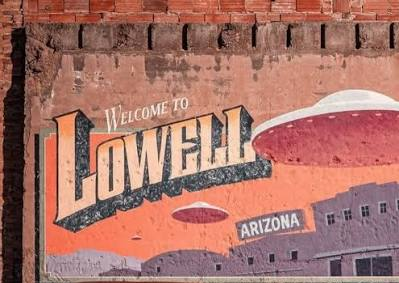
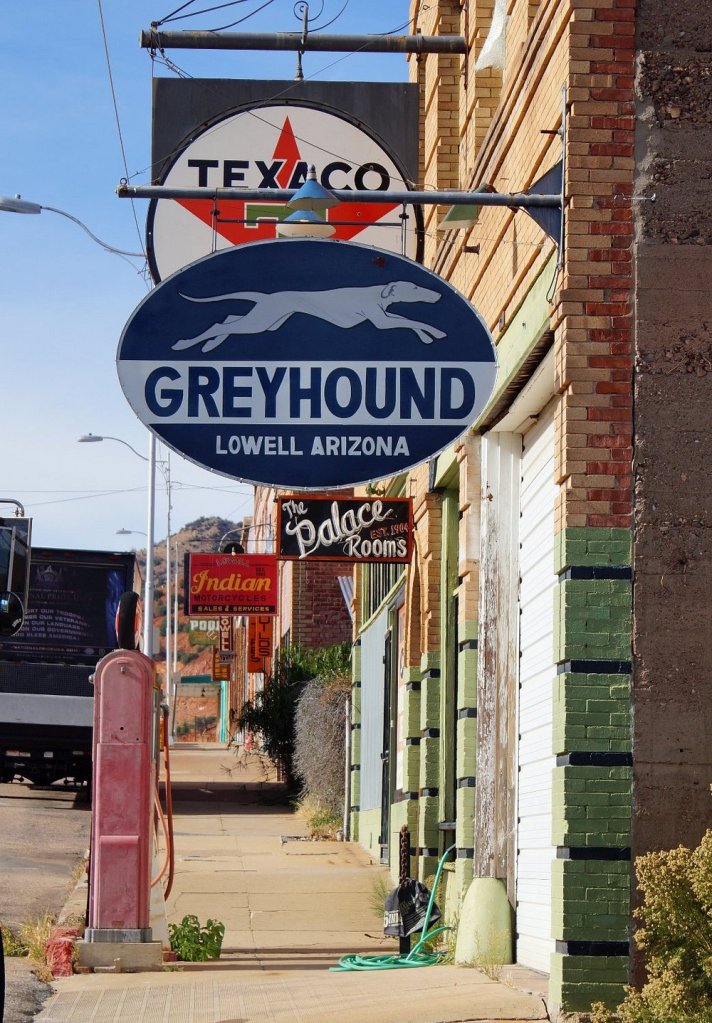
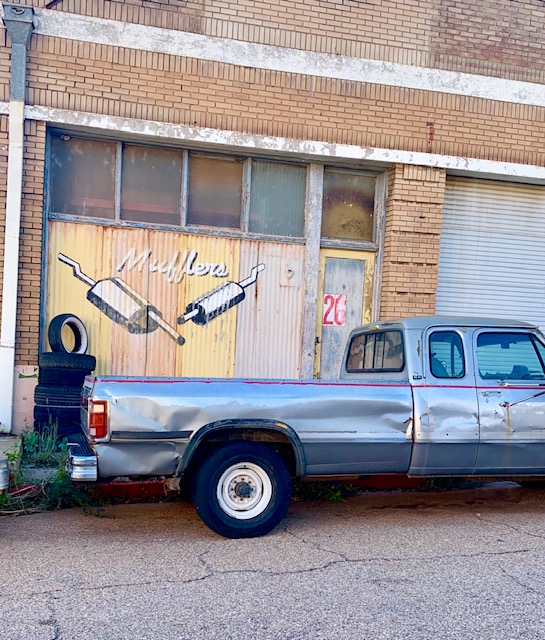
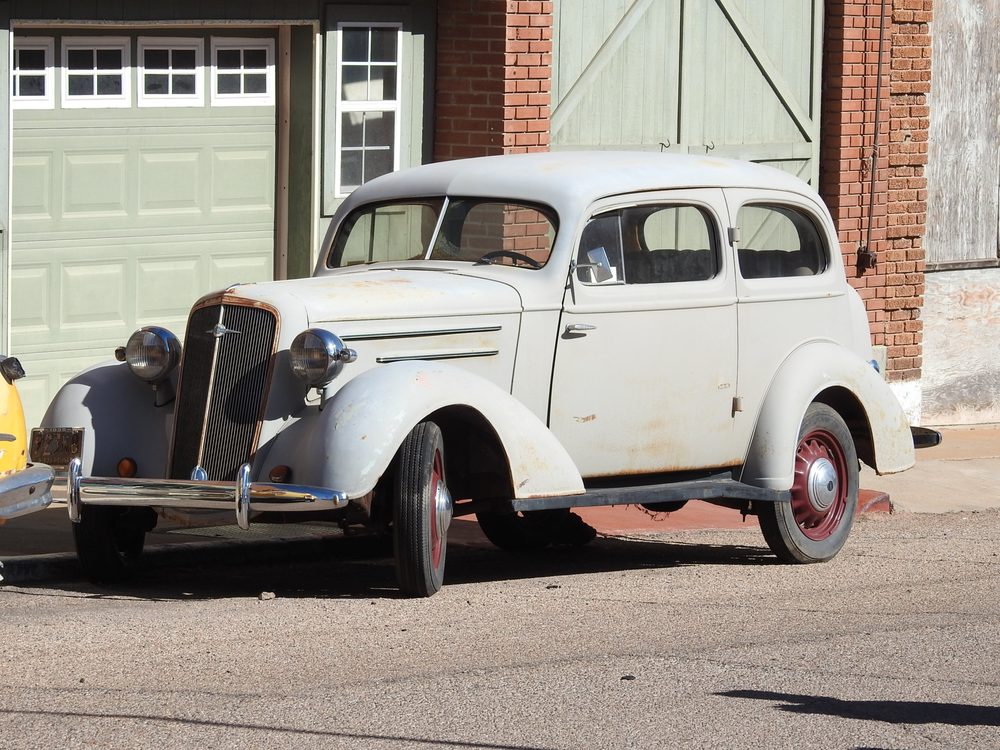
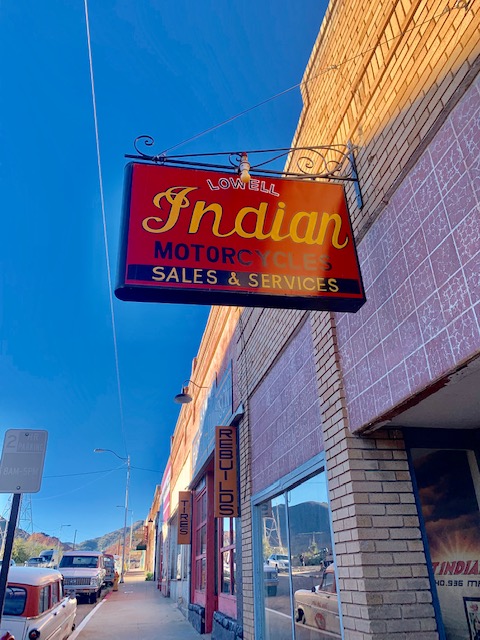
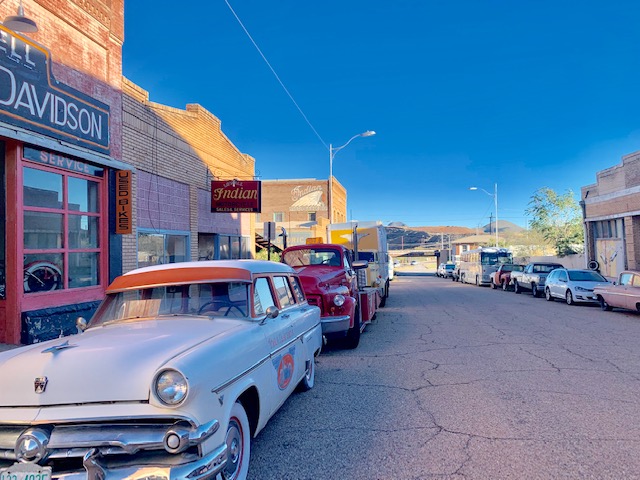
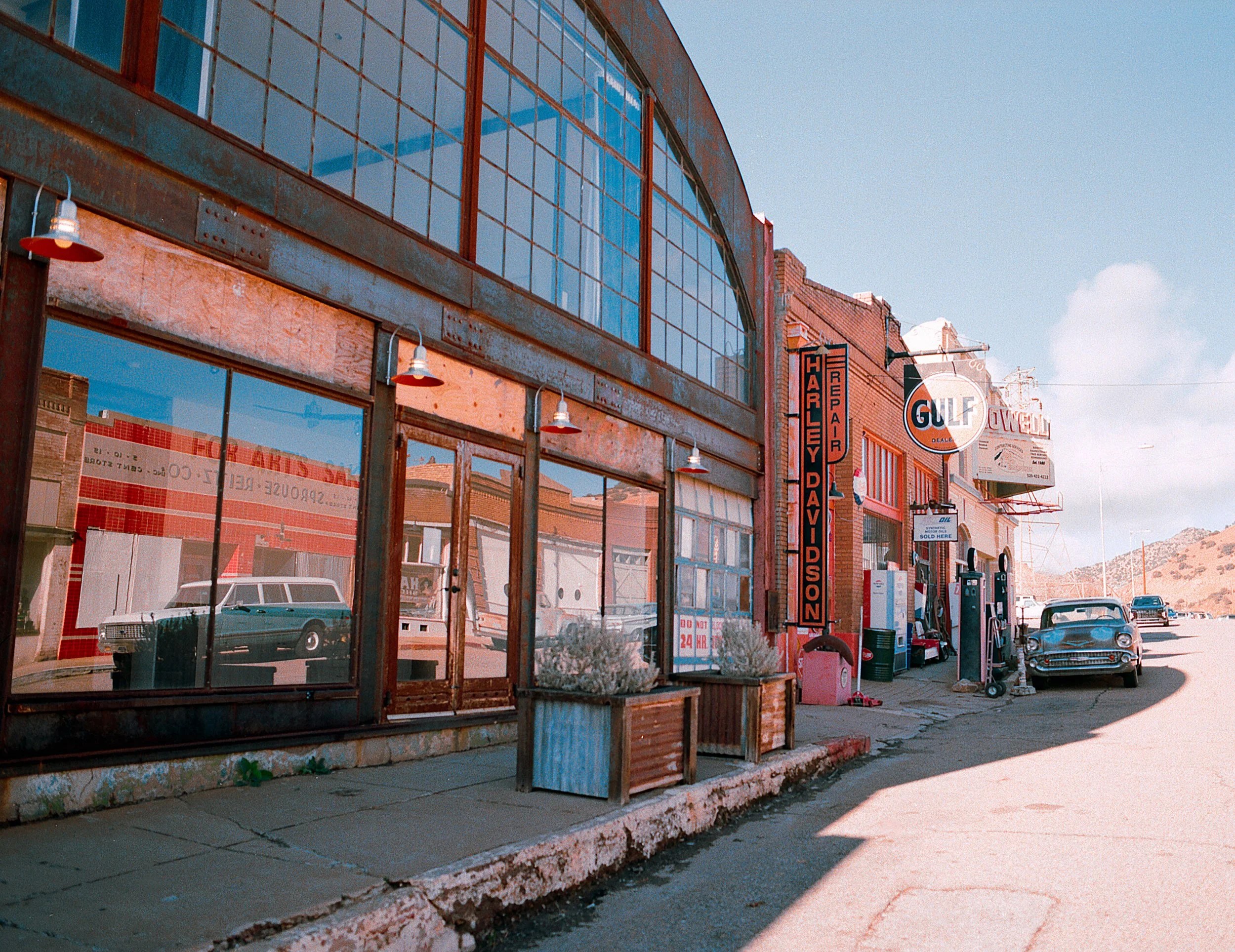
There is another historic location in Bisbee, that is the Lowell Historic District. It’s a one block preserved street, known for it’s retro storefronts, vintage signage, parked classic cars, and old gas pumps that looks like the 1950s Once part of the mining town of Lowell, the strip has been maintained as an open-air reminder of Bisbee’s past. It is mentioned in local guides for its photographic appeal. Visitors commonly stroll or drive the short stretch while photographing storefronts ,etc. It has also been used in movies for the 50’s look.
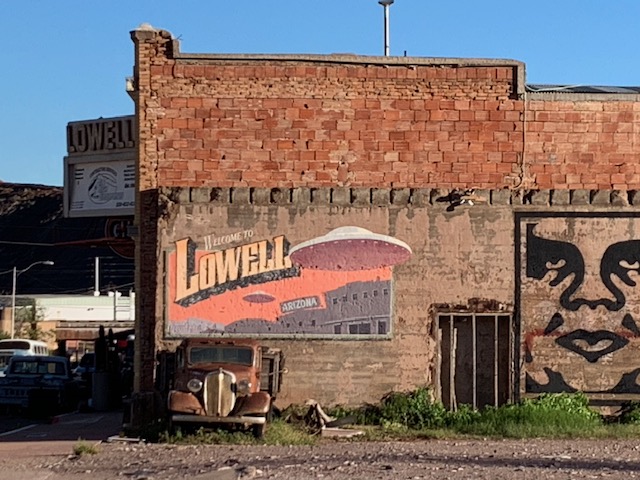
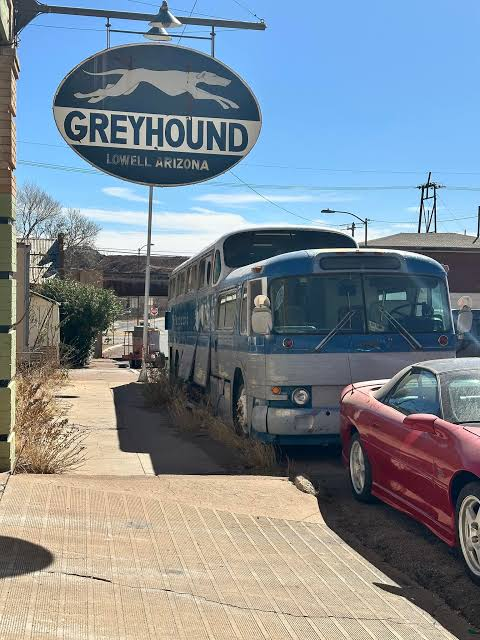
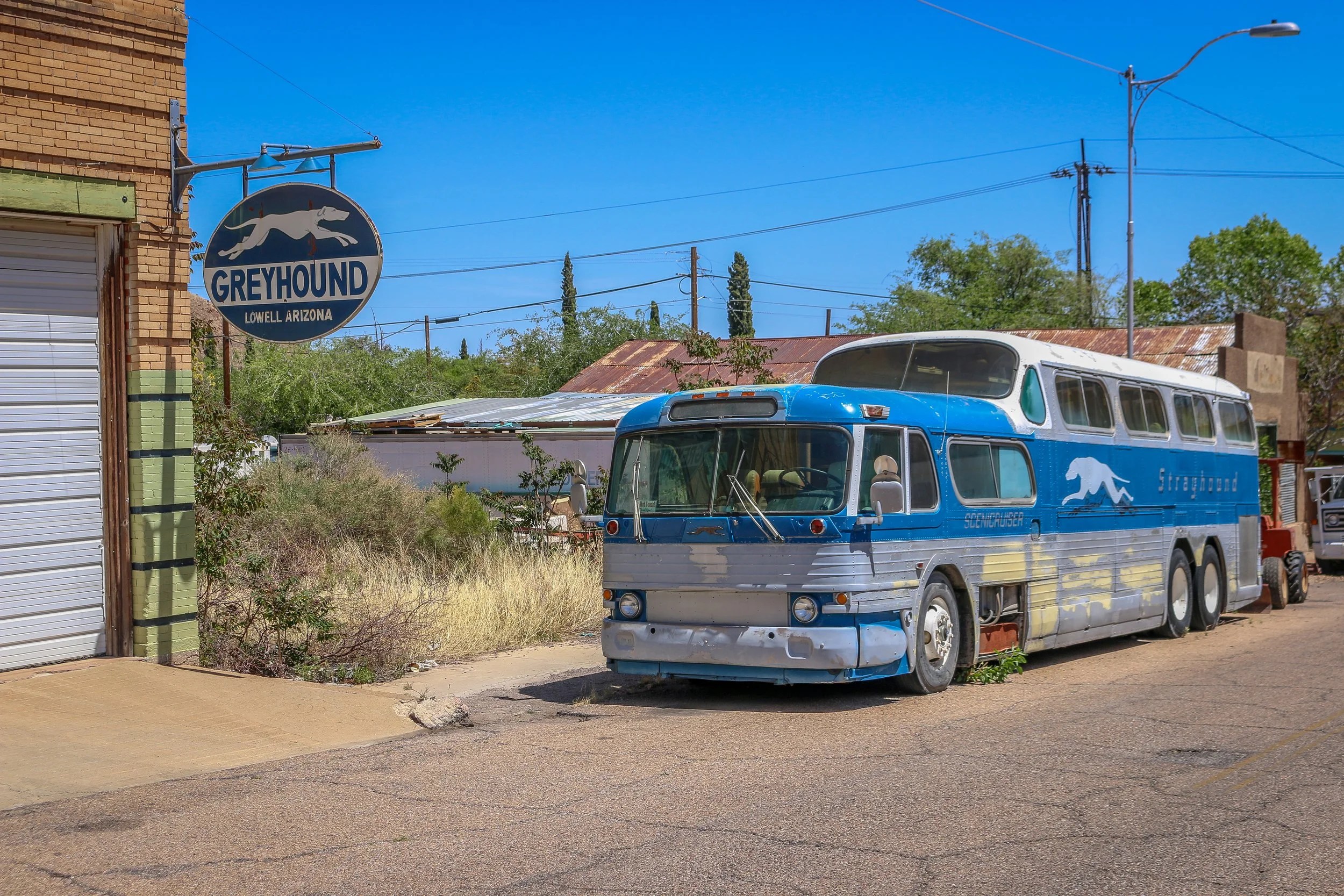
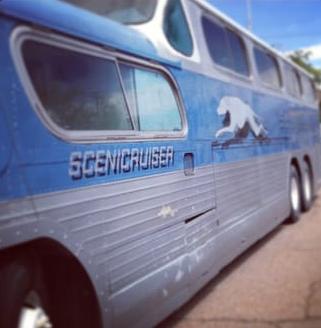
The first thing you notice in the beginning of Erie Street is the old Greyhound bus, what a beaut!
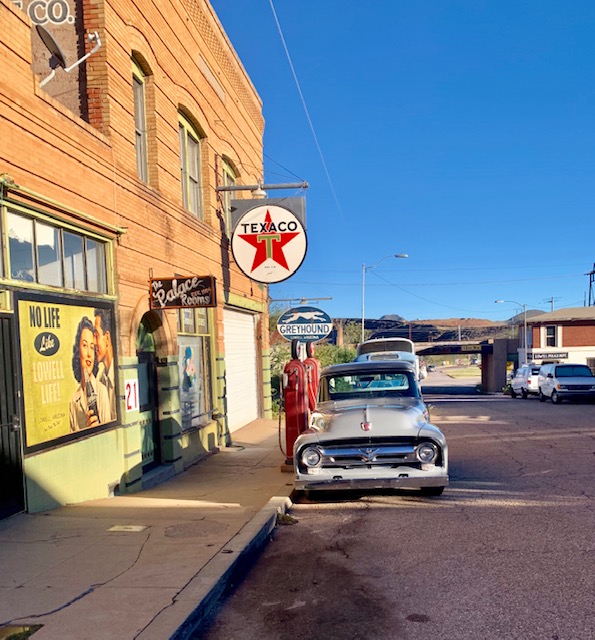
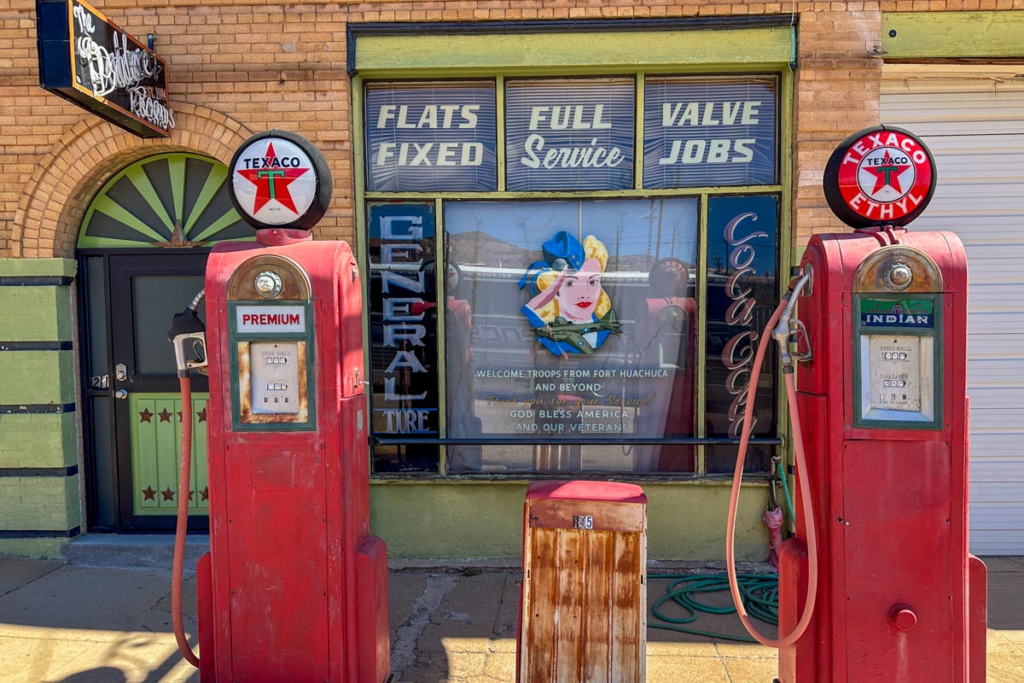
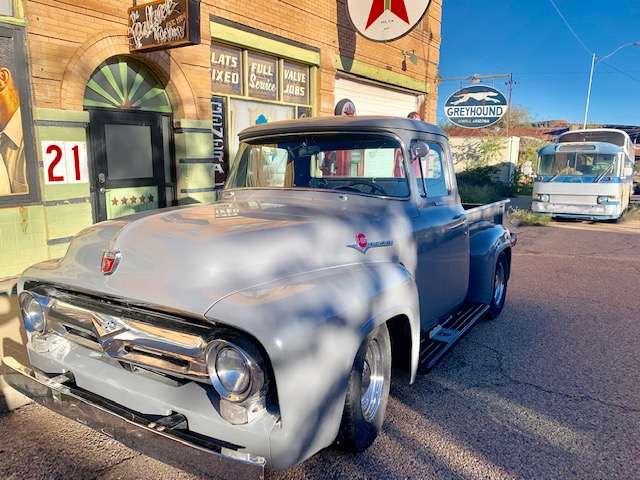
An old Texaco station.
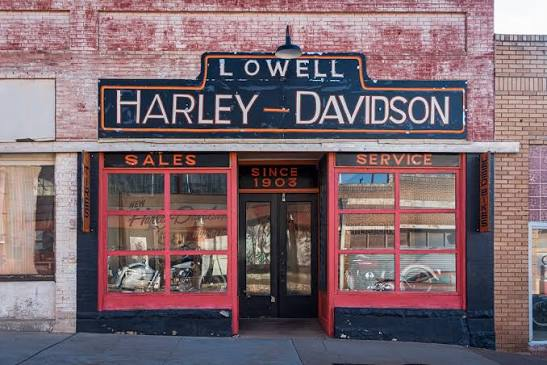
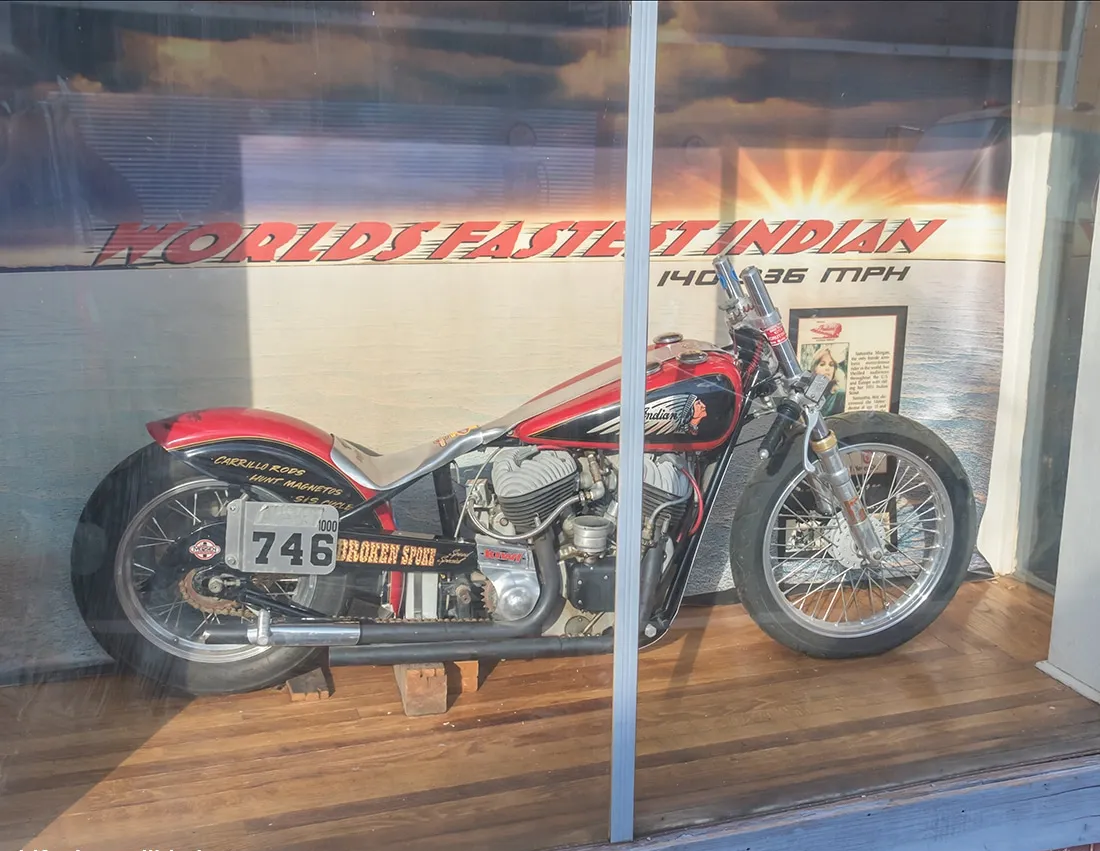
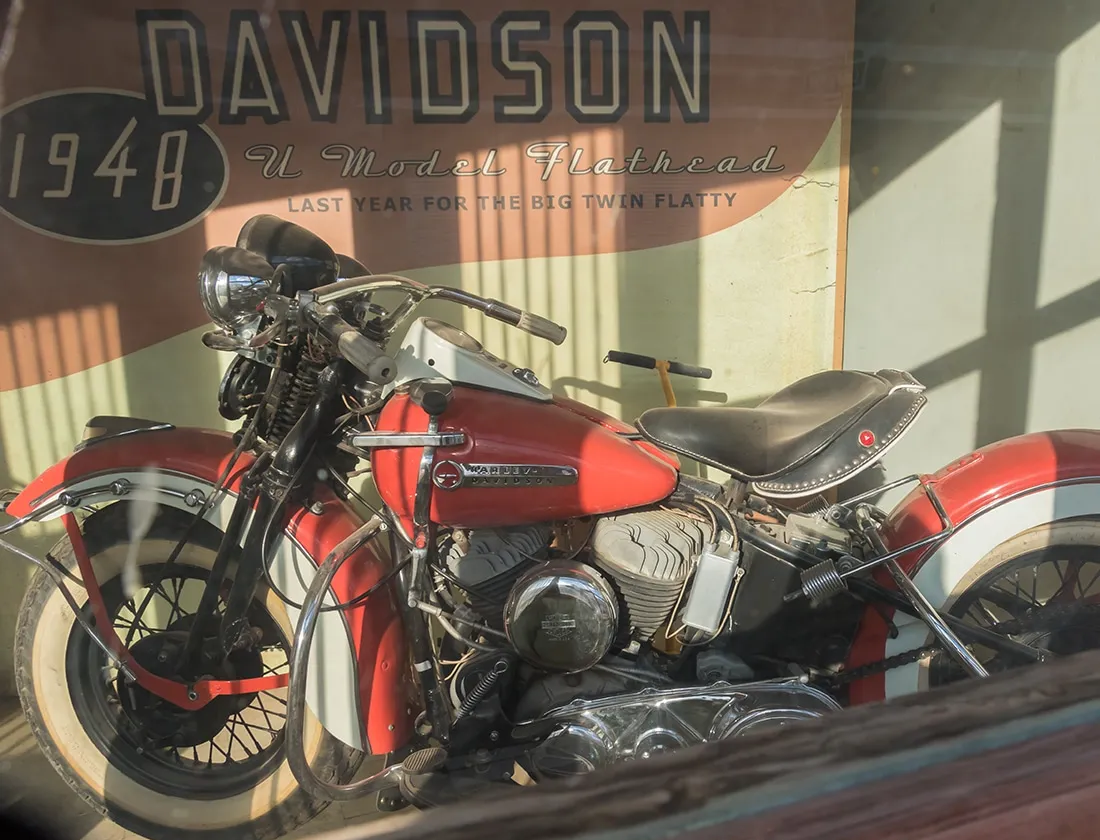

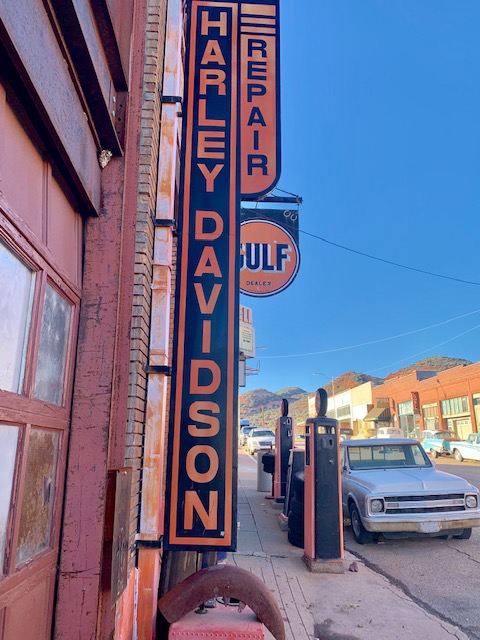
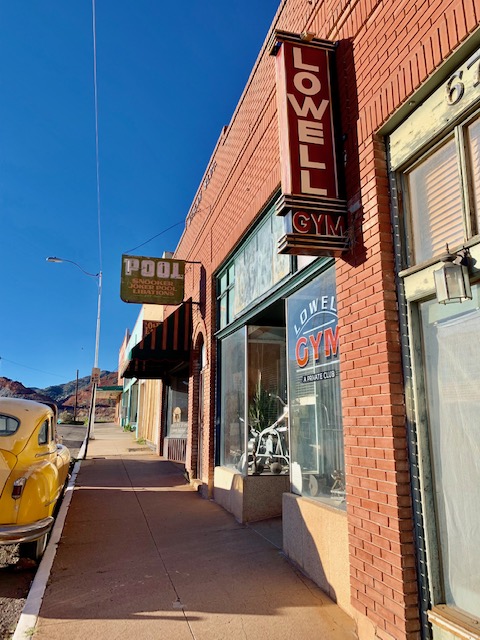
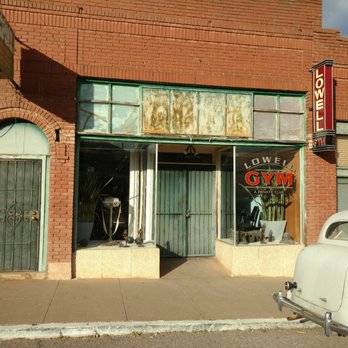
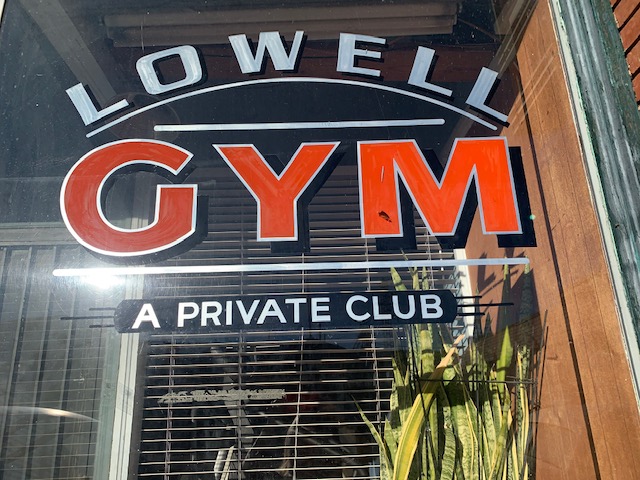
This private gym is open to the public. They do have updated equipment inside, and it’s a mere $30 a month.
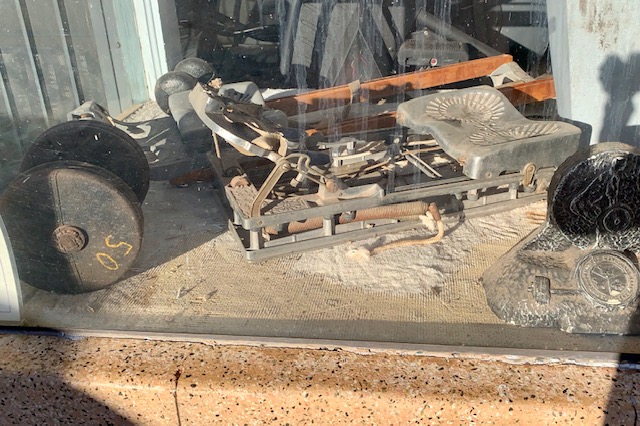
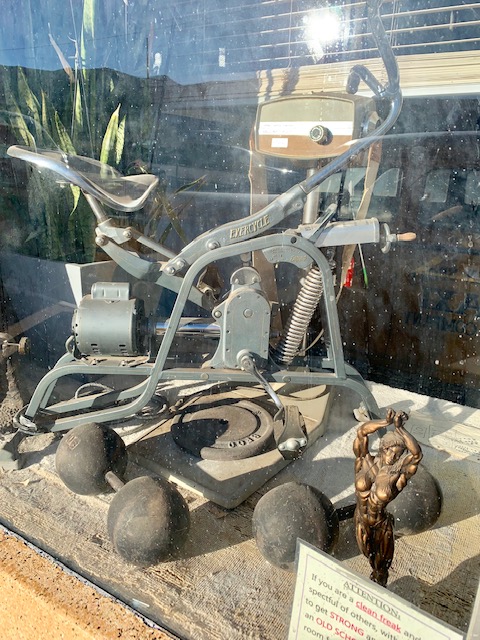
How about an old rowing machine and bike.
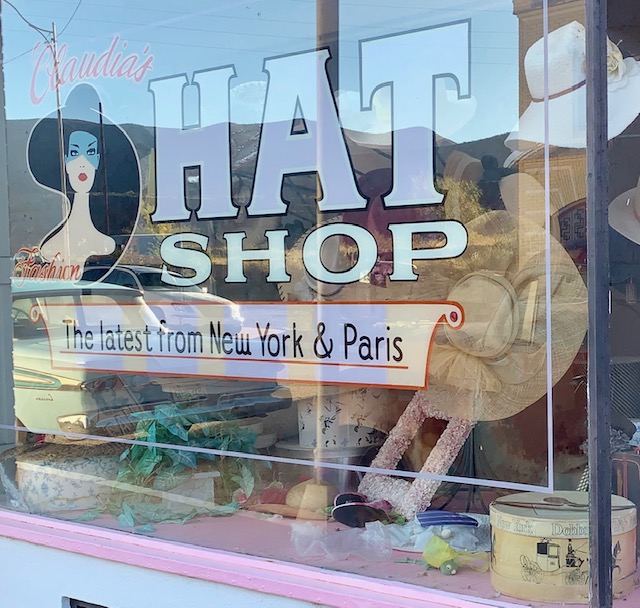
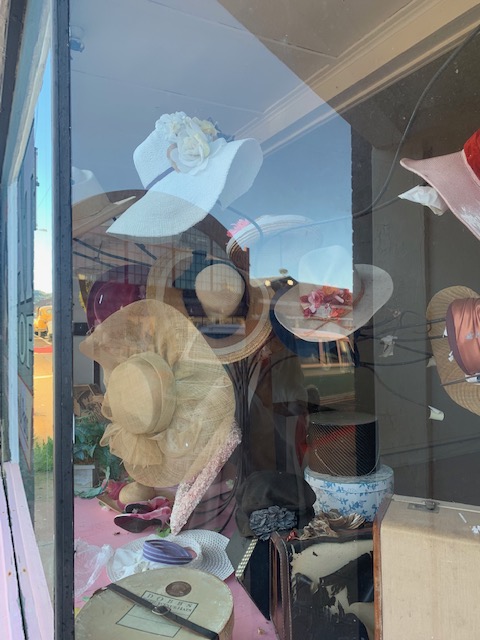
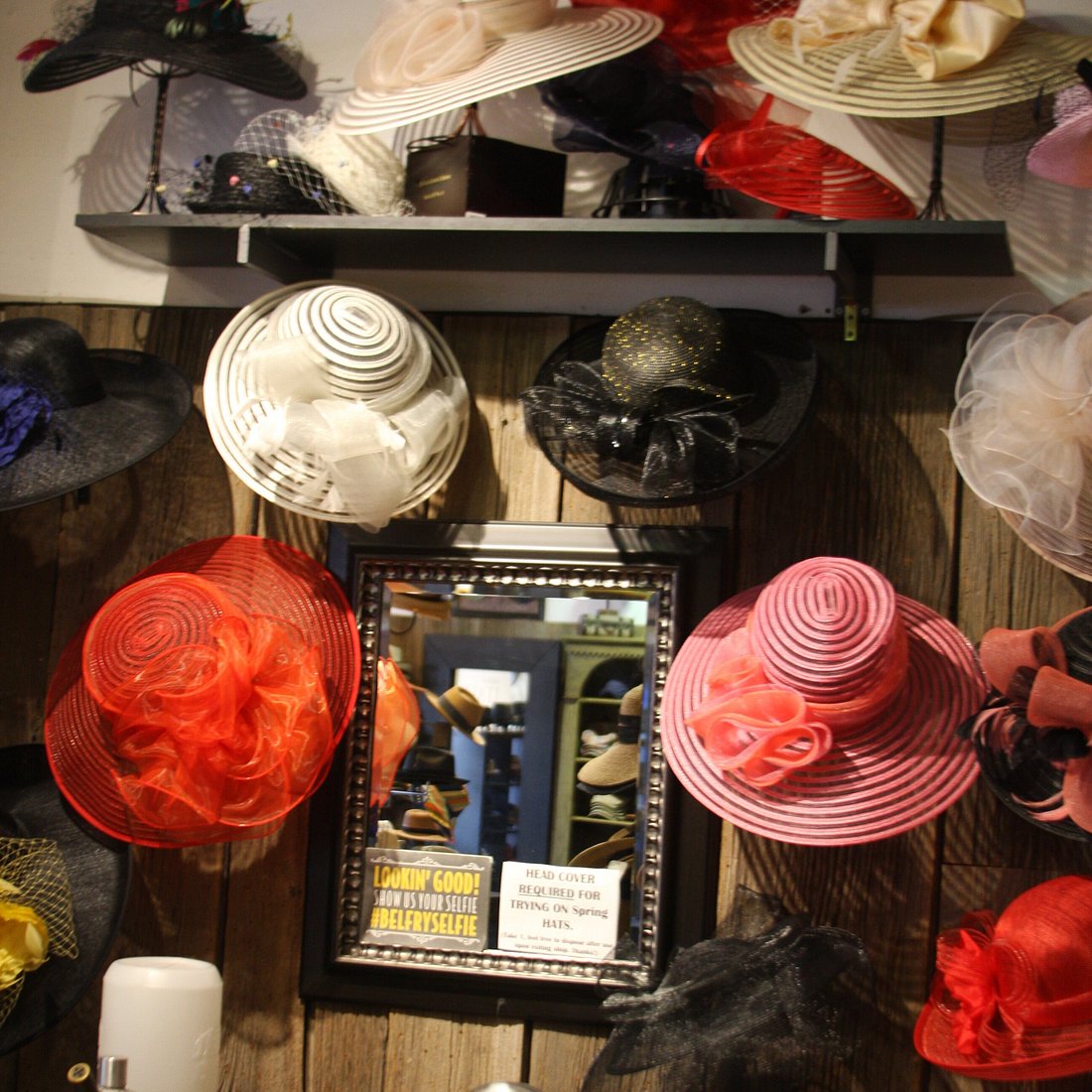
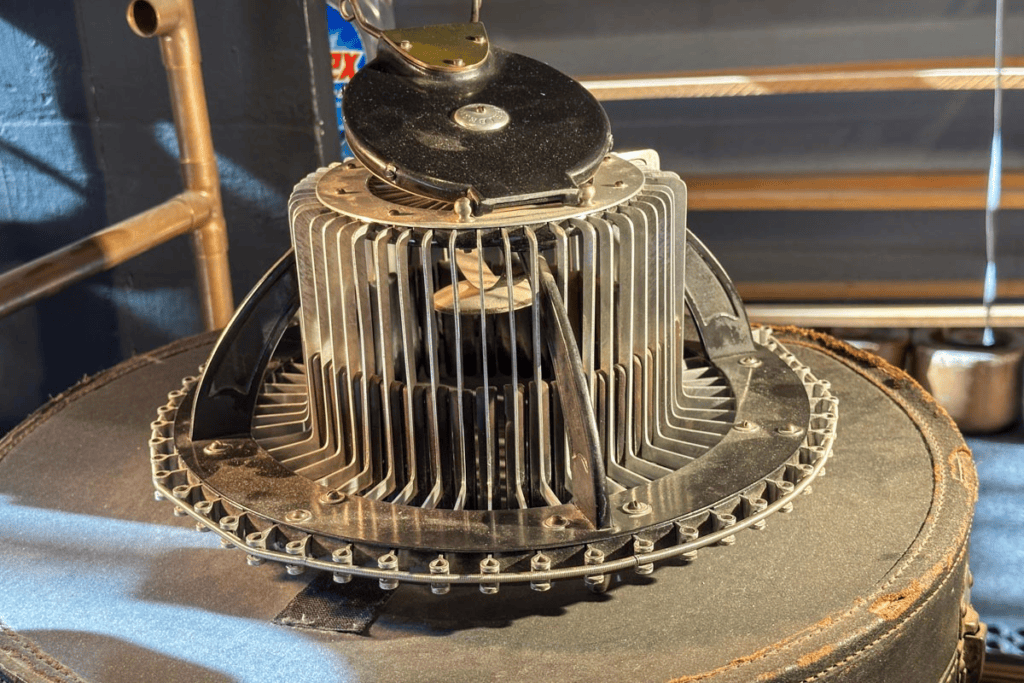
.Óptimo Hatworks hat shop is open and it is is a world-renowned hat maker dedicated to the preservation of artisanal millinery. The shops specializes in repairing with a renovator machine that cleans and re-blocks antique or cherished hats to their original glory.

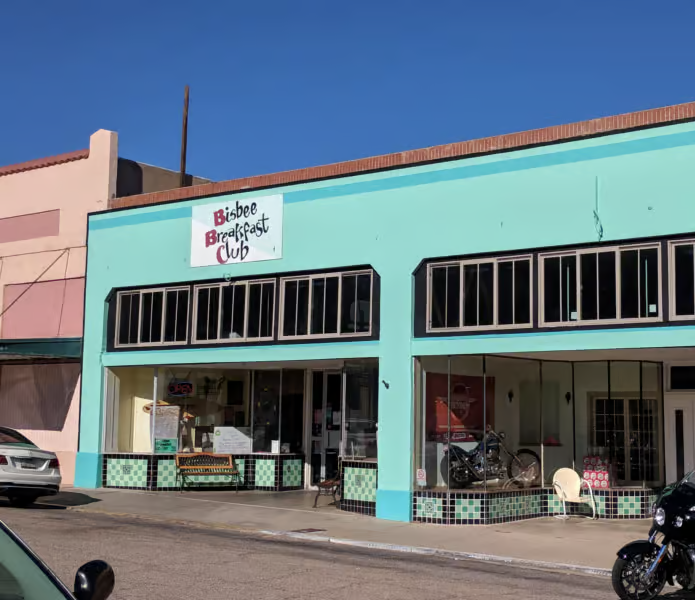

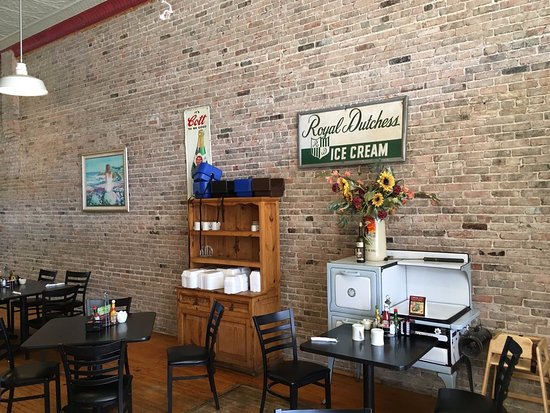
The Bisbee Breakfast Club in 2005 took over the historic Rexall Drug building. It recently moved to a new location in downtown Old Bisbee.
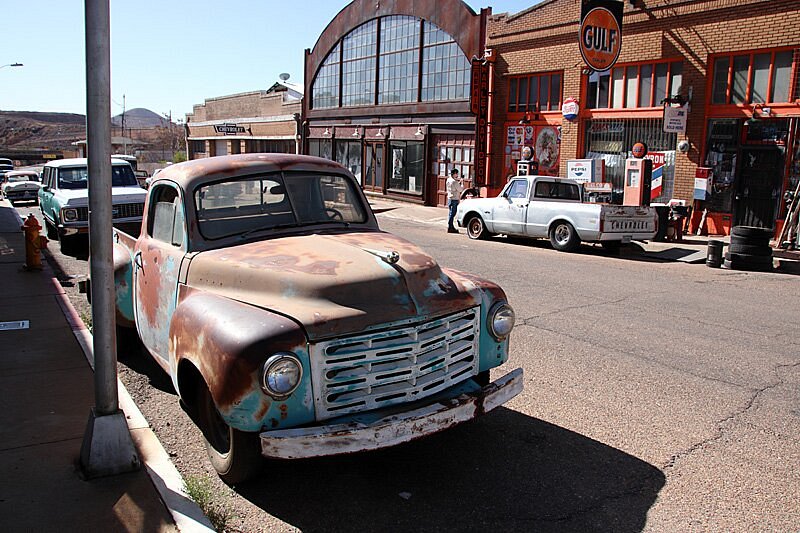
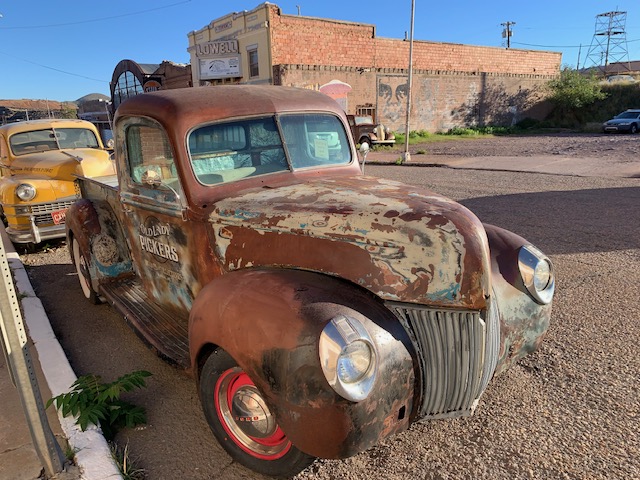
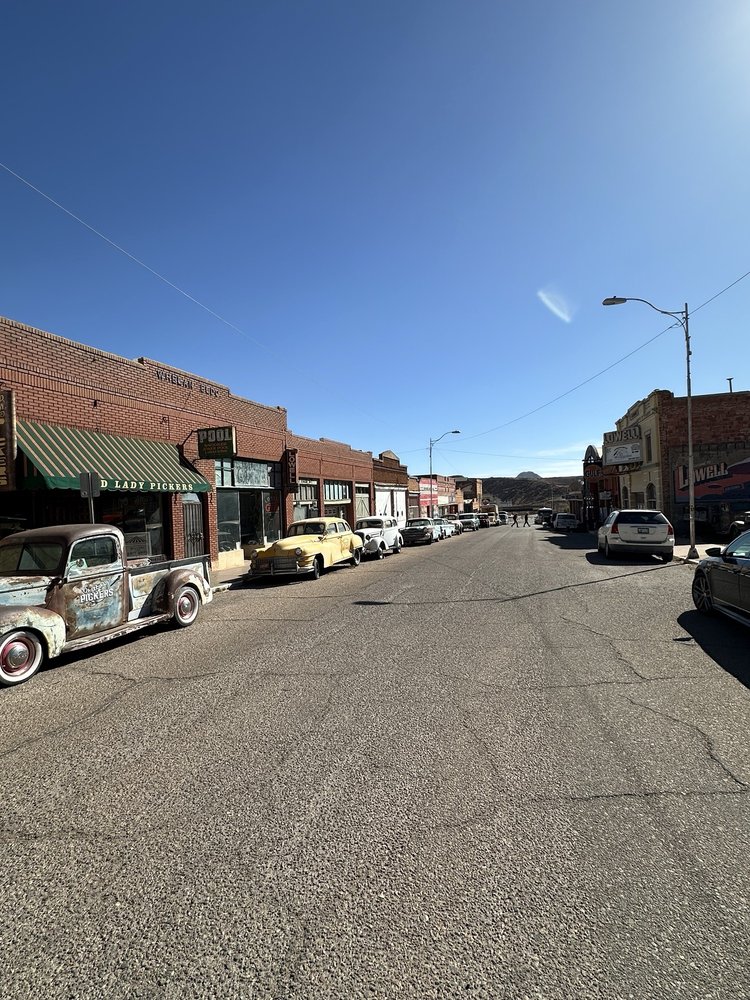
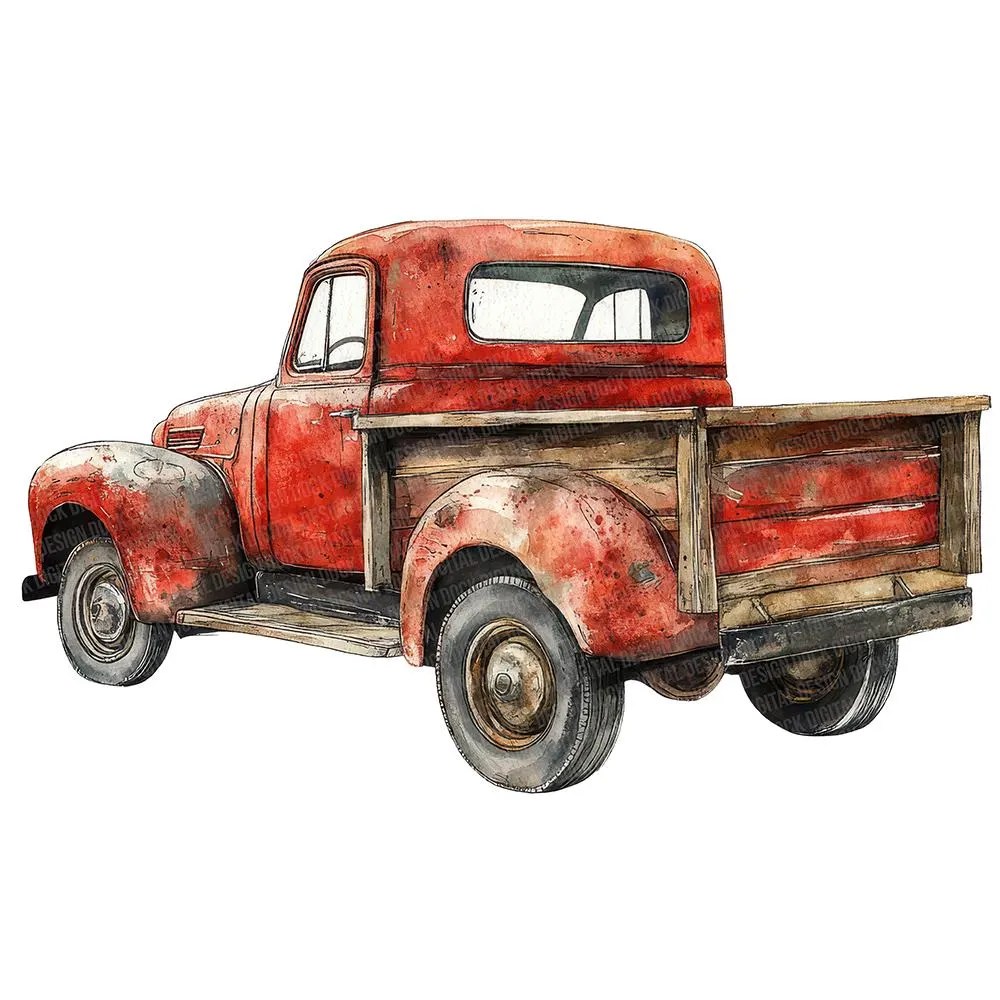
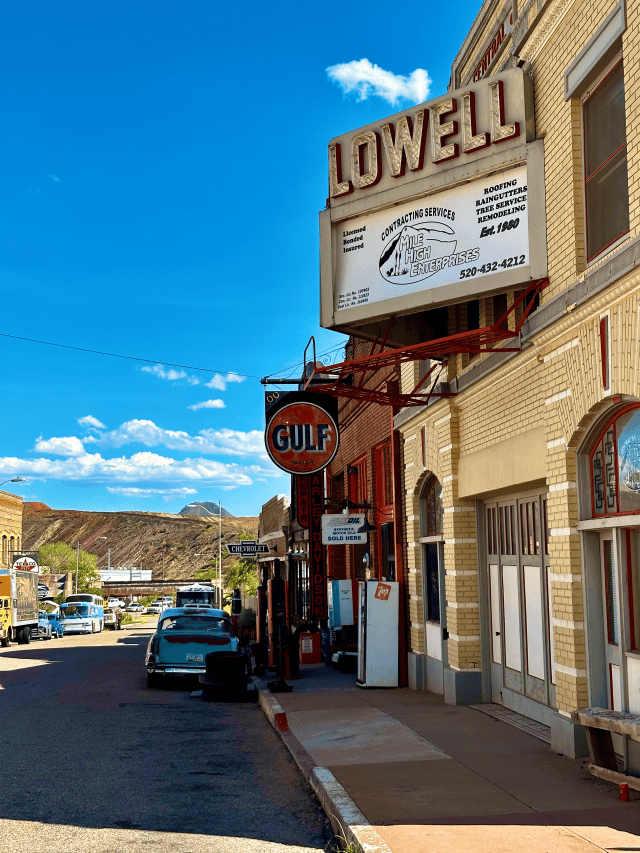
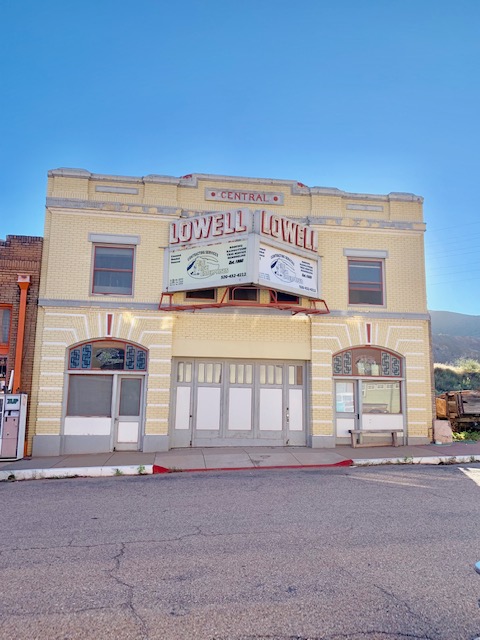
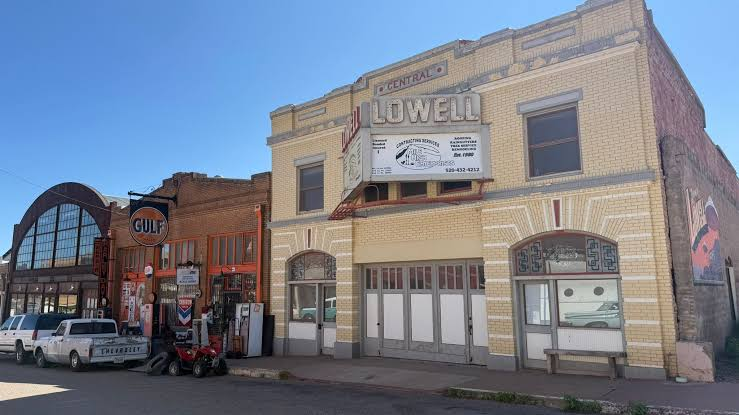
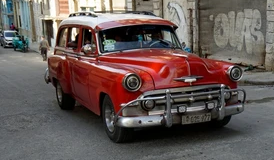
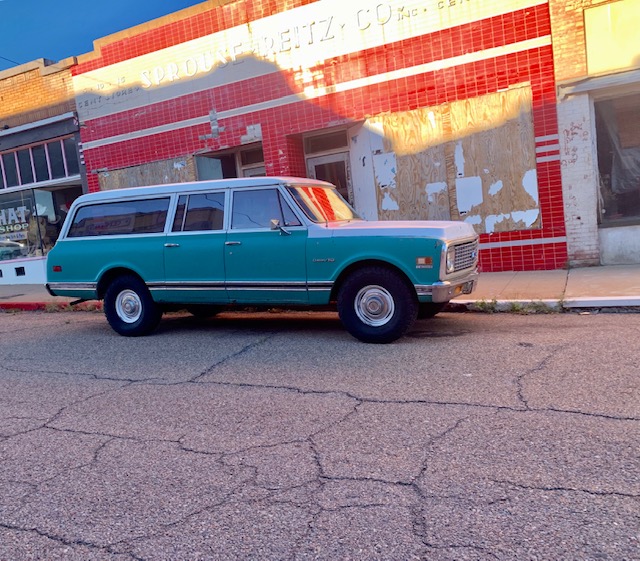
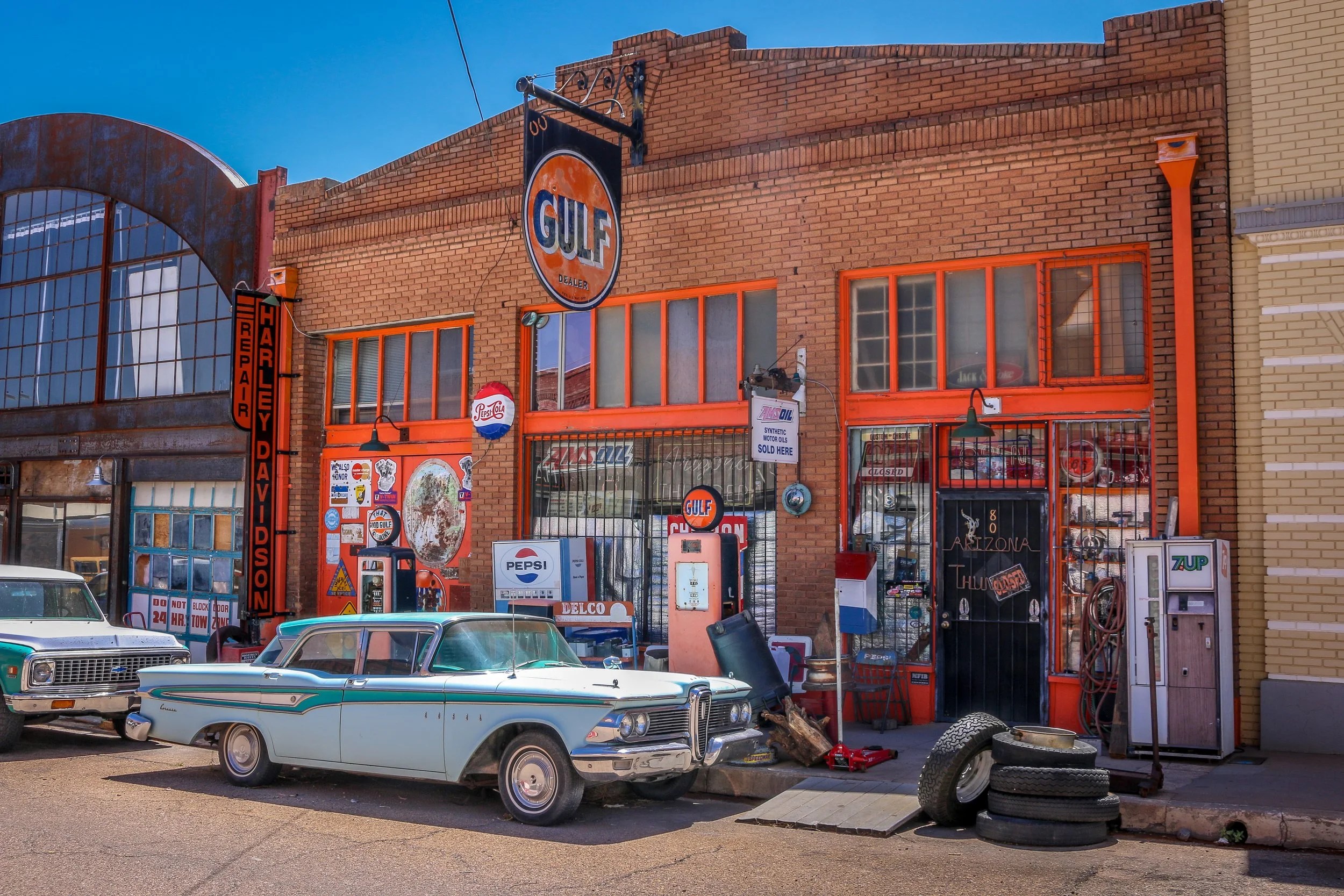

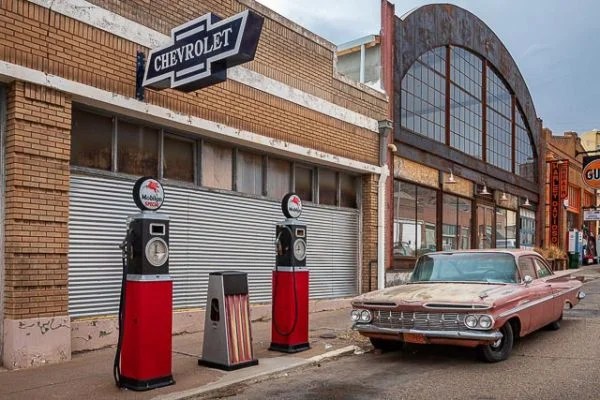
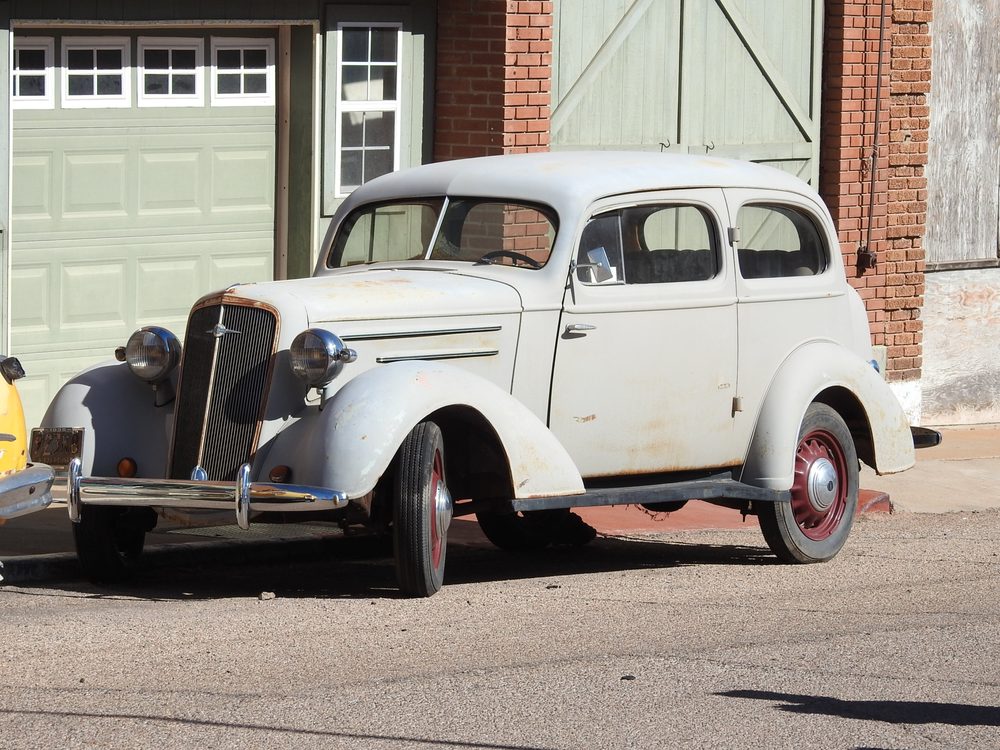
Who Remembers the song 🎶

🎼See the USA in your Chevrolet, America is asking you to call Drive your Chevrolet through the USA America’s the greatest land of all On a highway, or a road along the levee 🎶Performance is sweeter, America is asking you to call Drive your Chevrolet through the USA Performance is sweeter Nothing can beat her Life is completer in a Chevy. etc, etc. 🎤😊
👀 ✨ 👓 🪭 🥾 ⚾🪇 🎥 💰
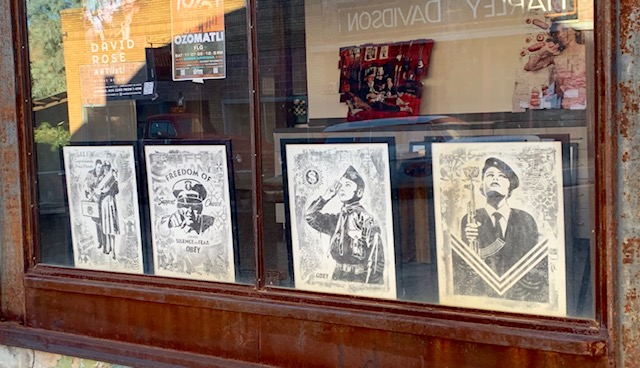
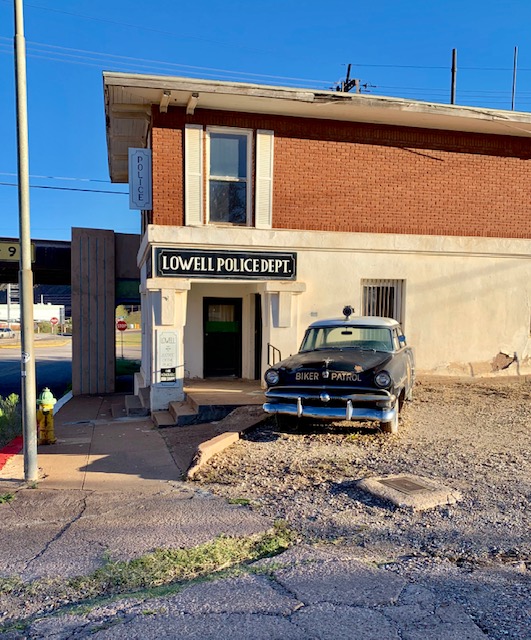
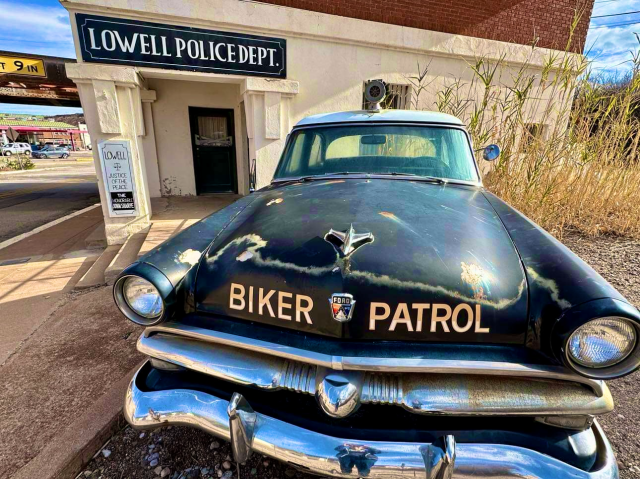
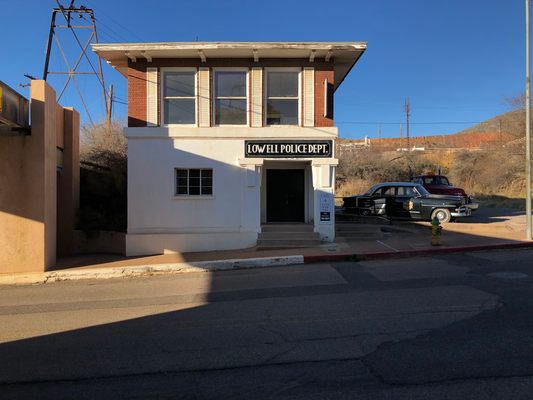
The town of Lowell in Bisbee even had their own police department.
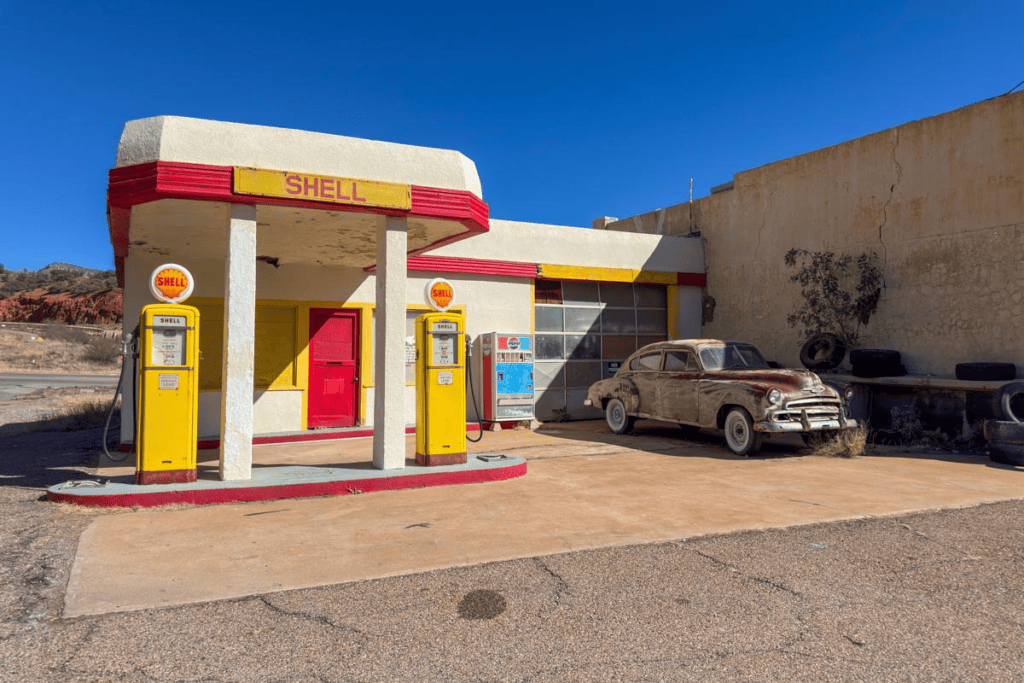
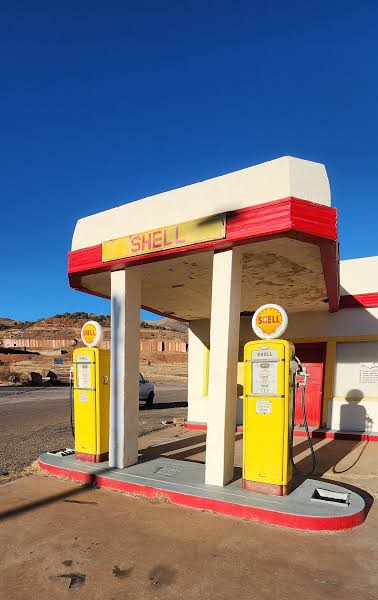
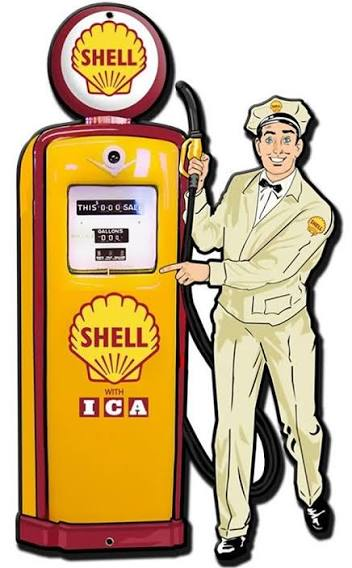
Guess how much the gas was the last time one of these pumps was used? 22 cents!
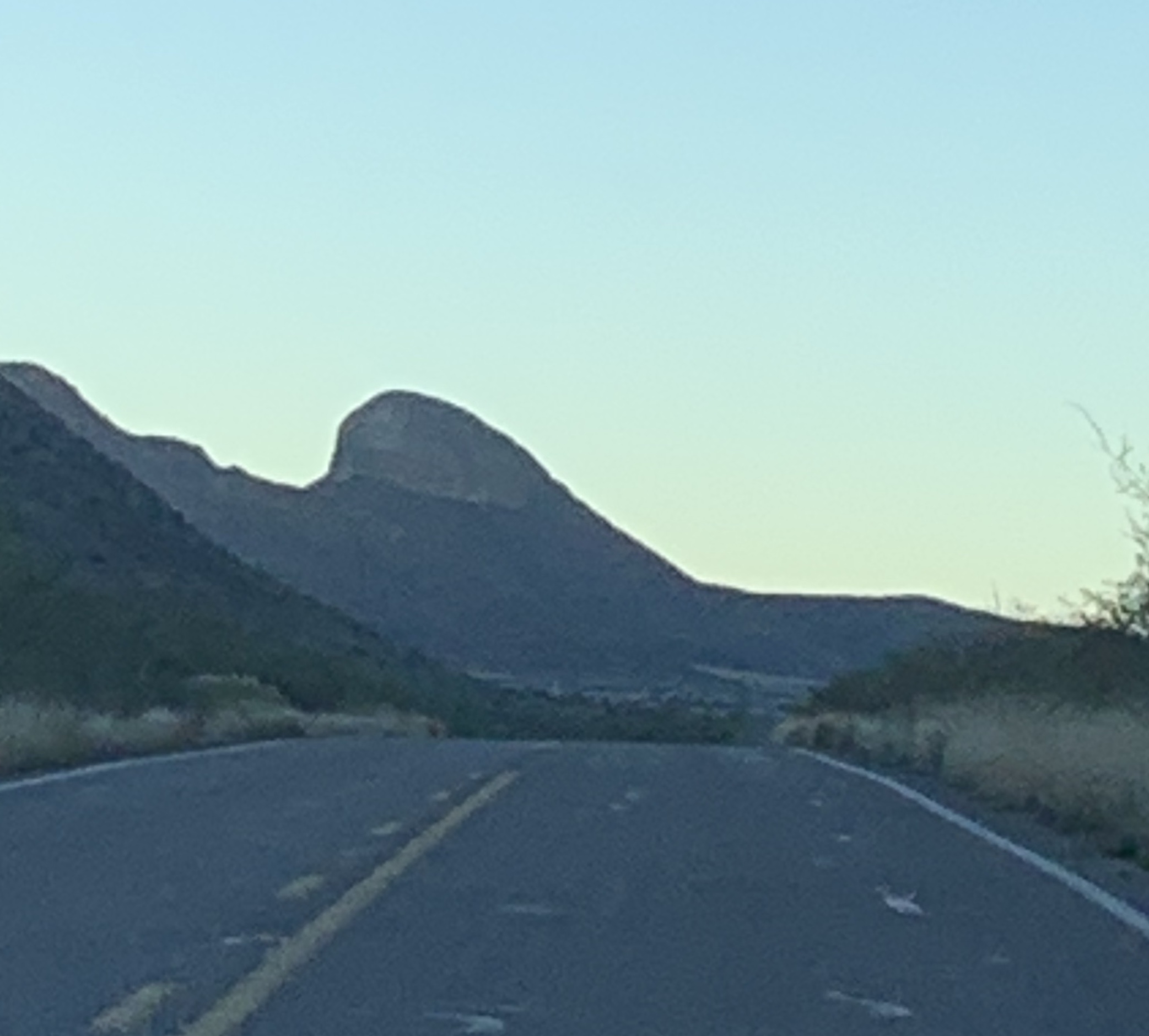
In the next picture doesn’t it look like a head with the big bump being the nose?
Saying Good-Bye to Bisbee . . . . . . .

So the next time your in Arizona’s southernmost border, stop in and visit Bisbee, you’ll be glad you did!

