HOMEBASE

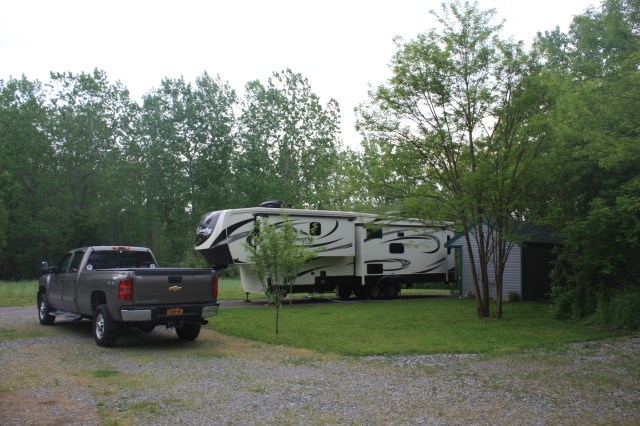
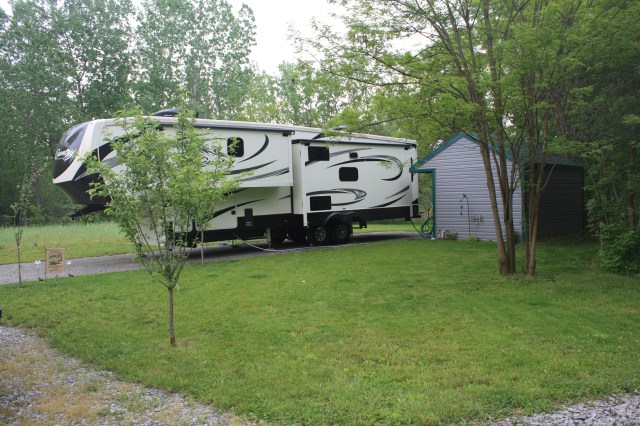
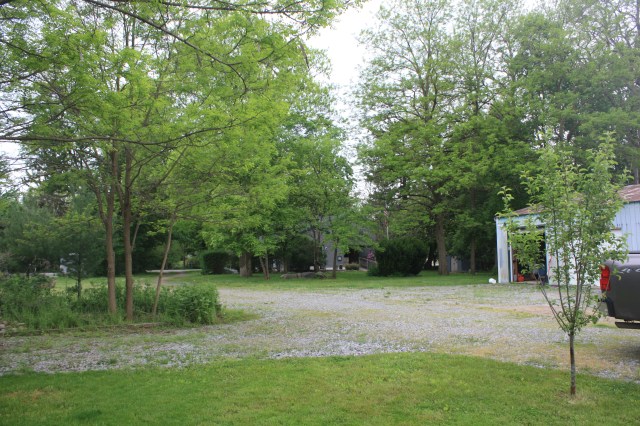
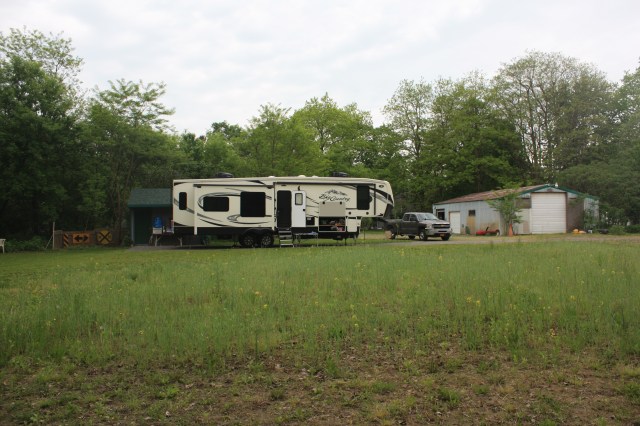
We are now at our home base for the summer, which is at my brother’s house here in Newfane New York, about 20 miles east of Niagara Falls New York. We actually got here two weeks ago.  When we got here we noticed right away it was cooler, in fact the weather has not been all that great. It has been raining and only in the 50’s. The last few days however have improved and hopefully that will be the trend. We are not used to it being cloudy ,rainy or cooler. We decided to park the rig by the barn so that I could wash it easier, but that hasn’t worked out. This weekend we will move to the shed area, I have set up. I have been pretty busy getting the barn cleaned up, so we can clean out the shed, that has all our stuff in it, some will go to a garage sale coming up soon, and the rest will be put in the barn or shed. Melissa has also started back to work at her old place of employment, right now about 15 hours per week. It is kind of a weird feeling being back here, we are used to being on the go ,and I see already life will slow down a little bit. I guess that is good as we can reflect on our 8 months of being away. We already have plans on leaving Sept 10th, for Florida again and not be back until the end of May next year.

IMG_2769

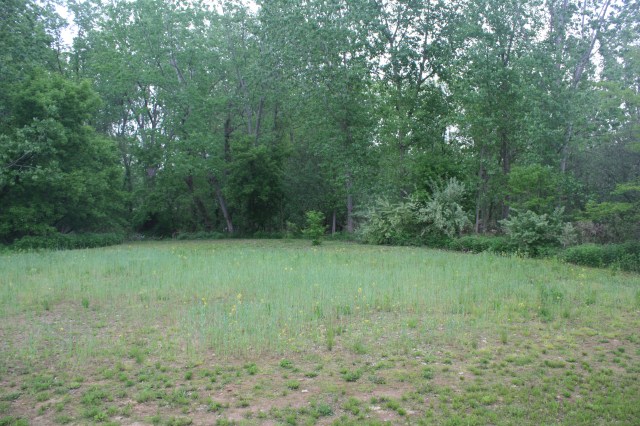
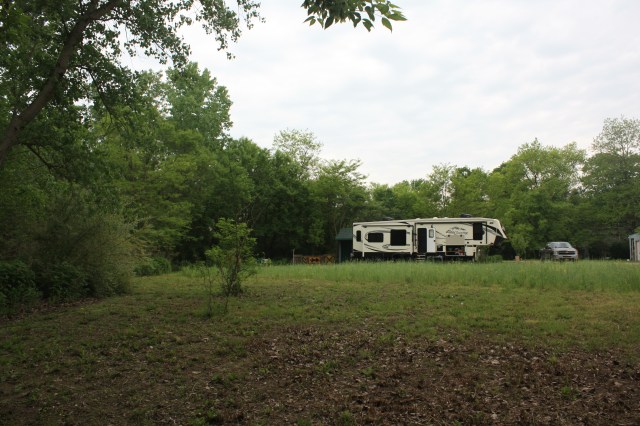
This is the spot we will be backing into this weekend. We will be facing the back woods.

SAVANNAH DAY FOUR

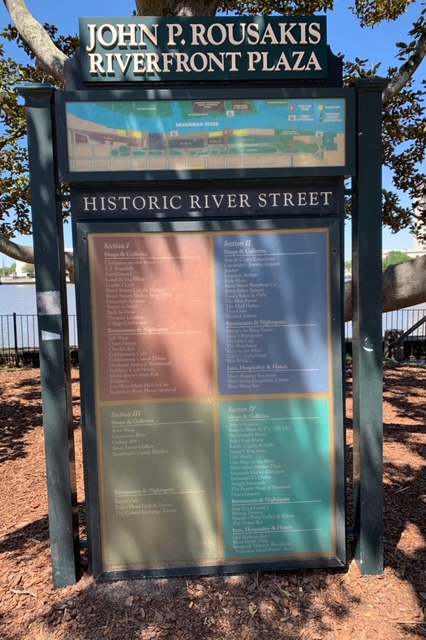
Savannah River Street

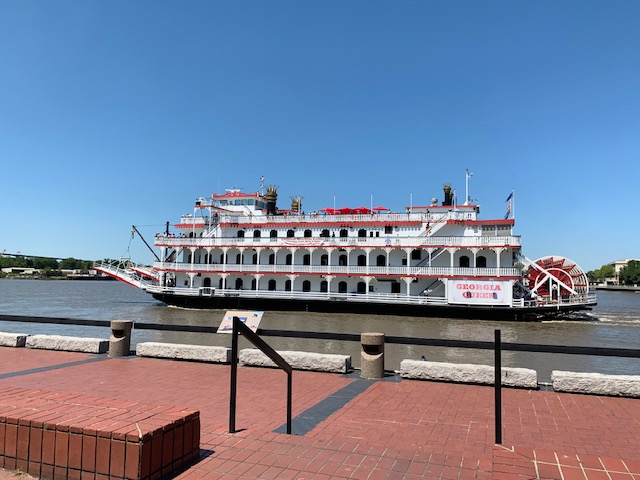
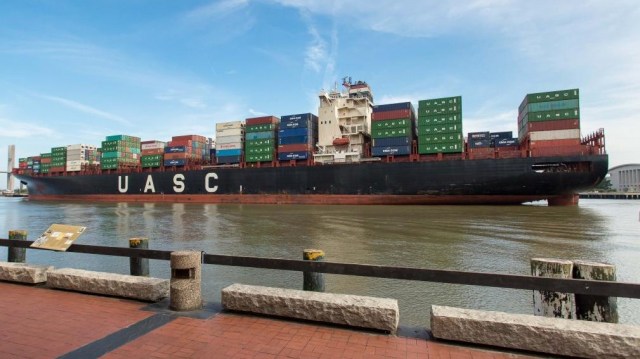
Our last day in Savannah we went to Bay and River Streets, another sunny & warm day . River street is lined with old factory buildings, once cotton warehouses, that are now mostly refurbished inns, restaurants, shops and art galleries. River Street is along the broad Savannah River, it’s definitely a good spot to see all kinds of boats and ships pass. Especially when you get to see ships from around the globe sail into one of the busiest ports in America. Dave & I saw a huge Freighter filled with layers of train box cars piled on top of each other pass thru from Vietnam.

Bay Street.

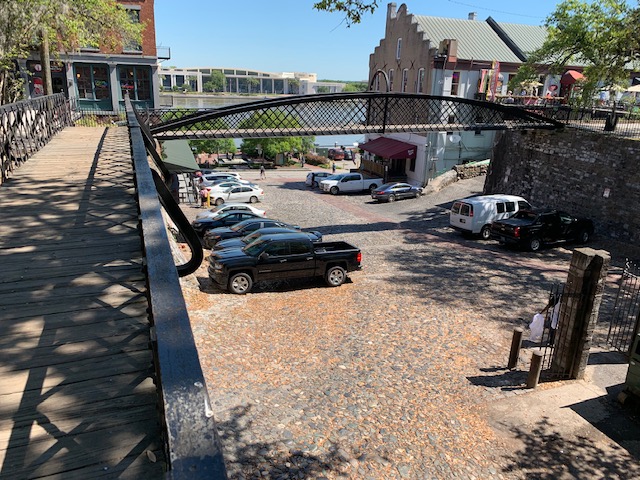
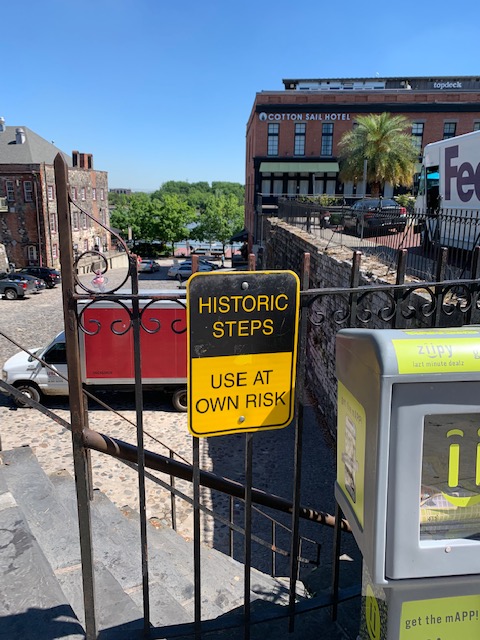
Bay Street is above river street about 48 feet. In the day it was just a drop off, hard to get too. Until they decided to build the steps and cobble streets to the river.

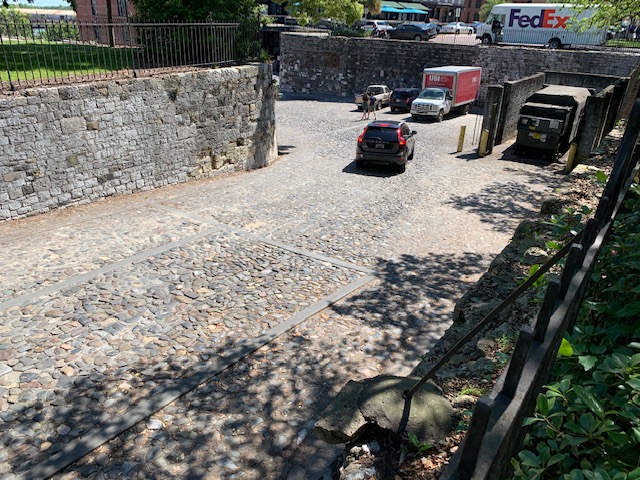
These shots are from Bay street looking down toward River Street.

IMG_0853

IMG_0846

IMG_0871

IMG_1467

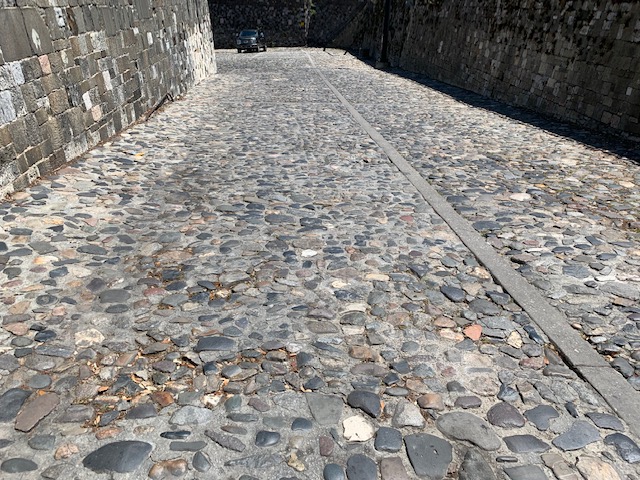
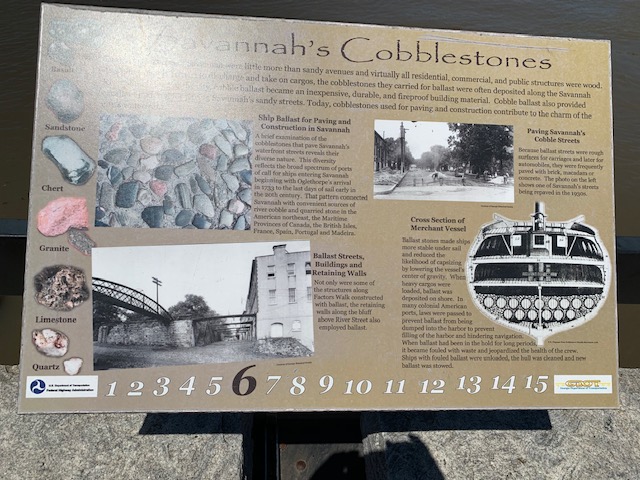
You’ll notice the streets and walls are cobblestone, they are actually ballast from ships that came across the Atlantic.

IMG_0878

River Street

FullSizeRender (73)

On our way down to River Street, lots of shops.

FullSizeRender (74)

FullSizeRender (68)

One of the many fountains

IMG_1508

Somewhere on River Street.

IMG_0873

Looking down River Street.

IMG_1472

Original bell and tower from a church, the bells were rung during the War of 1812 to warn the citizens that the British were coming.

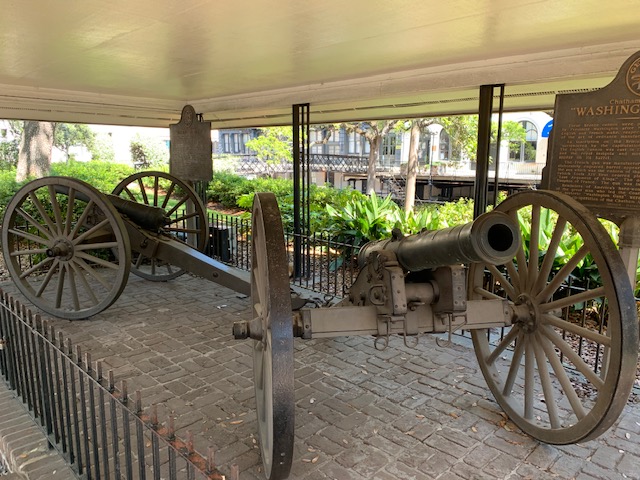
These cannon are very historic, they were captured during the American Revolution, and given to Savannah as a gift by President Washington. During the Civil War they were buried in one of the Armories to keep them hidden from Union troops

IMG_0848

IMG_0851

IMG_0850

washgun2histmarker_large[1]

IMG_0877


river_street_ship_watching - Copy

The Chandler Oak,  is over 300 years old, and was here when the city was founded.

IMG_0843


Echo Square

“X” marks the spot of an echo chamber in the middle of Rousakis Plaza Echo Square plaza.

It’s an X created by the cement pavers, and a mysterious echo created by the plaza’s unique acoustics.

If you stand in the center of the X and speak, there is an unusual and very noticeable echo which cannot be heard by anyone immediately outside the square. Dave and I both tried this and we definitely heard our echo.


FullSizeRender (69)


The Waving Girl statue

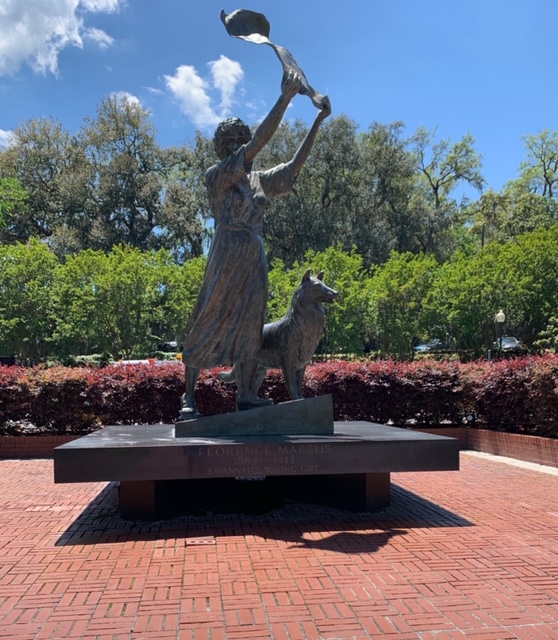
The Waving Girl statue, located at the east side of the Savannah River, commemorates Florence Martus, who took it upon herself to become the hostess of the Hostess City. In 1887, Martus, daughter of an ordnance sergeant at Fort Pulaski on Cockspur Island, decided to greet each ship entering the Port of Savannah. Florence welcomed visitors by waving a handkerchief during the day and holding a lantern at night, and according to legend, not a ship entered or departed Savannah without her greeting or farewell for the next 44 years.

FullSizeRender (67)

FullSizeRender (70)


Pirate House Restaurant

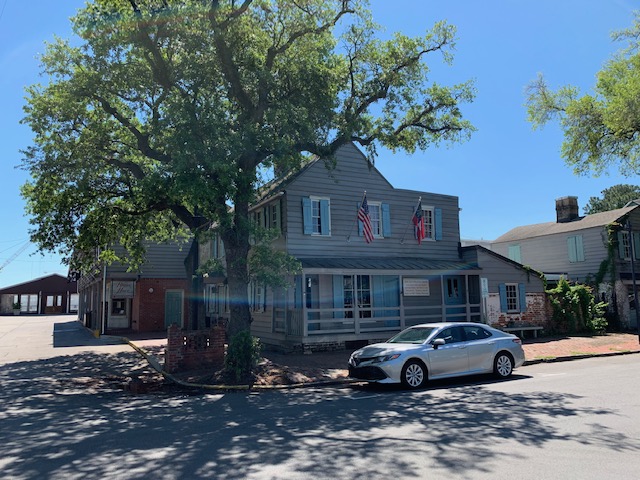
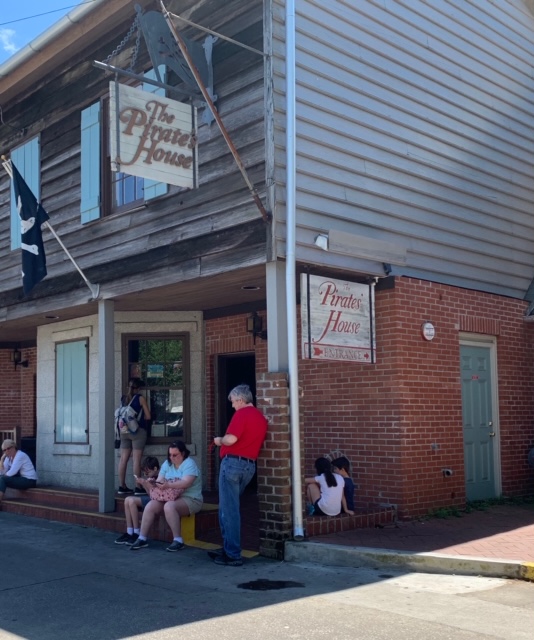
A small plot of land, originally a botanical garden modeled after the Chelsea Botanical Garden in London, England, is now home to the Pirates’ House, a Savannah restaurant and one of the oldest standing buildings in Georgia.

In 1734 a small building was built on the plot of land and in 1753, as Savannah became a port town, it was decided this structure should be an Inn. This was the start of the Pirate House Inn, where it’s rumored seamen and pirates alike drank and shared stories of their adventures at sea.

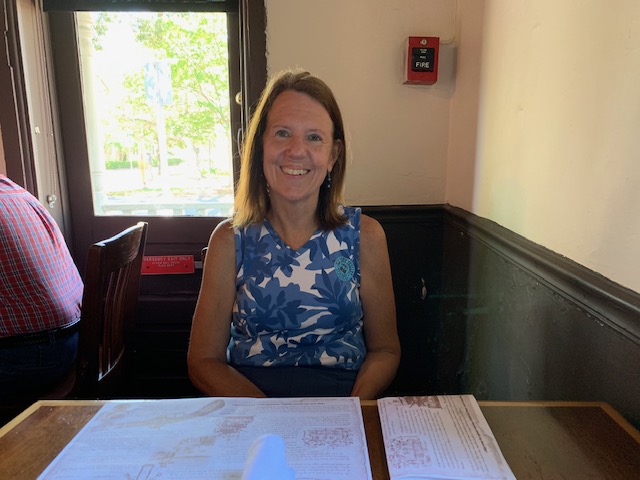
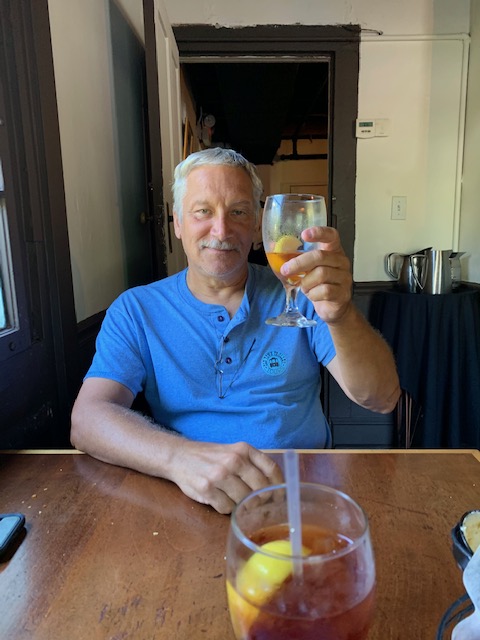
The modern-day restaurant was established in the early 1950s Dave and I decided to have the buffet to  enjoy an extensive southern-inspired menu, that included Southern fried chicken. It was all very, very good! The restaurant has 15 separate dining rooms. The atmosphere remains true to a pirate’s inn, with maps, helms, flags and skulls hanging on the walls, as well as some of the original dining sets protected in glass cases.

It also said that Captain Flint, a pirate mentioned in the book Treasure Island by Robert Louis Stevenson, died in the upstairs bedroom, and that his ghost still haunts the building. Haunted or not, visitors can see rare early edition pages of the novel hanging on the walls of the Captain’s Room and the Treasure Room. It was a great experience and we were glad different people told us to go there.

IMG_0865IMG_1485

When we got there we were seated right away, when we left there was a line out the door.

FullSizeRender (71)

Our eating area was the old gardeners house, it is very small.

IMG_0868


IMG_0867

IMG_1486 (1)

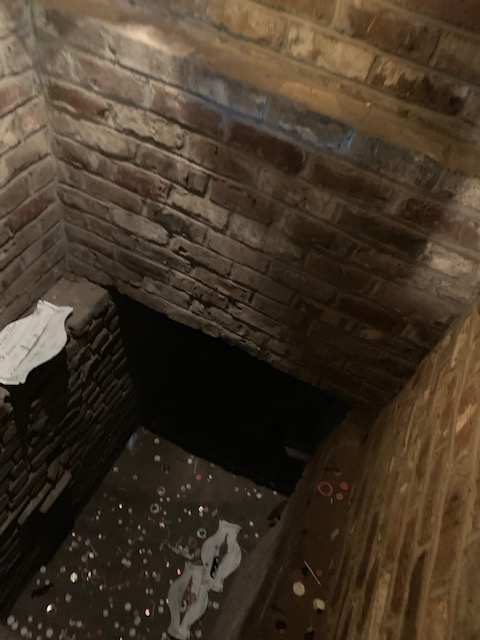
The underground tunnel, led to the river, it is said that if a sailor had too much rum, and passed out he would be taken through the tunnel and put on board a pirate ship to serve the rest of his days.

FullSizeRender (72)

IMG_1489

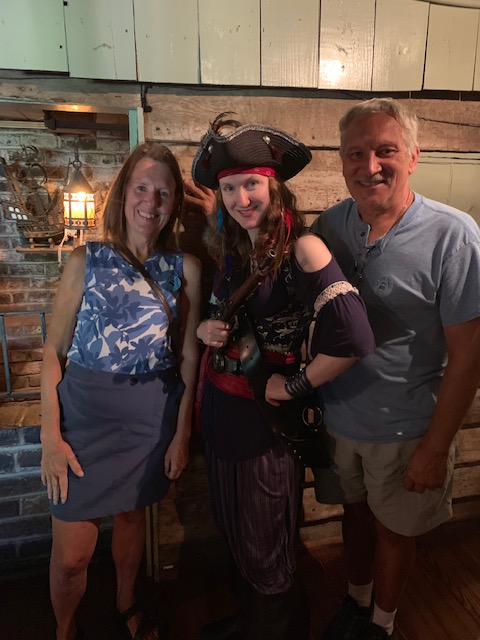
Our pirate escort

IMG_1492


IMG_1271 (1)

Our visit to Savannah “was like a box of Chocolates, you never

know what your gonna get.”  We got a  good time.


SAVANNAH DAY THREE

On our third day in Savannah, we decided to visit the 22 squares, they have in the historic town. That meant a lot of walking, about 6 miles in total, my feet were killing me. Each square is dedicated to someone and has it’s own charm about it. During our walk we saw a lot of people and experienced the charm the town has to offer. We did stop at a few places which are listed below.

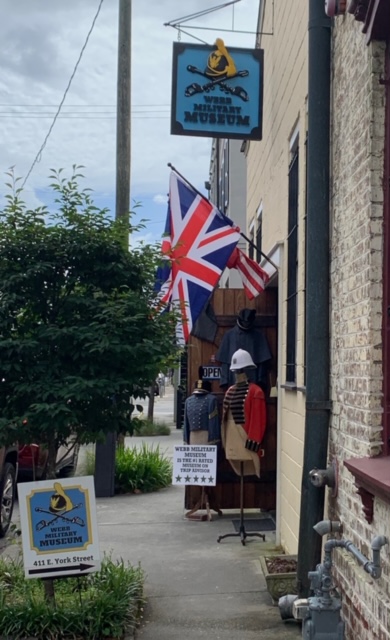
Webb Military Museum

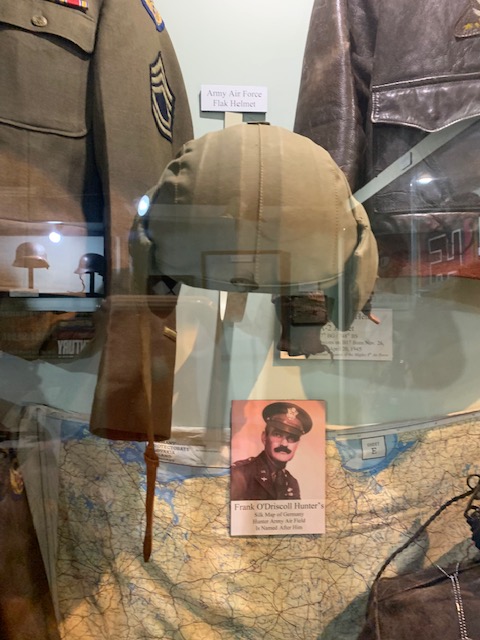
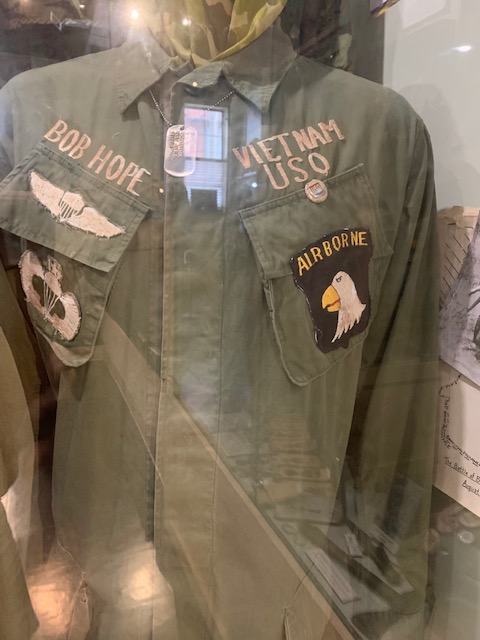
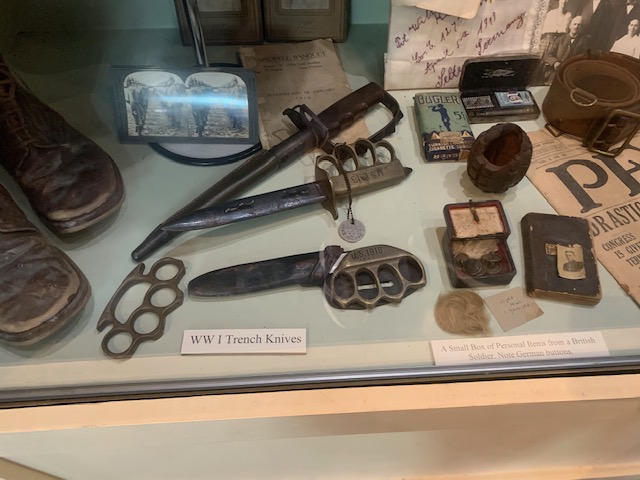
Savannah’s Webb Military Museum opened in 2015 on 411 E York St. The museum explores the personal history of America’s wars, with a special focus on the wars of the 20th century.   It’s a private museum that filled with military artifacts owned by Gary Webb . He started hobby collecting small items and searching for military relics in the woods of Germany and it turned into a lifelong interest that has now turned into Webb Military Museum .   The museum documents military exhibits displaying hundreds of artifacts from all over the world.   Some of his items include a Russian-made MiG (a jet fighter aircraft) from East Germany and several other notable items, including napkins from Hitler’s Berghof (his mountain retreat) and a uniform that belonged to Saddam Hussein, which was taken from one of his palaces.

FullSizeRender (63)

IMG_1257

IMG_1260

IMG_1247

FullSizeRender (62)

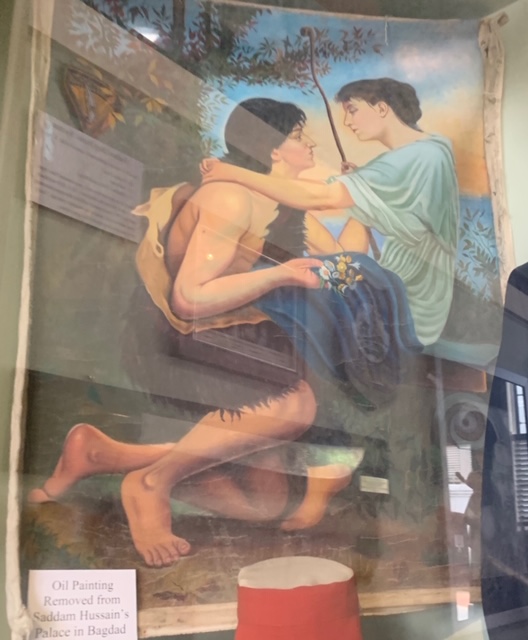
This painting was hanging in Saddam Hussains palace

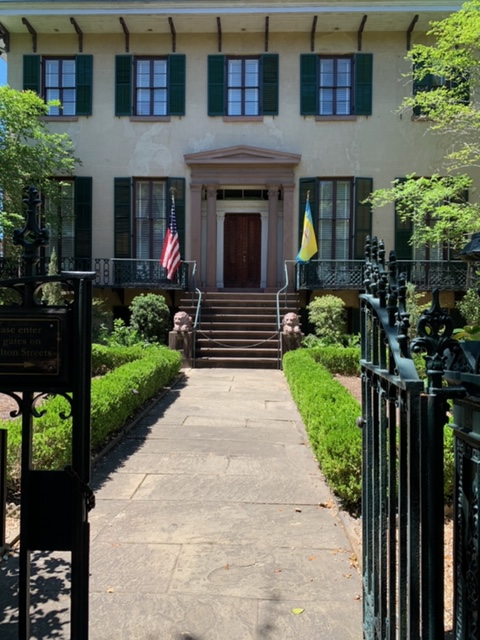
The Sorrel-Weed House

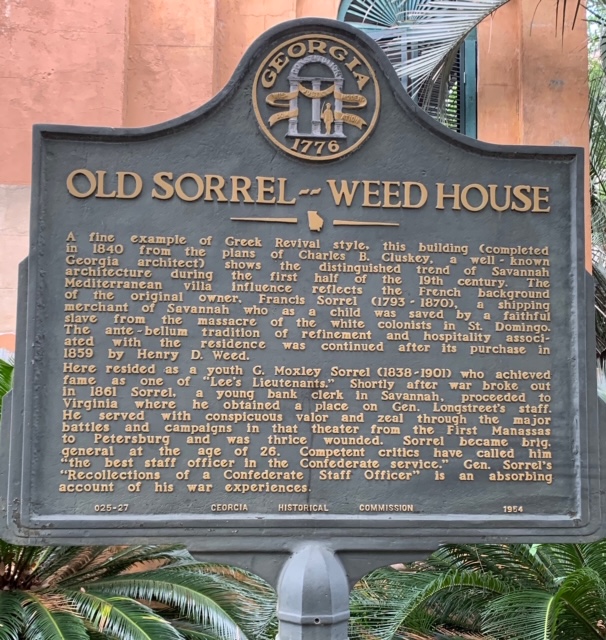
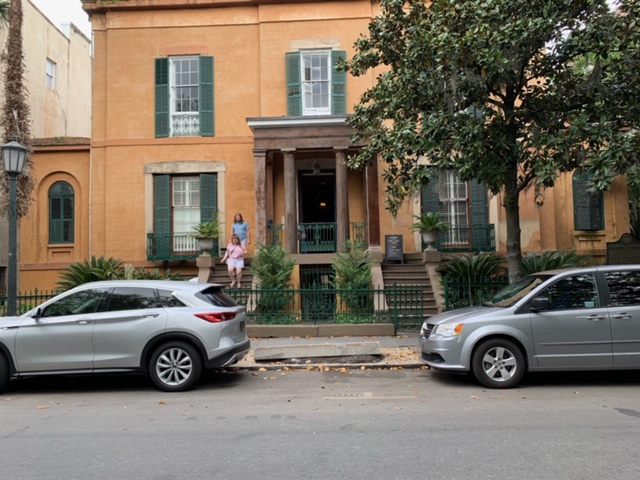
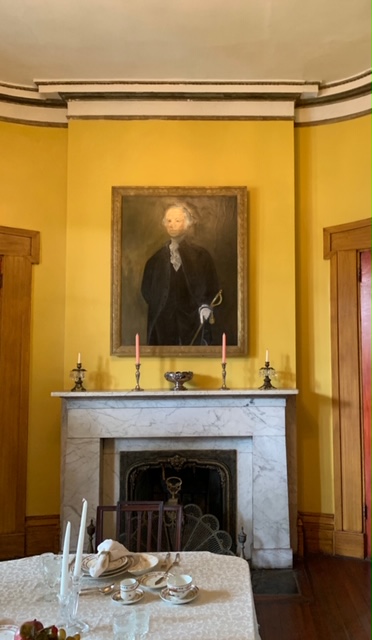
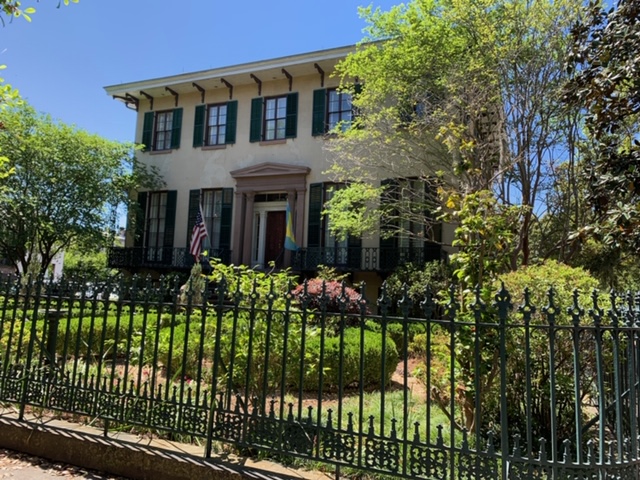
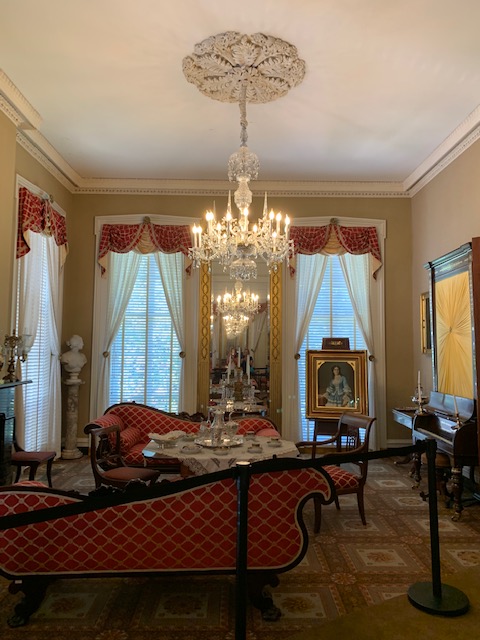
It Mansion was built in 1841 and has 16 thousand square feet which makes it the largest house in Savannah.   It was built for Francis Sorrel a wealthy shipping merchant and esteemed citizen of Savannah. One of his sons General Gilbert Moxley Sorrel was one of the youngest Generals in the Confederate army. Francis Sorrel was also a good friend of Robert E. Lee. In 1859 Henry D. Weed a Savannah businessman purchased the house. It remained in the Weed family until 1914.   It is one of the most significant tributes to early 19th century with lots of history. It was built to entertain the wealthy with two parlors and a large dining hall. The Sorrel House was the first structure built on the green Square . The square was then called the “green”, where Savannahians   gathered for parties.    The Sorrel-Weed Mansion was featured on on HGTV’s ” If Walls Could Talk”, and named “A must see” by the Colonial Williamsburg Foundation.


Despite all Francis Sorrel’s wealth his second wife Matilda (who was suffering from mental illness)she threw herself off the balcony and committed suicide. Society in the 1800s thought that if you “couldn’t handle your wife” what good are you! Francis was black balled by everyone and was forced to leave all his glory behind, never to return.

The Mansion has other stories or “tales” of hangings, etc and it is believed to be haunted. A plot of ground on which the building sits was where the Siege of Savannah took place during the Revolutionary War. In this terrible assault in October of 1779 was, according to many historians, the bloodiest hour of the entire American Revolution, with well over a thousand casualties recorded. Is it haunted? Who knows? Anyway it is listed as one of the top 10 haunted locations in the USA.

The mansion was opened to the public January 1940 and it was one of the first homes in the State of Georgia to be designated a State landmark . Another great place to visit

FullSizeRender (65)

IMG_1295

IMG_1276

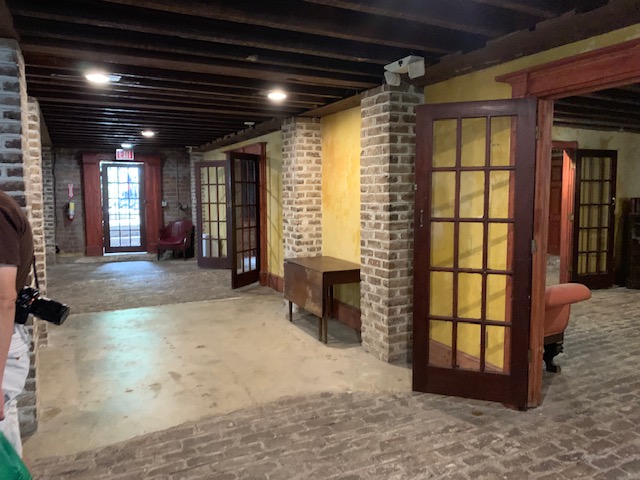
The basement, it was open in the day and was a kitchen then .The only original stuff is the brick floor, made by slaves in the day.

FullSizeRender (64)

IMG_1288

IMG_1287

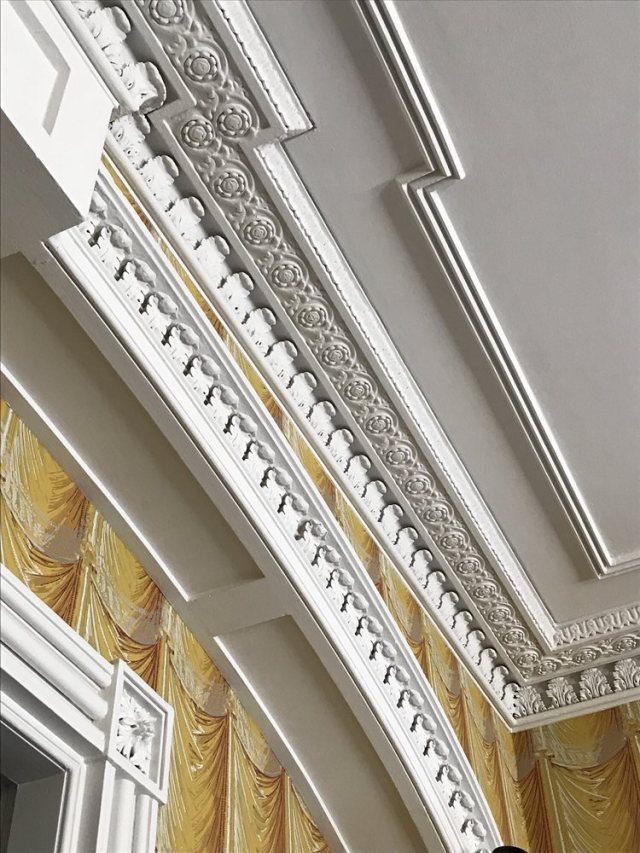
All hand done stucco medallion

IMG_1283

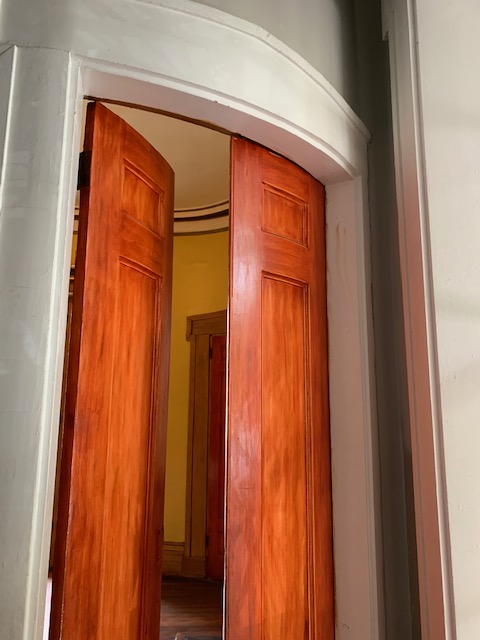
Curved doors, very labor intensive and hard to make, especially back then ,a sure sign of wealth.

IMG_1275

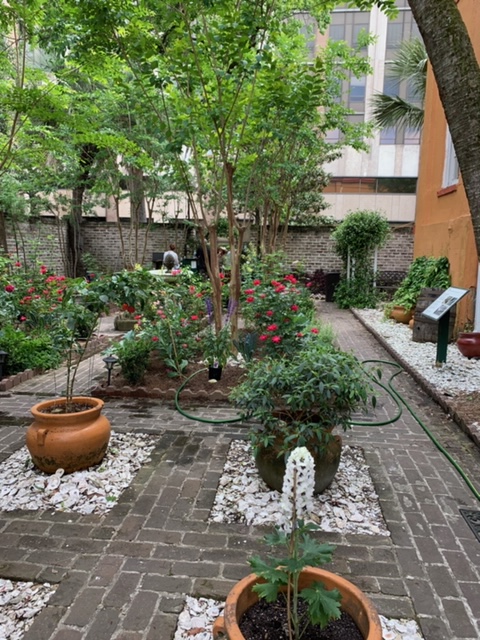
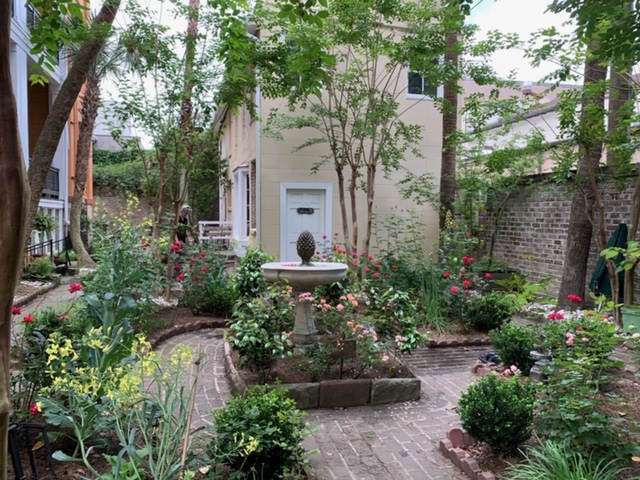
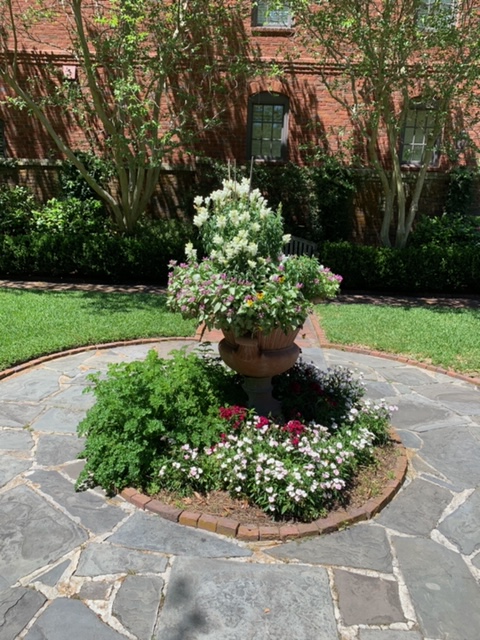
Back garden ,the bricks were made by slaves and on most of them you can see there finger marks, from moving them when they were still hot.

IMG_1297

IMG_1299

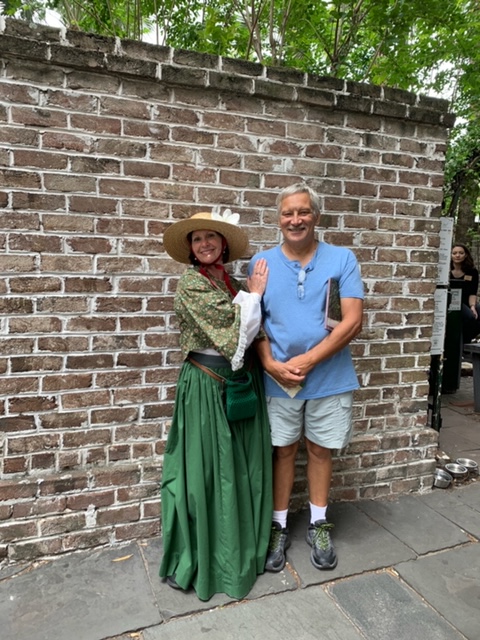
As we were leaving my, southern belle arrived, she is a time traveler and wanted to take me back to the early 1800’s. I really wanted to go with her, but just as soon as she appeared she was gone.


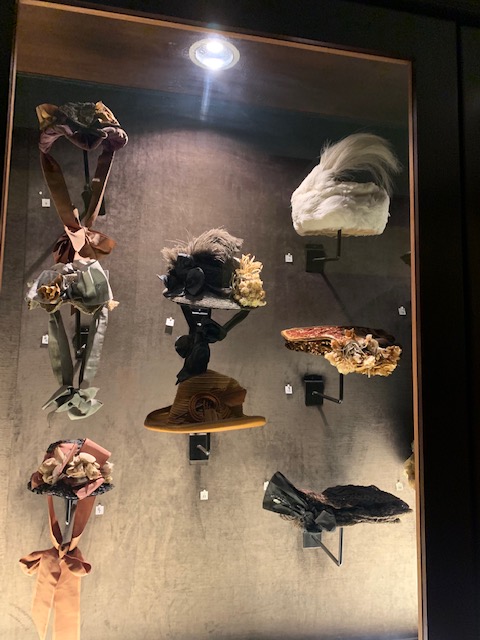
The Century of Hats

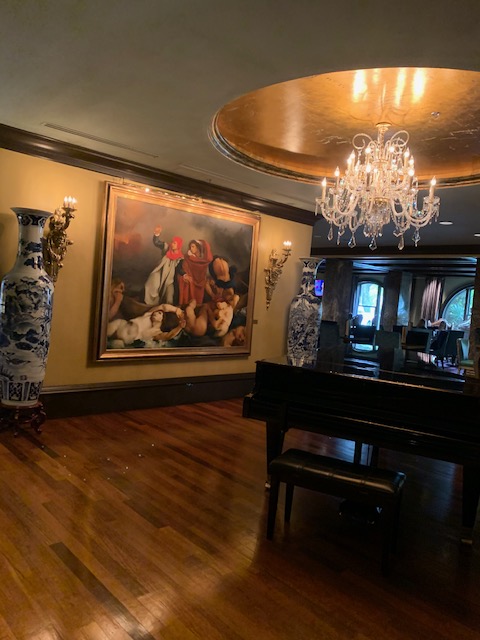
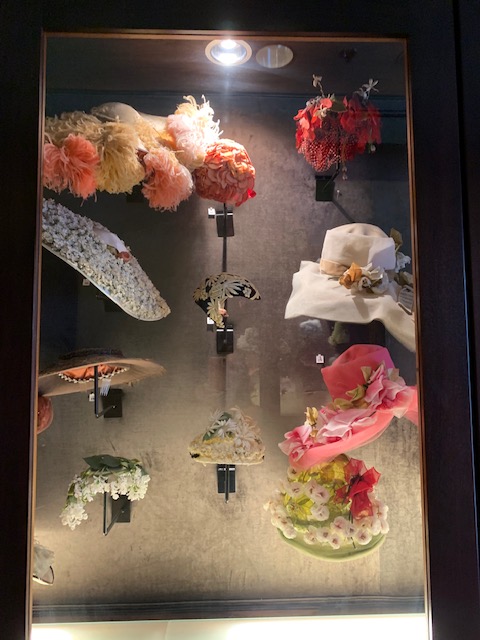
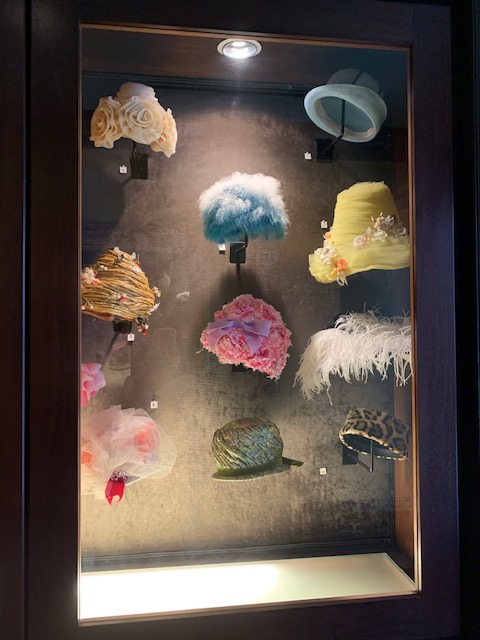
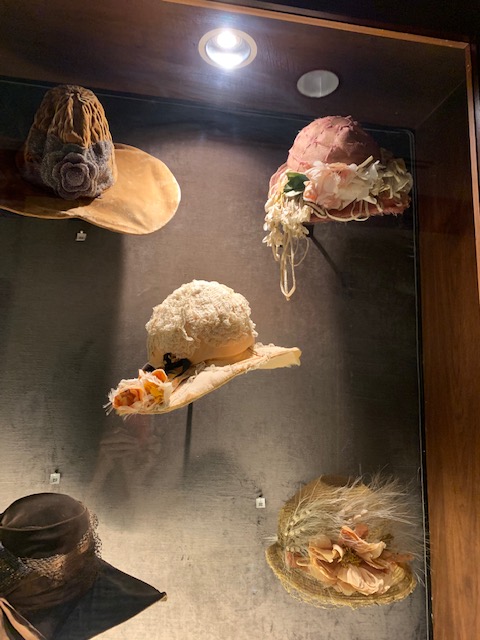
I read on trip advisor to check out The 100-year-old parade of feathers, silk, and straw housed in the Mansion on Forsyth Park. It’s called The Century of Hats exhibit and I am so glad I did. It is in Mansion on the Madison , Savannah’s premier luxury hotel. Julie Roberts, for one stays there when she’s in town.   The hats in the exhibit are from the 1860s-1960s, are arranged chronologically in two long display cases. Included in the collection is a wedding bonnet from the 1860s, worn by a Northern woman on the day of her marriage to a Southern gentleman.  I know that my mother and my aunt always made and wore hats, especially my aunt who made hats much like the newer ones in the Mansion.   And I remember when I was little you always wore a hat to church, especially one at Easter.   This was definitely a high lite for me on our visit to Savannah. Here are some hats from the collection.

FullSizeRender (66)


IMG_1343

IMG_1324

The lobby

IMG_1333

IMG_1326

IMG_1325

IMG_1321

IMG_1319

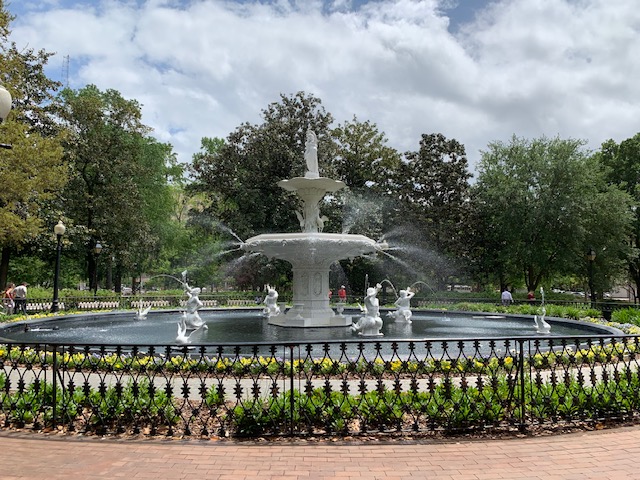
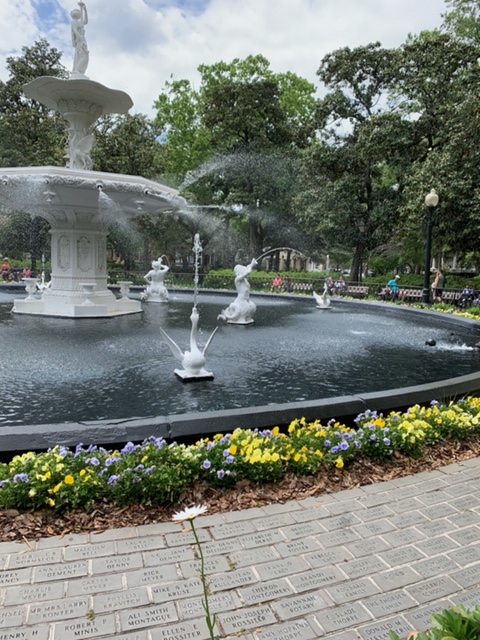
We also went to the park, called Forsyth , its about 10 acres big, and is considered the hub of the squares, has a lot of open ground, and people bike , hike, walk, and even sell there wares here. It reminded me of a mini, mini central park.

IMG_0792

The huge fountain in the park

IMG_1346

The views below are from a few of the other squares we walked to.

IMG_0783

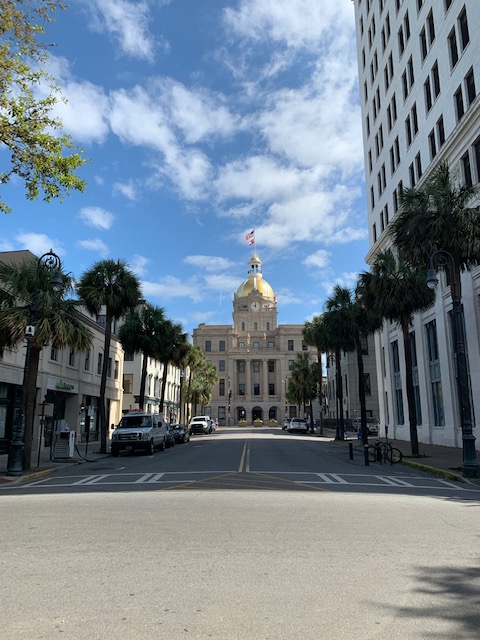
City hall, the river is right behind it.

IMG_1309

This mansion is an antique dealer, but the window ornimants are made of solid iron also notice the iron railings, wealth.

IMG_1311

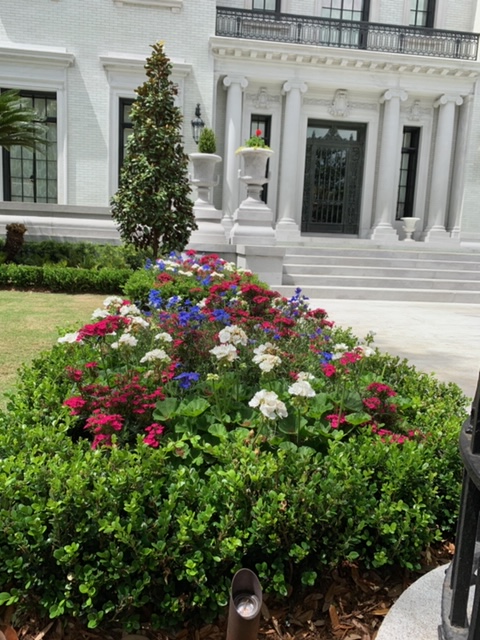
Some of the flowers that were all around.

IMG_1351

IMG_1352

We also went to the market square ,about two blocks in length, with shops, resterants, and the like. We had ice cream there.

IMG_1362

IMG_1366

IMG_0793


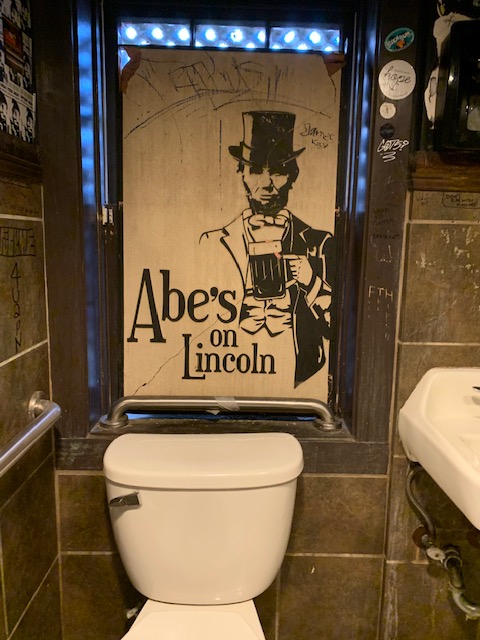
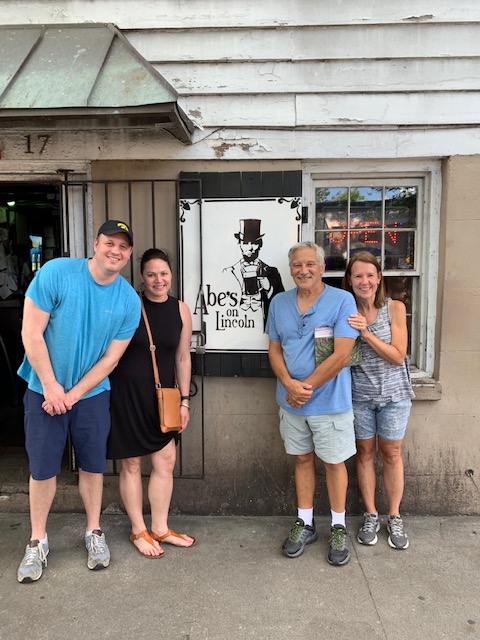
Abe’s on Lincoln

was the last place we went ,before we had to get the bus back to the RV resort.

IMG_1354

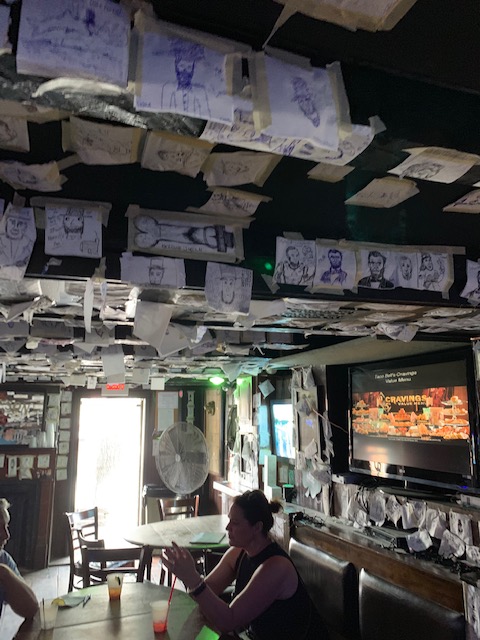
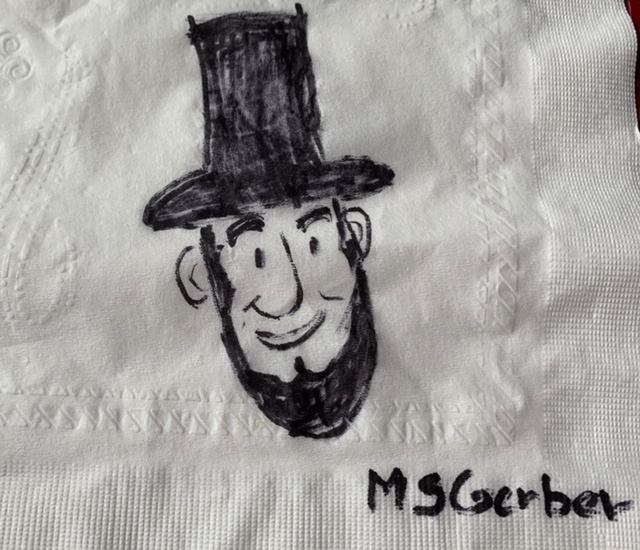
I came across someone’s best things to do in Savannah on the internet and was so glad I did! In Savannah National Historic District sits Abe’s on Lincoln which is one of the oldest continually run bars in Georgia established in the late 1700s by Polish and Irish immigrants. As you enter the bar you immediately notice the napkins upon napkins that have Abraham Lincoln drawn on them. They are all over the bar, on its old wooden beam ceilings and on the walls.

Rusty …., I found out the napkin drawing started when drunk man came into the bar, and the bartender refused to serve him. The man then asked for a pen and napkin and proceeded to draw a very impressive napkin drawing of Abraham Lincoln. The drunk man actually was a professional artist who had remarkably kept his artistic ability even though he was drunk. The drawing was so good the bartender taped it to the wall. This was the beginning the for hundreds of people who come to Abe’s to draw their own Abe Lincoln on a napkin.

Before the bar opened Dave & I were very lucky to meet Rusty & Hellen Donnelly from Iowa, they were also waiting for the bar to open. Both Helen & I drew Abe on a napkin and now our art is shown at the very top right hand corner, proudly displayed at Abe’s on Lincoln.

IMG_1355

FullSizeRender (27)

IMG_1358

Cheers to Rusty & Helen Donnelly


SAVANNAH DAY TWO

On our second day we visited a number of places, we were able to use the trolley and the bus system(which was free) to travel around more easily

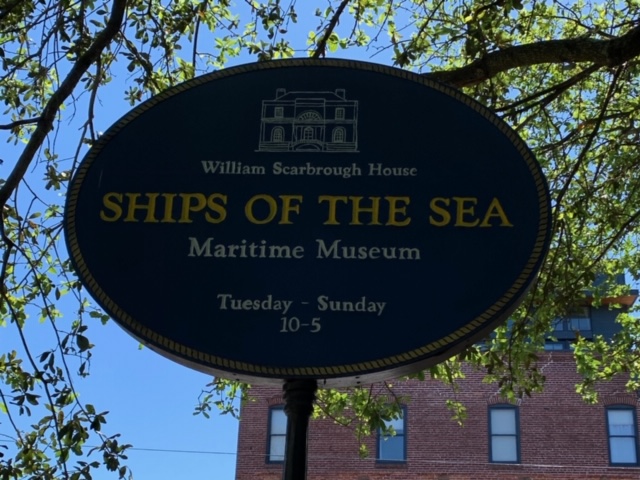
Ships of the Sea Maritime Museum

The Ships of the Sea Museum is located in the William Scarborough mansion. One of the earliest examples of the Greek revival in Savannah, it’s a beautiful home built for William Scarborough, president of the Savannah Steamship Company, and one of the principal owners of the steamship Savannah, the first steamship to cross the Atlantic. It was completed 1819. This magnificent mansion soon became a center of Savannah social life and was the focal point of colorful festivities during President James Monroe’s visit that year.

Scarborough lost the home in 1820 after suffering financial setbacks. By 1827 the home back in the hands of the family, and was owned by his daughter, Charlotte Scarborough Taylor. From 1870 to 1876, the house was run as a boys’ orphanage. In 1878, it became the first public school in Savannah. After the school closed in 1962, the house remained vacant for a number of years. The dilapidated mansion was purchased and renovated by the Historic Savannah Foundation. Over $1 million dollars was spent on the renovation. Recognized for its extraordinary architectural and historical significance, the Scarborough House was designated a National historic Landmark in 1974 and opened to the public in 1976. It now houses the Ships of the Sea Museum.

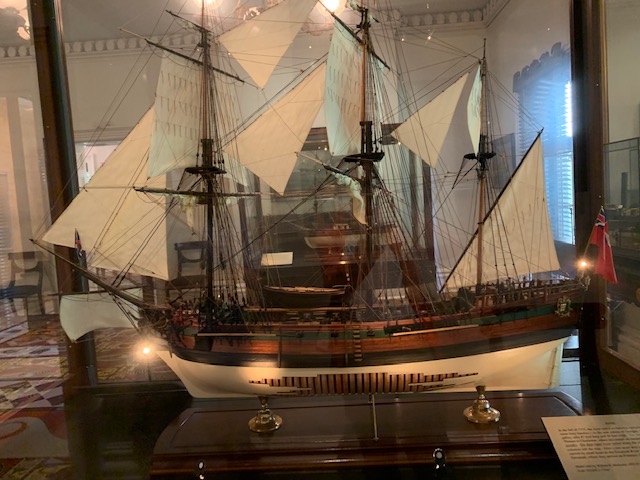
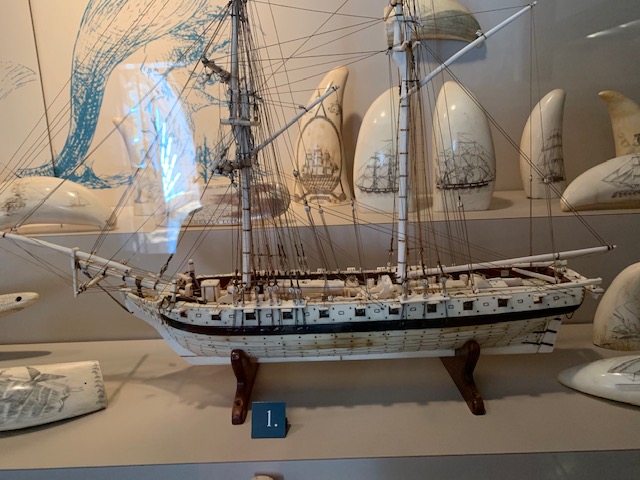
The museum has a large collection of ship models, paintings, and maritime antiques. Some are totally amazing.

FullSizeRender (56)

IMG_1057

The back entrance with it’s garden

FullSizeRender (58)

IMG_1044

IMG_1049

FullSizeRender (54)

IMG_1050

IMG_1052

FullSizeRender (55)

FullSizeRender (57)

Davenport House Museum

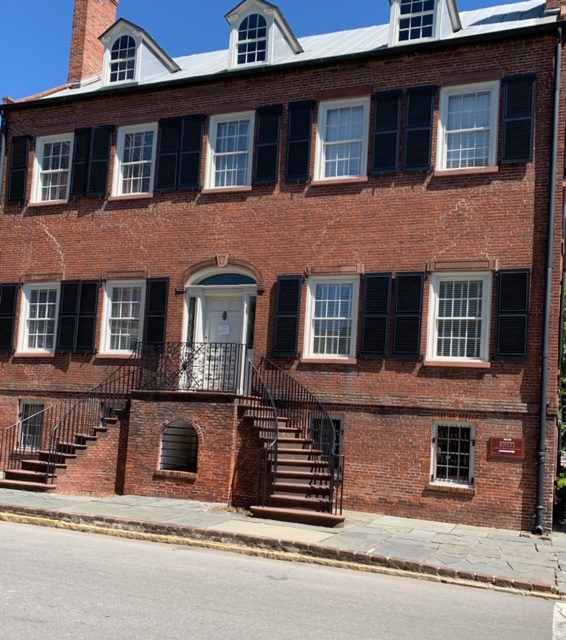
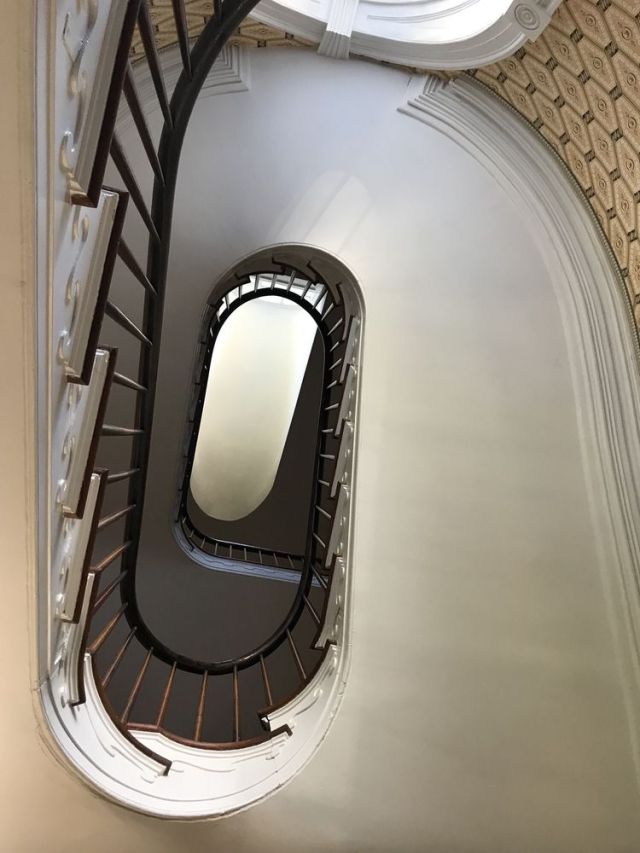
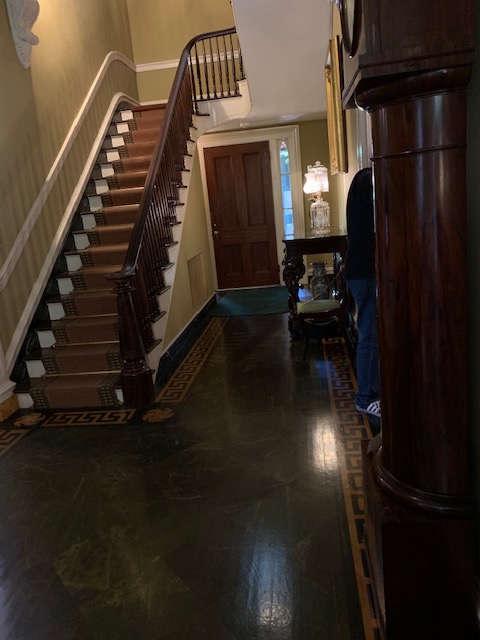
The Isaiah Davenport House is a style called Federal-Style architecture. It has a simple but stylish exterior that was constructed of English brick and brownstone and has a showy railing and an attractive double entry stairway.   The interior of the home has been authentically restored and features beautiful woodwork, original plasterwork and a hanging staircase. Filled with furnishings of the period you can get a glimpse of what life was like in Savannah in the 1820s.

Isaiah Davenport was a native of Rhode Island and he arrived in Savannah before 1807 after completing his apprentice as a builder. He soon became known as one of Savannah’s most famous and prosperous builders and built a number of brick houses in the late Georgian and Federal styles, all with high basements because of the dusty unpaved streets of Savannah.

Davenport’s family sold the Davenport house to planter William E. Baynard in 1840, and remained in the hands of that family until 1955. Unfortunately, the house was a run-down tenement building by the 1930’s and was to be destroyed in 1955. Fortunately the historic home was saved and restored in 1962.

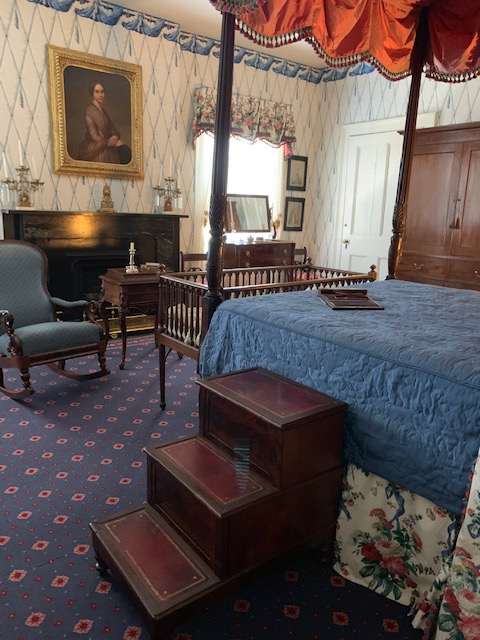
Dave & I took a guided tour of this house and the guide also mentioned that it was also a showcase house for Isaiah Davenport to sell this style house. We both liked the stairs.

IMG_1063

FullSizeRender (61)

IMG_0695

The Davenport house from the square

staird

Davenport House

stairs looking up

Looking up

wall

All hand done wood work

IMG_1073

IMG_1079

Part of the back garden.

Andrew Low House

Andrew Low was a wealthy merchant who had this home built for him and his first wife in 1848. Sadly, his first wife and their son died before the house was completed, so when Andrew Low moved into the house with his two daughters, he was a devastated widow. He married his second wife 5 years later, and they had three more daughters and a son, and one baby that died in infancy Sadly, his second wife died in 1863 in her early thirties.

The home has 5 bedrooms and a bathroom with an indoor flush toilet and running water! An elaborate rainwater collection system collected water in below the house, where it was manually pumped to a 500 gallon cistern in the attic above the bathroom. That way, if you wanted to draw a bath or wash your hands at the faucet, gravity made it simple!

Andrew Low was friends with Robert E. Lee, and Lee was the godfather of Andrew’s youngest daughter Jessie. He stayed for a week in the house during a visit to Savannah in 1870.The bedroom where Lee stayed during that 1870 visit is now called the Lee Bedroom.

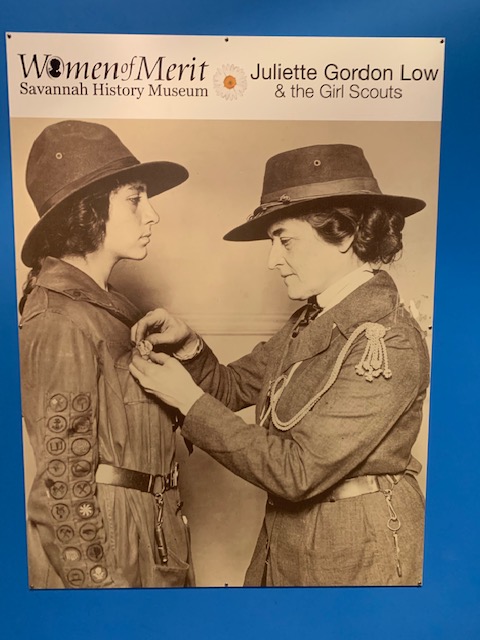
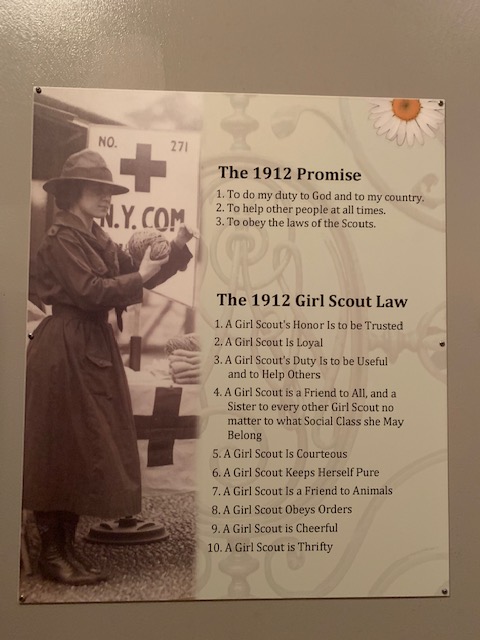
Andrew Low was the father-in-law of Juliette Gordon Low, who married Andrew’s son William Mackay Low in 1886. Juliet Low was the founder of the Girl Scouts , If you were a girl scout like I was, you definitely heard of Juliette, her nickname was Daisy.

FullSizeRender (60)

IMG_1124

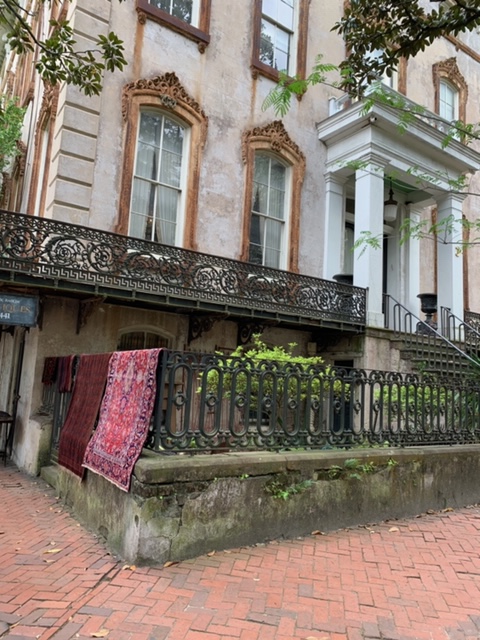
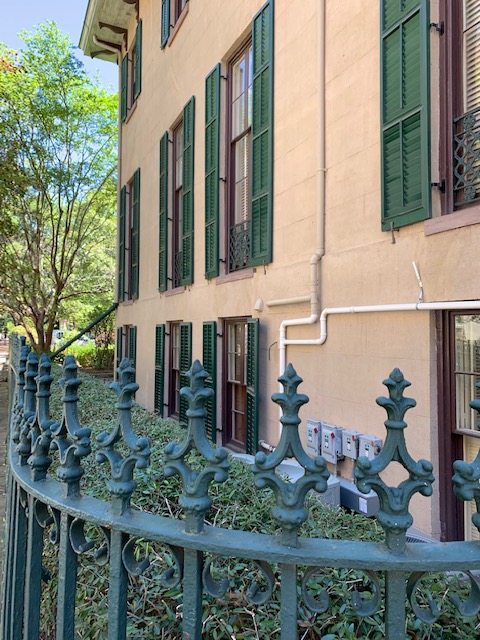
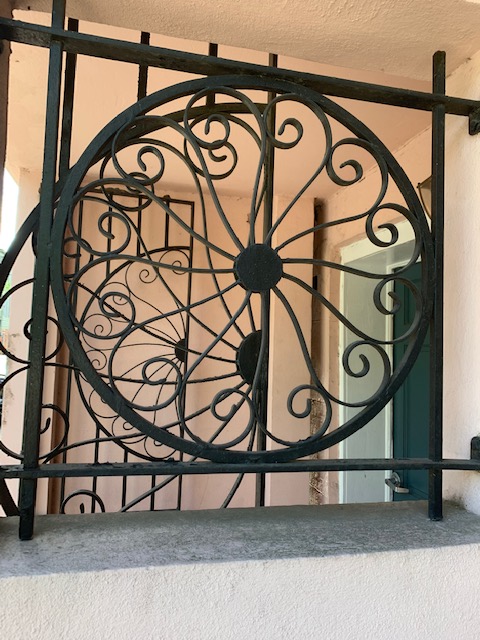
Iron fences and gates were everywhere, as mentioned before this was a sign of wealth.

IMG_1110

IMG_1123

IMG_1112

IMG_1113

IMG_1116

IMG_1117

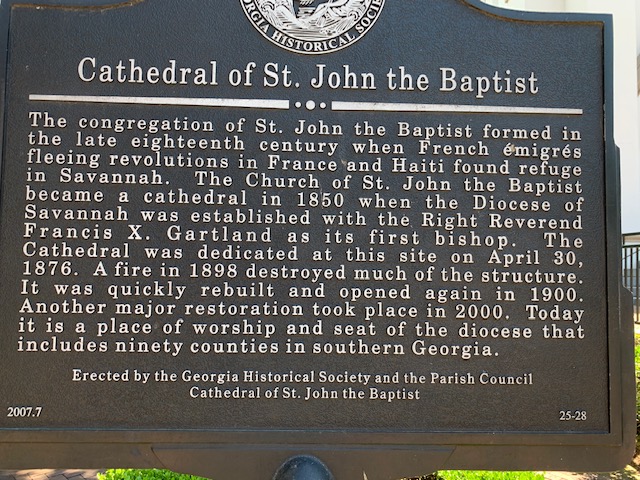
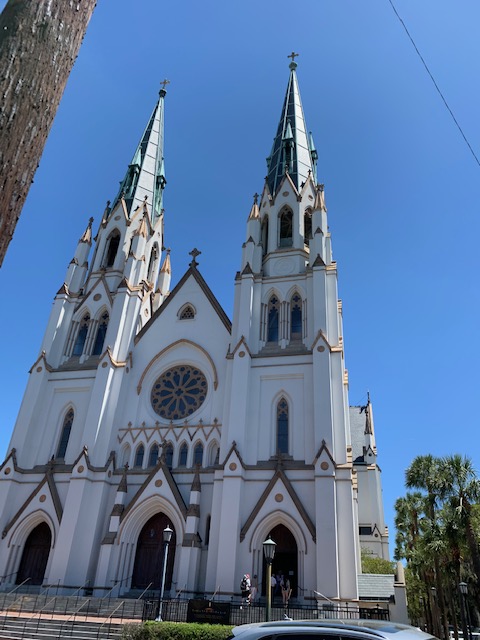
The Cathedral of St. John the Baptist

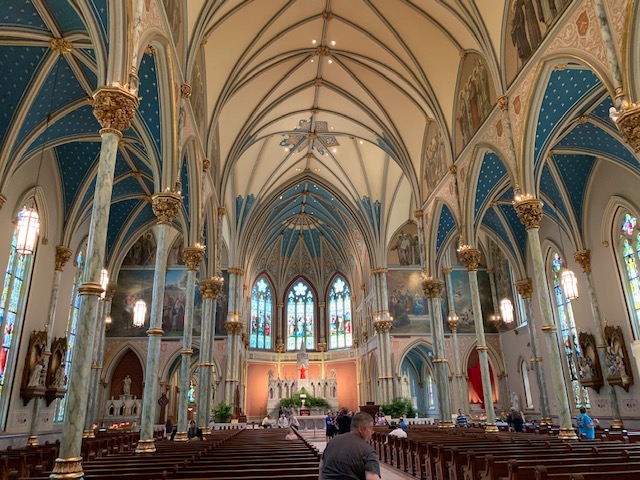
The original cathedral was constructed in 1799 by the first French colonists to arrive in the area. At the end of the 19th century, the old building was torn down to make room for a larger stone cathedral . It is stunning with the intricate gold-leaf designs, Italian marble altar and stunning stained-glass windows.

People are amazed by its beauty and compare it to Europe’s medieval churches

IMG_0698

IMG_1104

IMG_0700

IMG_0705

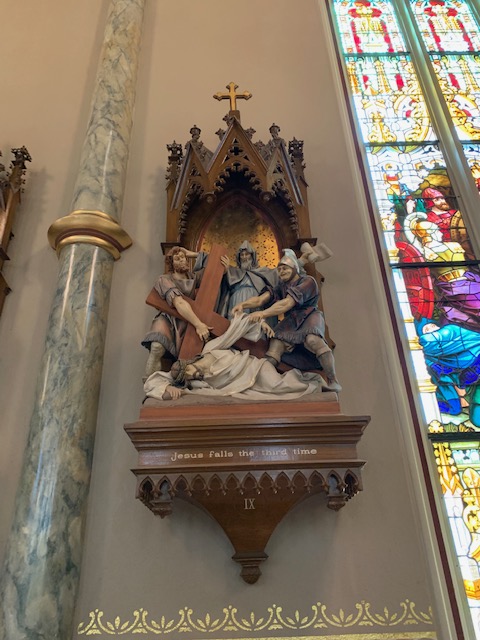
The stations of the cross are four feet wide and eight feet high, all hand carved from solid walnut

Colonial Park Cemetery

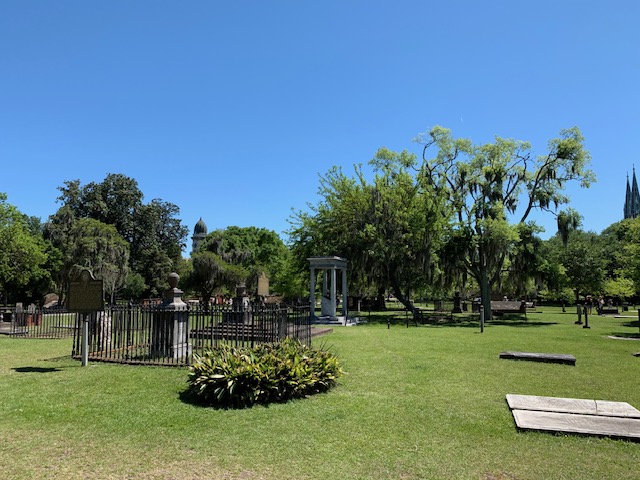
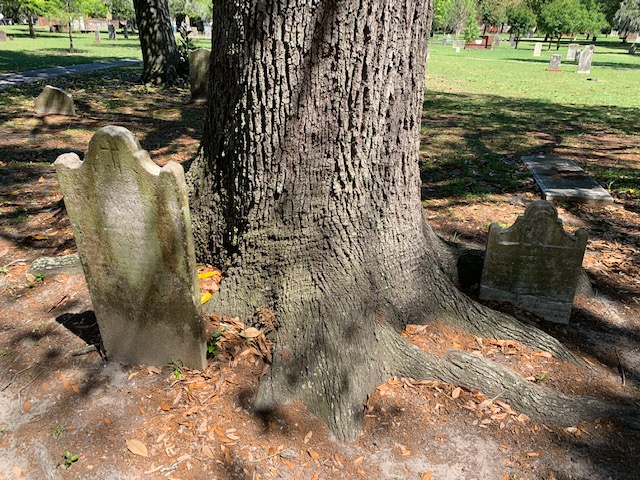
Nearly six acres in size, the cemetery serves as the final resting place for some of Savannah’s earlier residents. The cemetery served as Savannah’s main public cemetery from 1750 to 1853. The Cemetery contains more than 9,000 graves

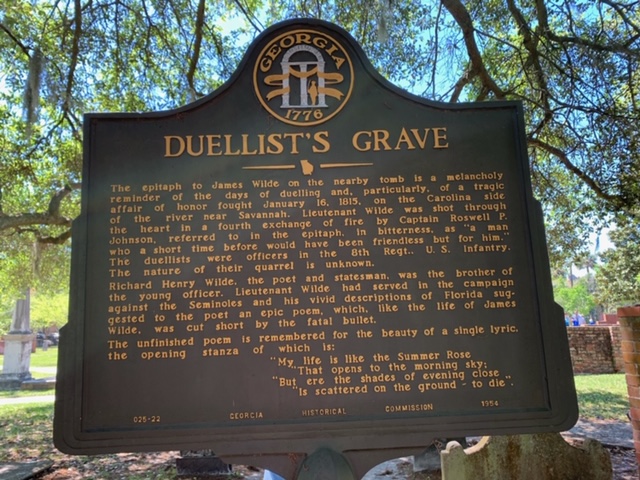
The oldest intact municipal cemetery in Savannah, this historic cemetery serves as a popular site. Historic markers stand beside a number of graves, describing important people and events contributing to Georgia’s history.


IMG_0708

IMG_0709

IMG_1132

IMG_0714

IMG_0710

That ended our second day, we were pretty tired  ,walked about 5 miles.


SAVANNAH DAY ONE

Our first day in Savannah we decided to take the 15 stop Trolley tour they have. It lasts about an hour and a half, and it goes over some of the history of the city. But first a little about Savannah and it’s founding.

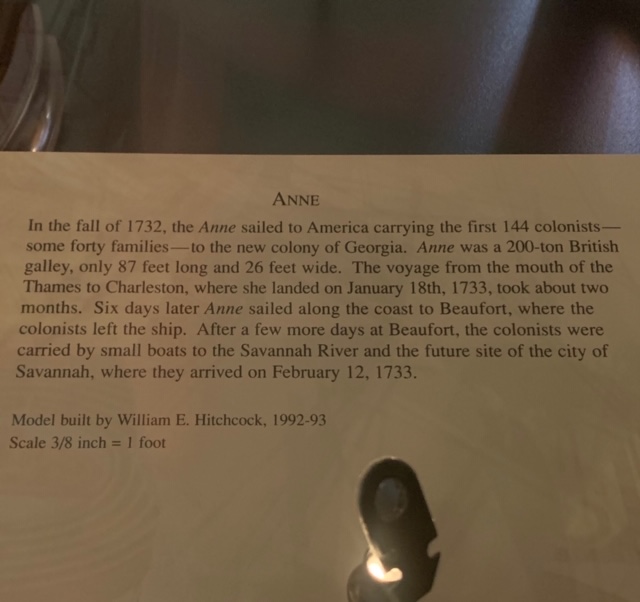
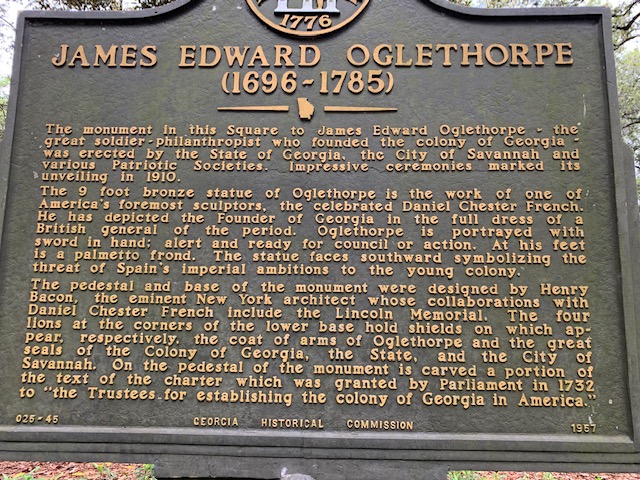
In 1732 a ship called The Anne landed here by the bluff. It had some forty families. There leader a man called Oglethorpe, quickly became friends with the indian chief called Tomo-Chi-Chi, and they both decided that the city should be on the high bluff, near where they came ashore. There the city of Savannah was born

FullSizeRender (58)

IMG_1044

IMG_0785

IMG_0784

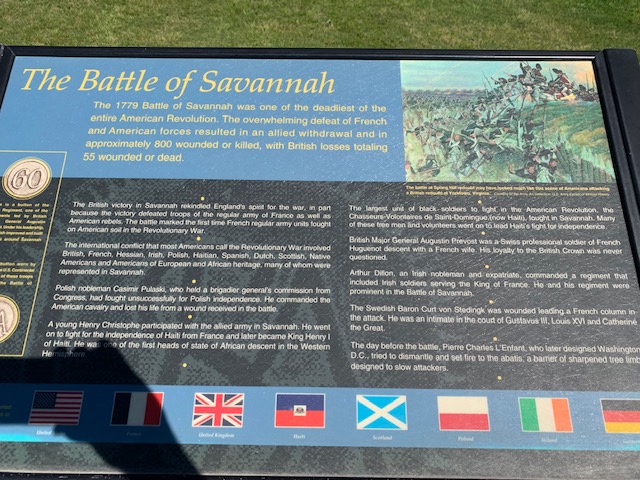
The city was also in the center of the American Revolutionary war. A key battle took place here in 1779, the young American army did not do so well here.

IMG_0685

IMG_0673

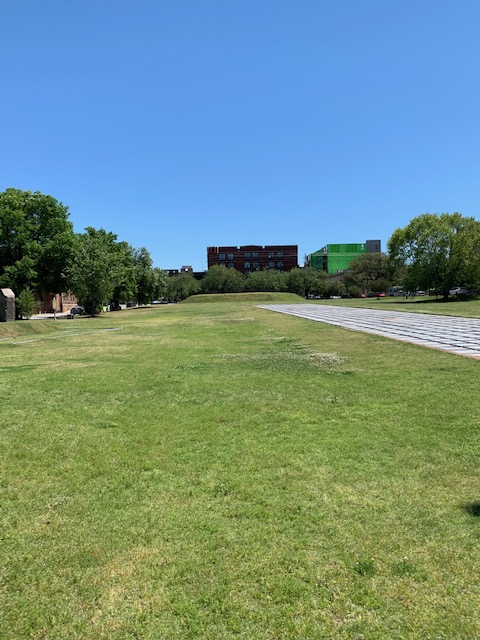
Way out in the distance is where the battle started at one of the redouts (forts)

IMG_0676 (1)

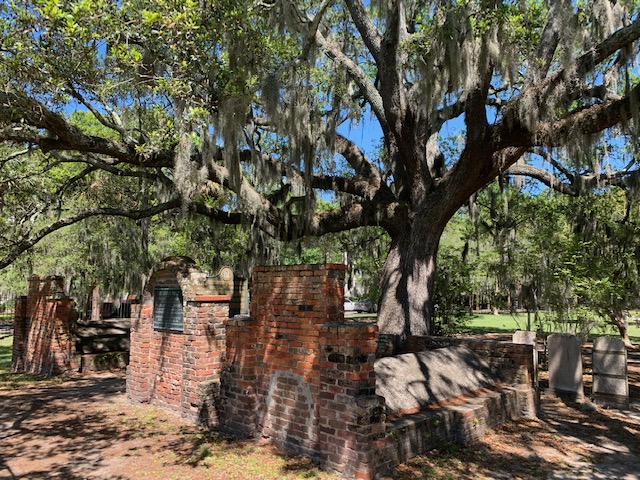
Plaques to the Americans who gave there lives.

IMG_0677


FullSizeRender (52)


THE TROLLEY

savannah-hop-on-hop-off

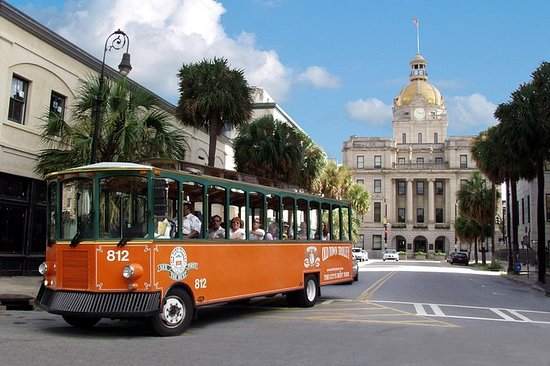
The first thing we did was take a trolley sightseeing tour because it was the best way to see the city. The trolley driver stopped at 15 designated stops while highlighting all the attractions and told different stories of the area.

As you head into downtown Savannah, where the rich history still blows strongly through those live oak trees throughout the city. It does have great architecture, history, natural beauty and good food.   The city has some of the oldest houses in the country, dating as far back as the early-mid 1700s. You’ll notice some maintain their original brick structures, with elegant wrought-iron railings and staircases. Iron at that time was a sign of wealth, Savannah has lots of iron.

IMG_1065

Sure sign of wealth are these dolphin shaped down spouts made of solid iron.

IMG_1267

IMG_1238


When walking or taking the trolley you will notice the squares, 22 of them. The city’s squares were originally developed as a fire prevention method, people who lived in a certain square would bring their buckets there to fill up and put out a fire. But today they serve as peaceful gardens and grassy areas.

“Midnight in the Garden of Good and Evil” and “Forrest Gump” are the two movies to be filmed in Savannah, and “Something to Talk About”, “Cape Fear” and “Glory” also feature scenes in the city.

IMG_0975

FullSizeRender (59)

It’s also known for it’s horse-drawn carriages and antebellum architecture. Its historic district is filled with cobblestoned squares and parks such as Forsyth Park shaded by oak trees covered with Spanish moss. At the center of this picturesque district is the landmark, Gothic-Revival Cathedral of Saint John the Baptist.

IMG_1348

The Savannah River is a nice spot to get something to eat and drink and watch the huge freighters go passing by. We did not take any photos on the trolley tour.

Next we headed to the

Savannah History Museum

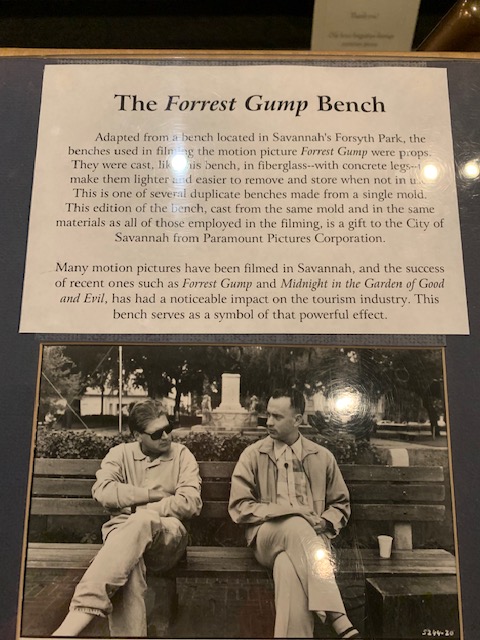
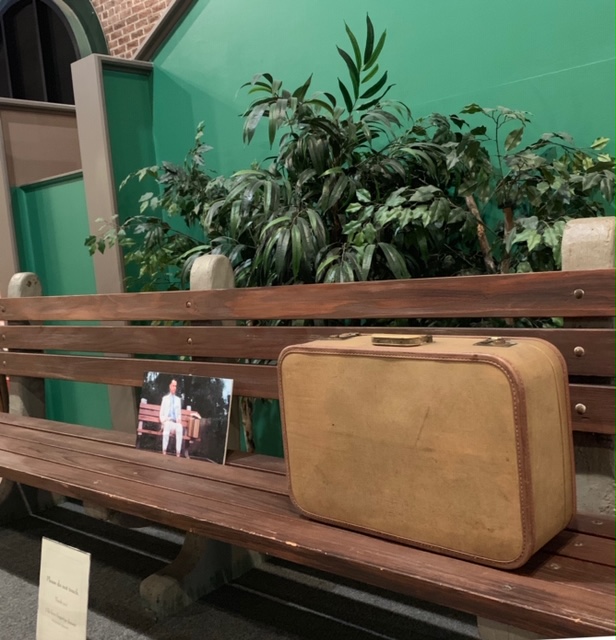
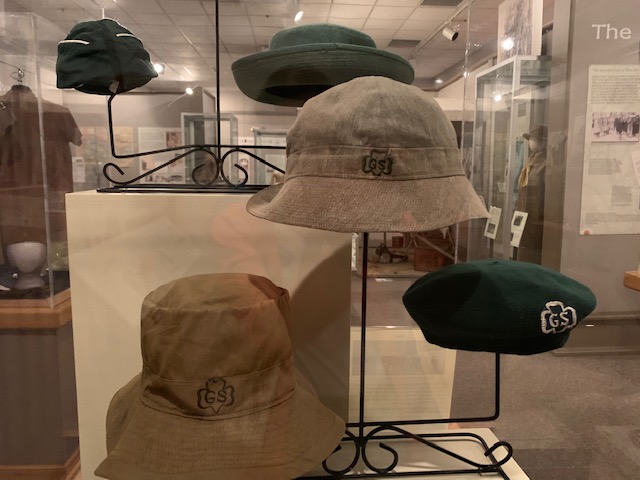
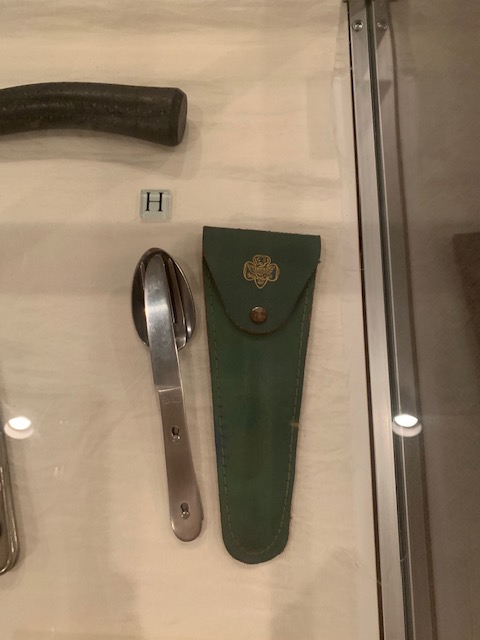
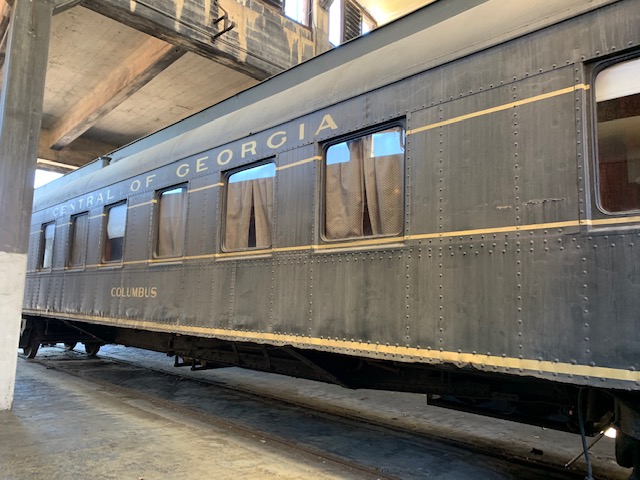
The Savannah History Museum is housed in the old Central of Georgia Railway passenger shed, a National Historic Landmark begun in the 1850s and completed in the 1870s. The railway used the building until 1972 and in 1990 it became the museum. It holds the city’s earliest history from 1733 through its important roles during the American Revolution and Civil War. It also features many exhibits featuring Savannah’s musical, cultural and artistic influences and the famous bench from Forrest Gump “Life is like a box of chocolates.” And being a Girl Scout in my younger days, I had to see the exhibit to the life of Girl Scout founder, Juliette Gordon Low

IMG_0977

IMG_0979

IMG_0986

IMG_0990

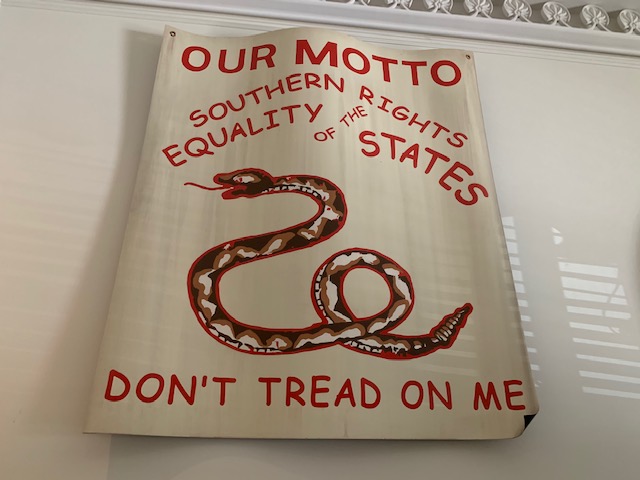
State Motto Flag

IMG_0691


Then we were off to the

Georgia State Railroad Museum

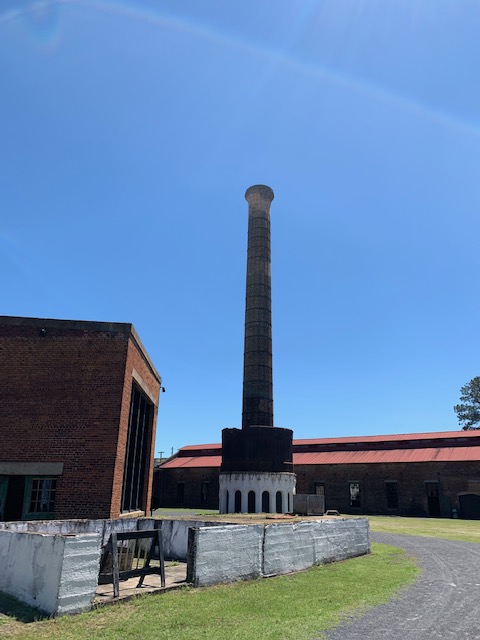
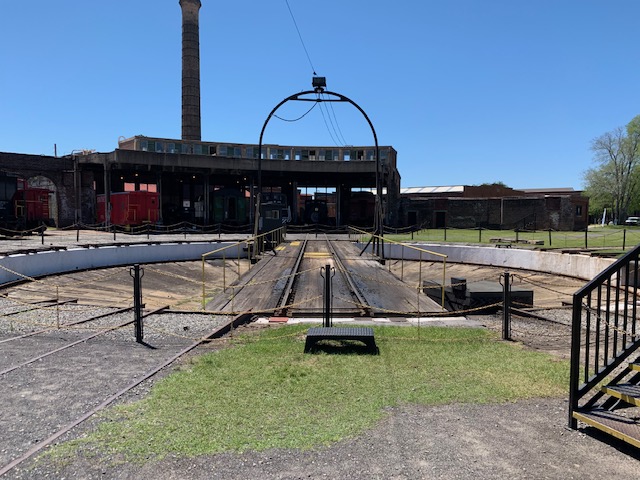
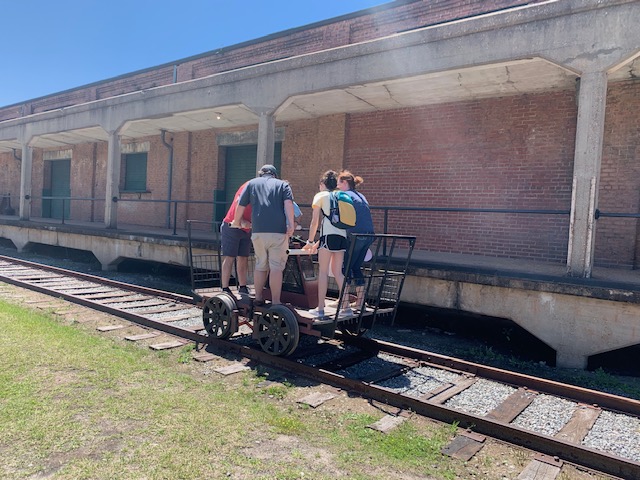
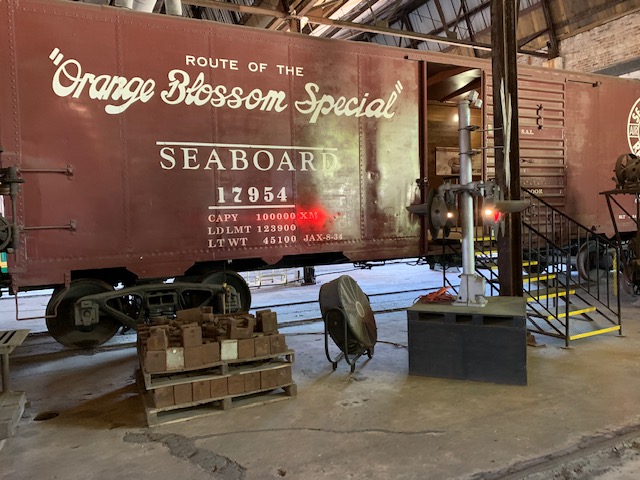
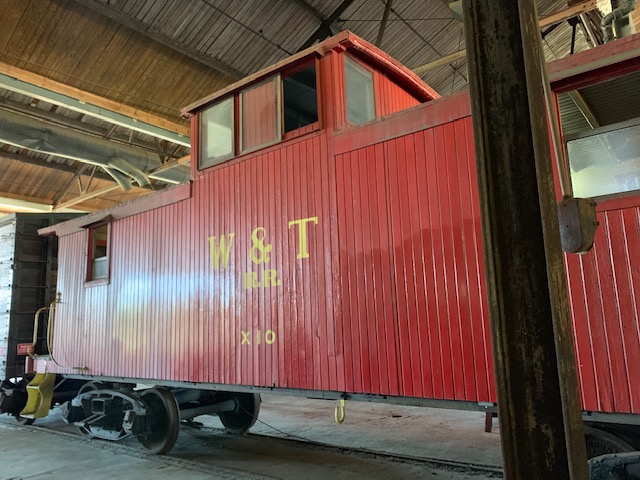
The railroad museum is believed to be the largest and most complete historic railroad repair facility still in existence in the world. It is recognized as a National Historic Landmark District and has been designated by the State Legislature as the Georgia State Railroad Museum. We walked the grounds of the exhibits which include a large collection of steam and diesel locomotives, rail cars, steam-powered machinery, model railroads, and a 126-foot brick smokestack. A large model train layout of Savannah, and exhibits explaining steam engines and belt-driven machinery. We even got to paddle a road car down the tracks, what fun!

Originally the site of the Central Georgia Railway Headquarters, the Roundhouse Railroad Museum was considered to be the most up-to-date, revolutionary facility of its time. Handling freight, passengers, maintenance and manufacturing at this single location, the Railway Headquarters was an indispensable site for a number of years. After being abandoned in the 1960’s, several local enthusiasts worked to save the buildings from destruction.

IMG_0681 (1)

The large smokestack

IMG_0678

The huge turntable to bring in the cars

IMG_0994

IMG_0682 (1)

We even took a ride on the push car

IMG_1014

IMG_1013

IMG_0998

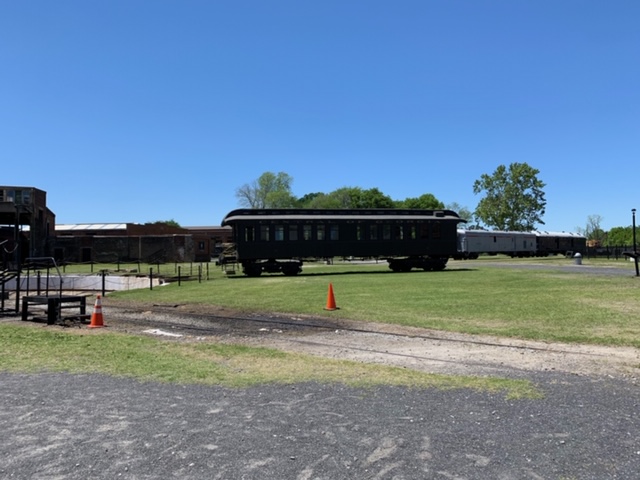
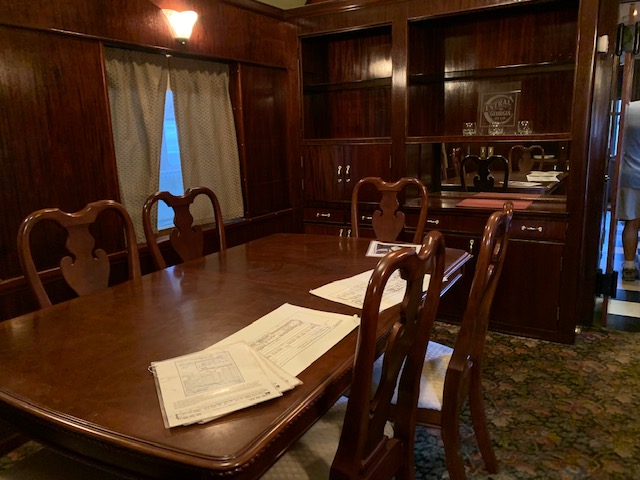
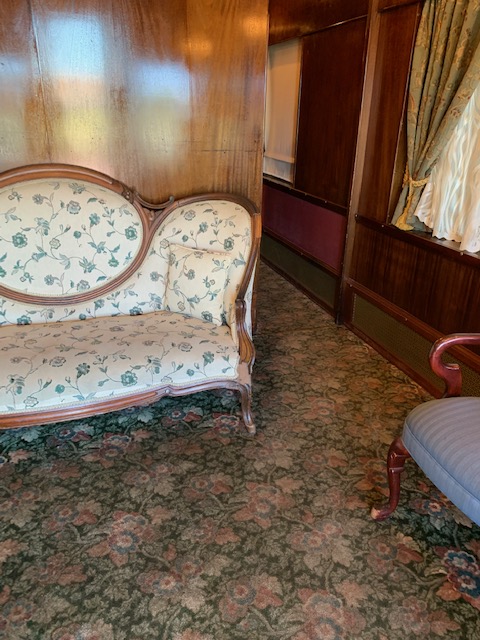
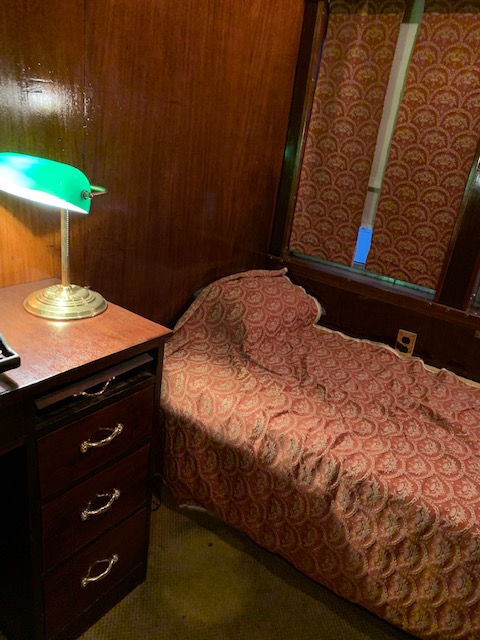
One of the early 1920’s executive railway cars. Had every modern convience you could ask for in the day.

IMG_0997

IMG_0995

IMG_0996

IMG_1009

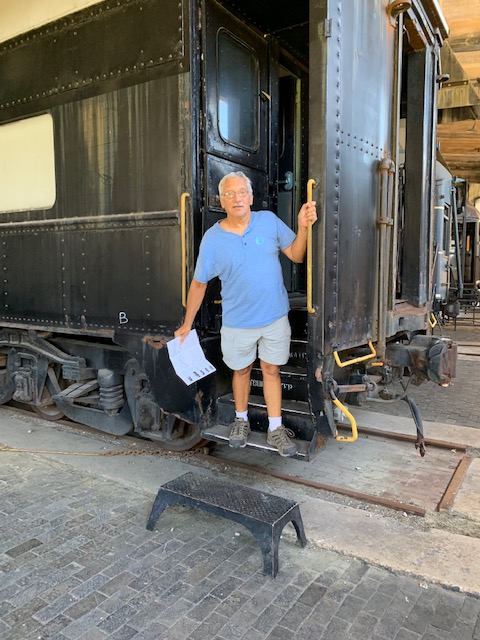
All aboard!!!

IMG_1002

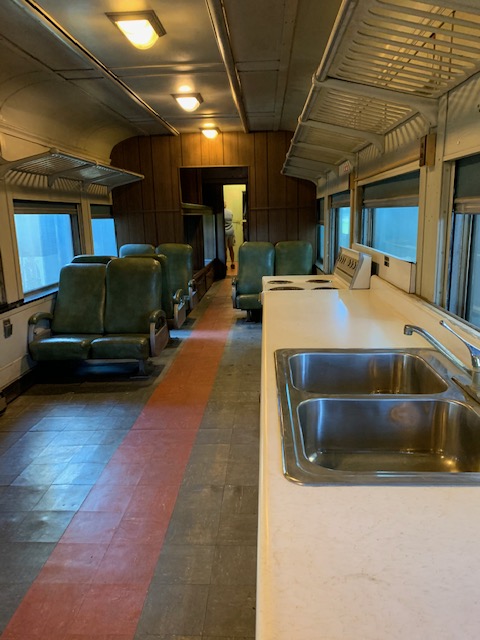
Inside of the workers car. When they had to travel this was what they went in, just the basic comfort.

IMG_1006

Extra kitchen workers car.

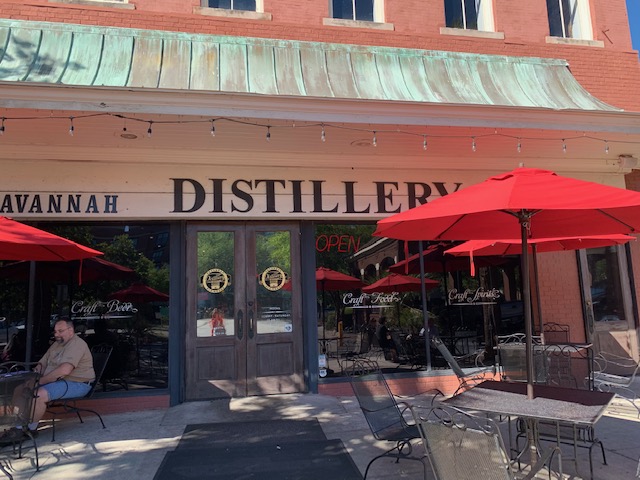
After that the day was about over so we had a early dinner about 3 or so. We ate at a place called the Distillery, close to our pick up point to go back to the campground.

IMG_0720

IMG_0719

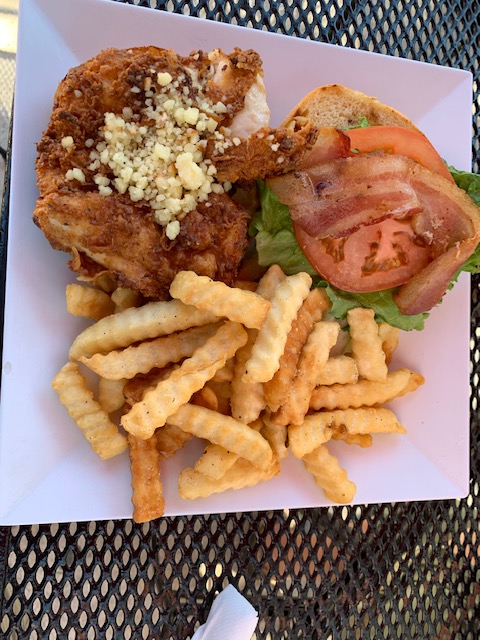
I had a chicken sandwich with fries.

IMG_0718

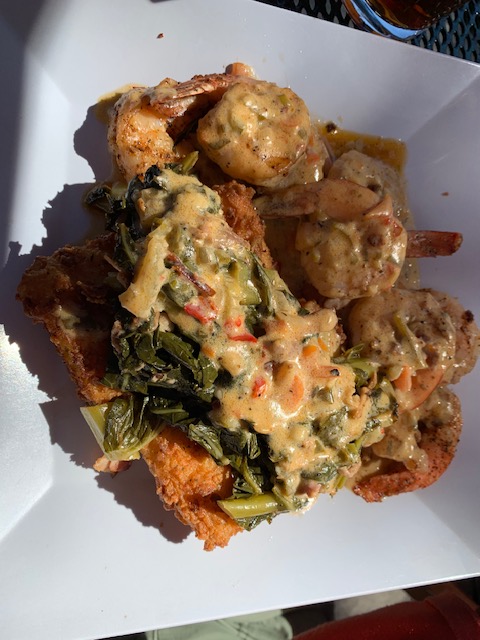
Melissa had one of her favorite meals of the whole 8 month trip, Grits and schrimp dinner. That ended out first day in Savannah.


Akron Ohio

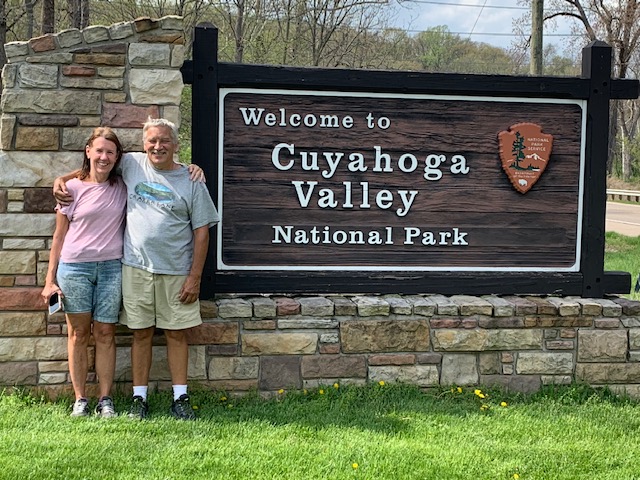
We have been here at Woodside Lake Rv campground near Akrin Ohio, for three days now. Here there is a national park, called Cuyahoga Valley. Right who knew there was a national park in Ohio!!!. It is between Cleveland and Akron.

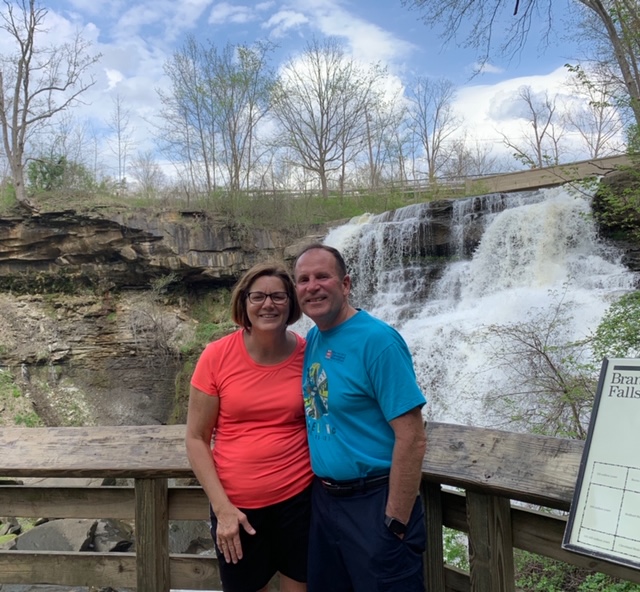
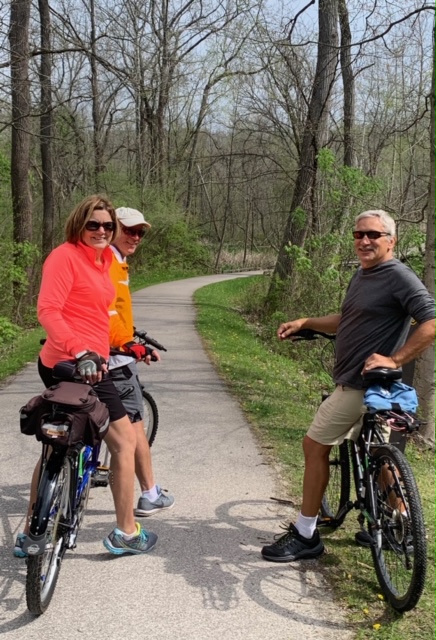
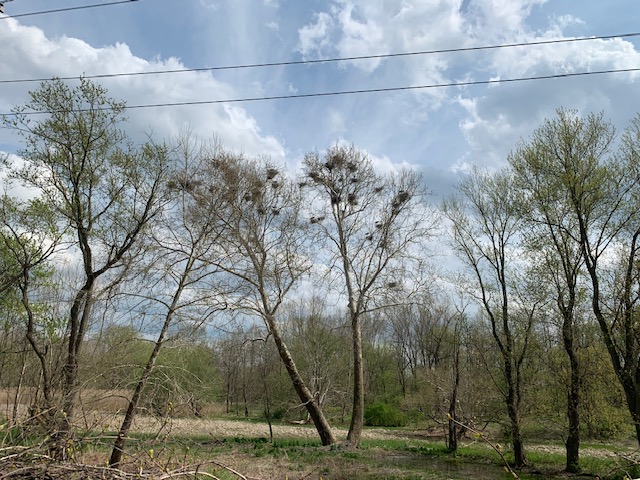
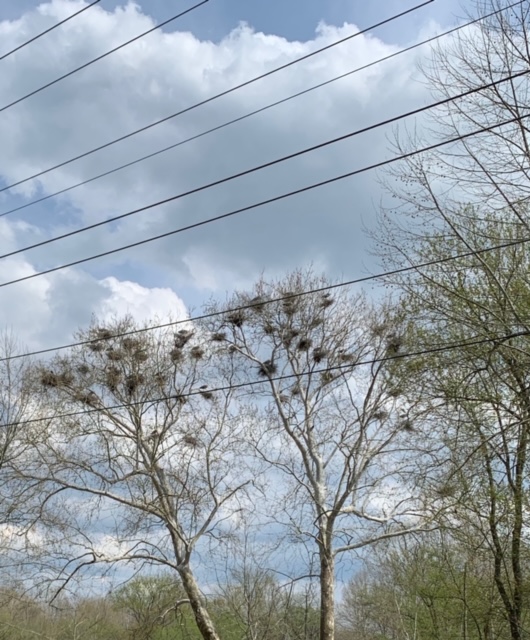
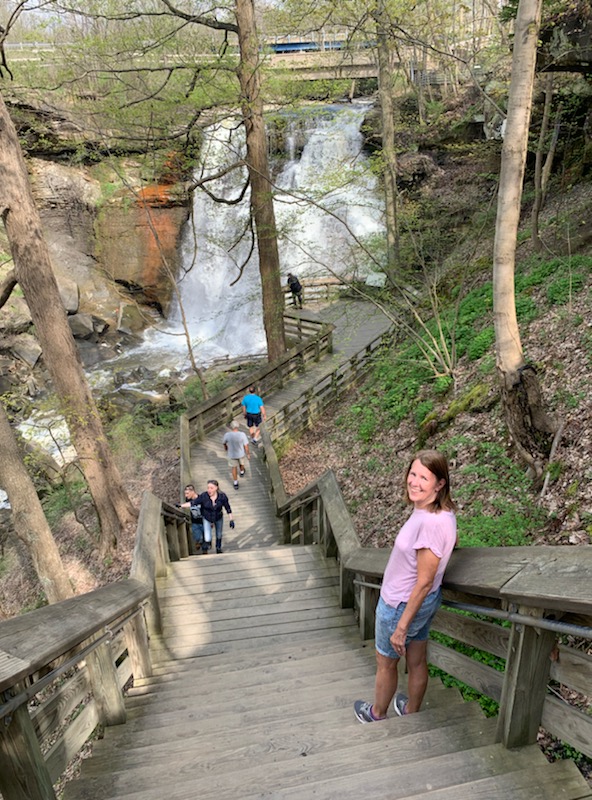
The last two days we have met up with our good friends and RV buddies, Bill, and Sandy, at the park. The first day we got together and hiked part of the canal pathway, about 5 or so miles in total. Then we had a good dinner near by and caught up on all our Rv stories. The second day we biked for about 14 miles the other way, had an late lunch, went to the Heronry, and visited Brandywine falls. A heronry you say, yes it is an area where great Blue Herons nest. They say there is around 143 nests of them in this area. It was really neat to see them all in there nests , right now babies are being born. The falls was neat also as there has been a lot of rain, it is flowing really good. It was great to see and catch up with Bill and Sandy, we had a lot of great fun and laughs, they leave in a week or so, for a one year Rv trip out west.

IMG_0947

FullSizeRender (47)

Sandy and Bill


FullSizeRender (51)

On our bike ride

IMG_0945

The Blue Heron Nests

FullSizeRender (50)

IMG_1605

At the falls

IMG_1606

FullSizeRender (48)

The Four Amegoes

ON THE MOVE

Saturday, Sunday and today we traveled from South Carolina to Ohio, which is where we are tonight, Akron Ohio. Drove 638 miles, and I have to say I am tired. The roads were not good and very bumpy. A lot of up and down hills, with curves, plus 2 one mile tunnels through the mountains. Last night we even stayed at a Wal-mart in West Virginia, quite the experience. No hook ups and it got pretty cold, but the troopers that we are we made it through. Will be back at our home base in Newfane Thursday or Friday. Still have to do four more posts on Savannah, hopefully by the week end. Picture below is of our spot at Wal-mart.

IMG_1586

FORT McALLISTER

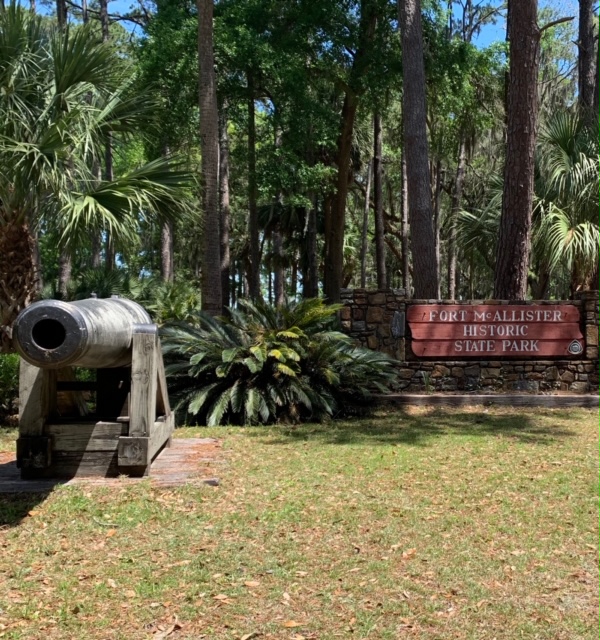
Fort McAllister

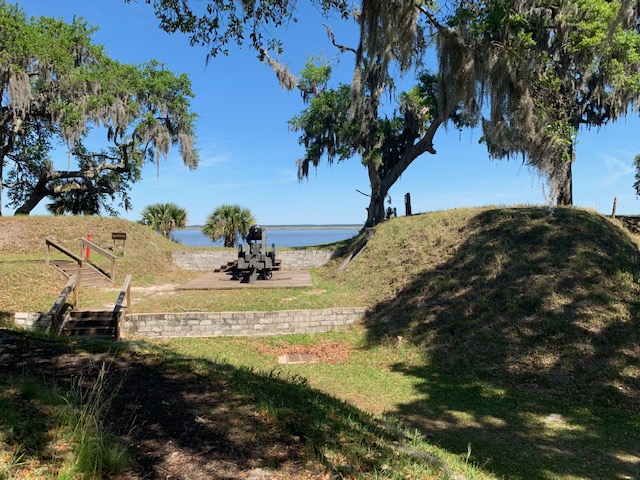
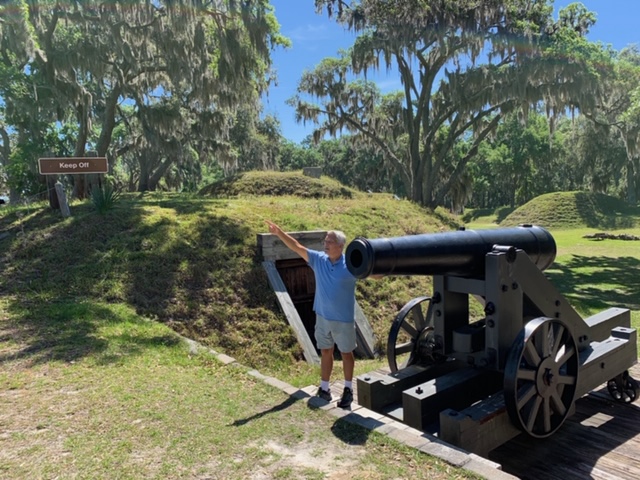
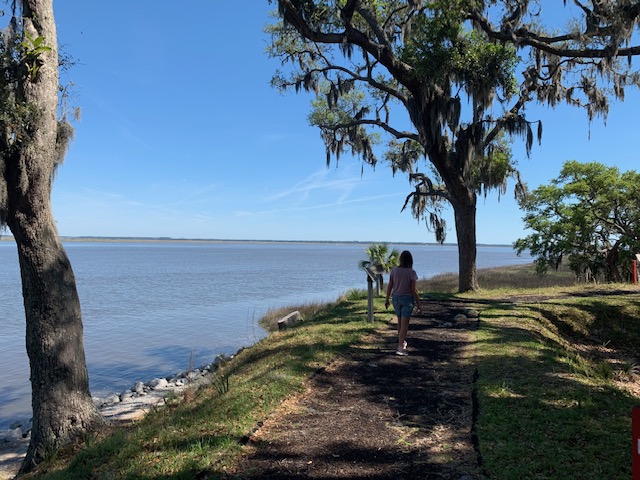
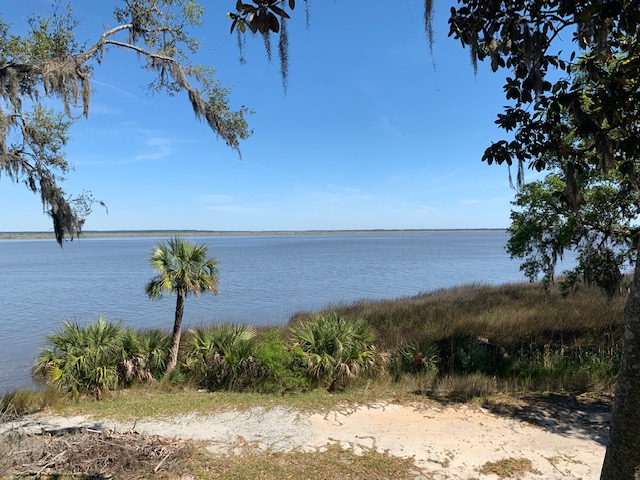
Located south of Savannah on the banks of the Ogeechee River, the fort is in a very scenic area. It has the best-preserved earthwork fortification of the Confederacy. I didn’t know what earth works really were “Earthwork: A field fortification constructed out of dirt. An earthwork could be a mound but typically consisted of a ditch and a parapet. Embrasure: An opening or hole through the earthworks through which artillery was fired.” When Dave was explaining earthworks to me, my mind must have been elsewhere. What I especially didn’t realize was that under these huge mounds of dirt were actually buildings, huge buildings were the men ate, slept and lived. Quite an amazing engineering task.

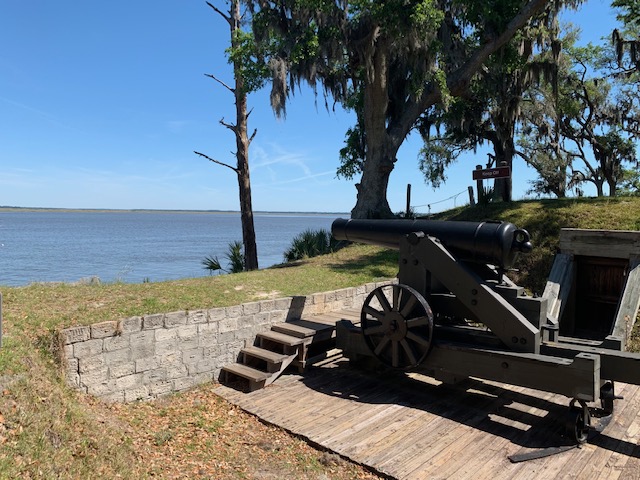
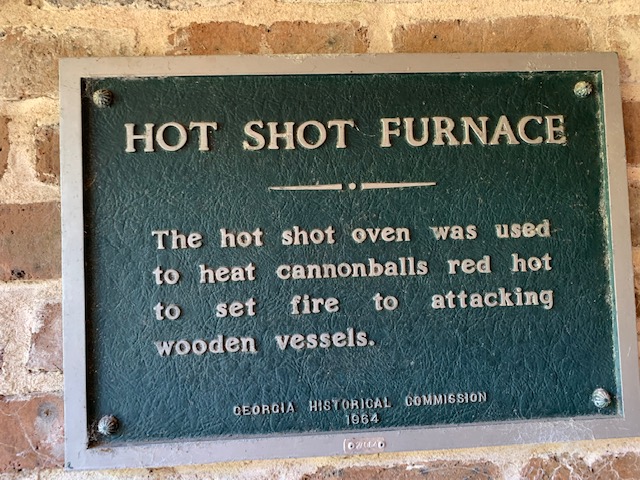
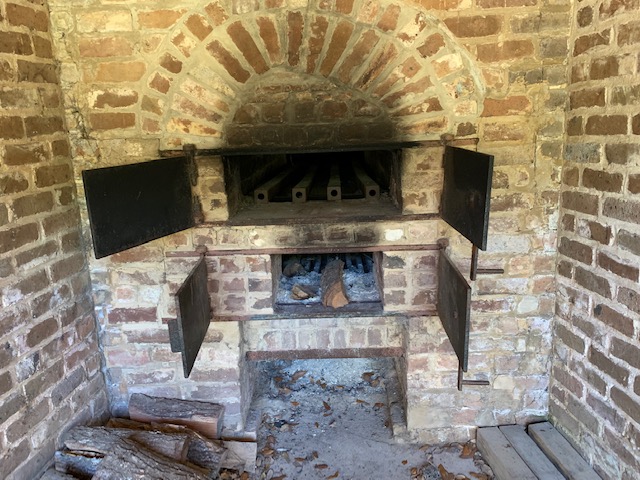
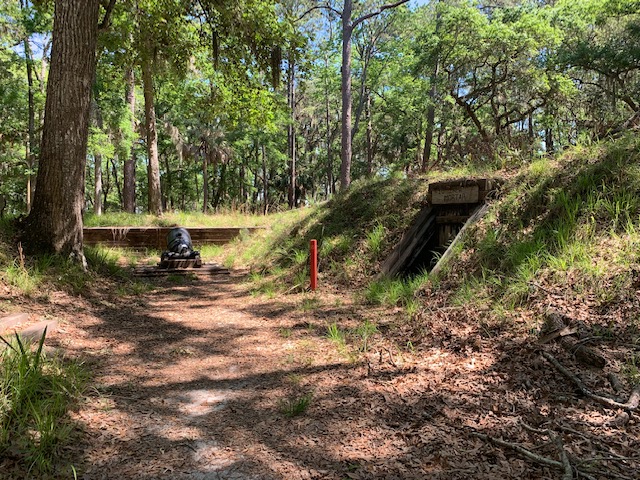
.It was built in 1861 to defend the Georgia’s coast south of Savannah during the Civil War. It was positioned on land to allow its guns to fire upon incoming ships; its earth construction provided adequate defense against the naval artillery then available. Fort McAllister also had ten large-caliber guns and facilities for the heating of “red-hot shot,” cannonballs that, when striking their targets, could set wooden warships ablaze.

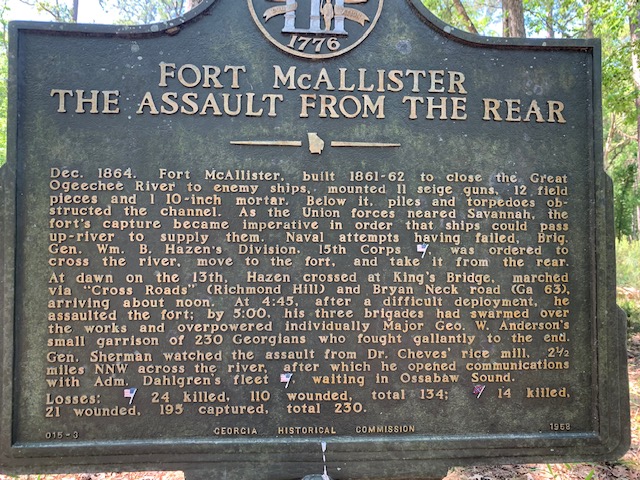
On December 13 1864 was a victory for the Union forces. General William Sherman attacked the fort, this time from land, as part of his March to the Sea campaign, immediately prior to the capture of Savannah. At this stage minimally defended, the fort was captured without the need to destroy the battery and defenses. In contrast to the long and unsuccessful bombardment from its sea approach, Fort McAllister was seized overland in a matter of minutes.

After its capture by the Union army, the fort was used as a prison for Confederate soldiers, falling after the war into a state of disrepair. It was restored in the 1930s and also has a museum.

FullSizeRender (46)

IMG_0885

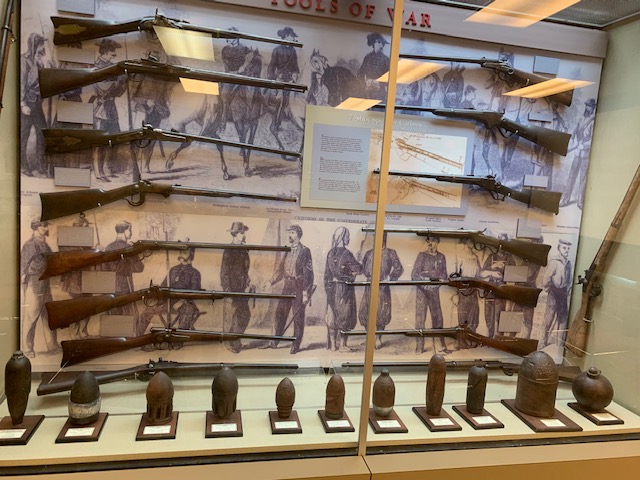
They have a museum there, with all kinds of stuff including this display of guns and shells.

IMG_0887

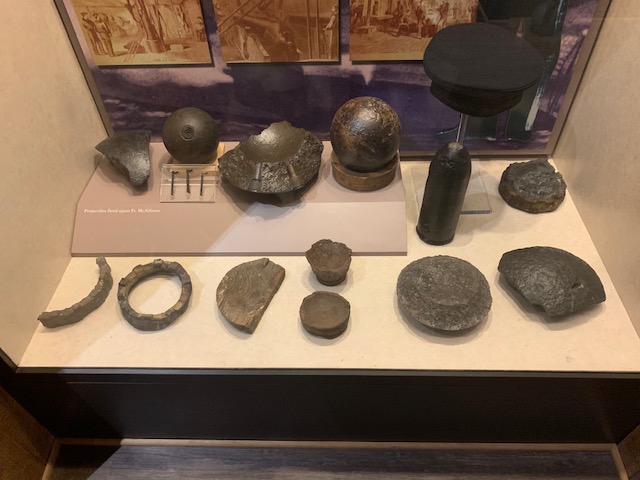
These are shell fragments pick up from the fort after the battle, look how big.

IMG_0886

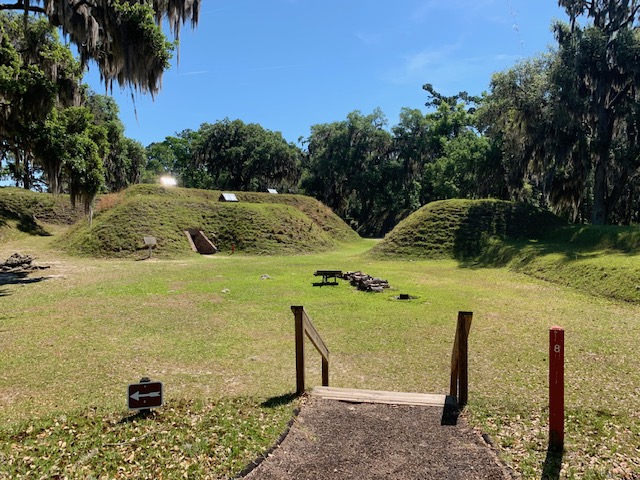
This is the fort all made of earth, comprised of about 12 acres or so.

IMG_0895

Looking out at the fort from the visitor center.

IMG_0894

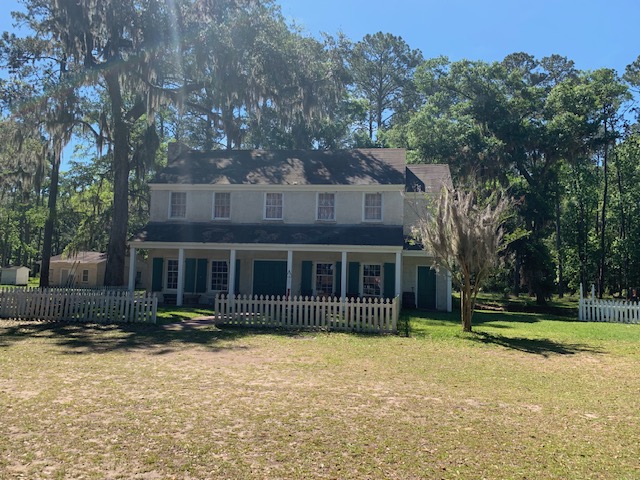
Officers house near the fort.

IMG_0896

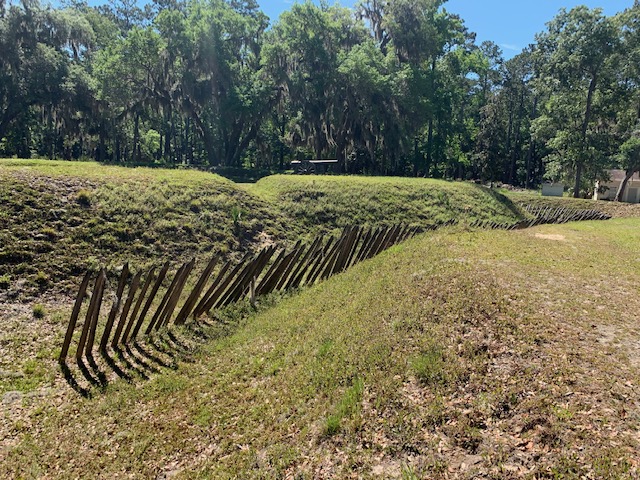
Going over the bridge to the fort, surrounded by a moat and these spikes abatmentments

IMG_0897

A view of the interior, this is the main bunker that housed the troops

IMG_0898

Another interior view.

IMG_1543

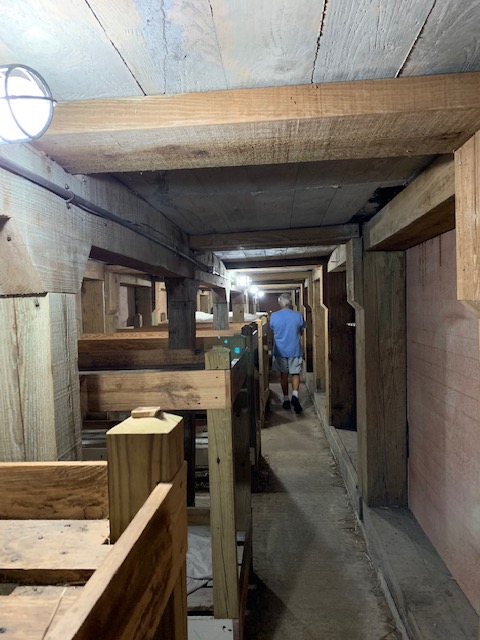
Interior of the main room with the bunks.

IMG_0899

View of one of the guns from inside.

IMG_0901

Another gun inside..

IMG_0906

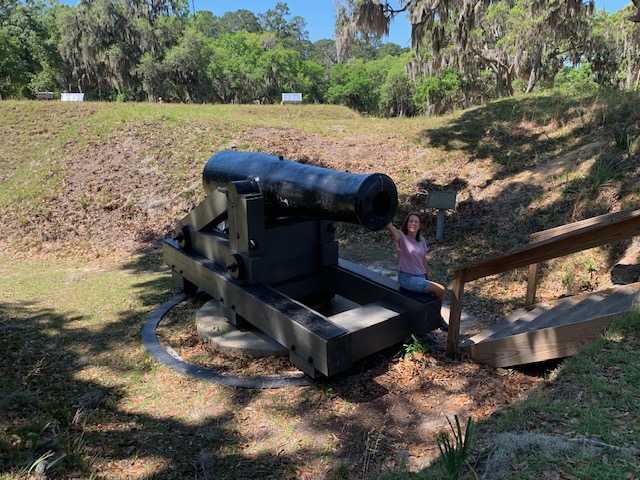
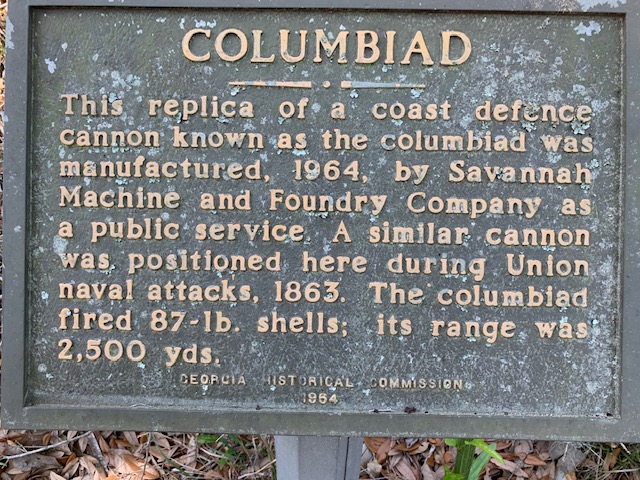
The columbiad, hay who is that there miss America

IMG_0908

IMG_1536

FIRE, that away.

IMG_0909

Hello, down there.

IMG_1540

IMG_1539

Hot shot oven was inside an earthern mound.

IMG_0903

View atop the fort looking out to the river.

IMG_0905

Another view out there were the union gun boats lobbing shells in.

IMG_0904

Time after time the union could not destroy the fort. So they decided to attack it from the land during Sherman’s march to the sea., it was taken in less than half an hour.

IMG_0914

IMG_0911

The union came from the land side and this is the area where they charged.

IMG_0918

The earthworks to the mortor battery.

IMG_0916

The mortor battery and its bunker

IMG_0917

The mortor. bowling ball size shells were fired from this.

IMG_0920

Outside the fort on the water side.

IMG_0921

IMG_0902


FORT PULASKI AND TYBEE ISLAND LIGHTHOUSE

One day in Savannah we visited the below places. The day was windy and a little chilly 65, haha, but all in all it was a good day.

FORT PULASKI

Construction of the fort began in 1829. It would take another 18 years and $1 million to complete. In 1833. An estimated 25 million bricks were used to build the fort, with walls eleven feet thick that were thought to be impossible to get through.

At the mouth of the Savannah River, the fort’s original purpose was to defend Savannah, then a booming port city, from any attacks. After South Carolina seceded from the United States, starting the Civil War, Fort Pulaski was taken over by the state of Georgia’s Confederate troops. Most of them, however, abandoned it later that year because of the fort’s isolated location.

Seeing that the fort was mostly unprotected, Union forces took their chance and began building batteries on the beaches of Tybee Island, with the intention of taking the fort in the middle of the Confederate States. In 1862, the Union army asked Colonel Charles Olmstead, commander of the Confederate garrison, to surrender but he refused. And so began the siege of Fort Pulaski, where Union troops used state-of-the-art guns, among them the new James Rifled Cannon and the Parrott Rifle, in a 30-hour bombardment of the fort until it was penetrated. The Confederate commander surrendered. The siege became a historic experiment of military science and invention, and a case against military masonry construction.

Towards the end of the war a group of Confederate prisoners of war were housed in the fort under deplorable conditions. Known as the “Immortal 600” was a group of Confederate officers. They survived in spite of starvation rations and brutality. Some of these men remained in Pulaski until March, 1865. Thirteen of these men would die at the fort. They are buried under the memorial.

Our guide told us these men were really very rough in language and other things just all around very, very terrible to be around or near. But who can blame them. Fort Pulaski was declared a National Monument in October 1924 as a last measure to save the building, which had been for the most part unused, from ruin.

Both Dave and I learned a lot from our tour guide about the fort and the daily life of a soldier and saw two different cannons being fired. “Cover your ears with your government listed ear plugs, meaning Your fingers. haha
IMG_0836

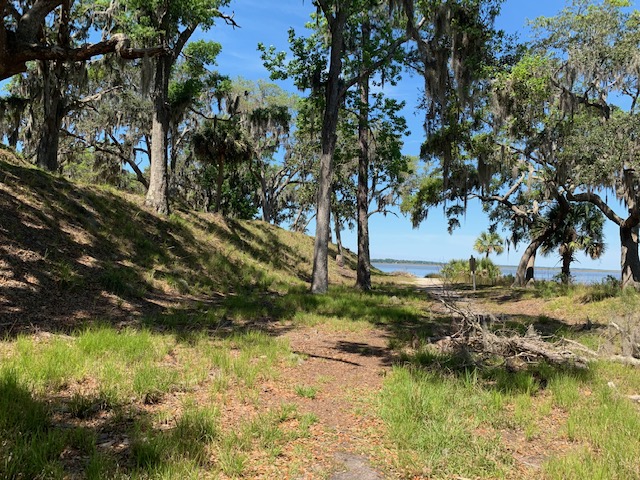
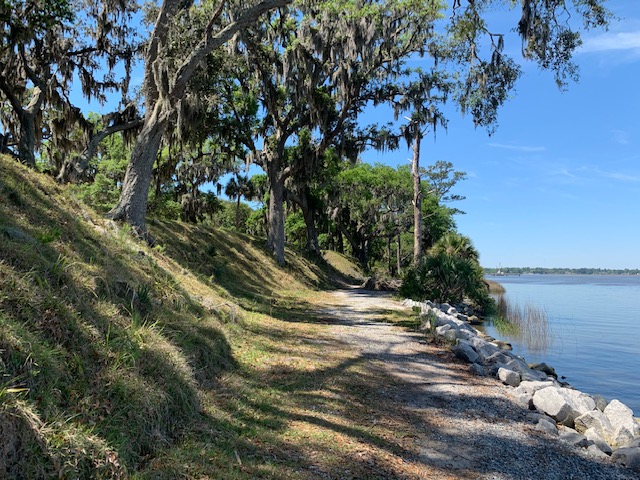
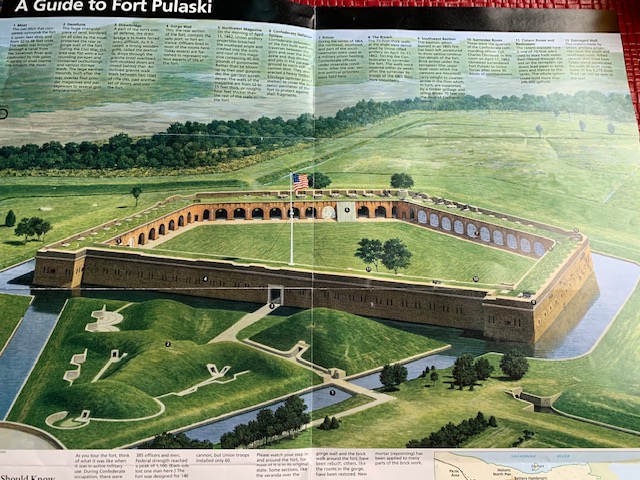
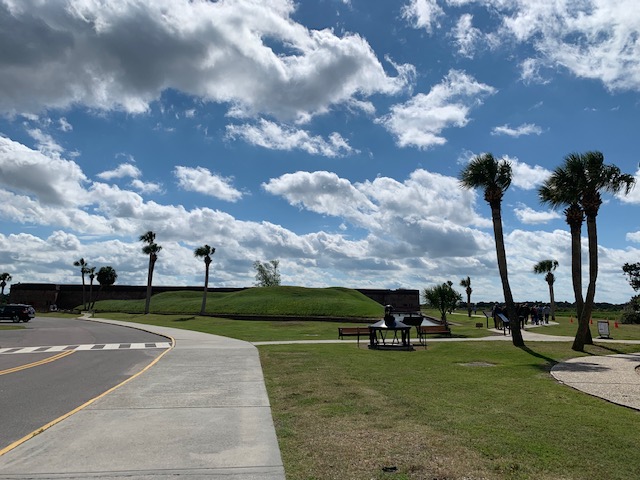
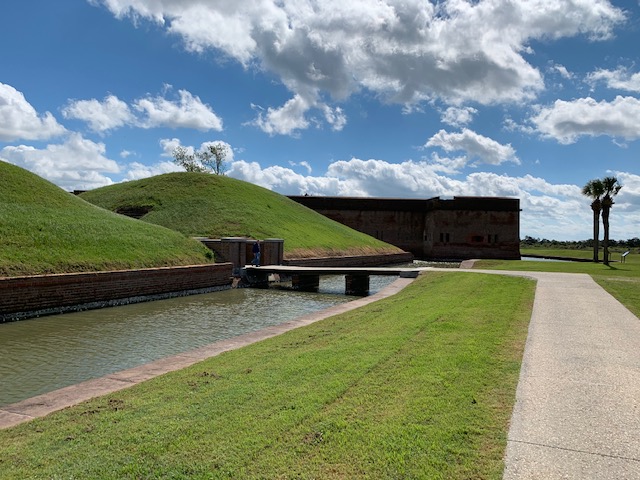
The mounds in back of the fort were not there during the civil war, they were put in much later as storage bunkers for munitions. The point faces toward the river.
IMG_0794

IMG_0796 (1)

Entrance to the fort.

IMG_0801 (1)

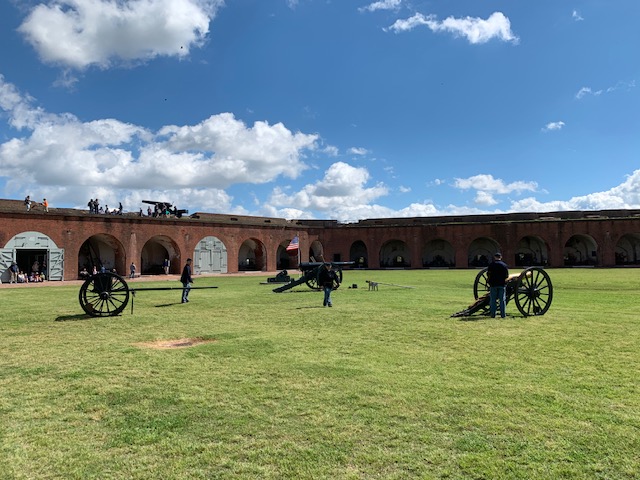
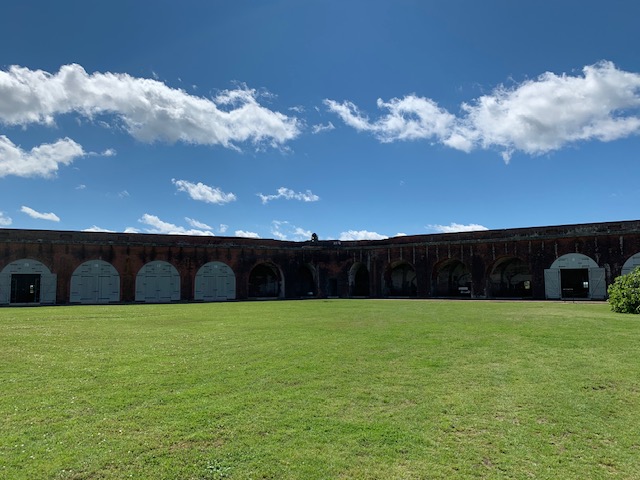
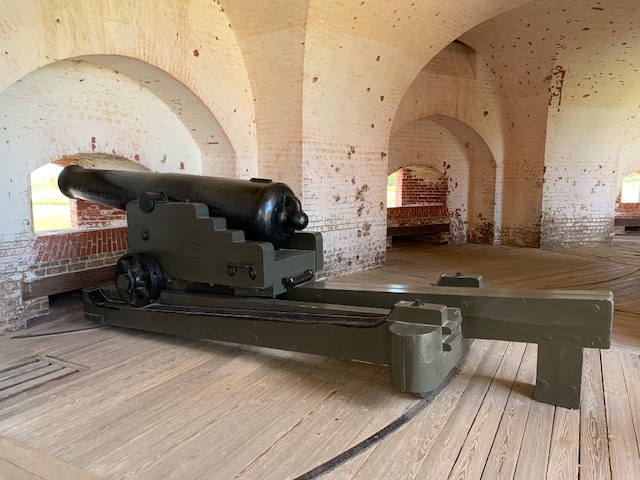
View inside the fort, with cannon.

IMG_0805

IMG_0811

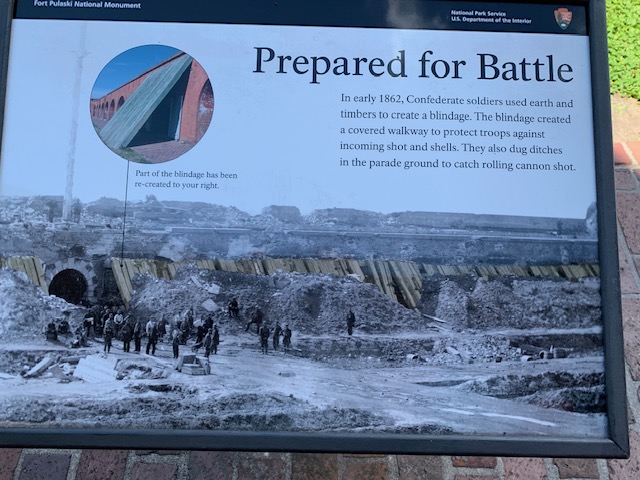
A photo of inside the fort, all of the openings would of had a blindage built of heavy timeber covering them as the photo shows.

IMG_0807

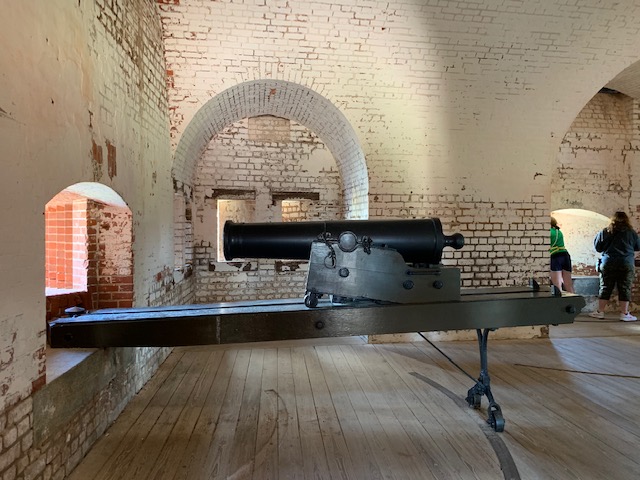
One of the many rooms.

IMG_0808

IMG_0809

All of the cannon would have been able to swing left to right.
IMG_0795 (1)

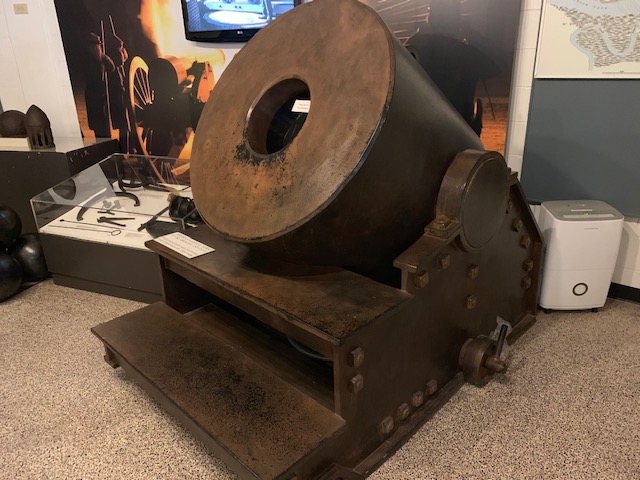
This is a mortor, as opposed to a cannon this lobed shots high in the air like an arc. A bowling ball could fit in the opening.

IMG_0810

Some of the cannon fired hot shot.

IMG_0812

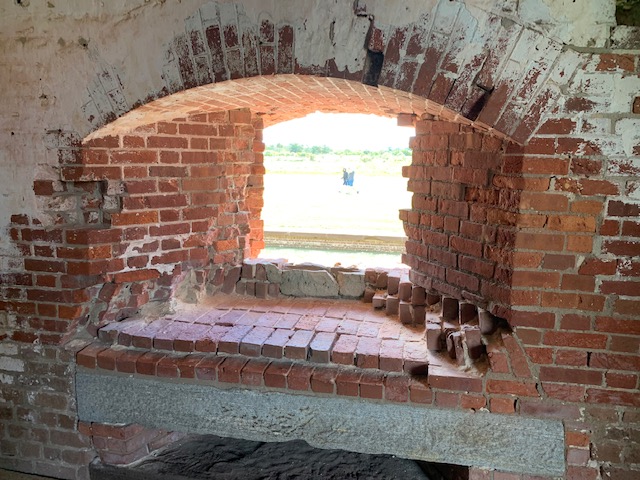
One of the openings for the cannon, look how thick.
IMG_0815

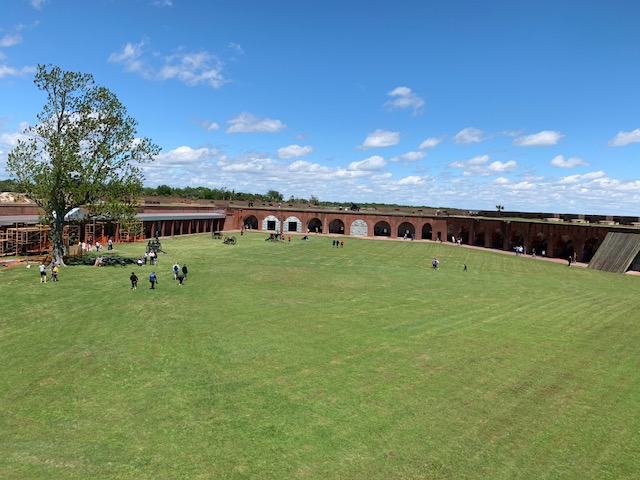
A view from atop the fort looking in.

IMG_0817

A view looking out to the river.

IMG_0820

In 30 hours that’s the total number of shots fired ,and the battle was over.

IMG_0813

A view of where the breach was made in the seven foot thick walls.

IMG_0816

One union shell hit a cannon inside and caused severe damage as you see.

Below is views of the battle damage to the wall by the union guns. The one corner you can see newer brick this is where the breach in the wall was. It took the union only a few weeks to repair the damage.
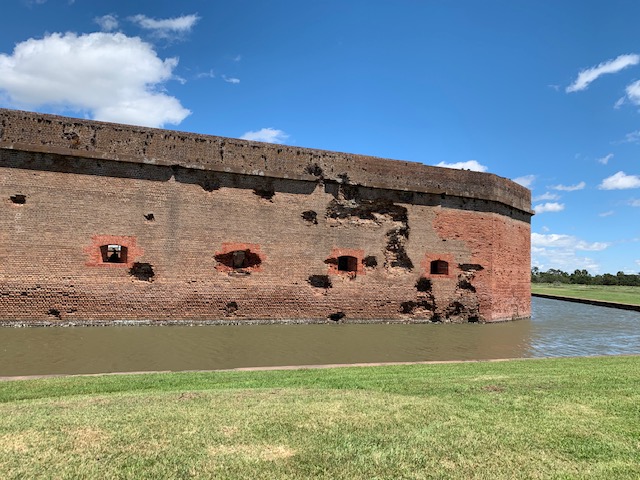
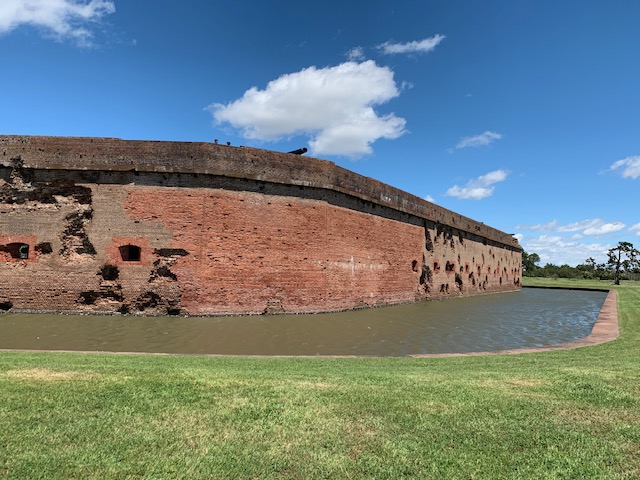
IMG_0818

IMG_0819

IMG_0821

IMG_0822

Below, After the union took over the fort, there was also a lot of idle time. This photo is believed to be the first ever of a baseball game in progress.

IMG_0814


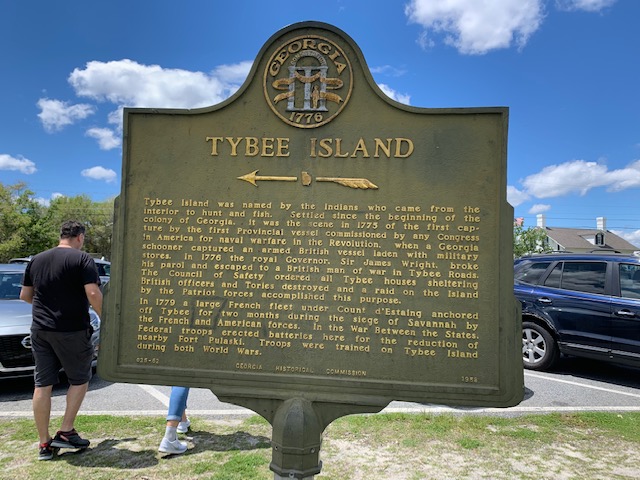
TYBEE ISLAND

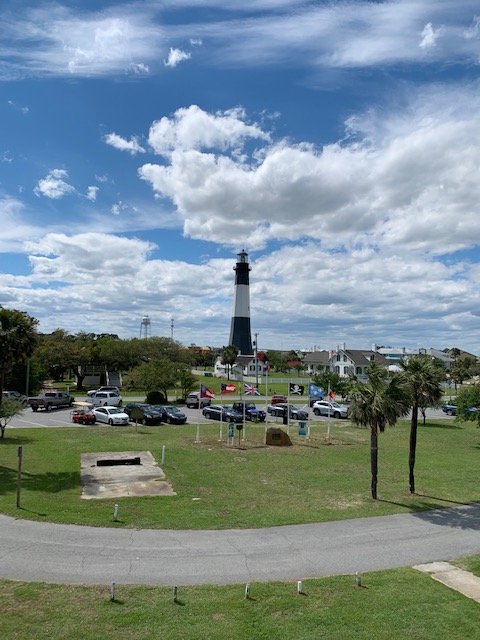
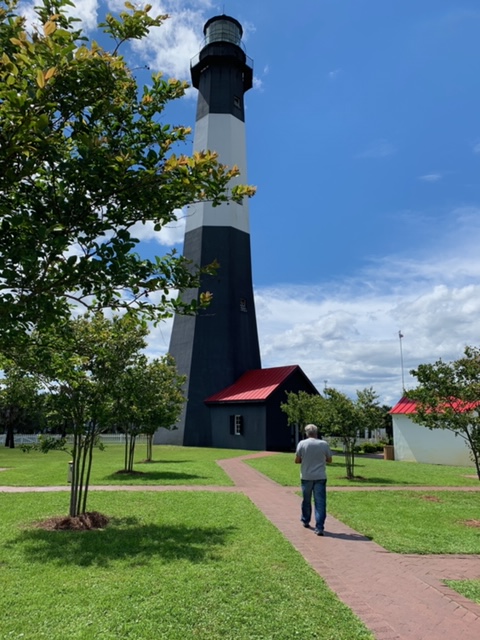
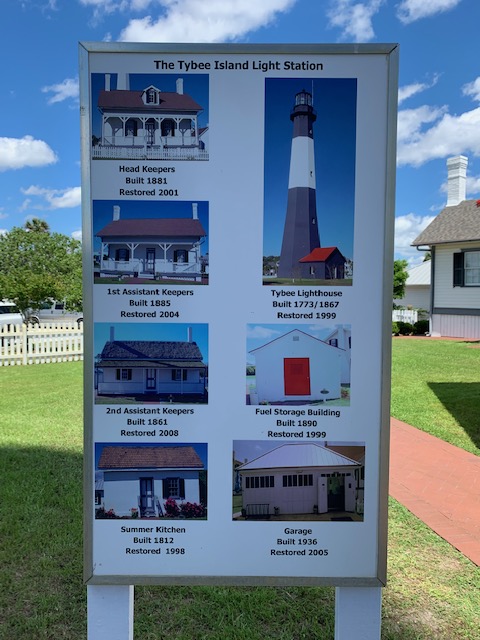
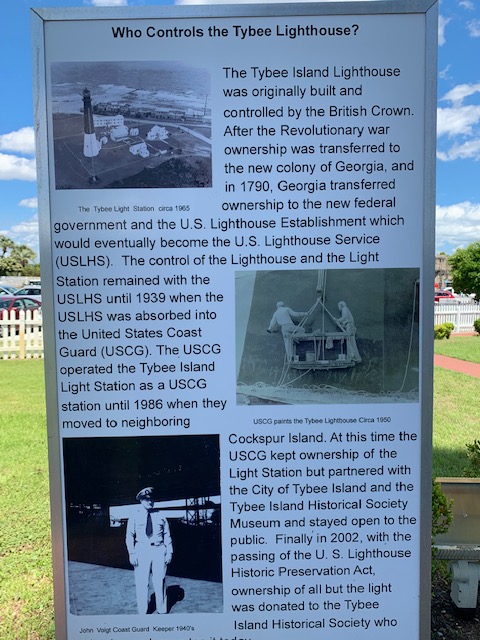
Tybee Island is located 20 minutes from Savannah. It’s a island where you can swim, fish and explore a nice place to visit with, of course lots of history. Tybee Island you’ll find Georgia’s oldest and tallest lighthouse. It’s a complete light station whose history dates back to 1732. Tybee Light was commissioned in 1732. The tower stands 145 feet tall and has three Light Keeper’s Cottages nearby with a small 1812 Summer Kitchen that now holds archaeological finds.  It played a great part into Savannah’s ports of call. In 1861, Confederate troops burned Tybee Light’s wooden stairs, as well as 40 feet of the tower. They did this to prevent Union troops from using the tower to guide their ships into port. After the Civil War, a completely fireproof lighthouse was built and this is what we saw today.

A Light house keeper was really a very hard lonely job , it wasn’t the aura of majesty, strength and beauty that you might think . Living in a lighthouse would Not have been romantic and beautiful.

You had to be physically strong to be able to carry out all the duties of a light keeper – from carrying 50-lb. pails of oil up flights of stairs, to winding the gears that turned the light, rowing the light-house boat, and carrying supplies into the lighthouse, to name a few.   It was also hard if he had a family there, they would be all alone and away from everything they had to be self-sufficient, and in some cases the family was not allowed to live with the light house keeper.   Who would want that job? Not Dave nor me neither!

“It took a special kind of person, a special kind of strength, to be a light keeper. A person who denied himself the comfort of others. A person who was committed to the task. A person who understood the

importance of the job. A person who recognized the position as a service to mankind. Such dedication was vital to survive the role and accomplish the goal – saving the lives of others.”

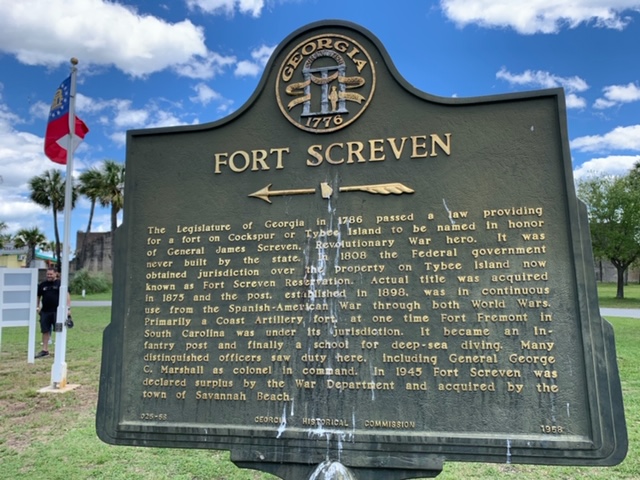
Across the street is Fort Screven’s Battery, it served as the gun battery and magazine for a 12-inch long-range gun. The room that formally stored over six hundred-pound projectiles and two hundred-pound bags of gun powder, is now the Tybee Island Museum. In 1950 the Tybee Island Museum opened and now it has exhibits that cover the time of the Euchee tribe, the history of Fort Screven and Tybee’s Golden Era.

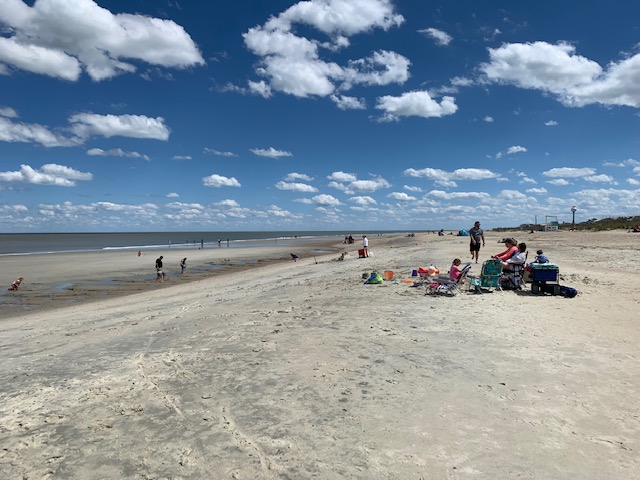
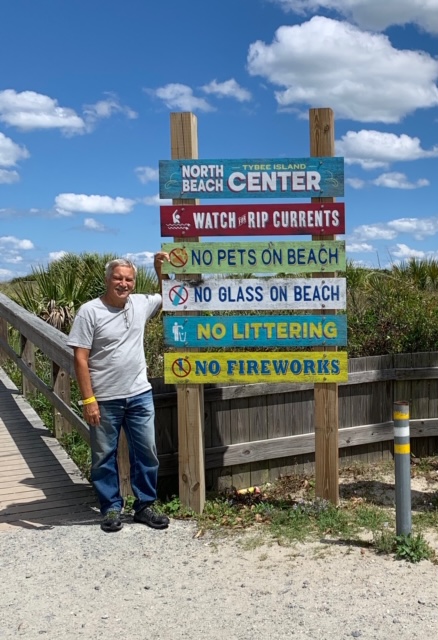
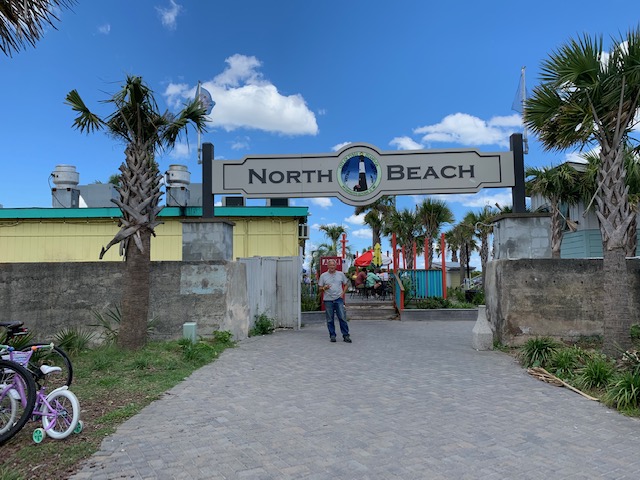
North Beach on Tybee Island is a popular destination during the summer months for both tourists and Savannah residents. At the end of the nineteenth century, physicians told patients the salt water was good and cured things like ailments such as asthma and also allergies.

It  was also known during this time as a resort town. The island was famous for it’s crystal ball, big bands, and dances, it was a popular destination. With the opening of Tybee Road in 1923 to automobile traffic, the way of life on the island slowly started to change. and the end of an era was closing.
IMG_1408


IMG_0824

This is a real nice shot of the grounds.
IMG_1425

IMG_1415

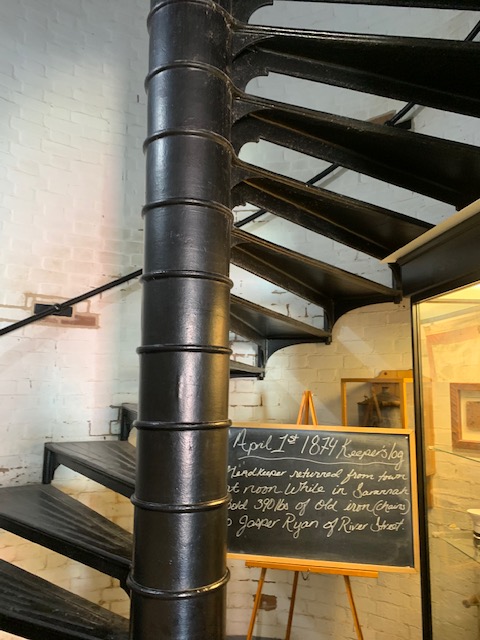
Metal stairs were put in after they were burned by the union army after they took over the island. We climbed I think 187 stairs to the top.
IMG_1411

IMG_0827

FullSizeRender (43)

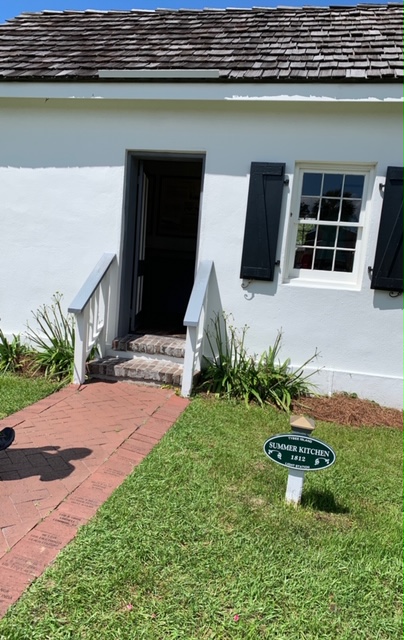
The summer kitchen was the oldest building still standing built in 1812. It was used a a kitchen as people did not cook in there houses ,afraid of fires.

FullSizeRender (45)

Some of the furnishings from the 1930’s owners.

IMG_1419

Also from the 1930’s owners

IMG_0832

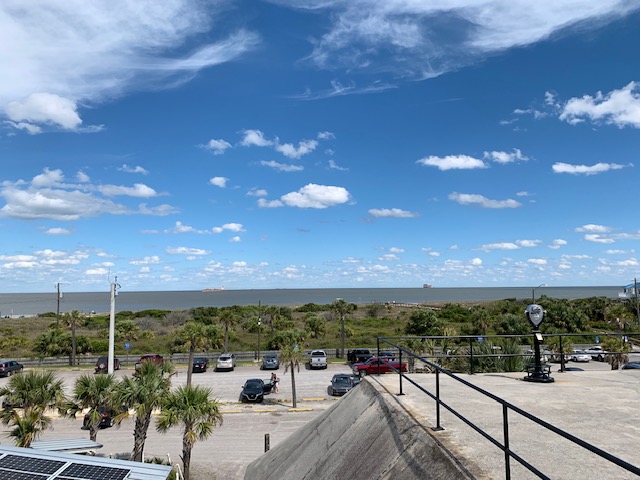
View of the lighthouse from atop Fort Sweven.
IMG_0833

Looking out toward the Atlantic, there are big container ships way out in the distance.

IMG_0828

A view of the Atlantic from the top of the lighthouse.
IMG_0830

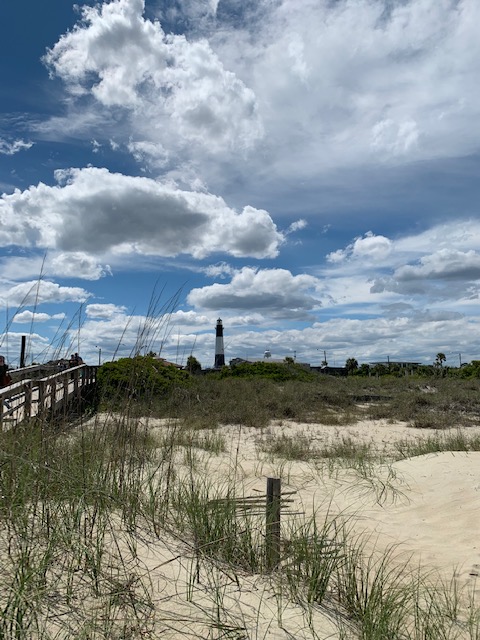
A view from the beach.

IMG_1432

IMG_0829

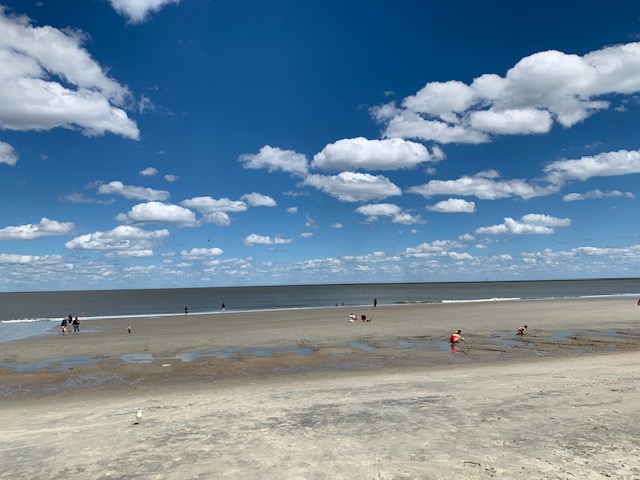
The Atlantic ocean and beach.

FullSizeRender (42)

Wasn’t sure if I even could go on the beach Jeeez.
IMG_1427

IMG_1407

A little about Fort Screven.

IMG_0834

A top of the fort, there were six buildings like this all had two huge coast guns on them. Never were they used.

IMG_0831

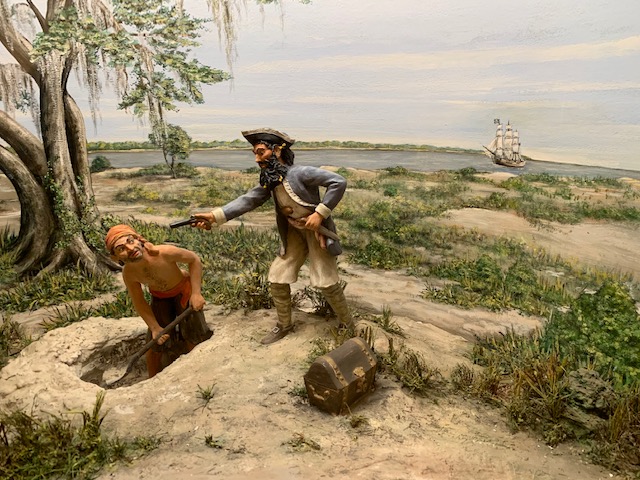
Pirates were on Tybee island way back in the day,
IMG_0835

Would like to think I would have been a pirate not the poor slug digging his own grave????
IMG_1441

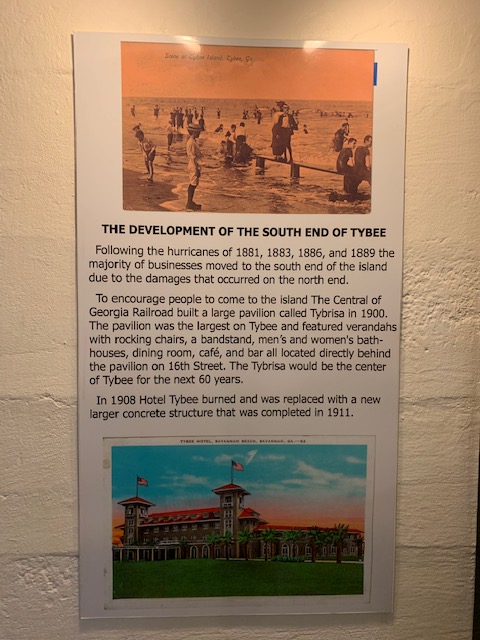
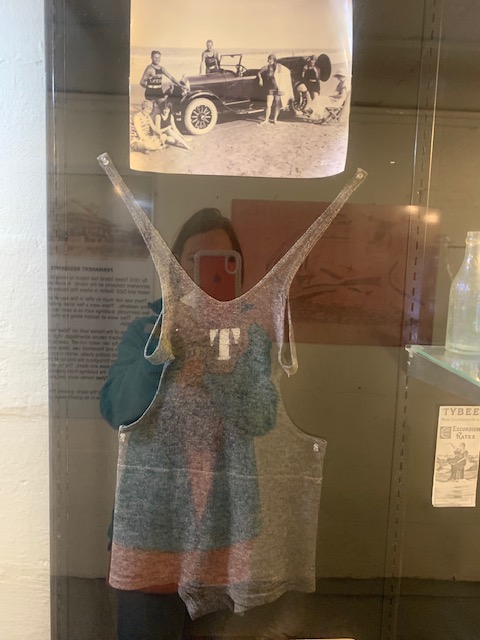
Tybee was a very popular place in the early teens and into the thirties.
IMG_1443

This is a man’s tank top ,worn in the day.
IMG_1455

FullSizeRender (44)

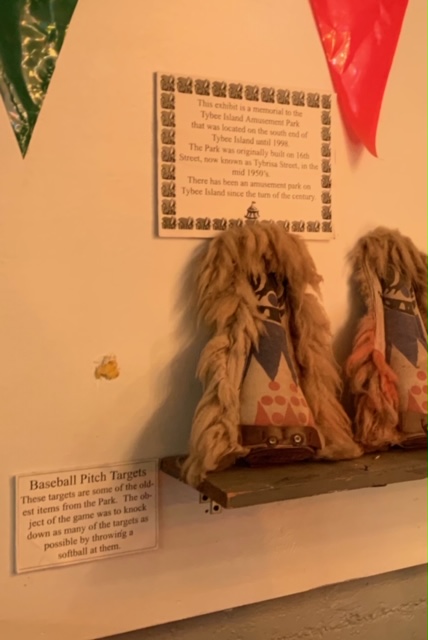
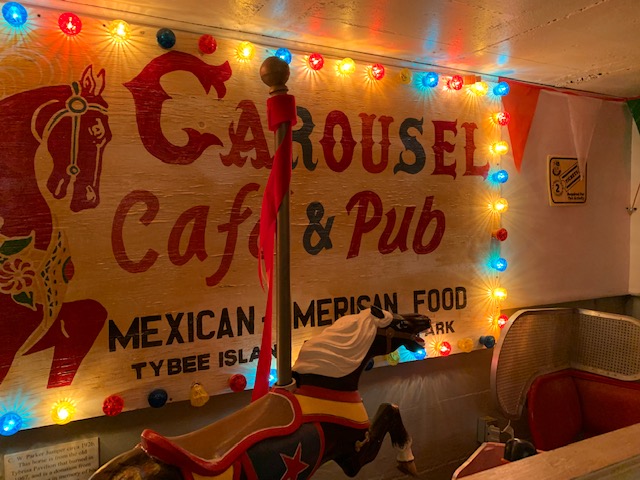
Amusement parks were the rage in the day here also.


DREHER STATE PARK SOUTH CAROLINIA

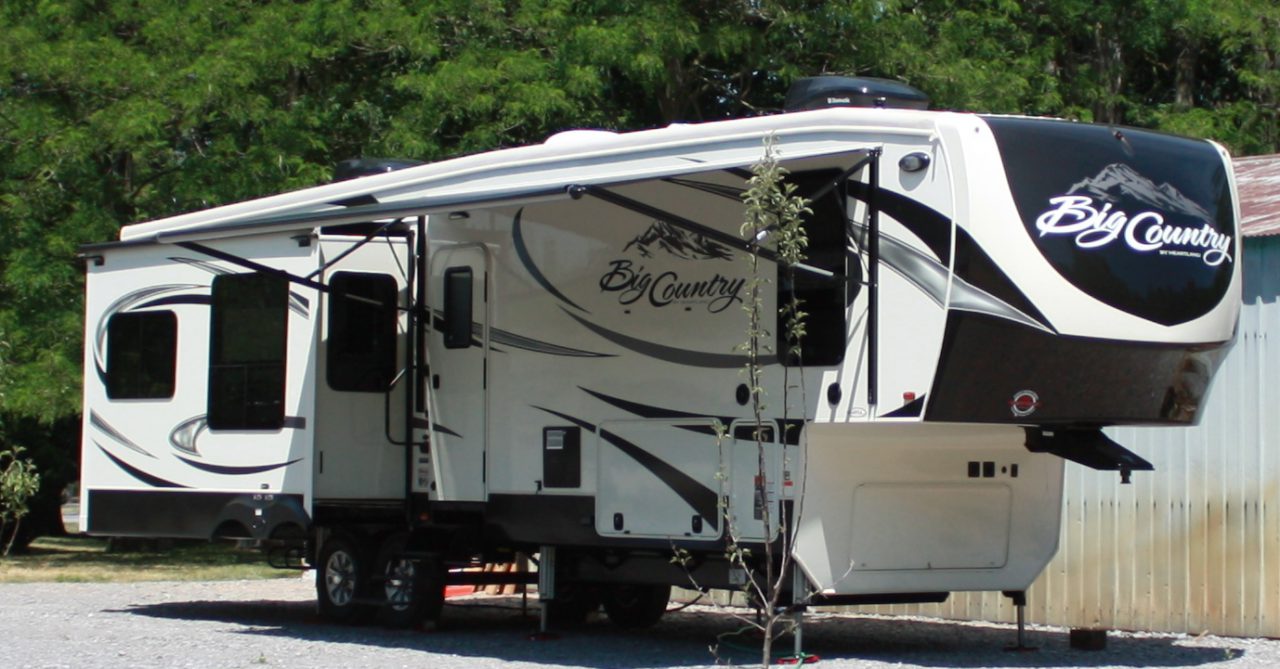
We are now at Dreher state park South Carolinia, near Columbia. Left Savannah this morning and got here about 2 pm. Drove 216 miles today, that’s the most I have driven in a long time. Felt pretty good, some of the roads were though, and have a lot of bumps. The park is on a island, and has about 90 spots, not all that big either , we got a pull through and it is even a little tight. We leave here Saturday and head to the top of North Carolinia. Pics below of our spot, which is very nice.

IMG_2766

IMG_2767

IMG_2768

View right out the front door.