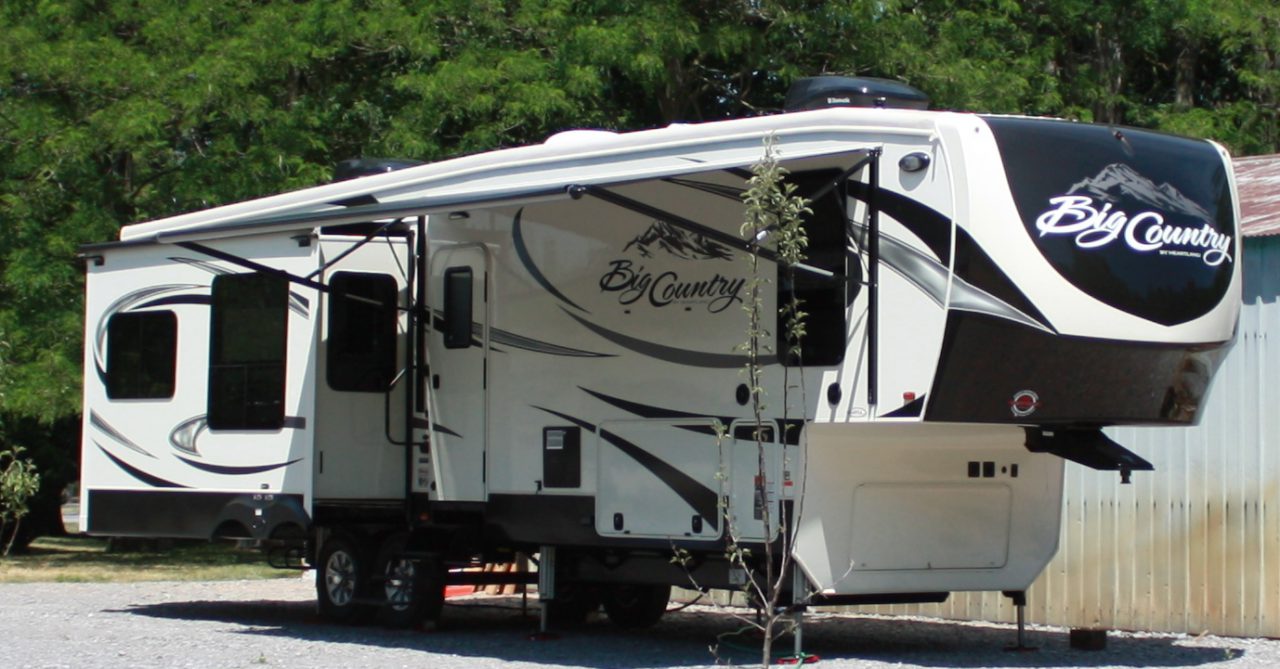
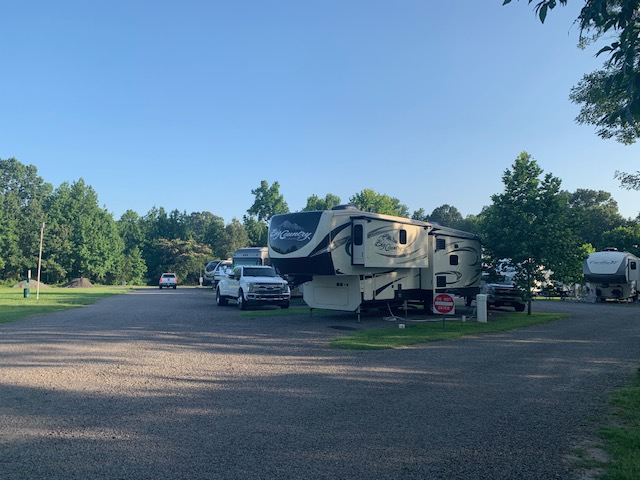
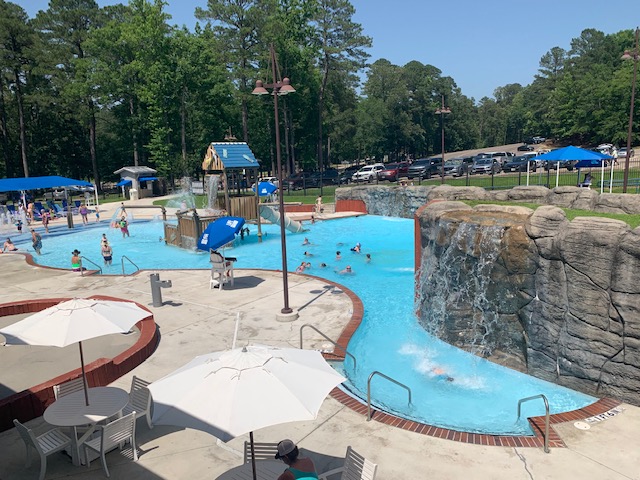
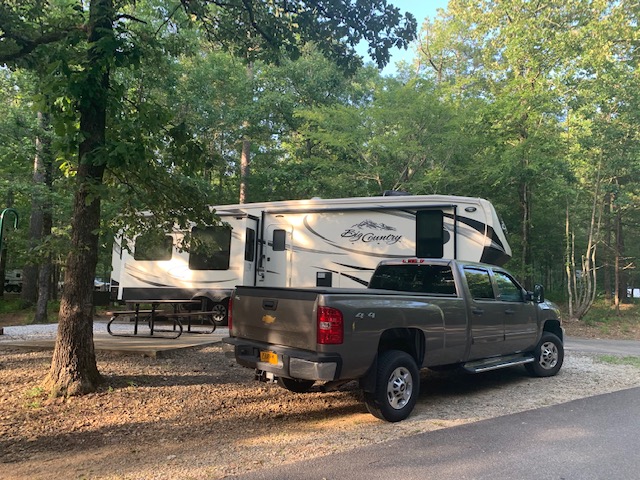
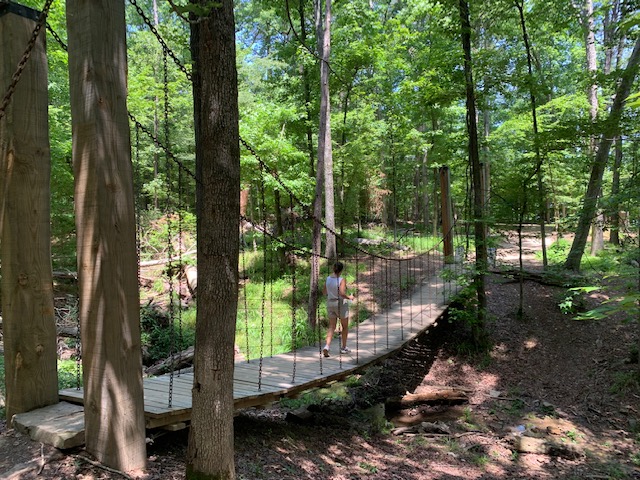
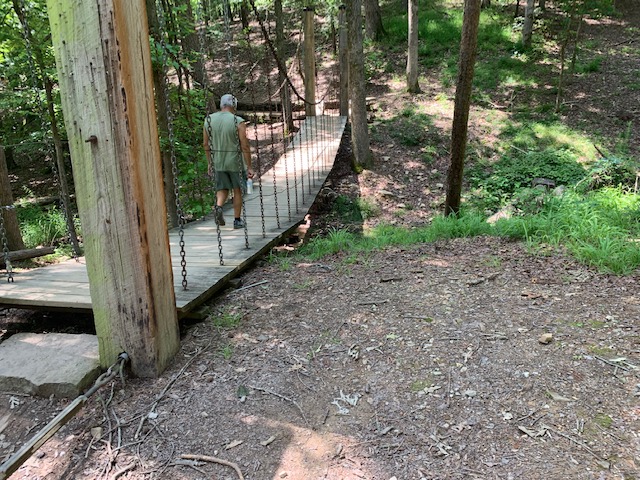
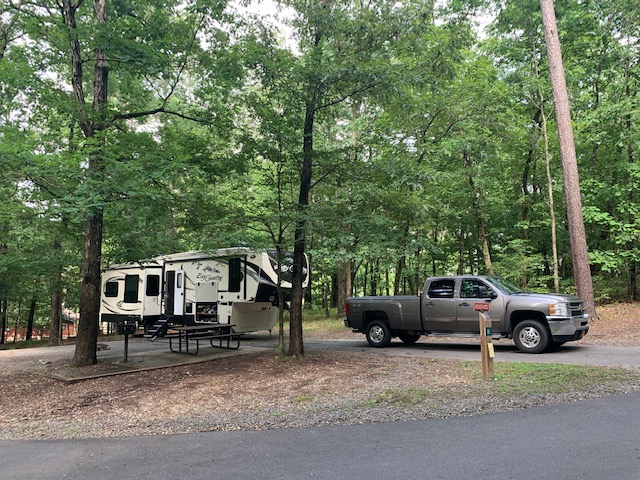
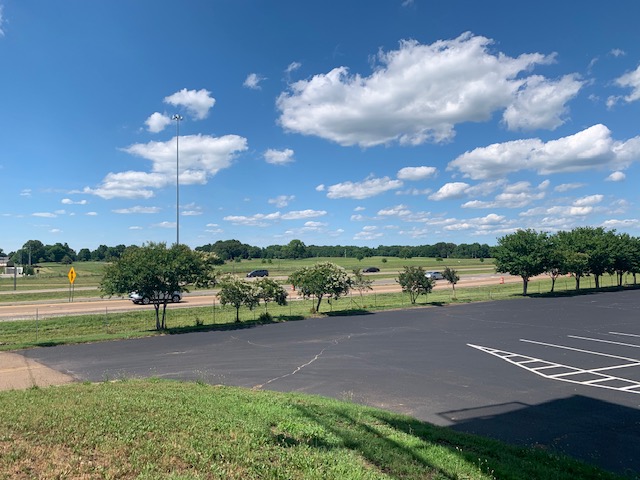
Where, well here of course. We drove 193 miles today from Crater of Diamonds state park, and are a little west of Little rock. Staying here a few nights at the Ivyscove rv resort. We could not get into Jean Petit State park as we wanted to ,so here we are. The state park is why we are here known for its couple waterfalls and trails, OH boy in the heat, but alas they have two public pools and maybe we can go in the falls. Park here is just OK, but cheap enough, picture below of our site
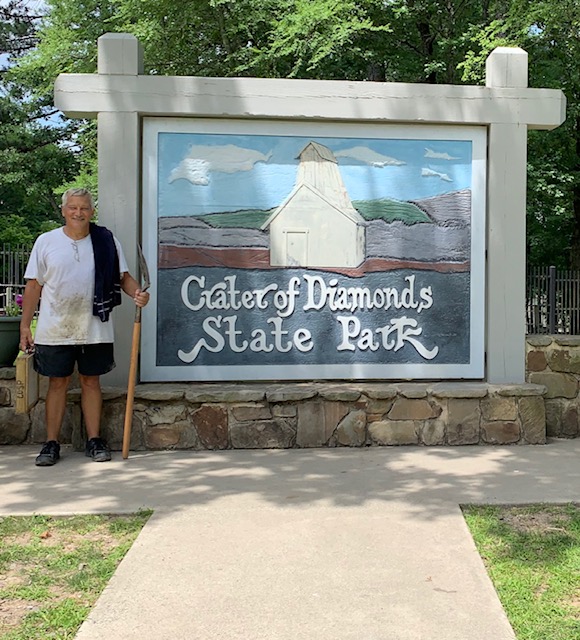
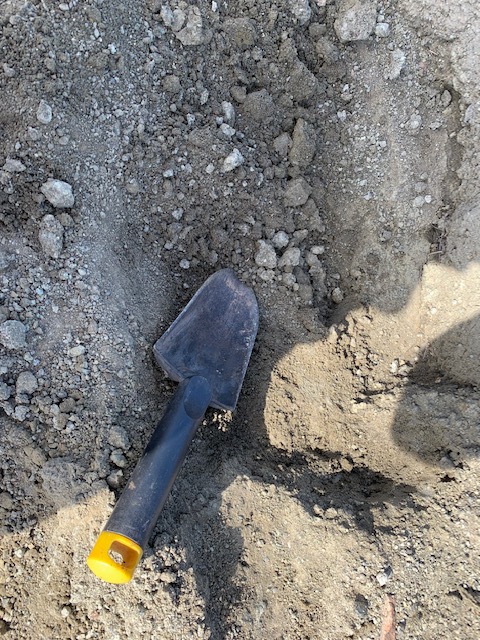
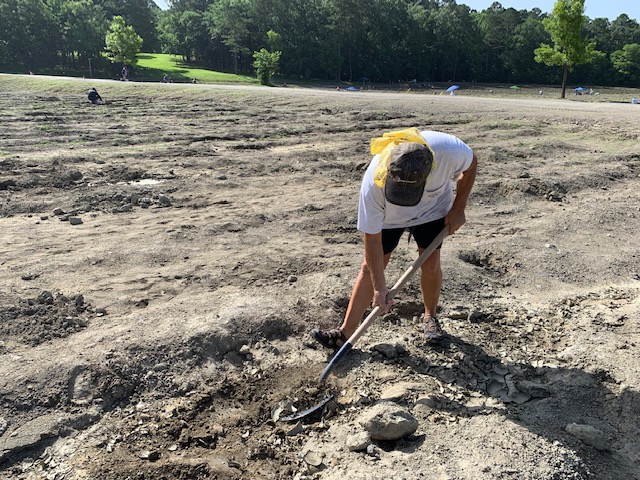
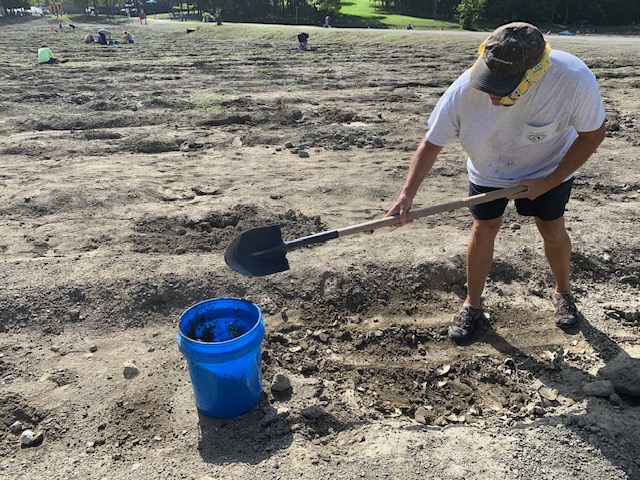
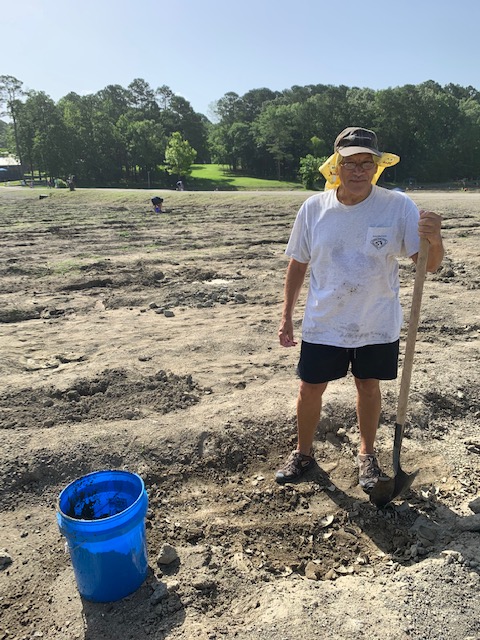
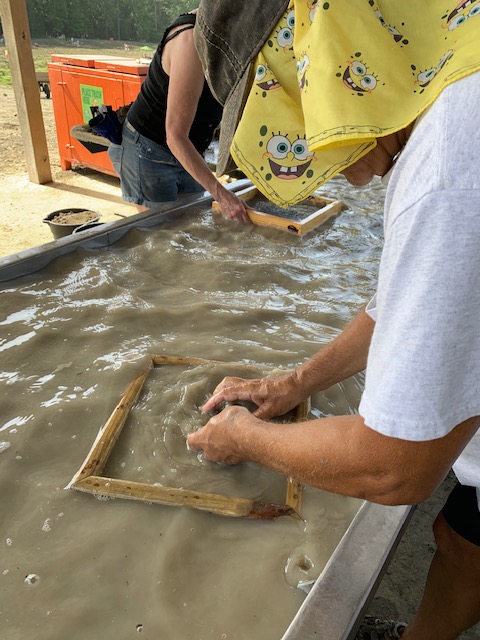
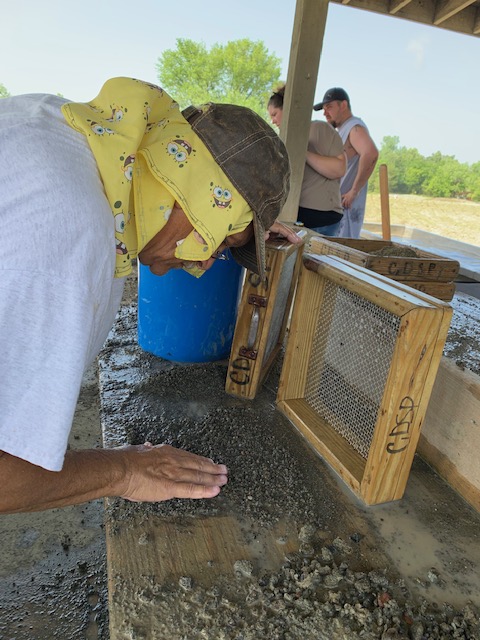
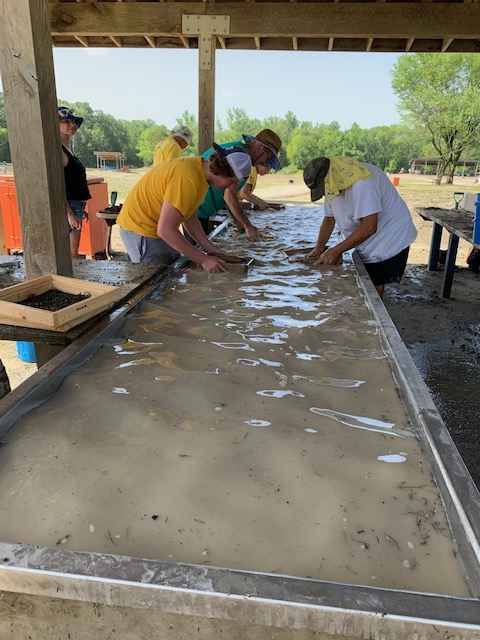
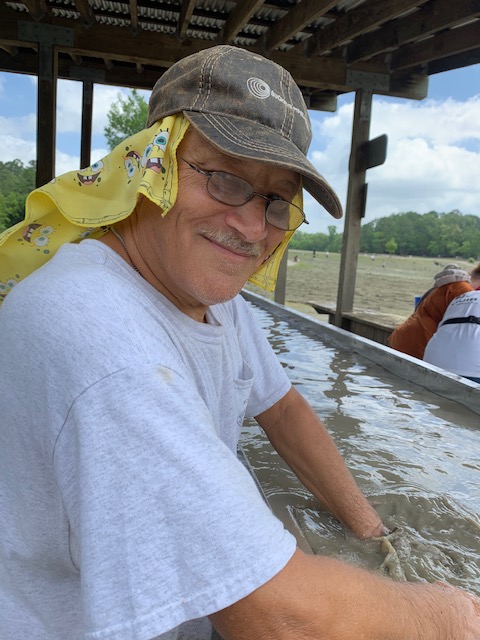
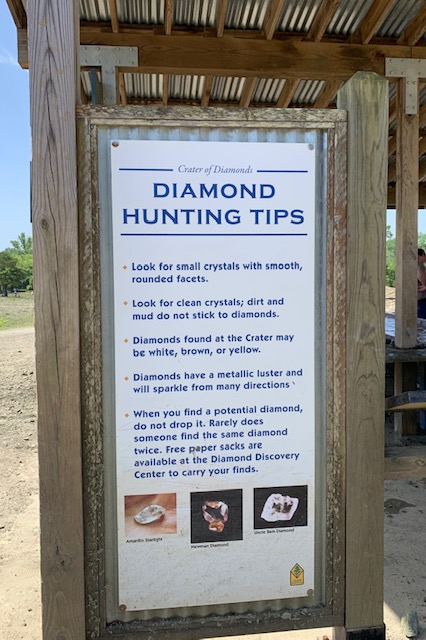
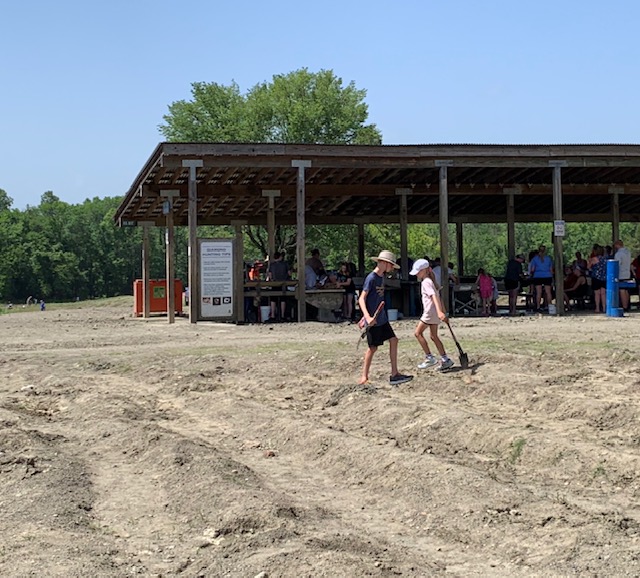
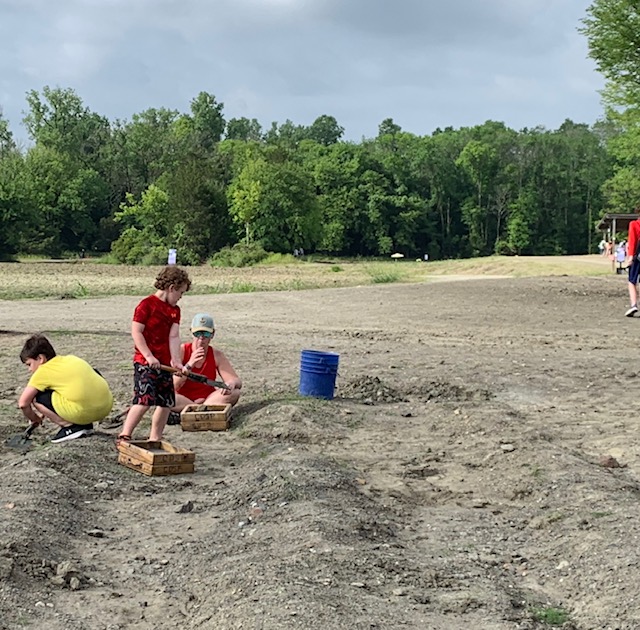
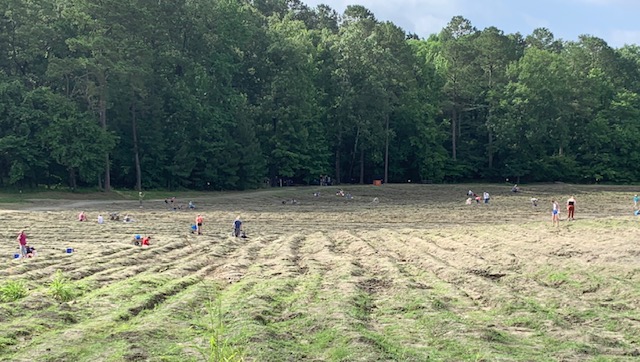
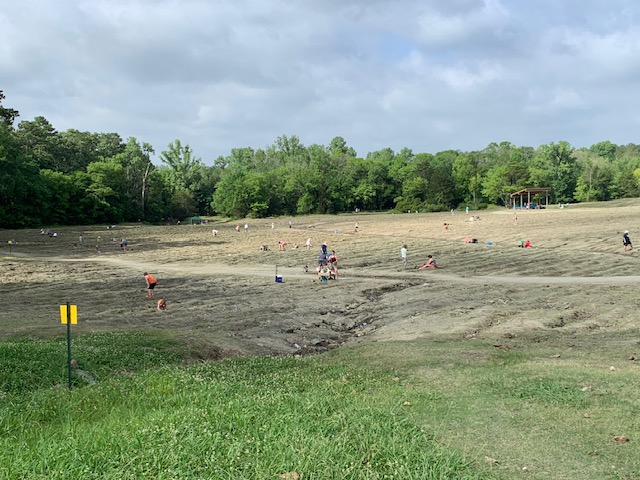
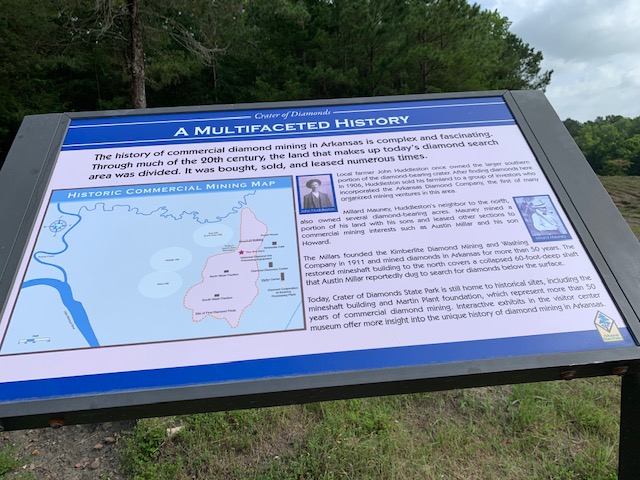
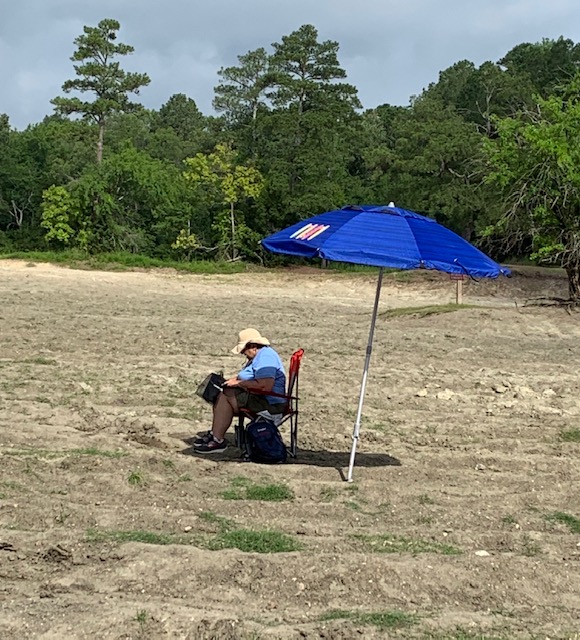
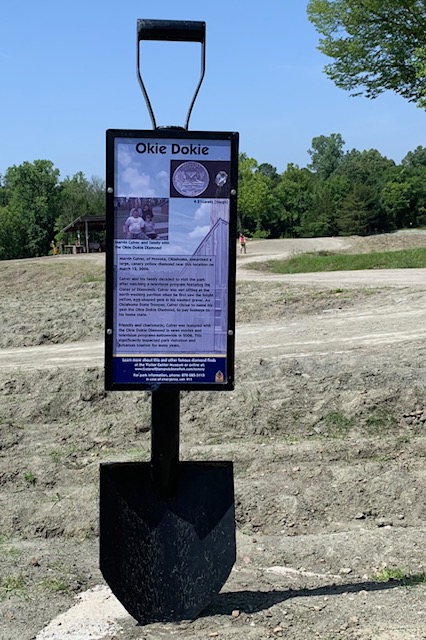
Diamonds are forever Baby, OH that was a movie, but hay, were here hunting for diamonds, in the only place you can in the northern hemisphere. The last three days we went out to the fiends in search of the luster laying beneath our feet, unfortunately our feet never went over and luster. The first day we got there about 8:30 and hunted till around noon, I went back later in the day from 1 till about 3:30. The second day got there at 8 am and left about 11:30, I went back from about 12:30 till 2:30. The second day there were five diamonds found in the field. The third day got there at about 8 till 11:30, and then treated ourselves to the splash pool to cool off in the early afternoon. Thus ended our long awaited hunt for diamonds. That is not to say we did not find anything of interest, we did. But first how do you hunt for diamonds. The picture below shows me in my attire, you have to be ready to get dirty, I mean dirty, and wet. Then you need a shovel, spade, rake, hoe whatever to dig with ,and some screen sifters.
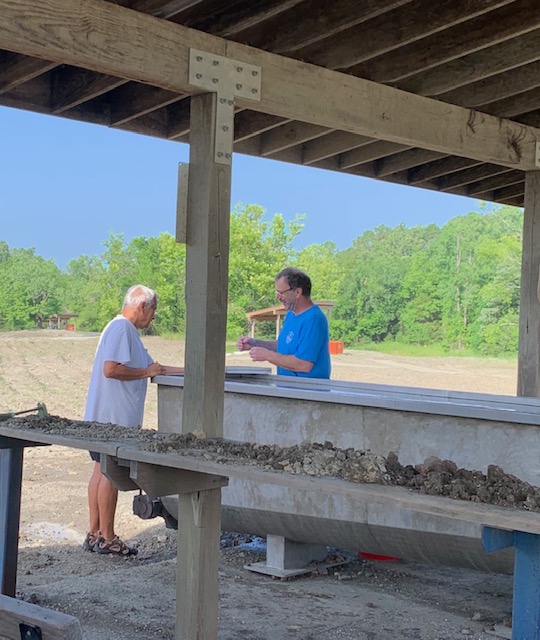
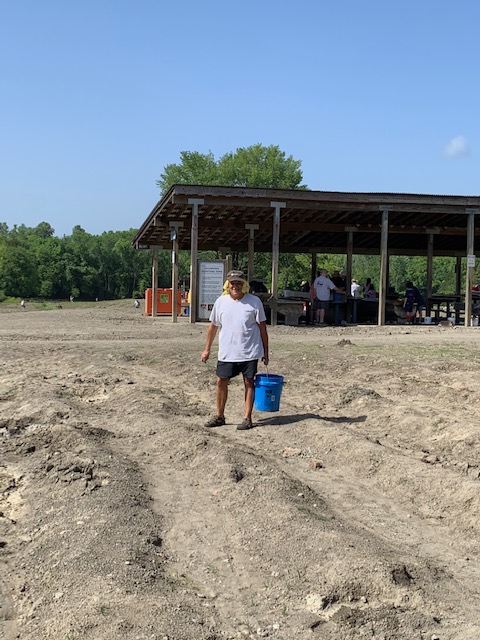
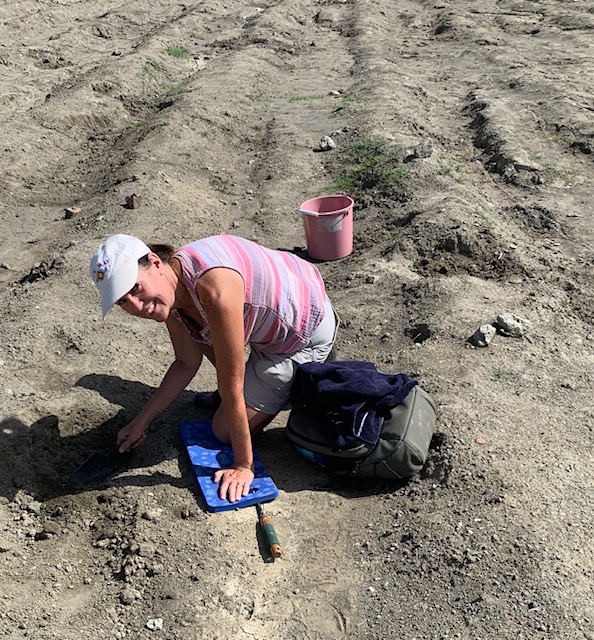
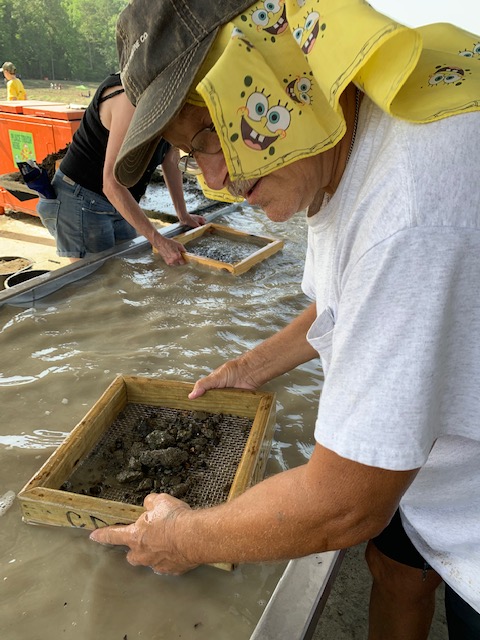
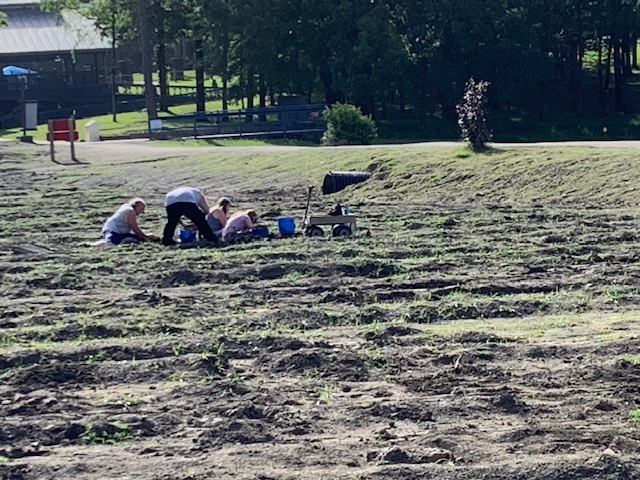
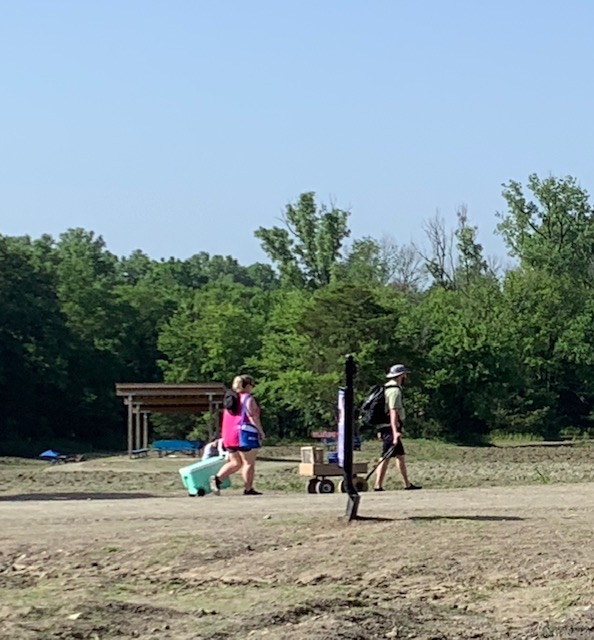
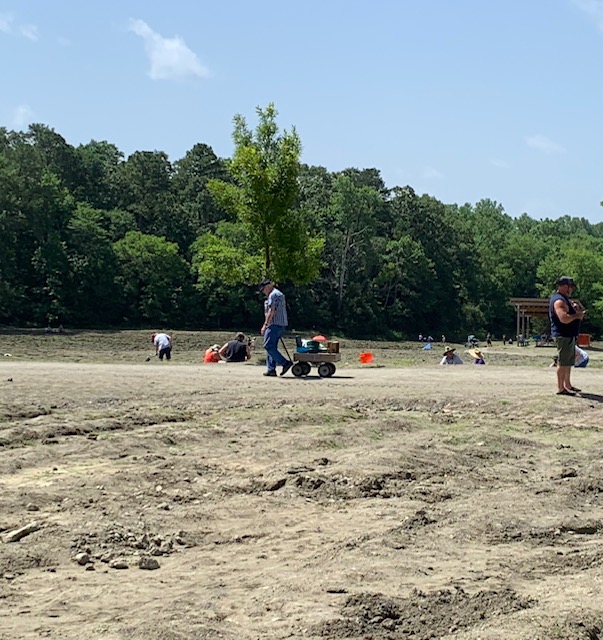
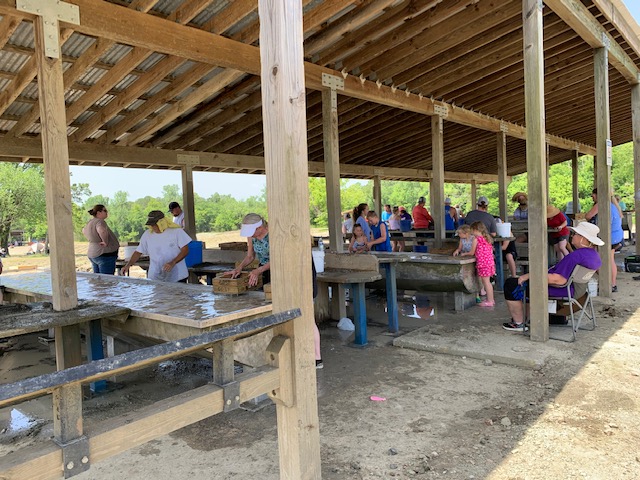
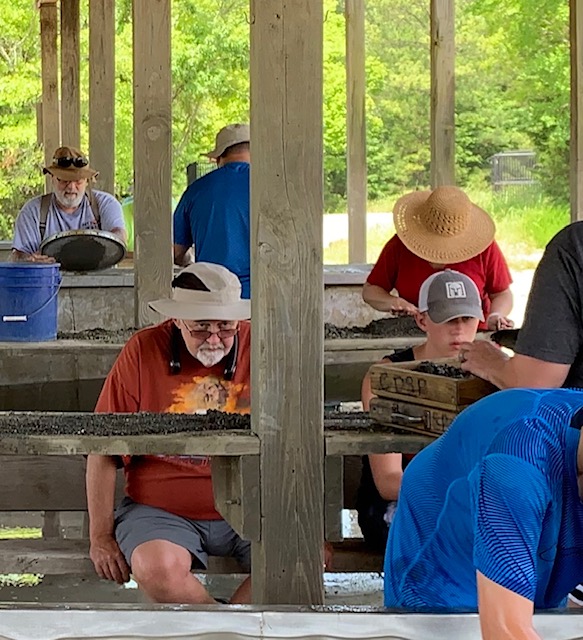
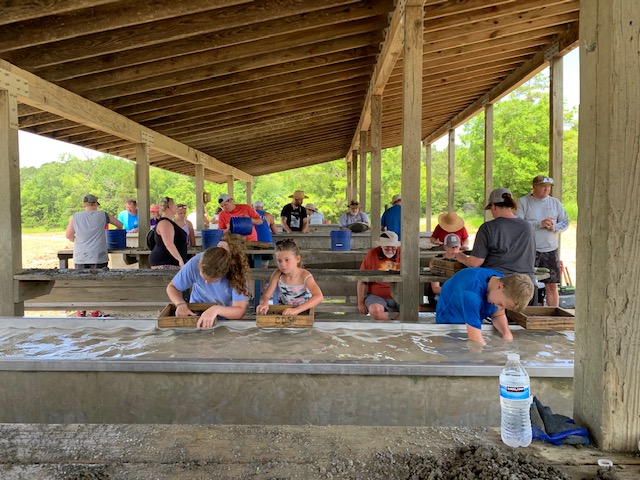
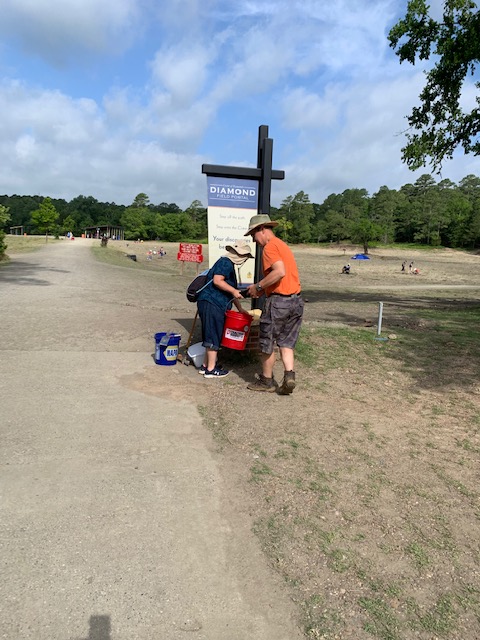
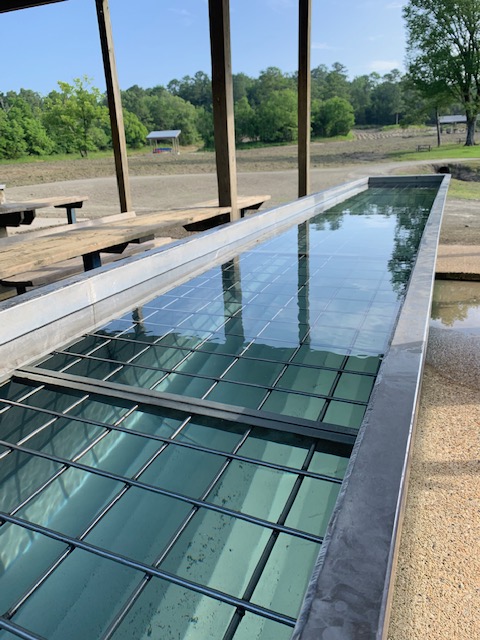
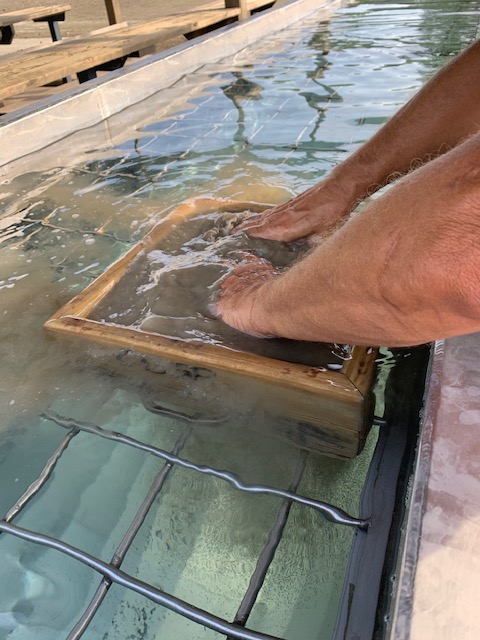
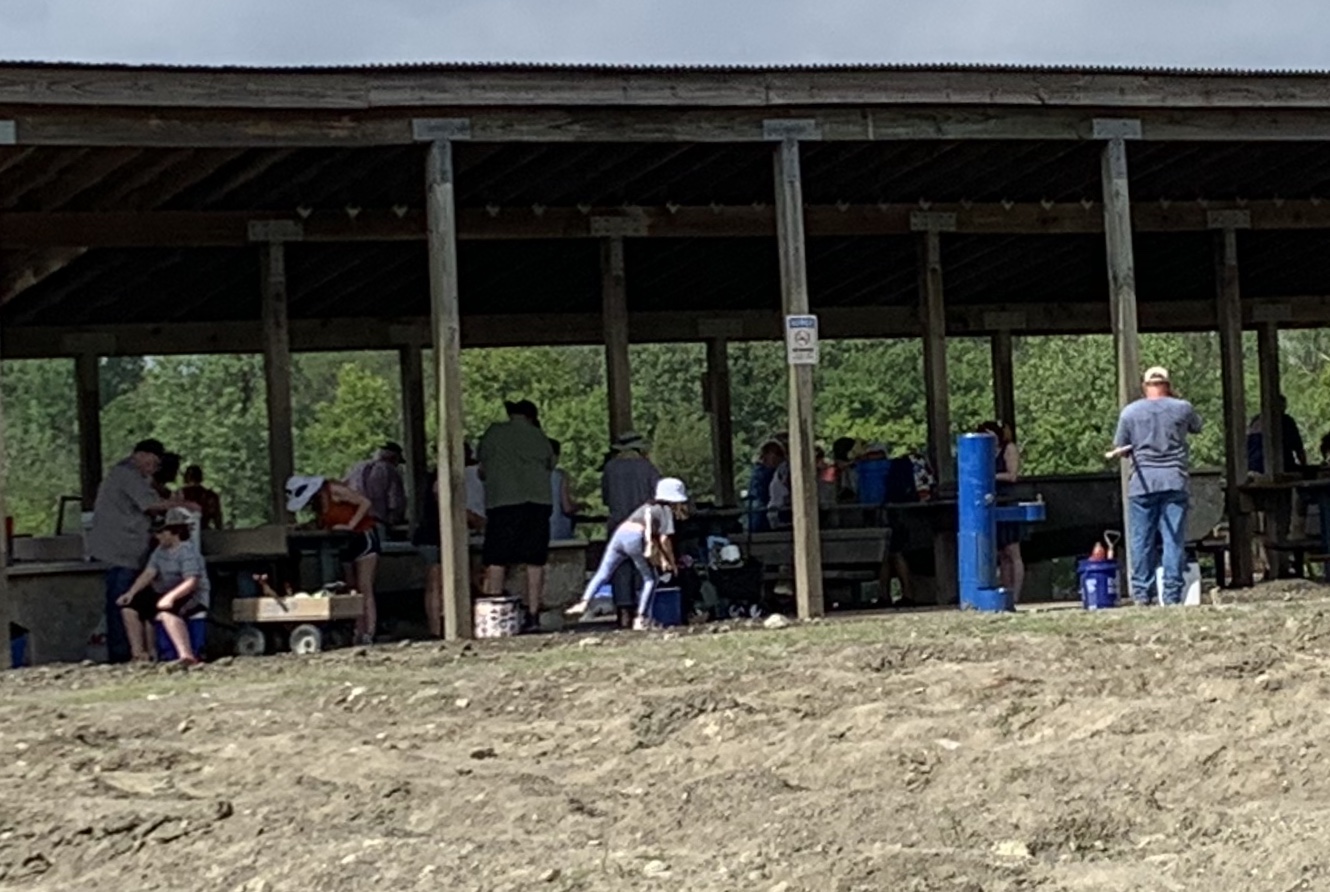
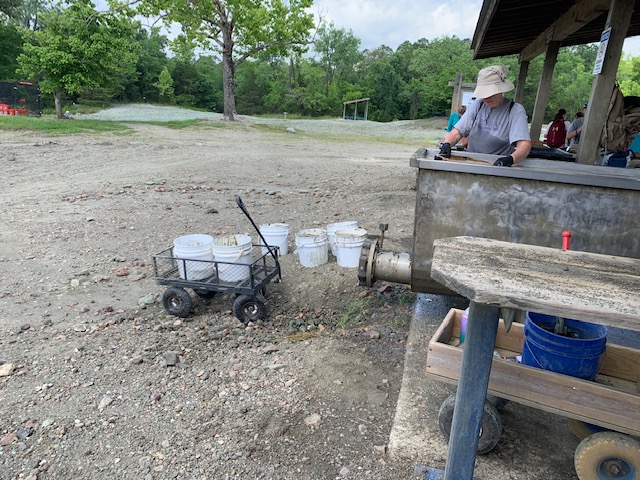
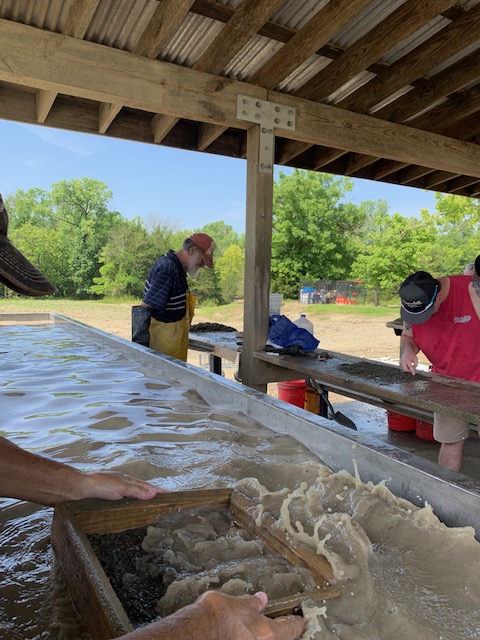
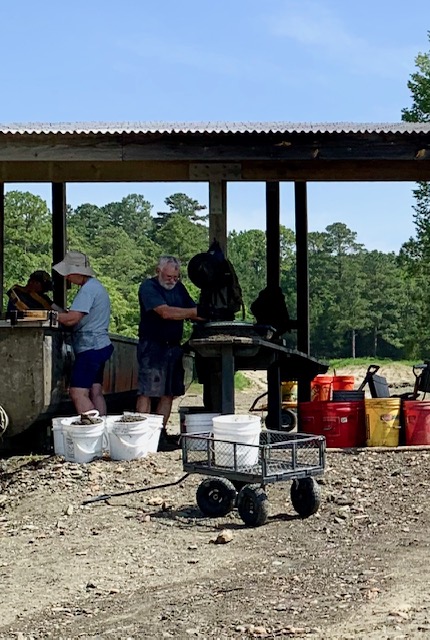
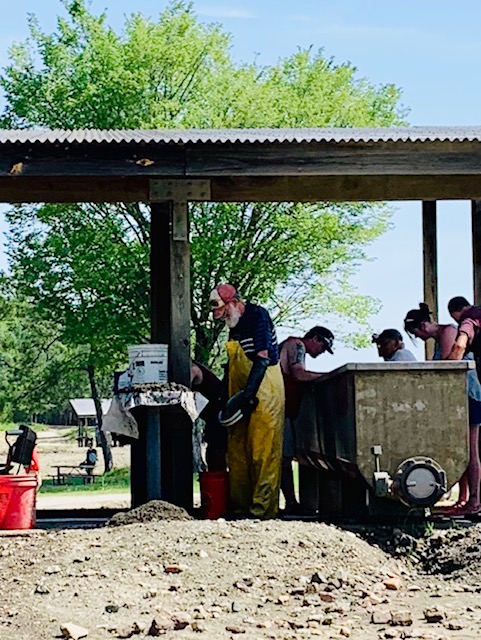
The three days here, were unusually hot and I mean hot, over 110 heat index every day, it is not usually this hot now. After you gat all set up you can watch a video about how to find diamonds or like we did learn on the fly. So out we went. There are a number of ways to look, one is to surface hunt and just look around, some people do find diamonds this way. You can use a small trowel and just scratch at the surface or you can dry sift or wet sift with the screen sets you have. One screen has bigger holes for the dirt to go through and the other has very tiny holes for small stuff to collect. We were told dry sifting was not to good as they had just gotten a lot of rain before we got there, so below a few inches the dirt was wet. We did however see people doing this but we went with the wet sifting. Wet sifting is done by bringing your dirt over to the two areas where they have the water troughs. How do you do that ,by buckets of course. Some people have wagons they bring many buckets over at a time, or like us, we had one 5 gallon bucket ,and one , one gallon bucket. It really does not matter where you get your dirt it’s all a matter of luck, but we wanted to stay no more than a few hundred feet form the troughs. So that what we did, with your buckets of dirt, you put some in the screen with the large holes, and put that over the screen with the small holes, put it in the water, and dissolve all the dirt, that leaves the big stuff on top and the smalls on the bottom screen. Take out the large screen look it over for anything of interest then throw it out, bring up the small screen and quickly flop it over, and look. Diamonds are heavy and as you slooch your screen they will fall to the bottom ,so when you flop it over there it will be staring you in the face, but no such luck. That’s what we did for hours at a time.
WHAT DID WE FIND
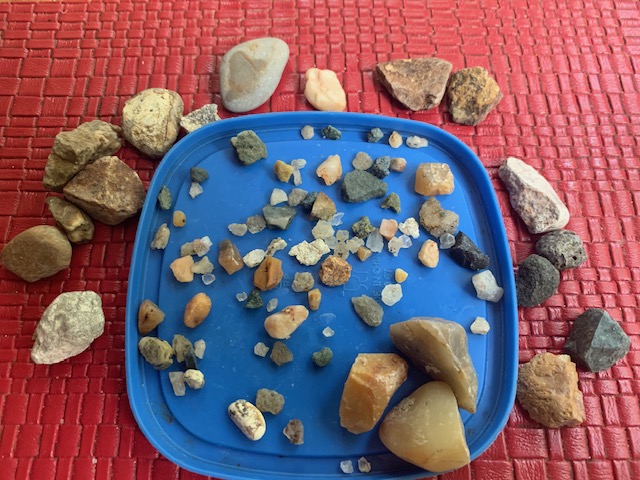
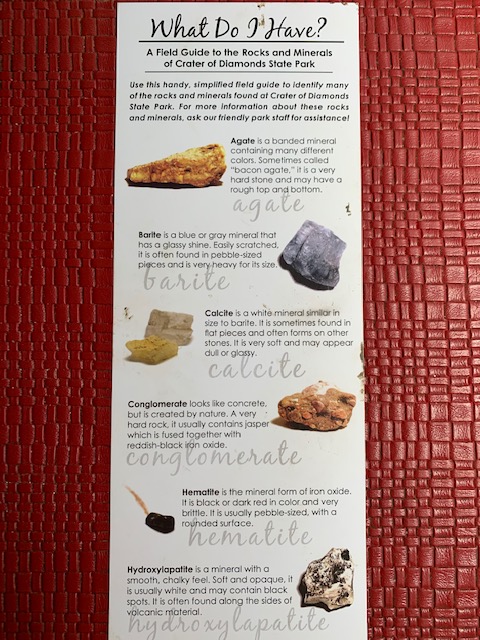
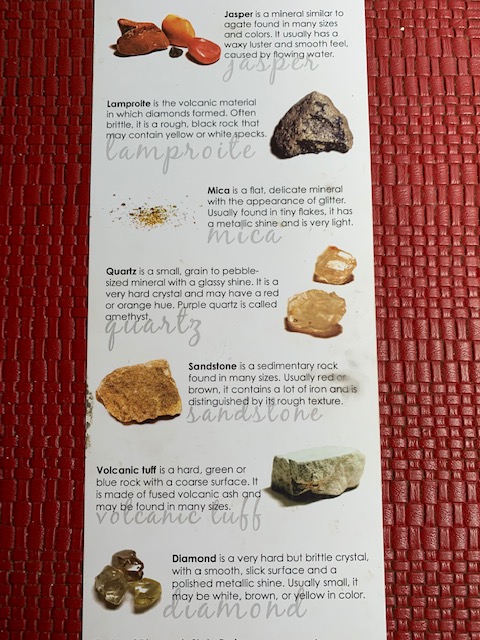
In the picture below is some of the rocks we found. On the outside of the container lid, we have Agate, Conglomerate, Volcanic tuff, Lamproite. Inside the lid on the lower left, is the semi-precious Jasper, we found lots of that in all colors and sizes, they make all kinds of jewelry out of that as when its cut open it has a very cool looking inside when polished. Some Hematite, calcite which is used in Tums and baking powder, and Quartz, they are the very tiny, pin head size clear looking ones, we also found two one inch pieces which are very cool also.
We had a very cool, exciting time doing this, although it was really hot and a lot of hard work. Knowing now what I know, coming back I would do things a little different, and this time find the big one.
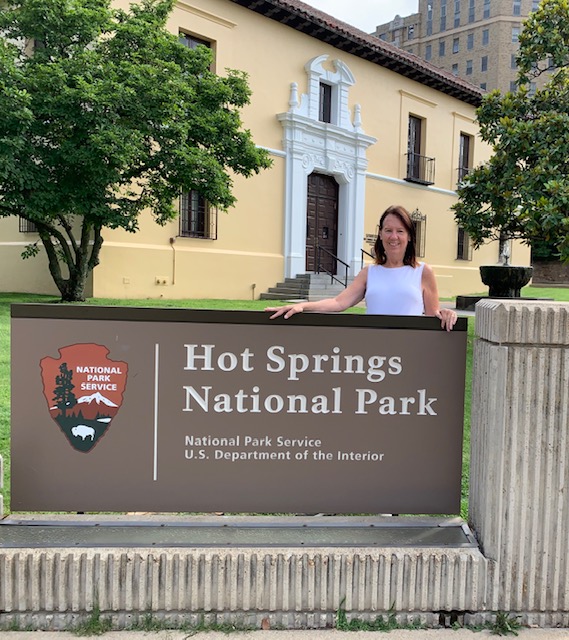
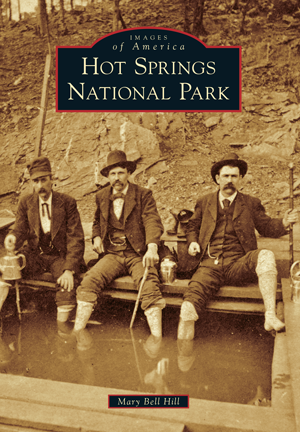
Hot Springs, Arkansas, gets its name from the naturally thermal spring waters found here. Flowing out of the ground at an average temperature of 143 °F, the hot springs produce almost one million gallons of water each day.
People have been visiting this area for a very long time. Native Americans called this area “the Valley of the Vapors,” and it was said to have been a neutral territory where all tribes could enjoy its healing waters in peace. Spanish and French settlers claimed the area in the mid-1500s.
The hot springs were such a coveted natural wonder that in 1832, President Andrew Jackson designed Hot Springs as the first federal reservation. Hot Springs Reservation was essentially America’s first national park, predating Yellowstone National Park by 40 years.
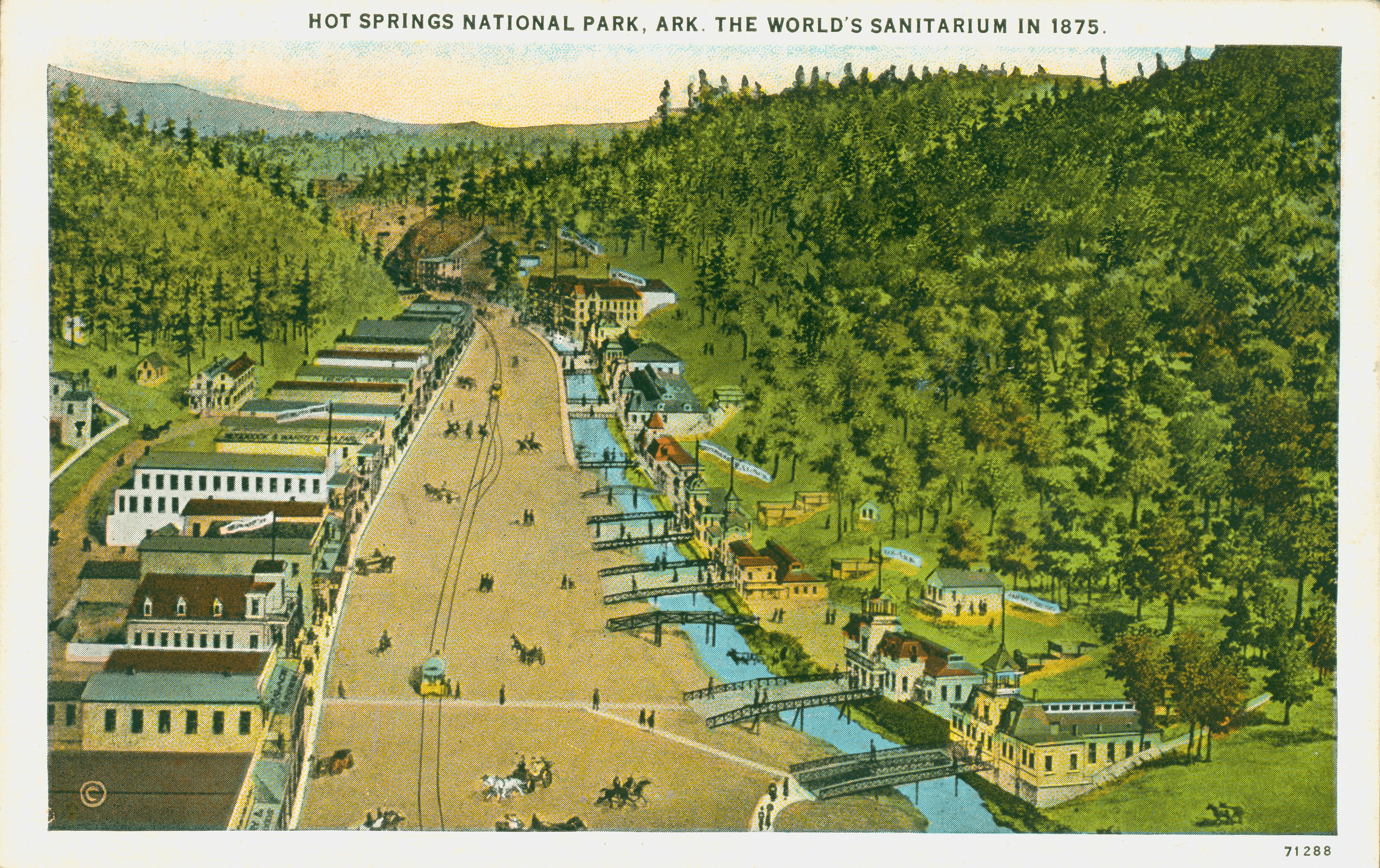
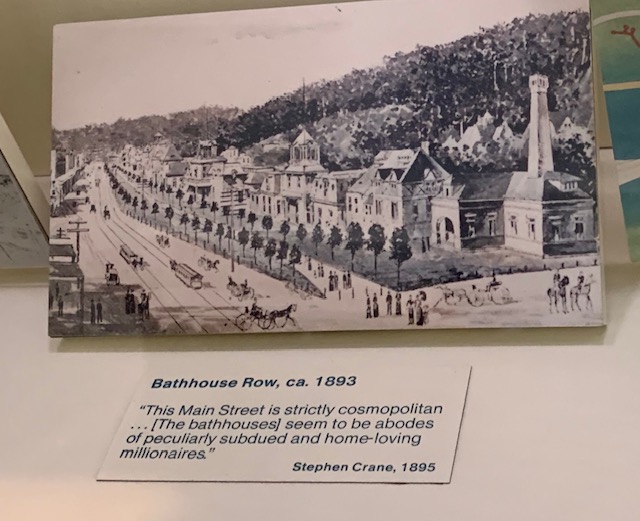
In just a decade, the area changed from a rough frontier town to an elegant spa city centered on a row of attractive Victorian-style bathhouses, the last ones completed in 1888. When Congress established the National Park Service, Hot Springs Reservation became Hot Springs National Park in 1921.
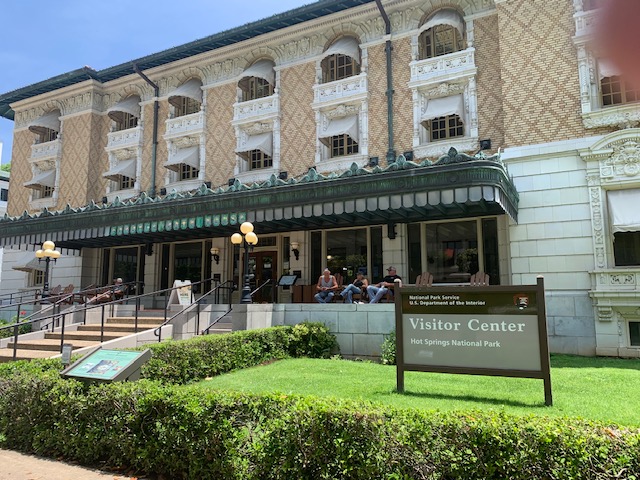
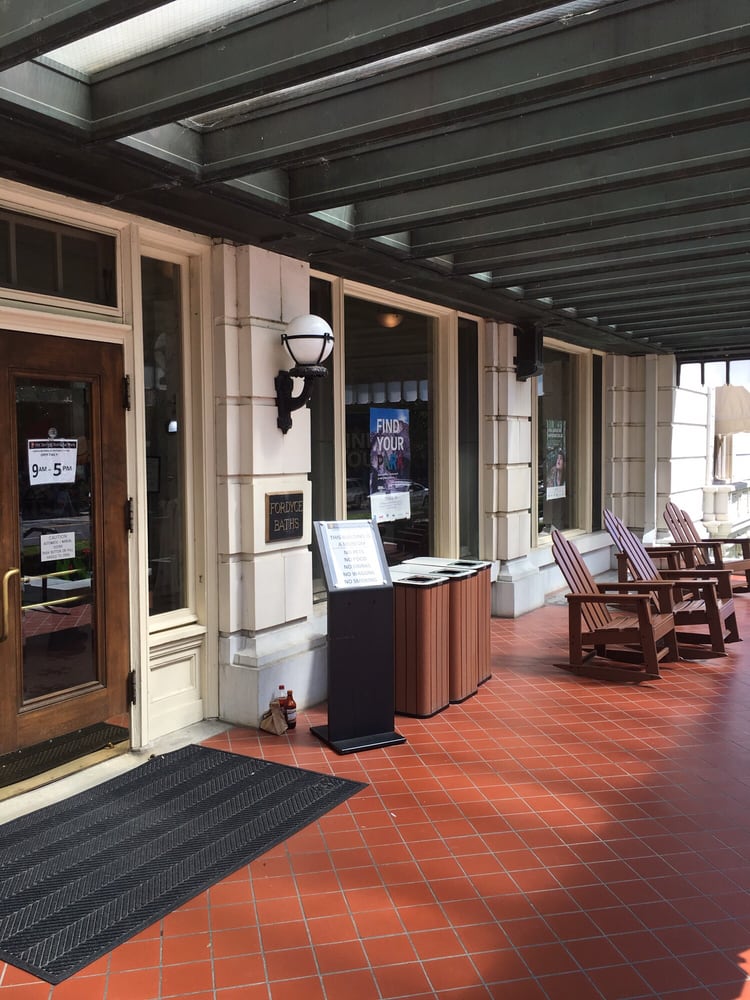
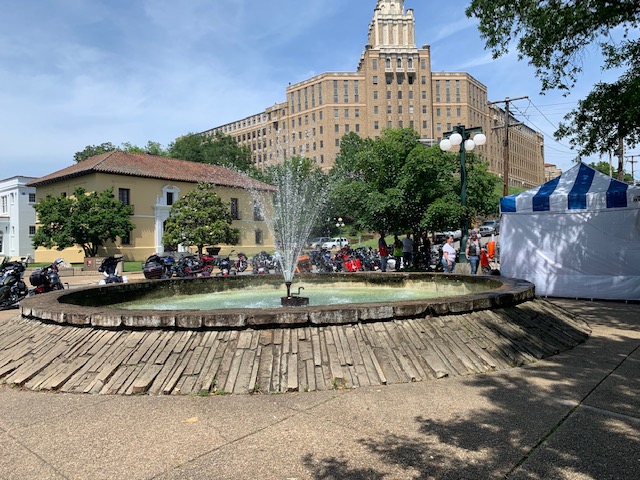
Today, you can still soak in the thermal waters on historic Bathhouse Row. The hot springs are also pumped into several downtown hotels and spas. The water is even available at public fountains. The restored Fordyce Bathhouse now serves as a visitor center.
The History of Bathhouse Row
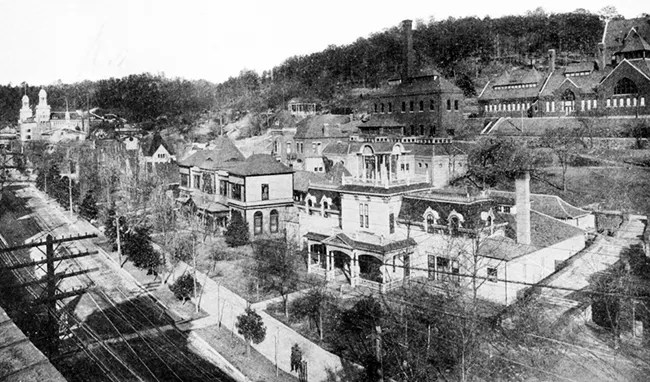
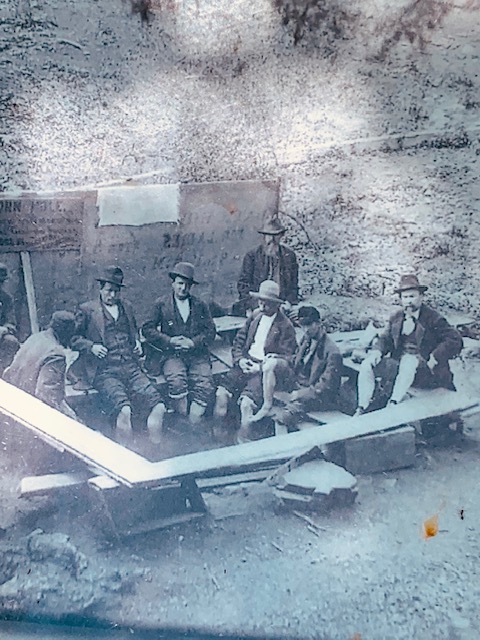
The first bathhouses were crude structures of canvas and lumber, little more than tents perched over individual springs or reservoirs carved out of the rock. Later, businessmen built wooden structures, but they frequently burned, collapsed because of shoddy construction, or rotted due to continued exposure to high temperatures and humidity. As the bathhouses continued to grow in popularity, the park’s superintendent deemed that more resilient and fireproof structures were needed. Starting in 1896, many of the wooden bathhouses were replaced with the bathhouses that we see today made of masonry and steel.
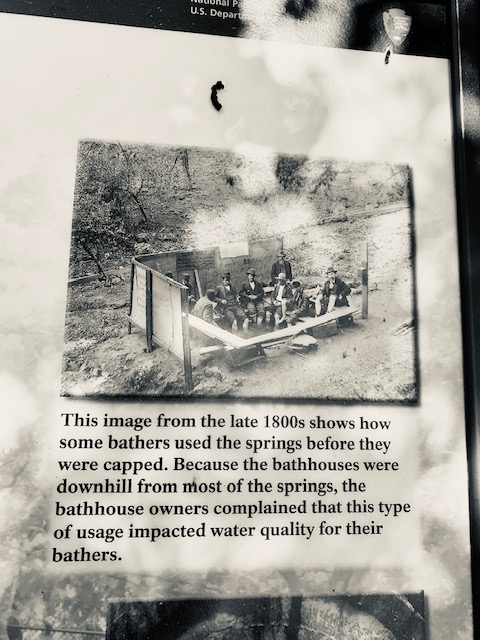
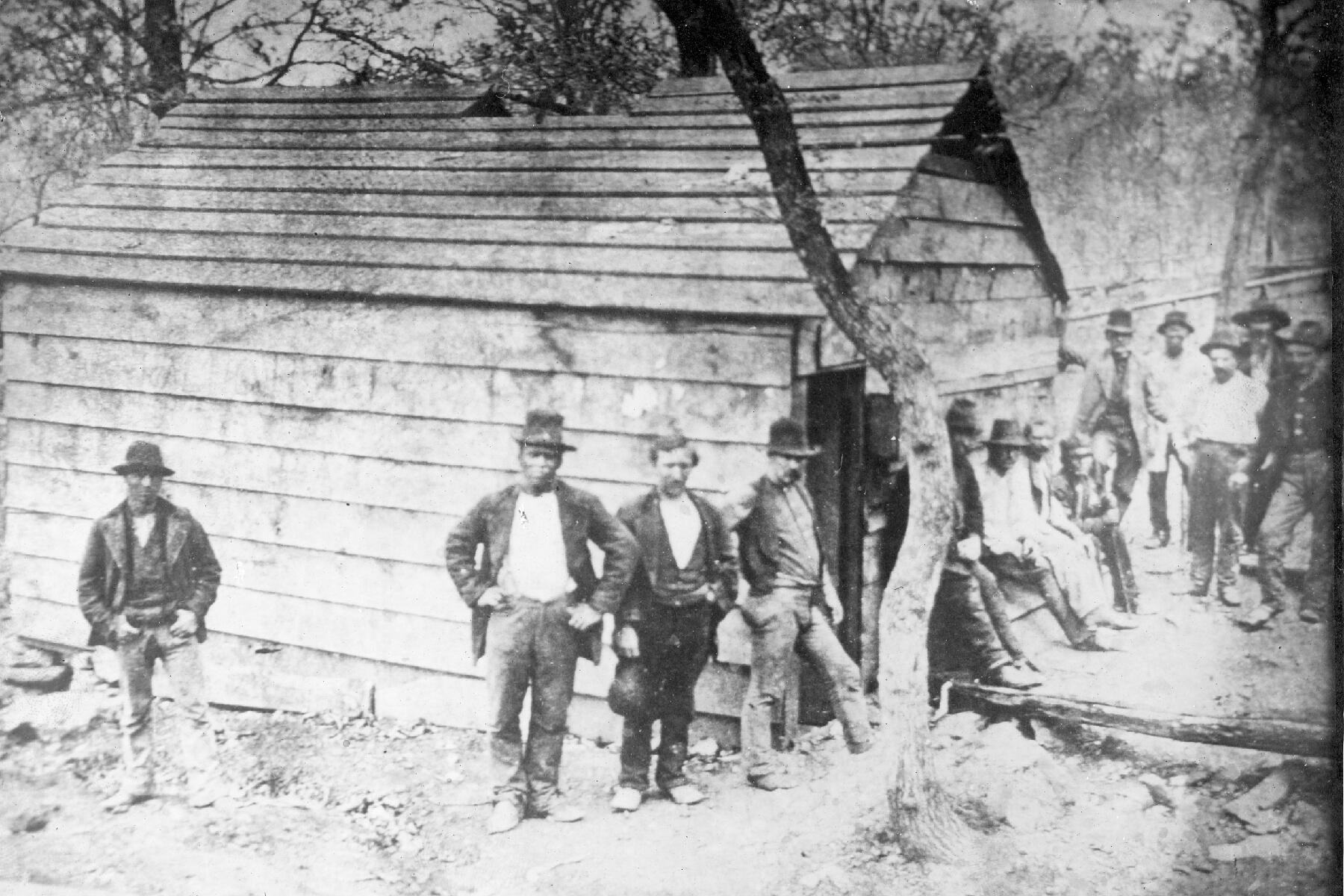
I like the crude bathhouses of the early the 1800s,take your shoes & socks off and sit a spell.
Victorian bathhouses built between 1880 and 1888 were larger and more luxurious than could have been dreamed of ten years earlier. The poorly placed wooden troughs carrying the thermal water down the mountainside were replaced with underground pipes. Roads and paths were improved for the convenience of visitors who wished to enjoy the scenery.
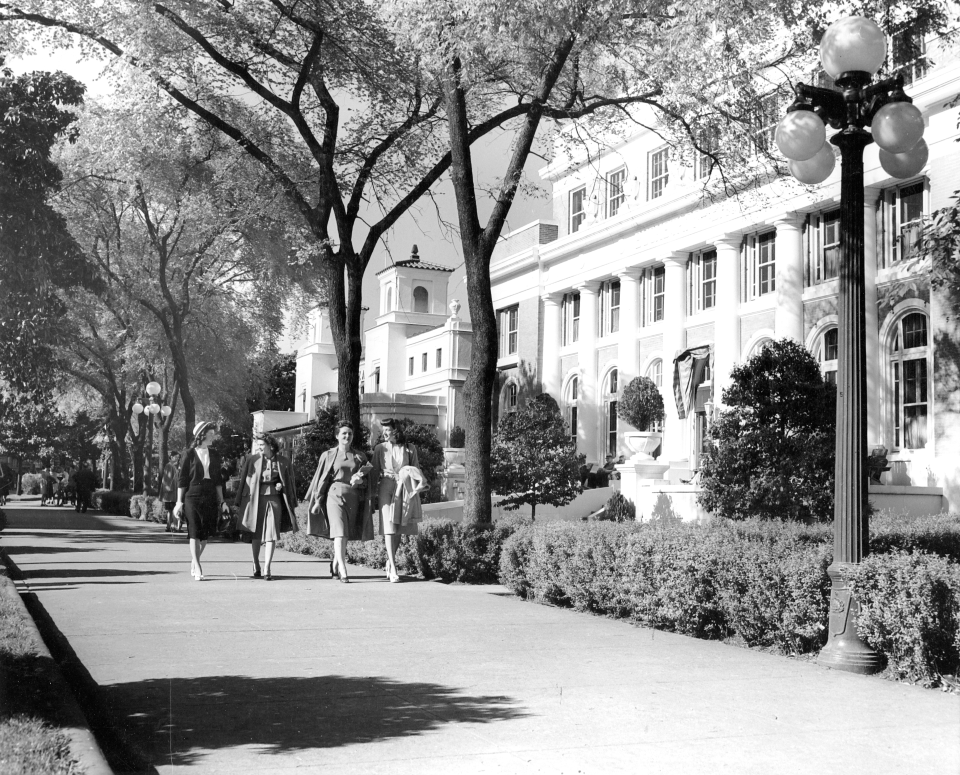
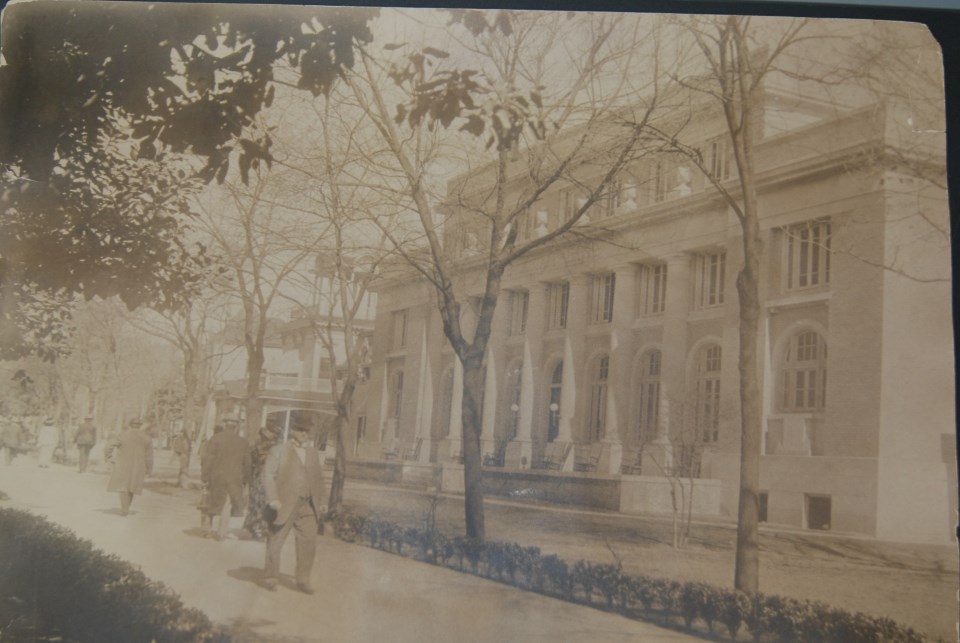
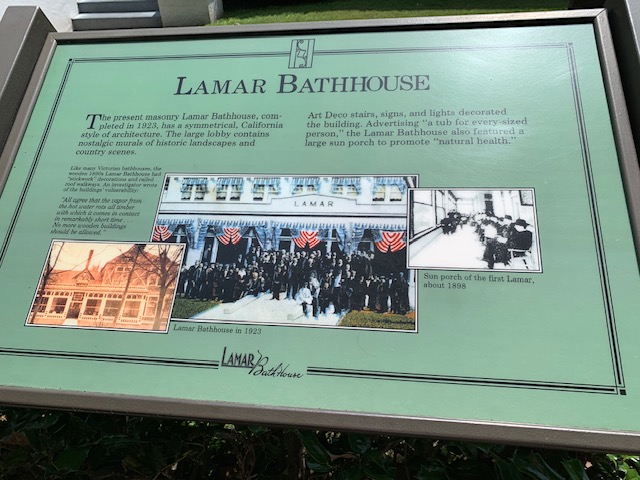
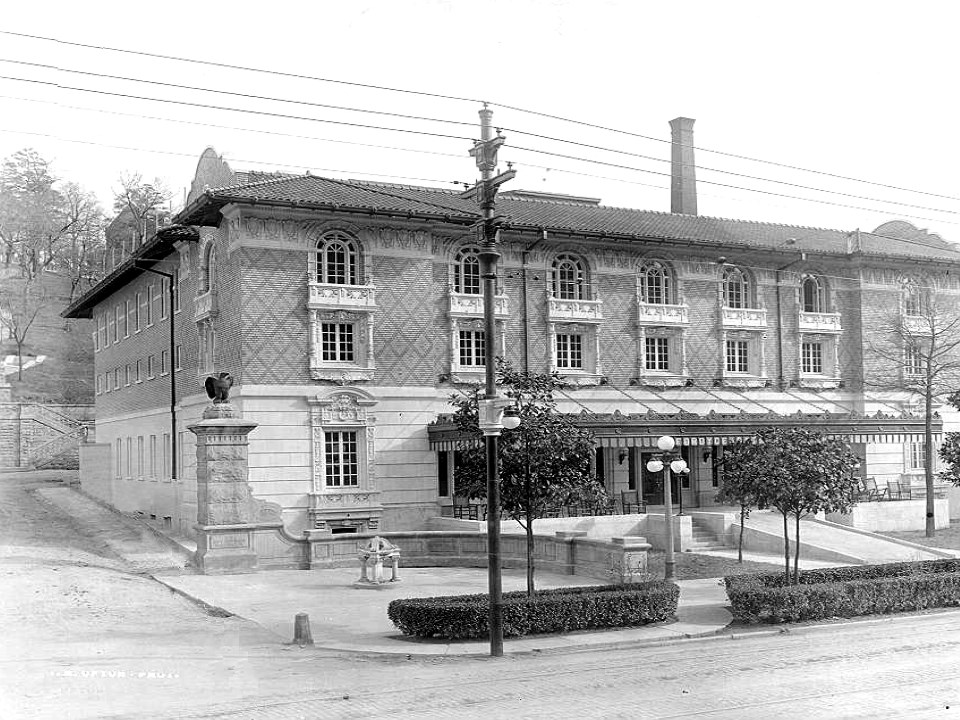
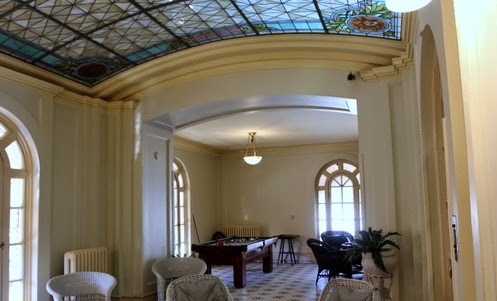
By 1901 all of the springs had been walled up and covered to protect them. Between 1912 and 1923 the wooden Victorian bathhouses built in the 1880s were gradually replaced with fire-resistant brick and stucco bathhouses, several of which featured marble walls, billiard rooms, gymnasiums, and stained glass windows. The final transformation of Bathhouse Row was completed when the Lamar Bathhouse opened its doors for business in 1923. The bathhouses, all of which are still standing today, ushered in a new age of spa luxury.
Bathhouse Row 1940s
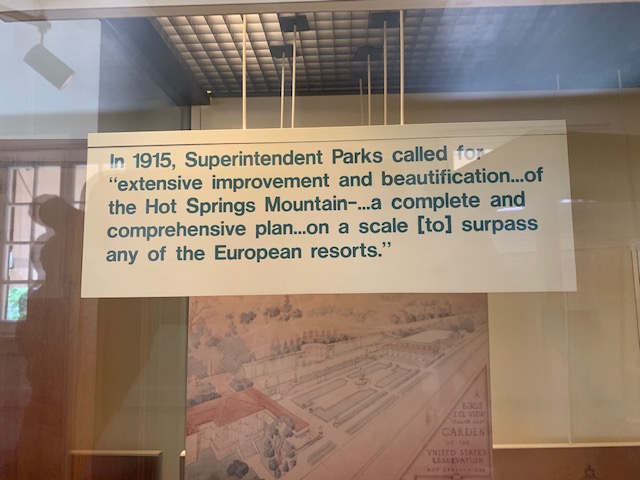
Bathhouse Row and its surroundings were placed on the National Register of Historic Places on November 13, 1974. The desire to revitalize Bathhouse Row also led citizens to campaign for adaptive uses of the vacant buildings. The strongest concern was to save the most elegant bathhouse, the Fordyce, which was consequently adapted for use as the Hot Springs National Park visitor center and museum. At this point in time most of the bathhouses have been renovated and adapted for modern use.
“Fully submerge yourself in the thermal water and let your worries melt away.”
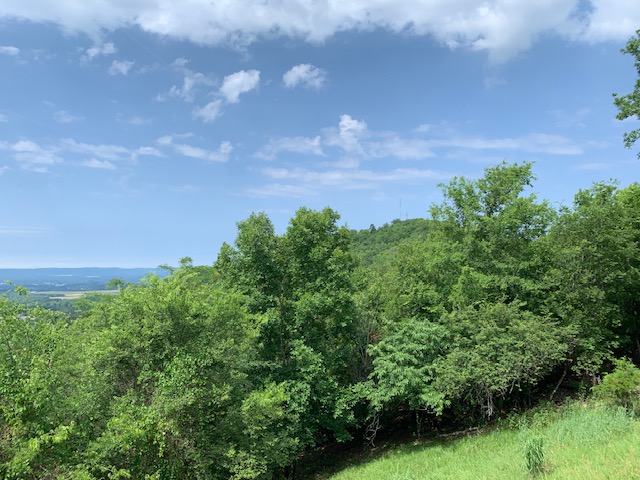
We took The Hot Springs Trolley before checking out Bathhouse Row. We went thru the mountains for views of the National Park and the Quachita Valley. He pointed out many of the historical sites and took us through old neighborhoods with fancy homes built in the 1800s and 1900s.
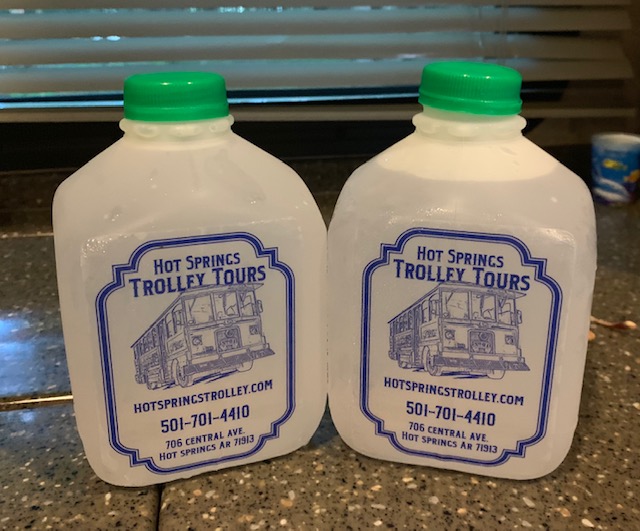
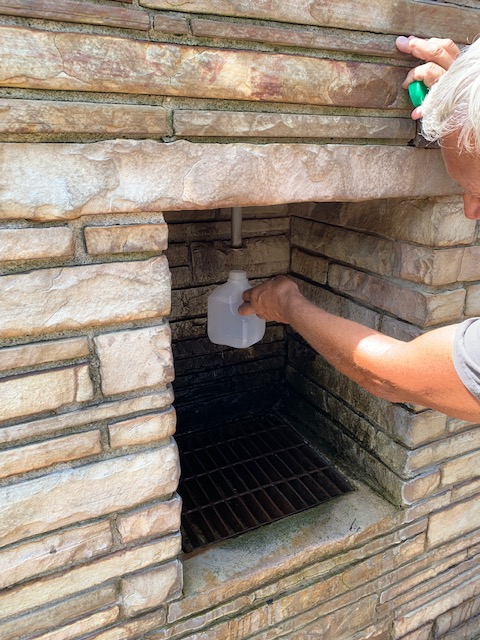
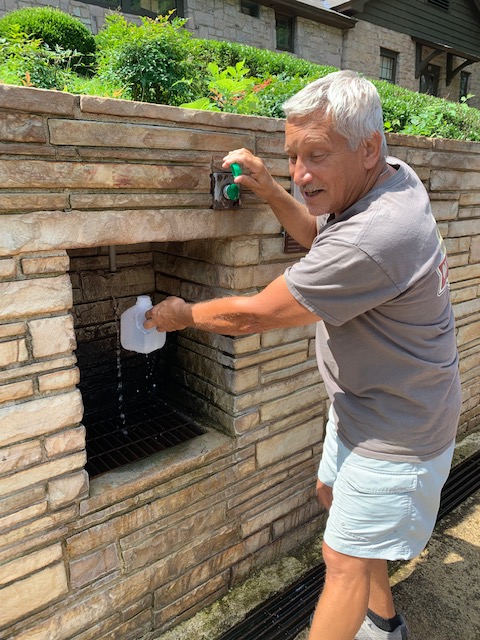
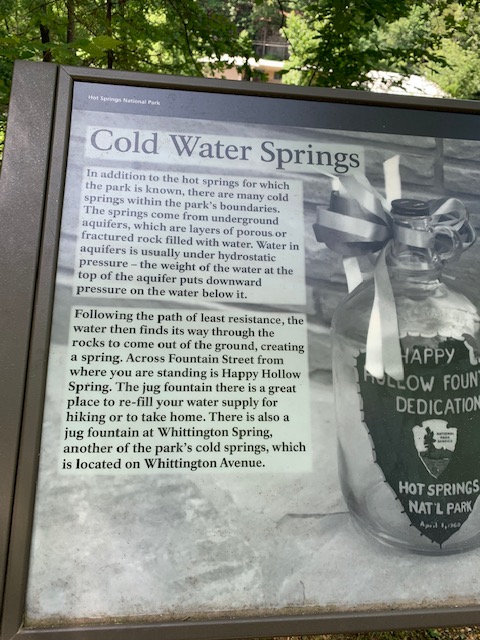
Hot Springs AR. has lots of hot springs but they also have many cold springs where you can get fresh spring water. The driver stopped and we filled up our jugs. It was a great tour.
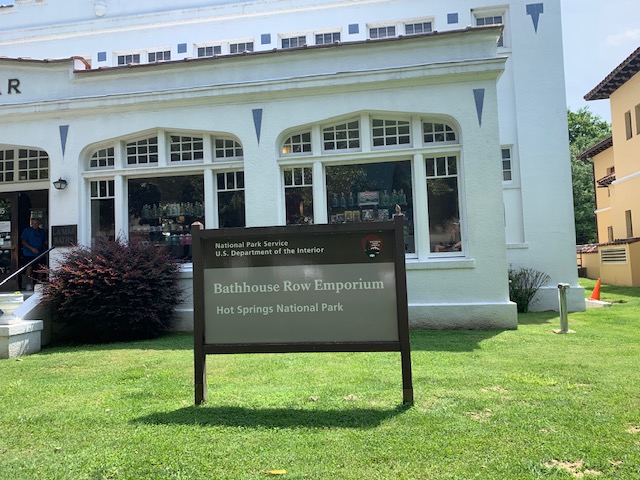
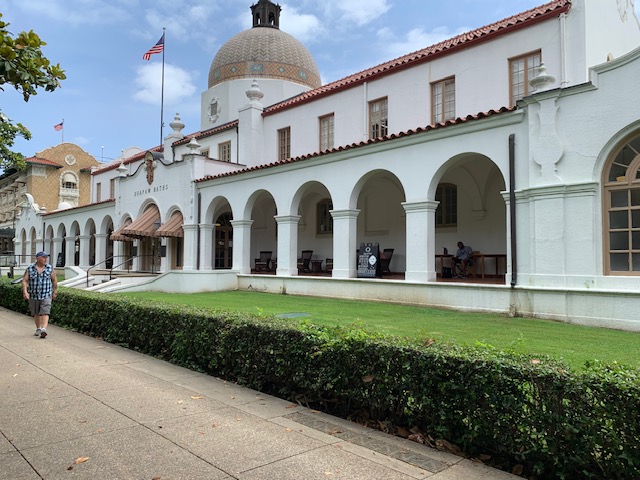
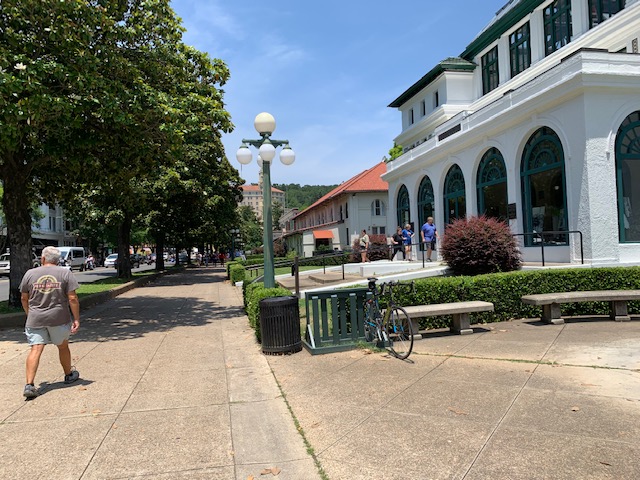
A look down Bathhouse Row
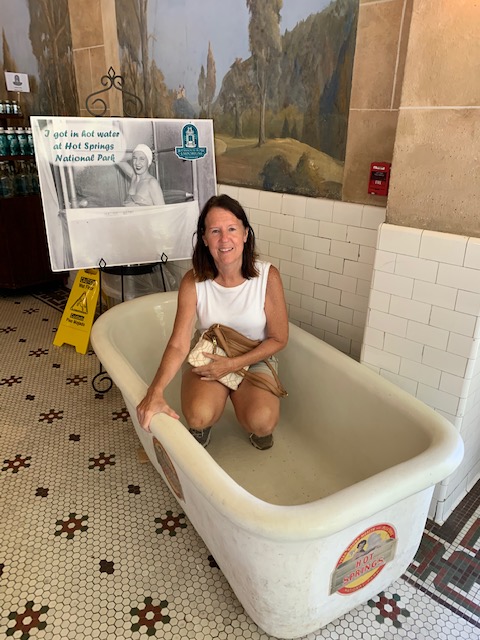
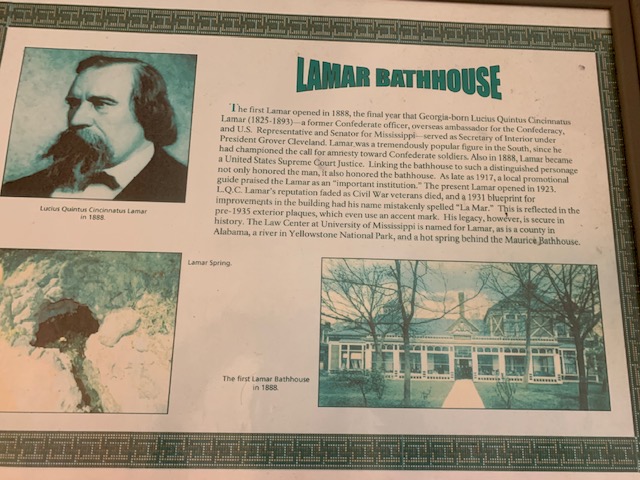
The Lamar Bathhouse was a unique bathhouse back in the day because it offered tubs with a variety of lengths so people of different heights could enjoy the tubs.
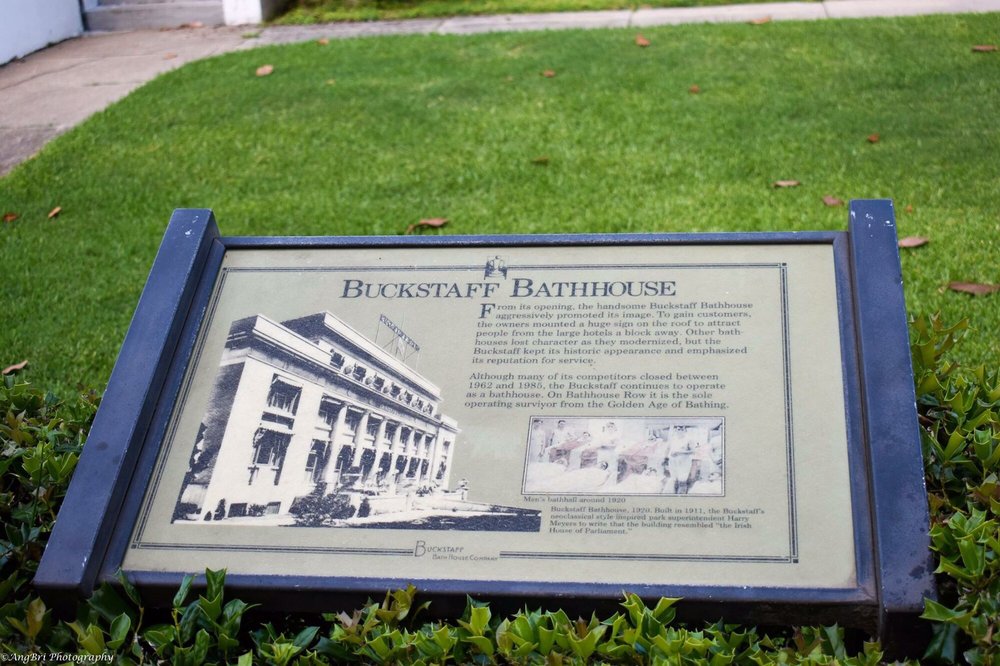
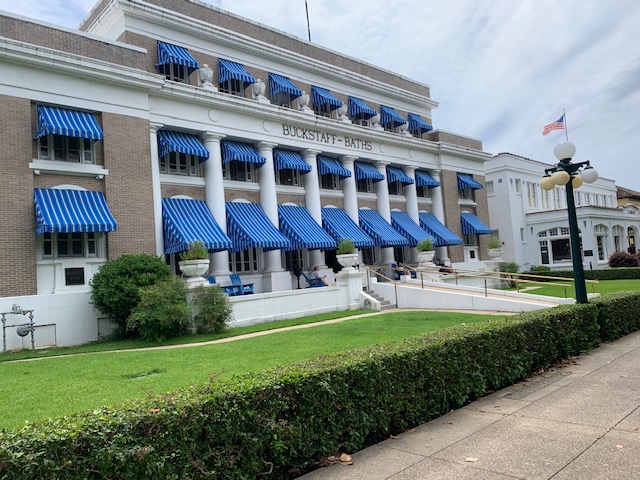
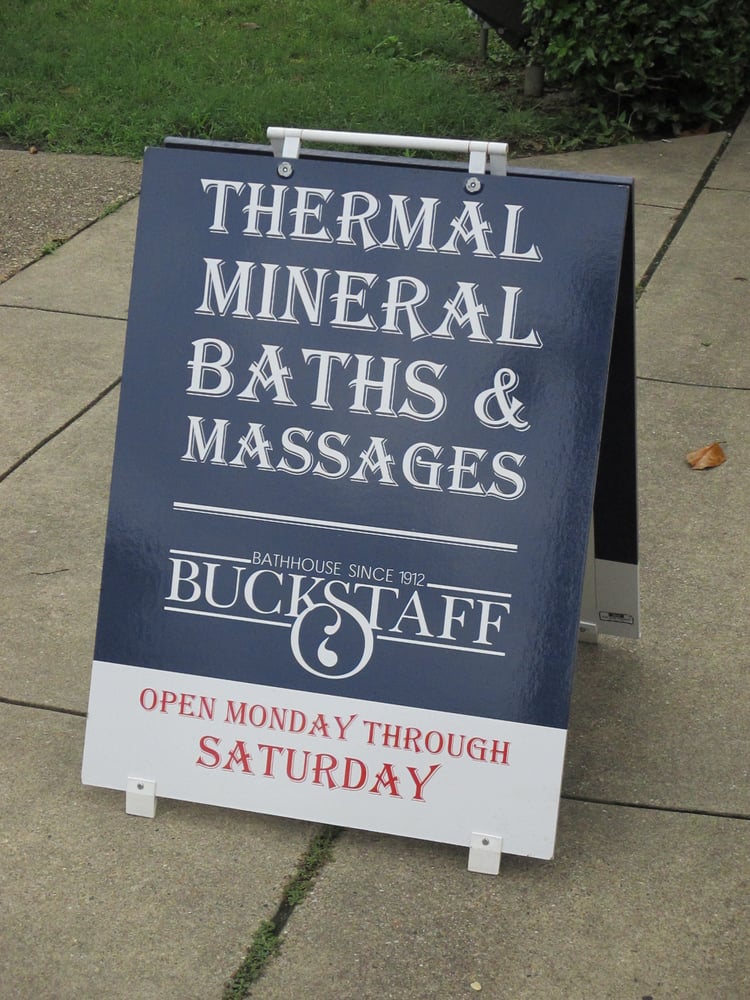
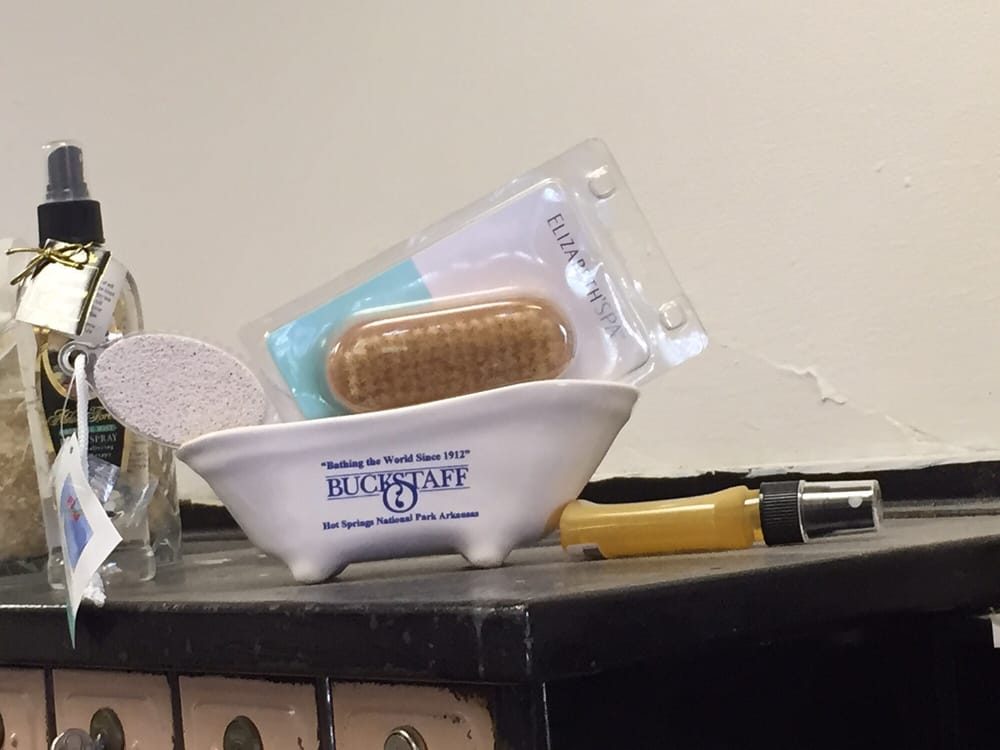
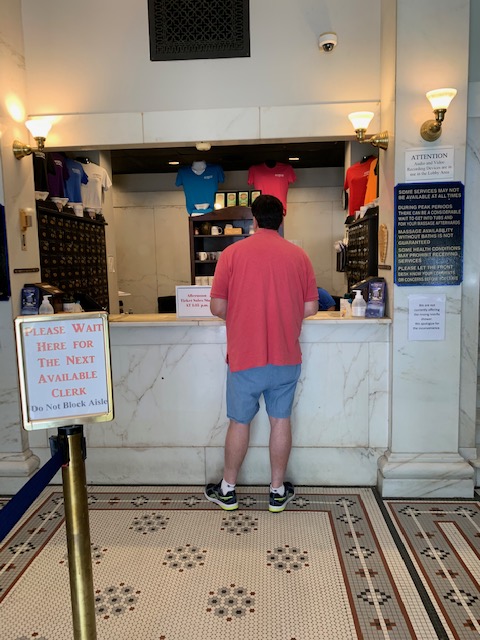
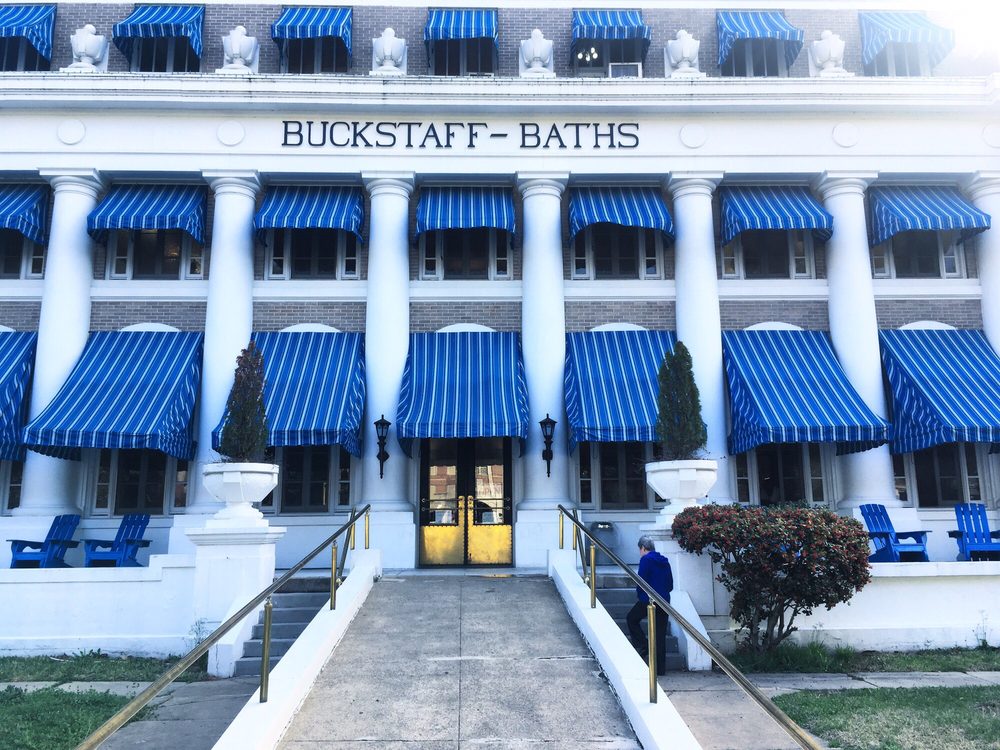
The Buckstaff is the only bathhouse that offers a traditional bathing experience and has been in continuous operation since opening its doors in 1912.
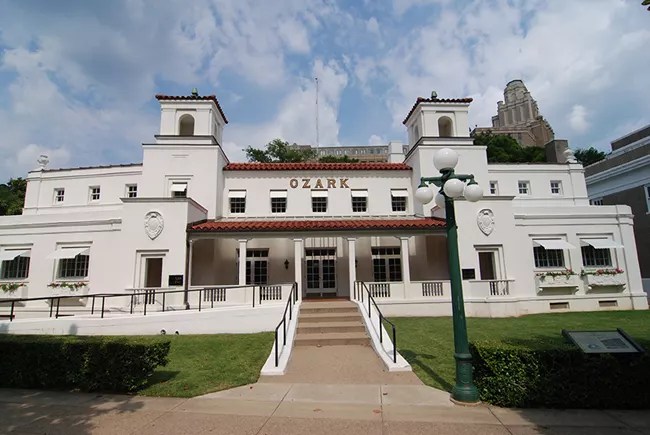
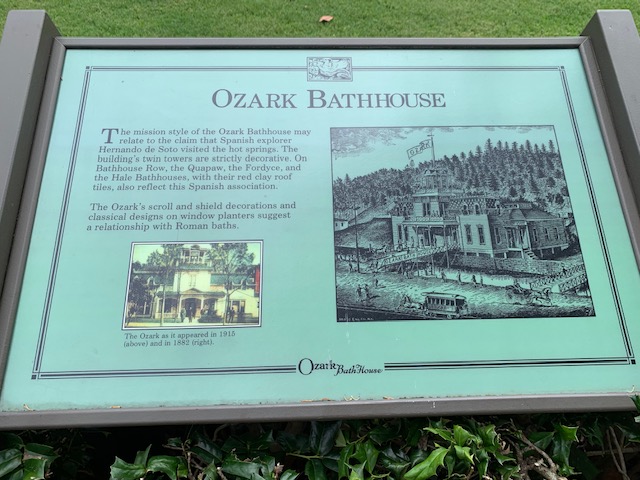
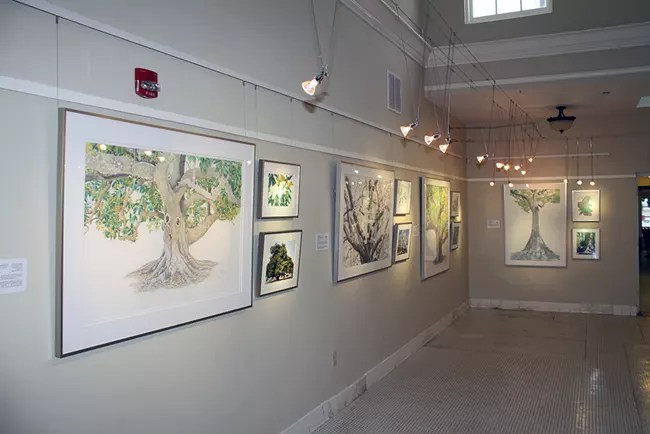
Today, the Ozark houses the Hot Springs National Park Cultural Center. The Center features gallery spaces for displaying artwork from the park’s Artist-in-Residence Program and other temporary exhibitions..
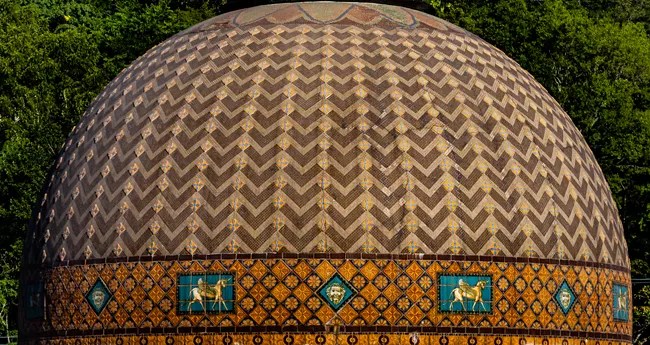
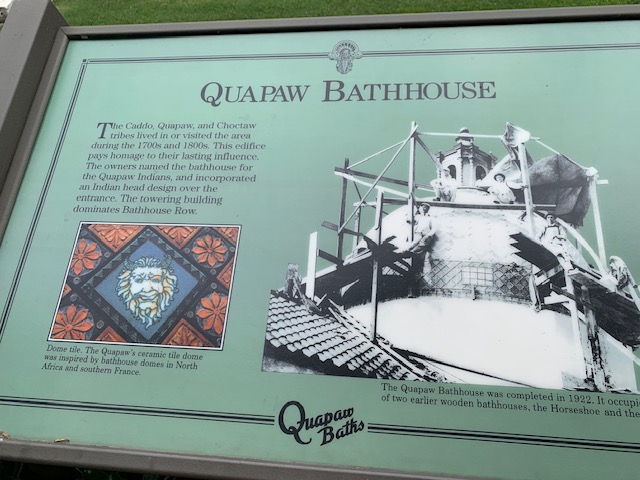
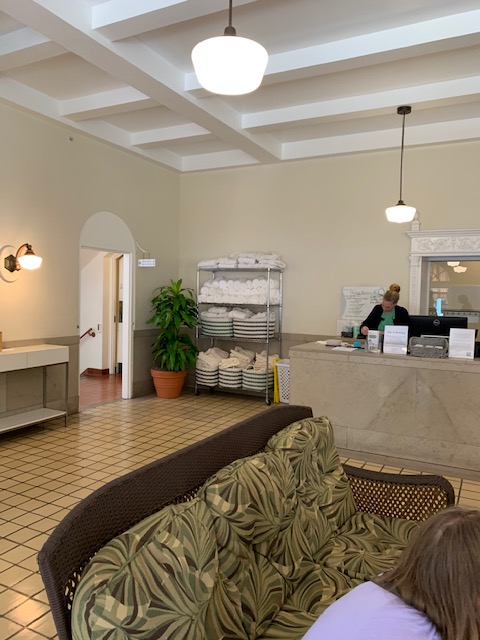
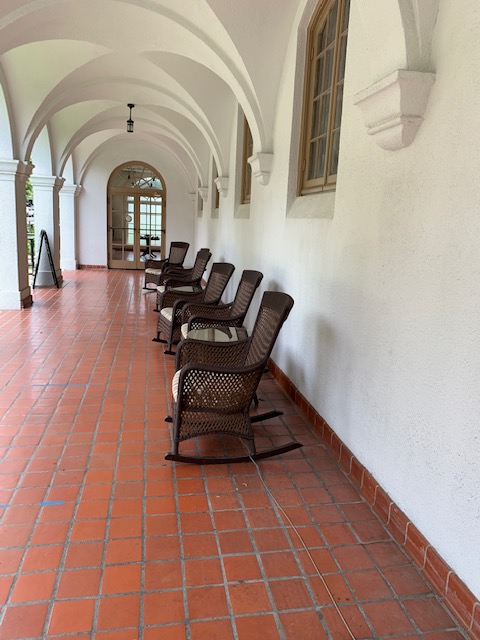
The Quapaw Bathhouse is one of two locations where visitors can soak in the thermal springs. Quapaw offers private baths, public pools, and modern day spa services
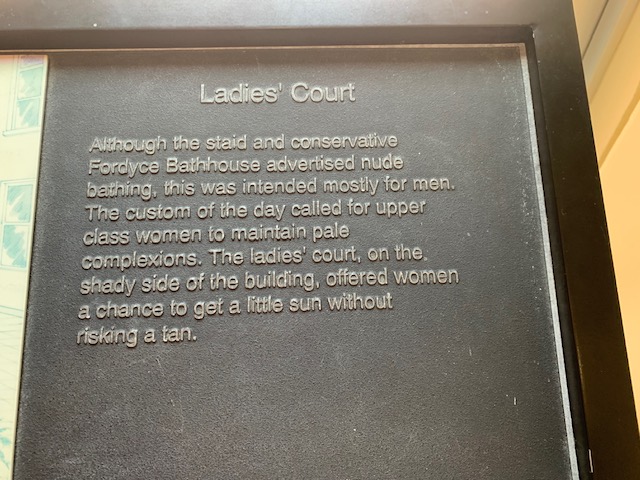
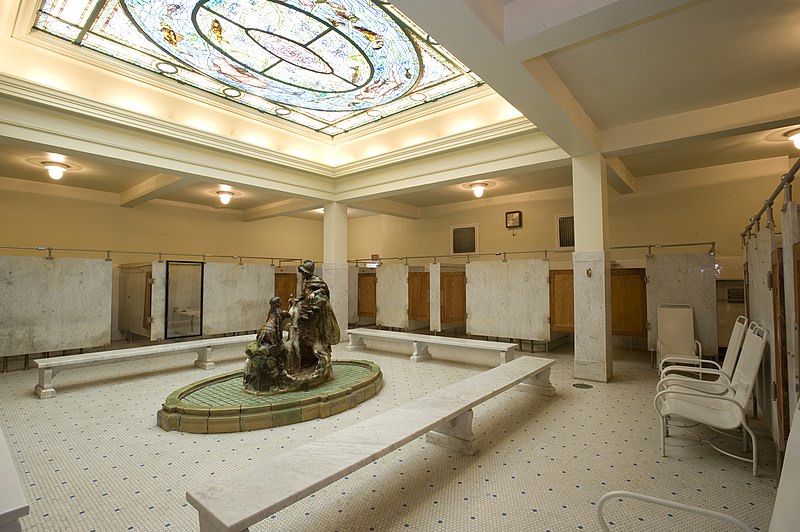
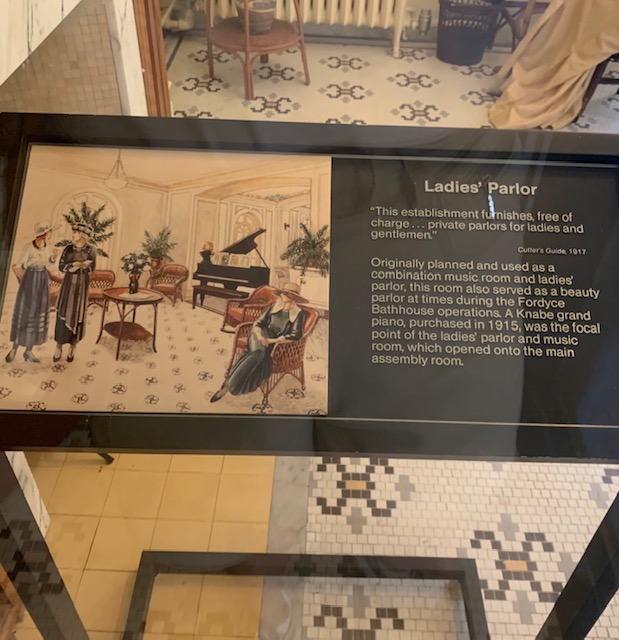
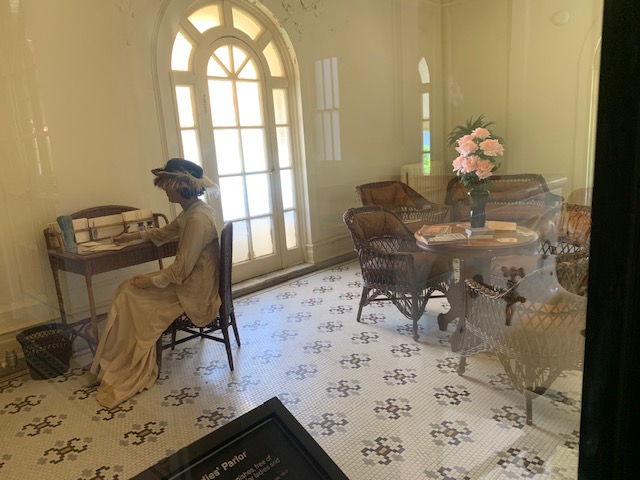
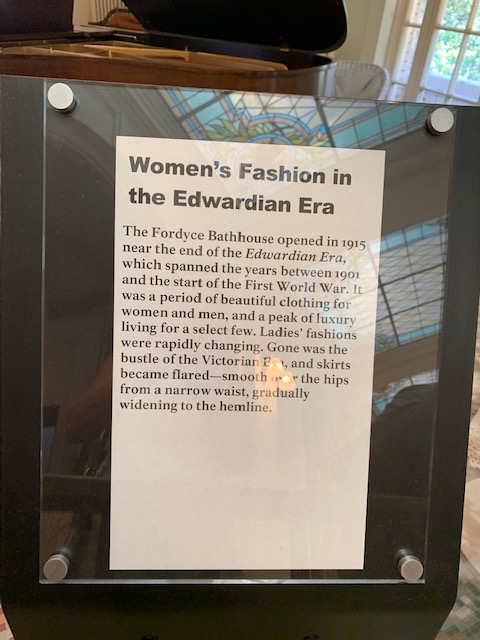
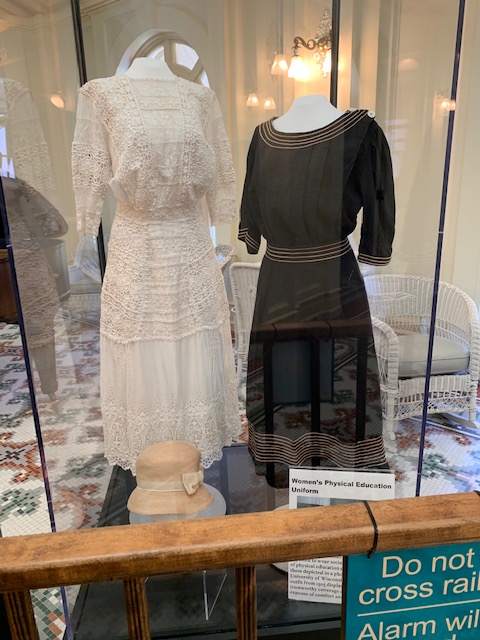
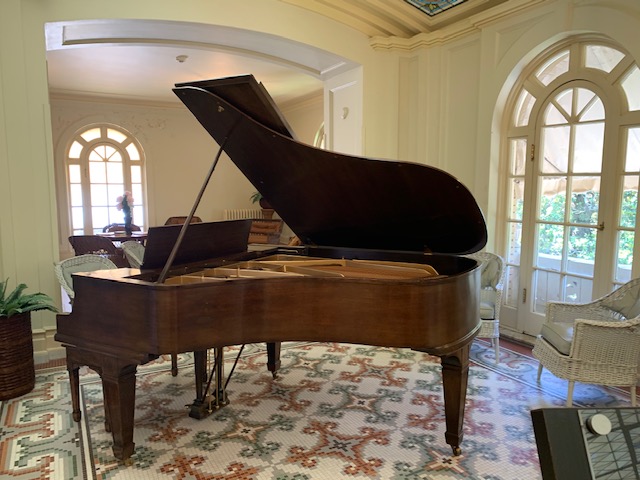
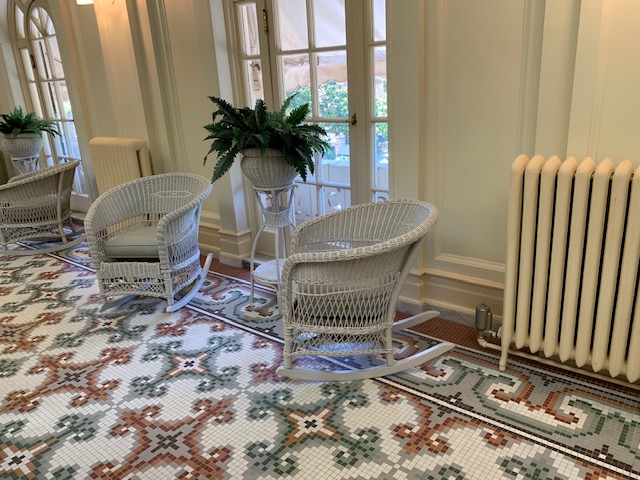
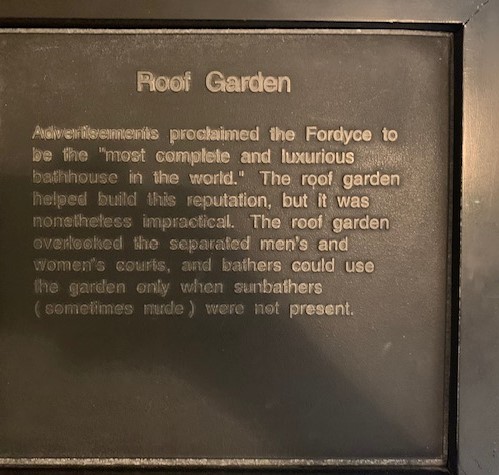
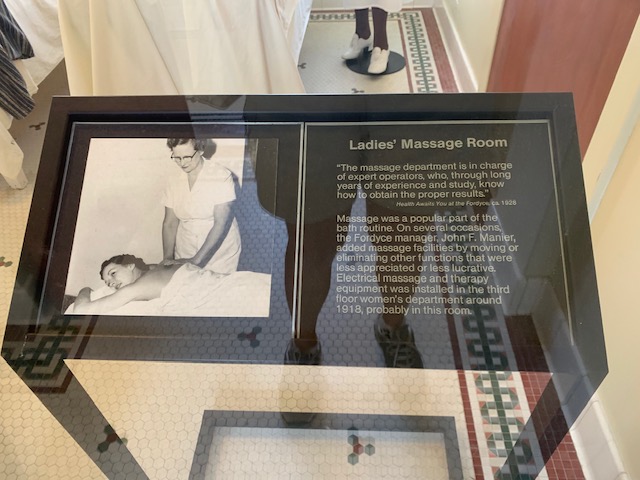
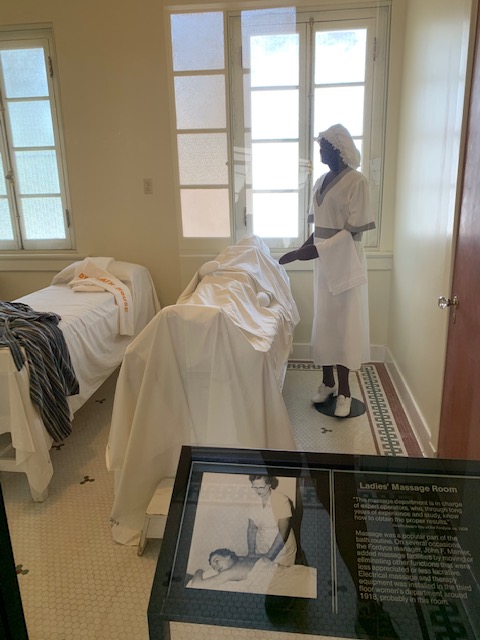
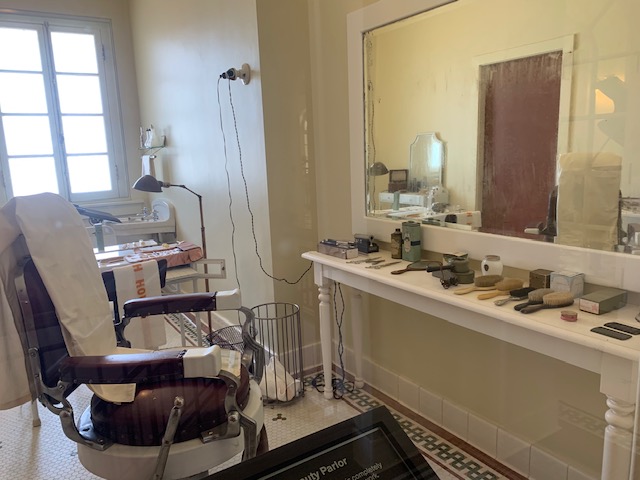
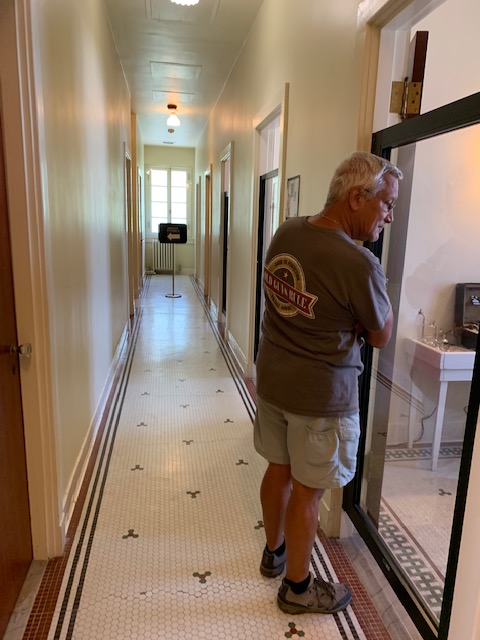
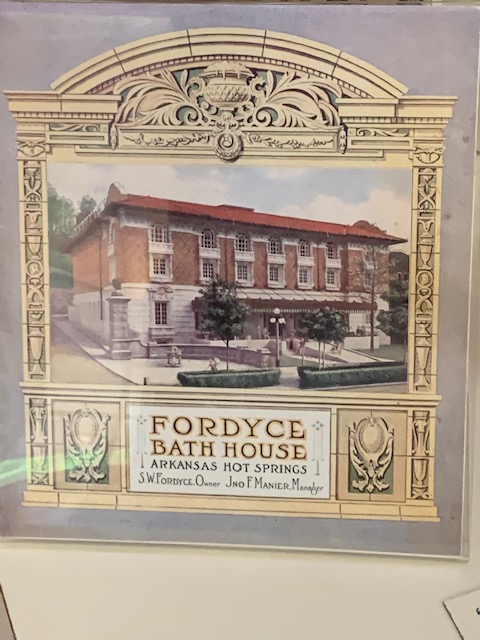
The Fordyce opened March 1, 1915. The building eventually cost over $212,000 to build, equip, and furnish. Totaling approximately 28,000 square feet, the Fordyce is the largest bathhouse on the Row. It has three main floors, two courtyards, and a basement under most of the building. The Fordyce became the first bathhouse on the Row to go out of business when it suspended operations on June 30, 1962, but it was extensively restored by 1989 and is now enjoying a renaissance as a historically furnished museum.
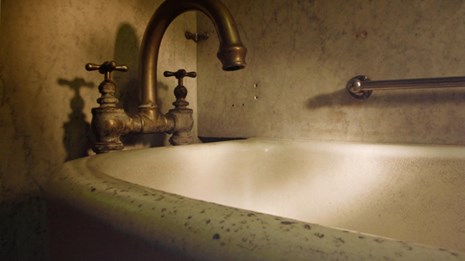
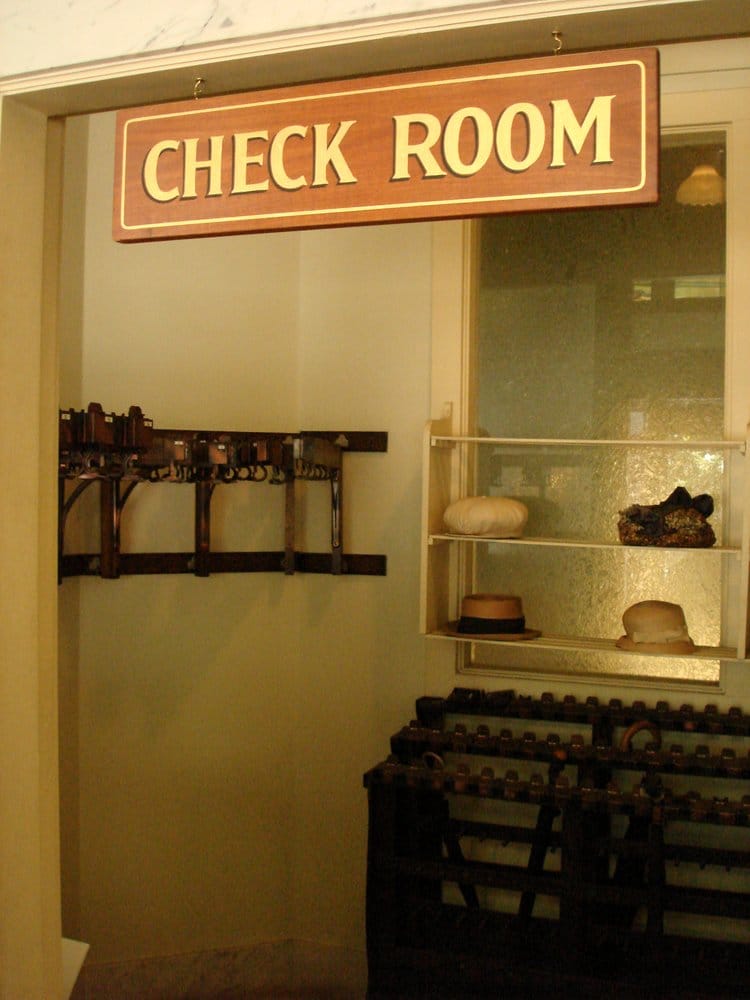
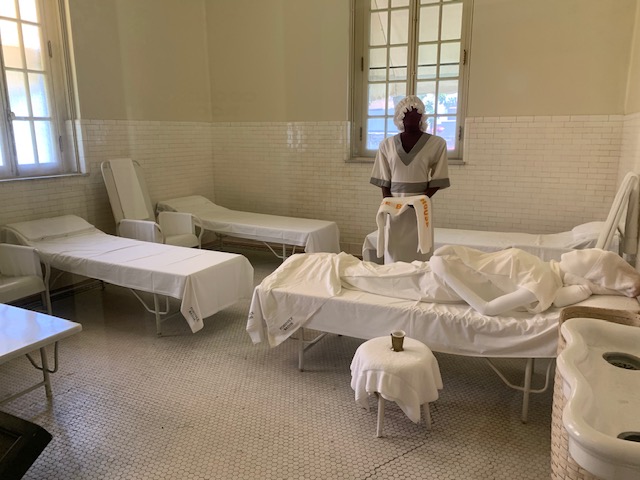
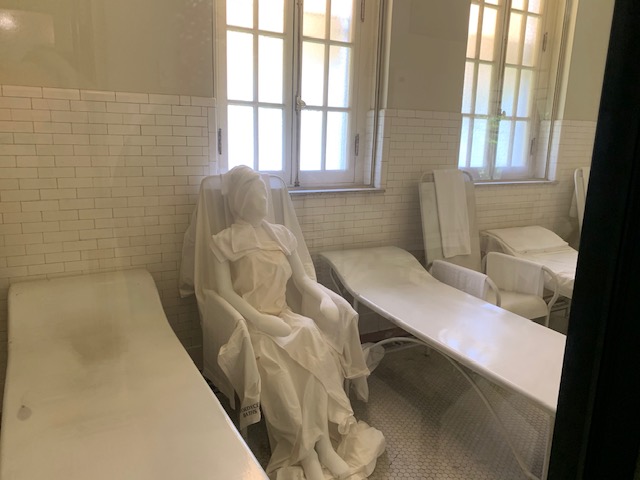
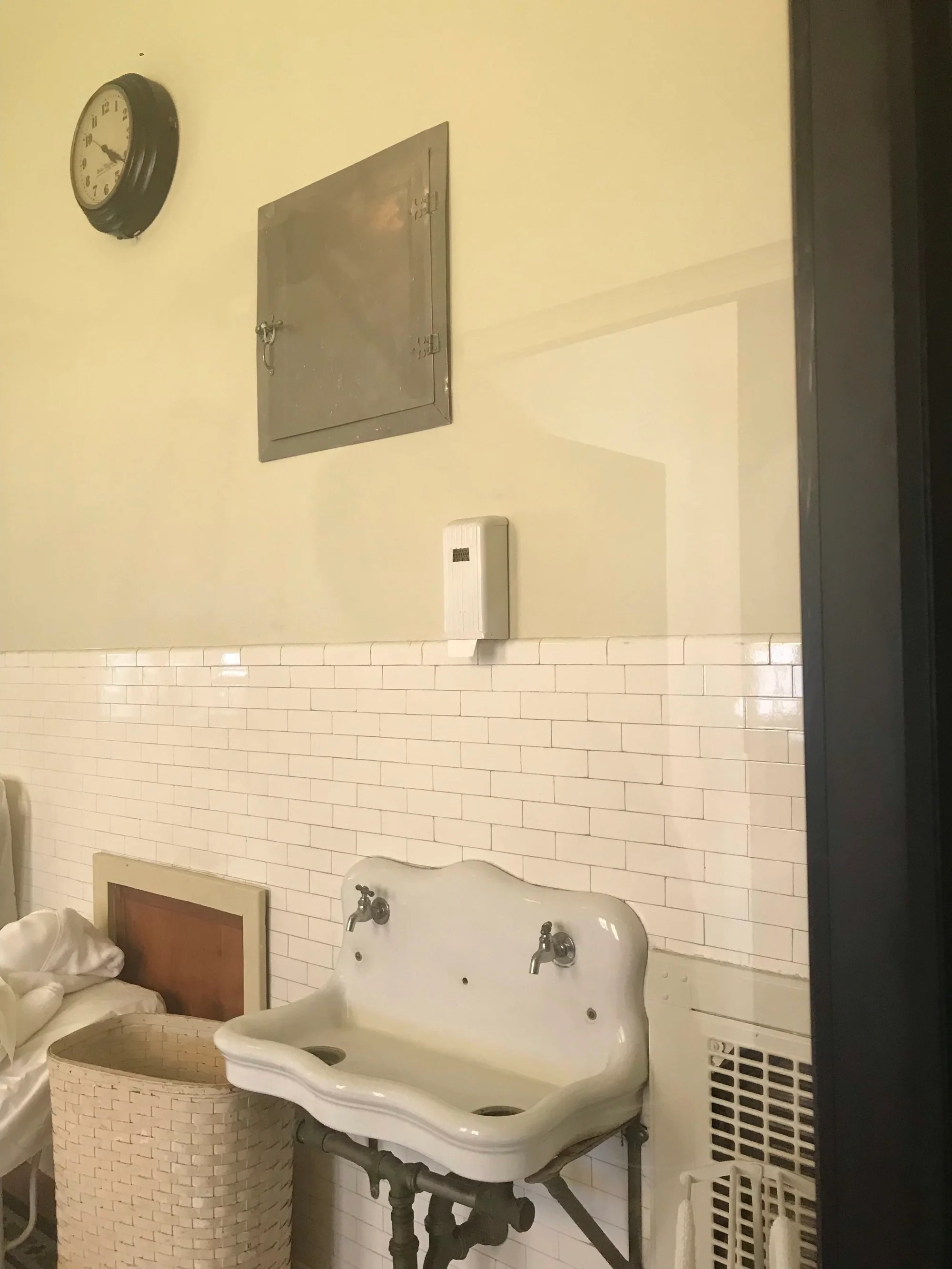
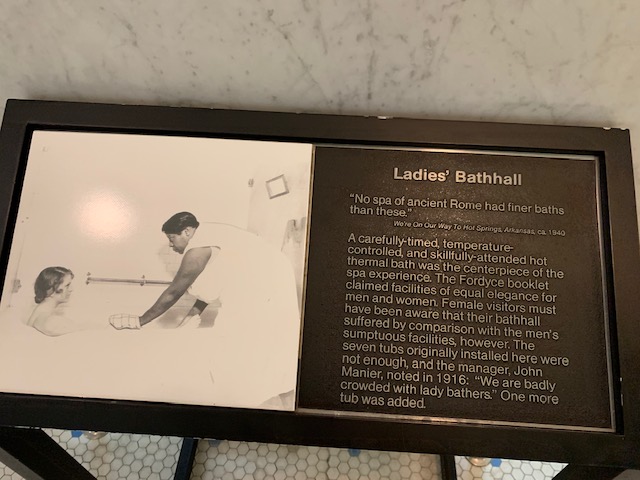
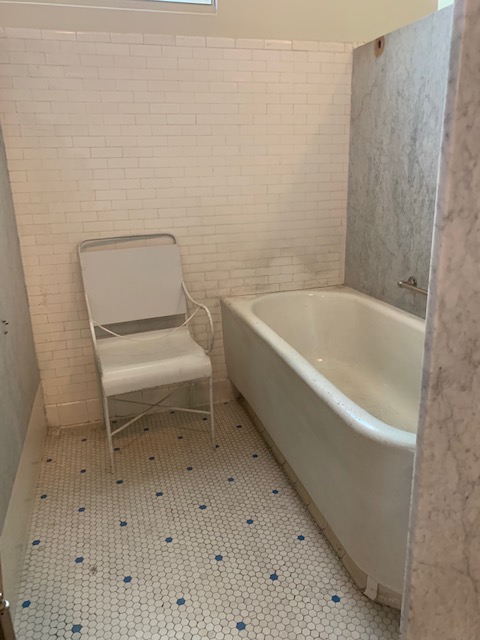
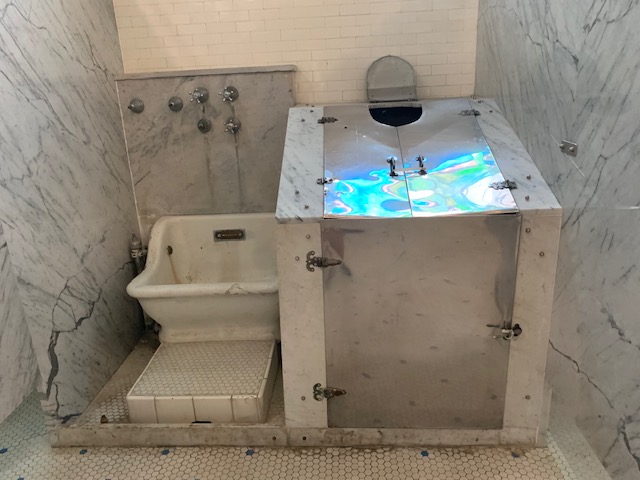
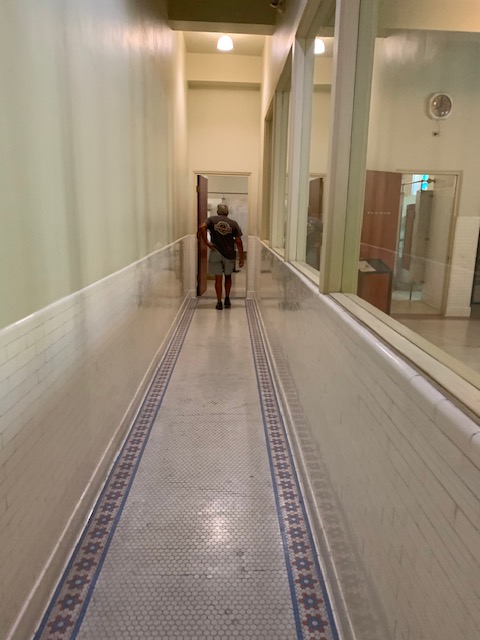
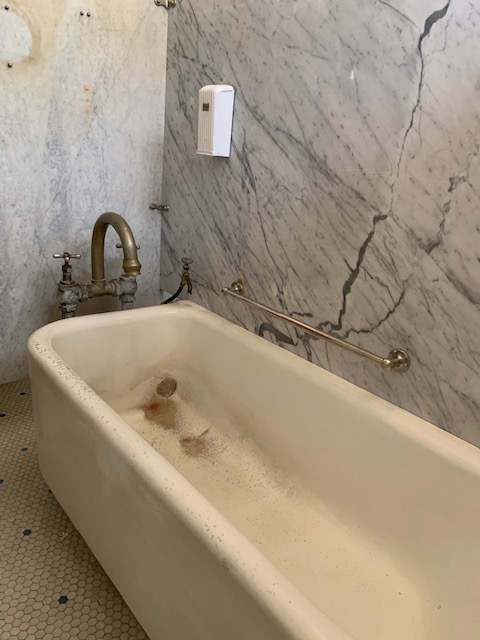
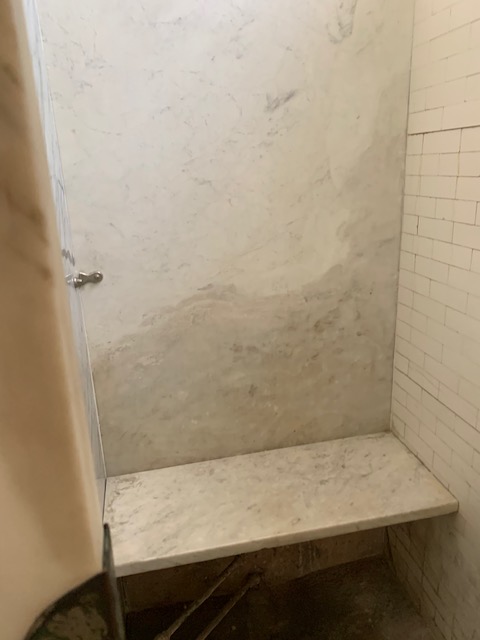
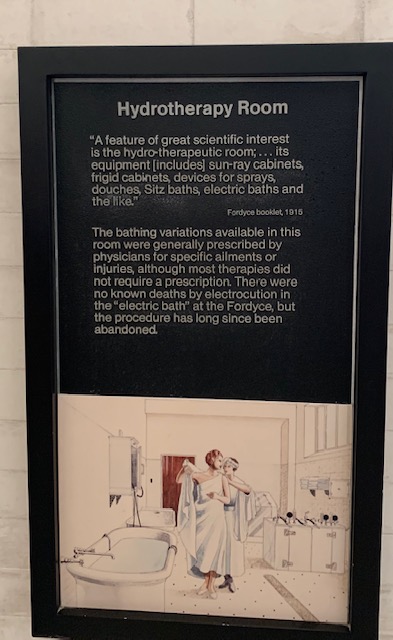
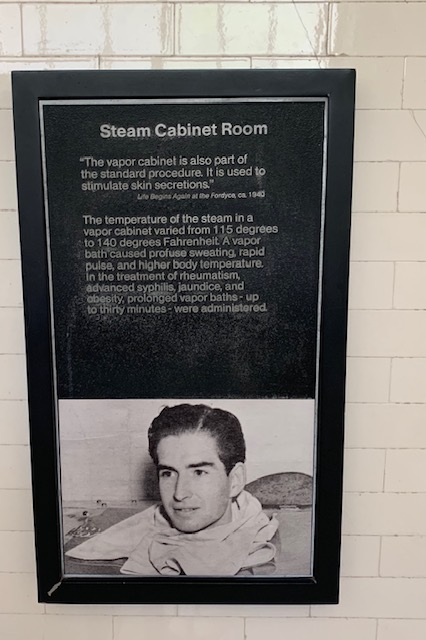
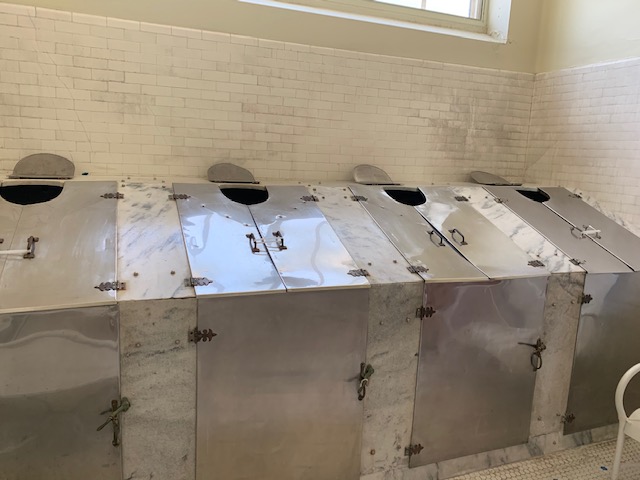
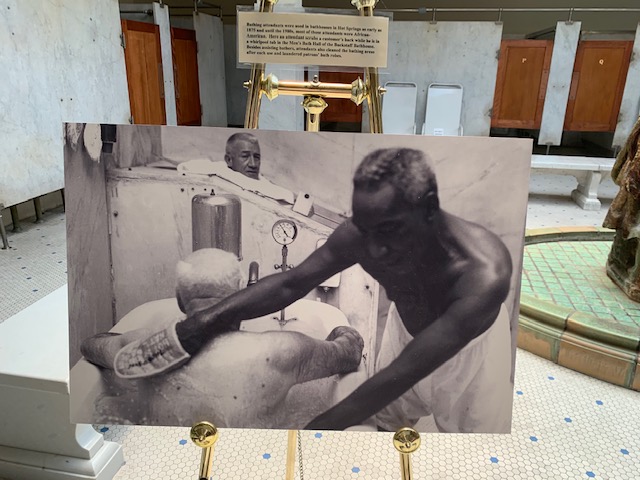
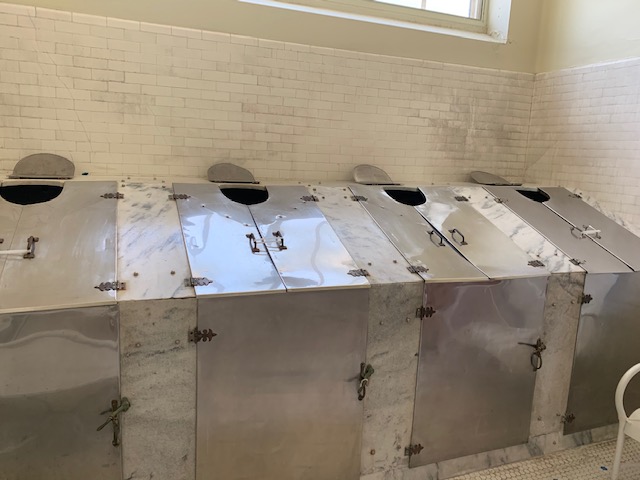
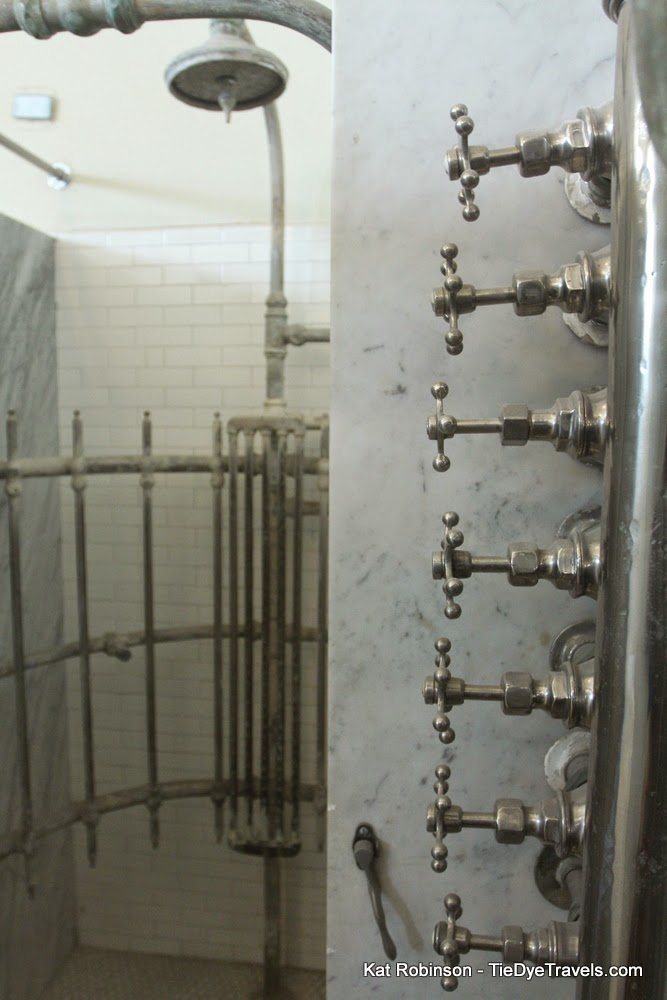
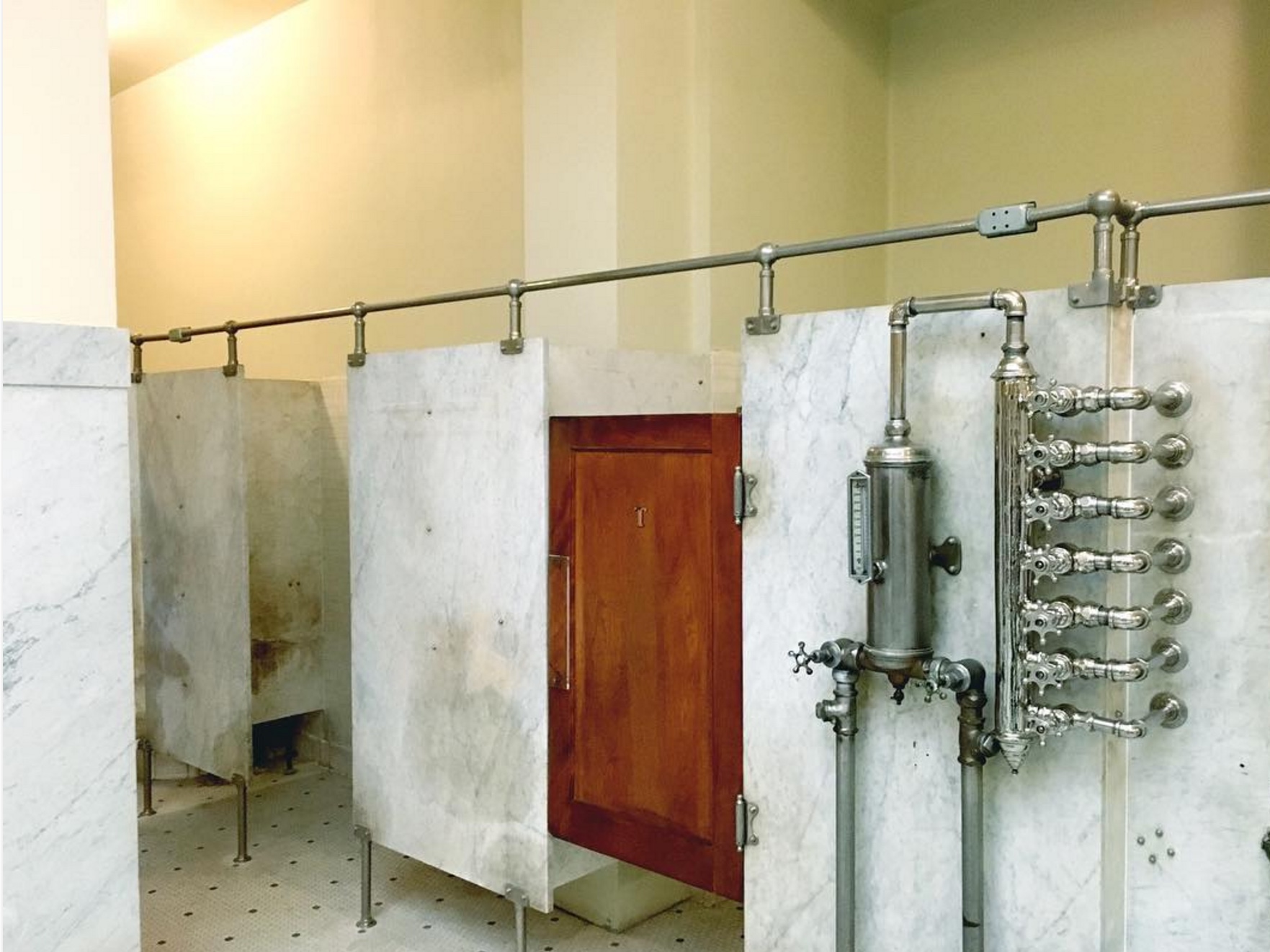
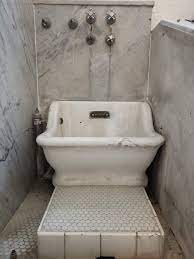
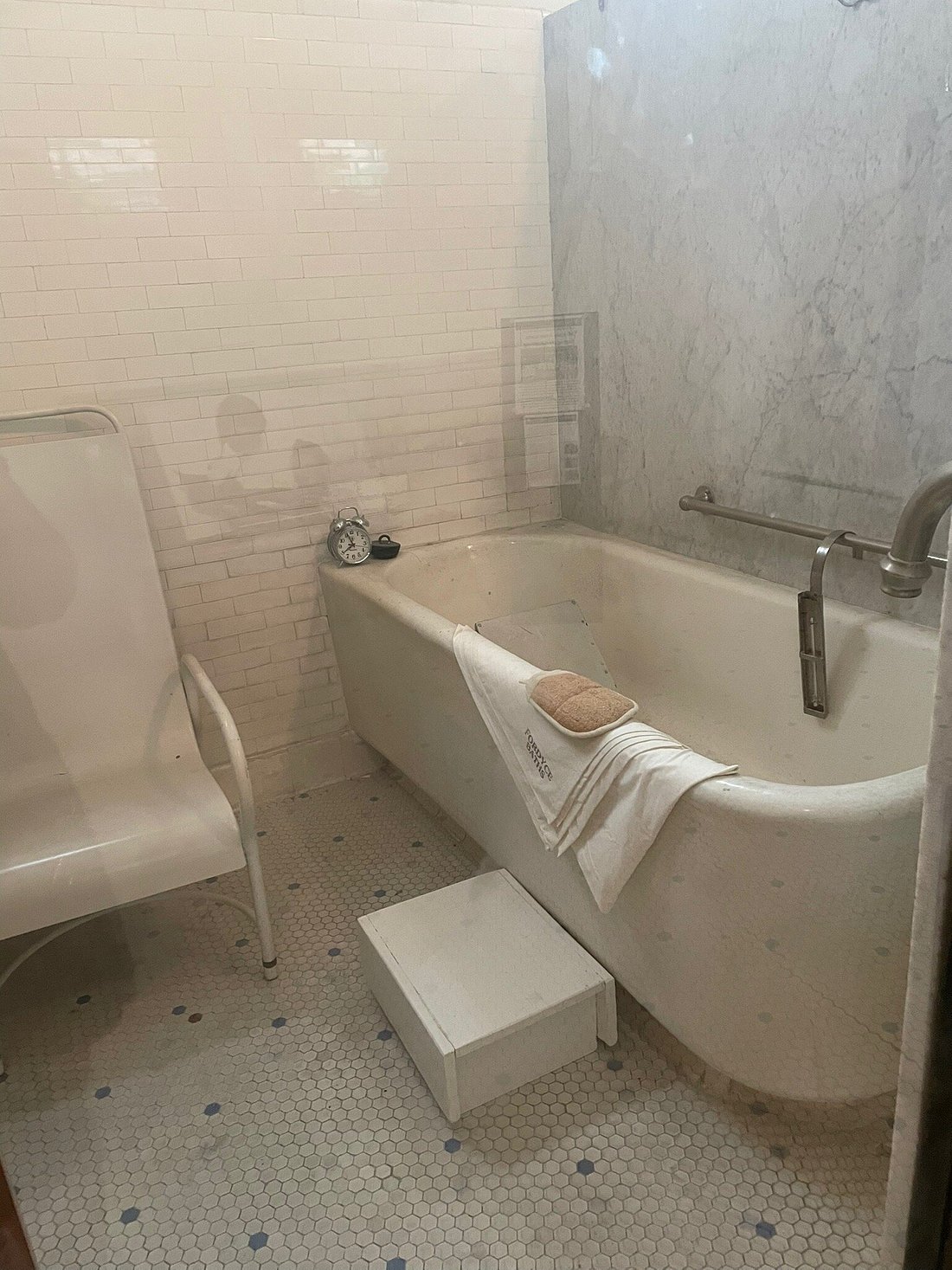
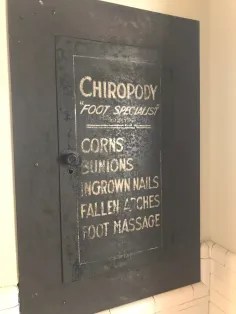
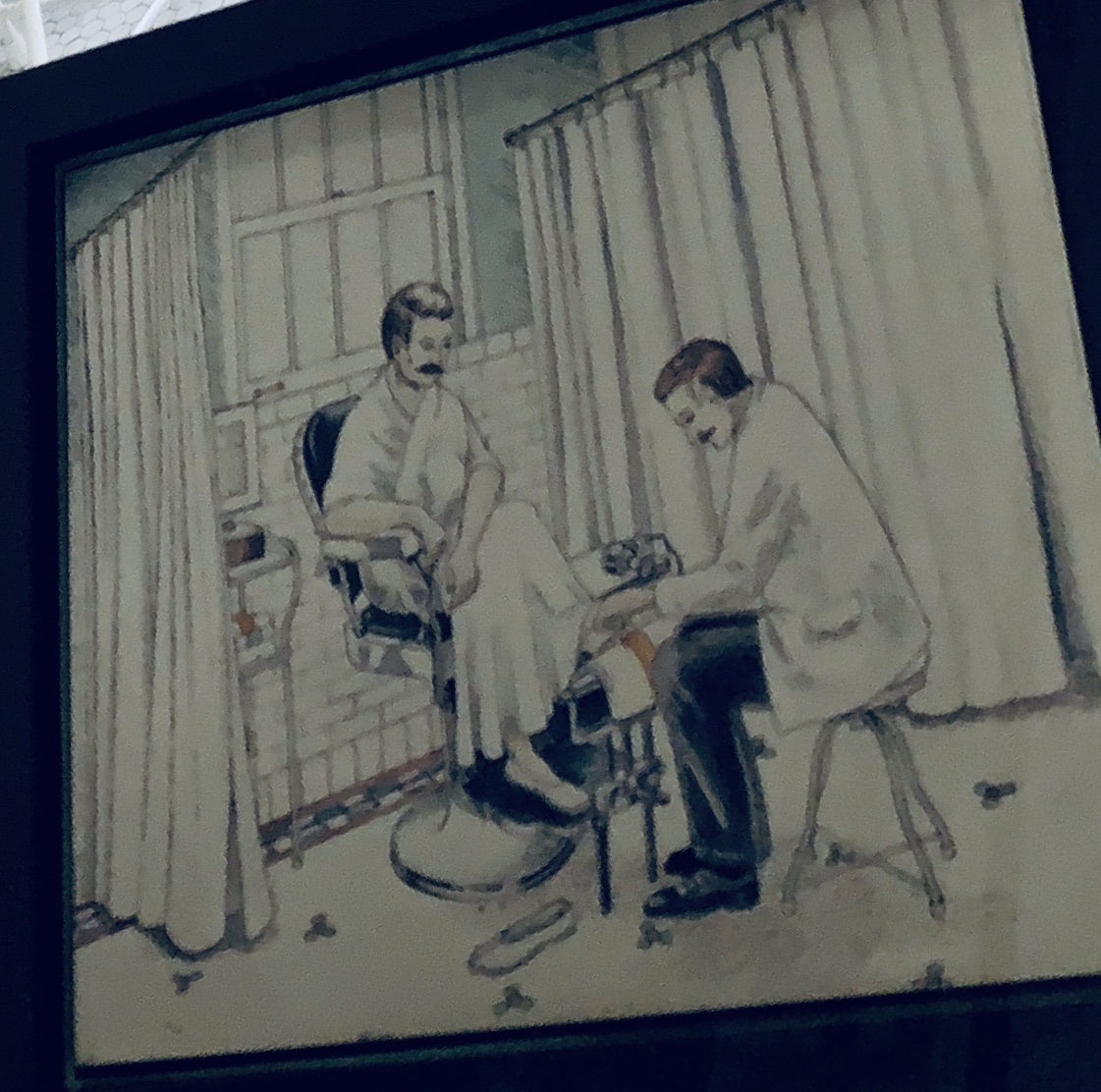
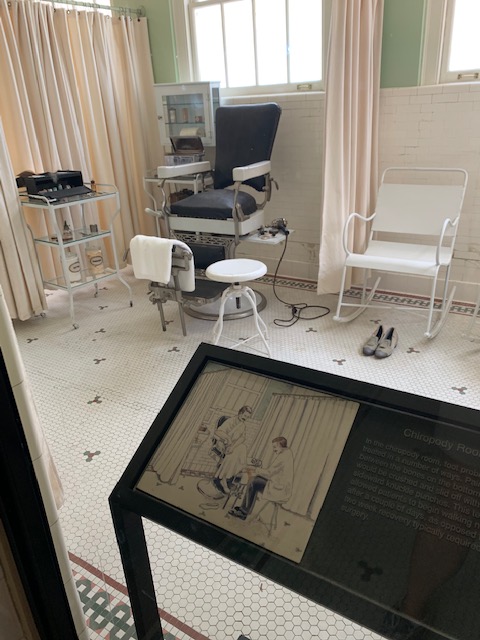
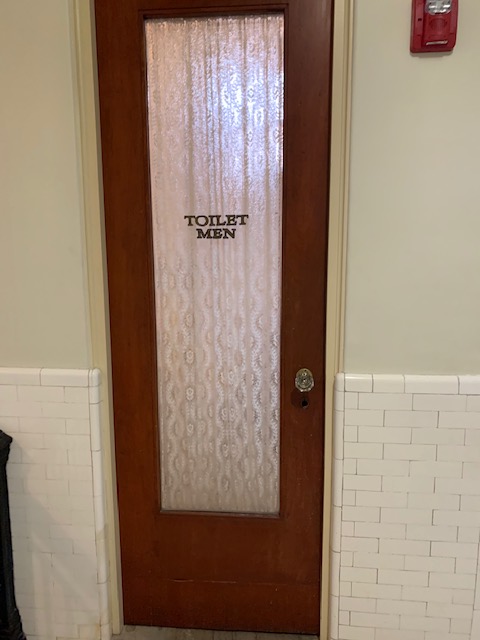
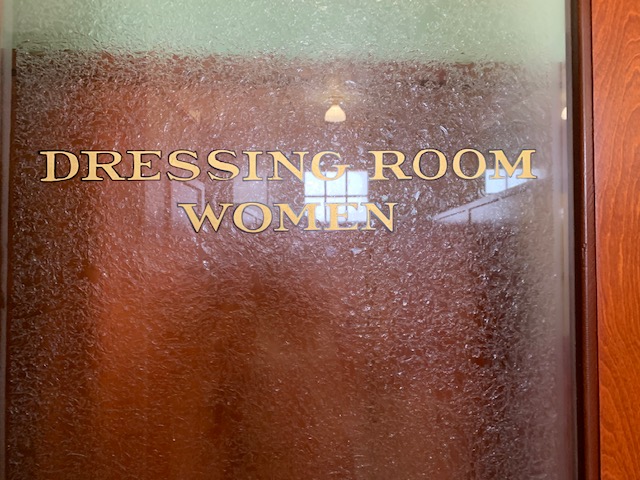
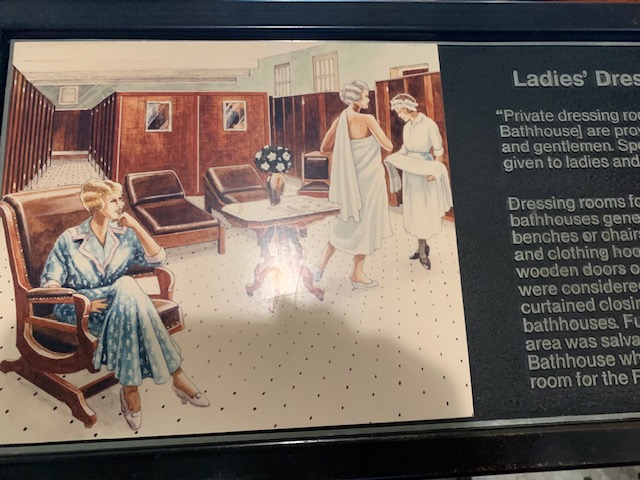
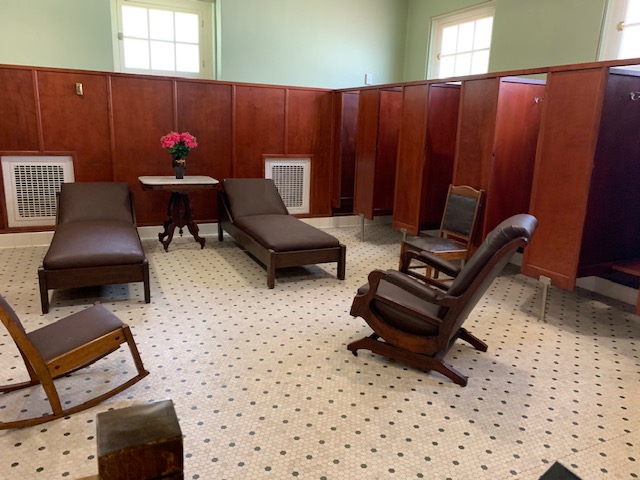
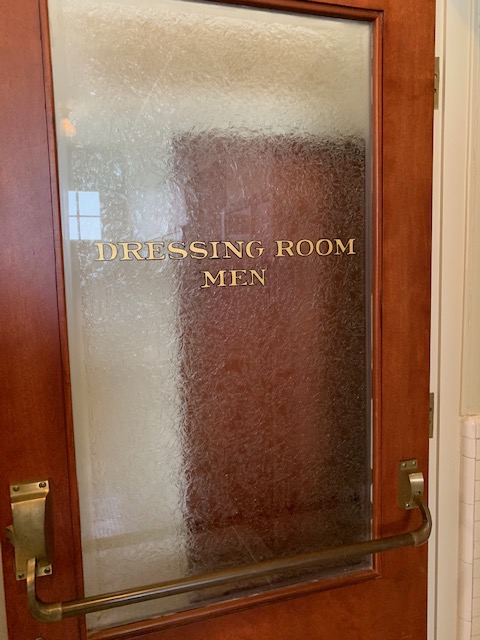
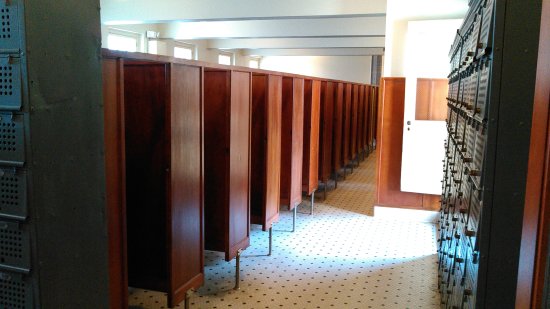
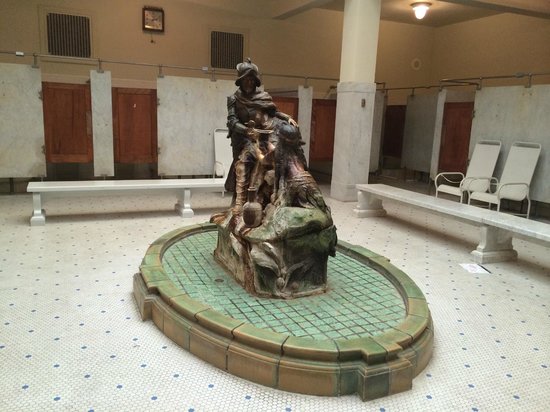
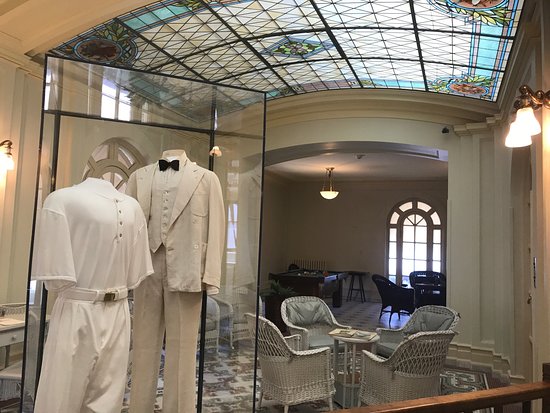
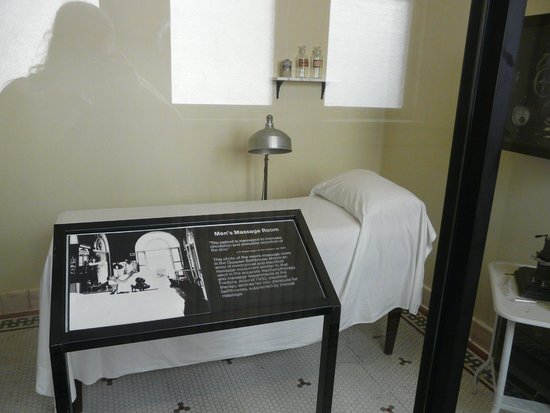
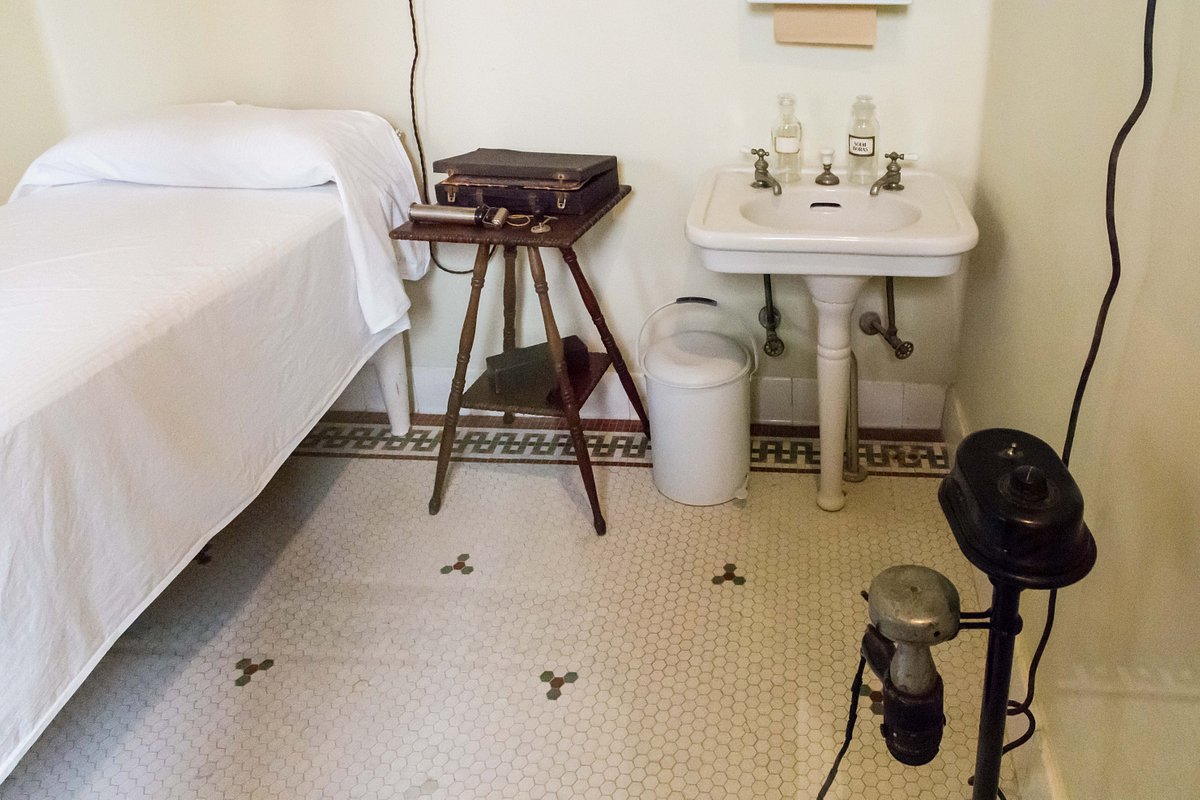
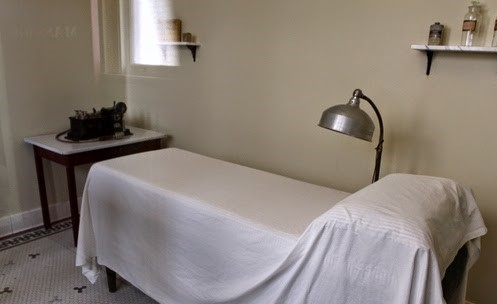
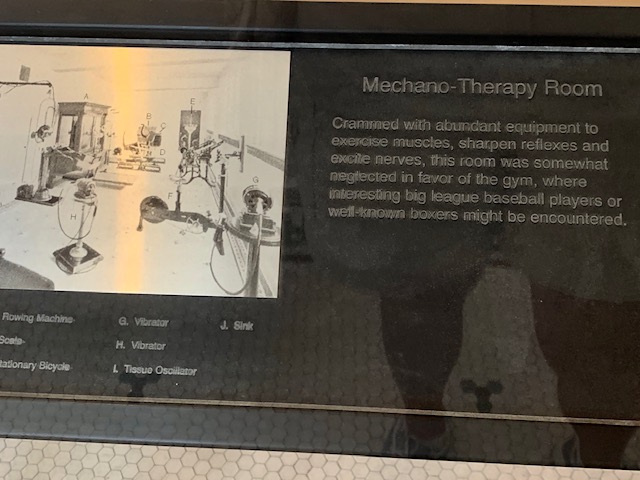
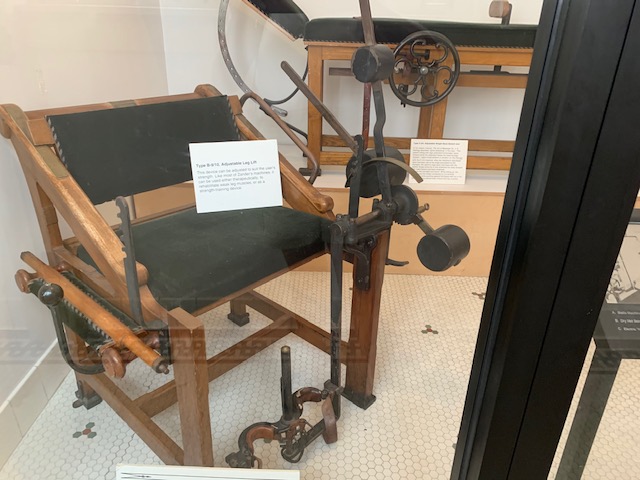
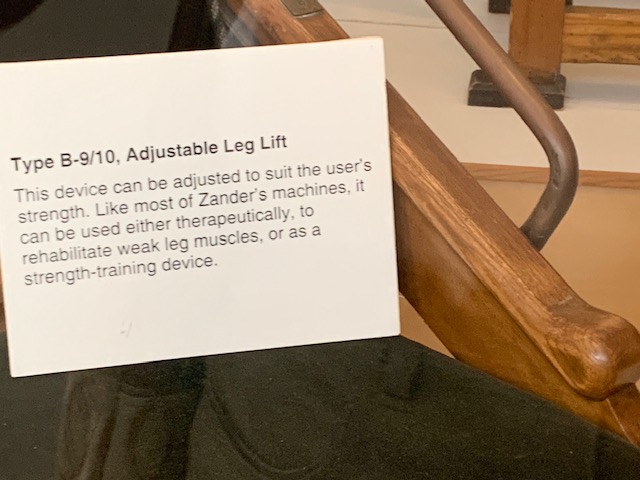
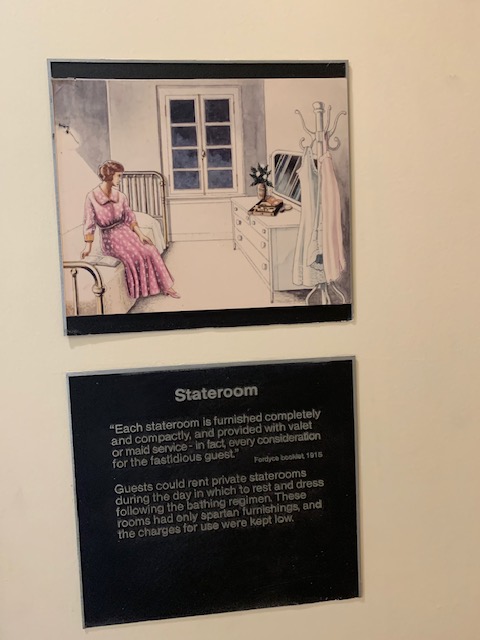
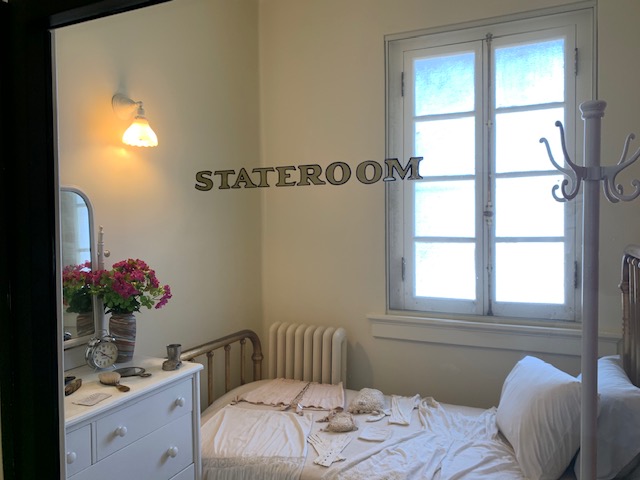
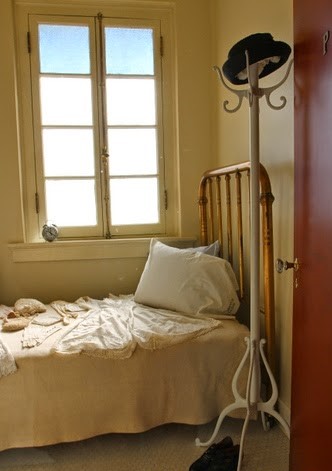
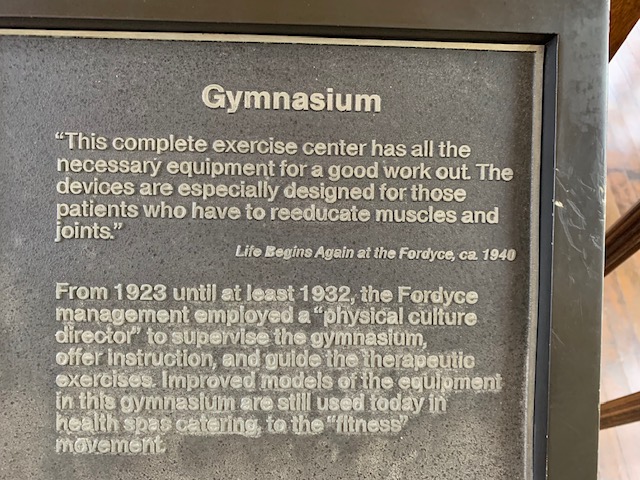
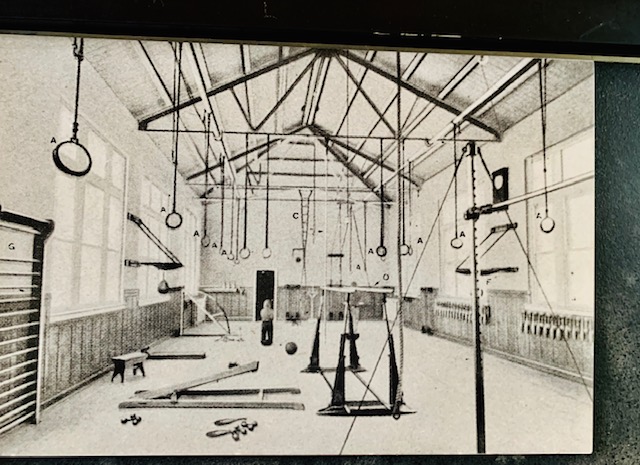
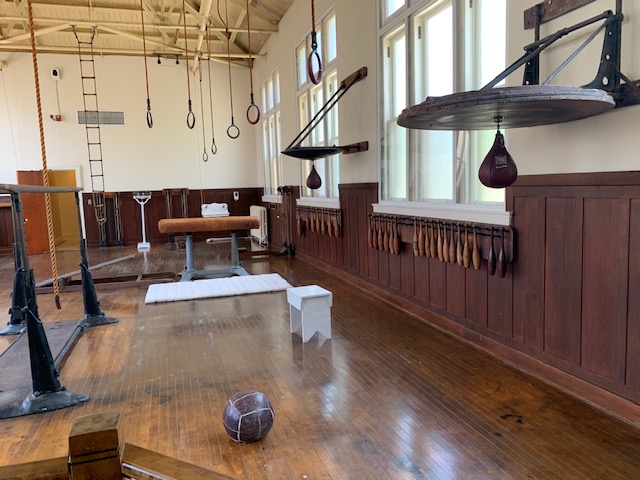
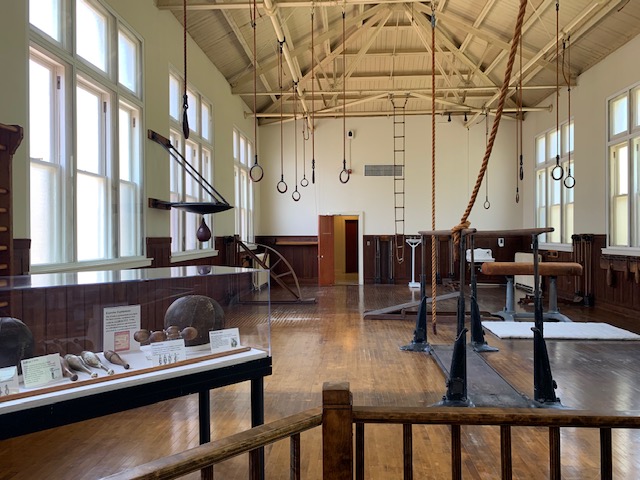
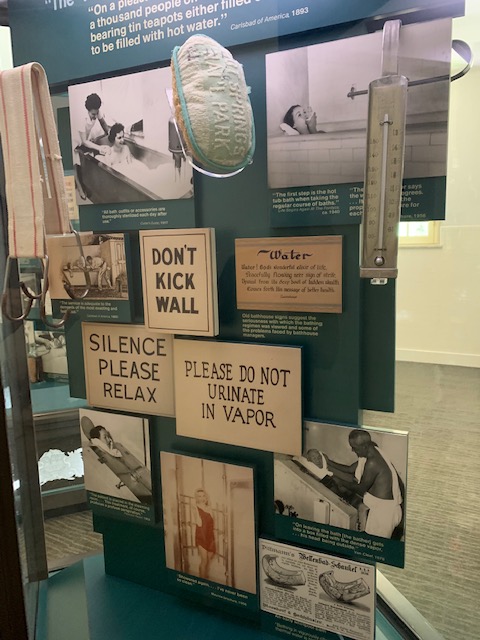
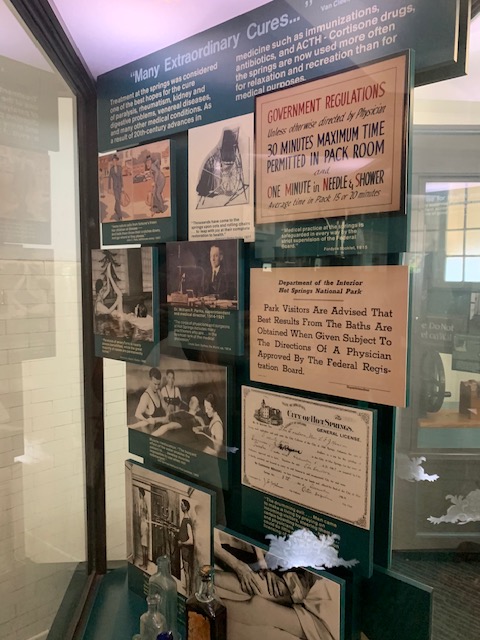
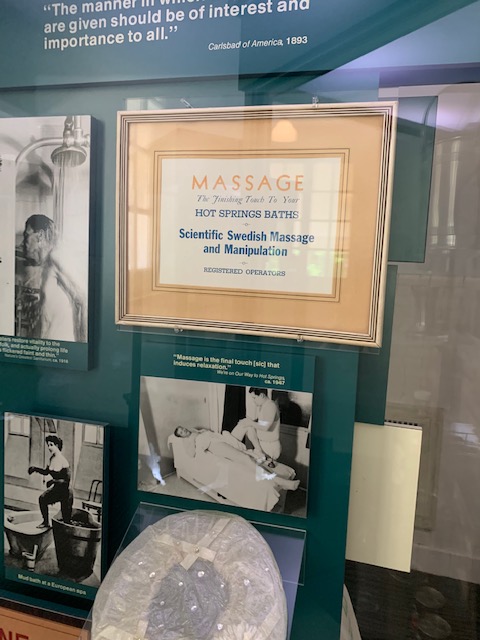
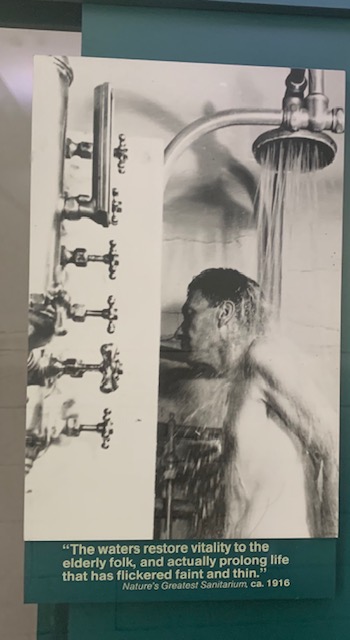
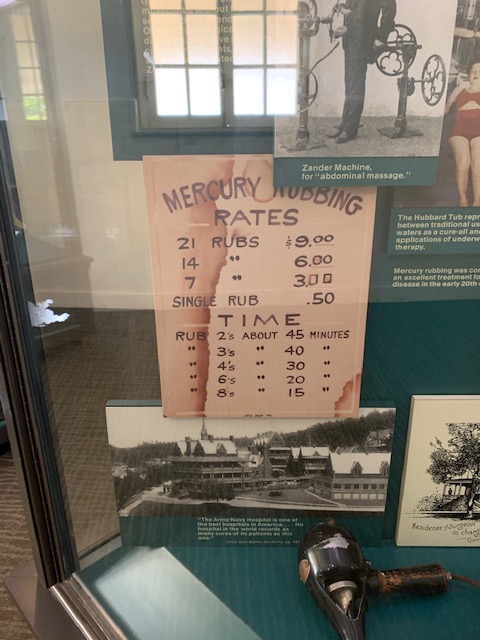
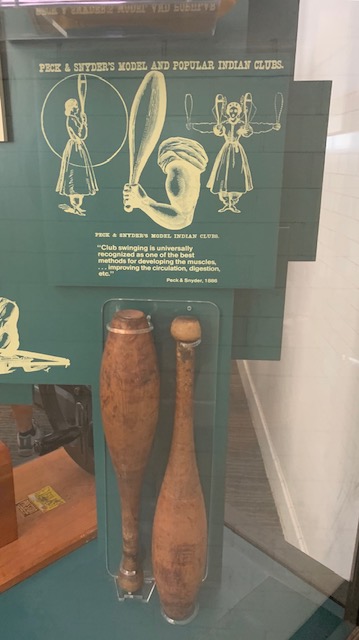
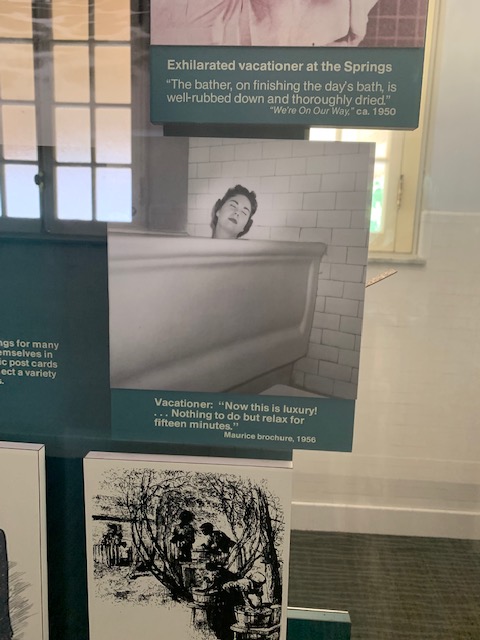
It was really a fun and educational experience seeing what the bathhouses looked like and how they operated. Here is what was inside a bath house in the early 1900s.
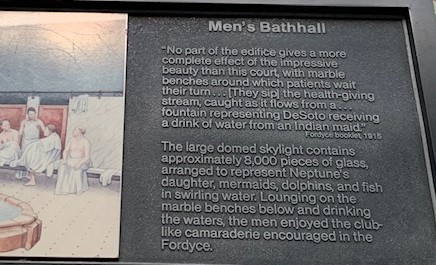
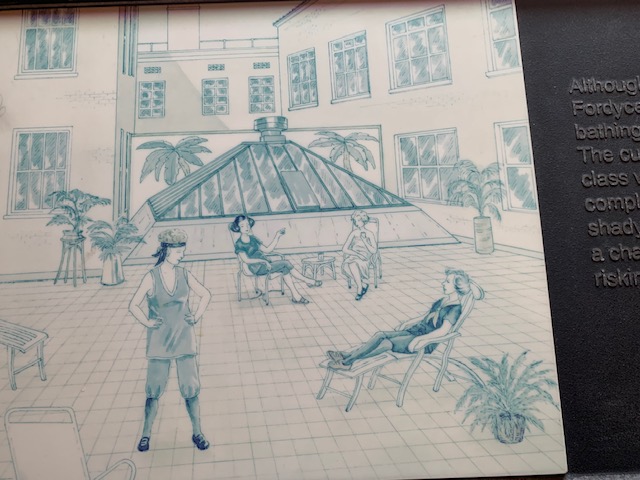
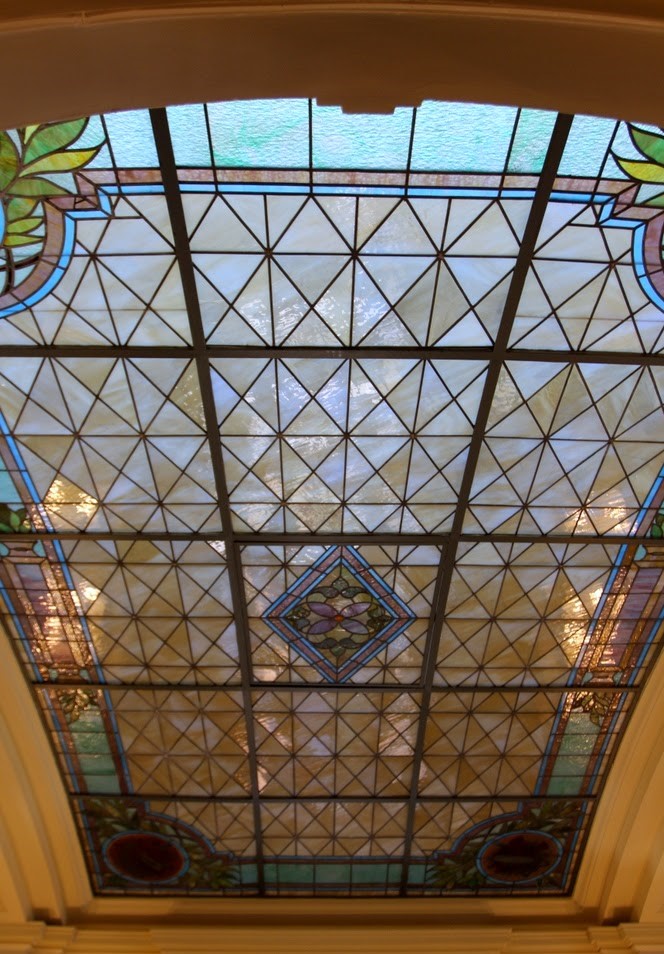
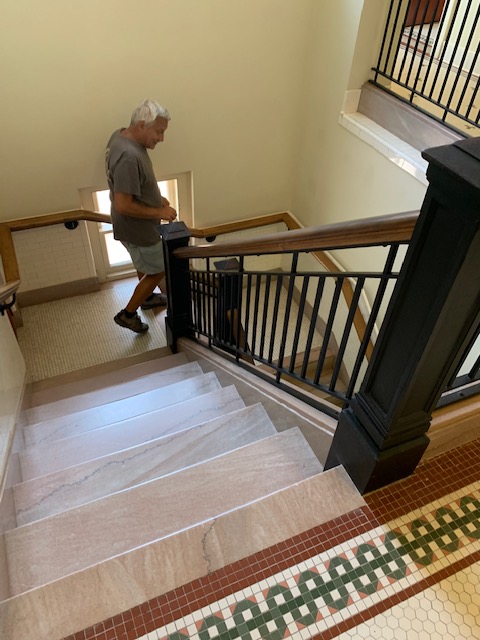
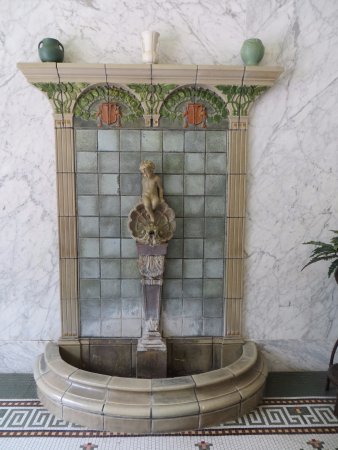
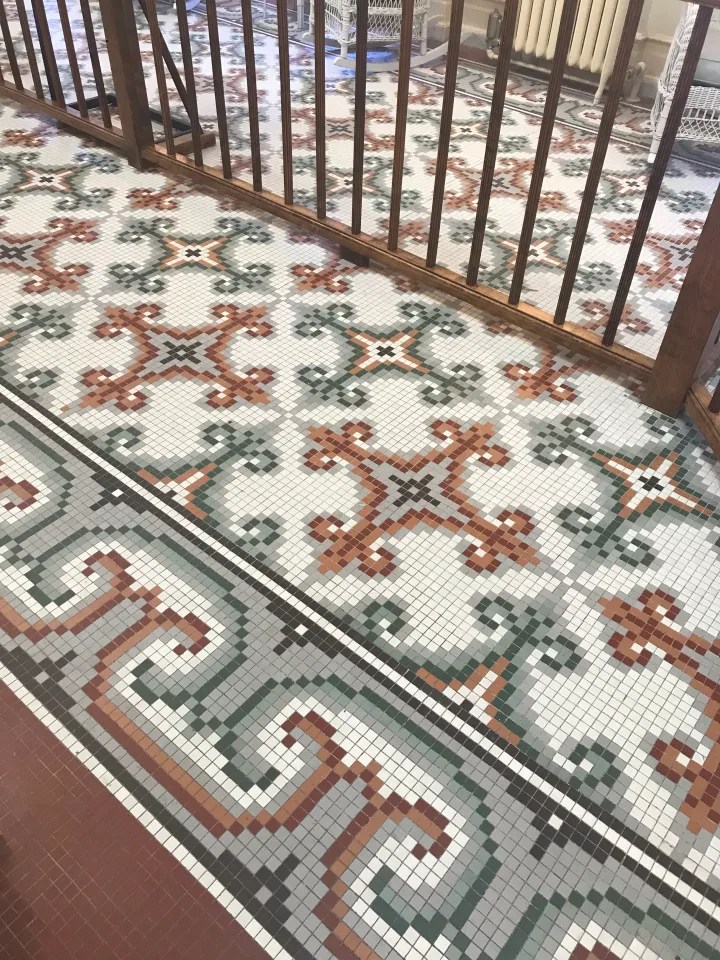
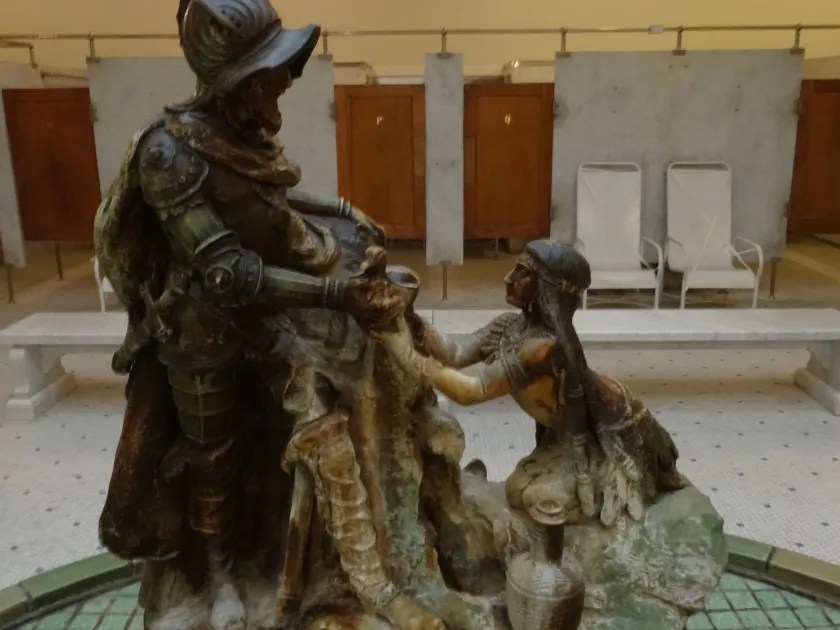
This bathhouse was really something to see. It was huge with its marble and stained glass to the marble portions of the bath halls and the stained glass ceiling in the Men’s Bath Hall and statue. Lots of rooms with a lot going on.
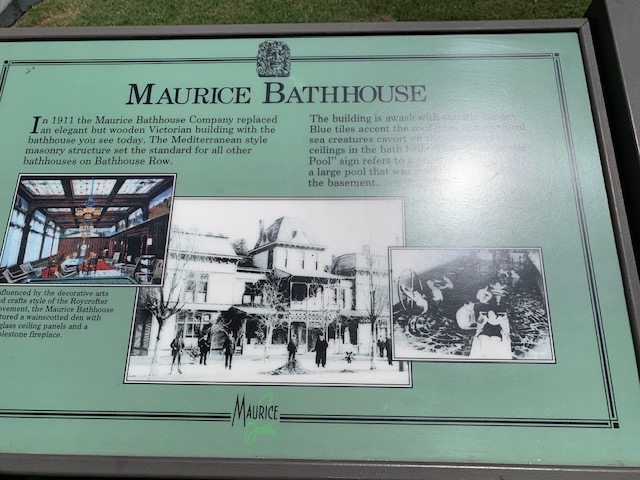
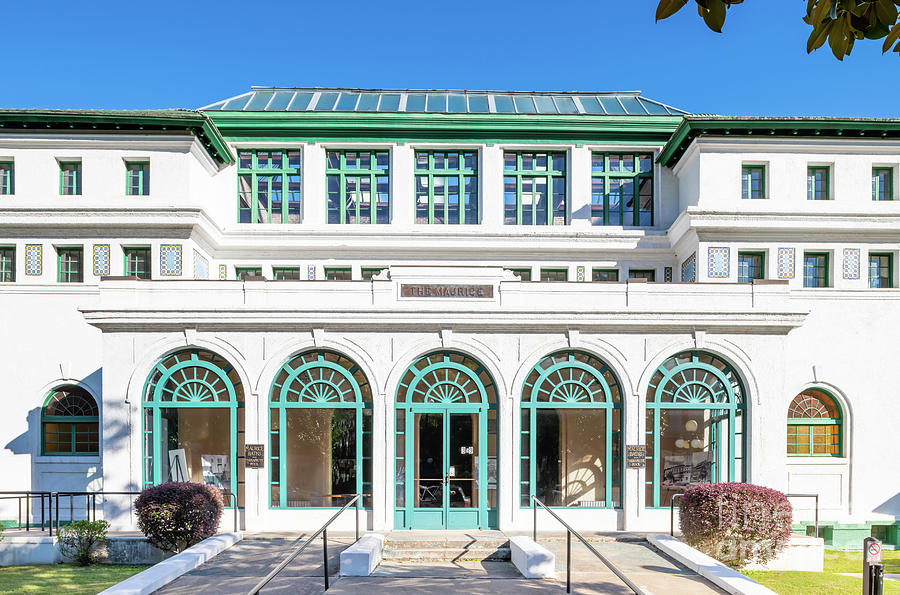
The Maurice in it’s day was compared to The Fordyce because it was just as stunning and as big. Today it remains vacant in hopes that it will re-open someday.
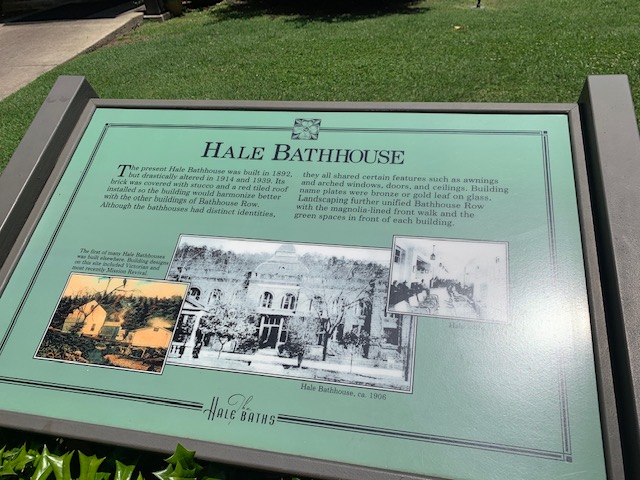
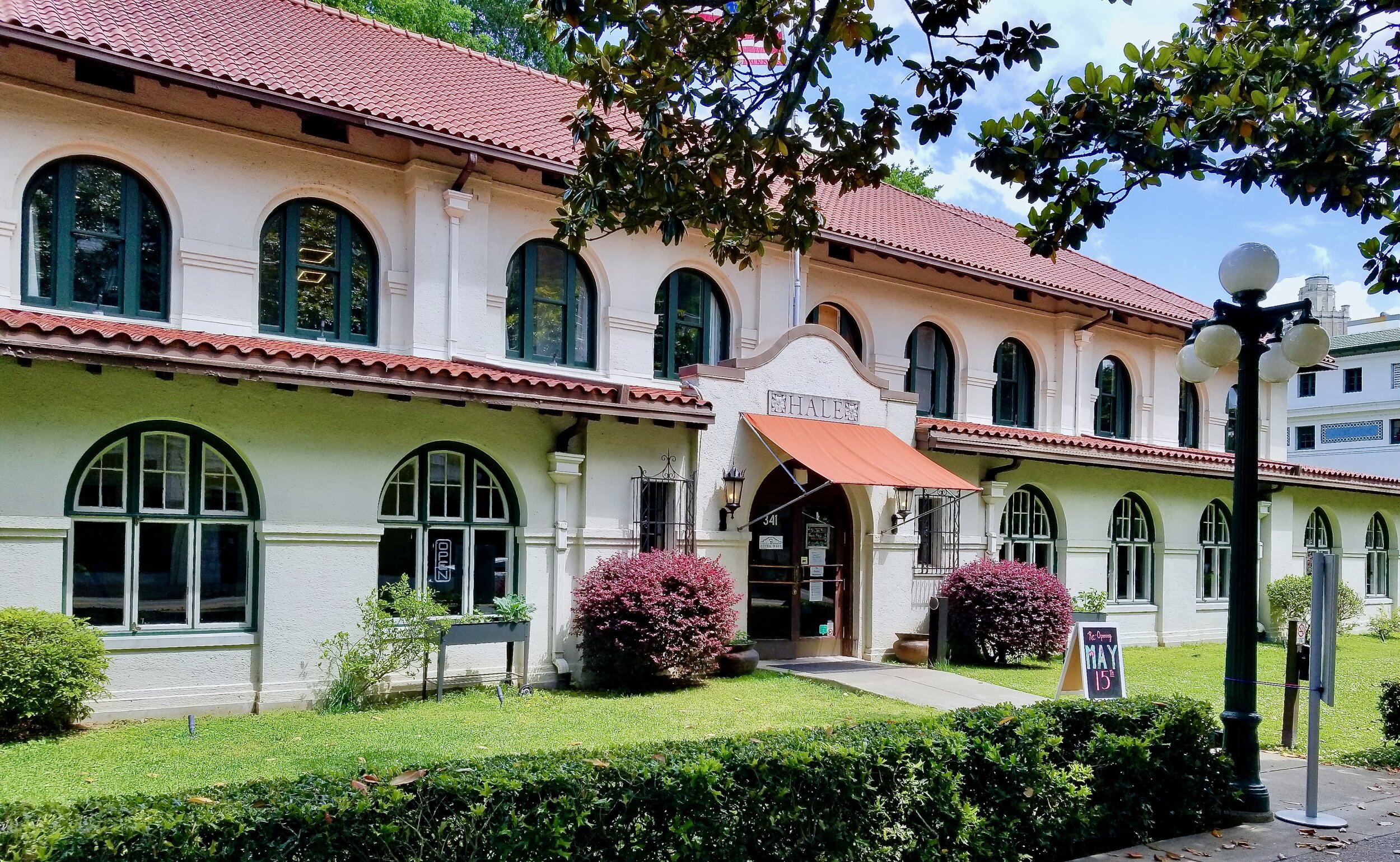
The Hotel Hale has been revived as a luxury hotel and the interior has been remodeled to include a mix of modern and mid-century modern styles. Guests can stay overnight in historic rooms and experience the thermal springs. If I ever come back to Hot Springs this is where I’m staying.
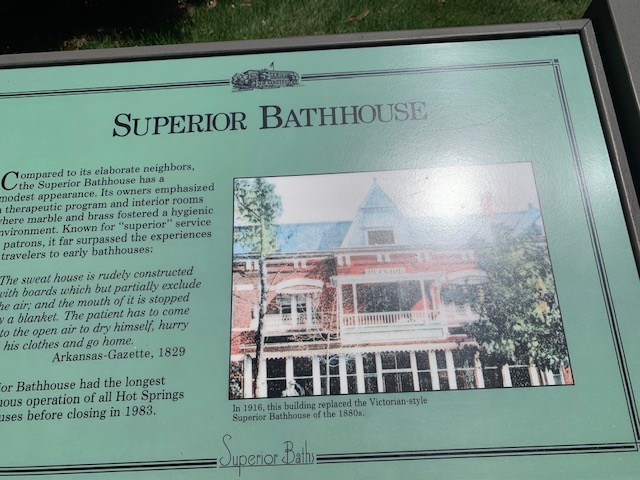
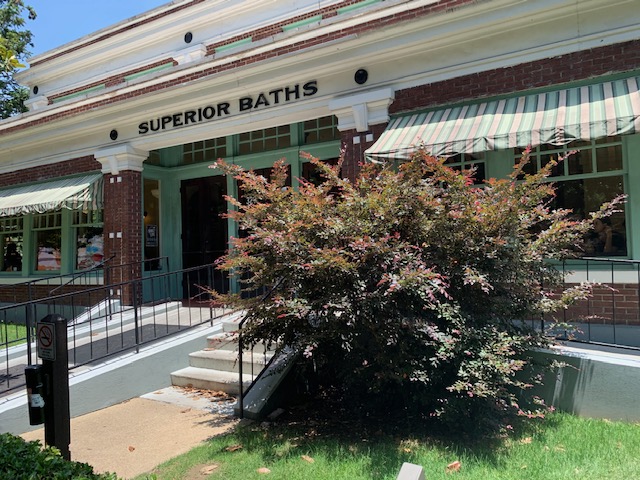
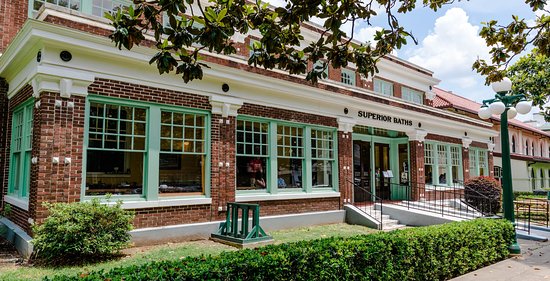
The Superior Bathhouse is now home to the only brewery in a United States National Park, and the only brewery in the world to utilize thermal spring water to make their beer. And we didn’t stop here? Like I said if I’m ever here again it’s the Hale Bathhouse and The Superior Bathhouse for me!
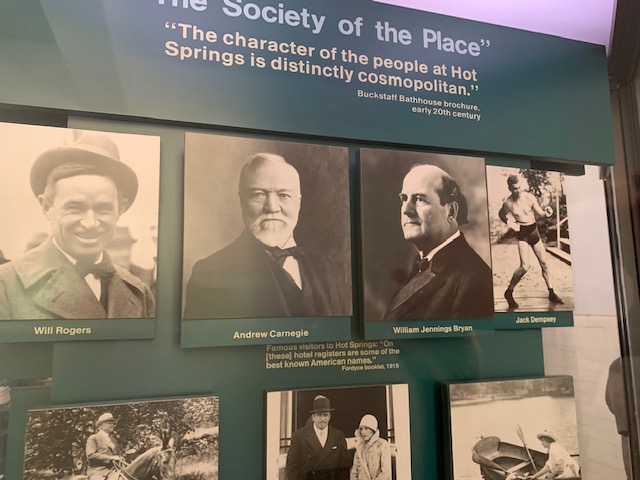
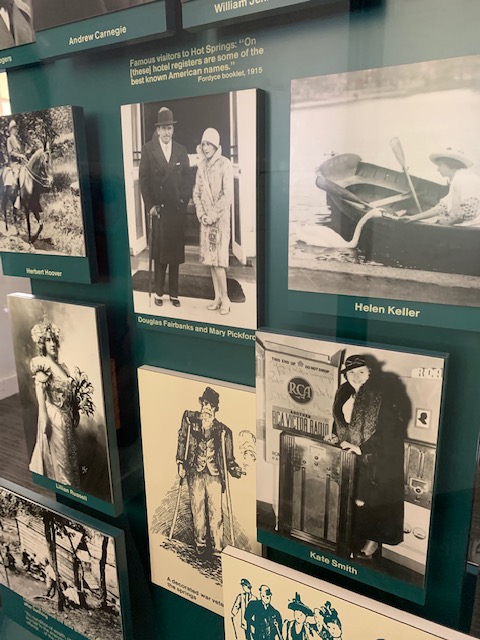
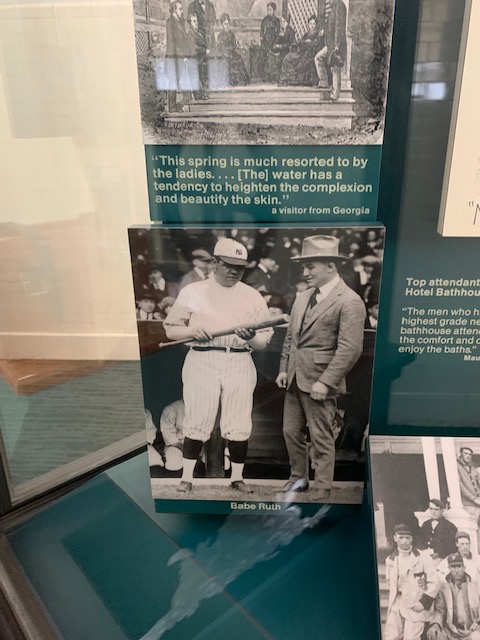
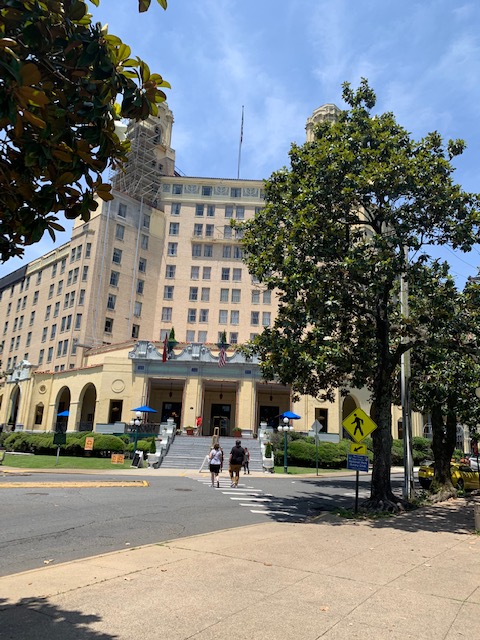
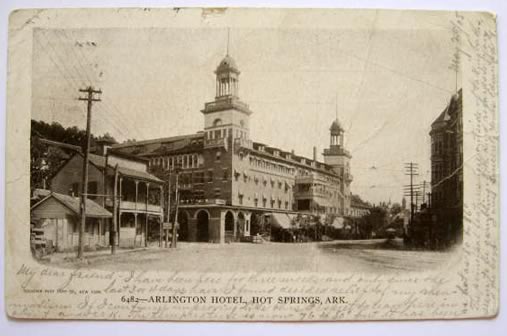
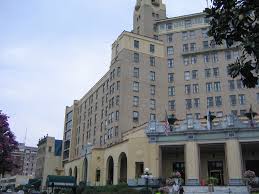
The historic Arlington Resort Hotel & Spa is the largest hotel in Arkansas with almost 500 rooms and suites. They have their own Thermal Bathhouse, where you can bathe in the famous mineral waters of the ‘hot springs’. The Arlington has hosted hundreds of grand balls and social events since 1875. Politicians, dignitaries, actors, gangsters and entertainment and sports legends, like Babe Ruth bathed in their bath house.
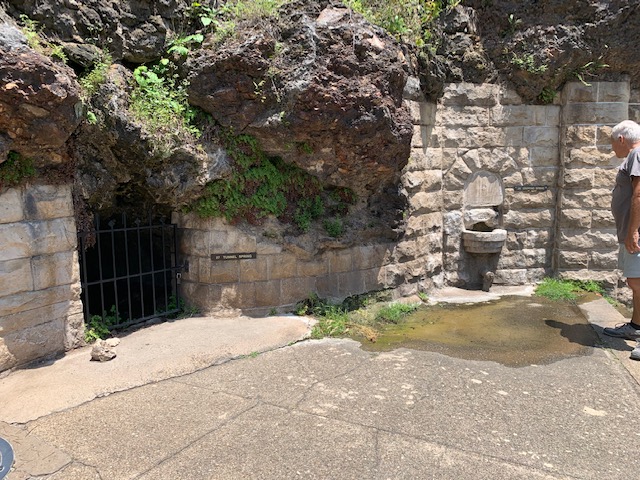
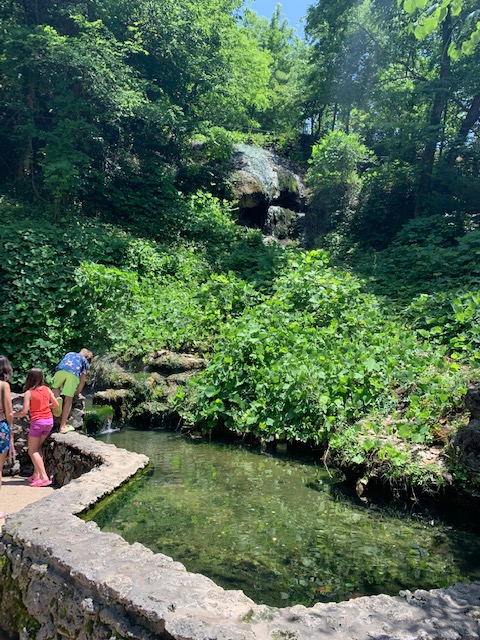
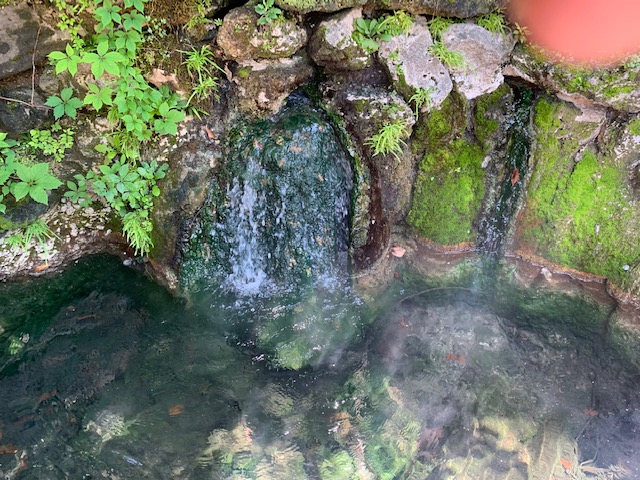
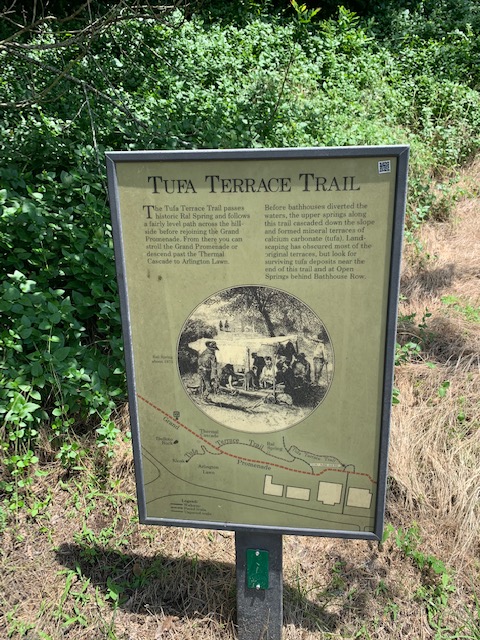
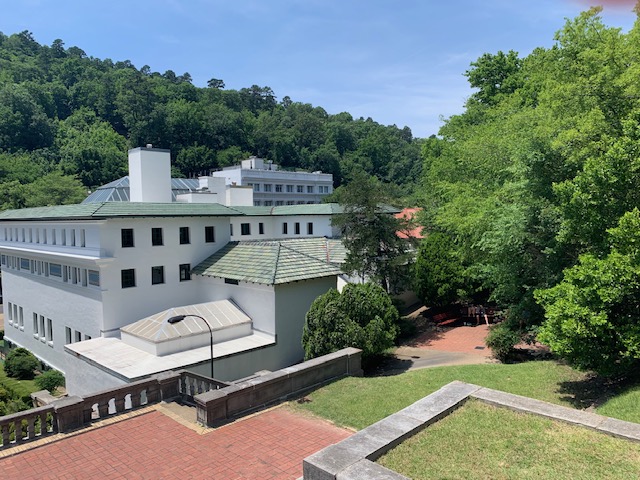
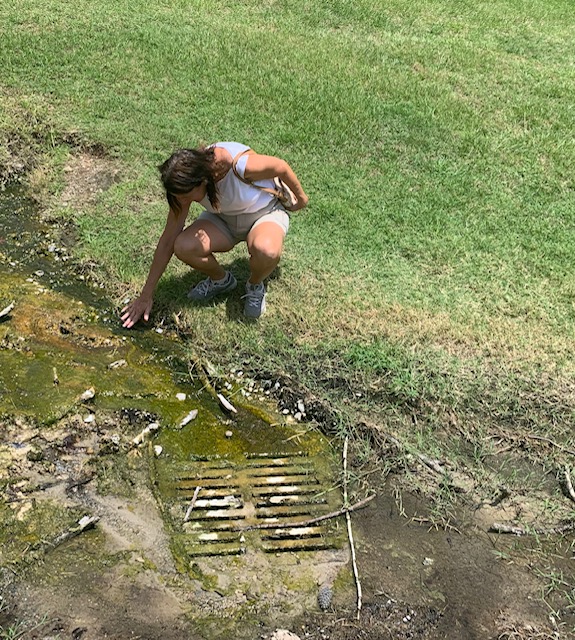
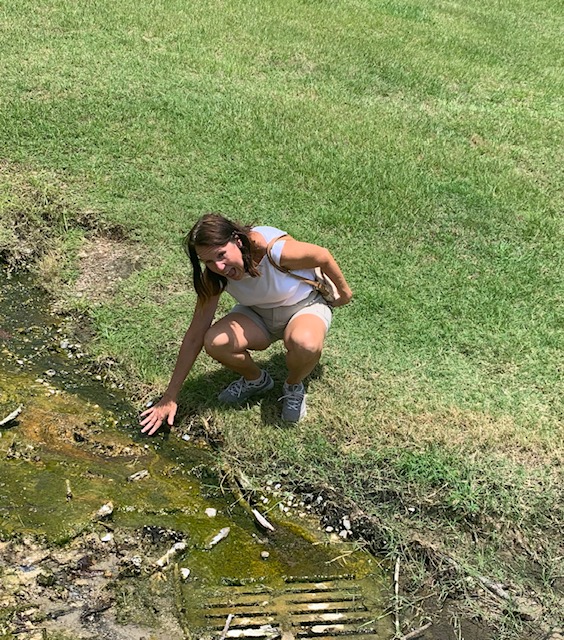
We wondered to the back of The Bathhouses where the hot springs are located. As you can see they don’t call them “Hot Springs” for nothing.
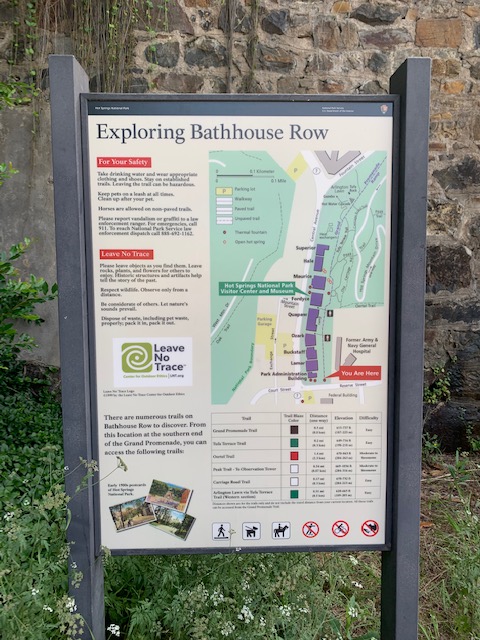
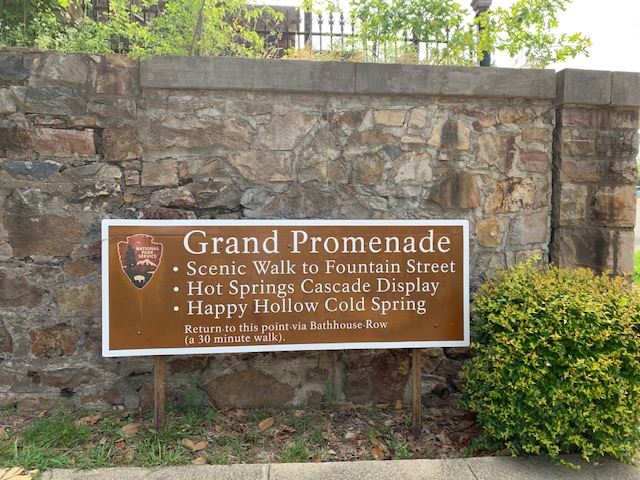
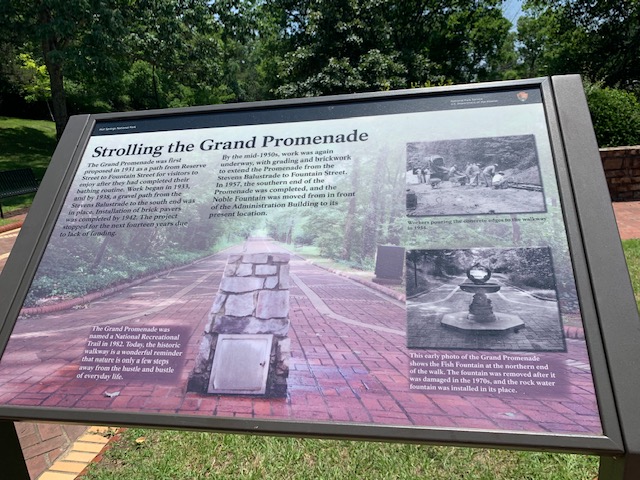
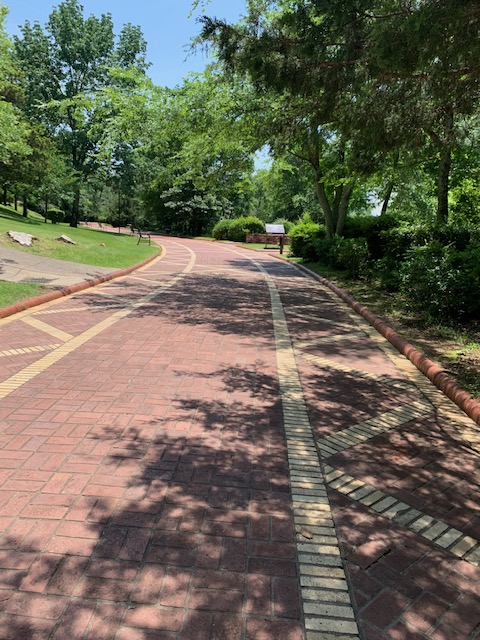
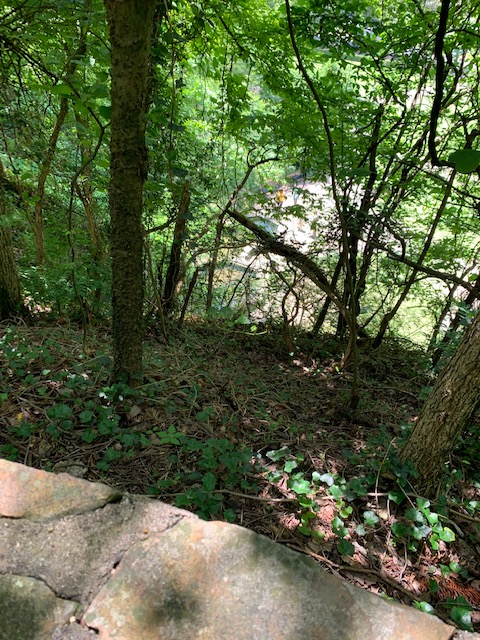
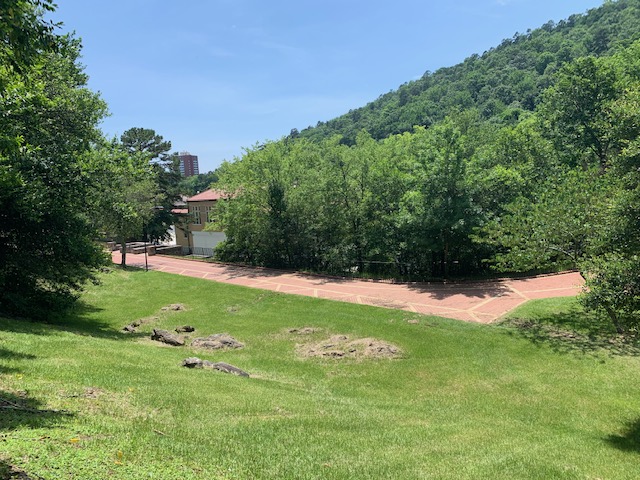
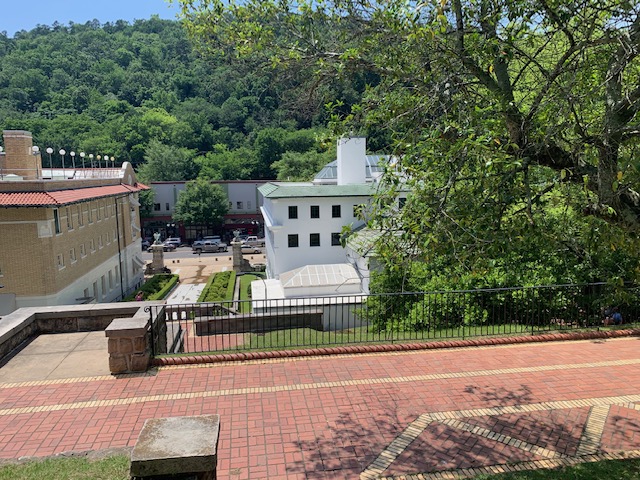
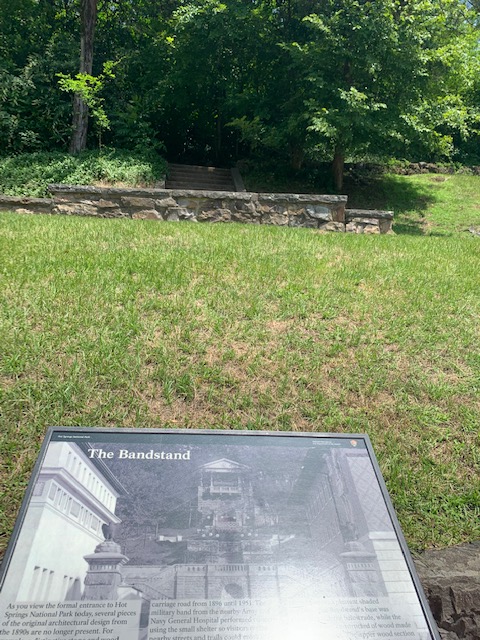
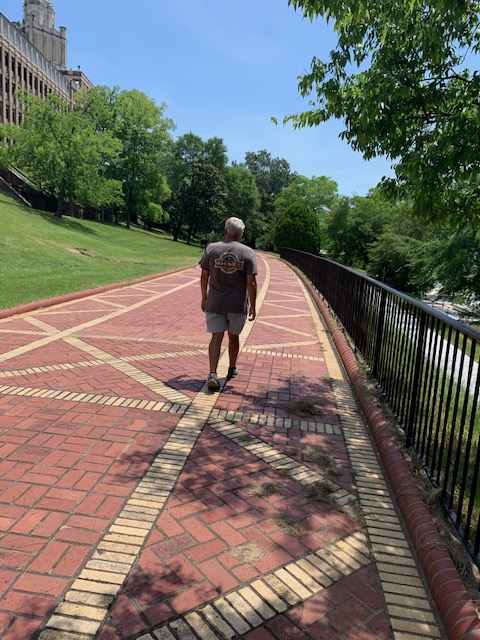
The Grand Promenade is a National Recreation Trail that runs parallel to bathhouse row, behind the bathhouses. It’s about a half mile long and made entirely out of brick.
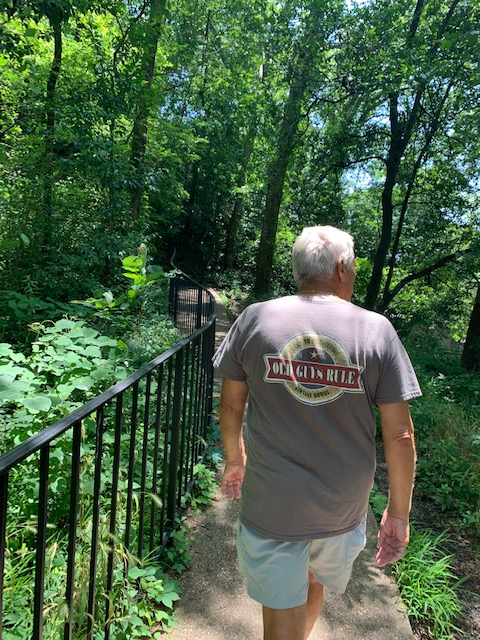
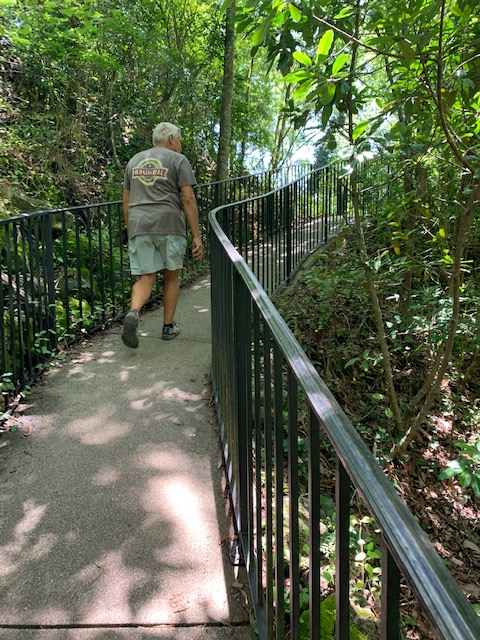
It was a really nice walk up the hill and behind the bathhouses. At different areas you can see the hot springs.
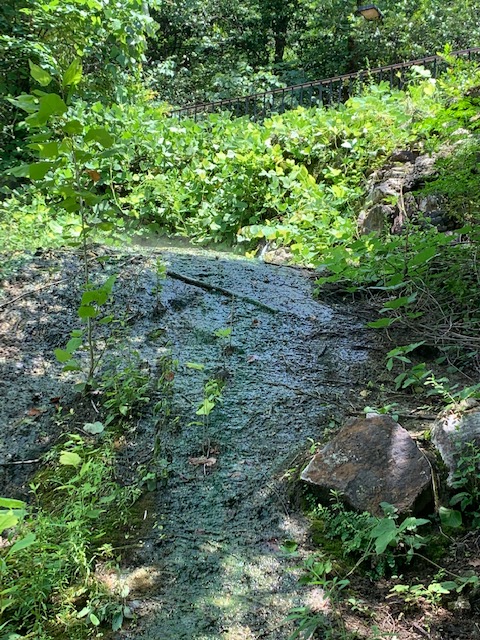
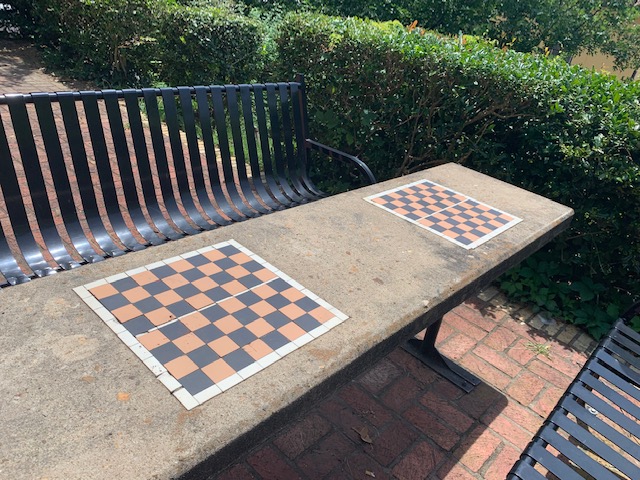
Yes, this small spring along side the trail was HOT!
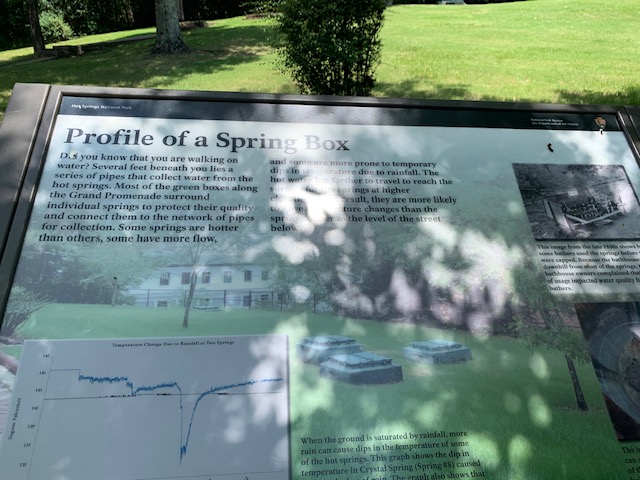
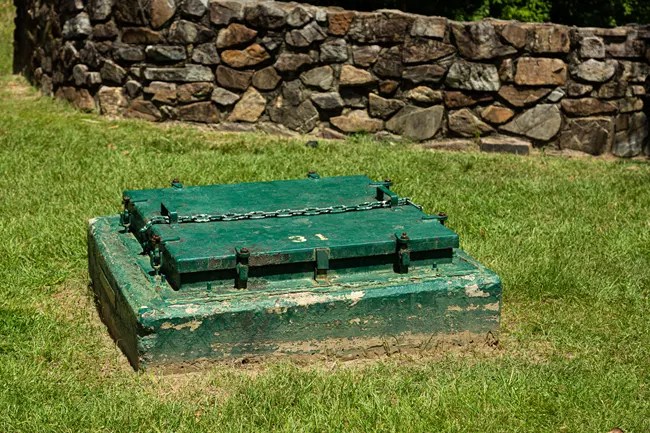
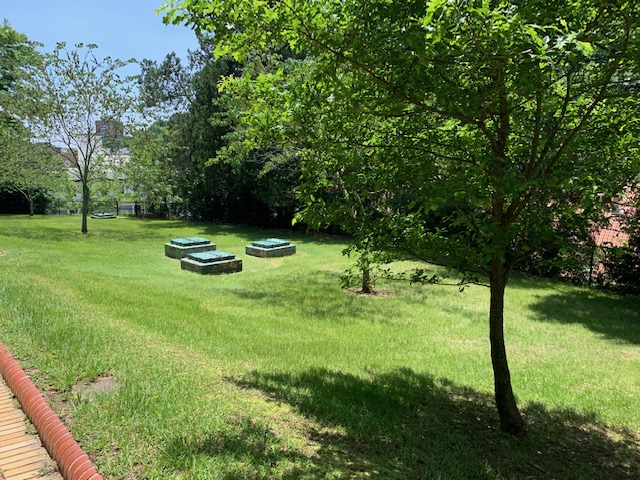
So now the Hot springs are covered up and are painted green and you can no longer soak your feet in front of everyone and relax.
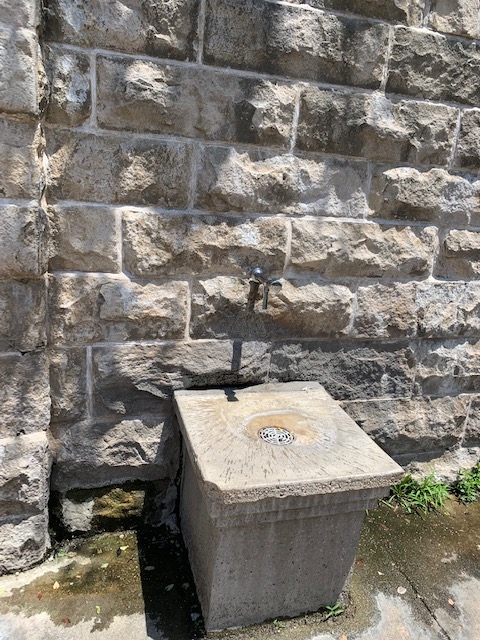
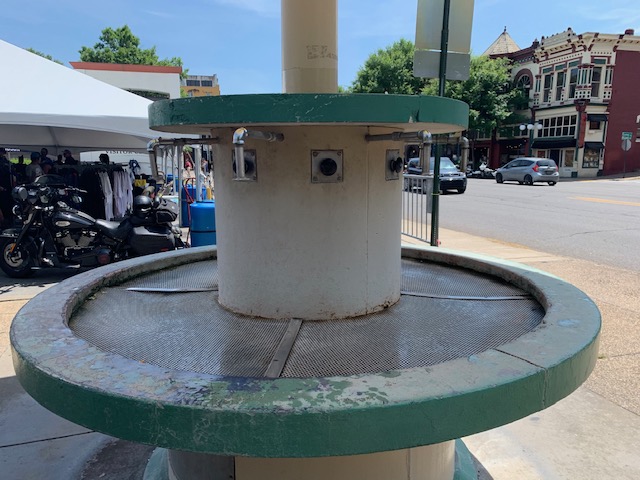
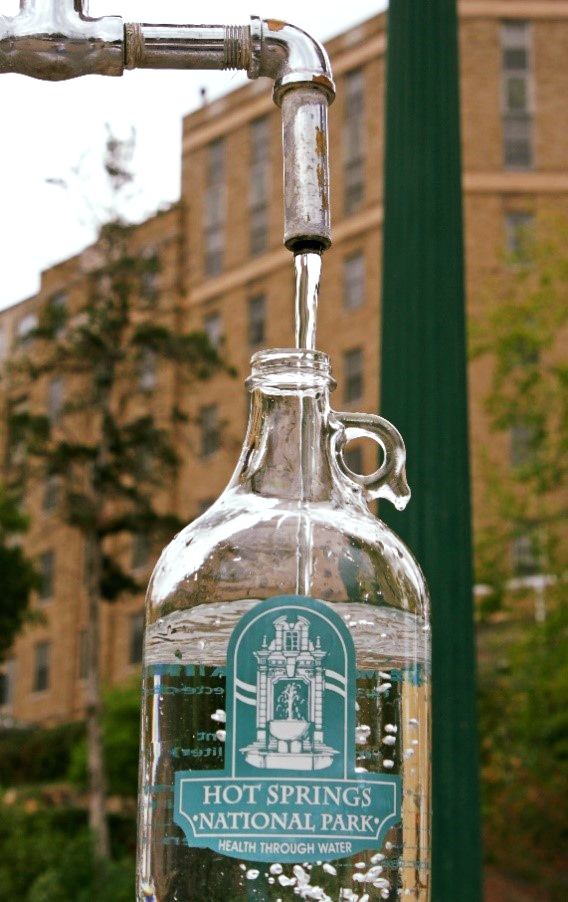
Hot Springs, AR has many cold springs too! They have many faucets and fountains and encourage you to fill up your containers for free. Actually you see people all day going to different places and filling up with DELICIOUS Hot Springs Cold Water.
We, left Lake Catherine state park this morning about 10;30 or so and got here a little after 1 pm. drove 131 miles today , not much but somehow we took the long way. The GPS was all screwed up.
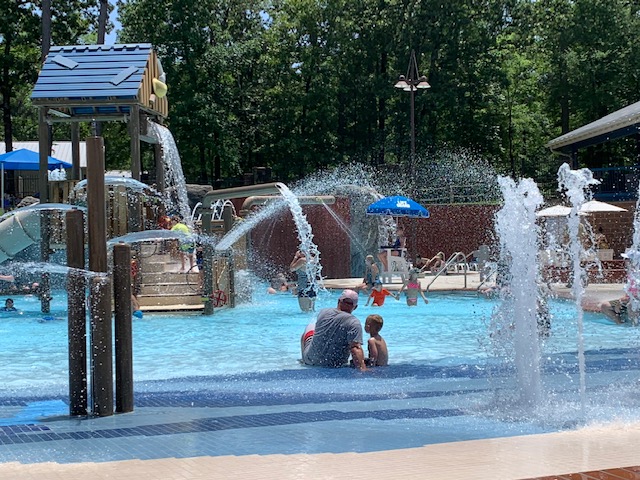
SO, Why are we here, well to dig for diamonds of course. This is the only place in the world where you can dig your self a diamond and keep it. They also have other semi precious stones here, which is what we will probably find. We have tickets for three days of digging, but that plan has gone out the window. WHY, well this week it is very hot, temps at 95 or higher and heat index of 110 and higher. So our plan is to go to the site early before 9, and dig around until maybe noon. Then go to the splash pool and enjoy that for an hour or so, and if feeling like it head back to the field for an hour or so. That’s the plan, but our bodies will tell us what to do ,and lately it hurts and i’m tired. HaHa.
40 acres of fieldShould be very refreshingOur spot at the park
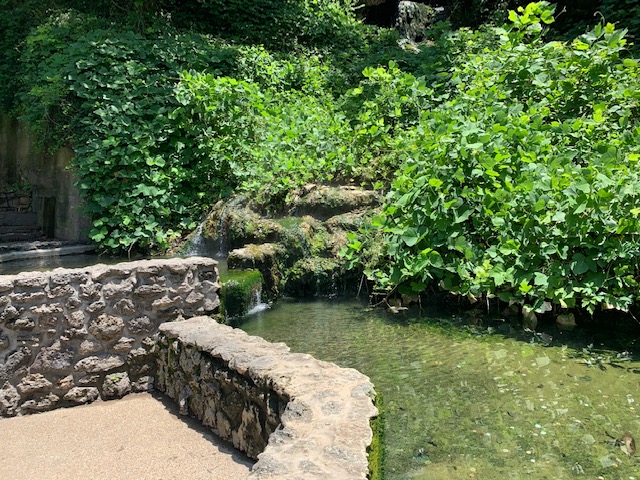
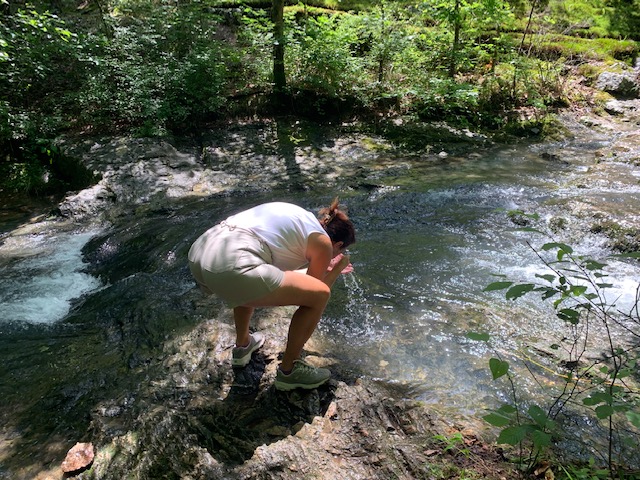
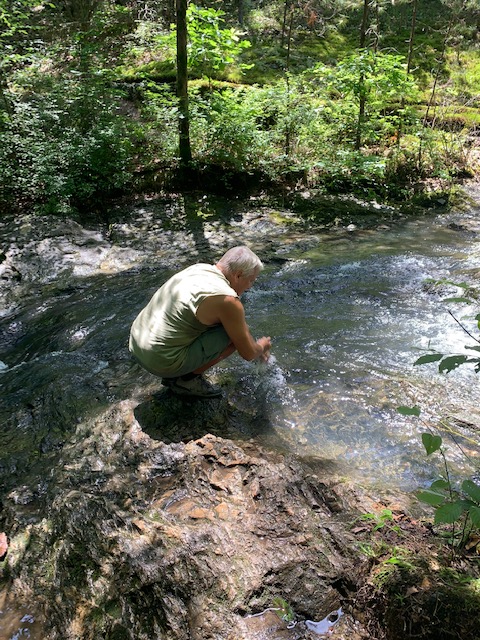
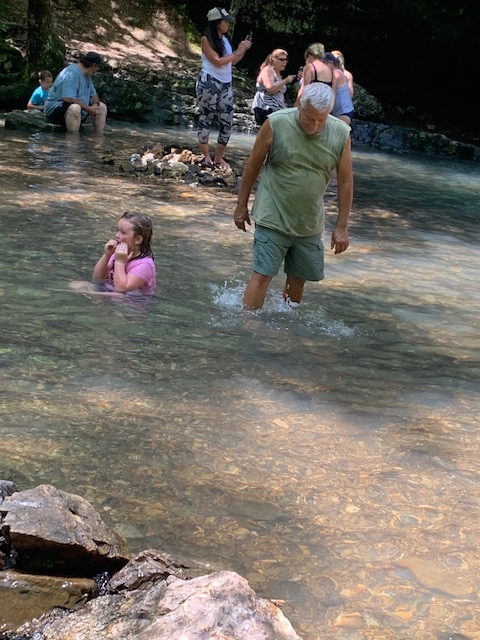
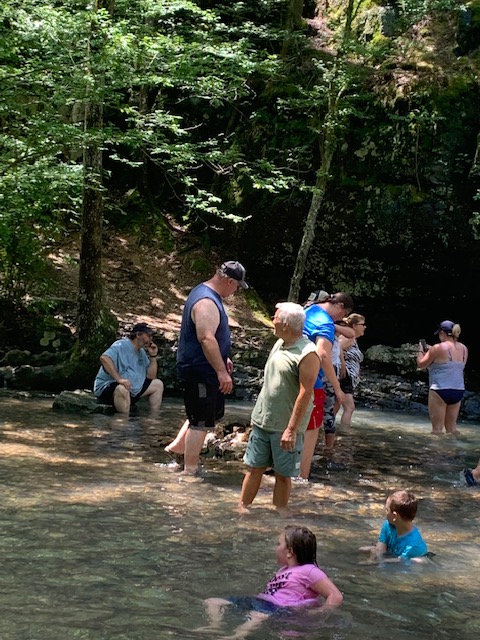
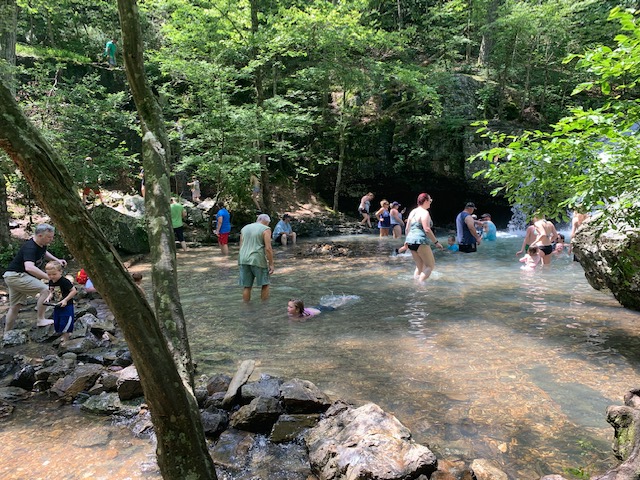
Besides going to Hot Springs I chose this park to stay at for it’s very popular waterfalls. Not a very high one, but the creek that feeds it is very meandering through the woods and has a series of slight falls along it. So in the 110 degree heat today we took the hike to it. It was very nice and filled with people. One thing we did not know was you can go in it by the falls, we were not prepared for that.
Well sort of, we are at Lake Catherine state park about 15 miles east of Hot Springs. Friday we left Parker’s Crossroads ,and drove 310 miles, to the state park. It was not fun driving through, Memphis and Little rock. We will be visiting Hot Springs National park while here, the park is right in the city, well historic district. The smallest national park there is. The picture below is of our spot, first time I had to back in a spot for well over a year. Melissa said I did good, that’s all that matters
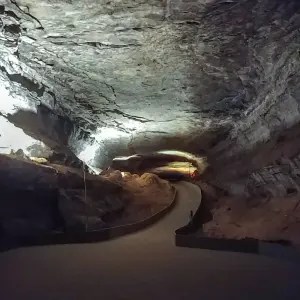
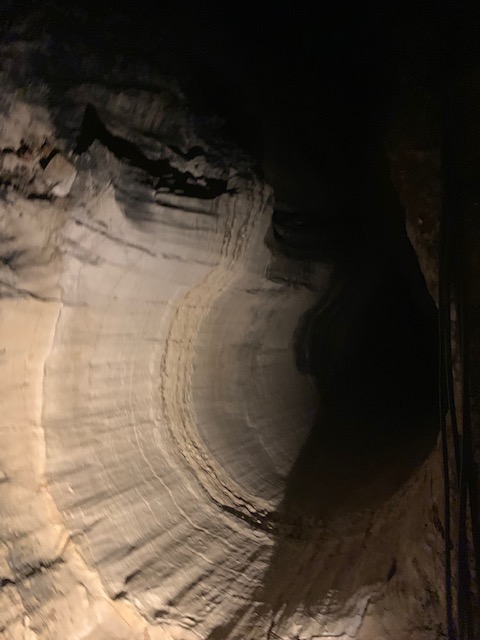
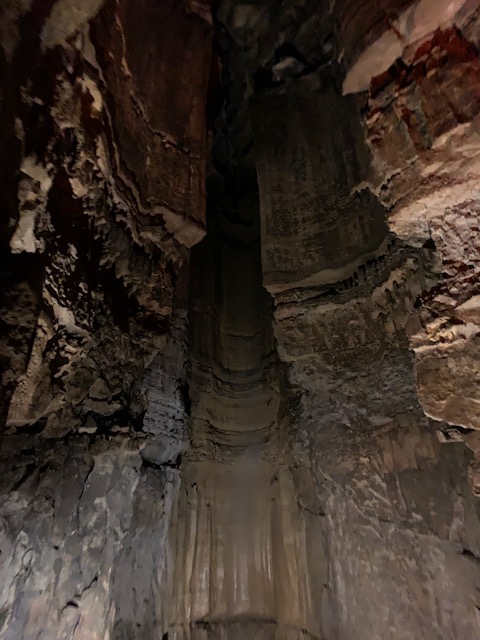
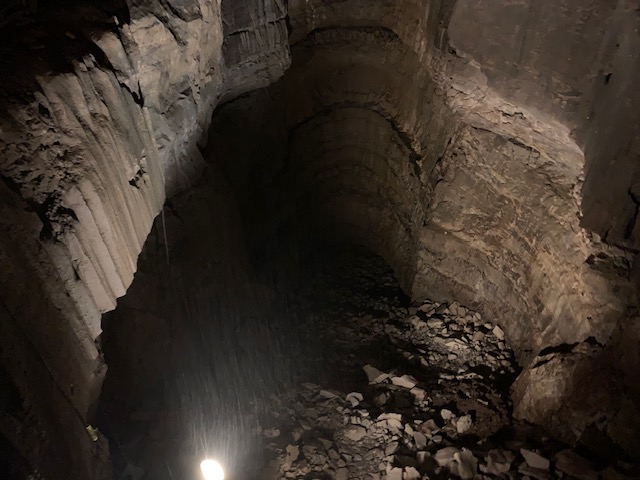
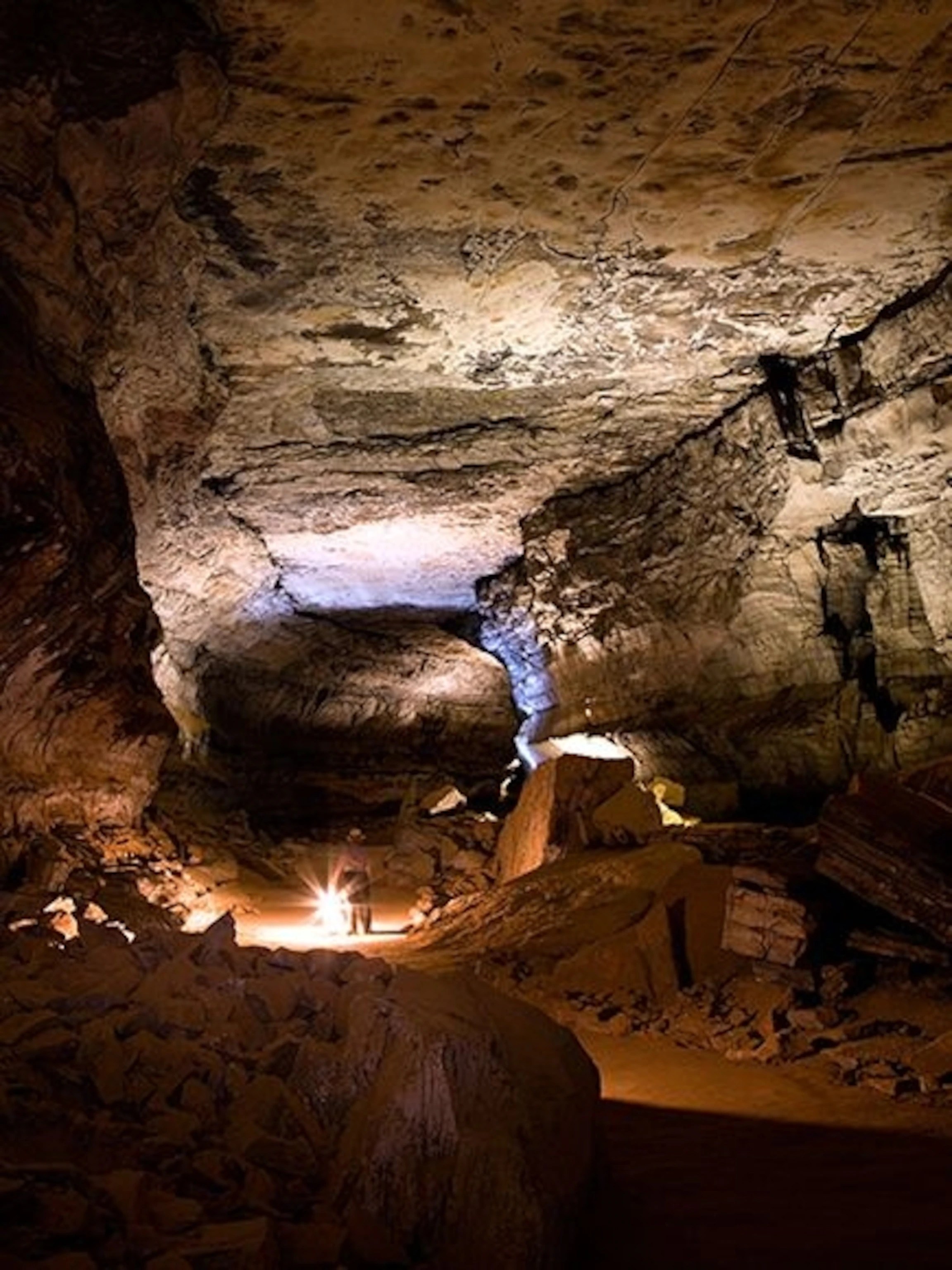
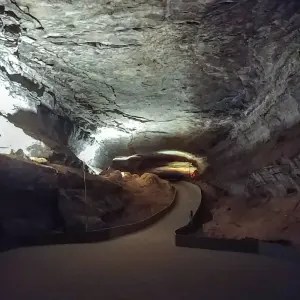
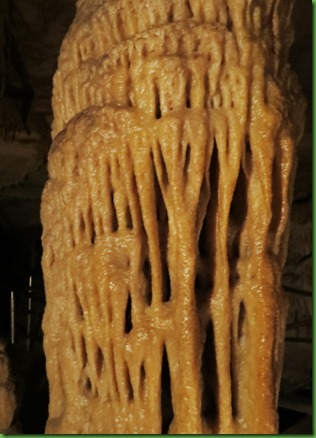
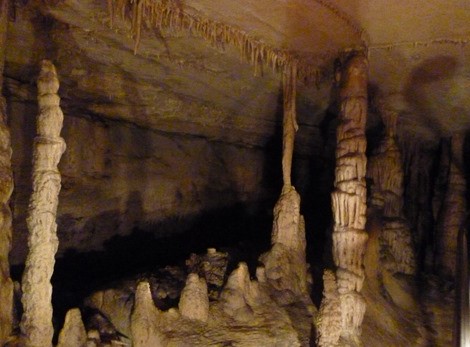
The caves were formed by the dissolution of limestone by water, a continuing process; their natural temperature is 54 °F with a relative humidity of a high 87 percent. They contain underground lakes and rivers and unique geologic formations, including stalactites and stalagmites, to which descriptive names, such as Pillars of Hercules or Frozen Niagara, have been given. There is also parts of the Green River valley and the rolling hills of south central Kentucky to check out. So even though it’s what’s beneath the surface that’s the main attraction, there are also miles of trails in the area ready to be explored when visiting Mammoth Cave.
Mammoth Cave is Unique
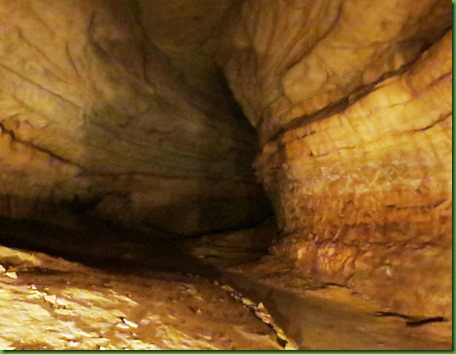
When most people picture a cave, they see dripping stalactites, growing stalagmites, and slick water-covered surfaces everywhere, you will see these formations, like Frozen Niagara, but not many. Mammoth Cave is different because the cave system is roofed by sandstone and shale, acting as a gigantic umbrella diverting water away from the cave, keeping the subterranean rooms and tunnels dry while preserving what they contain. So whatever was left behind from previous explorations going back 5,000 years when Native Americans sought refuge here – is forever frozen in time.
The park was established in 1941 and became a World Heritage Site in 1981. Although these events took place in the 20th century, the cave has been in use for thousands of years. Leading anthropologists estimate that Native Americans discovered the cave as long as 4000 years ago.
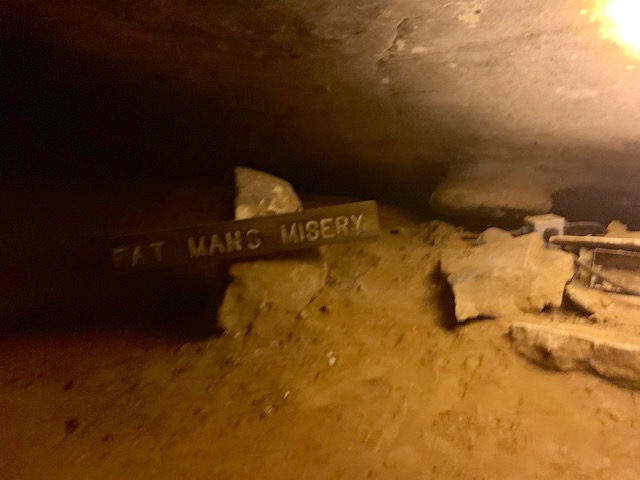
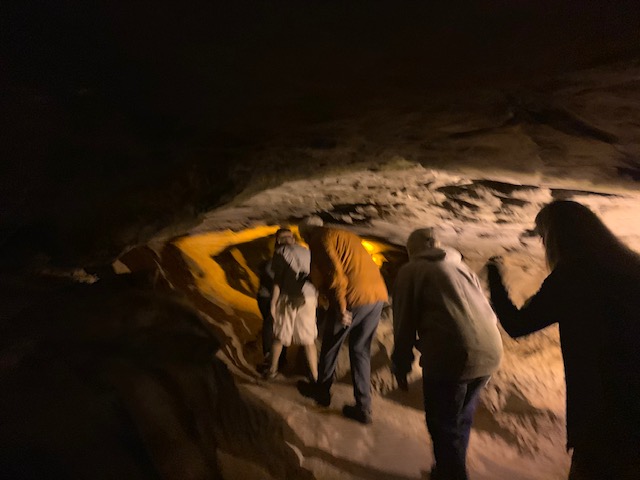
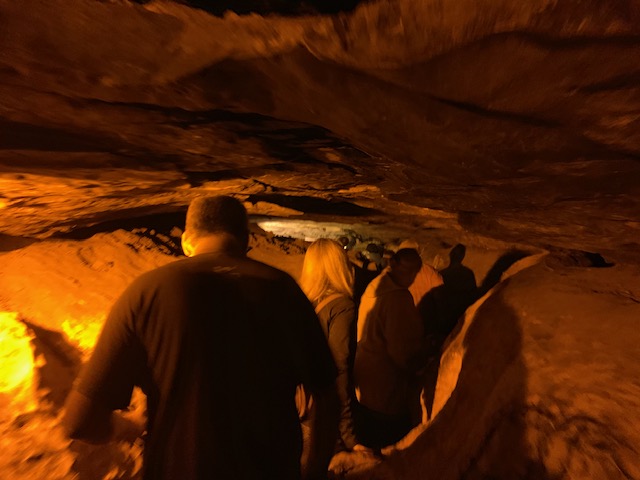
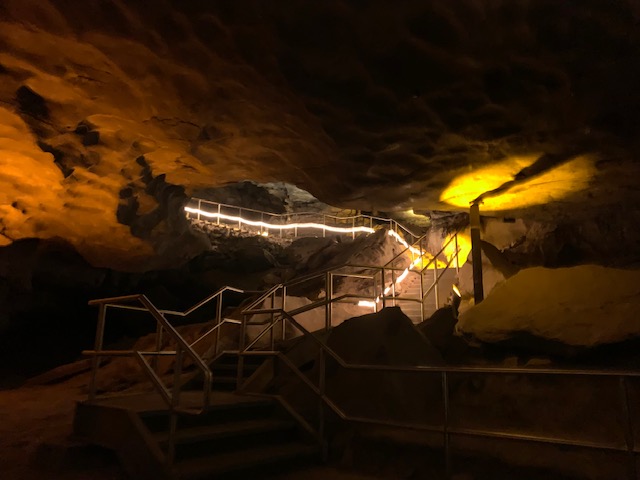
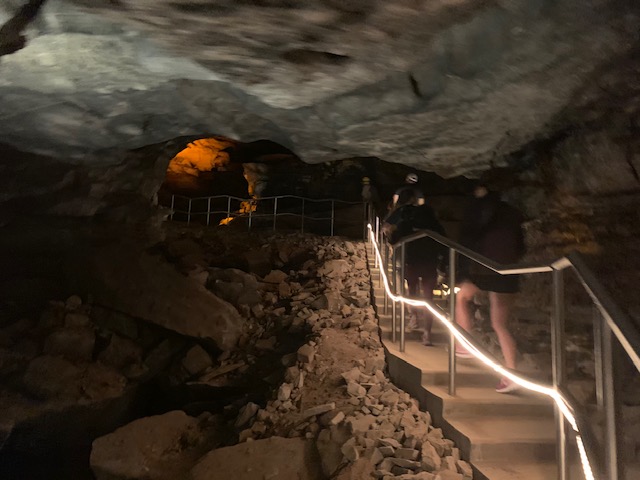
The History Tour – The first tour we took. starts at the main entrance of the cave, you take 440 steps down into the cave itself to explore several major features. Included are stops at Mammoth Dome, Bottomless Pit, Fat Man’s Misery (squeezing in tight spaces required), Tall Man’s Misery (crouching required), and saltpeter mines ands different huge areas of the cave.
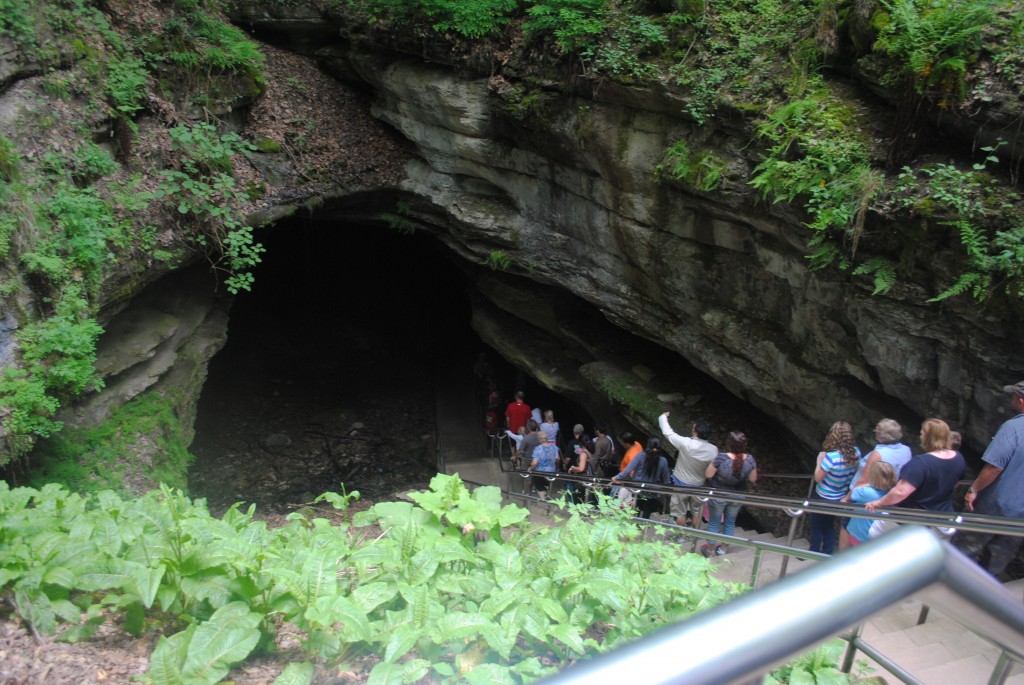
The cave enterance
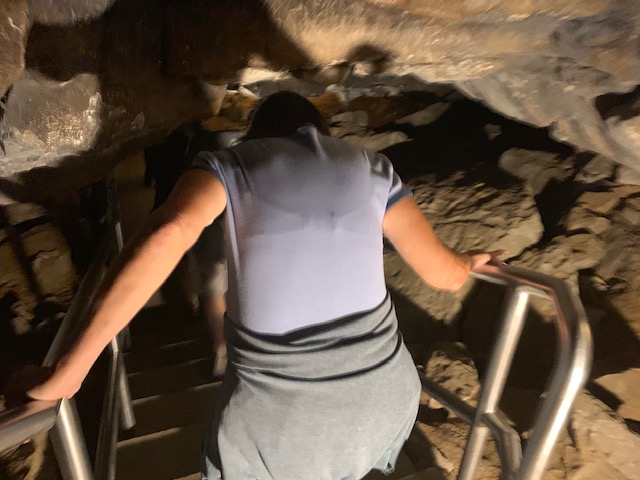
Going down the stairs into The Rotunda which is 70ft high and seems to keep going forever.
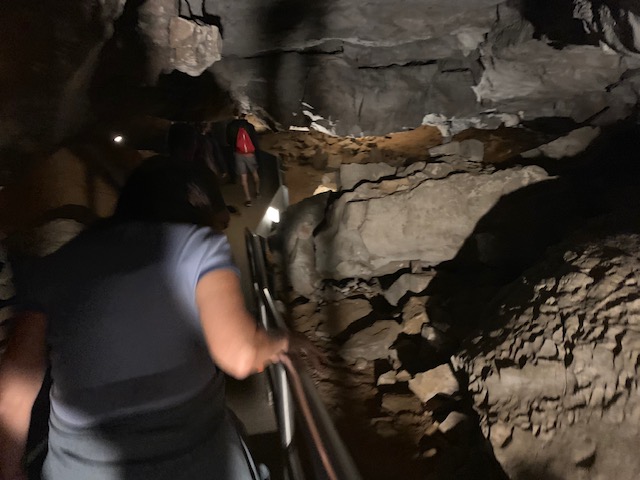
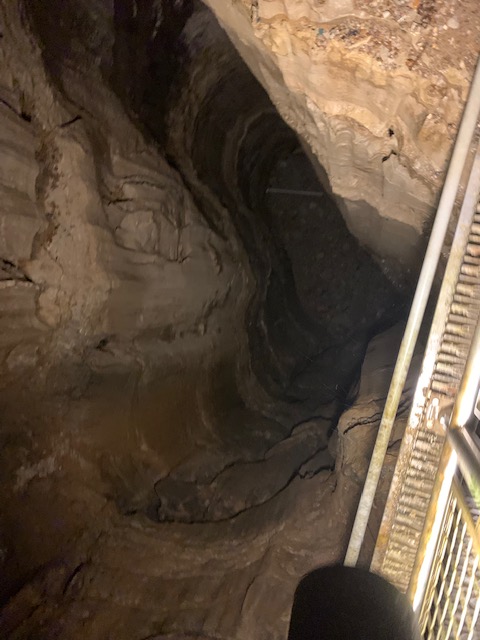
We kept going further down going past The Bottomless Pit.
Fat Mans Misery & Tall Man’s Misery – We had to duck low or walk sideways to get through some of the sections of the cave.
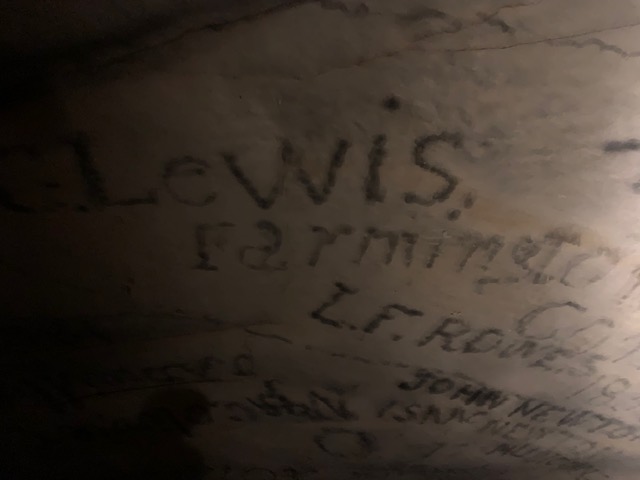
This writing was done with the flame from candles and is all pre-1940s, when they declared Mammoth Cave as a national park.
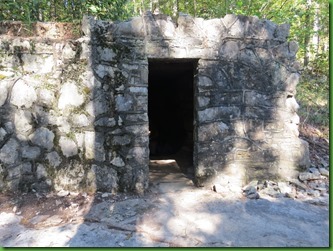
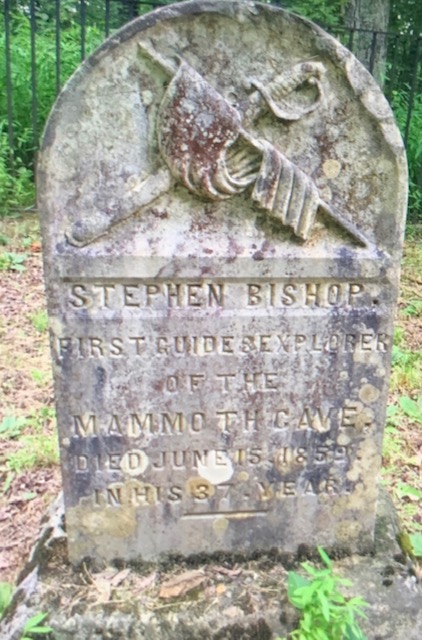
We learned all kinds of history while touring this cave system, from the different geological formations to how humans used the cave. Our tour guide Eric told us stories of slaves who led guided tours during the 1800s, extracting part of the rocks to make gunpowder during times of war, and how all they had was candlelight to guide them underground, a mid-19th century stone built hut used for treating tuberculosis. A few years back there was also a restaurant inside called “The Snowball.”
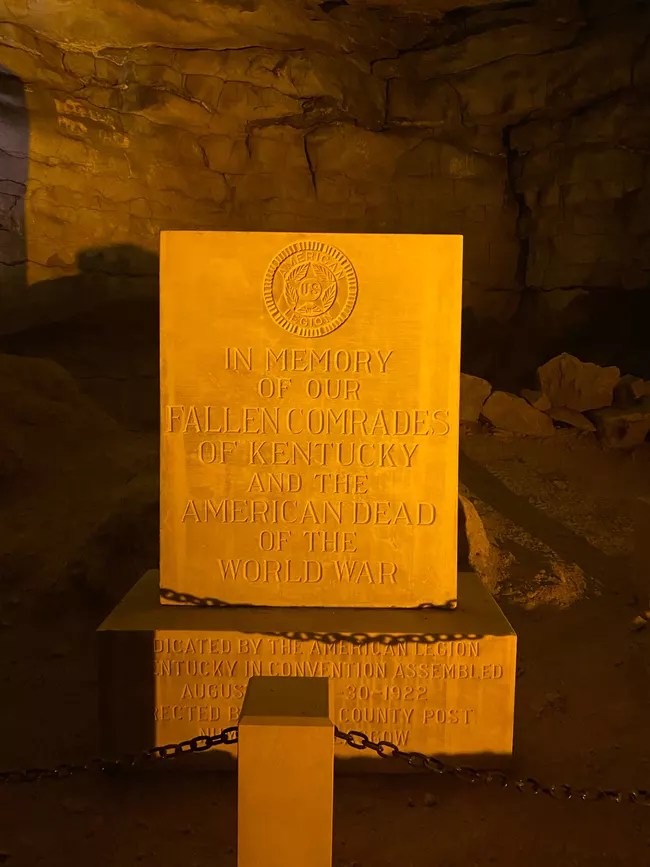
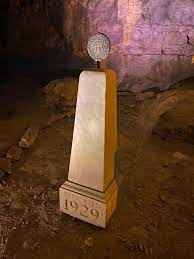
On August 30, 1922, as part of the American Legion Convention in Louisville, Kentucky, a monument was placed inside Mammoth Cave to honor the fallen of the Great War. Inside the monument, 35 states each placed a list of the fallen soldiers from their respective states. In 1929, a second monument was placed by the America War Mothers to also honor the fallen of the Great War.
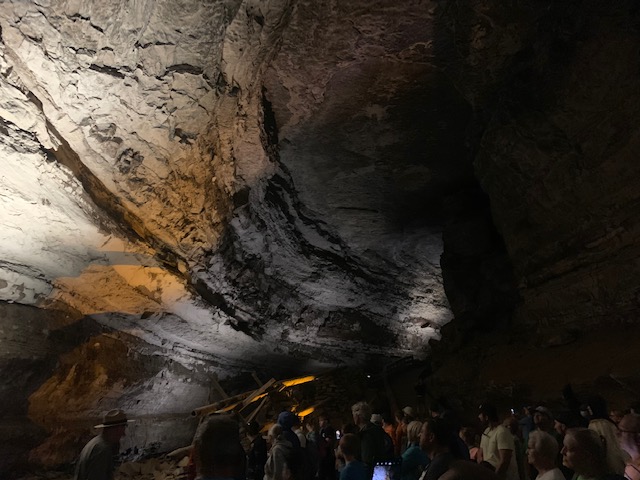
There is in a huge concert hall in Mammoth Cave
Imagine hearing music reverberating through caves or echoing across mountains. That has to sound incredible!
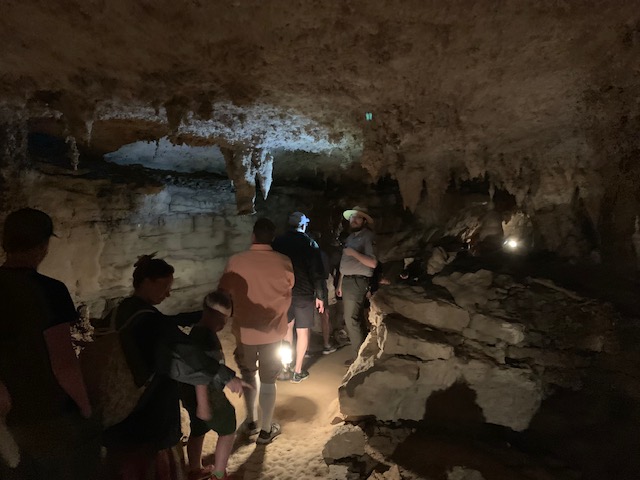
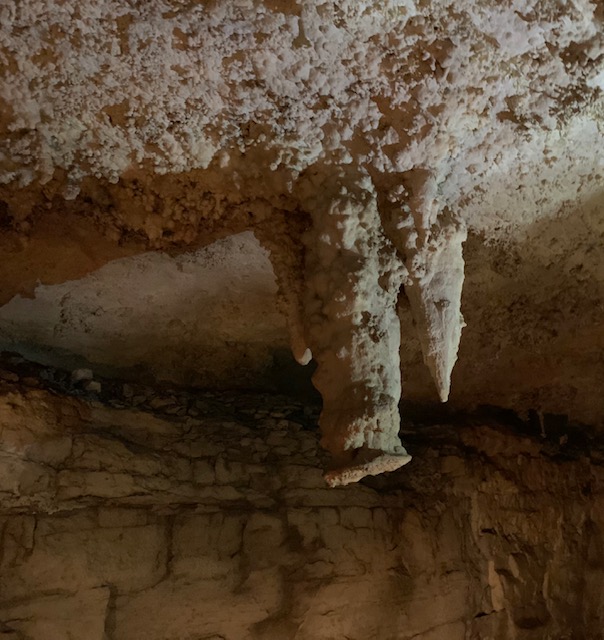
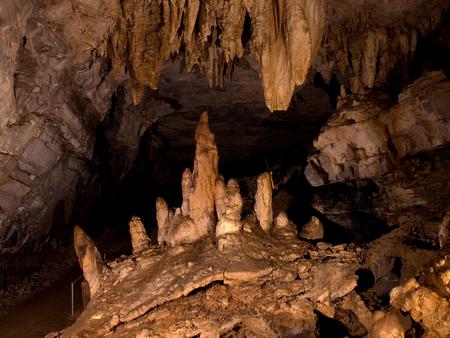
Our next tour -The Great Onyx Cave Lantern Tour, is in a remote area of the cave system on Flint Ridge and one that is not known to be connected to Mammoth Cave yet. Our guide Ranger Rick, told us by next year it would be connected . We took a 20 minute bus ride to get there. This cave has all the cave formations and such.
Cave Entrance
The story of this cave is a bit lengthy so I’ll try to be brief. It was rediscovered in 1797 after being forgotten for a long while. Mammoth Cave passed through a series of owners each of whom had his own vision for what to do with and in the cave. From the early days, the residents of central and southern Kentucky used the caves for a wide variety of purposes. They provided shelter from storms, preserved their milk, canned food and even served as hiding places for moonshiners and their stills. But as the turn of the last century approached, it was becoming obvious that Mammoth Cave was a huge commercial success so residents wanted to use the caves to draw tourists.
Since a family controlled most of the land on the ridge where Mammoth Cave was located, the exploration began to focus on neighboring Flint Ridge, which was separated from the Mammoth Cave The locals desperately wanted to get into the cave business and to start promoting their own caves as competition for well-known Mammoth Cave. Eventually Edmund Turner bought “The Great Onyx Cave.” In 1915 he named the place, helped to build the entrance and developed the trails. He later passed it to his daughter Lucy Cox.
Great Onyx was opened to the public in 1916 as a direct competitor to Mammoth Cave. During this time, Great Onyx Cave became one of the most successful of the caves on Flint Ridge. There was even a successful “ Great Onyx Hotel at the cave, which offered overnight accommodations and delicious meals. The Great Onyx Cave is in pristine condition, preserved by virtue of it being privately owned for so long, by its not seeing the volume of visitors who’vepassed through the caves at Mammoth over the past 200 years. Lucy Cox finally sold to the National Park Service and became a part of the National Park in January 1961.
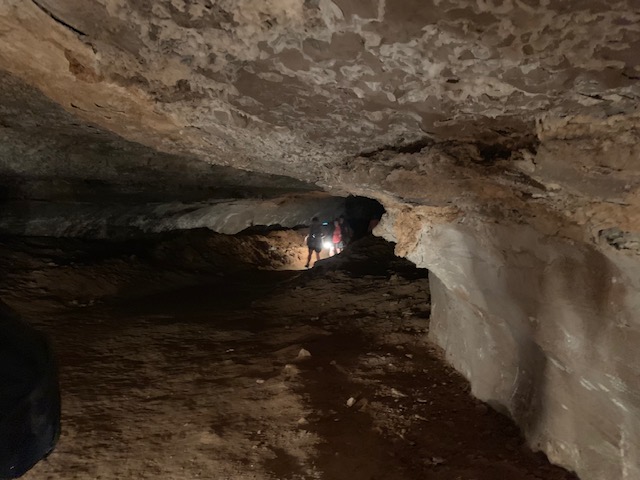
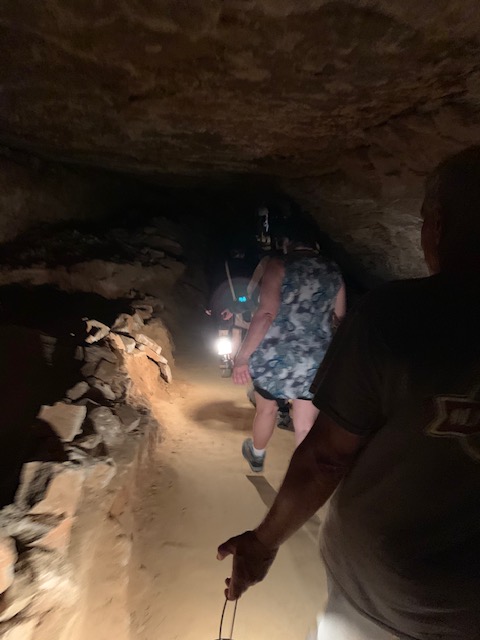
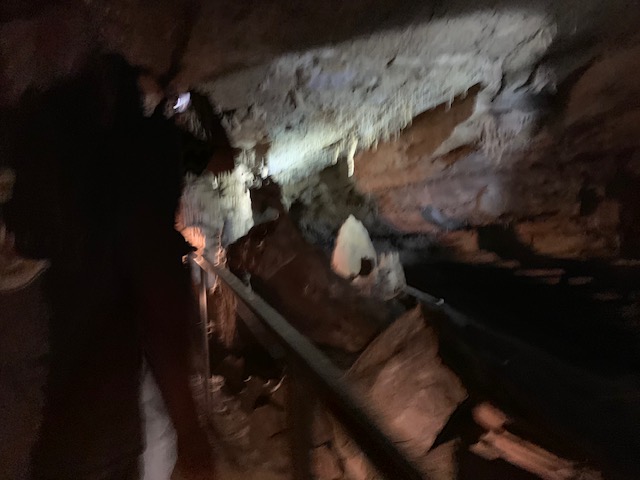
This cave has no artificial lights so our guides gave some of us lanterns to use, there were 40 of us and ten lanterns. Dave was lucky?, he got to carry one. Seeing the cave by lantern makes you feel like you are in one of the original tours and seeing it just as they did. The only person allowed to have a flash light is the ranger who uses it to point out things for us to see.
old picture of Great Onyx Cave
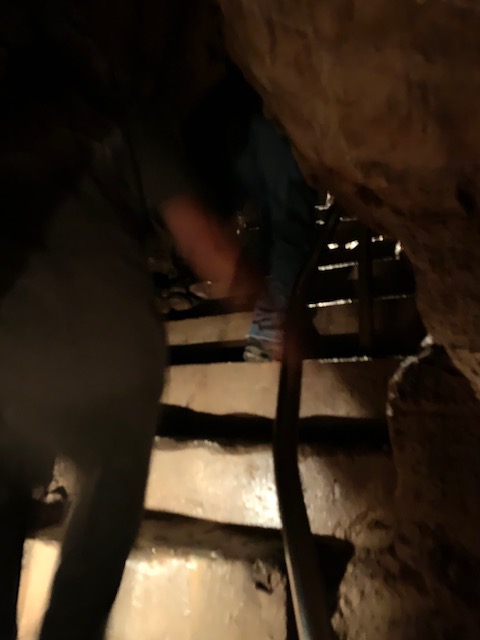
Down in we go. … It takes a bit for your eyes a to adjust to the steps going down into the darkness, but the lantern light is enough.
Our guide told us people came from all over in the 1800s to see The Virgin Mary fossil in the picture above.
At one point on the tour our guide took all the lanterns and walked away, this is what we saw.
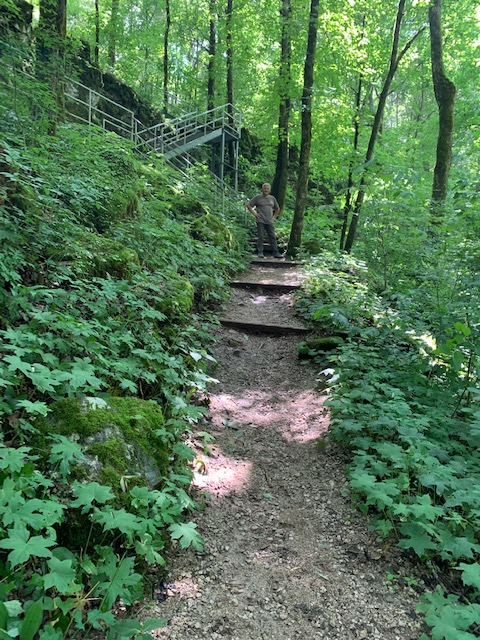
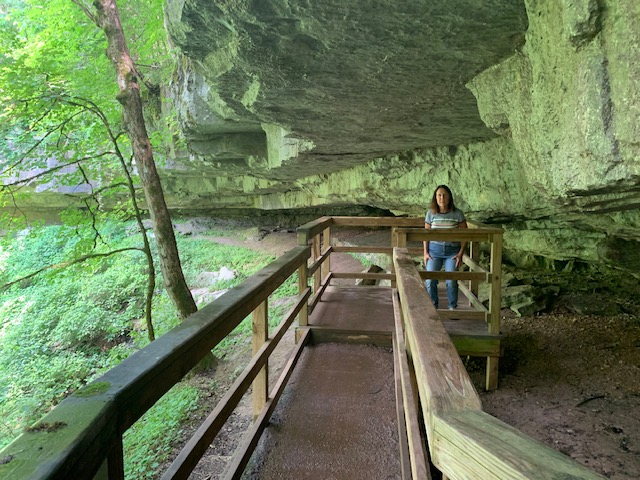
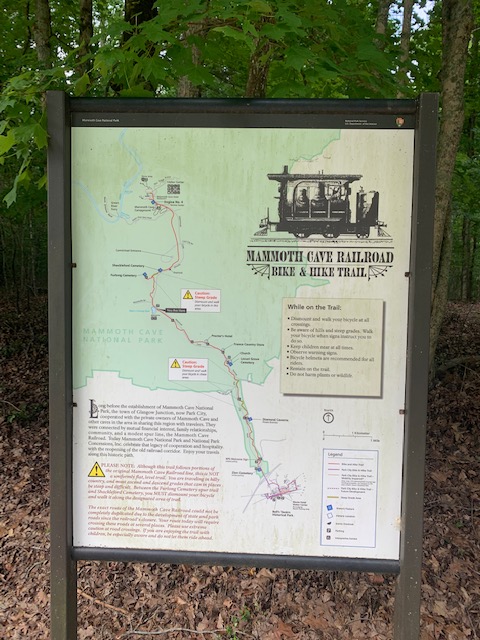
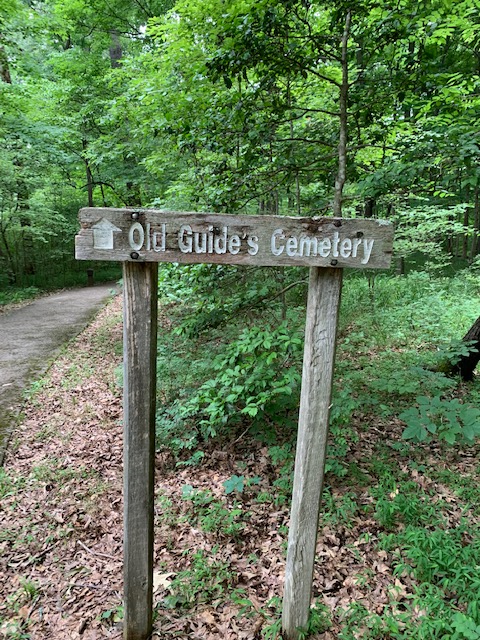
Trails we took above Mammoth Cave
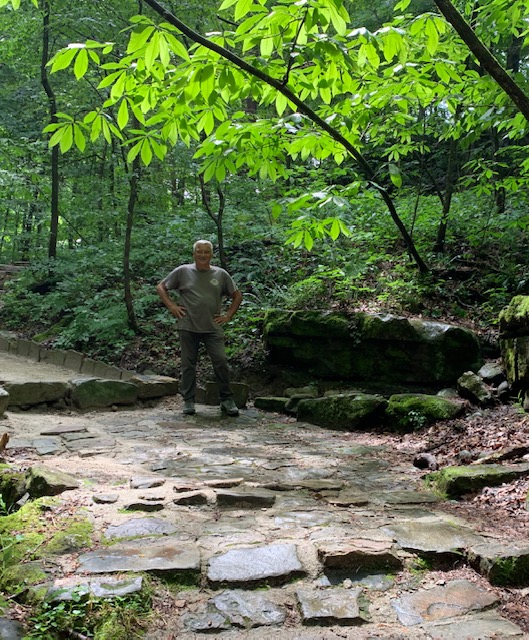
We enjoyed these trails.
I found Mammoth Cave to be amazing, how can anything that big be under ground? I also found it to be kind of eerie, damp but also very alluring. I asked Dave what he thought and he said it was G R E A T! If your ever in Kentucky don’t hesitate to go.
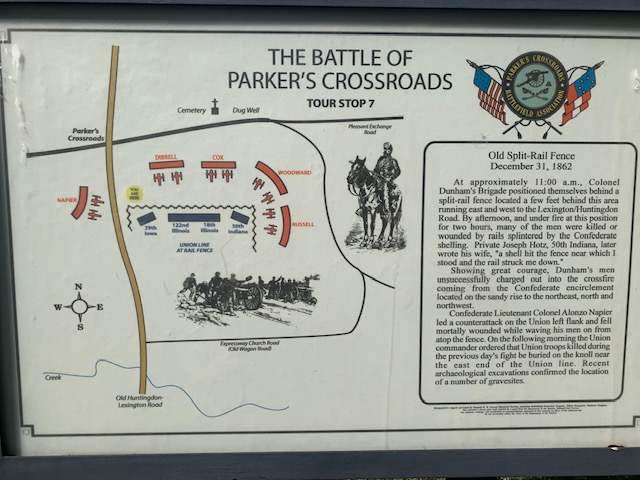
We are now in the Parker’s Crossroads Rv park, for the night, The park is small but nice, see picture below. We left Cave City Ky, this morning and drove 193 miles to get here. Lots of truckers, and i suspect lots more going through Memphis tomorrow. When we got here today , I noticed a sign that said Parker’s Crossroads Battlefield. After we got settled we took a late afternoon, to the visitor center and a very nice almost 2 mile walk on the battlefield. With all my knowledge and being a civil war buff, I had no idea there was a battle here. Interstate 40 runs right through the middle of it. As the interstate was built in the 60’s there was not any of the battlefield land saved. Today they would have to go around the battlefield to put it in. SO, you say what happened here, let me tell you.
PARKER’S CROSSROADS BATTLEFIELD.
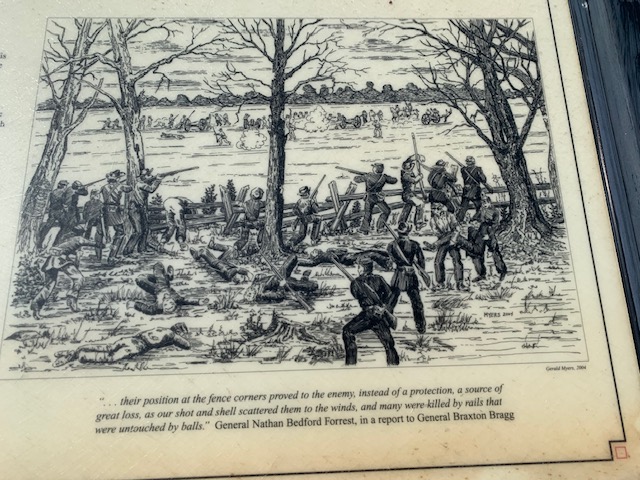
In late December 1862 confederate General Nathan Bedford Forrest had been raiding the area with his 1800 man cavalry brigade, causing havoc for the union army all over the place. The union head he was camped a few miles from Parker’s Crossroads. So the union sent a force of 1500 men to attack him. On December 31, 1862 The union arrived at the crossroads and set up a line of battle, about a mile from the actual crossroads. Forrest’s dismounted cavalry men went in action, and drove the union back, the union counterattack. Forrest then ordered his artillery to the front of the men and opened up, driving the union back a mile to a small rise, where a long split rail fence was. The union thinking they had found a safe haven hunkered along the fence line,all the while being bombarded by artillery. Forrest then ordered artillery to surrounded the union positions. For hours the shells blasted the rail fence along with killing and maming hundreds of union soldiers. Finally, Forrest sent in word for the union to surrender. NO was the answer, so he sent word in the second time for surrender. Again No was the answer, at about the same time as this, a union brigade appeared out of no where and attacked Forrest’s rear. He was taken completely by surprise. Not being able to fight on two fronts, he HAD to retreat, actually run for his life, which is what he did, he found a weak spot and most of his brigade made there escape. SO, who won, no one, the union lost 30 killed and a few hundred wounded. The Confederates lost over 60 killed and a few hundred wounded.
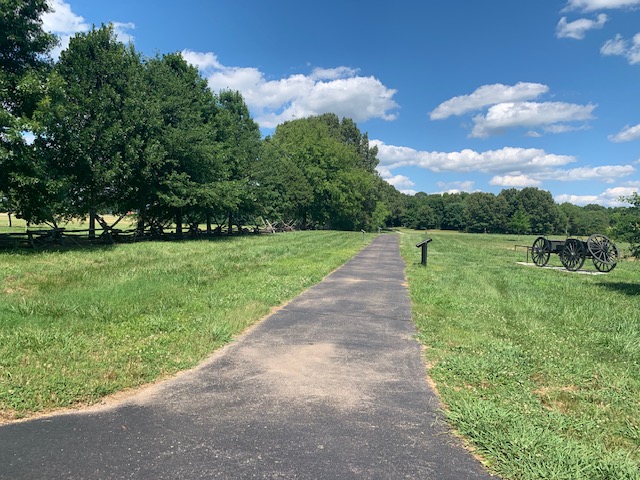
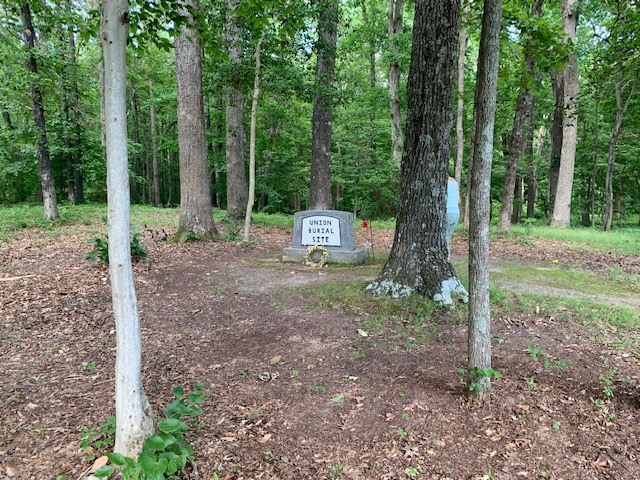
Union position along the fence lineDrawing done of the fence line defenseAlong the fence line looking at the confederate lines way out in the tree line, notice interstate 40 in the middle.The 30 union dead were buried here, In 1867 remains were reinterred in the national cemetery in Corinth Ms.Our spot for the night
We visited St. Augustine for only a few days but we enjoyed our stay and I took some pictures, so here it goes, I promise, my very last post on Florida. 😊
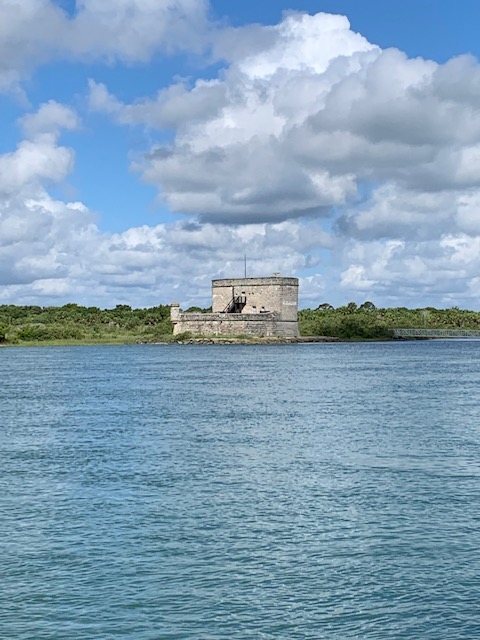
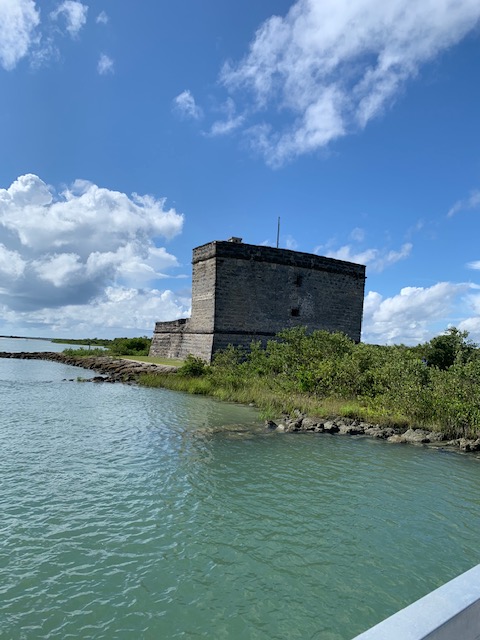
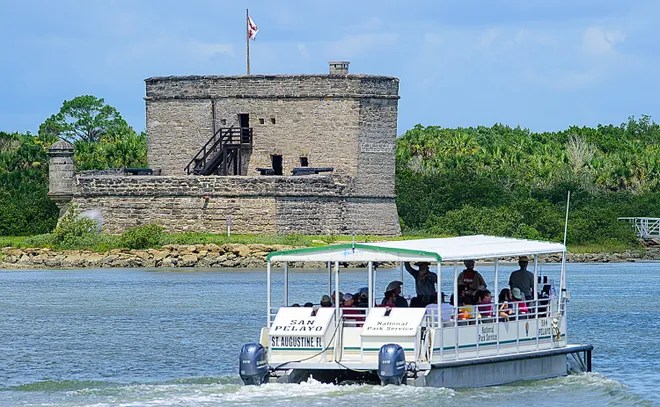
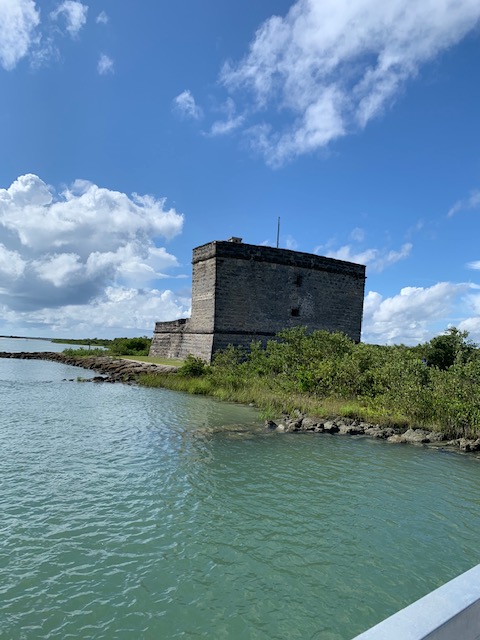
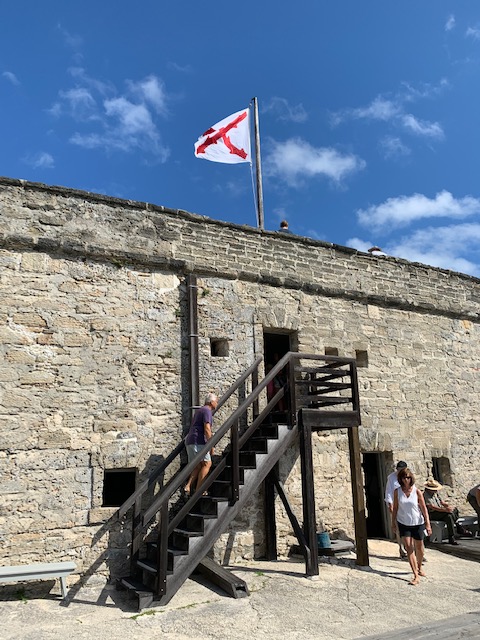
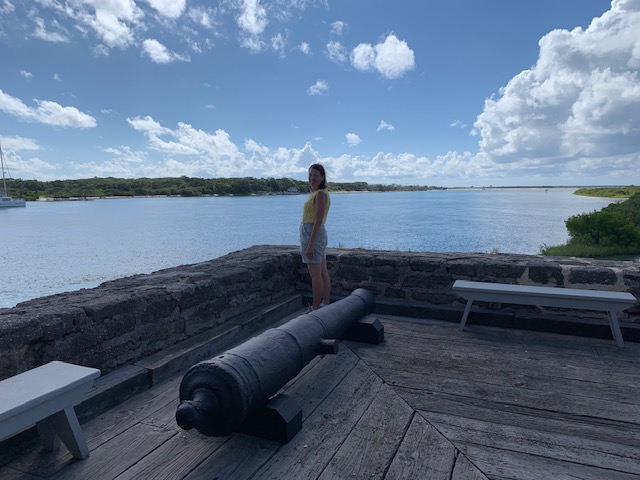
Wednesday June 1st we headed out to see Fort Matanzas National Monument. Located on the Intracoastal Waterway south of St. Augustine, it was built by Spanish soldiers as the back door protecting the city by preventing the British sailing through Matanzas Bay from invading St. Augustine. Today, Fort Matanzas has grown to a park of almost 300 acres and features walking trails, picnic areas, small tidal beaches. The best thing about it is that the fort is located on Rattlesnake Island and the only way to get there is by ferry.
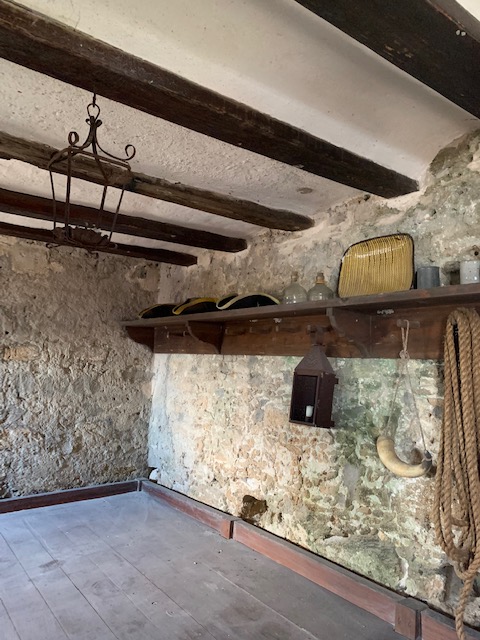
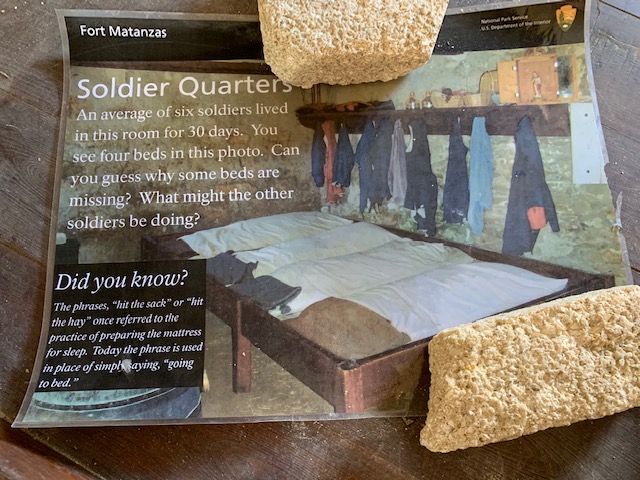
Supposedly, the fort was designed to accommodate six guns and fifty men, although no more than five cannon were ever emplaced. Usually, only an officer, four privates of the infantry and two gunners manned the fort. Soldiers were assigned to the fort as a part of their regular rotation among the outposts and missions near St. Augustine. The tour of duty at Fort Matanzas was one month.
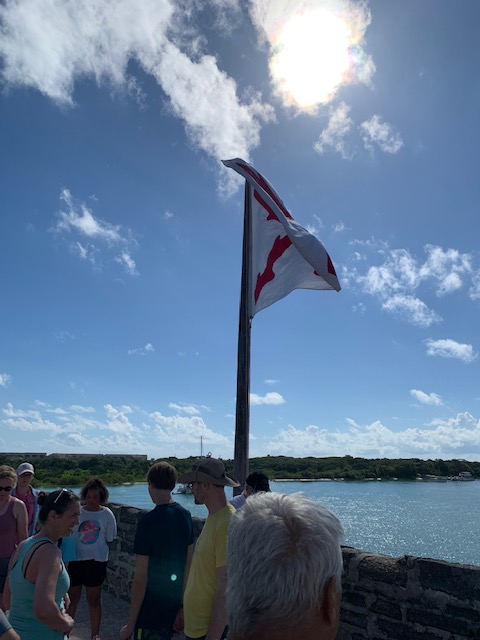
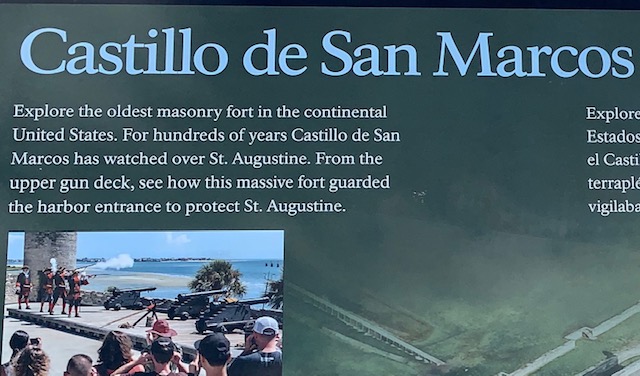
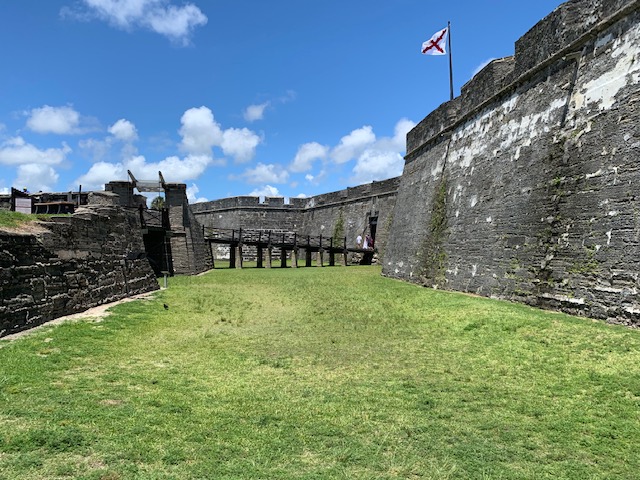
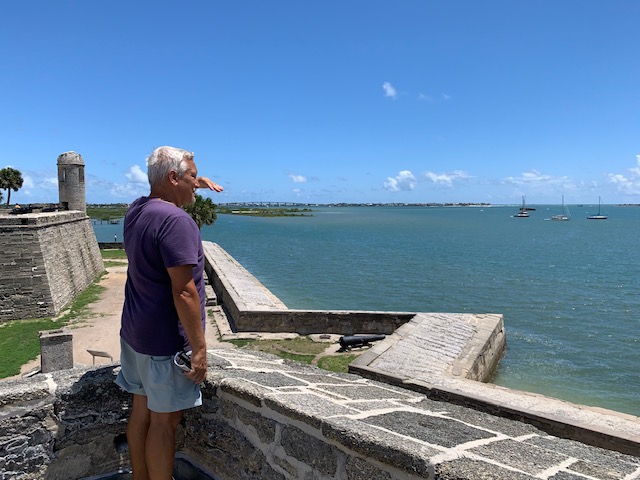
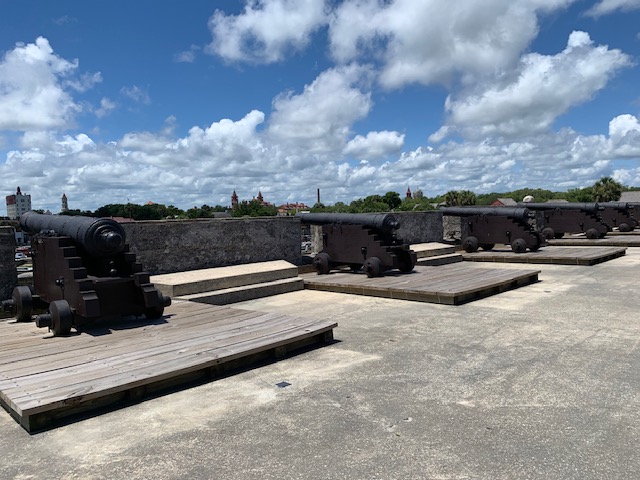
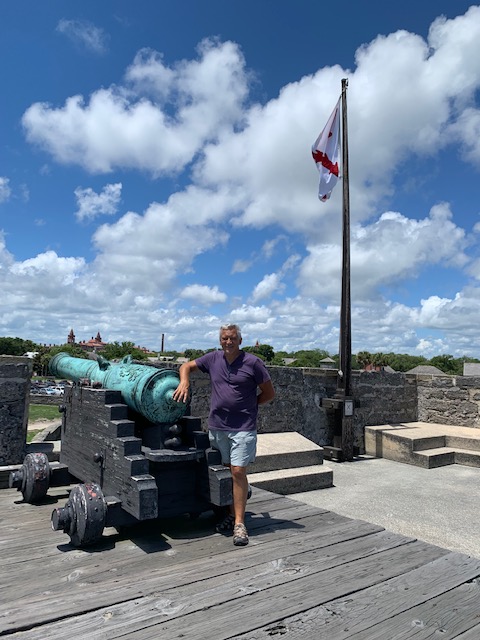
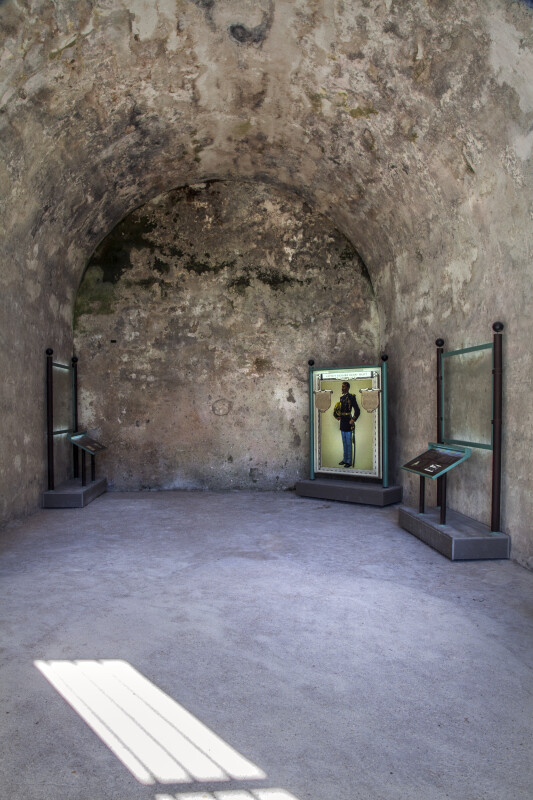
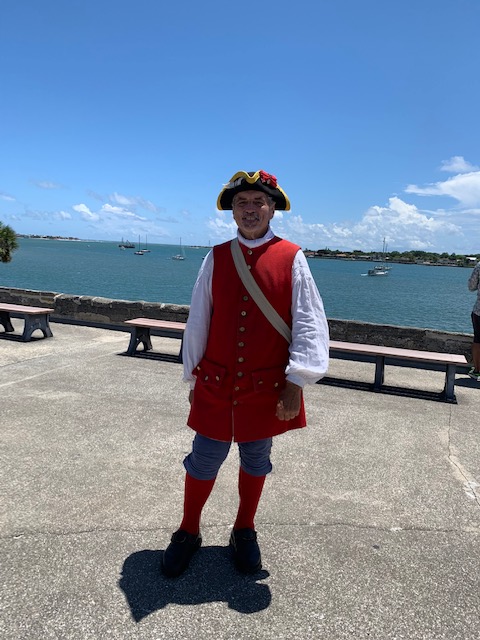
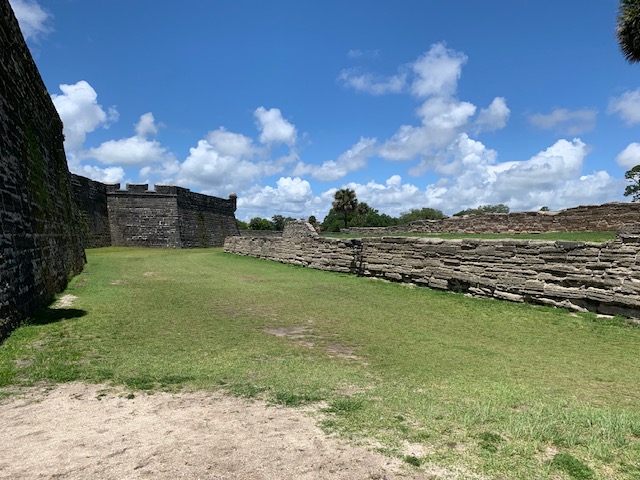
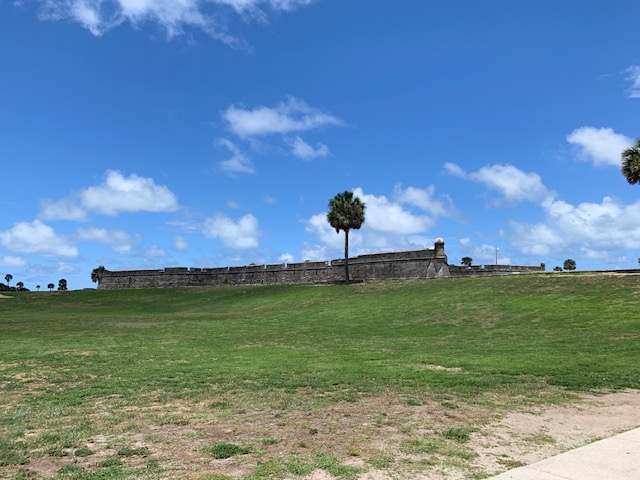
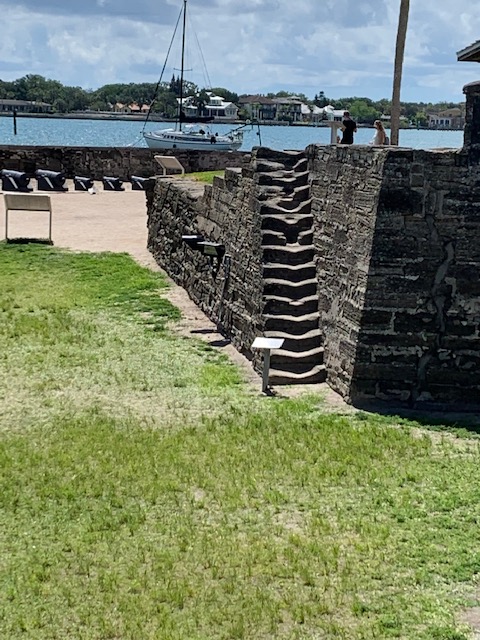
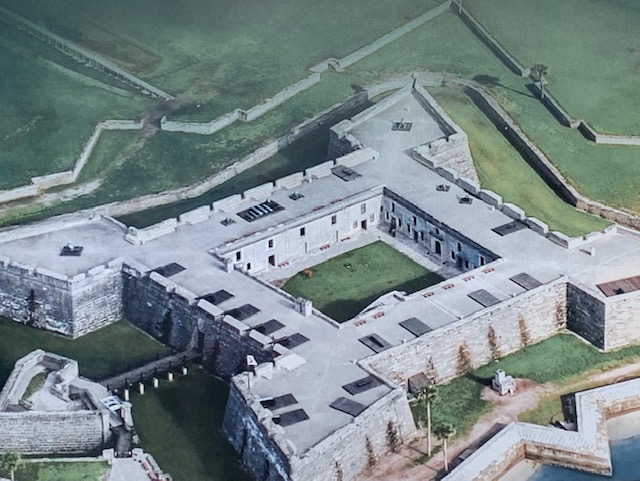
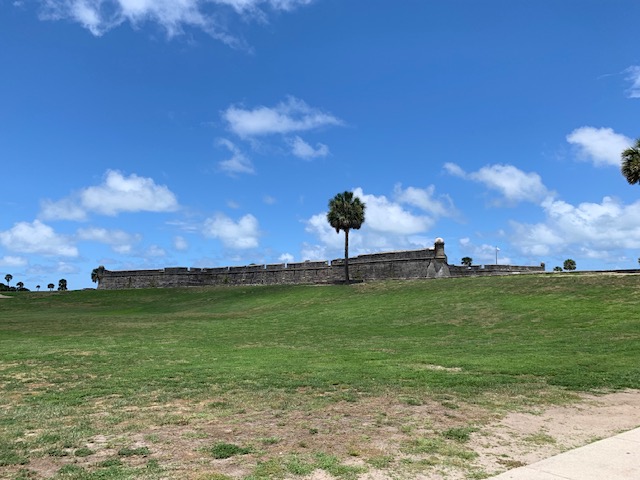
Castillo de San Marcos National Monument, site of the oldest masonry fort in the United States built by the Spaniards on Matanzas Bay between 1672 and 1695 to protect the city of St. Augustine, in northeastern Florida. Established as Fort Marion National Monument in 1924, it was renamed in 1942. The park has an area of about 25 acres.
An unusual boat we saw in the water by the fort
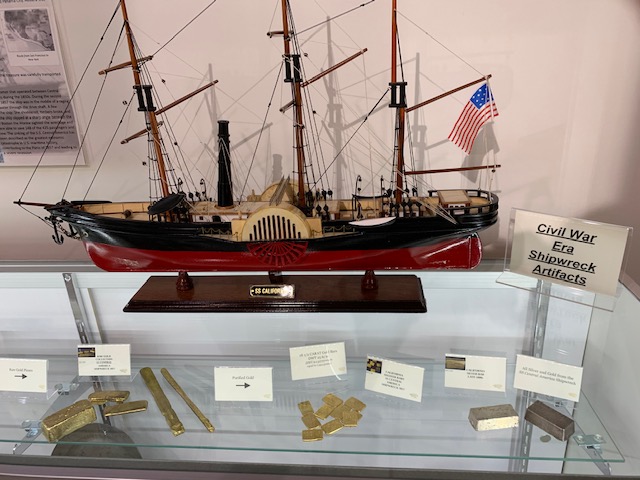
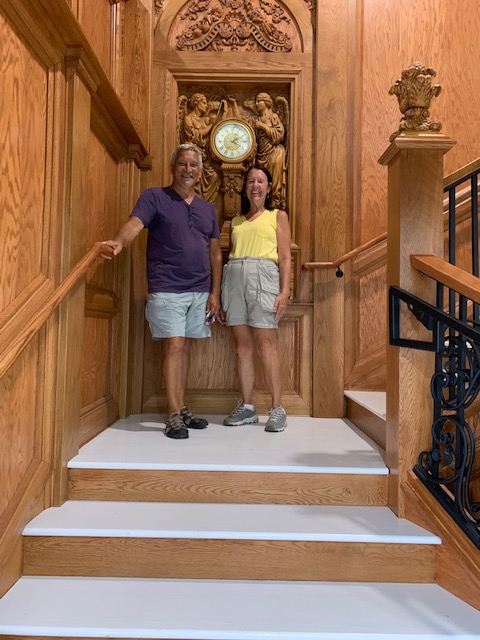
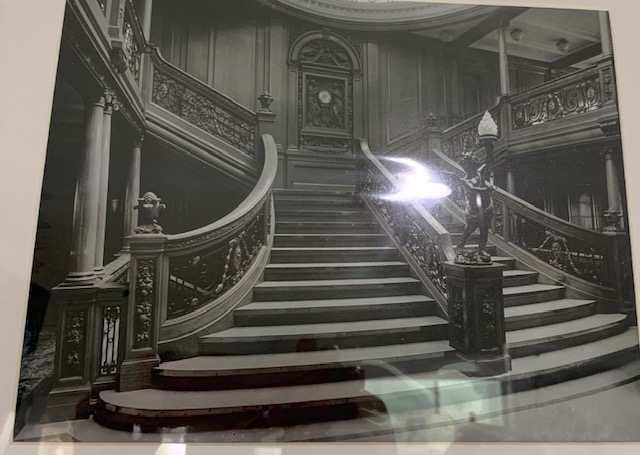
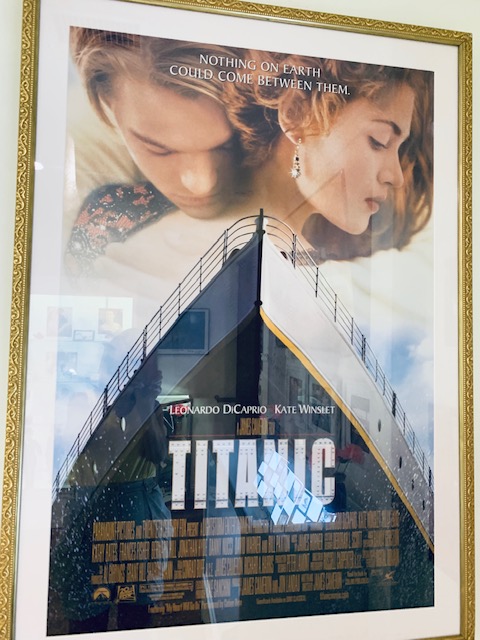
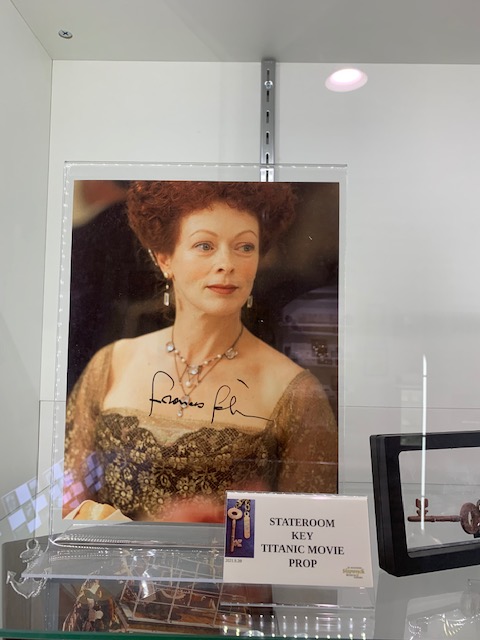
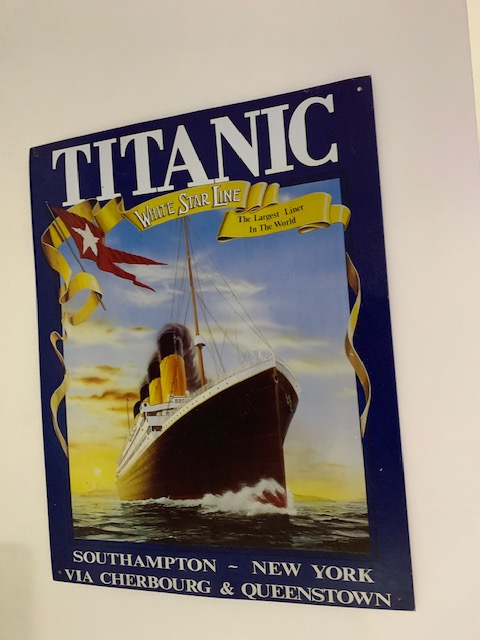
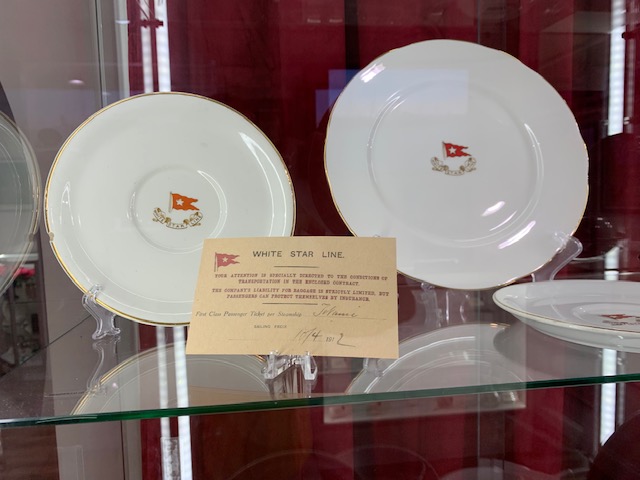
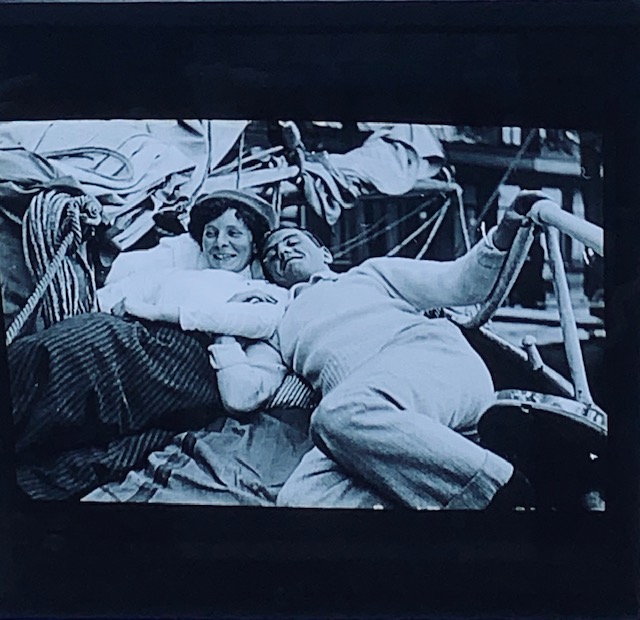
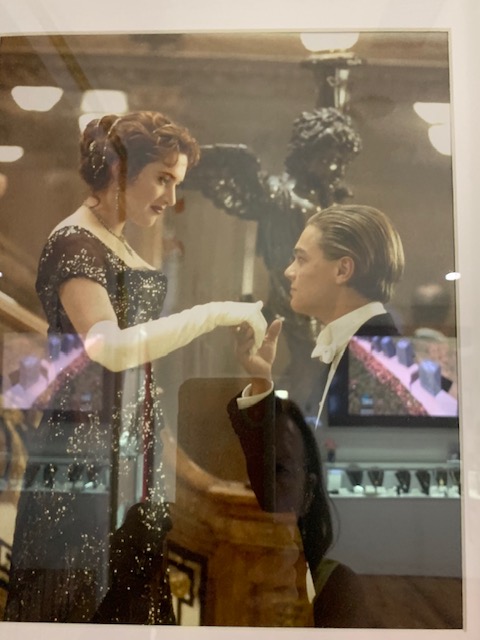
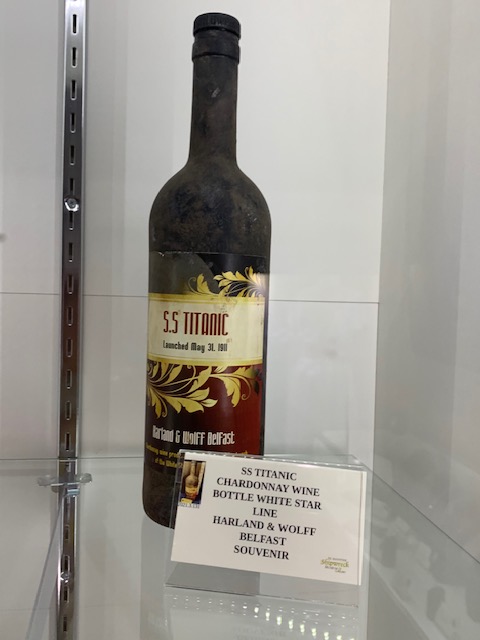
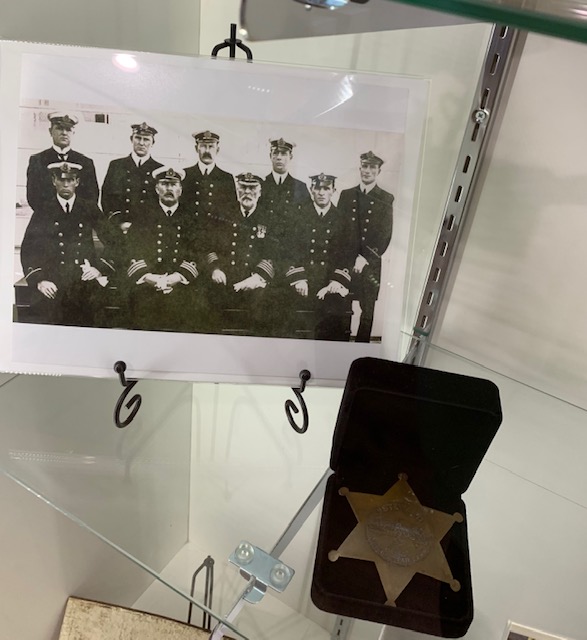
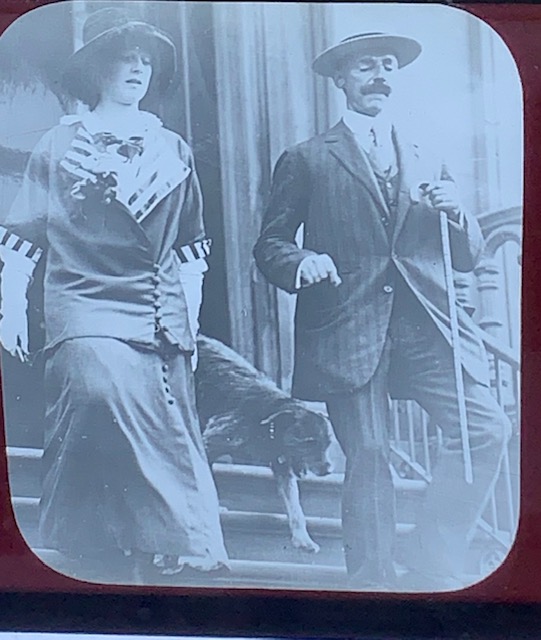
The museum has some exhibits of some of the world’s most famous maritime adventures and disasters, and valuable artifacts from some of the world’s most famous shipwrecks from off Florida’s coast as well as around the world, including the R.M.S. Titanic, The Nuestra Señora de Atocha, The S.S. Central America, and more. The stairway in the museum, where we’re standing, and the clock is a replica of the titanic, it’s set at 2:20a.m the time when the Titanic went down.
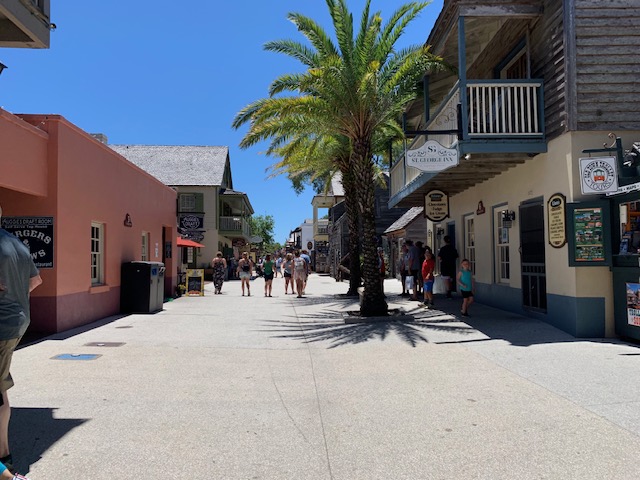
Our 2nd day we toured the Historic Downtown of St. Augustine which has history dating back from 1565. The Downtown is the oldest part of the city with many buildings dating back to the 1700s, with streets that have existed from long before that. It is easy to walk thru the area, but better yet, take The Old Trolley Tour like we did. The Historic Downtown is also on the National Register of Historic Places. The area has a bay front panoramic view of the Matanzas Bay and a bay front walk.
The design on building fronts represents the height of Spanish Colonial and Spanish Renaissance Revival architecture. This area of town showcases everything from early European design, Florida bungalow-style houses, and Gilded Age area. Although St. Augustine was burned and pillaged on several occasions by pirates and various English forces it still has some old buildings left to enjoy.
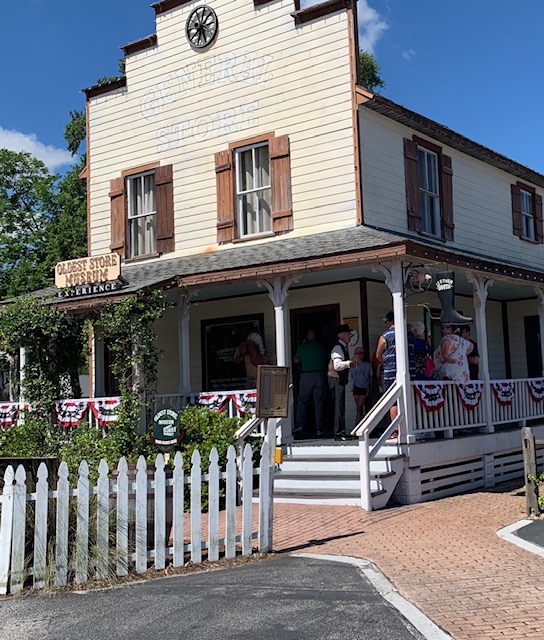
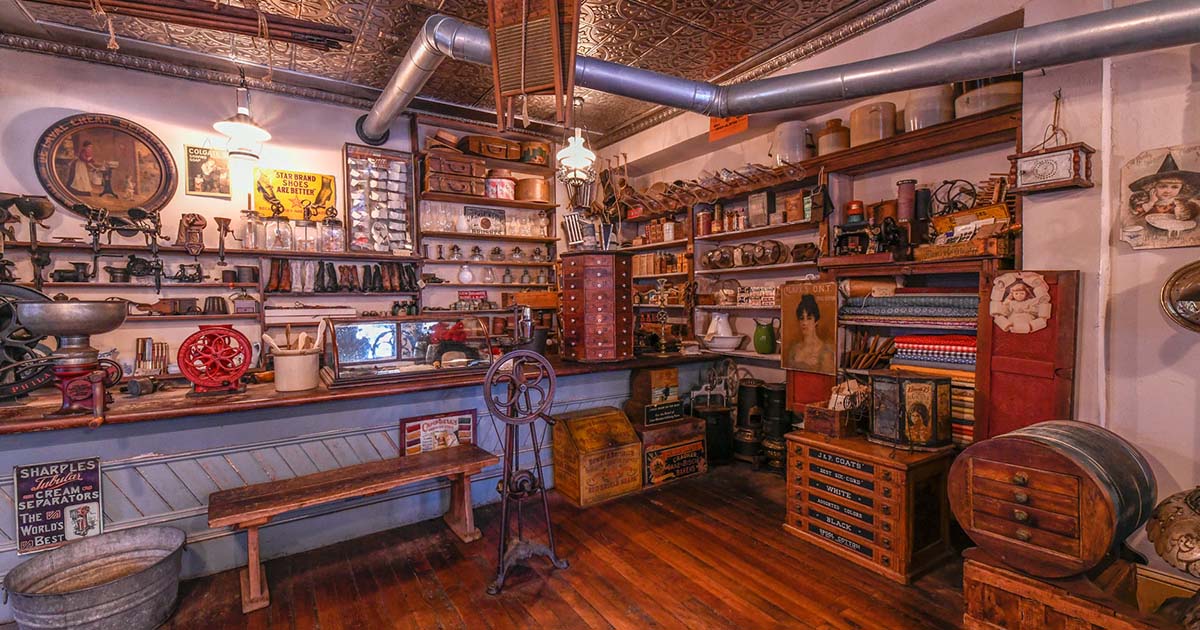
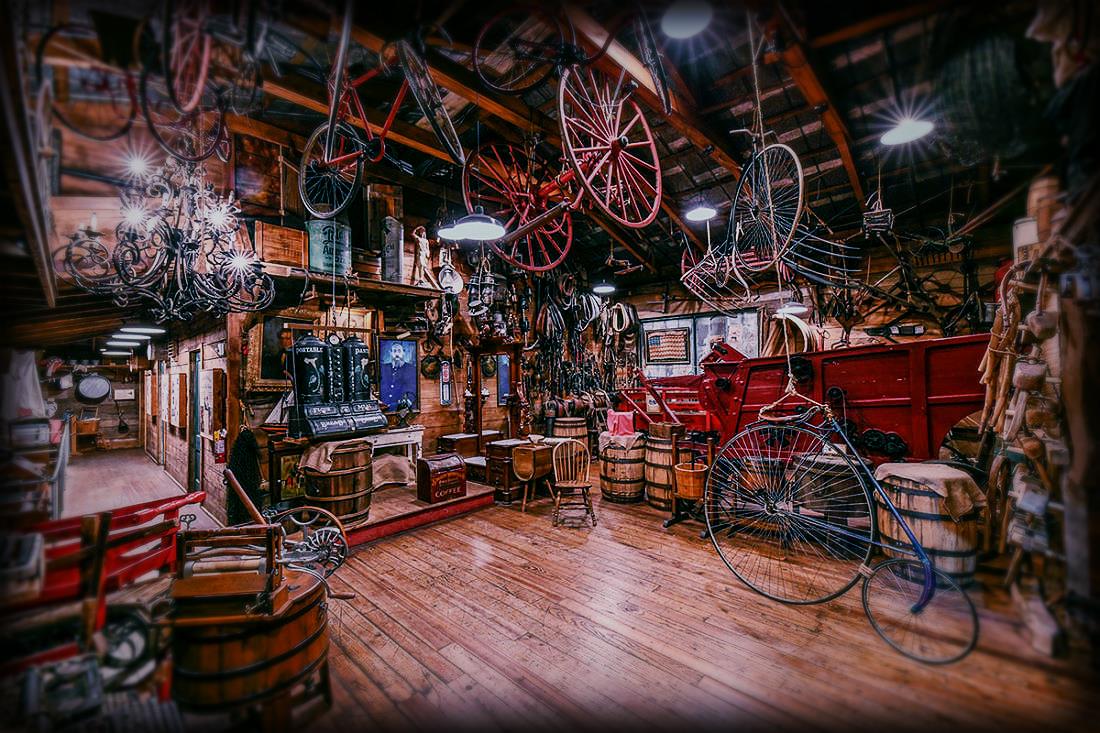
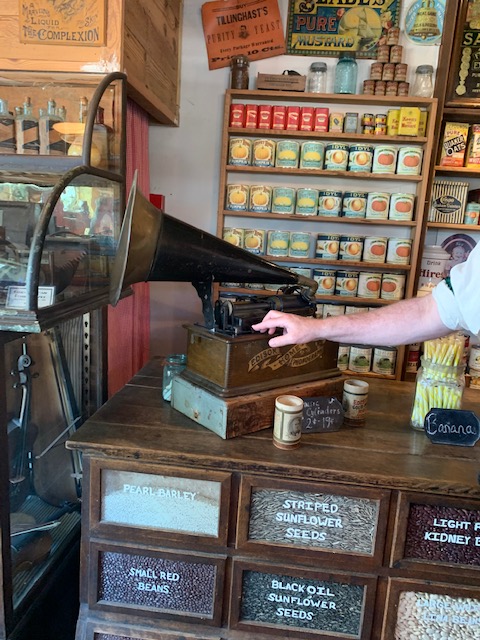
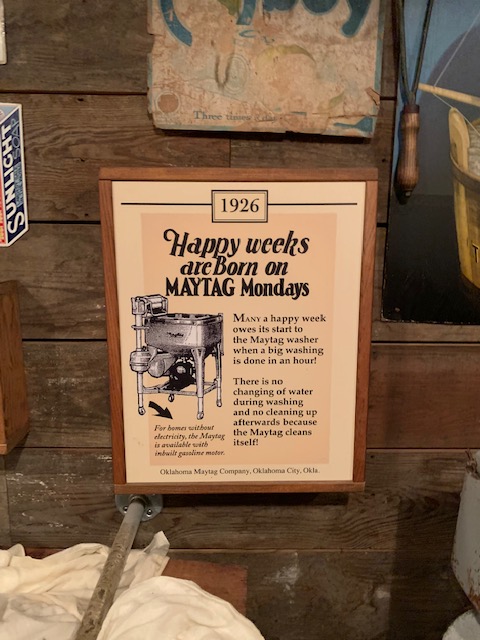
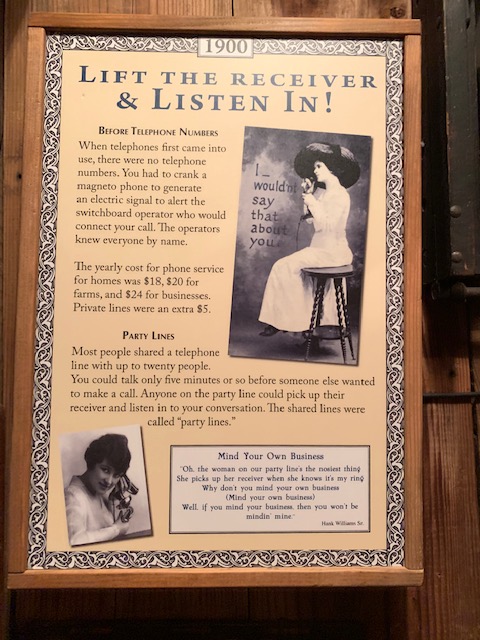
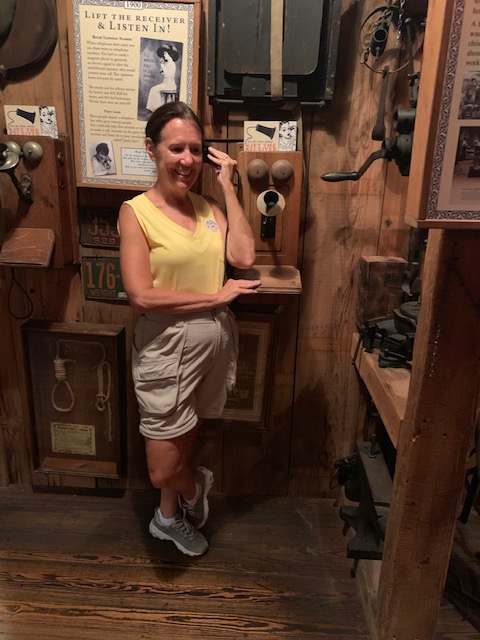
The Oldest Store Museum re-creates the original St. Augustine general store that was operated by C.F. Hamblen in 1908. It has a huge range of products and it’s is like stepping into a Sears and Roebuck catalog from the early 20th century. A living history tour guides act the parts of clerks and salesmen as they demonstrate the latest inventions for turn-of-the-century “modern” living — everything from tonics to unicycles to a goat-powered washing machine. The collection features vintage farm equipment, collars and corsets, “health underwear”, a corn sheller and a grain thresher and all sorts of elixirs, including the ever-popular worm syrup.
We had a really good clerk, salesman demonstrate ad tell us about all the new products that were available in 1900.
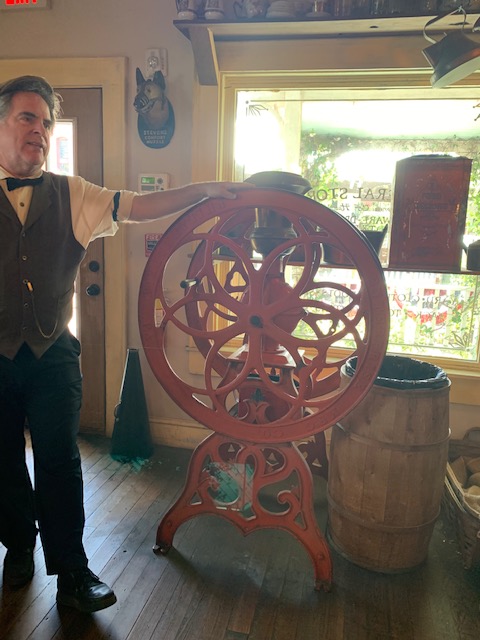
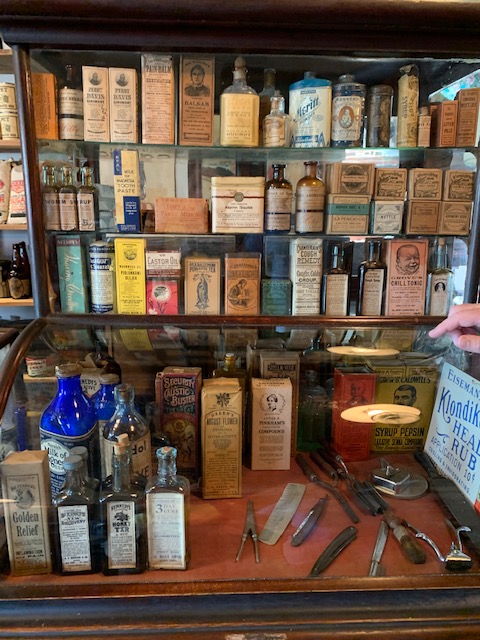
The huge coffee grinder which us common folk couldn’t think of purchasing. And all the drugs in this cabinet would definitely be illegal to sell over the counter today.
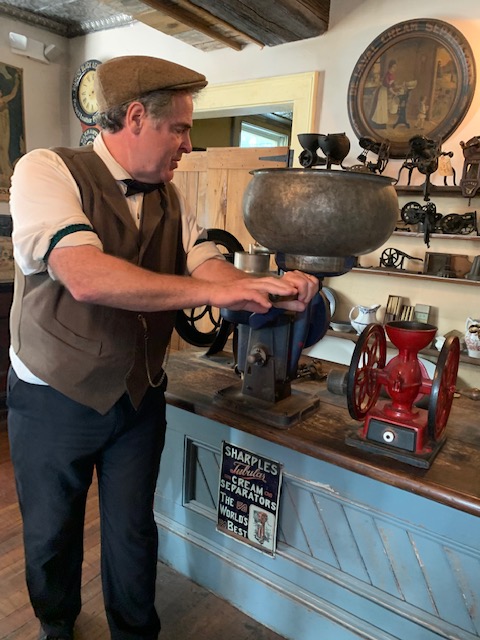
He demonstrated how the cream separator works, it took up less time then it did before, hard to believe what a process it was. The second picture is of an milk shake machine.
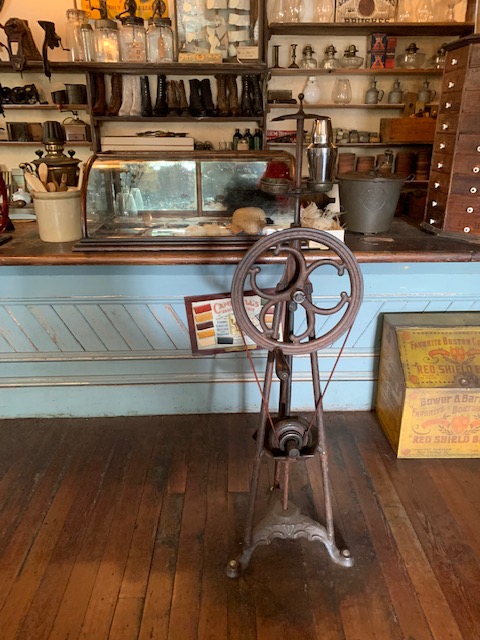
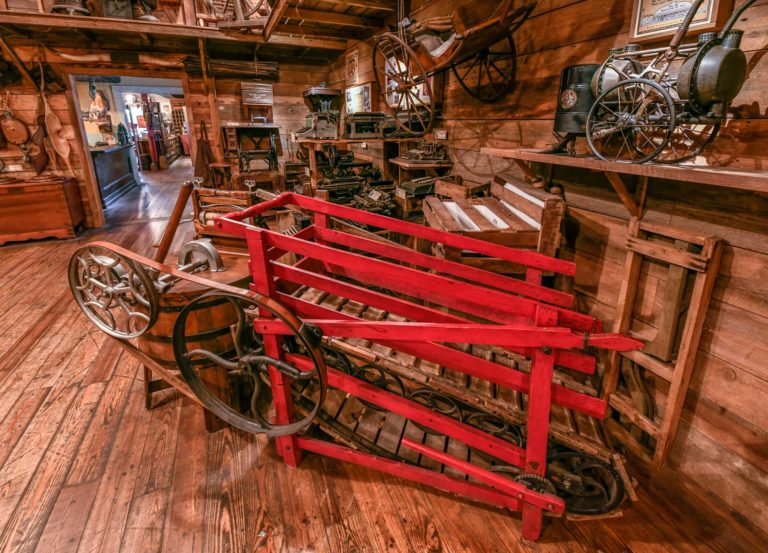
You can barely see it, but there is a washing machine in front of this red fence contraption. Actually it’s a treadmill attached to a washing machine where you put your goat so you didn’t have to constantly stand there and wash your clothes by hand or with a stick. It was a fun place to visit.
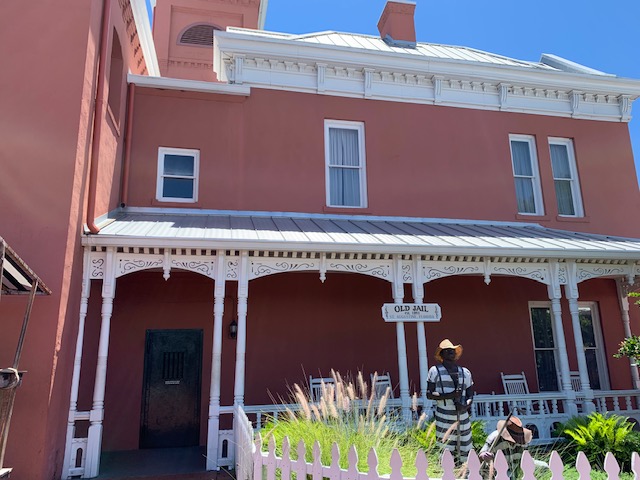
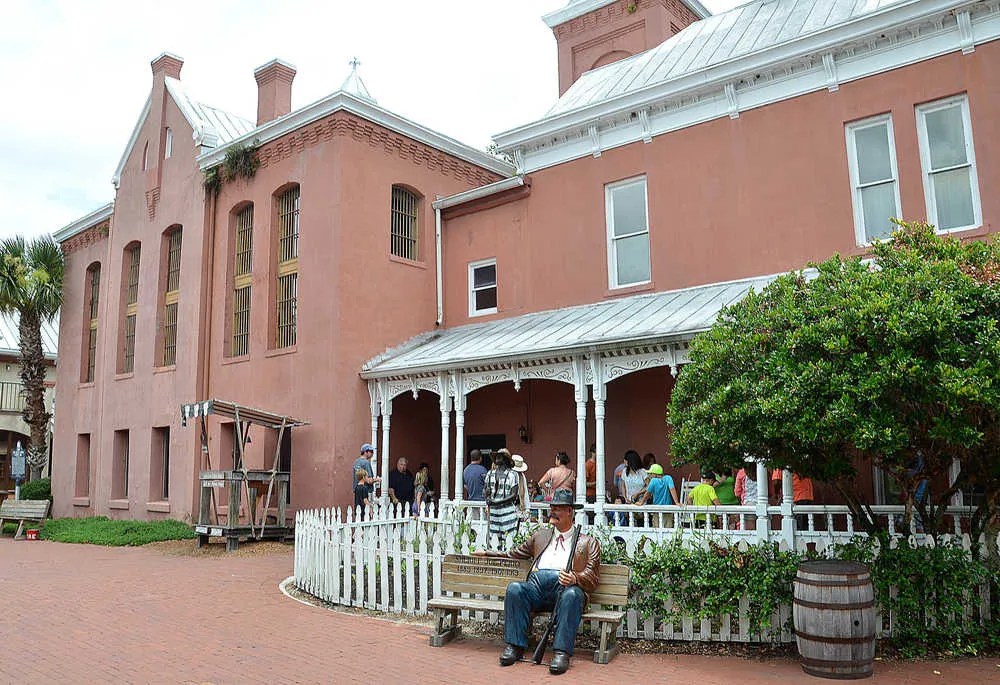
The Jail – Flager, a millionaire who lived in town opened the Ponce de Leon hotel, he wanted to ensure a safe and pleasant environment for his patrons by creating a secure fortress to house criminals. It was important to Flagler that the exterior appearance of this fortress wouldn’t disrupt the majestic atmosphere of the Ancient City. In order to accomplish this, it was designed with a Romanesque Revival style that gave it the distinct appearance of a Victorian house without the interior comfort and charm. It was almost unrecognizable as a jail apart from the barred windows.
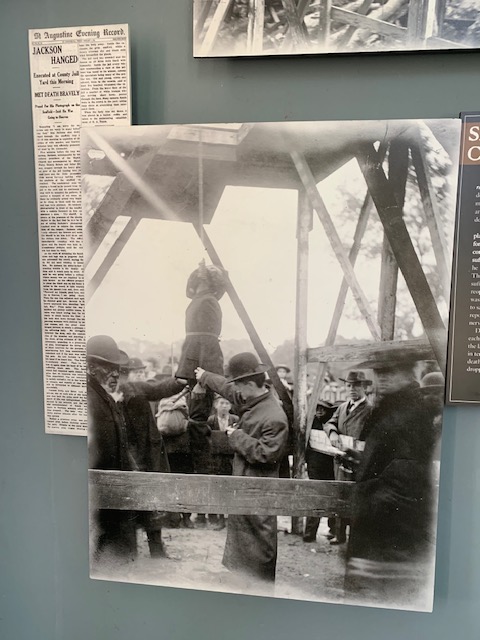
Also, the original jail was too close for comfort at the time, so Flagler asked that the new jail be built at a further location. P.J. Pauley Jail Company, the same people responsible for building Alcatraz in San Francisco, were employed to construct the prison. The jail served the city of St. Augustine until 1953. It held some of the most violent criminals and carried out capital punishment on a set of gallows on the property.
In 1954, only a year after the jail closed, it was transformed into a local attraction. The building underwent restoration in 1993 by owner Henry L. “Slim” McDaniel. Today, the Old Jail provides guests to St. Augustine with a glimpse into the history of the penal system and the daily life of its prisoners. The St. Augustine Old Jail was added to the U. S. National Register of Historic Places in 1987.
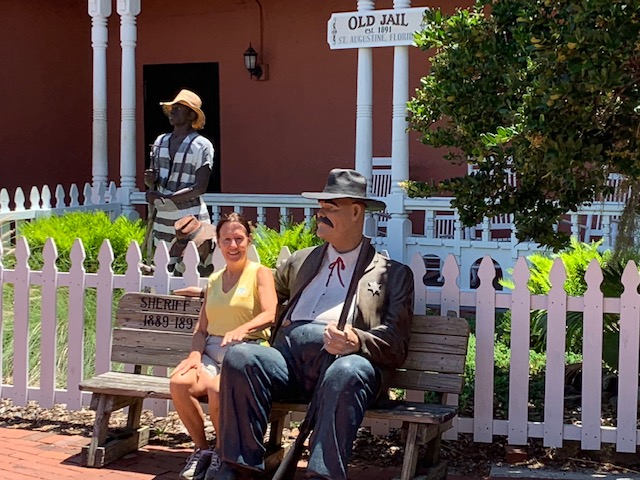
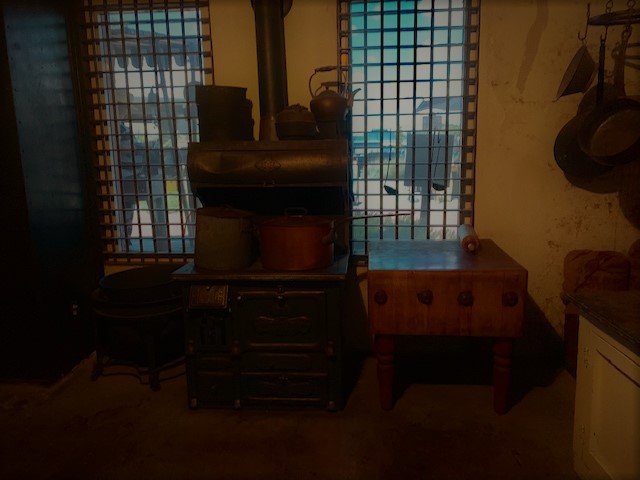
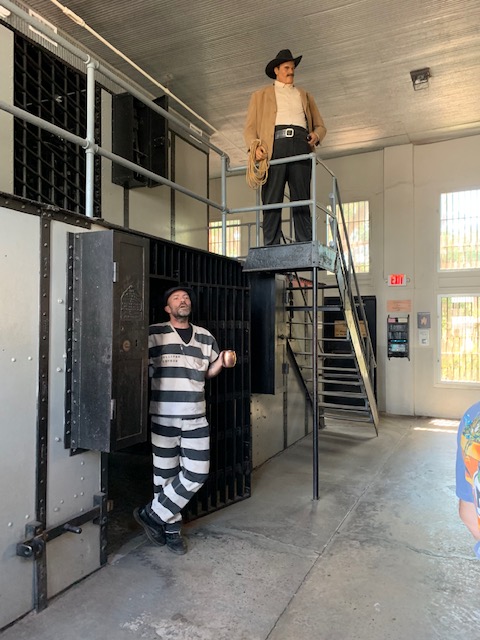
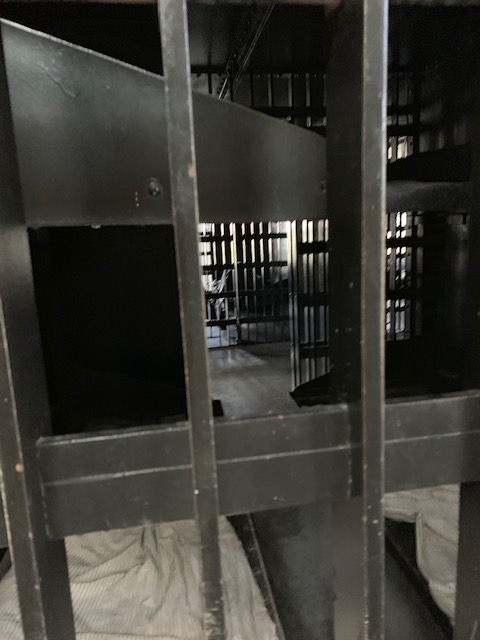
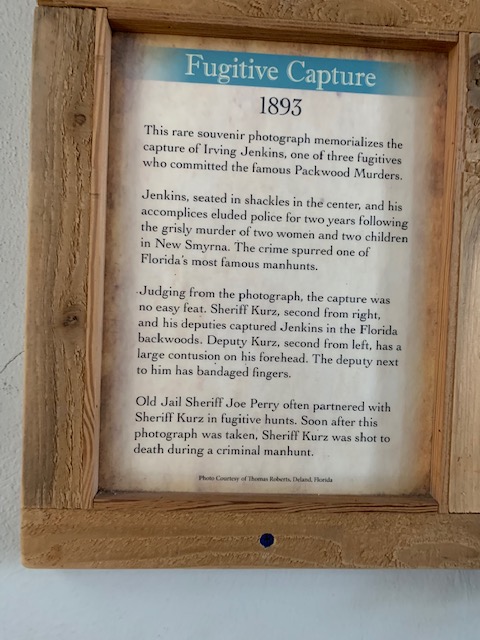
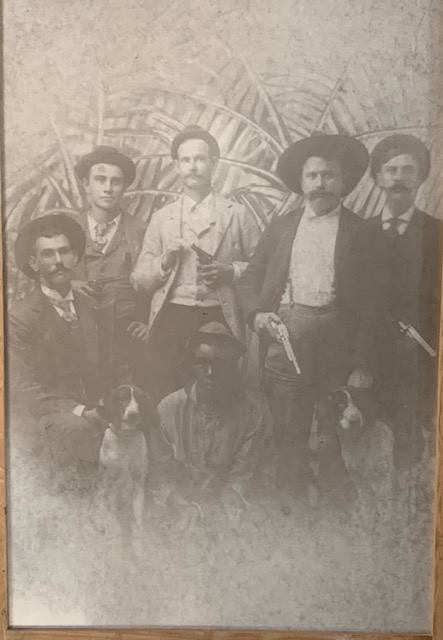
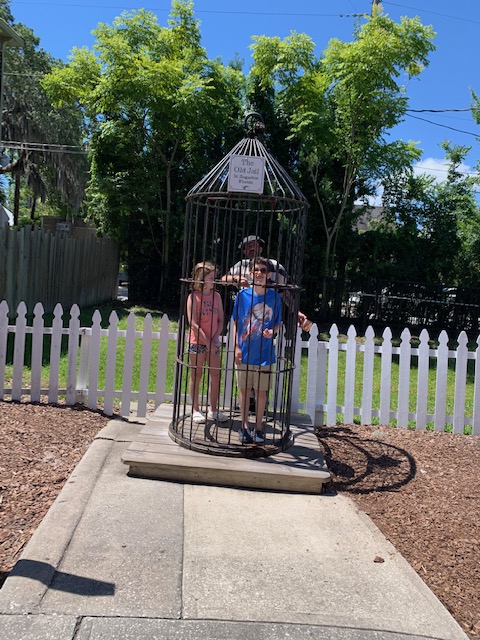
the Old Jail could contain Over 72 male prisoners and 12 females who fought for survival. In the northern two-story wing, you would find the cells for men, women, and those who were placed under maximum security, along with a kitchen on the lower level next to the living quarters for the sheriff and their family. The jail was said to be a madhouse of depravity and cruelty. Inmates only lasted about two years before dying from infection, violence, illness, malnutrition or hanging. The only time a doctor ever visited the place was on hanging days. Cholera, tuberculosis and hundreds of other diseases ran rampant throughout the jailhouse. The death rate was staggering and, after some blowback, the numbers were fixed by the county. The last picture is a cage that they put prisoners in and hung it from a tree and left you up there until they felt like letting you down, sometimes for 3 or 4 days. Our guide/prisoner was “Sully” he was a lot of fun even in a place like this.
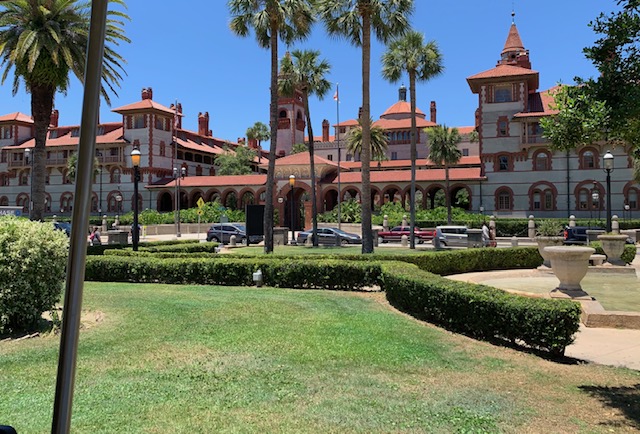
In 1888, Flagler built the Hotel Ponce de León, his first in a series of luxury resorts along Florida’s east coast. A masterpiece of Spanish Renaissance architecture and the first major poured-in-place concrete building in the United States is now known as Ponce de Leon Hall. A National Historic Landmark, it serves as the centerpiece for Flagler College.
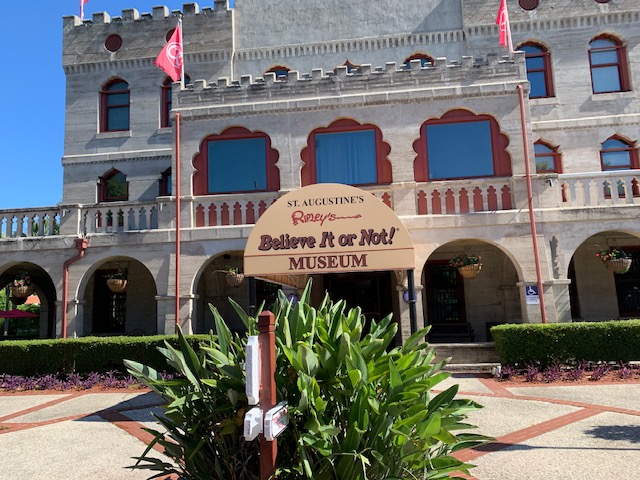
In 1950 The first Ripley’s Believe It or Not Museum opened in St. Augustine, Florida. The building looks like a Castle built in 1887 by William Warden as a winter home. In later years, it was turned into a hotel, until Ripley’s opened the location. I always thought the one & only Ripley’s Believe it or Not was the one I always saw as a kid in Niagara Falls, Canada. Boy, was I wrong.
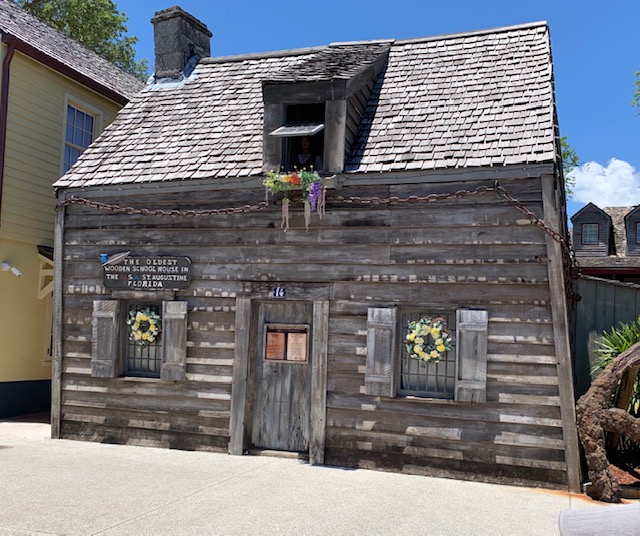
The Oldest Wooden School House in the USA is located in downtown St. Augustine. The School House dates back to the early 18th (1702) and is now a museum.
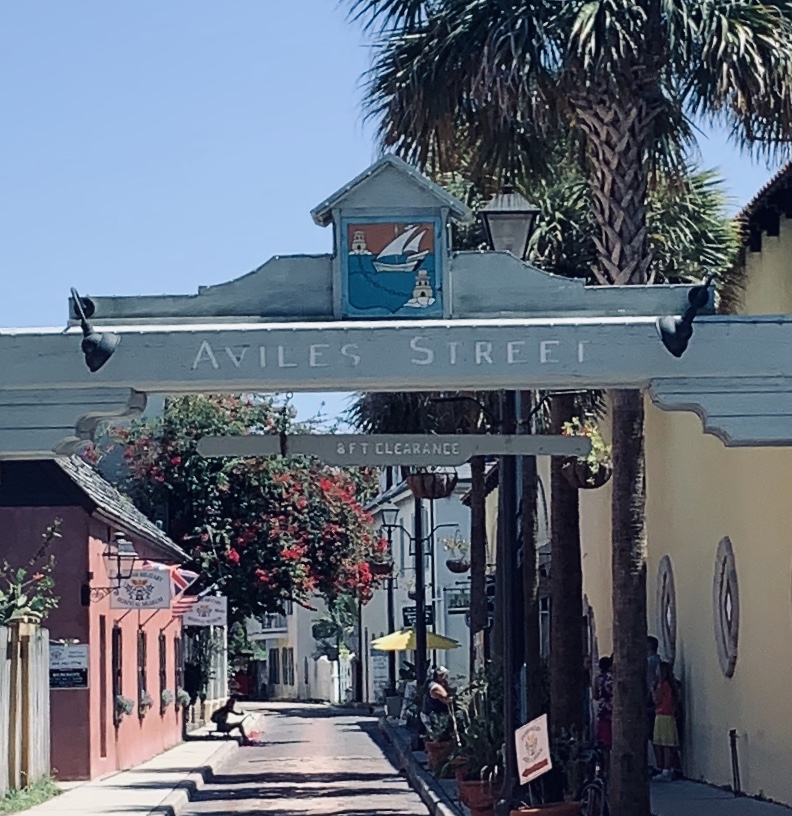
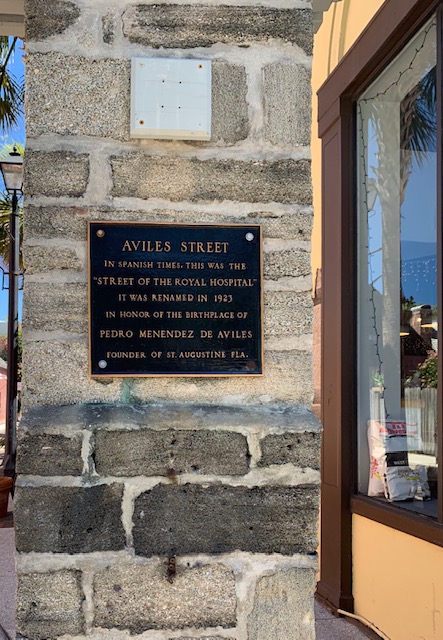
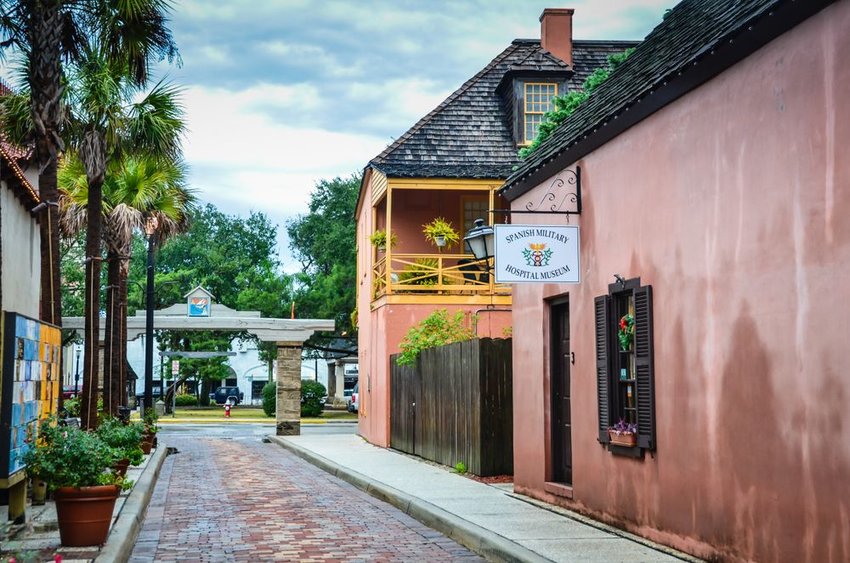
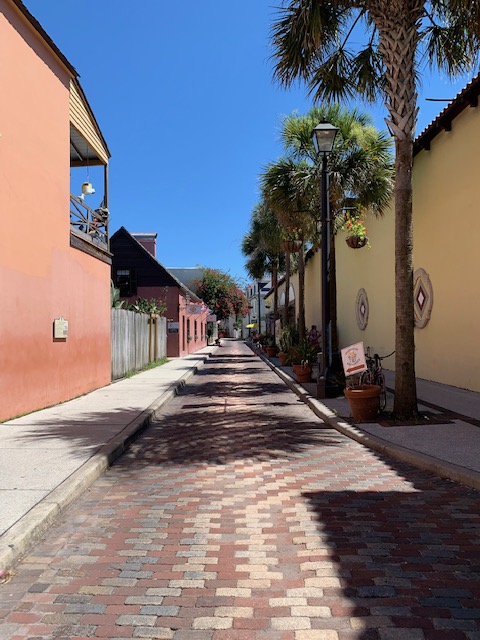
Aviles Street in St. Augustine holds the official title of the oldest street in the United States. St. Augustine itself claims to be the oldest city in the U.S., so it only makes sense that Aviles Street is just as old.
The brick street is located in the Historic District, with a stone archway marking its entrance. This street dates back to the 16th century, according to Florida’s Historic Coast, and was originally known as Hospital Street for the Spanish Military Hospital located at one end.
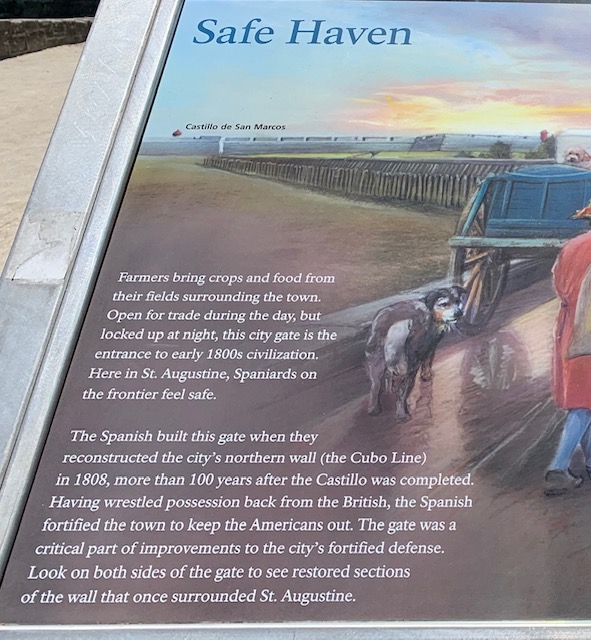
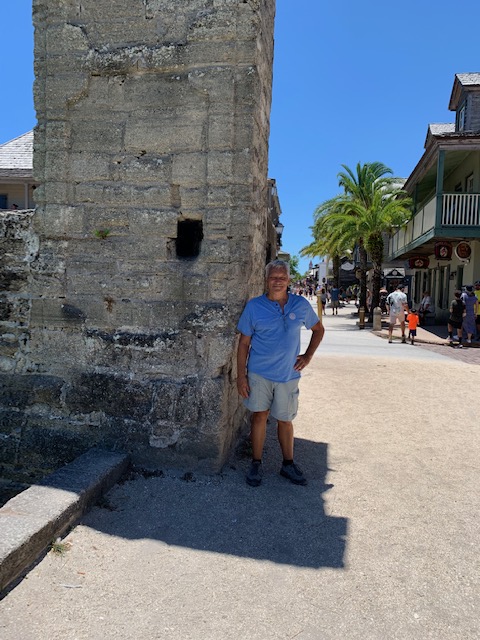
The Old City Gates are toward the north end of St. George Street. The Old City Gates were at one time the only entrance into St. Augustine. The two ancient columns made of stone were built in 1808 as a line of defense for the city. They are a symbol of the turbulent times faced by the original American colonists and a truly memorable landmark.
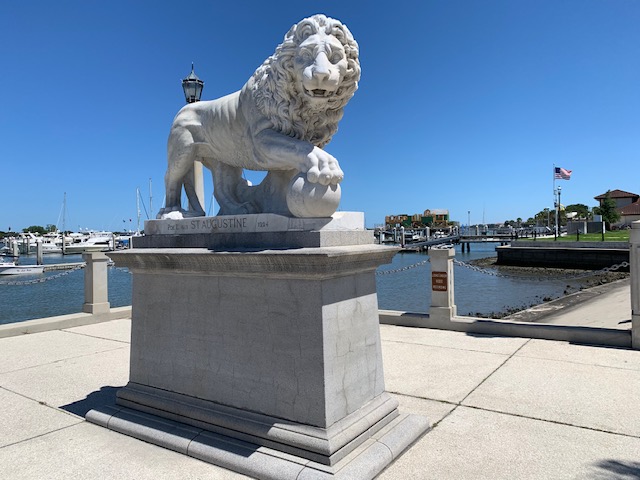
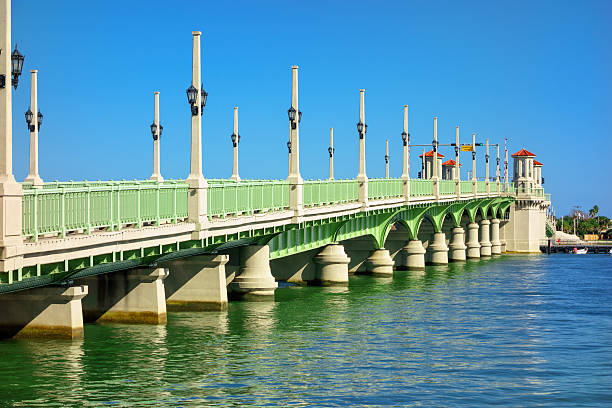
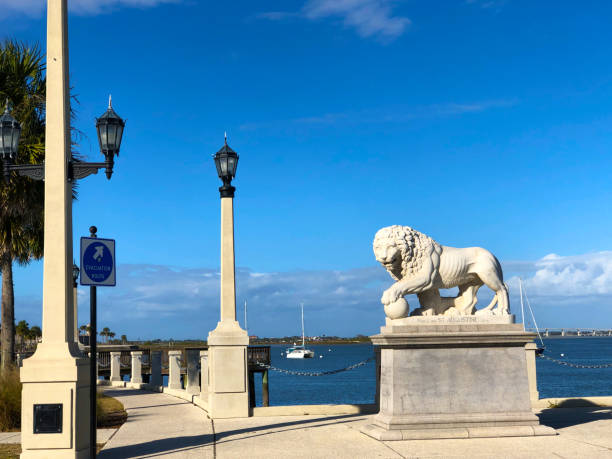
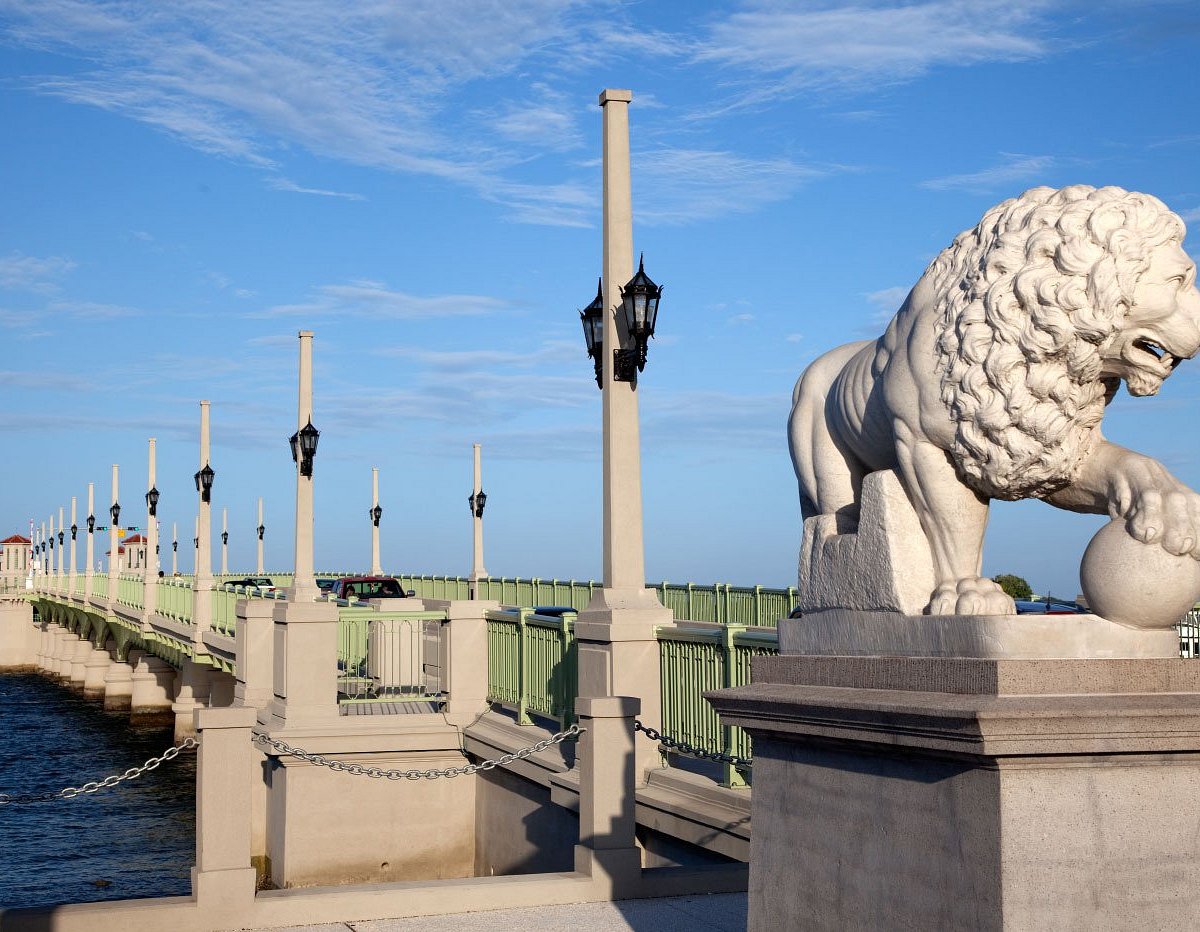
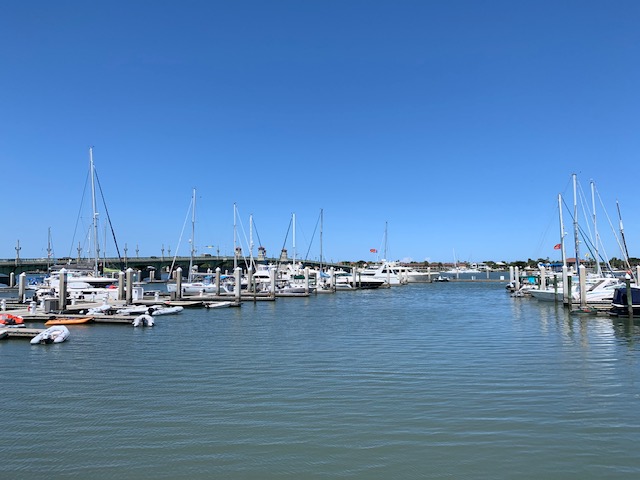
Completed in 1927, the Bridge of Lions is listed on the National Register of Historic Places. It was designed as a work of art and as transportation for cars, connecting downtown St. Augustine with the Anastasia Island. It’s a drawbridge that opens for boat traffic several times throughout the day. The first two lions on the bridge were named Faithful and Firm. In 2015, two new granite lions were added to the east side of the bridge, Peace and Happiness.
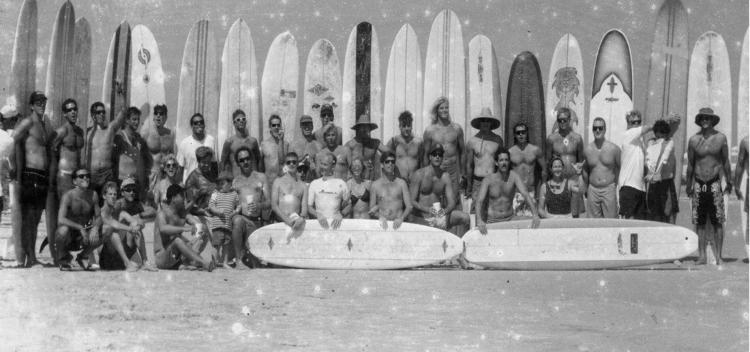
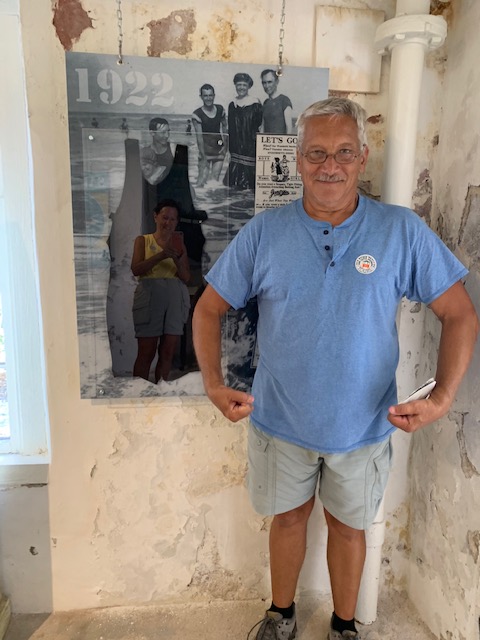
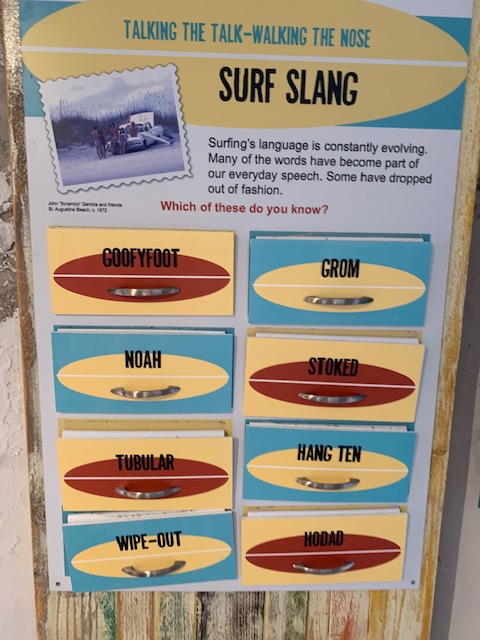
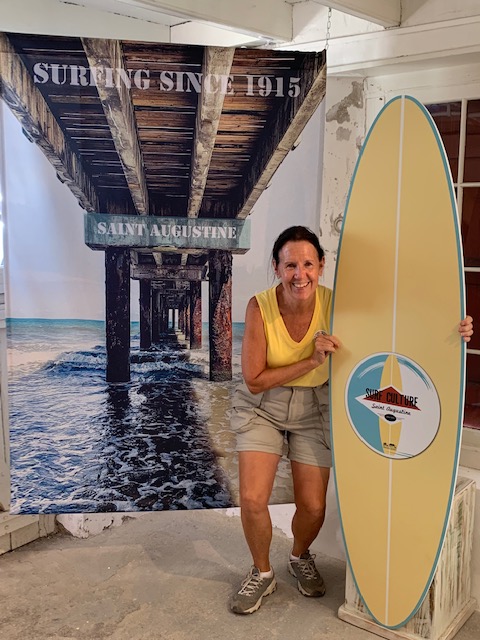
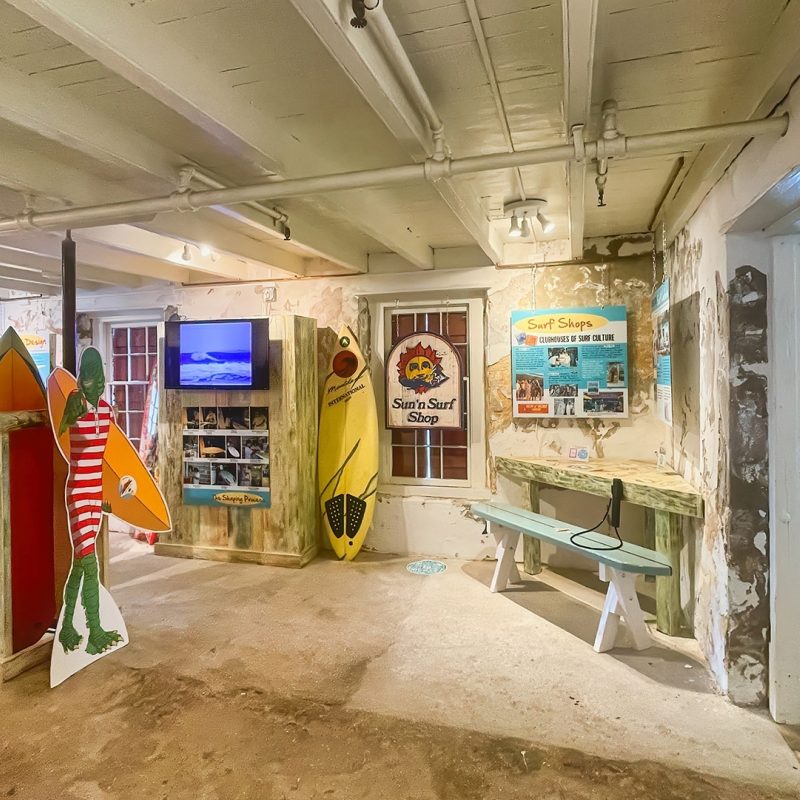
St. Augustine’s Surfing Hall of Fame Housed in one of the city’s many ancient buildings is a Surf Museum. St. Augustine had become a major destination for surfing enthusiasts. Numerous surfing competitions began here and some, like the Hugh Shaw Memorial Long Board Classic continue to attract surfers from around the world. The museum’s exhibits start with the earliest days of surfing at St. Augustine’s beaches from 1915 to present.
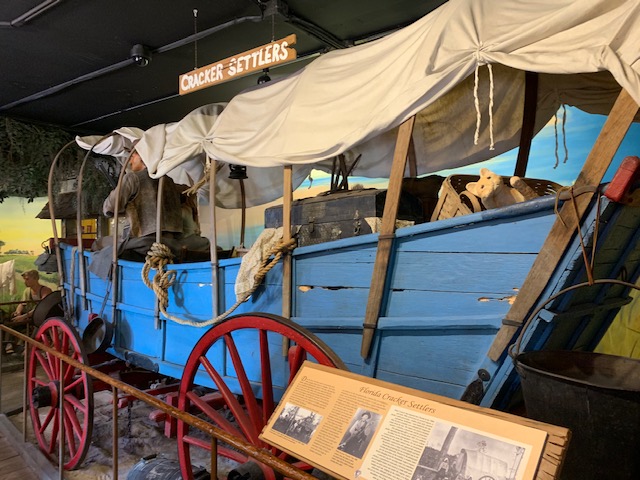
This would be me & Dave if we were traveling in a earlier time. I don’t think so.
We had a fun time walking around old town, St. Augustine.
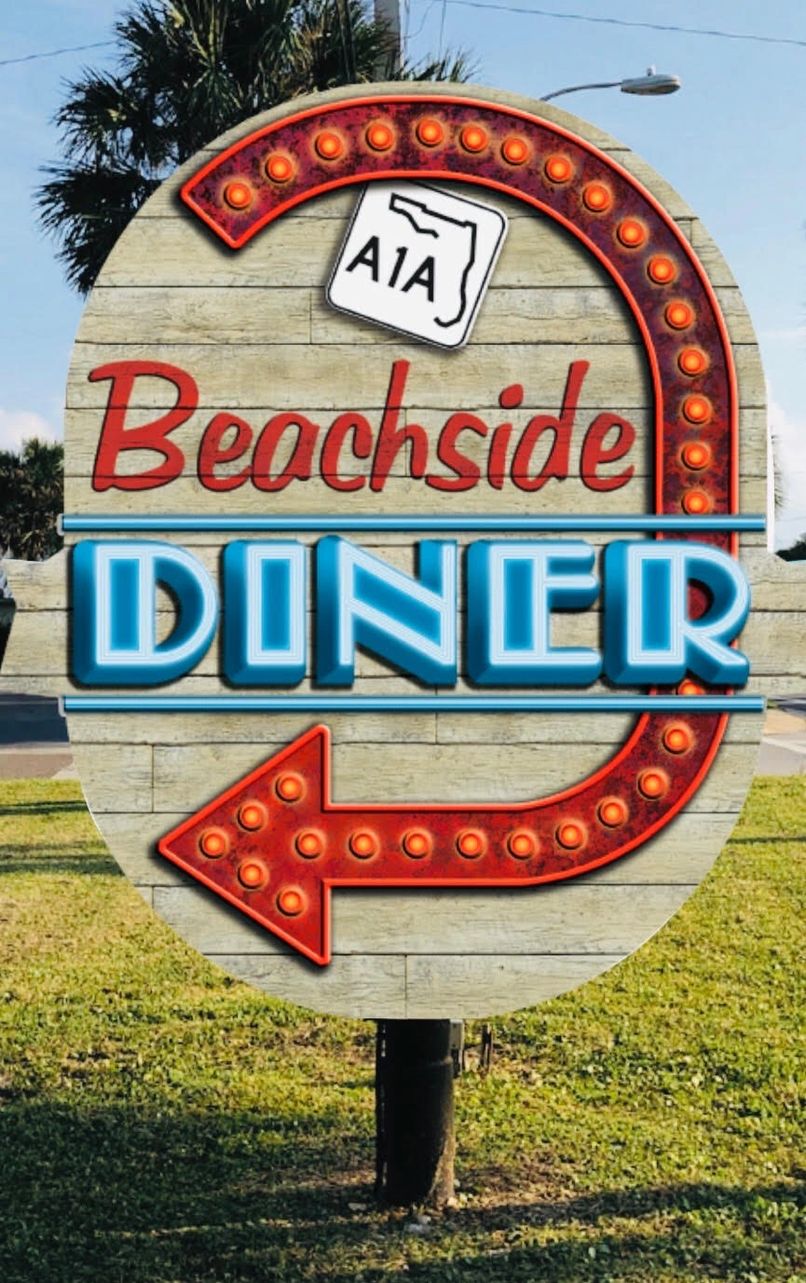
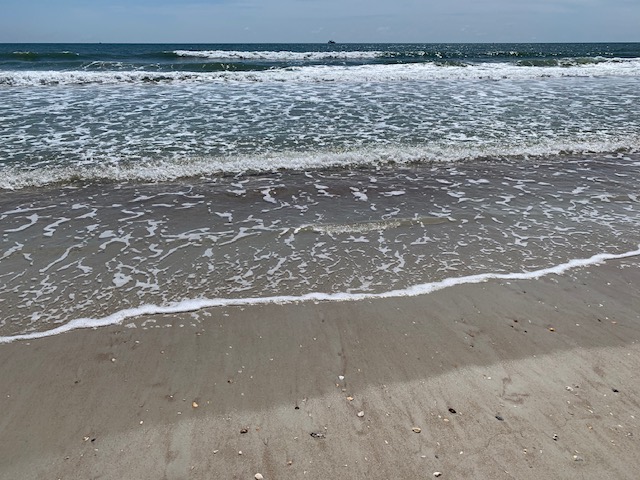
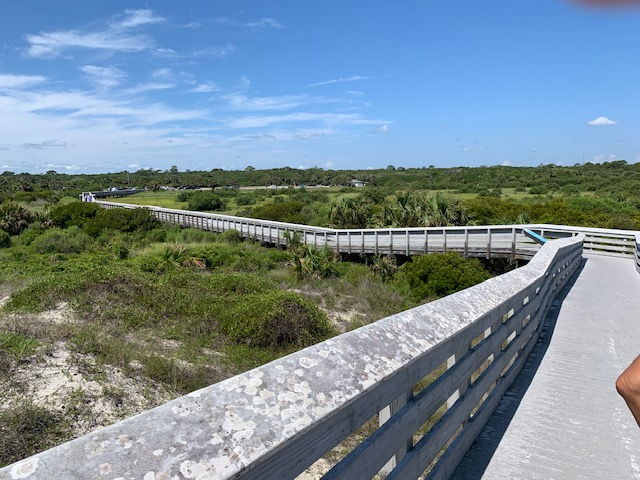
We had breakfast at the Diner, which was very good and then headed out to the beach.
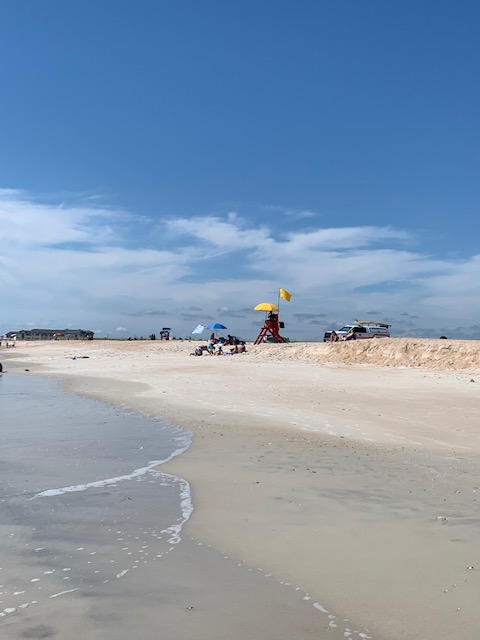
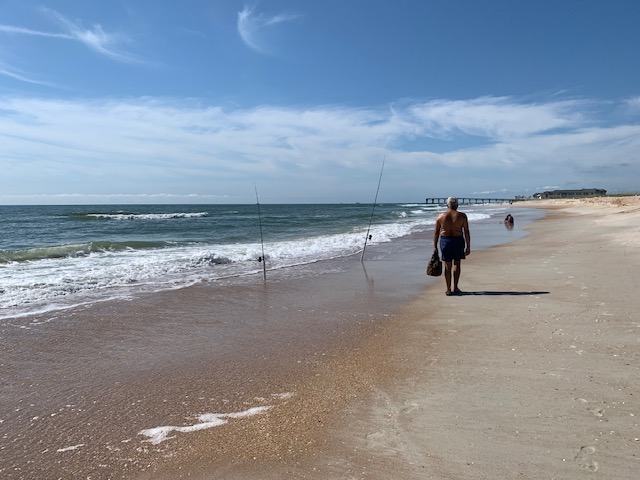
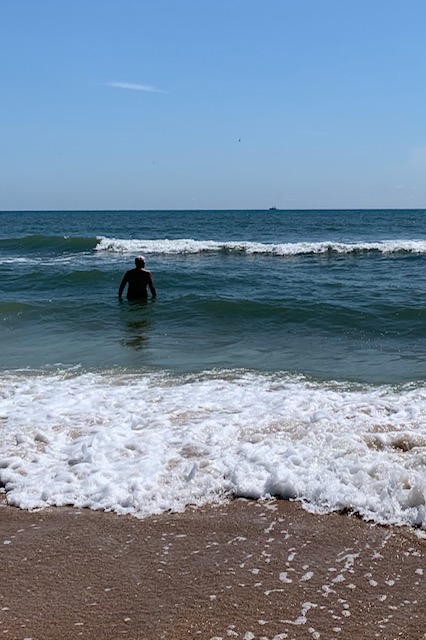
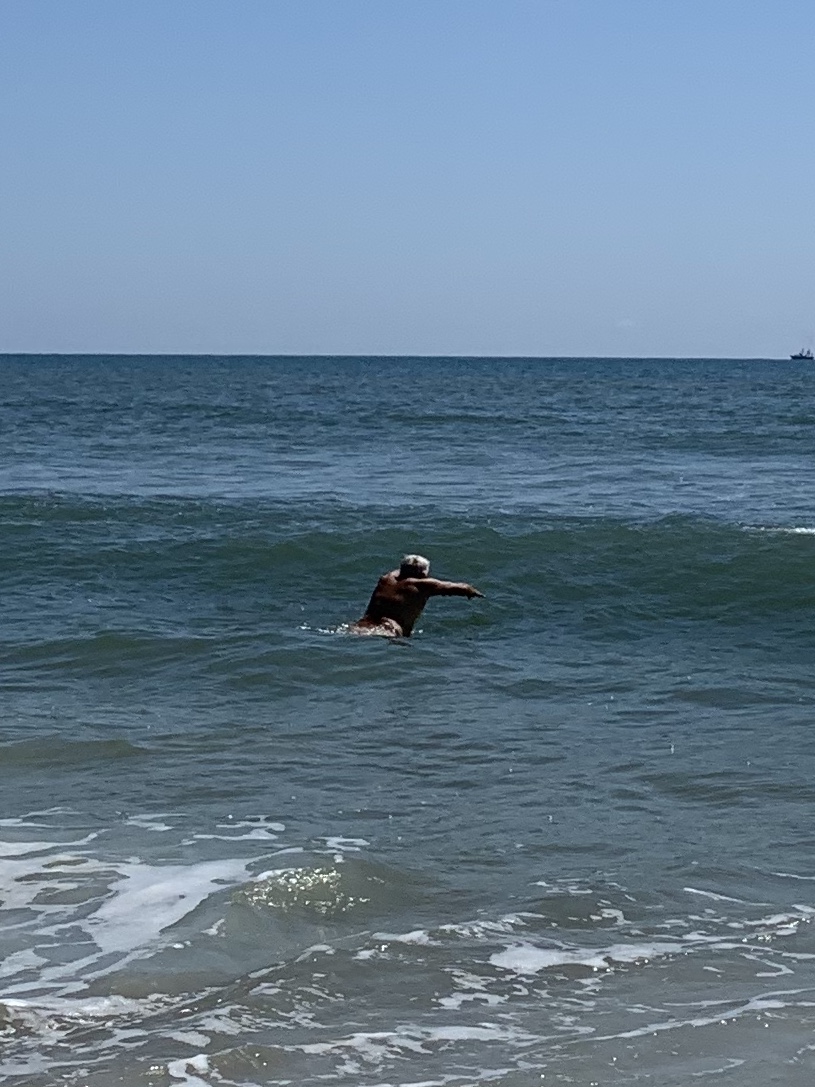
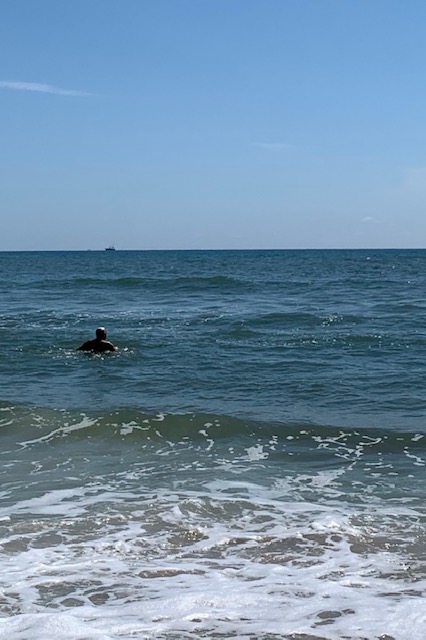
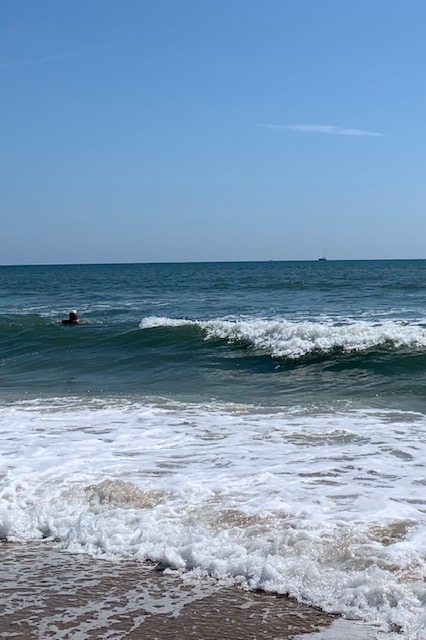
We had a great time walking and getting wet on the beautiful beach! You can see from the pictures, Dave truly enjoyed himself as he was diving in the waves, he should have had a surf board.
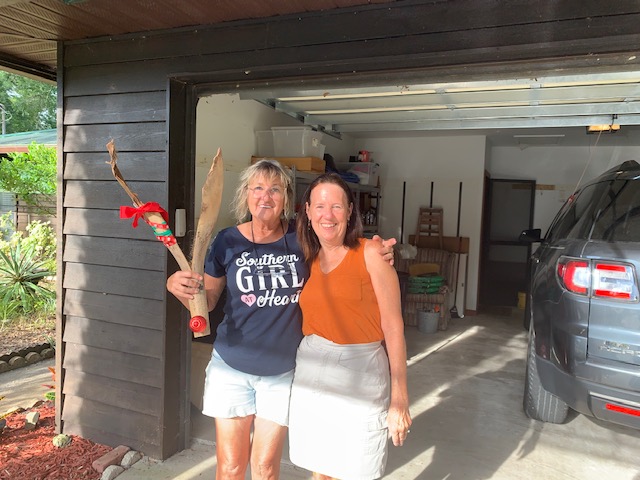
We stopped to visit our friend Lisa and see her new house. We had a great time catching up. Take Care Lisa, it was great seeing you.
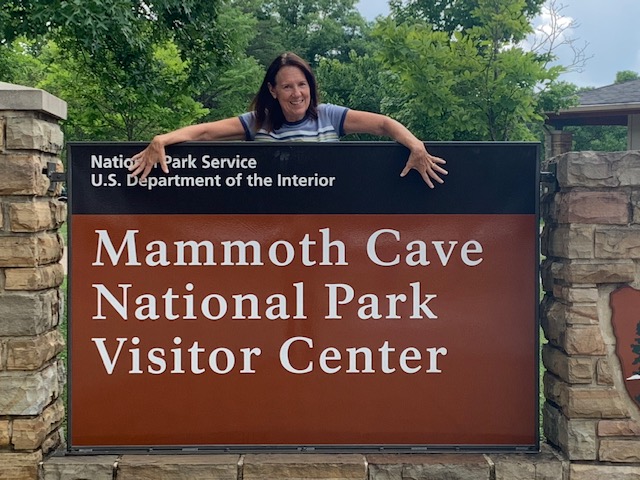
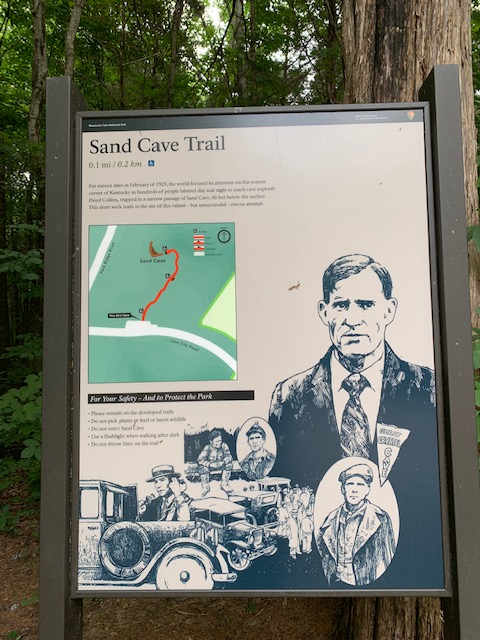
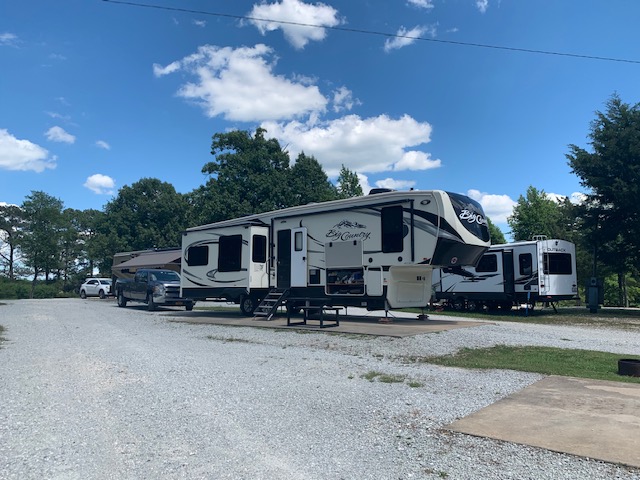
We are now in Cave City Ky, at Cave Country Rv park,here for a few days visiting Mammoth Cave national park. We left St Augustine Fl, on Saturday, YES ,we are no longer in Florida.
As I mentioned we left St Augustine Saturday Morning, and drove 289 miles to Perry Ga, for an over night stay. Then left there Sunday morning and drove 229 miles to Chattanooga Tn, for an overnight stay. Today(Monday) drove 238 miles to cave city Ky, which is where we are now until Thursday, when we will be off again. Melissa is in the finishing stages of her upcoming post on St Augustine, which was very nice. For now that’s it hoipe to enjoy the cave tours we have lined up.



















































































 ROADS OF DISCOVERY