“The landscape of the American West has to be seen to believed and has to be believed to be seen.”
N. Scott Momaday
Follow us on our Trails West: We left NY on on September 17th and drove to our first stop.
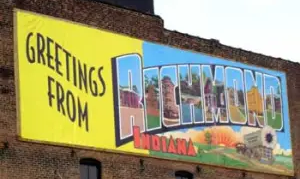

Which was in Richmond, Indiana. Dave planned this stop ahead of time cause it was in the right place on the map and going in the right direction.

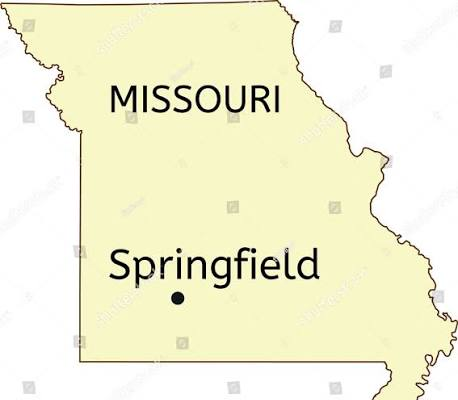
Our 2nd stop on September 18th was just for the night too, we stayed in SpringField, MO
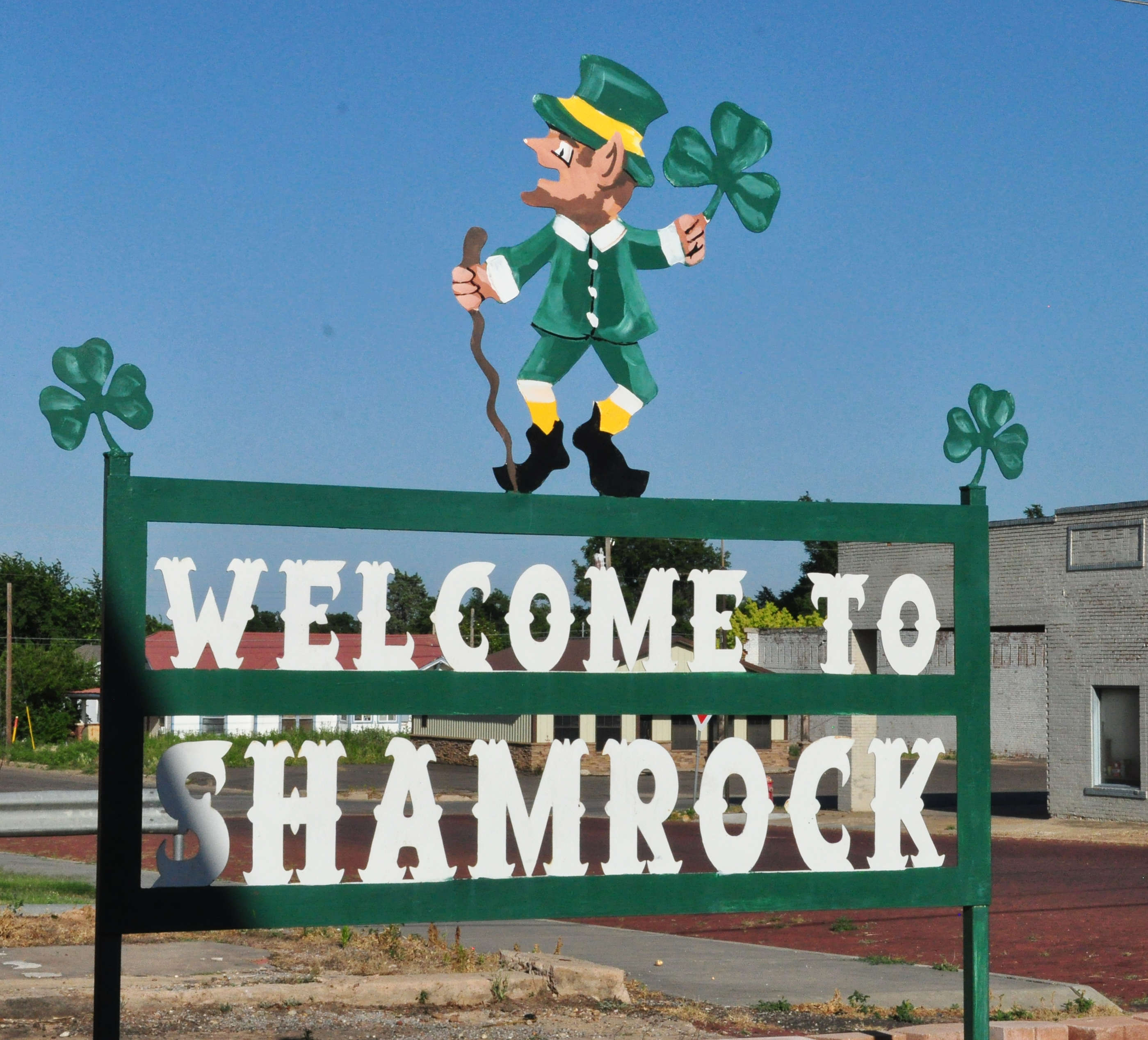
On Saturday the 19th we were once again in Shamrock, TX. If you read our blog you know that we have been here a few times before. It’s a cool location on Route 66.
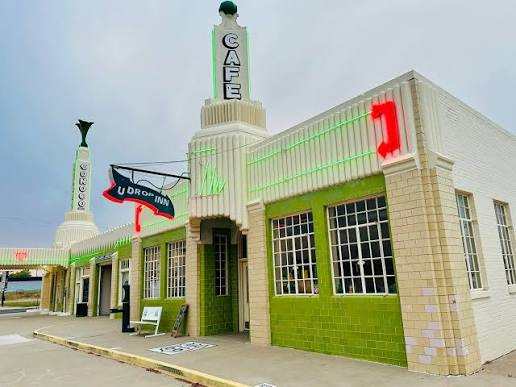
Only, we got here to late on Saturday to eat at the U Drop Inn!! They were closed and the food there is so yummy. Oh well McDonald’s it was.

On Sunday the 20th, we stayed overnight at Moriarty, NM.


September 21, we were at our 1st place to check out the sights and sounds in Cortez, Colorado.
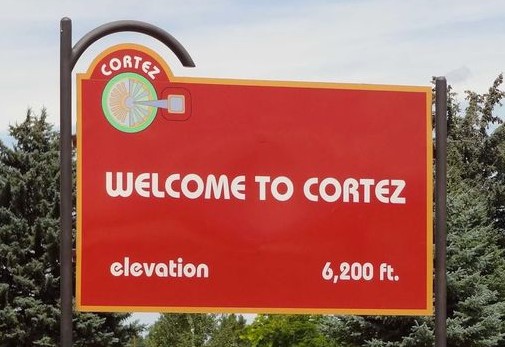
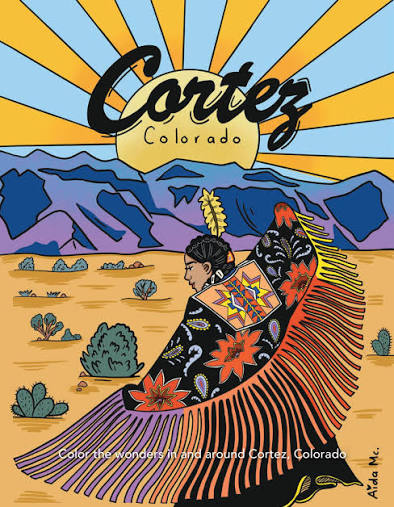
Cortez is a really neat area located in the southwestern corner of Colorado. It’s known as the heart of the Four Corners region and Cortez is also known for Native American history and is considered one of America’s top archaeological centers.


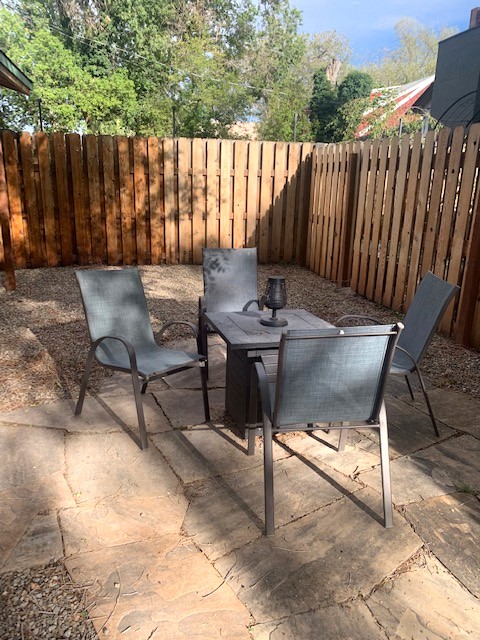
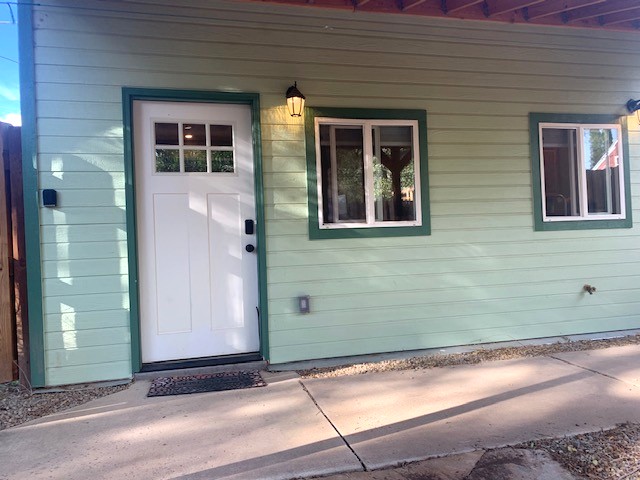
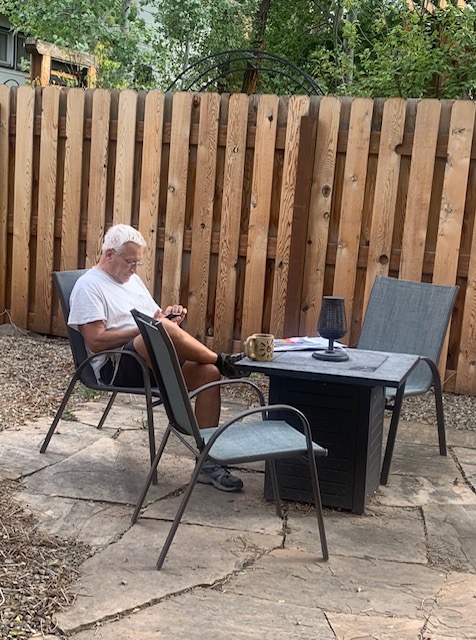
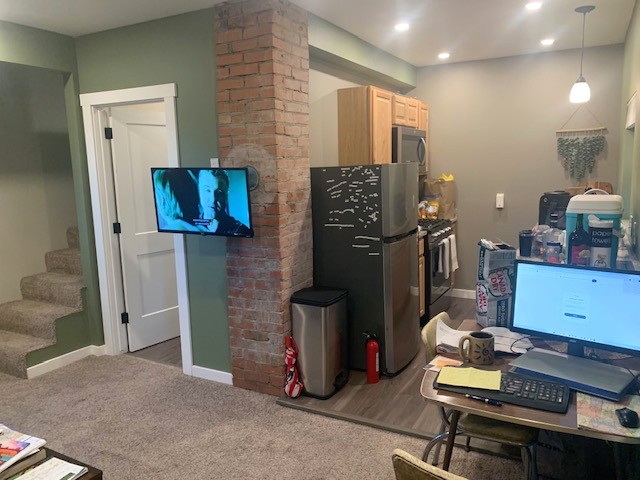
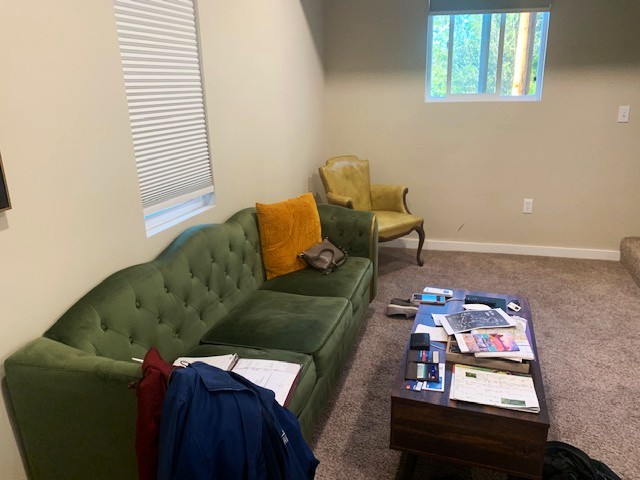
Here we stayed at an awesome Airbnb right in the city from the 21st – the 25th
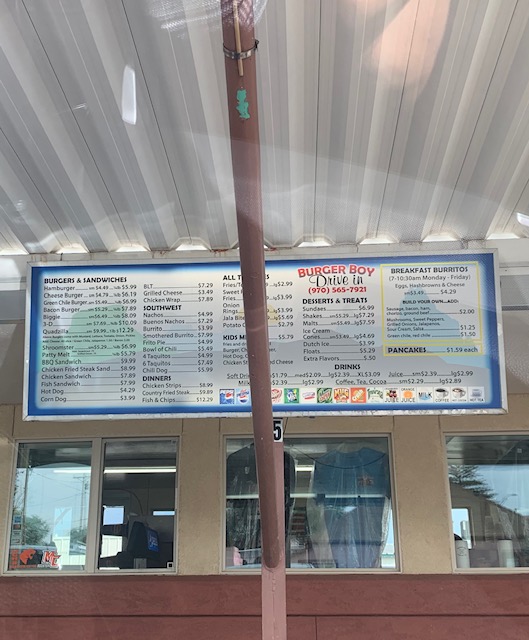
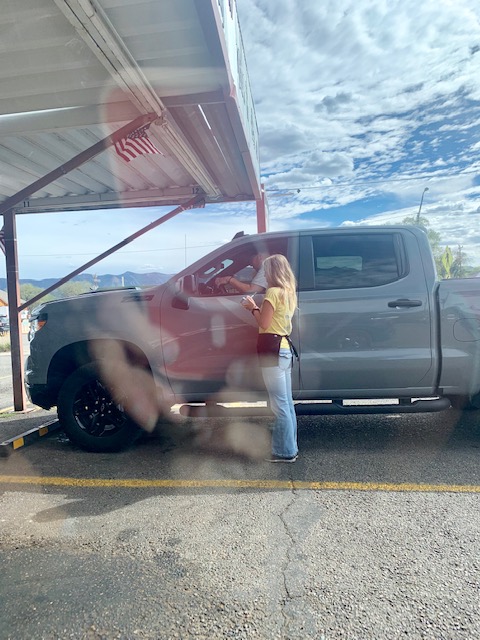


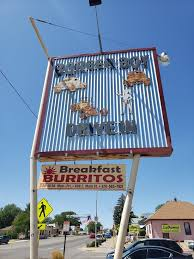
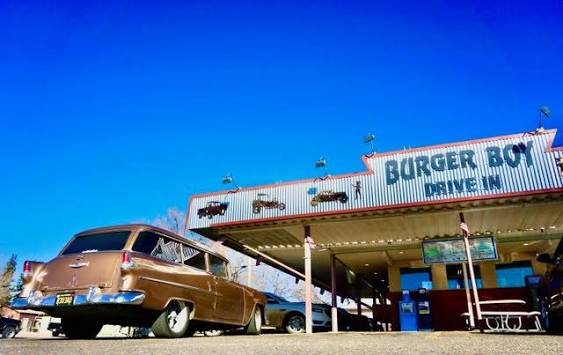
Our first night there we had dinner at a really fun spot in Cortez, it was Burger Boy! It’s a blast from the past. You drive up, park, sit back, read the menu. Waitress comes out, takes your order. Brings your food on a tray she then hooks to your partially rolled-up window. What a throwback to yesterday! I believe that at Sonic you order from a screen, a waitress doesn’t take your order but someone brings it to you. We have never been to a place like this so it was a real treat. I even had to go back for a delicious root beer shake, it was yummy!
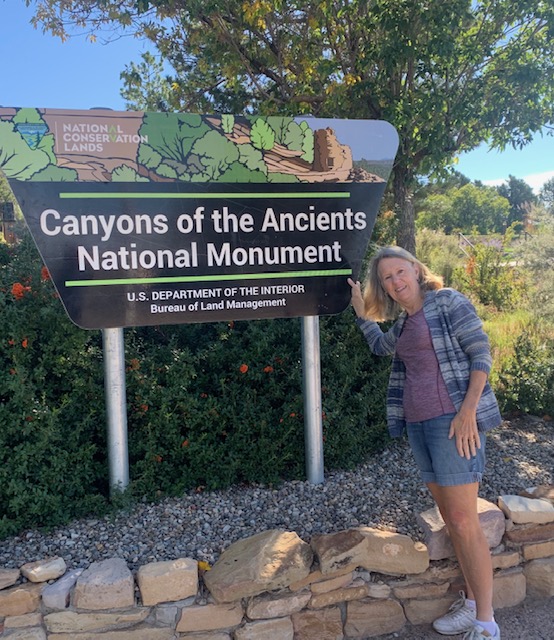
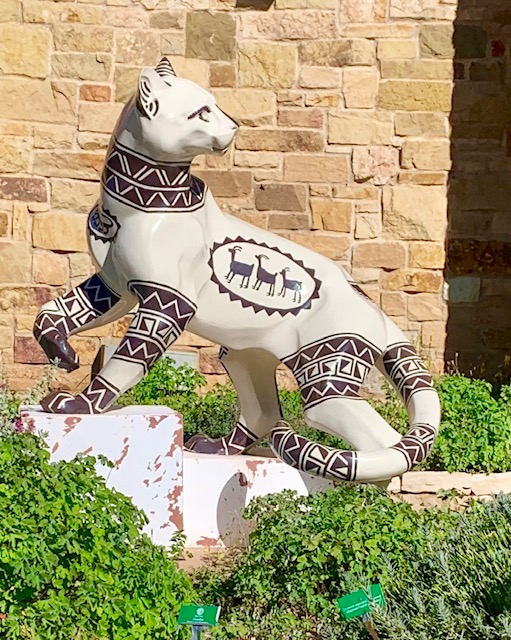
On the 22nd, Our first stop was at
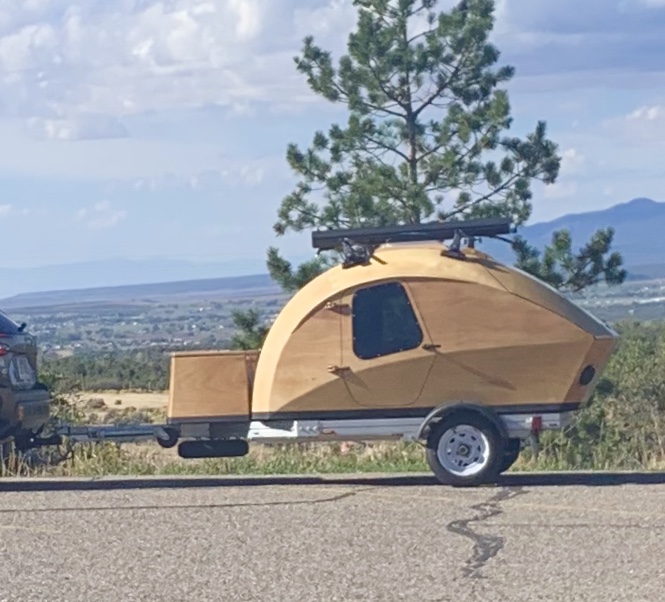
This neat wooden rv was in the parking lot.
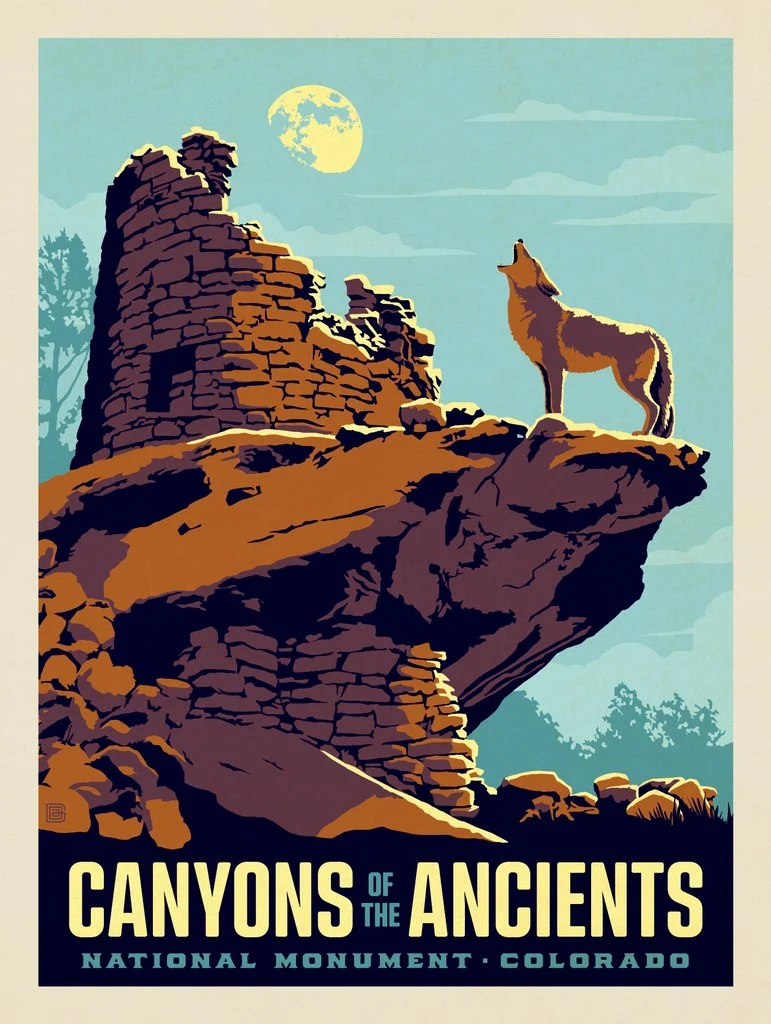
The Canyons of the Ancients National Monument is located in southwest Colorado. Elevations within the monument range from about 4,900 feet to about 7,500 feet above sea level. The outer boundaries of the area encompass approximately 183,000 acres of land. Besides being a beautiful area to visit it contains the highest known density of archaeological sites in the Nation, the Canyons of the Ancients National Monument holds evidence of cultures and traditions spanning thousands of years.
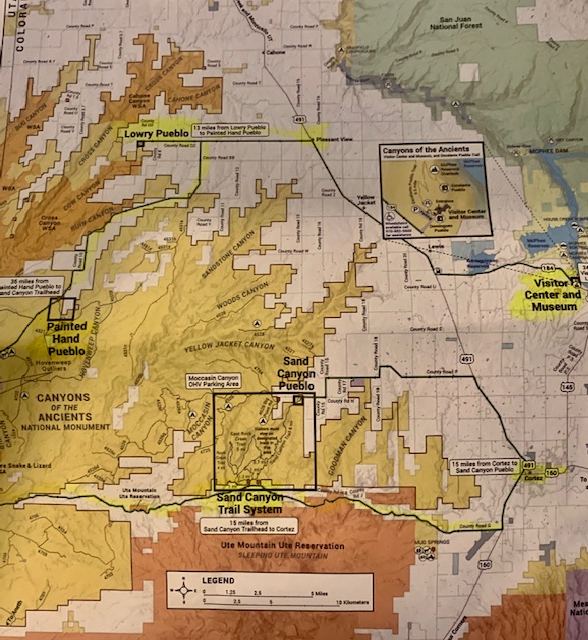
At the Canyons we started at the Visitor Center and then headed to our 1st stop at Lowry Pueblo.
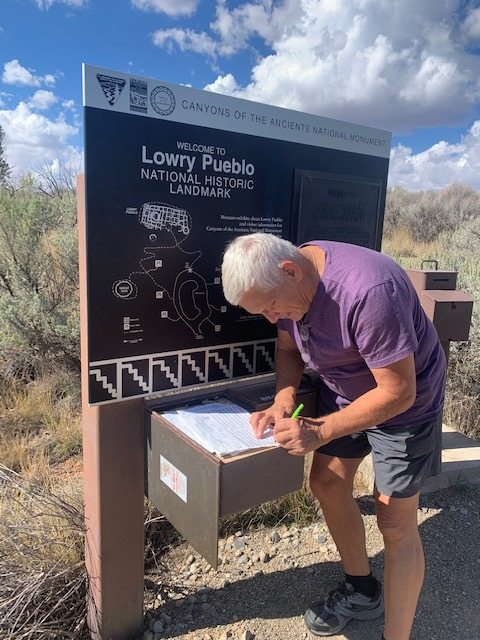
Dave signing in.
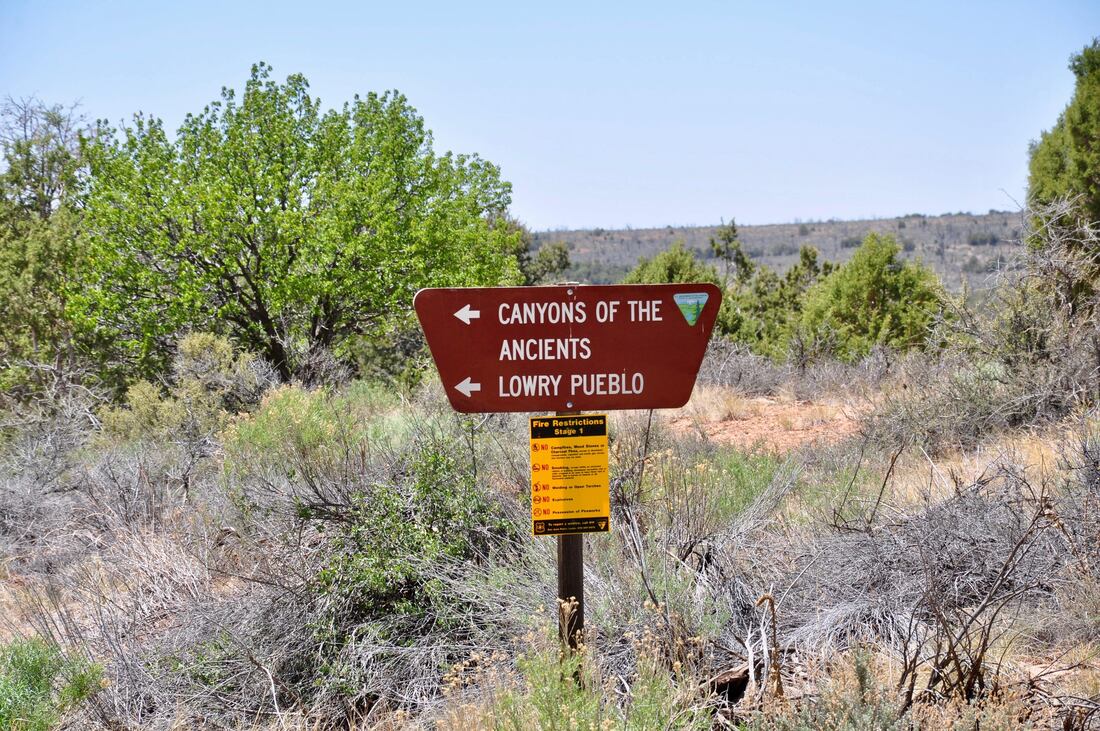
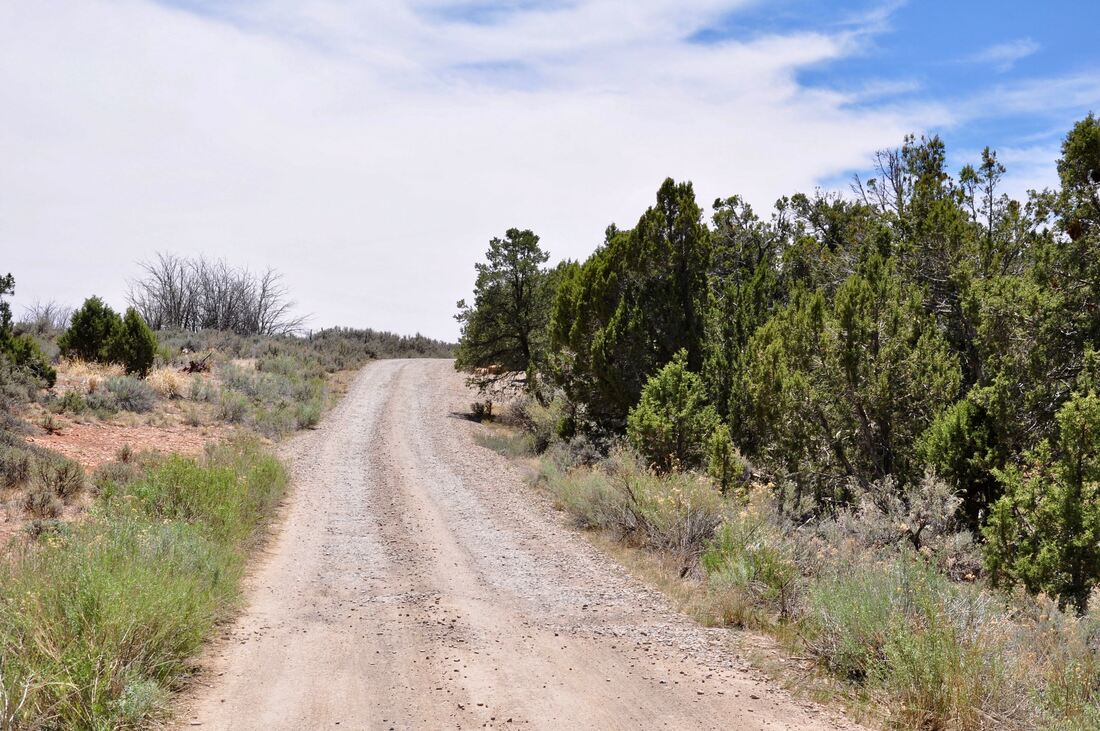
Taking the pathway to Lowry Pueblo.
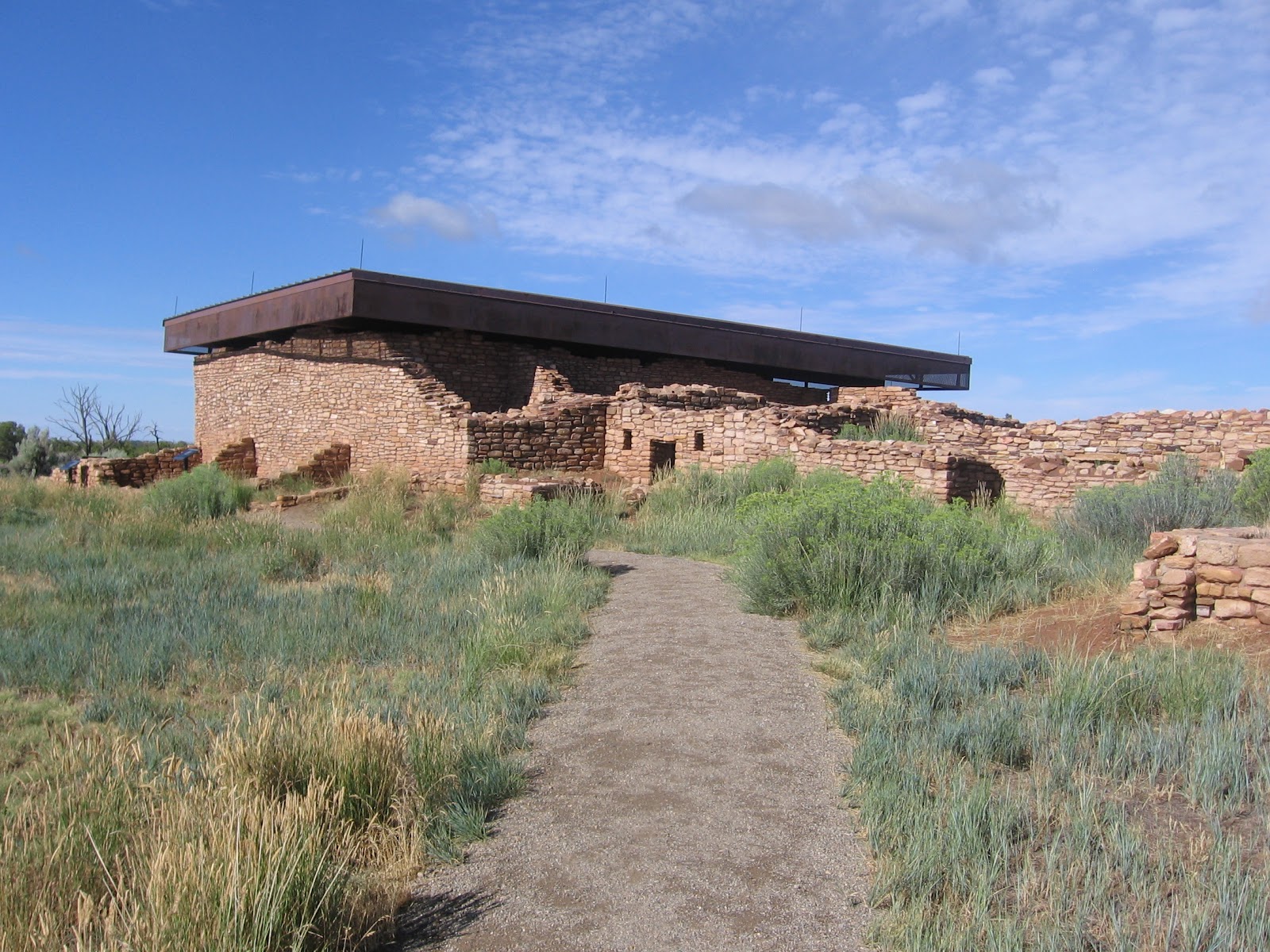
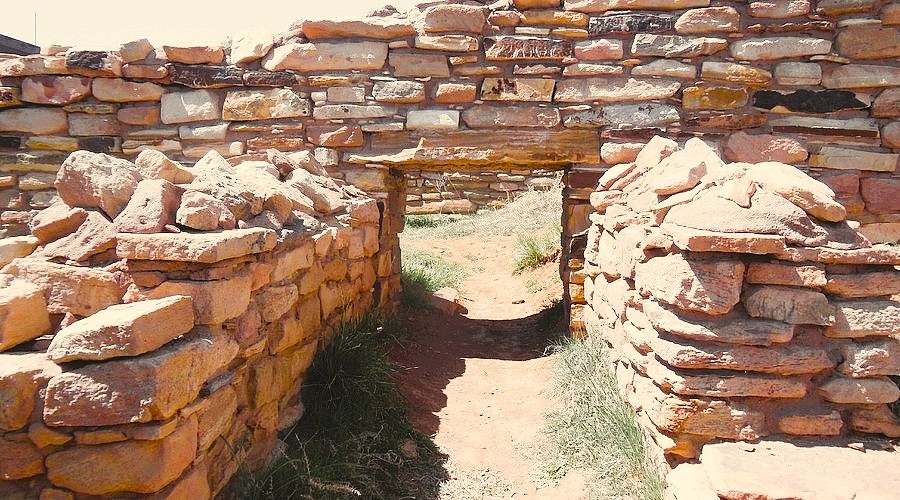
We were excited to visit an ancient dwelling, a 1,000-year-old Puebloan village site.
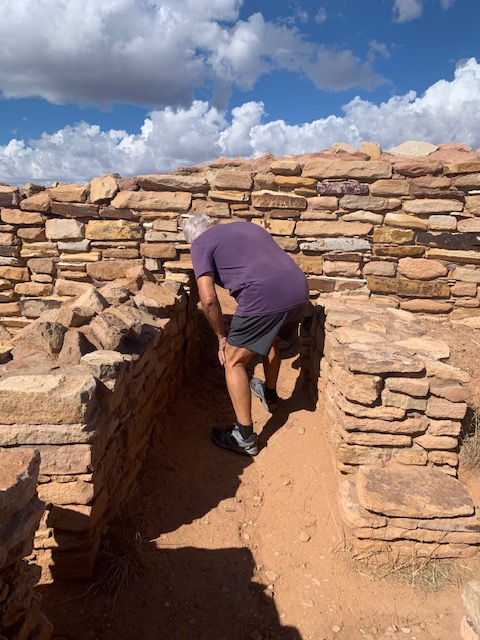
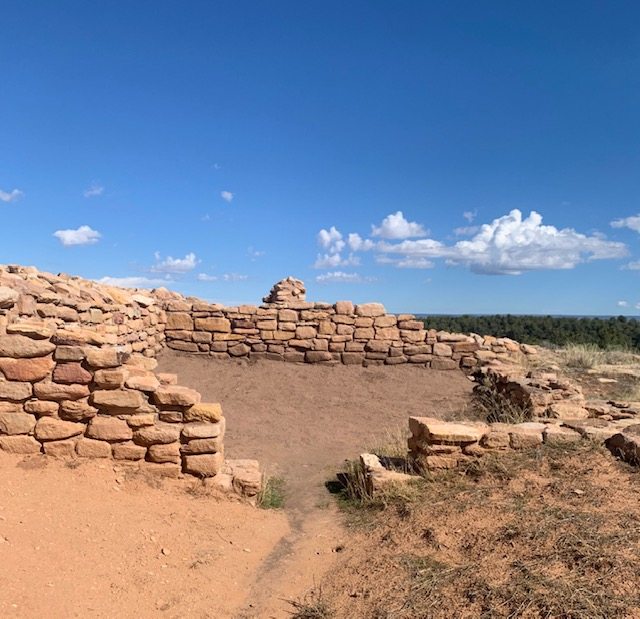
This site was first excavated in 1931 and became a National Historic Landmark in 1967.
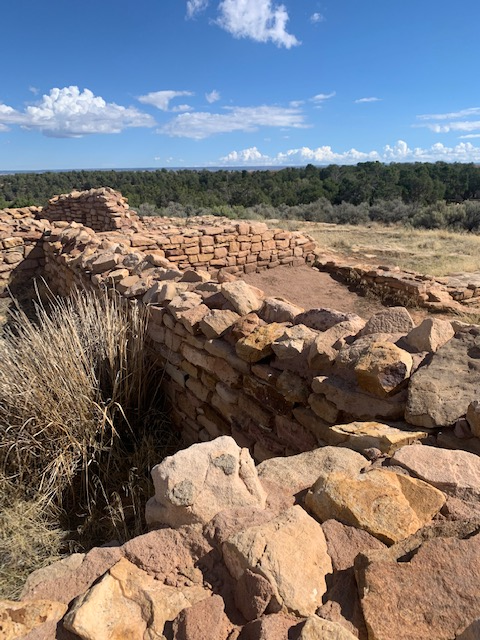
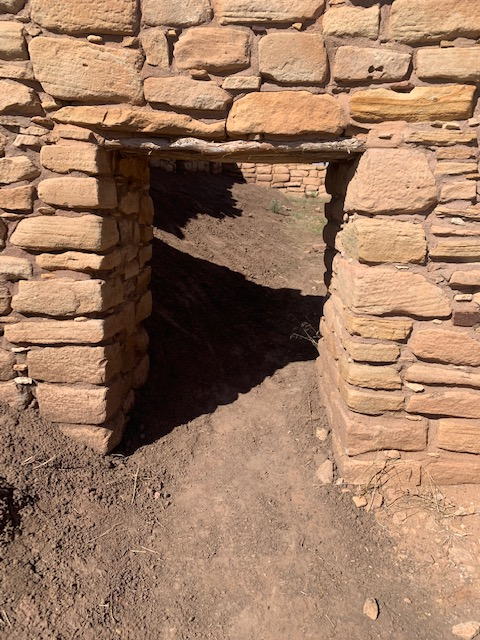
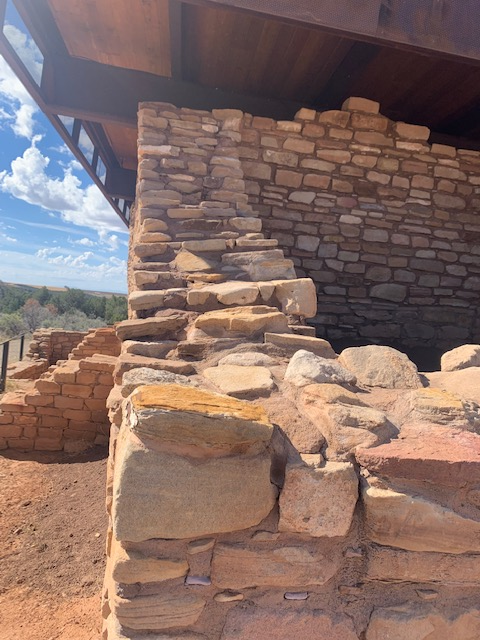
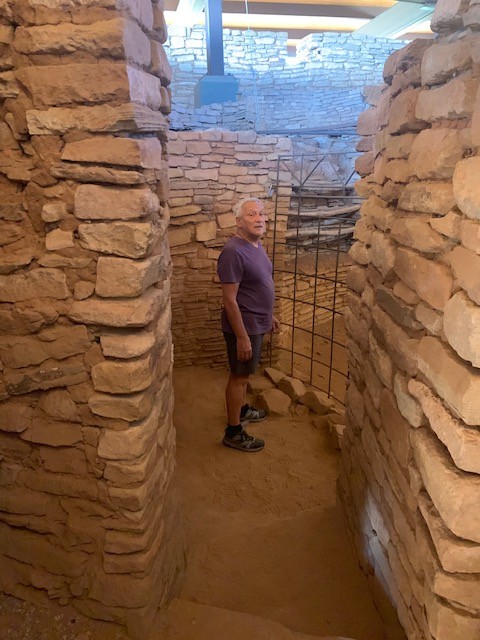
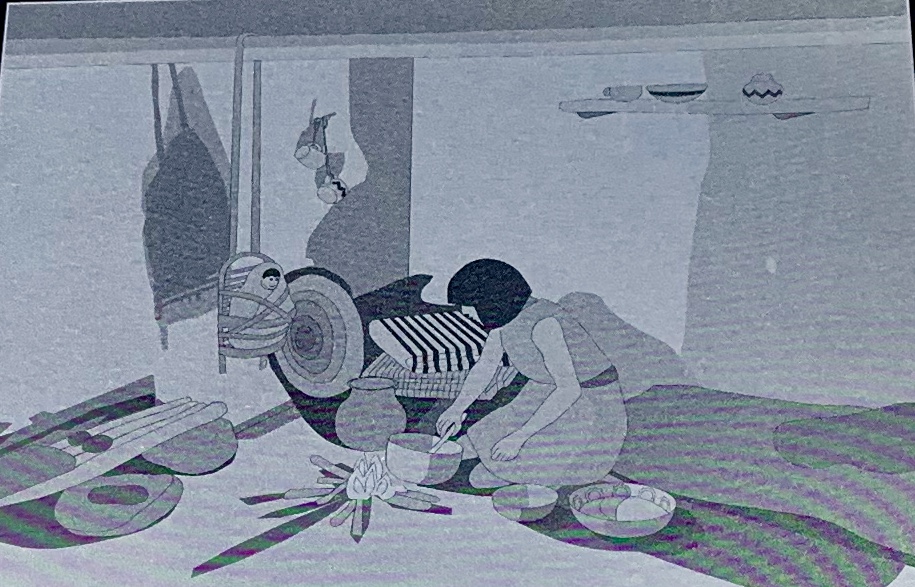
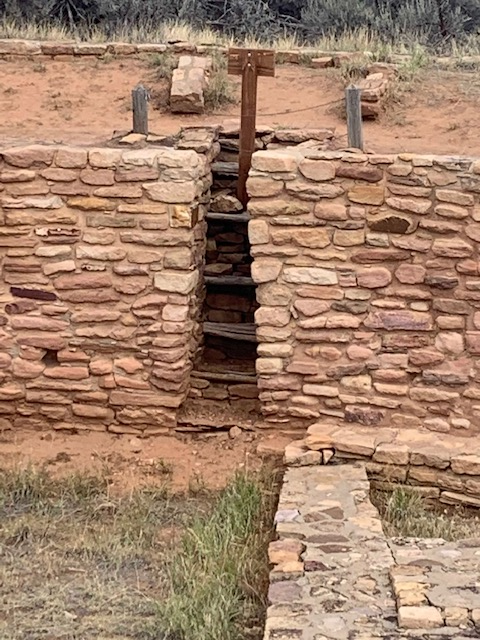
When we walked thru these buildings we were in awe and a bit surprised at the closeness of these ancient rooms. They seemed rather small for families. Especially since 65 to 100 people lived here at one time.
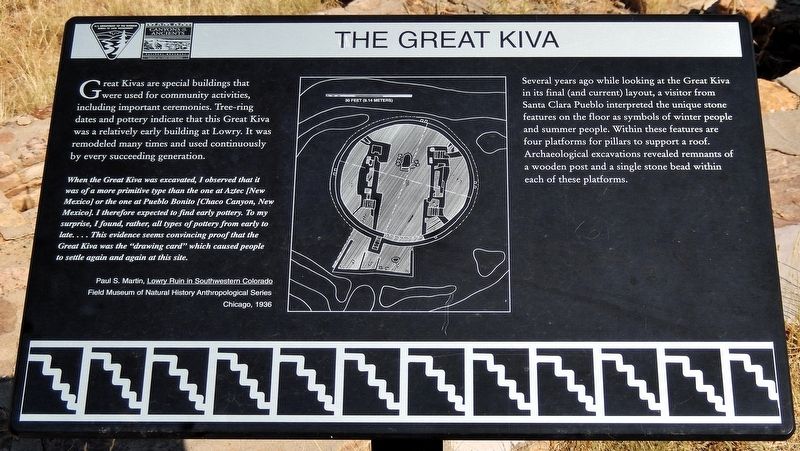
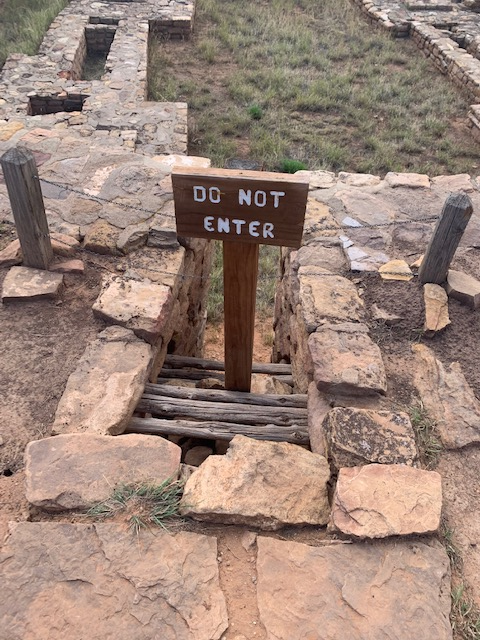
Great Kivas are sacred underground rooms that were used for community activities, including important ceremonies. Tree-ring dates and pottery indicate that this Great Kiva in Lowry Pueblo was a relatively early building at Lowry. It was remodeled many times and used continuously by every succeeding generation.
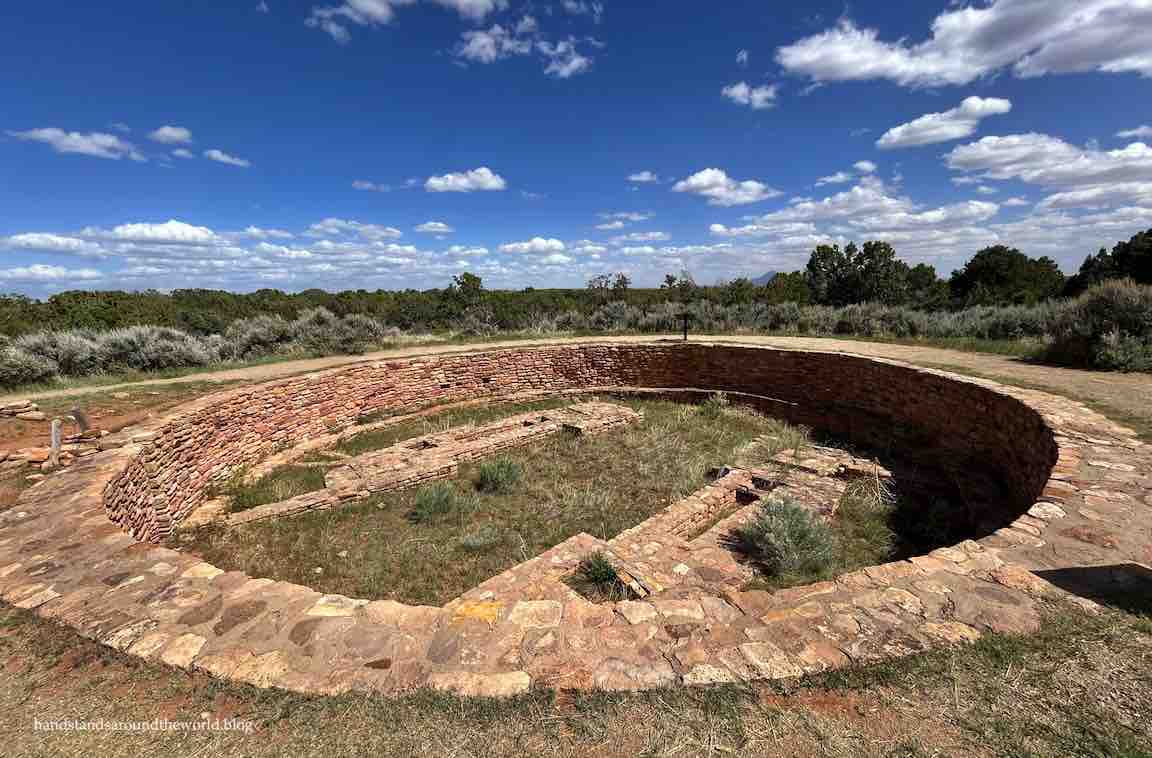
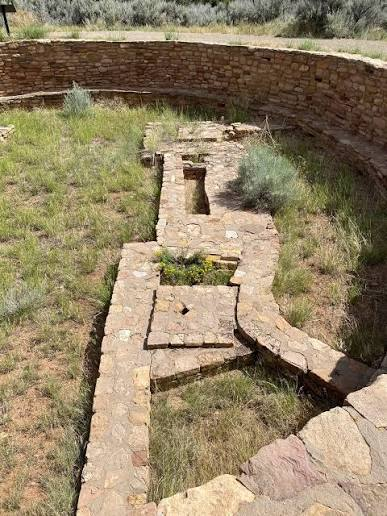
The Kiva
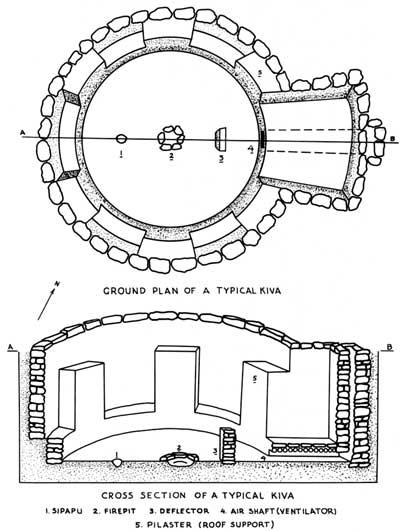
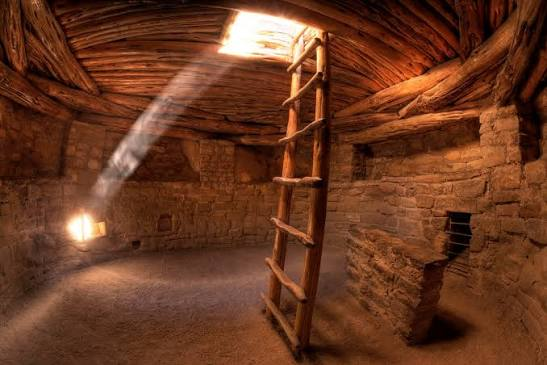
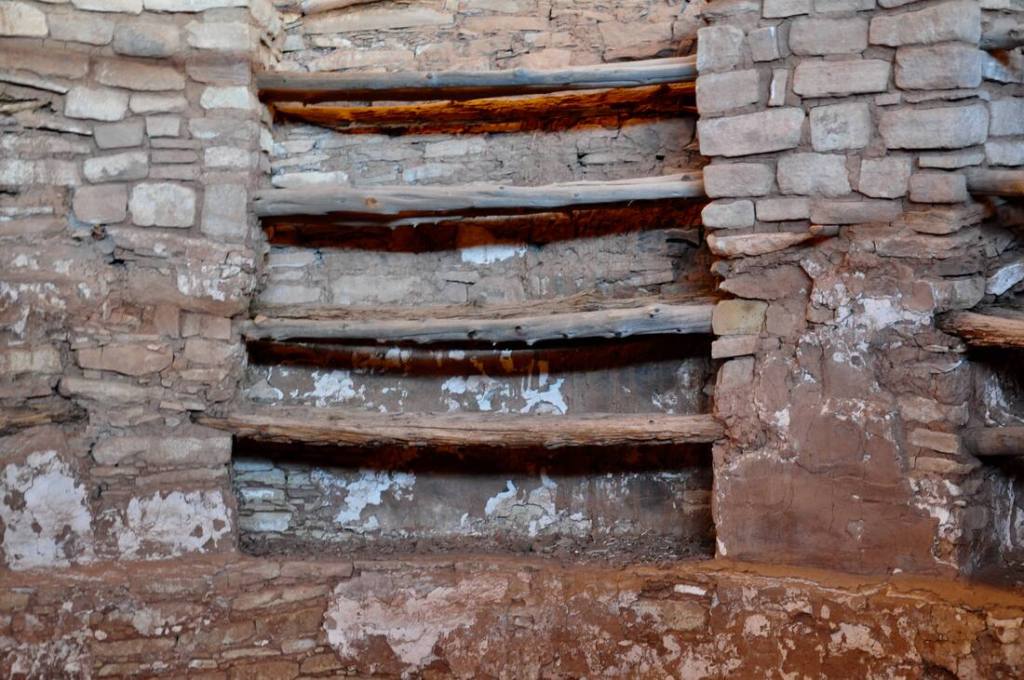
Other things that we’re going thru our minds walking thru the village was how did they survive?
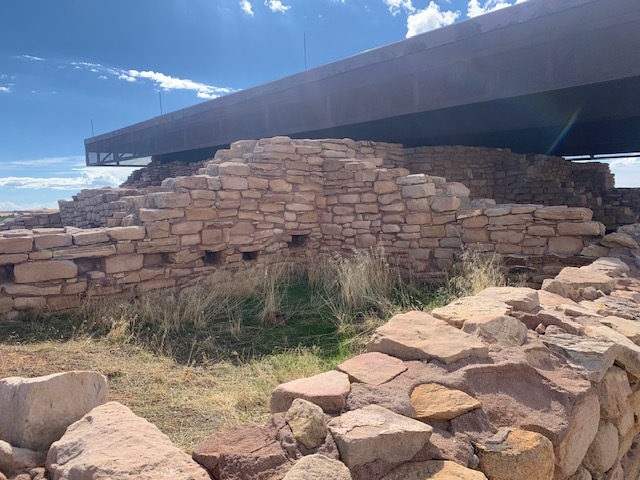
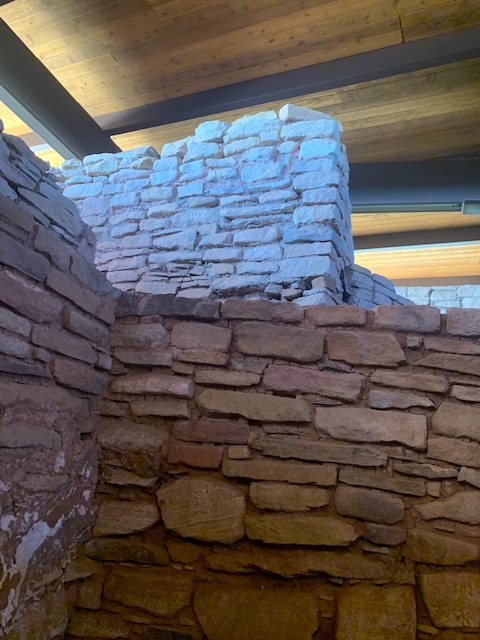
They put a roof on part of the village to save it from the elements. All the walls were higher and the ground/floor in all the buildings got filled in from thousands of years of weather.
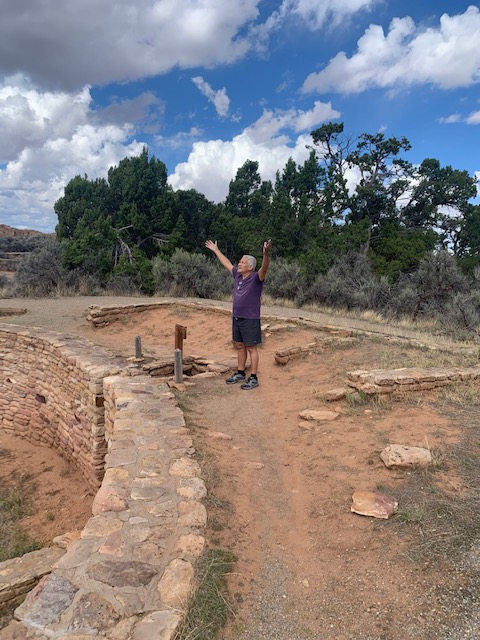
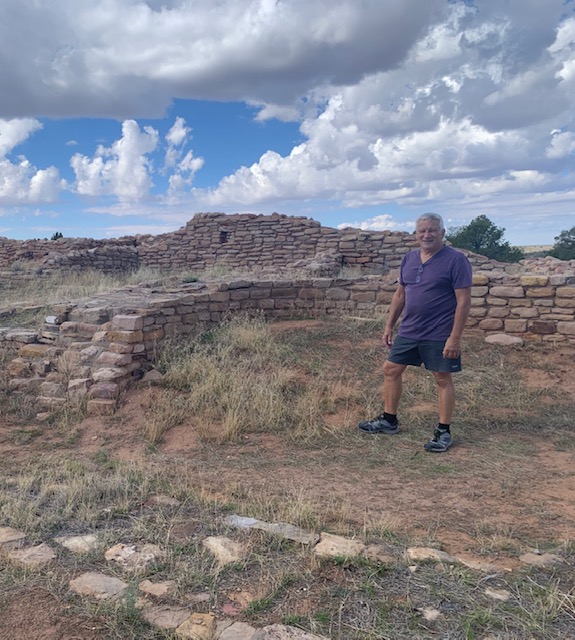
Dave in the first picture is telling us that the walls were higher.
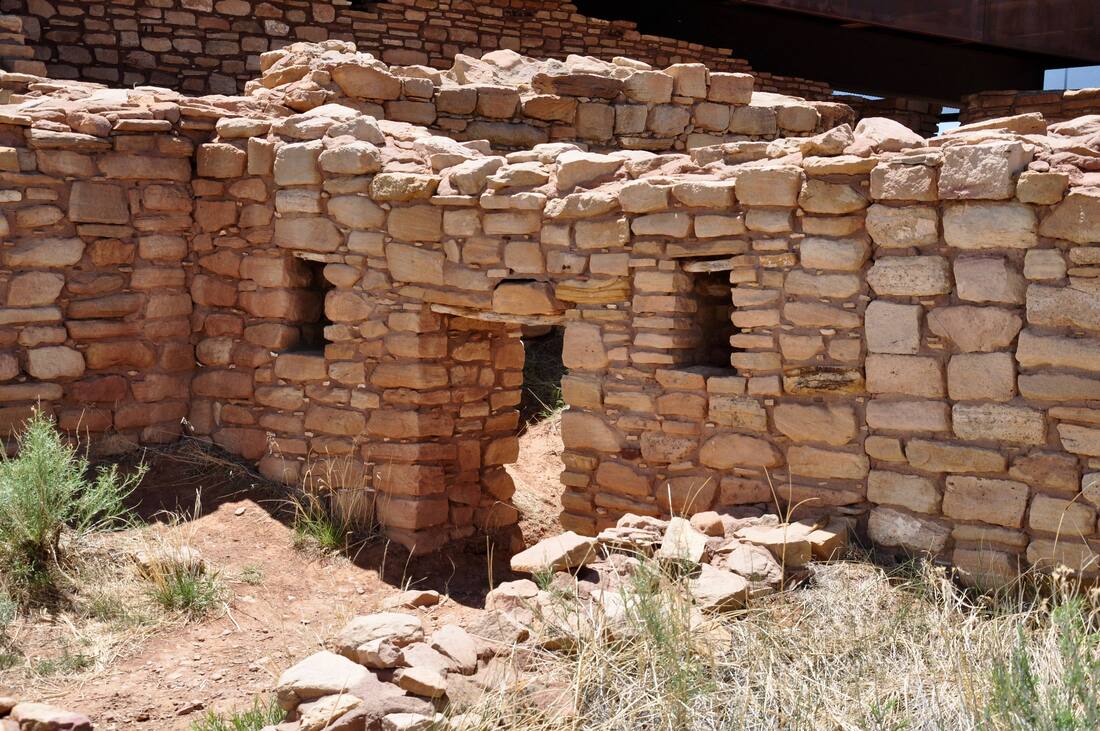
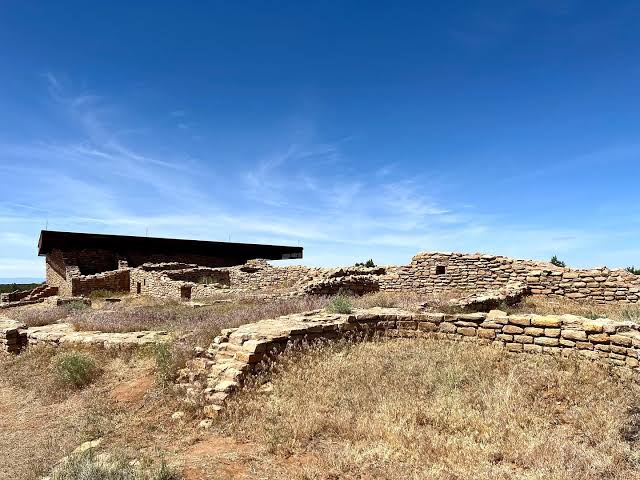
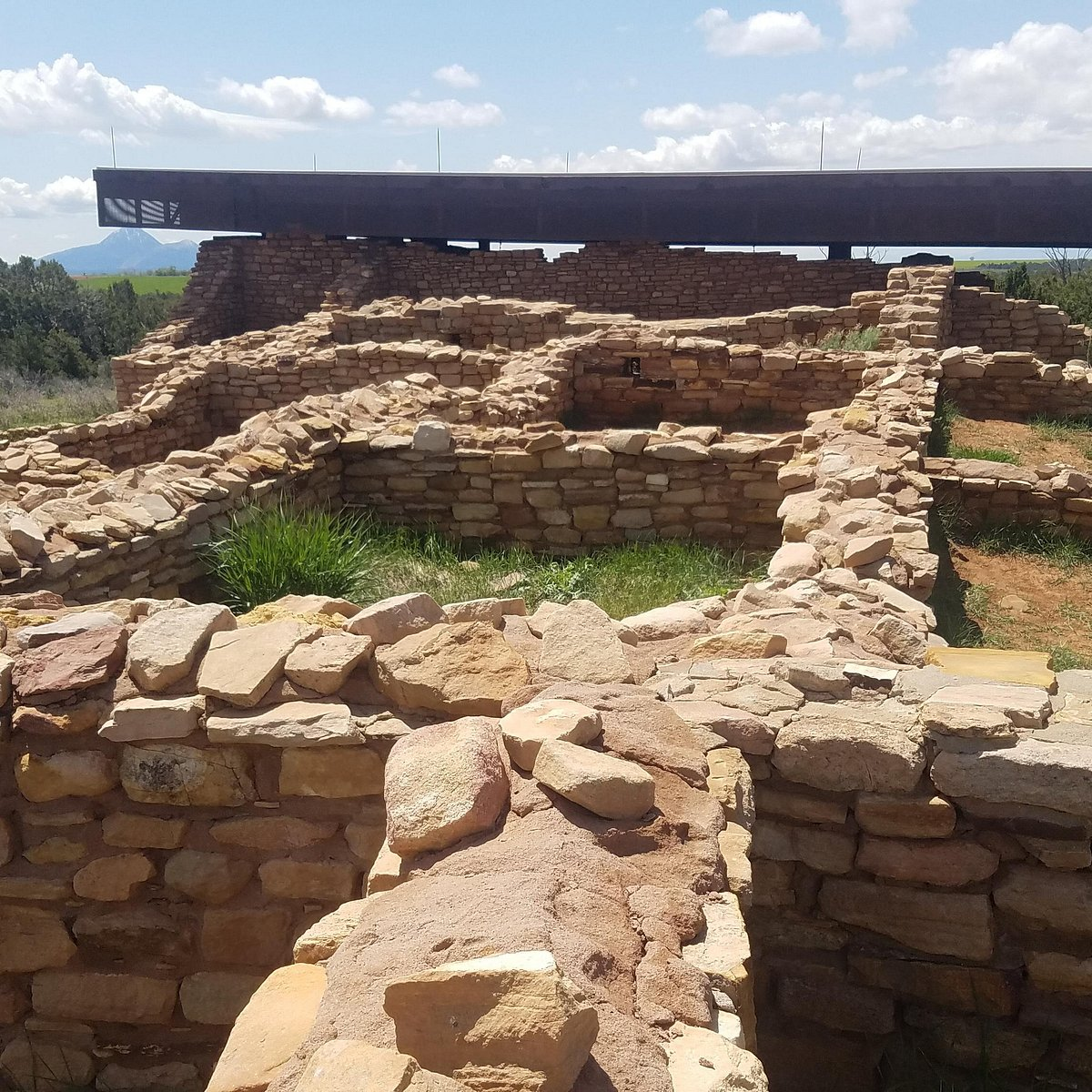
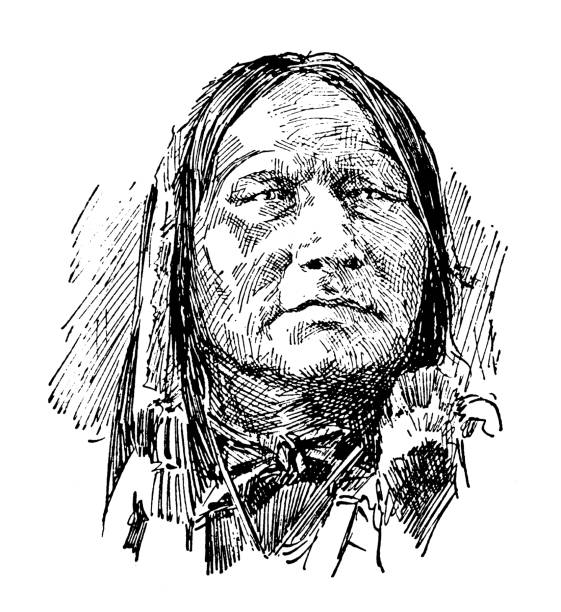
We found out that Lowry Pueblo was named after George Lowry an early 20th century homesteader. It was built on top of the houses of an earlier community around 1060 AD, and inhabited for about 165 years. It began as a small village with a few rooms and a kiva. Several more rooms, the Great Kiva was added between 1085 AD and 1170. By the time the last families left and migrated south and east, the pueblo had 40 rooms, eight kivas and the Great Kiva.

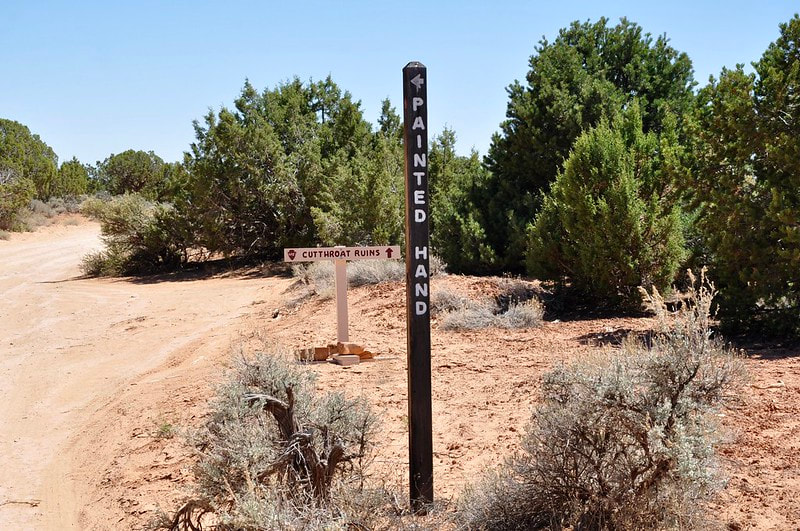
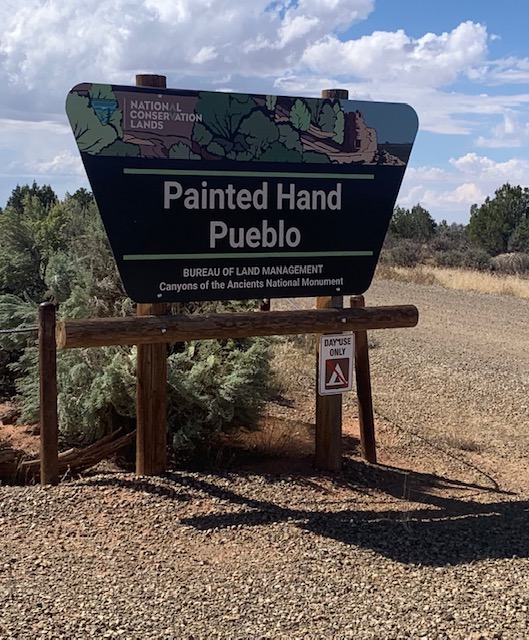
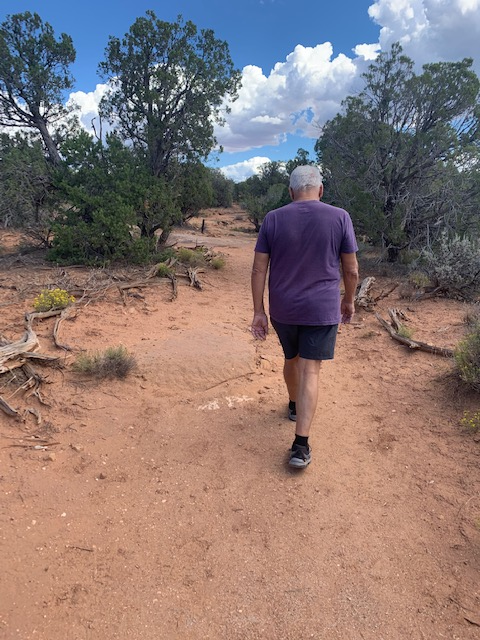
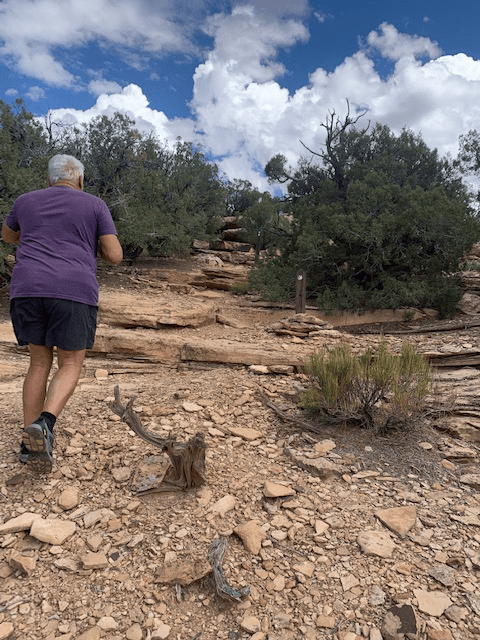
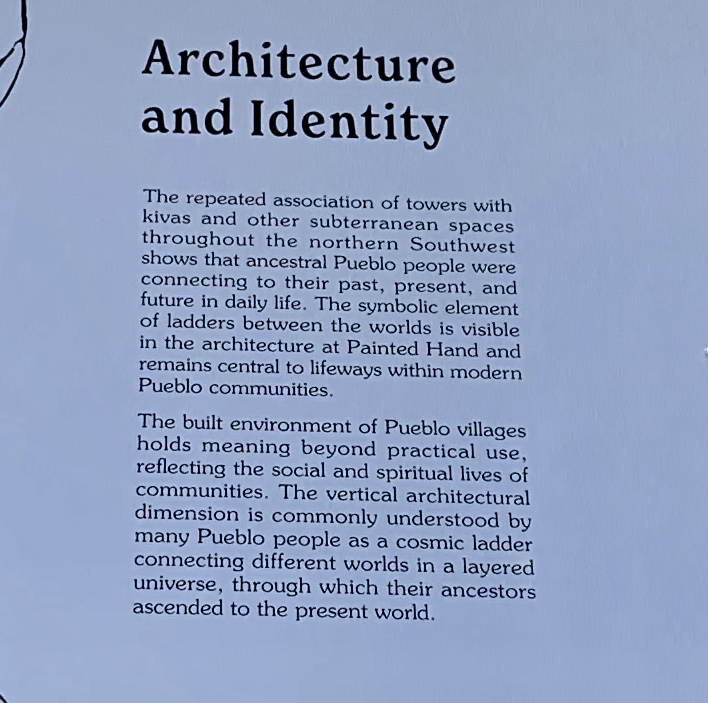
Our next stop was Painted Hand Pueblo. From the parking area it’s about a mile trail that meanders out to the cliff edge and views of what remains of the pueblo. The small village was built around 1200 AD. It had 20 rooms some structures, including a multi-story tower, kivas, and living quarters. It still has rock paintings and petroglyphs. The designs of the ancient images have special meanings to their descendants today and the Painted Hand Pueblo was placed on the National Register of Historic Places.
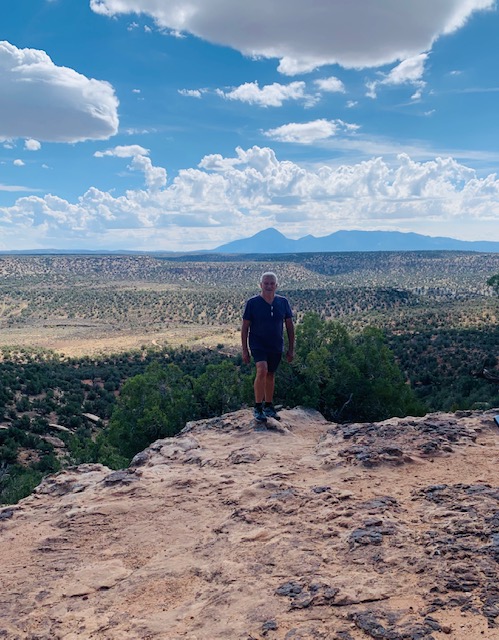
There’s Dave walking so close to the edge! He always does it!
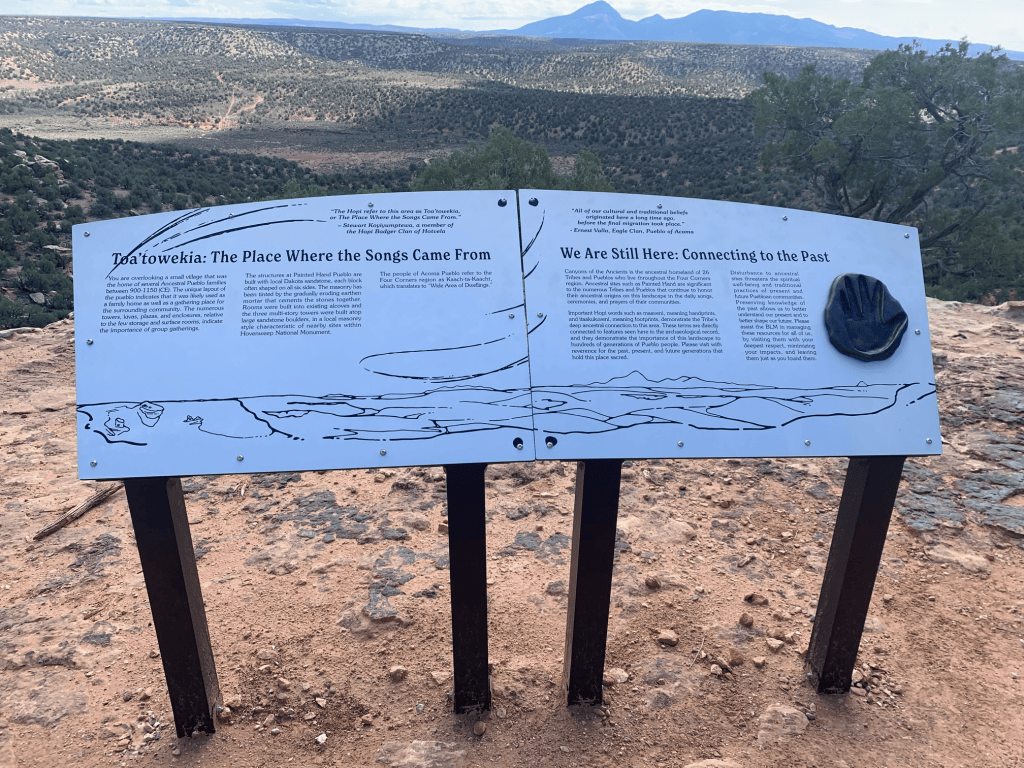

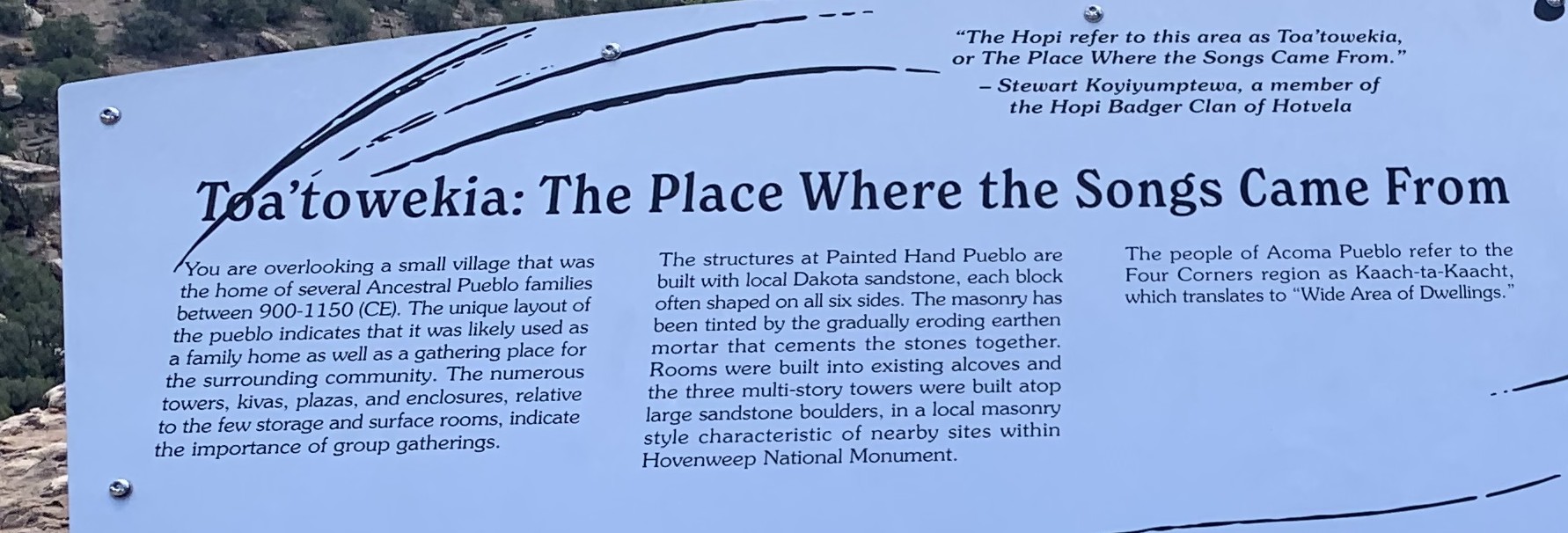
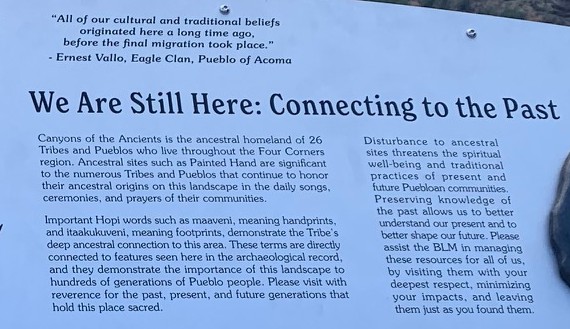
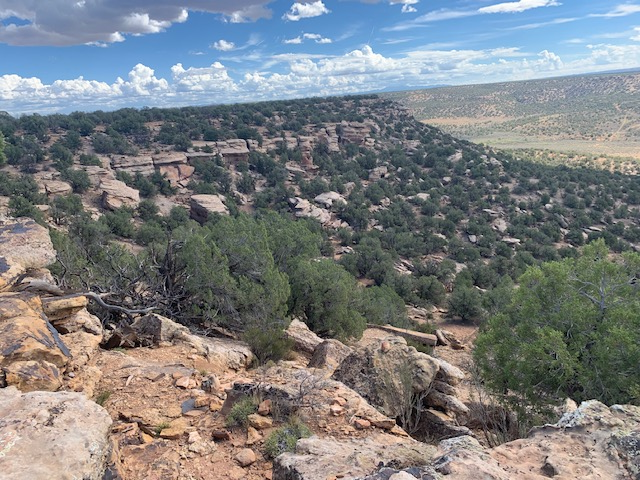

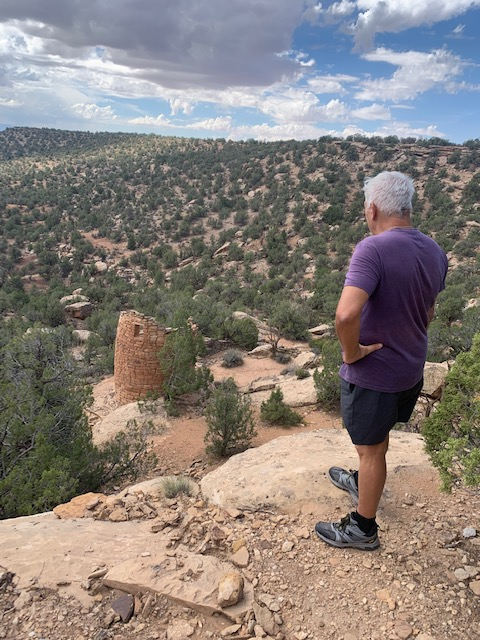
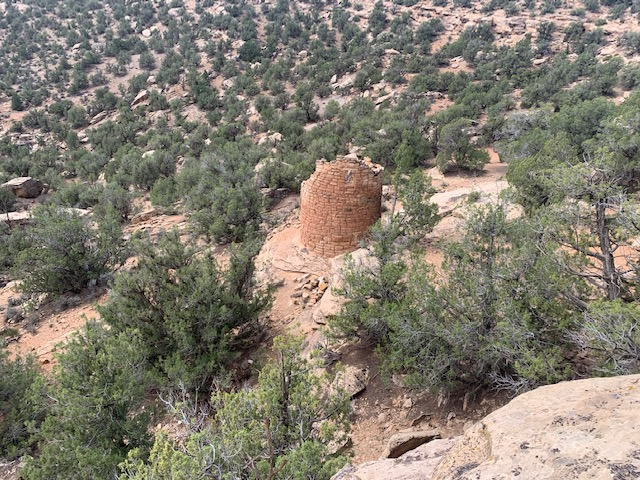
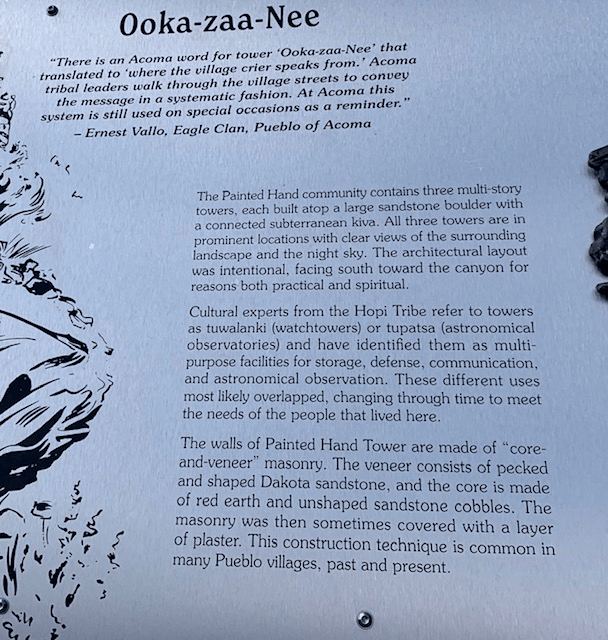
Dave is looking at the Stone Tower Building. A round masonry tower that sits directly on top of a large projecting sandstone boulder, with multi-level dwelling rooms and a structure built underneath it. The stonework features well-crafted sandstone blocks, and faint finger impressions still remain visible in the original adobe mortar.
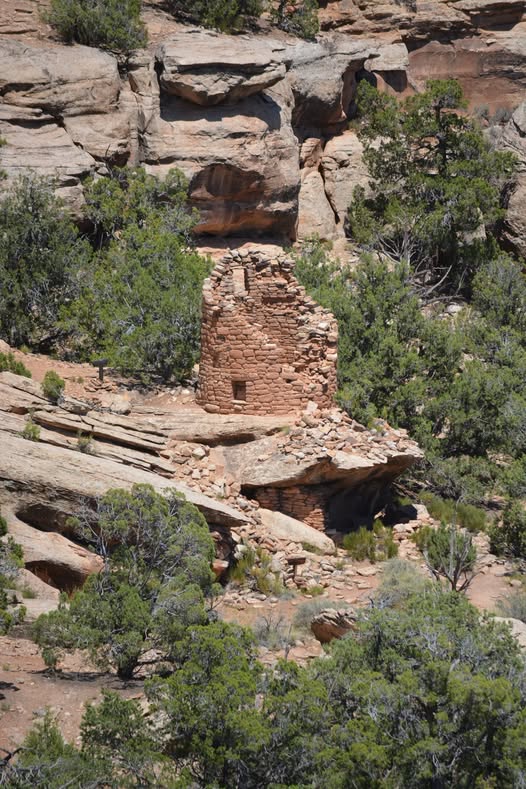
A view of the tower from another angle.
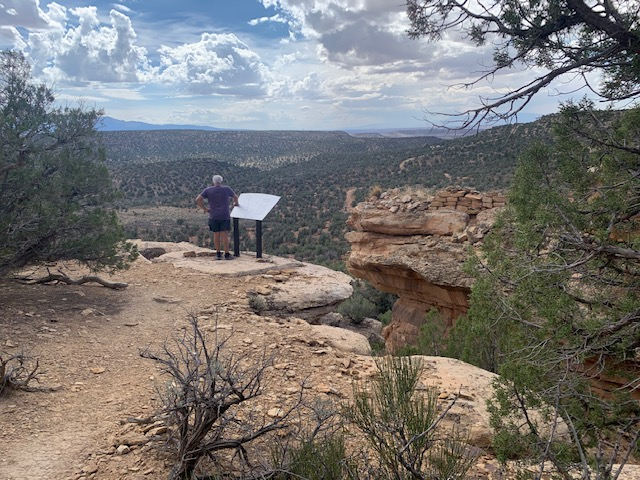
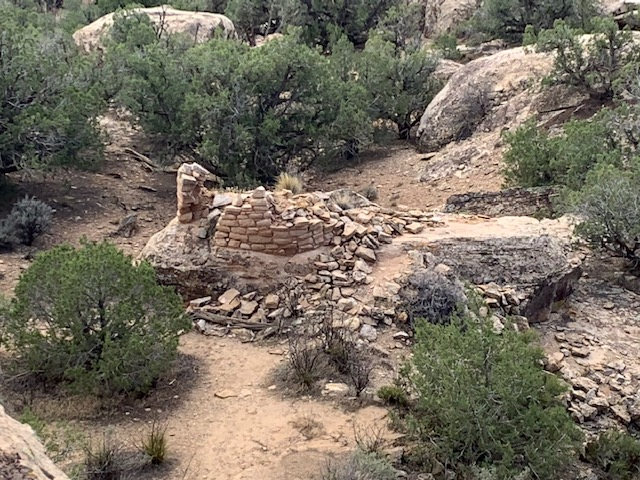
From this view you can see the ruins of another tower.
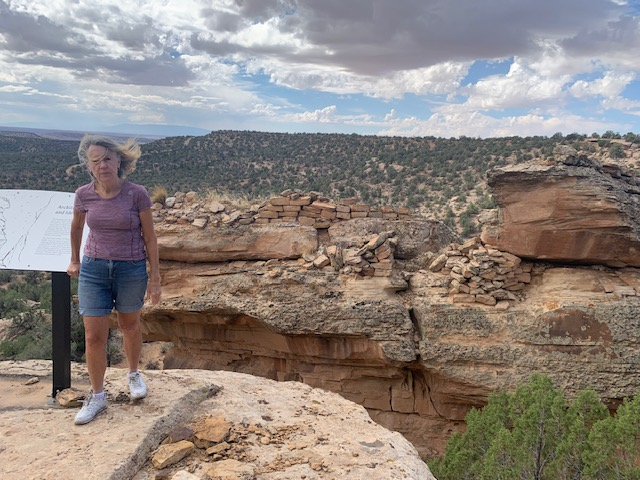
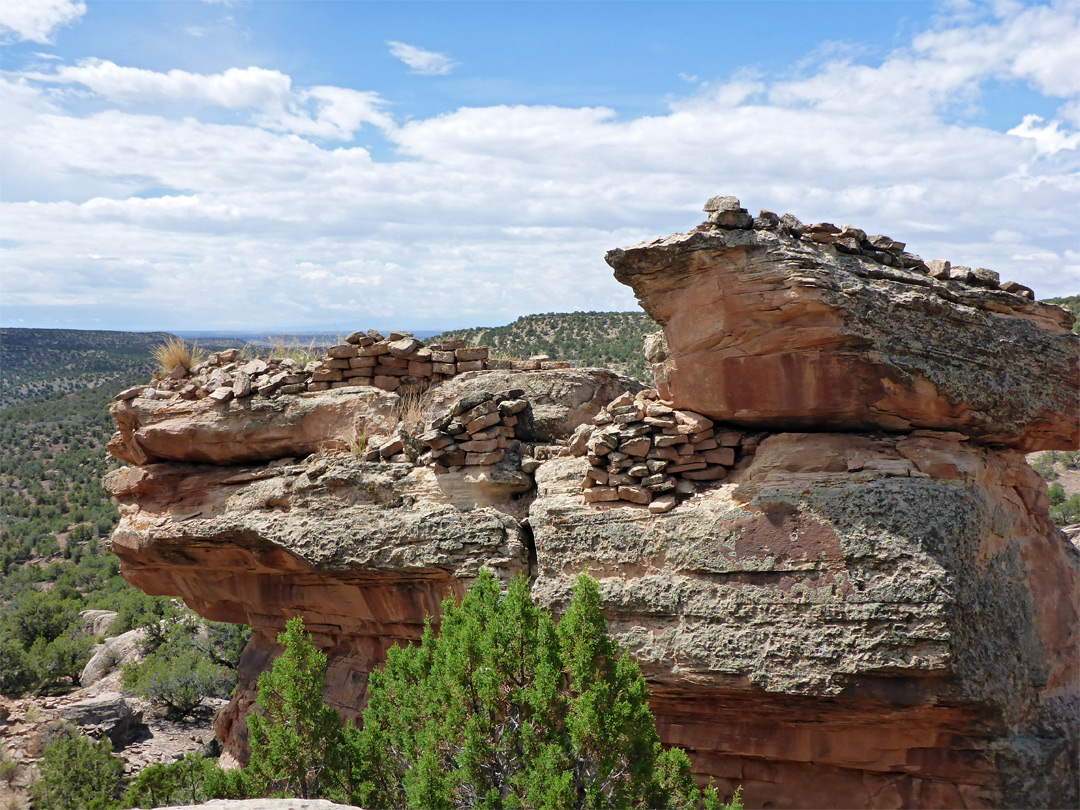
Additional ruins at Painted Hand Pueblo.


Our 3rd stop was at Hovenweep National Monument. Hovenweep a Ute Indian word meaning “deserted valley.”
Hovenweep was home to many Ancestral Puebloan people from 600 to 1300 AD, long before Europeans arrived. Together with the nearby, Canyon of the Ancients National Monument, is an area that has largely remained unchanged for centuries.
This area protects six ancient stone towers and villages built in 1200 by the Ancestral Puebloans along canyon rims on the Utah-Colorado border.
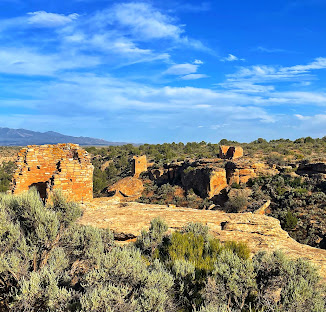
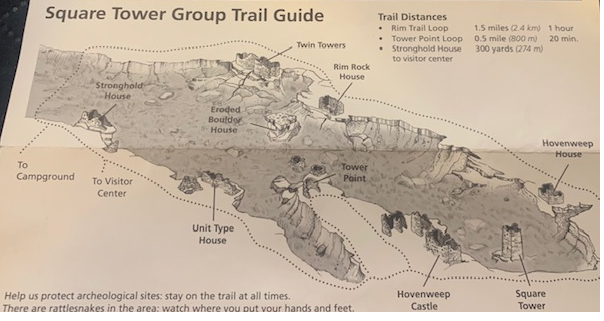
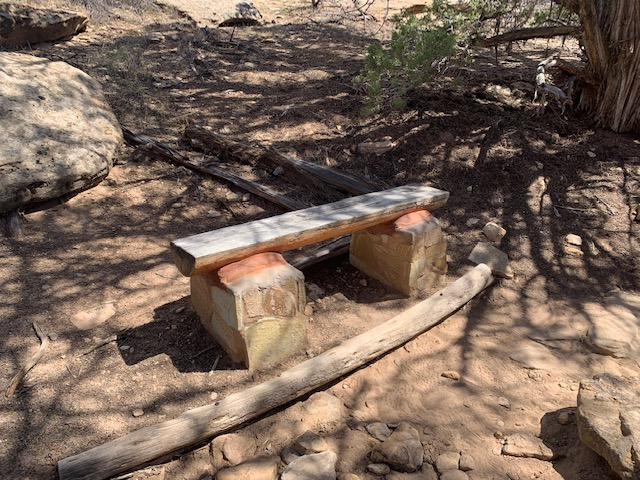
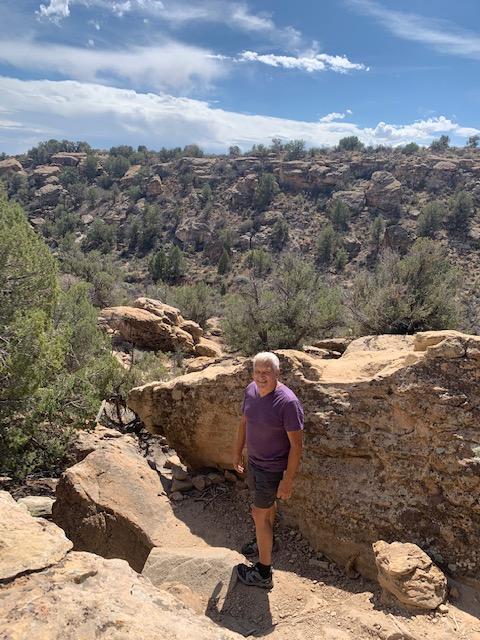
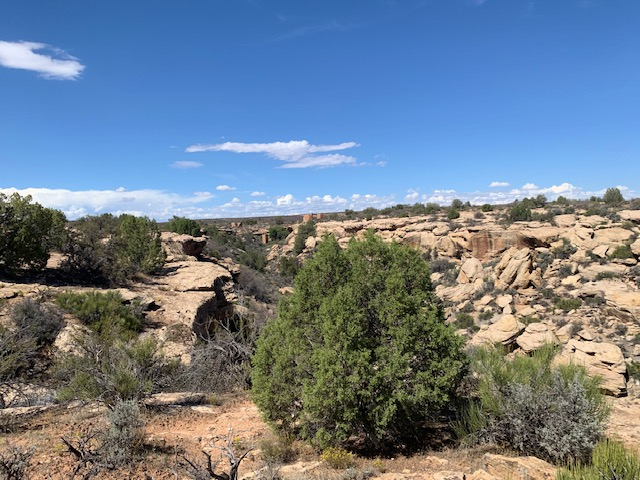
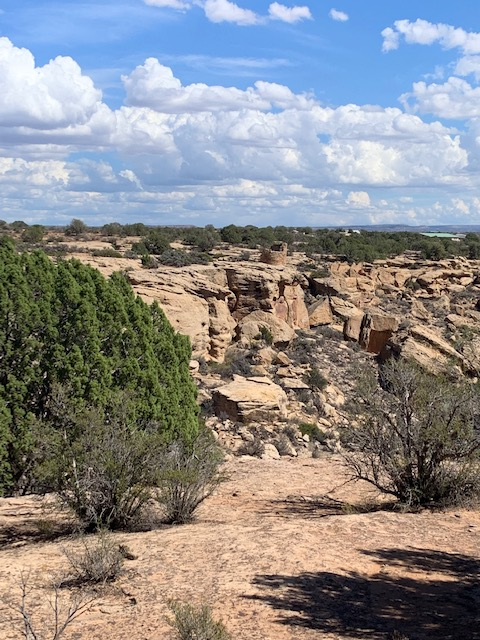
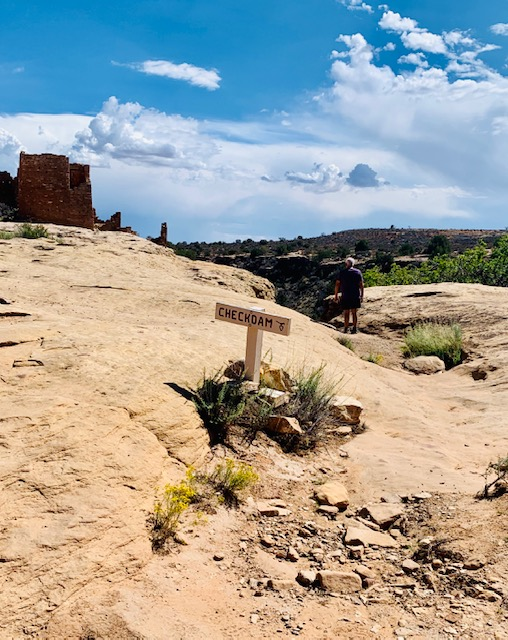
We took The Square Tower Trail by the visitor center. This starts as a sidewalk down to the overlook, then veers off in either direction (and loops back around) to circle the canyon. For a portion of this trail you hike down the canyon and then you gotta hike up again to get to the other side. The primitive trail is lined with rocks and passes within 5-10 feet of most of the structures, allowing us to see a lot of the goings on.
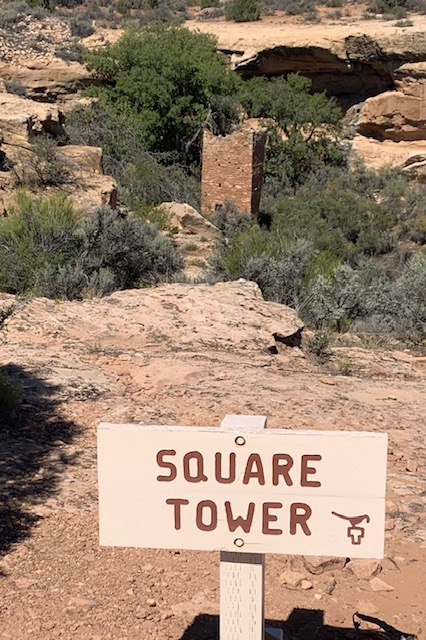
The Square Tower Group is Hovenweep’s largest and most convenient collection of standing structures. Ten buildings perch on the rim of Little Ruin Canyon; the remains of several more are crumbled down the canyon walls. Some of the most popular and unique structures in the Four Corners region are in this canyon: Hovenweep Castle, Twin Towers, and Square Tower, for which the group is named.
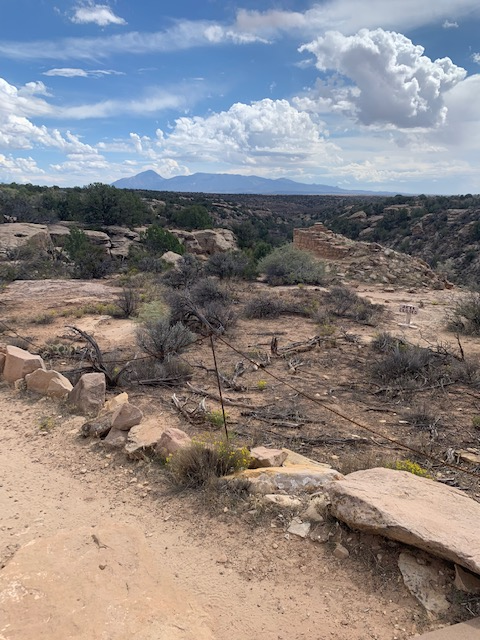
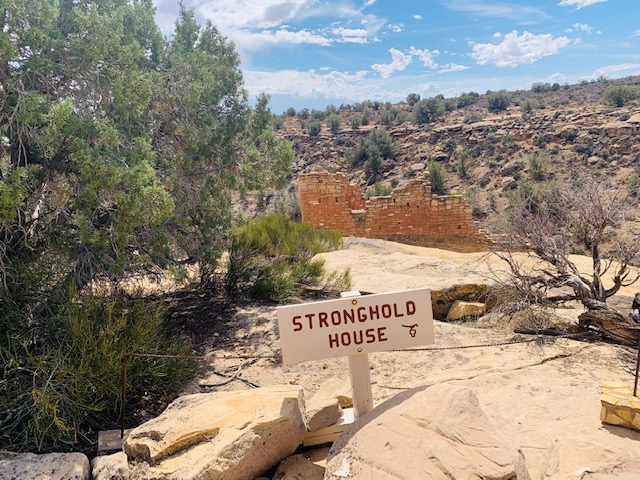
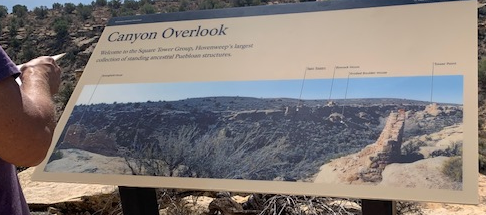
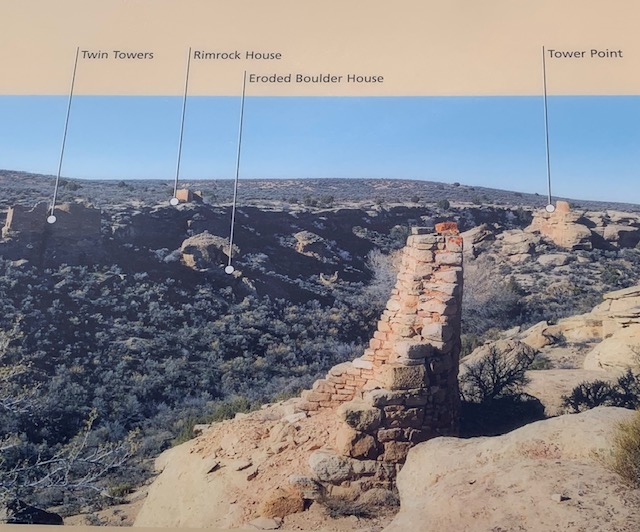
What inspired the ancestral Pueblo people to build these mulistory towers, perched on canyon rims and balanced on boulders? Modern tribal consultants from some descendant communities suggest that Hovenweep was a place to pray for rain during a great drought.
President Warren G. Harding established the national monument on March 2, 1923.
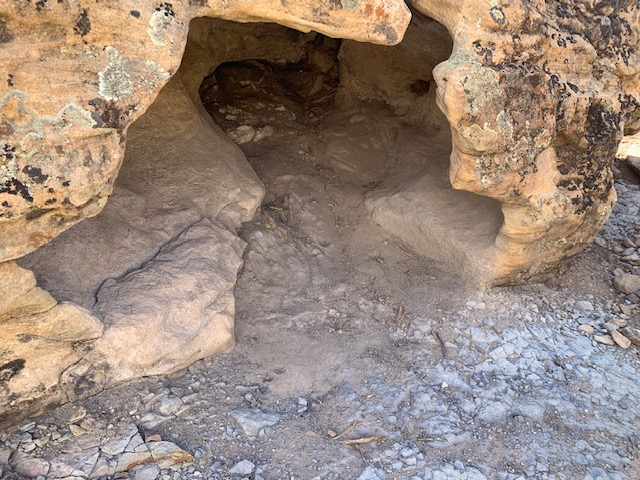
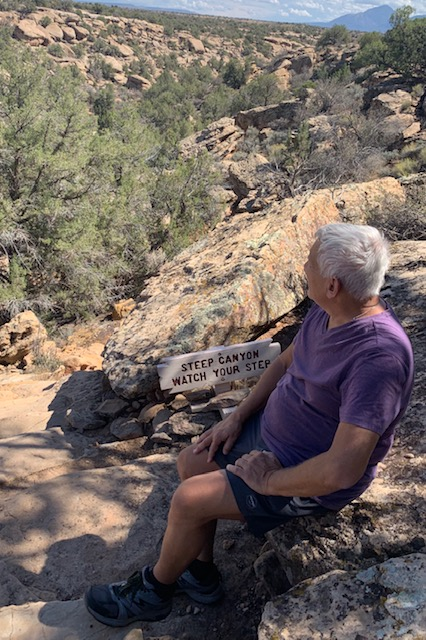
We aren’t use to hiking down and up canyons so we took a couple of breaks.
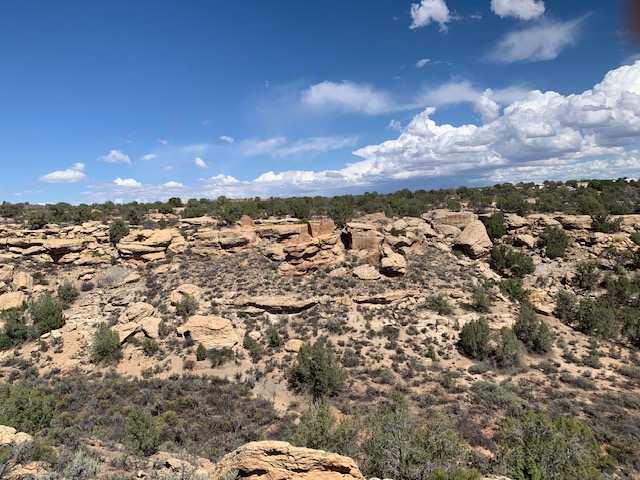
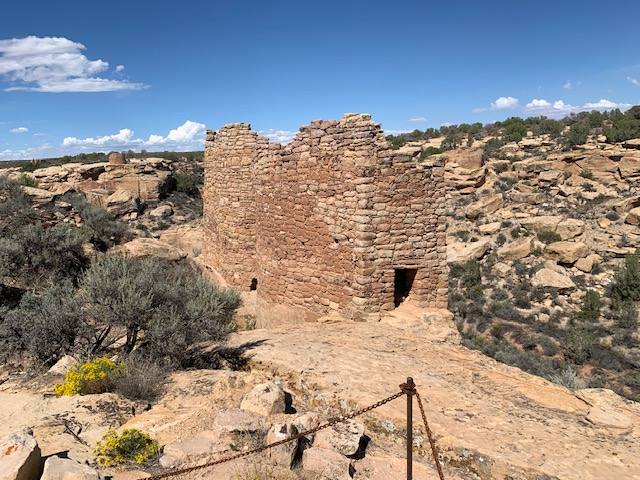
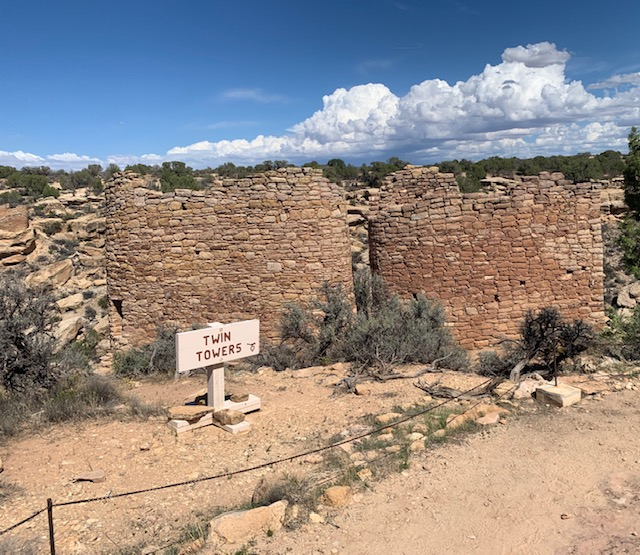
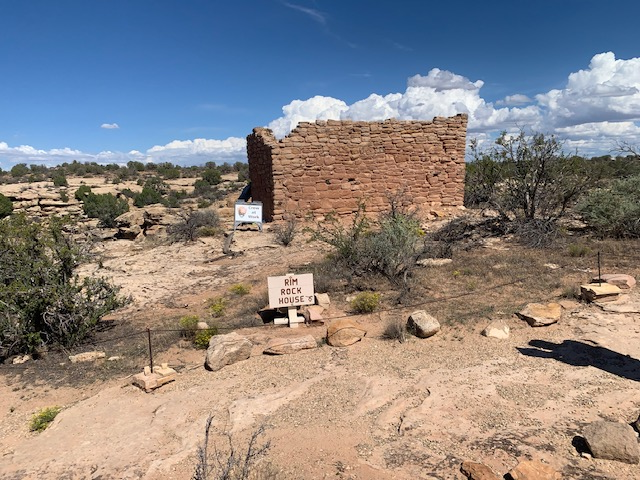
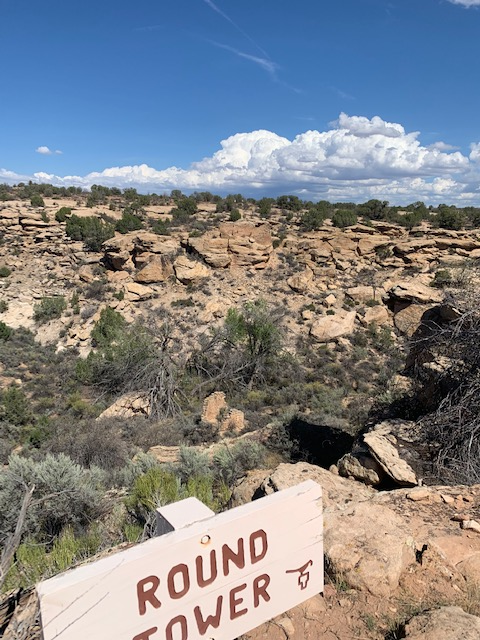
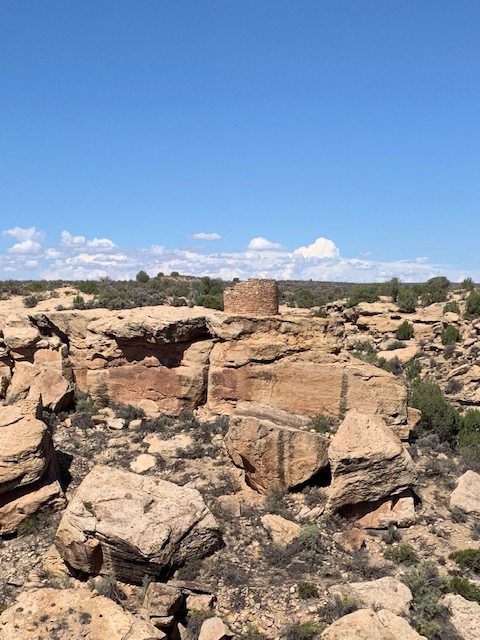

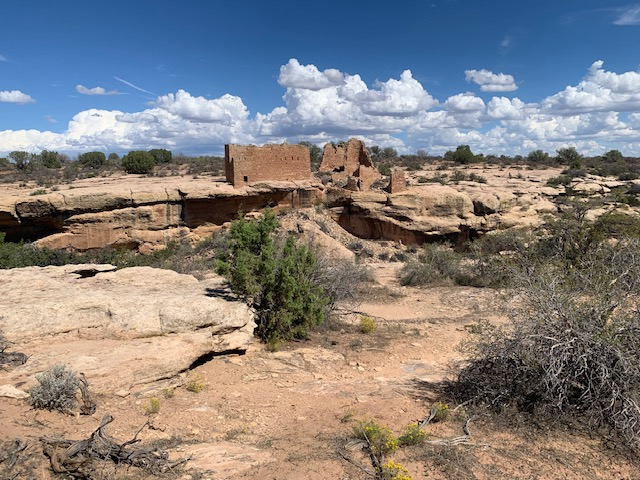
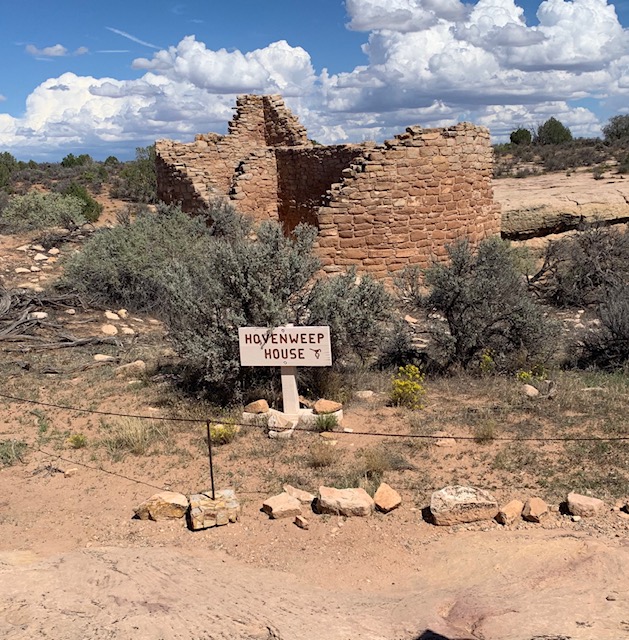
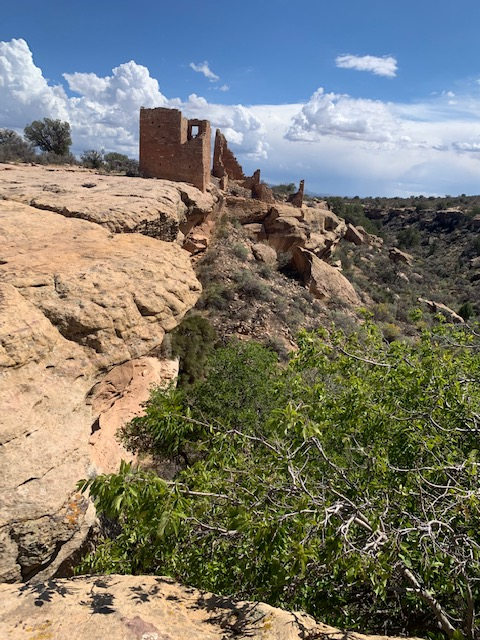
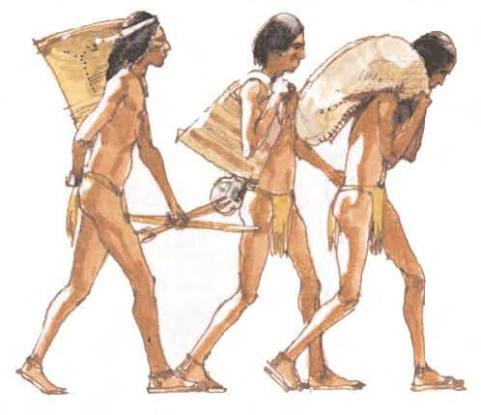
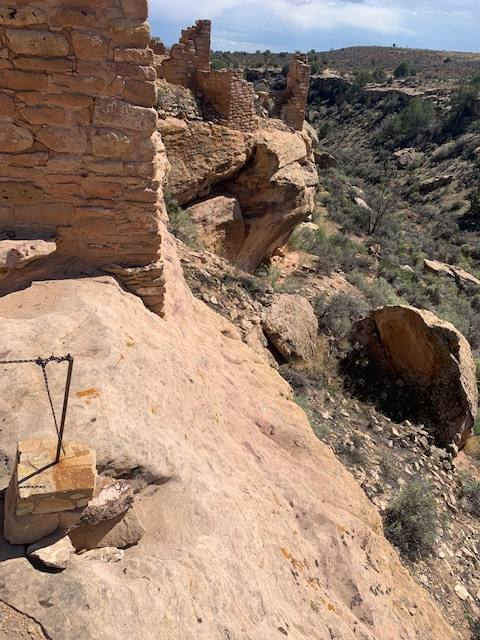
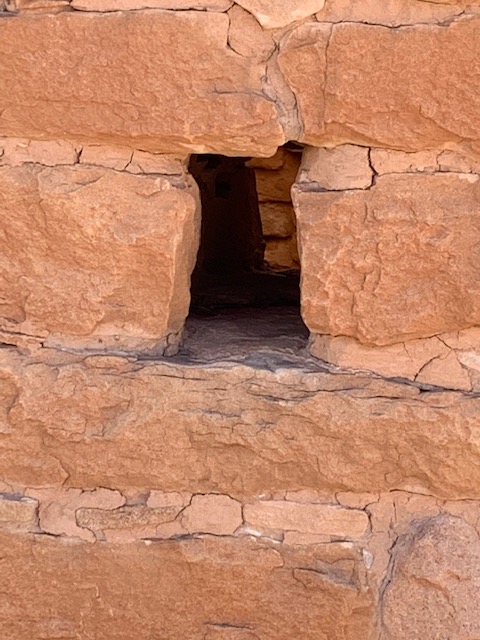
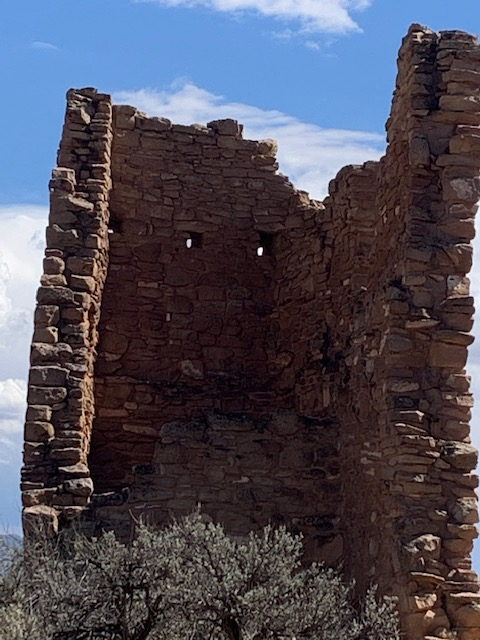
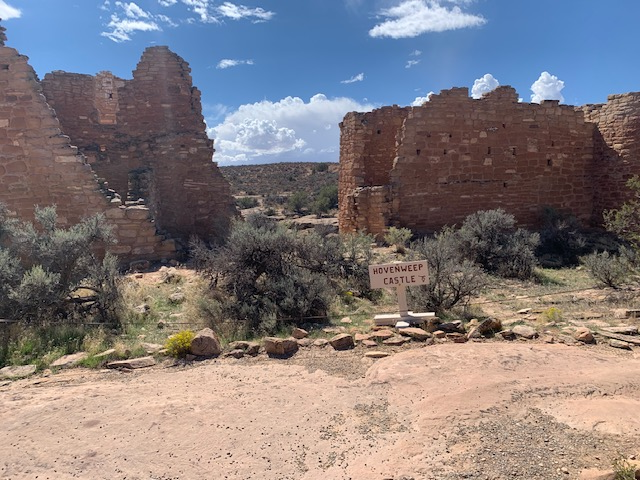
Sites like Hovenweep Castle act as solar calendars that track sun angles to mark the summer solstice and seasonal events.
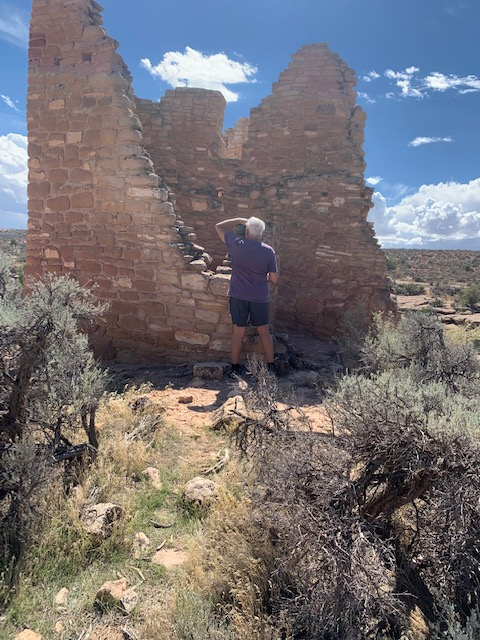
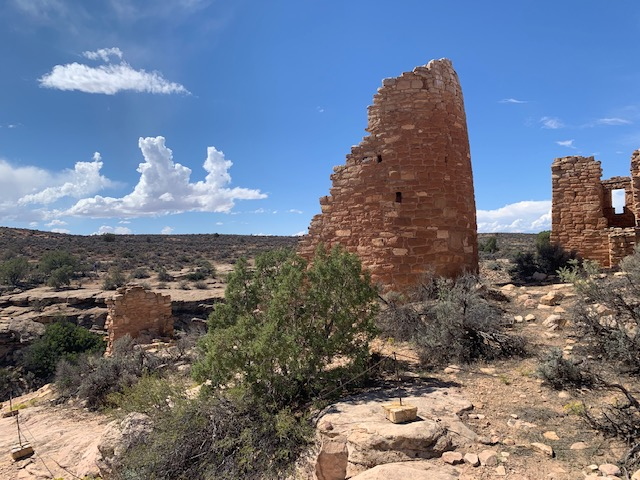
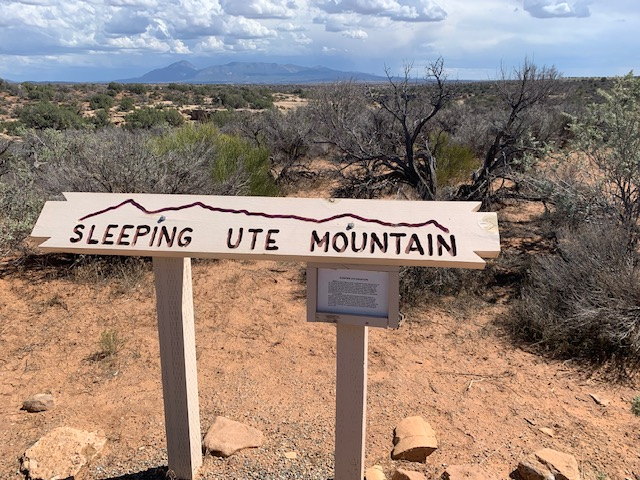
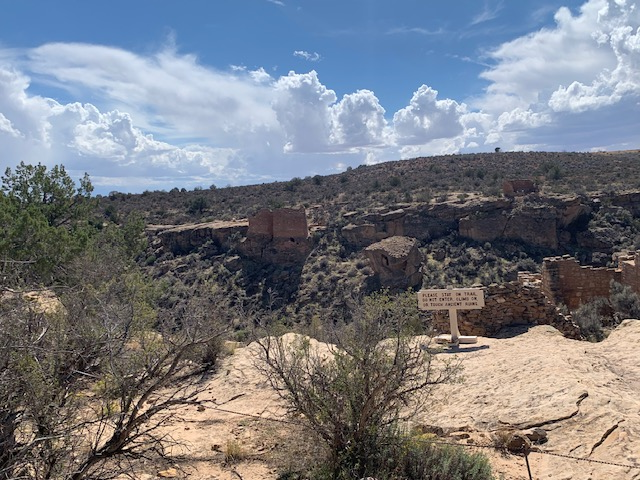
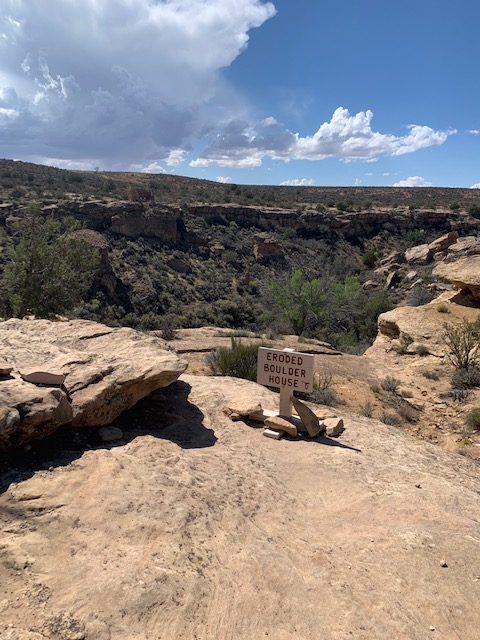
With a variety of structures include multistory towers perched on canyon rims and balanced on boulders. Unique square, oval, circular, and D-shaped towers display incredible attention to detail and will leave you marveling at the skill and motivation of the builders.
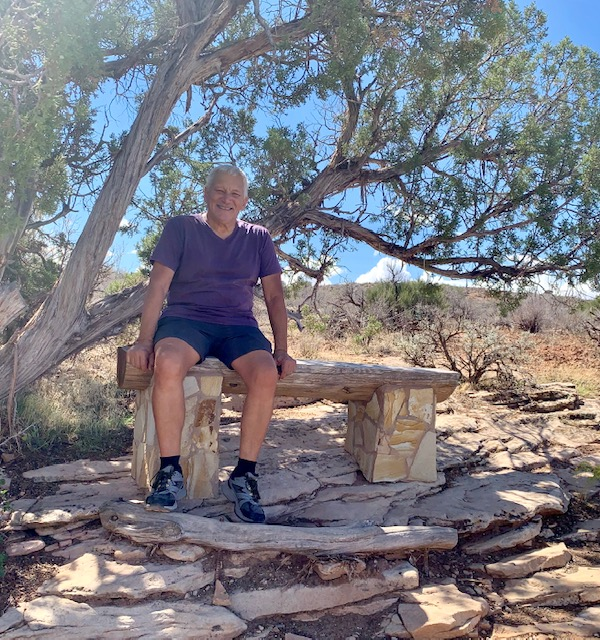
We did a great job for not hiking for being somewhat out of shape.


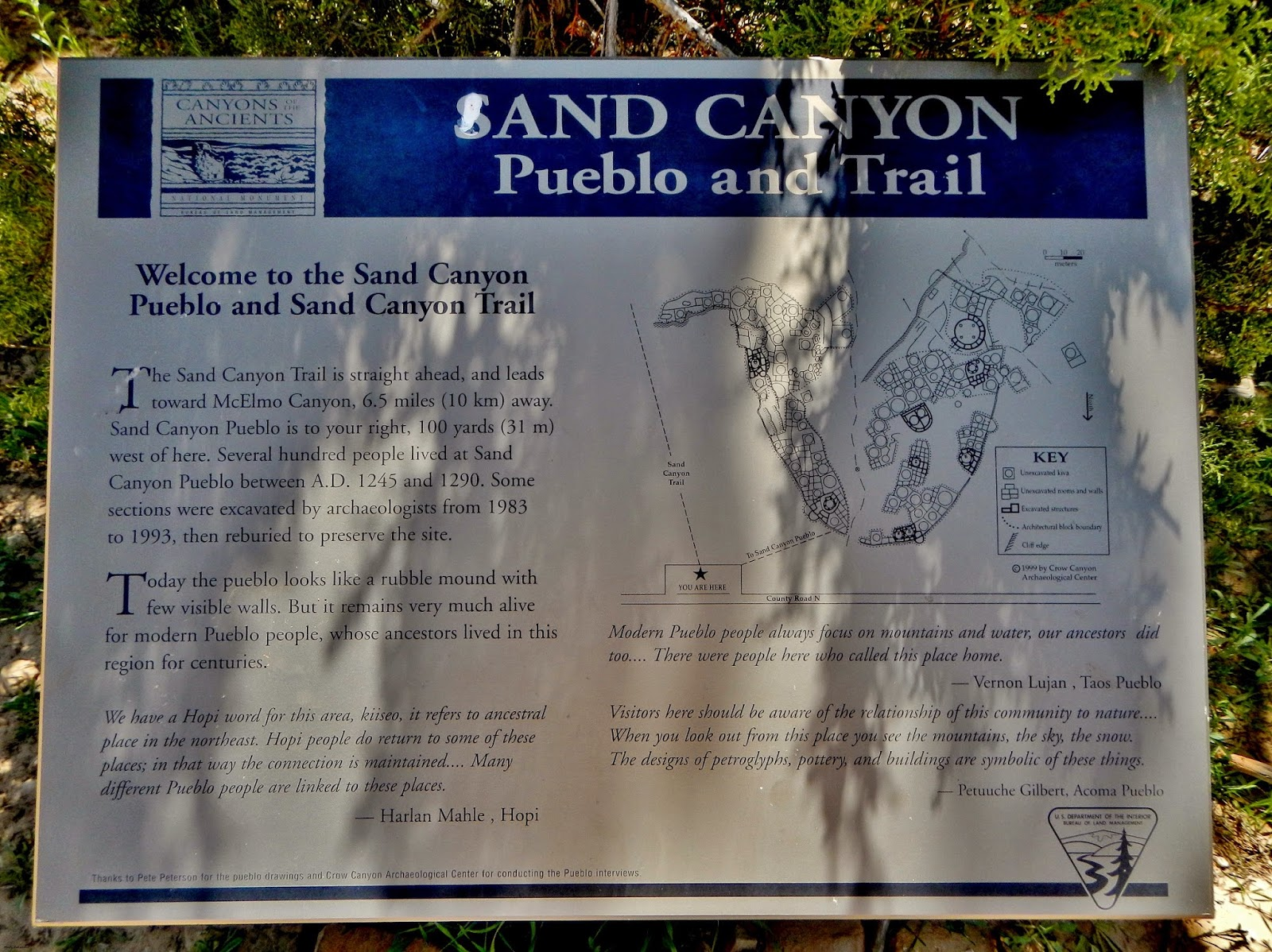
Sand Canyon Pueblo is the site of an ancient 13th century Pueblo Indian village. The desolate site has been excavated and overgrown rubble mounds remain.
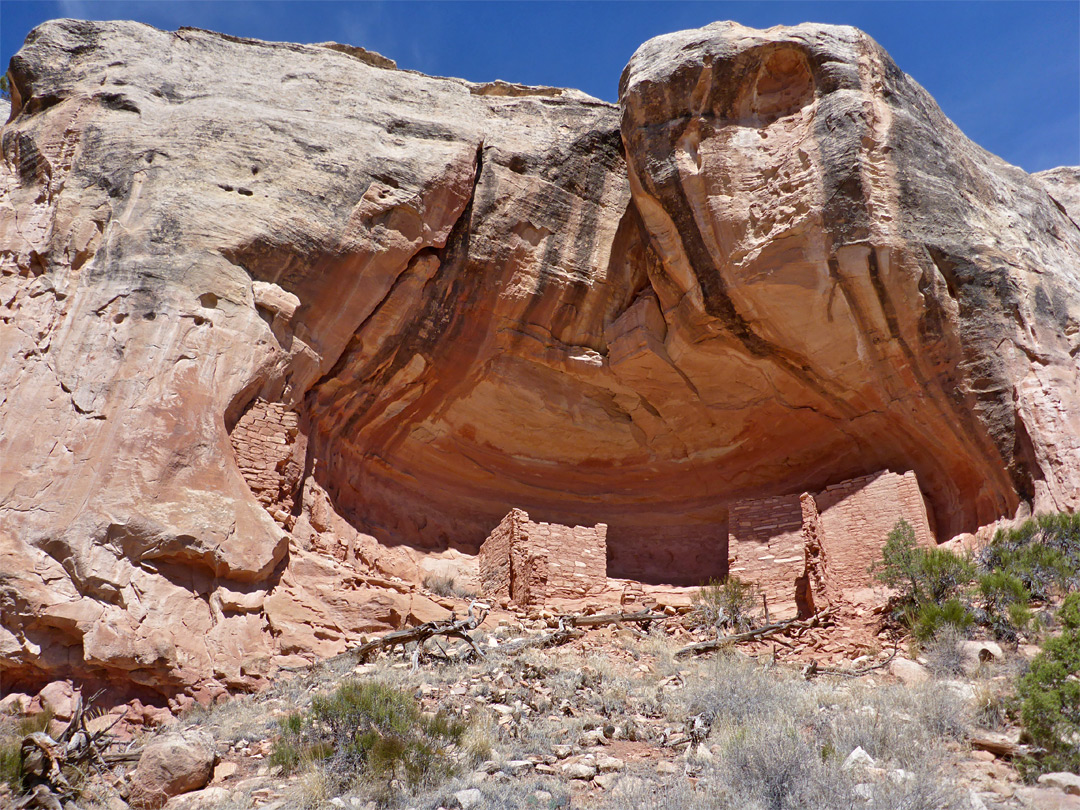
We decided to pass by Sand Canyon Pueblo as we were a bit fatigued. And we knew we were going to visit other ancient dwellings.
We were truly amazed at the masonry work they did with the buildings with what little they had. Especially since they were on cliffs and boulders. How they went from buildings to buildings that were on different levels and cliffs, we wondered how many would have fallen. All these questions going thru our heads. They were truly amazing people!
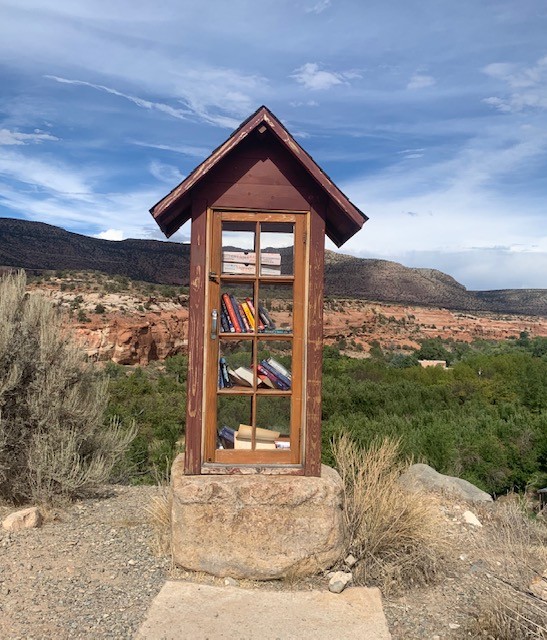
Just outside the canyon area was this library with really nothing around it. You never know what your gonna see.