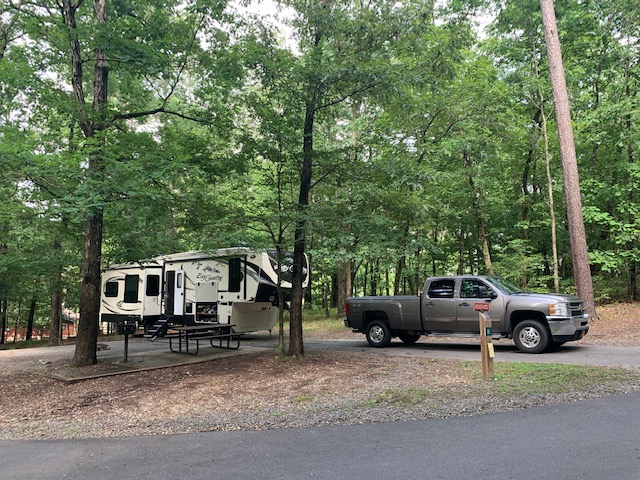
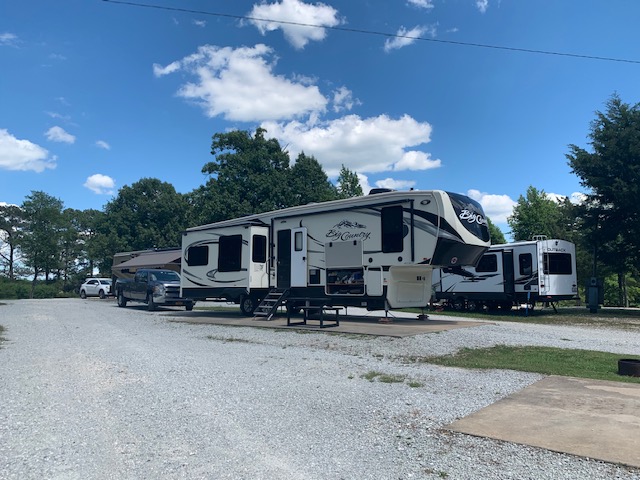
Well sort of, we are at Lake Catherine state park about 15 miles east of Hot Springs. Friday we left Parker’s Crossroads ,and drove 310 miles, to the state park. It was not fun driving through, Memphis and Little rock. We will be visiting Hot Springs National park while here, the park is right in the city, well historic district. The smallest national park there is. The picture below is of our spot, first time I had to back in a spot for well over a year. Melissa said I did good, that’s all that matters
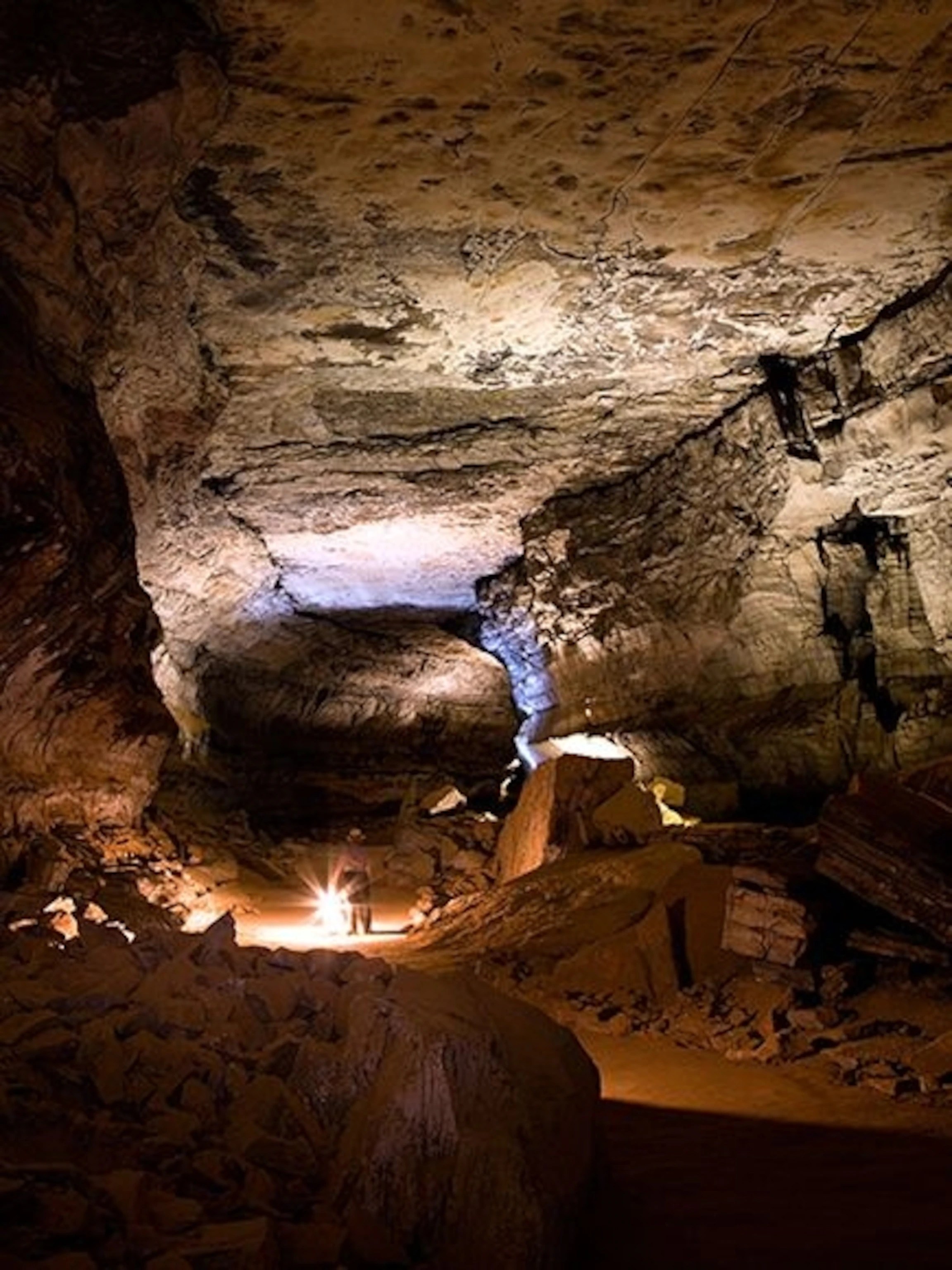
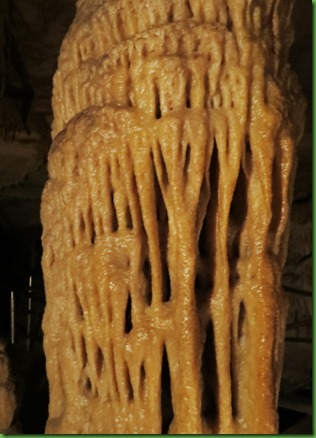
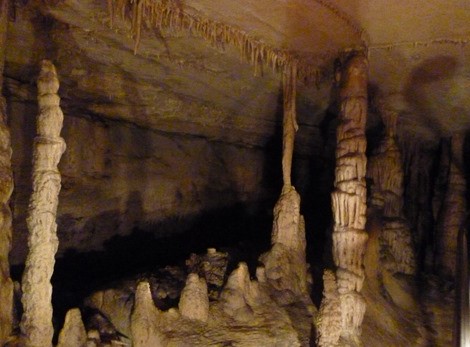
The caves were formed by the dissolution of limestone by water, a continuing process; their natural temperature is 54 °F with a relative humidity of a high 87 percent. They contain underground lakes and rivers and unique geologic formations, including stalactites and stalagmites, to which descriptive names, such as Pillars of Hercules or Frozen Niagara, have been given. There is also parts of the Green River valley and the rolling hills of south central Kentucky to check out. So even though it’s what’s beneath the surface that’s the main attraction, there are also miles of trails in the area ready to be explored when visiting Mammoth Cave.
Mammoth Cave is Unique
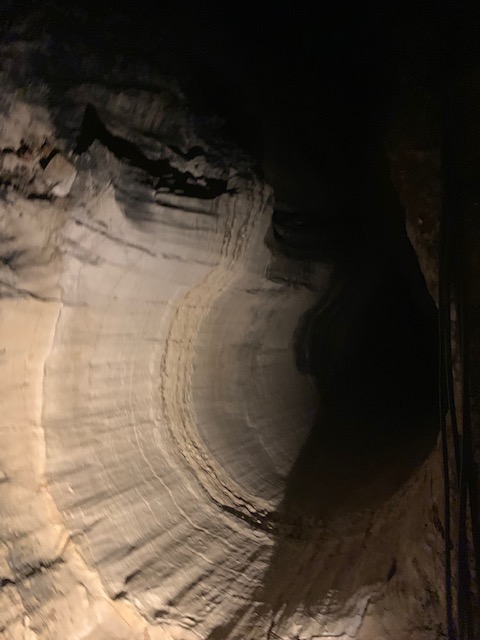
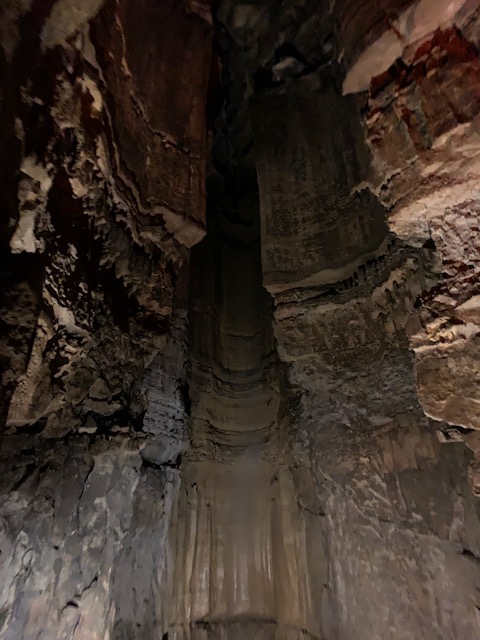
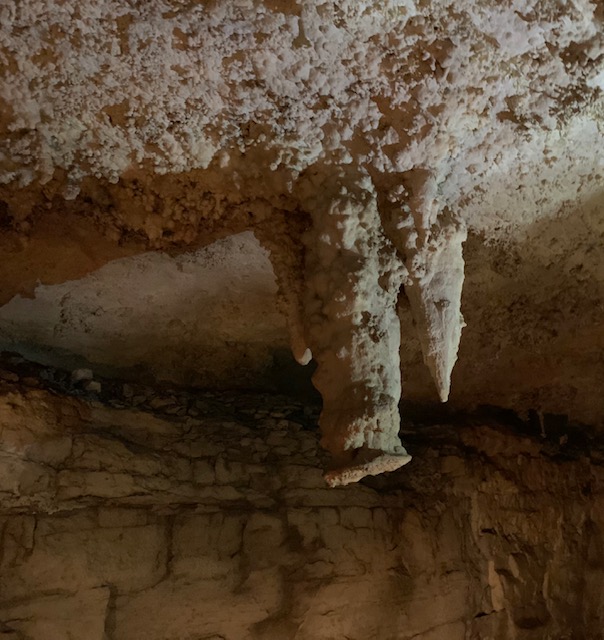
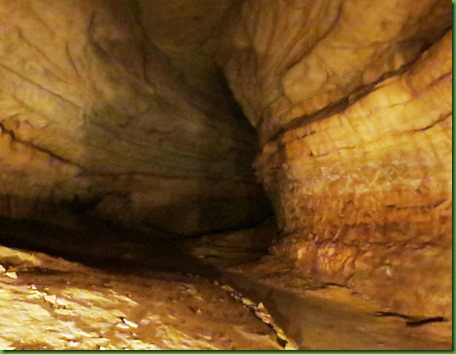
When most people picture a cave, they see dripping stalactites, growing stalagmites, and slick water-covered surfaces everywhere, you will see these formations, like Frozen Niagara, but not many. Mammoth Cave is different because the cave system is roofed by sandstone and shale, acting as a gigantic umbrella diverting water away from the cave, keeping the subterranean rooms and tunnels dry while preserving what they contain. So whatever was left behind from previous explorations going back 5,000 years when Native Americans sought refuge here – is forever frozen in time.
The park was established in 1941 and became a World Heritage Site in 1981. Although these events took place in the 20th century, the cave has been in use for thousands of years. Leading anthropologists estimate that Native Americans discovered the cave as long as 4000 years ago.
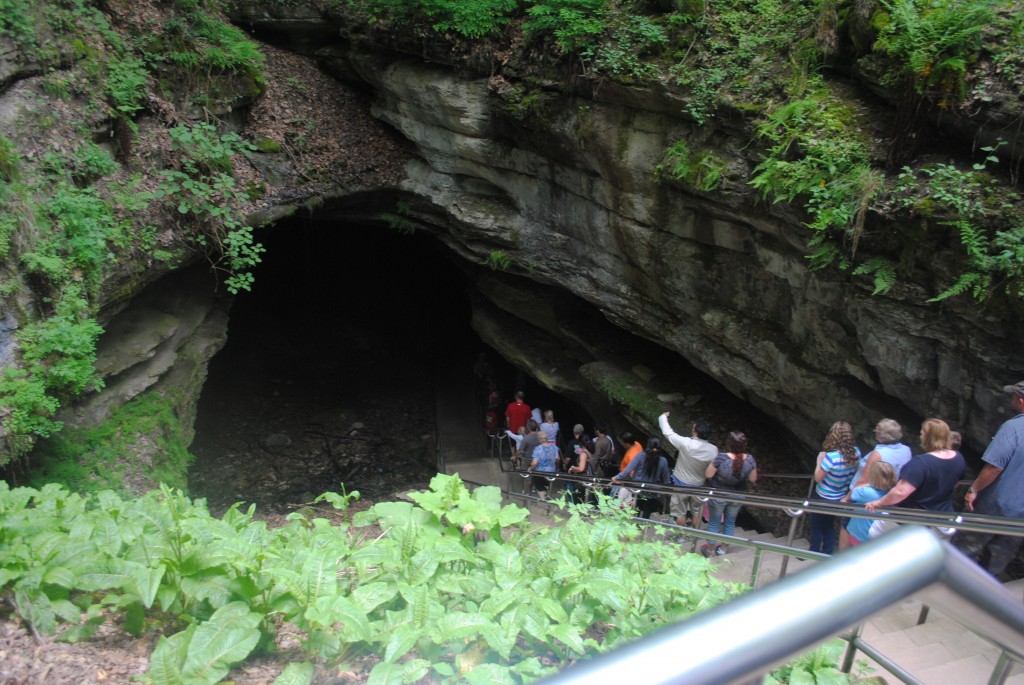
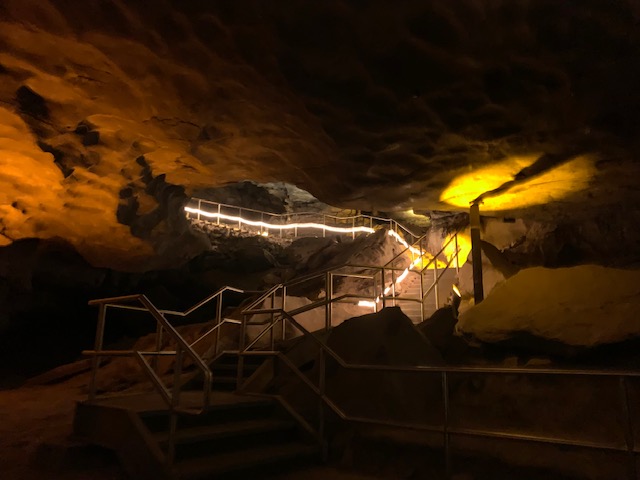
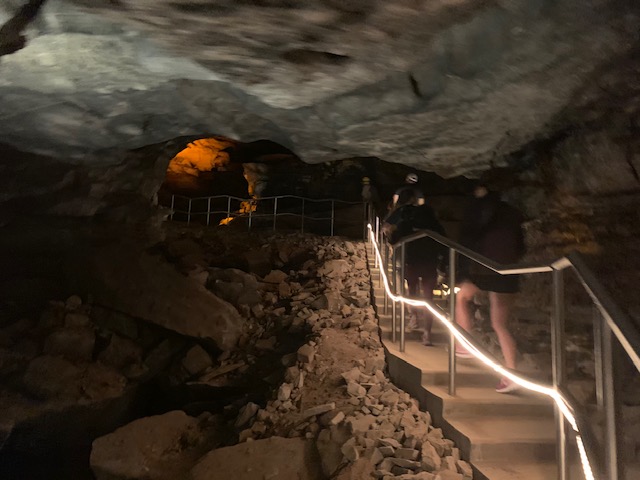
The History Tour – The first tour we took. starts at the main entrance of the cave, you take 440 steps down into the cave itself to explore several major features. Included are stops at Mammoth Dome, Bottomless Pit, Fat Man’s Misery (squeezing in tight spaces required), Tall Man’s Misery (crouching required), and saltpeter mines ands different huge areas of the cave.
The cave enterance
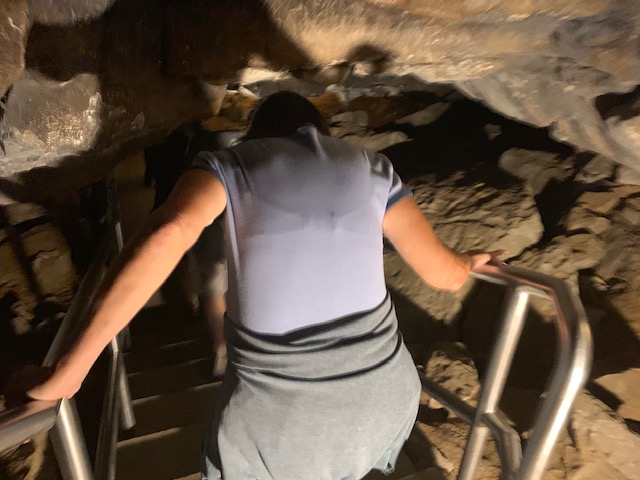
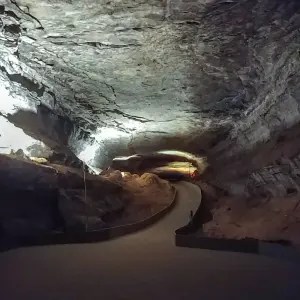
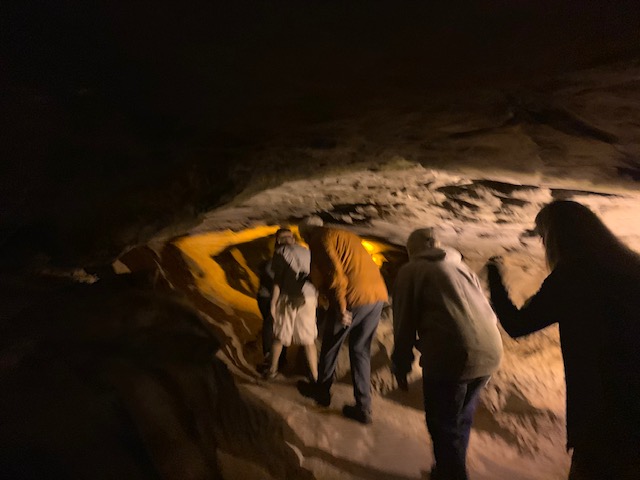
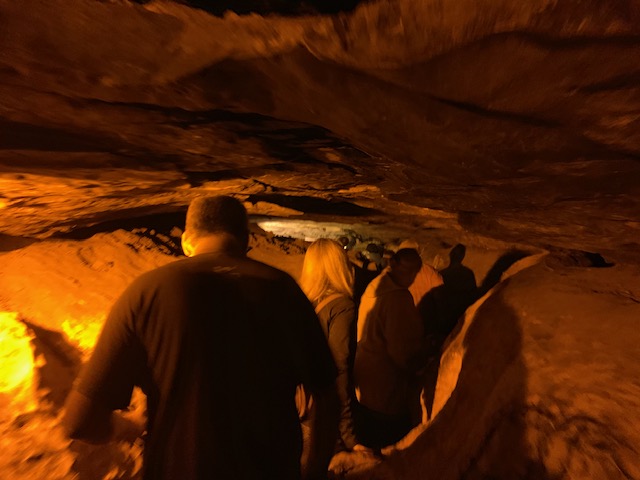
Going down the stairs into The Rotunda which is 70ft high and seems to keep going forever.
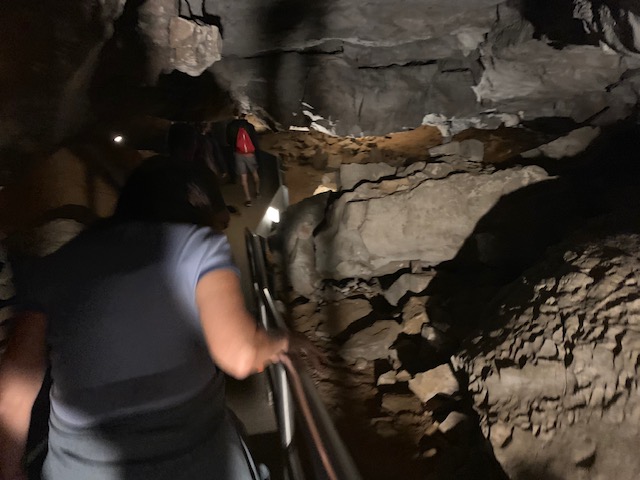
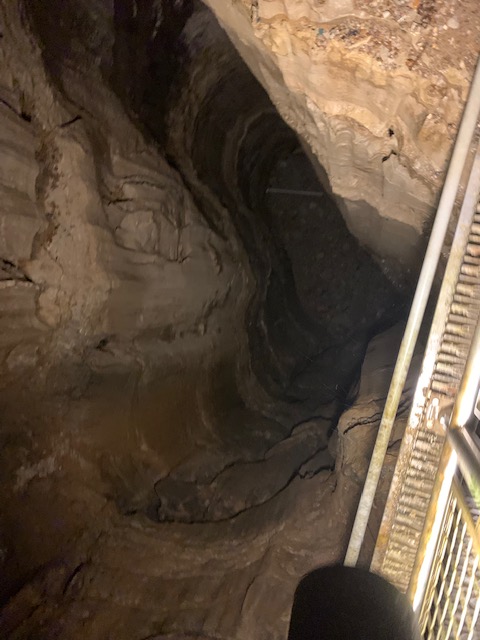
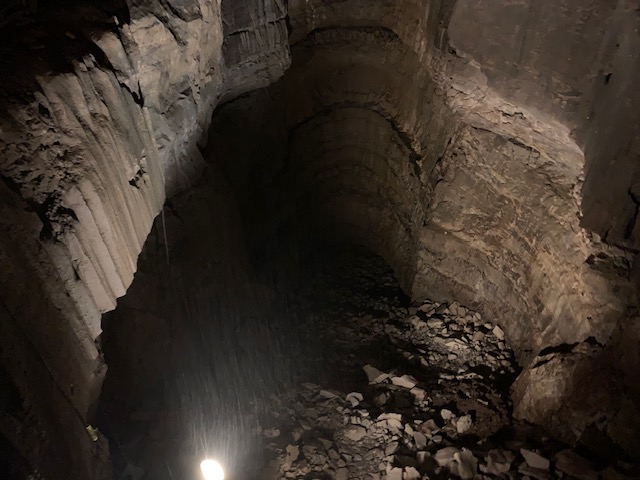
We kept going further down going past The Bottomless Pit.
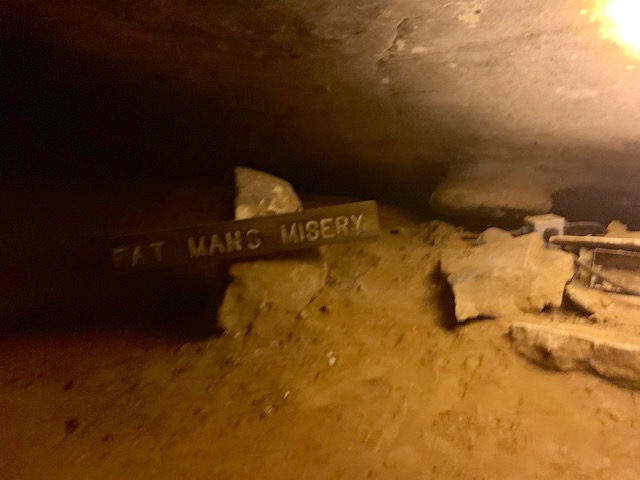
Fat Mans Misery & Tall Man’s Misery – We had to duck low or walk sideways to get through some of the sections of the cave.
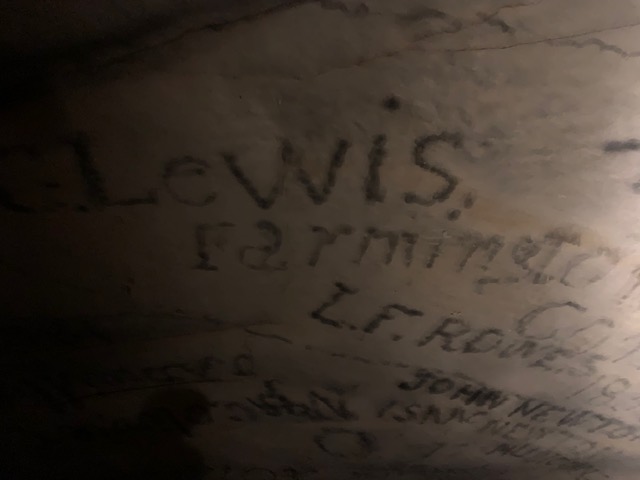
This writing was done with the flame from candles and is all pre-1940s, when they declared Mammoth Cave as a national park.
We learned all kinds of history while touring this cave system, from the different geological formations to how humans used the cave. Our tour guide Eric told us stories of slaves who led guided tours during the 1800s, extracting part of the rocks to make gunpowder during times of war, and how all they had was candlelight to guide them underground, a mid-19th century stone built hut used for treating tuberculosis. A few years back there was also a restaurant inside called “The Snowball.”
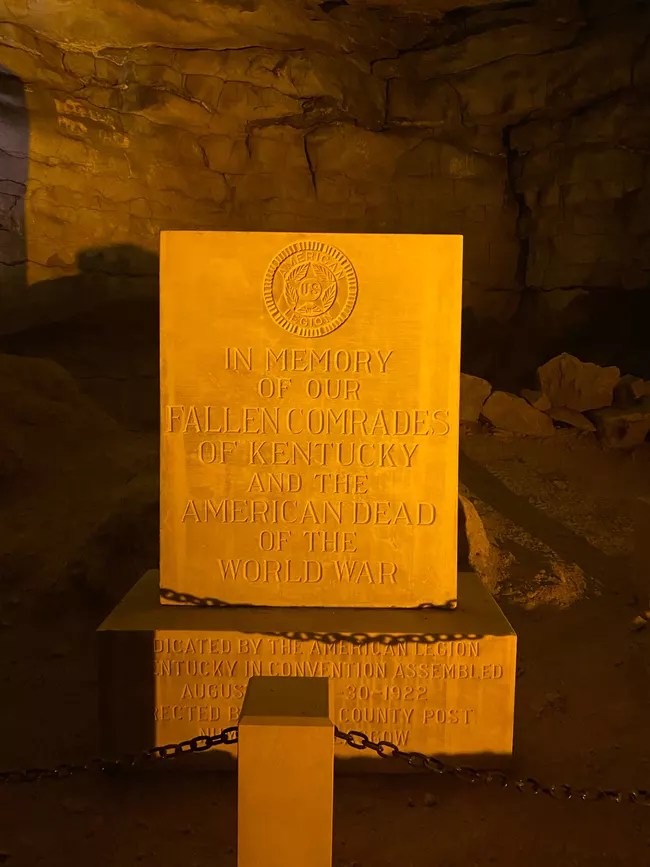
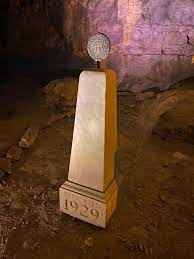
On August 30, 1922, as part of the American Legion Convention in Louisville, Kentucky, a monument was placed inside Mammoth Cave to honor the fallen of the Great War. Inside the monument, 35 states each placed a list of the fallen soldiers from their respective states. In 1929, a second monument was placed by the America War Mothers to also honor the fallen of the Great War.
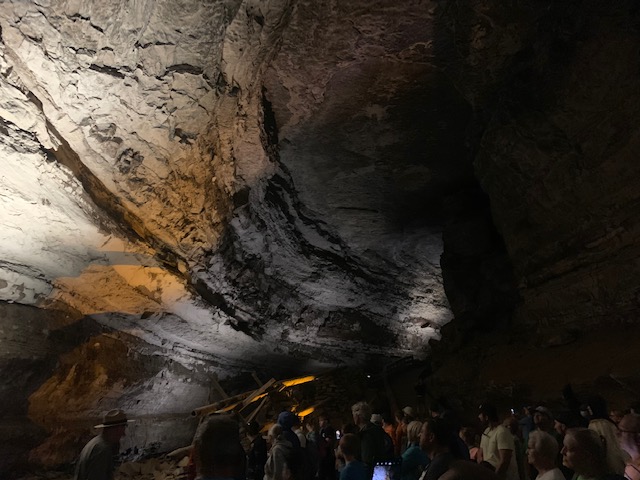
There is in a huge concert hall in Mammoth Cave
Imagine hearing music reverberating through caves or echoing across mountains. That has to sound incredible!
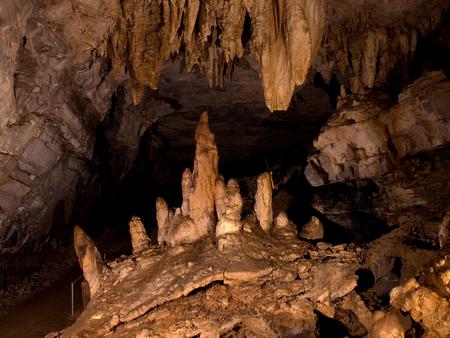
Our next tour -The Great Onyx Cave Lantern Tour, is in a remote area of the cave system on Flint Ridge and one that is not known to be connected to Mammoth Cave yet. Our guide Ranger Rick, told us by next year it would be connected . We took a 20 minute bus ride to get there. This cave has all the cave formations and such.
Cave Entrance
The story of this cave is a bit lengthy so I’ll try to be brief. It was rediscovered in 1797 after being forgotten for a long while. Mammoth Cave passed through a series of owners each of whom had his own vision for what to do with and in the cave. From the early days, the residents of central and southern Kentucky used the caves for a wide variety of purposes. They provided shelter from storms, preserved their milk, canned food and even served as hiding places for moonshiners and their stills. But as the turn of the last century approached, it was becoming obvious that Mammoth Cave was a huge commercial success so residents wanted to use the caves to draw tourists.
Since a family controlled most of the land on the ridge where Mammoth Cave was located, the exploration began to focus on neighboring Flint Ridge, which was separated from the Mammoth Cave The locals desperately wanted to get into the cave business and to start promoting their own caves as competition for well-known Mammoth Cave. Eventually Edmund Turner bought “The Great Onyx Cave.” In 1915 he named the place, helped to build the entrance and developed the trails. He later passed it to his daughter Lucy Cox.
Great Onyx was opened to the public in 1916 as a direct competitor to Mammoth Cave. During this time, Great Onyx Cave became one of the most successful of the caves on Flint Ridge. There was even a successful “ Great Onyx Hotel at the cave, which offered overnight accommodations and delicious meals. The Great Onyx Cave is in pristine condition, preserved by virtue of it being privately owned for so long, by its not seeing the volume of visitors who’vepassed through the caves at Mammoth over the past 200 years. Lucy Cox finally sold to the National Park Service and became a part of the National Park in January 1961.
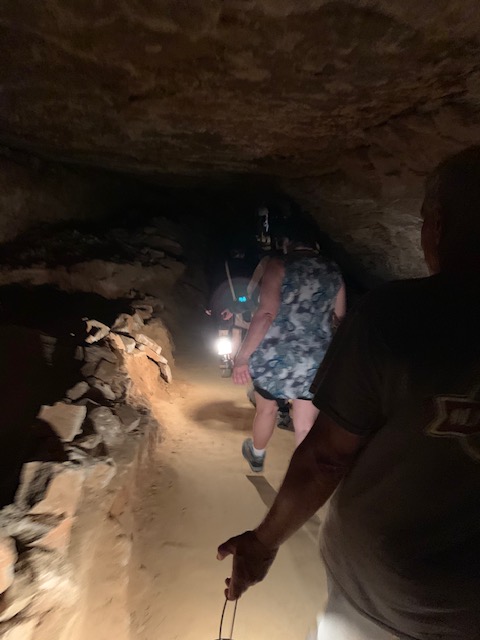
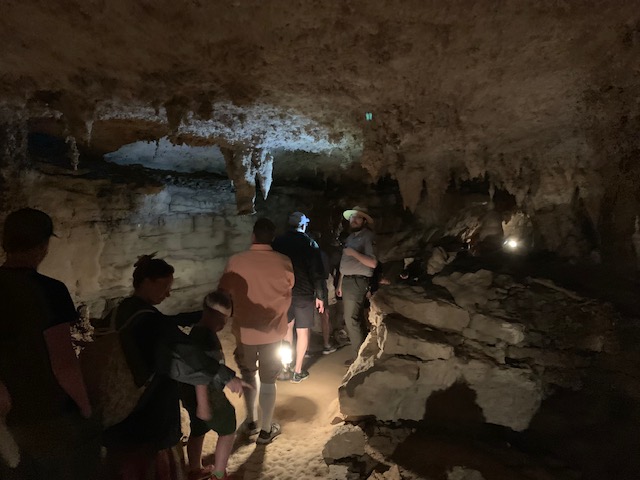
This cave has no artificial lights so our guides gave some of us lanterns to use, there were 40 of us and ten lanterns. Dave was lucky?, he got to carry one. Seeing the cave by lantern makes you feel like you are in one of the original tours and seeing it just as they did. The only person allowed to have a flash light is the ranger who uses it to point out things for us to see.
old picture of Great Onyx Cave
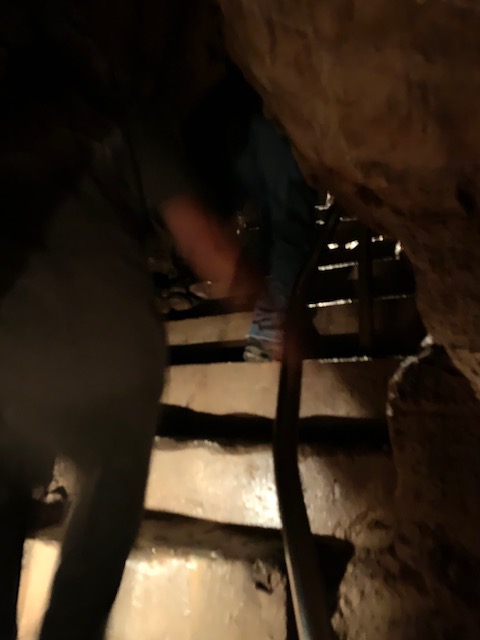
Down in we go. … It takes a bit for your eyes a to adjust to the steps going down into the darkness, but the lantern light is enough.
Our guide told us people came from all over in the 1800s to see The Virgin Mary fossil in the picture above.
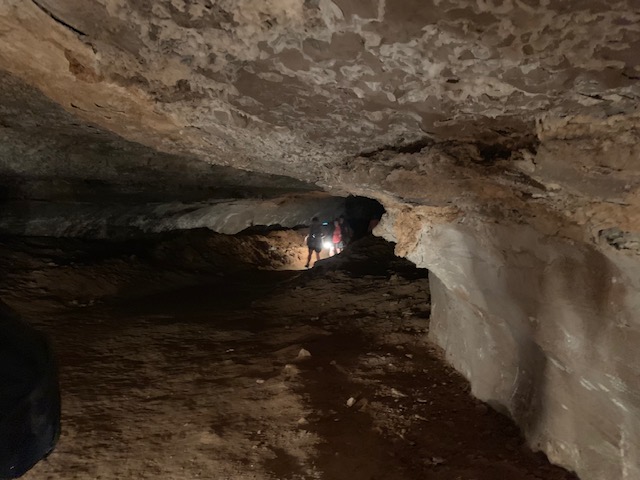
At one point on the tour our guide took all the lanterns and walked away, this is what we saw.
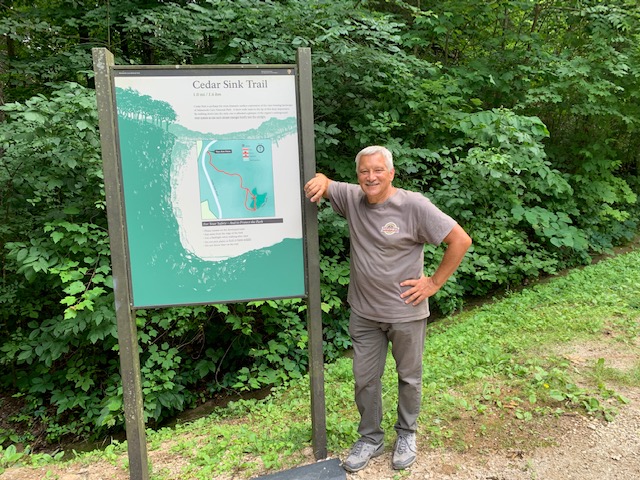
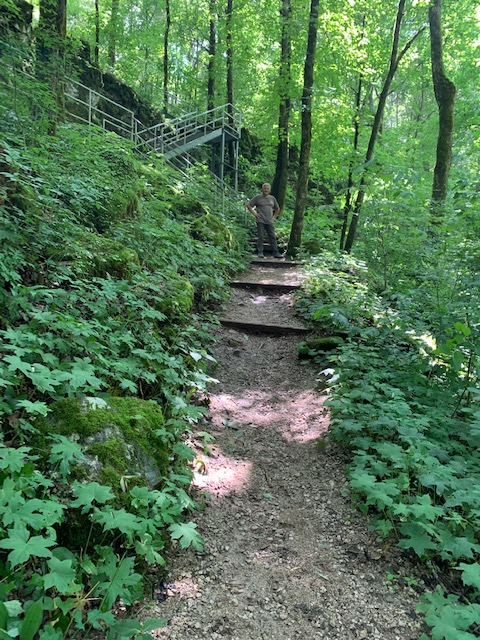
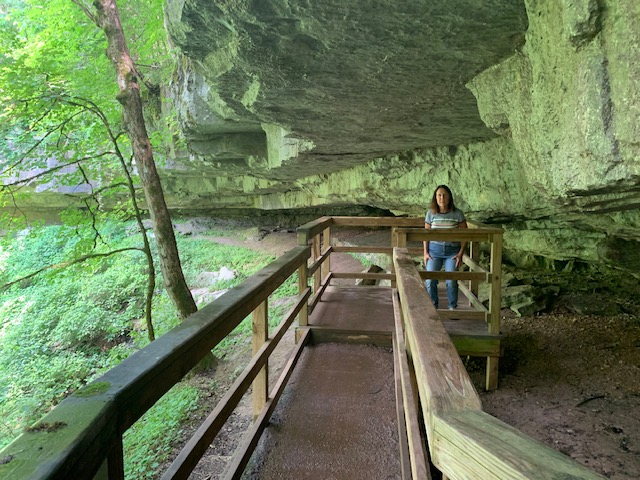
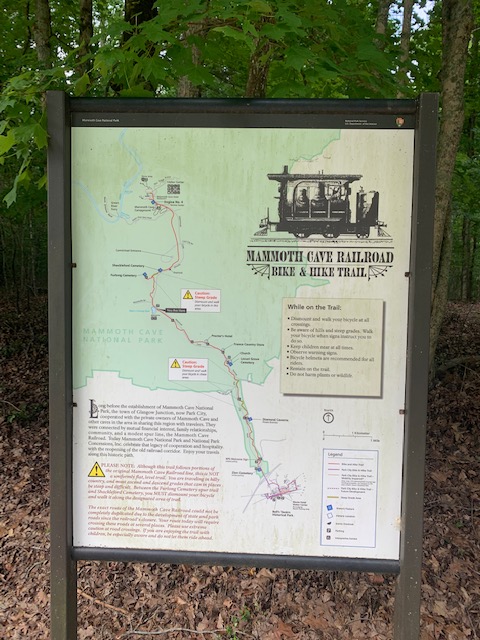
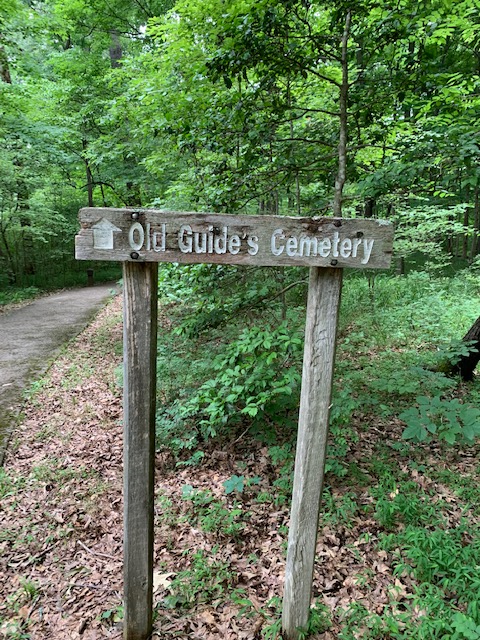
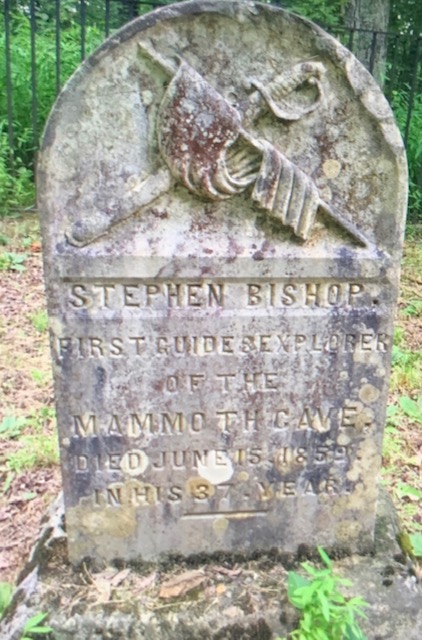
Trails we took above Mammoth Cave
We enjoyed these trails.
I found Mammoth Cave to be amazing, how can anything that big be under ground? I also found it to be kind of eerie, damp but also very alluring. I asked Dave what he thought and he said it was G R E A T! If your ever in Kentucky don’t hesitate to go.
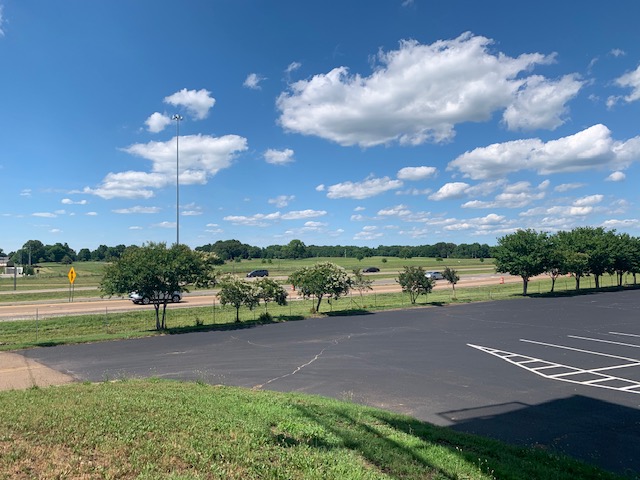
We are now in the Parker’s Crossroads Rv park, for the night, The park is small but nice, see picture below. We left Cave City Ky, this morning and drove 193 miles to get here. Lots of truckers, and i suspect lots more going through Memphis tomorrow. When we got here today , I noticed a sign that said Parker’s Crossroads Battlefield. After we got settled we took a late afternoon, to the visitor center and a very nice almost 2 mile walk on the battlefield. With all my knowledge and being a civil war buff, I had no idea there was a battle here. Interstate 40 runs right through the middle of it. As the interstate was built in the 60’s there was not any of the battlefield land saved. Today they would have to go around the battlefield to put it in. SO, you say what happened here, let me tell you.
PARKER’S CROSSROADS BATTLEFIELD.
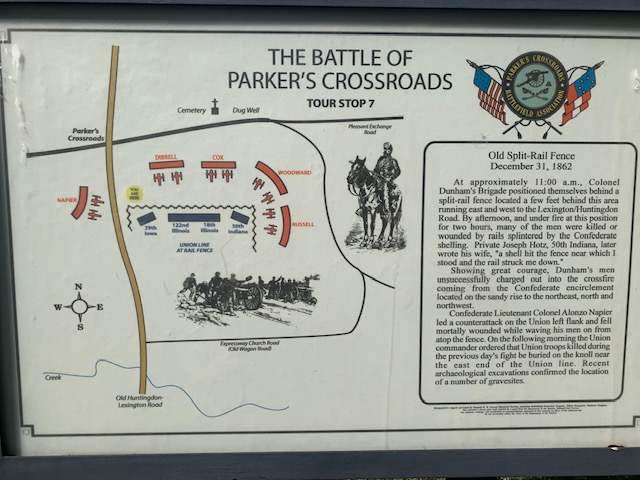
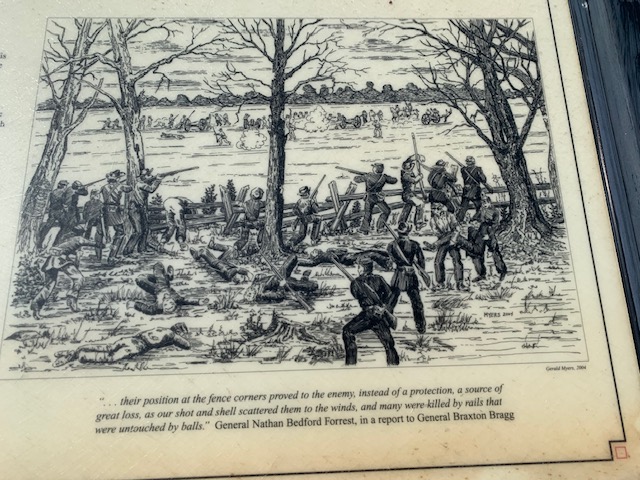
In late December 1862 confederate General Nathan Bedford Forrest had been raiding the area with his 1800 man cavalry brigade, causing havoc for the union army all over the place. The union head he was camped a few miles from Parker’s Crossroads. So the union sent a force of 1500 men to attack him. On December 31, 1862 The union arrived at the crossroads and set up a line of battle, about a mile from the actual crossroads. Forrest’s dismounted cavalry men went in action, and drove the union back, the union counterattack. Forrest then ordered his artillery to the front of the men and opened up, driving the union back a mile to a small rise, where a long split rail fence was. The union thinking they had found a safe haven hunkered along the fence line,all the while being bombarded by artillery. Forrest then ordered artillery to surrounded the union positions. For hours the shells blasted the rail fence along with killing and maming hundreds of union soldiers. Finally, Forrest sent in word for the union to surrender. NO was the answer, so he sent word in the second time for surrender. Again No was the answer, at about the same time as this, a union brigade appeared out of no where and attacked Forrest’s rear. He was taken completely by surprise. Not being able to fight on two fronts, he HAD to retreat, actually run for his life, which is what he did, he found a weak spot and most of his brigade made there escape. SO, who won, no one, the union lost 30 killed and a few hundred wounded. The Confederates lost over 60 killed and a few hundred wounded.
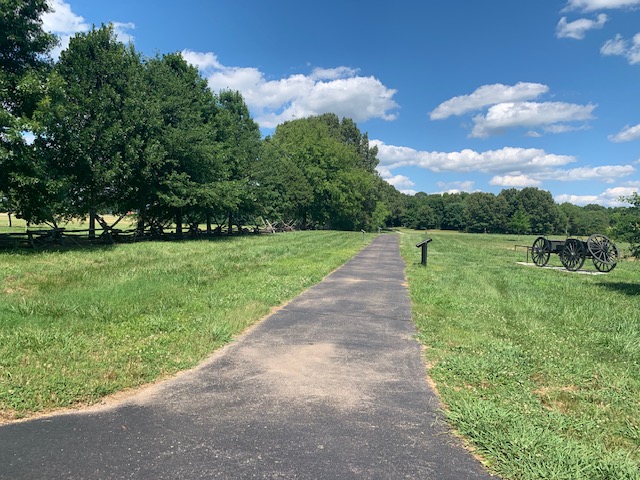
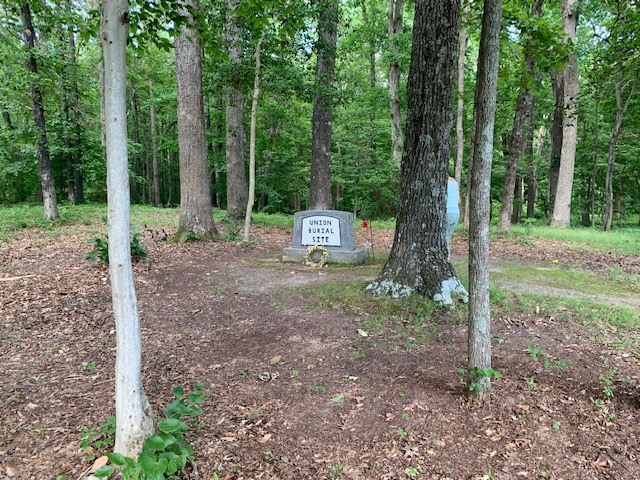
Union position along the fence lineDrawing done of the fence line defenseAlong the fence line looking at the confederate lines way out in the tree line, notice interstate 40 in the middle.The 30 union dead were buried here, In 1867 remains were reinterred in the national cemetery in Corinth Ms.Our spot for the night
We visited St. Augustine for only a few days but we enjoyed our stay and I took some pictures, so here it goes, I promise, my very last post on Florida. 😊
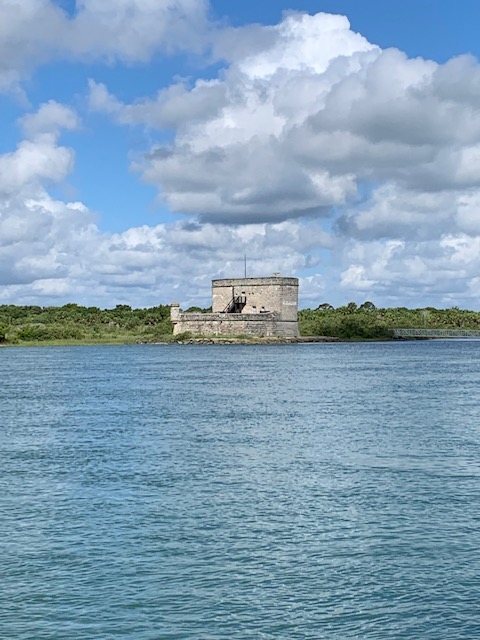
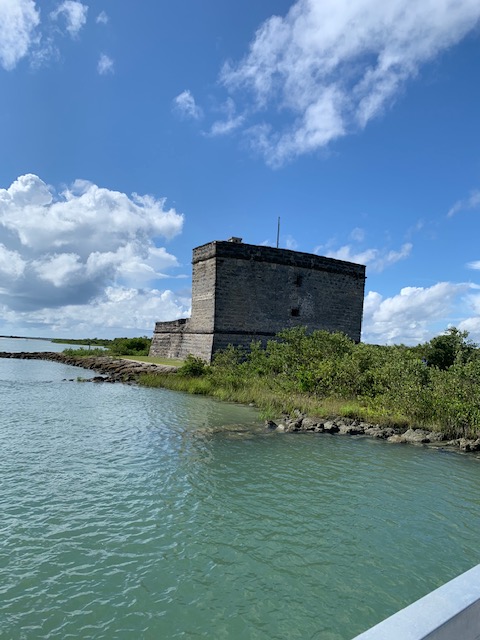
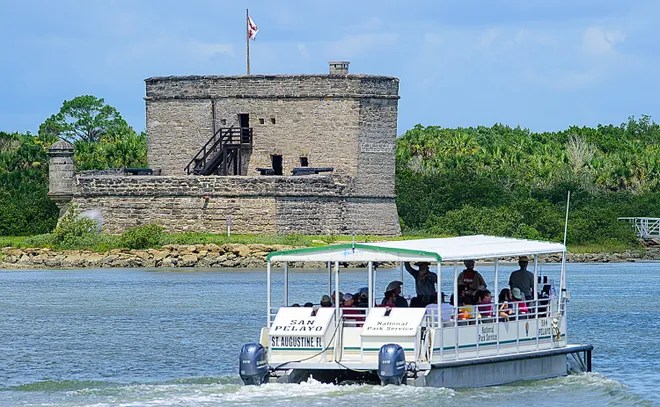
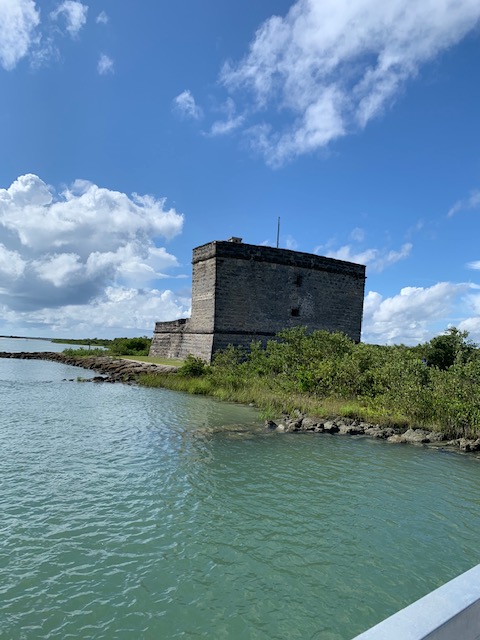
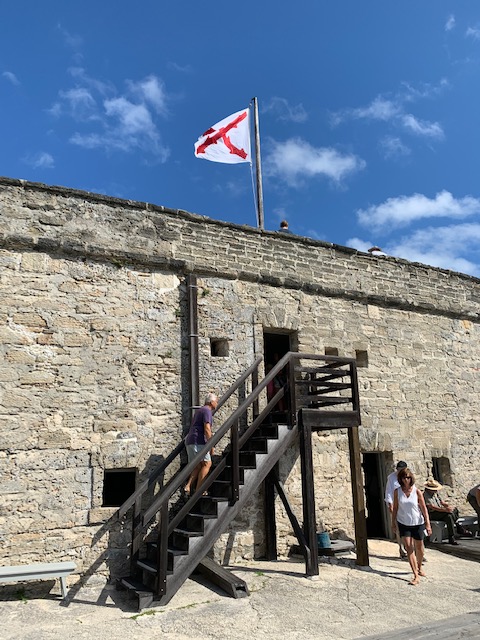
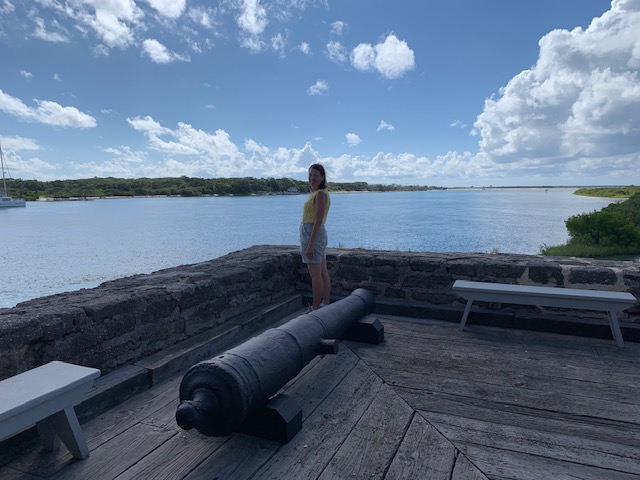
Wednesday June 1st we headed out to see Fort Matanzas National Monument. Located on the Intracoastal Waterway south of St. Augustine, it was built by Spanish soldiers as the back door protecting the city by preventing the British sailing through Matanzas Bay from invading St. Augustine. Today, Fort Matanzas has grown to a park of almost 300 acres and features walking trails, picnic areas, small tidal beaches. The best thing about it is that the fort is located on Rattlesnake Island and the only way to get there is by ferry.
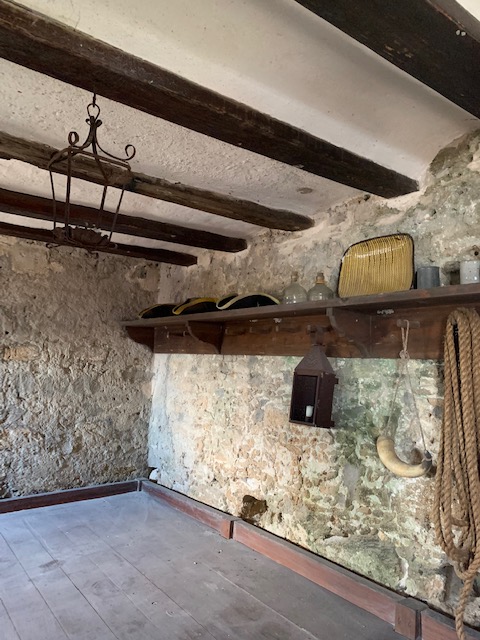
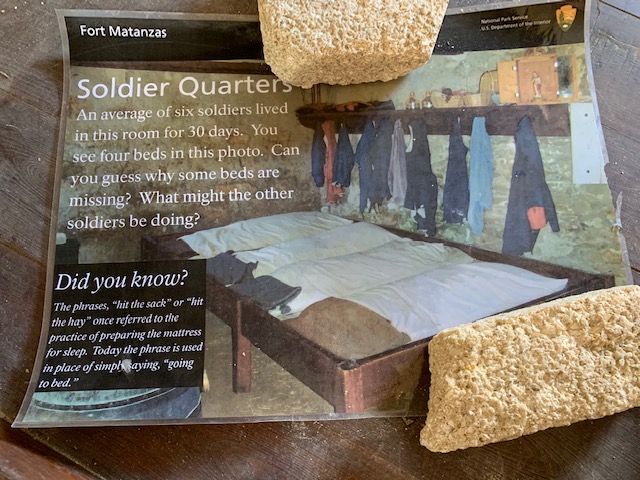
Supposedly, the fort was designed to accommodate six guns and fifty men, although no more than five cannon were ever emplaced. Usually, only an officer, four privates of the infantry and two gunners manned the fort. Soldiers were assigned to the fort as a part of their regular rotation among the outposts and missions near St. Augustine. The tour of duty at Fort Matanzas was one month.
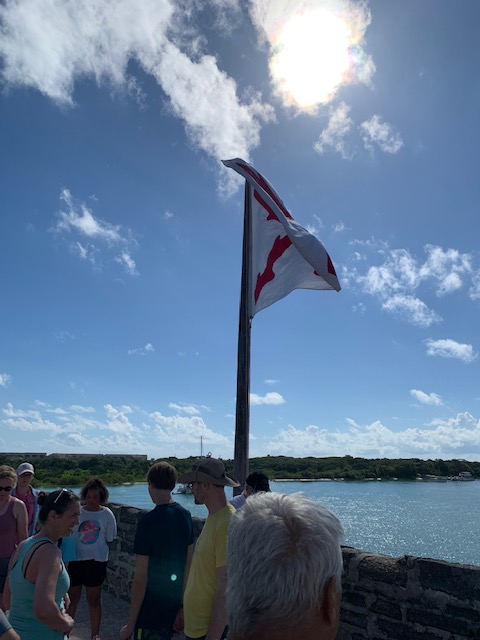
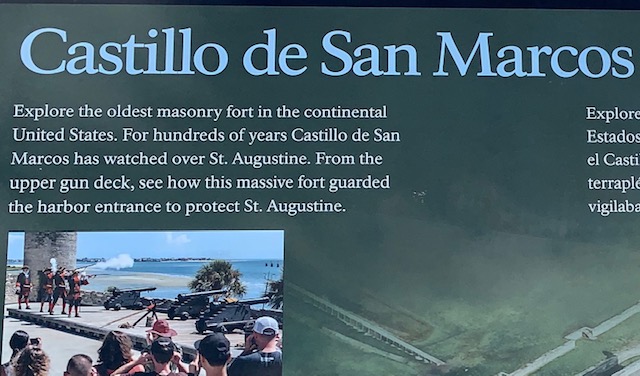
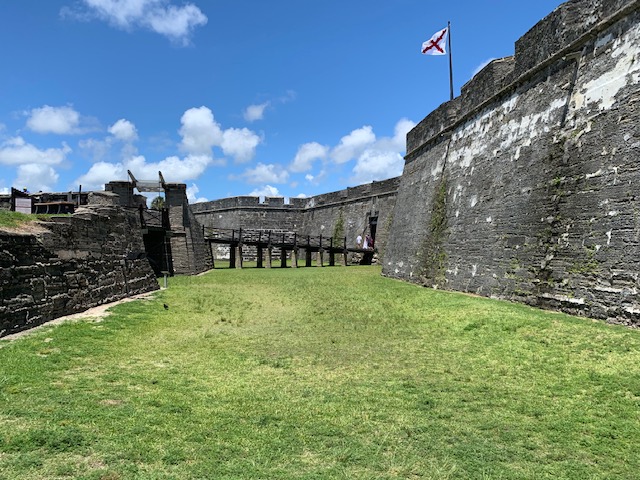
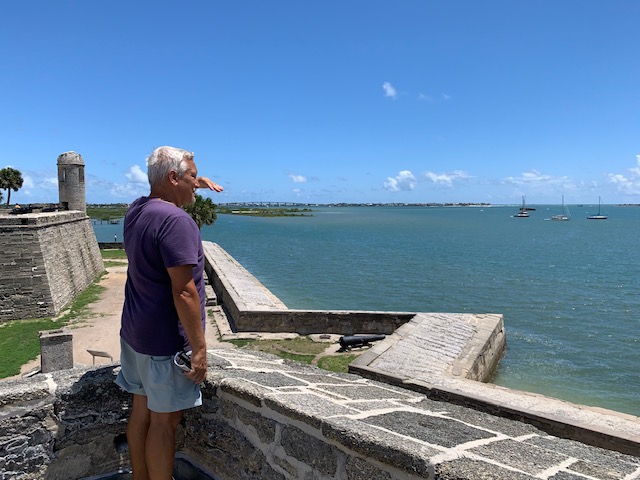
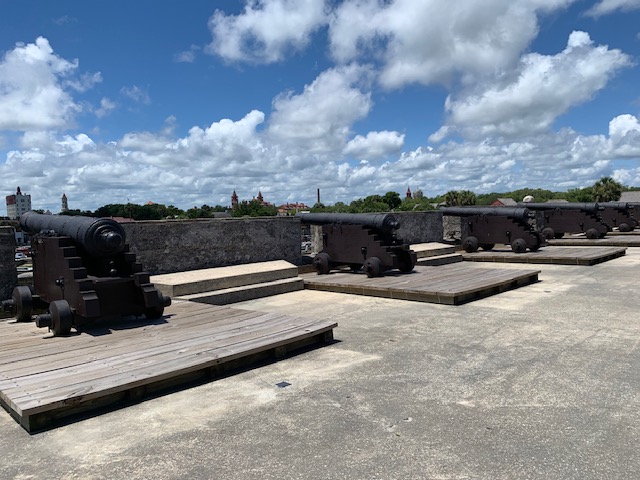
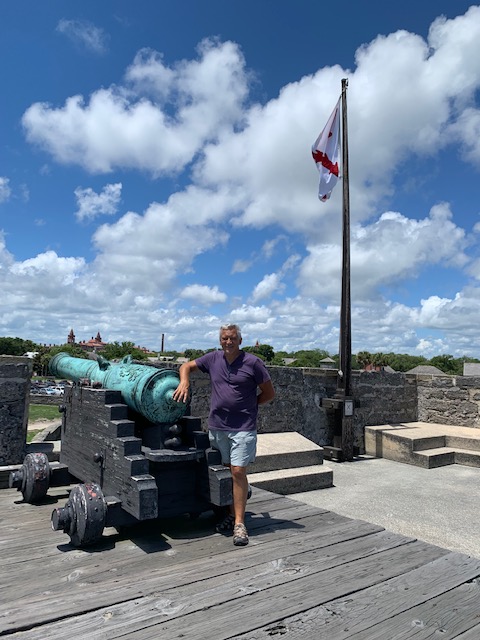
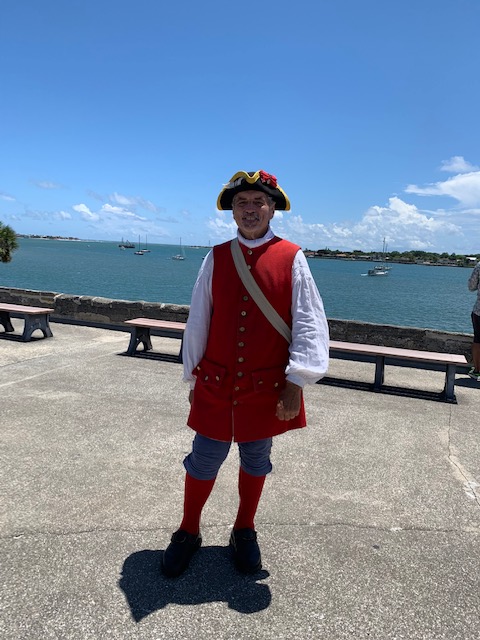
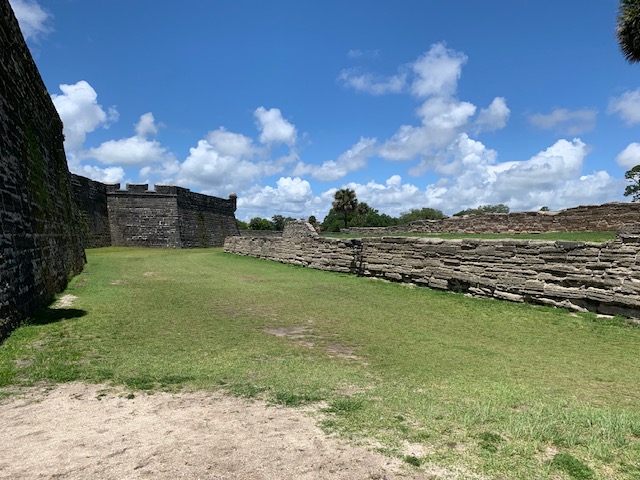
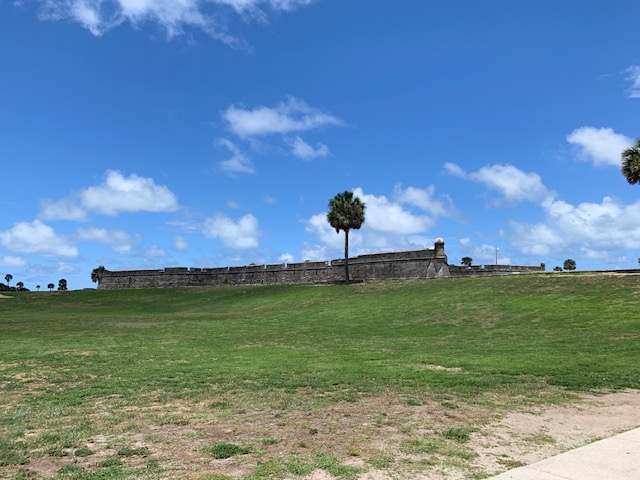
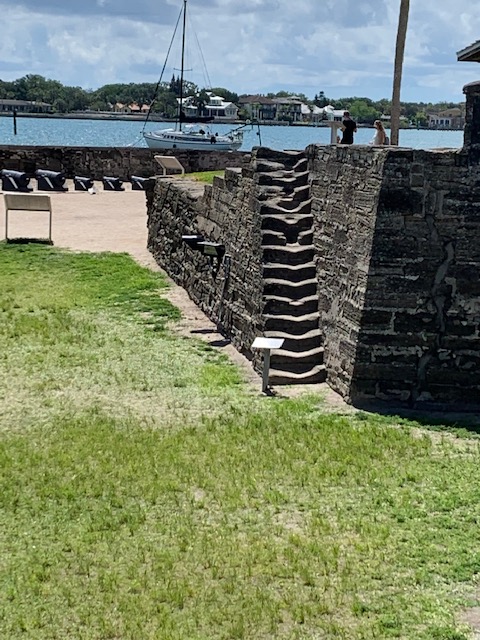
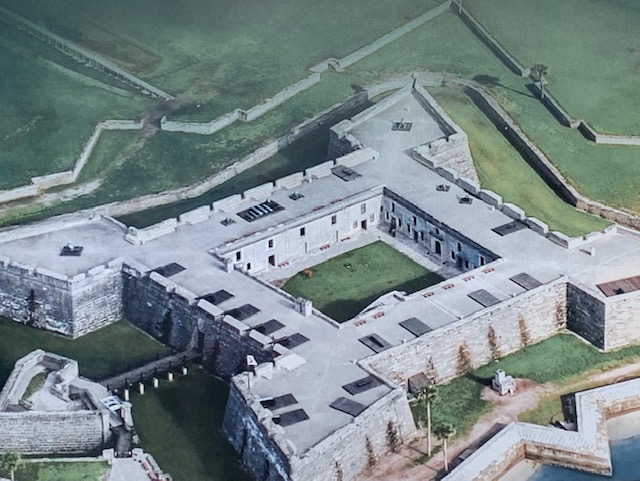
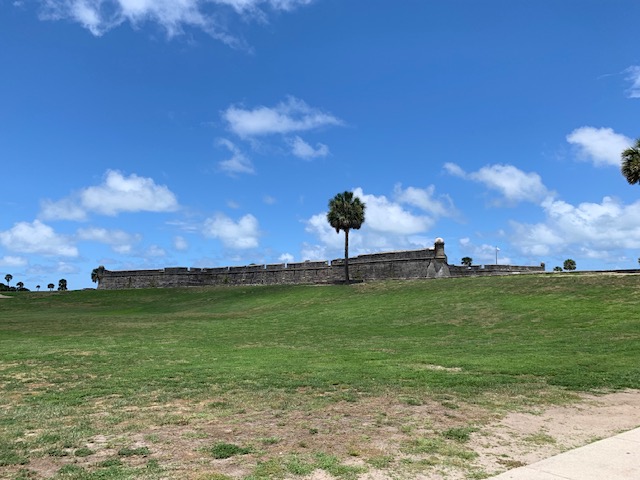
Castillo de San Marcos National Monument, site of the oldest masonry fort in the United States built by the Spaniards on Matanzas Bay between 1672 and 1695 to protect the city of St. Augustine, in northeastern Florida. Established as Fort Marion National Monument in 1924, it was renamed in 1942. The park has an area of about 25 acres.
An unusual boat we saw in the water by the fort
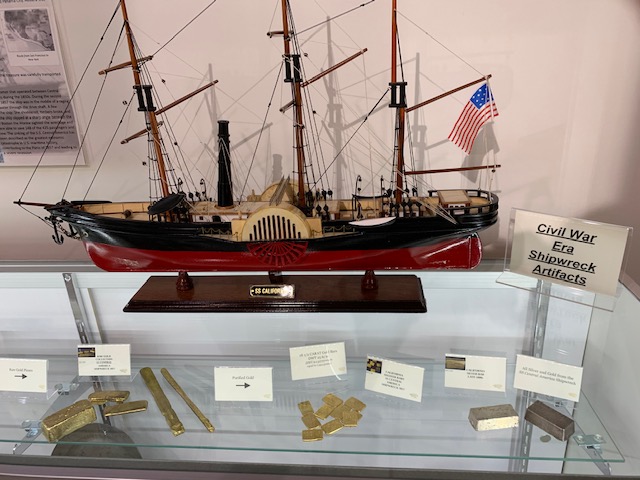
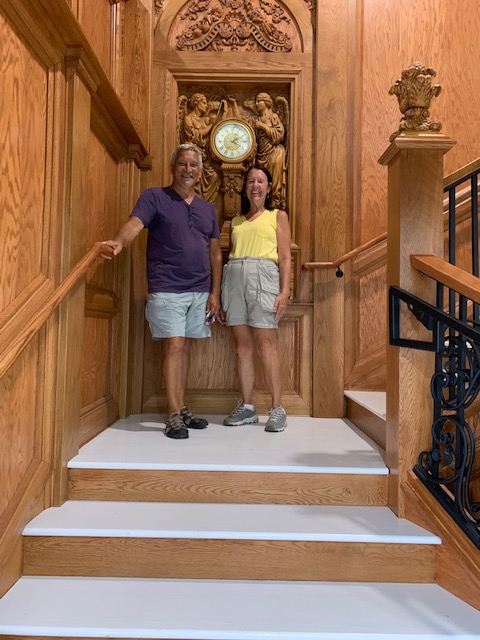
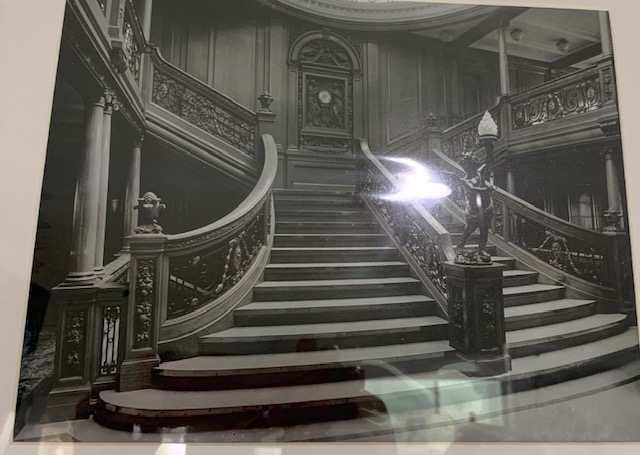
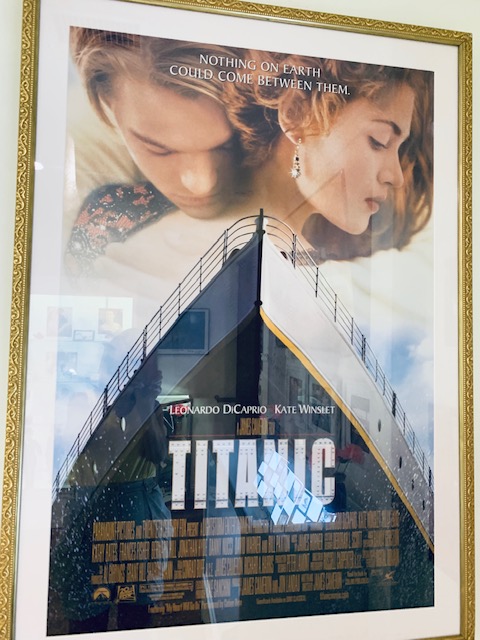
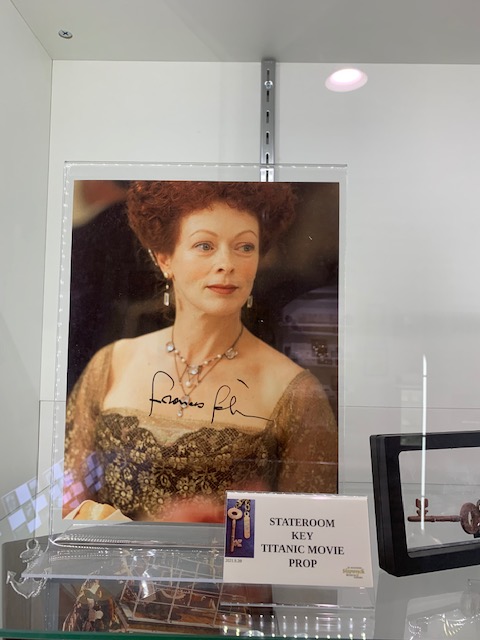
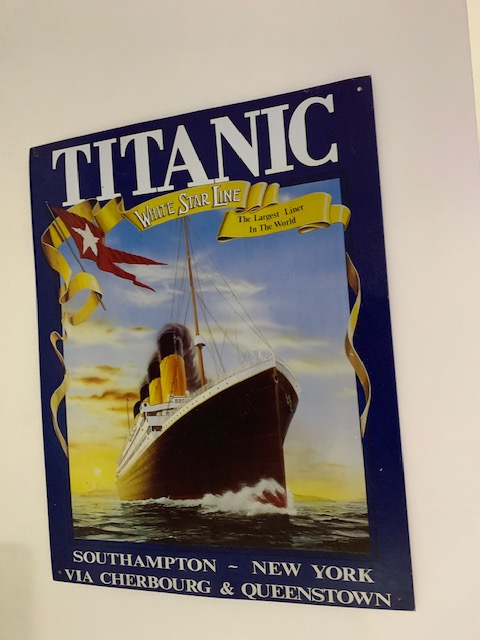
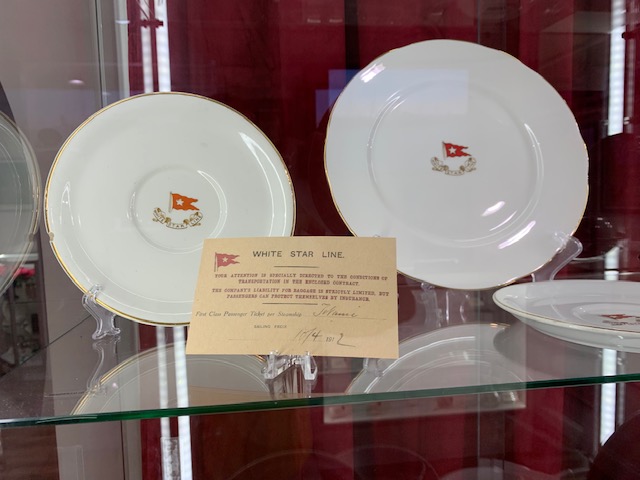
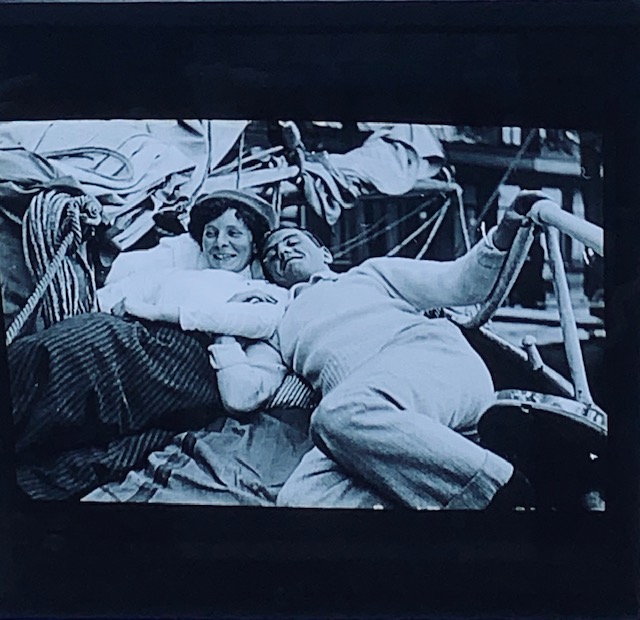
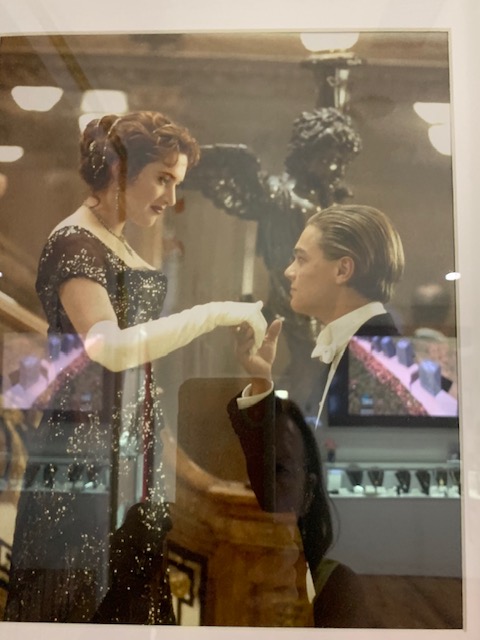
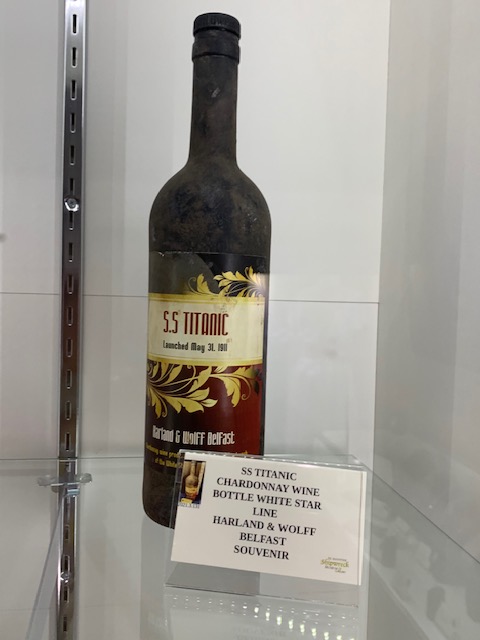
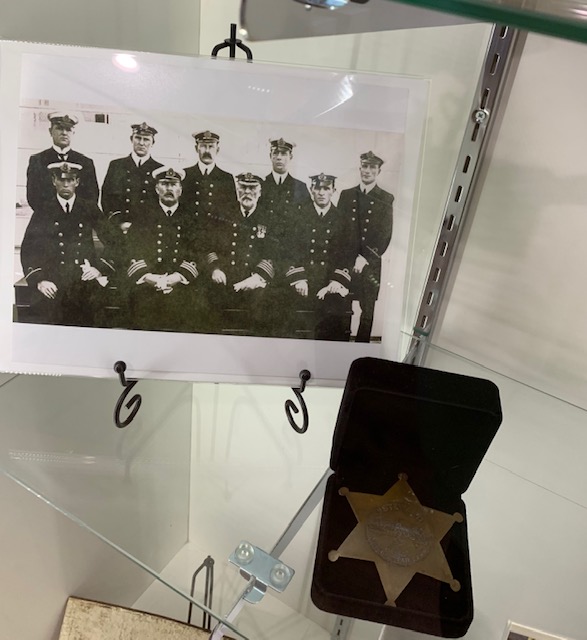
The museum has some exhibits of some of the world’s most famous maritime adventures and disasters, and valuable artifacts from some of the world’s most famous shipwrecks from off Florida’s coast as well as around the world, including the R.M.S. Titanic, The Nuestra Señora de Atocha, The S.S. Central America, and more. The stairway in the museum, where we’re standing, and the clock is a replica of the titanic, it’s set at 2:20a.m the time when the Titanic went down.
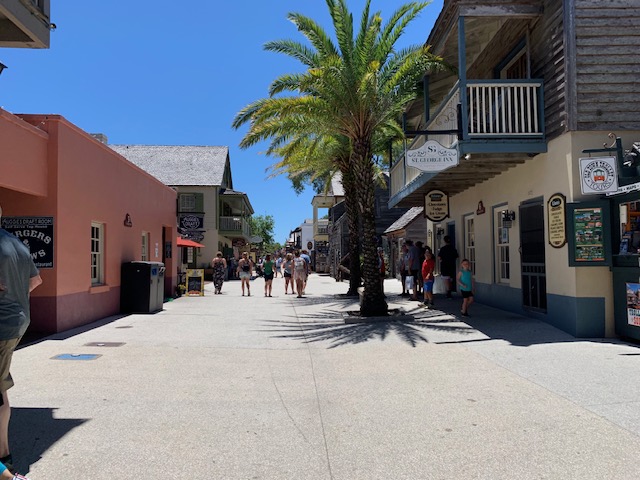
Our 2nd day we toured the Historic Downtown of St. Augustine which has history dating back from 1565. The Downtown is the oldest part of the city with many buildings dating back to the 1700s, with streets that have existed from long before that. It is easy to walk thru the area, but better yet, take The Old Trolley Tour like we did. The Historic Downtown is also on the National Register of Historic Places. The area has a bay front panoramic view of the Matanzas Bay and a bay front walk.
The design on building fronts represents the height of Spanish Colonial and Spanish Renaissance Revival architecture. This area of town showcases everything from early European design, Florida bungalow-style houses, and Gilded Age area. Although St. Augustine was burned and pillaged on several occasions by pirates and various English forces it still has some old buildings left to enjoy.
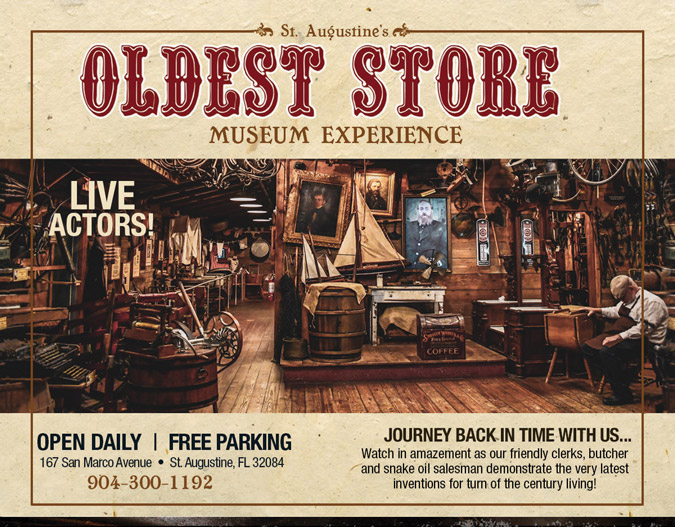
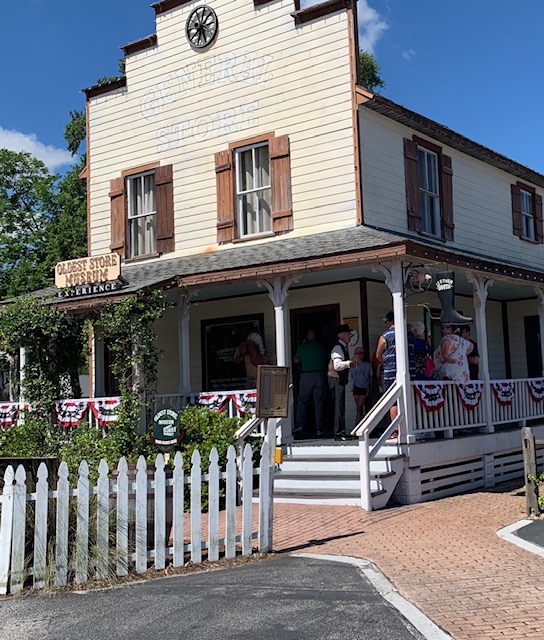
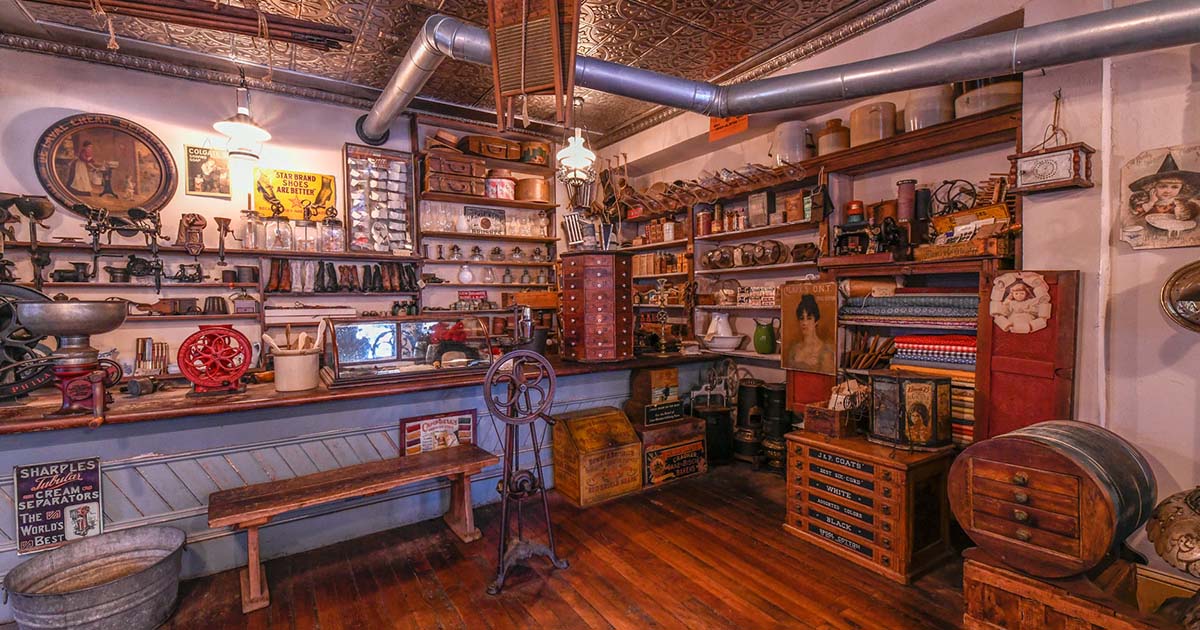
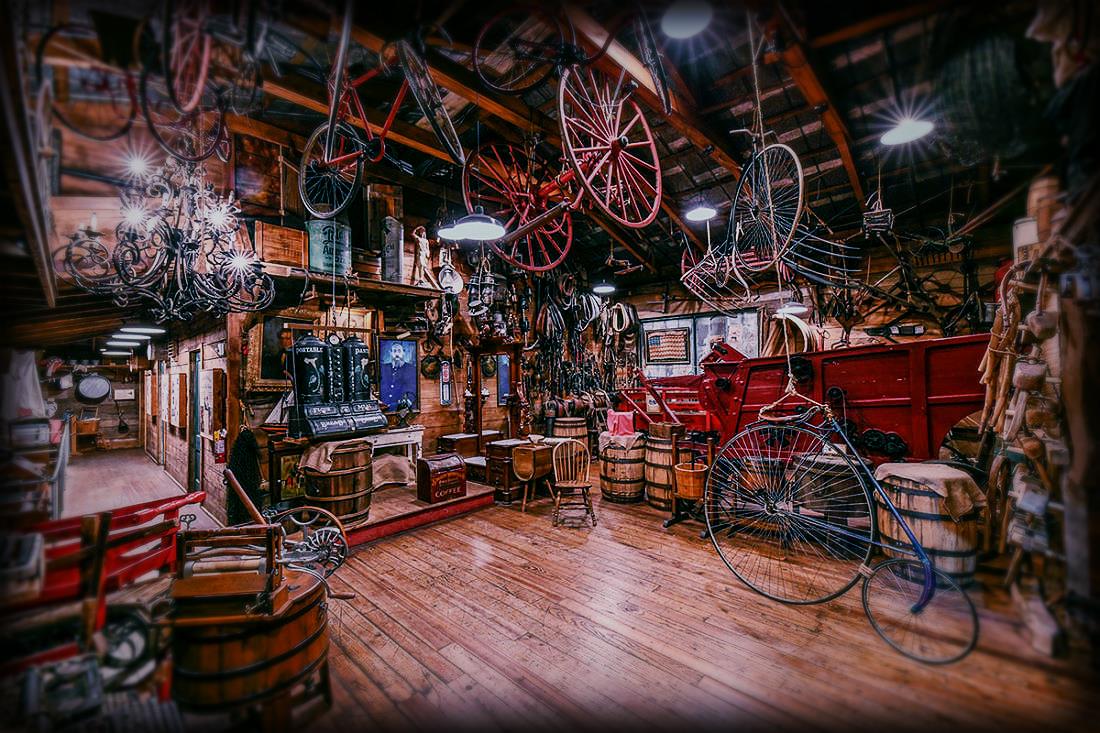
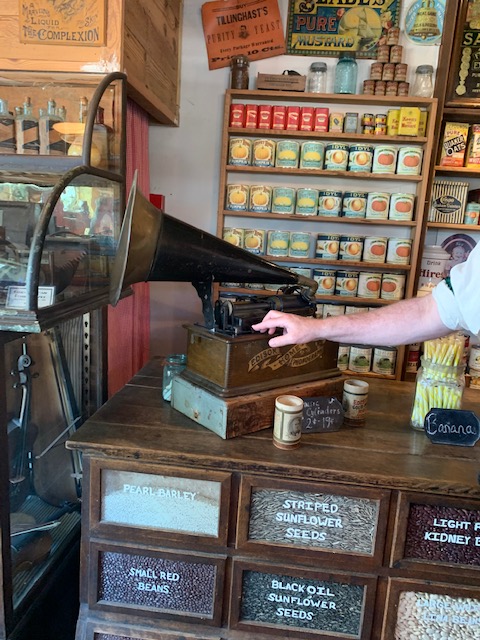
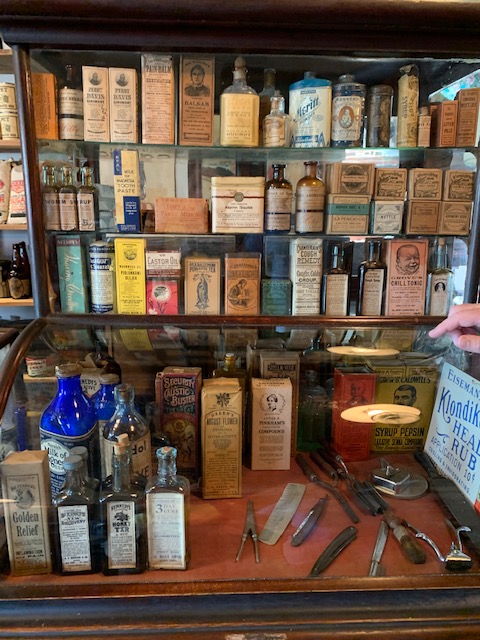
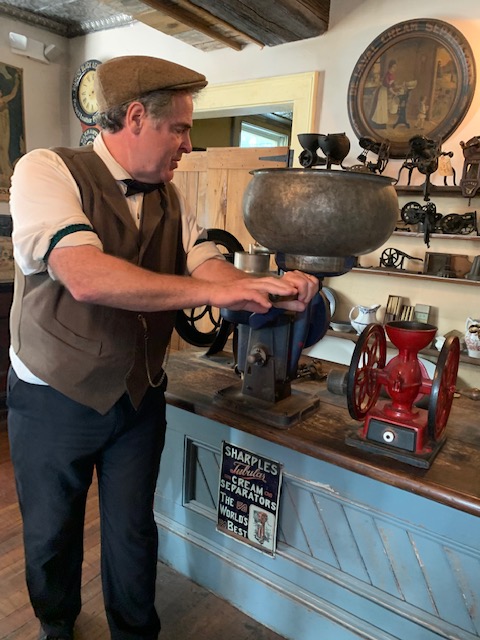
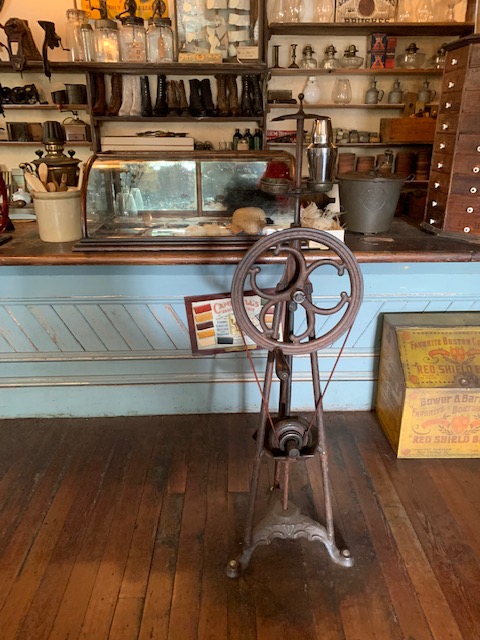
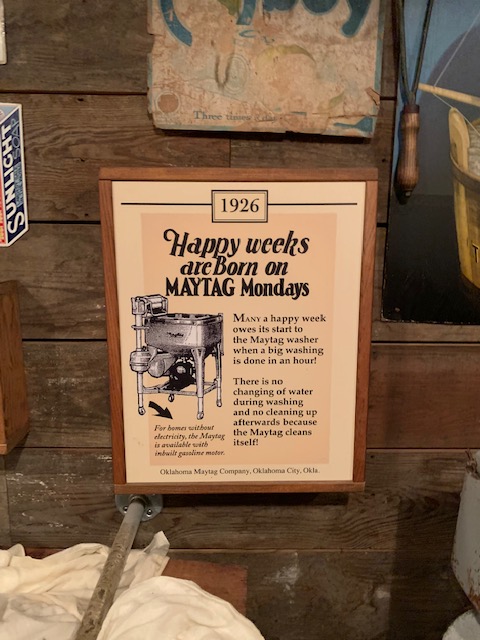
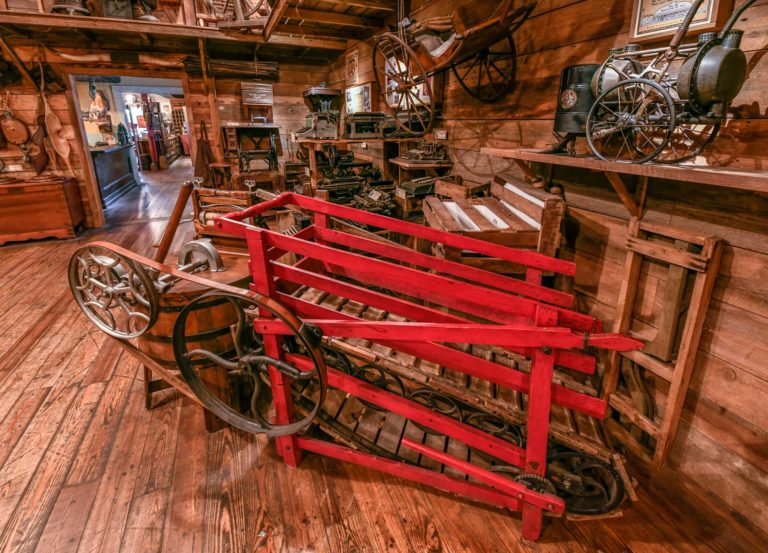
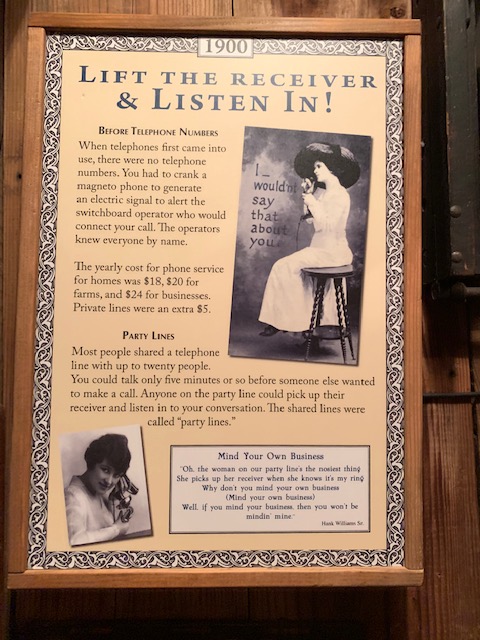
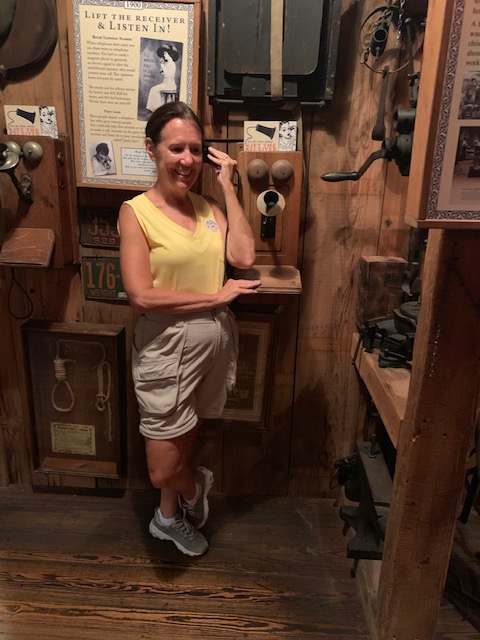
The Oldest Store Museum re-creates the original St. Augustine general store that was operated by C.F. Hamblen in 1908. It has a huge range of products and it’s is like stepping into a Sears and Roebuck catalog from the early 20th century. A living history tour guides act the parts of clerks and salesmen as they demonstrate the latest inventions for turn-of-the-century “modern” living — everything from tonics to unicycles to a goat-powered washing machine. The collection features vintage farm equipment, collars and corsets, “health underwear”, a corn sheller and a grain thresher and all sorts of elixirs, including the ever-popular worm syrup.
We had a really good clerk, salesman demonstrate ad tell us about all the new products that were available in 1900.
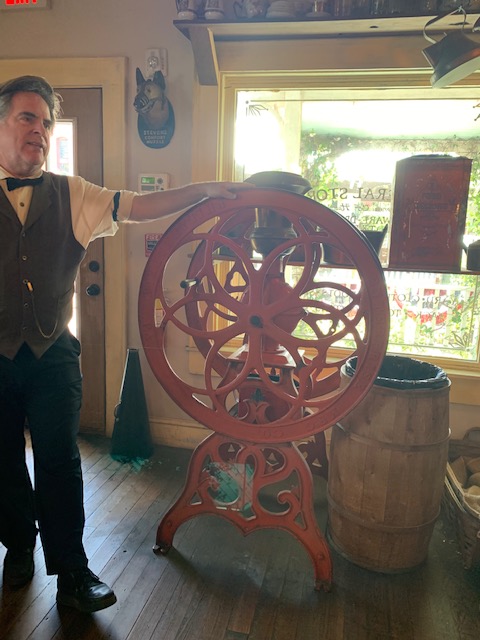
The huge coffee grinder which us common folk couldn’t think of purchasing. And all the drugs in this cabinet would definitely be illegal to sell over the counter today.
He demonstrated how the cream separator works, it took up less time then it did before, hard to believe what a process it was. The second picture is of an milk shake machine.
You can barely see it, but there is a washing machine in front of this red fence contraption. Actually it’s a treadmill attached to a washing machine where you put your goat so you didn’t have to constantly stand there and wash your clothes by hand or with a stick. It was a fun place to visit.
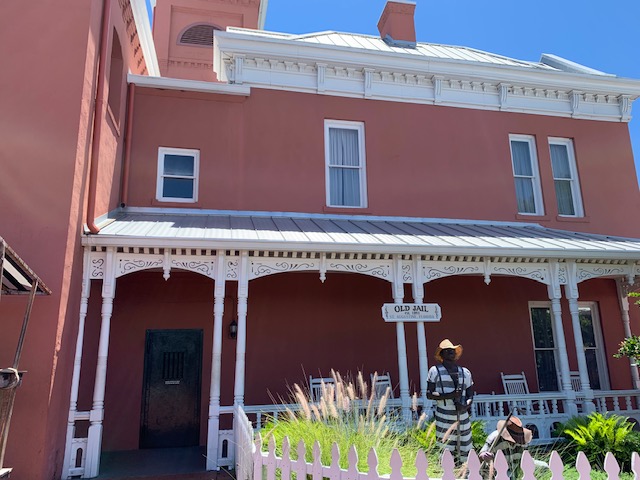
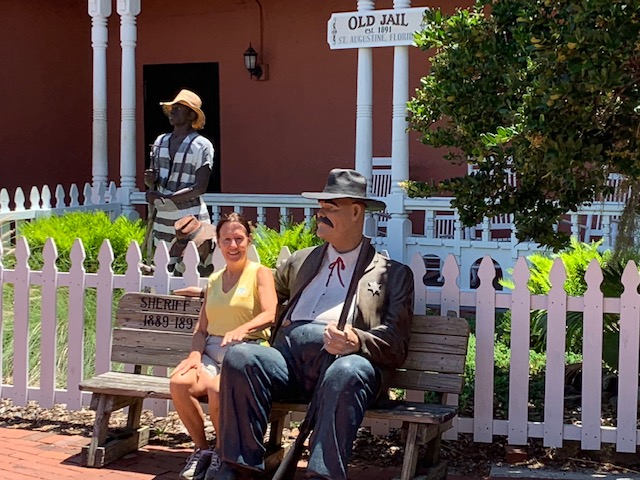
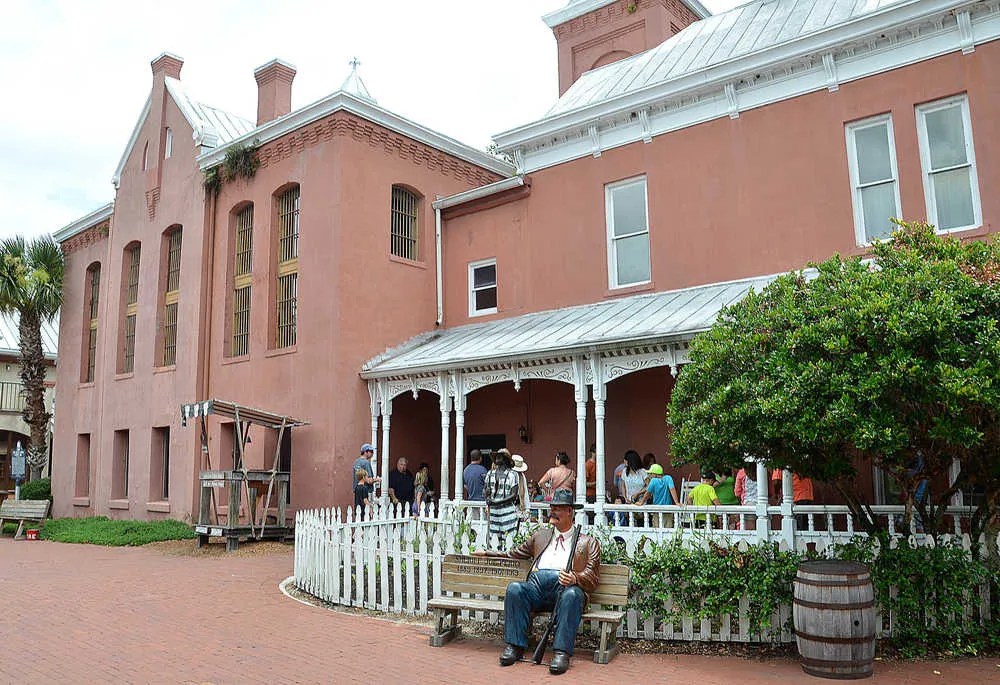
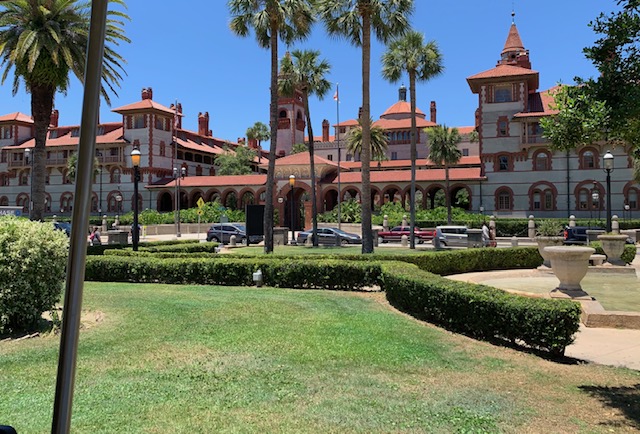
The Jail – Flager, a millionaire who lived in town opened the Ponce de Leon hotel, he wanted to ensure a safe and pleasant environment for his patrons by creating a secure fortress to house criminals. It was important to Flagler that the exterior appearance of this fortress wouldn’t disrupt the majestic atmosphere of the Ancient City. In order to accomplish this, it was designed with a Romanesque Revival style that gave it the distinct appearance of a Victorian house without the interior comfort and charm. It was almost unrecognizable as a jail apart from the barred windows.
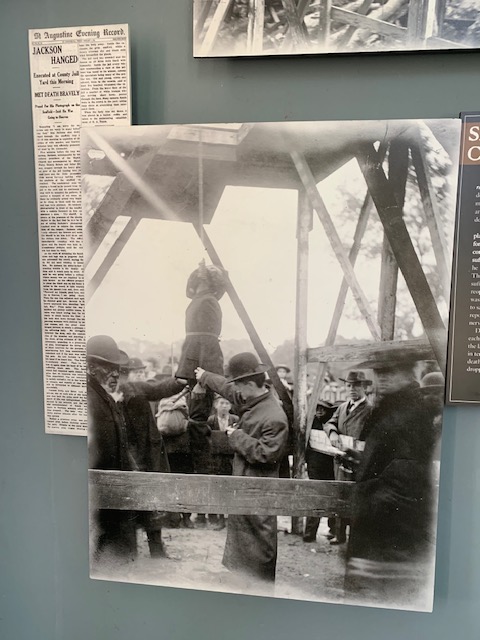
Also, the original jail was too close for comfort at the time, so Flagler asked that the new jail be built at a further location. P.J. Pauley Jail Company, the same people responsible for building Alcatraz in San Francisco, were employed to construct the prison. The jail served the city of St. Augustine until 1953. It held some of the most violent criminals and carried out capital punishment on a set of gallows on the property.
In 1954, only a year after the jail closed, it was transformed into a local attraction. The building underwent restoration in 1993 by owner Henry L. “Slim” McDaniel. Today, the Old Jail provides guests to St. Augustine with a glimpse into the history of the penal system and the daily life of its prisoners. The St. Augustine Old Jail was added to the U. S. National Register of Historic Places in 1987.
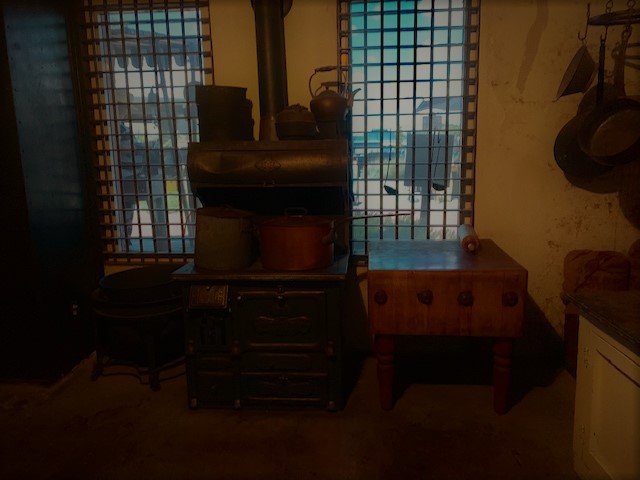
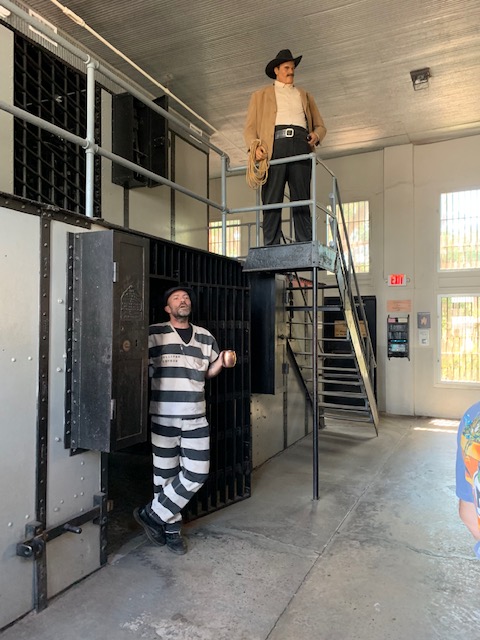
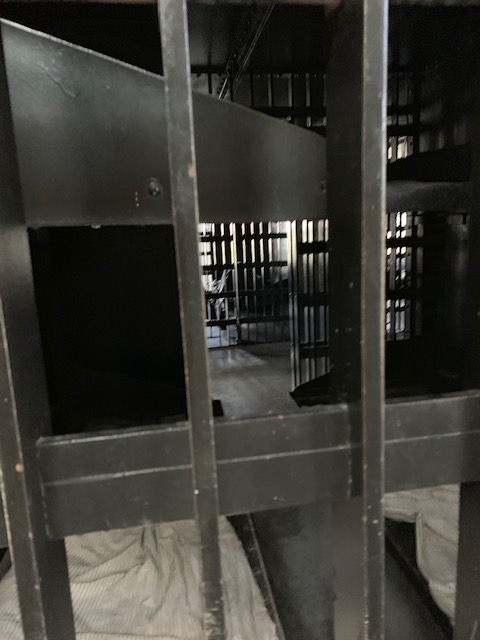
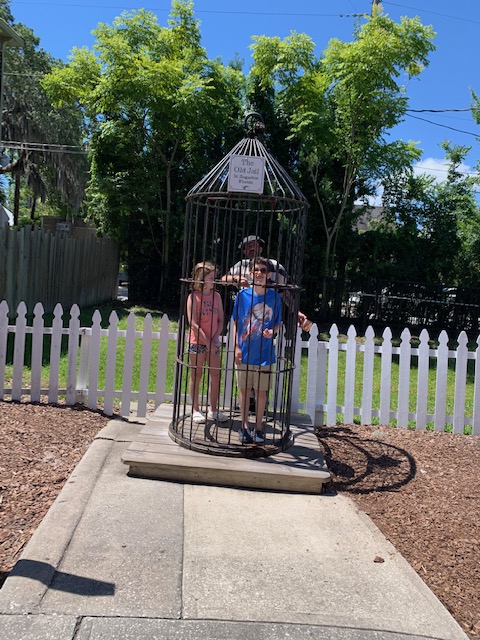
the Old Jail could contain Over 72 male prisoners and 12 females who fought for survival. In the northern two-story wing, you would find the cells for men, women, and those who were placed under maximum security, along with a kitchen on the lower level next to the living quarters for the sheriff and their family. The jail was said to be a madhouse of depravity and cruelty. Inmates only lasted about two years before dying from infection, violence, illness, malnutrition or hanging. The only time a doctor ever visited the place was on hanging days. Cholera, tuberculosis and hundreds of other diseases ran rampant throughout the jailhouse. The death rate was staggering and, after some blowback, the numbers were fixed by the county. The last picture is a cage that they put prisoners in and hung it from a tree and left you up there until they felt like letting you down, sometimes for 3 or 4 days. Our guide/prisoner was “Sully” he was a lot of fun even in a place like this.
In 1888, Flagler built the Hotel Ponce de León, his first in a series of luxury resorts along Florida’s east coast. A masterpiece of Spanish Renaissance architecture and the first major poured-in-place concrete building in the United States is now known as Ponce de Leon Hall. A National Historic Landmark, it serves as the centerpiece for Flagler College.
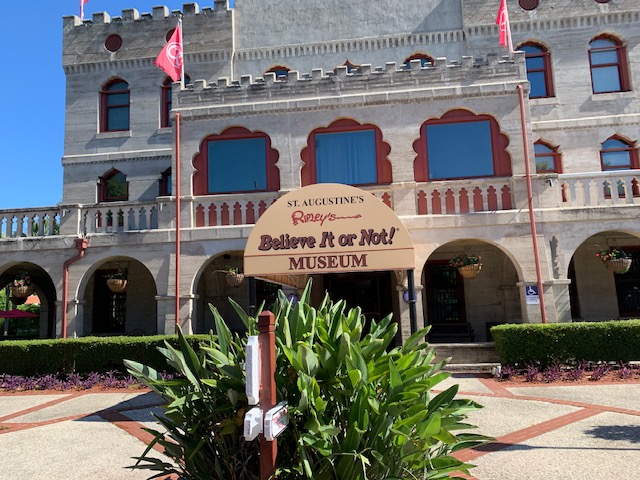
In 1950 The first Ripley’s Believe It or Not Museum opened in St. Augustine, Florida. The building looks like a Castle built in 1887 by William Warden as a winter home. In later years, it was turned into a hotel, until Ripley’s opened the location. I always thought the one & only Ripley’s Believe it or Not was the one I always saw as a kid in Niagara Falls, Canada. Boy, was I wrong.
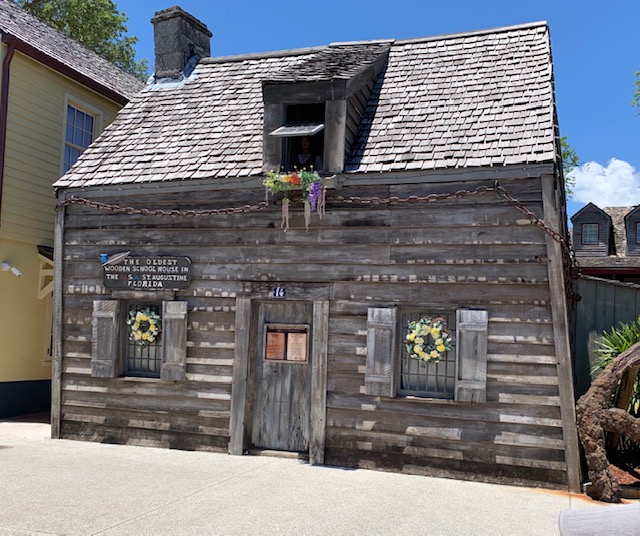
The Oldest Wooden School House in the USA is located in downtown St. Augustine. The School House dates back to the early 18th (1702) and is now a museum.
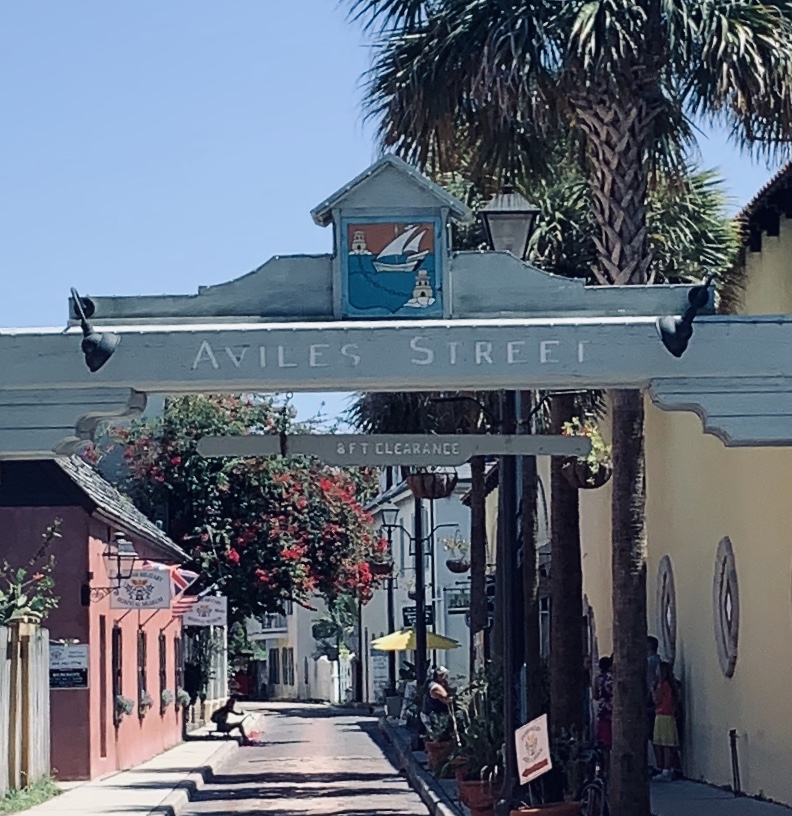
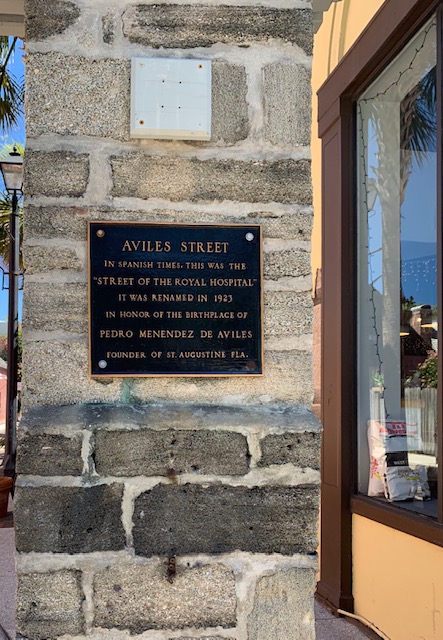
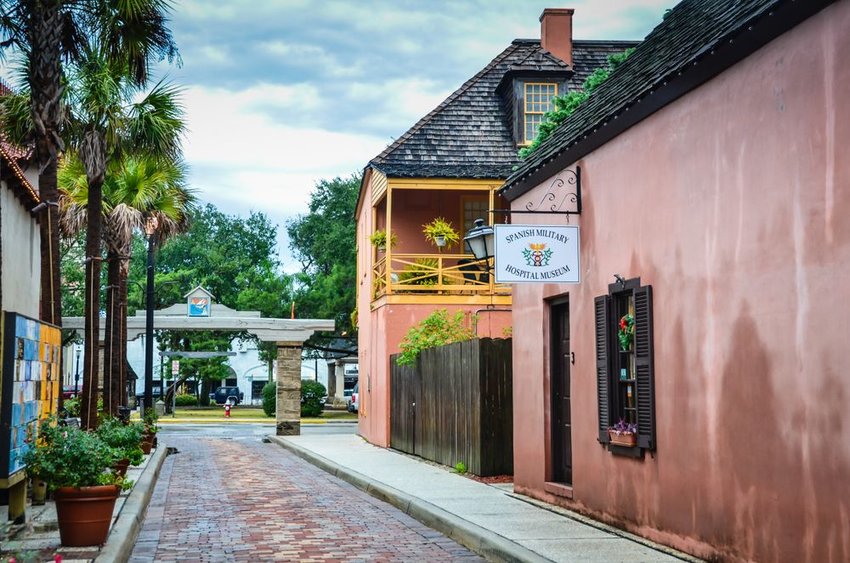
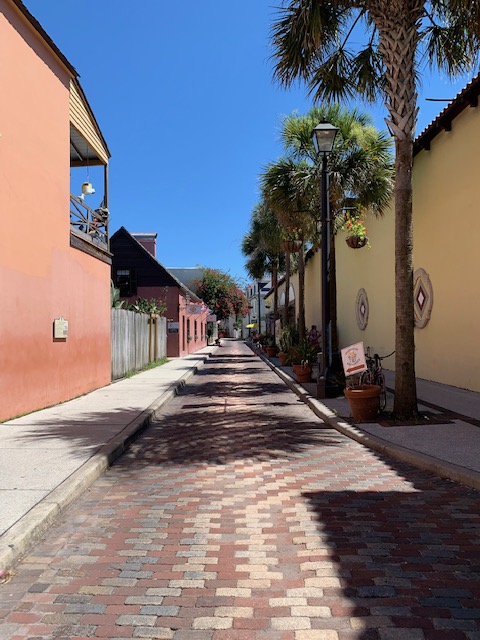
Aviles Street in St. Augustine holds the official title of the oldest street in the United States. St. Augustine itself claims to be the oldest city in the U.S., so it only makes sense that Aviles Street is just as old.
The brick street is located in the Historic District, with a stone archway marking its entrance. This street dates back to the 16th century, according to Florida’s Historic Coast, and was originally known as Hospital Street for the Spanish Military Hospital located at one end.
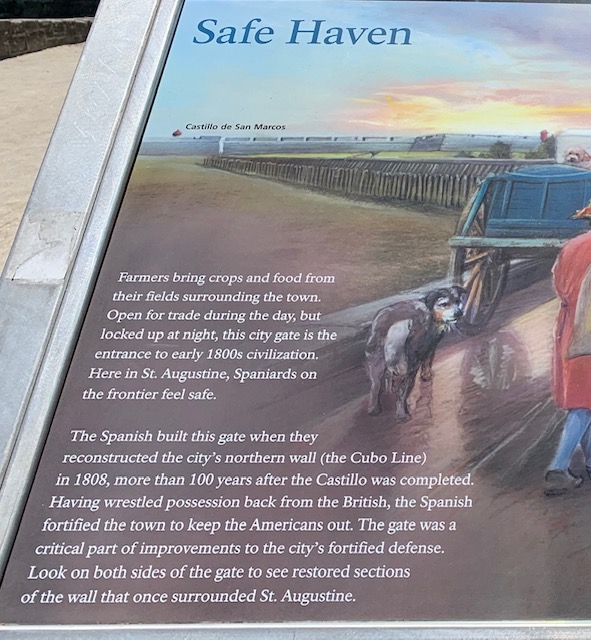
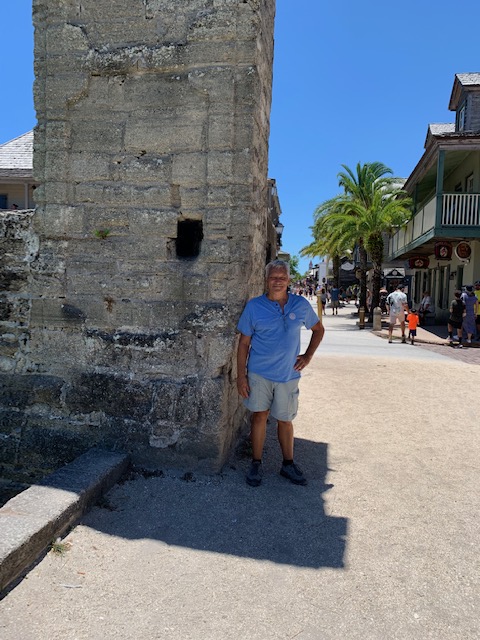
The Old City Gates are toward the north end of St. George Street. The Old City Gates were at one time the only entrance into St. Augustine. The two ancient columns made of stone were built in 1808 as a line of defense for the city. They are a symbol of the turbulent times faced by the original American colonists and a truly memorable landmark.
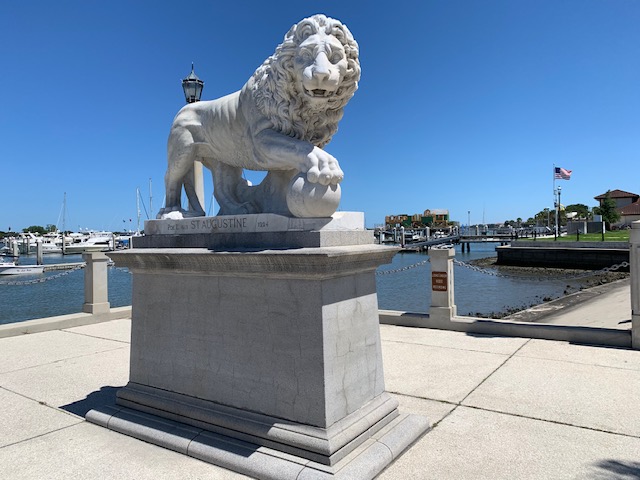
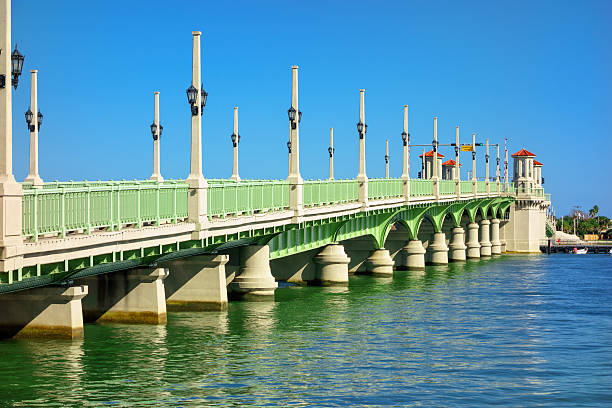
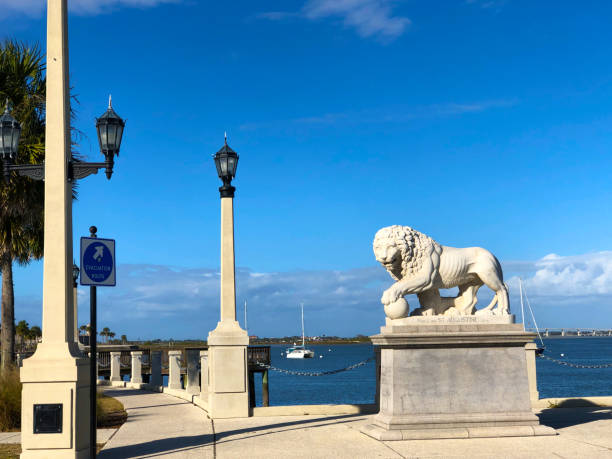
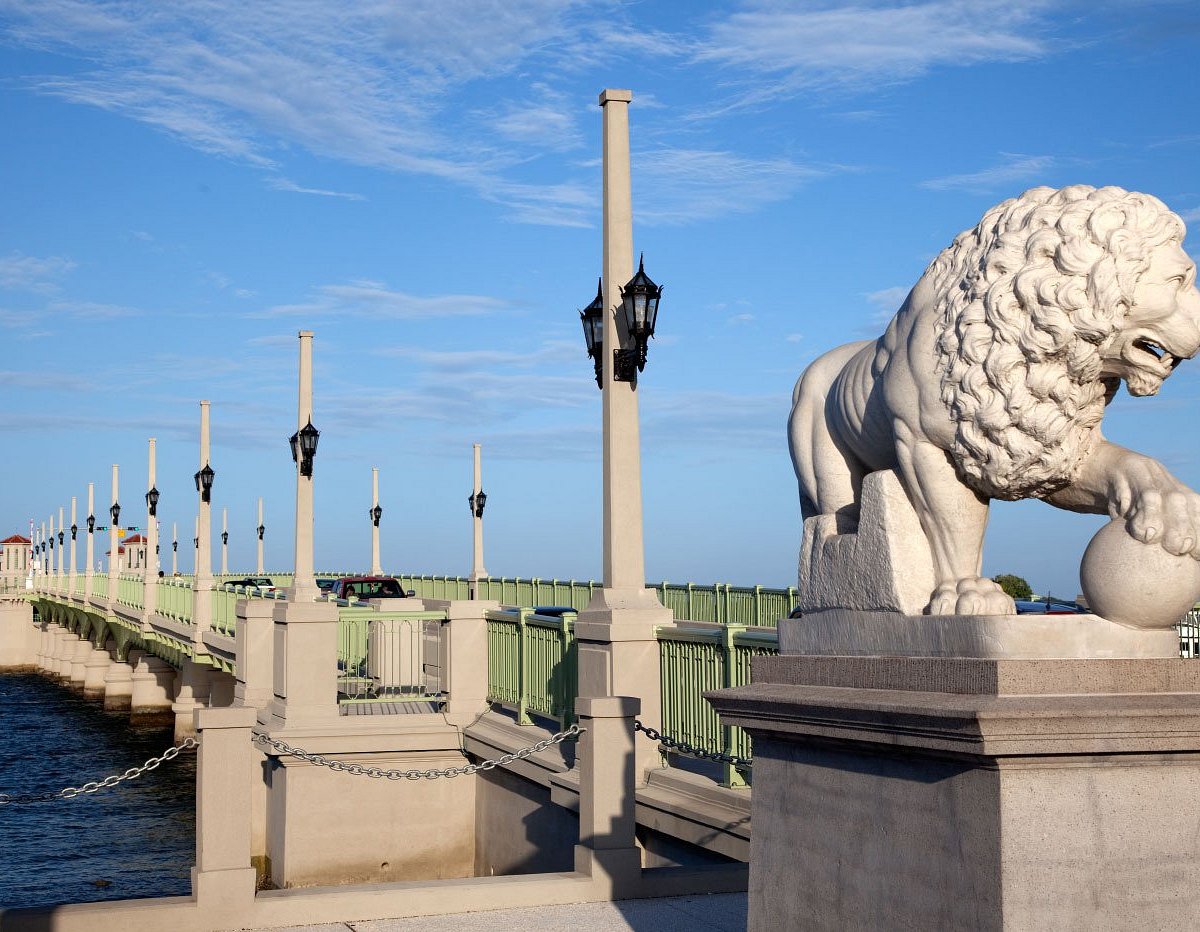
Completed in 1927, the Bridge of Lions is listed on the National Register of Historic Places. It was designed as a work of art and as transportation for cars, connecting downtown St. Augustine with the Anastasia Island. It’s a drawbridge that opens for boat traffic several times throughout the day. The first two lions on the bridge were named Faithful and Firm. In 2015, two new granite lions were added to the east side of the bridge, Peace and Happiness.
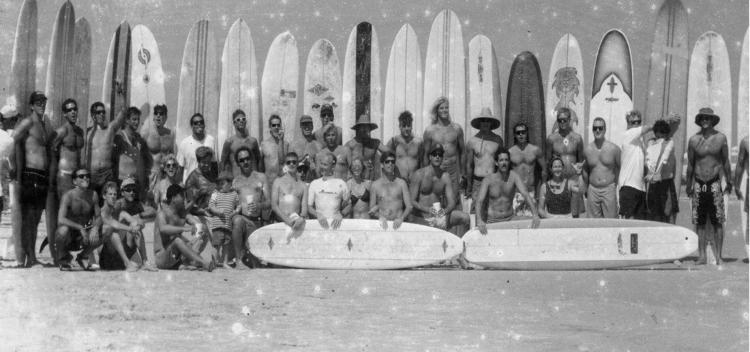
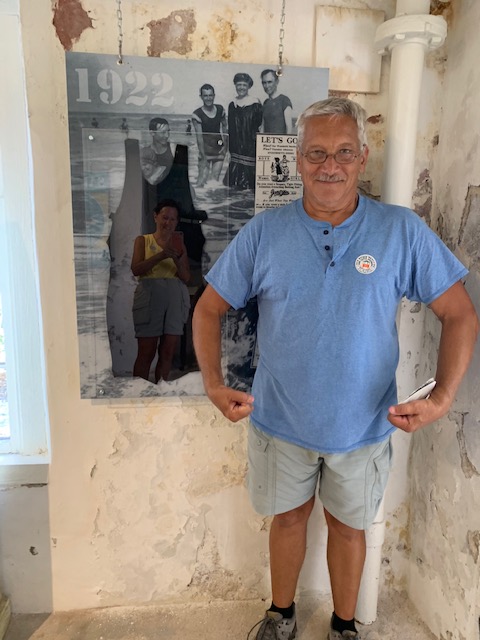
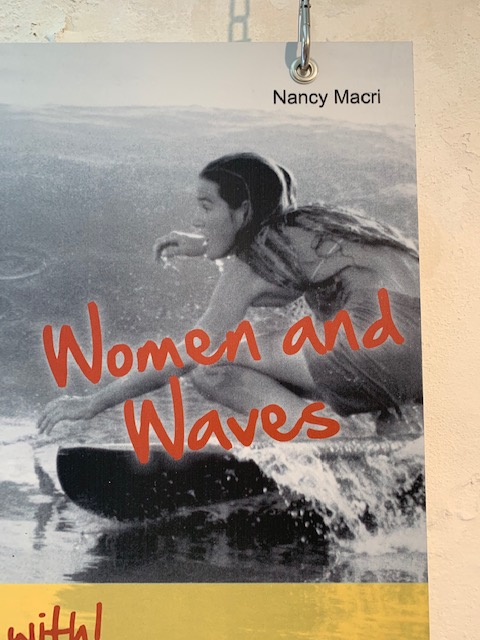
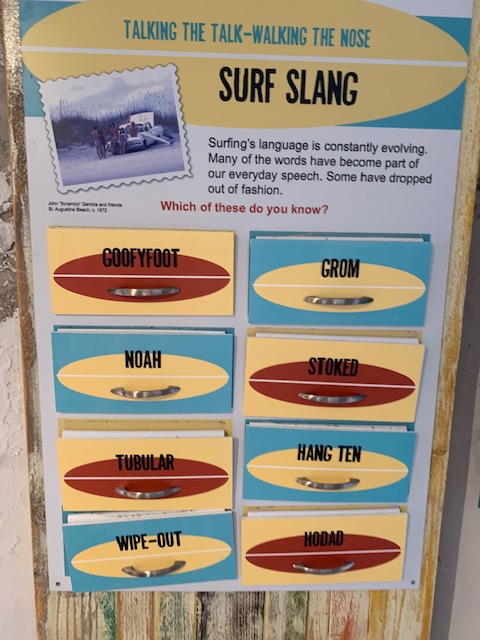
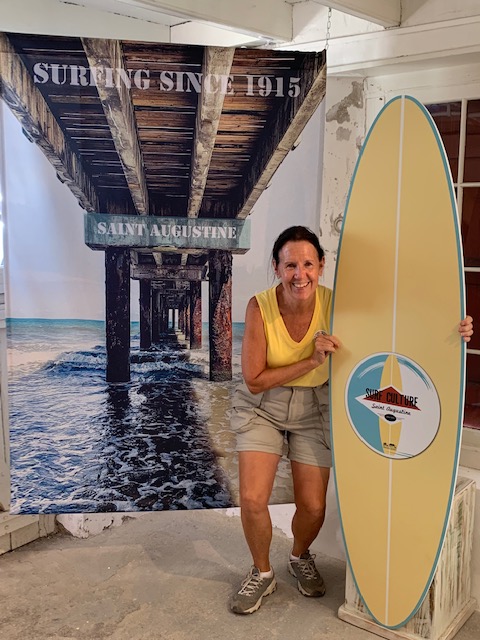
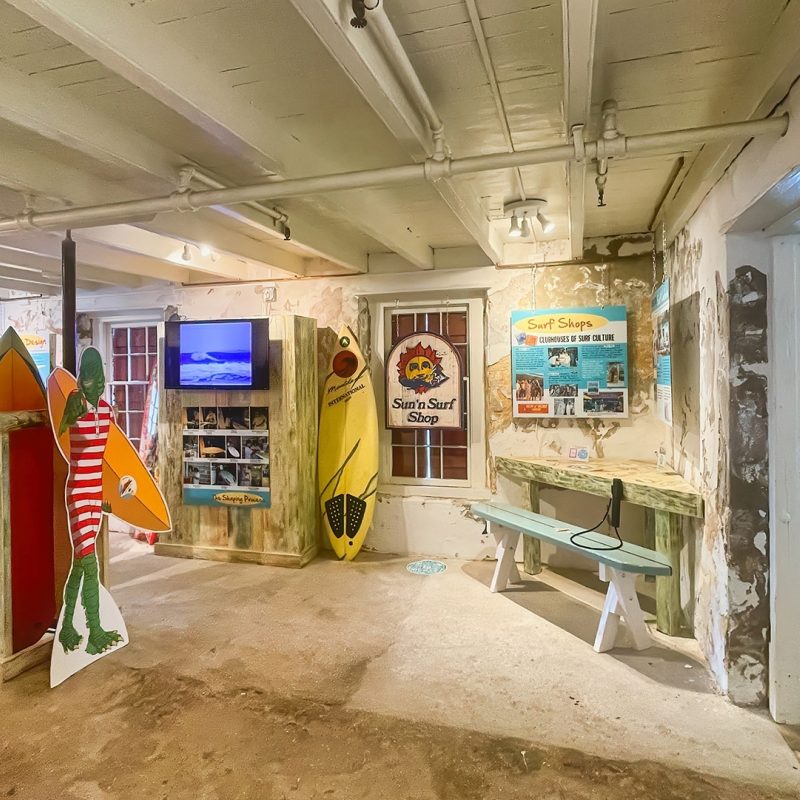
St. Augustine’s Surfing Hall of Fame Housed in one of the city’s many ancient buildings is a Surf Museum. St. Augustine had become a major destination for surfing enthusiasts. Numerous surfing competitions began here and some, like the Hugh Shaw Memorial Long Board Classic continue to attract surfers from around the world. The museum’s exhibits start with the earliest days of surfing at St. Augustine’s beaches from 1915 to present.
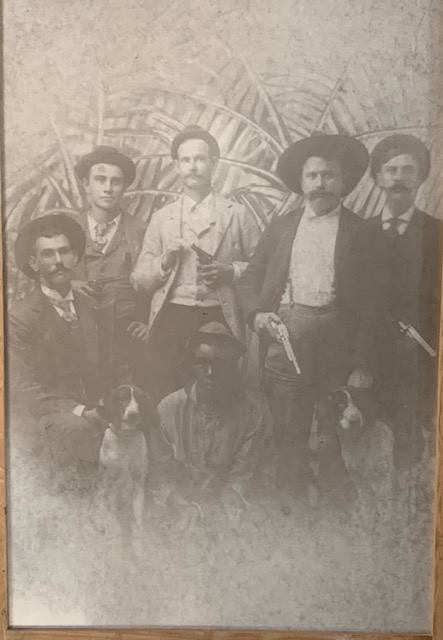
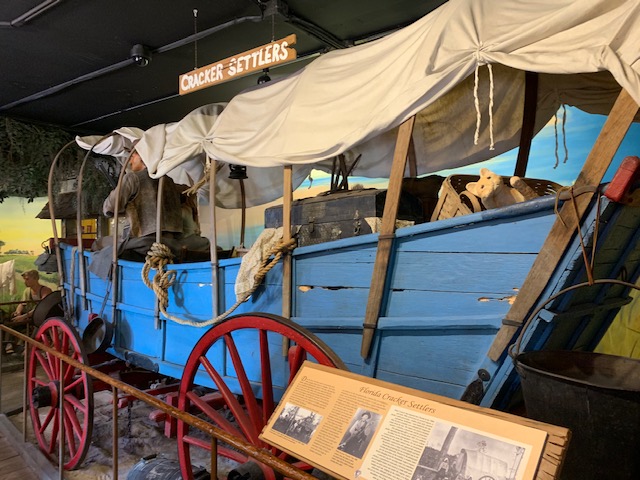
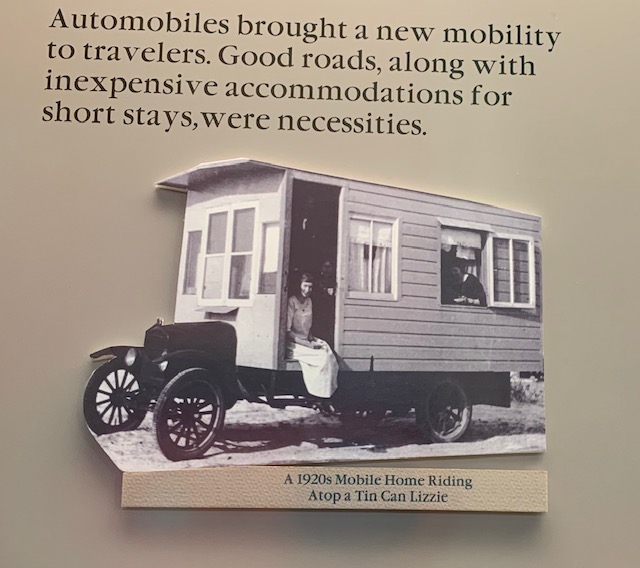
This would be me & Dave if we were traveling in a earlier time. I don’t think so.
We had a fun time walking around old town, St. Augustine.
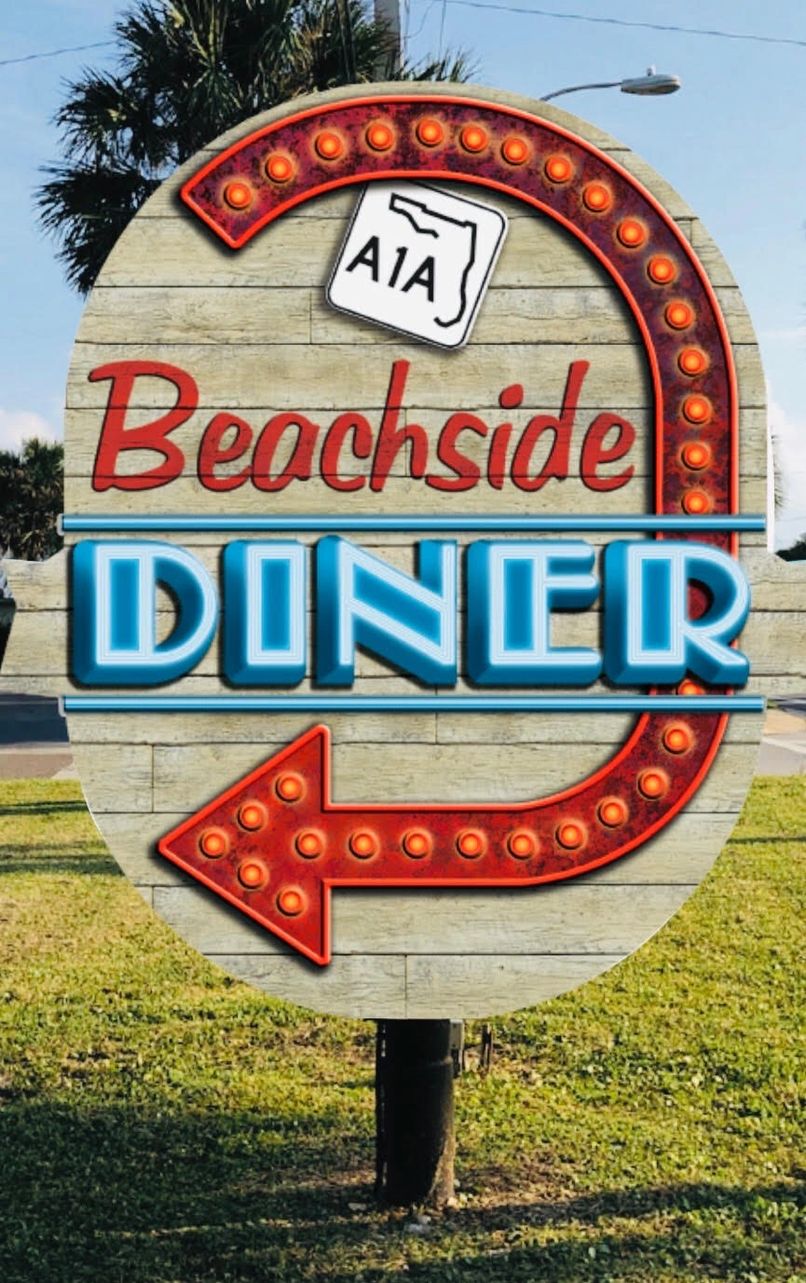
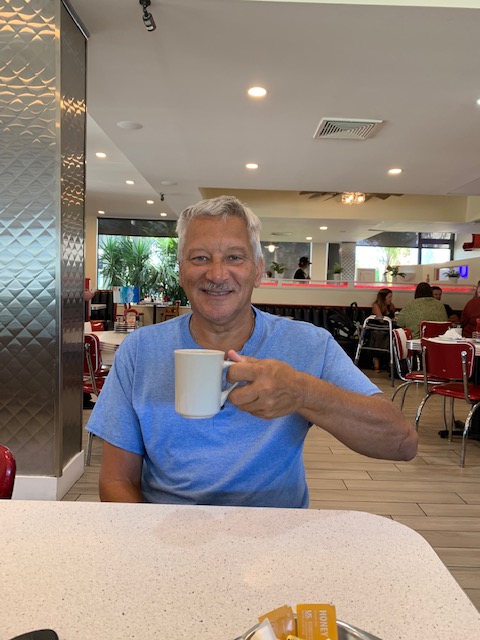
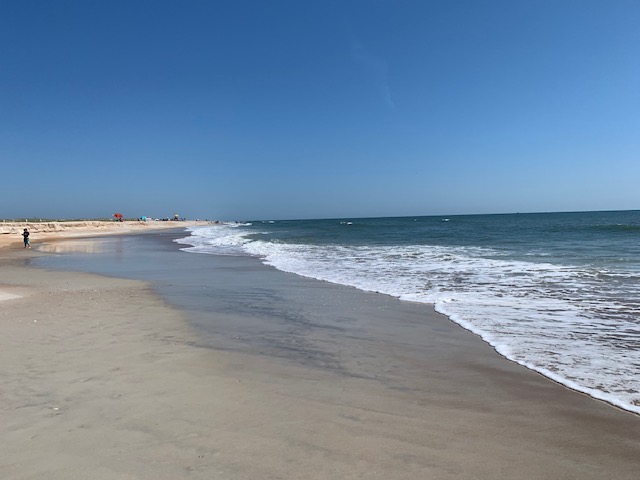
We had breakfast at the Diner, which was very good and then headed out to the beach.
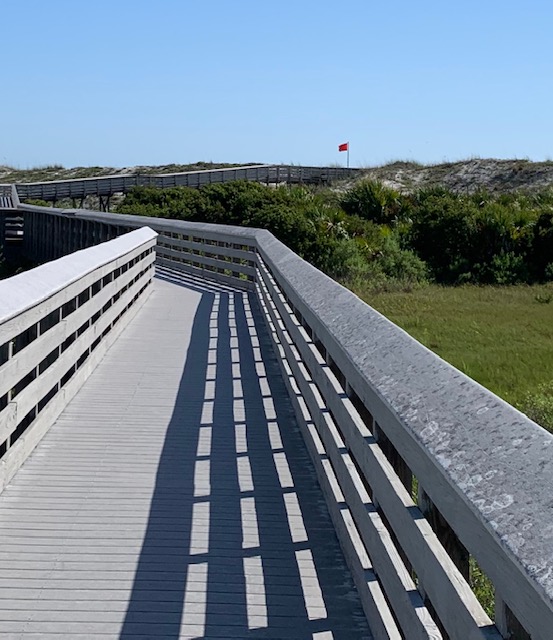
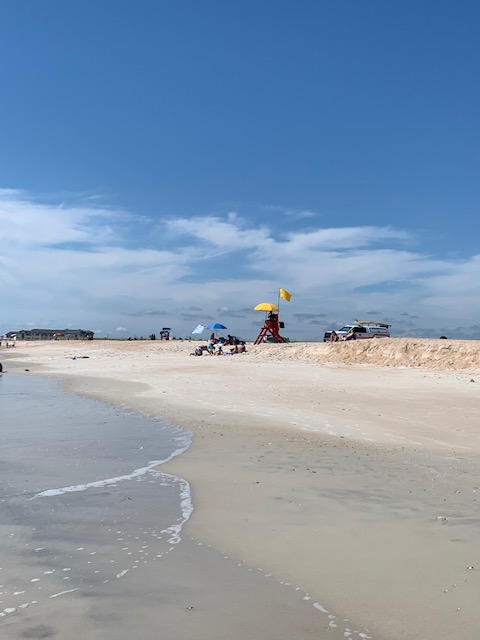
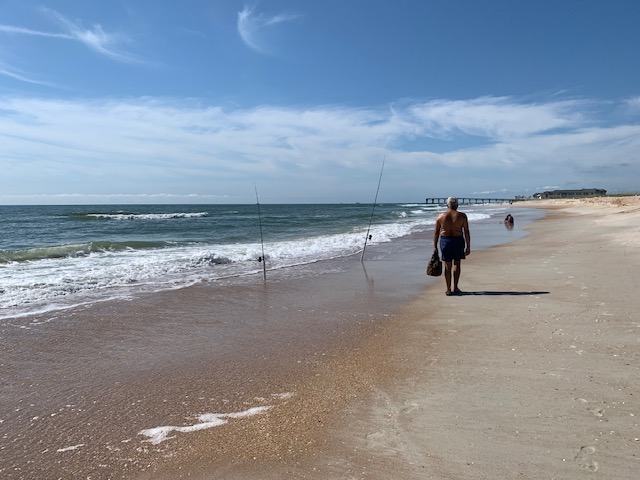
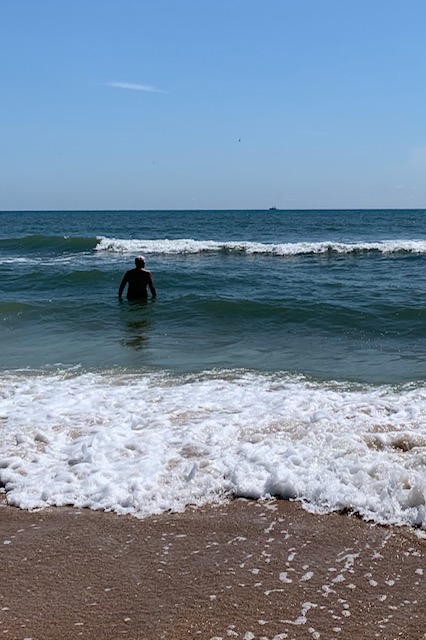
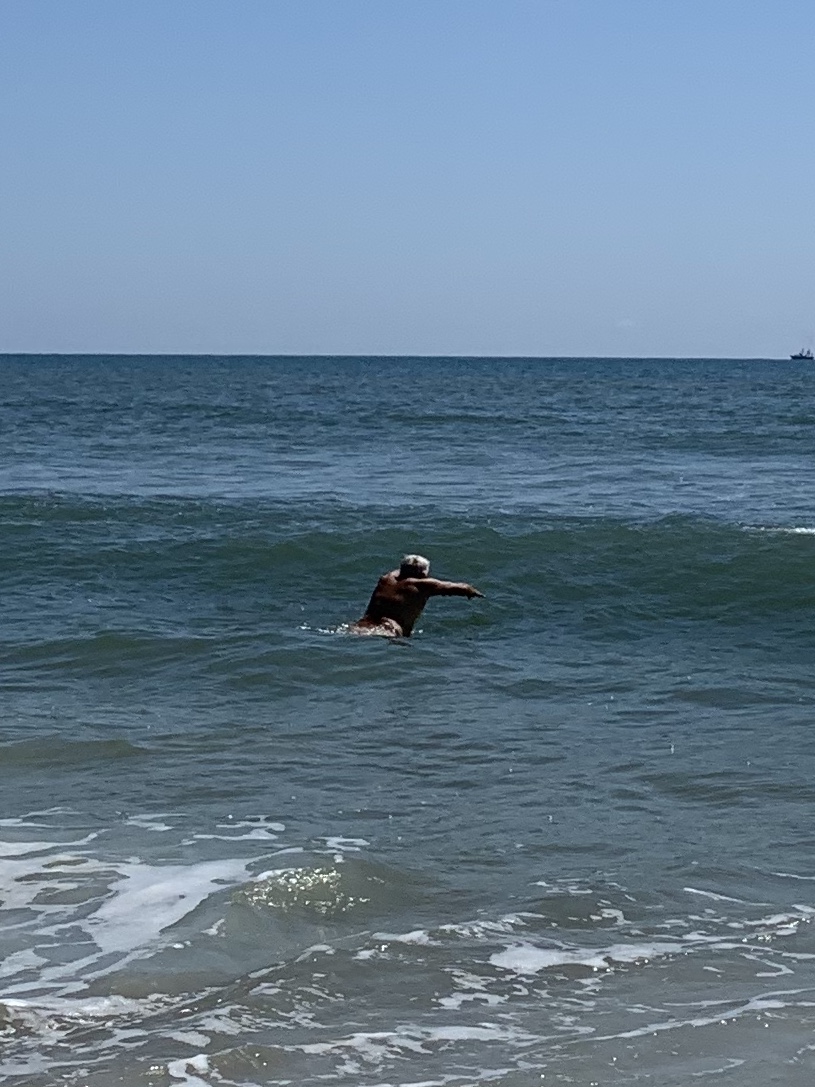
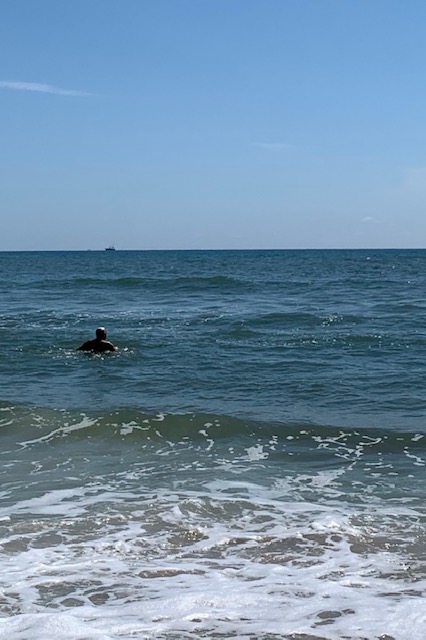
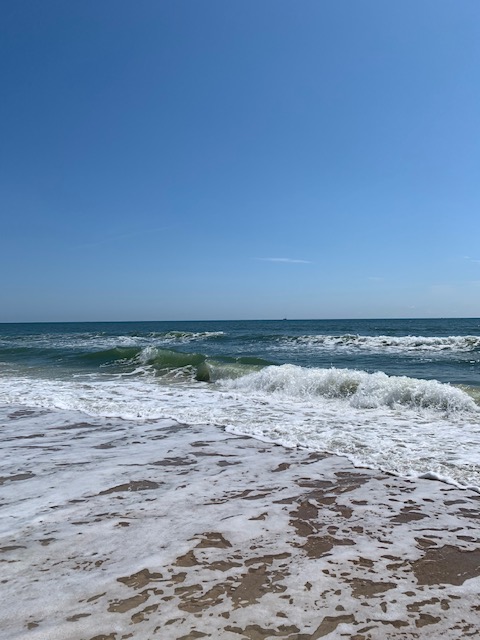
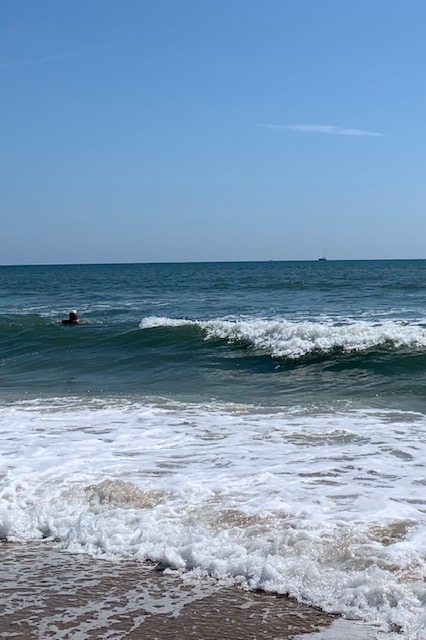
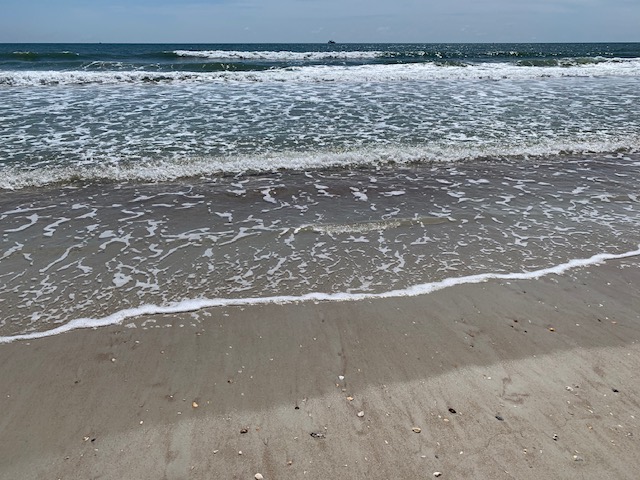
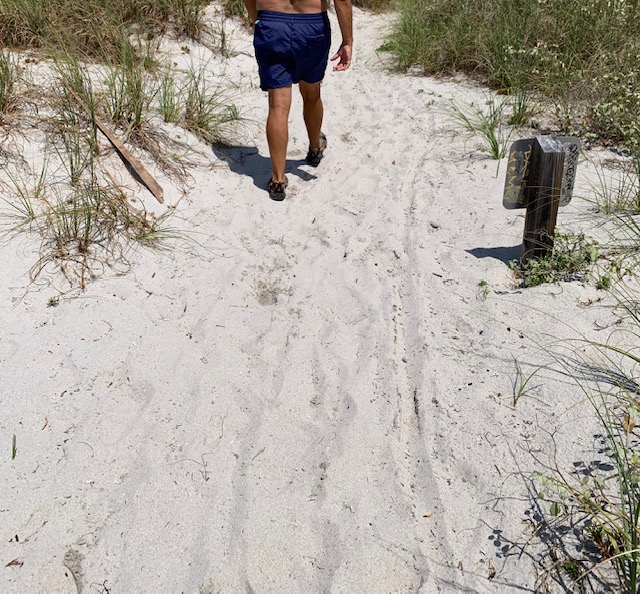
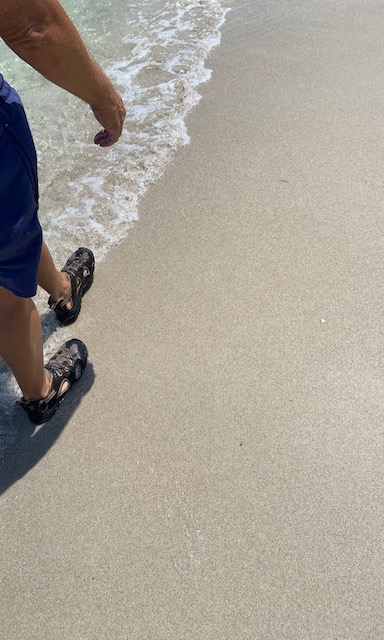
We had a great time walking and getting wet on the beautiful beach! You can see from the pictures, Dave truly enjoyed himself as he was diving in the waves, he should have had a surf board.
We stopped to visit our friend Lisa and see her new house. We had a great time catching up. Take Care Lisa, it was great seeing you.
We are now in Cave City Ky, at Cave Country Rv park,here for a few days visiting Mammoth Cave national park. We left St Augustine Fl, on Saturday, YES ,we are no longer in Florida.
As I mentioned we left St Augustine Saturday Morning, and drove 289 miles to Perry Ga, for an over night stay. Then left there Sunday morning and drove 229 miles to Chattanooga Tn, for an overnight stay. Today(Monday) drove 238 miles to cave city Ky, which is where we are now until Thursday, when we will be off again. Melissa is in the finishing stages of her upcoming post on St Augustine, which was very nice. For now that’s it hoipe to enjoy the cave tours we have lined up.
“Florida is different things to different people. To some, Florida is a paradise. It has warm water, sun-drenched beaches, mysterious swamps, and stunning coral reefs.” – Perry Chang
We truly enjoyed our four winters spent in the Florida sun! I don’t think I could or would want to spend another winter in cold upstate New York.
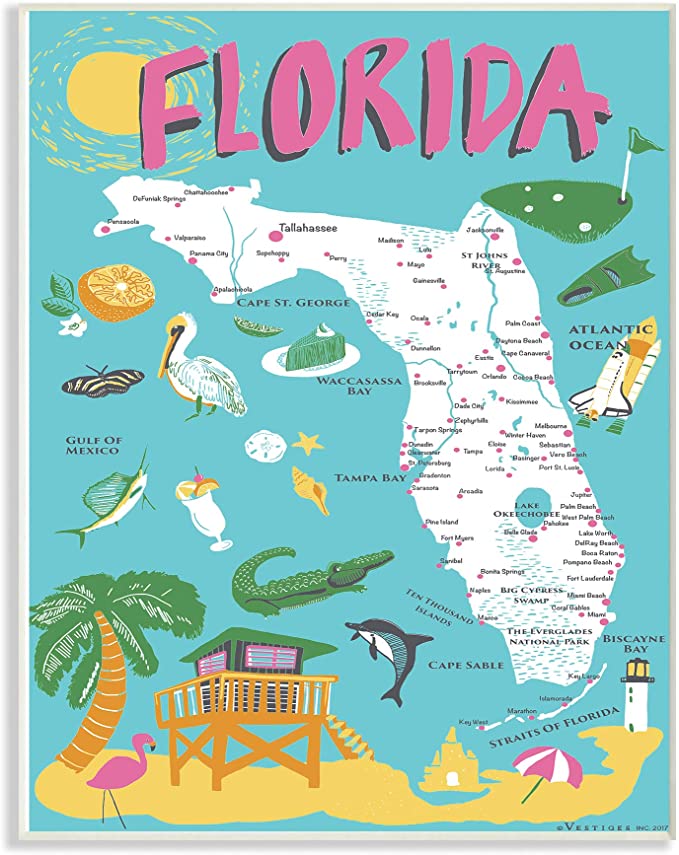
I have posted the places in Florida that we have visited and enjoyed muchly. We’ve traveled and camped at places all around the state and I’ve come up with these places that are our favorite.
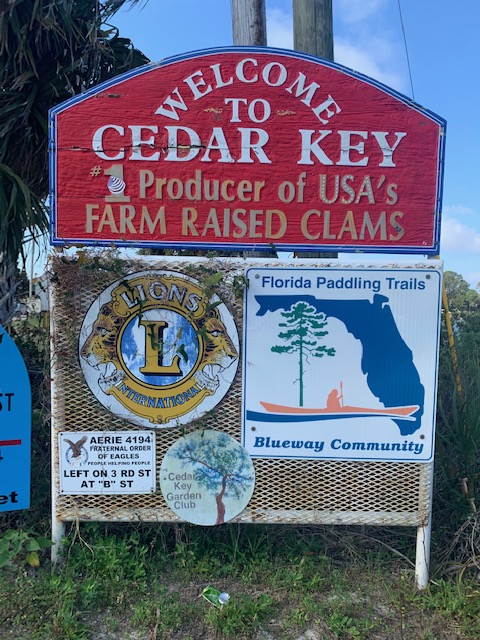
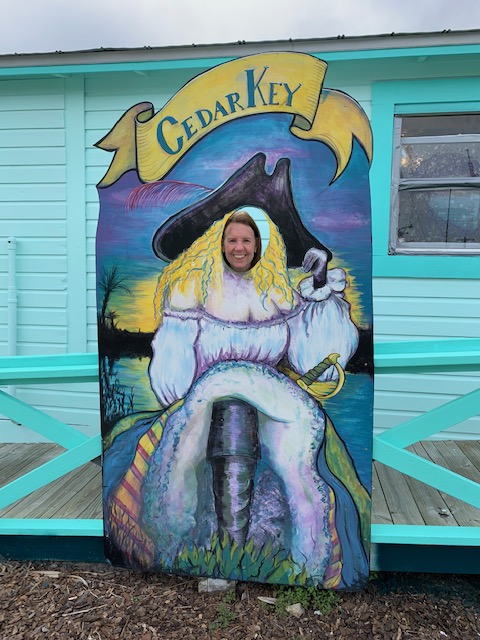
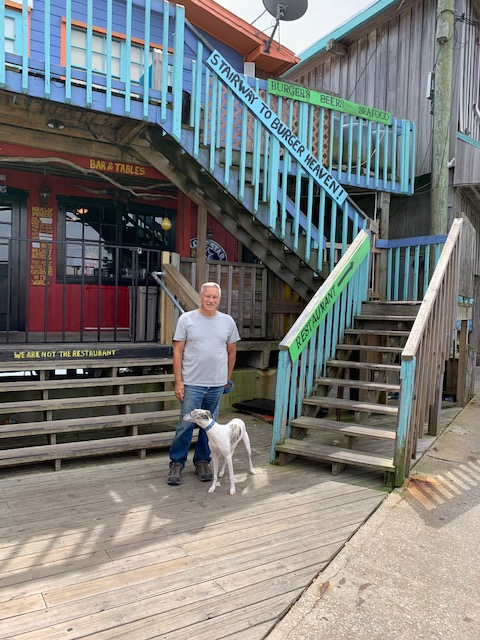
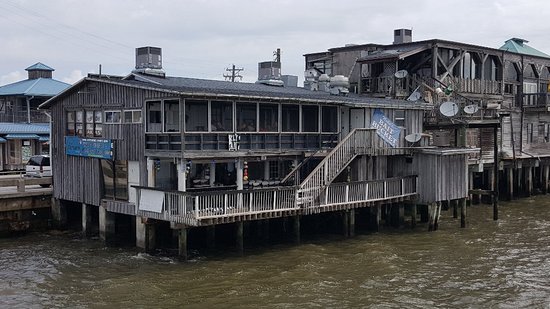
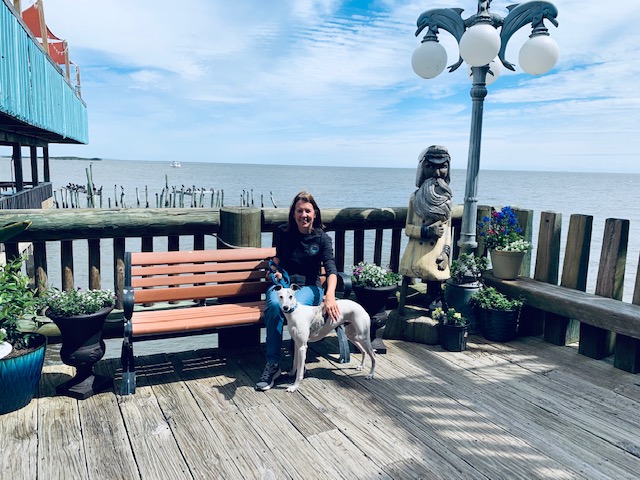
Cedar Key is on the Gulf side, about 50 miles southwest of Gainesville, Florida on the Gulf of Mexico. It sits three miles out into the Gulf of Mexico. Highway 24 is only one road coming into town. It is an Old Florida fishing village of about 700 people that has become a tourist attraction in this part of the state. There are no high rises or huge apartment complexes. It’s a community of quaint cottages, single-family homes, working water front and aquaculture structures.
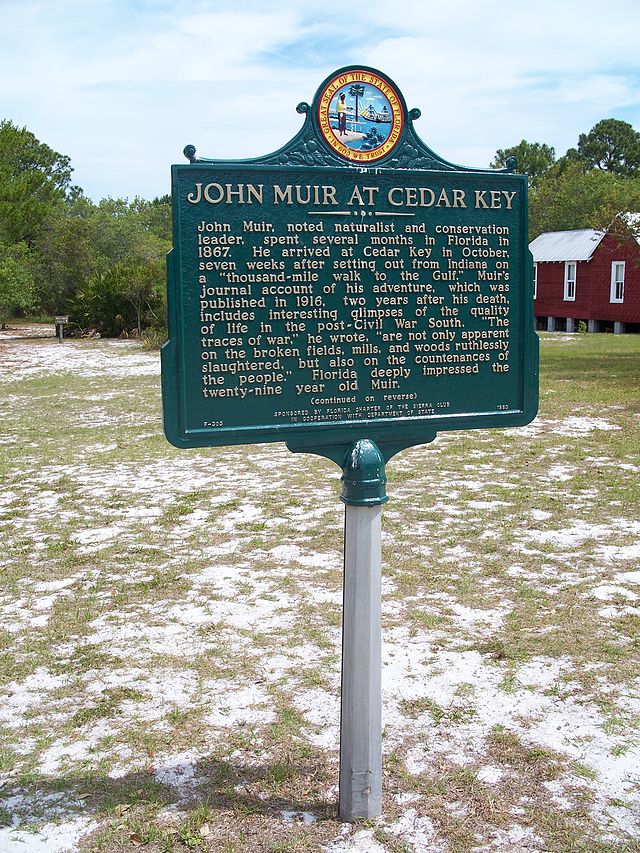
Going through the streets you will see completely re-done cottages next to weather beaten old houses and businesses that have never seen a paint brush. Many of them more than 100 years old and in all kinds of condition. There is a small beach in a downtown park near the dock. There is also Cedar Key Museum State Park, that shows what it would be like to be John Muir, naturalist and conservation leader, who started his “thousand mile walk” in Indiana and ended it in Cedar Key on October 23, 1867. He then spent several months in Florida, and the only such park in the state that commemorates his accomplishment is Cedar Key. Cedar Key also other museums, and the entire village has national historic status through the Cedar Keys Historic and Archaeological District and the U.S. National Register of Historic places.
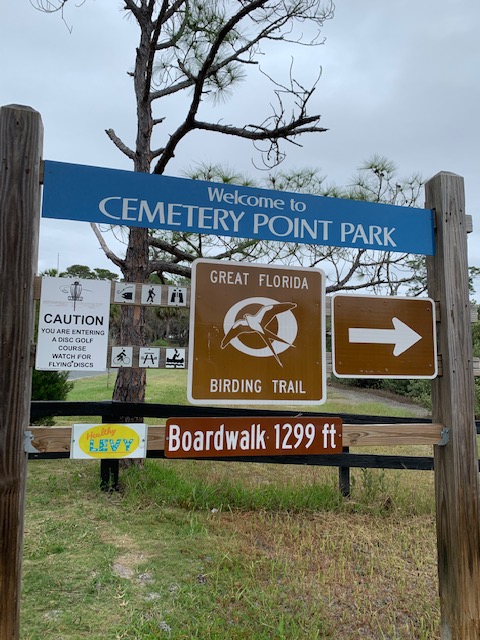
Cedar Key also has a cemetery, boardwalk, exercise machines, and disc golf all in one area, how can you go wrong!
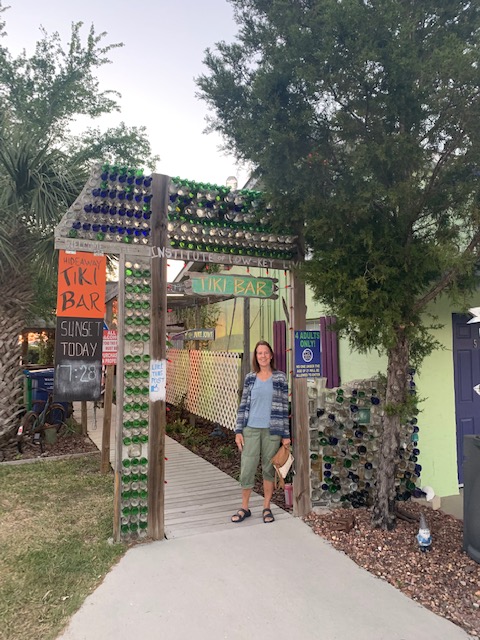
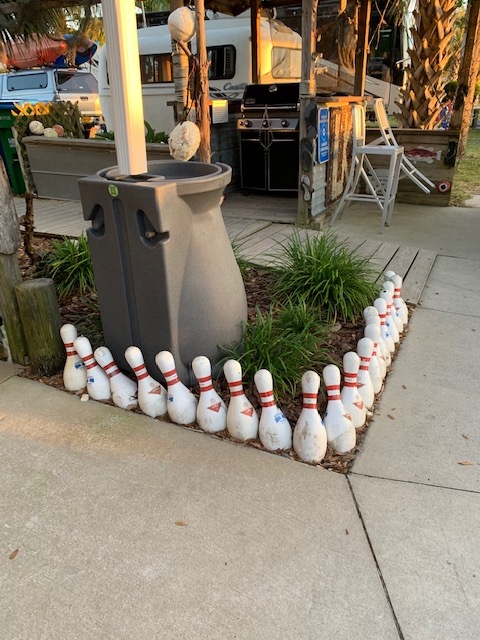
If your in Cedar Key you’ll have to stop by the Tiki Bar and watch the sunset. It’s also a Motel and RV Campground situated right next to The Gulf, what a great view and decor to enjoy.
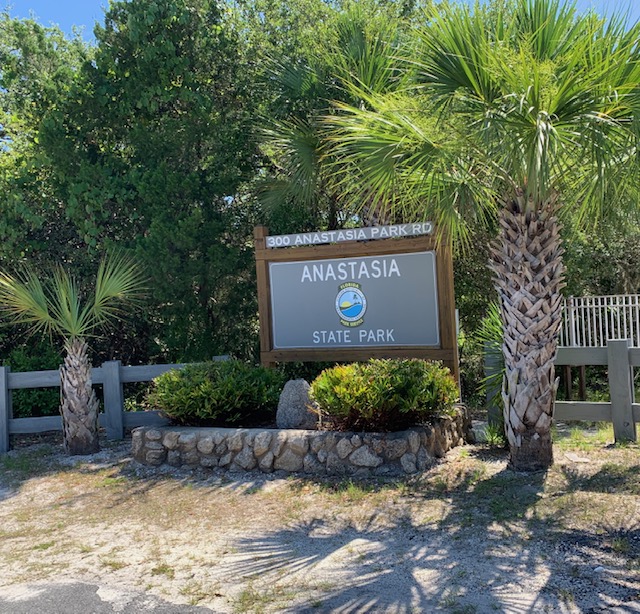
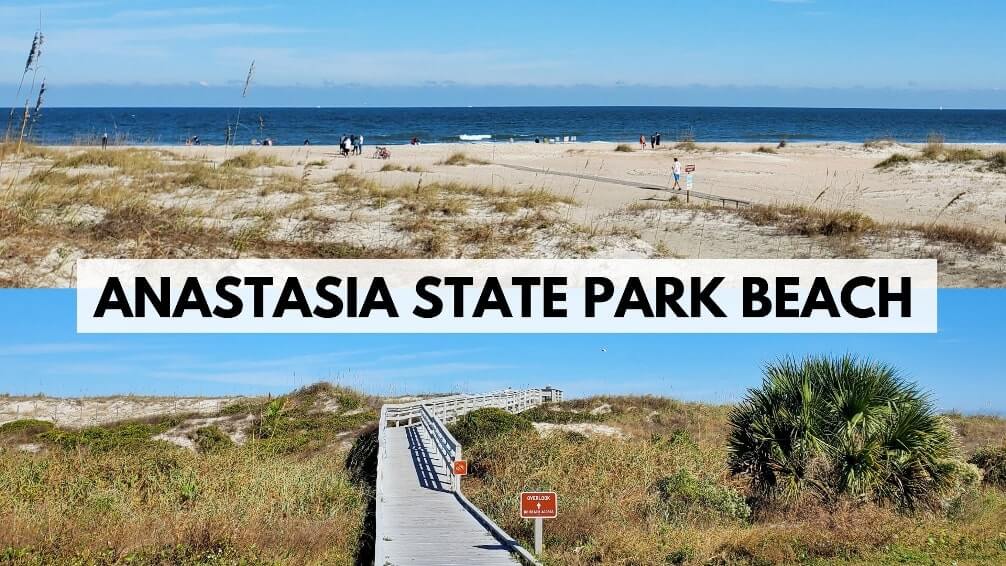
On the Atlantic side is St. Augustine FL. It was founded in 1565 by the Spanish Pedro Menedez de Aviles and it is the oldest continuously occupied settlement of European origin in the contiguous United State. We got to spend just a few days here and enjoyed it. We went to check out the old part of town and Anastasia State Park. Seeing the old part of town was both interesting and fun and it was great to be on the beautiful beach.
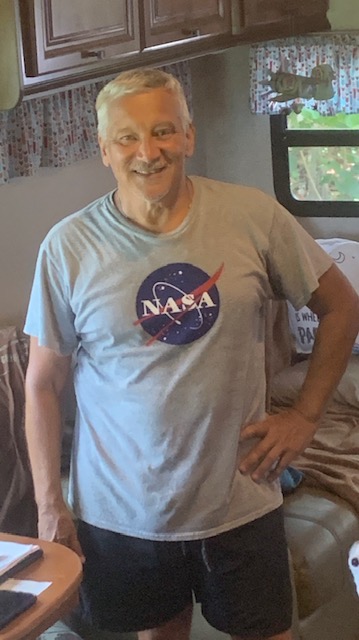
Gotta put Nasa in here, we went twice in the four years we were here. We were amazed both times to see what it would be like in space and all it entails an incredible place. Plus Dave wanted to be an astronaut when he was a kid and also watched Star Trek, So passing it up wasn’t an option.
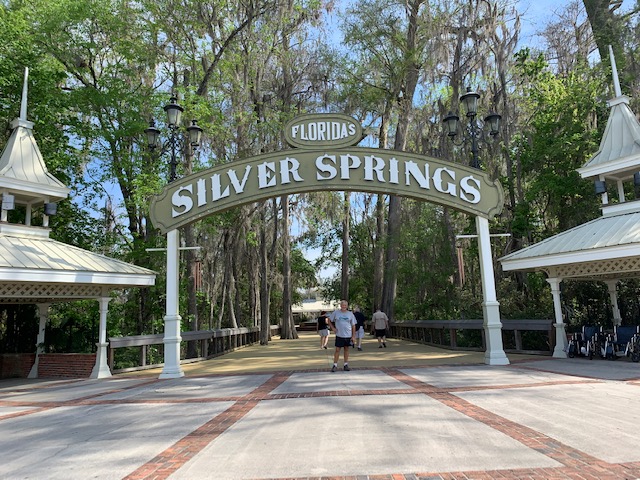
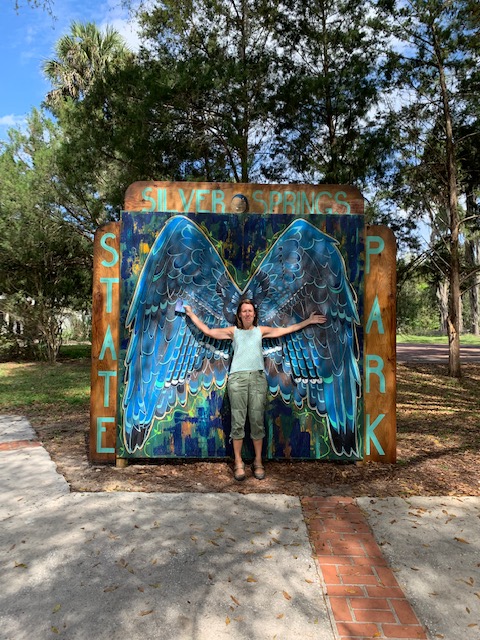
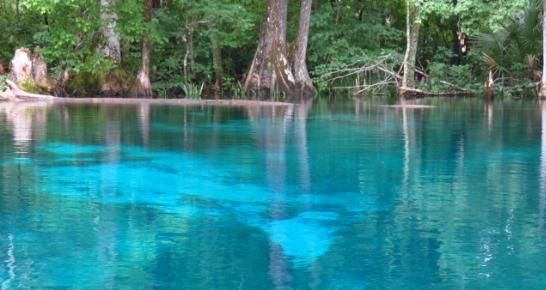
Silver Springs State Park is definitely worth a visit if your in the Ocala area. It’s really picturesque and it’s history is s tastefully preserved. In 2013, the state of Florida took over the famous spring attraction, merging it with a neighboring state park and preserving one of the most scenic places of Florida’s natural beauty Silver Springs State Park offers visitors a wide variety of activities to do.
In the 1930s, Hollywood discovered Silver Springs and over the years, scenes from at least 20 movies were filmed here, including Rebel Without a Cause starring James Dean, Distant Drums starring Gary Cooper, the James Bond movie Moonraker, Creature from the Black Lagoon, and six Tarzan flicks.
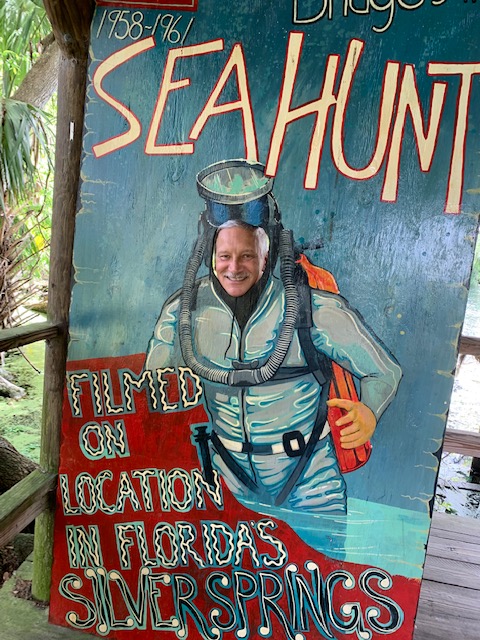
Episodes of television shows such as Sea Hunt, were filmed at Silver Springs as well. In fact, legend has it that Sea Hunt star Lloyd Bridges learned to SCUBA dive at Silver Springs!
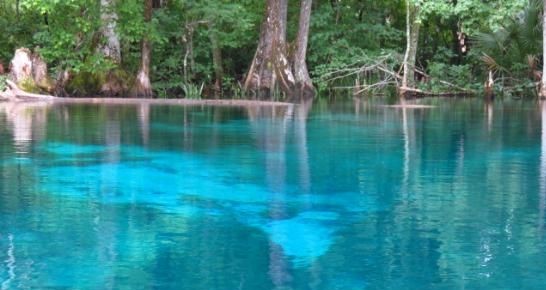
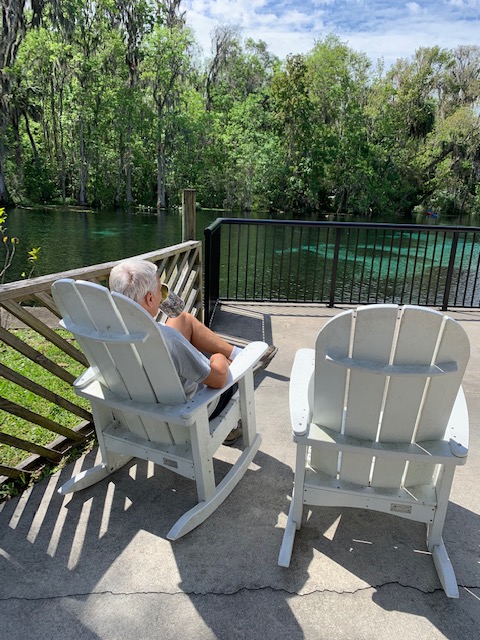
We camped here twice and enjoyed it both times. One of the times there was a festival going on which was really fun. There are a lot of things going on if you happen to stop by. Walk around and if you want definitely take the kayaks out and explore the crystal clear spring or take a ride in the glass bottom boat and enjoy!
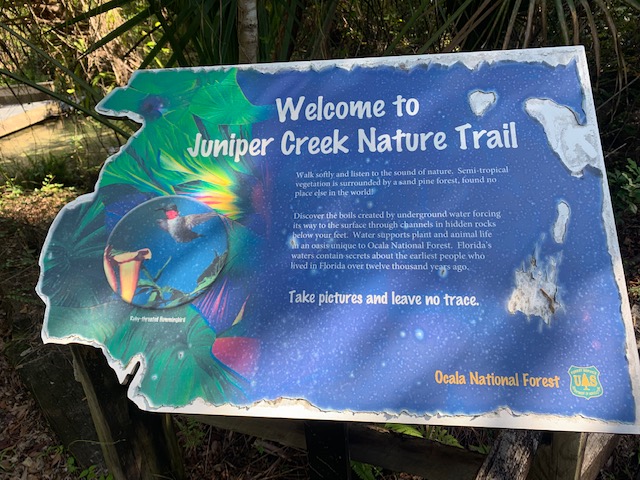
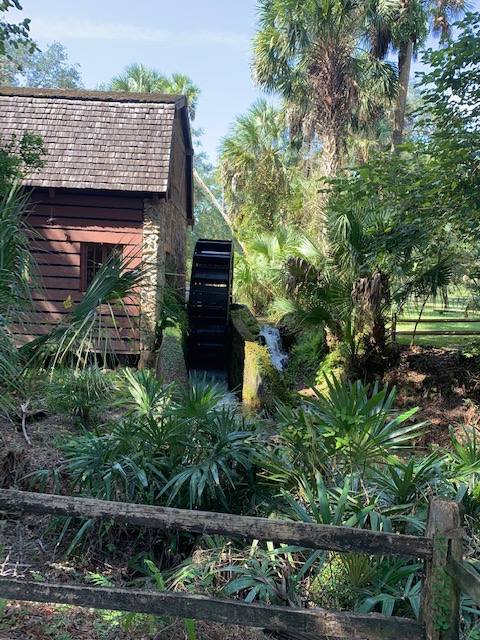
We got here on a day when it was 94 degrees, walked the nature trail and went in the Soring. It was a refreshing 72 degrees. The combined daily water flow from Juniper and Fern Hammock Springs is about 13 million gallons. The water wheel and old mill building at Juniper Springs was constructed in the 1930s by members of the Civilian Conservation Corps to provide electricity for the brand new campground. Today, the mill houses interpretive and historical exhibits, and the stone walls that the CCC used to channel the spring into a swimming area have been refurbished to better show off the beauty of this natural wonder. Those CCC guys were really fantastic!
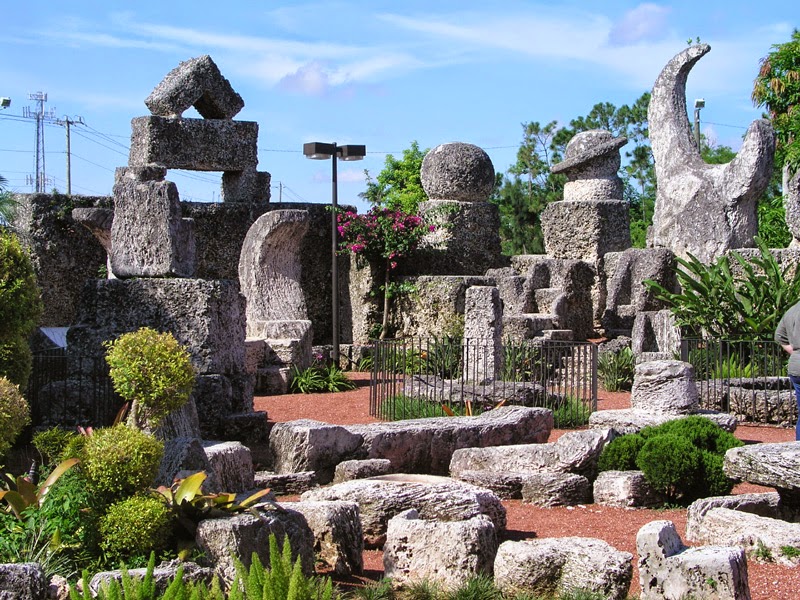
Coral Castle Before you enter into The Florida Keys, a definite is to visit The Coral Castle in Homestead.
Dave & I are might be a little biased when it comes to Southern Florida because we have spent a lot of our time here, especially because it’s warm in the winter months when we were volunteering in this area. If you’ve been thinking about taking the plunge and going to The Keys, now is the time to do it. “We must not fall asleep in the present because the now moment is the only reality we truly have.” ―Kat Lahr, We had a great time volunteering in The Keys and visiting all the islands through to Key West.
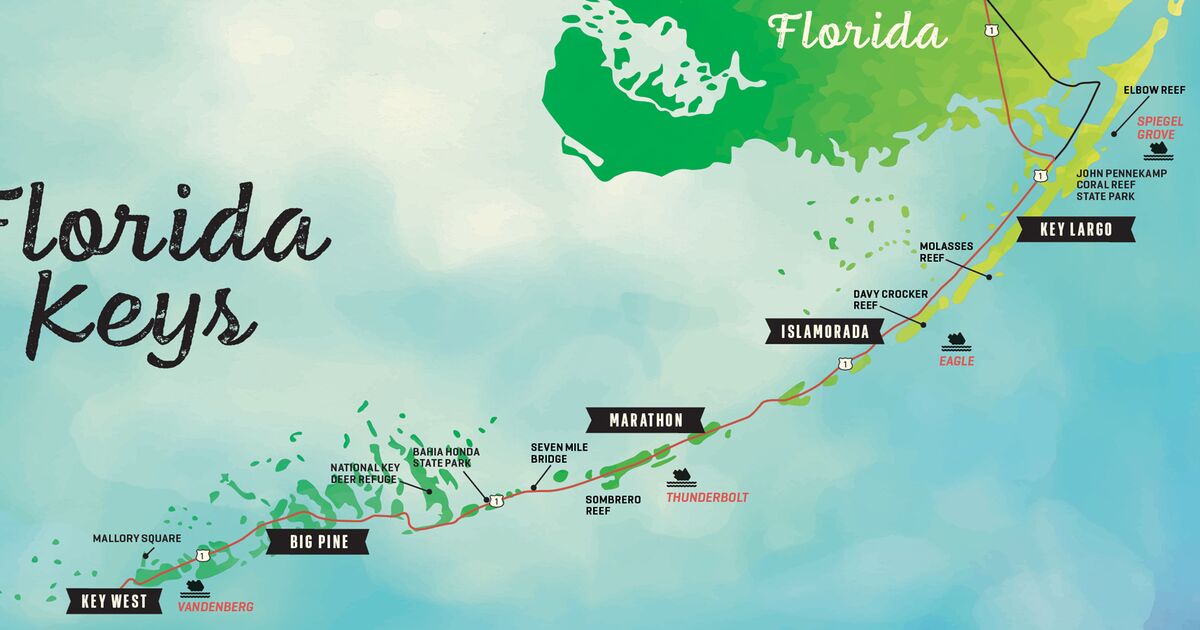
Traveling there by car takes you down a string of palm fringed tropical islands made of coral that stretch more than 120 miles from the Florida mainland down to Key West. Highlights along the way include Key Largo, Islamorada, Marathon, Big Pine Key and Key West. Get up close with an amazing array of fish while snorkeling, diving or fishing in the warm turquoise waters. Creeks, coral and costumed spectacles are other lures along the way. Highway 1 is a spectacular ribbon tying together the islands and atolls of this paradise between the Gulf of Mexico and the Atlantic.
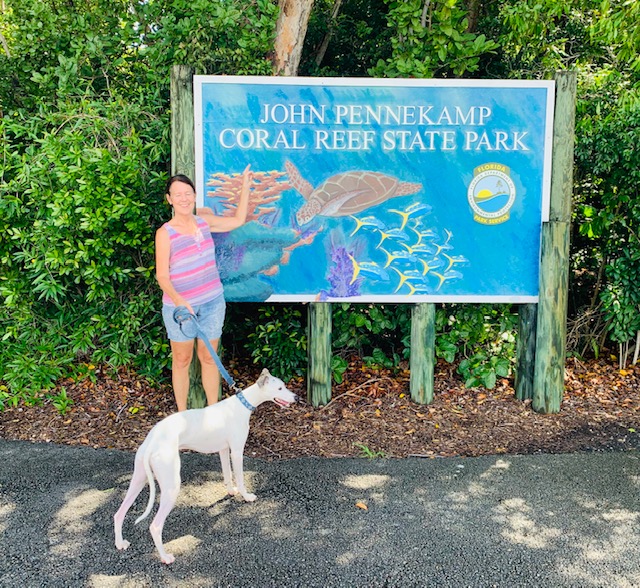
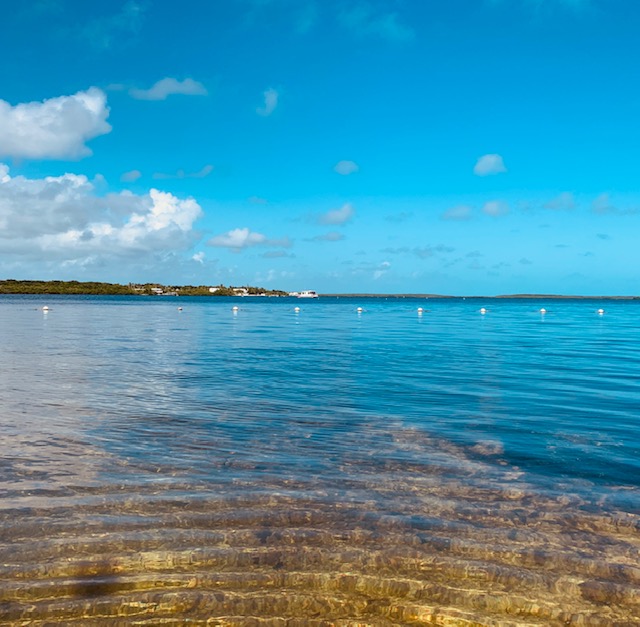
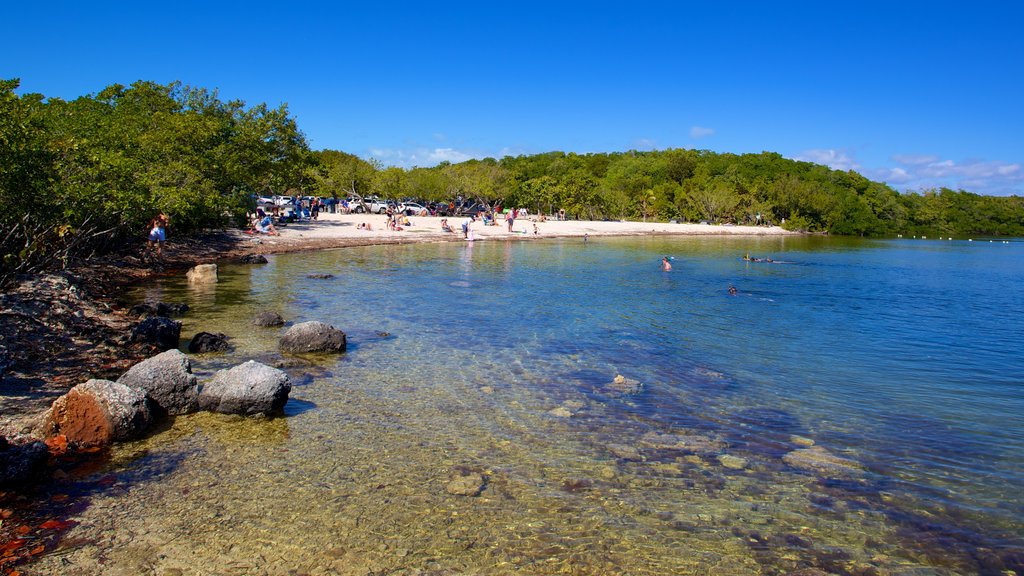
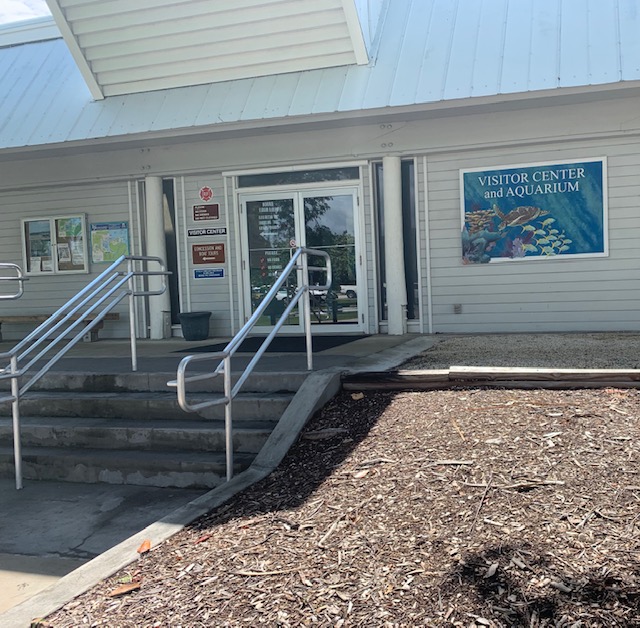
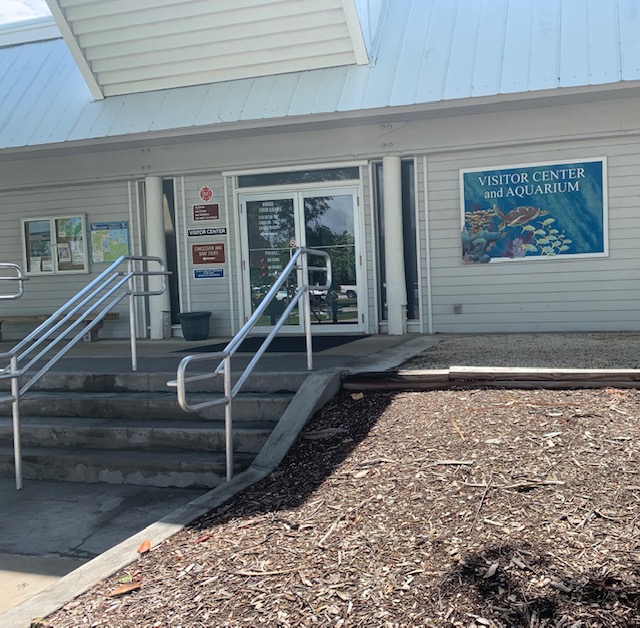
John Pennekamp Coral Reef State Park, is in Key Largo, where we spent a lot of time volunteering and exploring. If you like to snorkel, dive or you want to kayak out to the mangroves, or take a ride on a glass bottom boat, or just take a dip in the ocean and snorkel from the shore, It’s one of the best spots to snorkel in the USA according to various surveys, so this is the place you must stop! Even if you don’t want to do any of the above stop in at the aquarium and take a look around the park.
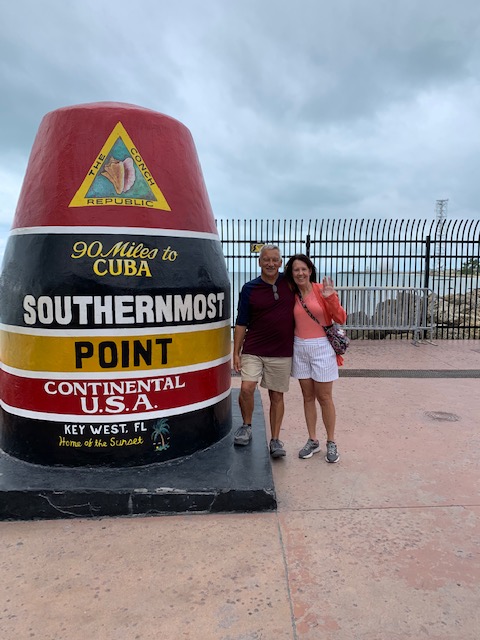
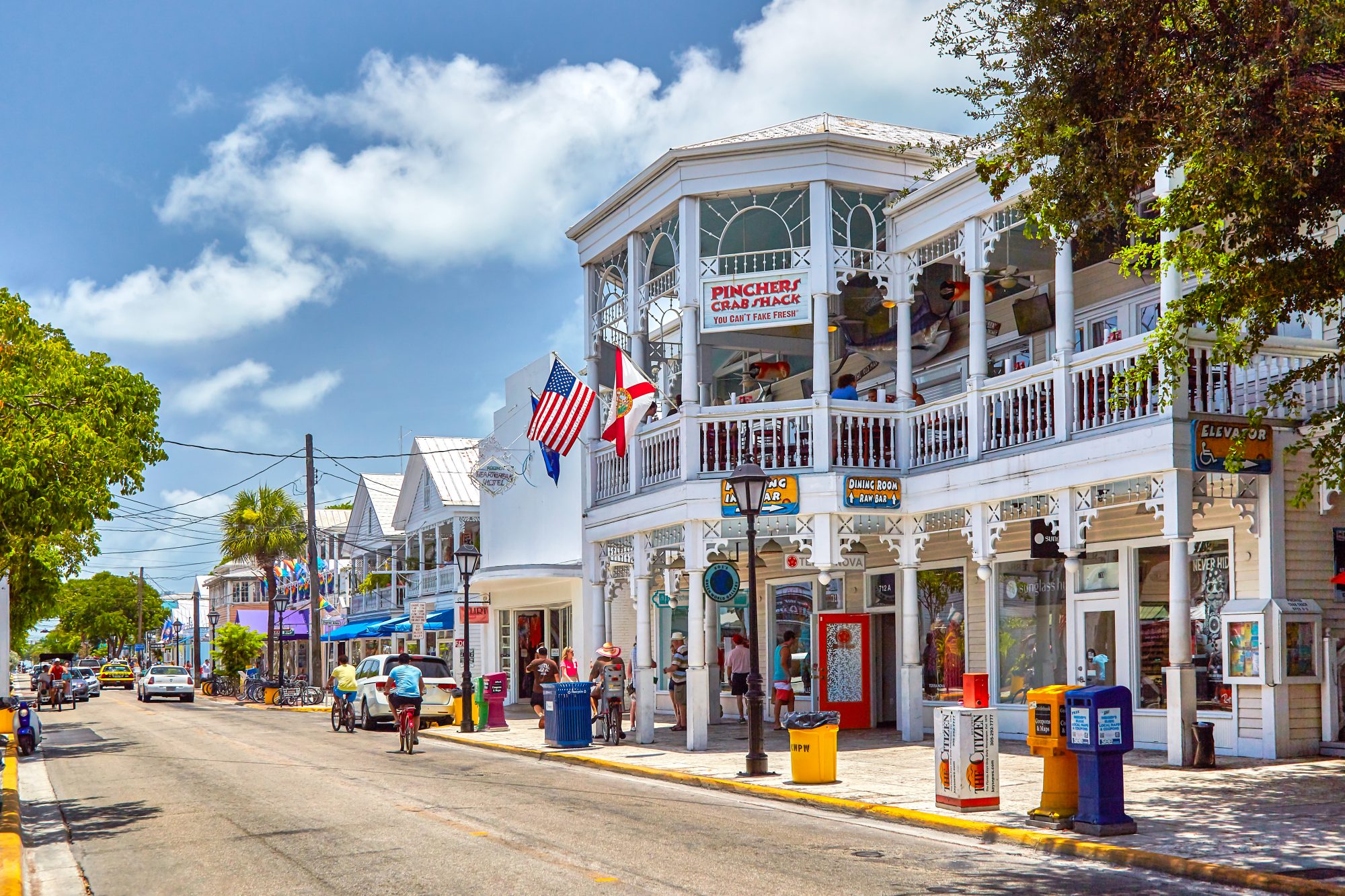
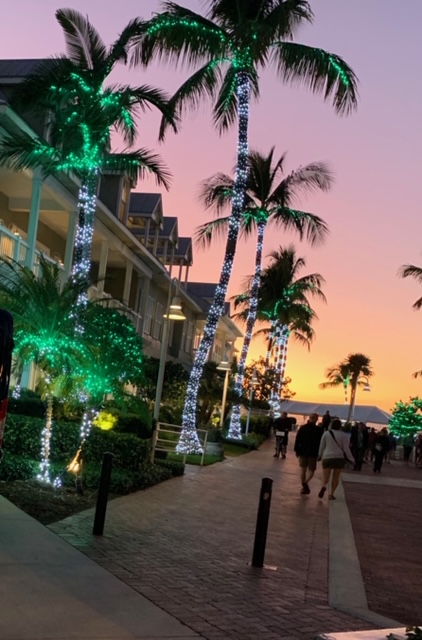
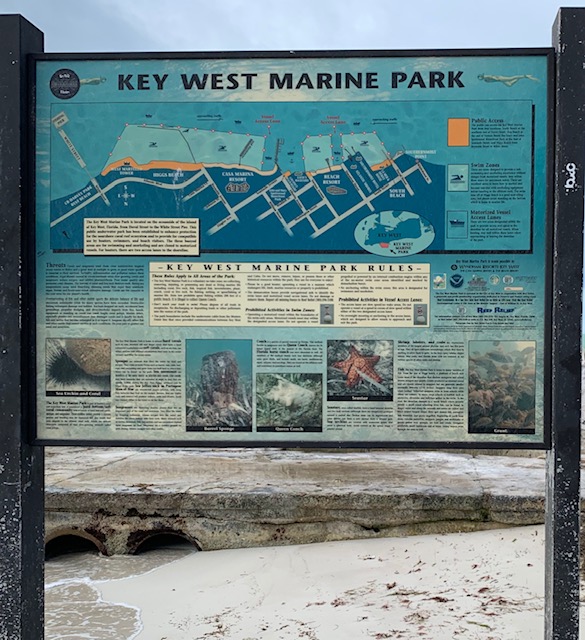
Dave & myself visited all the islands during our stay in The Keys and they all have their own little spark. I won’t bore you with all the pictures in between Key Largo and Key West, but here are some of Key West if you’ve never been but are thinking of going, what are you waiting for, it’s a fun place!
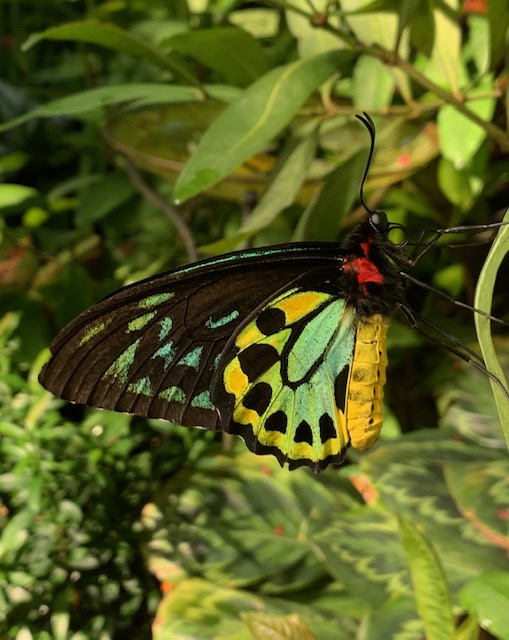
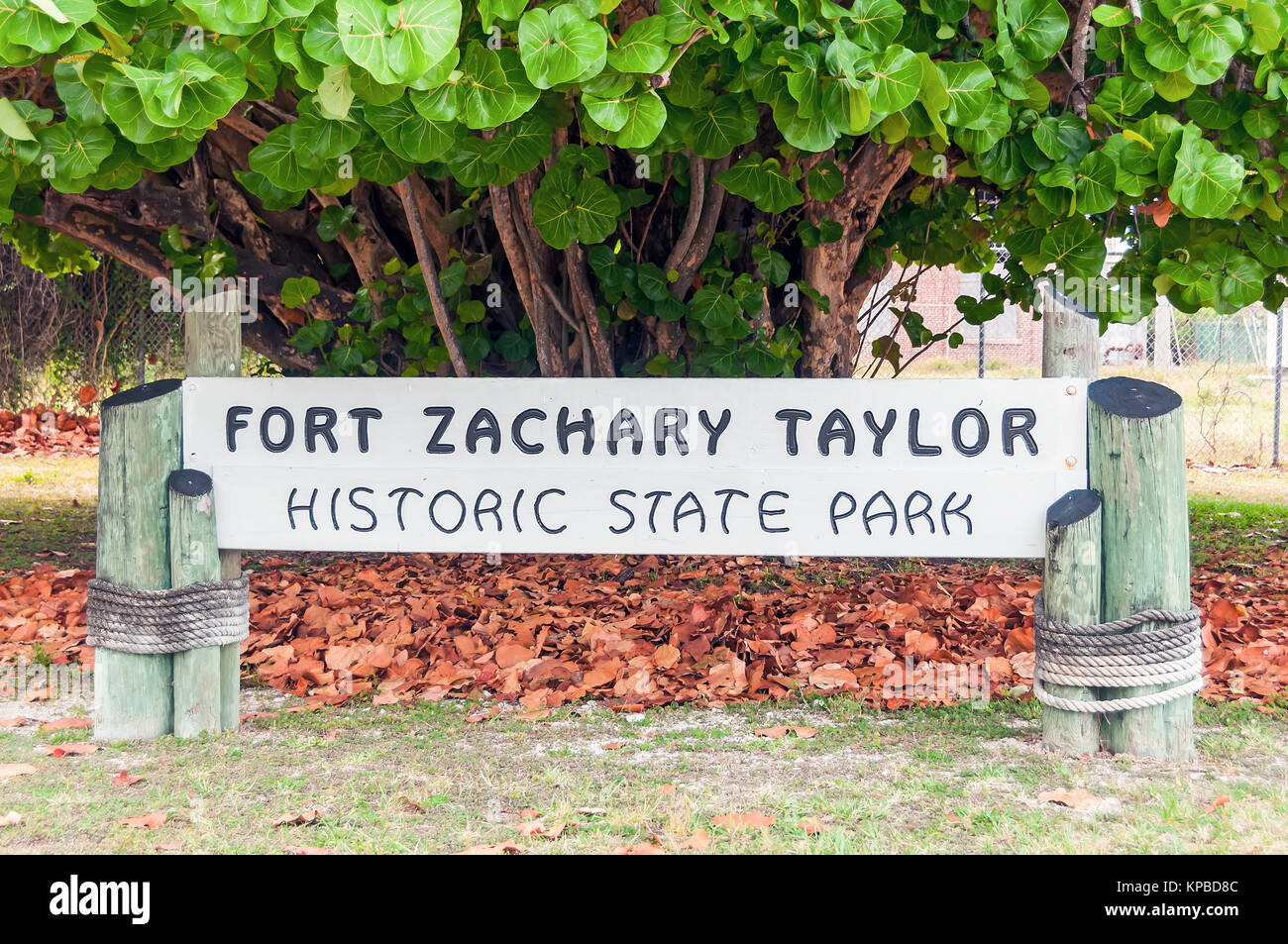
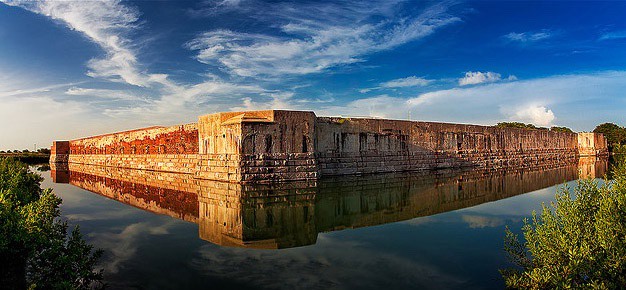
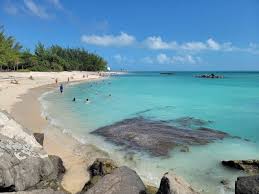
Once your in Key West you have to check out the Butterfly & Nature Conservatory as well as FT. Zach State Park to visit the fort and it also has a great beach.
Close to perfect, but far from normal
You can leave the Keys, but the Keys will never leave you
Easy, Breezy, Keysey
Weak in the Keys
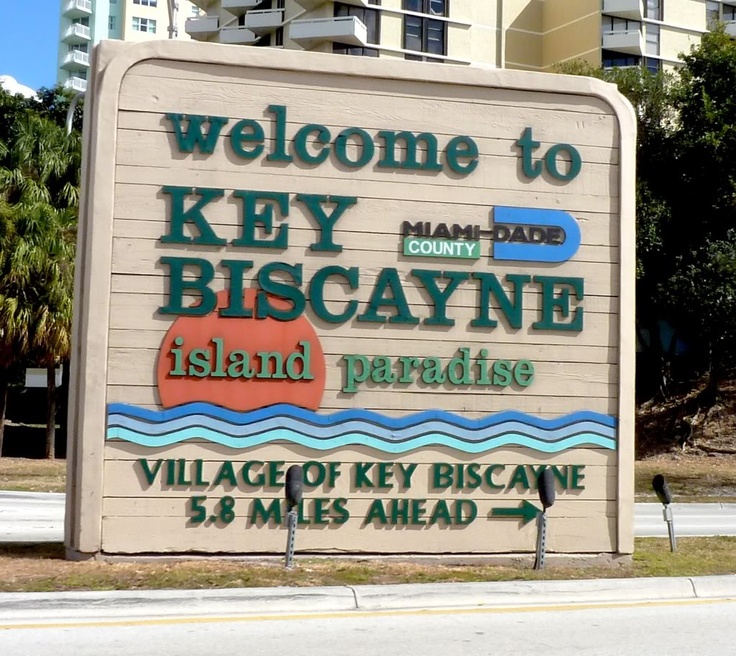
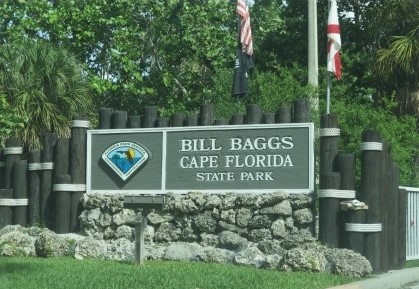
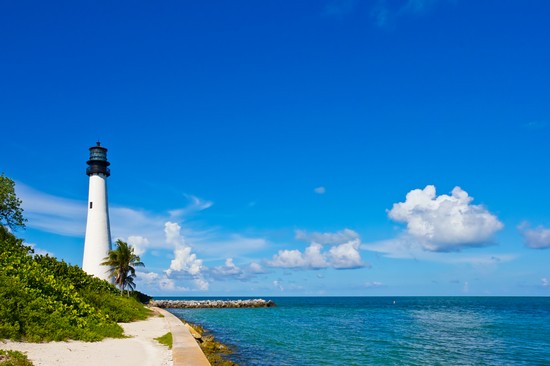
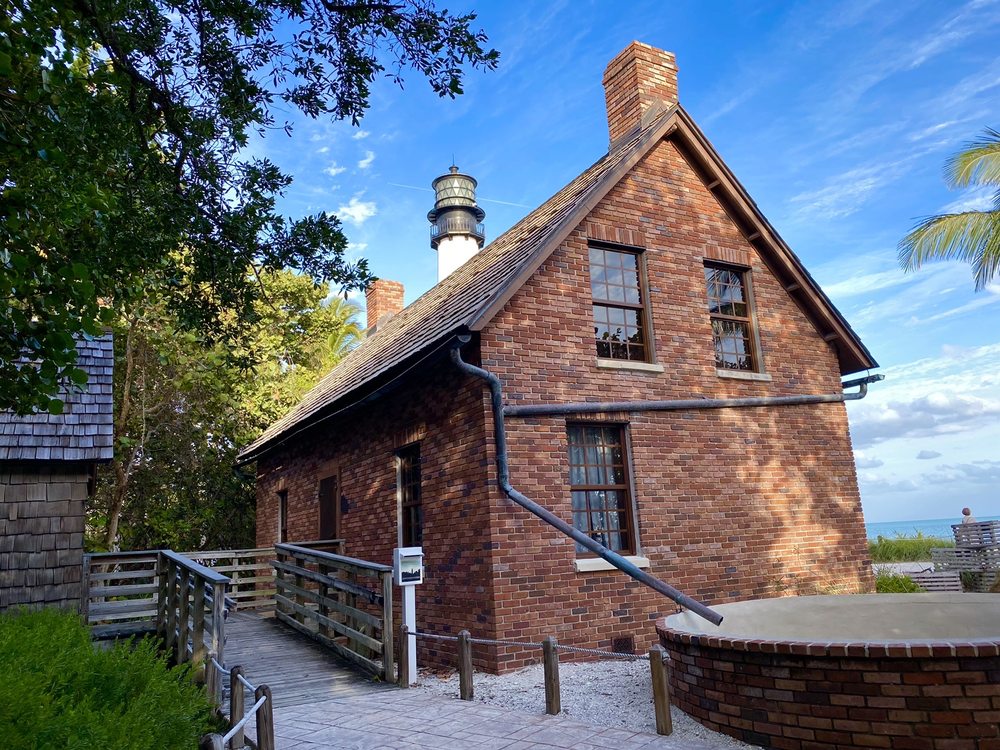
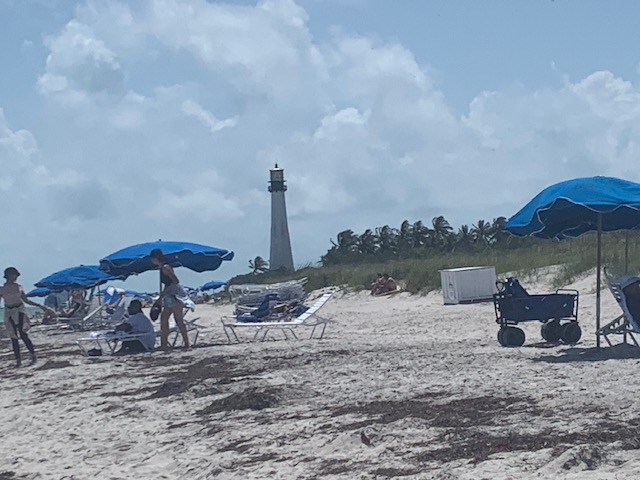
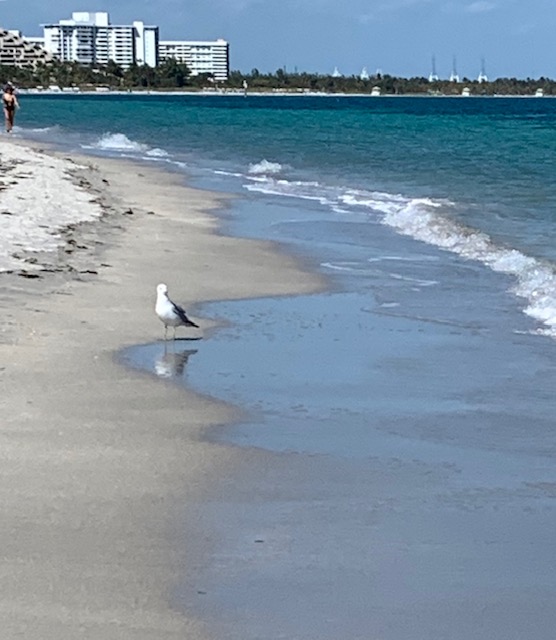
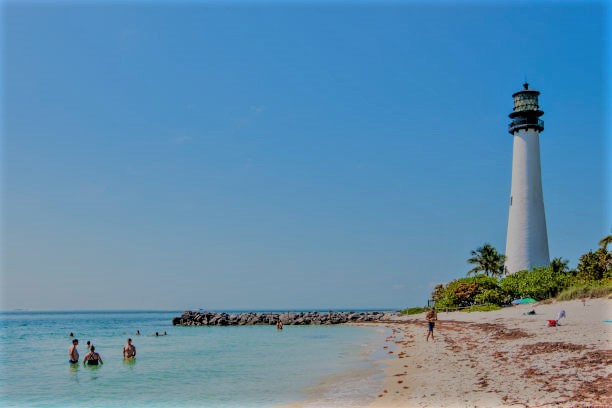
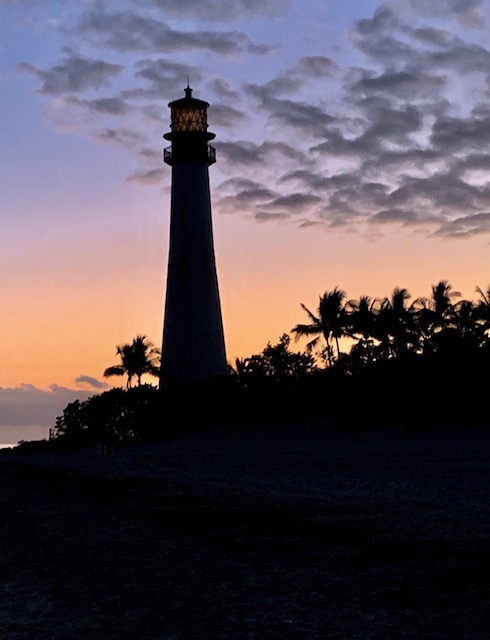
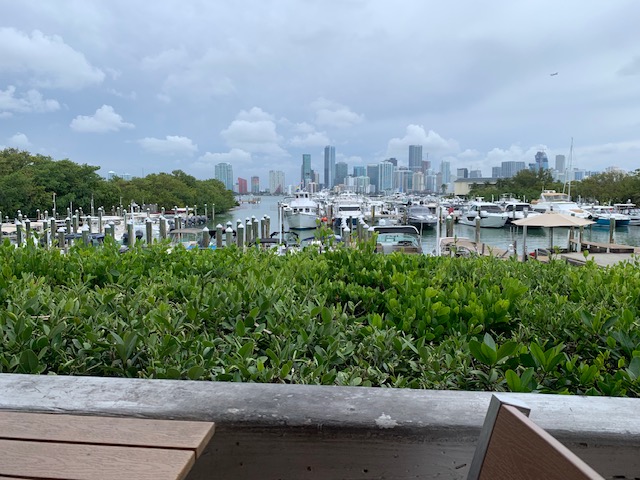
If you made it all the way to The Florida Keys, why not check out our Island paradise Bill Baggs Cape Florida State Park in Key Biscayne? Especially if you have time on your hands and don’t mind tackling the Miami traffic.
Another definite must if your going to visit Key Biscayne is Vizcaya museum and courtyard. Located right next to Key Biscayne in Coconut Grove. You definitely won’t regret going!
“The biggest sin in the world would be if I lost my love for the ocean.” Laird Hamilton
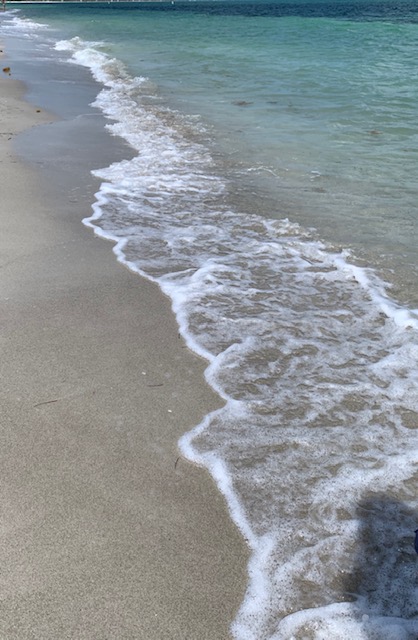
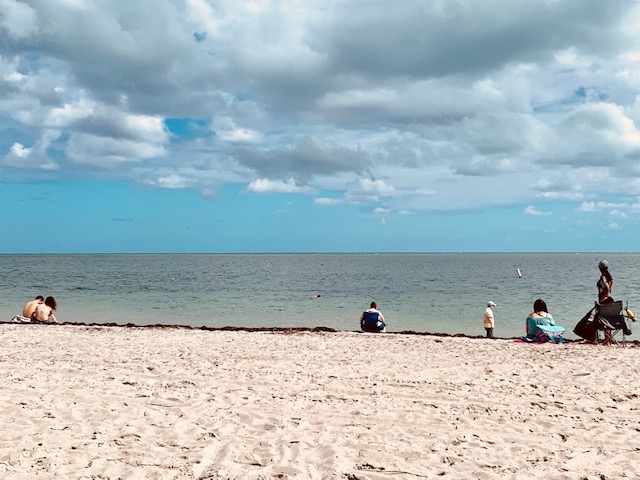
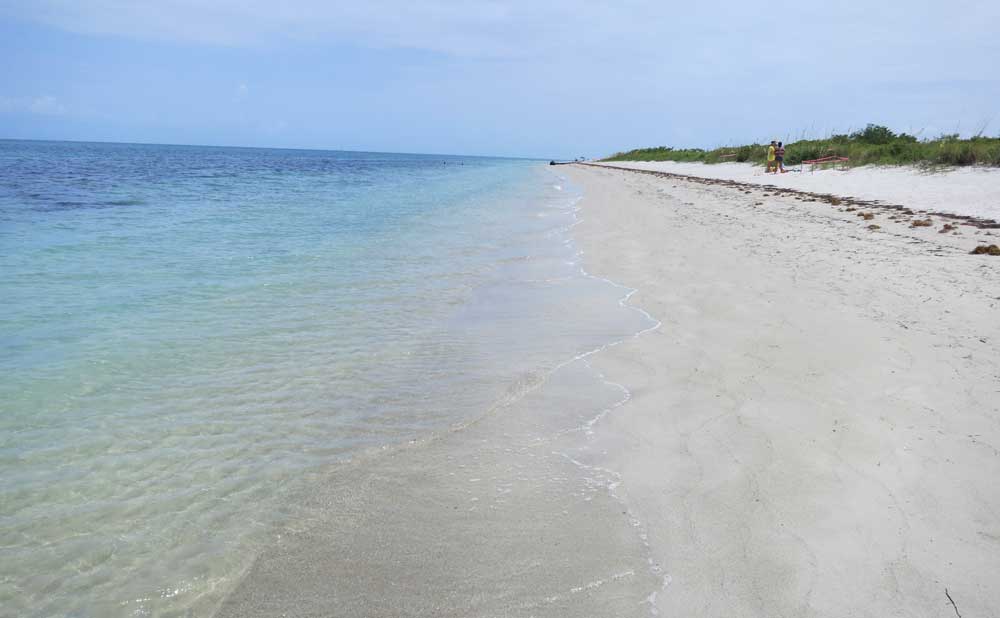
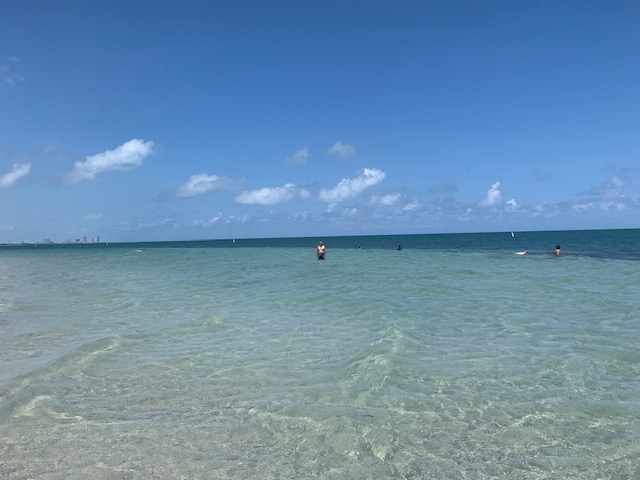
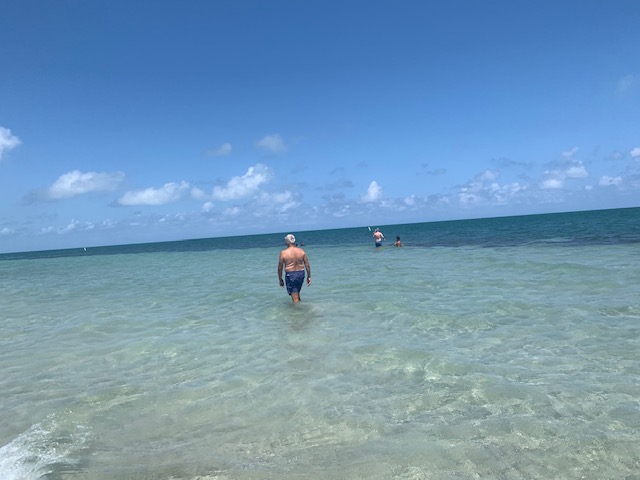
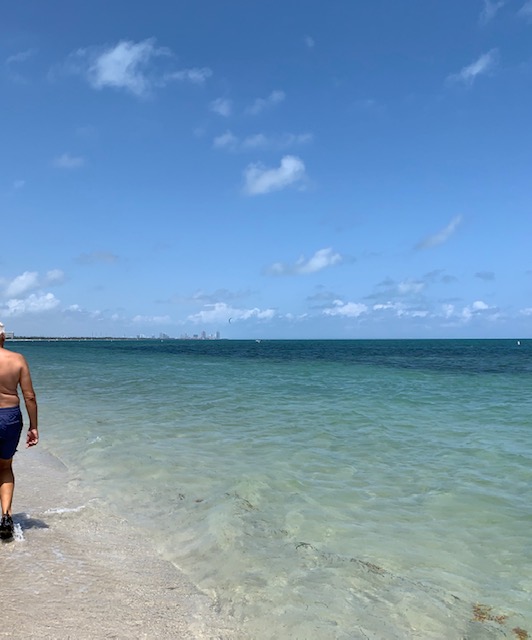
Our stay here includes walks by the ocean, followed by a swim in the crystal blue warm waters.
When the tide is out you can walk into the water till it reaches your head and then keep swimming.
“Either you decide to stay in the shallow end of the pool or you go out in the ocean.”
Christopher Reeve
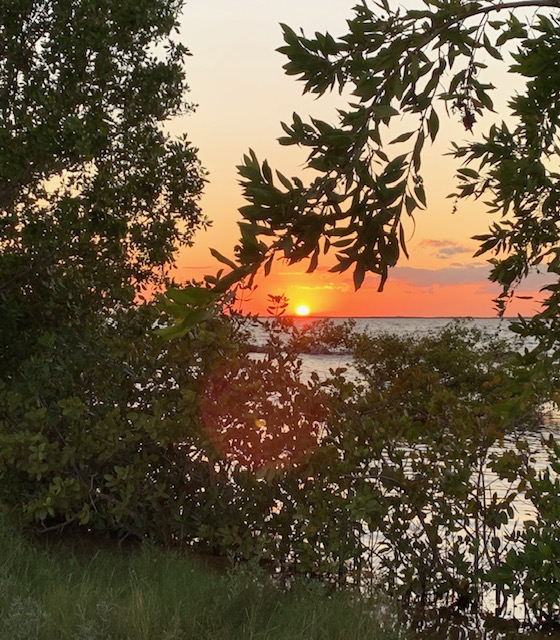
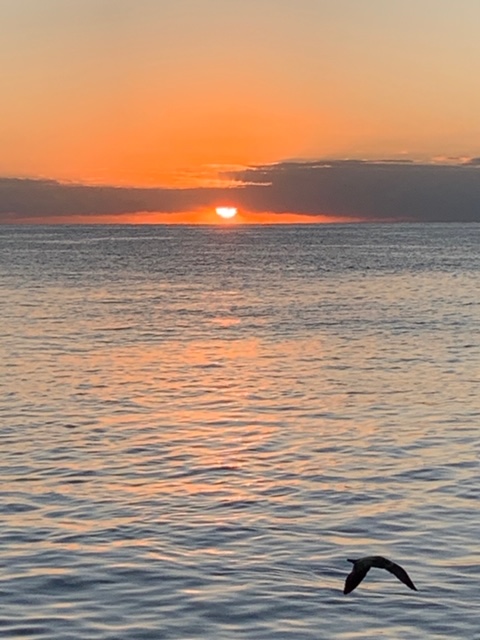
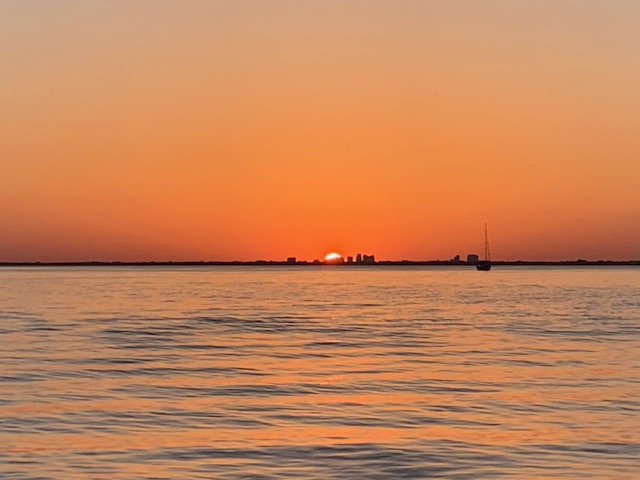
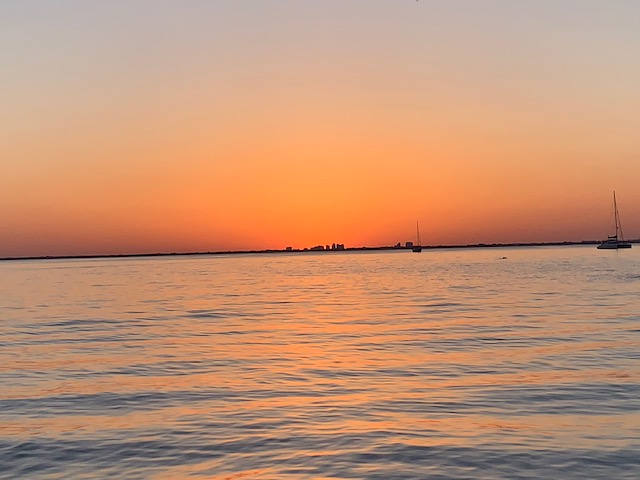
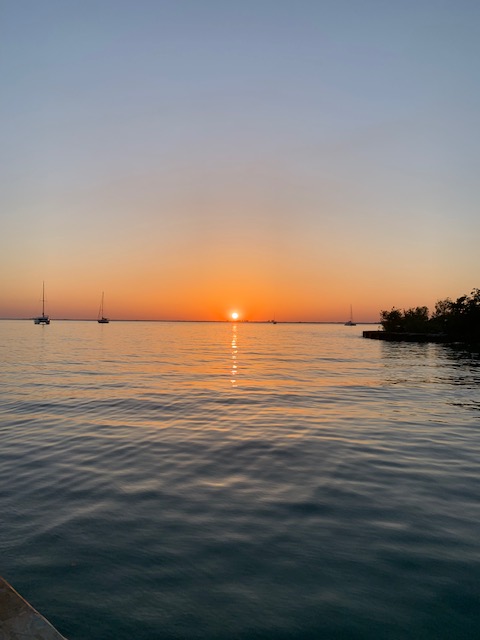
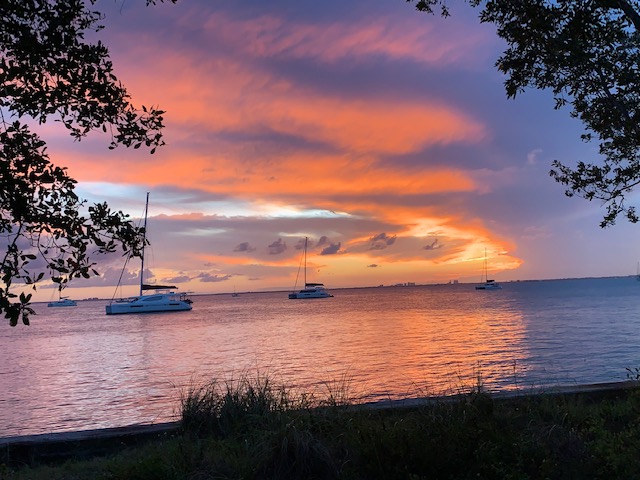
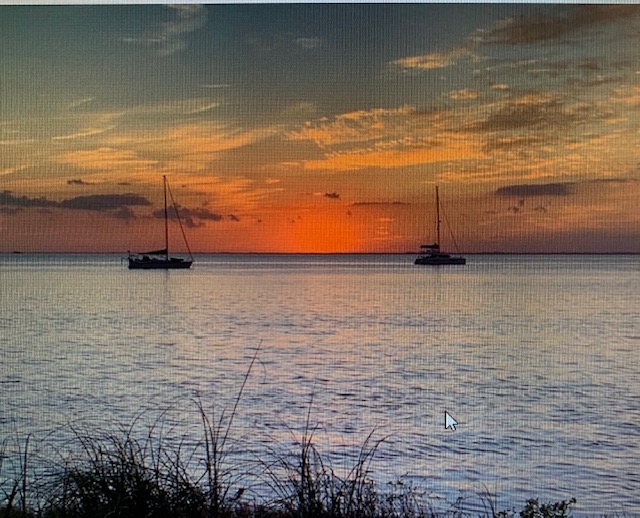
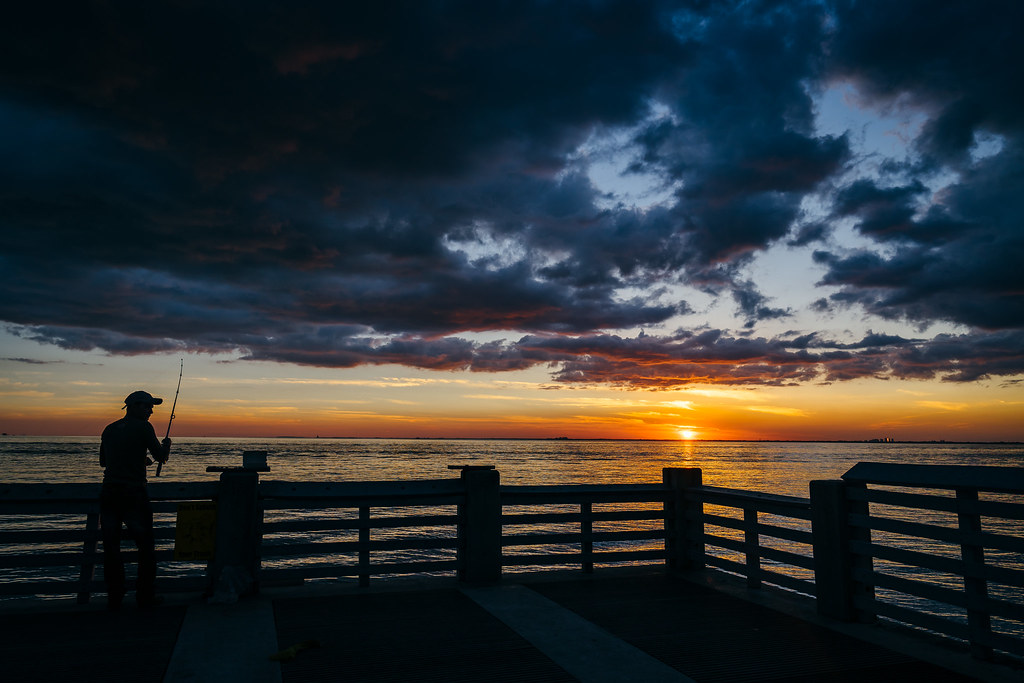
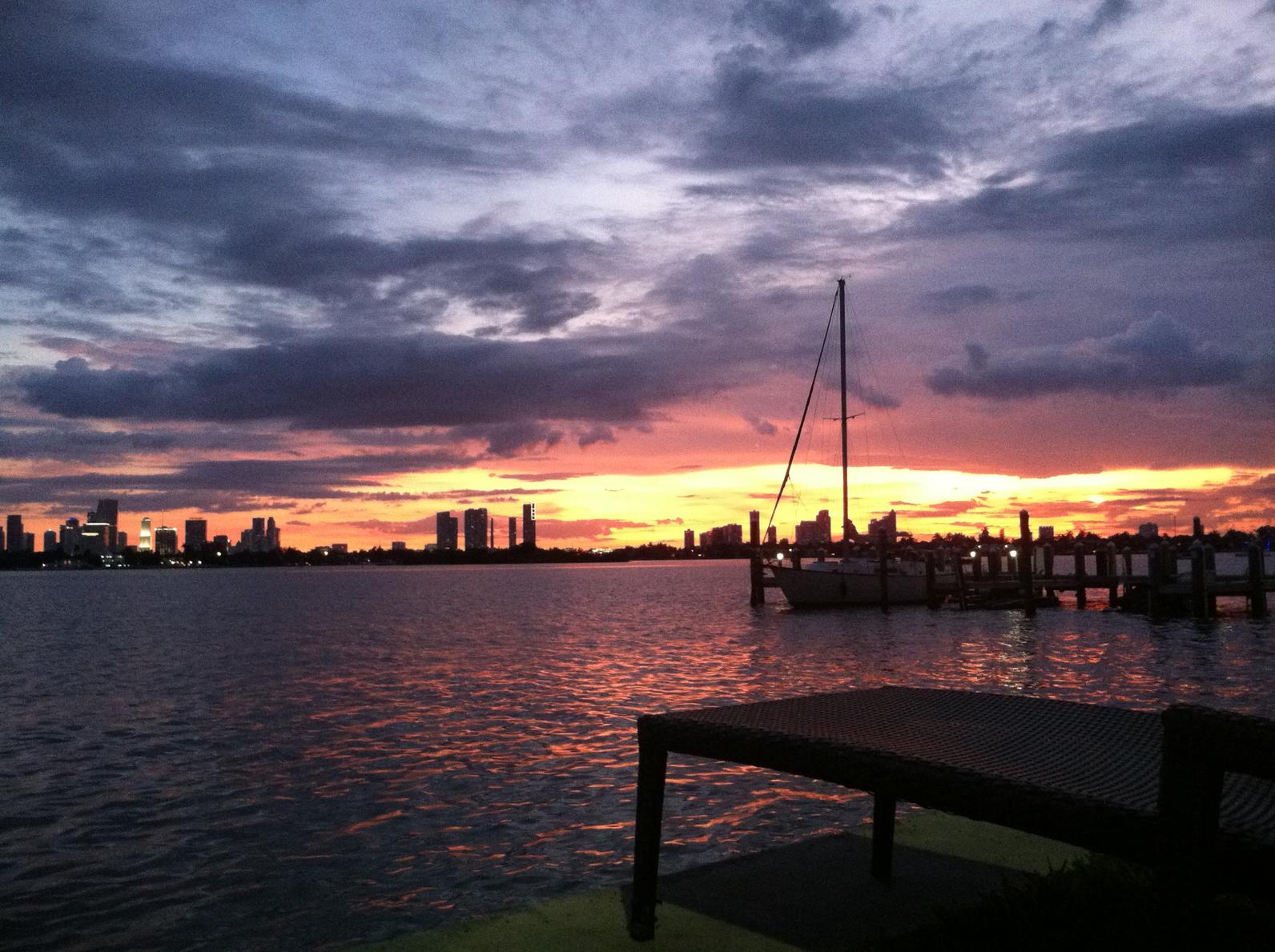
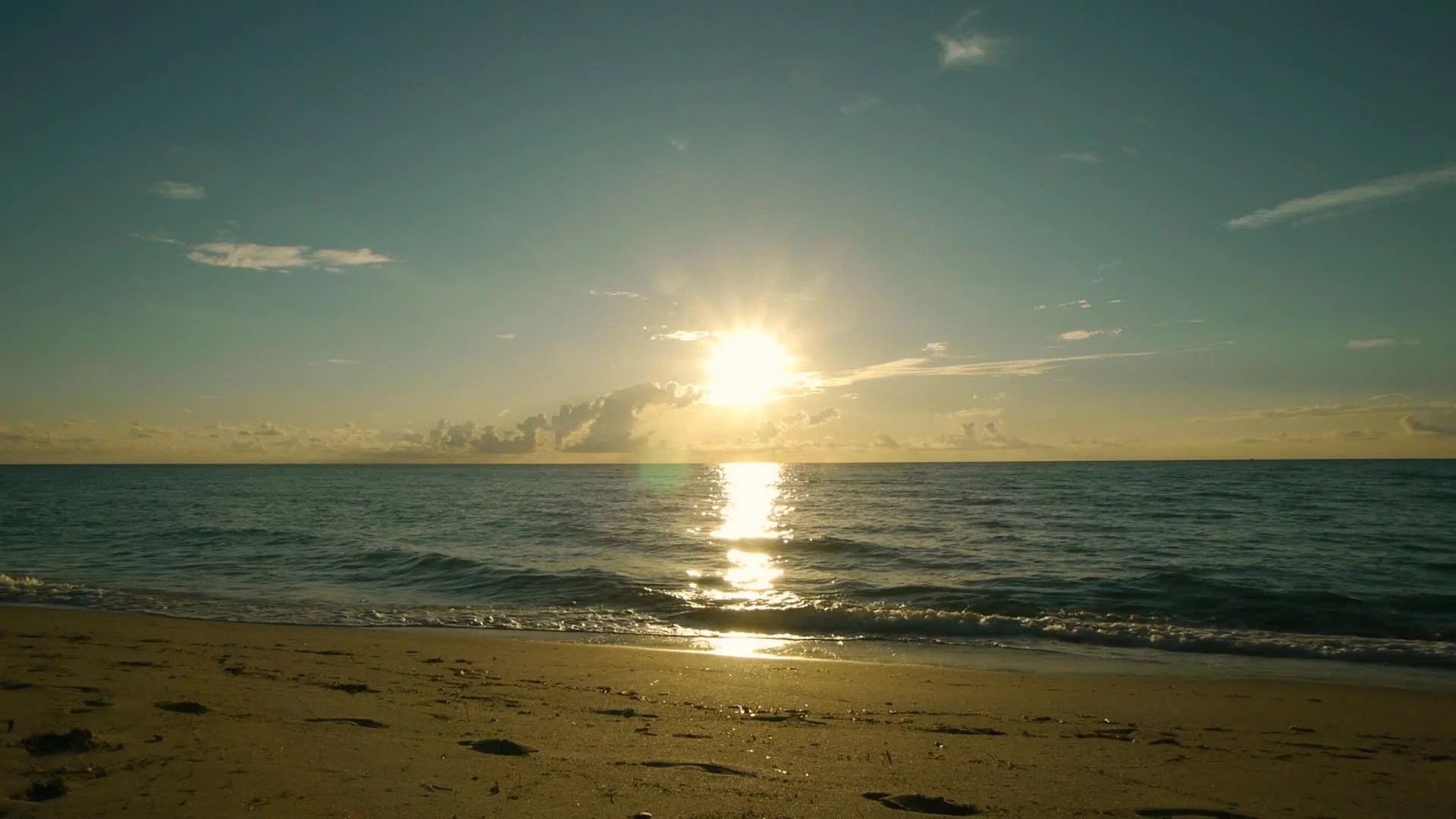
And watching sunsets.
AND
SUNRISE
“Each sunset brings closure, and each sunrise brings new possibilities and both have beauty.” Karin Schwan
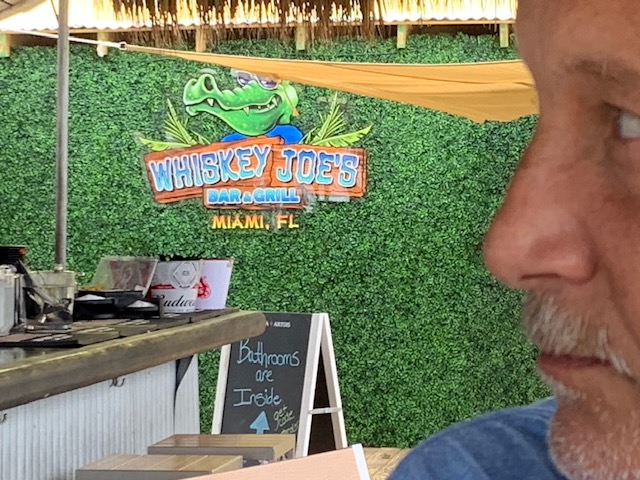
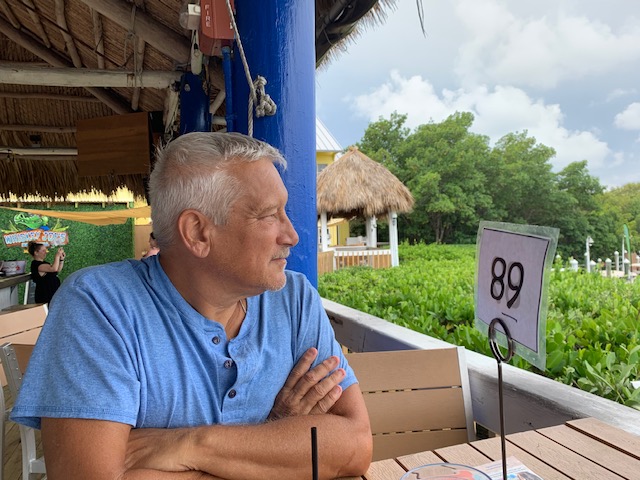
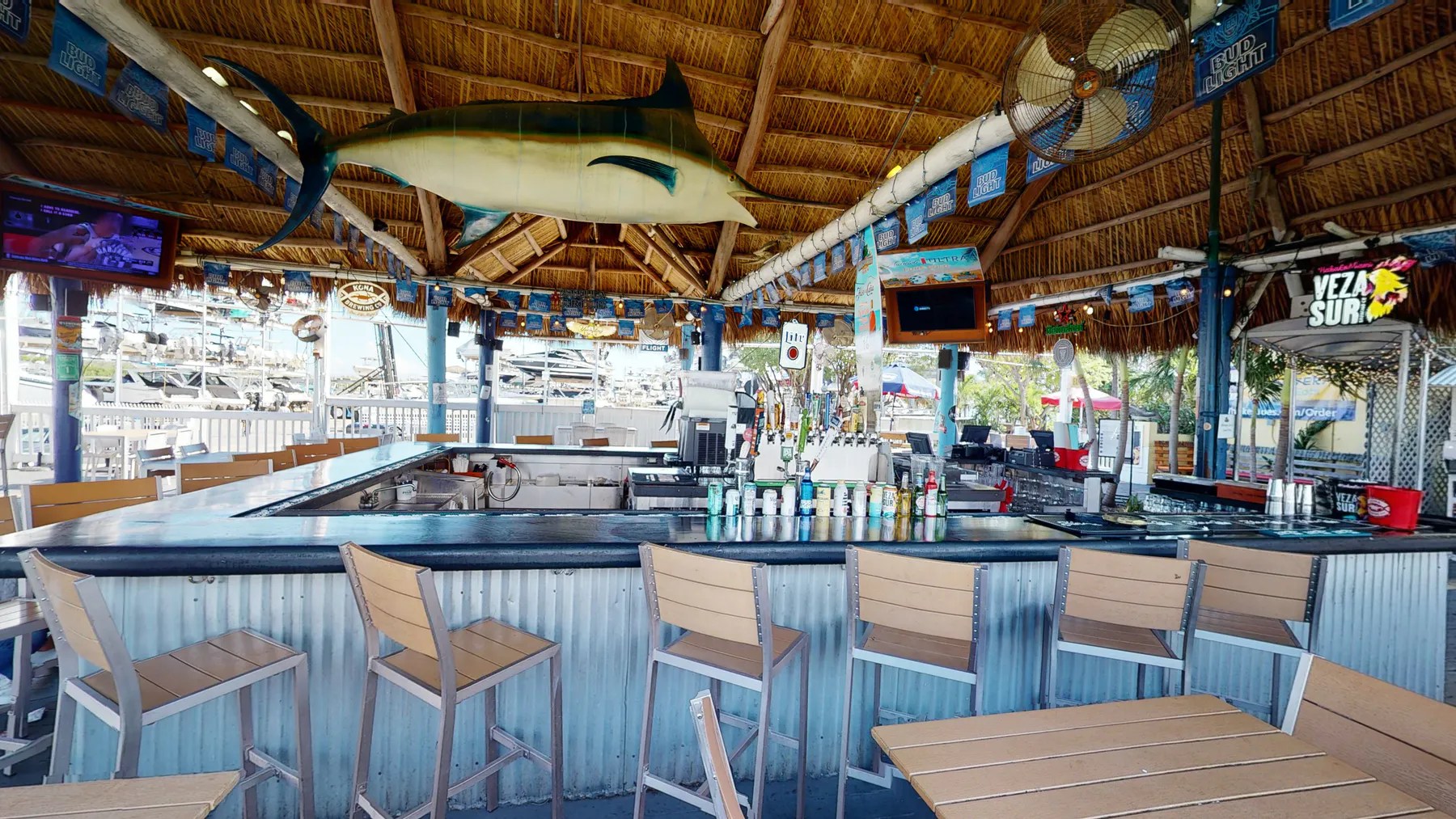
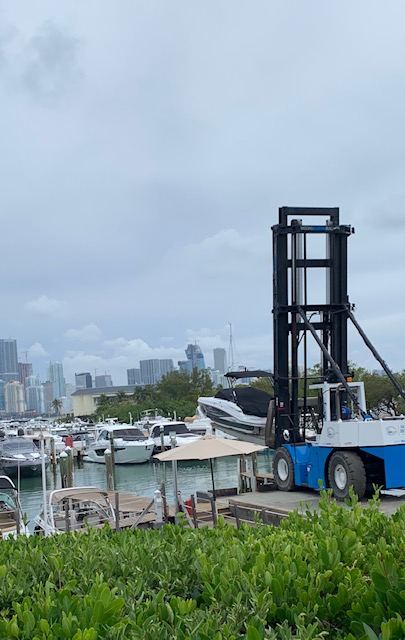
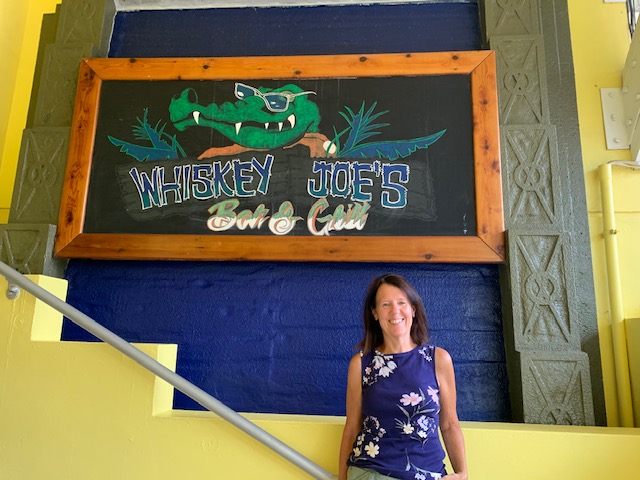
We went to Whiskey Joe’s in Key Biscayne, the fish tacos were delicious! And we watched as they took boats off the top shelf, with a huge fork-lift, and took them to the boat ramp to set sail. A fun evening!
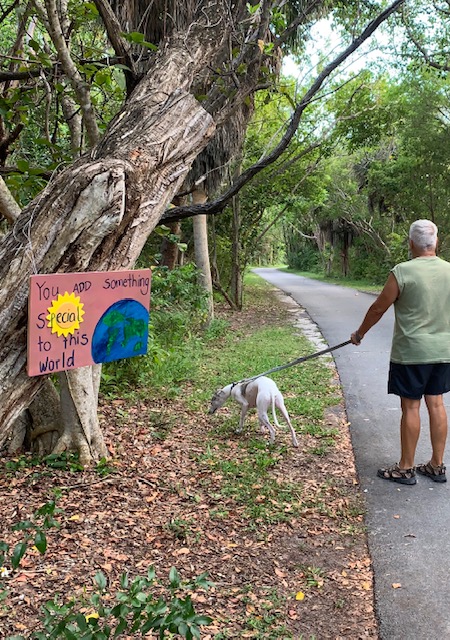
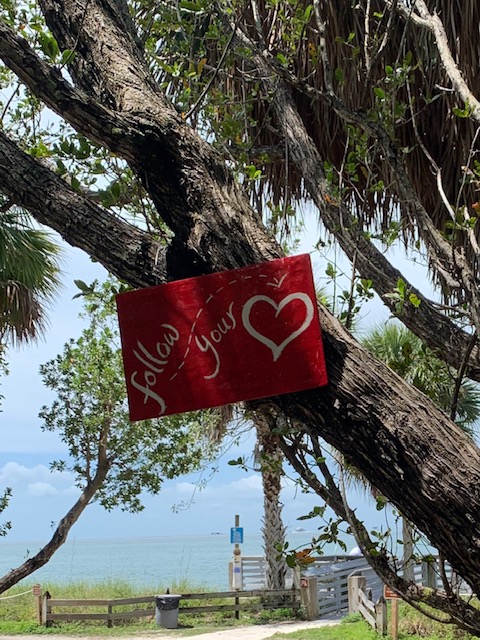
Signs the Park put up along one of the walking paths
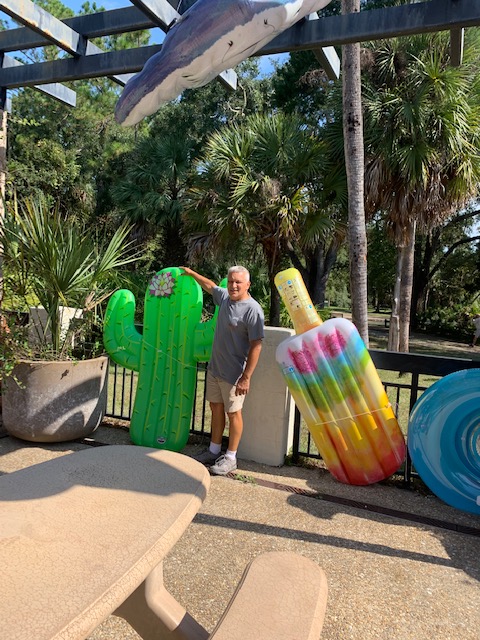
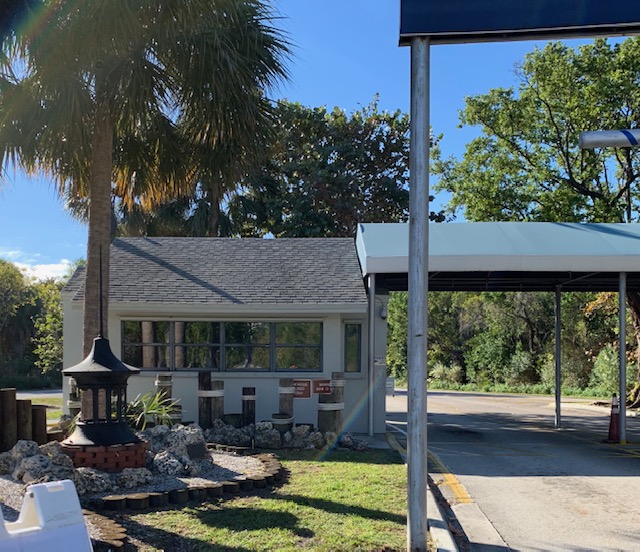
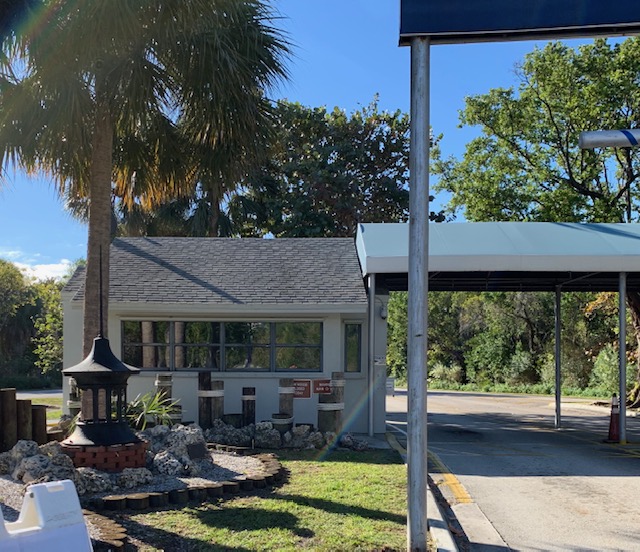
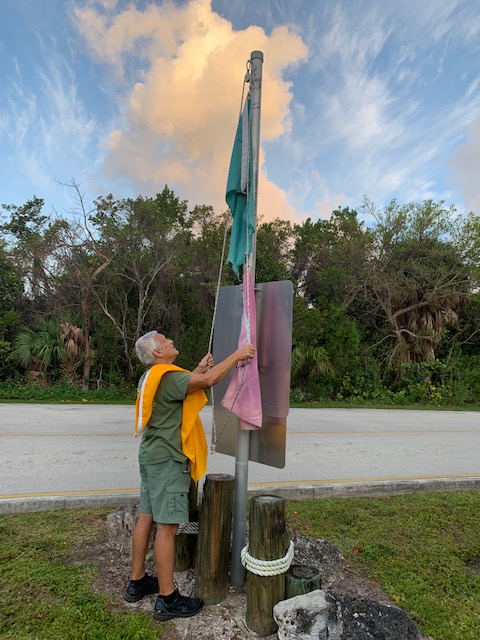
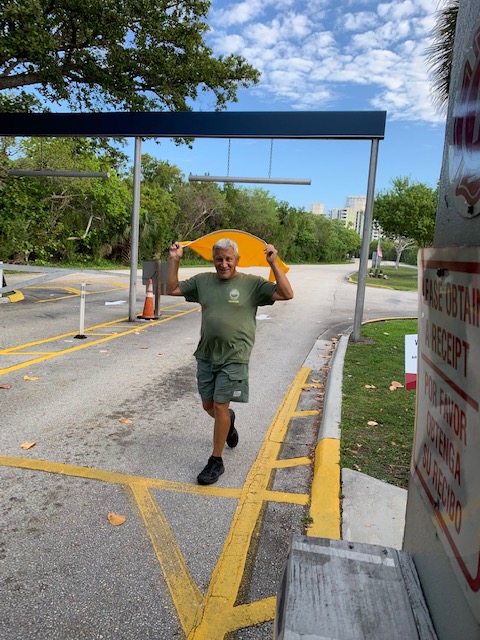
Dave & myself getting ready for the day at the gate house (Ranger Station) Dave Changing the flags from the yellow flag – medium hazard winds to green flag – low hazard winds. The purple flag is to let people know there is Marine pests present. The last picture you can see the giant shark that was over Key Biscayne, so glad it didn’t attack the Village!
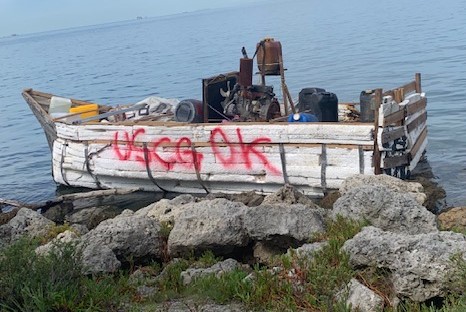
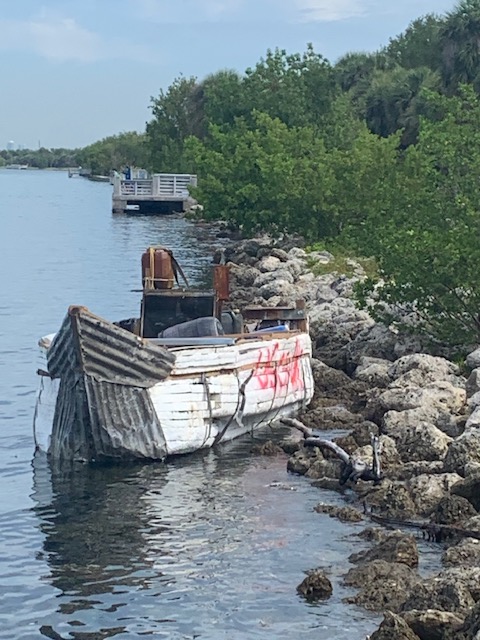
“Another ingenious vessel lands at Bill Baggs over the weekend, likely with refugees from Cuba or Haiti.”
Made entirely of Styrofoam, this boat was the latest to be found along the South Florida coastline at Bill Baggs State Park, in the past couple of years. Wooden beams were fastened across the seating area, which had the capacity to seat maybe a dozen people. They made it here very early in the morning and disappeared into the darkness. We saw it on our morning walk and it really makes you think about how badly some people have it. I only wish they could have done it the legal way.
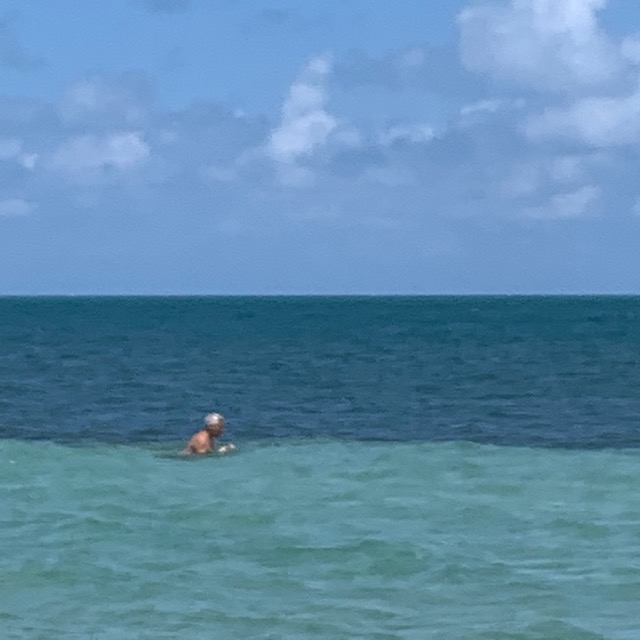
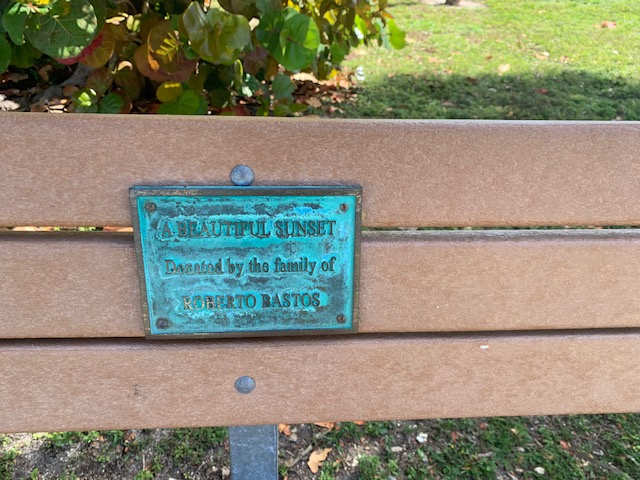
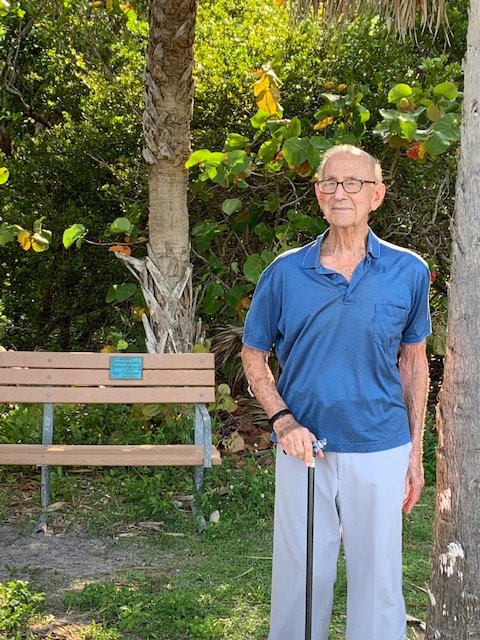
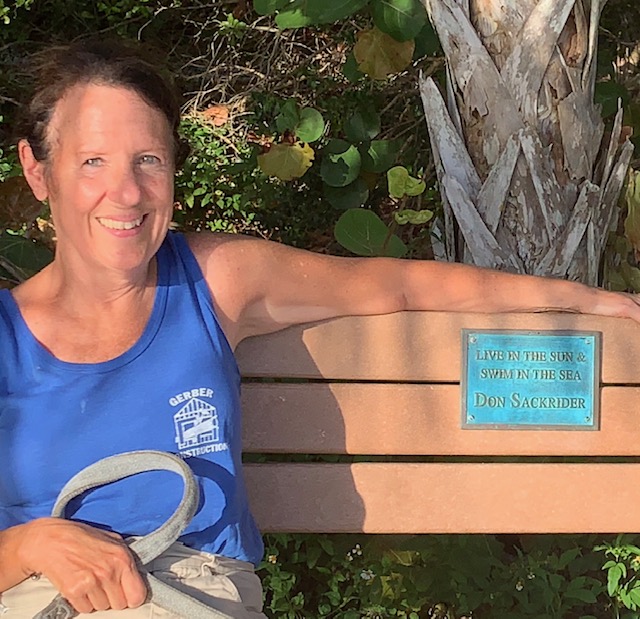
Dave & I were lucky to meet up with Don Sackrider, an ex-pilot who has been living in Key Biscayne for many years, when there was nothing here. I met him last year from working at the gate and it was great to see him again this year. He’s 92 and swims at the beach here. The plaque was donated by Don to the park.
Various pictures of our stay on the island.
Staying once again at Bill Baggs was great, great rangers and volunteers!
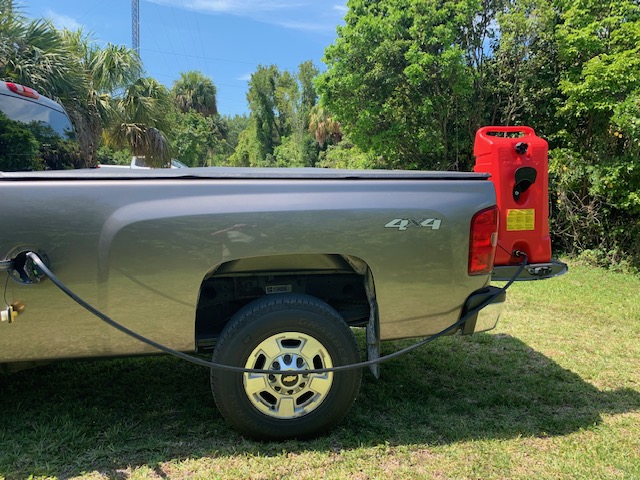
We are now in St Augustine Fl, staying till Saturday at the St Augustine Beach KOA. We left Key Biscayne this morning around 10 or so, after three months of workcamping(maybe our last also).Went straight up I-95, took 6.5 hours and drove 335 miles. A long drive since it’s been a while. I also had a helper, my gas buddy. A 14 gallon gas can with hose. It is one royal pain to stop with the rig and try and get gas, so I thought I would try it. It worked good. The gas light just came on as we got in the campground. It also feels (Very) weird to be around Rv’s and people again.
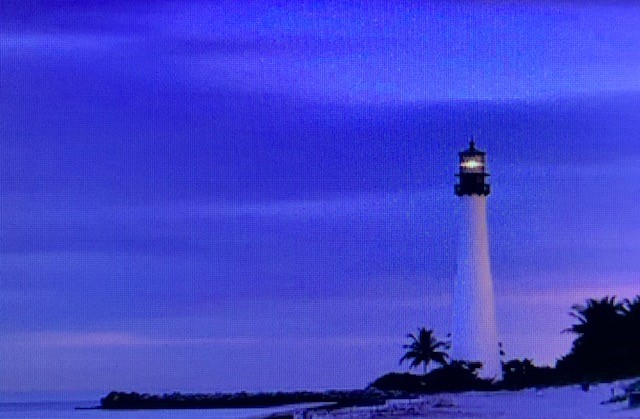
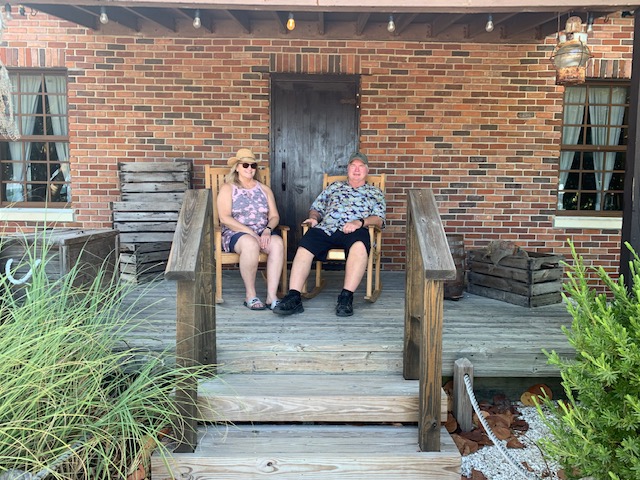
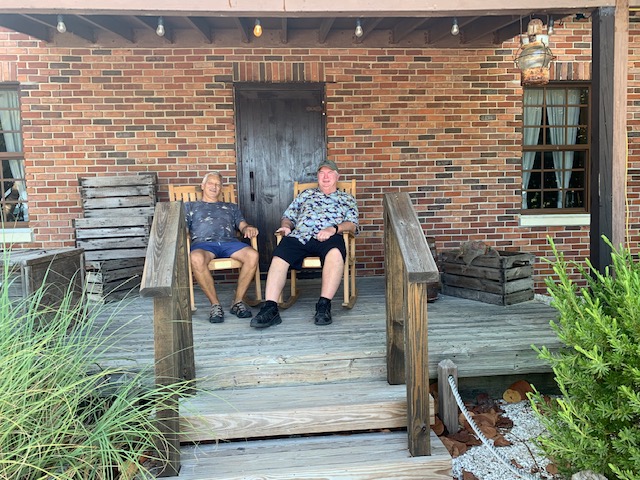
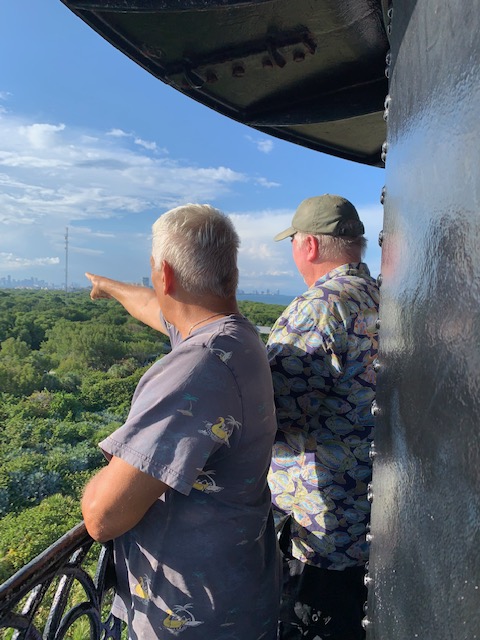
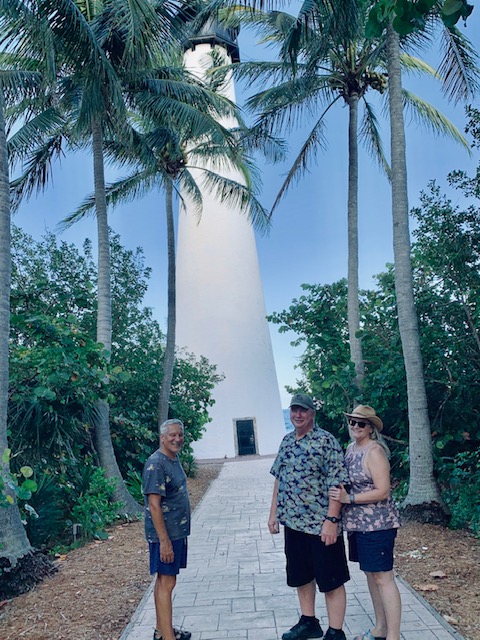
Yesterday one of my friends that I grew up with stopped by. Last time we got together was two and a half years ago. We were in Fort Myers and we went to Naples to see them. This time they came from Naples to visit us here, so they drove from the gulf coast to the Atlantic coast. Took almost three hours. What a great day seeing, my good buddy Mike, (we grew up right next door to each other) and Ann Marie. He was also my best man at our wedding 500 years ago. We talked a lot about the past, what we are up to now. Took a nice long walk around the park in 90 degree heat, but cooled off with refreshments in the Rv. After while we went to the lighthouse which was closed,(but we have a key), walked up and admired the great view that is up there. Then had a bite to eat at the Lighthouse Cafe, and strolled the beach for awhile. Just like that it was after seven. So away they went. It was great to see them both and catch up on life. GREAT DAY HAD BY ALL
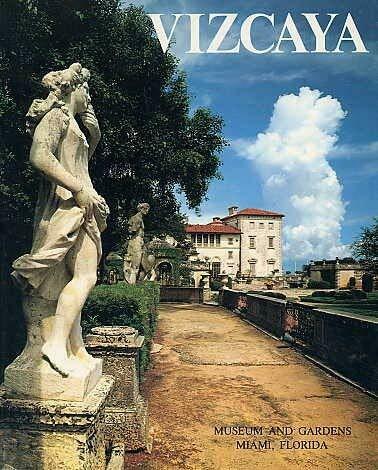
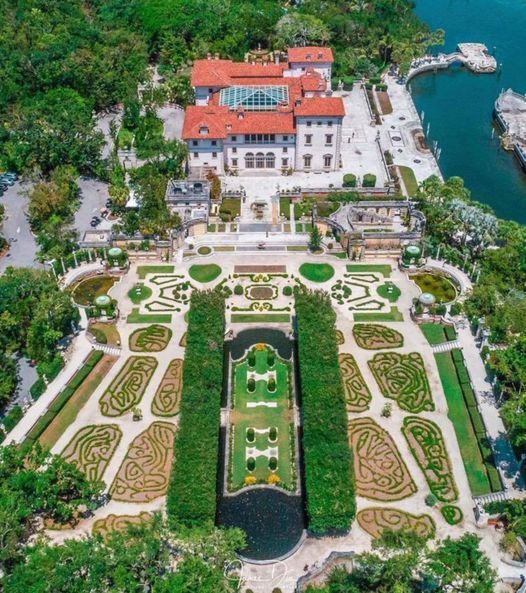
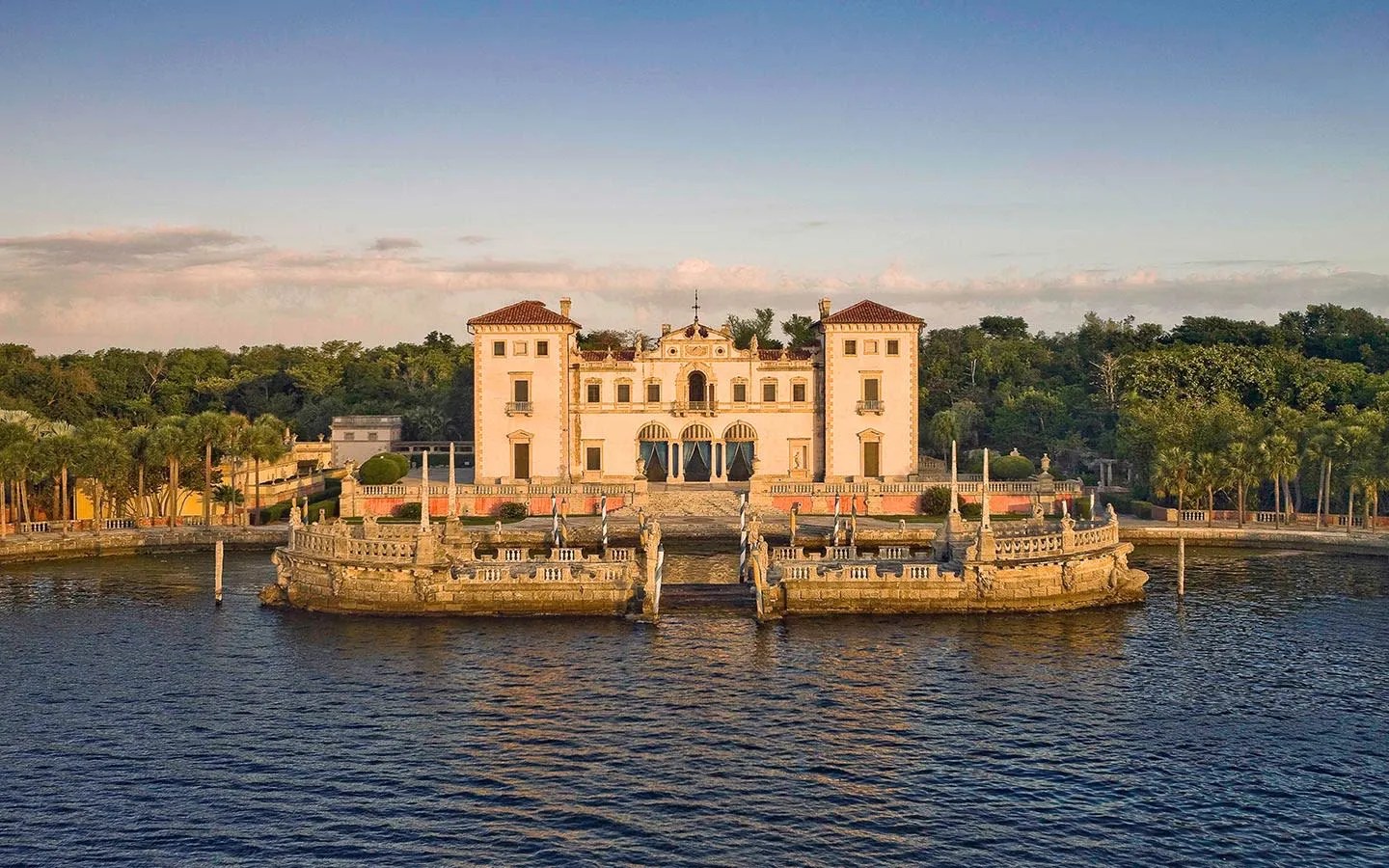
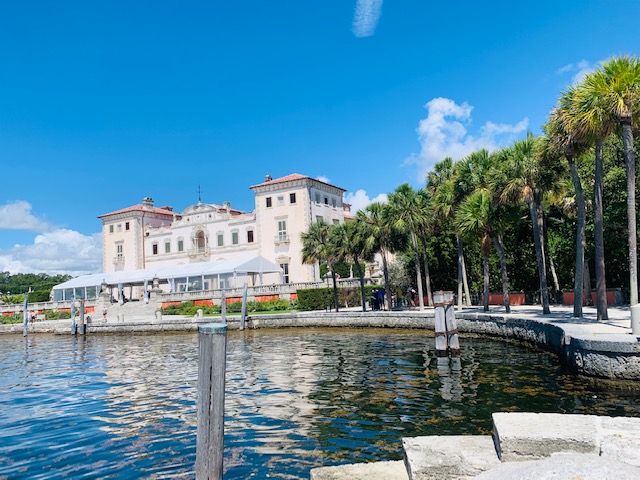
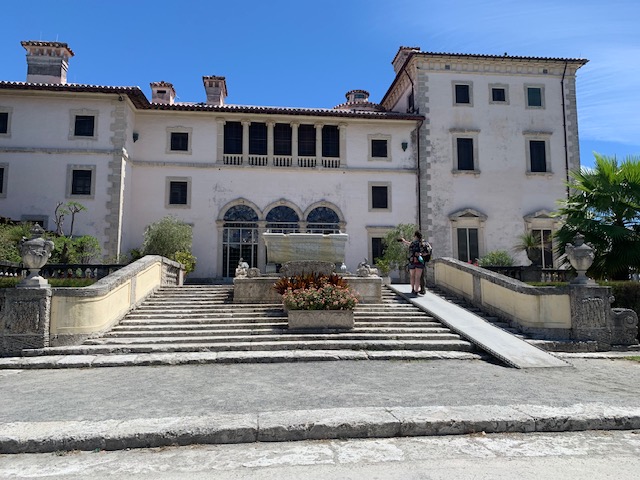
We went to see Vizcaya Museum and Gardens and we were so glad we did! Located in the Coconut Grove area of Miami, just a short distance from where we are at Bill Baggs State Park. It’s A National Historic Landmark that is incredible!Side view of the gardensBack view on the ocean
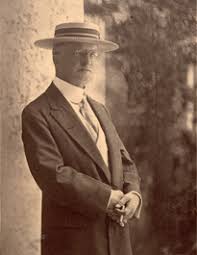
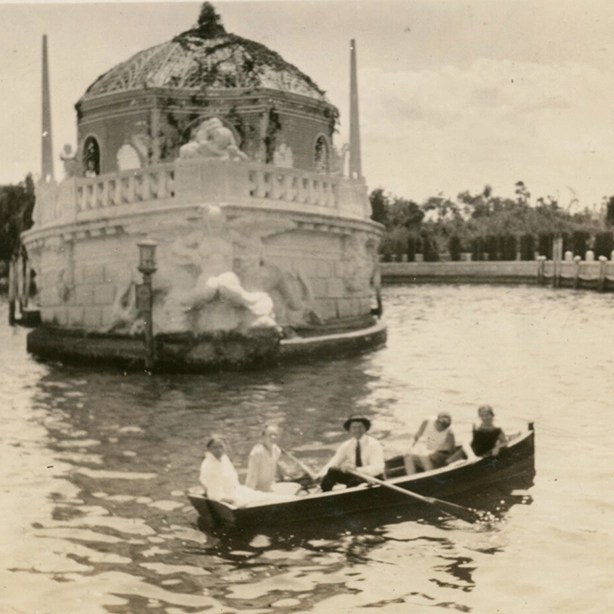
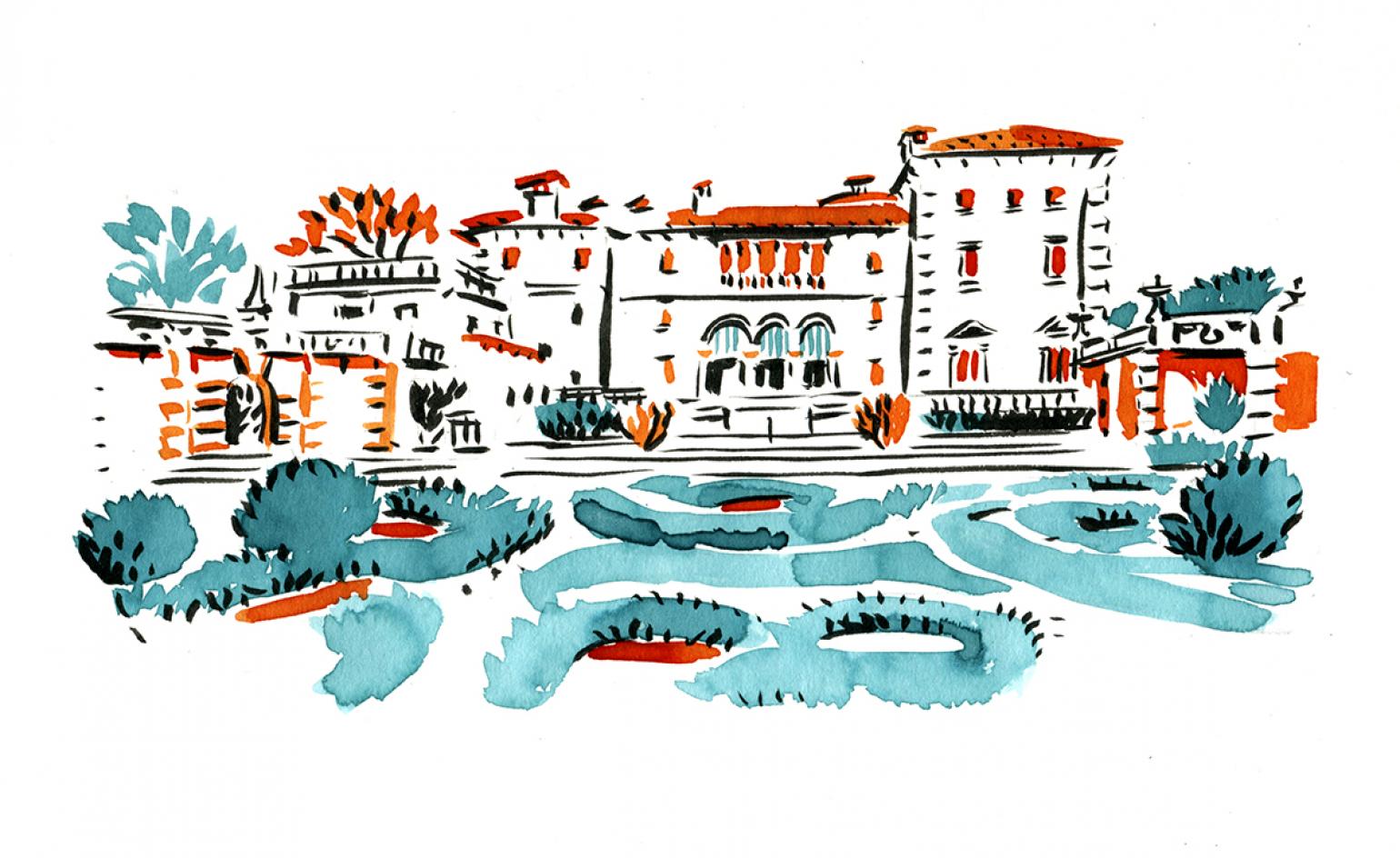
The Vizcaya Estate, which overlooks Biscayne Bay, was built between 1914 and 1922 as the winter home of farming manufacturer James Deering. He was a successful businessman and millionaire from the Midwest. In 1908, after retiring as the vice-president of the International Harvester Company, he bought property in South Florida. He chose to build an Italian style waterfront villa, surrounded by formal gardens and set in a carefully preserved South Florida jungle hammock.
In 1910 he got together with artistic director Paul Chalfin. Together they made plans to build a The Vizcaya Estate . After traveling to Italy, touring villas, and buying up decorative antiques for the new estate. Deering hired Francis Burrall Hoffman, Jr. as the architect that would build his estate on the 130 acres of Vizcaya Bayfront land. in 1914 Deering again traveled to Florence and met Diego Suarez. a landscape architect who designed Vizcaya’s amazing gardens.
Over 1000 people were employed in the construction of Vizcaya between 1914 and 1916 at a time when the population of Miami was only 10,000. The project faced challenges as World War I consumed Europe, but the work continued. By 1916, the Main house was completed, and the surrounding gardens, extensive and manicured, were done by 1923.
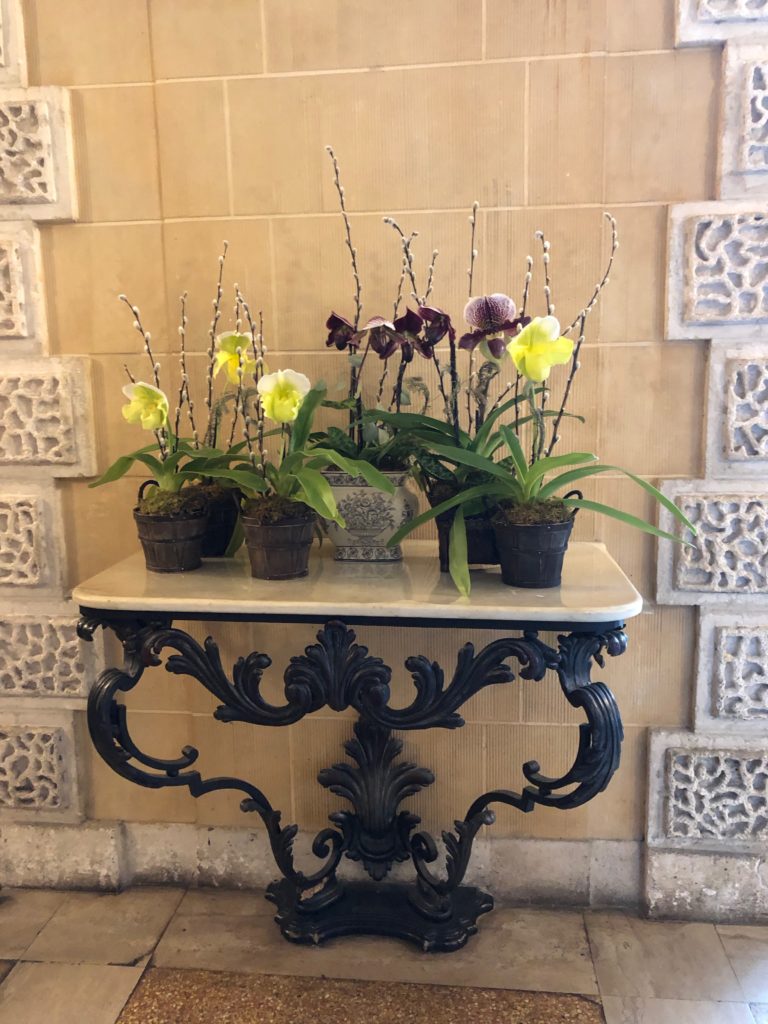
The 38,000-ft mansion has 70 rooms fitted with European antiques and American art vintage furniture commissioned in the 1900s, ten acres of formal gardens and diverse collections including European antiquities, and century-old plants. Over the years, Vizcaya Museum and Gardens has expanded its assortment of plants. There are over 2,000 specimens of orchids and other plants in Vizcaya Gardens and Museum. Inside the museum, you will find much of the original pieces.
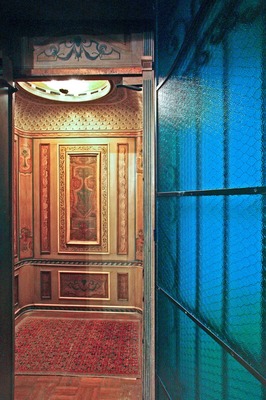
At Vizcaya, with it’s reference to the past complete with antiques, had technology, and modern comfort. Regardless of its Baroque appearance, Vizcaya was a very modern house. It was built with large reinforced concrete, with the latest technology of the period, such as generators and a water filtration system. Vizcaya was also equipped with heating and ventilation, two elevators, a dumbwaiter, a central vacuum-cleaning system and a partly automated laundry room.
The house was not finished until the end of 1916, when Deering moved in on Christmas Day. The gardens were completed in 1921. He approached his villa from the sea. As his yacht’s gangplank touched down, the boom of ancient cannon heralded his arrival on Christmas Day, 1916. Deering was dressed as a Renaissance prince and his guests were dressed as Italian peasants.
Deering had only nine years to enjoy his 70-room villa, his art treasures and his formal gardens and to entertain his friends in one of the greatest of American mansions. In September 1925, he died at the age of 65.
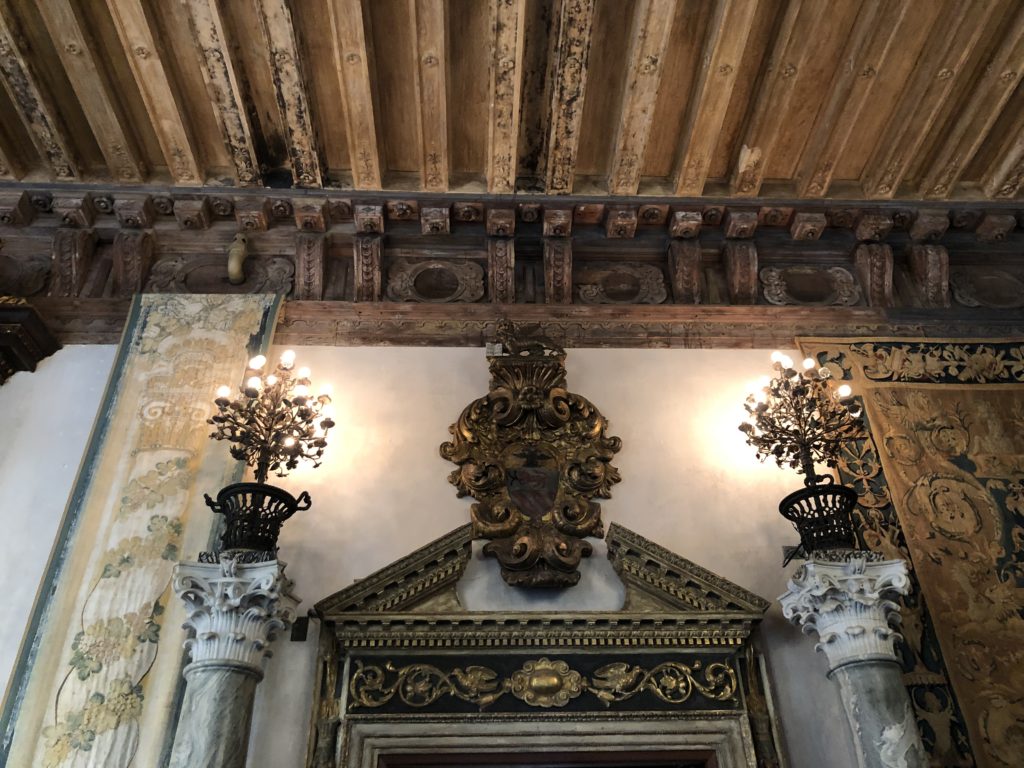
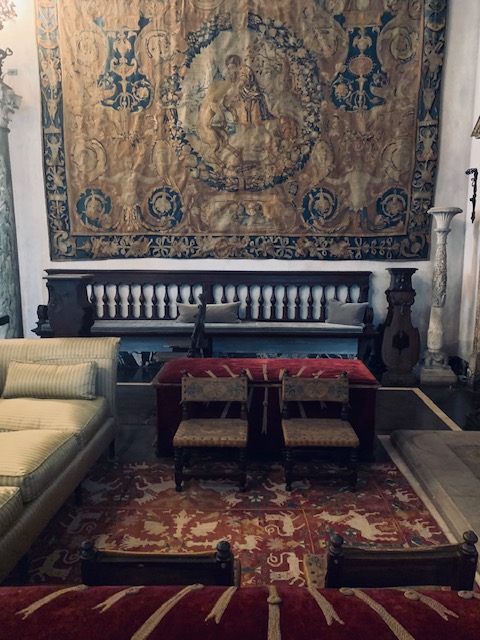
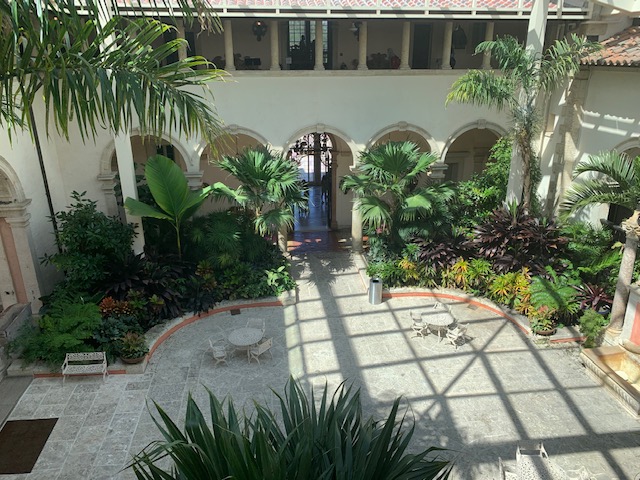
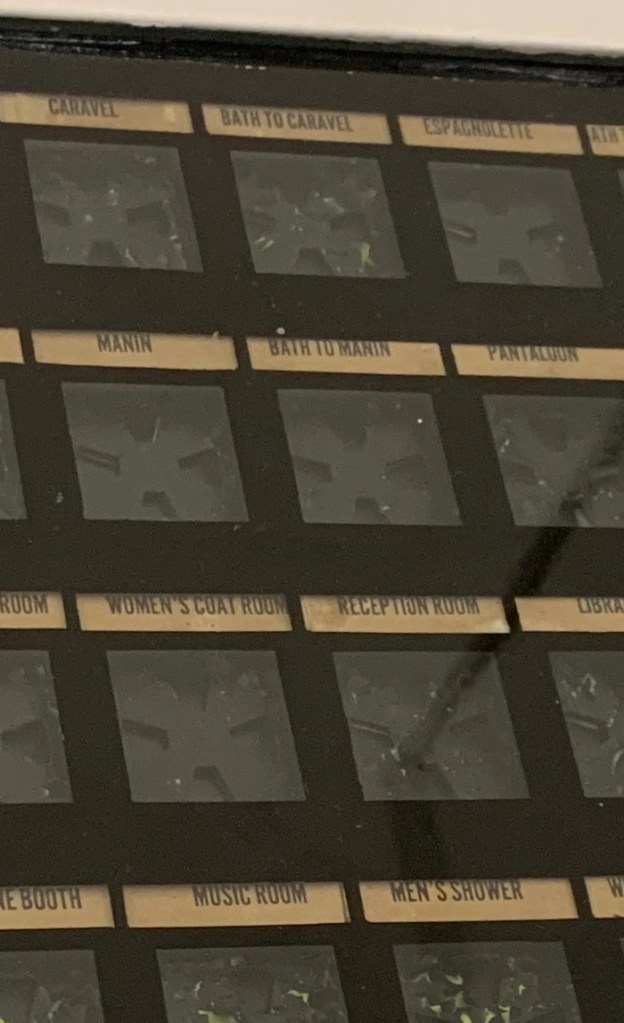
The ground floor features a grand entrance opening into a spacious two-story courtyard. The rooms on this floor include the entrance hall, library, reception room, living room, east veranda, music room, dining room, flower room and serving pantry.
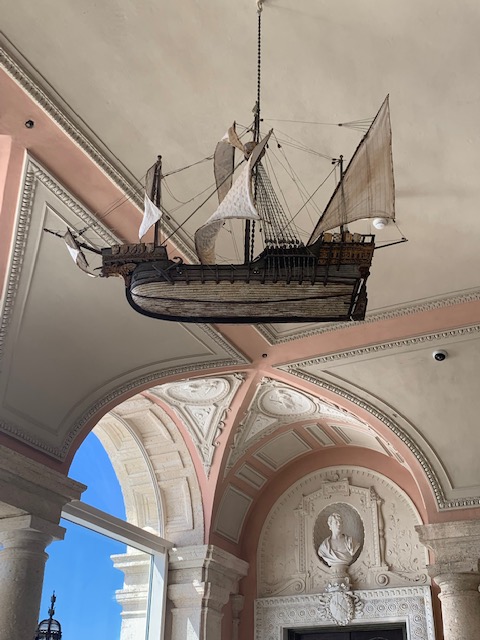
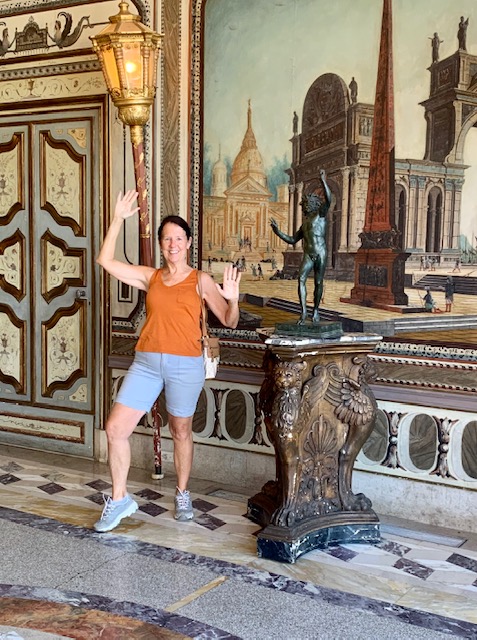
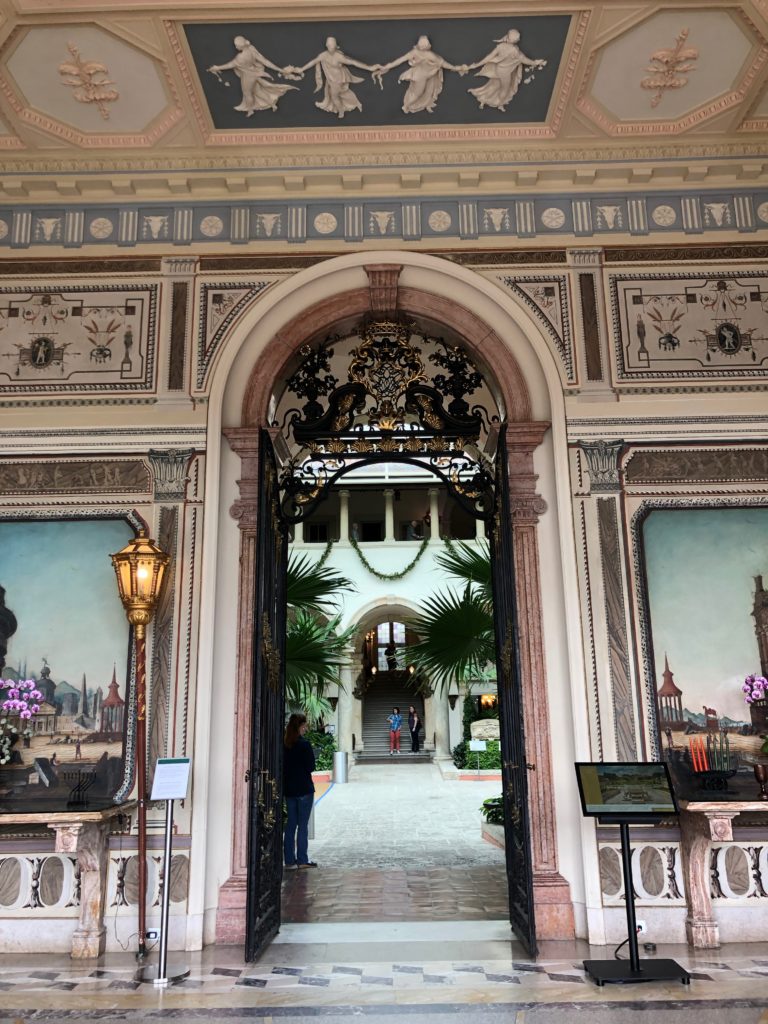
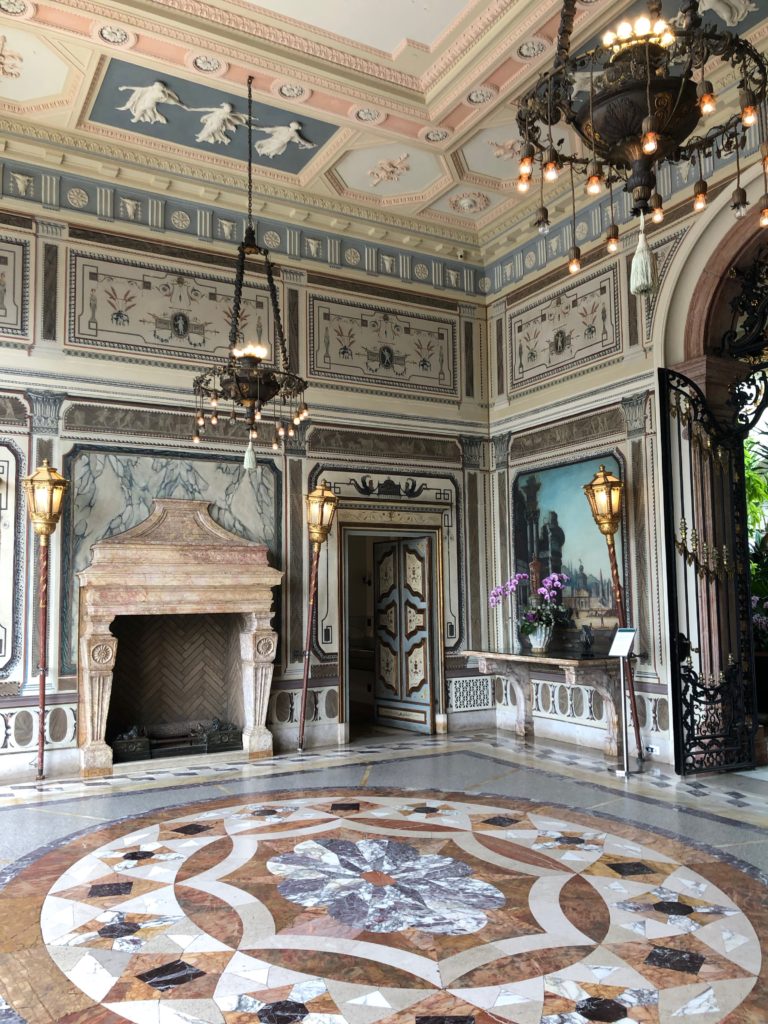
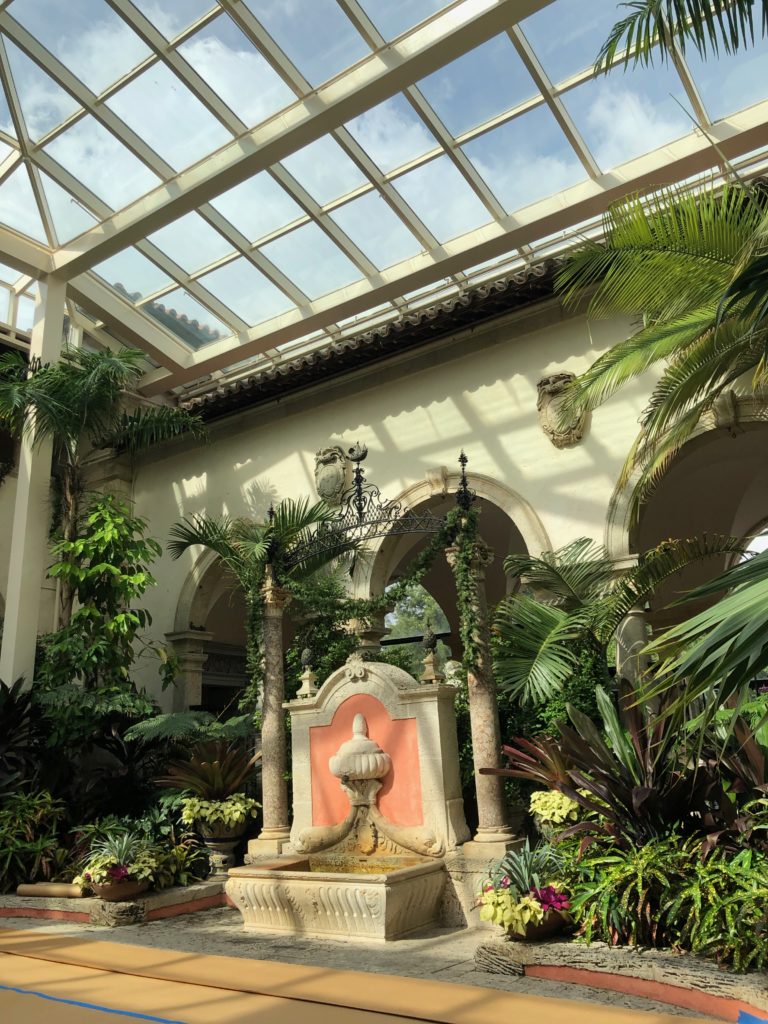
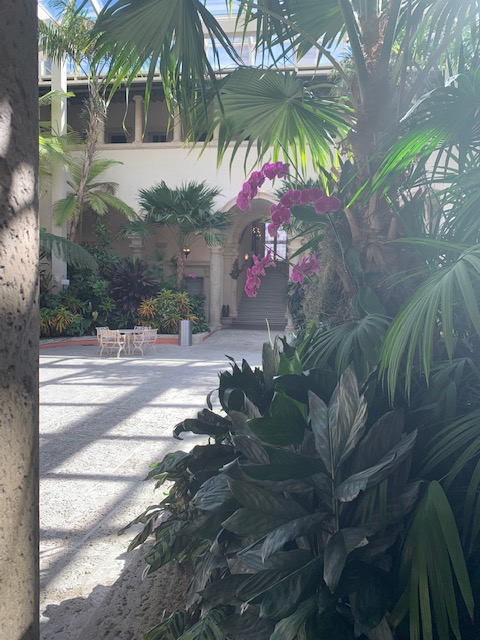
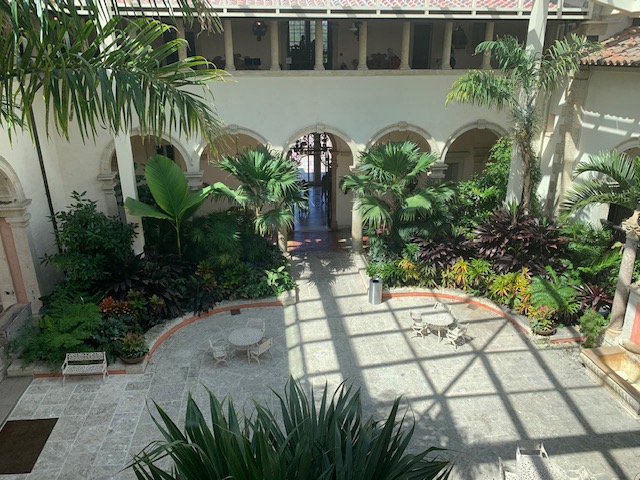
The Courtyard where you enter, which is the center of the house. It had to be enclosed to protect the house and contents from the elements and hurricanes.Entrance Hall
Ladie’s Powder/Cloak Room
Men’s Powder/Cloak Room
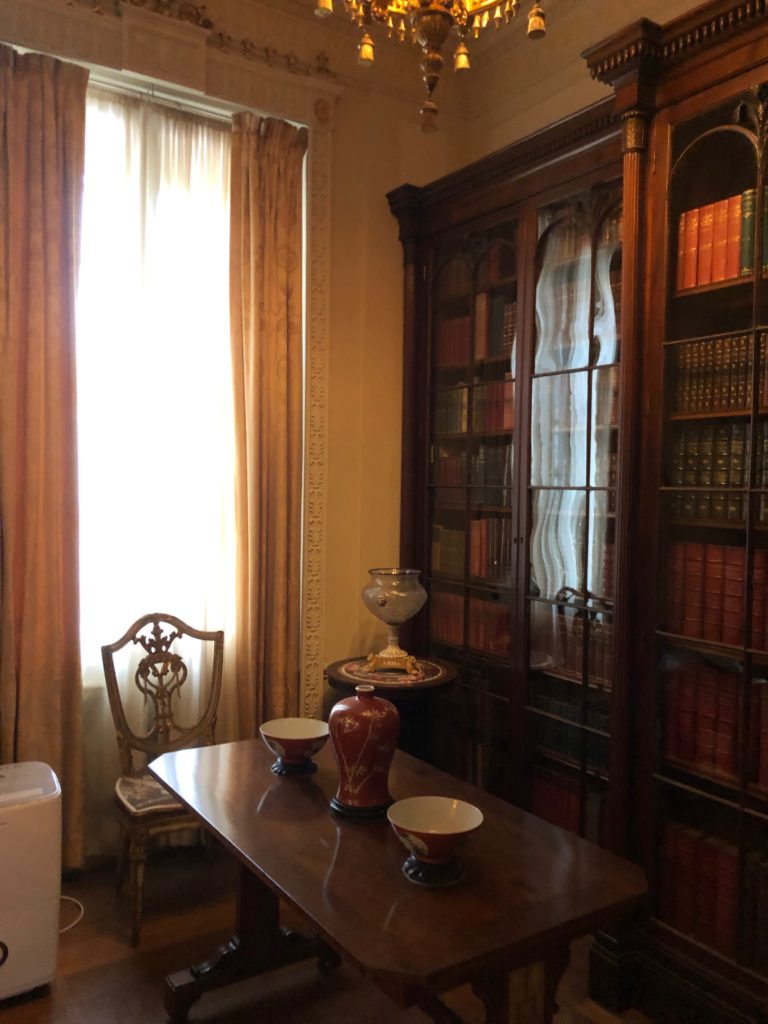
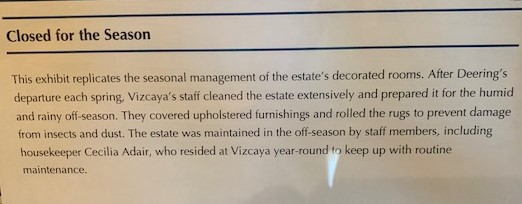
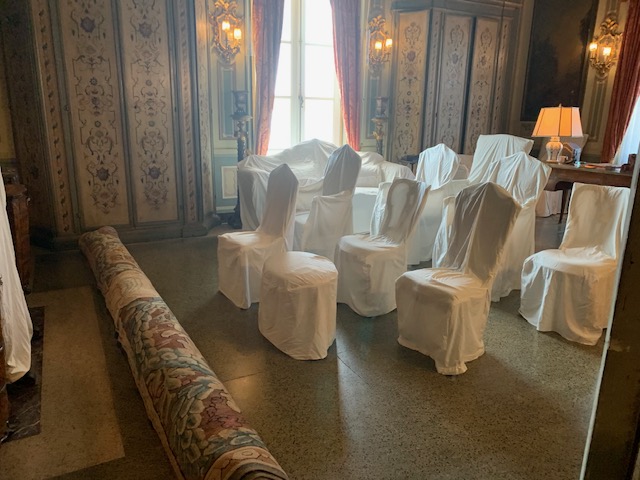
The library – Each spring, Deering departed for cooler climates and the Vizcaya staff would wrap his books individually to protect them from Miami’s summer humidity.
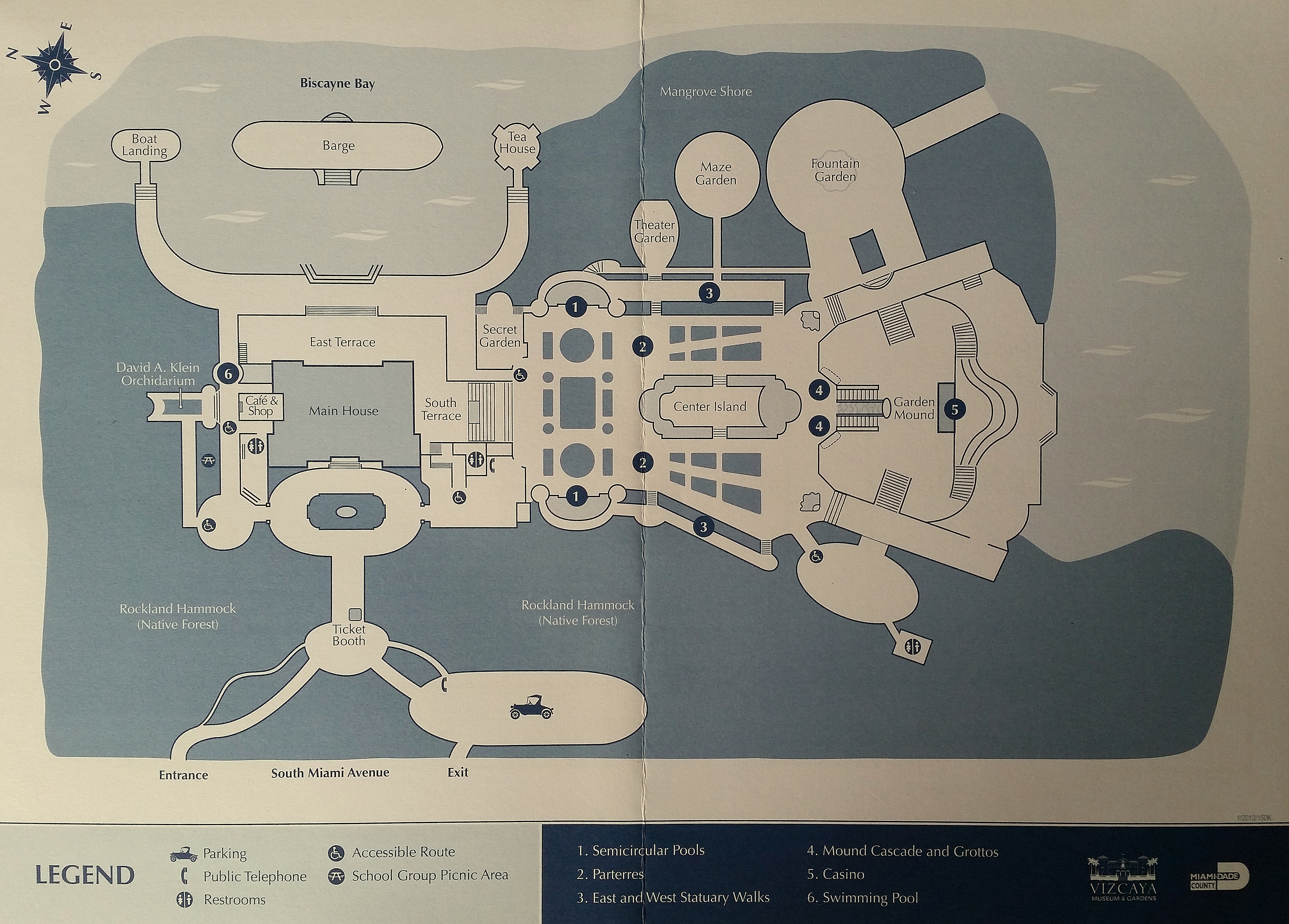
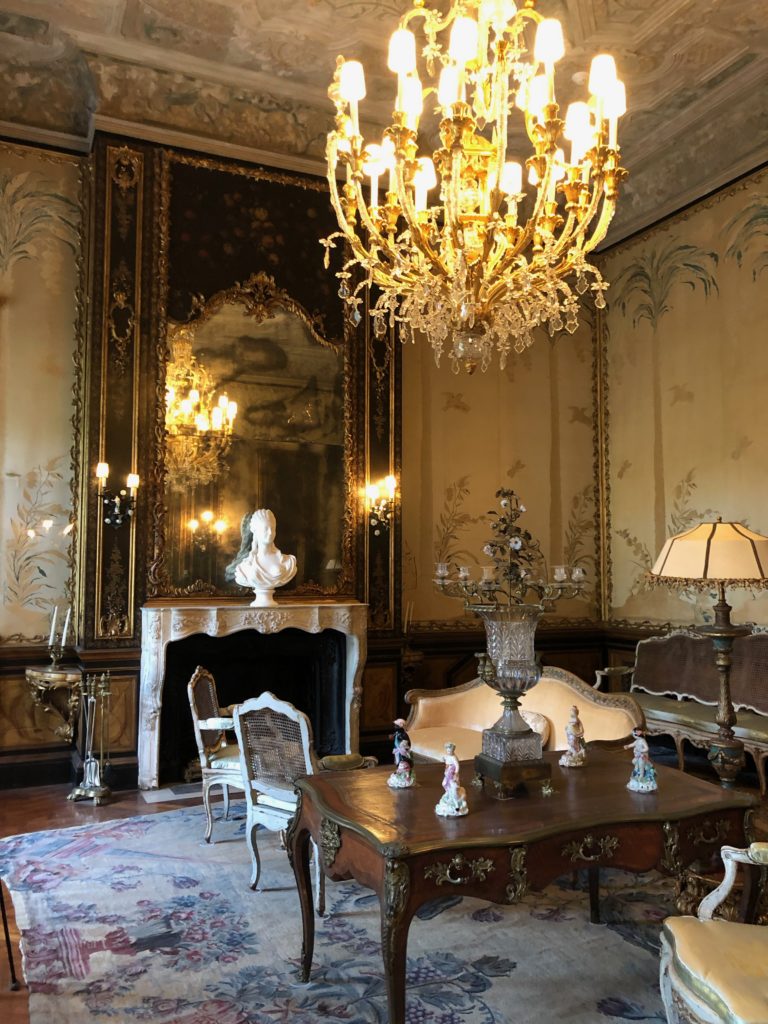
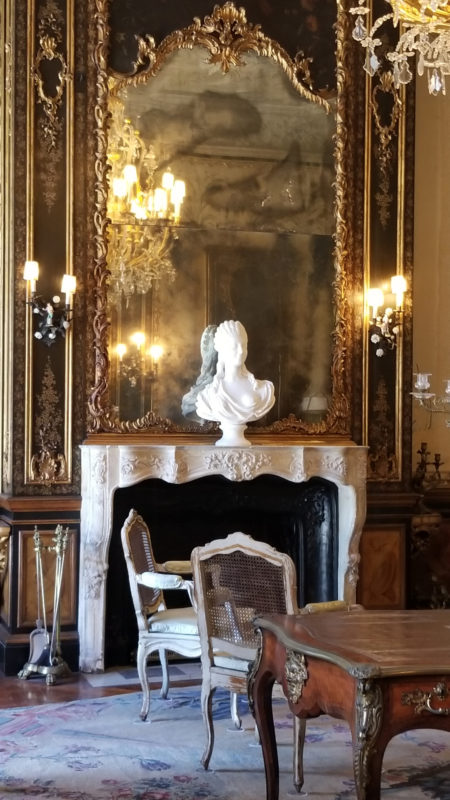
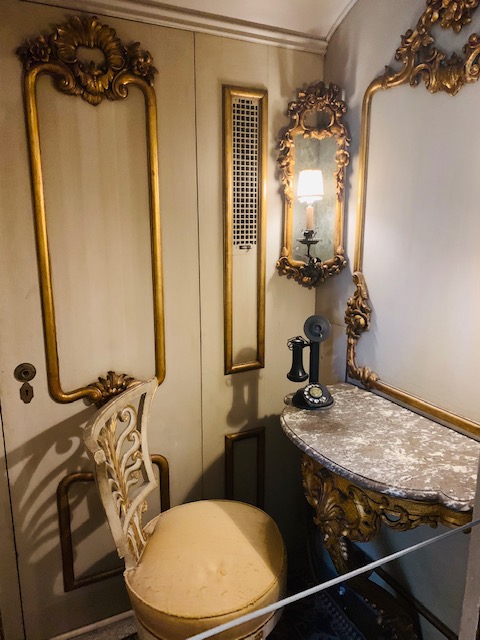
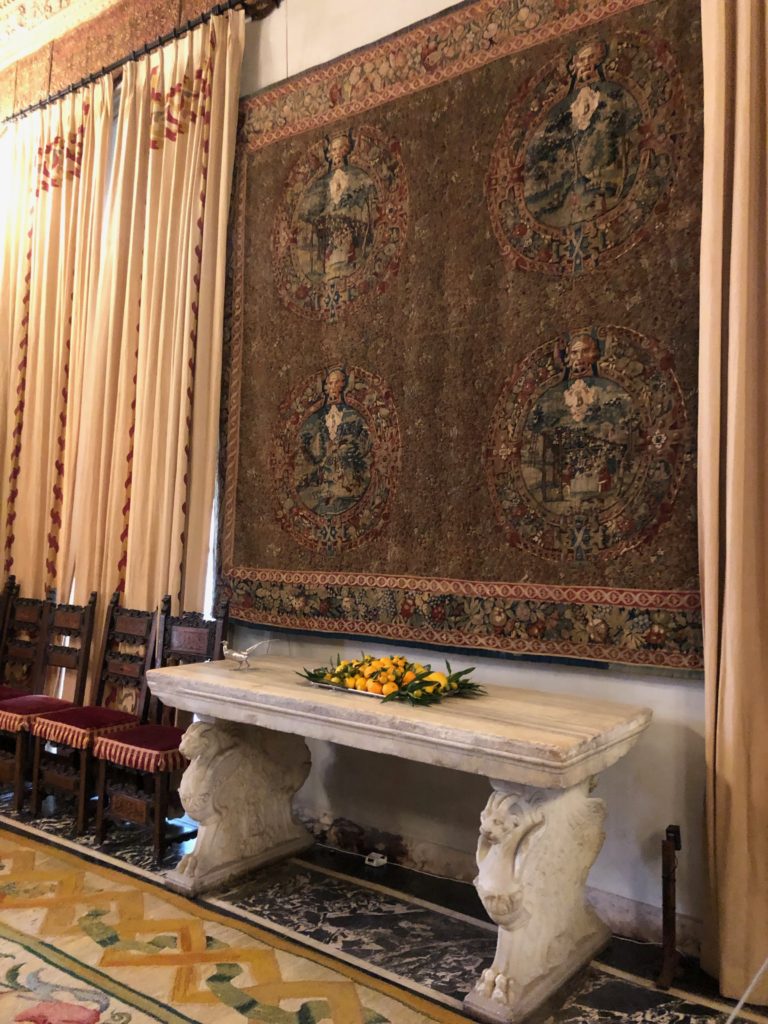
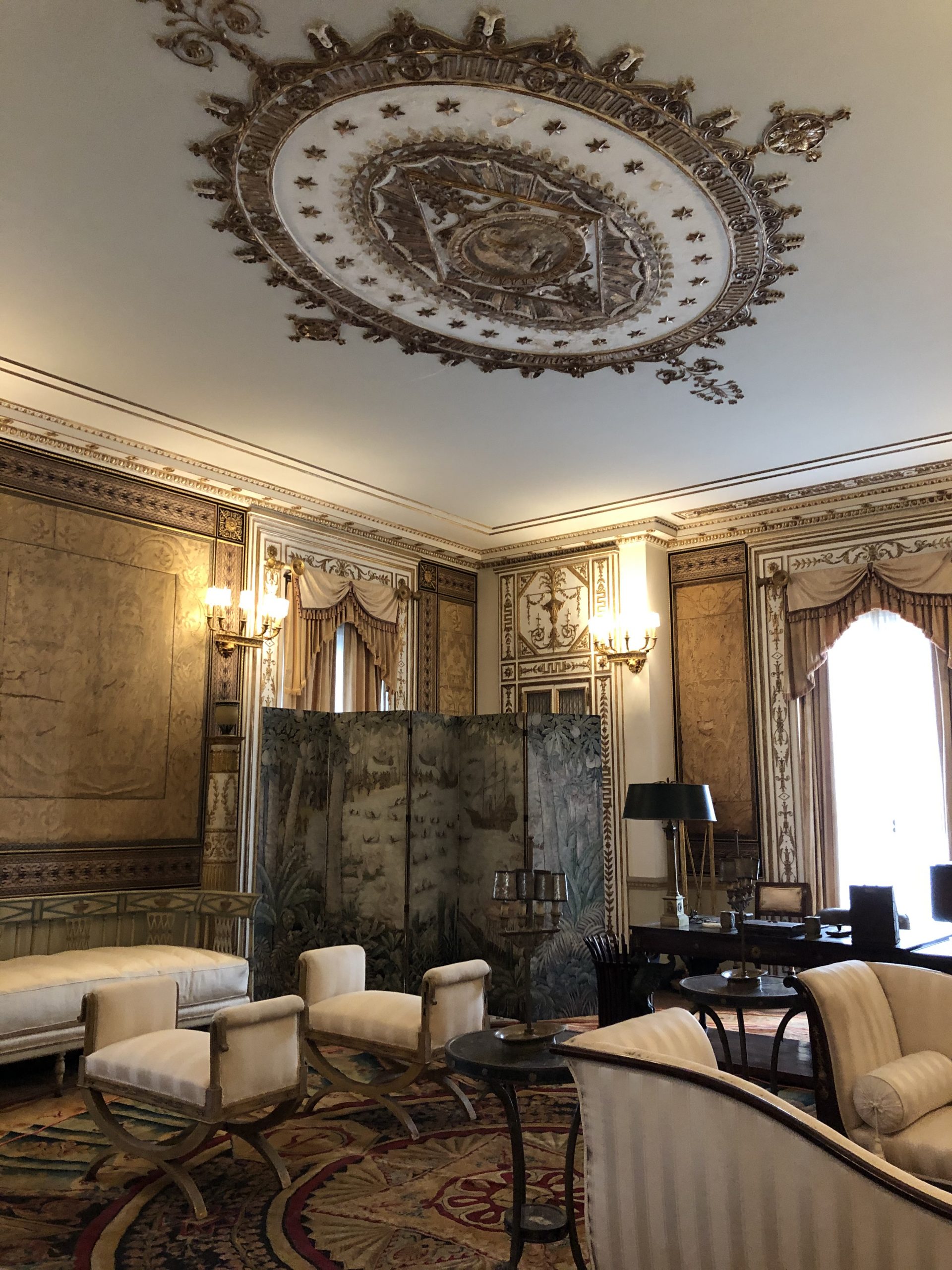
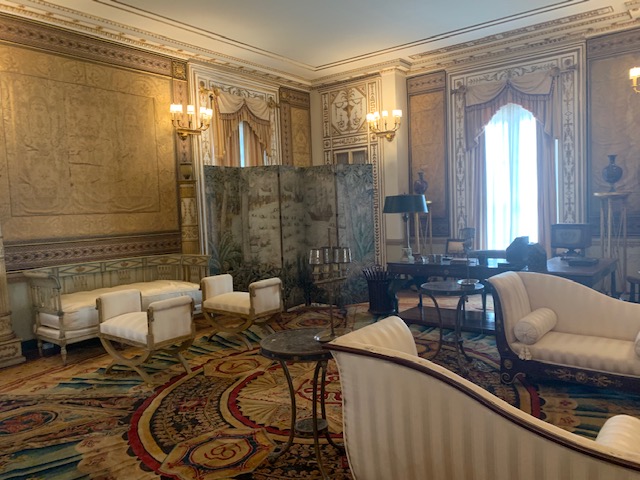
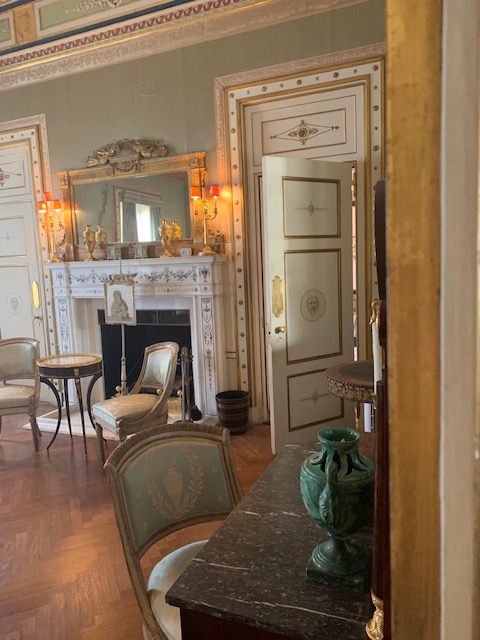
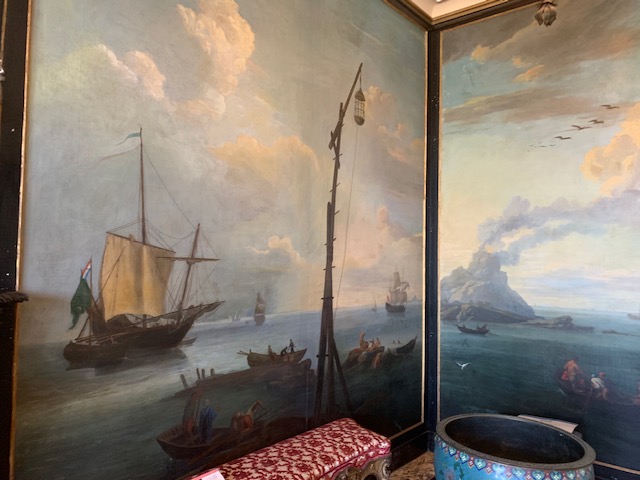
The Reception Room – Decorated to look like rooms in Palermo, Italy.Hall to Living RoomThe Telephone Room is not listed on the map but it’s the tiny space that sits between the the Reception Room and North Hall.
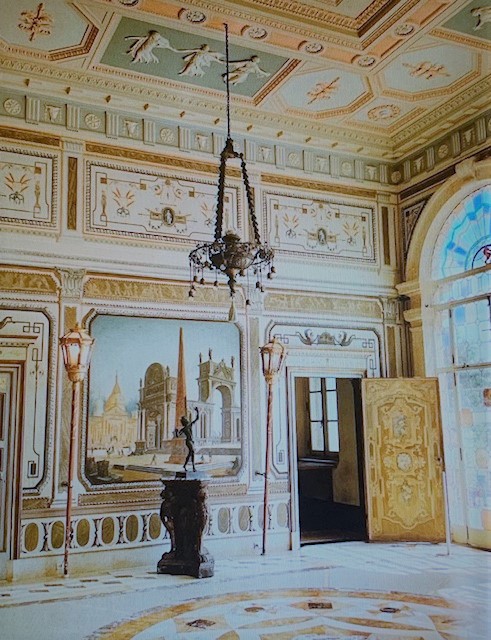
The beautiful Hallway
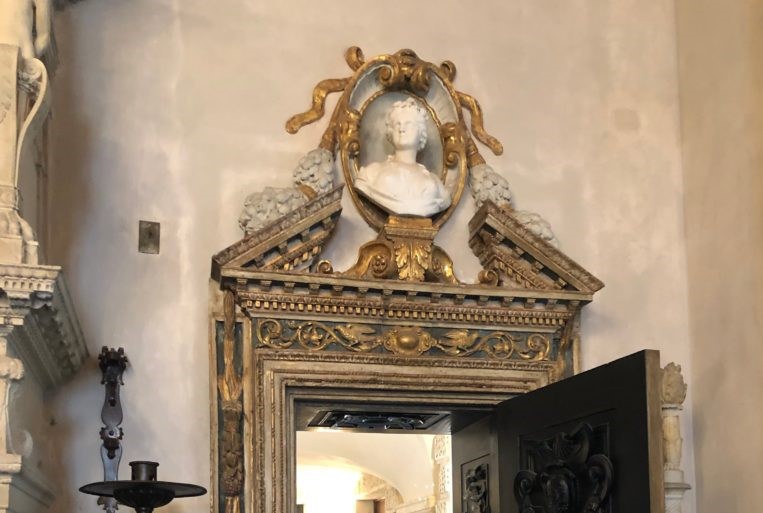
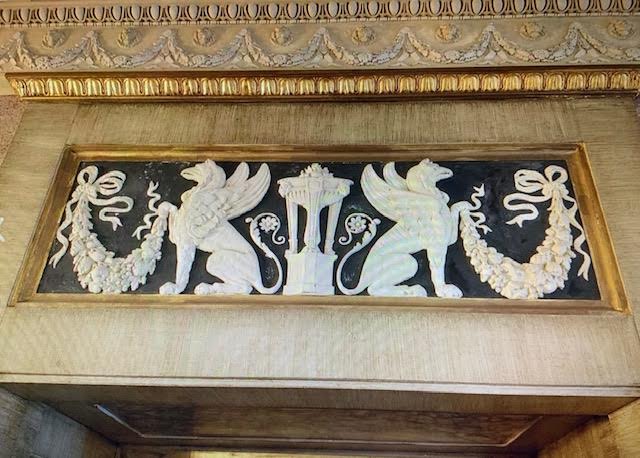
Art work above the doors
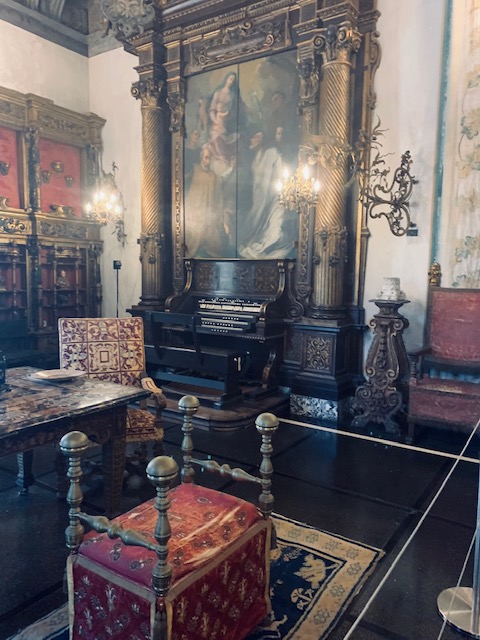
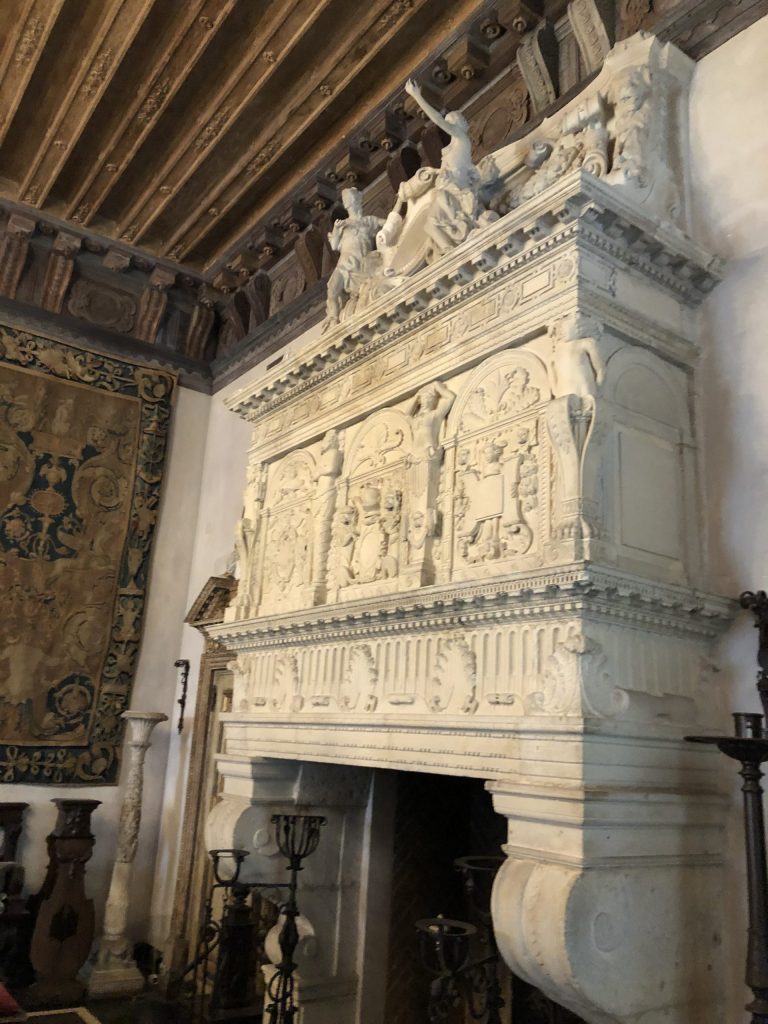
The Living Room was the largest room in Vizcaya. It has been called the “Renaissance Hall” because many of the objects were created during the European Renaissance. The organ can be played either manually or automatically using music rolls. Around the organ there is a religious painting that was cut in half to create the doors that conceal the organ pipes.
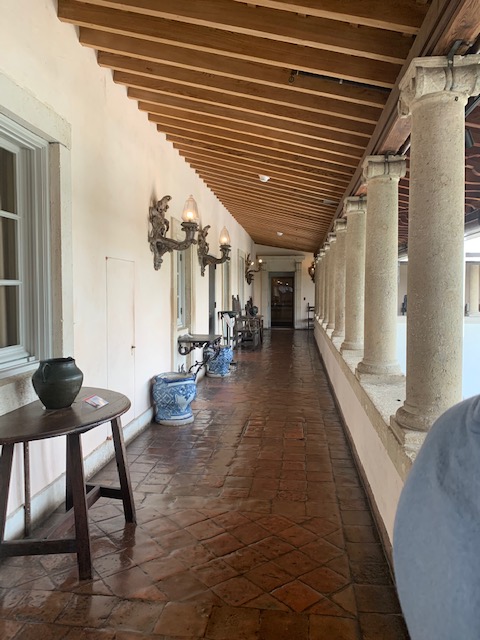
The East Terrace/Loggia
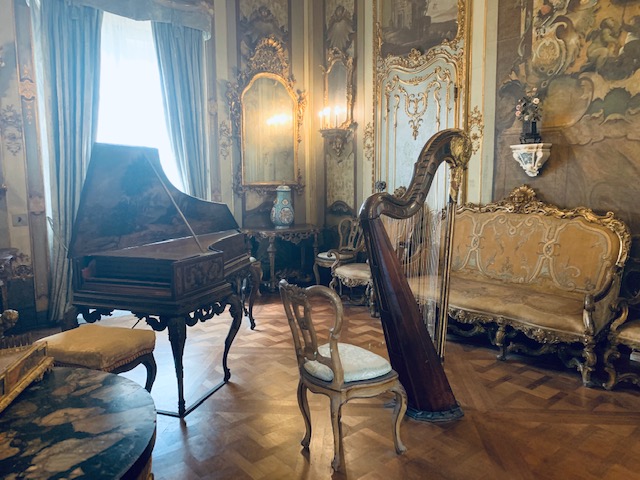
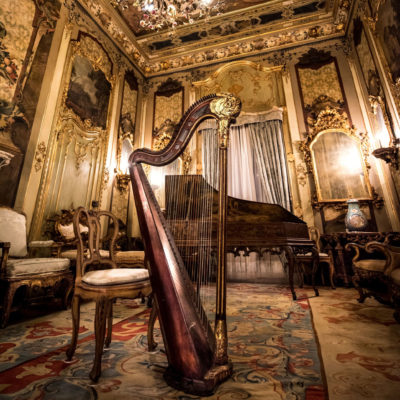
The Music Room – Documents suggest that the player piano and the organ were probably the only instruments actually used during James Deering’s lifetime, and that the selection of fine antique instruments in the Music Room functioned more as a gallery.
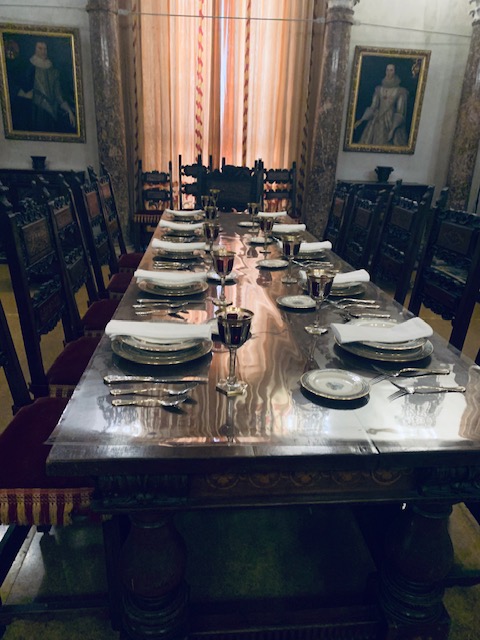
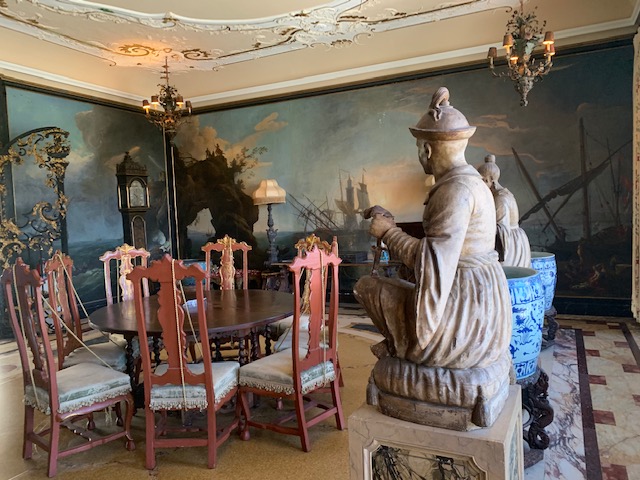
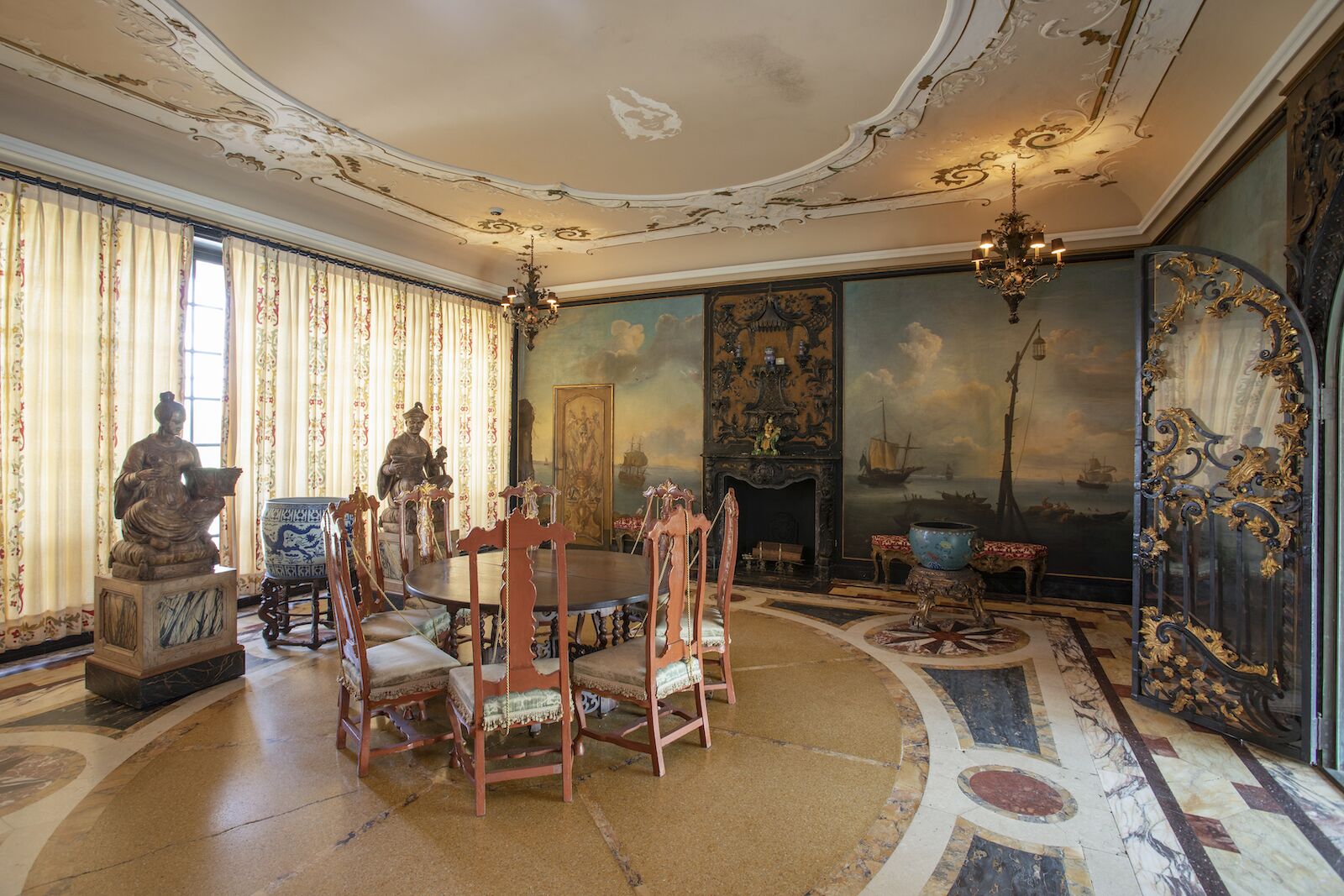
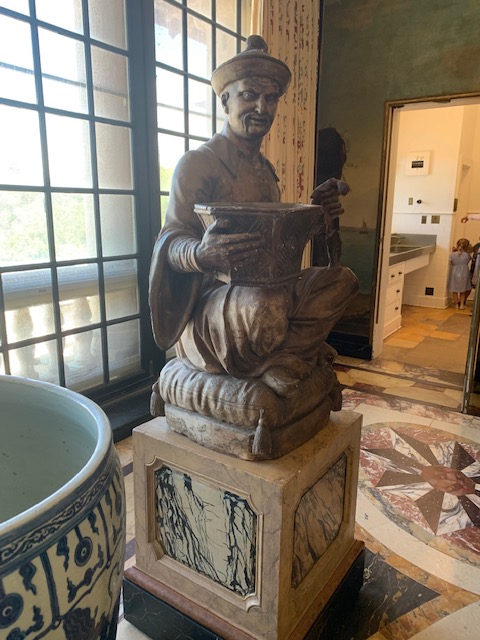
The Dinning Room
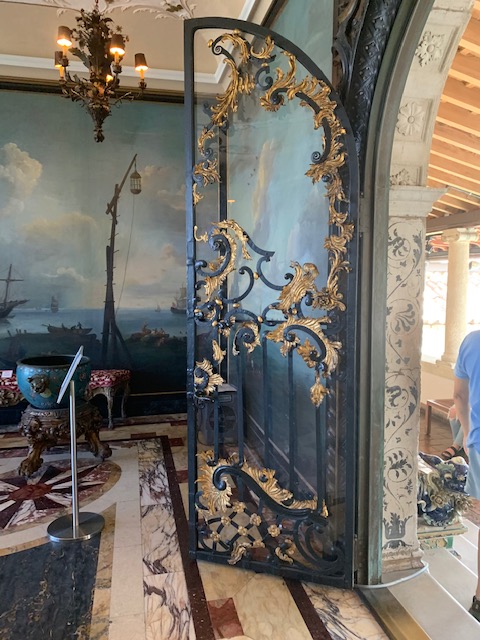
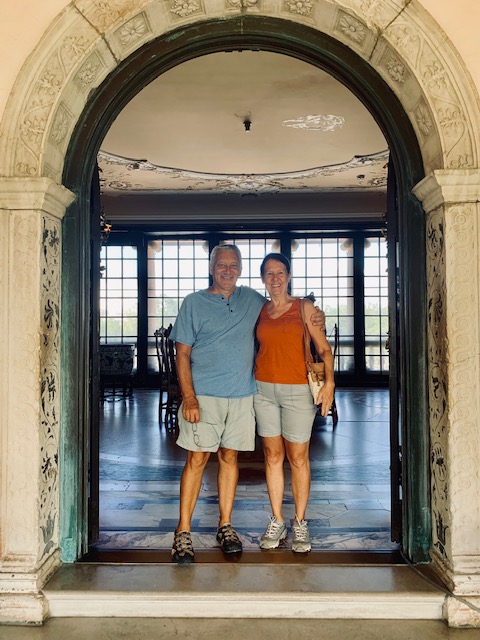
Enclosed Terrace/Loggia is another room that combines so many different patterns, painted surfaces, and materials to a great effect. the 18th-century gilded iron gates that lead to the South Arcade are originally from the Pisani family palace in Venice.
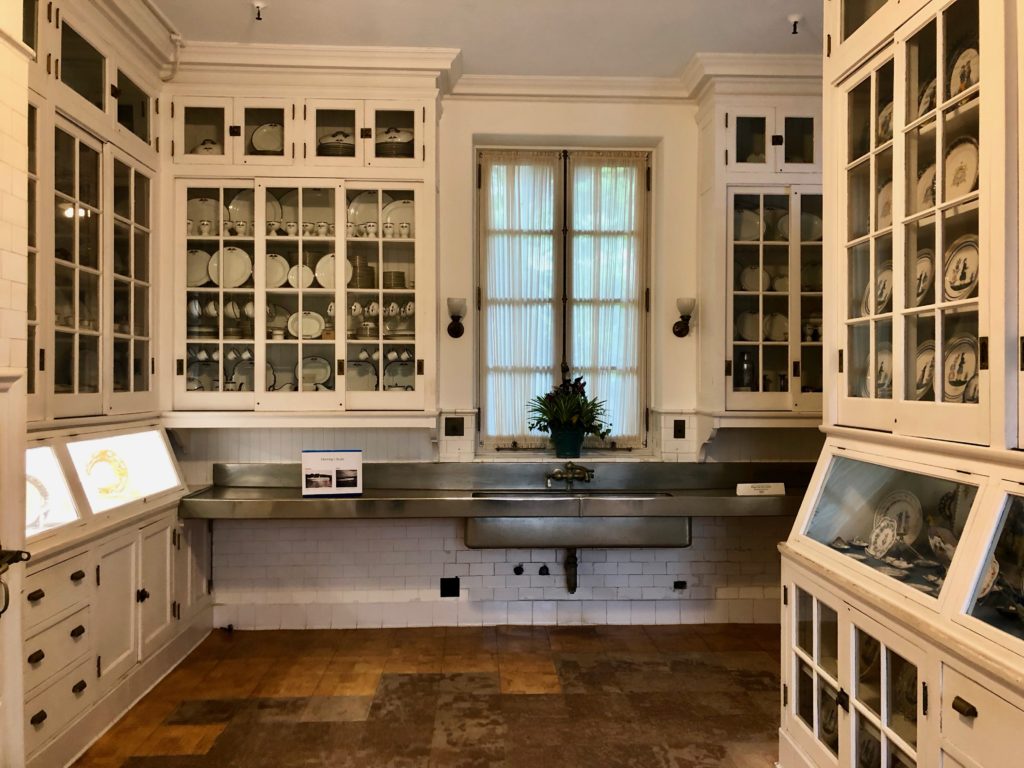
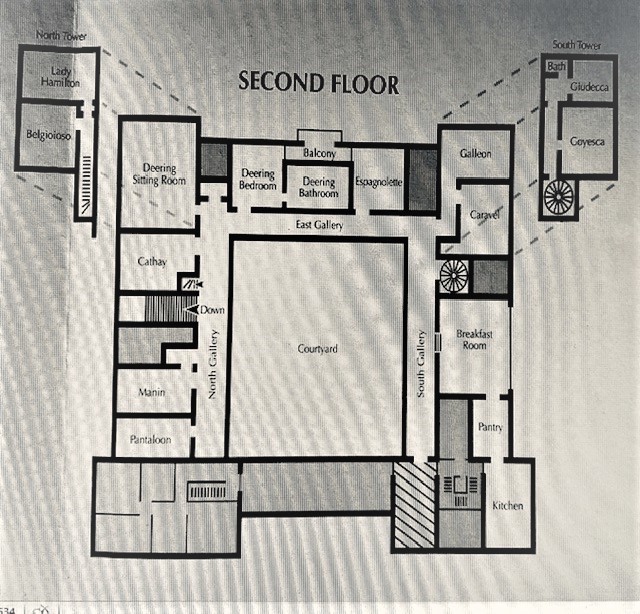
The Pantry – Where everything was put into the Dumb Waiter to the 2nd floor. The Serving Pantry is off the Enclosed Loggia. In most old estates, the kitchen and store rooms would be located “below the stairs” but since Vizcaya sits on the water, it can’t have a lower level so The Kitchen is actually located on the second floor.Dumb waiter in the pantry
The Flower Room – It’s where flowers were cut and arranged for the house. This side of the house was dedicated more to staff and now this room is where volunteers prepare for tours of the house and gardens.
Fountain in The Courtyard
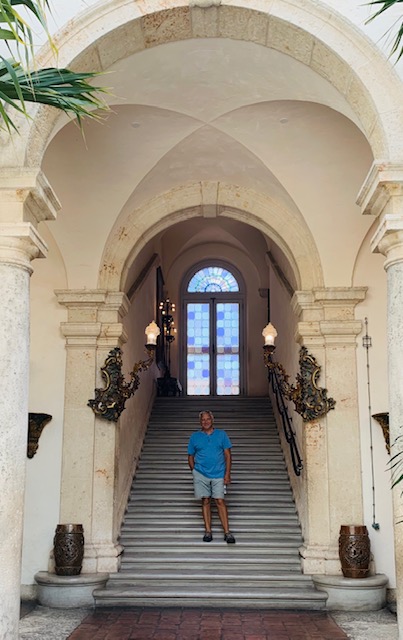
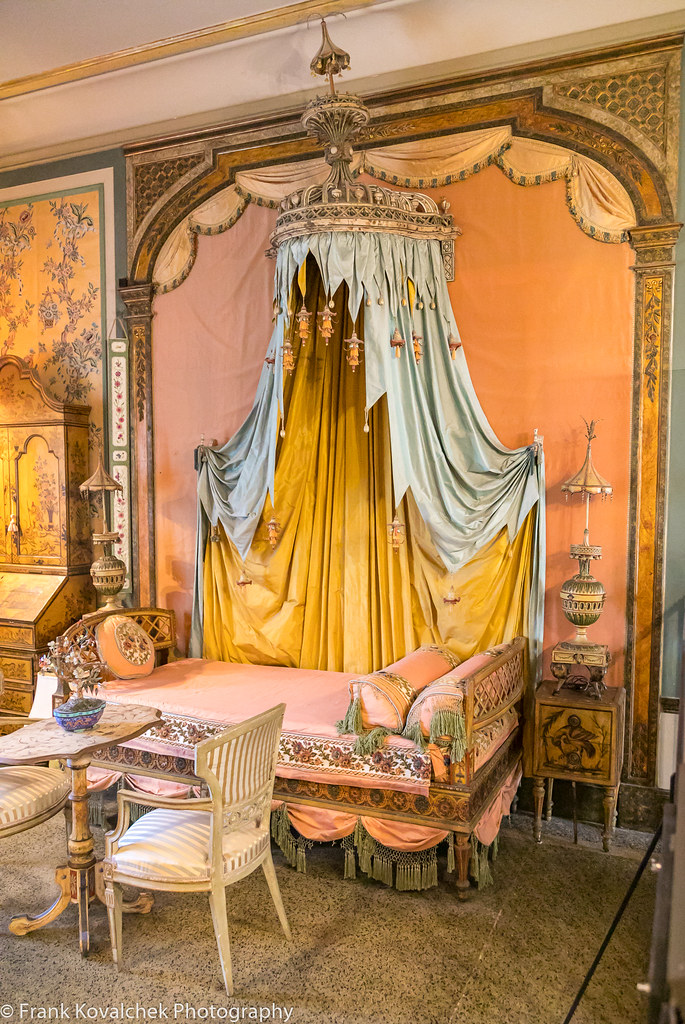
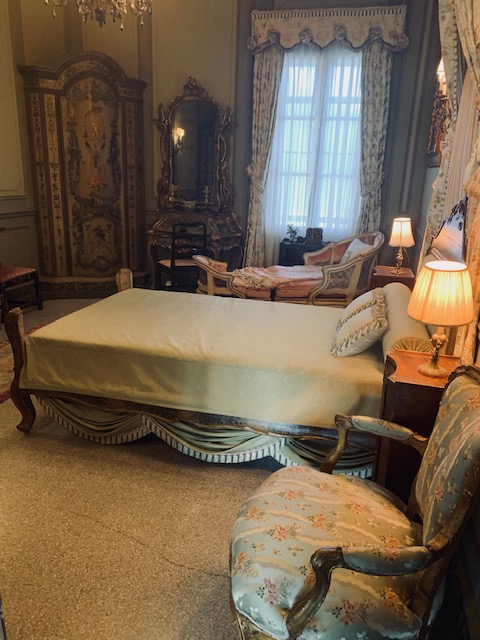
The second floor housed Deering’s personal suite of rooms and guest bedrooms as well as a Breakfast Room and the Kitchen.
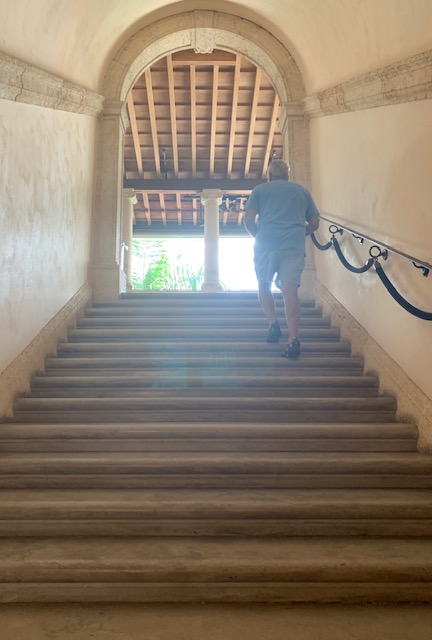
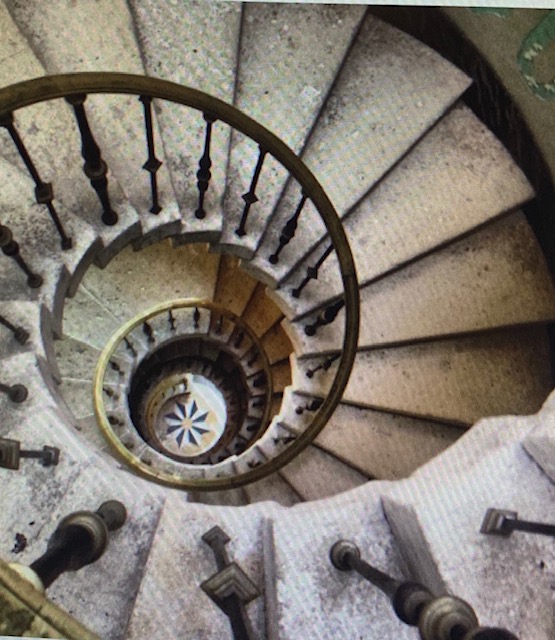
One of the staircases that goes to the 2nd floor
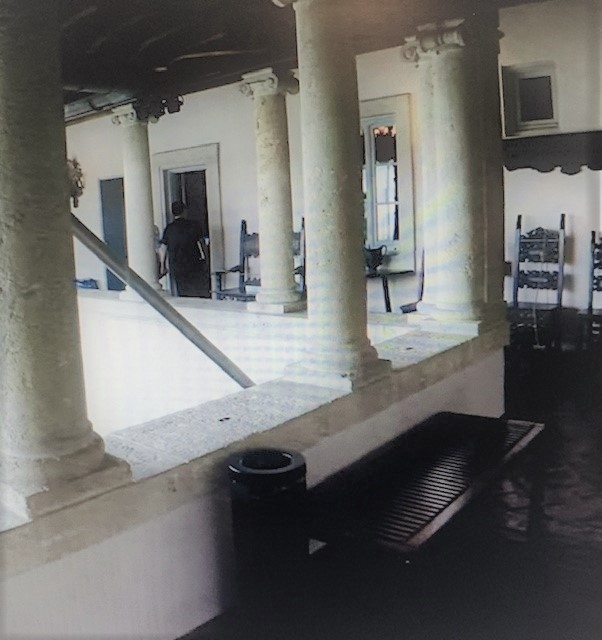
Coming up from the stairs and looking at the Courtyard form the 2nd Floor
The 2nd floor hallway
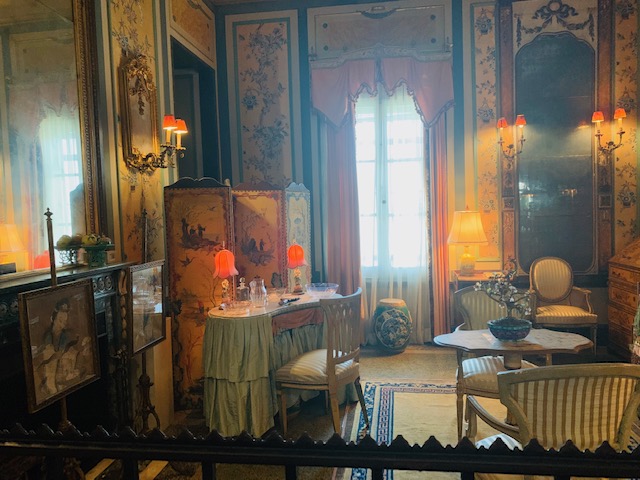
Sitting Room
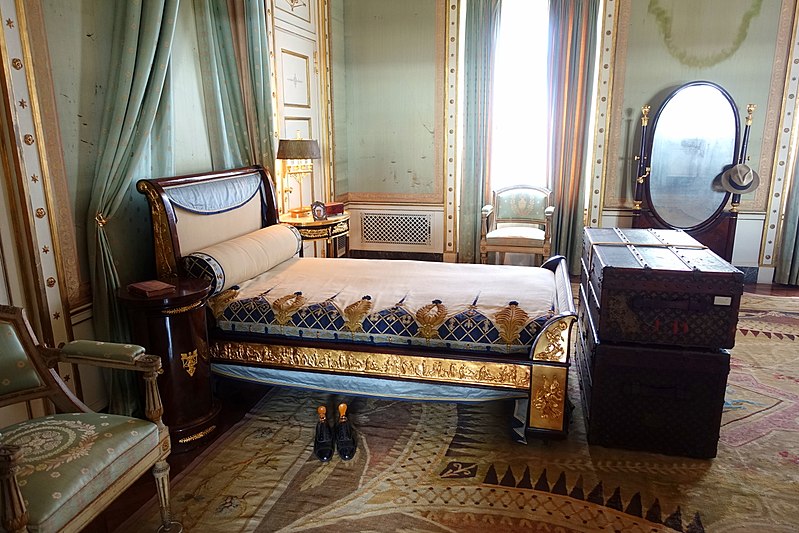
John Deering’s Bedroom
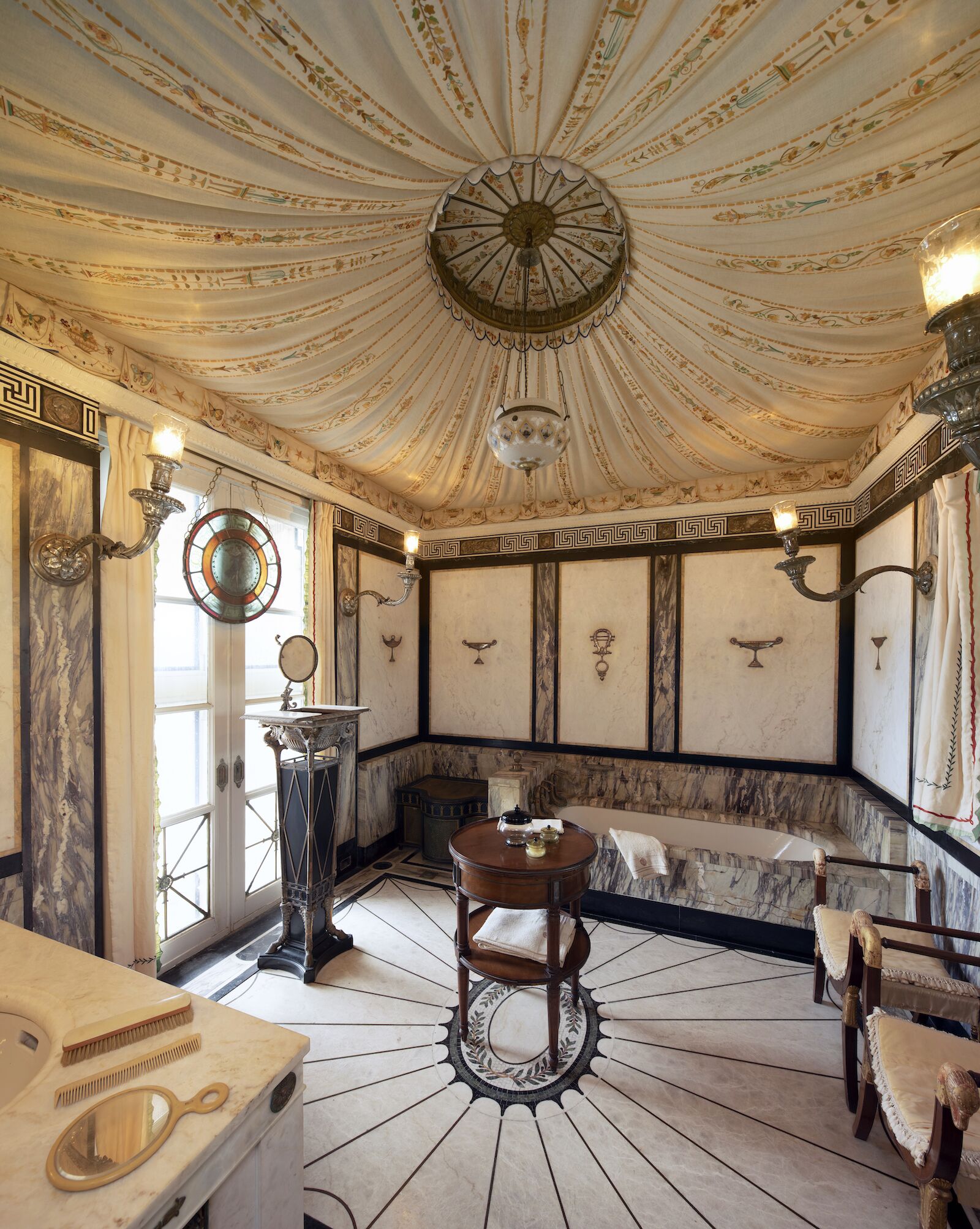
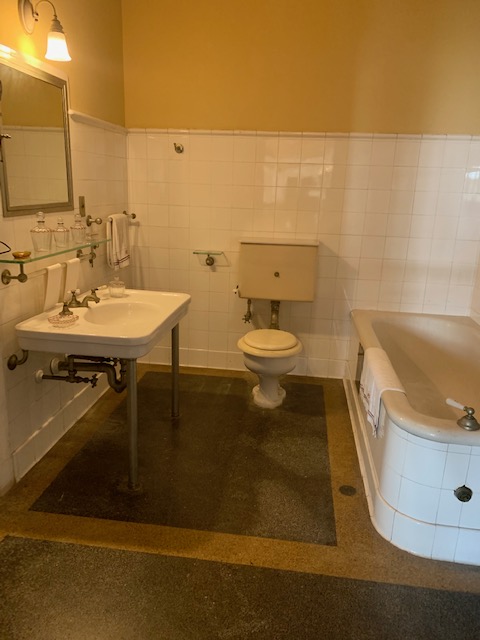
John’s Bathroom
The accommodations are quite lavish as movie stars, like Lillian Gish stayed during her visit in 1917. She was called “The First Lady Of Film” as she ruled the silent screen. I wonder what room she stayed in?
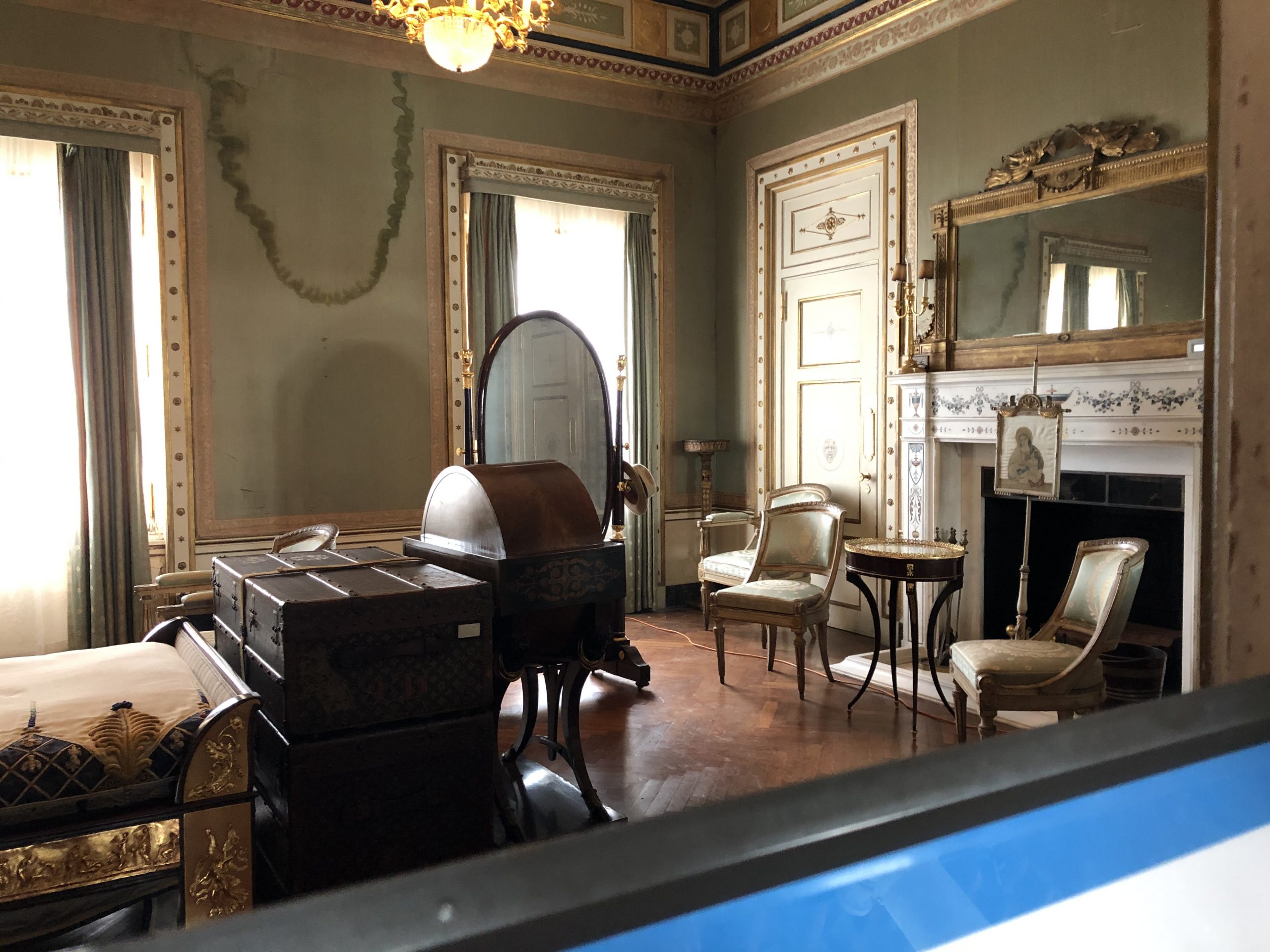
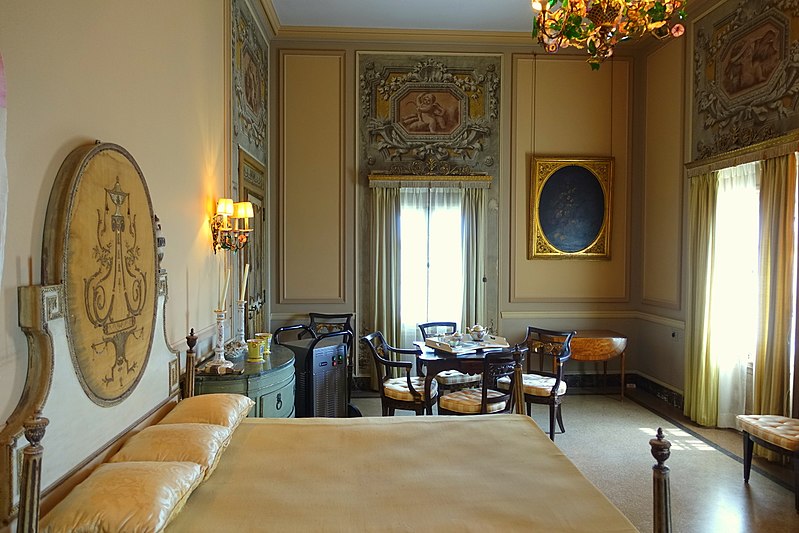
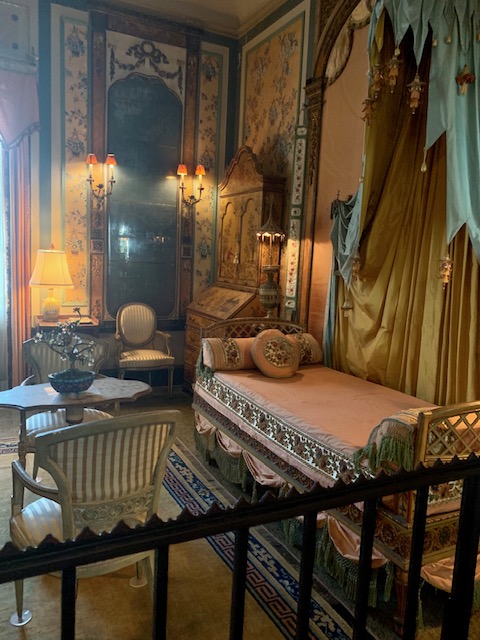
Some of the guests bedrooms all thru the 2nd floor
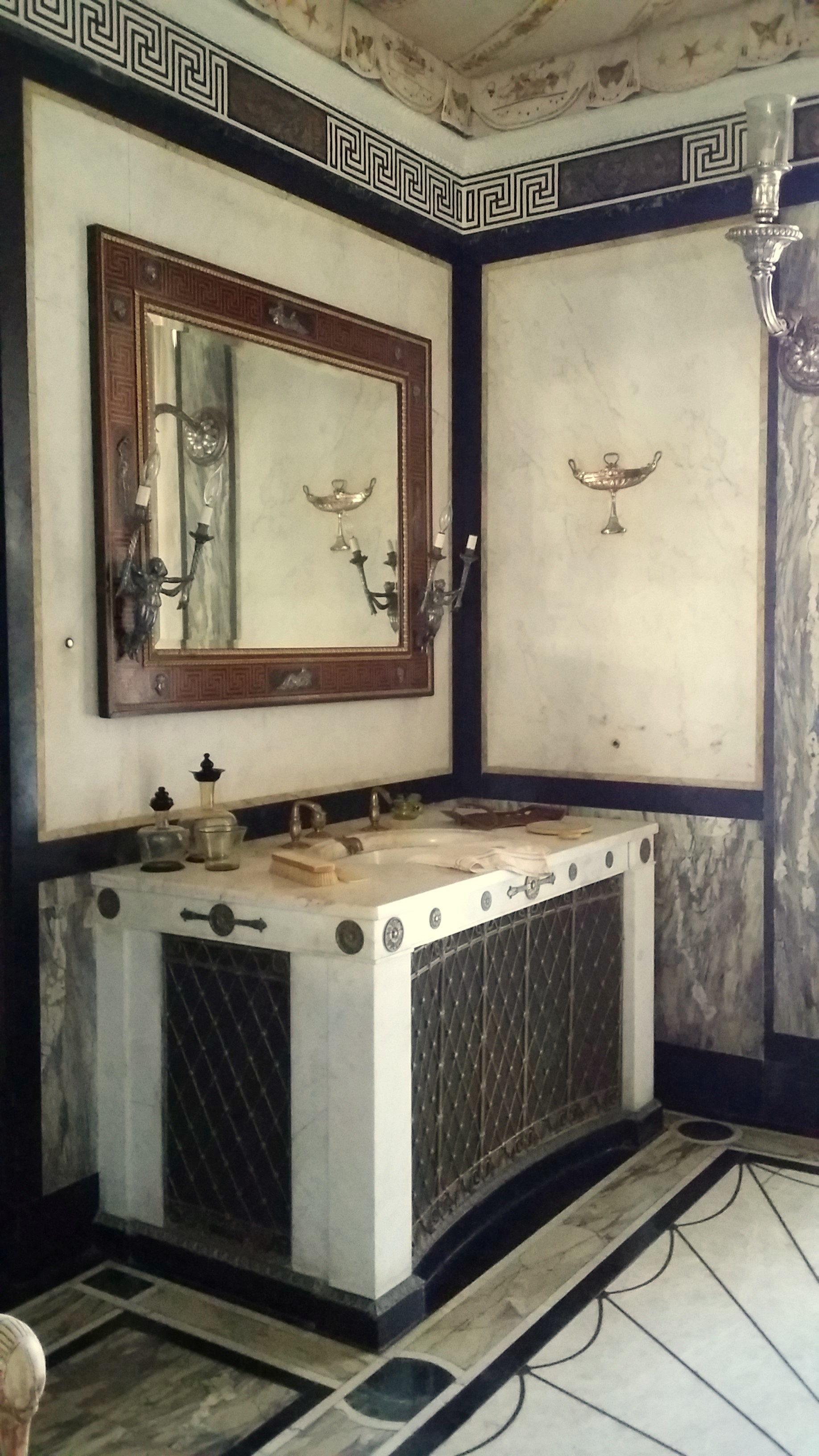
Bathroom for guests to use
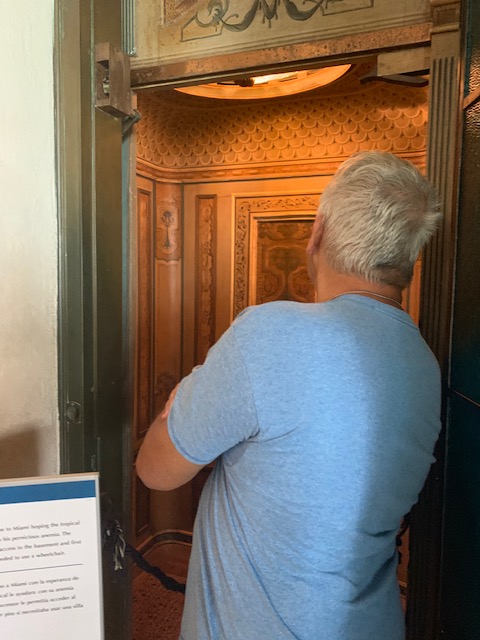
The Elevator
Another set of stairs
The 2nd floor provided Mr. Deering and his guests a breakfast room that looked out over the vast formal Vizcaya gardens
Stairs from the hallway to The Breakfast Room
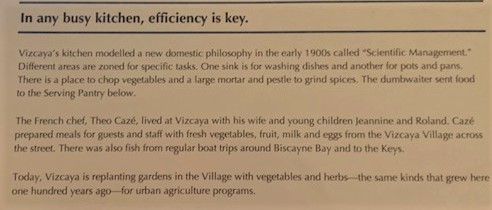
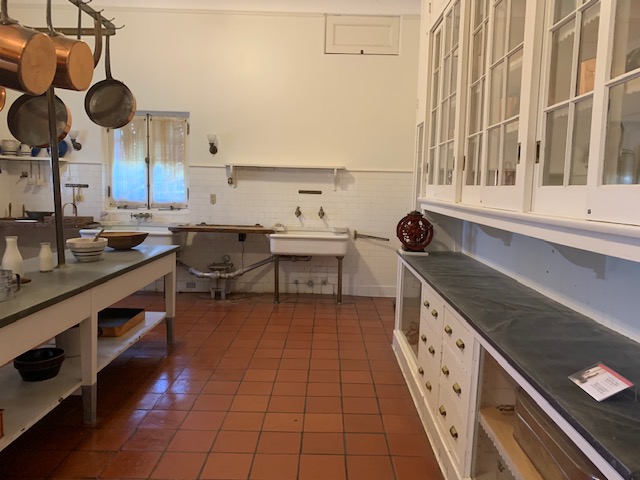
The kitchen is like a restaurant kitchen. Complete with three sinks, a grinder for spice, a dumb waiter and lots of room. The kitchen is on the second floor near the Breakfast Room, You didn’t have to go far for breakfast.
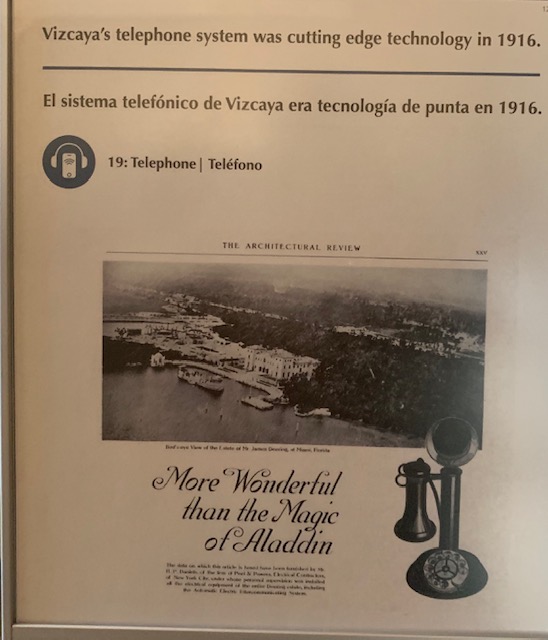
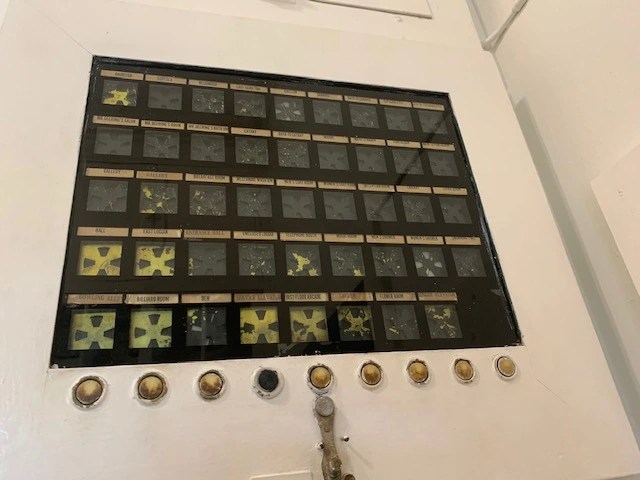
The Mansion had an intercom system
Pictures of the Courtyard
How Vizcaya looks today with the skylight over the courtyard
The Mansion is incredible !! There were other rooms, nooks and crannies that I was just to overwhelmed and amazed to take pictures of them or we weren’t allowed in the rooms.
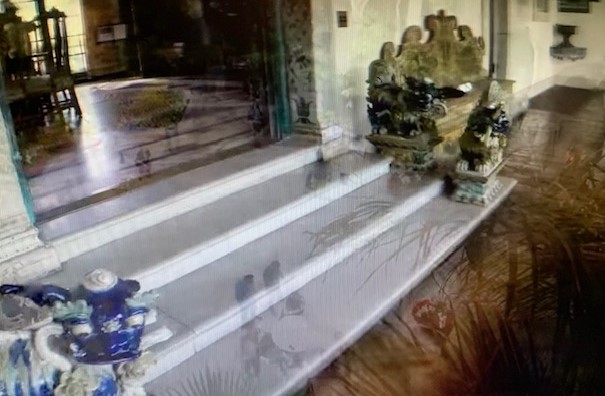
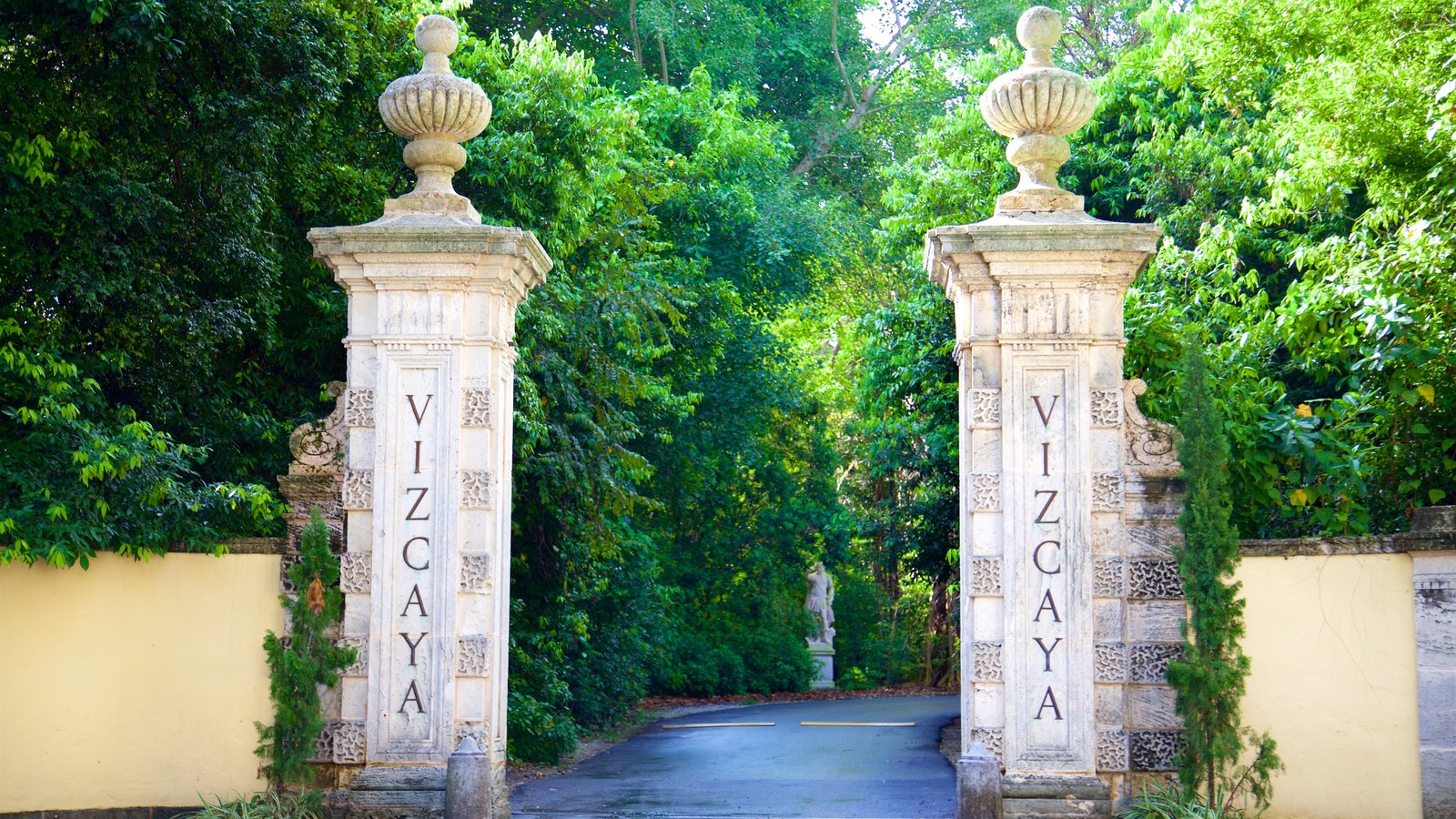
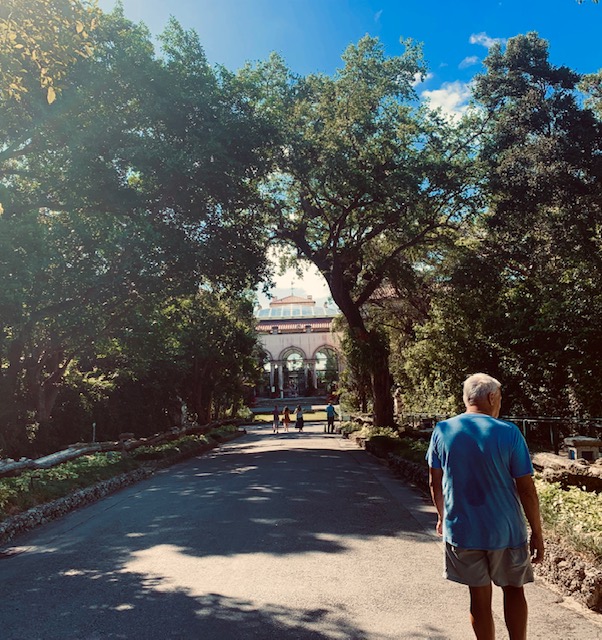
The entrance walk way to Vizcaya
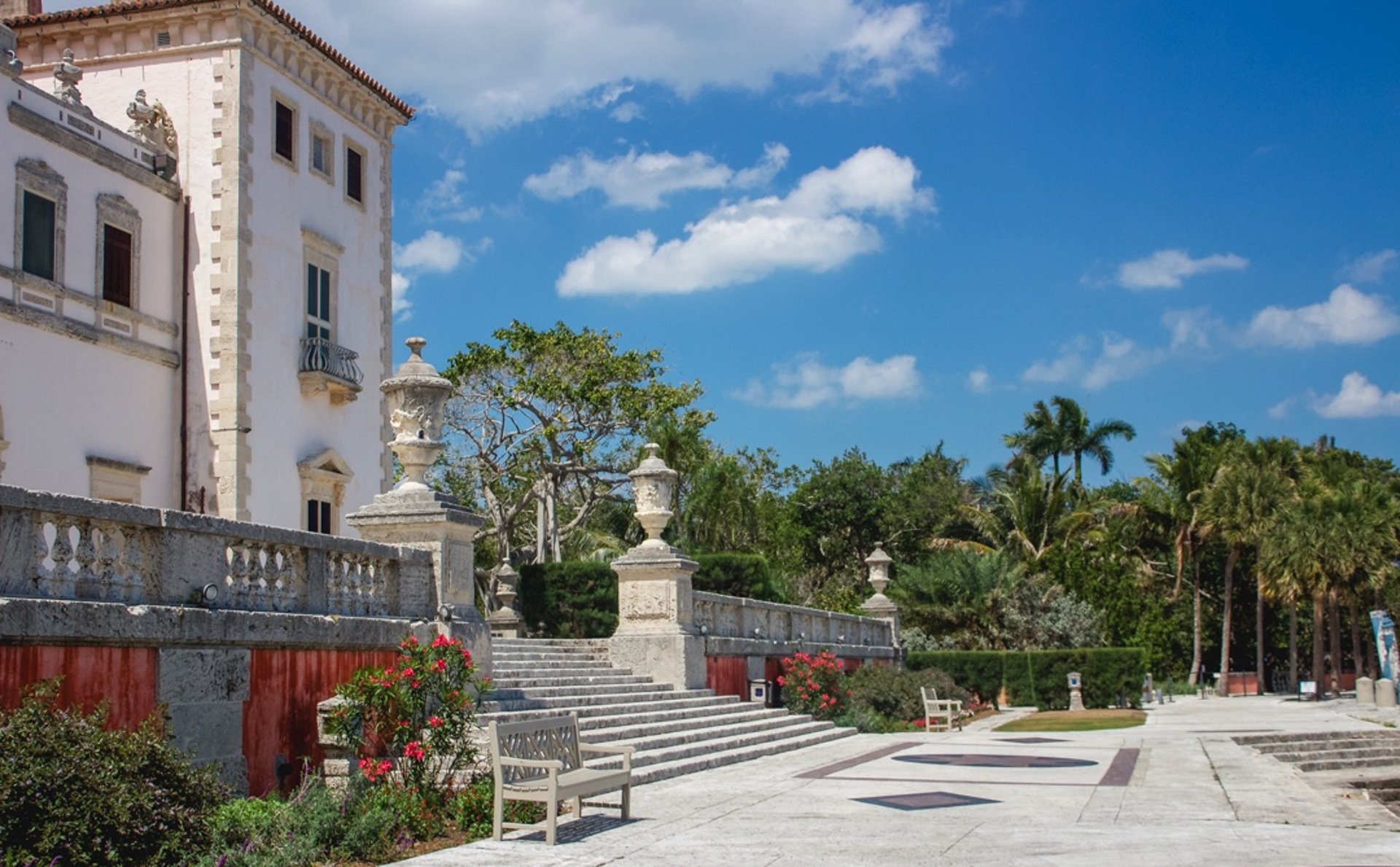
East Terrace that goes to the Ocean
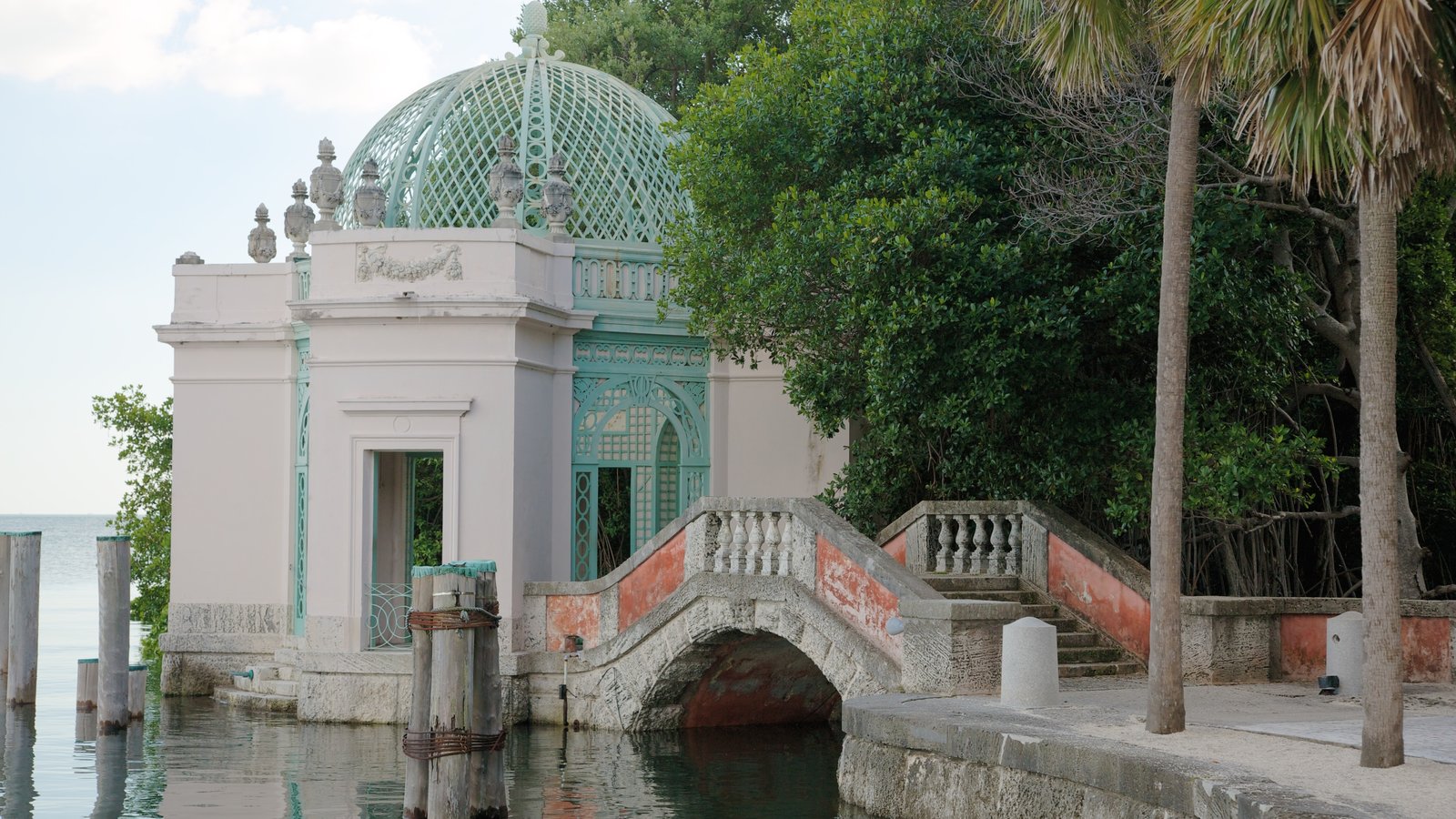
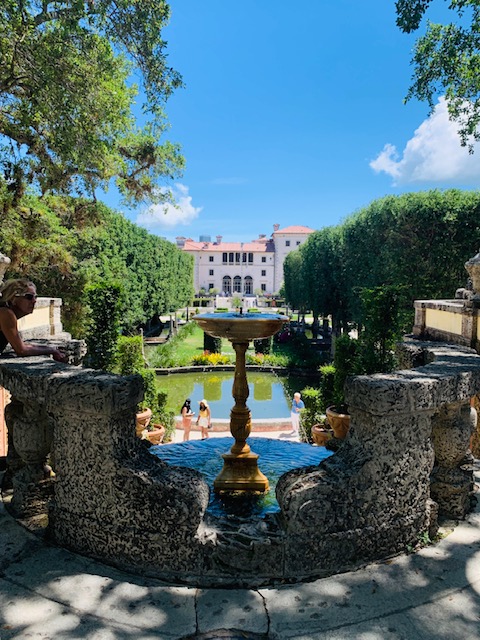
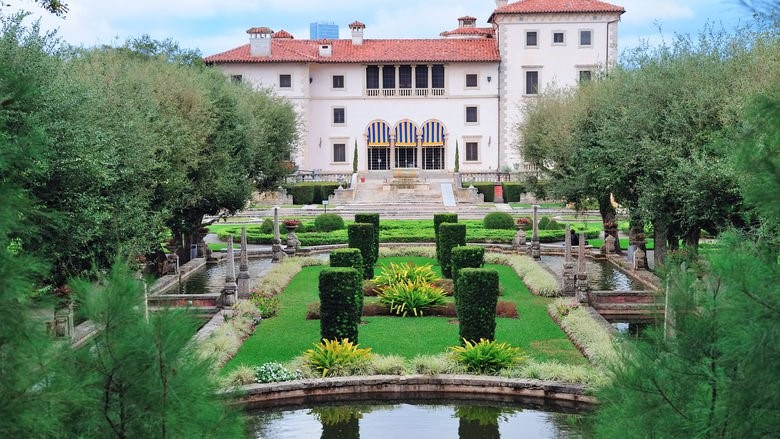
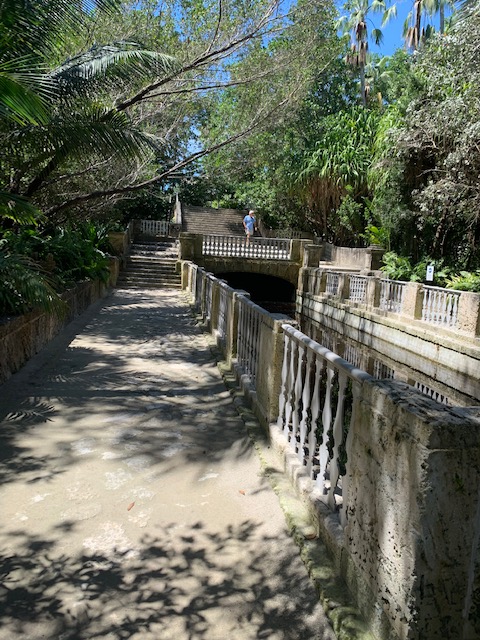
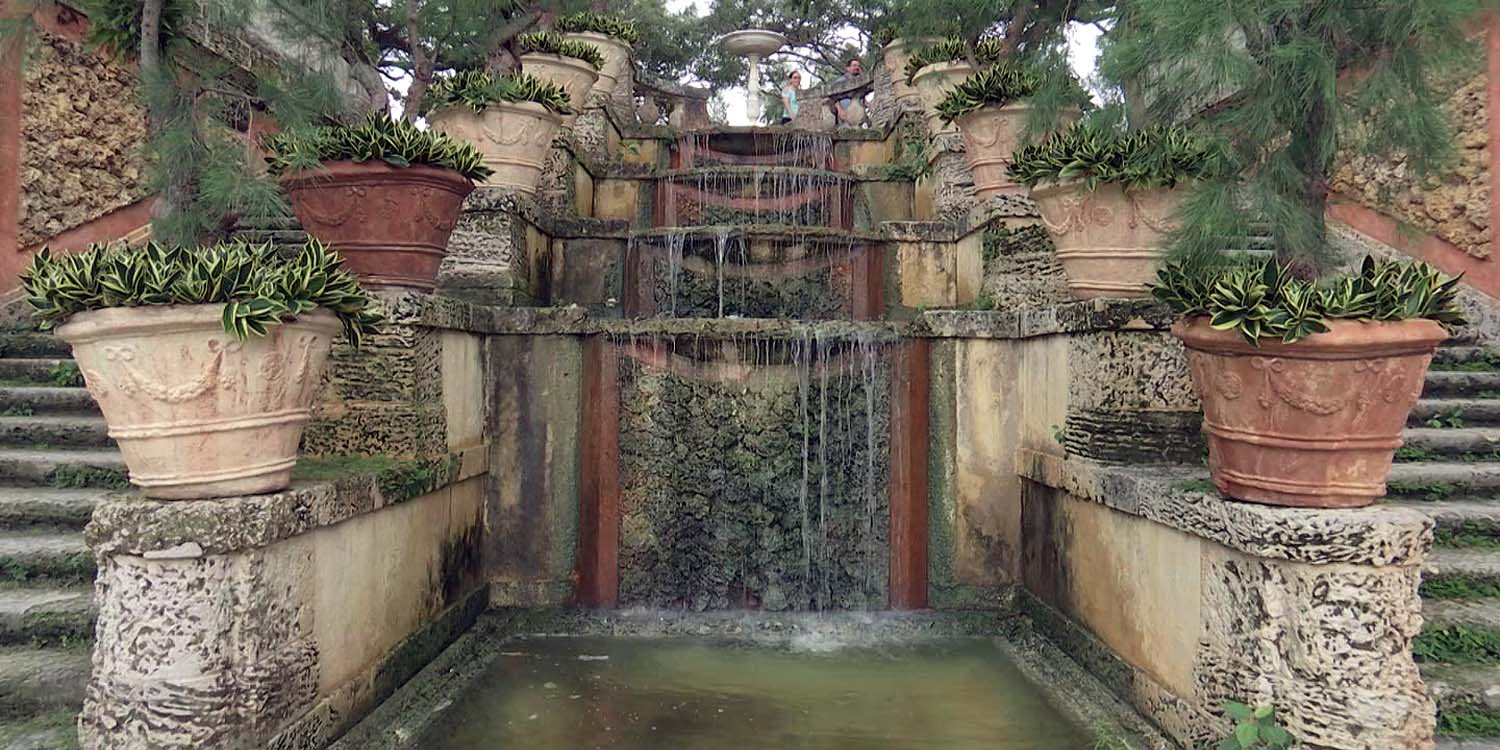
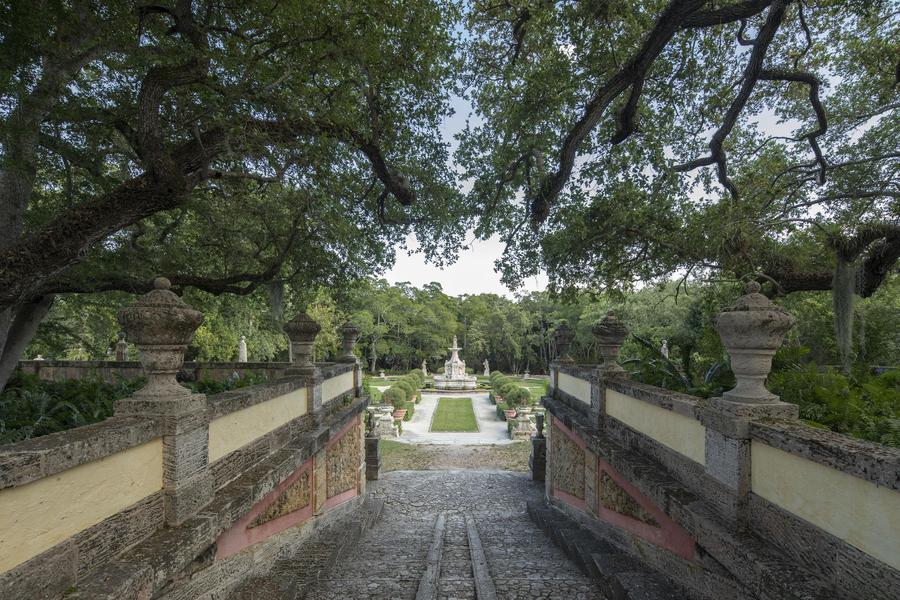
You go out these doors to the Incredible gardens. Vizcaya’s 10 acres of gardens. In many ways, the Formal Gardens resemble the layout of France’s Versailles
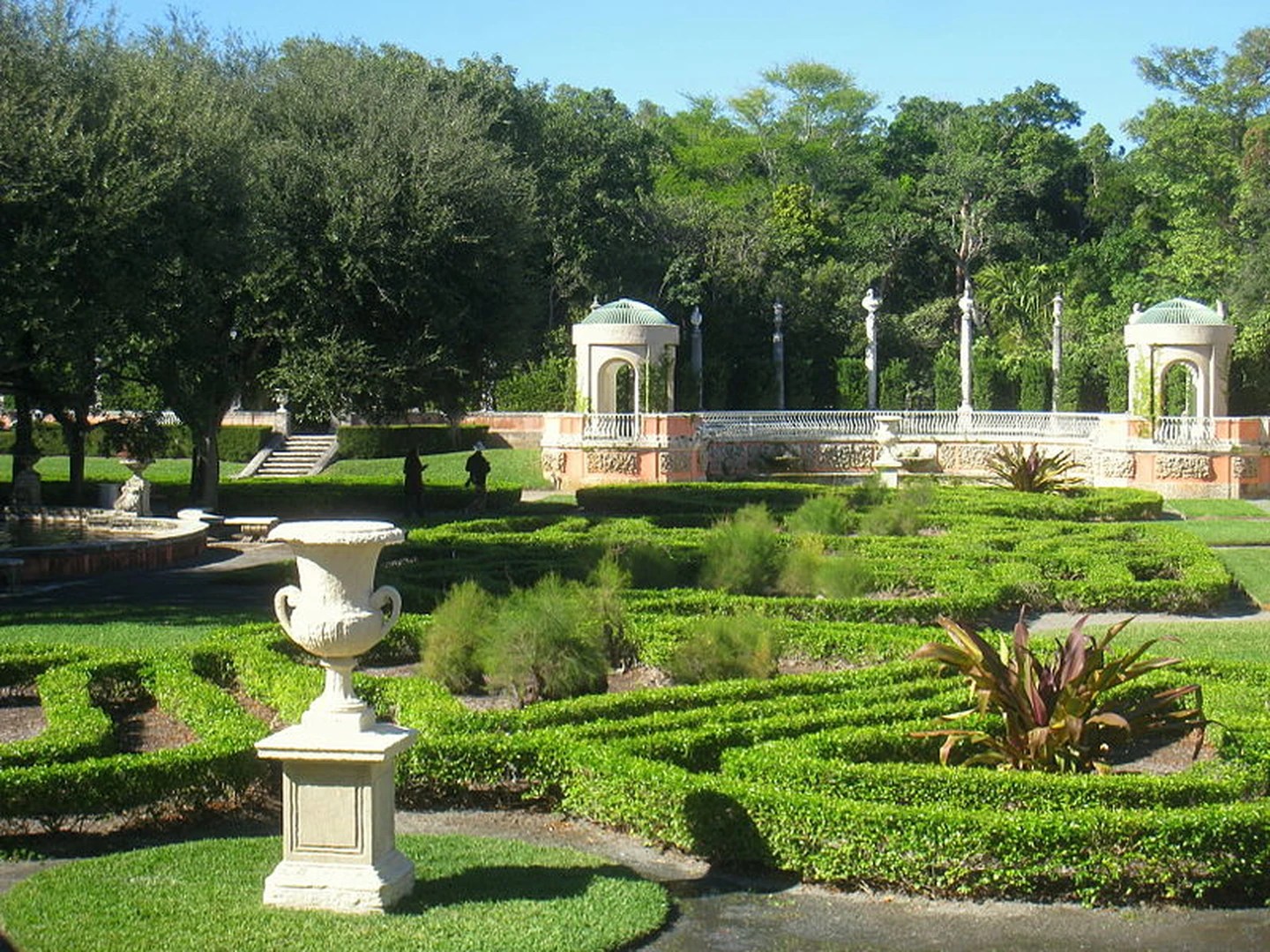
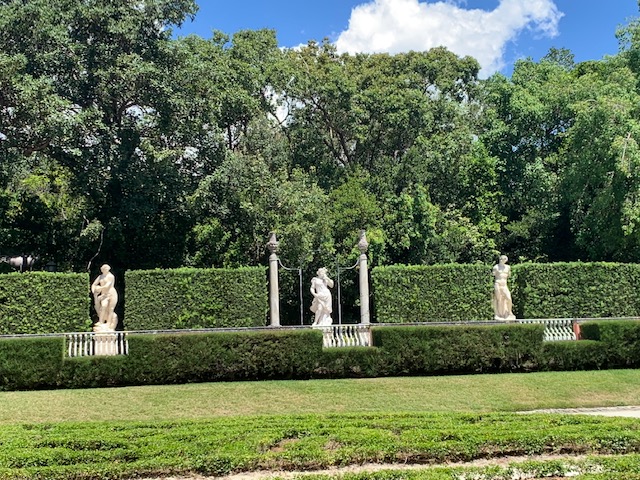
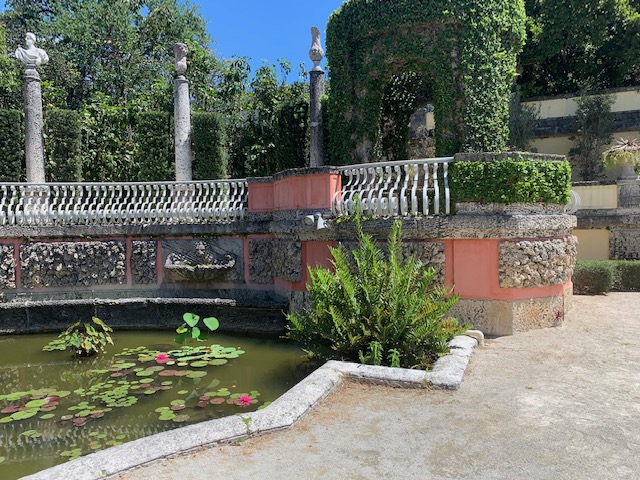
The sprawling Formal Gardens were designed by landscape architect Diego Suarez to feel like a great outdoor room, connecting to the main house along a north-south axis. Several architectural elements come together in one space. Massive shaped bushes lined the corridor and give way to The Mound, where The Casino pavilion provides an aerial view of the gardens.
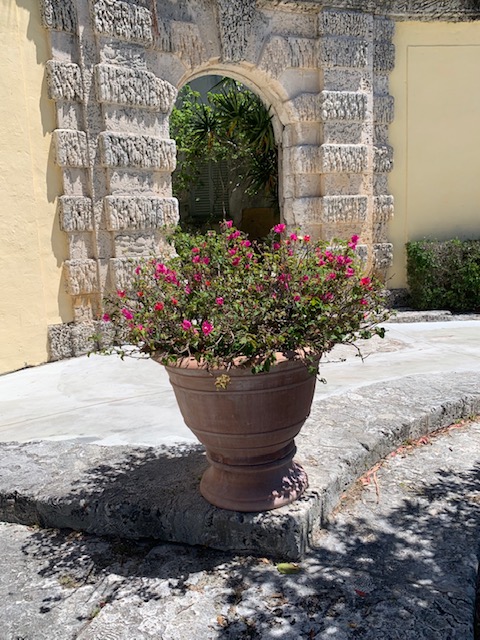
Trimmed shrubs organize walkways into mesmerizing, geometric patterns. Thick columns, lush mazes and classical statues also lend to its European aesthetic, but Vizcaya uniquely embraces its tropical surroundings as well. Here, palms, rare orchids and Cuban limestone infuse the palatial Mediterranean vibe with a signature Miami flair. I Couldn’t have said it any Better!
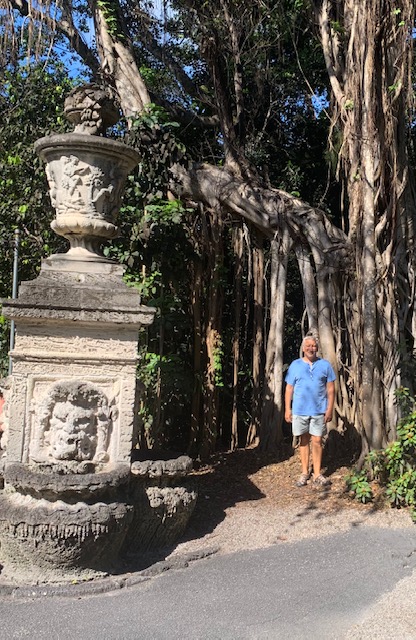
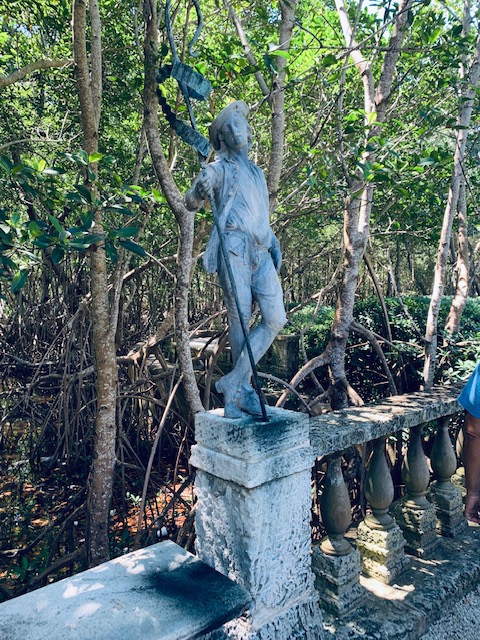
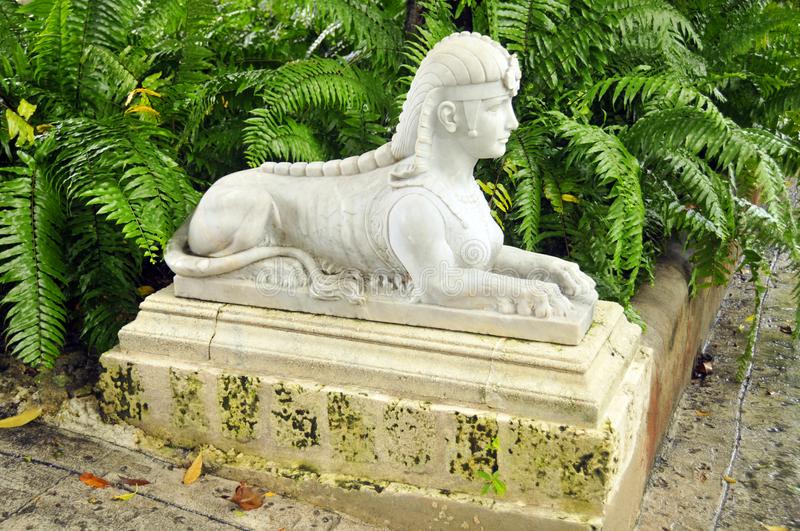
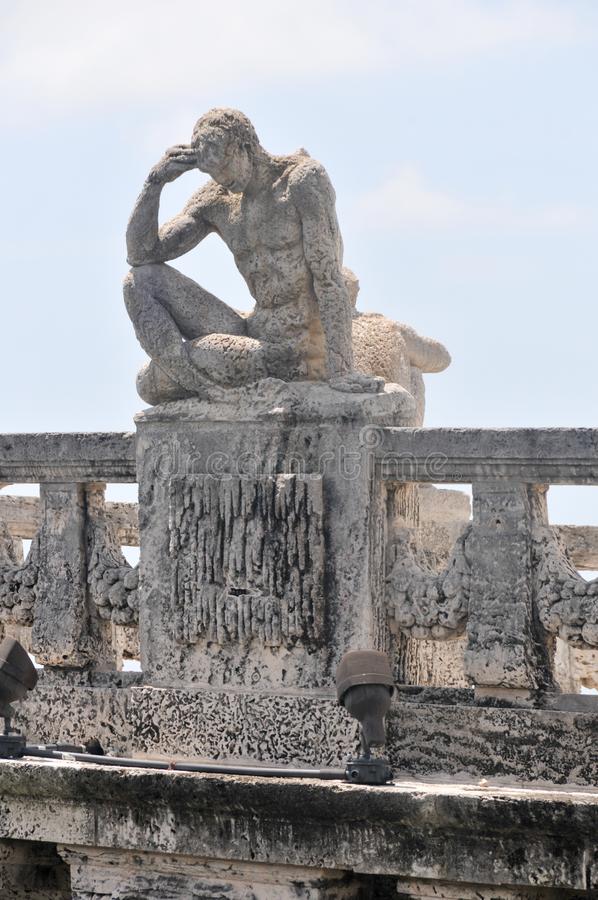
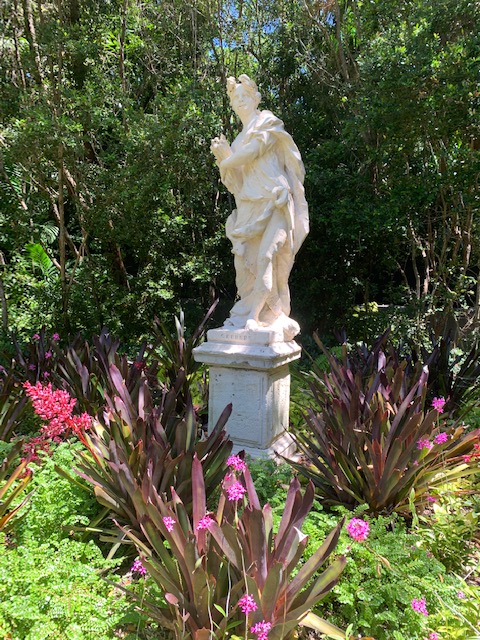
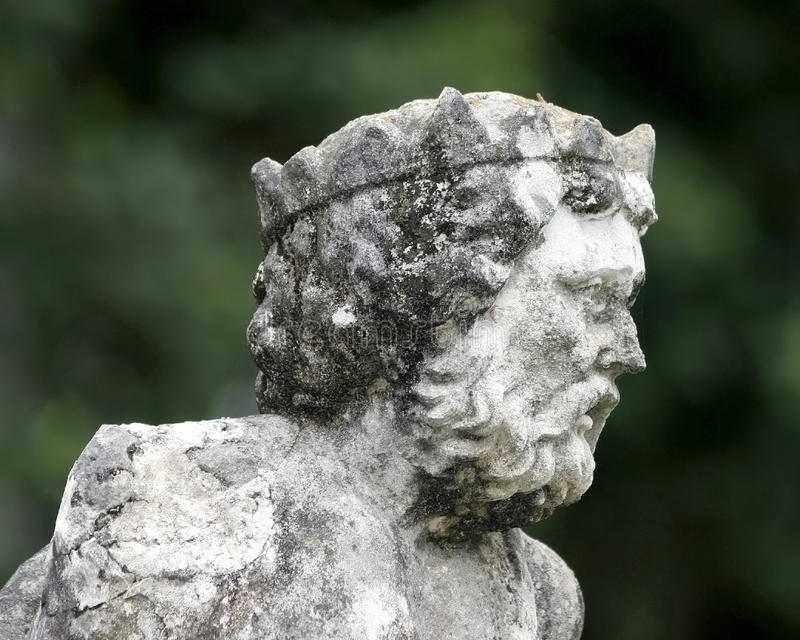
Sculptures from eighteenth century Italian gardens – especially those around Rome – serve as accents in the gardens. New sculptures were also commissioned. The new sculptures were carved from a soft porous coral stone, which made them look weathered almost immediately.
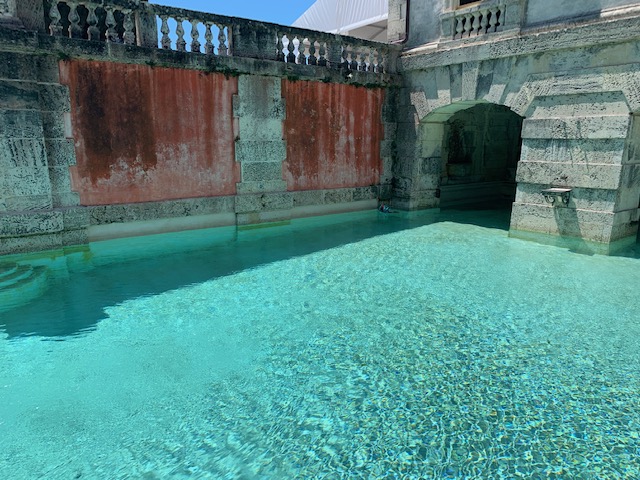
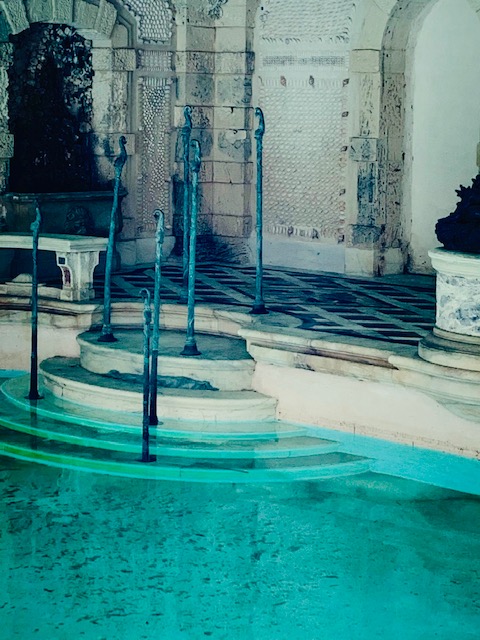
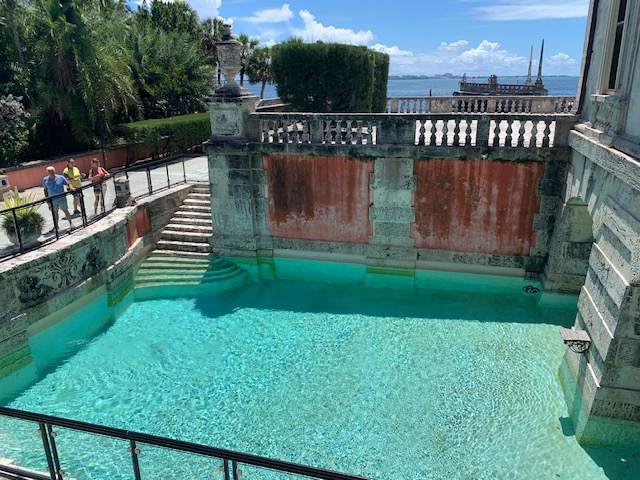
Of course it had to have a pool. The swimming pool at Vizcaya is partially located under the living room and has a very unique indoor / outdoor design. The indoor area gives the feeling of a traditional grotto. There is a ceiling mural designed by American artist Robert Winthrop Chandler which features an underwater scene including fish, seashells, marine life and coral. I didn’t get a picture of the mural 😒
It also had a bowling alley and billiard room, unfortunately it is no longer there and I couldn’t come across any pictures.
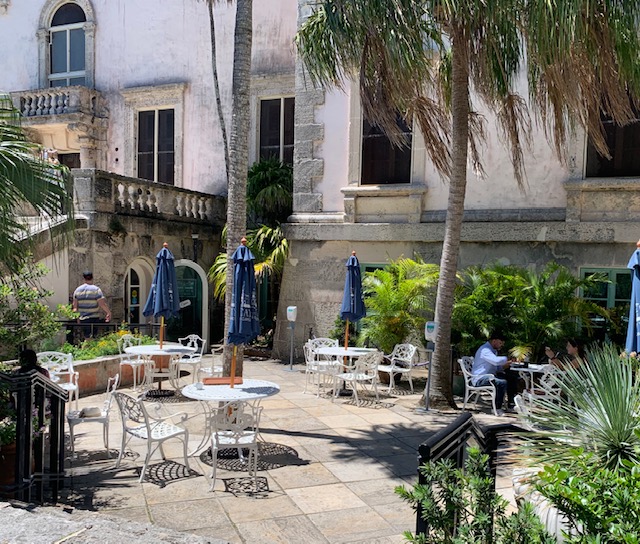
This is the outside cafe’ and there is a gift shop inside and that is where the bowling alley and billiard room were located.
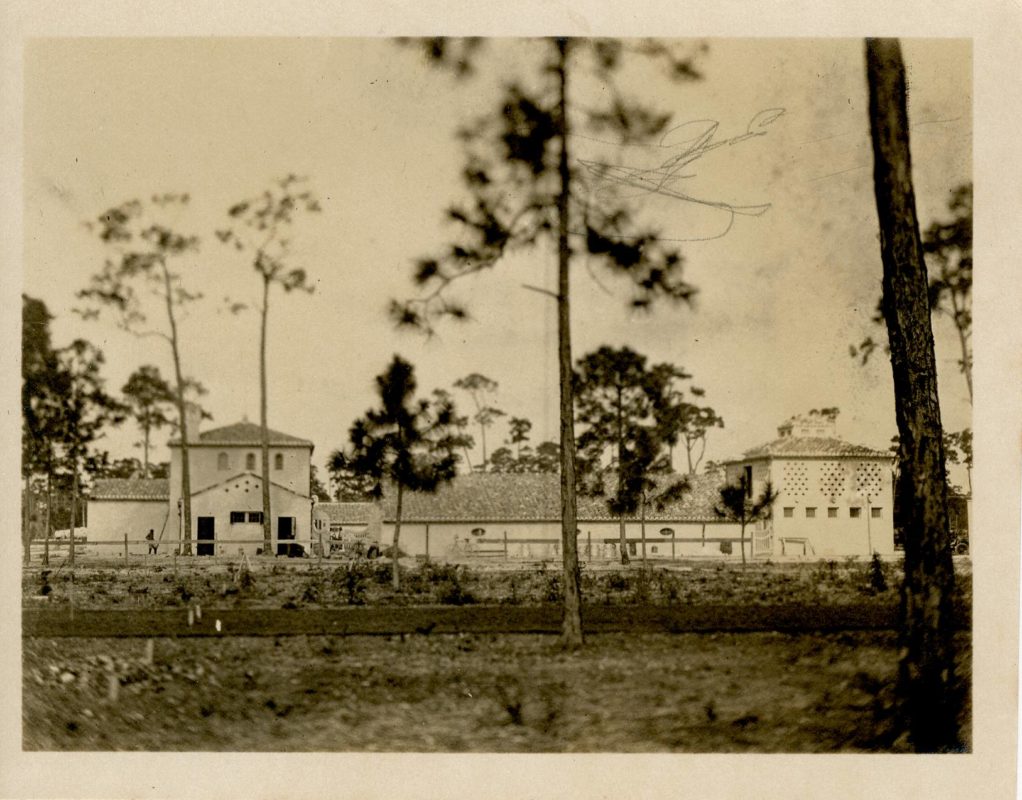
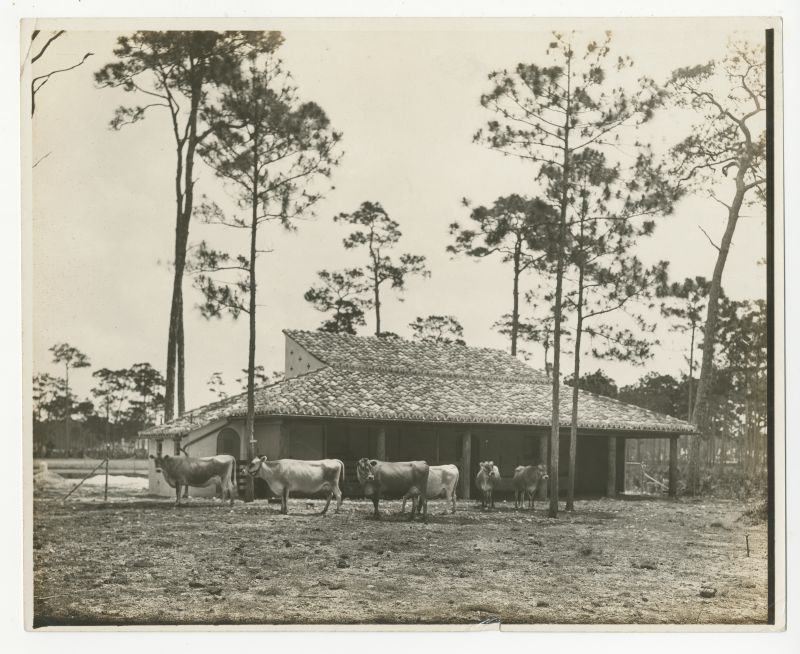
Vizcaya included its very own farm and village. Located on the west side of South Miami Avenue, Vizcaya Village was built alongside the Main House and designed to house crops and farm animals. It is no longer here, but they are in the process of duplicating the farm as it once was.
Originally an estate of 180 acres, it had a dairy, poultry house, mule stable, greenhouse, machine shop, paint and carpentry workshop and staff residences. This required the staff to be present year round.
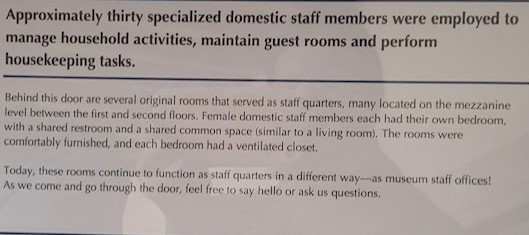
Approximately 16-18 staff maintained the house, and 26 gardeners and workers were permanent residents of the house. The Village buildings housed the property’s staff quarters, auto garages, equipment sheds, and workshops, and also barns for the domesticated animals.
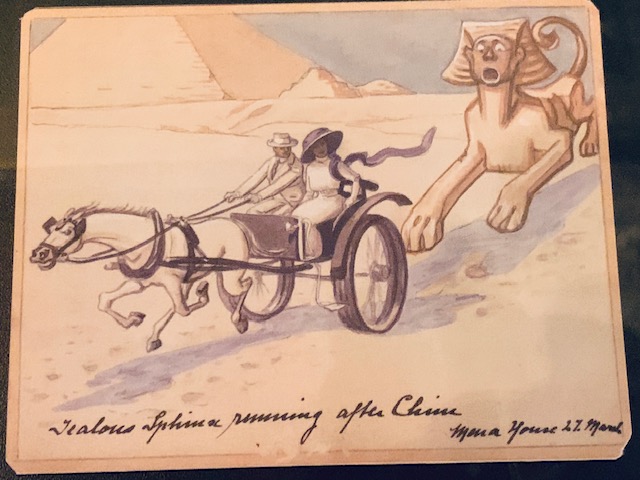
John Deering went to Egypt and made this post card. He definitely had a sense of humor.
He built his dream winter villa from 1914 and through the Roaring Twenties, costing him an estimated $26 million at that time. Today, the property is worth an estimated $9 billion.
The family eventually donated the property to the people of Miami. The Miami-Dade County acquired the villa and gardens in 1952 and it then became the Dade County Art Museum, due to the impressive arts and antiquities amassed by James Deering. It was designated a National Historic Landmark in 1994.
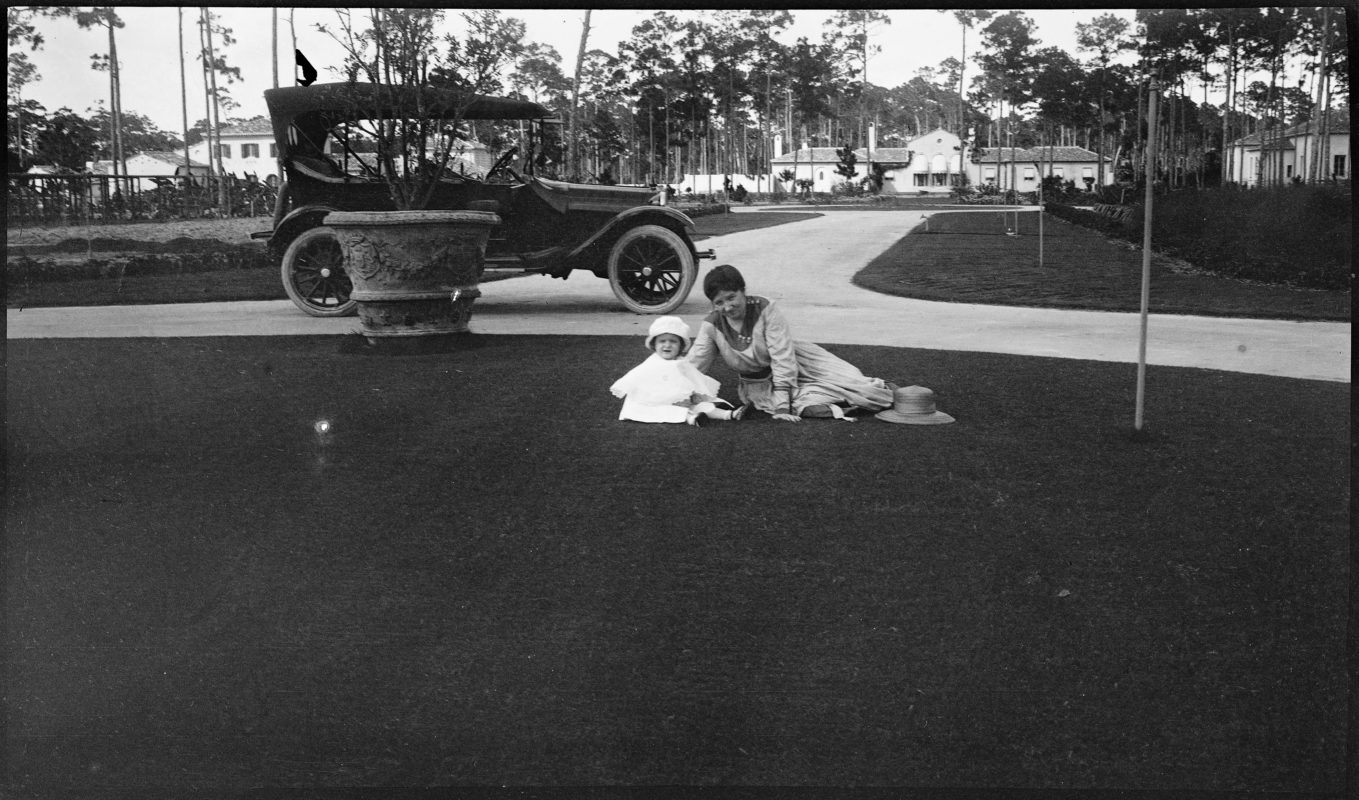
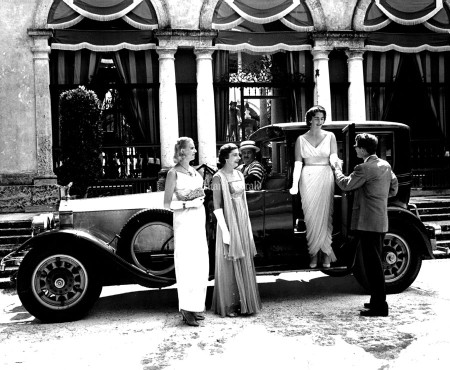
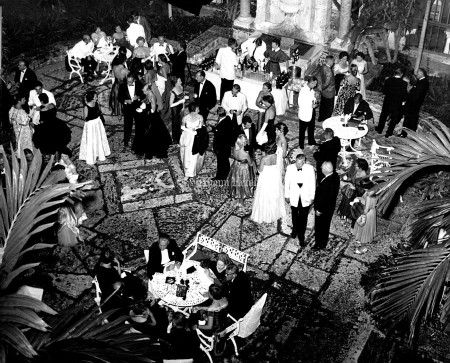
It is truly a grand setting, and as usual the pictures don’t to it justice! I wish I could have been there to join in on some of the celebrations.

































































































 ROADS OF DISCOVERY