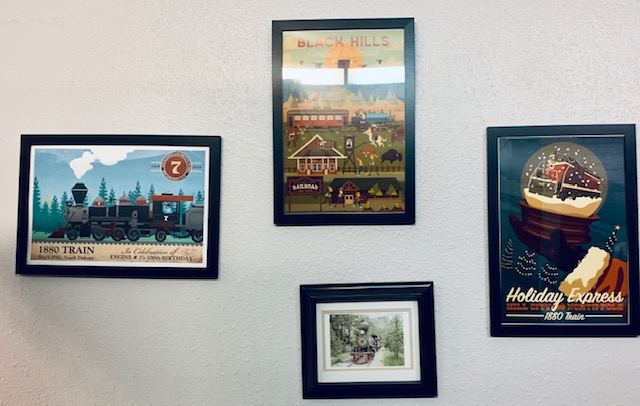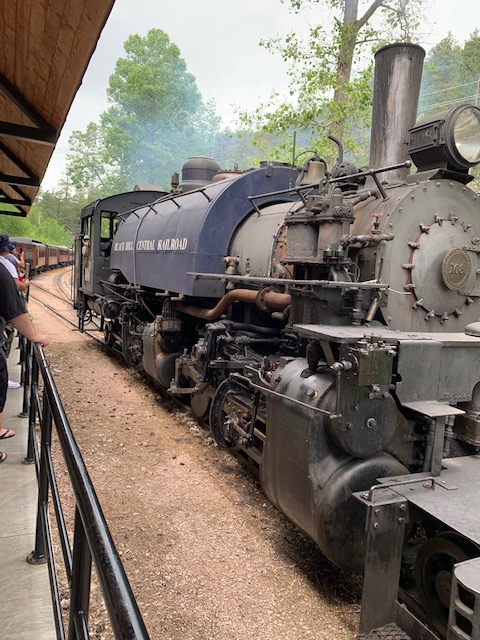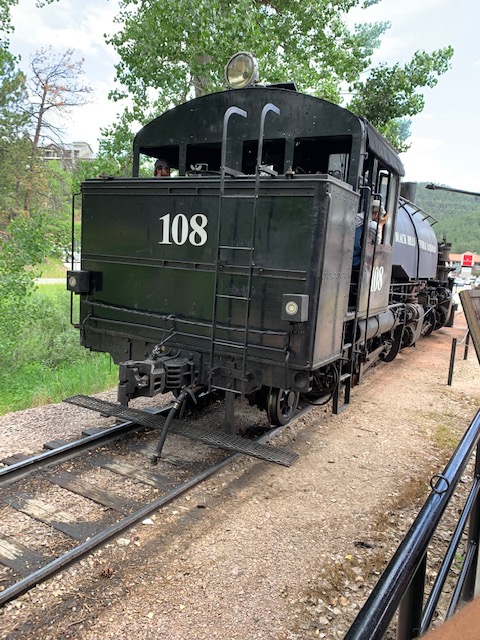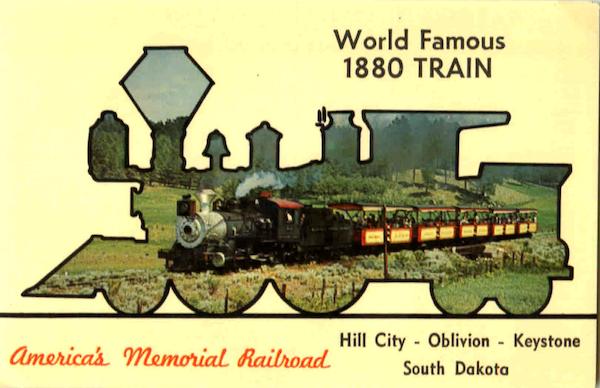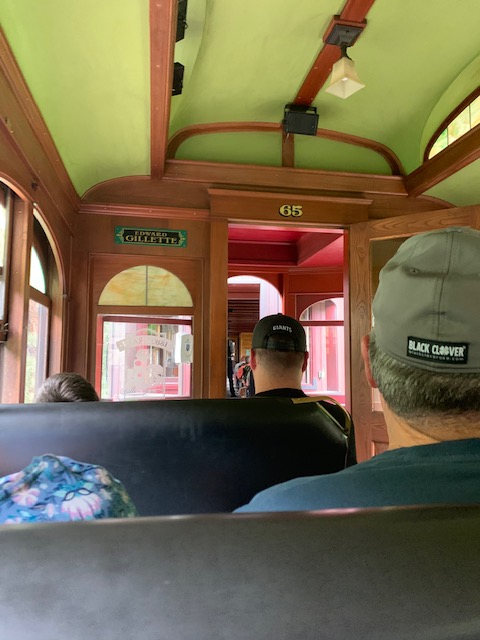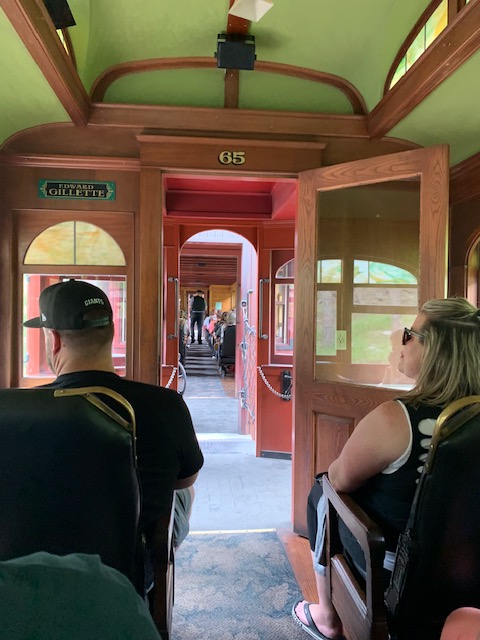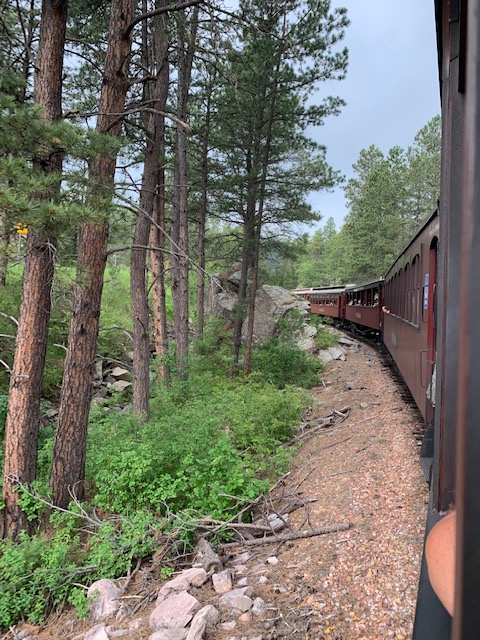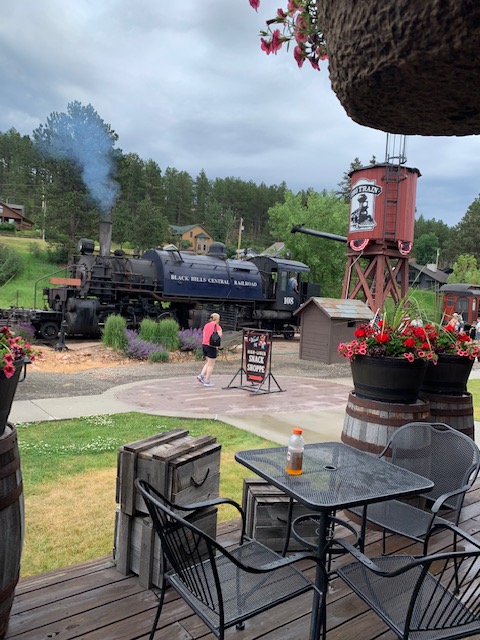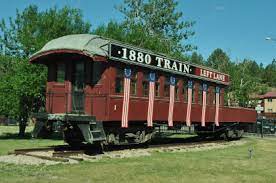
Welcome aboard the Black Hills Central Railroad 1880 Train!

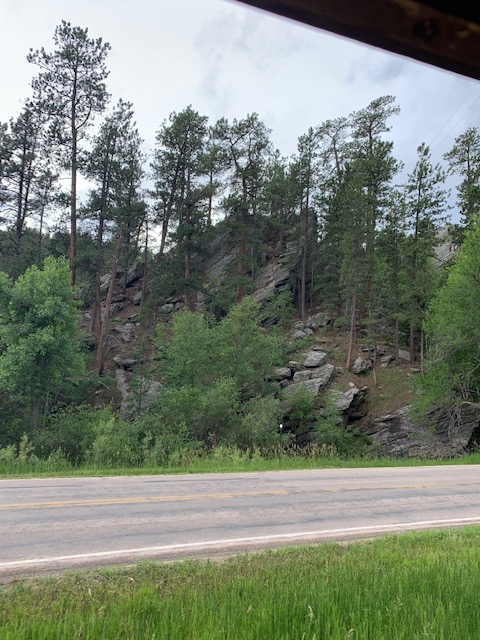
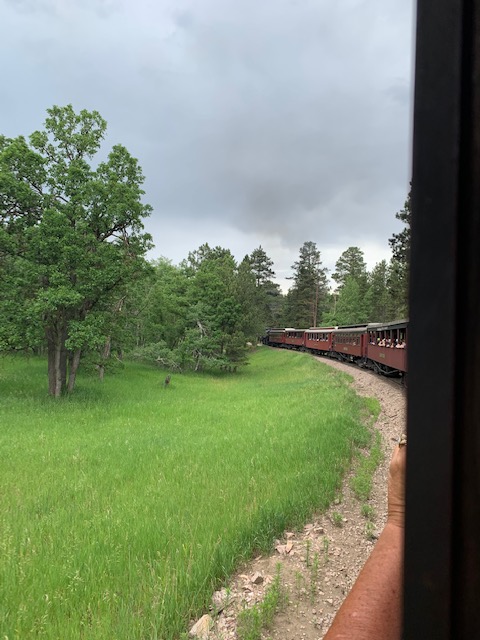
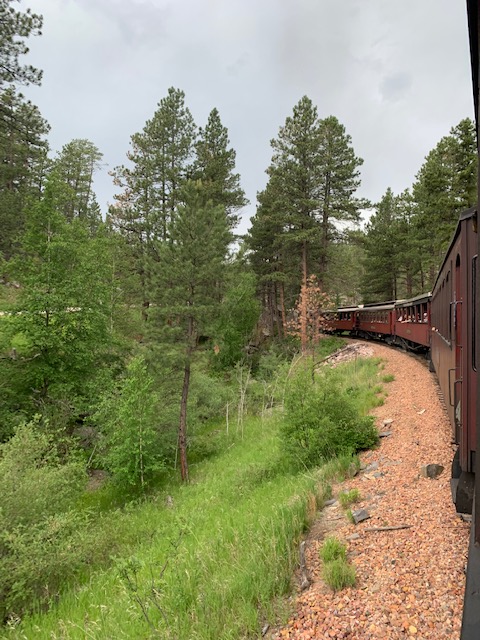
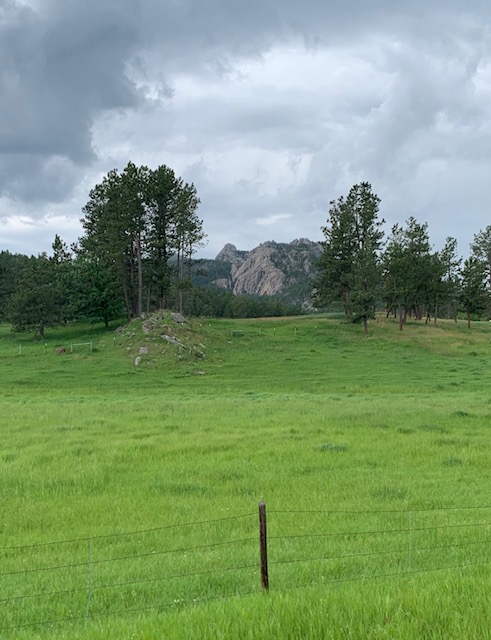
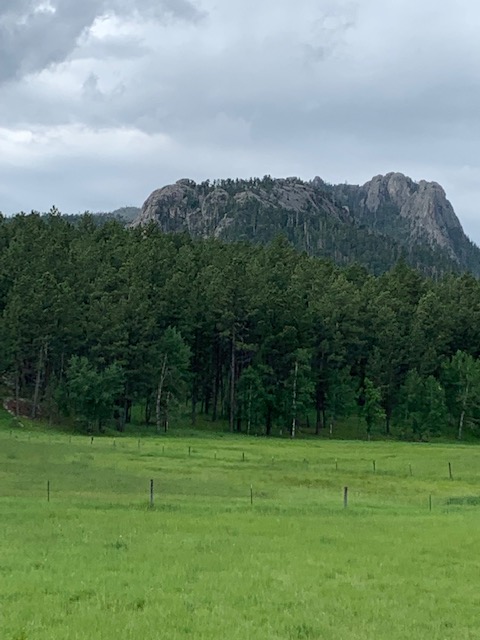
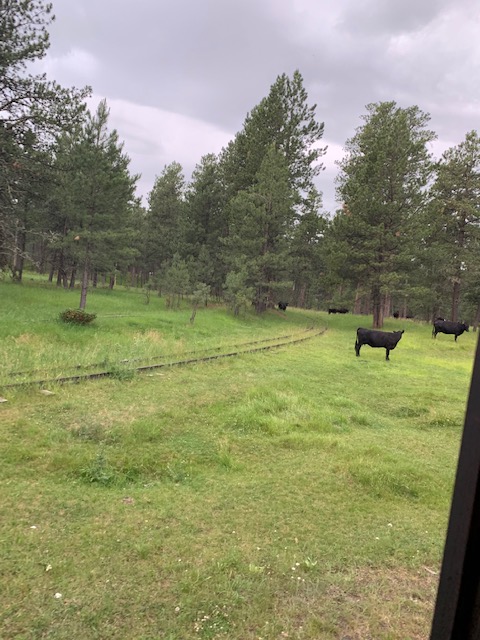
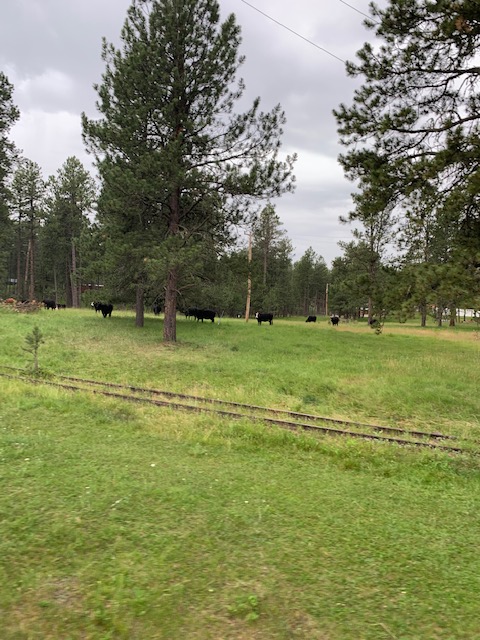
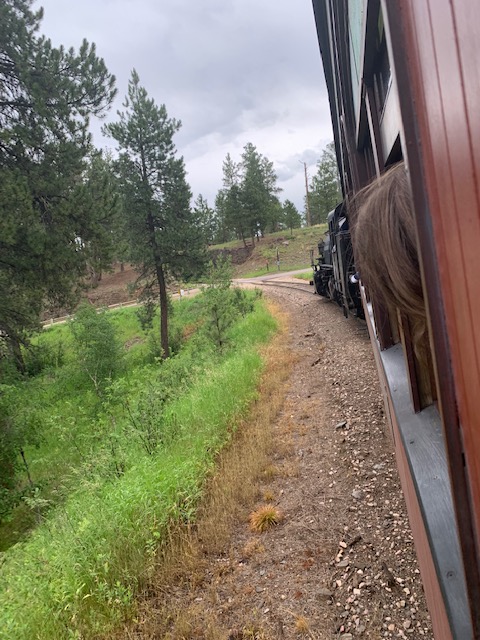
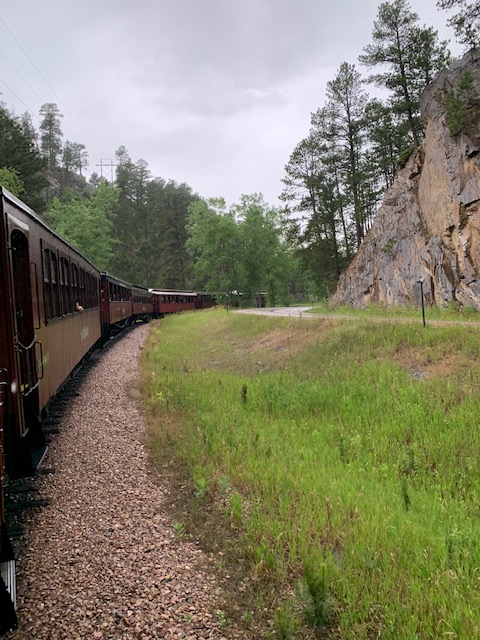
Dave & I like trains so we drove to Keystone to ride an old steam train. The 2 1/2 hour roundtrip adventure took us through the South Dakota Black Hills between Keystone and Hill City.
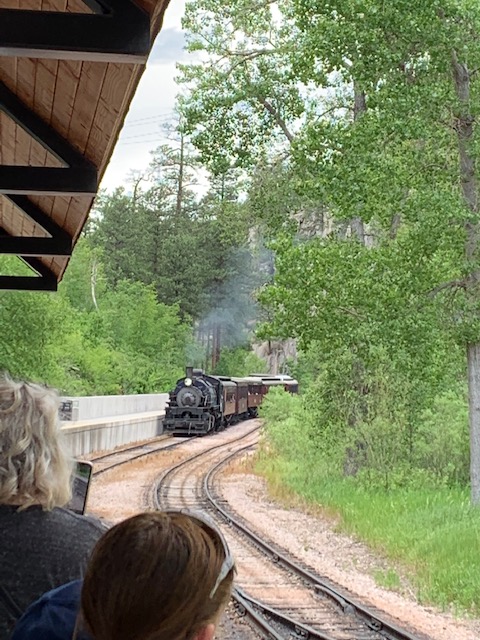
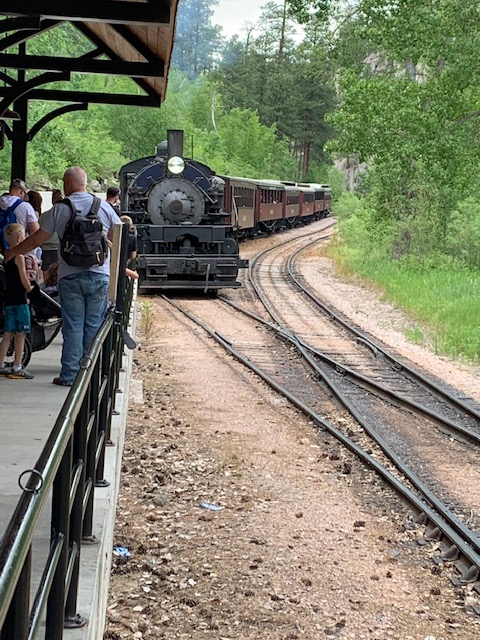
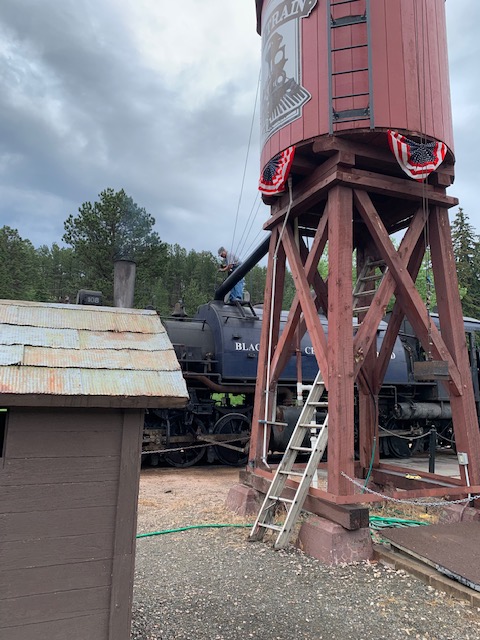
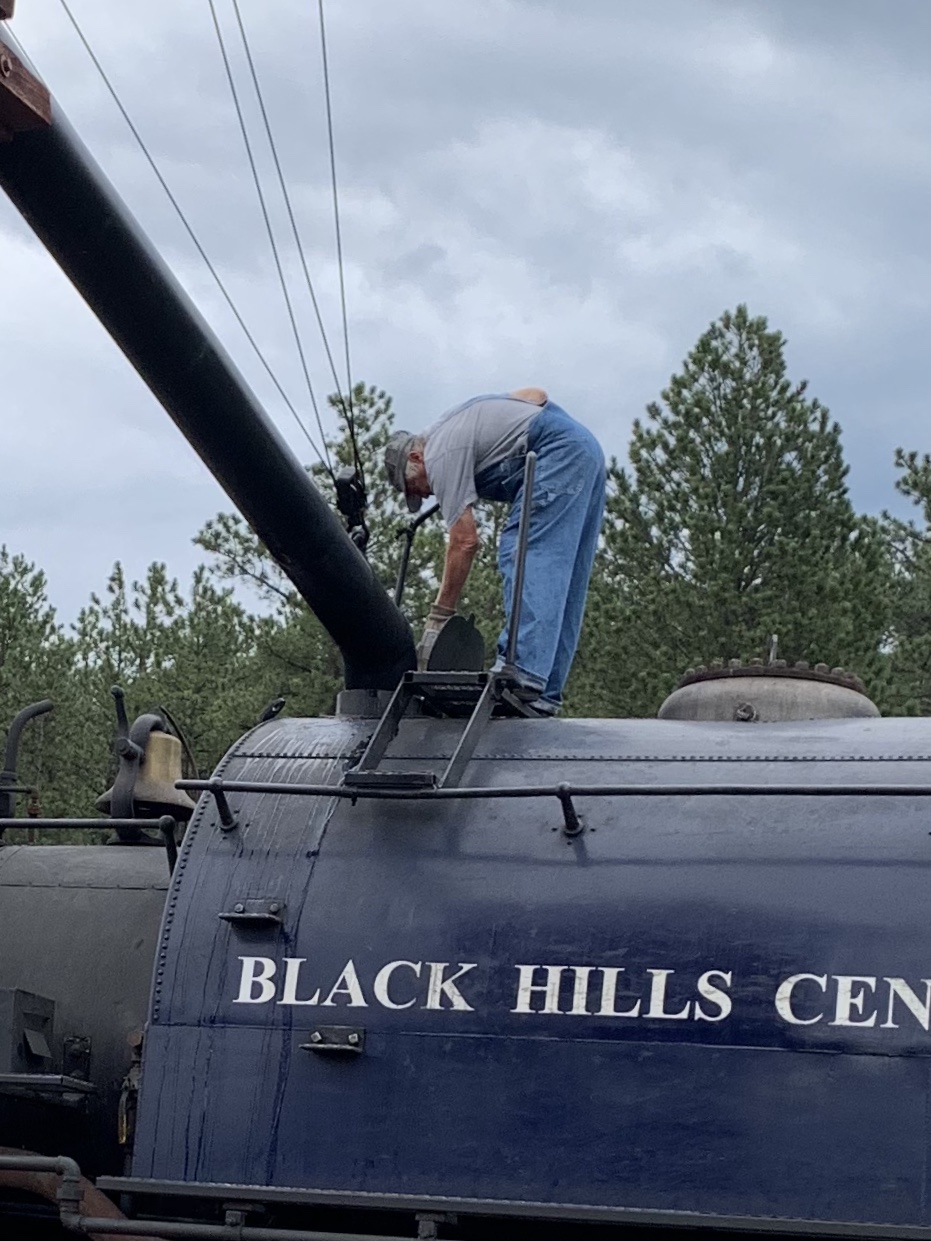
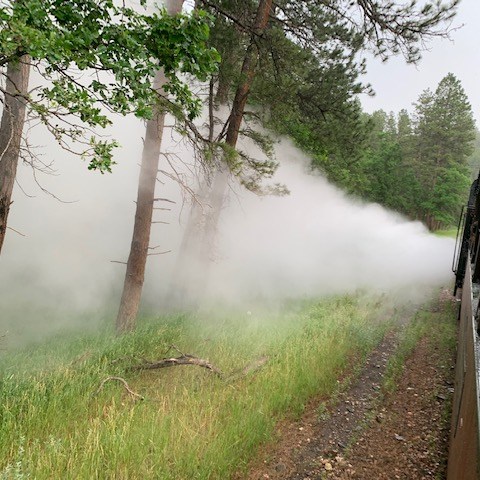
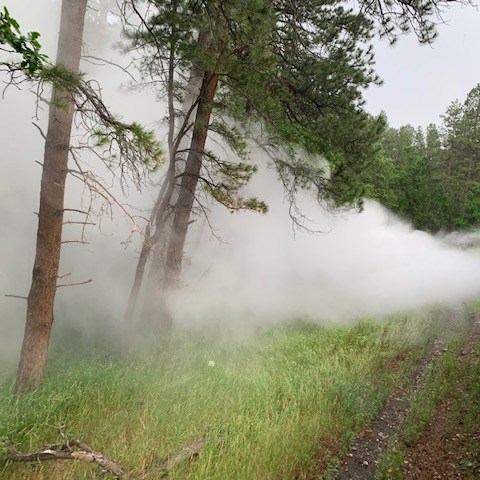
They use water and recycled oil to power the engine, which creates a lot of white smoke.  

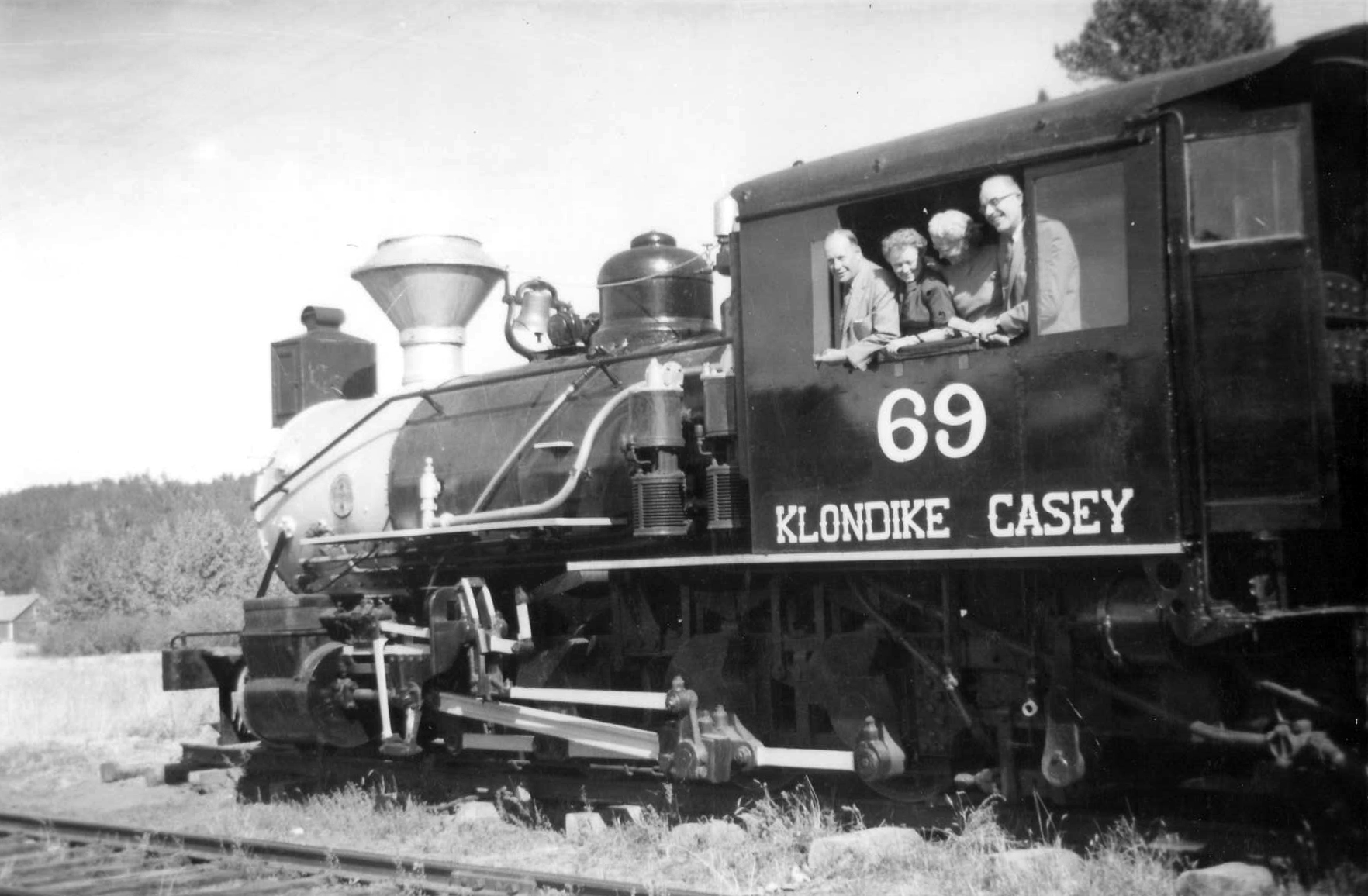
 The Black Hills Central Railroad restores early twentieth century-era locomotives and train cars and the train has been featured on television shows such as the Gunsmoke,  “Snow Train”, General Hospital and the TNT mini-series Into the West. It also appeared in the movie Orphan Train.  Quite The Celebrity!

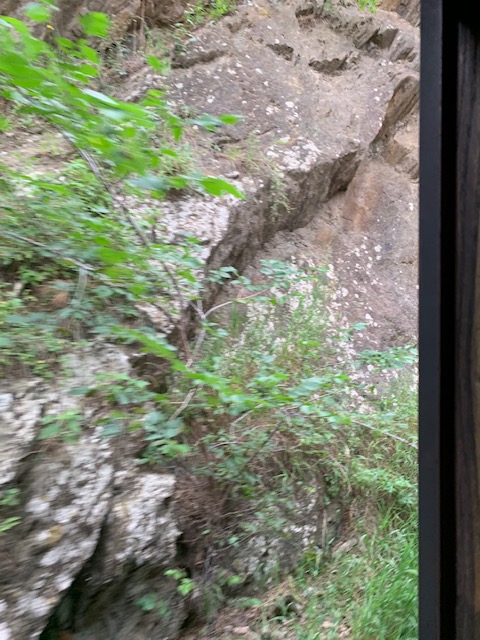
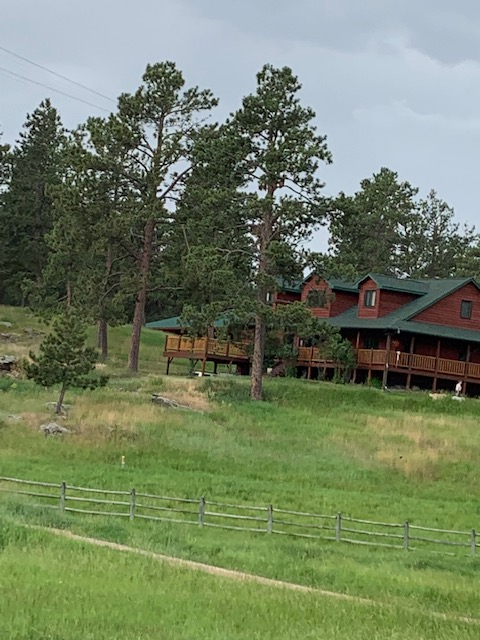
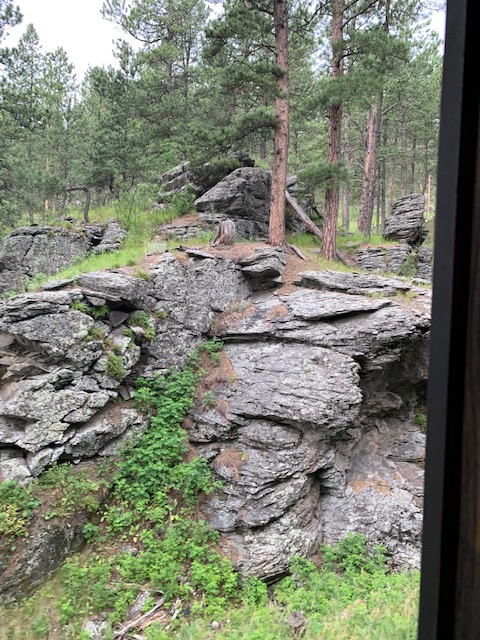
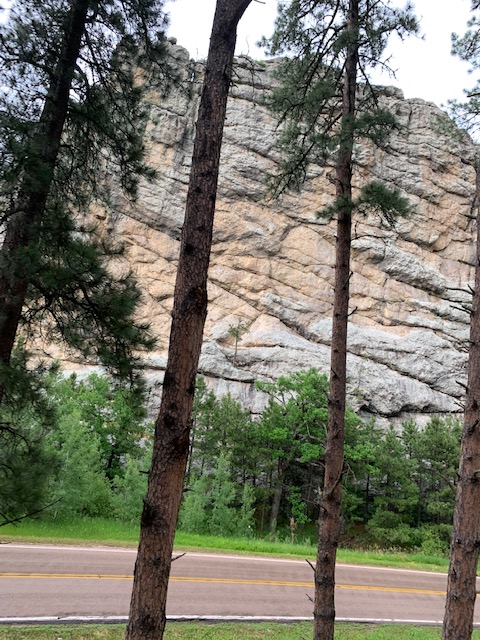
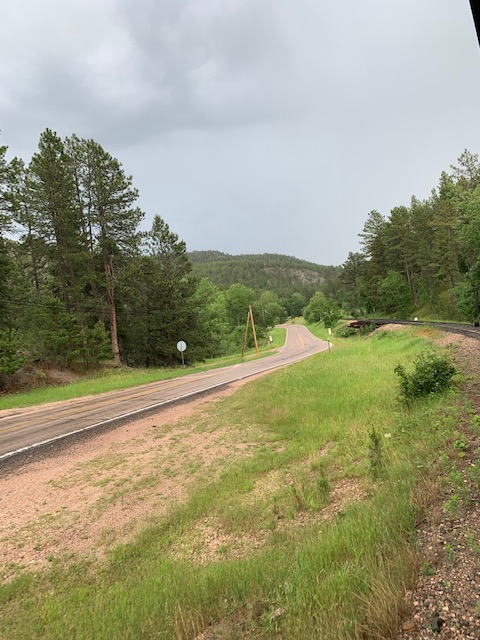
Since the Black Hills has many changes in elevation, the train has to maneuver 4 – 6% grades, which is very difficult for any train, actually it’s the third steepest railroad grade in the country. It goes through some of the oldest rock formations, near the highest peak East of the Rocky Mountains and along the back side of Mount Rushmore. 

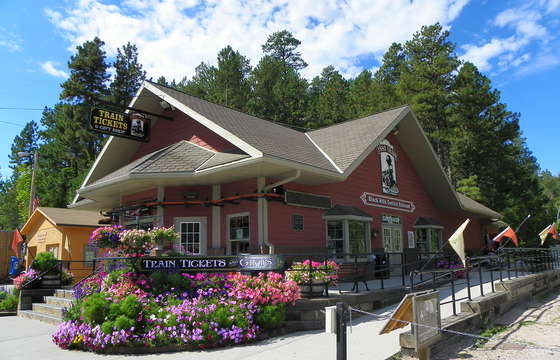
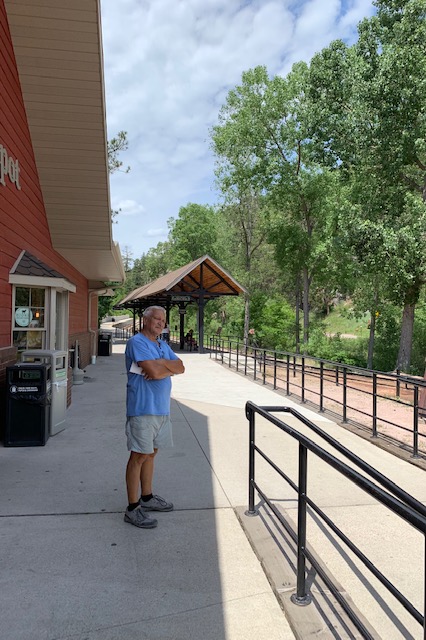
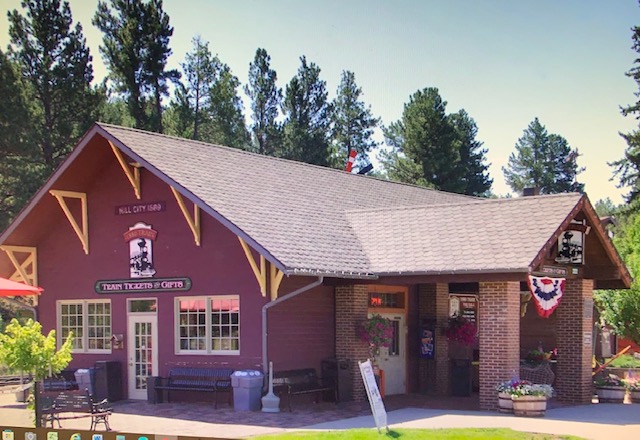
Keystone Depot where we got on.

ALL ABOARD !!

The route it takes is the one built by the Chicago, Burlington and Quincy Railroad in the late nineteenth century when the Black Hills were undergoing a mining boom.  The first steam engine arrived in this area in 1879, five years after the gold mining boom began. The route the 1880 train follows was built during the 1890s. These rail lines were also used to haul materials to Mount Rushmore during its carving in the 1930s. Commercial use of this route stopped in the early 1950s.

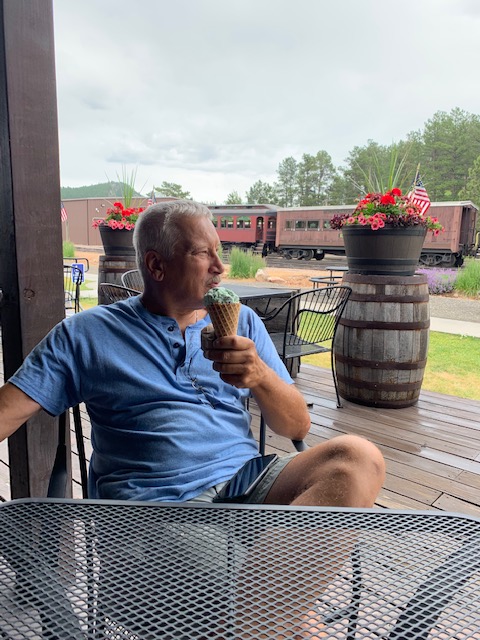
Our 1st stop Hill City train depot

Last picture the Engineer is putting the recycled oil & water mixture into the engine. We got aboard and headed ack to Keystone.

The train had to left off some steam. Quote for the day:  “The introduction of so powerful of an agent as steam to a carriage on wheels will make a great change in the situation of man.” – Thomas Jefferson

As steam engines were being replaced by diesel engines, a group of local railroad men decided to do what they could to preserve the heritage of the steam locomotive. But they did not want to limit it to a non-functioning display that would only be looked at as part of a museum or park.

The Black Hills Central Railroad opened to the public in 1957 with a steam engine and two open-air passenger coaches. It is also called the 1880 Train because one of the founders believed it would give folks the experience of what it was like to ride on a passenger train during the 1880s.

Today, the Black Hills Central Railroad owns three steam locomotives, two diesel locomotives, and twelve other cars.

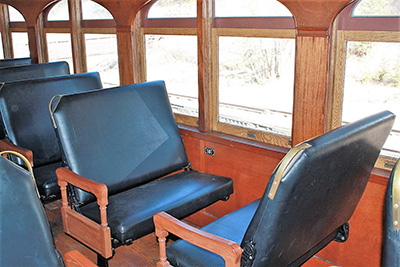
It was really a neat experience riding on the train, we let them do the driving and navigating! It was also neat to hear the train whistle blowing and the clatter of the train going down the tracks.

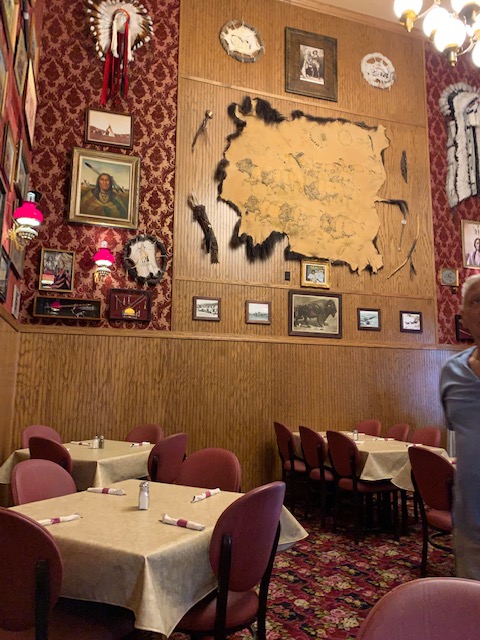
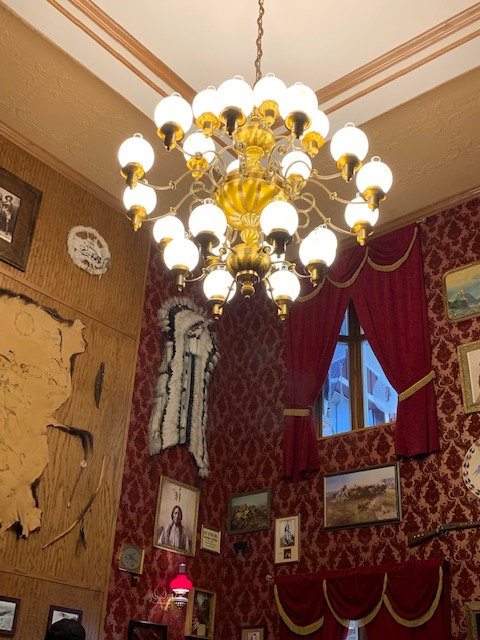
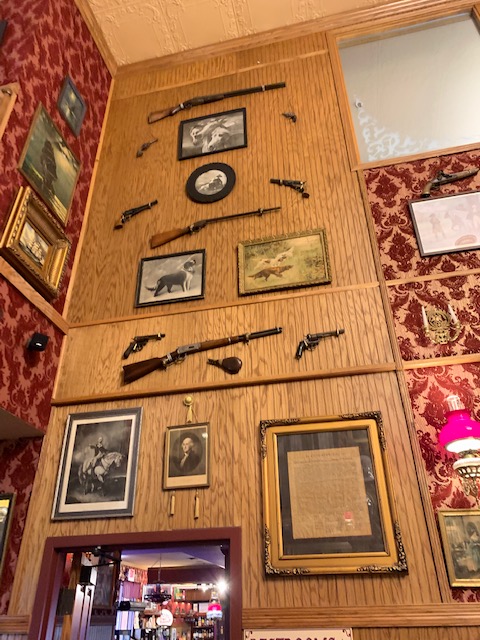
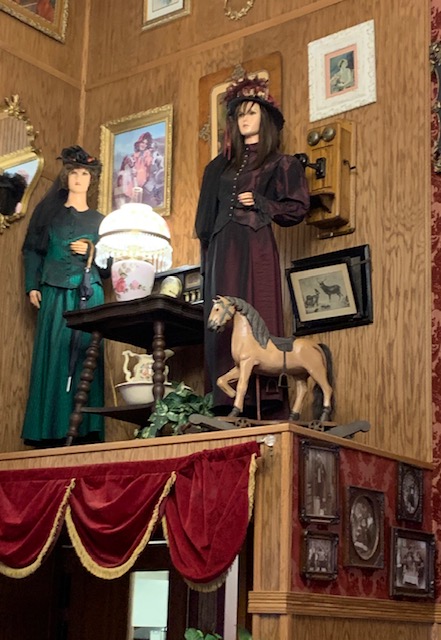
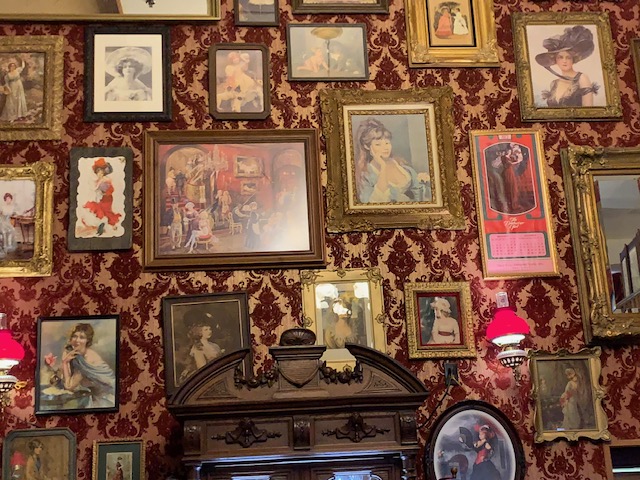
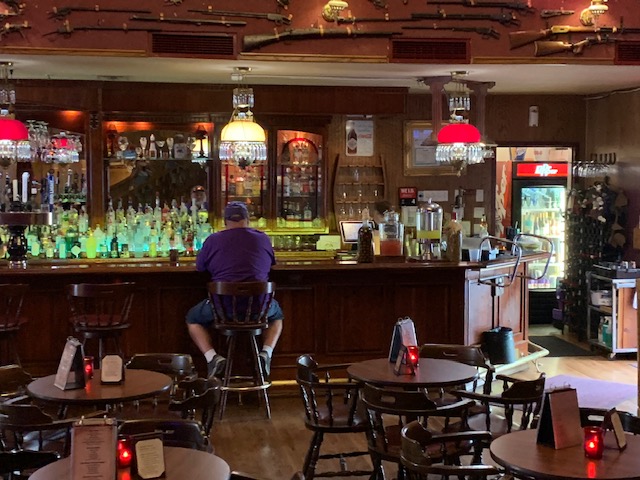
We had dinner at the Ruby House restaurant in Keystone, which was very nice.

RAPID CITY SOUTH DAKOTA

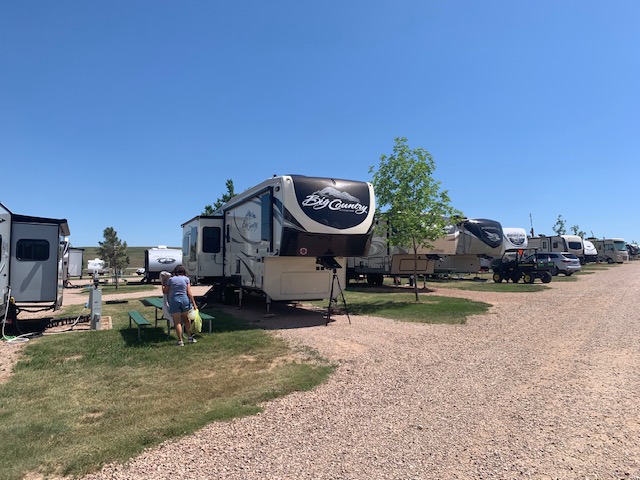
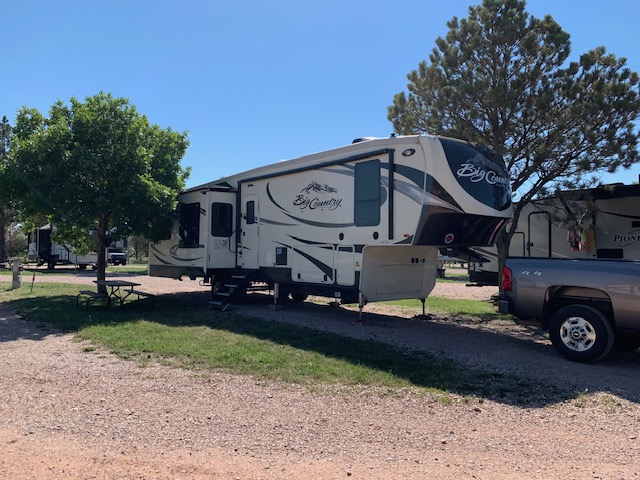
We are now at Heartland Rv park, on the eastern side of the Black hills just below Rapid City south Dakota. Only drove 71 miles today from Wall SD. Here for two weeks, exploring and seeing all there is to here in the Black Hills. Rented a car for one week also, while not the cheapest will save wear and tear on the truck. Our spot

BAD TO THE BONE

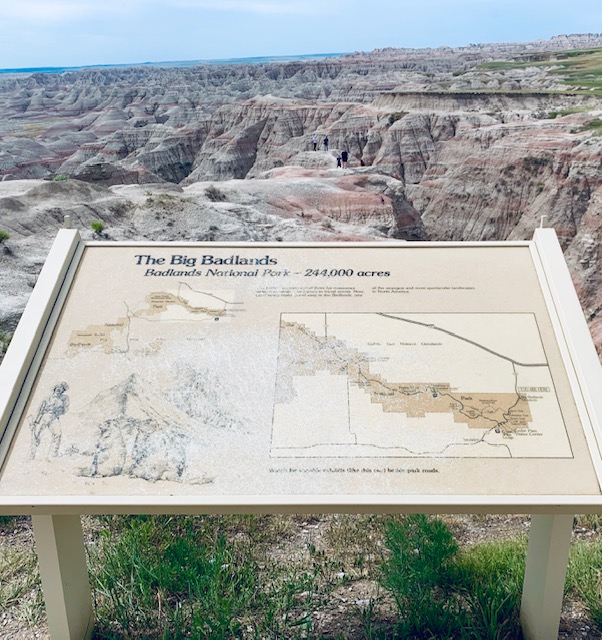
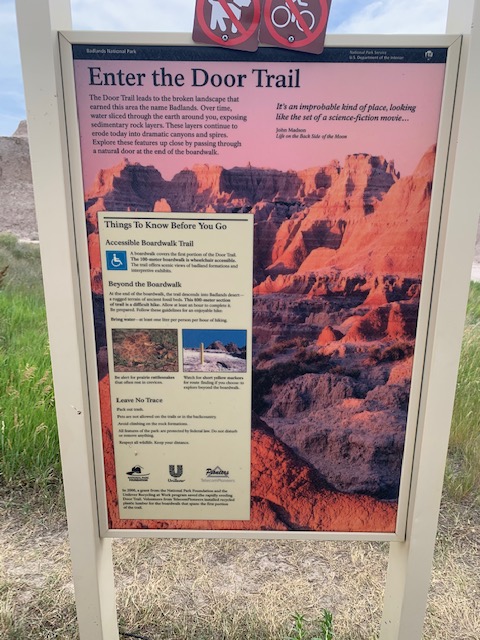
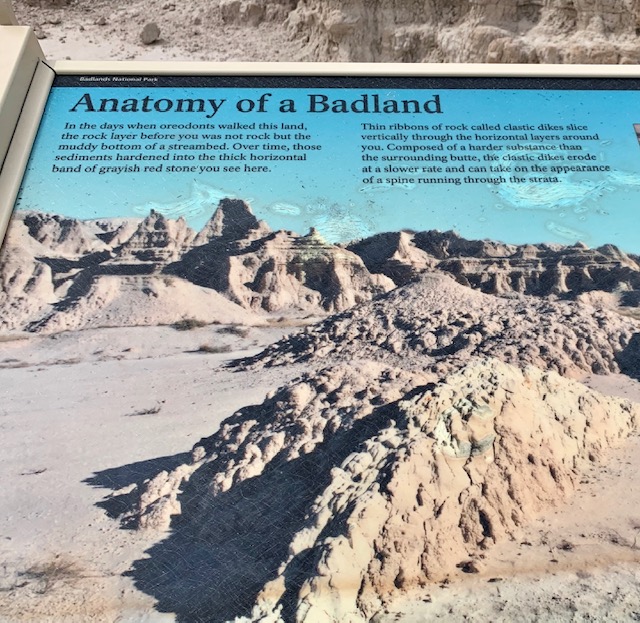
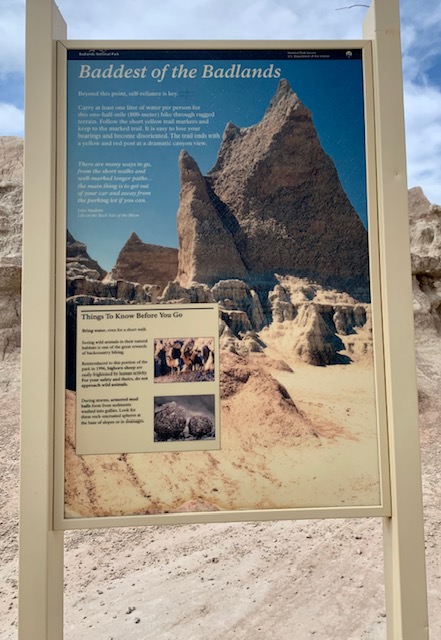
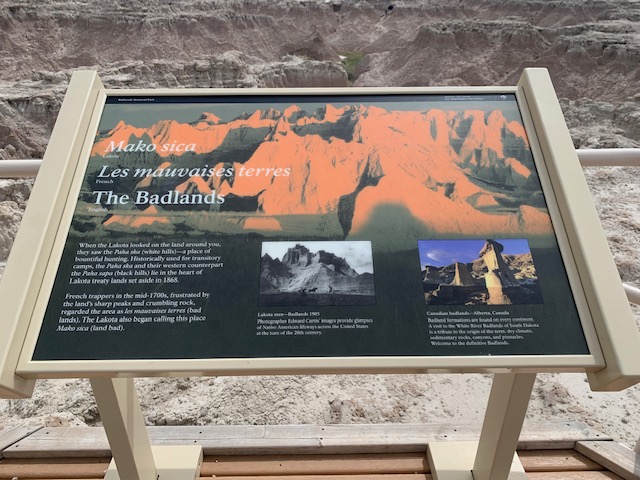
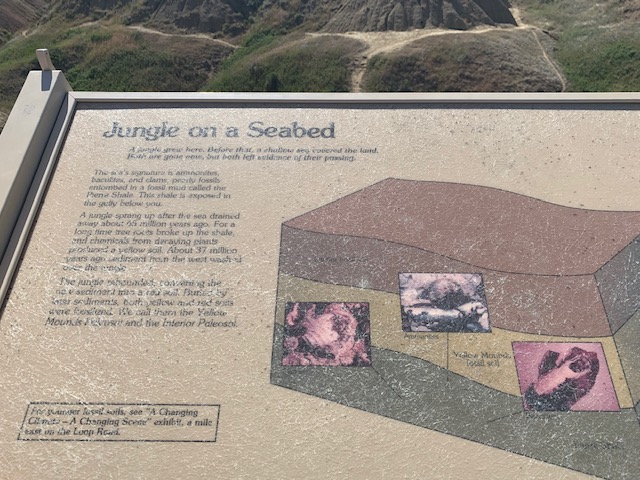
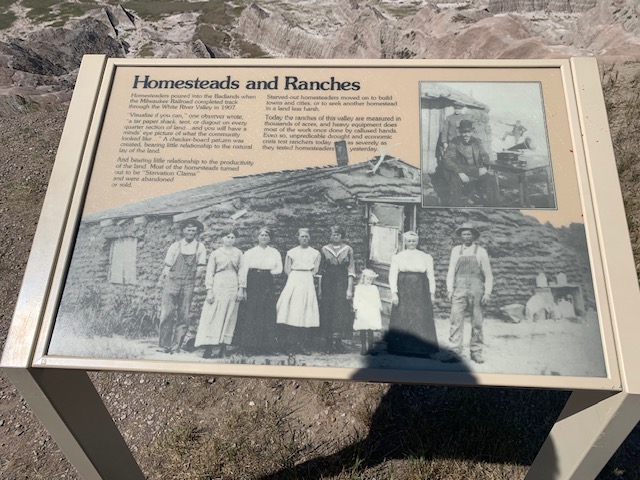
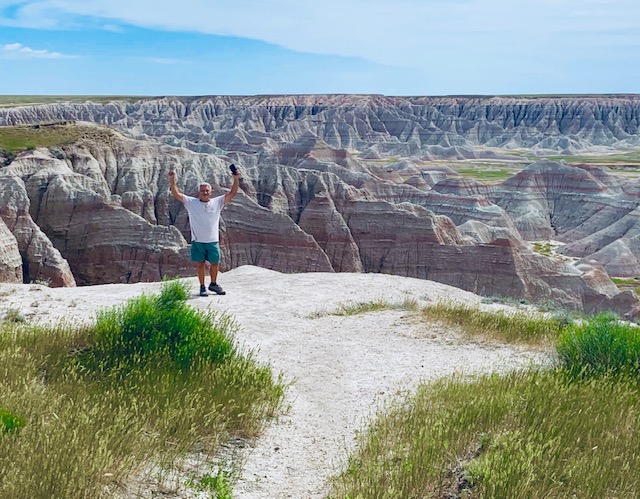
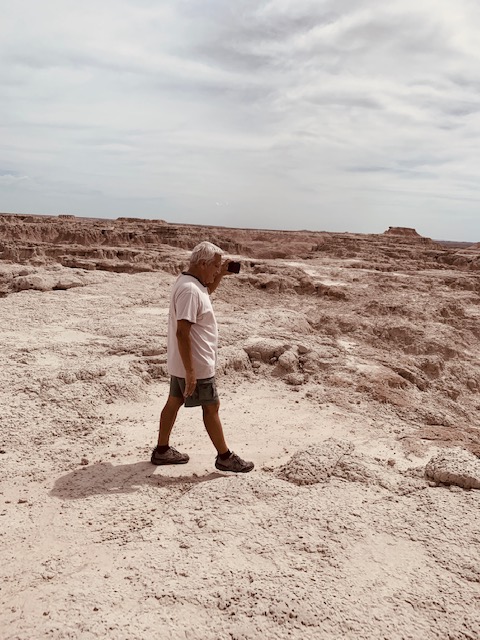
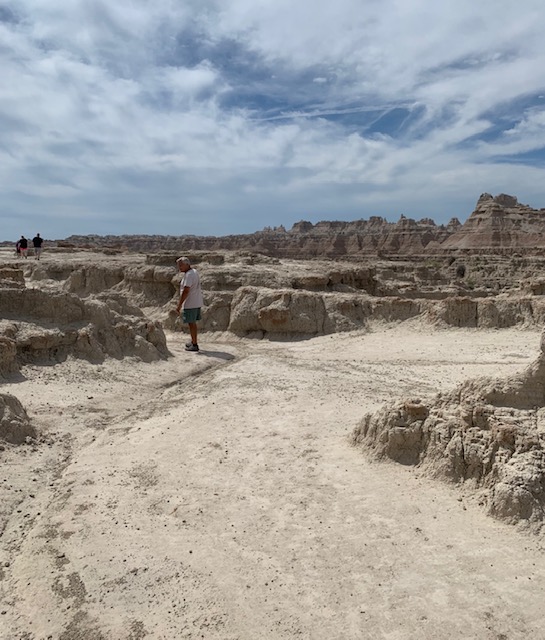
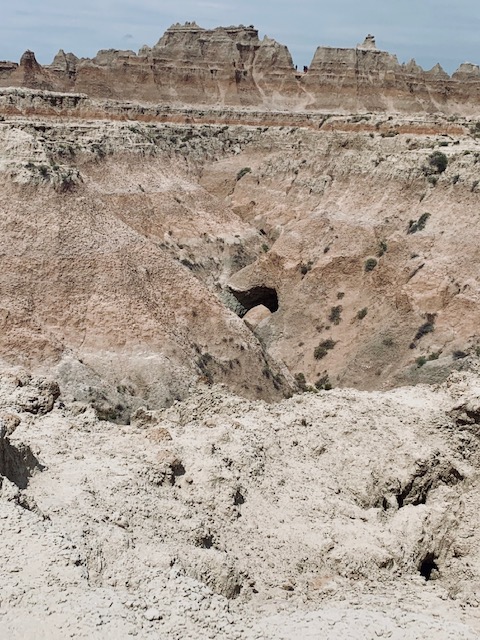
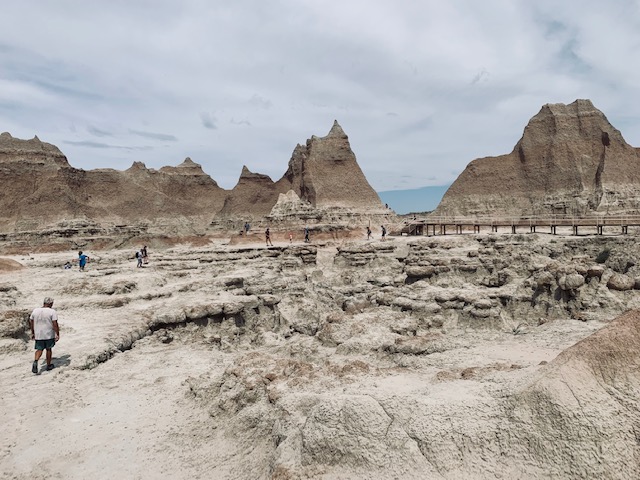
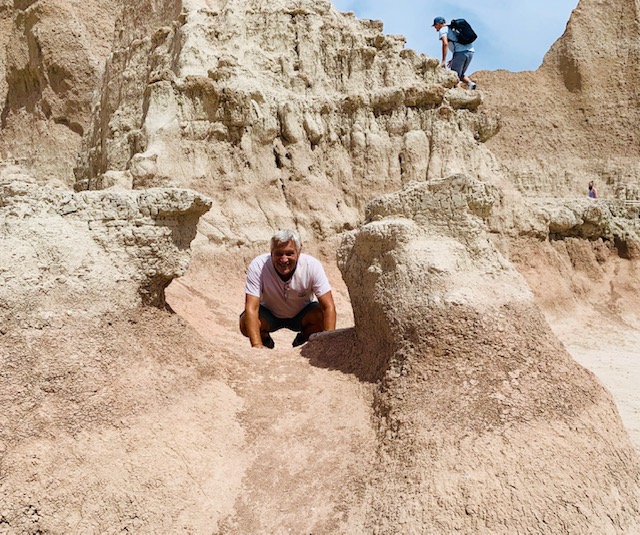
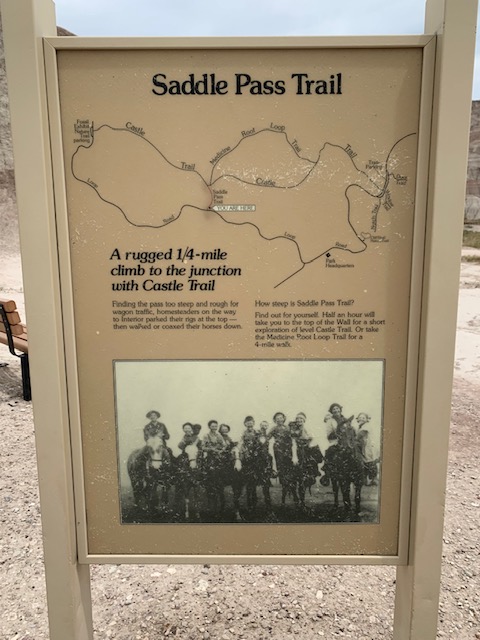
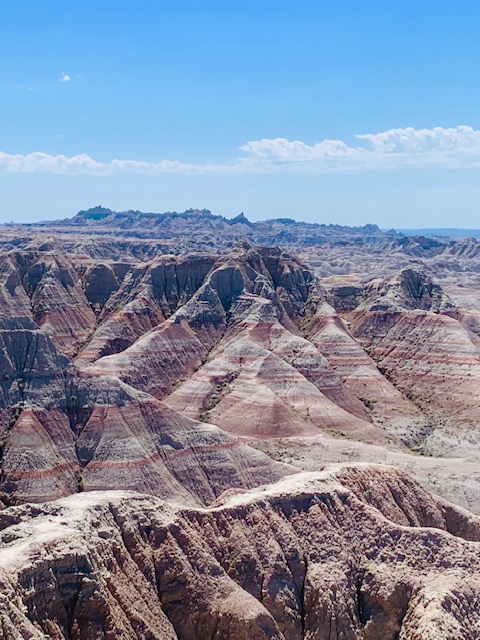
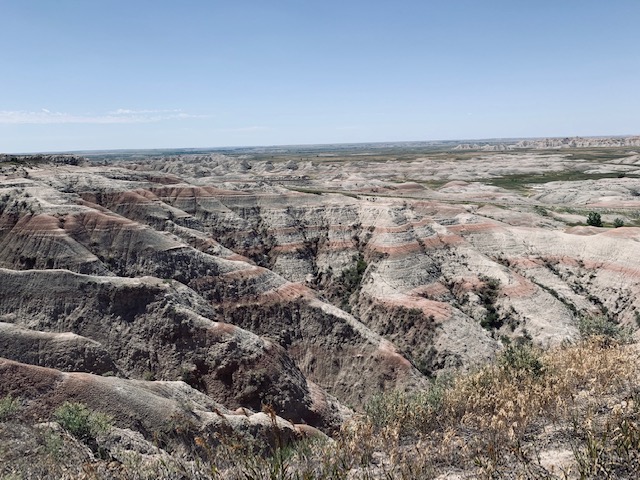
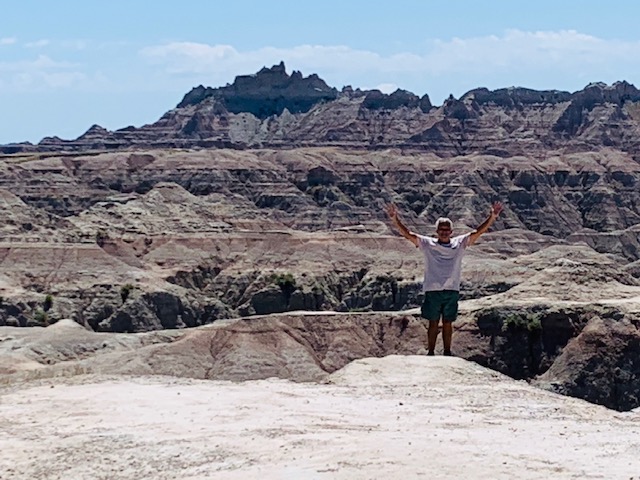
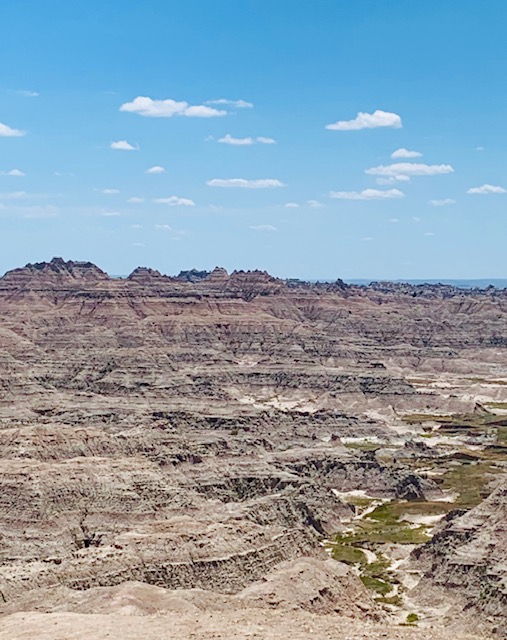
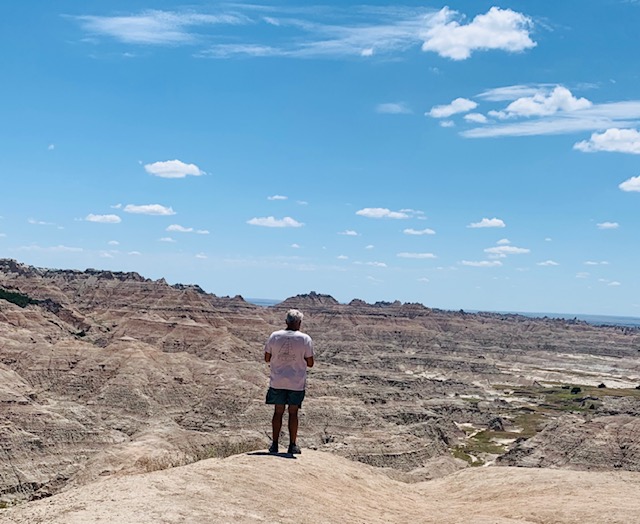
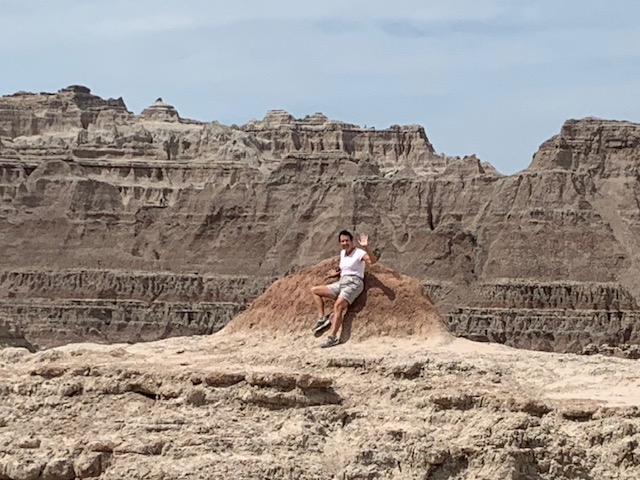
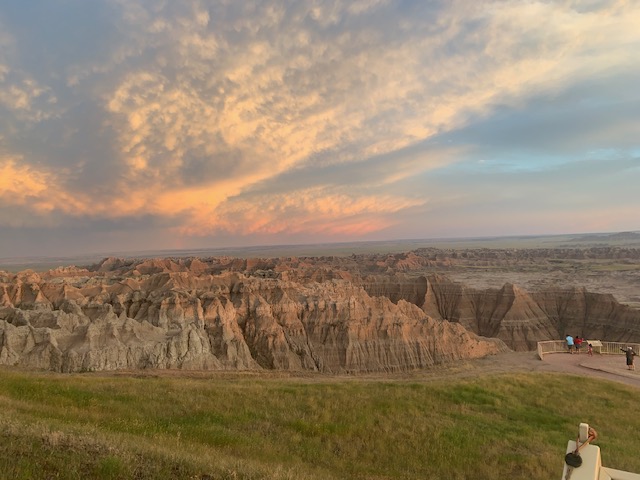
The Badlands that is. We went to the Badlands National Park two days, Why, well the first day we did all our hiking and before we knew it it was late. We do not like to leave Cooper in the Rv more than five hours, so we went back. The second day we did all the overlooks and pull offs with Cooper with us. I have to say this is an awesome place.

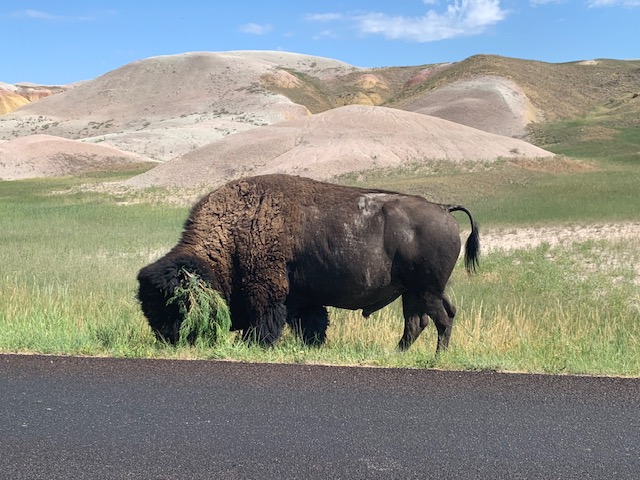
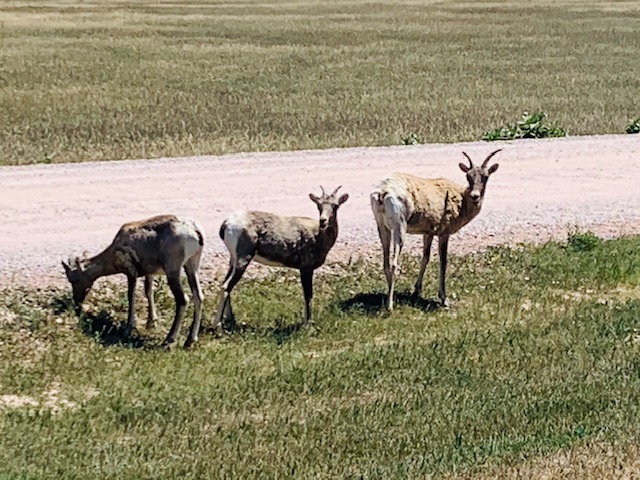
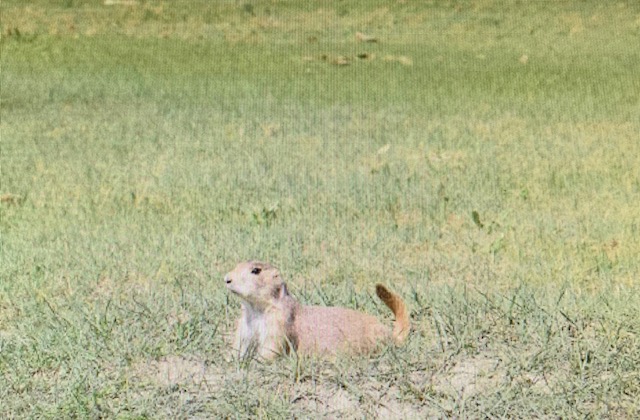
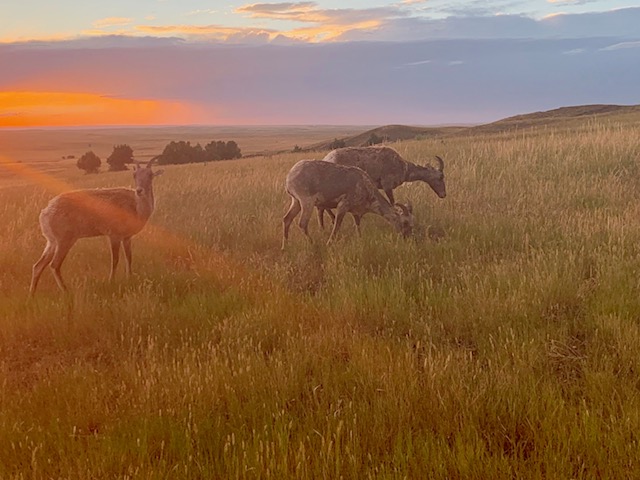
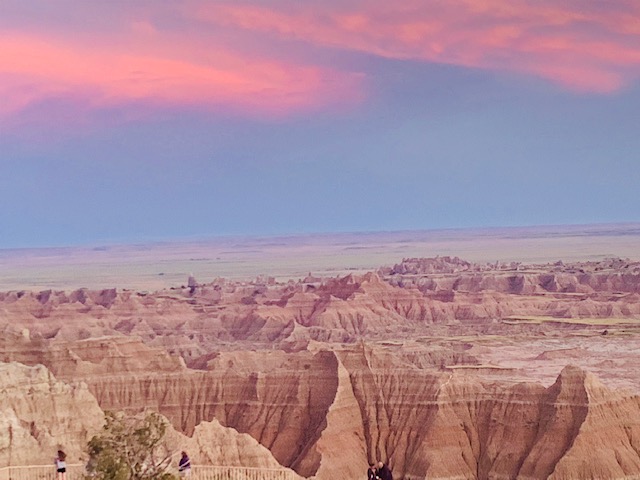
THE BADLANDS or “Mica Sica” as the Lakota Indians named it, was formed over 1million years ago, with uplifts in the earth, volcano eruptions, and massive movement of rock and stone to create an over 60 mile long shelf or wall formation. Around 500,000 years ago water began to cut down through the rock layers, carving fantastic shapes into what once was a flat floodplain. Ancient fossil soils, buried for millions of years, once again were exposed. Erosion, and rain, drive the ever changing landscape as more sediment is washed away. In human terms it will not change, but in another 500,000 years, they will erode away. As we traveled the over 30 mile park roadway, it is hard to grasp what you are seeing, moving, and changing colors of rock in layers all over. Then you come to the plains area, and next to it the plain has eroded into deep gullies, and towering spires all over. As you peer into the depths and prairie lands it just goes on and on. We saw a lot and the pictures don’t even come close to really show what you are seeing. We got to see a Buffalo right along the side of the road, munching on grass. Cooper gave a bark , he looked at us as if to say go away. Then we saw some long horned sheep, and the ever present prairie dog, they are cool. We also saw an active fossil dig site, someone a month ago saw a femur bone sticking up ,and now it is a full scale dig site. They believe there is a full skeleton of the ancient big pig, which stood over six feet tall, that was cool to see. We spent about 11 hours in the park, it was a great adventure.

Tatonka, or buffalo, right along the road, how cool.
The best pic of the bunch

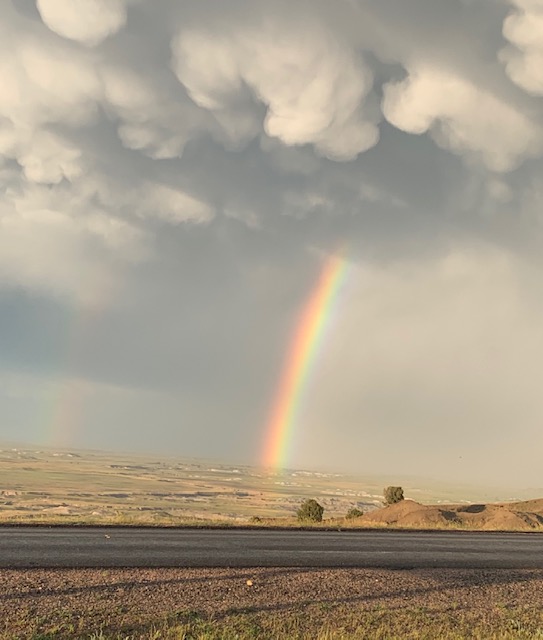
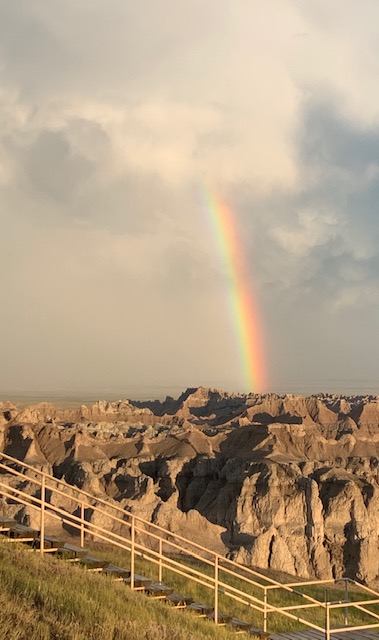
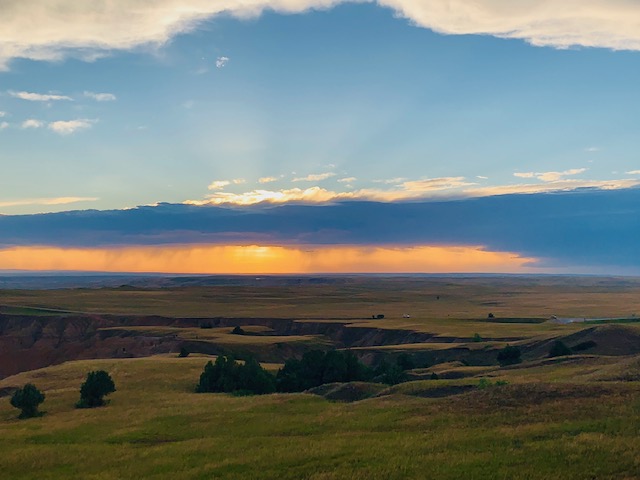
Checked out the Badlands at 8:00 pm, it just rained so we didn’t get sunset pictures like we wanted, but what we did see was a double rain bow!

We really enjoyed our time spent here!

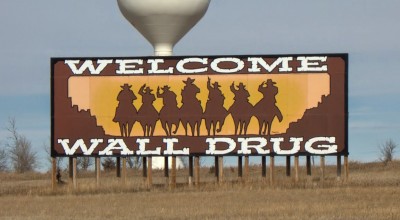
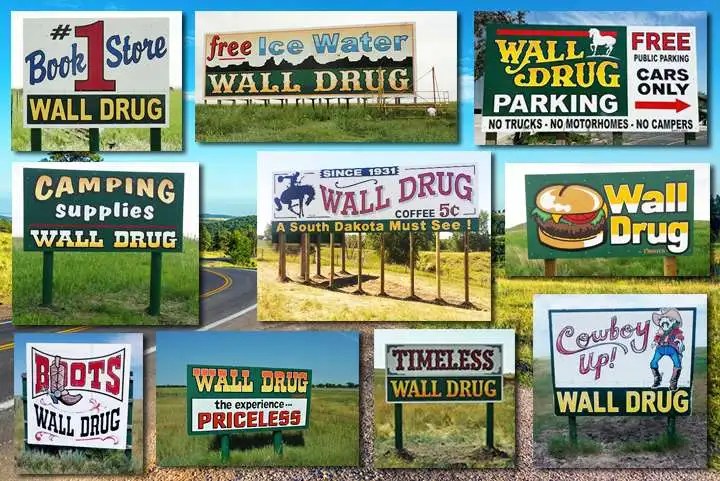
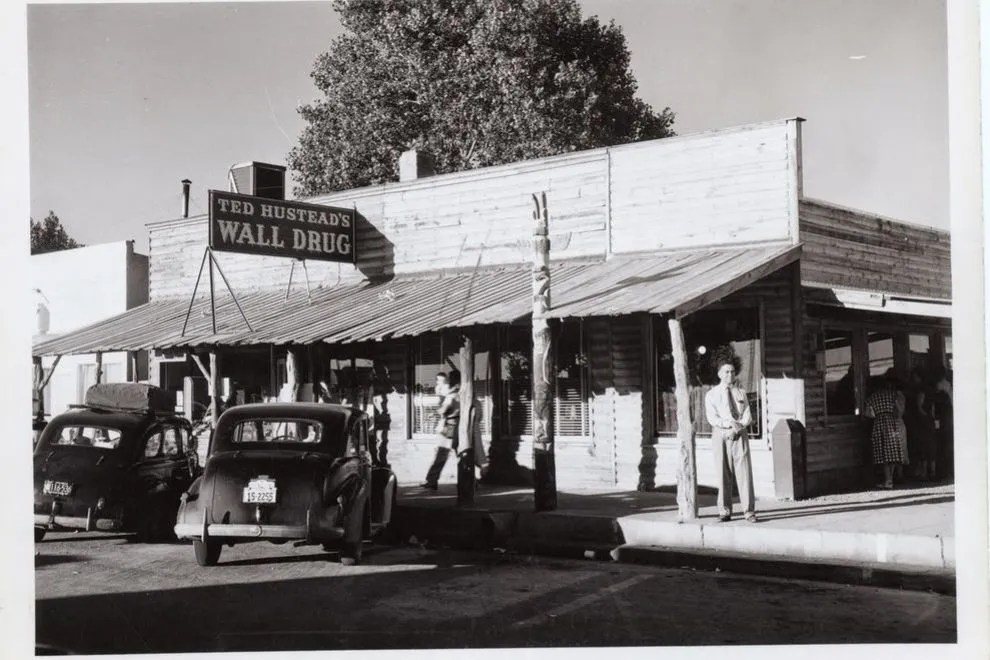
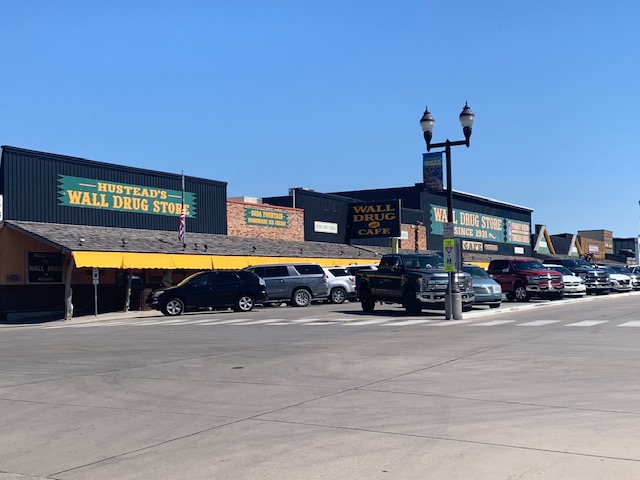
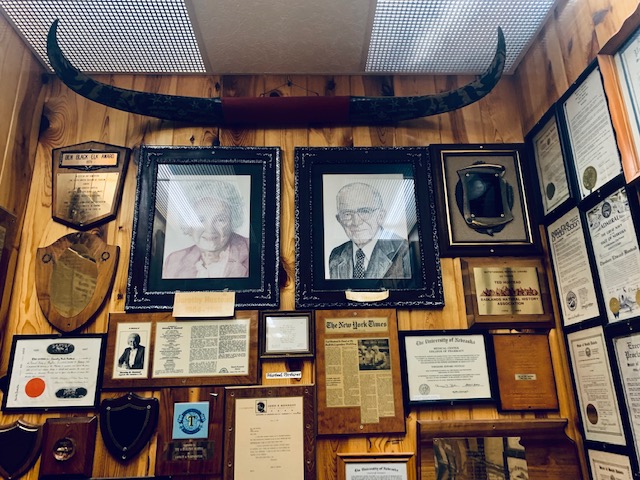
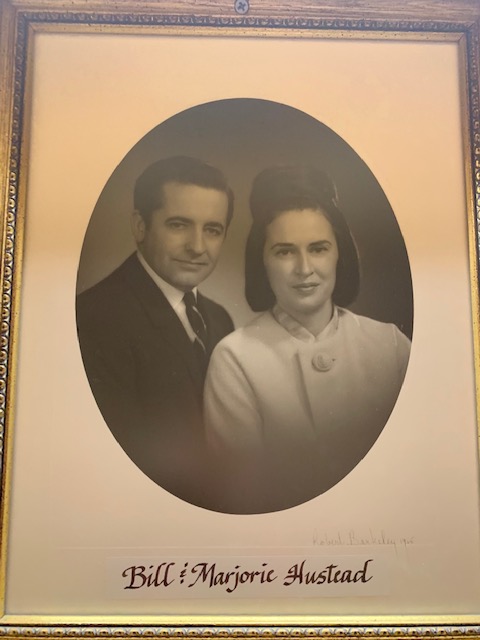
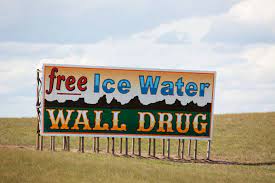
The story of Wall Drug began in 1931 when Nebraska native Ted Hustead, a Pharmacist, and his wife Dorothy  bought the only drugstore in a town called Wall.  In the beginning, times were tough, so the Husteads resorted to make their own signs advertising “free ice water” to weary interstate travelers driving to and from Mount Rushmore. Then Presto . . . People came.

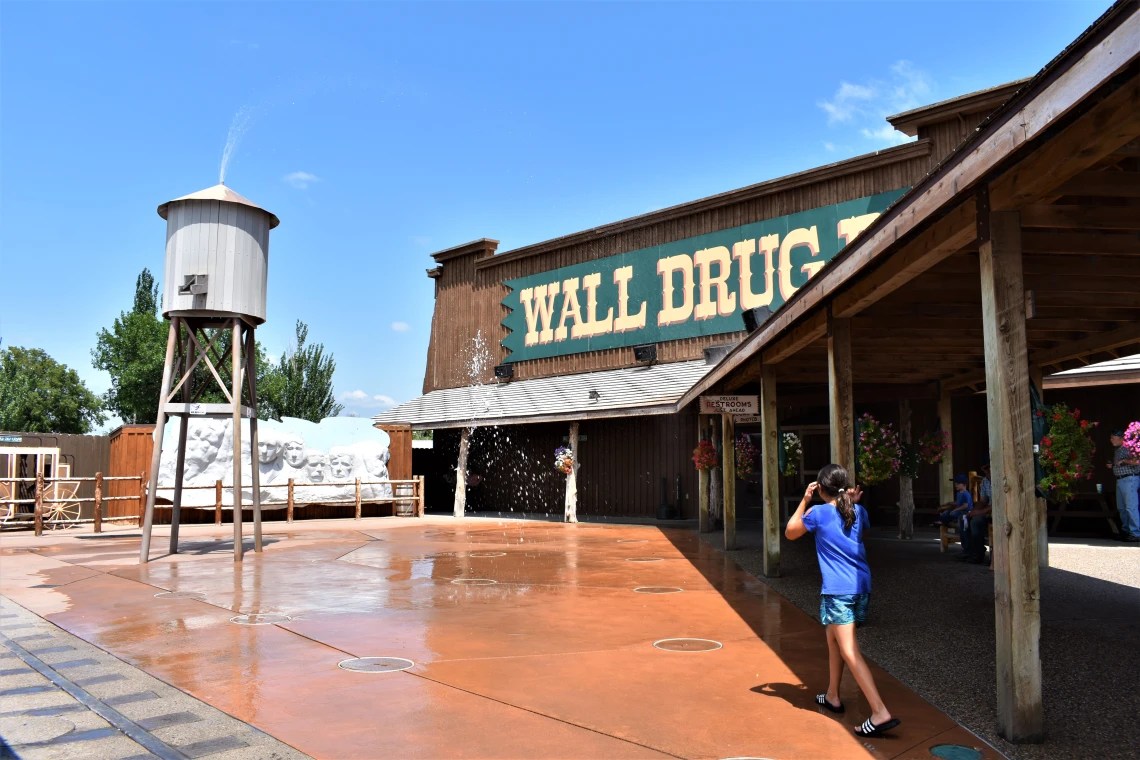
More & More people began coming because of all the signs, and now the pharmacy was growing and including other stores. These are only a few of the signs they have along the thru-way and all over.

In addition to their signs and billboards around South Dakota, signs for Wall Drug began popping up around the United States and other countries, including one placed by Ted in the London Underground advertising that Wall Drug was only 5,160 miles away and that if they wrote, he would send them information on both the store and state.

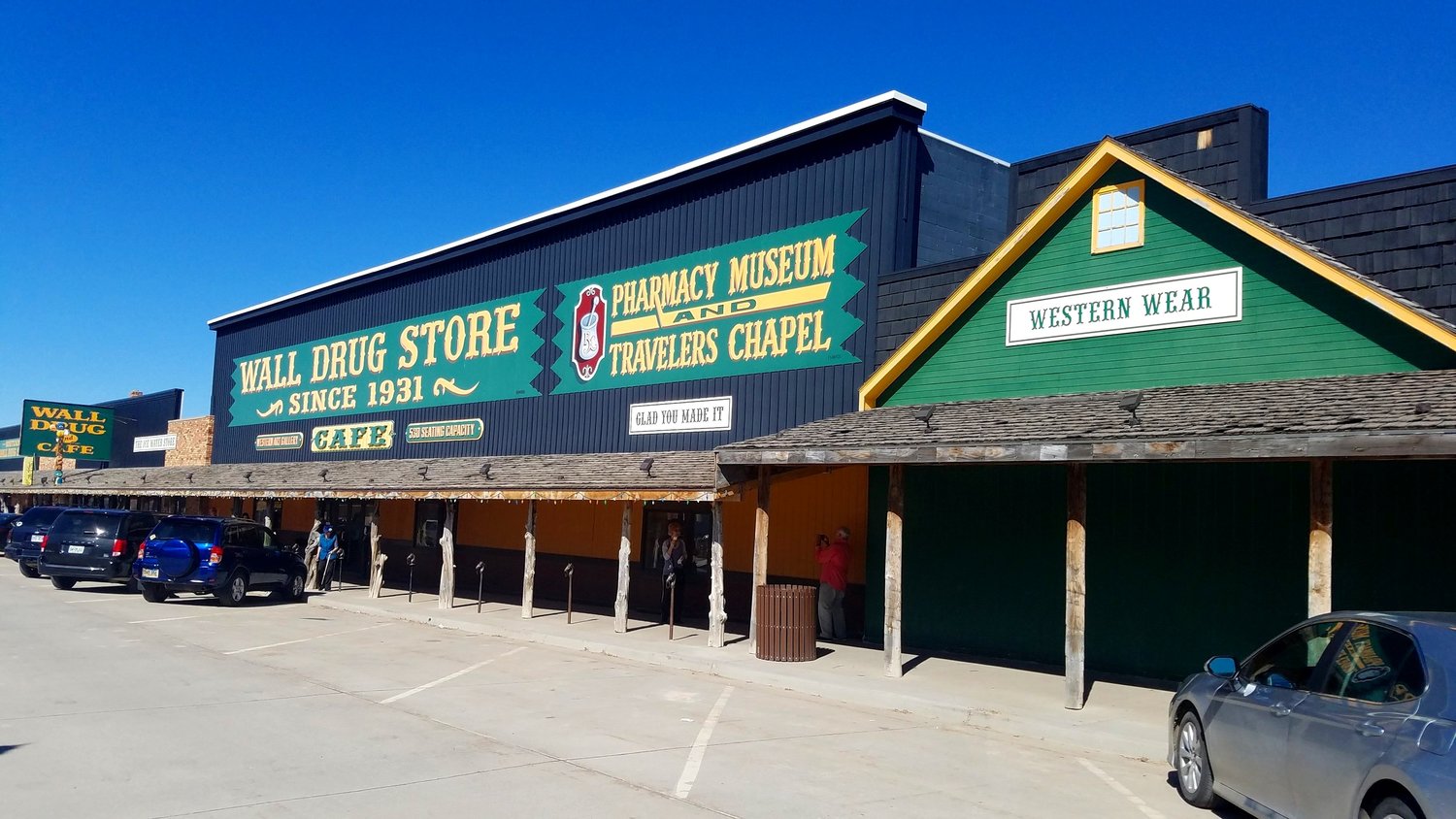
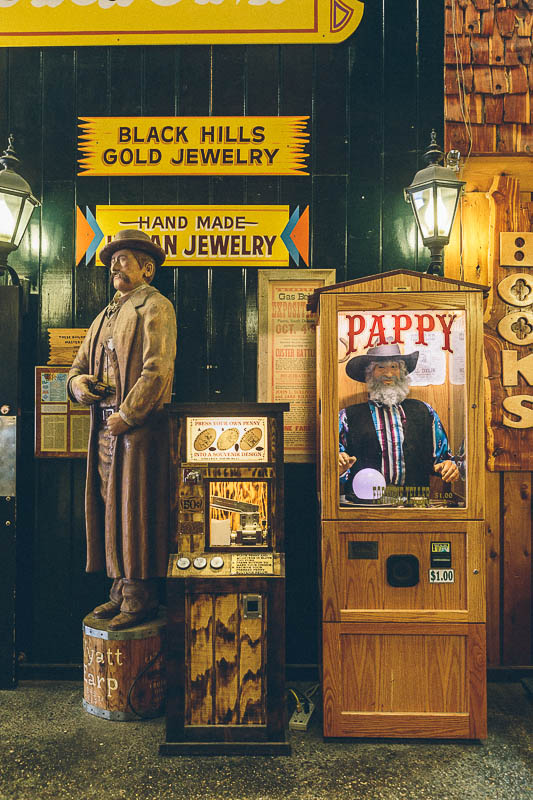
Before long, it was time for Wall Drug to expand, which is when they moved into their famous 76,000-square-foot building that an estimated 2 million people visit each year.

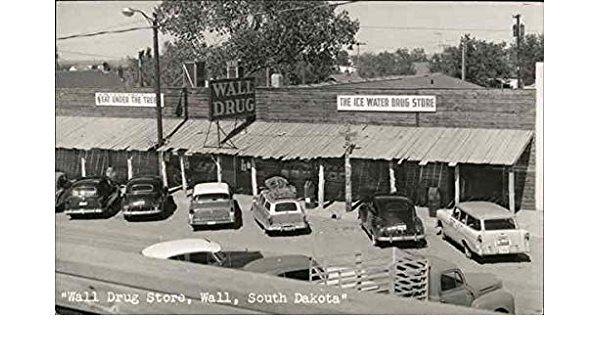
Old Wall Drug

The new Wall Drug and it still has a pharmacy inside.

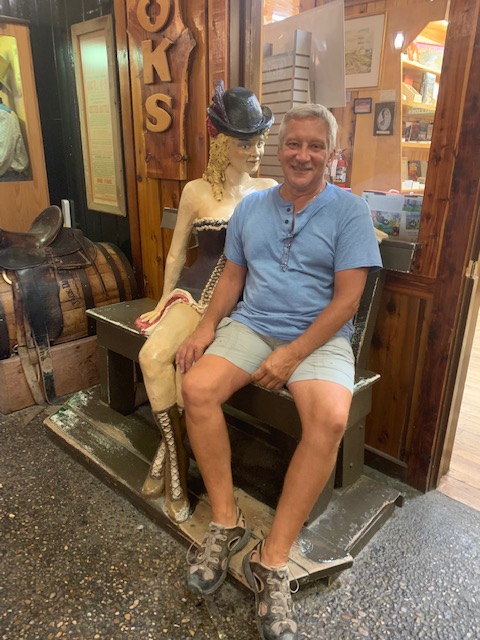
We couldn’t resist Bill.

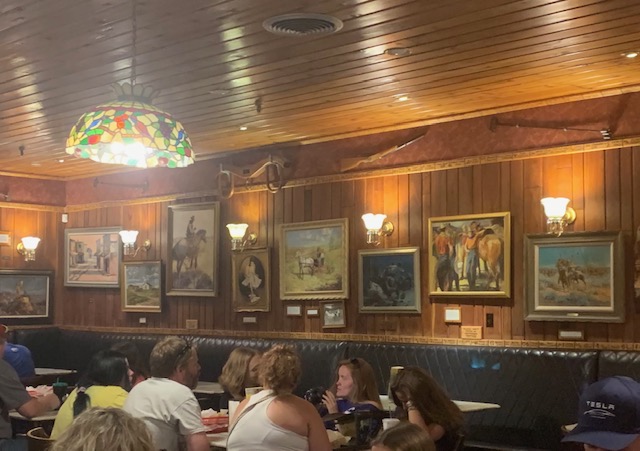
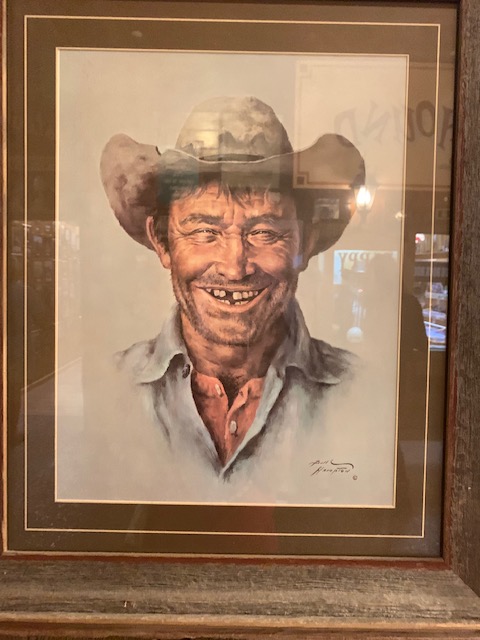
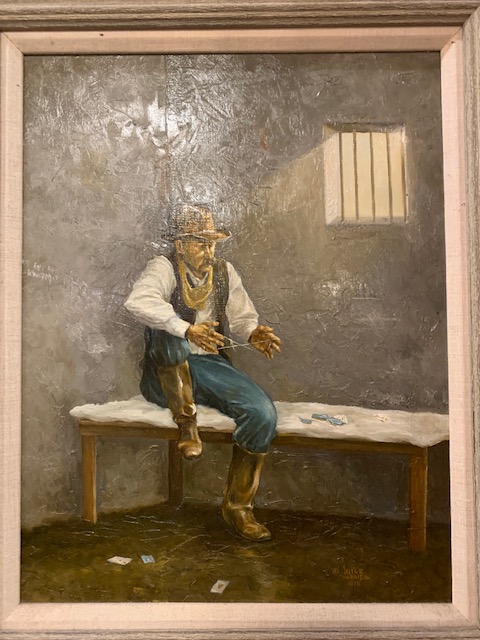
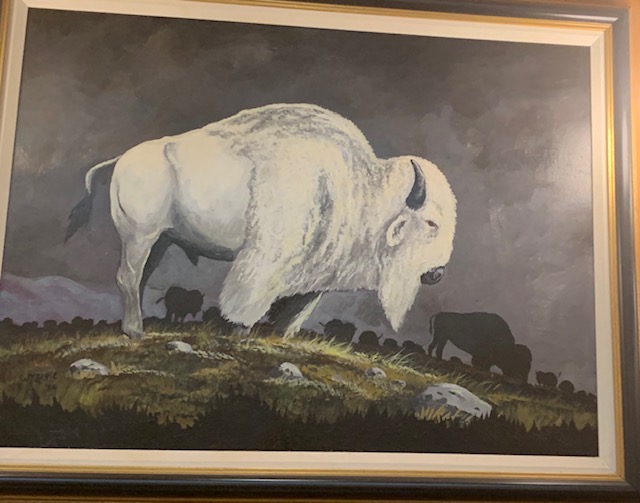
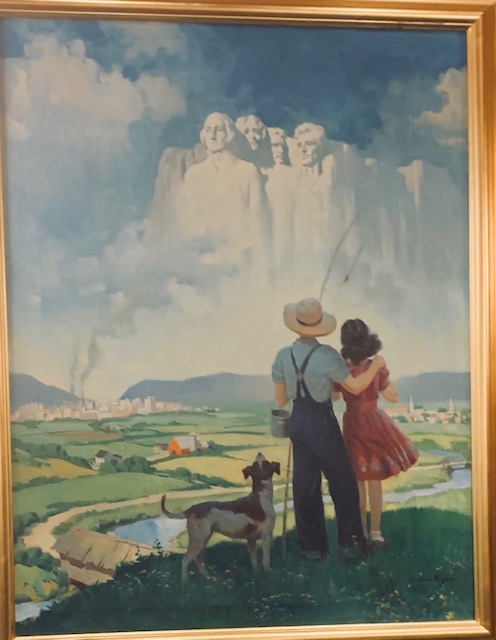
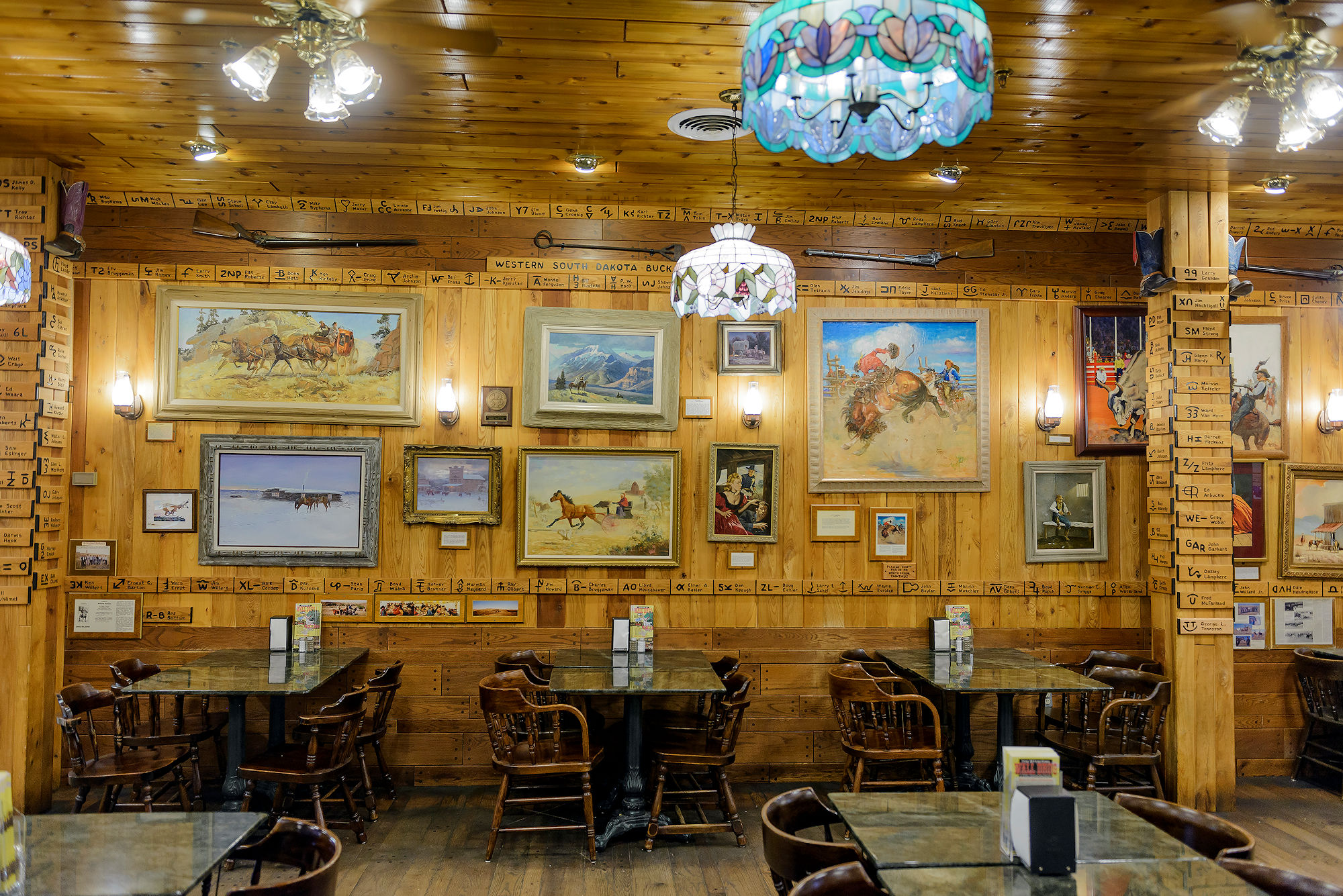
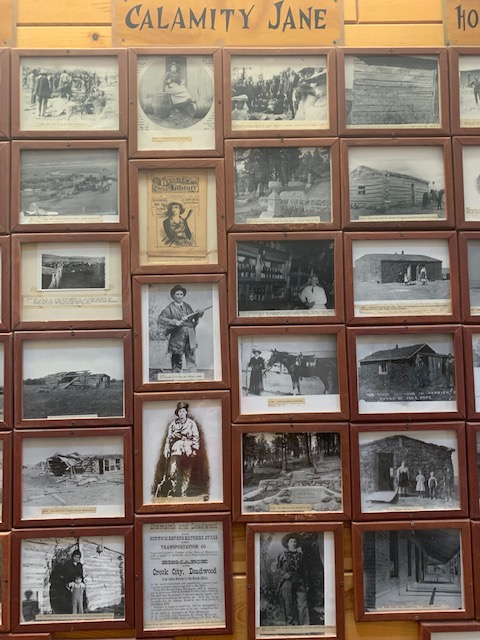
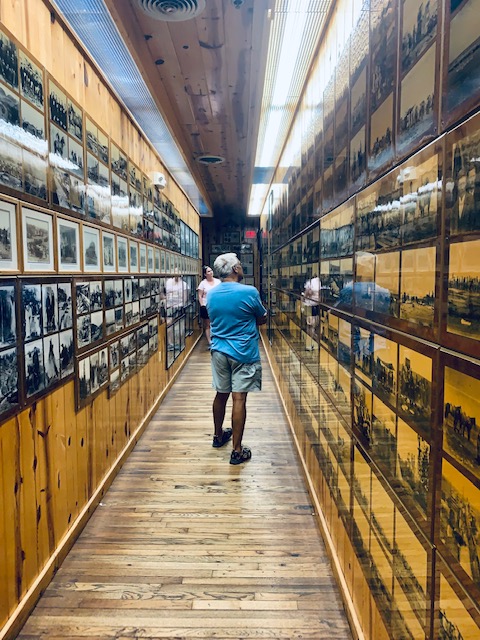
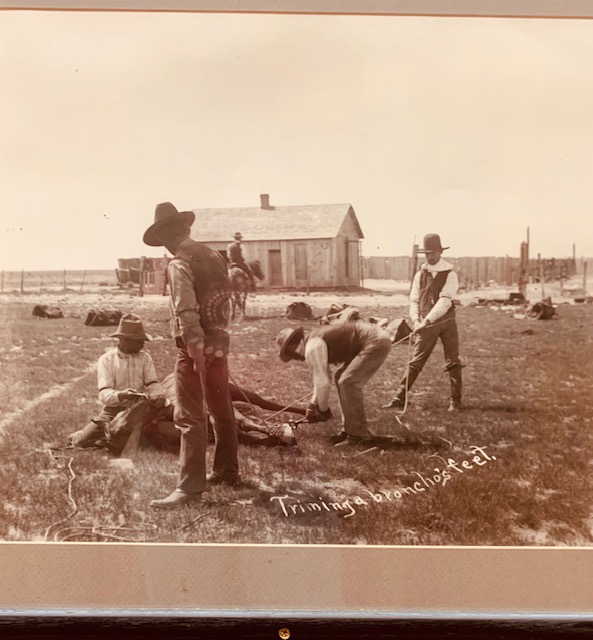
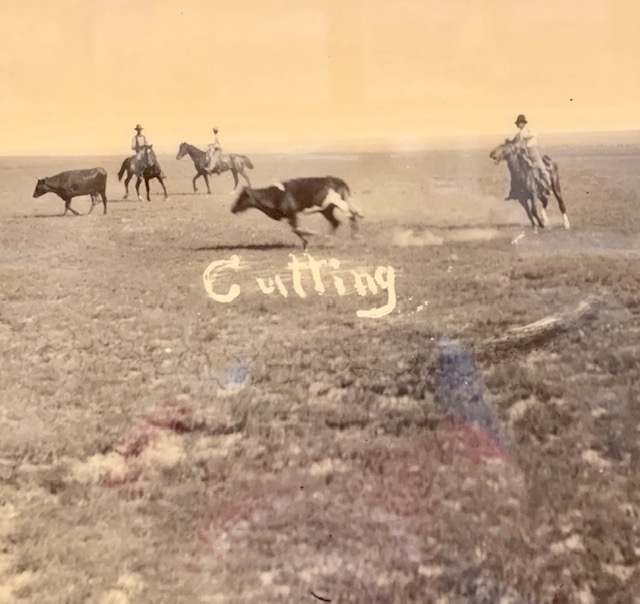
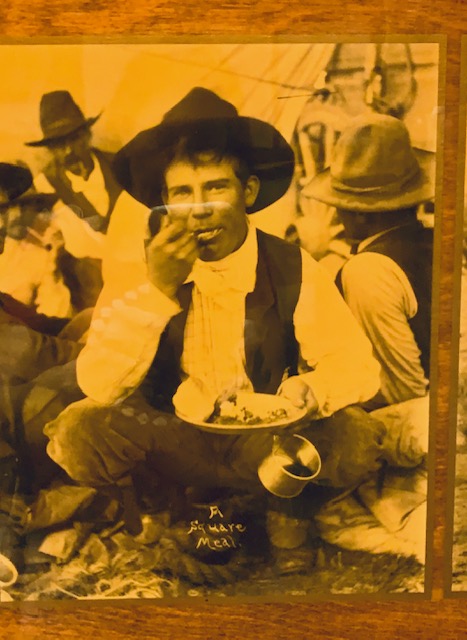
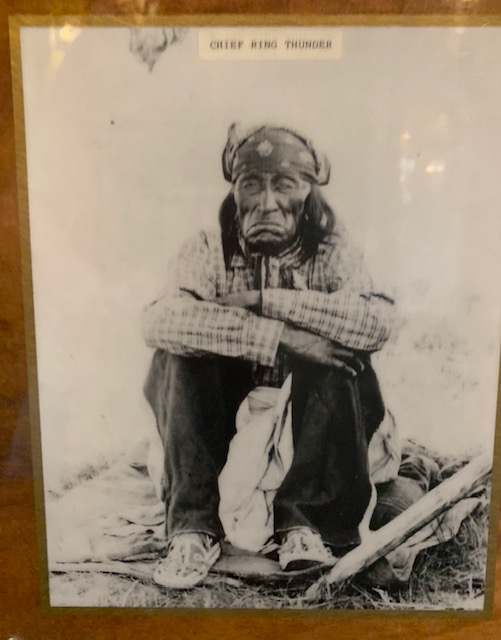
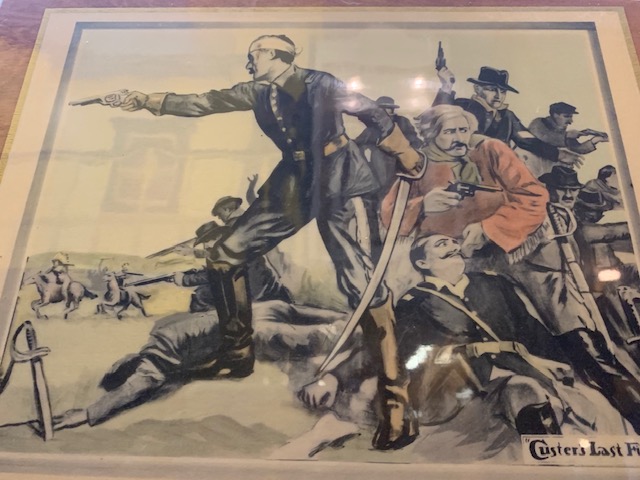
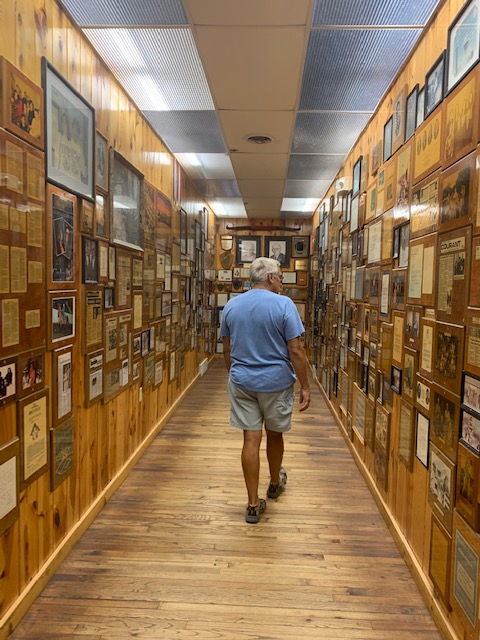
The very best part of Wall Drug’s is that it has an incredible “Famous Art Gallery.”  The collection includes 320 original paintings by some of the most celebrated artists of the Golden Age of Illustration. There is even a paintings there by Gutzon Borglum, the sculptor of Mount Rushmore. There were signs all over saying don’t touch or take pictures of the paintings, I couldn’t resist a couple of times. The photographs they didn’t care, and their great also. There is just something about Cowyboys!

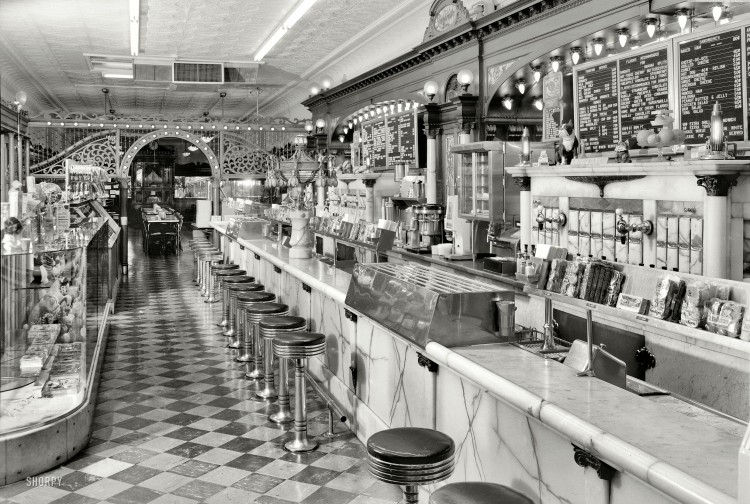
Dave liked the coffee and it’s still 5¢.

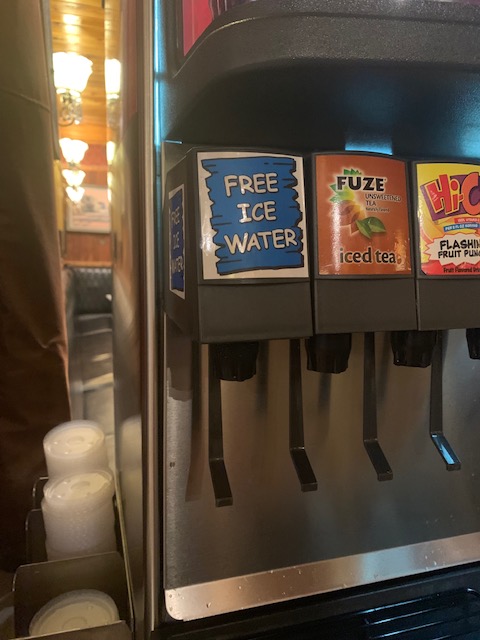
And you still get Free Ice Water.

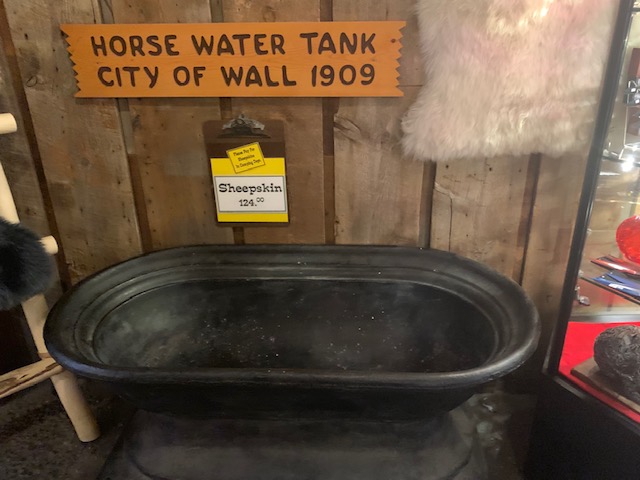
What began as a small pharmacy has changed into a South Dakota institution that has everything from restaurants and donuts to shopping and photo ops.

LAUNCH SEQUENCE STARTED.

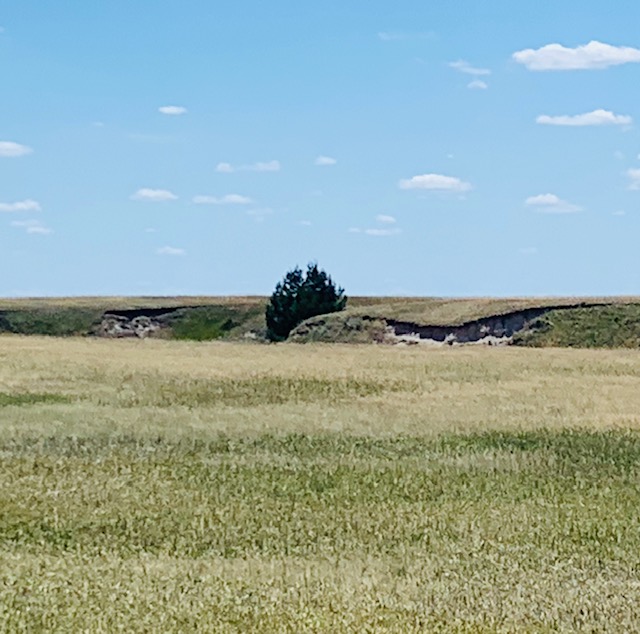
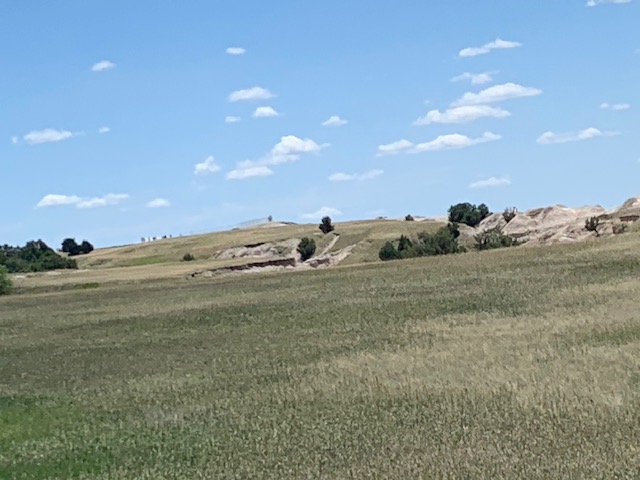
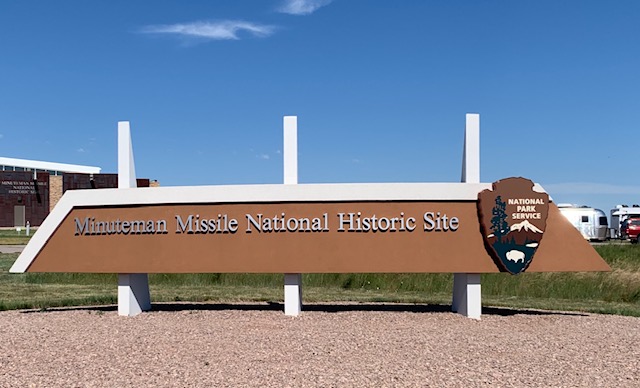
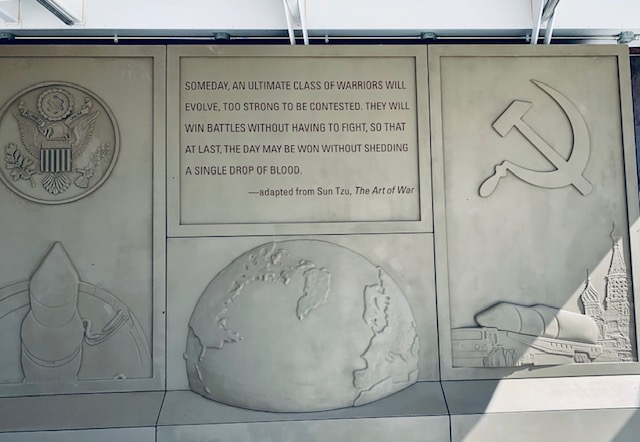
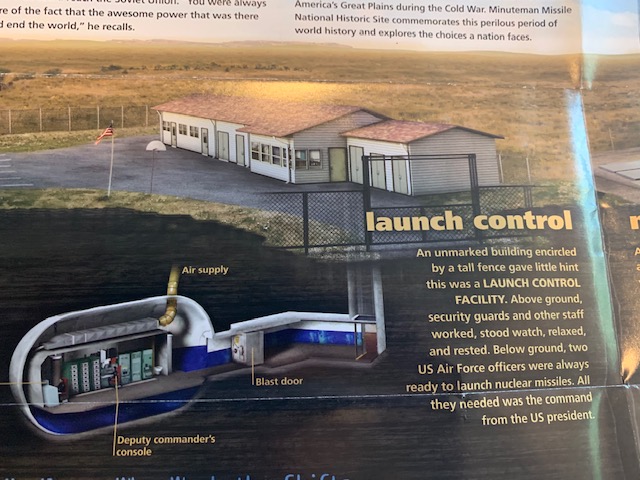
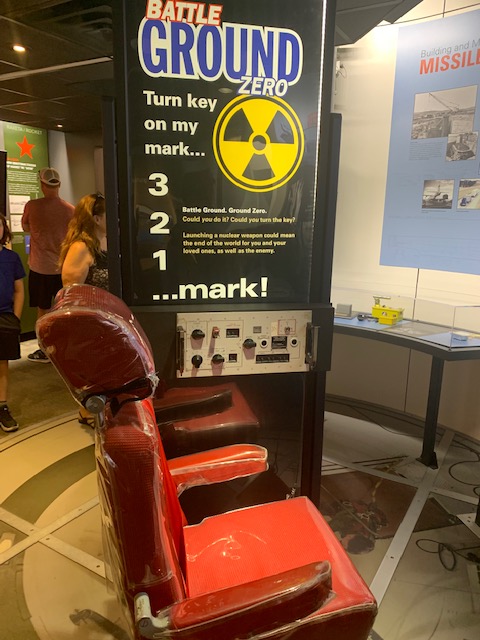
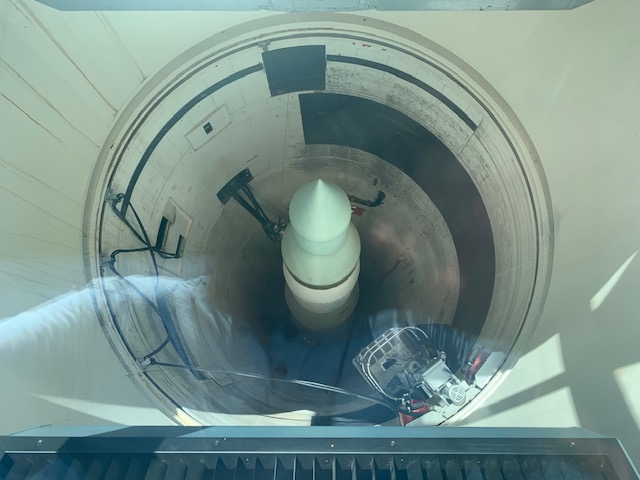
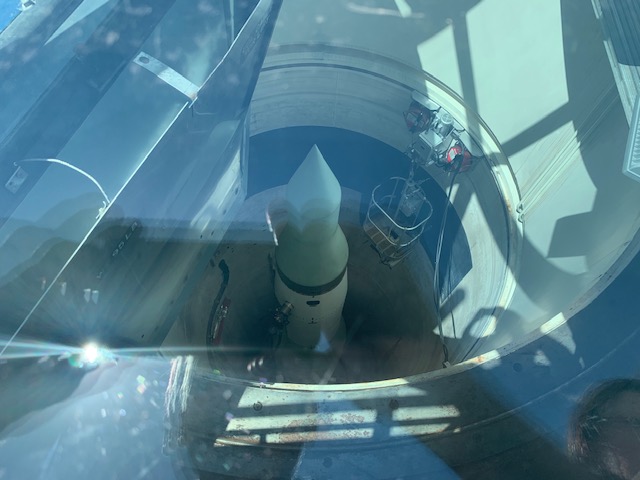
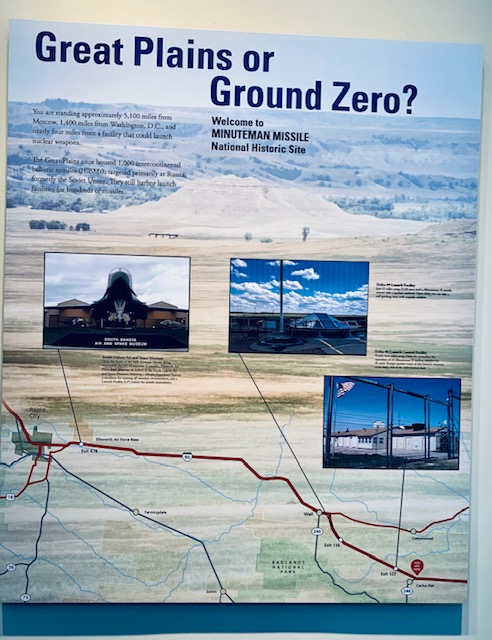
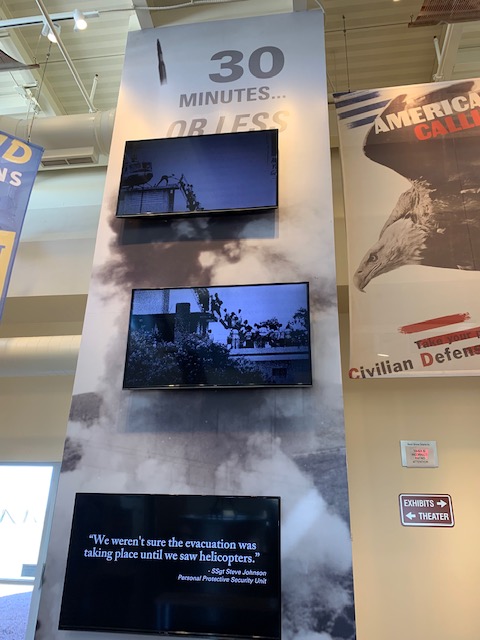
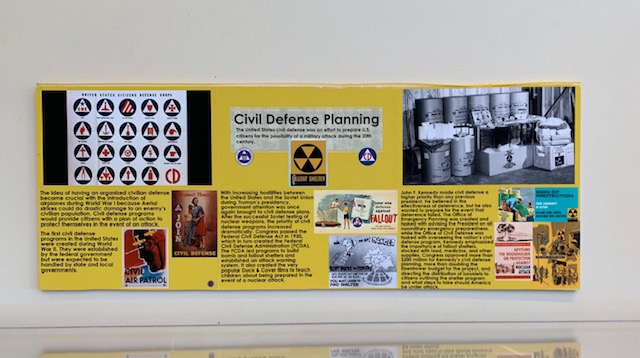
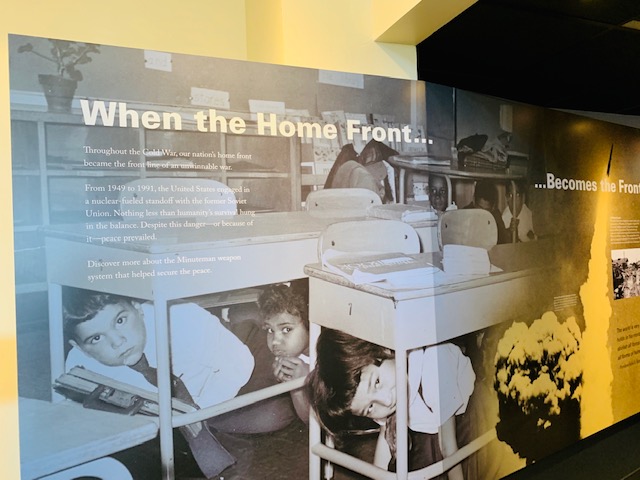
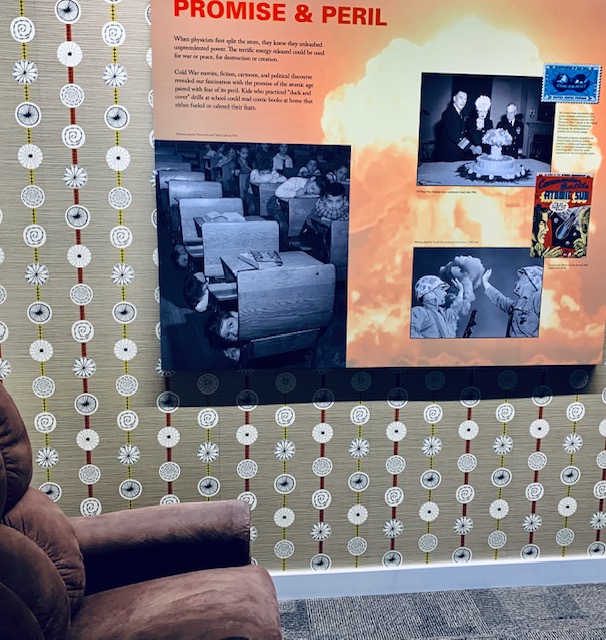
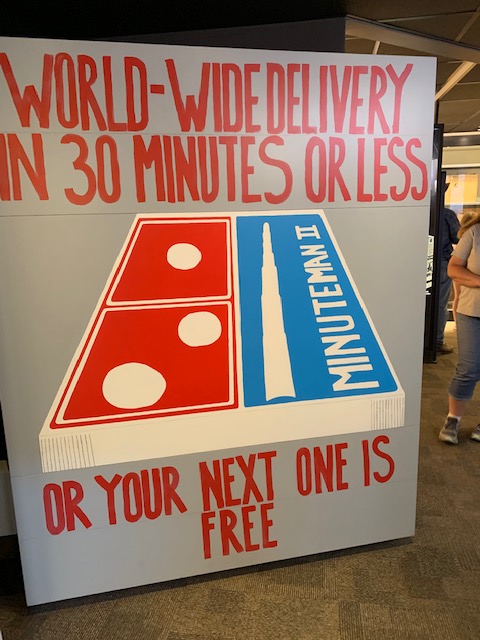
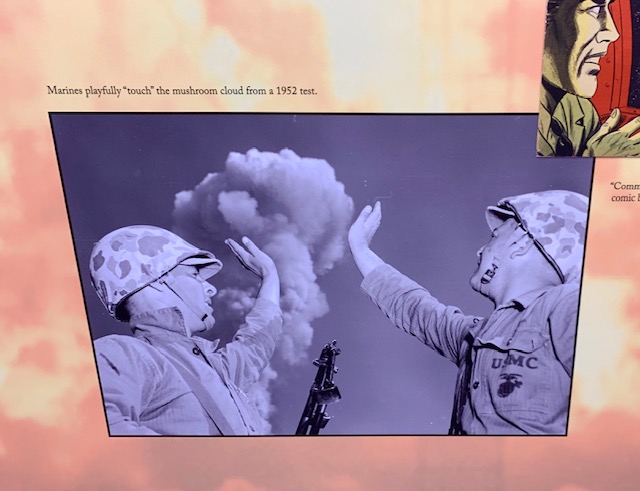
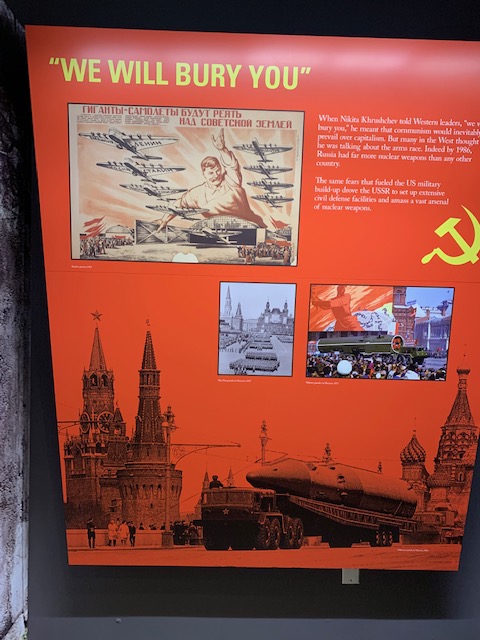
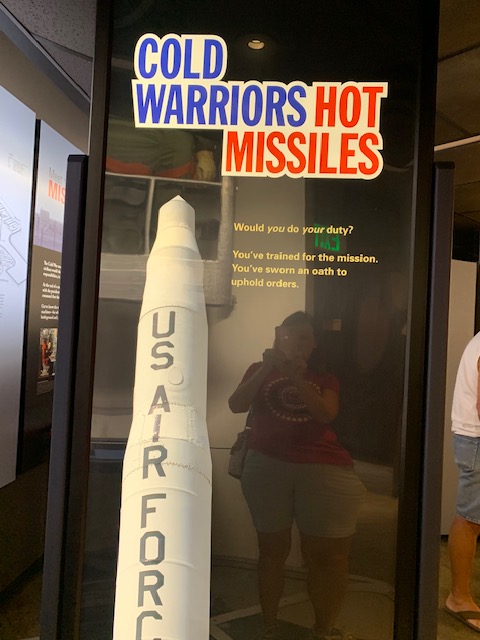
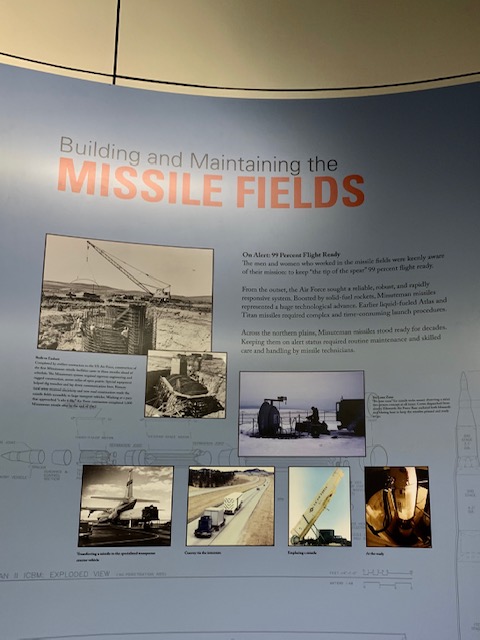
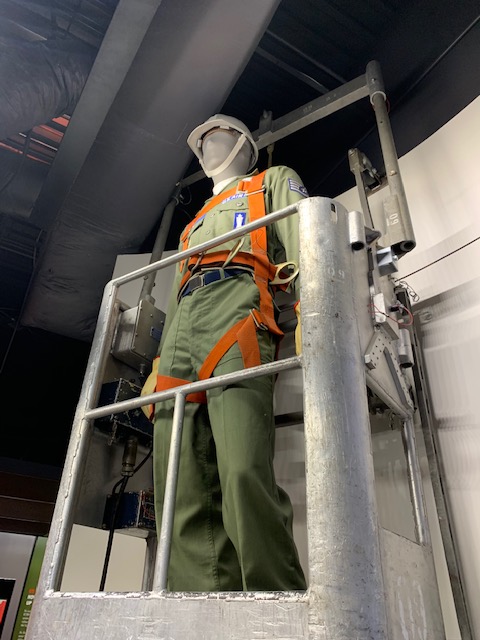
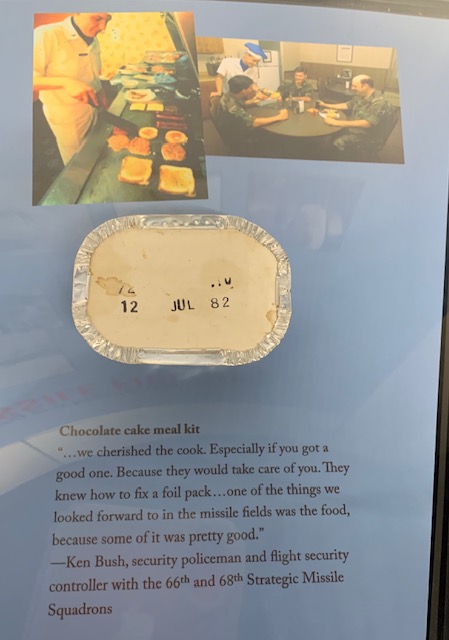
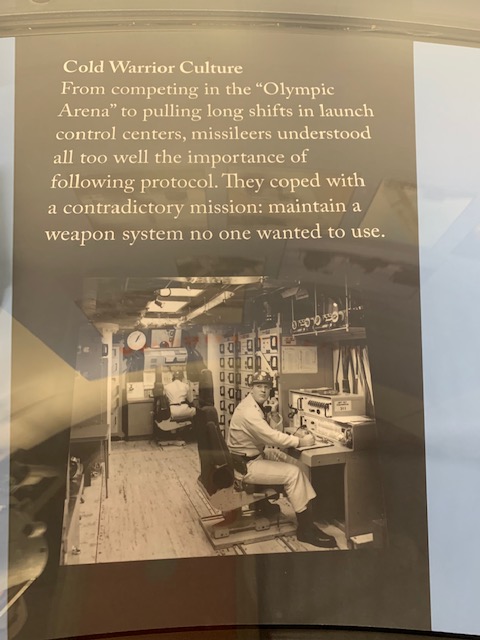
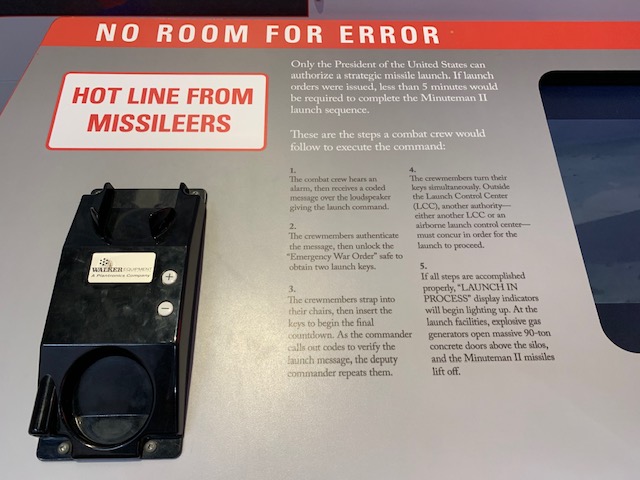
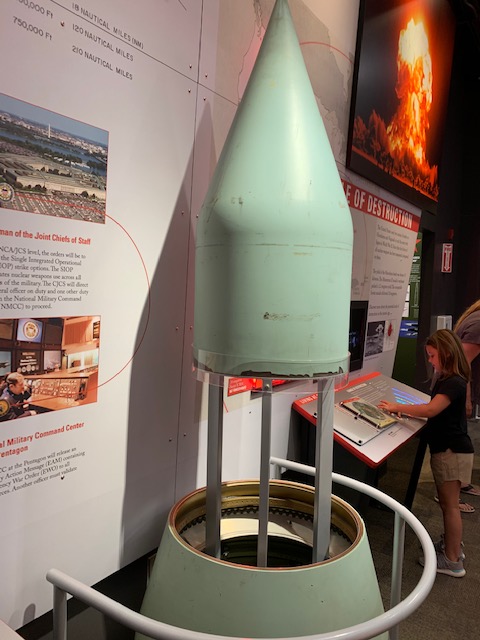
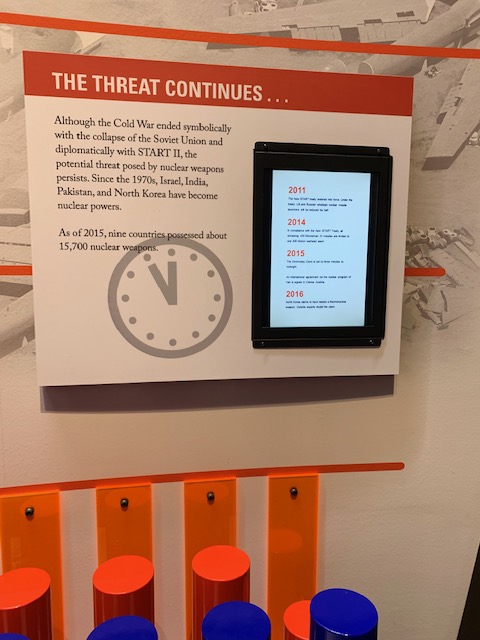
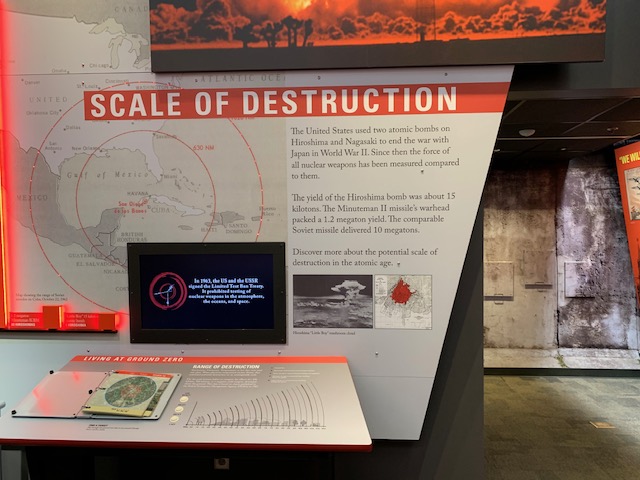
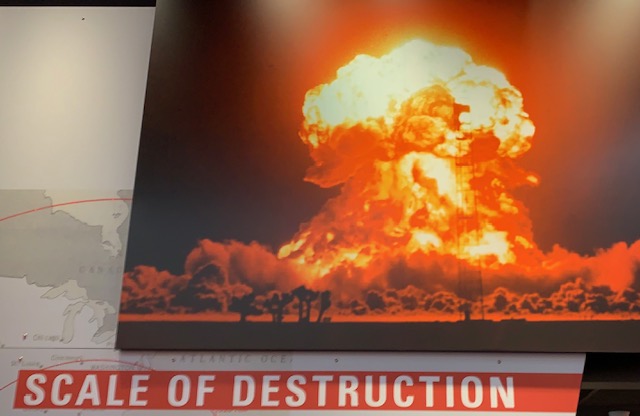
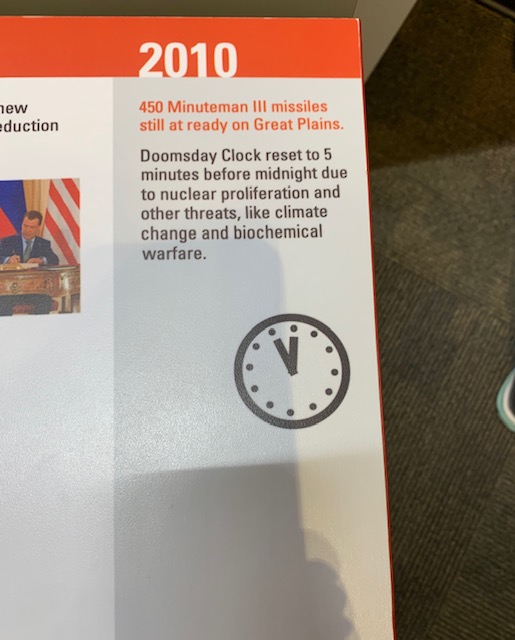
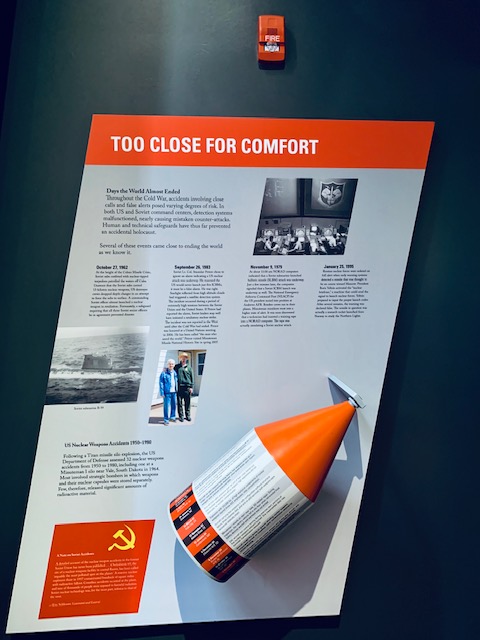
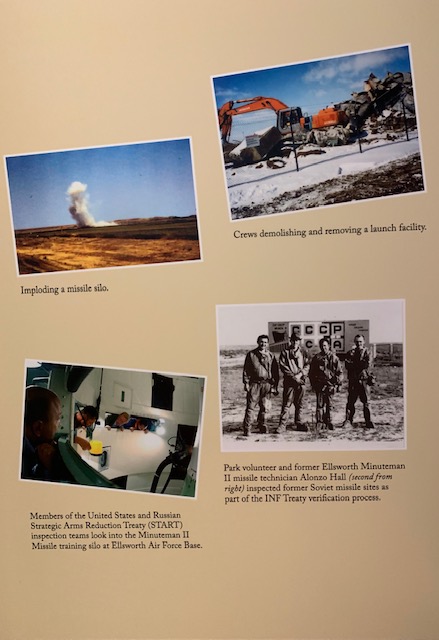
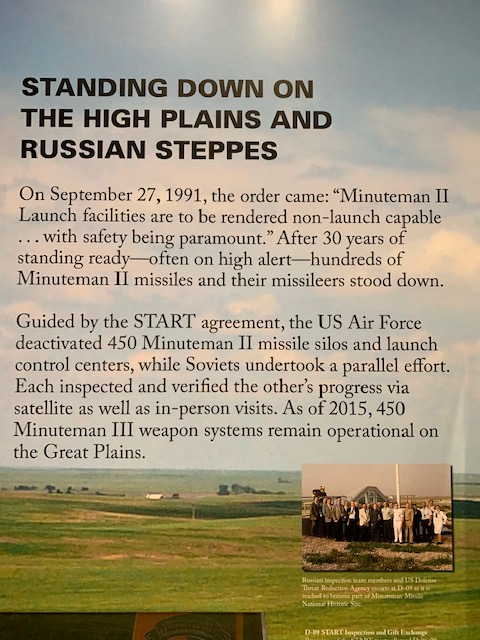
In the plains and wide open spaces of South Dakota, where we are and a few other states out west there lurks a danger hidden in plain sight. Since the late 1950’s there have been over a thousand minuteman missiles hidden in silo’s, ready to be launched at any time. Today we went to the Minuteman Missile National Historic Site. Set up in the early 90’s after a worldwide treaty, between the United States and Russia to reduce it’s missile supply. This was a really eye opening visit, learned a lot and went away with a feeling of how mankind has figured out a way to kill us all. Now there are only about 500 Titan III minuteman missiles around. In Wall, where we are there is one base nearby, with a unassuming house surrounded, by barbed wire, guarded day and night. While below 60 feet in the ground is a launch control room, manned by two people round the clock, waiting. Surrounding them are 10 silo’s each carrying a Titan III, with three, 10 megaton warheads attached, ready to launch, if word came from the president. I don’t like that. We also went to the Delta 9 site, which houses a real Titan II minuteman missile. From the glass dome above you can peer down and view the thunder of death. With it’s solid fuel inside it would only take thirty minutes to travel 5000 miles to it’s intended target. There have been about twelve close calls, the Cuban missile crisis a big one, but one in 1973, when the U. S. radar screens lite up with multiple missiles launched, from Russia, only a few minutes later realizing someone put in a computer tape of a training simulated attack. Also one in 1983 on the Russian side, where the commander was ordered to fire on the U. S. . He disobeyed this order, hesitated and figured out there was a glitch somewhere, and fixed it. He was stripped of his command, and cast aside for his actions in saving the world, go figure.

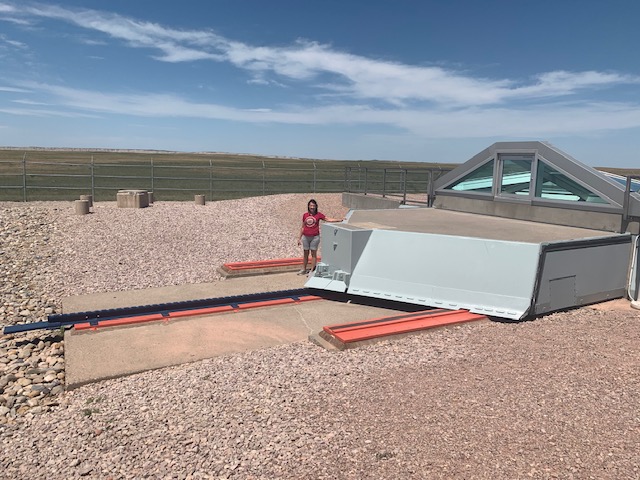
This is the 70 ton blast door that would slide open when the missile was fired, the top part is for display only , so you can see into the silo. The badlands is in the distance,

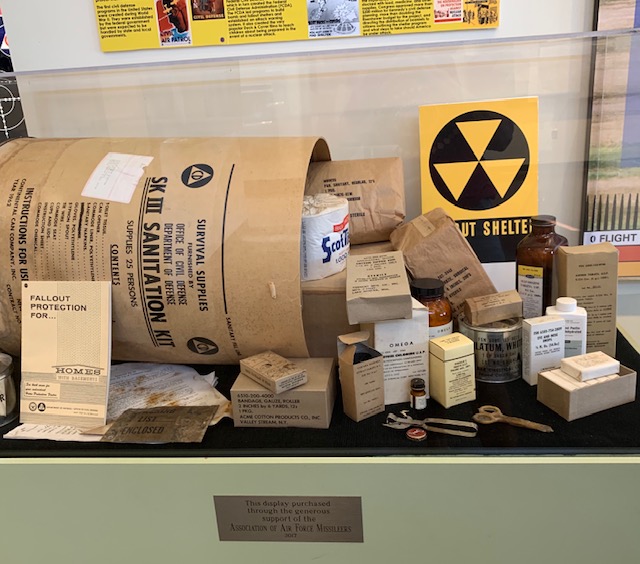
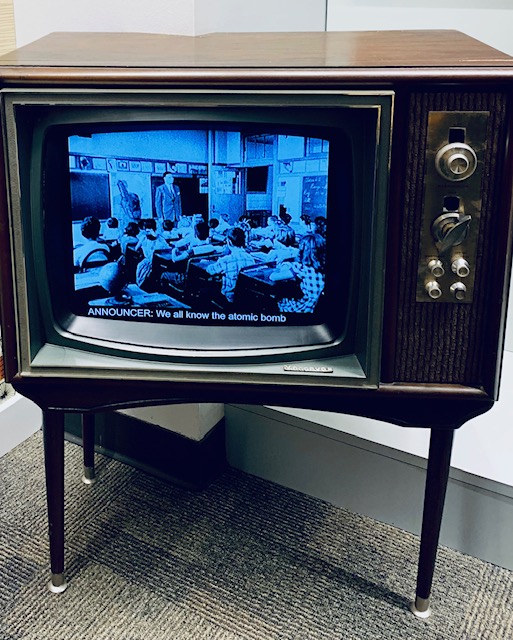
Did you have to duck in cover under your desk in school?

THE BADLANDS BABY

We are now in the Badlands area of South Dakota, staying in Wall at the Sleepy Hollow campground for a few days. We are finally here, YES. Drove 296 miles today going West in the high plains area of low rolling hills, was very pretty. It was also a very pleasant ride, not a lot of traffic and not windy. We saw the badlands on our left getting here, what a sight really cool. Wall also has the Famous Wall drug store, thousands of people stop here every day to get there free water. Melissa will make a post on all this soon.

Right now I am going To mossie on over to make myself another drink.

An adventure next door in Minnesota

Dave took me on a surprise trip to Pipestone MN., about 40 miles from here, And I’m glad he did! It was an enjoyable visit for sure!

Dave didn’t know much about Pipestone only that it was a National Monument. He knew it had something to do with Indians, because it was on sacred ground, he thought it was going to be some kind of mound.

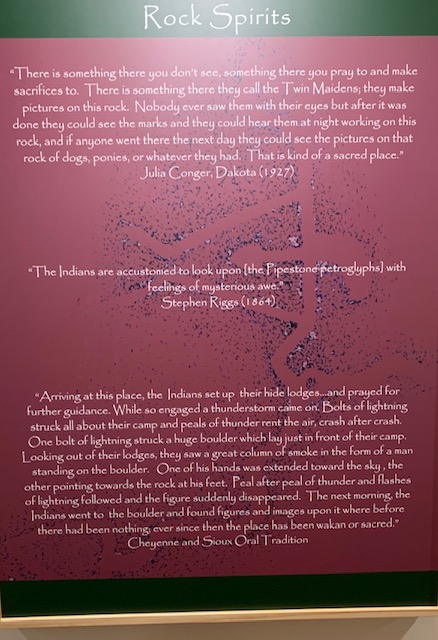
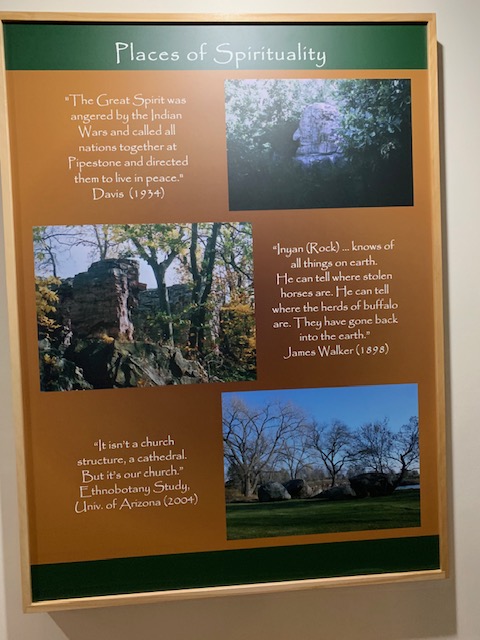
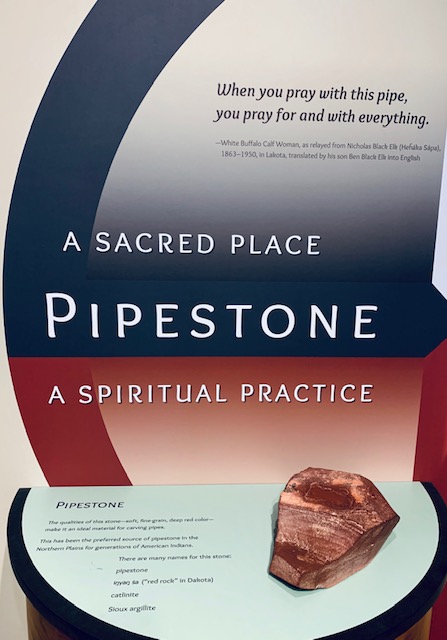
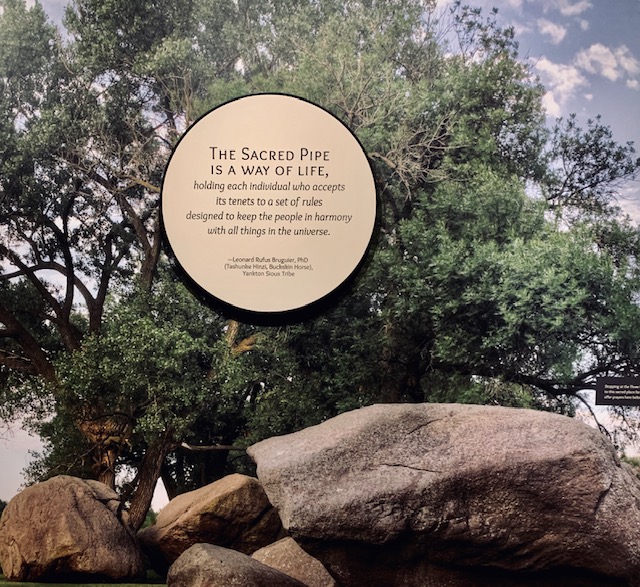
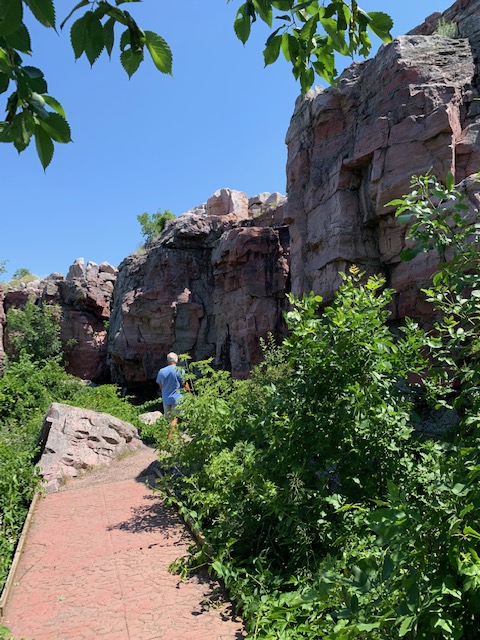
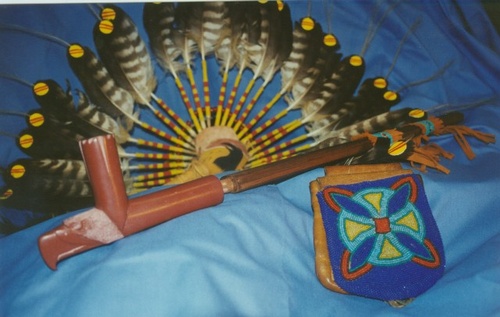
As it turned out . . . . For countless generations, American Indians at this site have dug out the red stone used for the carving of their ritual pipes used in prayer, Peace Pipes As noted in the seminal text of Native American religious beliefs and practices, Black Elk Speaks, “When you pray with this pipe, you pray for and with everything.” The American Indians believed that the smoke from a pipe made a connection to the Great Spirit by carrying prayers aloft. These grounds are sacred to many people. The traditions of quarrying and pipe making continue here today.

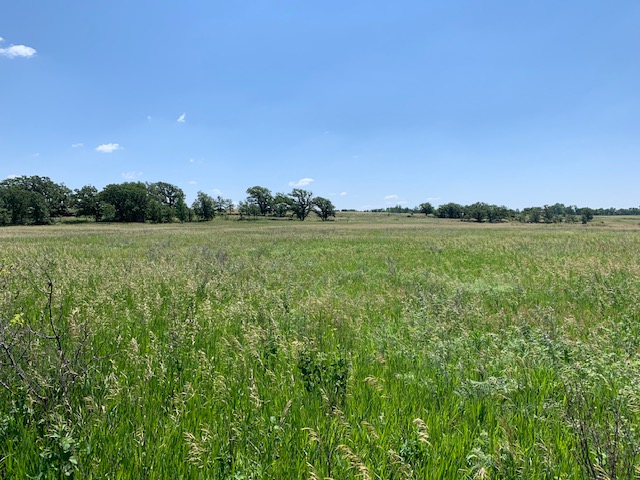
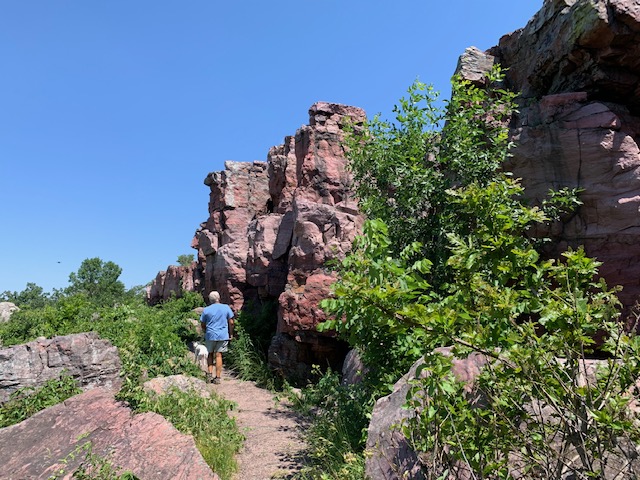
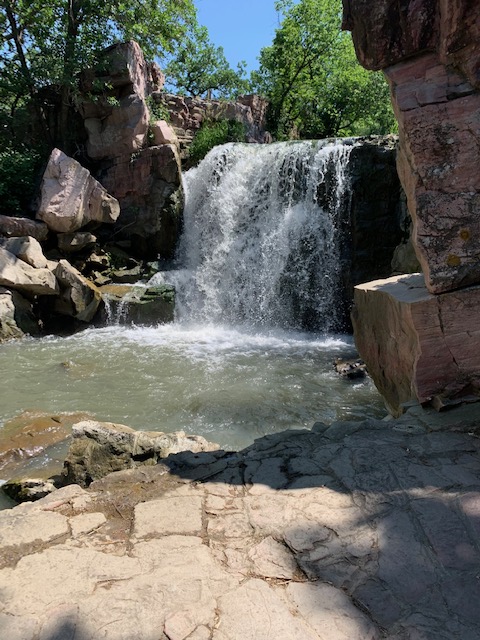
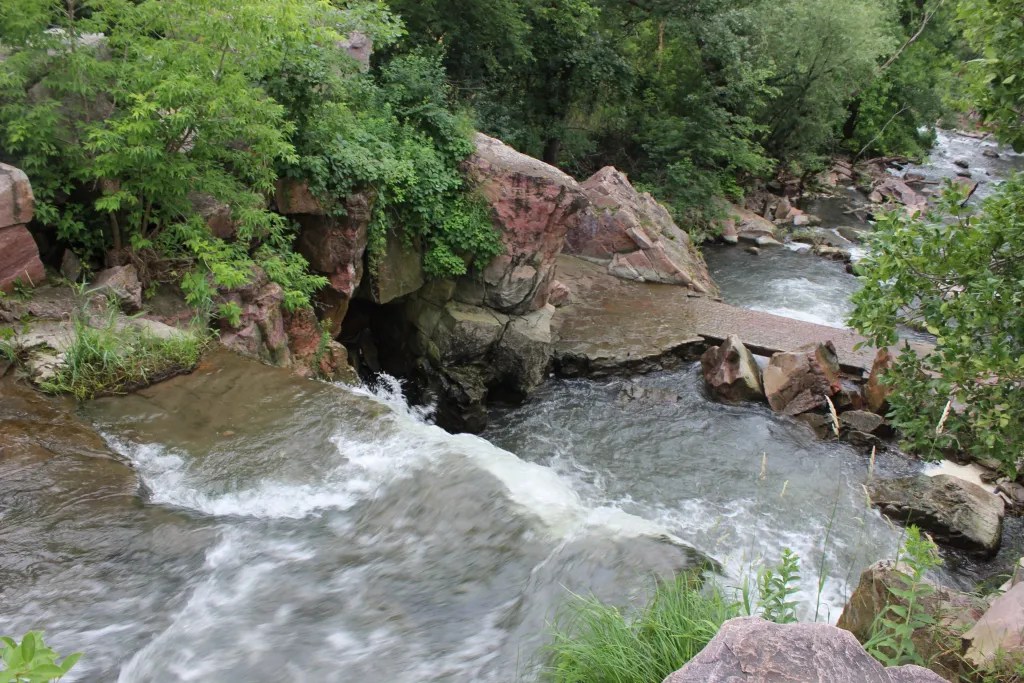
Pipestone National Monument — home of the historic Pipestone quarries, beautiful tallgrass prairie, and the majestic Winnewissa waterfall.

Pipestone National Monument visitor center has a museum, orientation film, exhibits and a gift shop. 

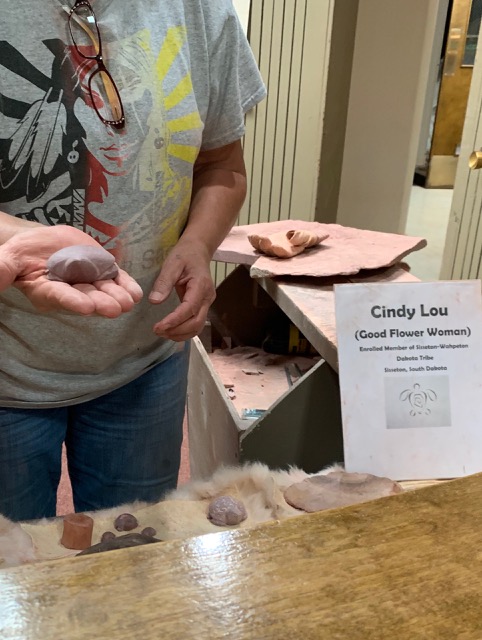
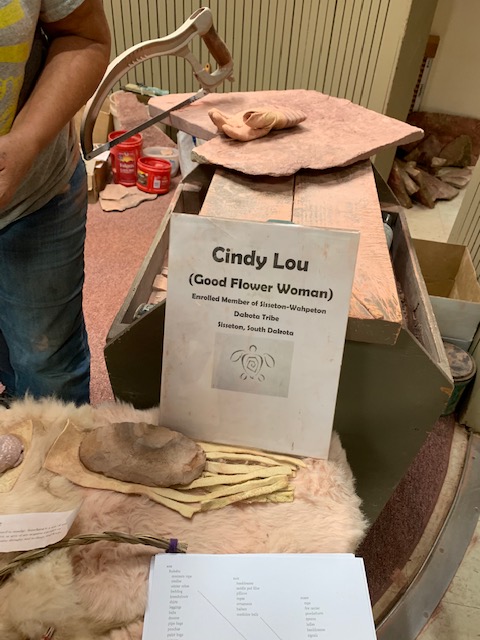
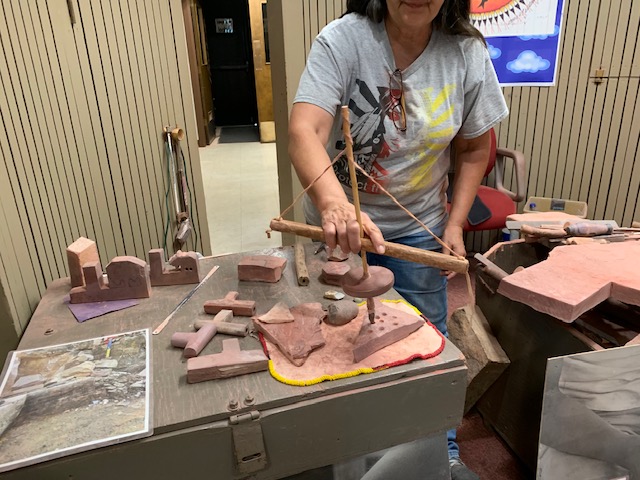
The best part is that they also have pipestone carving demonstrations by American Indians.  We talked to three of the demonstrators who had their talent passed down to them by many generations.  And we got to see them use the primitive tools that were used long ago.

Cindy Lou made turtles and Jewelry with the pipestone

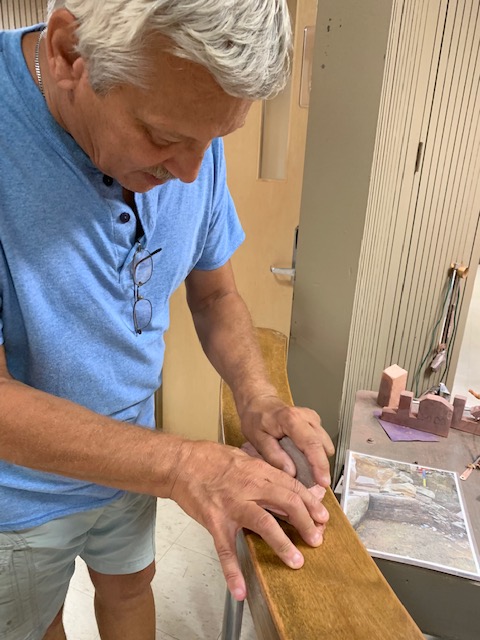
Cindy showing us what they used to make the hole in the pipe. Dave is sanding down, rounding off a piece of pipestone.

Travis Erickson is a Fourth Generation pipestone artist. He work is exhibited in the Smithsonian Institute. He said all the Indian tribes from the West came here to get their pipes. And that old paintings of Indians holding their pipes, their pipes came from Pipestone.

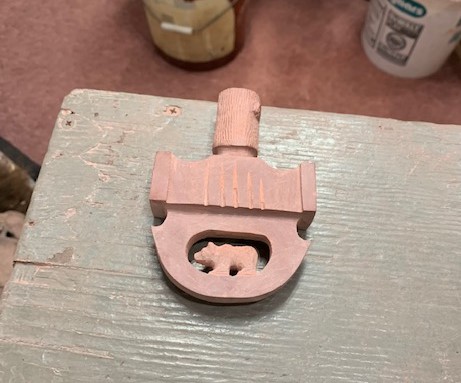
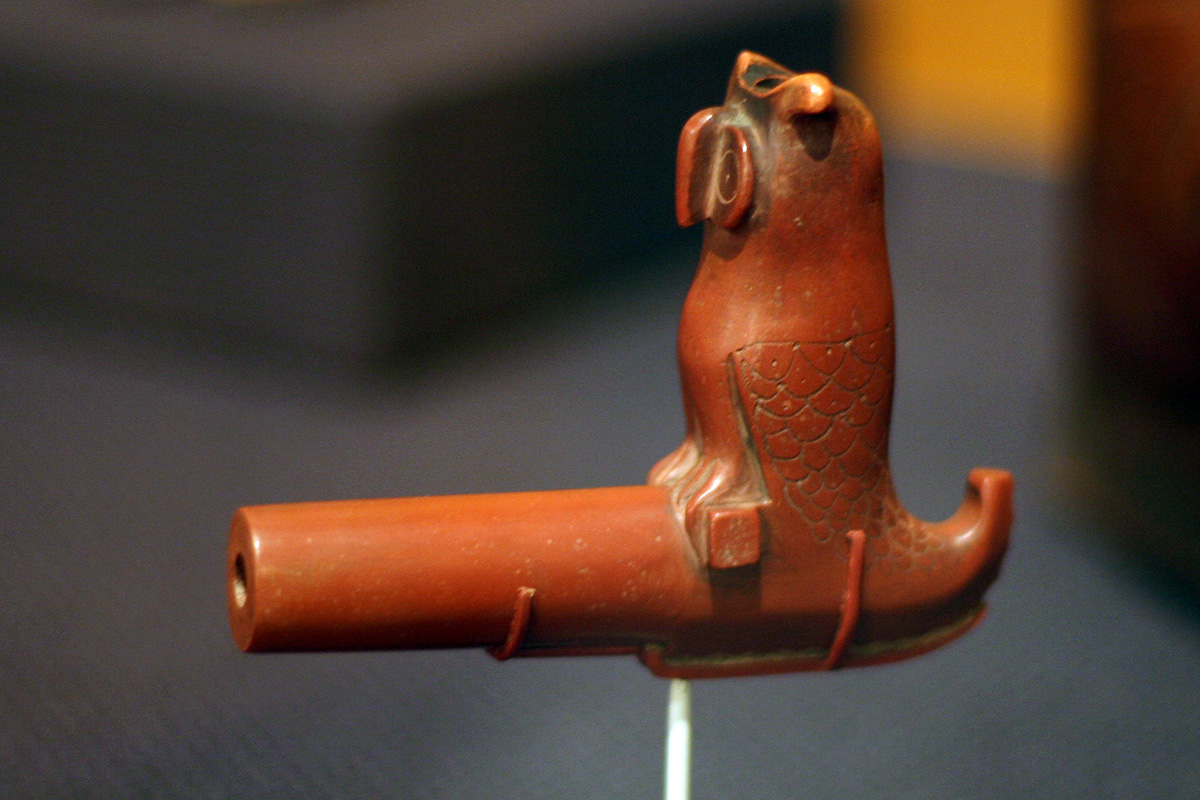
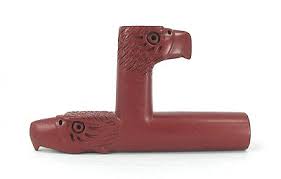
An old pipe in the visitor center. This is where you would connect the pieces together.

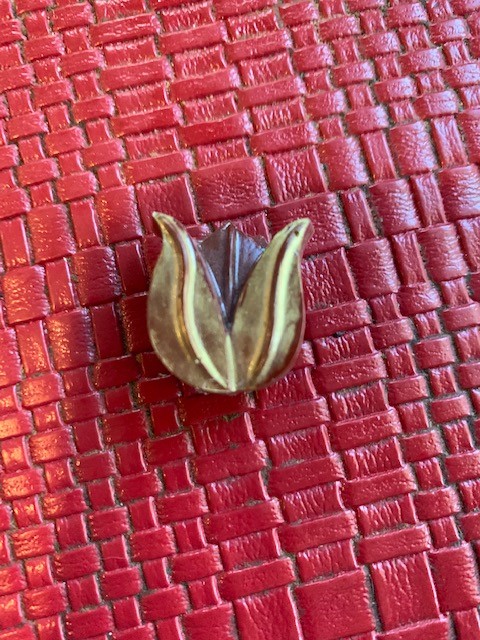
A tulip magnetic I purchased from Travis

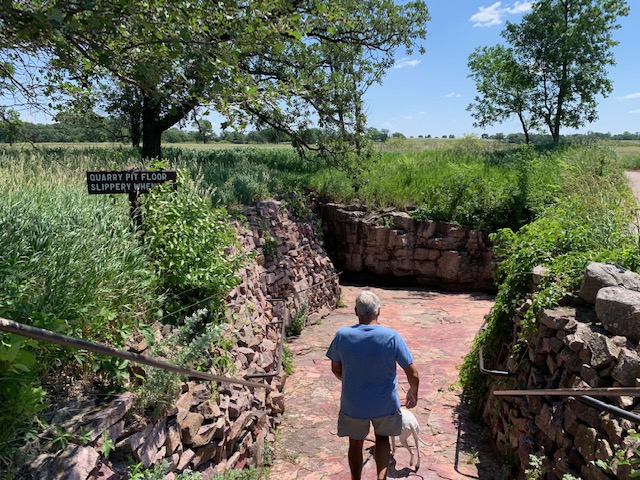
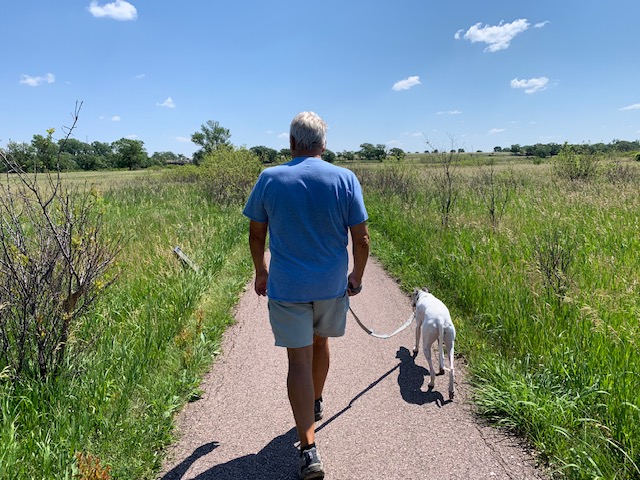
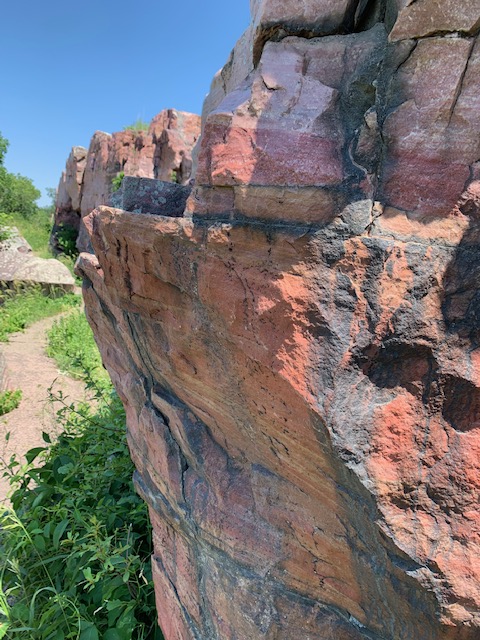
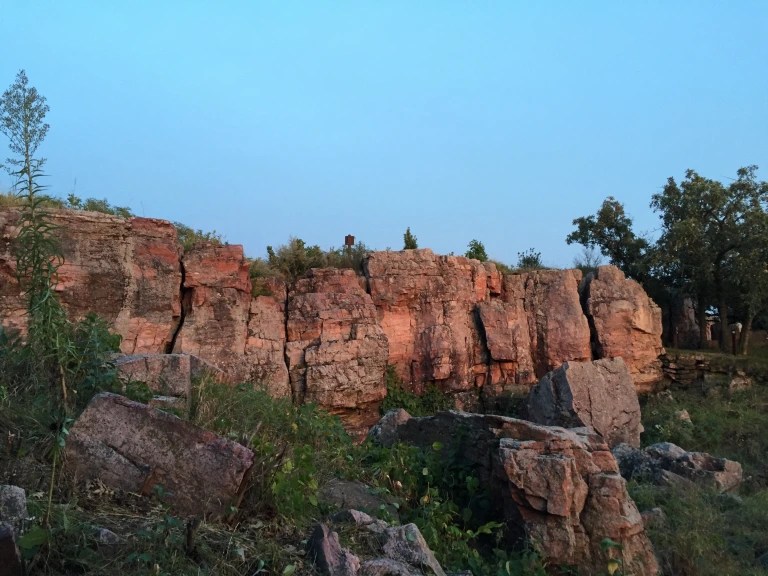
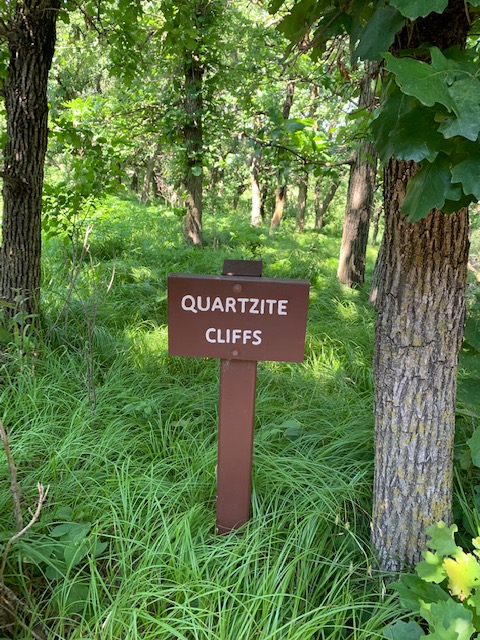
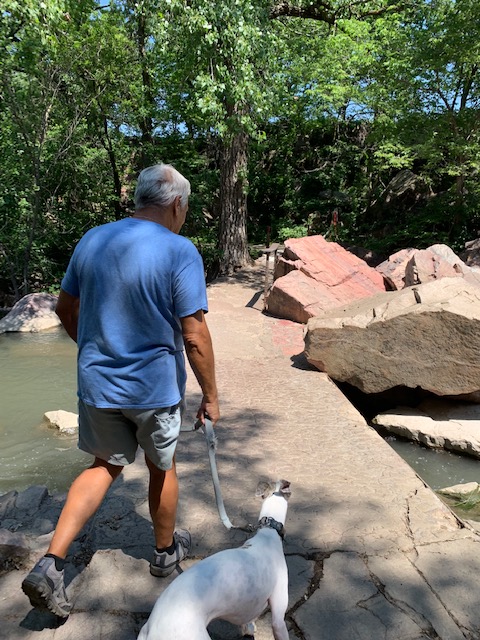
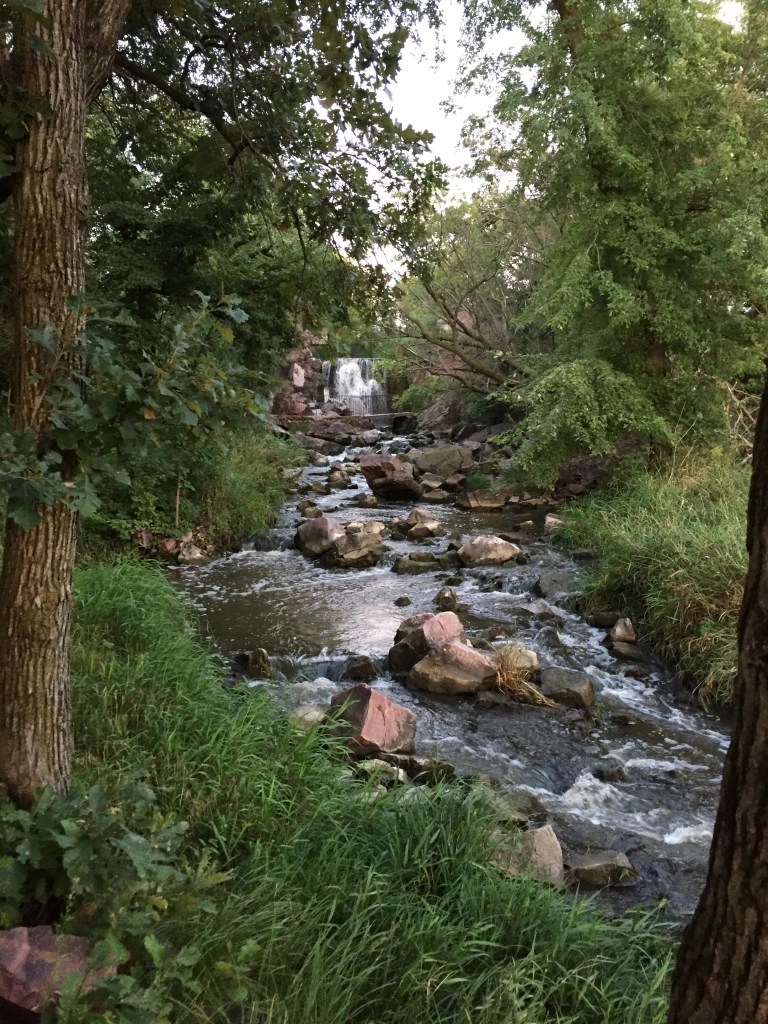
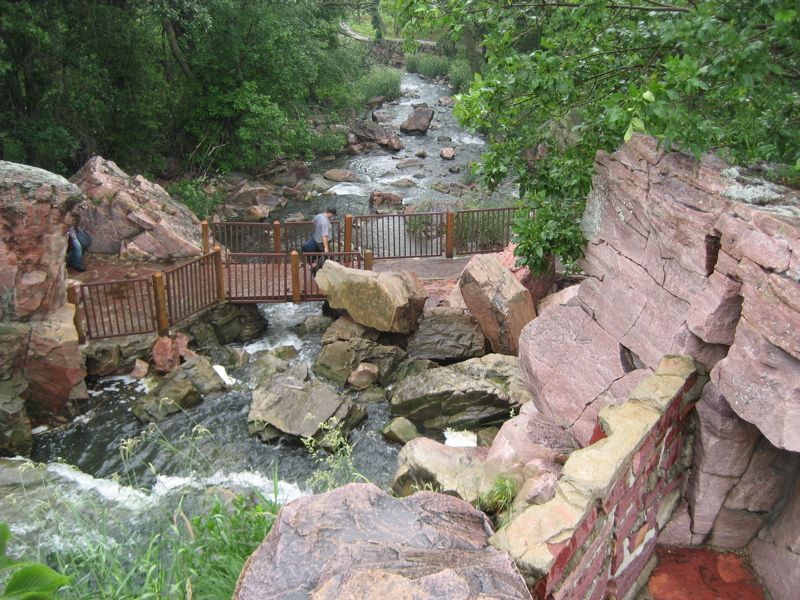
Another great part about the park is the ¾ mile walking trail along Pipestone Creek, Winnewissa Falls, and the tall grass prairie where digging for pipestone was and is being done.

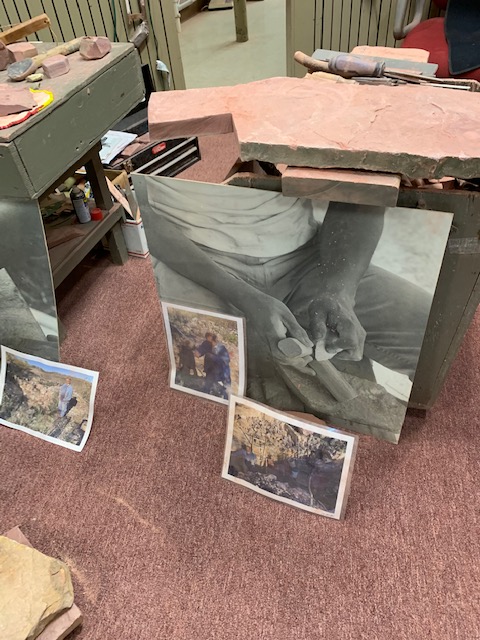
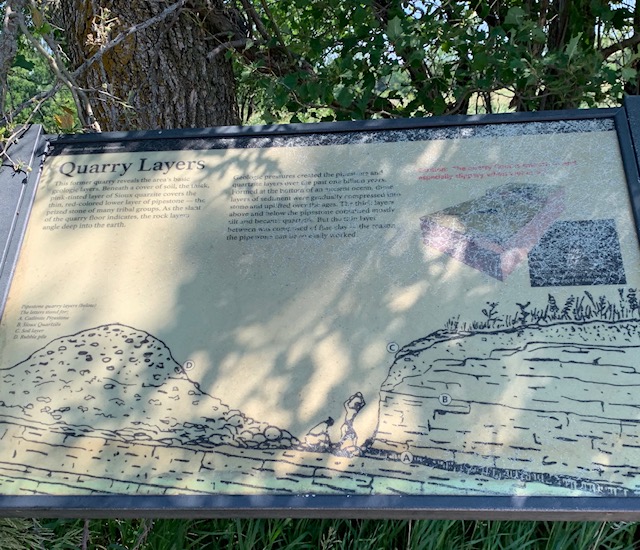
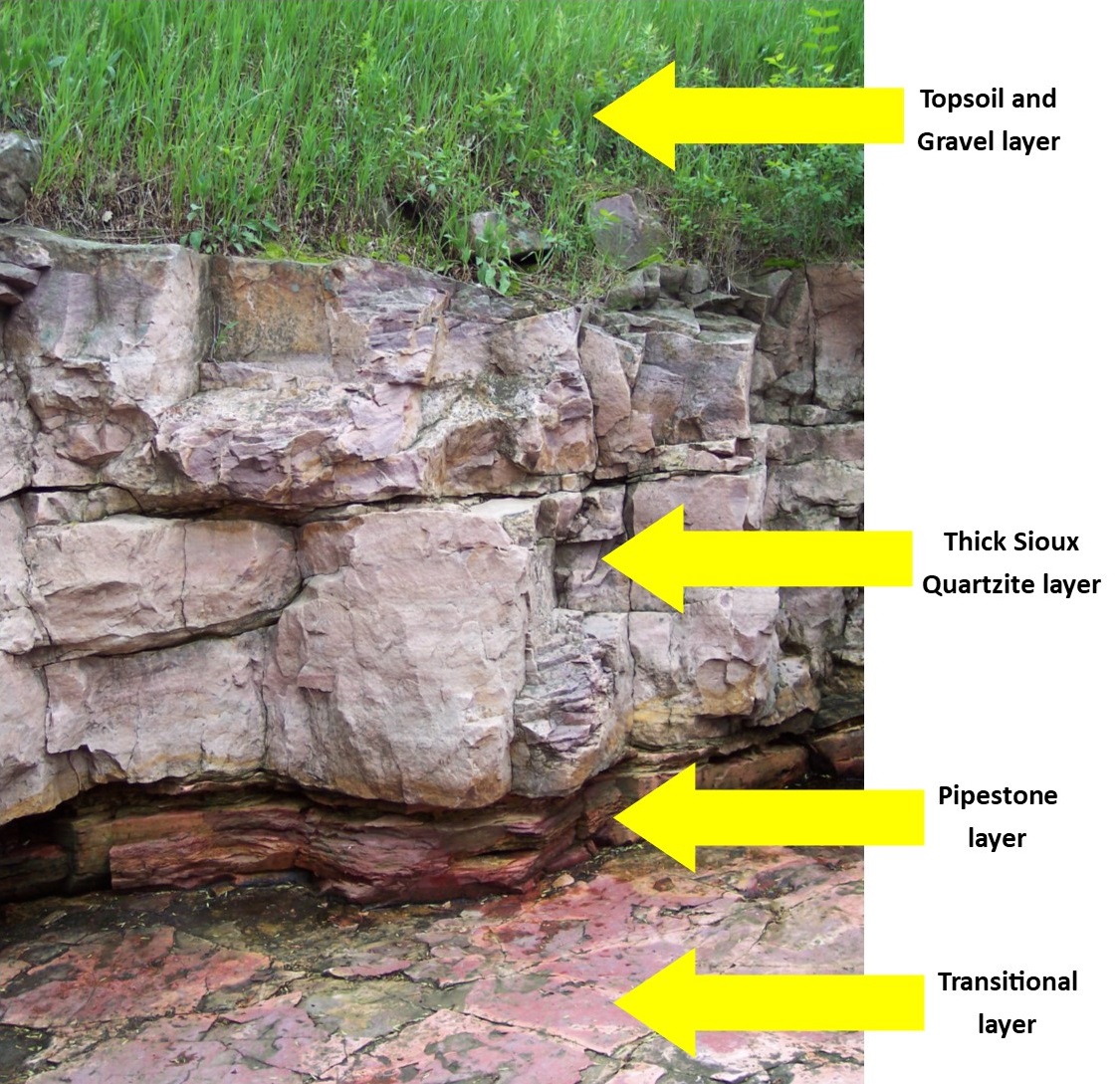
They definitely had to dig down deep to get to the pipestone layer.

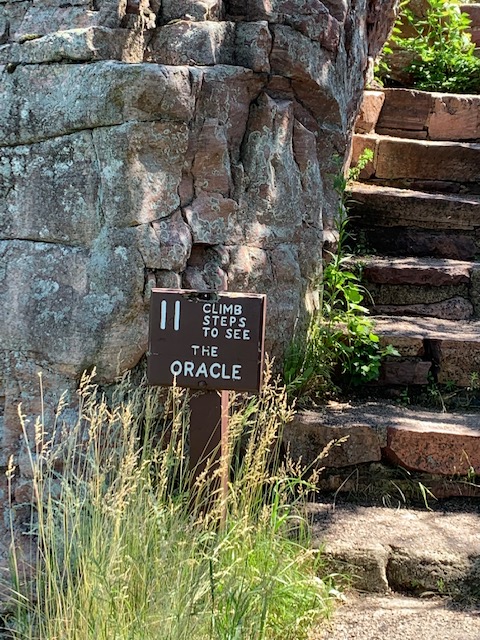
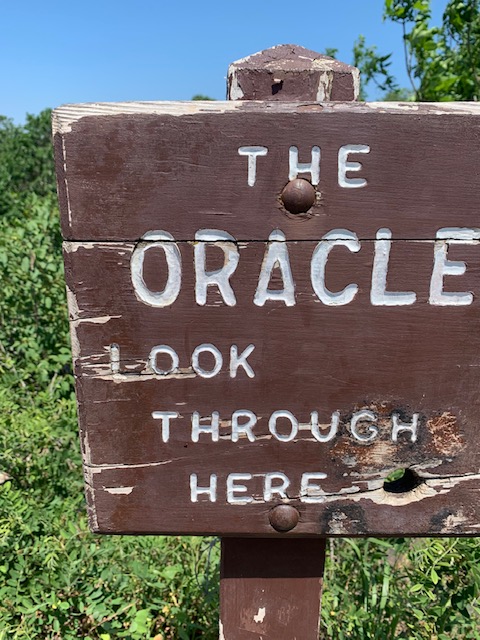
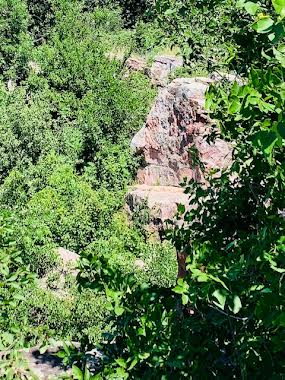
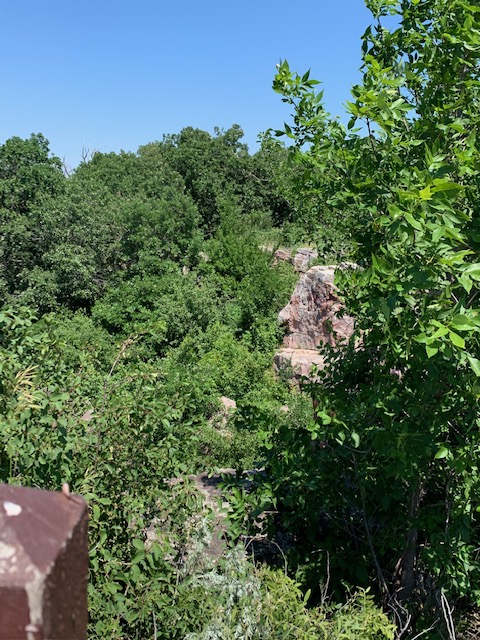
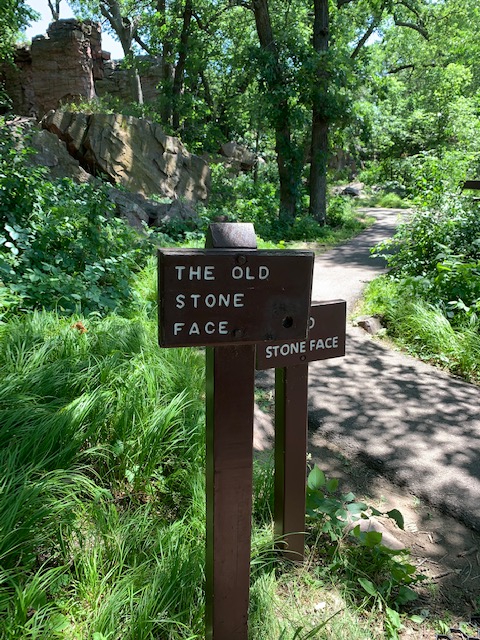
When you look thru the oracle you see the outline of this face.

Minnesota pipestone is said to be the preferred source among Plains tribes due to the quality of the stone. According to oral tradition the site was used by people of all tribes, and that all tribes – even enemies – laid down their arms before quarrying side by side.

As always the white man started to take away their land so this National Monument was established by an act of Congress on August 25, 1937, with the establishing legislation reaffirming the quarrying rights of only Native Americans. Any enrolled member of a federally recognized American Indian tribe may apply for a free quarry permit to dig for the pipestone. Only members of registered Indian tribes are allowed to quarry at the site now.

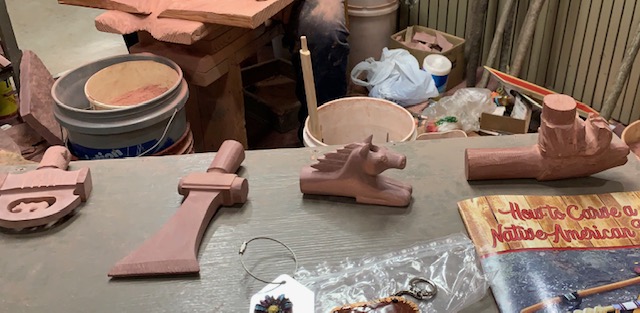
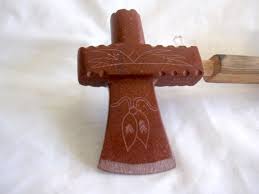
Examples of pipestone that were made here at the park.

Another great day out west.

SIOUX FALLS SOUTH DAKOTA

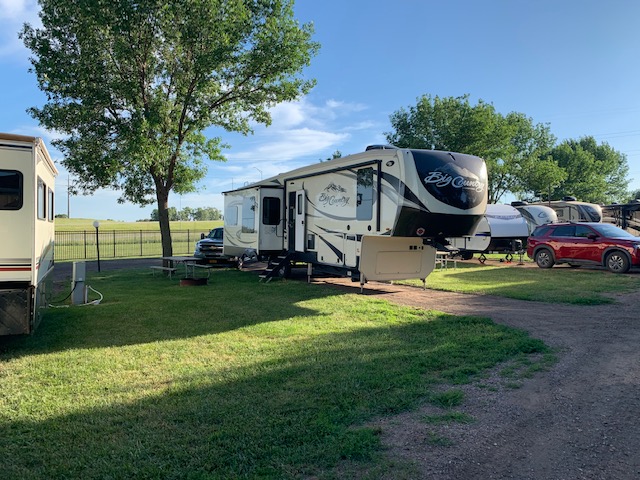
We are now at the Gogi Bear Campground near Sioux Falls South Dakota. YES, we are finally here, after two years of delays, we are out West. Drove 358 miles today, the most ever. It was a hard day of driving, at first not bad, got into Iowa, and I-29 north was closed for construction. Detour went 35 miles around, then back tracked a ways ,then put us on two small service roads. WHAT, it was not marked well, glad it wasn’t real busy, still watching semi’s and Rv’s like me making turns was pretty nerve racking. Whoever thought of this was nuts, they even had state troopers, in the area watching for speeders. Iowa, never again. In total about 75 miles in detours, insane. Then the wind picked up about 40 mph or so, driving right into it, I had a hard time keeping 60mph. Going north into South Dakota was a little better, but was over 7 hours driving for me , i’m tired and cranky. However a few drinks later I am fine. Be here a few days.

Our spot

ST JOSEPH MISSOURI

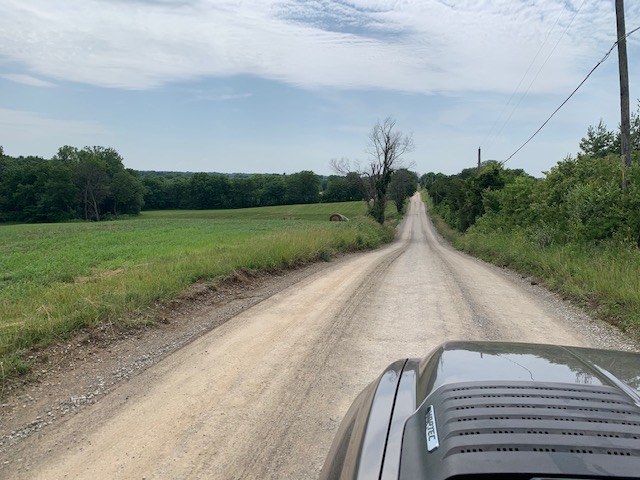
We are now at the AOK Rv park in St Joseph Mo., just a little above Kansas City. Drove 196 miles today to get here. Turning onto the road to the park it was dirt and stone, this isn’t the road we said, so we turned around and parked to call them. Sure enough you drive 1/2 mile down a dirt ,stone actual rural road to get here, but this is not a bad park. Tomorrow we drive to Sioux Falls South Dakota. Pictures below of site.

More Excitement in Arkansas

We planned to Visit Frank Lloyd Wright Bachman-Wilson House in Bentonville but to our surprise it was located inside what is know as the Crystal Bridges Museum of American Art. It’s an incredible place!

The museum has a renowned collection ranging from Rockwell to Warhol in a museum-structure set on 120 acres.

Surrounded by 120 acres of the Ozark forest, Crystal Bridges Museum of American Art in Bentonville, Arkansas, is definitely a different kind of museum.  They like to say it is a mixture of art & nature in harmony. Crystal Bridges was founded in 2005 as a non-profit charitable organization by arts patron Alice Walton, the daughter of Sam Walton who started Walmart, it opened up to the public in 2011, since then museum has welcomed more than 5 million visitors.

Architect Moshe Safdie pictured a building that would complement the surrounding landscape. Nestled into a natural ravine, the museum mixes the element of water on the site through two spring-fed ponds that are spanned by two signature bridge structures and surrounded by a group of pavilions housing museum galleries and studios. A Frank Lloyd Wright Usonian house was preserved, acquired, and moved to the museum grounds in 2015, and a rare Fly’s Eye Dome by Buckminster Fuller was installed in 2017, showcasing two American architectural masterworks in a natural setting that also includes five miles of sculpture and walking trails.

Crystal Bridges’ permanent collection spans five centuries of American artworks from Early American to the present, with an emphasis on artists underrepresented in art history and conventional museum settings. Works such as Asher B. Durand’s Kindred Spirits, Gilbert Stuart’s portrait of George Washington, and Georgia O’Keeffe’s Jimson Weed are displayed alongside pieces by contemporary artists.

Around the museum they have 5 miles of trails with different kind of art work. We only were able to walk a mile due to time limitations, but you could actually spend a day here.

This painting by Charles Schreyvogel was my favorite. He mad you feel like you were going to be shot by the cavalry soldier for sure.

Dave & I were glad we stopped to see this art exhibit. I could only take a few pics but the paintings were fantastic. It reminded us of the time our friends Don & Mary took us to an art museum in Ohio where we saw some great paintings as well. We made sure we didn’t get to close to the paintings. 😊

Inside the 120 acres is what we came to see the Frank Lloyd Wright Bachman-Wilson House.

This house was originally built for Gloria Bachman Wilson and Abraham Wilson in 1954 along the Millstone River in New Jersey. It was subsequently purchased by architect/designer team Lawrence and Sharon Tarantino in 1988 and meticulously restored. However, the structure was threatened by repeated flooding at its original location, and the Tarantinos eventually determined that selling the house to an institution willing to relocate it was the best option for its preservation. Crystal Bridges acquired the house in 2013. The entire structure was then taken apart and each component was labeled, packed, and loaded into two trucks for transportation to the Museum. After its 1,235 mile journey, the Bachman-Wilson House arrived in Northwest Arkansas in April, 2014. Scott Eccleston, Crystal Bridges’ Director of Operations, spearheaded the reconstruction process. The Frank Lloyd Wright house is now situated a short distance from the Museum’s south entrance, with views overlooking the native woodlands and Crystal Spring.

When you walk in the house and enter the living room you definitely get the feeling your linked to the outside and nature with all the windows.

The first floor living room, dining room, kitchen and guest room and there is also a bathroom on the first floor.

We weren’t allowed to go up the stairs because of  deterioration but I got pictures from their website. There is a master bedroom, bathroom and another bedroom that goes out into the terrace.

An impressive house for sure, he was way ahead of his time.

The adventure doesn’t stop there. We also went to where the first Walmart store was born, where the Walmart Museum is.

Company founder Sam Walton was born in 1918 in Kingfisher, Oklahoma. In 1950 the Waltons moved to Bentonville, Arkansas where Sam opened a Ben Franklin franchise store that he named Walton’s 5&10. It proved successful and over the next decade he opened 14 stores. In 1962 Walton cut ties with Ben Franklin and established his own company. His first store under the name Walmart opened that same year in Rogers, Arkansas. The company grew steadily, spreading nationwide by the 1970s. Walton opened the first Sam’s Club in 1983 and the first Walmart Supercenter in 1988. By the 1990s, Walmart had become the nation’s top retailer, and had expanded internationally. The rest is history.

The Walmart Museum tells the early history of the global business and its founder, Sam Walton. Owned and operated by Walmart, the museum is housed in the original Walton’s 5&10, the store that began the Walton family’s retail empire. It contains multiple exhibits, a vintage toys souvenir shop, and an ice cream café. The museum has had over two million visitors since it first opened in 1990.

Walmart 5&10

You enter thru the original Walmart 5&10 store to the Walmart museum. We weren’t allowed to take pictures but I got these from their website. It has the original red & green floor tile.

It was a great tribute to Sam Walton & Walmart. Lots of displays and very informative. Sam started the first Walmart store in 1962 and the first one to come into the Western New York area was in the 1990s. He had great ideas about the customer being the boss.

I know you can’t read this but it says that a customer wanted to return this thermometer because it wasn’t keeping the right time of day. Walmart gave the customer their money back without any further questions.

you exit thru The Spark Cafe that serves ice cream. Ice cream was one of Sam Walton’s favorite things so they added it to the museum. We both got ice cream cones, waffle cone with one scoop of ice cream for $1.59 a cone, can’t beat that.

The Walmart museum was fun and educational. I can see Sam Walton’s ideas of how to operate a store by being a friend to everyone and the customer being always right was the way to operate. But now there being thousands of Walmart stores in the US and some in other countries, it certainly has lost that small town charm & feel.

Walmart funded Crystal Bridges Museum of American Art and the Walmart Museum so a very nice thing they did was to make it free to everyone. We had another great day.