VISITING SAVANNAH POST ONE

This is my first post, of several on our visiting Savannah and surrounding areas. But first an update today is already April 22 nd, we have two days left here in the Savannah area. The time has just gone right by. We have seen a lot, the weather has been nice and most of all we have had a good time. This post is what we did on one day, we spent a total of four different days in Savannah itself, we spent one day at the Tybee lighthouse  and museum, Fort Pulaski, and the beach. One day at Fort McCallister ,(all of which I will have separate posts on)and one day at the 8th Air Force museum, which I have posted on already. We have been busy, after we leave here we are basically heading back home to our home base in Newfane. So on to what we did one day here.

WORMSLOE HISTORIC SITE, FORT JACKSON, AND BONAVENTURE CEMETERY.

WORMSLOE PLANTATION HISTORIC SITE.

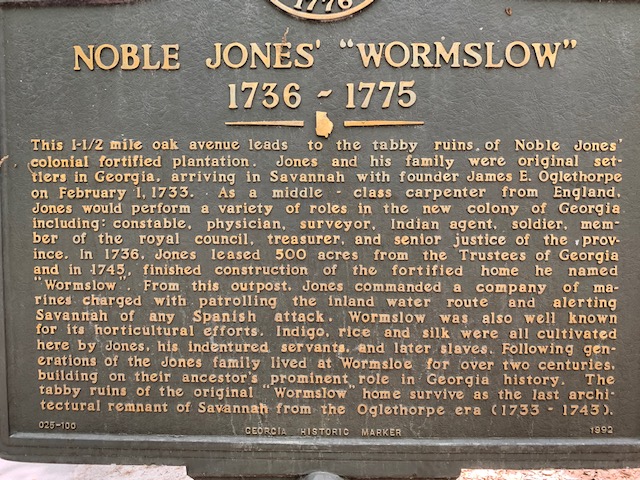
The Wormsloe Historic Site was once the colonial estate of carpenter Noble Jones, who came to Georgia with James Oglethorpe in 1733. This former plantation is the site of the oldest standing structure in Savannah. The land stayed with Jones, who took several roles in the colony and fought against the Spanish, until he died and continued with his descendants until the state acquired it in 1973.

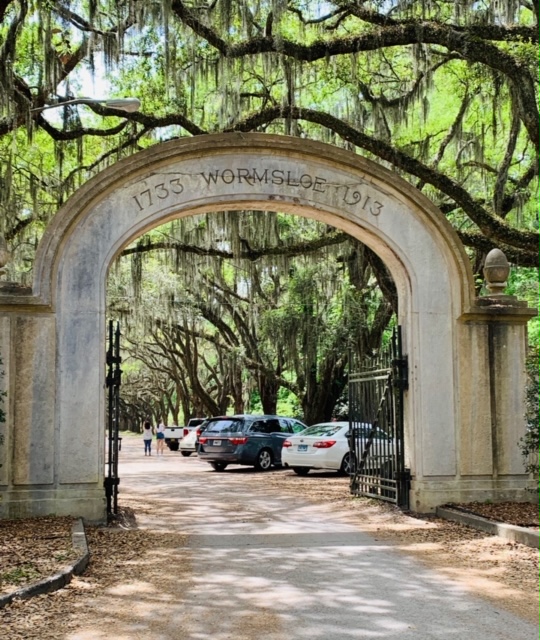
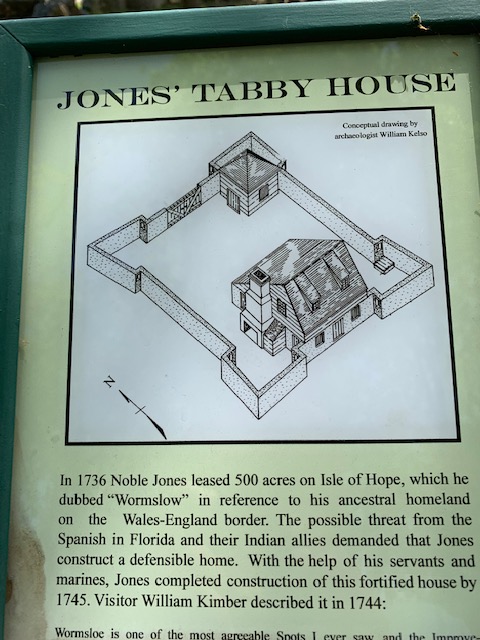
When entering the Plantation you see a mile-long driveway of oak trees, with plenty of Spanish moss on them that have grown into an amazing tunnel of trees. Someone said the entrance to the plantation is probably just what most Americans think of when talking about a Southern Plantation.  The driveway is spectacular and it’s even featured in several movies. Then we went to the ruins of Noble Jones’ 5-room tabby house. The ruins of the house, which was built in 1745 of tabby construction, a mix of mortar made from oyster shells, sand, lime, and water, the foundation still stands to this day. Nestled within lush forests and sheltered by salt marshes, the home was once surrounded by eight-foot-tall

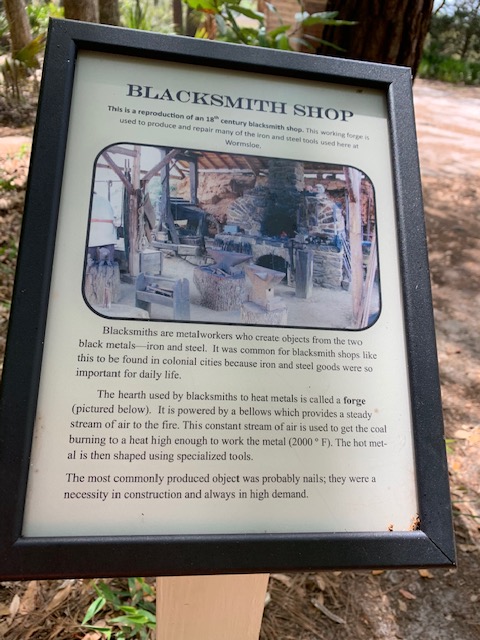
From there we went to the colonial life area and saw buildings such as a blacksmiths house what was still left standing  There are also paths that lead out to the waters of the Isle of Hope, where there are breaks in the trees and even docks to venture out on to get a great view. We both we’re glad wedidn’t miss this “must see” of Savannah treasures.
FullSizeRender (31)FullSizeRender (32)

IMG_0731

IMG_0732

This was an awesome site to drive down, when all the trees we planted, they were little and as each side of the driveway had other trees by them these live oak trees grew inward. They are over 150 years old.
IMG_0726

IMG_0723

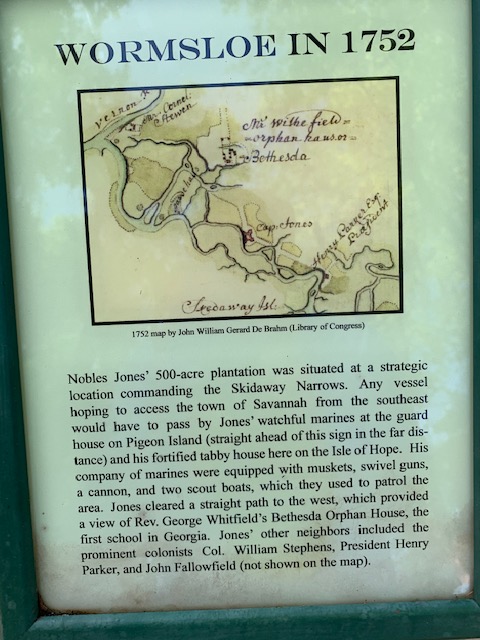
At first this was not a plantation but rather a front line fort, to watch for the Spanish who may invade from Florida.

IMG_0724

The ruins

IMG_1158

IMG_1160

IMG_1163

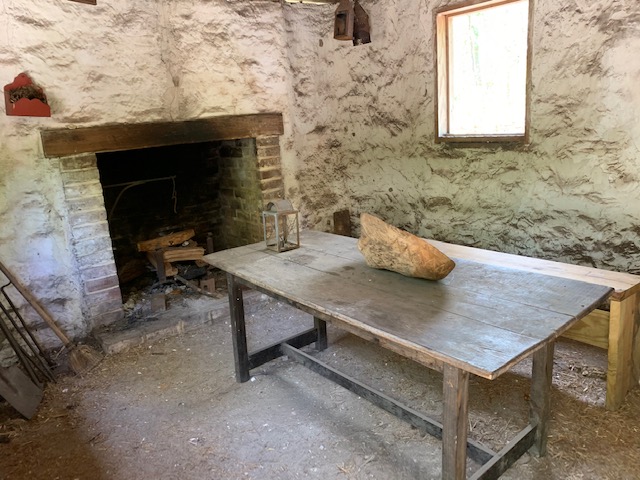
This is the inside of the typical house a family would have lived in in the day, it is only about 10 x 14 or so, one room, the bed is on the right side. Do not have a photo of the house itself,but they are small.

IMG_1165

Who knew, Cricket was played way back in the day ,but it was.
IMG_1155

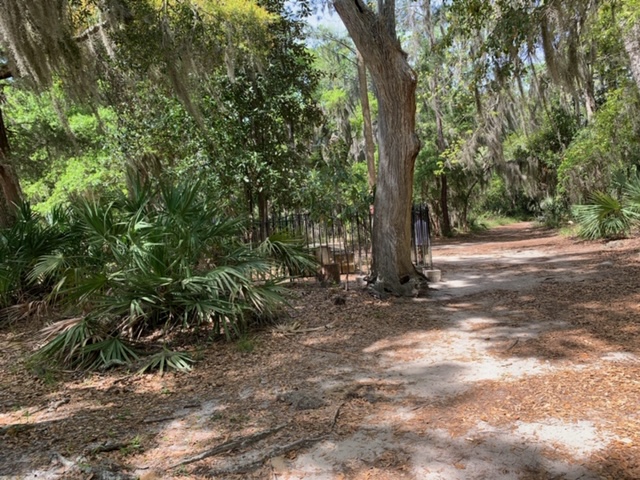
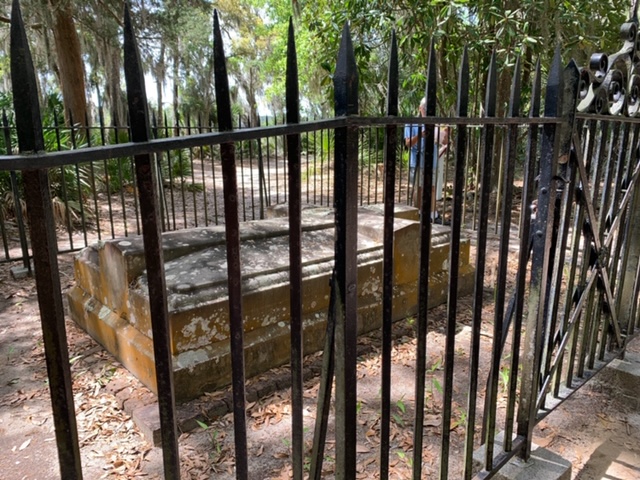
Grave site of Noble Jones, almost right on top of the water, his son removed his body years later and put in in Bonaventure cemetery. What is weird is that his mother and sister are still here.
IMG_1154

Close up of grave.

IMG_0728

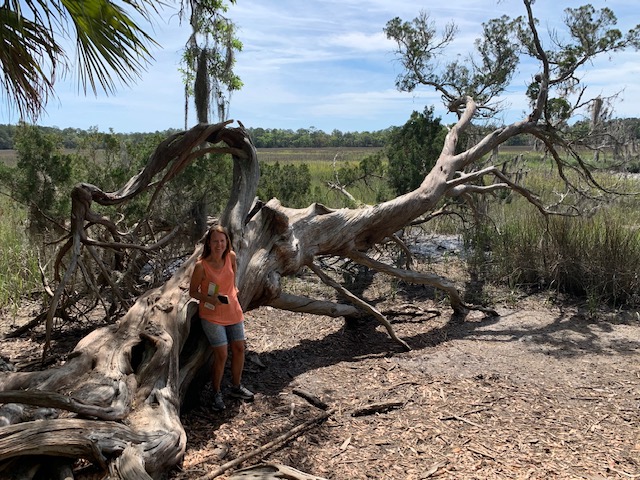
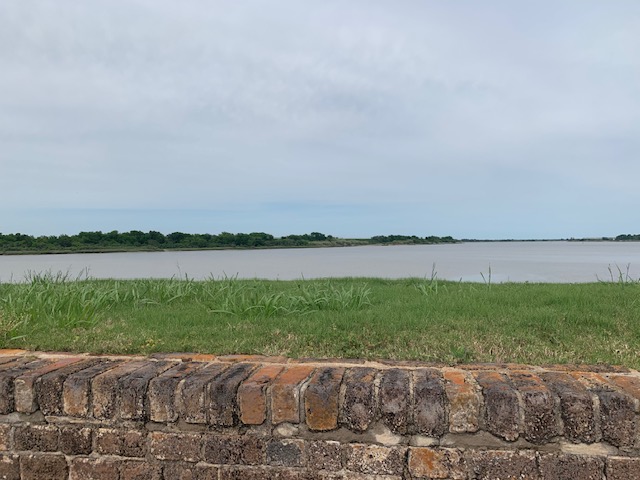
Sweet Melissa, she is standing at the edge of the river that the fort guarded. The tree is a bald sypress and is 250 years old, it fell over in  a storm in the mid 1800’s and has grown itself into the river bed and is still alive.

FORT JACKSON

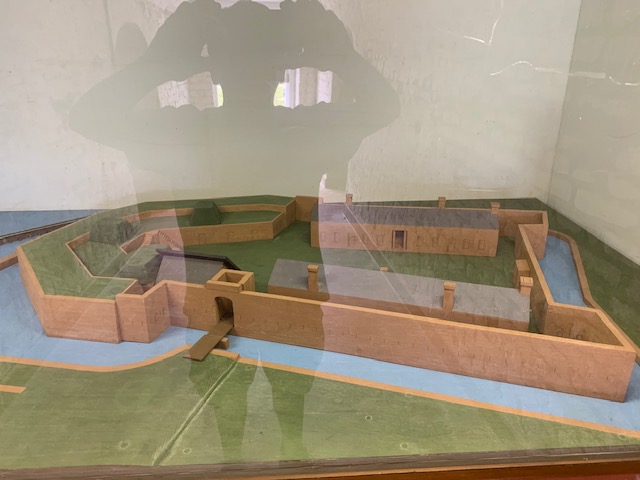
Old Fort Jackson is named after James Jackson, a one-time governor of Georgia who liberated Savannah from the British in 1782. Facing the Savannah River, the fort was originally built of earth, faced with brick, and topped with a gun platform of wood – making it one of the strongest fortifications in the country.

During the War of 1812, the United States anticipated an attack on Savannah and took several steps to prepare the fort for action. They built a palisade nearby, added a rail to the top of the cannon platform, and created a “hot shot furnace” where cannonballs could be heated to set attacking ships on fire. The war ended in 1815 with Savannah safe and secure.

In January 1861, under orders from then Georgia Gov. Joseph Brown, Confederate troops seized the fort from federal control. Throughout the Civil War, Fort Jackson served as a vital Confederate stronghold, housing several elite regiments and a heavy artillery unit. In December 1864, Union Gen. William Tecumseh Sherman concluded his famous March to the Sea at Savannah, and the Confederates were forced to abandon the site.

Before exiting, the soldiers took measures to render the fort and its munitions useless to Union troops. They set the barracks ablaze, dumped ordinance in the surrounding moat and the river and rigged the fort’s doors to explode.

On Dec. 21, two Union regiments took possession of Fort Jackson and hoisted the flag. African-American soldiers from the 55th Massachusetts Volunteer infantry were the last active combat troops to occupy Fort Jackson.

Because of advances in artillery technology, Fort Jackson fell into obsolescence and was sold by the federal government in 1923. The Georgia Historical Commission opened the fort as a historic site in 1969, but financial problems forced its closure in 1975.

In the late summer of 1976, the Savannah based nonprofit Coastal Heritage Society reopened Old Fort Jackson under a lease from the State of Georgia. The society receives no federal funds and supports its historic operations through charitable gifts and memberships.

Today, Old Fort Jackson remains a historical site that has tours, demonstrations, reenactments and cannon firings among other activities.
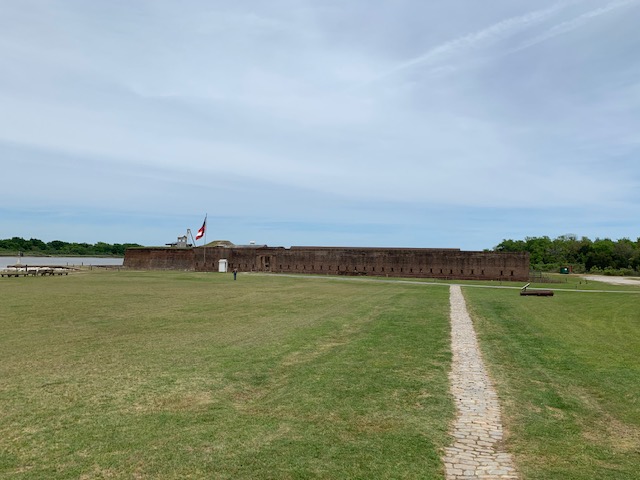
IMG_0753

IMG_0735

IMG_0738

Drawbridge with moat surrounding.

IMG_0743

Inside the fort.

IMG_0746

One of the many rifle ports

IMG_0744

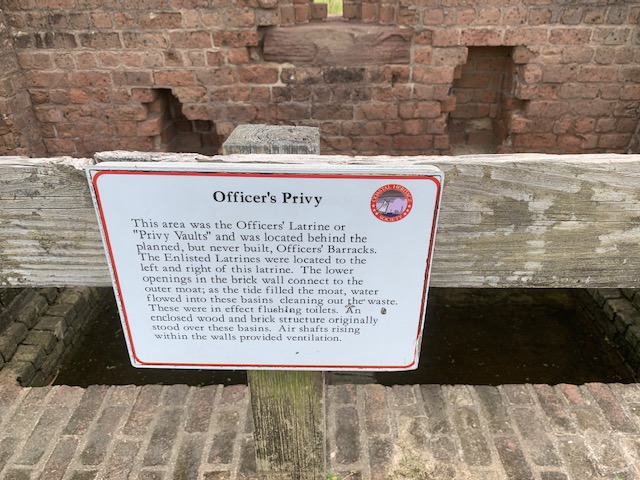
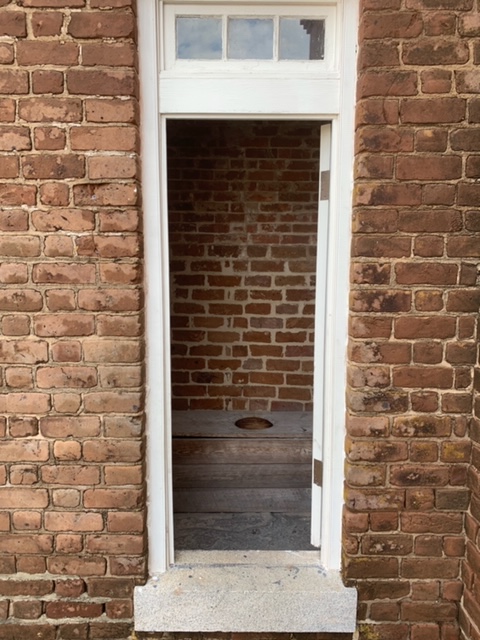
Yep, this is the bathroom, it would of had a roof, inside it would of had a floor with cutouts and there you go. But, the water would carry away the waste at hight tide, it worked pretty well.
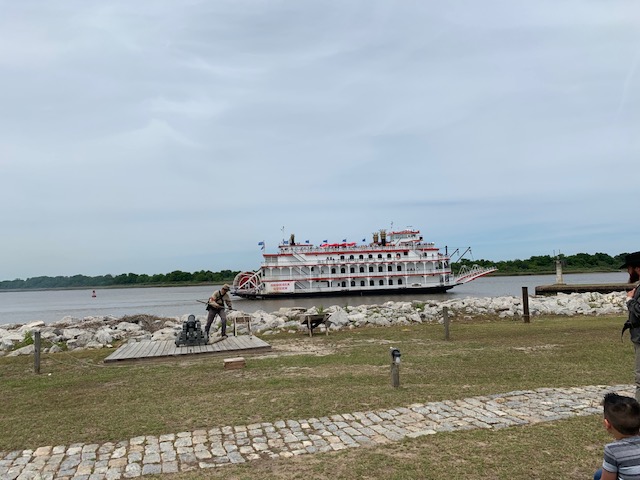
 

IMG_0741

The cannon had just been fired at the river boat, I have a video if I can figure out how to get it on the blog I will.FullSizeRender (28)
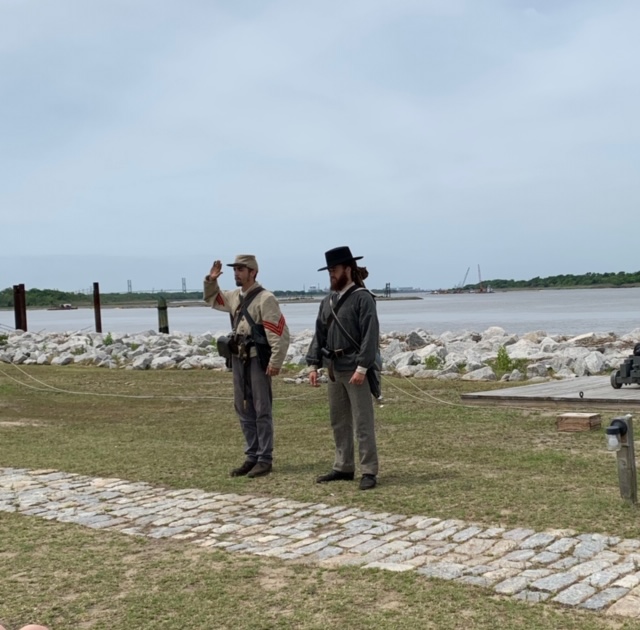
FullSizeRender (29)

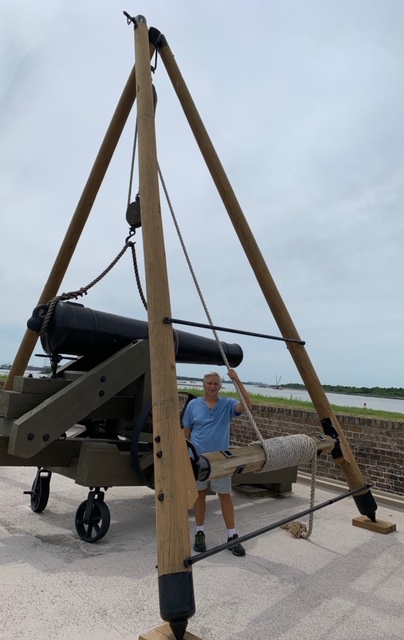
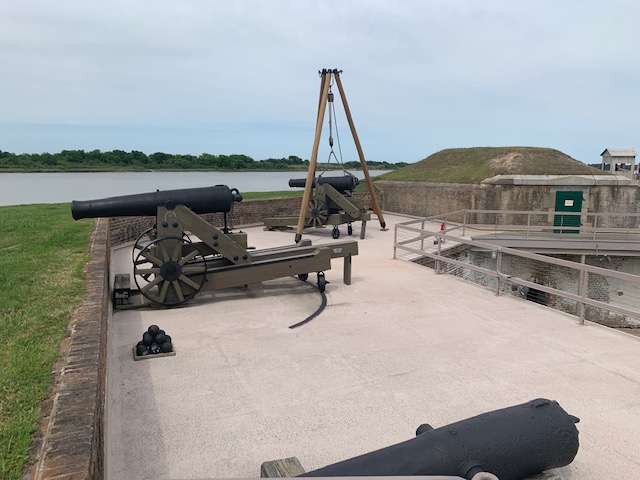
On top the fort walls, this is how they moved and lifted cannon up in the day, block and tackle.
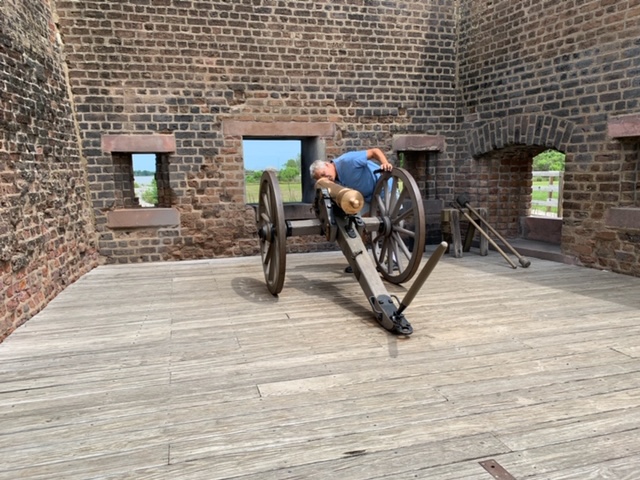
IMG_1193

Which way did it go.

IMG_0762

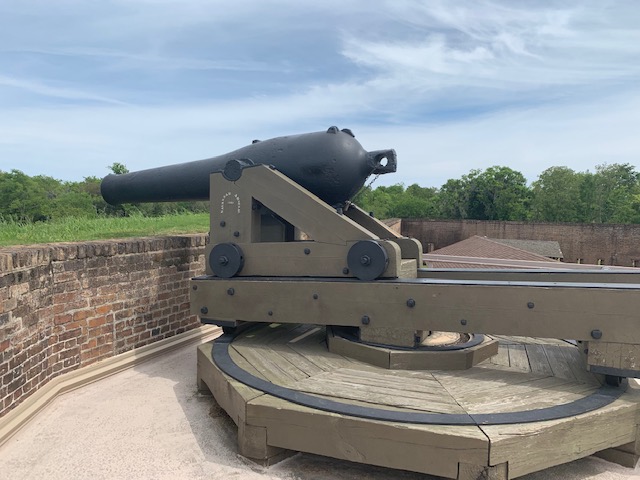
A sea coast gun, on it’s rail system.
IMG_0766

IMG_0757

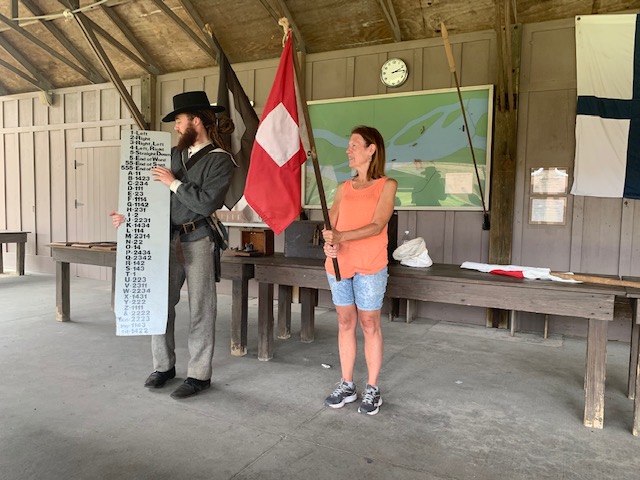
Melissa, tried her hand at being a signal officer, the war is lost.
IMG_0765

IMG_0761

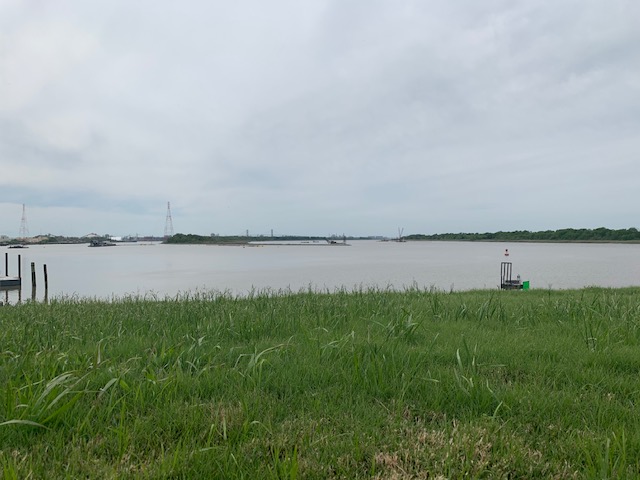
Looking out at the river.

BONAVENTURE CEMETERY

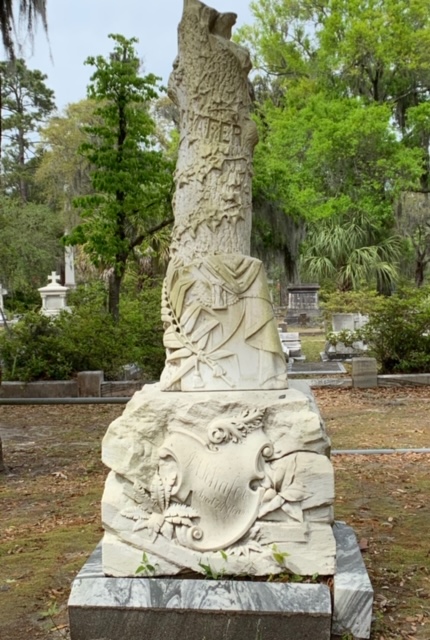
Bonaventure Cemetery was a plantation settled by Colonel Mylryne about 1760, he built a red brick plantation house on the land and named the place Bonaventure, which means “good fortune” in French. The property was seized during the Revolutionary War. Eventually it was bought by Peter Wilberger, owner of the Pulaski house for use as a cemetery. The city of Savannah purchased the cemetery in 1907.

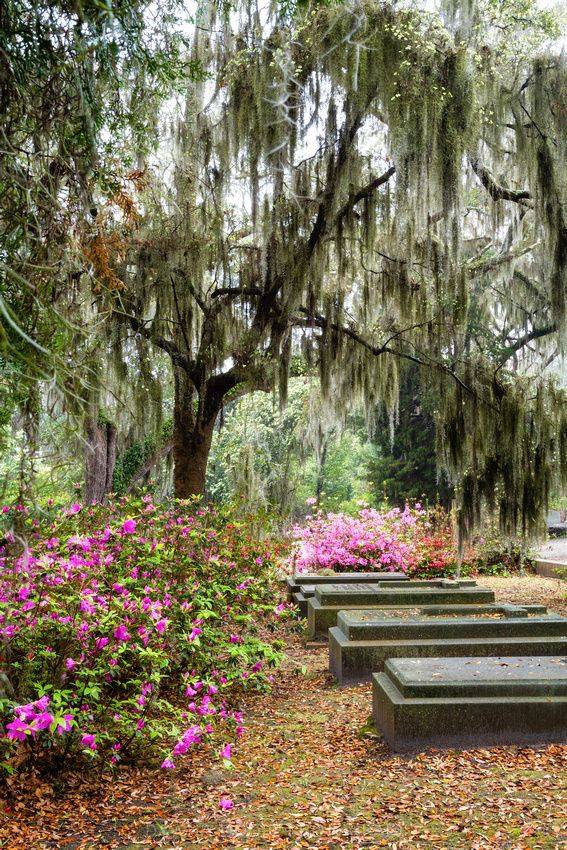
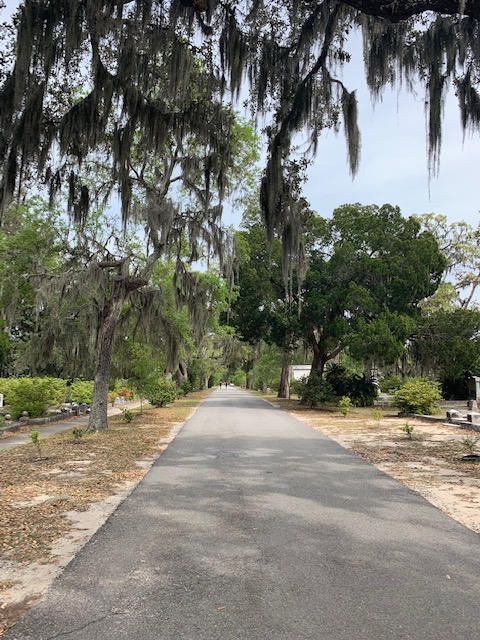
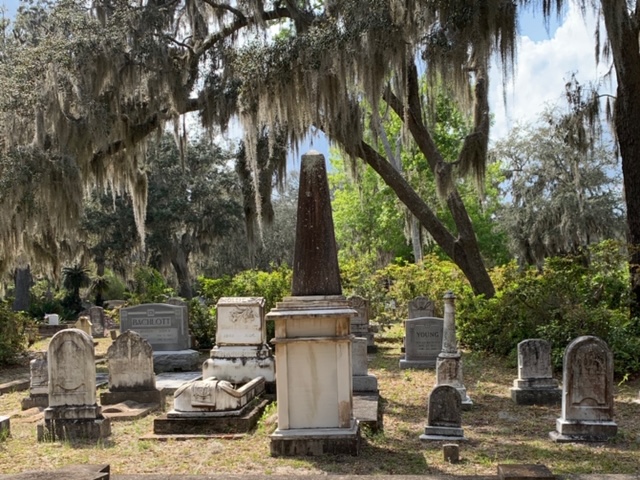
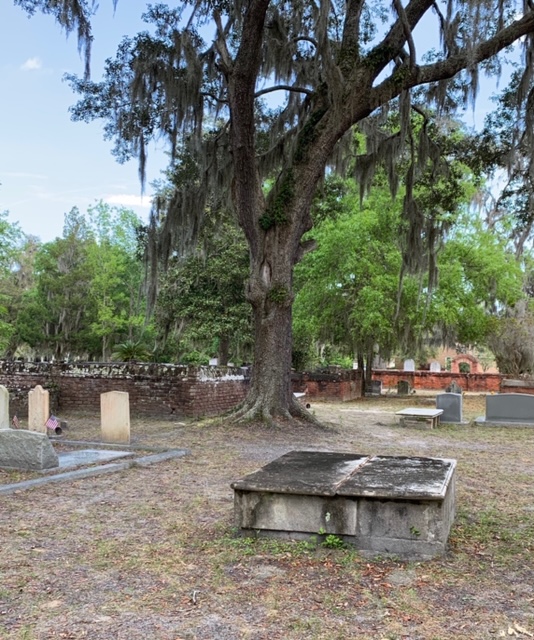
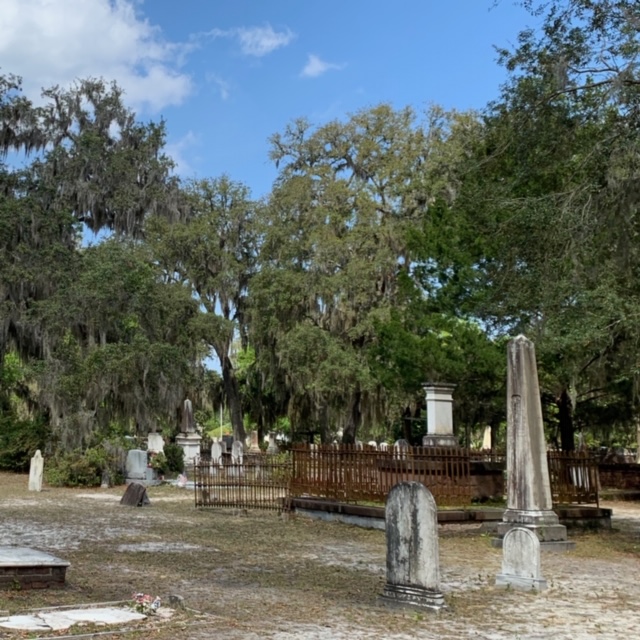
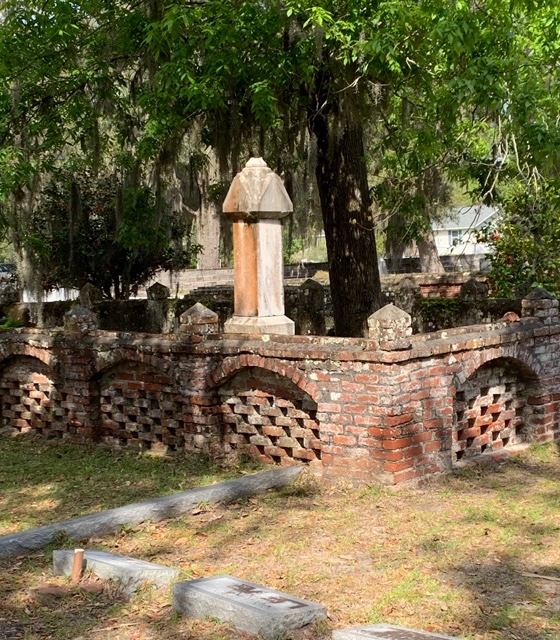
The cemetery is filled with picturesque giant oak trees, beautiful Spanish moss, flowering bushes and incredibly ornate graves and tombs that all contribute to Bonaventure’s hauntingly beautiful atmosphere –  Truly Southern Gothic.

Many of Savannah’s statesmen, citizens and soldiers and entertainers are buried in here.  In recent years it has become one of Savannah’s most popular tourist attractions. The cemetery became famous when it was featured in the 1994 novel Midnight in the Garden of Good and Evil by John Berendt, and in the movie, directed by Clint Eastwood, based on the book.   It is in the National Registry of Historic Places, while still an active cemetery and it is always listed as one of the top beautiful and peaceful cemeteries in the world.

FullSizeRender (33)


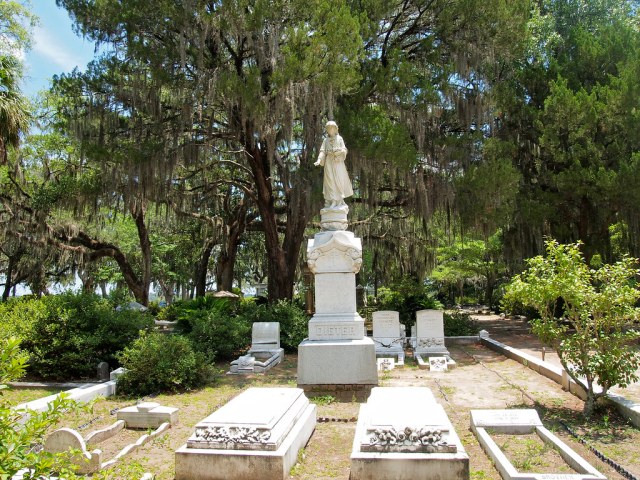
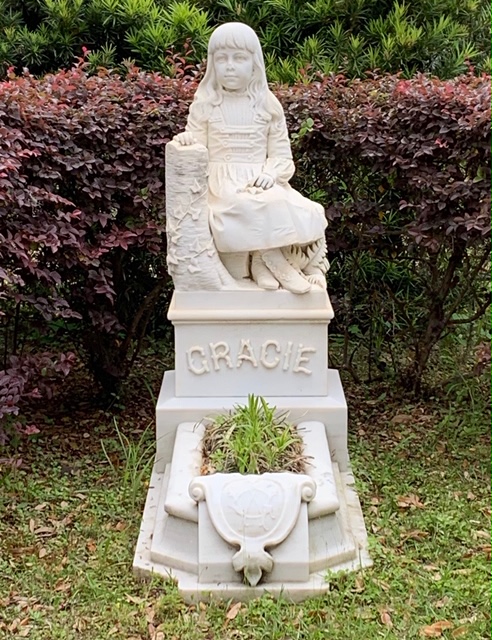
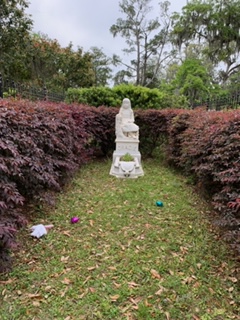
Gracie Watson

She was born in 1883 and her grave is one of the most visited sites.

The monument was done from a photograph taken shortly before her death in 1889. Gracie was known to everyone in Savannah as her father owned Pulaski House, one of the city’s best hotels. She greeted and charmed all the guests and, when she died of pneumonia, the city mourned, as did many people around the world who had come to know her.
FullSizeRender (37)

IMG_1213

IMG_1214


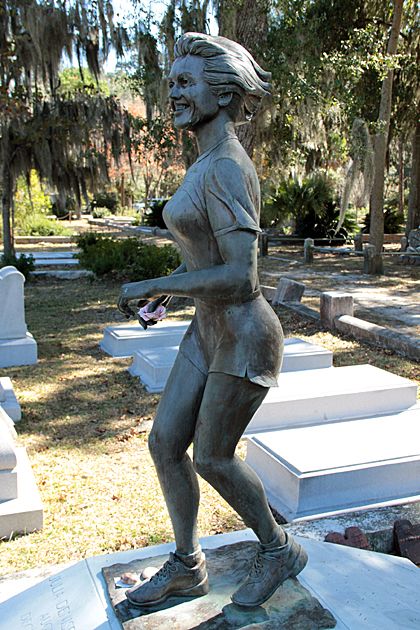
The Bonaventure Jogger

This monument is dedicated to the memory of Julia Denise Backus Smith, a prominent member of Savannah society, who died 2003. As her epitaph indicates, she worked with compassion for the less fortunate of Savannah as a city commissioner. She was also the first woman from her city to compete in the Boston Marathon, and went on to win races in Georgia.Corinne Elliot Lawton
4fec2fd05749e9349ba077bb093c6d41--cemetery-headstones-cemetery-statues - Copy


Corrinne Lawton

Born: September 21, 1846 Died: January 24, 1877

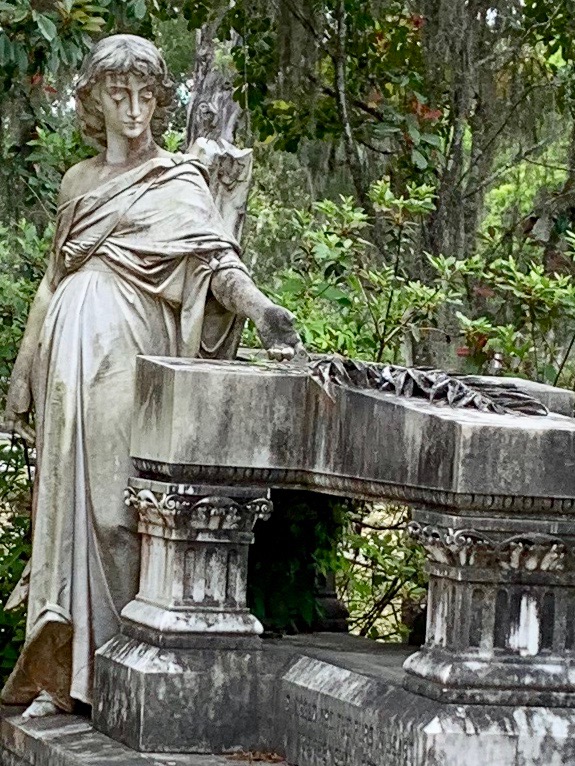
This was one of the sadder stories…the story of Corinne Lawton. Her father was General Alexander Robert Lawton CSA, Civil War an important figure in Savannah. She met and fell in love with a man who was “across the tracks” and beneath her in society and they wanted her to marry someone against her wishes, a wealthy man from Savannah Society. As the story goes one day before the wedding , despondent and heartbroken, she rode her father’s best horse to the banks of the Savannah River and leaped in and drowned.  Our crying angel in all her splendor.

FullSizeRender (36)


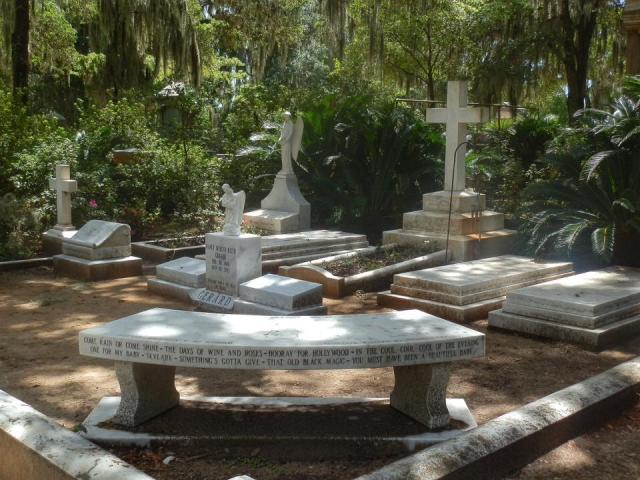
Johnny Mercer

Johnny Mercer, born November 18, 1909, Savannah, Georgia, U.S.—died June 25, 1976, Bel Air, California), American lyricist, vocalist, and composer.   In 1942 Mercer founded Capitol Records with two other people and is credited with more than 1,000 lyrics including compositions for movies and Broadway shows. He received nineteen Academy Award nominations, and won four Best Original Song Oscars. He wrote the lyrics for these songs I know, I bet Jennifer does too! “Jeepers Creepers,” Moon River,” “Zip a dee doo-dah, zip a dee ay,” and many others.
johnny-mercer-bonaventure-FB

Below are other pics taken at the cemetery.
FullSizeRender (34)

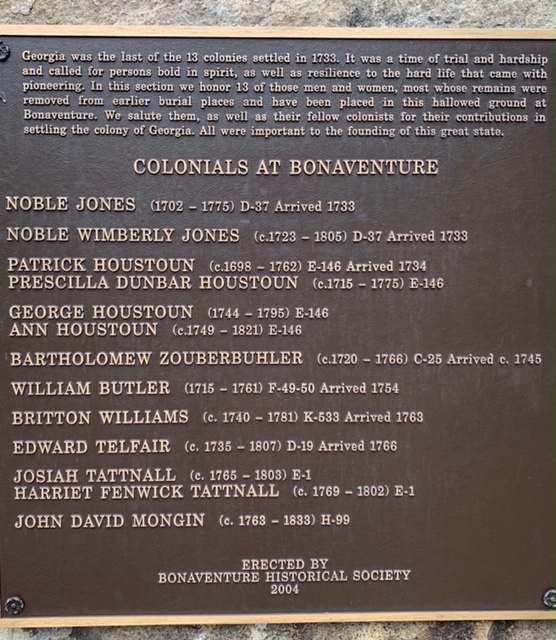
Very early colonial graves here.
FullSizeRender (39)

FullSizeRender (38)

OLYMPUS DIGITAL CAMERA

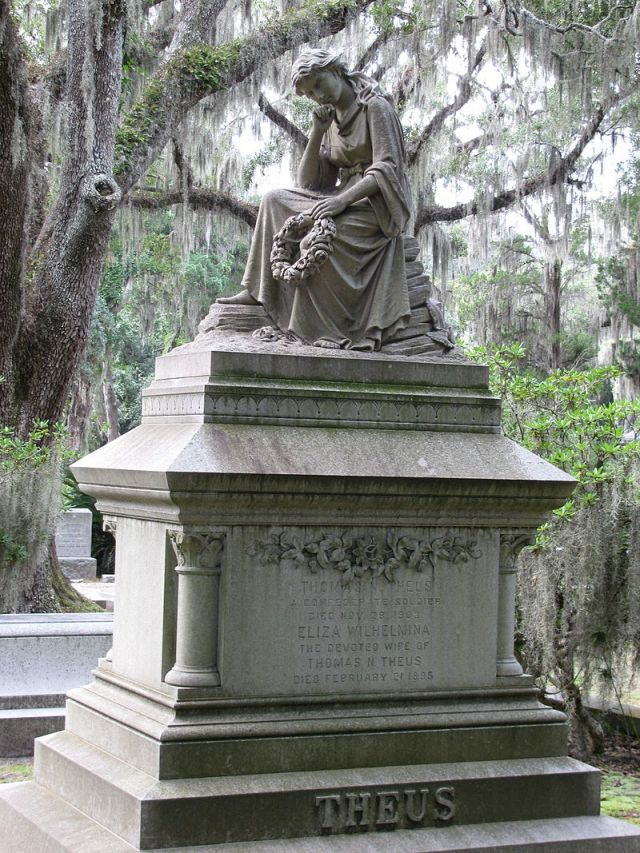
Bonaventure_cemetery_-_theus7351

o

IMG_0774

2

11828709_872843522807364_4108743618227609125_n - Copy

IMG_0770

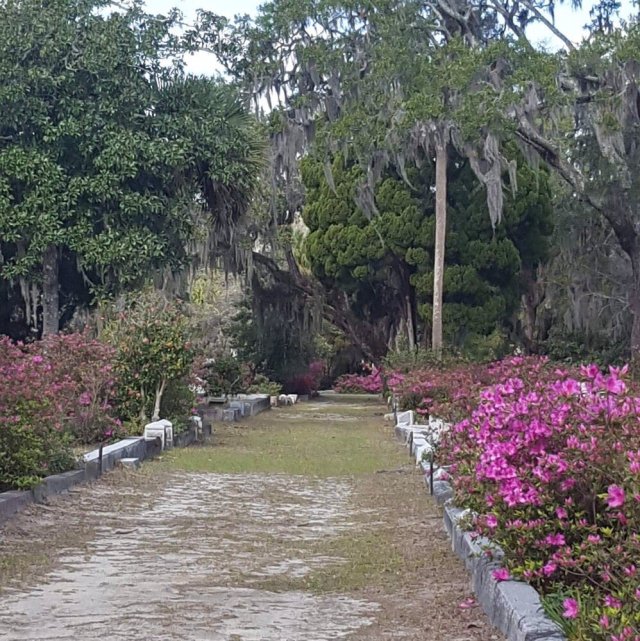
One of the many, many lanes in the cemetery.
FullSizeRender (40)

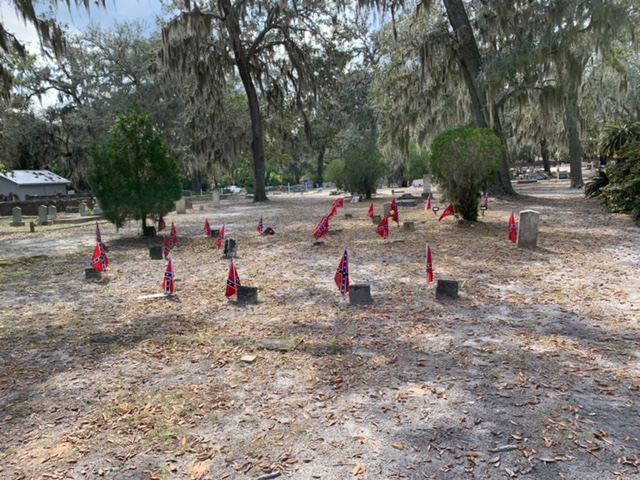
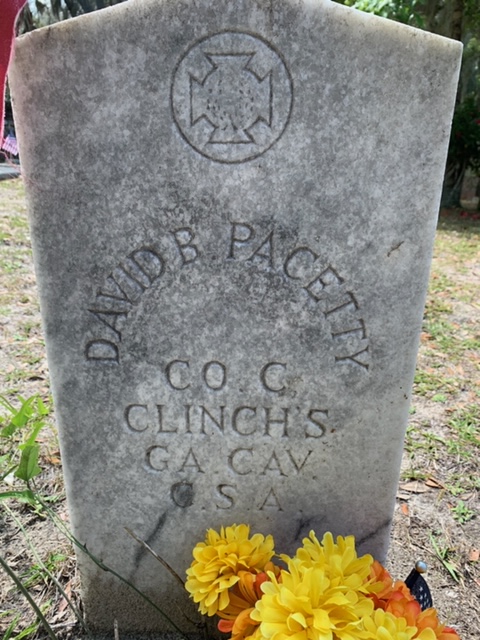
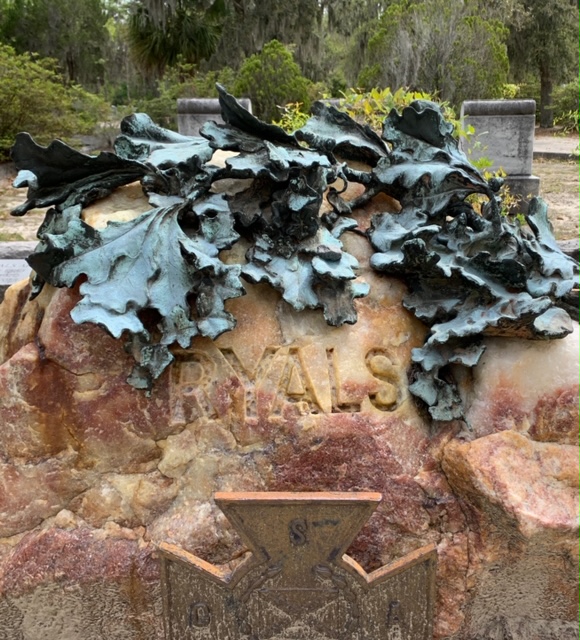
Confederate soldier name just on a rock, no dates at all.


FullSizeRender (35)

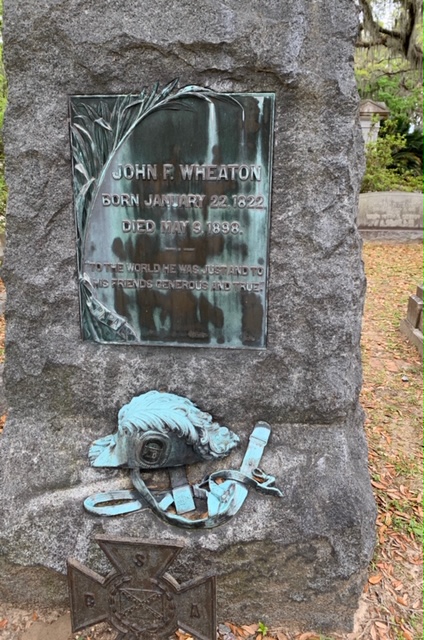
Another confederate soldier, there were a lot like this.

IMG_0773

Three brothers all confederate soldiers, lie next to each other


THE MIGHTY 8TH AIR FORCE

Today is Tuesday the 16th of April already. We have been in the Savannah area for six days already. Today and yesterday we went in to Savannah itself. Both days have been sunny and in the 70’s. We have barely seen anything. We plan on going into the historic city three more days yet. I will have a series of posts on Savannah but first want to post about the awesome experience we had last week visiting the Mighty 8th Air Force museum. The post is below.

The MIGHTY 8TH AIR FORCE;

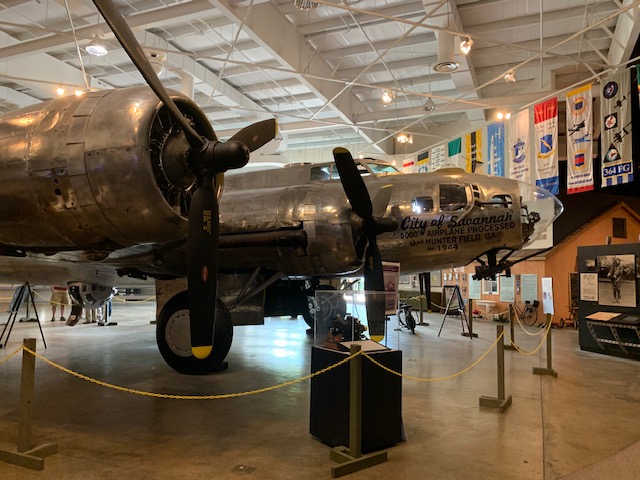
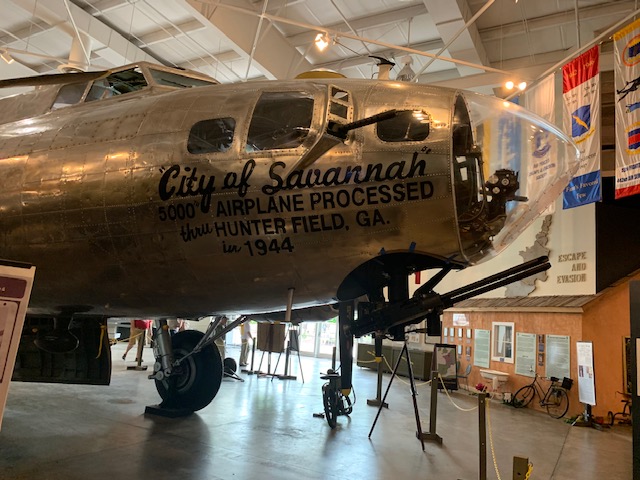
The Museum, was an awe-inspiring place to visit. It said to plan on a two-hour visit, we were there for six hours. There were 16 sections to the museum, from how the 8th was formed, to the men involved, to barrak life and survival stories of the men who had to bail out and either escaped or were captured. They also have a restored B-17 there called the City of Savannah. She was the 5000 B-17 built at Hunter Field Ga. and was built-in 1944. Saw action with the 8th and returned back in 1946 had a few years as a transport and then scraped to the bone yard. Rediscovered in 2000, and with years of restoration there she is for all to see. Of the 13,000 B-17’s built during the war only 43 still exist, some can still fly and some just restored like this one.

The 8th was formed in 1942 and disbanded in early 1946, they had over 800 airfields all over England. It consisted of bomb groups of B-17’s and B-24 liberators, mostly the 17. They also had Fighter groups, with the P-47 thunderbolt ,and then the P-51 mustang as their fighter escorts to and from the missions. In the early days, the P-47 could not escort them into occupied France, so your chances of making the required 25 missions to go back home were 1 in 3 . Once the P-51mustang came around they could escort the bombers to the target and back ,and became known as “Little Friends”.Each B-17 held 10 men in different positions of the plane. A lot of fire power in those days but the German fighters picked them apart. If your plane was shot up and came out of formation it was swarmed by the enemy planes. If your aircraft was still flyable and level, you could bail out, but if it went in a spin or dive your chances were not good to get out as gravity pinned you where you were. It was not un common to have 30 or 40 planes not come back out of a mission of 100 planes. That’s 10 men to a plane. At one time the 8th could send 3000 planes on a single mission. WOW.

Most missions lasted 10 hours, once over 10,000 feet you had to be on oxygen and the higher you went the colder it got. Mission were usually at 30,000 feet.These guys put up with temps in the -40 degree range ,all the while either being shot at ,or having anti –aircraft fire come at them. I don’t know how they did it. The average age was 22 so I guess you feel like it won’t be you .

As I said the museum was a great tribute to these guys, who after the war never really talked about there experiences. I (we) are so glad that we went. Also Melissa’s father installed and tested all the equipment the radio man would use on a B-17. He was stationed in Arizona at one of the big air bases there, where the planes we fitted up and sent over seas.

A lot of pics below.

FullSizeRender (22)

IMG_0639

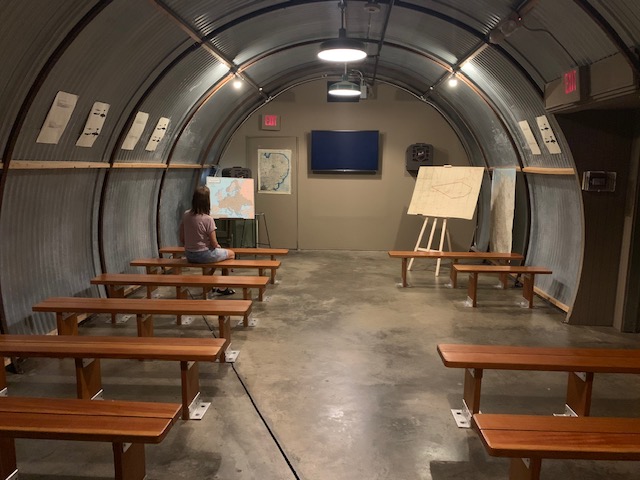
Briefing room ,where pilots met at three in the morning to prepare for their missions. Melissa is the last one to leave,  she says no way.

IMG_0642

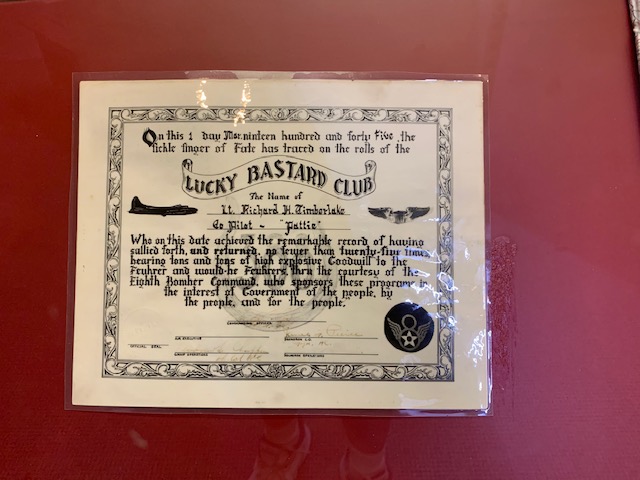
After 25 mission you joined the Lucky Bastard Club, your ticket home. Very hard to get.

IMG_0904

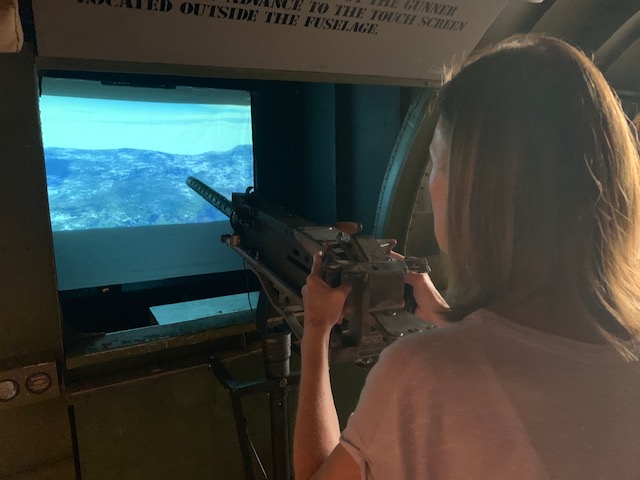
They had a side gunner position set up, with video and working gun to shoot at planes going by. I did not do too bad.

IMG_0651

Melissa tried her luck, no luck at all.

IMG_0946 (2)

I’m in a German prison. Some of my friends think it is a good place for me.

IMG_0670

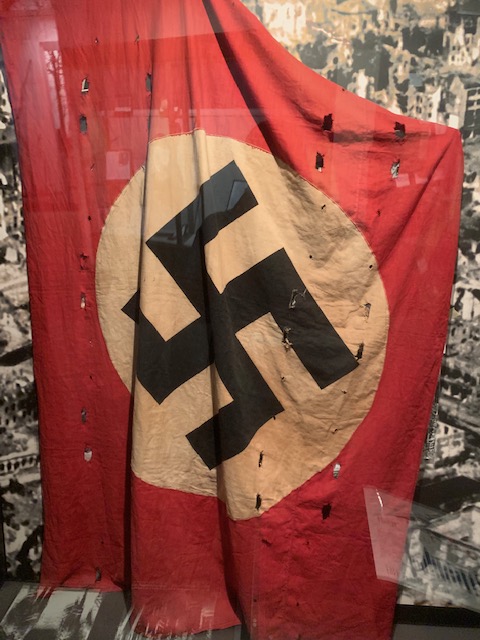
A German flag all shot up.

IMG_0644

One side of the 4 engine B-17, notice the front lower twin 50 caliber machine guns and side guns. These were put in late-model B-17 like this one made in 1944. The early ones did not have these, but with so many bombers being attached from the front they had to add them. The front nose is plexi glass, the bombardier st there the entire trip, he was given control of the airplane on the bomb run over a target, nerves of steel. The pilots sat in the top portion a little to the back.

IMG_0647

Closer view, there would have been a black metal housing covering the guns, it is off so you can see them.IMG_0645

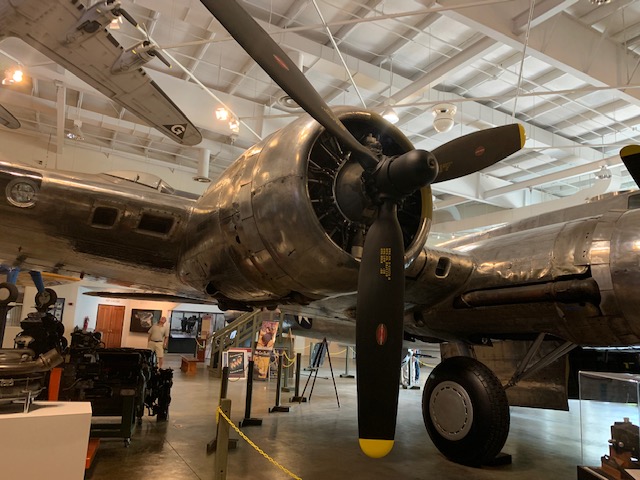
One of the four big engines.

IMG_0652

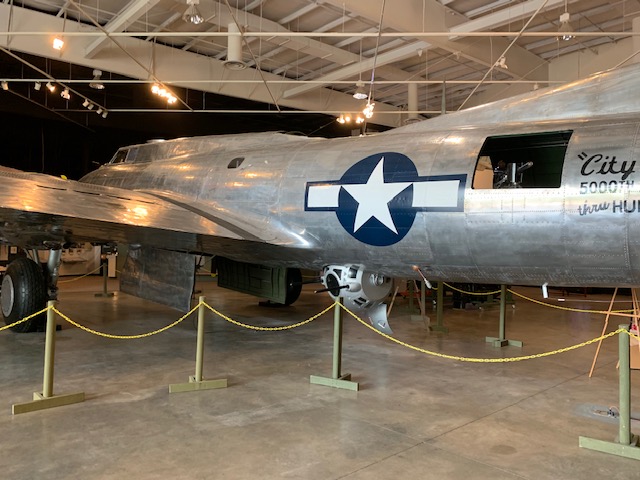
Behind the wings looking forward, notice the side gunners open area, in the early part of the war, they had plexiglass over them but it was hard to see German fighters coming, so it was removed.All notice the ball turret gunners spot under the star.

IMG_0655

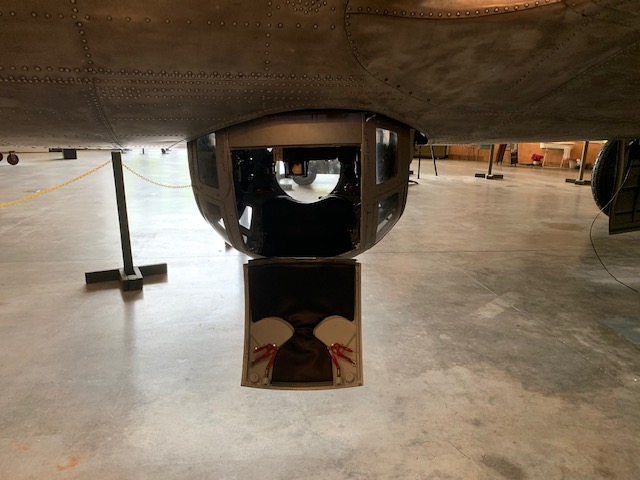
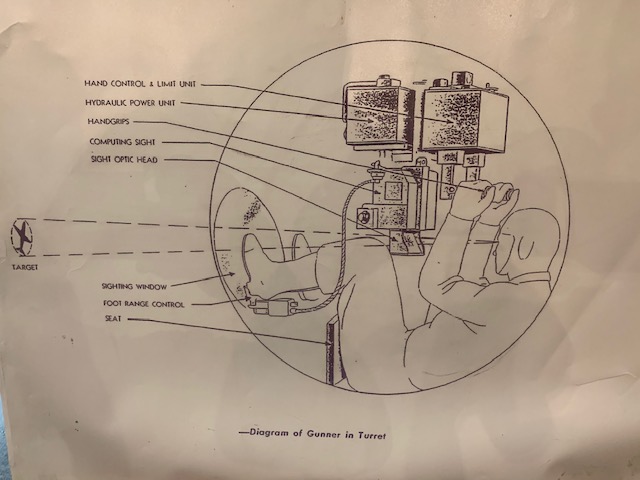
This is where the ball turret gunner st when they were over enemy territory. He would be lowered in from inside the plane in flight,once in no way out, unless you have to bail out, in which case out the hatch he went.

IMG_0656

Diagram of his position,, he could swivel in all direction.

IMG_0636

Part of a wing from a downed plane, recovered and put in a museum in Germany after the war. Donated to this museum a few years back.

IMG_0671 (1)

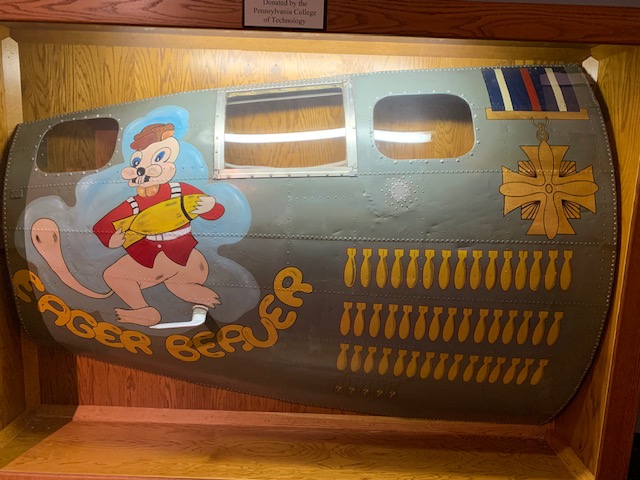
This is the side front section of the Eager Beaver, cut away after the war and brought home by one of the pilots. Donated to the museum. Nose art was a big thing to identify your plane.

IMG_0661

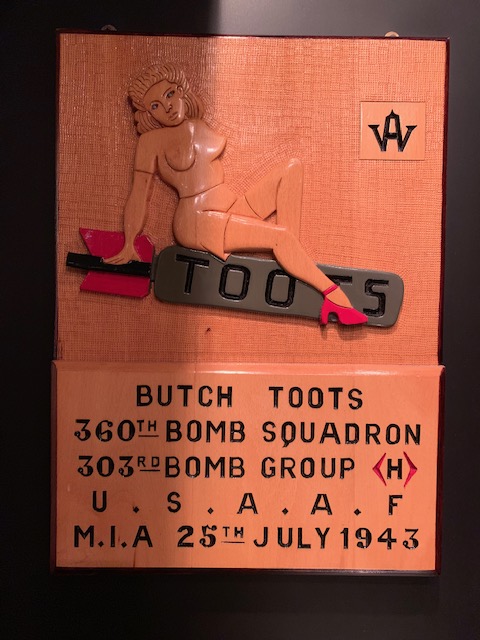
A plaque made up by members of the 8th to honor a lost bomber.

FullSizeRender (23)

FullSizeRender (24)

One of the many stories

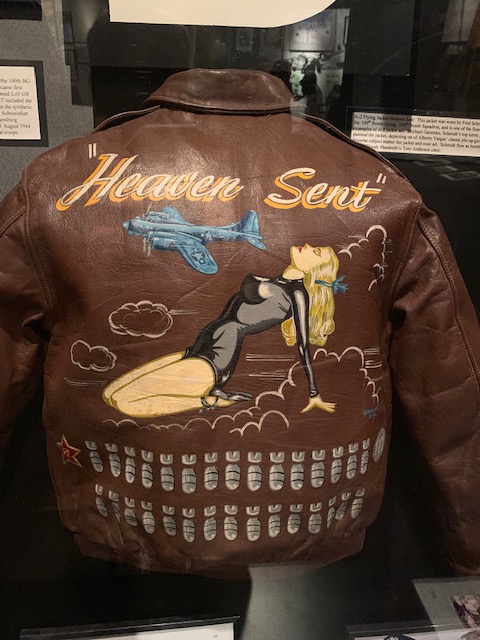
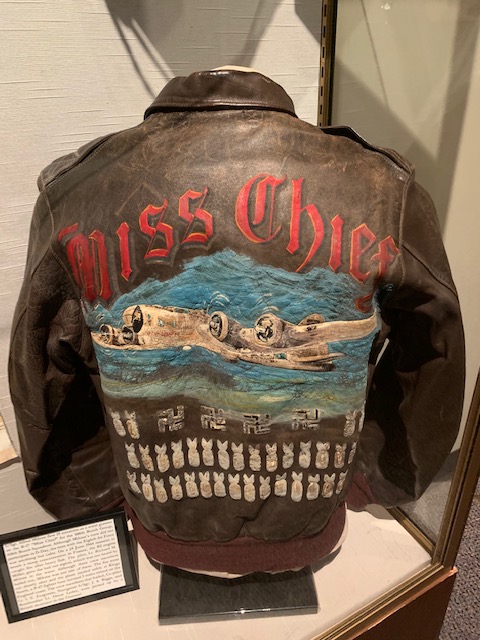
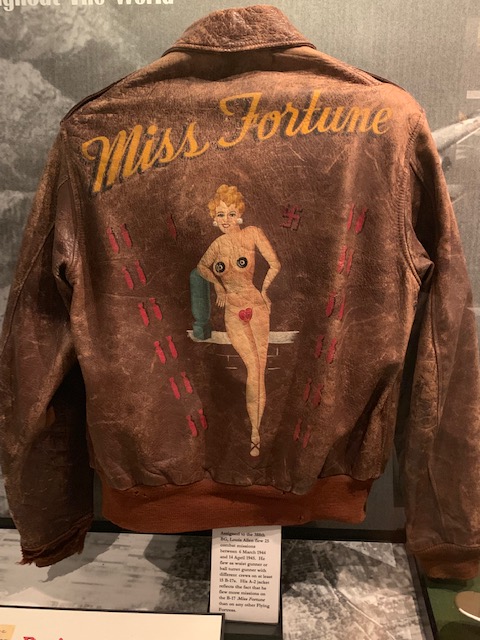
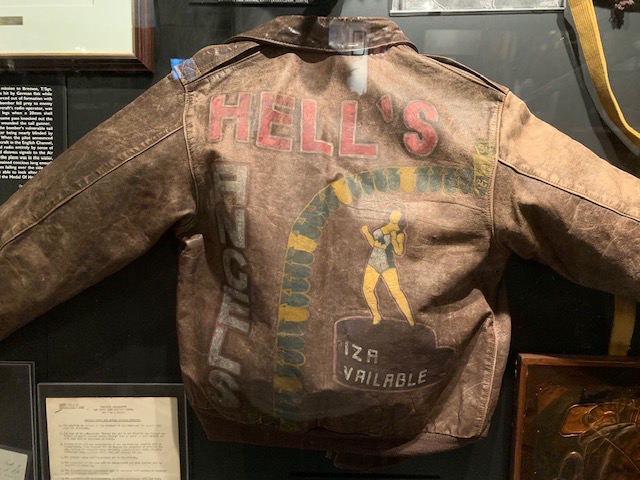
The pictures below show bomber jacket art done by the men during the war. This jacket below. is supposed to be the finest bomber jacket in existence.

IMG_0666

IMG_0668

IMG_0667

IMG_0665

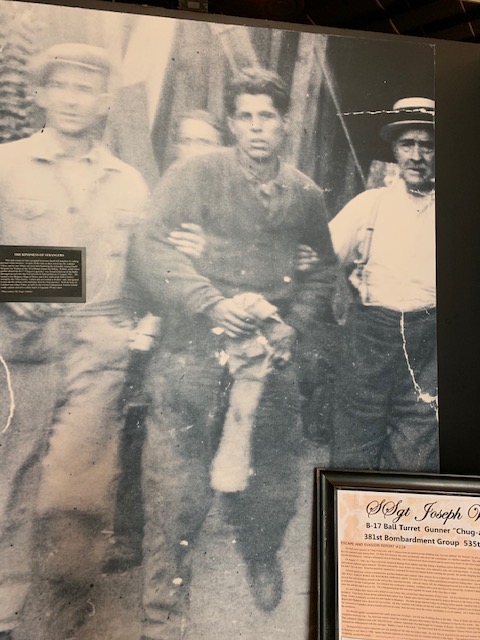
The museum was filled with stories of life and death, during missions and after. The one below is just but one of them.

IMG_0922


IMG_0660

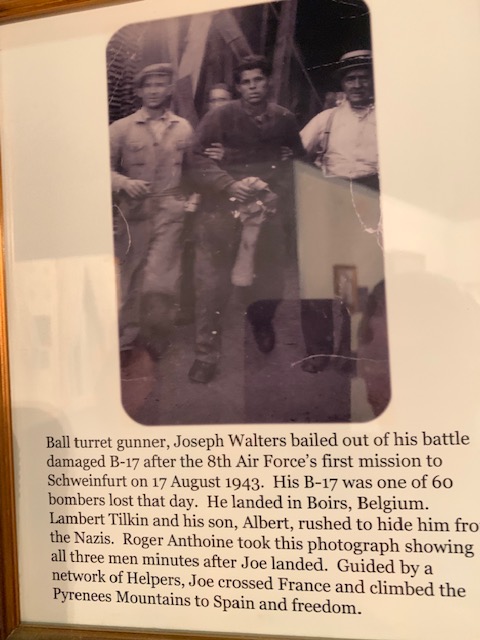
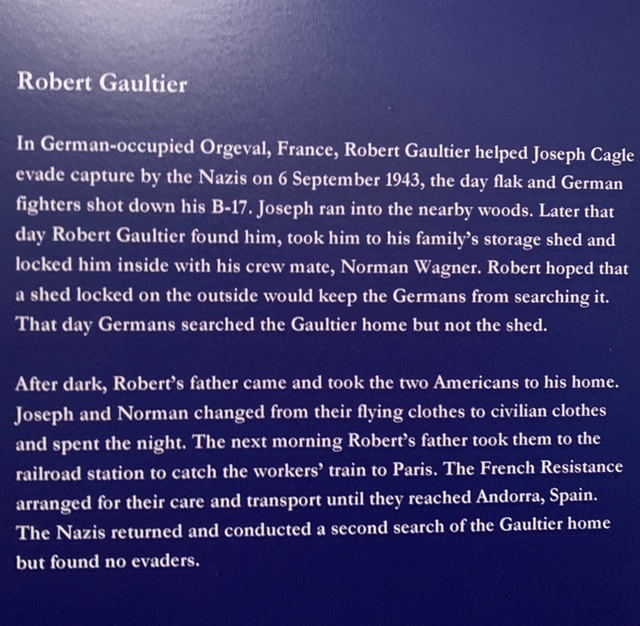
If you had to bail out, you either were killed when you hit the ground, were captured, (many were captured tortured and then just killed) or were lucky enough to have civilians help them escape, which there was a network of thousands who helped, bomber crews escape. If you were caught helping or were suspected of helping most times you were shot on the spot..

This is just one of the many stories we read.

FullSizeRender (26)

FullSizeRender (25)

IMG_0935


CREEKFIRE MOTOR RANCH SAVANNAH GEORGIA

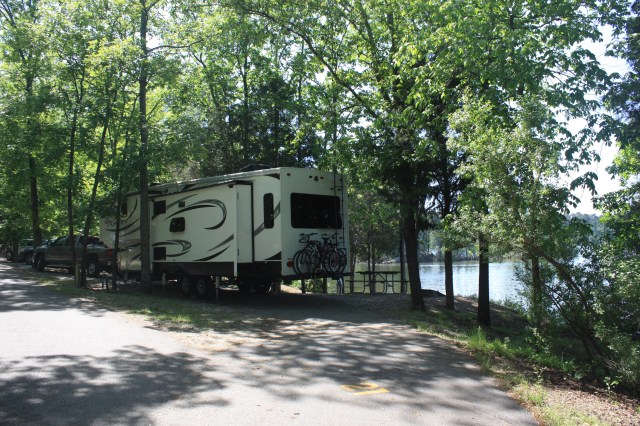
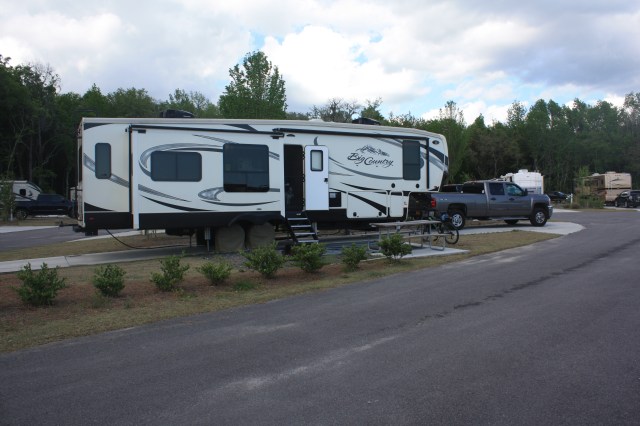
We are now at the Creek fire Motor ranch about eight miles from Savannah Georgia. We actually got here last Wednesday. It only was 102 miles from Crooked river state park, to here and it was nice weather. We have a large pull through site in the back lake section of the resort. The weather here has been nice around 80 every day, but have had a few showers here and there. The weather for the next week looks mostly sunny and 80 degree temps. So our jaunts next week into Savannah hopefully will be rain free. Some pics below of our site and the campground.

IMG_2761

The entrance to the resort, look at the huge live oak tree with all the Spanish moss.

IMG_2763

The drive back to the lake, the road is built up about ten feet off the swamp floor, that’s what the park was built on a swamp.

IMG_2764

Looking out our door to the lake.

IMG_2765

IMG_2760

FORT CLINCH & SHARK TEETH !!!

Fort Clinch Florida & Shark teeth.

Went back into Florida on Tuesday to go to Fort Clinch State park. This is the park we wanted to stay at but could not get in, it is very hard to make reservations, as it is very popular. So that is why we are at crooked river in Georgia.

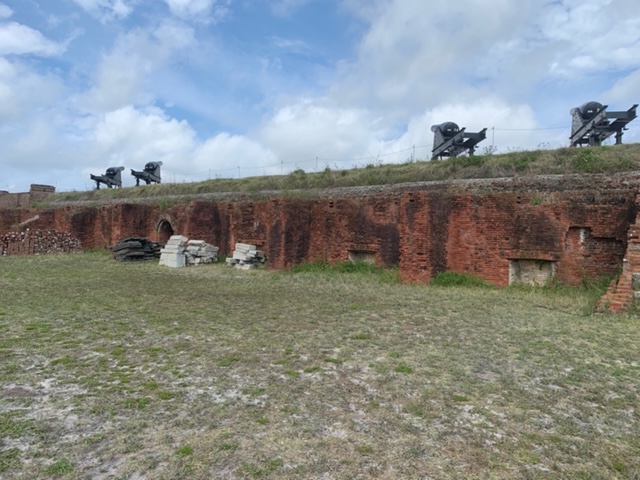
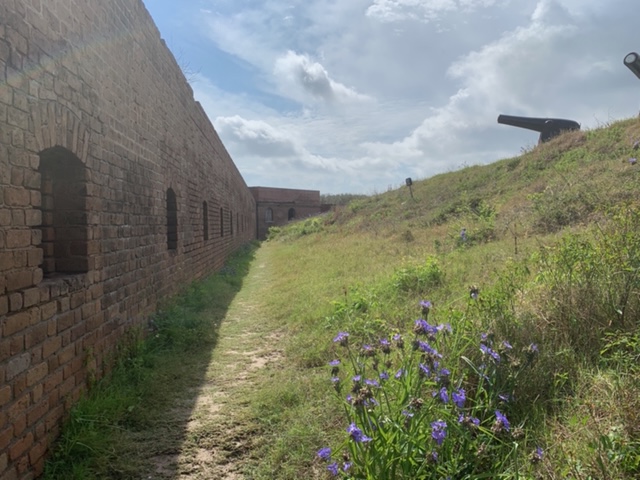
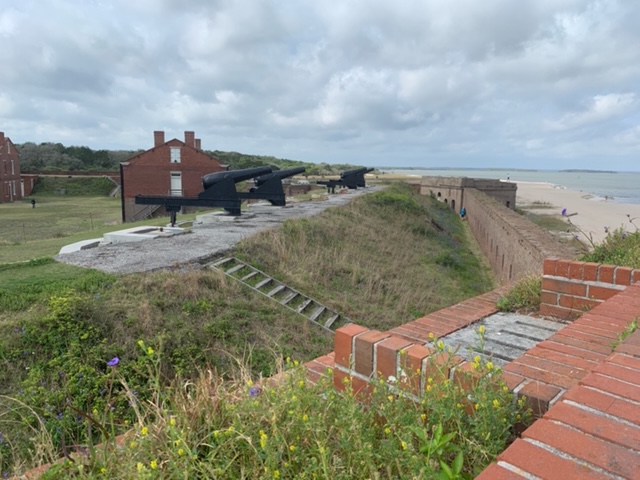
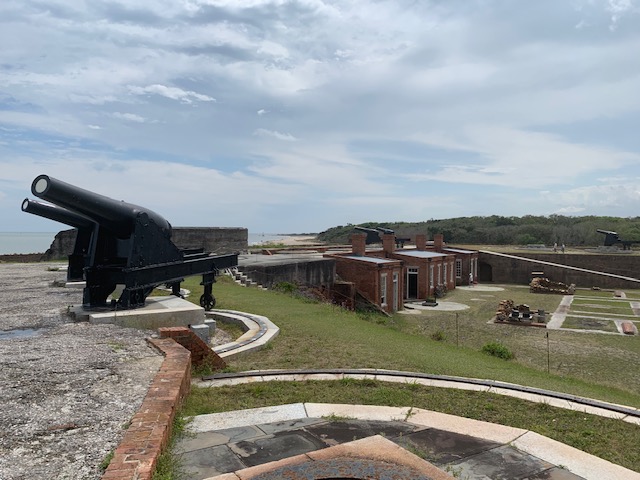
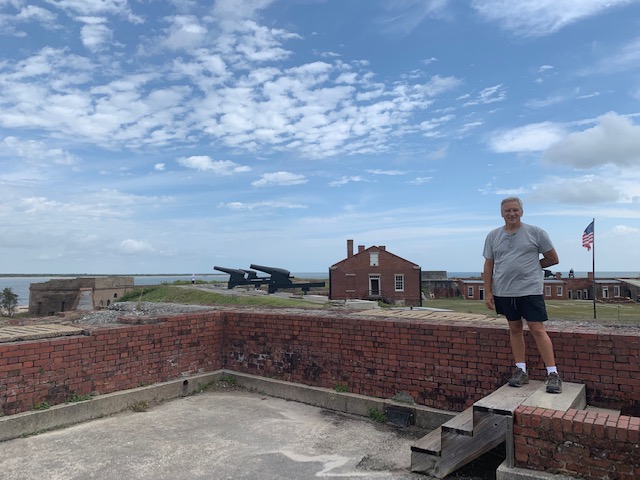
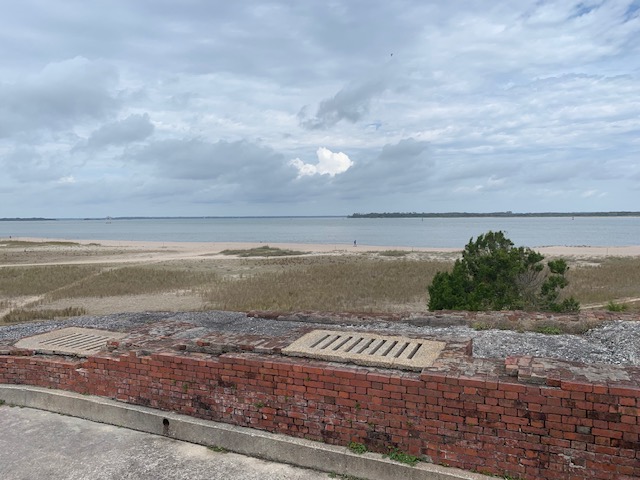
Fort clinch park is huge, has very old live oak trees with the Spanish moss covering it ,kind of eerie. But the draw is the fort, which is very big. The fort is at the mouth of the St. Mary’s river, and the Atlantic ocean. It has a deep water way so good for a port. The fort was started in 1842, right on the beach, made of brick and mortar,with 25 foot high earthen mounds around it, then a depression or moat with a draw bridge. The walls are about 20 feet high and three or four feet thick. Each corner has a bastion or 4 sided defensive position with rifle ports at certain levels and a cannon on top. There are tunnels and covered ways every where to get to places. Inside it has buildings for the men , and everything you would need to keep it operating. It was the most impressive thing I have seen on our trip. The fort was never really finished ,during the civil war it was modified and built a little more. The fort was to protect the harbor, so it had an array of large cannon, siege guns and even a few mortars.  The fort in its long history never fired a shot nor was it ever attached.We spent over two hours exploring the fort and the buildings inside.

THE FORT

IMG_0629

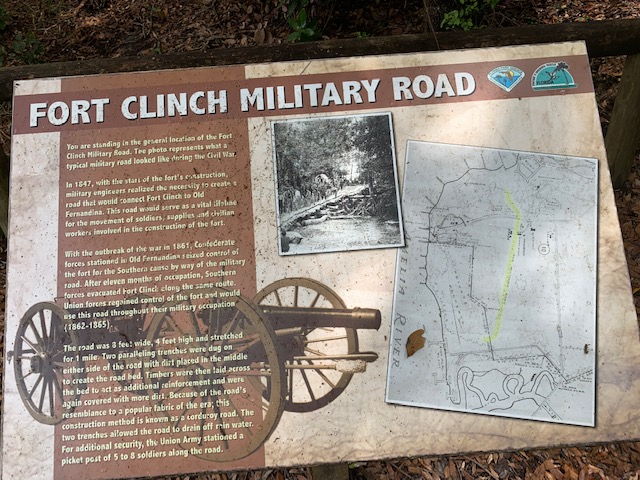
Map of the old road getting to the fort, parts of it are still here.

IMG_0630

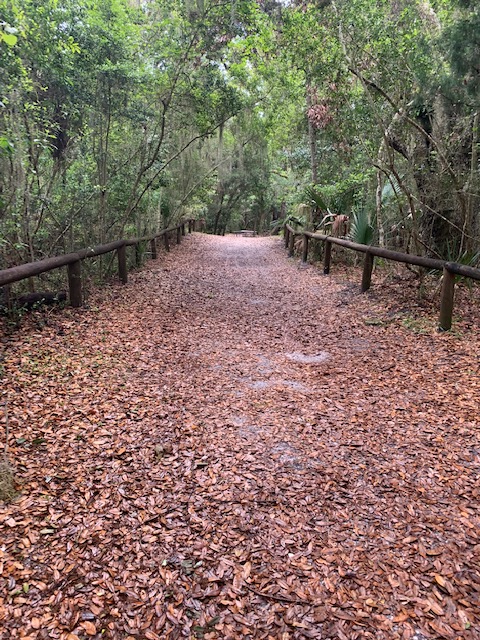
Part of the old road, now a path.

IMG_0805

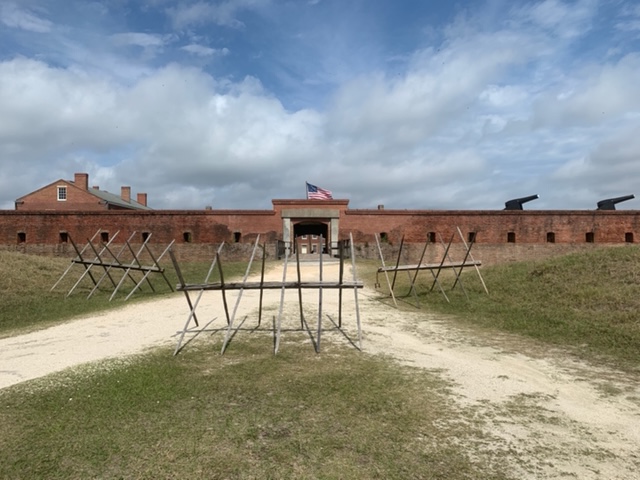
The fort entrance after you exit the visitors center. The spiked rails, are for keeping horses from charging in, they will not jump over these most of the time they would stop dead in their tracks and the rider would tumble forward off. Infantry also had a hard time getting by these. There would have been hundreds of these.

IMG_0807 

After entering the gates to the fort.

IMG_0811

The fort grounds

IMG_0827

Inside one of the mens barraks

IMG_0812

The laundry room.

IMG_0816

My favorite room, the toilet.

IMG_0817

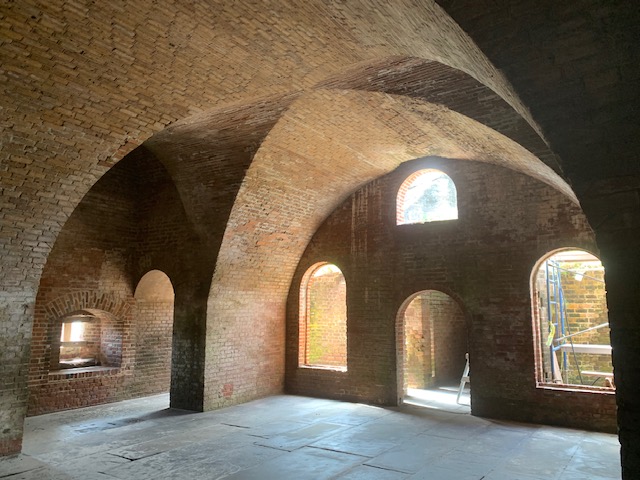
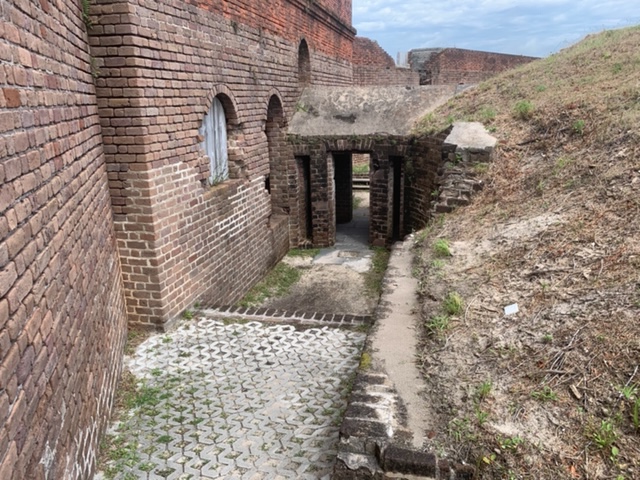
One of the many tunnel rooms to get to the outer part of the fort.

IMG_0821

Par of one of the tunnel rooms

IMG_0828

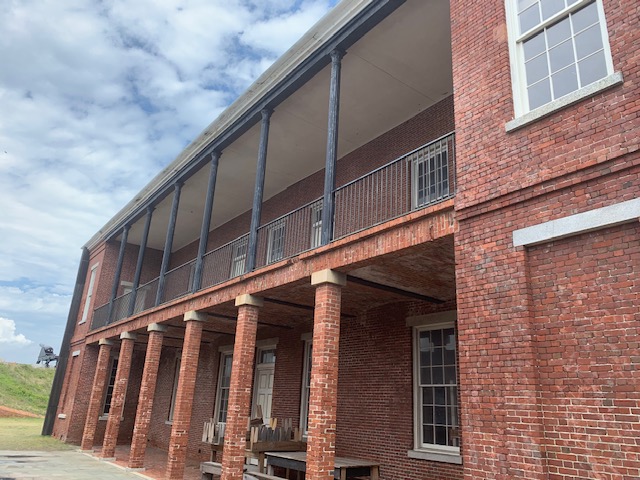
Back of one of the main barraks.

IMG_0820

The inner part of the fort where one of the main barrak buildings was started but never completed.

IMG_0819

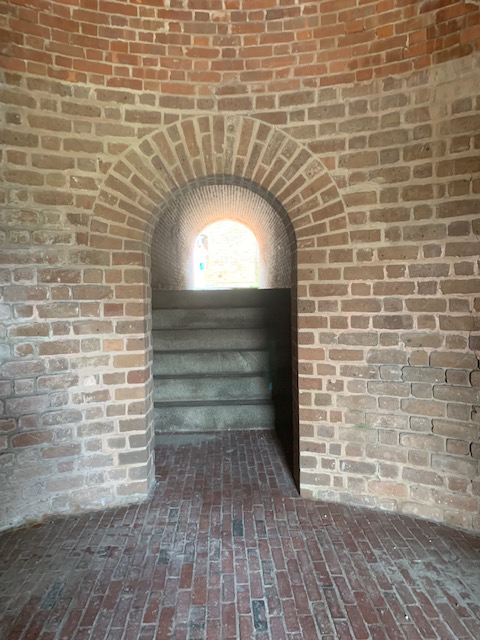
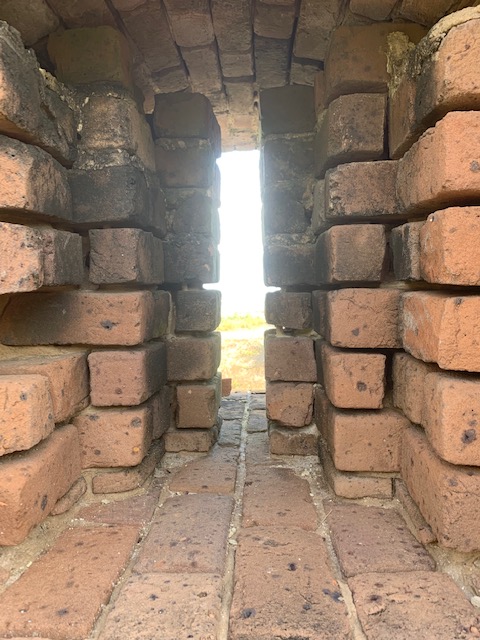
One of the hundreds of rifle ports. Notice how thick the walls are

IMG_0818

The interior part of the fort.

IMG_0829

More inner workings of the fort.

IMG_0823

Atop of one of the corner bastions

IMG_0856

Another shot of the interior. The cannons are real, they were made in 1862, originally there were only 19 here.

IMG_0848

IMG_0830

Looking out the river.

IMG_0822

Looking out toward the ocean side.

IMG_0826

Each man was issued all this equipment

IMG_0859

From the outer moat hill.

IMG_0858

Fort from the river side.

IMG_0839


The fort from the ocean side.

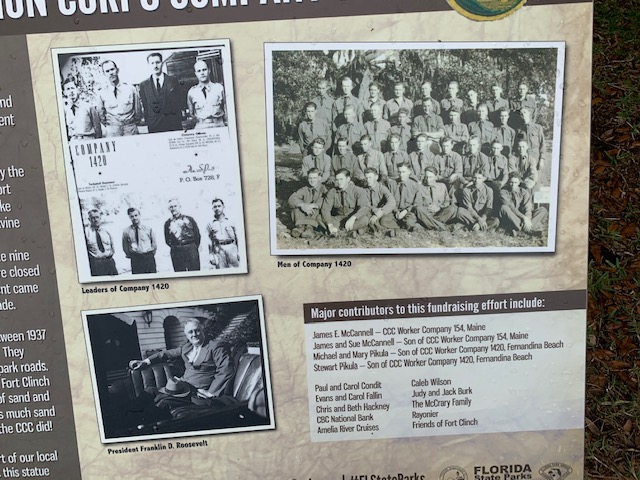
The CCC Comes to the fort.

IMG_0625

IMG_0626

SHARK TEETH !!!

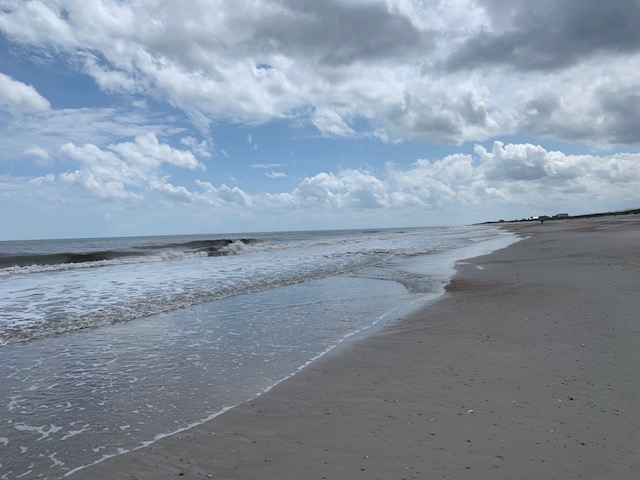
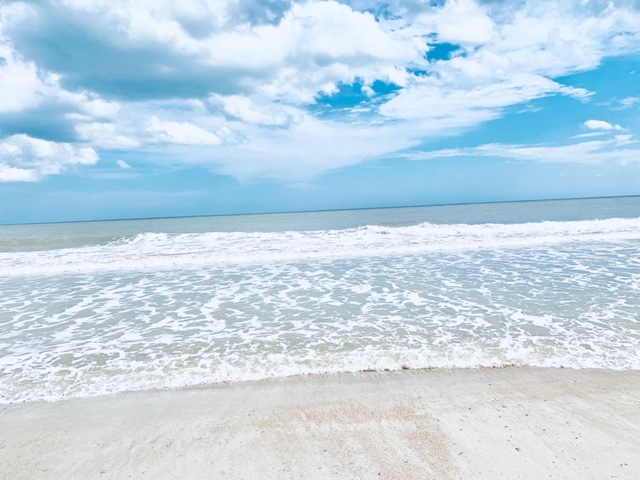
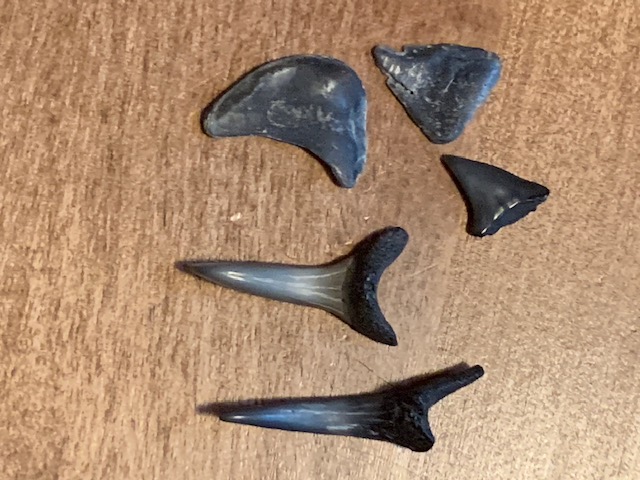
Yep, this place is known for them ,and you can come here and hunt for them all you want. Who knew. It is a very popular thing to do down in Florida. So we did, we spent over two hours looking around the beach. Because it was early afternoon, people had already been over the beachs, but it was low tide. The teeth are here because the river is dredged every 5 years or so. That brings up all the millions of year old fossilized teeth. One guy is saw had about 20 in his bag ,and another guy, who also gave us a lesion in hunting for the teeth, he had about thirty. There are all kinds of teeth from different types of sharks, that lived millions of years ago. We were lucky to find 5, Melissa found the best one. It was a blast and I could go back any time. It was pretty sunny and about 80, some breeze. There is for sure an art to finding them ,so have to practise up for next year.

IMG_0842

The beach

FullSizeRender (21)

The beach

IMG_0634

The teeth are over two million years old. I was not born then. The middle one is the best and Melissa found that one. The bottom one has a tang broken off but should look like the middle one. They are about one and a half inchs long. The other teeth are the most common, they are about one half inch big.


ST. MARY’S GEORGIA

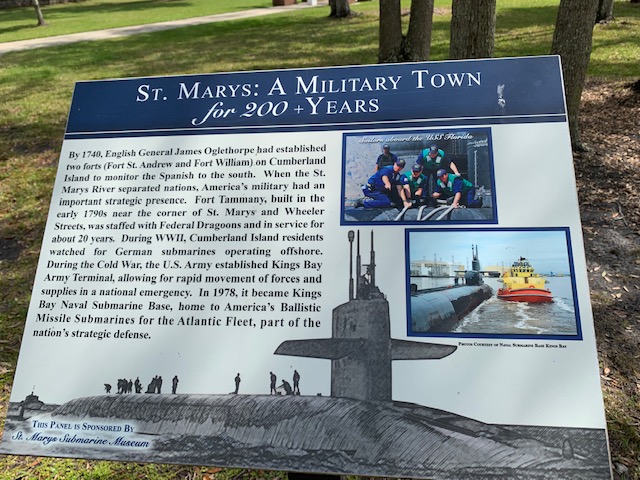
One thing I forgot to mentioned on my last post was that the park is right next to King’s Bay Naval Station. This is where the Trident nuclear submarines ,come in and leave from. The Trident neuclar sub is the biggest sub we have. 550 feet long and about 150 crew. When they leave here they are gone for six months at a time, then come back in to be refitted and off they go again. Sometimes you can see them out in the bay, but so far we have not.

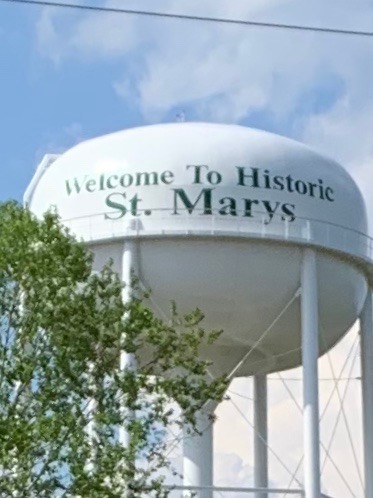
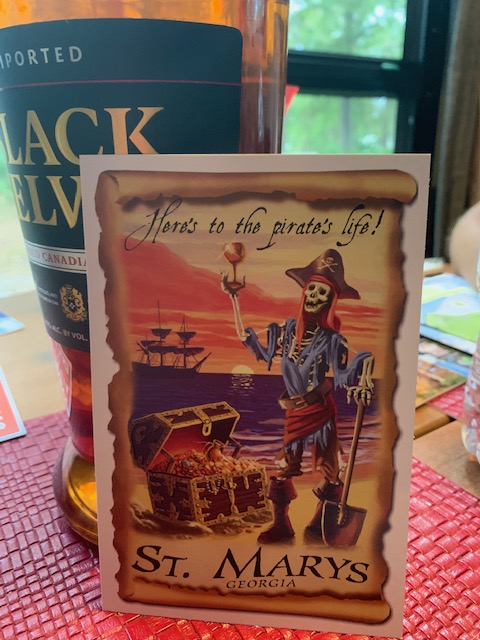
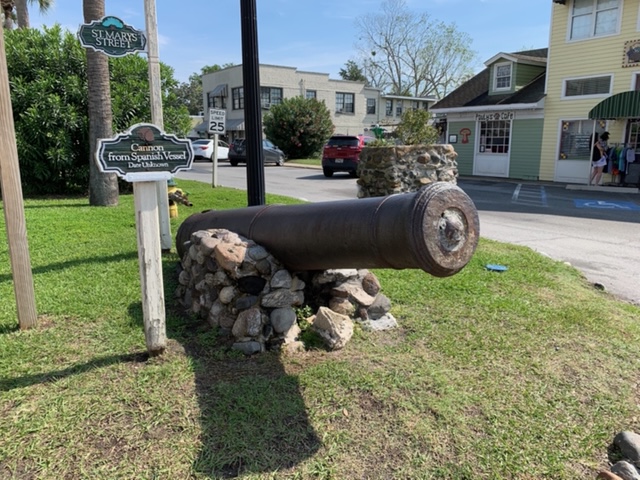
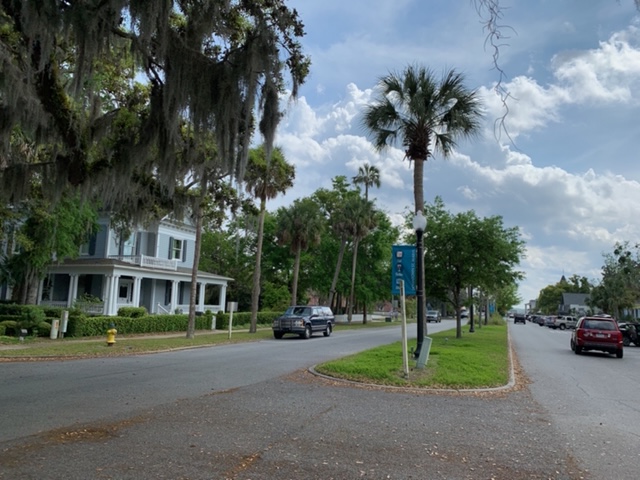
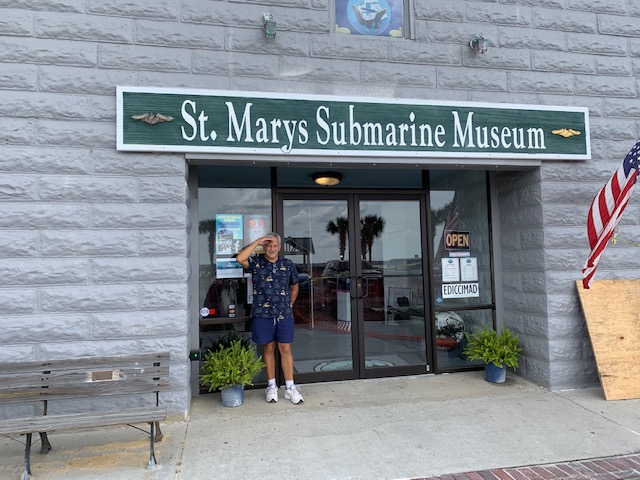
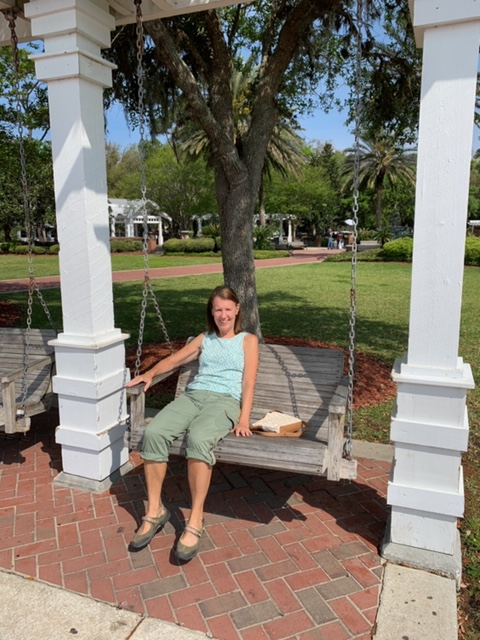
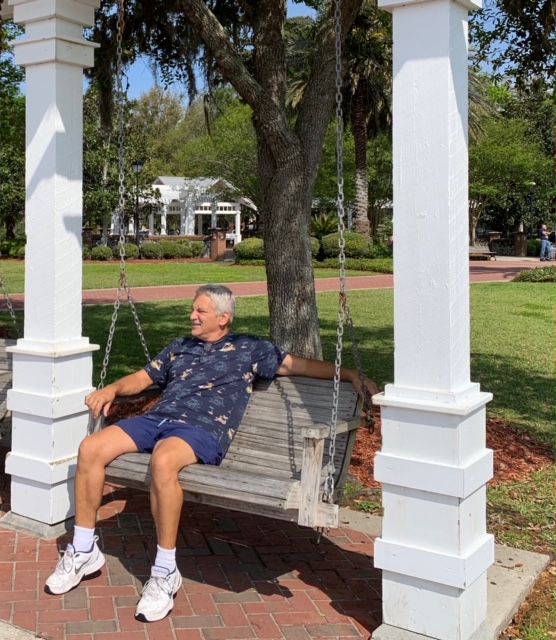
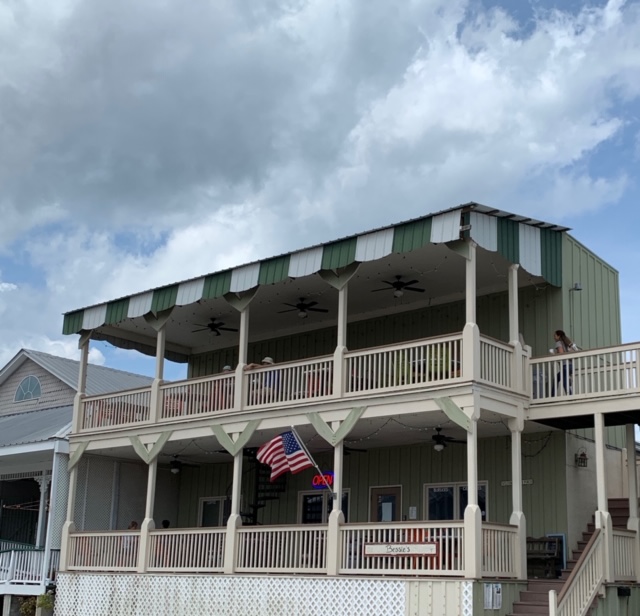
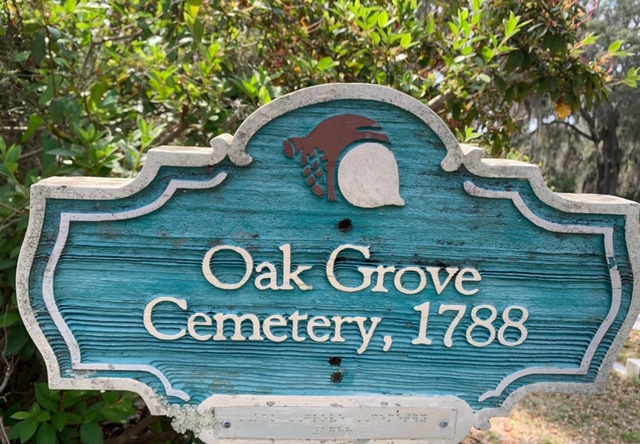
Saturday we went into St Mary’s to go to the submarine museum they have there. It was a really neat place, history of the earliest to the most modern of subs was there. A lot of WWII stuff and information. What we found the most interesting was that the city part, which is very small, is very historic and still has a lot of its oldest buildings still here and in fine condition. Some dating to 1810. It’s all right on the ST. Mary’s river. It was a very nice day and we spent about 5 hours there. Had lunch at Bessie’s and visited a cemetery formed in 1788. That was neat. There were quite a few people there also.

FullSizeRender (9)

IMG_0789

IMG_0720

IMG_0752

I am standing right at the water almost in the photo above and the photo below we are down one of the main streets about 1/2 mile looking out toward the river.

IMG_0754IMG_0718

IMG_0742

Ready to set sail.

FullSizeRender (17)

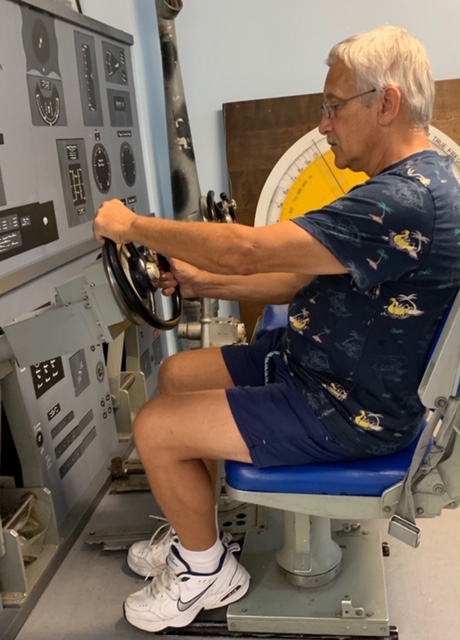
Driving the sub,

IMG_0738

Fire one, this is an actual periscope taken off of a old sub, they put it here , out through the roof, and you can actually swivel it and see the outside river area. Pretty neat.

IMG_0733

FullSizeRender (19)

The park main square, right at the water, it was very nice and taken care of.

IMG_0750

IMG_0747

IMG_0751

FullSizeRender (18)

IMG_0726

FullSizeRender (20)

FullSizeRender (16)

Bessie’s where we had lunch from the second floor looking out at the river.

IMG_0743

Our view from the second floor at lunch, they are redoing the main road so it was all tore up.

FullSizeRender (15)

The tide indicator

FullSizeRender (7)

FullSizeRender (14)

FullSizeRender (13)

FullSizeRender (12)

FullSizeRender (10)

IMG_0756 (1)

They had over 30 people here who served in the revolutionary war, this is one.

IMG_0778 (2)

They had a plot of confederate soldiers here also, most unmarked, but a few had names. No dates on when they died.

IMG_0763 (1)

This one seemed to stick with me. His unit, but no date on birth or death.


CROOKED RIVER STATE PARK

We are now at Crooked River state park in Georgia, about 2 miles from Florida. On the coast of the Atlantic ocean pretty much. The park is on a bluff overlooking the Crooked river where it curves around. We are close to the Historic town of St. Mary’s Georgia, which we will visit. Our site is very big, most are, I had a little trouble backing in as the road is narrow and it curved toward the site ahead of me. My first attempt was with three vehicles behind me and I got messed up, so I drove around and got in a better place, it still took me a lot of jossling around to get in but did. Photo’s of our site below and one of a thunderstorm that came in over the water near us.

IMG_2758

IMG_2759

IMG_0610

ANTIQUE TRACTOR AND ENGINE SHOW

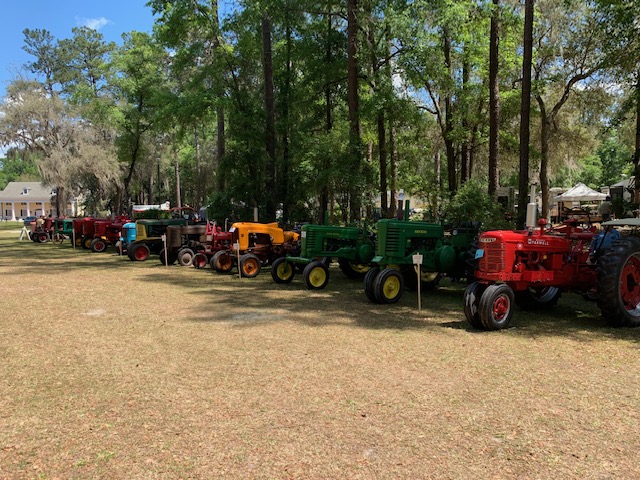
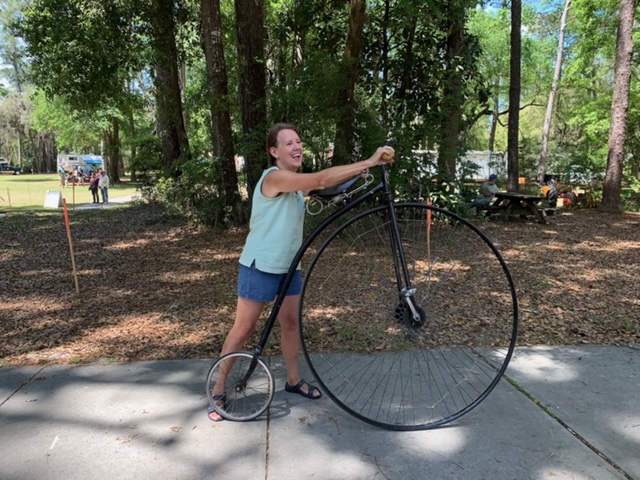
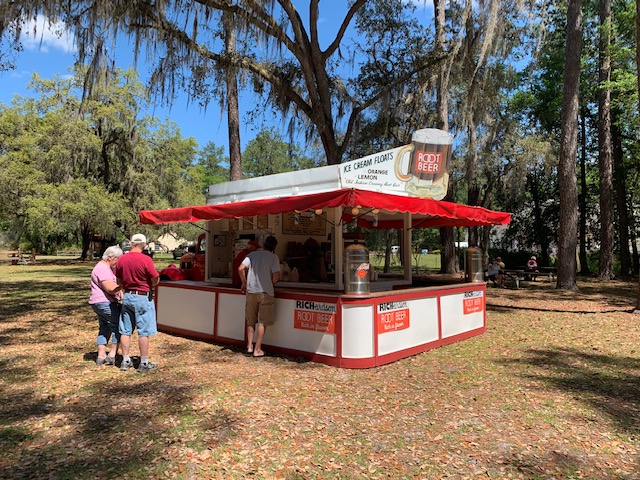
At the park they are having an antique tractor and engine show for the weekend. So we went, Thursday, it was a great sunny 75 degree day, and our last full day in Florida. Saw a lot of old tractors which reminded me of my grandfather. When I was younger, my parents would pack all us kids up and away we would go, to my grandfathers farm in Pa for a week or two. He had a large farm, and most everything known to man concerning farm equipment. It was neat seeing and hearing all the old ones. The old engines they had we neat too, most I never heard of before. A guy had old big wheel bikes from the late 1800’s, There was also a root beer truck, selling old fashion root beer of course. I had to treat myself twice to some, and Melissa had a root beer float, yum, yum. It was fun talking to all the old timers, but one thing that wasnt’ there, younger people. No one is next in line to carry on after the old timers bite it. Sad to say that is with a lot of things now. I could go on and on, but no.

IMG_0595

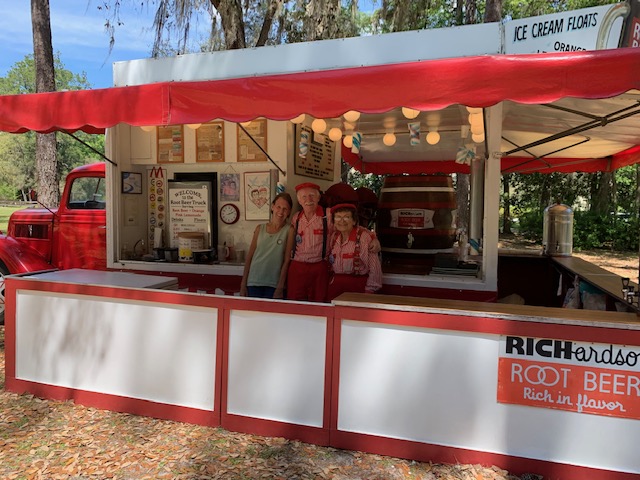
Root beer truck ,the couple have been doing it since 1950.

IMG_0596

IMG_0675

Melissa, is the newest worker, free root beer.

IMG_0597

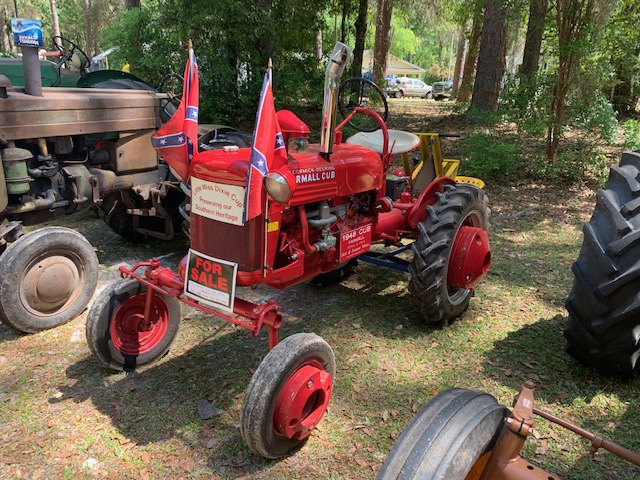
Tractor row.

IMG_0598

Rebel yell, only $5,500

IMG_0677

Even had a small tractor pull going on.

IMG_0599

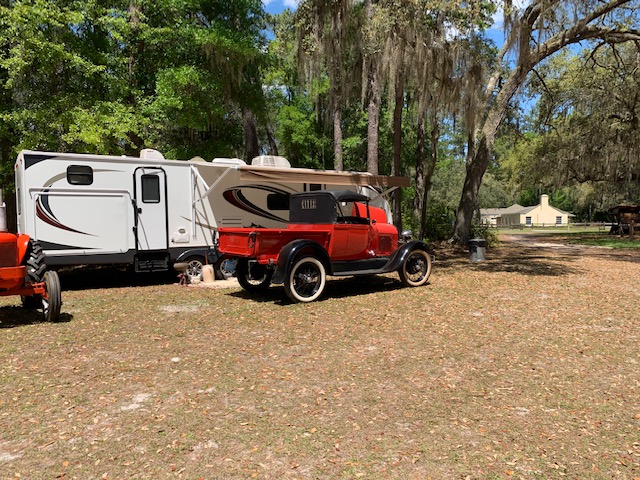
1923 ford pickup truck, convertible.

IMG_0641

Another 1920’s model
IMG_0627

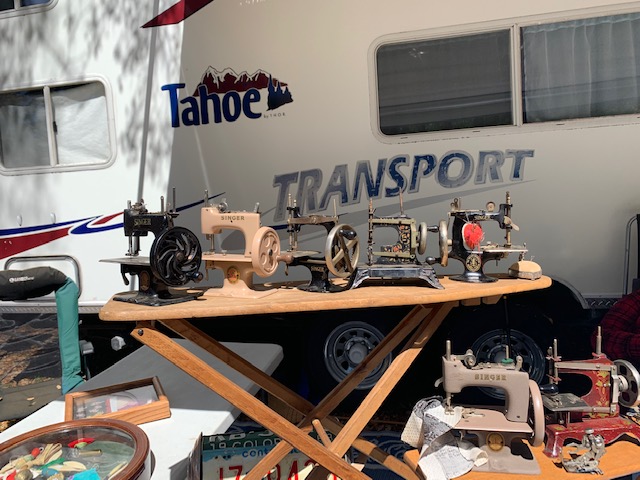
Vintage sewing machines

IMG_0645

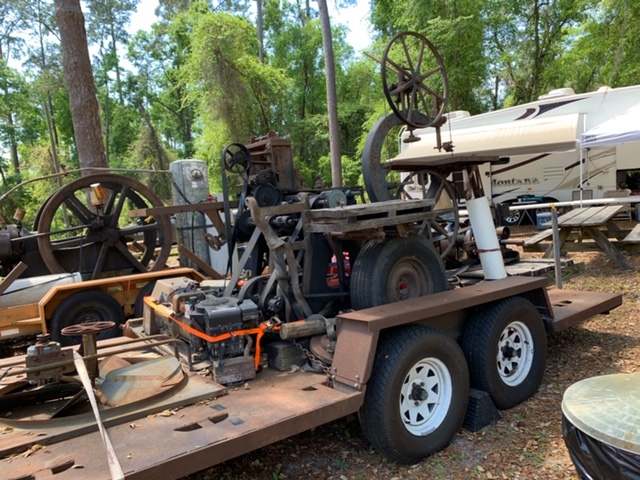
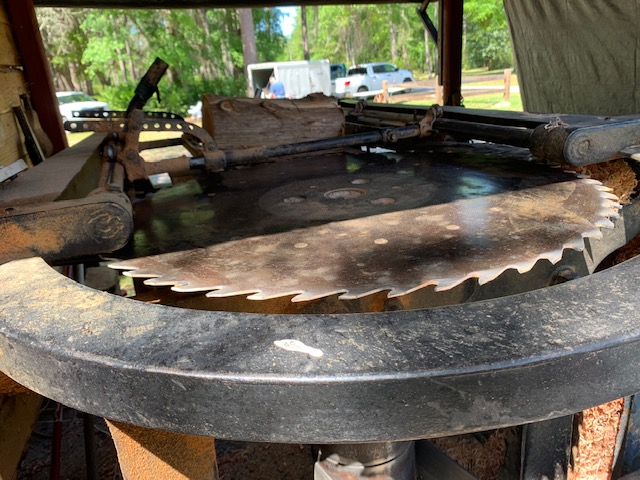
7 in 1 woodworking machine from around 1900, Dangerous as all hell.

IMG_0639

When this blade is running it cuts through the small log and out comes a cedar shingle. We were not able to see it run, but stand clear.

IMG_0661

Never know what she is up to next, this is a hospital visit for sure.

IMG_0672

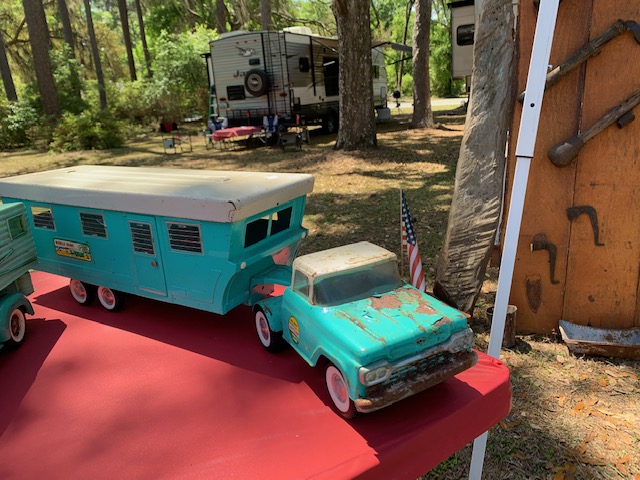
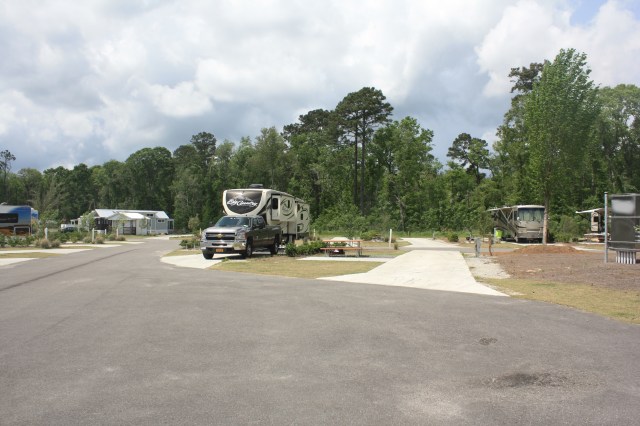
Our next RV.

IMG_0674

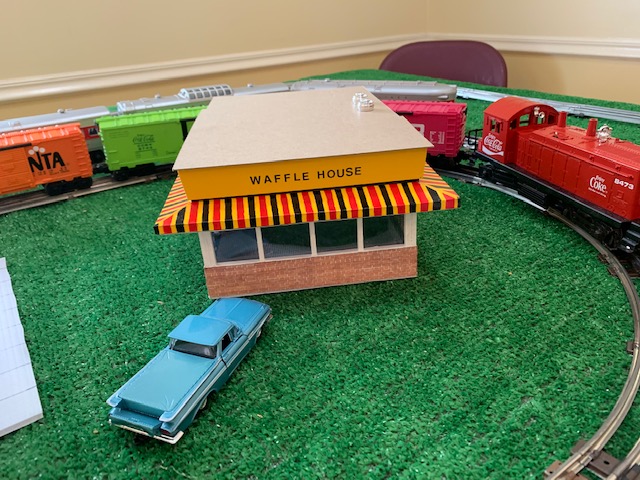
Train guy had a Waffle House, I love Waffle house

IMG_0681

Main museum at the park.

IMG_0683

What

IMG_0684

Va, Va, VA, boom


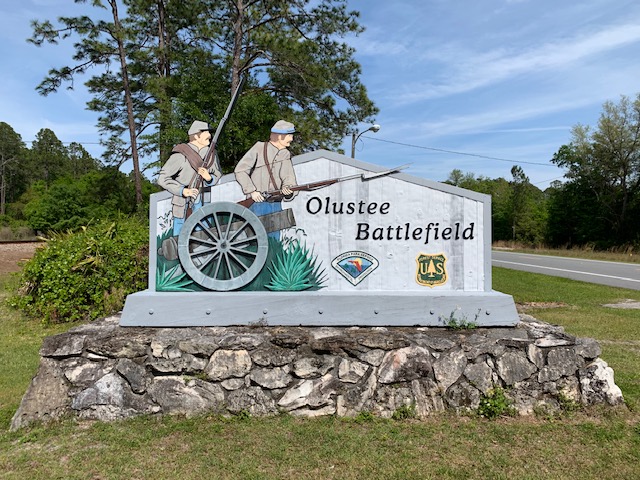
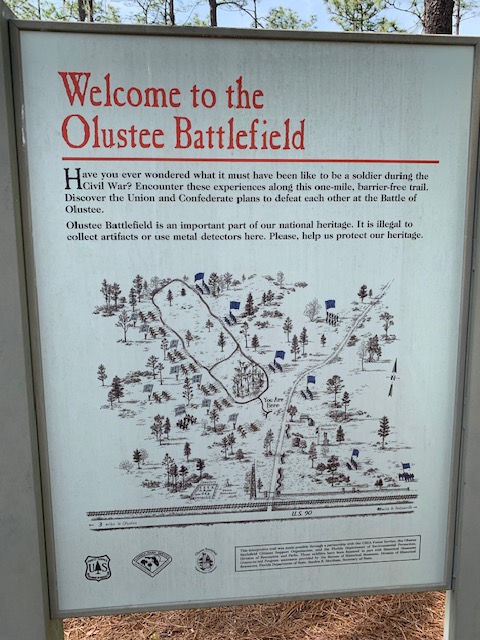
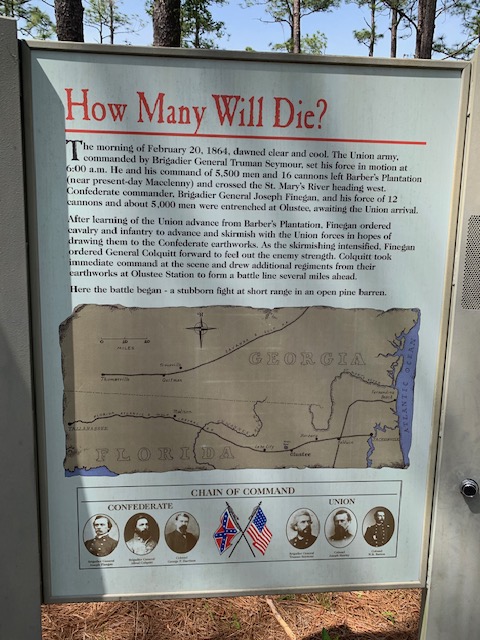
BATTLE OF OLUSTEE

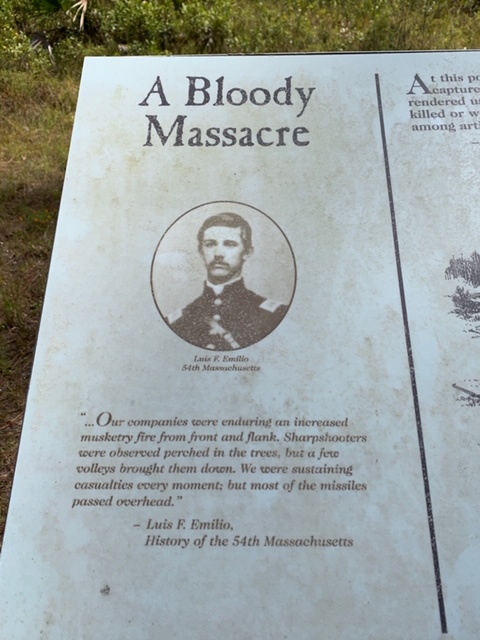
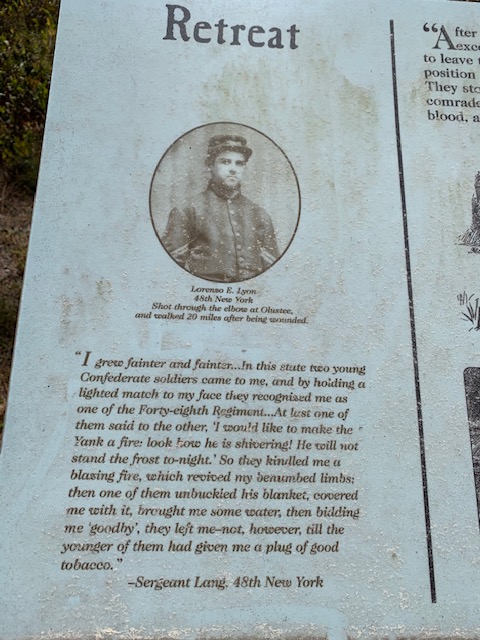
As an avid civil war history buff, I knew there was a Battle of Olustee in Florida, I just didn’t know really where it was. Well it’s only about 20 miles from here, so we went there. It is a very small area and only a very small visitor center, not maned with a few artifacts, and story on the battle. It does have a one mile walking trail, with interpretive signage. By comparison it was a very small battle, lasting about three and a half hours. It was the largest battle fought in Florida during the Civil war. The other distinction it has is the third bloodiest battle of the civil war. With 10,000 men engaged almost 3000 were , either killed, wounded, captured or missing. A very high number given the shortness of the battle. It had cavalry, infantry, sharpshooters and artillery, and some regiments of U. S. colored troops. There was even a big artillery piece being fired from a railroad car. It was fought mainly in the pine woods around the old road and railroad bed.
 

IMG_0594

IMG_0589

The Union was advancing from Jacksonville, to the Swannee river to burn the railroad bridges and cause havoc as they went. They did not know that the confederates knew they were coming. So the confederate army of about 5000 strong, entrenched at the railroad depot at Olustee. They also had cavalry patrols out in front. Some skirmishing started with the union army and the C. S. Horseman and it soon escalated and the battle was fought about two miles from the depot. It was a back and forth event in the pine trees and low brush, with cannon going off, infantry trying to manuvere to the right places. No one wanted to give ground, at one point the confederate were out of ammunition and ready to fall back when they received a new supply. The union though made the biggest mistake when an order to move forward all at once was not heard , not obeyed or whatever and only two middle regiments moved out. They were soon hit with crossfire and decimated. Finally the union left three regiments of colored troops behind, as the rest of the army fell back. They paid the price and many were killed and taken prisoner. Many of the colored prisoners were shot dead after they gave up. In the end the union retreated back to Jacksonville and the confederates won the battle. The union lost over 1800 men, and the confederates lost over 900 men.
IMG_0591

IMG_0590IMG_0593

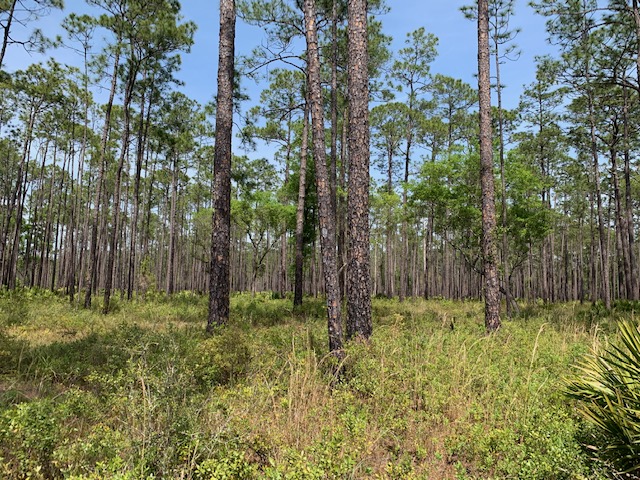
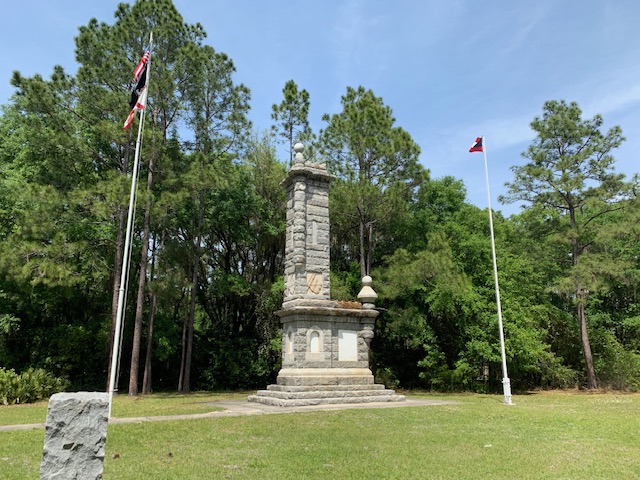
The pine forest where the battle was fought, it was a nice mile trail, there is only one big  monument , but there is a small cemetery where the remains were reburied after the war.

FullSizeRender (6)

IMG_0621

IMG_0585

WHITE SPRINGS FLORIDA AND THE PARK

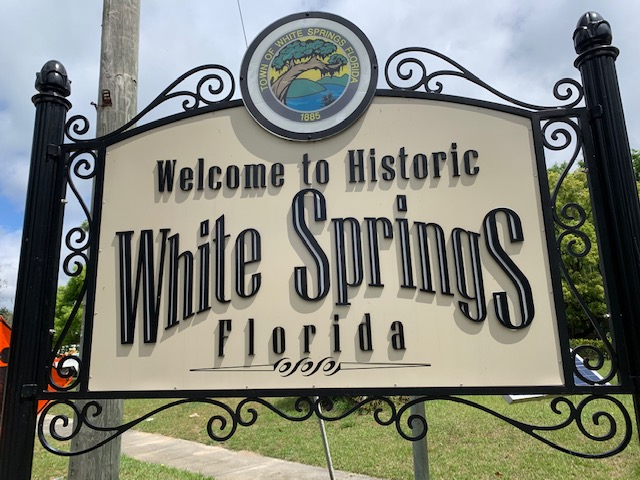
Stephen Foster state park is in the little hamlet of White Springs. Historic Route 41 and the Swannee river intersect here. There are maybe 700 people who live here, the school is closed ,but they have a gas station and a Dollar General. But back in the day this was a very popular tourist destination. People came from all over to come to the healing powers of the spring water as it came up and emptied into the Swannee River.

IMG_0608

IMG_0596

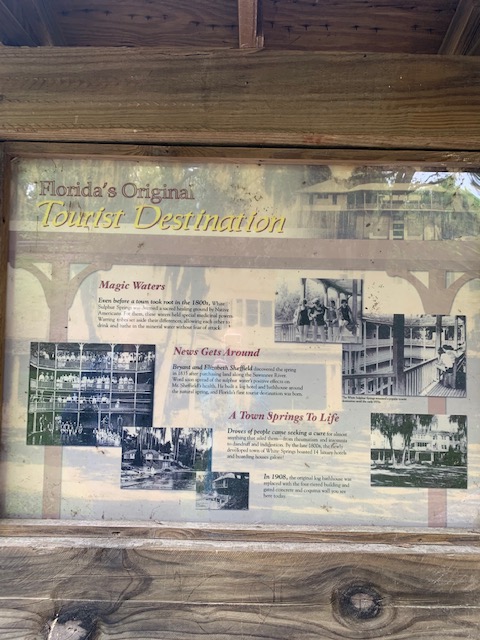
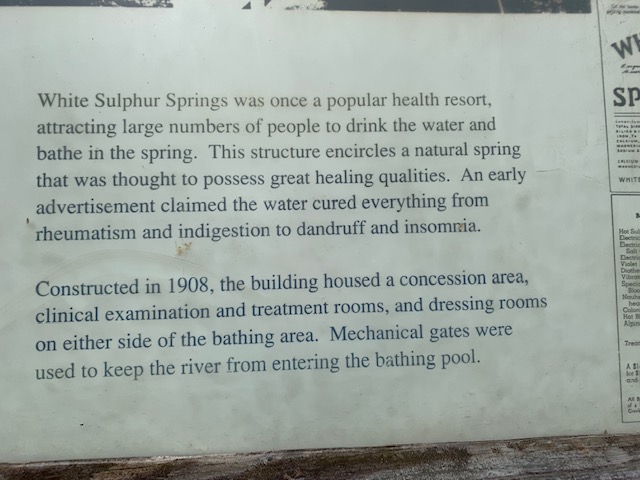
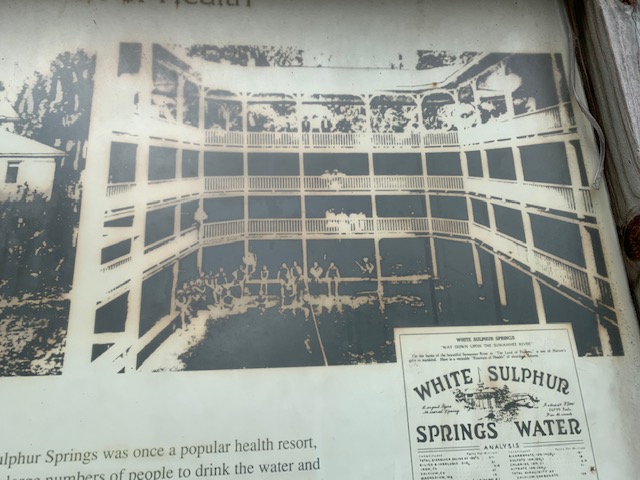
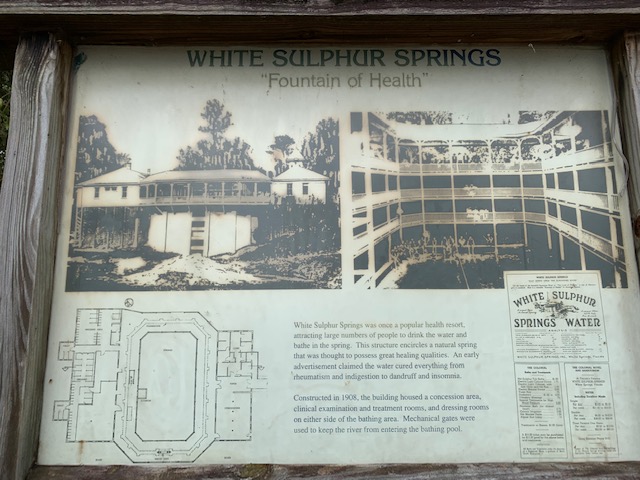
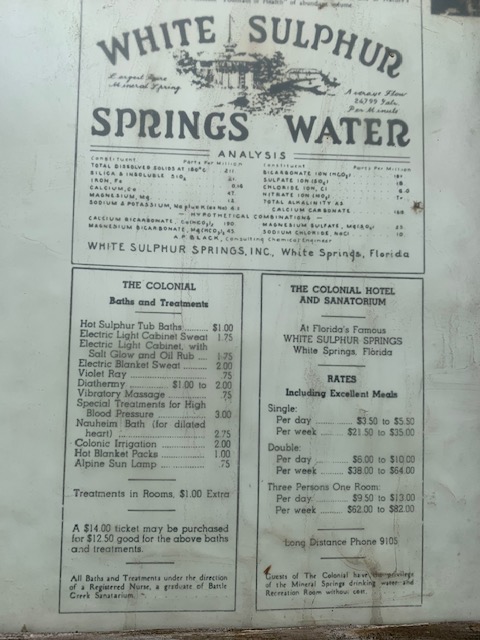
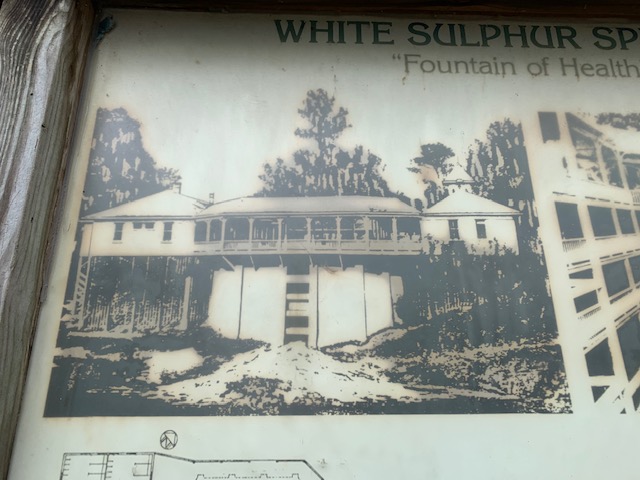
Hard to read from the picture, but a couple bought the surrounding area where the springs are in 1834, and within a few decades had built a log structure surrounding the springs, and began letting people use the healing waters, all for a fee of course. By the late 1800’s, droves of people began arriving. So in 1908 a brand new concrete structure was built.

IMG_0604

IMG_0603

IMG_0601

IMG_0605

You could stay here, eat here, have medical examinations and all sorts of other weird stuff.
IMG_0602

The back of the building as it faces the river.

IMG_0600

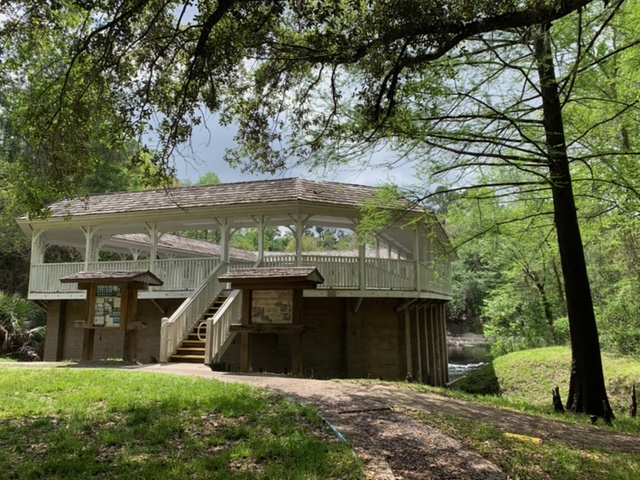
The spring house as it looks today from the front.

IMG_0597

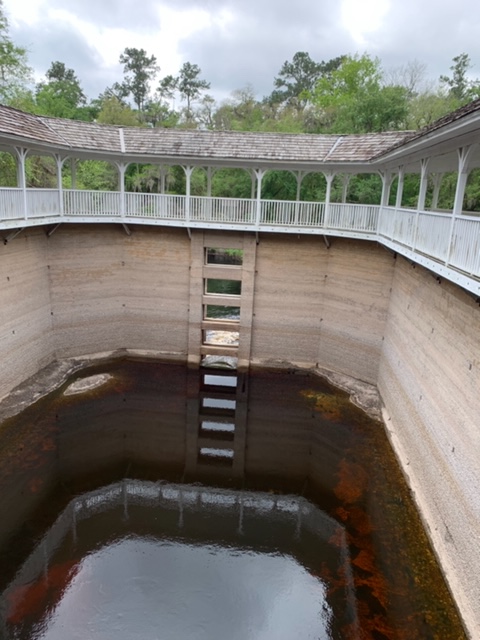
The inside as it looks today, back in the day the water was much deeper and cleaner.

IMG_0612

The Swannee river, with the back of the spring house off in the distance.

FullSizeRender (5)

A whole town grew up around the springs, there were restaurants, and 14 hotels. In total around 1800 people lived and worked in the area,in the heyday between the late 1800’s to the late 20′ or so. Then as with everything else, it was gone. A very bad flood came through and wipe out most of the town, leaving only the spring house, one hotel and a few house, which were on higher ground. It never came back, with only a few hundred people staying.
IMG_0610

The remaining hotel. Buiolt in 1893

IMG_0611

Home built on 1903, behind the trees is the river.

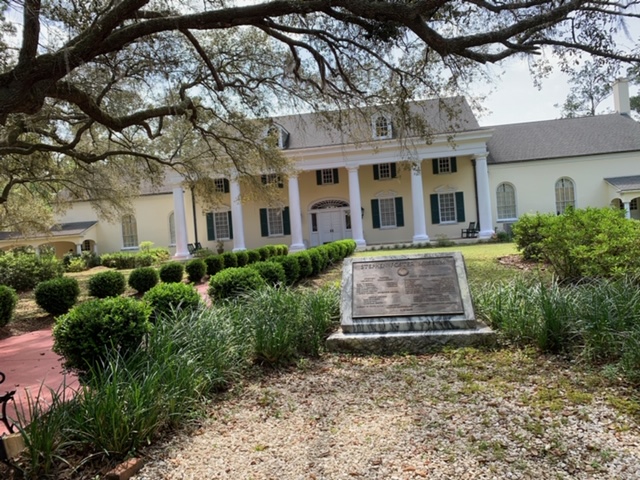
In the 1950’s the state took over the property and decided to make it a park. It was named Stephen Foster, after Stephen Foster who in the 1840′ wrote over 200 songs, one being the famous Swannee river song. He also wrote old folks at home, camptown races, Jeanie with the light brown hair, Oh, Susanna, and many others still popular today. The park also has a 200 foot tall 97 bell Carillon.  It belchs out a number of times a day some of Stephen Fosters most famous songs. It is quite impressive. Today they have a number of festivals here at the park, where upwards of 30,000 people ateend. Where thsy all saty is beyond me.
IMG_0592IMG_0577

STEPHEN FOSTER STATE PARK

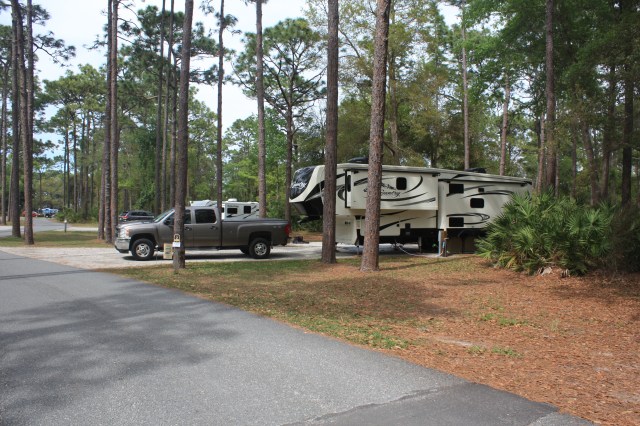
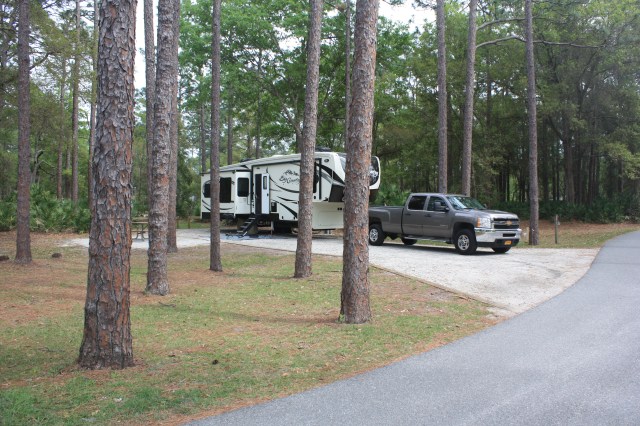
Friday morning we left Cedar Keys and headed up to Stephen Foster state park, which is above Gainsville to the west. It was a 106 mile drive. We are about 15 miles from the bottom of Georgia, so we are for sure heading north now. The park here is very nice, the spots are BIG, We are in a 100 foot curved pull through. We have live oak trees with the Spanish moss on them and some pines around. We will be here till next Friday. Below are a few pics of our spot.

IMG_2747

IMG_2748